
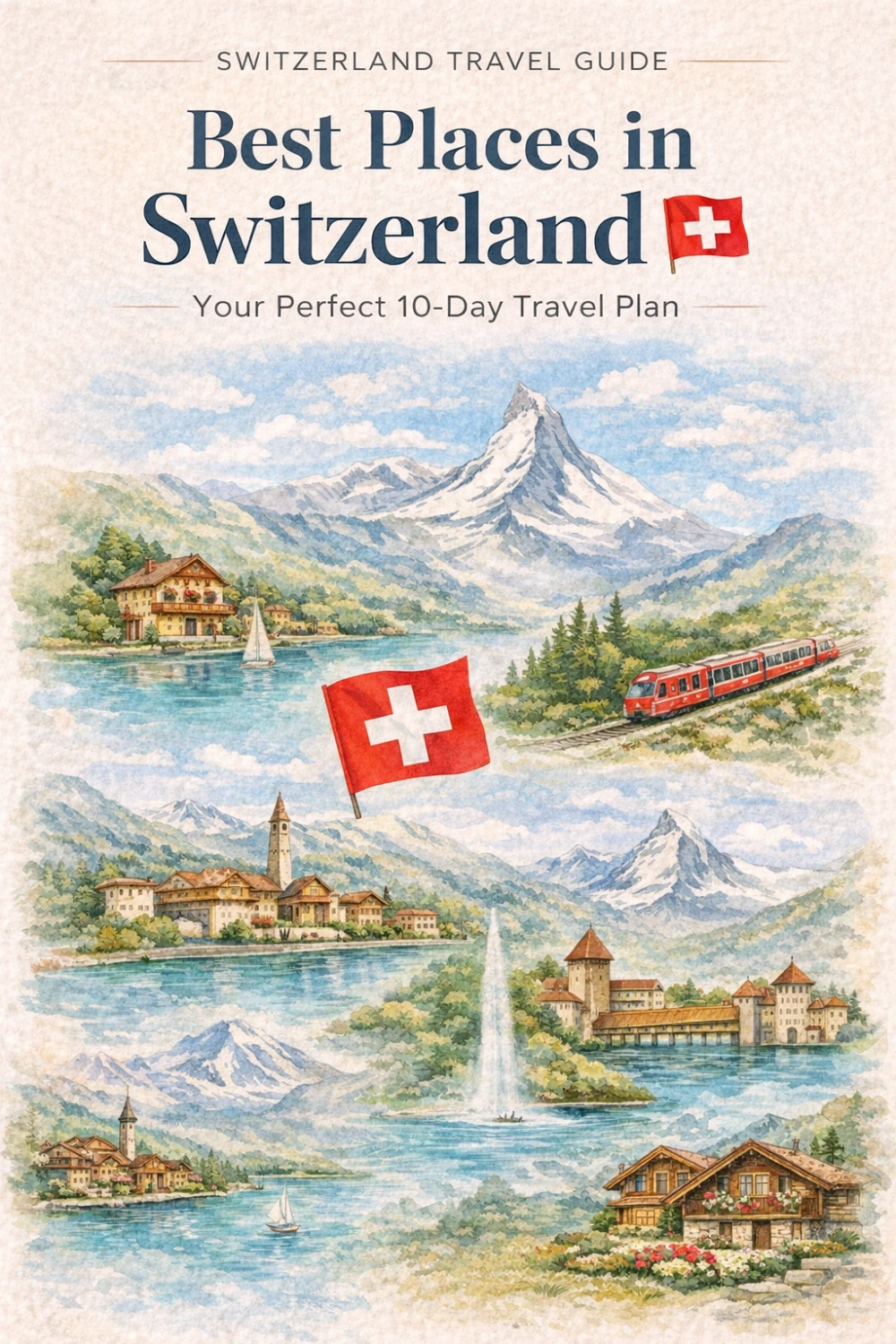
Switzerland is one of those countries that completely rewires your expectations of what a place can look like.
Before I first went, my mental image of Switzerland was a very specific one: snow-covered mountains, fondue by a fireplace, chocolate in every shop window, and watches in a glass cabinet. All of which, I can now confirm, is completely accurate. But here’s what nobody warns you about — Switzerland is so much more than that postcard version, and the diversity of what you find when you actually get there is genuinely astonishing.
In ten days, you can go from the sophisticated, almost-Scandinavian cool of Zurich to the glitzy mountain playgrounds of St. Moritz. From a tiny, flower-covered island on the Swiss-Italian border that looks more like the Mediterranean than the Alps, to the most dramatic mountain railway you’ll ever take in your life. From sleeping in an actual igloo under the Matterhorn — yes, really — to the elegant, international energy of Geneva. And everything in between is just… Switzerland. Impossibly beautiful at every turn.
This 10-day itinerary is built around the best places in Switzerland that genuinely deserve your time — the iconic ones, a few that most tourists skip entirely, and at least one experience that you’ll be telling people about for years. You can do the whole thing by train (Switzerland has the most efficient, beautiful and well-connected rail network in the world, and I cannot recommend it highly enough), by car for flexibility, or a combination of both.
Whatever you choose, one thing is certain: Switzerland will surprise you. And that, honestly, is the very best thing travel can do.
Let’s plan your trip.
Day 1: Zurich — The Coolest City You Didn’t Expect
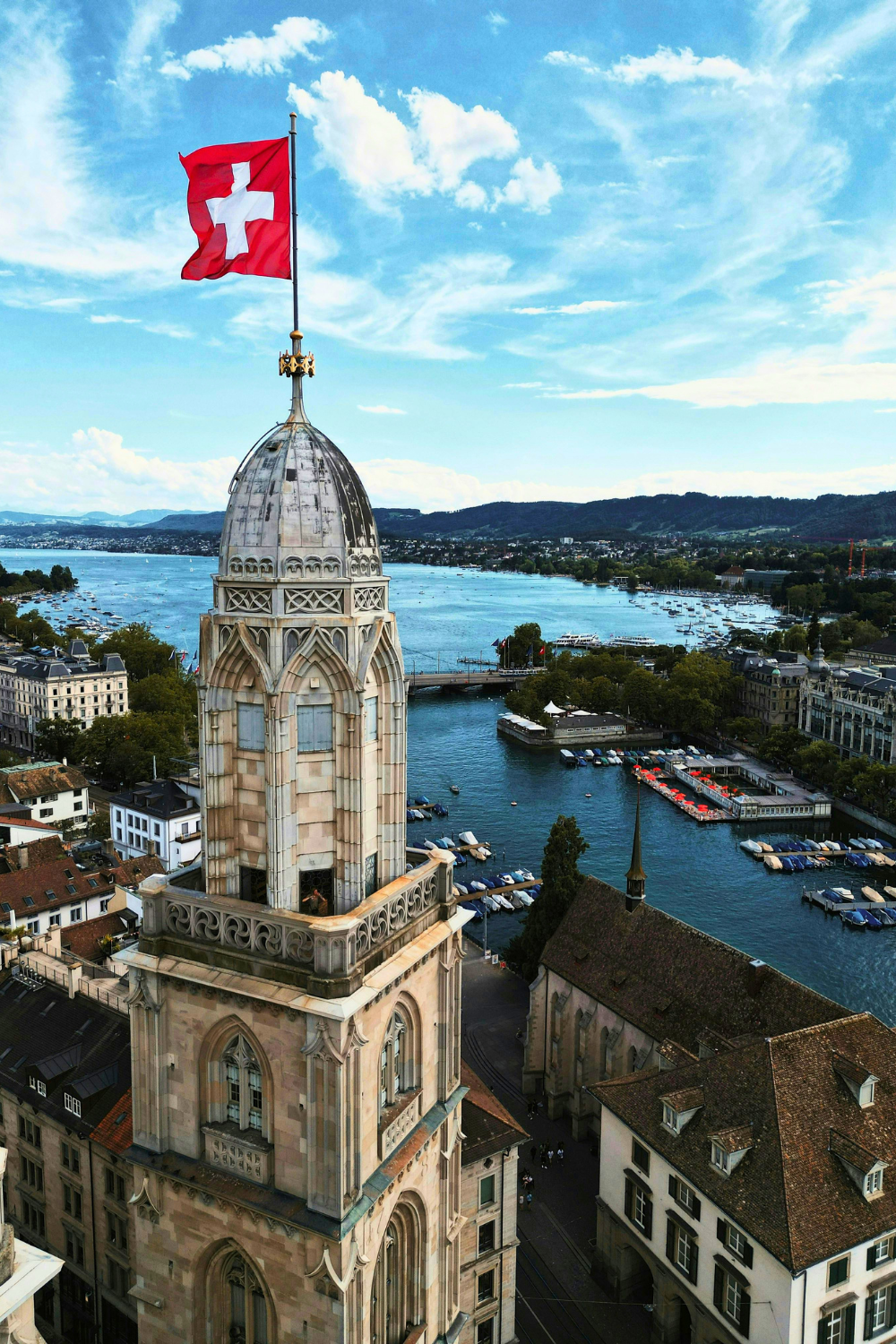
Where you’re starting: Zurich, northern Switzerland Getting there: Zurich Airport is one of Europe’s major hubs with direct connections from most European and international cities
There’s a version of Zurich in people’s heads that goes something like this: banks, watches, expensive coffee, not much personality. I’m very happy to tell you that version is wrong.
Zurich is, in fact, one of the most enjoyable cities in Switzerland — and one of the most enjoyable in Europe, full stop. It has a genuinely beautiful old town, an excellent food and coffee scene, a surprisingly vibrant nightlife, and a lakeside setting that on a clear day is almost aggressively picturesque. Give it a full day and it will absolutely win you over.
Morning: Arrive and orient yourself
After landing, grab a coffee — and do this properly, because Zurich takes coffee seriously. The city has a brilliant independent café scene, and a flat white or an espresso in a good Zurich café on a crisp Swiss morning is a genuinely excellent start to a trip.
Check into your hotel and then head straight out into the city, because you don’t want to waste a single hour of your first Swiss day sitting in a room. The Altstadt (Old Town) on both sides of the Limmat River is where you want to be — a beautifully preserved medieval city centre of narrow lanes, guild houses, cobbled squares and church towers that rises steeply from the water’s edge.
Mid-morning: Explore the Old Town
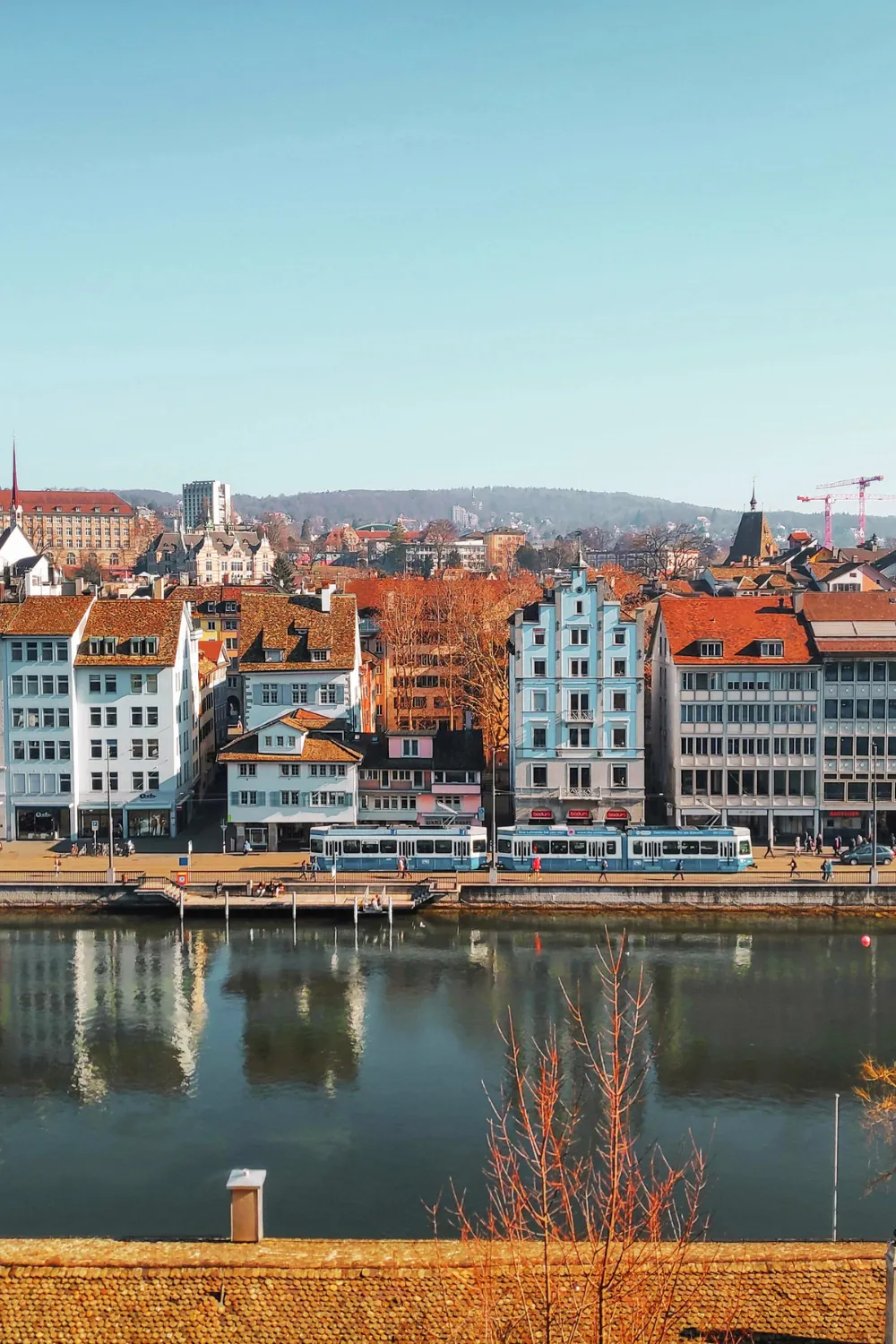
Wander without a plan for a while. The Old Town rewards it. Cross back and forth over the river on the small bridges, duck into the independent boutiques and bookshops on the narrow streets of the Niederdorf neighbourhood, and find a bench by the water to sit and watch the city go about its morning.
Grossmünster — the twin-towered Romanesque cathedral that has dominated the Zurich skyline for 900 years and where Ulrich Zwingli launched the Swiss Reformation in 1519 — is worth going inside. The interior is deliberately plain (Zwingli stripped out all the ornamentation as part of his reforms, which tells you a lot about the man), but the architecture is genuinely impressive and the views from the tower are excellent. Across the river, the elegant Fraumünster has a set of stained glass windows by Marc Chagall that are among the most beautiful pieces of ecclesiastical art in Switzerland — vivid, jewel-like and completely unexpected in a Reformed Protestant church.
Lindenhofplatz — a small, elevated square on the left bank with lindens trees, chess boards and panoramic views over the rooftops and the river — is one of those quiet, lovely city spots that you’d happily spend an hour in with nothing but a good coffee and some good company.
Afternoon: Art, shopping and the lake
The Kunsthaus Zürich is one of the finest art museums in Switzerland, with an excellent collection running from medieval to contemporary. The new extension opened in 2021 added significant space and houses an impressive collection of 20th-century and contemporary art.
Bahnhofstrasse — Zurich’s famous main shopping street, one of the most expensive retail strips in the world — is worth a walk even if you’re not buying anything. The window displays are immaculate and the street itself, lined with trees and trams, is beautiful.
In the warmer months, the lake promenade along Zürichsee is one of the most pleasant afternoon walks imaginable — locals swim in the lake from designated spots (Badi) throughout the summer, which is one of those very Swiss things that makes you love a city immediately.
Evening: District 5 and dinner
For dinner, Les Halles in the Langstrasse area is a Zurich institution — a cavernous, atmospheric brasserie in a former market hall with a fantastic menu (the mussels are legendary) and a lively, mixed crowd that makes it feel like the whole city has decided to eat here at once. Get there when it opens or expect to wait.
After dinner, the District 5 (Kreis 5) neighbourhood — Zurich’s creative quarter, built around the old industrial zone near the main station — is where the city’s nightlife concentrates. It has a strongly Shoreditch-or-Prenzlauer-Berg energy: converted warehouses, interesting bars, good music venues, and the kind of relaxed, creative crowd that makes you want to stay longer than planned. Bar Lanigiro for cocktails, or just wander and see what pulls you in.
Where to stay: Look for something in the Altstadt or city centre — waking up within walking distance of the river on your first morning in Switzerland is a wonderful thing.
Don’t miss: Grossmünster, Fraumünster (Chagall windows), Lindenhofplatz, the Kunsthaus, a walk along the lake, Les Halles for dinner, and District 5 for the evening.
Day 2: Travel Day to St. Moritz — The Journey Is the Point
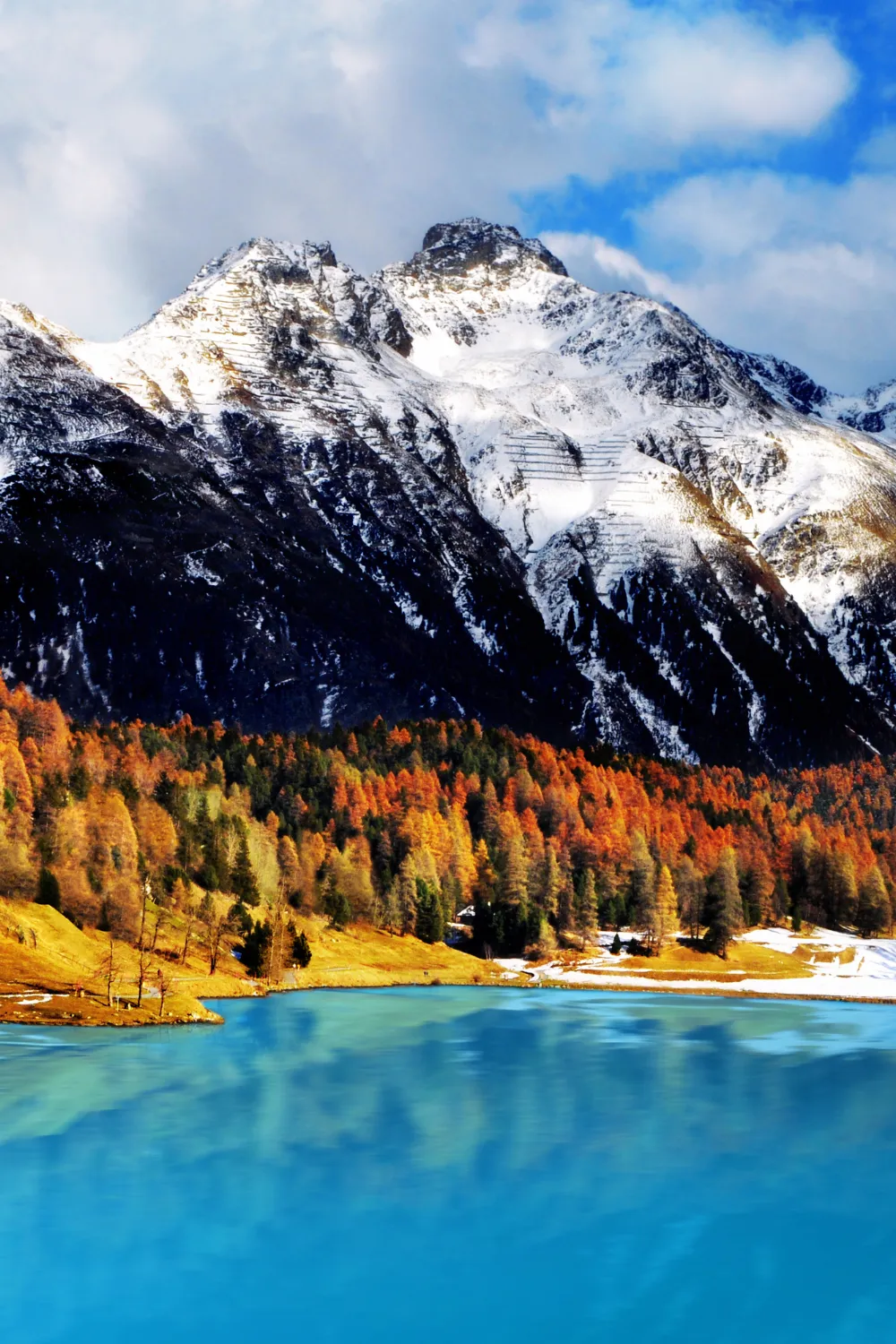
Route: Zurich → St. Moritz Travel time: Approximately 3 hours by train (or car) Highlight of the day: The Glacier Express route through the Alps
Today is a travel day, but in Switzerland, travel days are genuinely some of the best days of the trip. The train journey from Zurich to St. Moritz is one of the great scenic rail routes in Europe — the Glacier Express route winds through the Alps with views that make you want to press your face against the window like an excited child and stay there for the entire journey.
The landscape shifts as you move south and east — from the gentle Swiss Mittelland plateau to the dramatic mountain scenery of Graubünden, through gorges and across viaducts, past frozen lakes and pine forests heavy with snow (in winter) or brilliant green meadows (in summer). There are panoramic windows on the scenic trains specifically so you don’t miss a moment of it. Take the window seat. Don’t look at your phone.
Arriving in St. Moritz
St. Moritz is Switzerland’s most glamorous mountain resort, and it knows it. This is where European royalty, film stars and genuinely unfathomable wealth has been coming to ski since the 1860s, and the town wears that heritage with a kind of easy, understated confidence. The shops are expensive. The hotels are impeccable. The lake is frozen for much of the winter and brilliant blue in summer. The Engadine valley it sits in is one of the most beautiful in the Alps.
Check into your hotel in the early afternoon and take a slow walk around the town to get your bearings. The Lake St. Moritz in the valley below the town is the centrepiece in every season — in winter it hosts everything from horse racing on ice to polo tournaments and kite surfing on frozen water; in summer it’s perfect for walking, cycling and swimming. The light in the Engadine is famously clear and bright, and it hits the lake at golden hour in a way that makes everything look slightly unreal.
Evening dinner
St. Moritz dining is serious business, and the prices reflect that. Ecco St. Moritz at the Giardino Mountain hotel is one of the finest restaurants in Switzerland — two Michelin stars, extraordinary cooking, and a setting that is genuinely special. If you’re going to splash out on one extraordinary dinner during this trip, this is a strong candidate. If you want excellent food without the full fine-dining investment, Restaurant Uondas does brilliant flame-grilled dishes in a more relaxed mountain setting that is very satisfying after a day of travelling.
Where to stay: Badrutt’s Palace Hotel is the iconic St. Moritz address — it’s been the social heart of the resort since 1896 and the rooms are extraordinary. It’s expensive in the way that St. Moritz is expensive, which is to say considerably, but it’s one of those places where the experience genuinely justifies the splurge if it’s within reach.
Don’t miss: The scenic train journey from Zurich (sit by the window), Lake St. Moritz at arrival, and a proper dinner to celebrate night one in the mountains.
Day 3: St. Moritz — Skiing, Lakes and Alpine Luxury
Where you are: St. Moritz, Graubünden Best for: Skiing, mountain scenery, the Engadine valley
Today is your full day in St. Moritz, and the honest truth is that one day here isn’t really enough — the area is so vast and varied that you could comfortably spend a week and still feel like you’ve left things undone. So prioritise based on what you actually want from a mountain resort day.
If you’re a skier:
The ski area around St. Moritz is one of the finest in the Alps. The Corviglia ski area directly above the town is enormous and well-serviced, with runs for all ability levels and views from the top that stretch across the entire Engadine valley. Corvatsch across the lake is higher, more challenging and even more spectacular — it connects to the Furtschellas area and gives you access to some genuinely impressive runs with views that on a clear day extend to the Italian Dolomites. The skiing here is expensive compared to other Alpine resorts, but the quality of the pistes, the reliability of the snow conditions and the sheer scale of what’s available make it worth it if skiing is your thing.
For the non-skiers (or those wanting an alternative), the cross-country skiing trails in the Engadine are among the most beautiful in the world — flat, fast and running through impossibly scenic valley landscapes. The Engadin Skimarathon in March is one of the great ski races in the world, covering 42 kilometres across the valley floor, and even just watching it is a remarkable experience.
If you’re not skiing:
The Lake of Staz (Lej da Staz) is a beautiful frozen lake in a pine forest above St. Moritz, reached by a gentle walk or snowshoe trail, and it’s one of those spots in Switzerland that feels genuinely undiscovered even in peak season. Pack a thermos of something hot and head up there in the morning.
Mount Corvatsch accessible by gondola even without skis offers extraordinary Alpine panoramas from over 3,000 metres — on a clear day the view is among the finest in the eastern Alps. The mountain restaurant at the top serves excellent Swiss mountain food.
Evening:
After skiing or exploring, the late afternoon hour in St. Moritz belongs to the Engadine tradition of Afternoon Tea — the grand hotels do it beautifully, and sitting in the warm salon of Badrutt’s Palace with a pot of Earl Grey and an assortment of patisserie while the mountain light fades outside the window is genuinely one of the pleasures of Swiss travel.
For dinner, Dal Mulin is the restaurant in St. Moritz for fresh, high-quality fish and seafood — extraordinary in a landlocked mountain town, but Switzerland’s ability to source and prepare excellent seafood has always impressed me. The lobster and the whole fish dishes here are exceptional.
Don’t miss: Skiing Corviglia or Corvatsch, Lake of Staz for a snowshoe walk, Afternoon Tea at Badrutt’s Palace, and Dal Mulin for dinner.
Day 4: Ascona and Lake Maggiore — Switzerland’s Mediterranean Secret
Route: St. Moritz → Ascona, Ticino Travel time: Approximately 2.5 to 3 hours by car (longer by train, but beautiful) Why this stop matters: This is one of the most surprising places in Switzerland — and one of the best
This is the day the trip takes a turn that surprises almost everyone who hasn’t done it before. You’re heading south, over the Alps and into the Ticino — Switzerland’s Italian-speaking canton — and the transformation that happens as you cross the mountain passes is one of the most dramatic geographical transitions you can make in an afternoon.
The Ticino is genuinely different from the rest of Switzerland. The architecture is Italian. The food is Italian. The language is Italian. The climate is softer and warmer. And the scenery — the lakes, the palm trees, the terracotta rooftops — looks like the Italian Lakes rather than the Swiss Alps. It’s one of Europe’s great geographical surprises, and it delivers every time.
Arrival in Ascona
Ascona is a small, beautiful town on the northern shore of Lake Maggiore, and it is one of the loveliest places in Switzerland. The waterfront promenade lined with colourful houses, the palm trees, the outdoor restaurants, the warm light bouncing off the lake — it all feels like you’ve accidentally crossed the border into Italy, which geographically you almost have (the Italian border is less than a kilometre from Ascona’s southern shore).
Check into your hotel and have lunch at a lakeside table. There is something about sitting at the water’s edge in Ascona with fresh pasta, a glass of local Merlot del Ticino and the lake stretching away toward the mountains that feels like one of the genuinely civilised moments that travel occasionally delivers.
Afternoon: Brissago Island
In the afternoon, take the boat from Ascona’s waterfront to the Brissago Islands — a pair of tiny islands in Lake Maggiore, the smaller of which is a few hundred metres from the Italian border, making them the lowest point in Switzerland.
The larger island, Isola Grande, has been a botanical garden since the early 20th century when a Russian baroness created an extraordinary garden of subtropical and Mediterranean plants here. The mild microclimate created by the lake means plants grow here that you would never expect to find in Switzerland — giant cacti, banana trees, agaves, Himalayan rhododendrons — all in a beautifully maintained garden around a historic villa. Walking through it feels slightly surreal in the best possible way. The boat crossing takes about 30 minutes each way and runs regularly from Ascona throughout the day.
Evening: Dinner on the lake
Back in Ascona, dinner deserves a lakeside table. The Eden Roc Hotel restaurant is exceptional — beautifully designed, right on the water, with excellent Italian-Swiss cuisine that makes the most of the local produce. If you’d rather explore a local option, Antico Ristorante Borromeo in the old town serves traditional Ticinese dishes in a wonderfully rustic setting that feels authentically local rather than tourist-facing.
Where to stay: The Eden Roc Hotel sits directly on the lake with its own private beach, pool and jetty. It’s a genuinely special property — the kind of place that makes you want to extend your stay by two days immediately. The rooms are beautiful, the service is impeccable, and waking up to Lake Maggiore from your window is a very good way to start a Swiss morning.
Don’t miss: The Ascona waterfront, lunch at a lakeside restaurant, the Brissago Islands and botanical garden, dinner at Eden Roc, and the evening light on the lake.
Day 5: Travel to Interlaken — The Adventure Capital of Switzerland
Route: Ascona → Interlaken, Bernese Oberland Travel time: Approximately 2.5 hours by car (or 3+ hours by train via connections) Why Interlaken: This is Switzerland’s adventure capital and the base for the Jungfrau region — one of the most spectacular mountain areas in the world
Leaving the Mediterranean warmth of Ticino behind, today you head north and west into the heart of the Bernese Oberland — a region of the Alps so dramatic and so beautiful that it has been drawing travellers from across Europe for over two centuries.
Interlaken sits on a narrow strip of flat land between two lakes — Thunersee to the west and Brienzersee to the east — with the extraordinary trio of the Eiger, Mönch and Jungfrau mountains forming an almost theatrical backdrop to the south. The town itself is small and pleasant rather than spectacular, but its setting is extraordinary and its position as the gateway to the Jungfrau ski area and mountain region makes it one of the most important bases in Switzerland.
Arriving in Interlaken
Check into your hotel and give yourself a gentle afternoon to explore the town and decompress after the drive. The Höheweg — the main promenade running between the two parts of town, lined with grand hotels, gardens and horse carriages — is a lovely place for an afternoon walk with the mountain panorama as your backdrop.
The view of the Jungfrau from Interlaken’s central meadow (Höhematte) on a clear afternoon is one of those sights that you take a photo of and then realise the photo can’t possibly do justice to the reality. It’s simply enormous. Standing there looking up at 4,158 metres of snow-covered Alpine peak with the evening light on it while you’re standing at barely 570 metres above sea level is a genuinely humbling experience.
Evening: Ice skating and fondue (winter) or riverside dinner (summer)
In winter, Ice Magic Interlaken is one of the most charming seasonal attractions in the Bernese Oberland — an outdoor ice rink set in the middle of the town with a traditional Swiss chalet alongside it serving exactly what you want after ice skating in the cold: proper Alpine fondue, raclette, hot wine and good company. If you’re visiting in the colder months, this is a genuinely lovely evening.
In the warmer months, Interlaken’s restaurants spill onto outdoor terraces along the river and lakefront, and the energy of the town in summer is wonderful — kayakers on the river, paragliders drifting down from the mountains above, cyclists along the lake paths.
Where to stay: Victoria-Jungfrau Grand Hotel is the grande dame of Interlaken — a magnificent 19th-century hotel right on the Höheweg with one of the finest views of the Jungfrau from any hotel in Switzerland. It’s a splurge, but the rooms are beautiful and the sense of historic mountain-resort grandeur is unmatched.
Don’t miss: The Höheweg promenade, the view of the Jungfrau from the Höhematte meadow, and ice skating with fondue in winter.
Day 6: Interlaken — Jungfraujoch, Chocolate and the Top of Europe
Where you are: Interlaken, with a day trip to Jungfraujoch The big experience: The Jungfraujoch railway — the highest railway station in Europe
This is the day of the trip that people tend to look back on and talk about the most. The journey to Jungfraujoch — nicknamed the Top of Europe — is one of the great mountain railway experiences in the world, and the destination at 3,454 metres above sea level is unlike anything you’ll experience anywhere else.
Getting there
Leave early — ideally around 7:30am. The journey from Interlaken involves two train changes (at Grindelwald or Lauterbrunnen, then at Kleine Scheidegg), and the whole ascent takes around two and a half hours each way. But this is not dead travel time. Every minute of this journey is scenically spectacular.
From Interlaken, the valley opens up between the enormous north faces of the Eiger and the Wetterhorn as you climb toward Grindelwald — one of the most dramatic valley approaches in the Alps. At Kleine Scheidegg, the railway station sits directly at the foot of the Eiger’s legendary north face, and looking up at 1,800 metres of vertical rock and ice above you from the platform is a genuinely memorable moment.
The final section of the journey to Jungfraujoch runs entirely inside the mountain — a tunnel bored through the rock of the Eiger and Mönch that took 16 years to build and was completed in 1912. There are viewing windows cut through the cliff face partway up, and the view of the Grindelwald valley tiny and far below through them is extraordinary.
At the Top of Europe
Arriving at Jungfraujoch and stepping out into the high Alpine environment is an immediate sensory shock — the air is thin, the cold is intense even on a warm day, and the view across the Aletsch Glacier (the largest glacier in the Alps, stretching 23 kilometres into the distance below you) and the surrounding peaks is simply vast and overwhelming. Take your time with it.
The Sphinx Observatory at the very top has an outdoor terrace at 3,571 metres where you can stand and look across the mountains in every direction. The Ice Palace is a series of rooms and tunnels carved inside the glacier itself, with ice sculptures and the strange, blue-green light of the glacier around you. The Lindt Swiss Chocolate Heaven tells the story of Swiss chocolate with a tasting component that you will not complain about. And for lunch, the Crystal Restaurant at the Jungfraujoch complex serves hearty Swiss mountain food — the rösti (fried potato cake) here is substantial and warming, exactly right after a morning at altitude.
One practical note: the cold at Jungfraujoch is serious even in summer. Bring proper layers regardless of what the weather is like in Interlaken on the way out. And if you suffer from altitude sensitivity, take the ascent slowly and don’t push yourself.
Back in Interlaken: Chocolate making
Return to Interlaken in the early afternoon and head to the Funky Chocolate Club on the main street for one of the most enjoyable tourist experiences in Switzerland — a chocolate-making workshop where a cheerful Swiss chocolatier teaches you the basics of tempering, filling and decorating Swiss chocolate while feeding you a frankly irresponsible amount of the stuff throughout. You’ll make your own chocolates to take home, and you’ll eat approximately twice as many as you take. It’s brilliant. Do it.
Evening: Dinner at Stadthaus
For dinner, Stadthaus is the informal, excellent local favourite in Interlaken — great atmosphere, a menu built around quality Swiss and European ingredients, and a relaxed energy that’s perfect for winding down after what has been an extraordinary day. The lamb dishes here are particularly good.
Don’t miss: The entire Jungfraujoch train journey (sit by the window — all of them), the Aletsch Glacier views, the Ice Palace, lunch at the Crystal Restaurant, the Funky Chocolate Club back in Interlaken, and dinner at Stadthaus.
Day 7: Niederhorn Skiing and Arrival in Zermatt — An Igloo Under the Matterhorn
Route: Interlaken area → Zermatt, Valais The big experience: Skiing the Niederhorn, arriving in Zermatt, sleeping in an igloo
Today is probably the most logistically complex day of the itinerary, but also one of the most memorable. You’re starting with a morning ski at a genuinely lovely and underrated spot near Interlaken, then making your way to Zermatt for an evening experience that will absolutely be the most unusual night of the trip.
Morning: Skiing at Niederhorn
The Niederhorn above Beatenberg is one of those Swiss ski areas that the serious ski crowd doesn’t talk about much, which means it’s quieter, more relaxed and in some ways more enjoyable than the famous resorts. Take the bus from Interlaken station to Beatenberg — about 40 minutes — and from there the cable car up to the Niederhorn summit at 1,936 metres.
The skiing here is limited in scale compared to St. Moritz or Zermatt but the quality of the slopes is excellent for beginner and intermediate skiers, and the views over Lake Thun from the top are among the finest in the Bernese Oberland — a long, luminous stretch of turquoise-blue water with the Bernese Alps behind it. Even if the skiing isn’t your primary draw, the views alone justify the cable car ascent.
Ski for a few hours, have a hot chocolate on the mountain terrace, and head back down to catch the train toward Zermatt.
Afternoon: The journey to Zermatt
Zermatt is a car-free village — only electric vehicles are permitted in the village itself, and the road ends at Täsch, where you park and take the small cogwheel train the final few kilometres into the valley. The approach to Zermatt by train, with the valley narrowing and steepening around you and the first glimpses of the Matterhorn’s extraordinary pyramidal summit appearing above the ridgeline ahead, is one of those genuinely exciting travel arrivals.
Pick up ski rental from one of the many shops near the station for tomorrow’s skiing. The choice of equipment available in Zermatt is excellent and the rental staff are generally helpful and knowledgeable.
Late afternoon: The Gornergrat Railway and your igloo
Take the Gornergrat Railway — a spectacular cogwheel train that climbs 1,500 metres from Zermatt to the Gornergrat summit — and get off at Riffelberg station. Do not confuse this with Riffelalp — you want Riffelberg. Sit on the right side of the train for the best views of the Matterhorn on the ascent.
From Riffelberg, it’s a 10-minute walk up to the Igloo Village — a seasonal village of hand-built snow igloos that exists only in the winter months, constructed fresh each year above 2,500 metres with direct views of the Matterhorn. This is, genuinely, one of the most extraordinary accommodation experiences in Switzerland and probably one of the most unusual places you’ll ever sleep.
Each igloo has been carved and shaped from snow, with ice furniture and sleeping platforms topped with insulated sleeping bags and sheepskin rugs. The igloos are warmer inside than you expect — snow is an excellent insulator, and the temperature inside stays around -5°C even when it’s -20°C outside — but warm layers are absolutely essential. Bring significantly more than you think you’ll need.
Evening at the Igloo Village
The evening experience at the Igloo Village is genuinely special. After checking in and being shown around by the team (the hot tub cut into the snow outside, the communal fondue dinner, the bar serving drinks in glasses made of ice), you’ll have aperitifs, a dinner of warming Swiss mountain food, and then the option of a snowshoe walk under the stars with the Matterhorn above you.
The sky at this altitude on a clear night, away from any light pollution, is extraordinary. The Matterhorn in moonlight, with the snow lit silver-white and the absolute silence of the high Alps all around, is one of those travel moments that is essentially impossible to adequately describe.
Don’t miss: Morning skiing at the Niederhorn with Lake Thun views, the Gornergrat railway arrival into Zermatt, the Igloo Village experience above Riffelberg, fondue dinner, the hot tub in the snow, and the Matterhorn under the stars.
Day 8: Zermatt Skiing and Nax — The Straw Hotel in the Mountains
Route: Zermatt → Nax, Val d’Hérens, Valais The big experience: Skiing under the Matterhorn, then a truly unique eco-hotel
Wake up in your igloo as the morning tea arrives — the Igloo Village team brings hot tea to each igloo in the morning, which is one of the more civilised alarm clock experiences available in Switzerland. Pack up and make the short walk down to Hotel Riffelhaus before heading back down the Gornergrat railway to Zermatt for a full morning of skiing.
Morning: Skiing in Zermatt
Zermatt’s ski area is the largest in Switzerland and one of the largest in the Alps — over 360 kilometres of marked runs spread across three main ski areas connected by an extensive lift network. In good snow conditions you can ski from 3,883 metres all the way down to the valley floor, which is one of the greatest vertical ski descents in Europe.
The Klein Matterhorn cable car takes you to 3,883 metres — the highest ski area in the Alps — with views from the top that are genuinely staggering in every direction. On a clear day you can see Mont Blanc, the Monte Rosa massif, and the Italian Dolomites from up here. The skiing down from this elevation through the long, wide glacier runs is some of the finest piste skiing in the Alps.
One of the great novelties of skiing in Zermatt is that the ski area connects to Cervinia in Italy through the Klein Matterhorn area — meaning you can genuinely ski across the Italian border for lunch. You’ll need your passport or EU ID card, but the experience of skiing between two countries in a single morning is entirely worth the admin.
For lunch on the mountain, Restaurant Paradies in Findeln — a tiny, sun-terrace restaurant in the small hamlet of Findeln partway down the main ski run back toward Zermatt — is one of the great mountain lunch spots in Switzerland. The sausage and lentil stew on a cold day is warming and perfect, the terrace gets excellent afternoon sun, and the views back up at the Matterhorn from your table are spectacular.
Afternoon: Transfer to Nax
After a morning of skiing, take the train from Zermatt toward Sion in the Rhône Valley, then transfer by taxi up the hillside to Nax — a small village perched high on the valley wall with extraordinary views across the entire Valais.
Nax and the Maya Boutique Hotel
The Maya Boutique Hotel in Nax is one of the most genuinely unusual hotels in Switzerland, and that is saying something in a country that does memorable accommodation rather well. The entire structure is built primarily from straw — straw bale construction, to be precise, creating thick, well-insulated walls that give the building a beautifully organic, warm quality that feels completely unlike a conventional hotel. It has won multiple awards for sustainable architecture and its Green Mobility project — a network of electric vehicles available for guests to use for excursions around the valley.
The views from Nax across the Rhône Valley with the Valais Alps on the opposite side are remarkable, particularly at dusk when the last light hits the mountain walls across the valley. The hotel’s restaurant serves excellent local Valais food — the canton has a wonderful food culture based around local cheese, dried meats, vegetables and wine from the valley vineyards below.
Don’t miss: Klein Matterhorn and the glacier skiing, lunch at Restaurant Paradies in Findeln, the option to ski to Italy, and the Maya Boutique Hotel in Nax.
Day 9: Snowshoeing in the Val d’Hérens and Arrival in Geneva
Route: Nax → Saint-Martin snowshoeing → Geneva The big experience: Snowshoeing through an Alpine valley, arriving in Geneva
This is a day that moves from the mountains to the city in a single sweep, with a genuinely wonderful outdoor experience bridging the two.
Morning: Snowshoeing from Saint-Martin
The Val d’Hérens below Nax is one of the most beautiful and least touristy valleys in the Valais — a long, narrow valley of traditional Swiss villages, ancient forests and remarkable mountain scenery that remains relatively off the beaten track compared to the famous Zermatt and Jungfrau areas.
Arrange a snowshoe excursion through the valley in the morning — the network of marked snowshoe paths through Saint-Martin and the surrounding hamlets takes you through everything that makes this valley special: the dense pine forests silent with snow, the traditional Valaisian wooden chalets with their stacked firewood and carved balconies, the high pastures looking across to the surrounding peaks, and the extraordinary quiet of a Swiss mountain valley in midwinter.
Take a picnic, or better yet stop at a local restaurant for a warming lunch of fondue or raclette partway through the route. There is something about eating a proper Swiss mountain cheese dish in a tiny, traditional restaurant in a village that hasn’t changed much in a century that feels like one of the truest Switzerland experiences available.
Afternoon: Journey to Geneva
Take the transfer back to Sion and board the train for Geneva — a journey of about an hour and a half that follows the Rhône Valley west through the dramatic landscape of the Valais, past the vineyards of the Lavaux and down into the much softer, greener, more Mediterranean landscape around Lake Geneva.
Arriving in Geneva in the late afternoon, you have time to check in and take a first gentle walk along the Lac Léman lakefront as the city lights come on. Geneva at dusk, with the famous Jet d’Eau fountain shooting 140 metres into the air over the lake and the Jura mountains fading in the distance across the water, is a beautiful arrival.
For dinner on your first Geneva evening, Fiskebar near the old town is an excellent choice — a stylish restaurant serving innovative dishes that blend Swiss and Scandinavian influences in ways that are genuinely surprising and delicious. The Arctic trout dishes in particular are exceptional.
Where to stay: Look for a hotel in the old town or along the lakefront — being able to walk to the lake in the morning is very much worth it in Geneva.
Don’t miss: The Val d’Hérens snowshoeing, a traditional fondue lunch in a village restaurant, and the Geneva lakefront at dusk.
Day 10: Geneva — A Grand Finale to a Perfect Swiss Trip
Where you are: Geneva, western Switzerland Why it’s the perfect ending: Geneva is cosmopolitan, beautiful and full of things to explore — the perfect full stop to ten days of Switzerland
And here you are — Day 10, the final full day of one of the best ten-day trips you’ll ever take. Geneva is a fitting ending because it’s a genuinely brilliant city in its own right, not just a departure point, and one day here (while not enough to scratch the full surface) can give you a real taste of what makes it so special.
Geneva is one of the most international cities in the world — home to the United Nations European headquarters, the International Red Cross, the World Health Organisation and dozens of other major international bodies — and that global, cosmopolitan character gives it an energy that feels quite different from Zurich or the mountain destinations earlier in the trip. It’s elegant, intellectual, multilingual and expensive in the way that Geneva is expensive, which is to say comprehensively.
Morning: The Old Town and St. Pierre’s Cathedral
Start in the Vieille Ville (Old Town) on the elevated hill above the lake. The Cathédrale Saint-Pierre is Geneva’s centrepiece — a 12th-century cathedral that was converted to the Reformed faith in 1536 when John Calvin made Geneva the headquarters of the Swiss Reformation. You can visit the archaeological site underneath the cathedral (remarkably extensive remains of earlier buildings going back to Roman times) and climb the towers for excellent views over the old town, the lake and the Alps beyond on a clear day.
The old town’s cobbled streets, grand townhouses and hidden staircases are wonderful for a morning wander. The Place du Bourg-de-Four — the oldest square in Geneva, a former Roman forum — has café terraces that fill up at all hours and a very pleasant atmosphere for a mid-morning coffee.
Late morning: The Jet d’Eau and lakefront
Walk down to the lakefront and the Jet d’Eau — Geneva’s famous fountain and the city’s defining symbol, shooting lake water 140 metres into the air from a pier in Lake Léman. The scale of it up close is impressive, and on a calm day the mist drifts over the surrounding area in a rather beautiful way. The promenade along the Rive Gauche from here toward the Jardin Anglais, with the lake and the distant Alps on one side and the elegant buildings of the city on the other, is one of the finest urban lakefront walks in Switzerland.
Afternoon: Museums and the Palais des Nations
Geneva’s museum offering is excellent. The Musée d’Art et d’Histoire houses an outstanding collection across art, archaeology and applied arts and is free to enter. The International Red Cross and Red Crescent Museum is one of the finest humanitarian museums in the world — thought-provoking, beautifully designed and genuinely moving in the way it presents the history and ongoing work of humanitarian action. It’s one of those museums that changes how you think about things, and it’s worth two hours of your final afternoon.
For something completely unexpected and wonderful, the possibility of paragliding from the French side of Lake Geneva and soaring over the border back into Switzerland exists and is extraordinary. The views from the air across the lake with the Alps as a backdrop and Geneva below are genuinely unforgettable. It’s the kind of thing that sounds slightly mad and turns out to be one of the finest experiences of the whole trip.
Final evening: Dinner and the lake at night
For your last dinner in Switzerland, make it memorable. Geneva has exceptional restaurants at every price point — whether you go for a grand meal in one of the lakefront hotels or find a wonderful neighbourhood bistro in the Carouge district (Geneva’s charming, slightly bohemian southern suburb with a village-like atmosphere and excellent local restaurants), eat well and linger over it.
Walk back along the lake after dinner. The Jet d’Eau lit up at night, the lights of the city reflecting on the surface of Lac Léman, the distant Alps just visible in the darkness — it’s a beautiful way to say goodbye to Switzerland. A country that surprised you, challenged you, fed you extraordinarily well, and showed you landscapes you’ll be thinking about for years.
Don’t miss: The Vieille Ville, Cathédrale Saint-Pierre, the Jet d’Eau, the lakefront promenade, the Red Cross Museum, and a final dinner in Carouge or at a lakefront restaurant.
Practical Switzerland Travel Tips
Getting around: Switzerland’s train network is world-class. The Swiss Travel Pass covers unlimited travel on trains, buses and boats across the country, plus free entry to over 500 museums. For a 10-day trip covering the distances in this itinerary, it’s absolutely worth the investment. Trains run on time with a precision that will ruin other countries’ public transport for you permanently.
Money: Switzerland uses the Swiss Franc (CHF), not the Euro. It is expensive — genuinely so, not just by reputation. Budget accordingly. Eating at supermarket counters or bakeries for lunch keeps costs manageable; dinner at a good restaurant will cost significantly more than equivalent cities in France or Germany.
Best time to visit: For skiing and the full Alpine winter experience (including the igloo!), go January through March. For hiking, cycling, swimming and the green mountain landscapes, late May through September is magnificent. The shoulder seasons of April/early May and October offer fewer crowds and interesting weather.
Packing for the mountains: Regardless of season, pack proper layers if you’re going to altitude. The Jungfraujoch and the Zermatt ski areas are cold in a way that catches people off guard even in summer. Good waterproof boots, a warm mid-layer and a windproof outer layer are non-negotiable.
Language: Switzerland has four official languages — German (northeast), French (west), Italian (south, including Ticino) and Romansh (small areas of Graubünden). English is widely spoken everywhere, particularly in tourist areas. A few words of the local language always go down well.
Final Thoughts — Switzerland Will Surprise You Every Single Time
Ten days in Switzerland sounds like a lot until you’re on Day 9 and realising there are entire regions you haven’t touched — the Rhine Falls, the Bernese Oberland villages, Lucerne and its extraordinary mountain backdrop, Basel with its world-class art museums, the extraordinary Lavaux vineyards above Lake Geneva…
Switzerland rewards repeat visits in a way that very few countries do. Every region is genuinely different. Every season transforms the landscape into something new. And the combination of extraordinary natural beauty, impeccable infrastructure, remarkable food and the kind of hospitality that makes you feel genuinely welcome rather than merely accommodated is simply hard to beat anywhere in Europe.
Do this trip. Extend it if you can. Go back for the bits you missed. And at some point, stand at the top of the Jungfraujoch and look across the Aletsch Glacier and just let Switzerland do what it does best — completely, utterly, helplessly impress you.

