
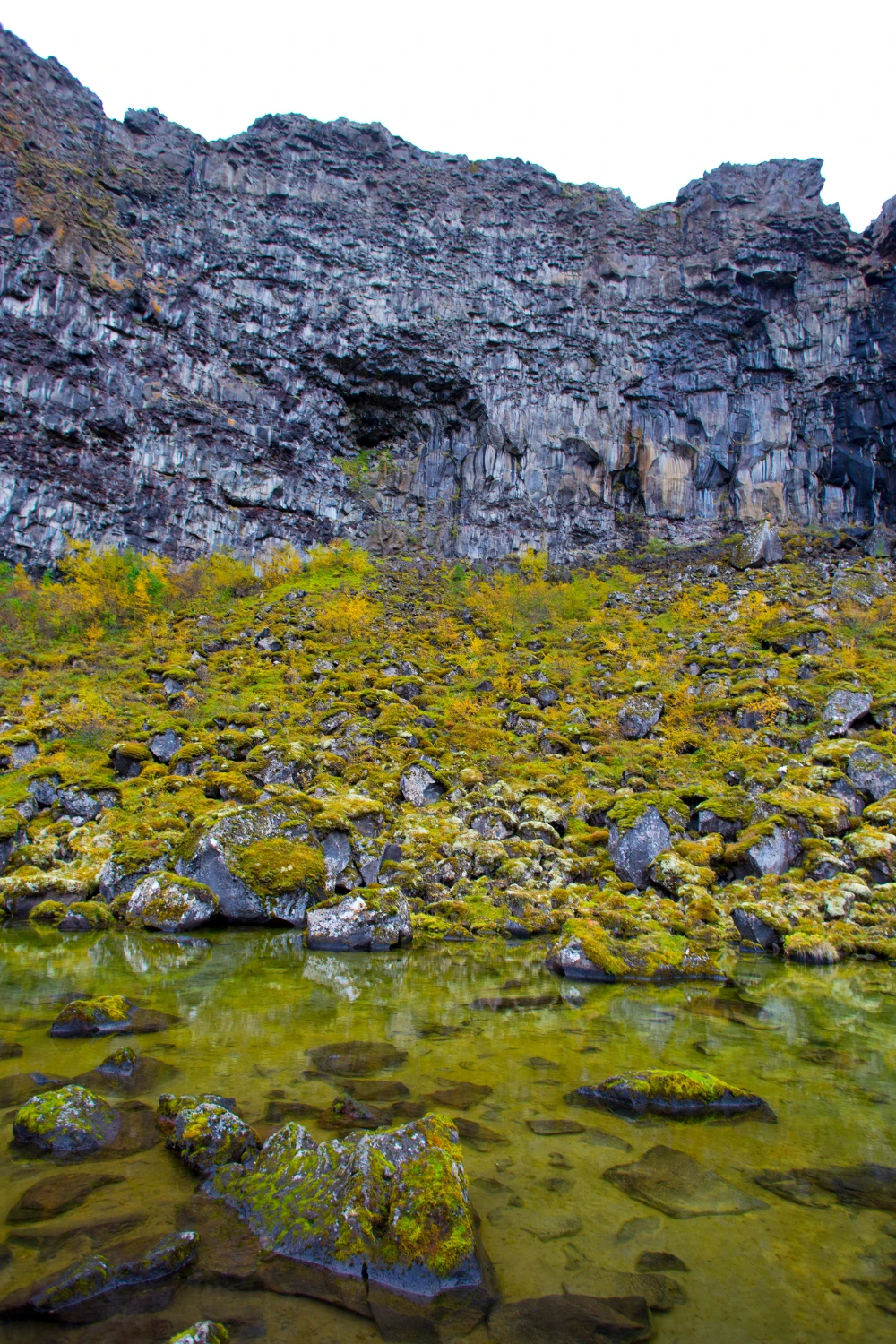
Hidden places in Iceland are the reason people keep coming back to this country year after year, even after they think they’ve seen everything. Iceland has a way of doing that to you. You visit once, you do the obvious things, and somewhere between the geysers and the waterfalls and the drive back to Reykjavik you start thinking about all the roads you didn’t take and all the signs you drove past without stopping. And then you book another flight before you’ve even unpacked from the first trip.
We’ve been to Iceland more times than is probably sensible, and the Golden Circle is still on the itinerary every single time. Þingvellir, Gullfoss, the Strokkur geyser erupting every few minutes while people gasp and reach for their cameras — it’s brilliant, genuinely, and if it’s your first visit to Iceland it absolutely belongs at the top of your list. But the Golden Circle covers a tiny corner of a country that is vast, geologically extraordinary and full of landscapes that most tourists never get anywhere near.
That’s the thing about Iceland that takes people by surprise. The country is enormous relative to its population, the road network opens up the entire island if you’re willing to drive it, and the further you push from the standard tourist circuit the more Iceland starts to feel like somewhere genuinely wild and untouched. Not wild in a dangerous or inaccessible way, but wild in the sense that you can stand somewhere spectacular and be completely alone with it, which is a feeling that’s increasingly hard to find in European travel.
The hidden places in Iceland on this list are spread across the whole country. Some are in the far north, deep in the Diamond Circle region that most visitors on short trips never reach. Some are in the remote Westfjords, where the roads are narrow and the landscapes are so dramatic they barely seem real. Some are on the Snæfellsnes Peninsula, a two-and-a-half hour drive from Reykjavik that gets skipped far more often than it should. And some — and this is the part that genuinely surprises people — are within 30 minutes of central Reykjavik, sitting right beside the main roads and quietly waiting for someone to actually stop.
Iceland rewards the curious traveller more than almost anywhere else in Europe. The people who slow down, take the detour, pull over when something catches their eye through the window — those are the people who come back from Iceland with the stories that make everyone else immediately start looking at flights. This list is for those people. Save it, use it, and go and find the Iceland that most tourists miss completely.
1. Ásbyrgi
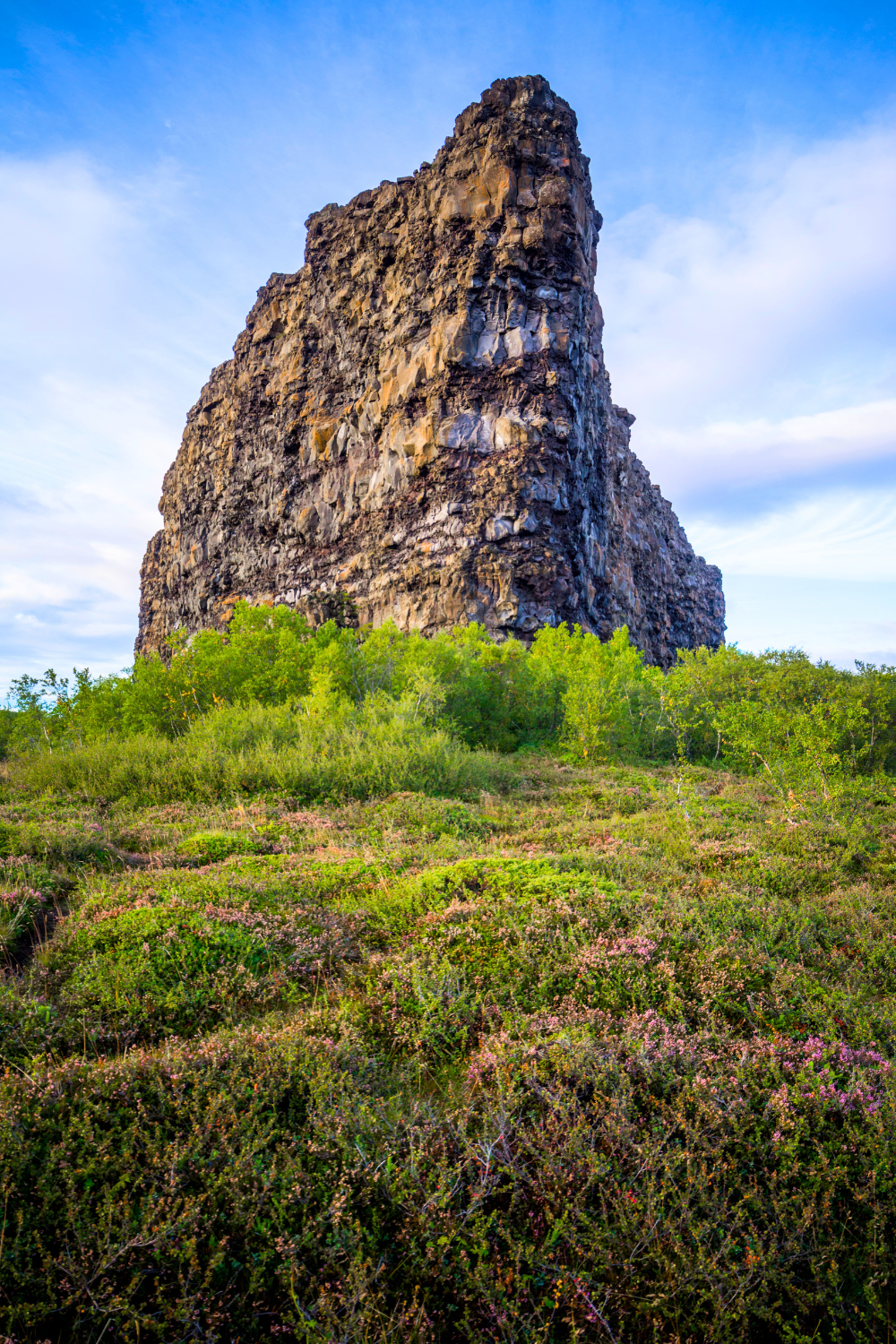
Ásbyrgi is a vast horseshoe-shaped glacial canyon in the far north of Iceland, and the scale of it when you first see it is genuinely difficult to process. The canyon walls rise about 100 metres on almost every side, enclosing a forested area that feels completely unlike the rest of the Icelandic landscape around it. According to Norse mythology, this is where Odin’s eight-legged horse Sleipnir left a hoofprint in the earth. Geologists have a slightly less dramatic explanation involving catastrophic glacial flooding, but the result either way is something extraordinary.
The canyon is about 45 minutes drive from Húsavík and makes a natural stop on any exploration of the Diamond Circle route in the north. The parking area is small and the trails through the canyon are well maintained, looping through the birch woodland to the small lake at the heart of the canyon called Botnstjörn and up to the rim viewpoints. Go on a quiet morning and you can have entire stretches of this place to yourself, which is a remarkable feeling given how spectacular it is.
If you’re basing yourself in Akureyri and want to cover more of the north in a day, combining Ásbyrgi with Dettifoss waterfall and Goðafoss makes for one of the finest single days of landscape photography and hiking in the whole country. Dettifoss in particular, the most powerful waterfall in Europe, is one of those sights that hits you physically — the roar of it reaches you long before you can see it, and the ground actually vibrates underfoot when you’re standing close to the edge.
2. Fagradalsfjall Volcano
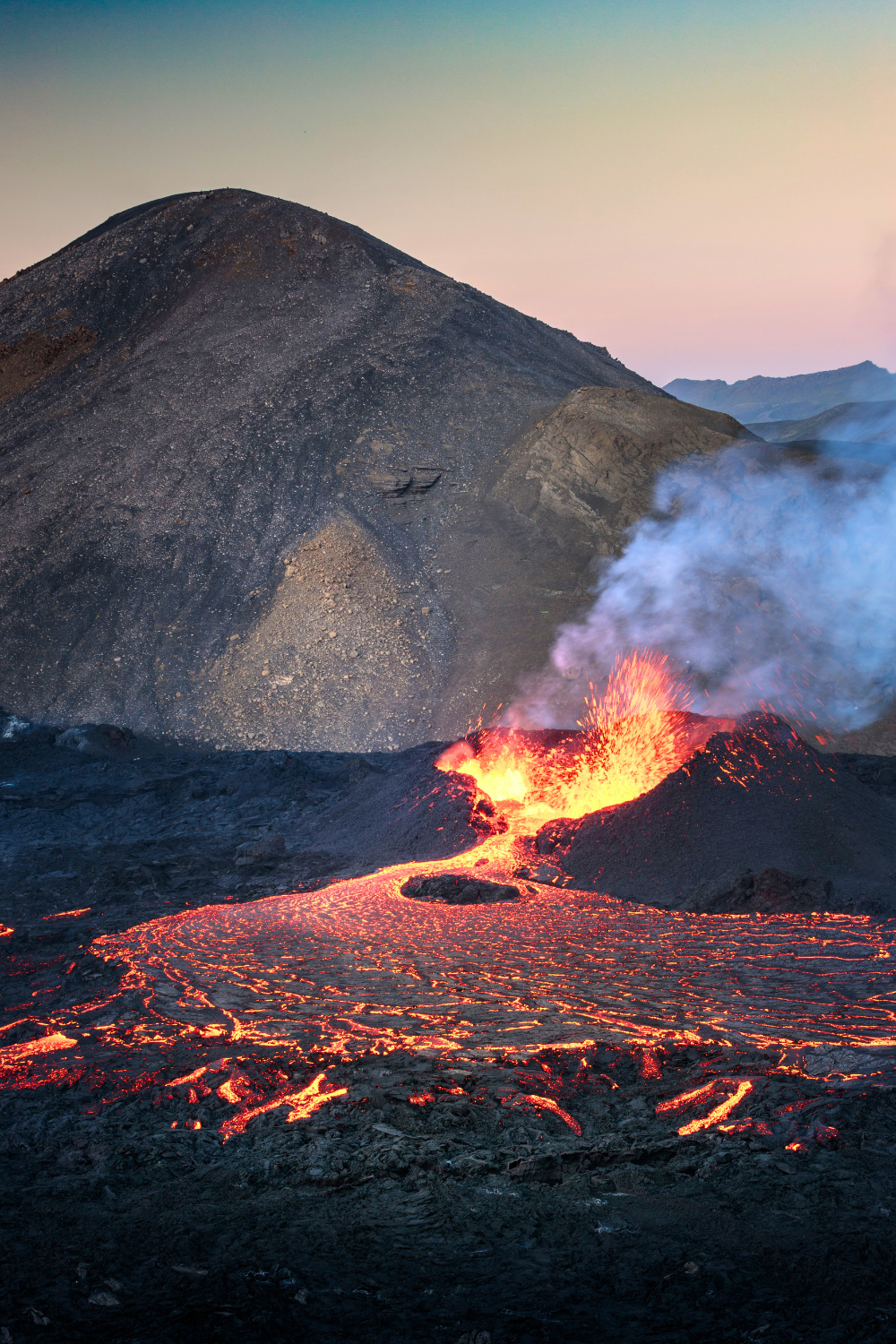
Fagradalsfjall sits on the Reykjanes Peninsula, less than an hour from Reykjavik and practically next door to the international airport at Keflavik, and it has been one of the most actively volcanic areas in Iceland for the past few years. The eruptions that began in 2021 have continued intermittently since, making this one of the very few places on earth where ordinary travellers can get genuinely close to active volcanic activity on a marked hiking trail.
The experience of hiking to an active lava field is unlike anything else in Iceland. The landscape changes constantly as new lava cools and older flows are buried under fresh ones, and the trails are updated accordingly, so checking current conditions before you go is essential. When an eruption is active, the glow of the lava is visible from a considerable distance, and at night the sky above the eruption site turns a deep orange that is completely otherworldly. Even when the volcano is in a quieter phase between eruptions, the hardened lava fields are extraordinary to walk through — sharp, black, still-warm in places, and covering a landscape that didn’t exist a few years ago.
The trailhead is easy to reach by car, and because most visitors to this area are focused on the Blue Lagoon just down the road, the hiking trails see far fewer people than the famous geothermal site. After your hike, Sól restaurant in Hafnarfjörður is worth going out of your way for. It’s a greenhouse restaurant where you eat surrounded by the actual growing crops, and the food is genuinely excellent.
3. Lómagnúpur
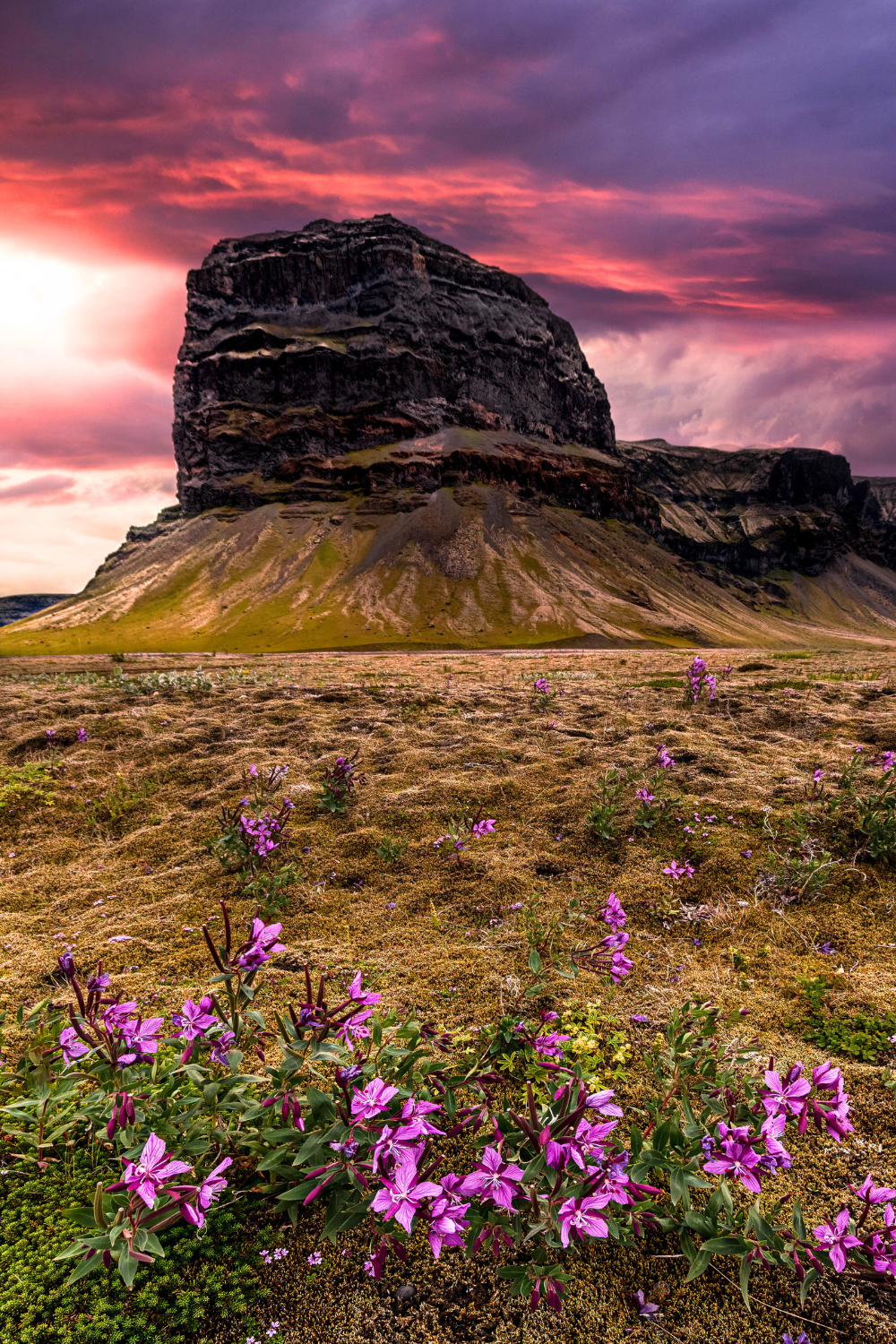
Lómagnúpur is one of those places on Route 1 that catches your eye from the car window and makes you slam on the brakes, and it’s the kind of sight that doesn’t get nearly enough attention in Iceland travel writing.
It’s a dramatic cliff formation on the south coast, rising almost vertically from the flat coastal plain to over 700 metres, its sheer rock face streaked with geological colour and its summit often lost in low cloud. The contrast between the flat, black volcanic landscape around it and the sudden vertical cliff is visually stunning and slightly surreal. You can pull off the ring road safely and view it from the roadside without needing to hike at all, which makes it one of the easiest impressive sights in Iceland to actually see.
It sits between Kirkjubæjarklaustur and Skaftafell in the southeast, which means if you’re heading toward or away from Jökulsárlón Glacier Lagoon — and you absolutely should be going to Jökulsárlón — you’ll pass right by it. The ice cave tours in the Katla area nearby are well worth booking in advance if you’re visiting in winter, because getting inside an ice cave in Iceland is one of those experiences that stays with you long after everything else from the trip has faded into a pleasant blur.
4. Kvernufoss
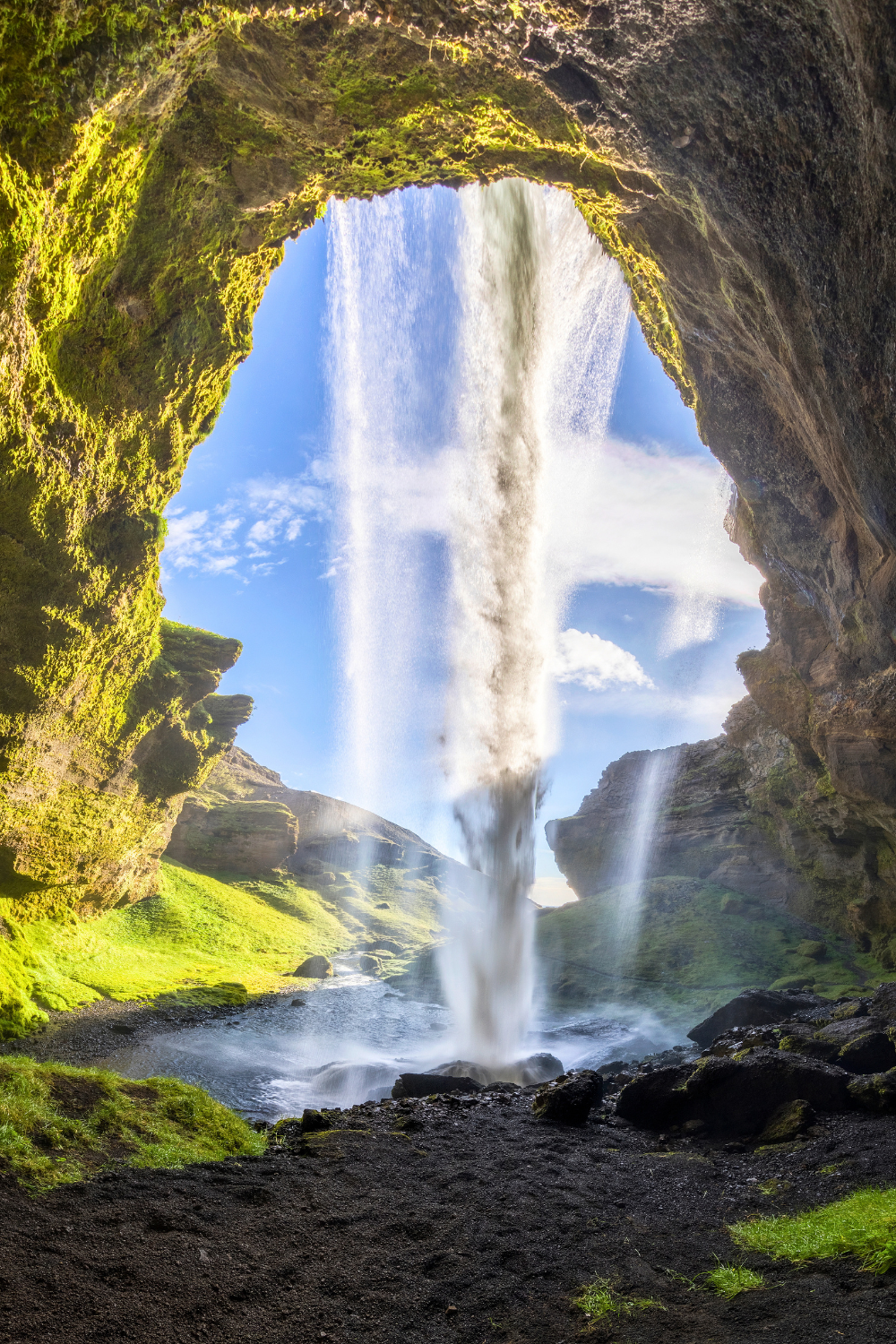
Iceland has so many waterfalls that even Icelanders have probably lost count, but Kvernufoss near Skógar is one of the best and one of the least visited relative to its quality, which makes it perfect for anyone who wants a genuinely impressive waterfall experience without the crowds that descend on nearby Skógafoss.
The path to Kvernufoss starts from the parking area near the Freya Cafe and takes about 15 to 20 minutes of easy walking to reach the falls. The trail follows a gorge through the landscape, and the waterfall itself drops into a hidden canyon with a small pool at the base. In good conditions you can actually walk behind the falls, which is the kind of thing that sounds gimmicky and is actually completely magical in practice.
Most visitors to this stretch of the south coast are focused on Seljalandsfoss and Skógafoss, both of which are genuinely beautiful and worth seeing. But if you have an extra hour and you’re already in the area, the short hike to Kvernufoss is one of the best decisions you can make on a south coast day. The paths can be icy and slippery in winter and after rain, so good footwear is important, but it’s a well-maintained trail and perfectly manageable for anyone reasonably fit.
5. Rauðisandur
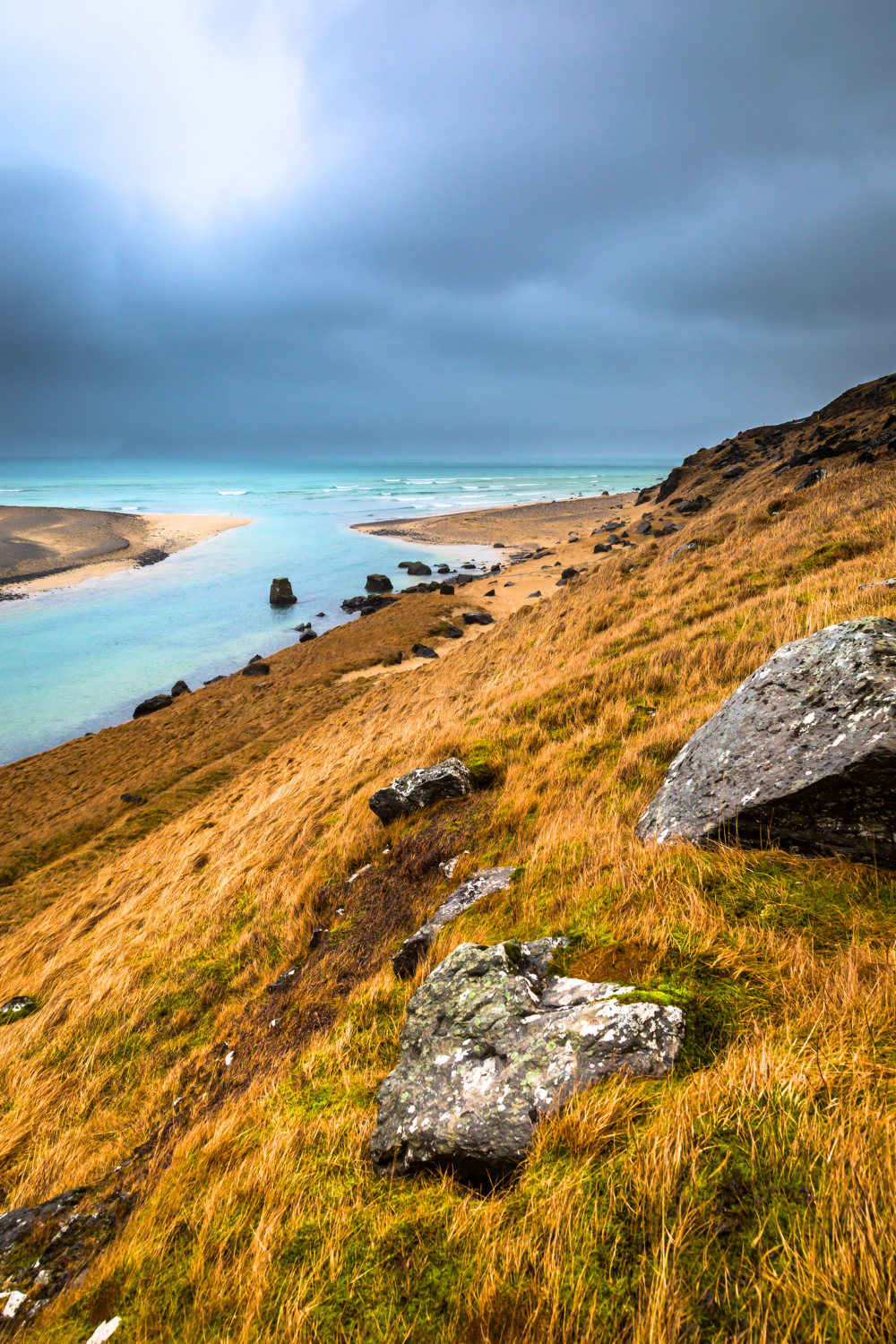
Most people’s mental image of an Icelandic beach involves black sand, crashing North Atlantic waves and a general atmosphere of beautiful desolation. Rauðisandur in the Westfjords completely upends that expectation, because the sand here is not black. It’s red. Actually red, ranging from deep rust to golden orange depending on the light, and the contrast of the coloured sand against the bright blue water of the bay and the green hillsides behind it is one of the most visually surprising sights in Iceland.
Getting to Rauðisandur requires serious commitment. The Westfjords are the most remote region of Iceland, connected to the rest of the country by mountain roads that are challenging in good conditions and genuinely difficult in bad ones. The beach itself is reached via a narrow, steep gravel road that demands a 4WD and some confidence behind the wheel. None of that is an exaggeration and all of it is worth it.
There are no facilities at Rauðisandur. No café, no toilets, no information boards. Just the beach, the bay, the extraordinary landscape and whatever weather Iceland has decided to offer that day. Take everything you need with you, pack proper layers regardless of the forecast, and allow more time than you think you’ll need in both directions. On the way back, the geothermal swimming pools at Íþróttamiðstöðin Brattahlíð are about 35 minutes from the beach and a genuinely wonderful way to warm up after a morning in that wind.
6. Seyðisfjörður
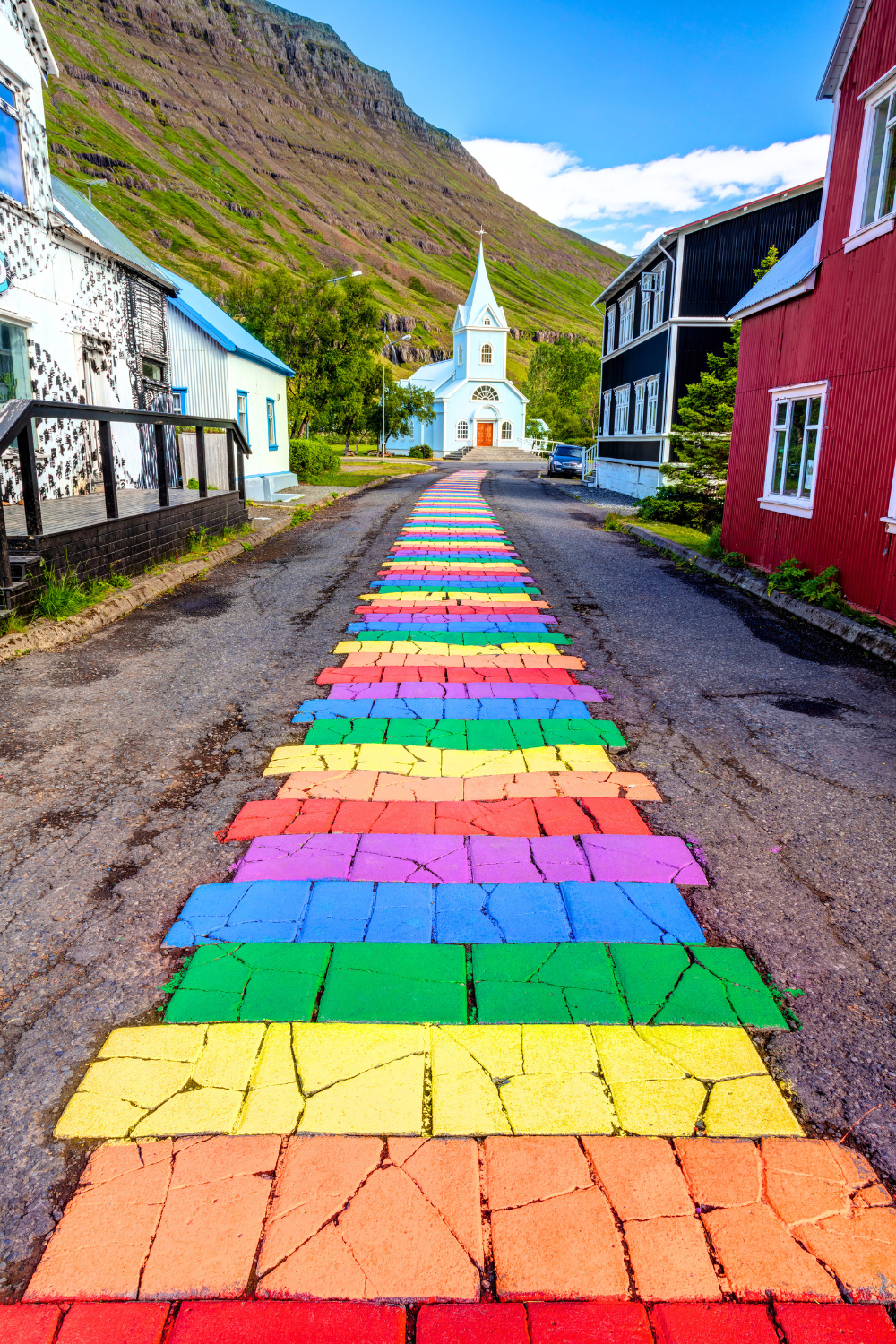
Seyðisfjörður is a small town in the East Fjords sitting at the end of a long, narrow fjord, accessible via one of the most dramatic mountain roads in Iceland — a series of switchbacks that descend from the plateau in long, vertiginous curves with the fjord visible below throughout. The road itself, especially in winter when it’s covered in snow, is an experience that makes arriving in the town feel like a genuine achievement.
The town is small but surprisingly vibrant, with a strong creative community and a handful of good places to eat and stay. The multicoloured houses along the main street and the rainbow path leading to the blue church are genuinely charming and make for excellent photography. There’s a real end-of-the-world character to the place that appeals enormously once you’re there.
For waterfalls, the area around Seyðisfjörður is excellent. Gufufoss and Klifbrekkufoss are both beautiful and easily reachable from the town. The Vök Baths on the edge of Lake Urriðavatn, about 30 minutes from Seyðisfjörður, are among the most impressive geothermal pools in Iceland, with floating pool structures built out over the lake surface so you can lie in warm water while looking out over the cold freshwater lake surrounding you. It’s a genuinely special experience and one of the better surprises in eastern Iceland.
7. Kerið Crater
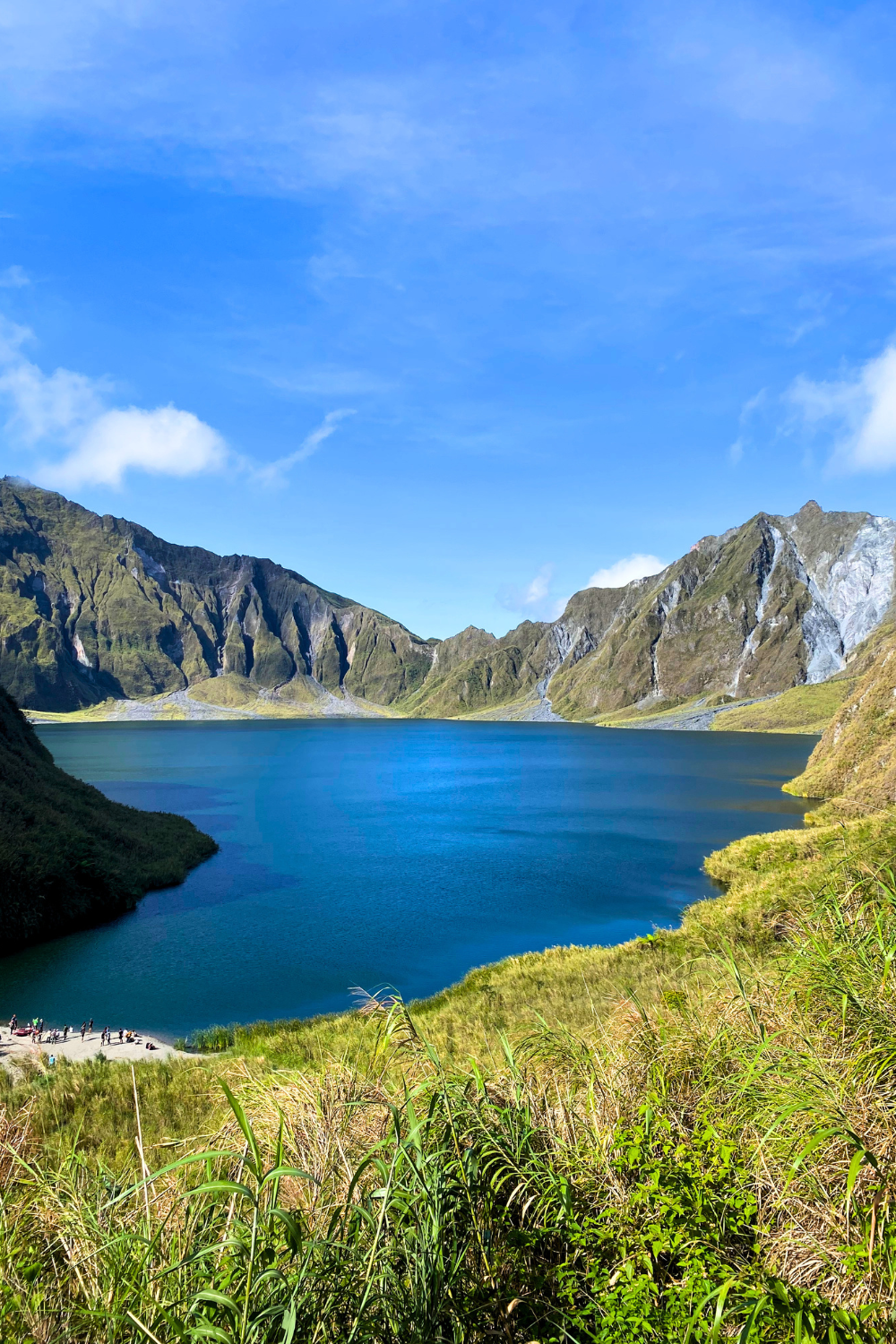
Kerið is not exactly unknown — it appears on plenty of Iceland itineraries — but it’s remarkable how many people driving the Golden Circle miss it entirely, either because they run out of time or because it doesn’t get the same marketing attention as the other Golden Circle stops.
The crater is about 3,000 years old, formed when a volcanic cone erupted and then collapsed inward as the magma chamber below it emptied. What’s left is a strikingly colourful crater with rust-red volcanic walls dropping to a vivid green and blue lake at the bottom, and the whole thing is small enough that you can walk the full rim in about 15 to 20 minutes. There’s a small entrance fee, which helps maintain the paths around the crater and keep visitor numbers manageable.
The colours here are extraordinary, particularly in the right light. The combination of the red oxidised rock, the green lake water and the black lava on the surrounding slopes creates a palette that looks almost artificial. It’s one of those places where every photograph you take looks like it’s been edited, and then you put the camera down and realise it actually looks like this.
8. Hverir
Hverir is the geothermal area near Lake Mývatn in the north that looks, in the most literal possible sense, like another planet. Bubbling mud pools, steaming sulphur vents, hissing fumaroles and the whole area stained vivid shades of yellow, orange and white from the mineral deposits — it’s one of the most alien-looking landscapes in Iceland and that is a country with considerable competition in that category.
It sits about 45 minutes from Húsavík and is one of the easier geothermal areas to visit in the north. There’s a small parking fee and a network of marked paths through the geothermal field that allow you to get remarkably close to the activity. Stay on the paths — the ground around the vents is thin and the temperatures below the surface are extreme. The smell of sulphur is intense and takes about five minutes to stop noticing, at which point you can concentrate entirely on how spectacular it all looks.
Just a few minutes drive away, the Krafla volcano caldera is worth adding if you have time. The walk around the caldera rim takes about an hour and the views down into the volcanic crater and across the surrounding lava fields are extraordinary. We went at one in the morning on a summer visit when the midnight sun was still fully bright and the whole area was deserted. Walking around a volcano caldera in permanent daylight with nobody else in sight is one of those Iceland experiences that you genuinely cannot replicate anywhere else in the world.
9. Rauðhólar
Rauðhólar is a cluster of red volcanic craters on the outskirts of Reykjavik — so close to the city that you could visit them before breakfast and be back at your hotel in time for the buffet — and the number of tourists who drive straight past them every day on the way to somewhere else is genuinely baffling.
The craters are beautifully coloured in red and orange lava rock and surrounded by the Elliðaárhraun lava field, and the walk around them takes about 25 minutes at a comfortable pace. There are good views, interesting geology and a genuine sense of the volcanic forces that shaped this landscape, all within about ten minutes of central Reykjavik. Iceland’s spectacular nature doesn’t always require a four-hour drive into the wilderness and Rauðhólar is proof of that.
10. Krýsuvík and the Seltún Geothermal Area
Krýsuvík sits on the Reykjanes Peninsula not far from the Blue Lagoon and is one of the most accessible geothermal areas in Iceland, which makes it all the more surprising that so few visitors stop there. The Seltún geothermal area within it has a boardwalk path through an active field of boiling mud pots, steaming vents and brilliantly coloured mineral deposits that you can walk around comfortably in about 30 minutes.
It’s not a full-day destination in itself but it makes an excellent addition to a wider exploration of the Reykjanes Geopark, the volcanic peninsula that most people drive through as quickly as possible on the way between the airport and Reykjavik without realising how much it has to offer. The whole peninsula sits on the Mid-Atlantic Ridge and is one of the most volcanically active areas in Iceland, and combining Krýsuvík with the Fagradalsfjall lava fields and a stop at the Reykjanes Lighthouse makes for one of the most interesting half-days you can spend in the country.
11. Snæfellsnes Peninsula
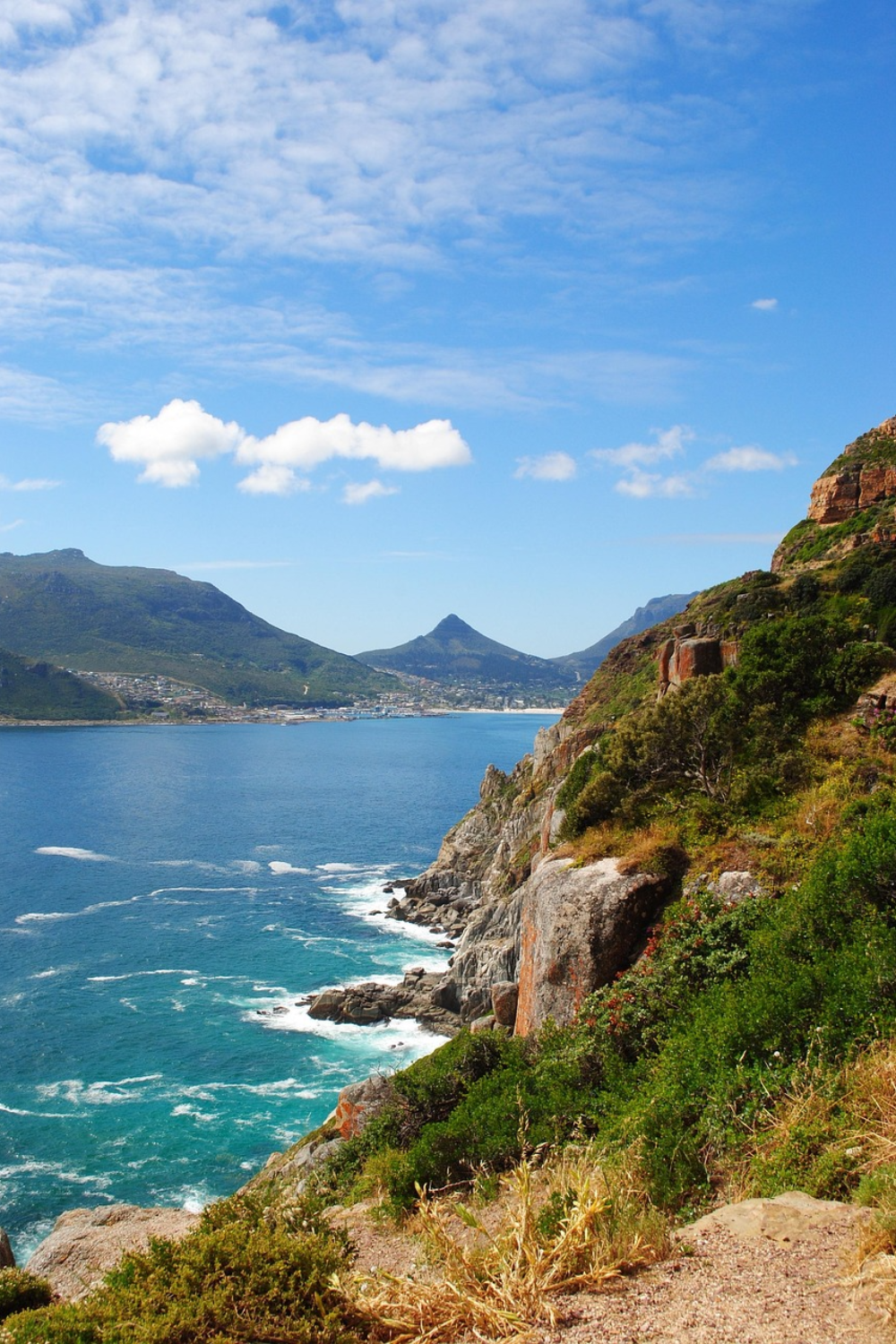
The Snæfellsnes Peninsula stretches out into the Atlantic from the west coast of Iceland about two and a half hours north of Reykjavik, and it might be the most scenically complete stretch of Iceland in the country. It has glaciers, volcanoes, dramatic sea cliffs, black sand beaches, fishing villages, lava fields and the Snæfellsjökull glacier-capped stratovolcano that Jules Verne used as the entrance to the centre of the earth in his novel. The peninsula packs more landscape variety into a smaller area than almost anywhere else in Iceland.
Despite all of that, it consistently gets skipped by first-time visitors who stay in Reykjavik and do the Golden Circle and the south coast without ever heading north. That’s completely understandable given limited time, but if you can add a night or two on the Snæfellsnes to any Iceland itinerary you won’t regret it for a moment.
The area around Arnarstapi on the south coast of the peninsula is particularly special. The coastal walk between Arnarstapi and Hellnar passes through a landscape of extraordinary volcanic rock formations, sea arches, bird colonies and views out toward the glacier that are some of the finest in Iceland. The arch at Gatklettur is one of the most photogenic natural formations in the country. The cliffs along this stretch are dramatic and the wind can be genuinely powerful, so keep well back from the edge and keep a firm grip on your camera.
Iceland is one of those rare places where the more time you invest and the further you push from the standard routes, the more it gives back. Every one of these places has surprised us in some way, and we’ve been going back for years. If this is your first Iceland trip, do the Golden Circle and enjoy every minute of it. And then start planning how to get back for everything else.

