
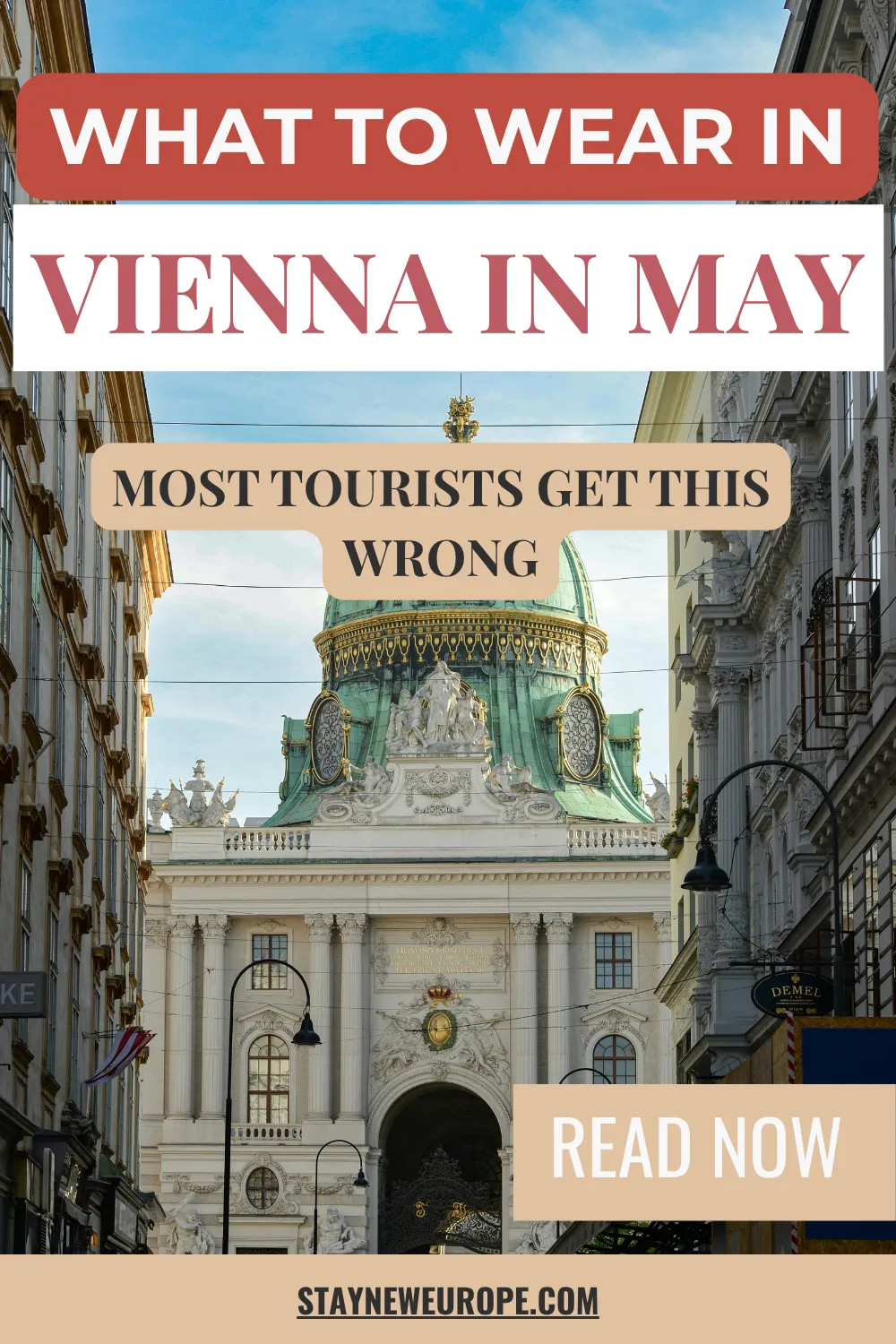
Vienna in May is one of those travel moments that feels almost too good to be true. The chestnut trees are in full bloom along the Ringstrasse, the café terraces spill out onto the pavements, and the whole city seems to exhale after a long winter. It’s warm-ish, green, and undeniably beautiful — but let me be honest with you: it’s also wildly unpredictable.
One morning you’ll be sitting outside Café Central in a linen shirt feeling like you’ve completely nailed Europe. By 4pm, the sky will have turned the colour of slate, the temperature will have dropped seven degrees, and you’ll be standing on a cobblestone street near the Naschmarkt wondering where you went so wrong. This is May in Vienna.
The mistake most tourists make? They either over-prepare for cold (arriving in full winter gear, sweating through the Kunsthistorisches Museum) or they under-pack for rain (flip-flops and a cotton sundress in a city that does not mess around with afternoon showers). What you actually need is somewhere clever in the middle — and that’s exactly what this guide is for.
Before We Dive In: What Vienna in May Actually Looks Like
Let’s set expectations properly, because packing well starts with knowing what you’re actually dealing with.
The weather sits somewhere between “genuinely lovely” and “extremely moody.” Average daytime temperatures range from 15°C to 20°C (59°F–68°F), with occasional spikes closer to 22°C on good days. Mornings can be cool — sometimes sharp — and evenings reliably drop back down to around 12°C–14°C. Rain is real. Not constant, but present. Vienna gets some of its heaviest rainfall in May, and those showers can arrive with very little warning.
The walking is considerable. Vienna is a city built for grand gestures — sweeping boulevards, enormous squares, historic palaces with very long approaches. You will walk more than you expect. The inner city (the 1st district especially) is fairly flat, but there’s uneven paving, cobblestones near older buildings, and the occasional dramatic staircase. Heels are not your friend here. Neither are brand-new shoes.
The style culture matters more than most travel guides admit. Viennese people are not flashy, but they are put-together. There’s a quiet elegance to how locals dress — classic cuts, good-quality basics, nothing too loud. Walking through the city in athletic leggings, a university hoodie, and a baseball cap will mark you out immediately. Not that anyone will say anything. But you’ll feel it.
Lightweight Layers Are the Whole Game
I cannot stress this enough. The single most important thing you can do when packing for Vienna in May is build your entire wardrobe around the concept of layering. Not heavy layers — lightweight ones that you can add and remove without drama.
Here’s why: your day in Vienna will almost certainly span several different microclimates. You’ll start the morning cool, warm up by midday, potentially get caught in a shower, and then find yourself outside for dinner when the temperature has dropped again. The tourist who packed only t-shirts and one heavy jacket will spend the whole trip either boiling or cold. The tourist who packed thin layers will spend it feeling smug.
The formula that actually works: a base layer (lightweight t-shirt or thin blouse), a mid-layer (a long-sleeve shirt, fine-knit jumper, or fitted cardigan), and an outer layer (a light jacket or trench). You can strip down to just your base in a warm museum or add everything back on for an evening walk along the Danube Canal. Pack pieces that genuinely work together, and you’ll need far less than you think.
Local tip: Viennese people love a good scarf — not for warmth necessarily, but as a finishing piece. A lightweight scarf in a neutral or classic print can take an outfit from “tourist” to “intentional” in seconds and doubles as an extra layer when the wind picks up.
The Case for a Good Trench Coat
If you bring one outer layer to Vienna in May, let it be a trench coat. This is not a controversial opinion — it’s just correct.
A classic trench (or even a lightweight mac) handles the weather beautifully: it’s breathable enough for mild days, water-resistant enough for those sudden showers, and — crucially — it looks good. It looks particularly good in Vienna, a city that was practically designed as a backdrop for elegant coats. Wearing a well-cut trench while crossing the Michaelerplatz past the Hofburg is one of those effortlessly cinematic experiences you didn’t know you needed.

Go for a neutral — camel, stone, or classic khaki. These pair with everything and won’t fight with the rest of your wardrobe. If you already own a good trench, this is the trip to bring it. If you don’t, Vienna’s own shops (or the city’s excellent vintage stores, especially in the 7th district) will happily solve that problem.
A lightweight down gilet or packable puffer is also worth considering as a secondary layer — it adds warmth without bulk and collapses into almost nothing in a bag.
Local tip: Avoid those enormous anorak-style hiking jackets unless you’re actually planning a day trip to the Vienna Woods. They’re practical, yes, but they signal “tourist on an adventure” rather than “person enjoying a city.”
Dresses in May: Yes, But Make Them Smart
I will always advocate for a dress when travelling — nothing is easier to pack, nothing makes you feel more immediately ready for a city. In Vienna in May, dresses absolutely work, but the choice of dress matters enormously.
A midi-length wrap dress or a structured shirt dress in a medium-weight fabric (not flimsy jersey, not heavy cotton) is ideal. The length gives you coverage on cooler mornings and evenings. The structure means you look intentional rather than like you rolled out of a holiday rental. Pair it with a cardigan or lightweight blazer, add a low-heeled boot or comfortable leather flat, and you’ve got an outfit that works from a morning at the Secession to an afternoon coffee at Café Hawelka to dinner in Spittelberg.

Floaty, boho-style dresses can work but tend to fight with the wind, look dishevelled after a long day of walking, and feel slightly out of place in the city’s more classic aesthetic. I learned this the hard way, standing outside the Kunsthaus Wien looking like I’d arrived from a festival rather than a flight.

Local tip: A silk or satin-look slip dress with a fitted jumper over it is very Viennese — the city has a fondness for mixing feminine pieces with structured layers.
Jeans: Your Reliable Best Friend
Here’s the unsexy but honest answer: a good pair of jeans will serve you extremely well in Vienna in May. Not because they’re exciting, but because they’re practical, versatile, and — in the right cut — genuinely stylish.
Opt for straight-leg or slim-cut in a dark wash. Dark wash reads more polished, especially in the evening. Wide-leg jeans are having a moment and can look brilliant paired with a fitted top and loafers, though they’re slightly harder to pack. Light-wash and distressed styles are fine for daytime; just be aware they lean casual.
Pair your jeans with a nice blouse and a blazer for evenings, with a fine-knit jumper for museums and afternoon exploring, or with a classic striped Breton top for the Naschmarkt market on a Saturday morning. They’re endlessly useful.

The one thing I’d steer away from: overly branded jeans, heavy embellishments, or very casual cuts. Vienna has a quiet but firm style standard, and what reads as dressed-up casual in other cities might just read as casual here.
Local tip: A pair of well-fitted tailored trousers (dark navy or camel) takes up the same space as jeans in your bag and reads significantly more polished for evenings.
Walking Shoes: This Will Make or Break Your Trip
Let me be very direct about this: do not wear new shoes in Vienna. Do not wear heeled sandals for a full day of sightseeing. Do not wear trainers that belong at the gym rather than on a trip.
You will walk enormous distances. The Ringstrasse alone is nearly five kilometres around. Add the Museumsquartier, a wander through the Naschmarkt, a detour to the Belvedere gardens, and a stroll along the Danube Canal, and you’re easily at 15,000–20,000 steps before dinner. Your feet will tell you everything about your shoe choices by day two.
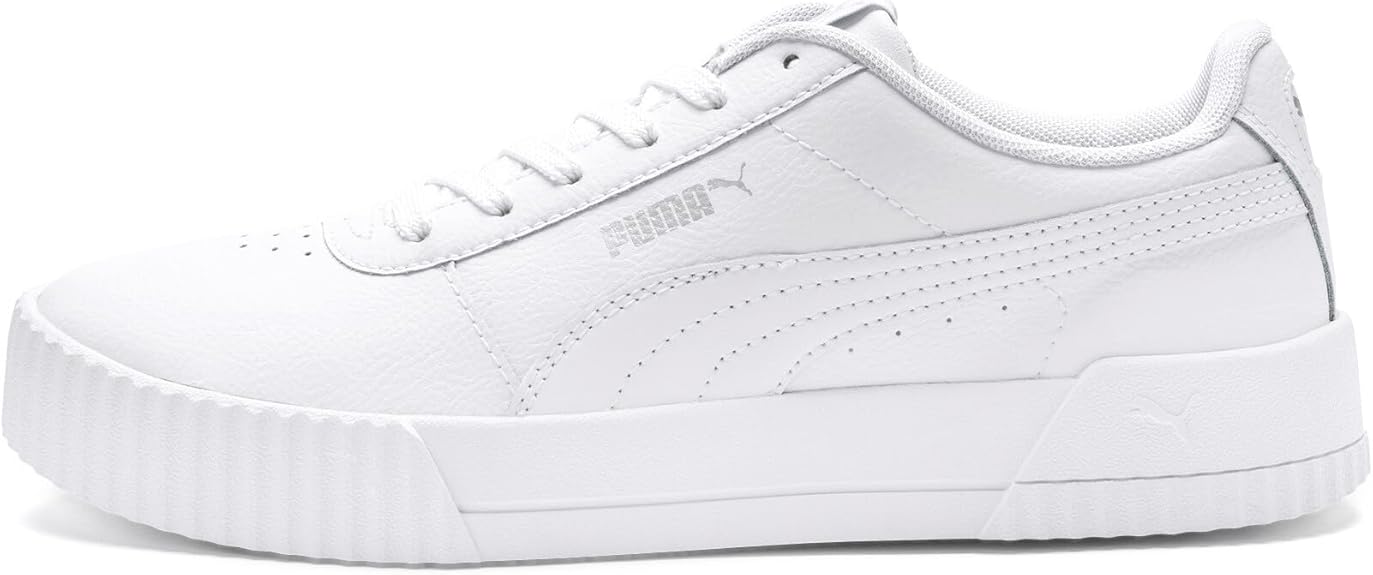
What actually works: leather or leather-look loafers (incredibly versatile, smart enough for anywhere), low-heeled ankle boots (great for unpredictable weather and cobblestones), clean white leather trainers (the European uniform for a reason — just keep them clean), or well-made ballet flats with a slightly padded sole.

I wore a pair of low-heeled block-toe mules around Vienna for two days and thought I was being clever. By the end of day two I was sitting on a bench near the Volksgarten regretting every decision. The heel catches on cobblestones, the lack of support adds up, and you will not enjoy the Kunsthistorisches Museum standing on sore feet.
Local tip: Viennese women walk with genuine confidence in their footwear — you’ll rarely see uncomfortable-looking shoes on a local. The standard is comfort plus style, and it’s an achievable standard.
What NOT to Wear in Vienna
This is where I get slightly opinionated, but I think it’s worth being honest.
Visible athletic wear — leggings as trousers, running trainers, sports shorts — is genuinely out of place in Vienna’s inner city, particularly in cafés, restaurants, and cultural sites. It’s not offensive, but it communicates that you haven’t really engaged with the city. Austrians dress with a quiet respect for their own style culture that’s worth honouring.
Heavily branded tourist merchandise is another one. The “I heart Vienna” t-shirt. The branded tote bag from the airport. It just flags you as someone who hasn’t left the tourist circuit.
Very short shorts or micro-miniskirts will cause you practical problems beyond style — you won’t be allowed into churches or the Imperial Crypt wearing them, and Vienna has a number of sites with dress codes worth respecting.
Flip-flops, as I’ve already hinted, are a bold choice in a city with cobblestones, surprise showers, and a cultural preference for proper footwear. Save them for the airport or your accommodation.
Local tip: If you’re ever unsure whether something is appropriate, ask yourself: would I wear this to a nice lunch? Vienna essentially operates on that standard for most of the day.
Evening Outfits: Vienna Rewards Dressing Up
This surprised me, genuinely. Vienna’s evening culture — the restaurants, the wine bars, the opera, the theatre — encourages a slightly elevated approach to getting dressed. Not black-tie necessarily, but thoughtful. A step above what you wore to the museum.
For a dinner in the 1st district or a night at the Volksoper, think: a midi dress with kitten heels or elegant flats, or tailored trousers with a silk blouse and a blazer. Men look great in a sport coat over dark trousers. Anything that signals you’ve made an effort will serve you well.
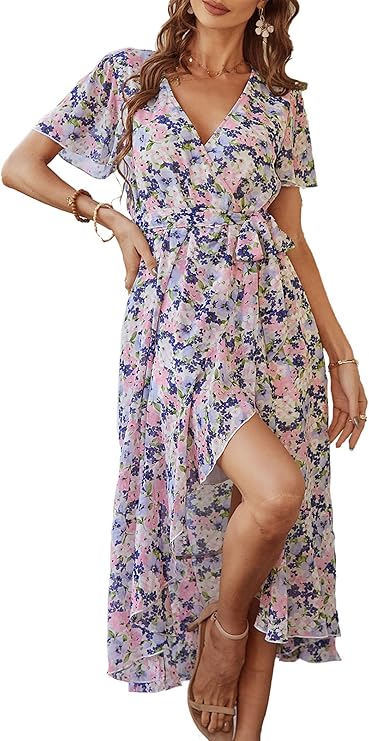
For the actual opera or Burgtheater, smart-casual to cocktail dress is the standard. You’ll see everything from evening gowns to nice jeans (the latter mostly from tourists), but dressing up genuinely enhances the experience. Vienna’s grand theatres were designed to make you feel part of something — let them do their job.

For wine bars and more casual evenings in the 7th or 8th districts, the vibe relaxes considerably. Good jeans, a nice top, and a jacket work beautifully.
Local tip: The Viennese are not showy about dressing up — it’s more about quality and fit than labels. A well-cut dress in a simple fabric will always look more “Vienna” than something flashy.
Church Dress Codes (Plan Ahead)
Vienna has extraordinary churches — Stephansdom, the Peterskirche, the Votivkirche, the imperial crypt under the Kapuzinerkirche — and most of them have dress codes. Shoulders covered. Knees covered. No sleeveless tops.
In May, this is less of an issue than in high summer, but it’s worth planning for. If you’re wearing a sleeveless dress or a short skirt on a warm day, pack a lightweight scarf or cardigan in your bag. A pashmina or thin wrap takes up virtually no space and solves this problem immediately.

The issue I see constantly: tourists arriving at Stephansdom in the middle of summer in tiny sundresses, being turned away or forced to buy a scarf from the sellers outside who very cheerfully profit from this exact situation.
Don’t let that be you.
Local tip: Many churches in Vienna are genuinely worth going inside. Don’t let a packing oversight be the reason you miss the Peterskirche’s extraordinary interior or the imperial crypt where the Habsburgs are buried.
Jackets and Mid-Layers: The Details Matter
Your mid-layers will do more work than any other part of your wardrobe in Vienna in May, so it’s worth thinking carefully about them.
A fine-knit jumper or lightweight merino in a neutral colour (stone, navy, cream, soft grey) is probably the single most useful item you can pack. It goes over everything, under everything, and collapses easily into a bag. Merino specifically is remarkable — it regulates temperature, resists wrinkles, and doesn’t hold odour, which means you can wear it multiple times between washes.

A fitted blazer elevates any outfit immediately and is worth the extra packing space. A navy or cream blazer over jeans and a plain tee will pass for smart-casual almost anywhere. A linen blazer (slightly more relaxed) is ideal for warmer days.
A lightweight waterproof layer — even just a thin packable rain jacket — belongs in your bag, not just because of the weather but because carrying it means you’re never caught off guard. The good ones now fold into their own pocket and weigh virtually nothing.
Local tip: Viennese layering tends to be precise rather than bulky — the aim is to look put-together at all temperatures, not like you’re wearing four jumpers.
Rain Preparation: Don’t Be the Person Getting Drenched
May rain in Vienna is not always the gentle, cinematic kind. Sometimes it arrives as a proper downpour — the sort that soaks through cotton in about four minutes.
You need two things: a compact umbrella and a water-resistant outer layer. The umbrella should live in your bag permanently. The good ones are genuinely small and weigh almost nothing; there’s no excuse for not having one. The water-resistant layer — your trench coat, your light mac, your packable waterproof — should be with you any time you’re out for more than a couple of hours.

What I wouldn’t recommend: relying on a poncho. They’re practical, yes, but wearing a plastic poncho in Vienna feels slightly at odds with a city that takes its aesthetics very seriously. Your fellow tourists won’t care; the Viennese will notice.
A quick practical note: canvas and suede shoes will be miserable in the rain. If the forecast looks uncertain, stick to leather or synthetic materials that wipe clean.
Local tip: Vienna’s coffee houses are extraordinary sanctuaries during a rain shower. If you get caught out, don’t stress — take it as an invitation to order a Melange and wait it out in considerable comfort.
Bags: Crossbody Over Everything
This is not complicated, but it’s important. In any busy European city — and Vienna in May sees substantial tourist numbers — a crossbody bag is the correct choice.
It keeps your belongings secure, leaves your hands free (vital for navigating cobblestones, taking photos, and carrying market purchases), and sits close to your body in crowded spaces. A medium-sized leather or leather-look crossbody in a neutral colour will serve you for day and evening.

A large tote is fine for the odd museum day when you’re carrying more, but don’t make it your default. It hangs open, swings around, and in a packed tram is a pickpocket’s ideal scenario.
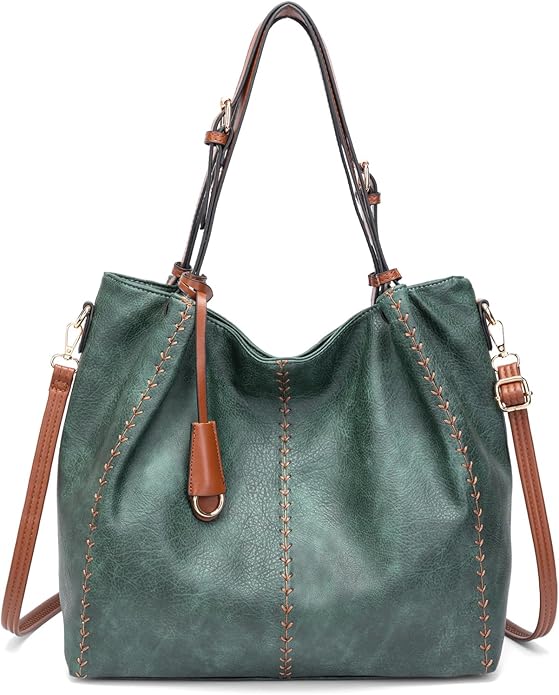
Backpacks are practical but lean casual — fine for a day trip to the Vienna Woods or the Prater, slightly out of place for an evening in the 1st district. If you do use a backpack, keep it front-facing in crowded spaces.
Local tip: Vienna’s Naschmarkt and the Flohmarkt (flea market) on Saturdays are genuinely wonderful places to browse, but both are busy. Wear your crossbody properly — across your body, zip facing inward.
Fabrics to Choose (and the Ones to Leave at Home)
The right fabrics will make your packing significantly smarter.
Choose: Merino wool (temperature-regulating, wrinkle-resistant, endlessly useful), linen and linen blends (breathable for warmer days, though they wrinkle), cotton-modal blends (softer and less wrinkle-prone than pure cotton), and anything with a small amount of stretch (makes walking much more comfortable).
Avoid or minimise: Heavy cotton (absorbs rain and takes forever to dry), pure silk for everyday wear (marks easily, requires careful handling), synthetic fabrics that trap heat (you’ll be warm in museums, which are often over-heated), and anything that requires ironing (unless you genuinely plan to do that, which you probably won’t).
The ironing point is more important than it sounds. Hotels and Airbnbs in Vienna don’t always have irons readily available, and a linen dress that’s been sitting in a bag for two days won’t look great unless you’ve got a way to deal with it.
Local tip: Merino is genuinely worth investing in if you travel regularly. A good merino base layer or jumper packs to almost nothing and does the job of three cotton equivalents.
Accessories That Do Real Work
A few well-chosen accessories in Vienna can quietly transform fairly simple outfits — and importantly, they take up virtually no space.
A silk scarf or lightweight wrap is already covered, but it bears repeating: it’s one of the most versatile things you can pack. Worn around the neck, as a headscarf on a windy day, as a belt, or draped over your shoulders at a cool outdoor dinner — a good scarf earns its place every time.

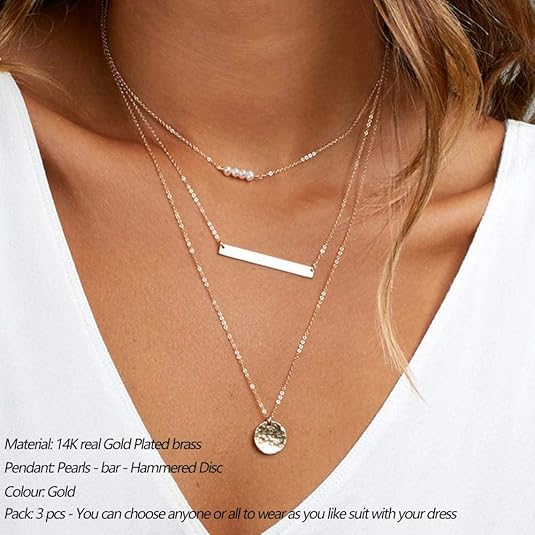
Simple gold or silver jewellery — small hoops, a delicate chain, a clean watch — looks right in Vienna. The city’s aesthetic tends towards the classic rather than the statement; you don’t need to dress it up with bold accessories, but a few thoughtful pieces make a real difference.
Sunglasses. Bring a pair you actually like and are happy to wear every day, because May in Vienna can be genuinely bright. A classic frame — tortoiseshell, black, or metal — works well and doesn’t date.
A lightweight belt can also transform how tailored trousers or a looser dress sits on you without any additional bulk.
Local tip: Vienna has genuinely beautiful jewellery shops in the 1st district. If you’re a jewellery person, you may end up buying something rather than just packing something.
Your Vienna Capsule Wardrobe for One Week
This is what I’d actually pack for seven days in Vienna in May — assuming I was doing a mix of sightseeing, cafés, museums, and at least one evening at the opera or a nice restaurant.
Tops: 2 lightweight t-shirts (one white, one neutral), 1 striped Breton-style top, 1 silk or satin blouse for evenings, 1 fitted fine-knit jumper
Bottoms: 1 pair of slim dark jeans, 1 pair of tailored trousers (navy or camel), 1 midi skirt or dress that works for multiple occasions
Dresses: 1 wrap dress or shirt dress that works for day and evening with a layer
Layers: 1 classic trench or light mac, 1 fitted blazer, 1 lightweight waterproof (packable)
Shoes: 1 pair of leather loafers or low-heeled ankle boots, 1 pair of clean white leather trainers, 1 pair of smart evening shoes (kitten heels, clean block-heels, or elegant flats)
Accessories: 1 crossbody bag, 1 lightweight scarf or wrap, sunglasses, compact umbrella, simple jewellery
This is genuinely enough for seven days with some thoughtful outfit rotation. The key is that everything mixes and matches — every top works with every bottom, every layer works over every outfit. You won’t miss the things you didn’t pack.
Packing Light Without Under-Packing
The two fears in travel packing are always the same: bringing too much or not enough. Vienna in May actually makes this easier than most destinations, because the weather’s moderate nature means you don’t need specialist equipment — just versatile pieces.
The rule I use: lay out everything you think you want to bring, then remove a third of it. You’ll almost certainly not wear some of those items, and the ones you do wear will repeat. Outfit repetition isn’t a failure — it’s sensible.
Plan your outfits intentionally before you pack. A Saturday at the Naschmarkt in the morning, a museum in the afternoon, and dinner in Spittelberg in the evening can all be served by one outfit with a layer swap. You don’t need a separate look for each activity.
Laundry is genuinely possible even on a short trip — most accommodation has a sink, most hotels have laundry services, and many neighbourhoods have laundrettes. Knowing you can wash something midway through a trip frees you up to pack half as many clothes.
The biggest packing mistake I see? Too many shoes. Shoes are heavy, they don’t compress, and you will almost certainly wear the same two pairs every day. Three pairs maximum. Be ruthless.
A Final Note Before You Go
Vienna in May is one of those travel experiences that genuinely rewards preparation — not because the city is difficult, but because when you’re comfortable and you feel good, you’re free to actually be present in it.
You’ll notice things differently when you’re not distracted by wet shoes or a bag that keeps slipping off your shoulder. You’ll sit longer at the café terrace when you have a layer to put on as the evening cools. You’ll feel more like yourself, and Vienna — a city with an extraordinary sense of its own identity — will feel more like a place you actually belong, even if just for a few days.
So pack thoughtfully, build in flexibility, and leave a little space in your bag for something you find along the way. The shops in the 7th district are very good.

