
There’s a moment that happens to almost every first-time visitor to Tuscany. You step off the train in Florence, roll into the piazza, and within thirty seconds you spot at least three Italians who look like they’ve just stepped out of a lookbook — tailored trousers, a perfectly draped linen shirt, sunglasses that cost more than your flight. And then you look down at your sneakers and your “wrinkle-resistant travel pants” and something inside you quietly dies.
May in Tuscany is genuinely one of the most beautiful times to visit. The hills are green, the sunflowers are coming, the tourists haven’t quite hit peak chaos yet, and the light — the light is extraordinary. But the weather is also surprisingly unpredictable. One morning you’re sweating through a terracotta-coloured hilltop town, and by 4pm a cold wind is whipping off the Apennines and you’re digging desperately through your bag for a layer you didn’t bring.
This guide is what I wish I’d had before I went. Not the vague “pack layers!” advice you find everywhere, but the actual breakdown — what to wear in Tuscany in May that’s stylish enough for a candlelit trattoria, practical enough for five hours of cobblestone walking, and light enough that you can actually close your suitcase.
Before We Dive In: What May in Tuscany Actually Feels Like
Let me give you the honest picture, because “spring in Tuscany” sounds idyllic and it mostly is — but there are a few things worth knowing before you start packing.
The weather: Daytime temperatures in May typically sit between 18–25°C (64–77°F), which sounds perfect. And it often is. But mornings and evenings can drop to 12–14°C, especially earlier in the month or if you’re staying anywhere rural or elevated. Volterra, San Gimignano, Cortona — these hilltop towns feel noticeably cooler than Florence or the coast. Rain is also genuinely possible. May is one of the wetter months in the region, and showers can appear with very little warning.
The walking situation: Tuscany is not a place you experience sitting down. Florence alone will have you doing 15,000–20,000 steps a day without really trying. The terrain varies wildly — smooth marble piazzas, brutal cobblestones, steep medieval staircases, gravel paths through vineyards. Your footwear choice will make or break your entire trip. I cannot stress this enough.
The style culture: Italians dress well. Not in a showy way — in a considered, effortless, “I just threw this on” way that takes considerable effort. You’re not obligated to look like a local, but wearing obviously tourist-ish clothes in a place where style is genuinely part of the culture does feel a bit like showing up to a dinner party in your gym kit. A little intention goes a long way.
Lightweight Layers: Your Most Important Packing Decision
If there’s one thing I’d tell you to get right before everything else, it’s your layering system. Not because Tuscany is cold — it’s not — but because the temperature swings within a single day are genuinely significant, and being caught in a chilly evening wind without a layer is miserable when you could have been sipping Chianti at a pavement table.
The key is lightweight layers that don’t add bulk to your bag but genuinely change how comfortable you are. A thin merino wool cardigan is my personal gold standard — it works over a sundress when the evening cools, doesn’t wrinkle, doesn’t smell after a long day of walking, and looks intentional rather than desperate. A linen shirt worn open over a vest does the same job with a more casual vibe.

What I’ve learned is that most people bring layers that are either too heavy (a big chunky jumper that takes up half a bag) or too thin (a cotton cardigan that does absolutely nothing against a real chill). You want something genuinely warm for its weight. Merino wool, silk blends, or a fine-knit cotton are your friends.
Outfit example: Loose linen trousers + cotton vest + merino cardigan. In the heat of the afternoon you’re just in the vest and trousers. By 7pm you’ve added the cardigan and you look like you planned it.

Local tip: Locals rarely wear heavy coats in May. If you’re reaching for a puffer jacket, you’ve overbought. A structured blazer or a trench coat is far more in keeping with the local aesthetic — and actually more useful for the variable temperatures.
Dresses and Skirts: The Effortless Tuscany Option
Honestly? A few good dresses might be the most efficient packing decision you make for this trip. One piece of clothing that requires zero coordination thinking, handles the heat, and can be dressed up or down with a change of shoes and a bag.
Linen and cotton midi dresses are ideal — they breathe in the warmth, they look elegant without trying, and they’re comfortable enough for hours of walking. I’m not talking about maxi dresses that drag on cobblestones (a recipe for disaster) or tight bodycon styles that make climbing hills uncomfortable. Think relaxed, slightly flowy, hitting somewhere around the knee or mid-calf.

Wrap dresses are particularly useful in Tuscany because they’re so adaptable — they work in churches (cover your knees, cover your shoulders, you’re done), they work at dinner, they work at a vineyard, they work at a morning market. Pack one in a neutral and one in a print and you’ve covered a lot of ground.
Outfit example: Terracotta linen midi dress + tan leather sandals + straw tote for daytime. Swap sandals for low block-heeled mules and add a gold necklace for dinner.

Local tip: Italian women tend to opt for classic cuts over trendy silhouettes. A simple well-made dress in a quality fabric will look far more “local” than something very on-trend.
Jeans in Tuscany: When They Work and When They Don’t
Let me be honest: I always bring jeans and I always slightly regret it by day three. Not because they look bad — jeans with a nice top look perfectly fine in Tuscany — but because by mid-May, when the temperature is sitting at 24°C and you’re climbing the hill to Fiesole, denim is the last thing you want on your legs.
That said, jeans have their place. Cooler days (especially early May), evenings out, day trips to Milan if you’re passing through, wine tastings in cellars where it’s always 16°C regardless of the season. If you bring jeans, bring one pair, make sure they’re not too heavy a denim, and style them intentionally. Dark wash slim jeans with a tucked silk blouse and leather loafers looks genuinely good. Light wash baggy jeans with a fleece does not.
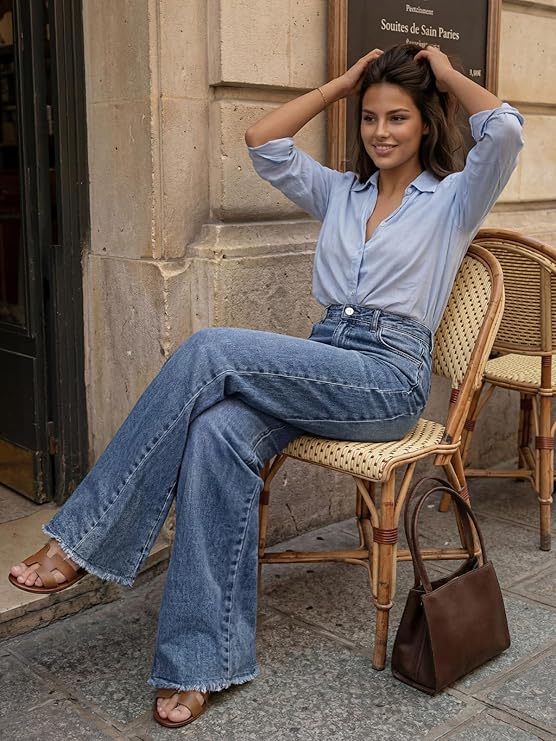
Wide-leg linen trousers are a much better warm-weather alternative. They look polished, they’re significantly cooler than denim, and they pack down easily. These are honestly one of my top recommendations for Tuscany in May.
Outfit example: Dark slim jeans + striped linen button-down (half tucked) + white leather trainers. Simple, clean, looks like you tried.
Local tip: If you do wear jeans, go for a cut that feels considered rather than casual. Italians rarely wear jeans that look sloppy — it’s always the well-fitting pair, turned up at the ankle, with something nice on top.
The Shoe Question: Where Most People Get This Wrong
I have a theory that ruined footwear accounts for at least 40% of bad holidays. And Tuscany in May, with its mix of cobblestones, gravel paths, museum marble, and steep hillside streets, is particularly unforgiving.
Here’s what doesn’t work: flip flops (you will twist your ankle on a cobblestone and also Italians find them genuinely baffling outside of beach contexts), brand-new trainers you haven’t broken in, heeled sandals for anything more than a ten-minute stroll to dinner, and — I cannot believe I have to say this — Crocs.

Here’s what does work: leather sandals with some structure and a slight platform or wedge sole (Birkenstock-style or a proper leather strap sandal), comfortable leather trainers or clean white trainers you’ve actually worn before, and loafers. Loafers are genuinely the secret weapon of the Tuscany wardrobe — they look polished, they work with dresses, trousers, and jeans, and a good leather pair is surprisingly walkable.
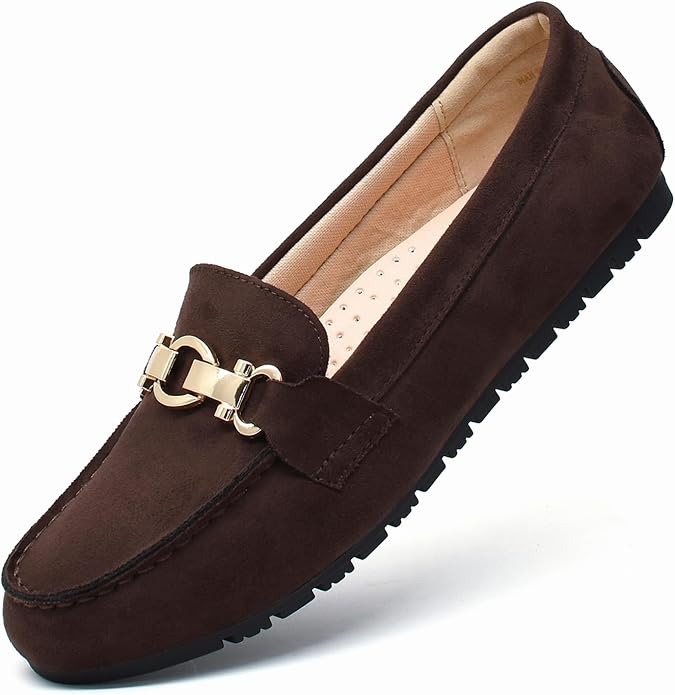
Outfit example: Linen midi skirt + simple white tee + tan leather loafers. Effortless and appropriate for everything from a market to a wine bar.
Local tip: Italian women often wear low block-heeled mules or structured sandals even for daytime walking — but they know their routes and aren’t doing 20,000 cobblestone steps. If you’re sightseeing heavily, prioritise comfort with a stylish silhouette rather than sacrificing your feet for aesthetics.
What NOT to Wear in Tuscany (Please)
This section comes from a place of love. I have been the tourist making these mistakes. I am older and wiser now.
Sports clothes outside of actual exercise. Leggings and a technical fleece are not a Tuscany outfit. Athletic wear in an Italian city feels jarringly out of place, and more practically, you’ll be turned away from churches and feel underdressed everywhere else.
Matching sets that scream “tourist.” The head-to-toe printed linen set, the travel pants with seventeen pockets, the outdoor brand everything. You’re not hiking the Appalachian Trail. You’re having lunch in one of the most beautiful civilisations in human history.
Brand-new shoes. I cannot stress this enough. If you buy new sandals the week before you leave without wearing them in, you will have blisters by day two and you will be limping around Siena in silent agony. Wear them. Break them in.
Heavy fabrics. Thick wool, polyester, heavy cotton — in May warmth these fabrics will make you miserable within an hour of leaving your hotel. Breathable fabrics only.
Local tip: There’s a quiet Italian principle that less is more when it comes to tourism aesthetics. One good quality item beats five cheap ones every time. A beautiful leather belt, a silk scarf, a proper linen shirt — these elevate everything around them.
Jackets for Unpredictable Weather
May Tuscany has a particular gift for beautiful mornings that turn grey and cool by mid-afternoon. I’ve been caught out enough times that a jacket is now non-negotiable in my packing list, even when the forecast looks perfect.
The best single jacket I’ve found for this trip is a light structured blazer — preferably linen or a cotton blend. It looks intentional (not “I’m cold and panicking”), it works over dresses, trousers, and jeans, it can be tied around your waist without looking terrible, and it adds a genuinely useful warmth layer without being heavy.

A trench coat is the other excellent option — classic, lightweight, very Italian-compatible in terms of aesthetic. If rain is forecast, a trench coat handles light showers without looking like you came prepared for a monsoon. A light rain jacket works functionally but tends to look very outdoorsy. If that’s your style, own it — but know that a linen blazer handles Tuscan weather just as well and looks significantly more at home.
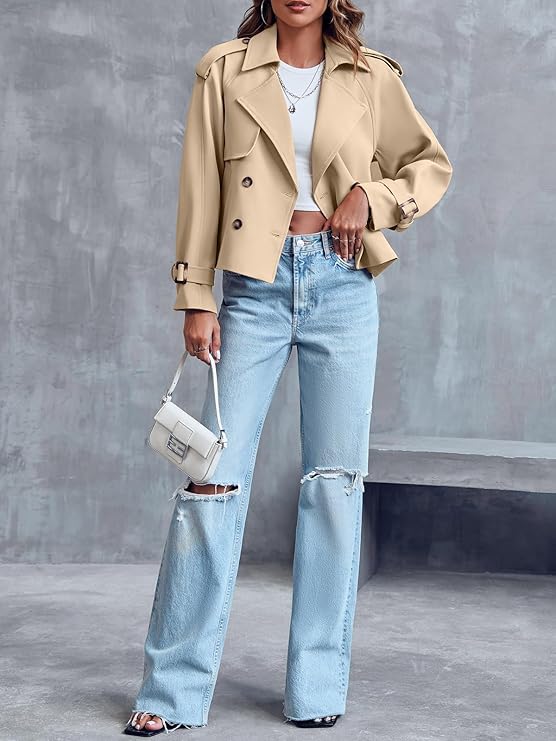
Outfit example: Floral midi dress + linen blazer + leather loafers. Works for a day of sightseeing straight into a nice dinner without any changes.
Local tip: In Florence especially, the early evenings along the Arno can be genuinely cold due to the wind off the river. Whatever jacket you bring, make sure you have it accessible rather than packed away.
Evening Outfits in Tuscany
Tuscany is serious about dinner. Not formal exactly — you won’t need a cocktail dress unless you’re booking somewhere very grand — but Tuscans dress for the evening meal in a way that feels genuinely civilised and worth participating in.
A step up from your daytime look is usually exactly right. If you’ve been in linen trousers and a vest all day, swap the vest for a silk or satin top and add earrings. If you’ve been in a casual dress, switch to a slightly dressier one with heeled mules. If you’ve been in jeans, pair them with something more refined on top and better shoes.
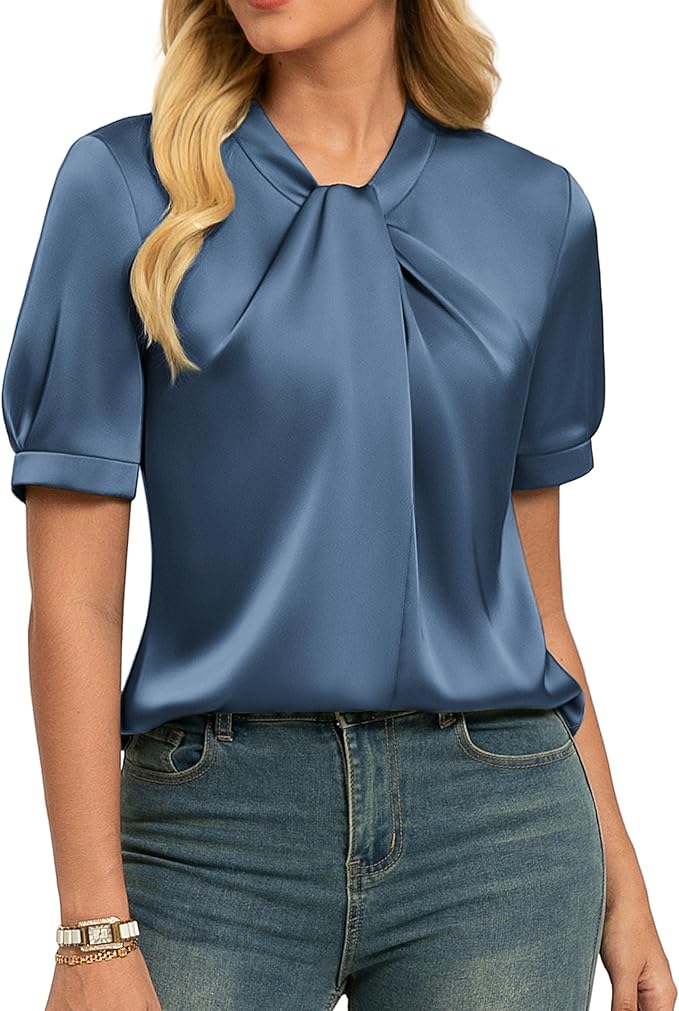
The colours and fabrics that work best for Tuscany evenings — and this is very specific to the region, I think — are earthy and warm. Terracotta, ochre, dusty rose, sage green, deep burgundy. They look extraordinary against the stone buildings and candlelight in a way that cool-toned or very bright clothes don’t quite manage. This might sound specific but I promise you’ll see what I mean when you’re there.

Outfit example: Silk slip dress in warm rust or olive + leather mules + simple gold hoops. Absolutely right for anywhere in Tuscany.
Local tip: Restaurants with outdoor terracing in hilltop towns can be surprisingly cold after dark, even in May. Bring your cardigan or blazer to dinner — it’s not just about the walk there.
Churches and Dress Codes: What You Actually Need to Know
This is genuinely important and frequently mishandled. Churches in Tuscany — and there are extraordinary ones everywhere — require covered shoulders and covered knees. Not as a suggestion. As an actual requirement.
The good news is that this is easy to solve if you plan for it. A light cotton scarf tied over your shoulders handles the coverage when you’re in a sundress. A cardigan works. Lightweight trousers or a midi dress means your knees are already covered. The churches themselves sometimes have wraps available to borrow but I wouldn’t rely on this.
What you can’t do: rock up in a strappy vest and shorts and expect to walk into the Duomo in Florence or the Collegiate in San Gimignano. You will be turned away. This has happened to more people than will admit it.

Outfit example: Linen wide-leg trousers + simple short-sleeved blouse. Appropriate as-is, no additions needed.
Local tip: If you’re planning a big day of church visits — which in Florence is any day — dress for it from the start. Constantly adding and removing a cover-up gets old quickly.
Bags: The Crossbody Debate
Venice gets the purse-snatching warnings, but Tuscany — Florence in particular — is not immune to pickpockets in tourist areas. Practicality matters here as much as style.
The crossbody bag is the clear winner for daytime. It keeps your hands free for gelato, maps, and taking photos of cypress trees. It sits against your body so it’s harder to access without you noticing. And a nice leather crossbody looks genuinely elegant in a way that a bum bag (fanny pack) or a large backpack does not.

For evenings and nicer restaurants, a small leather clutch or a structured mini bag is the move. Something that holds your phone, a card, some cash, and lip balm. That’s it. Anything larger looks odd at dinner.

A straw tote or a canvas market bag is brilliant for market days, beach days if you visit the coast, or carrying a picnic through a vineyard. It’s not a security bag obviously, so save it for low-risk, low-crowd situations.
Local tip: Italian leather bags — even inexpensive ones from local leather markets in Florence — are genuinely excellent quality. If you want to buy anything in Tuscany as a souvenir, a bag is a very good choice.
Accessories That Do Real Work
The right accessories are how you take a basic travel outfit and make it look considered rather than thrown-together. And in Tuscany, where aesthetics are noticed, a few good pieces go a long way.
A silk or lightweight linen scarf is the single most useful accessory you can pack. It covers your shoulders for churches, adds colour to a neutral outfit, works as a hair tie, handles a chilly moment, and looks incredibly chic tied at the neck Parisian-style or draped over a bag. Pack one. Pack two if you have them.

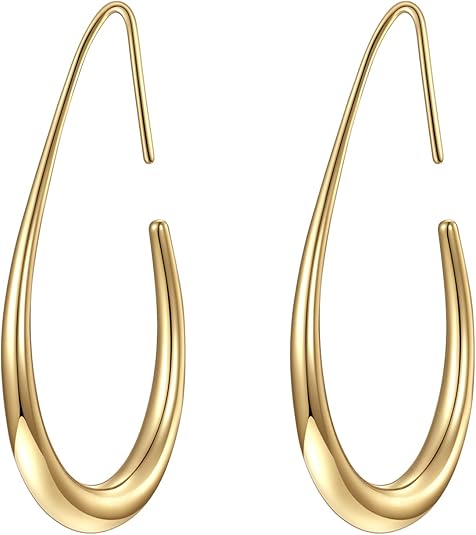
Gold jewellery is very much the Tuscan register. Simple gold hoops, a delicate chain, a signet ring. Not costume jewellery that turns green in the heat, not heavy statement pieces that overwhelm a simple outfit — just quiet, warm, real-looking gold.
A good pair of sunglasses that actually fit your face is worth more than anything else in your bag aesthetically. Italians wear excellent sunglasses. You should too.
Local tip: A straw hat is both practical (genuine sun protection) and looks exactly right in Tuscany — particularly in the countryside and at vineyards. Skip the wide tourist straw hat and go for something with a slightly modern shape.
Rain in May: Don’t Be Caught Out
Nobody talks about this enough in Tuscany packing guides, possibly because “rain in Tuscany in spring” sounds like a contradiction in terms. But May averages around 8–10 rainy days across the region, and Tuscan rain, when it comes, comes decisively.
You don’t need a full rain kit. But you do need a plan. A compact travel umbrella is small enough to forget about at the bottom of your bag until you desperately need it. If you’re bringing a trench coat, that handles light showers beautifully. A rain jacket works for more serious weather but does shift the vibe considerably.

What ruins a Tuscany rainy day is wet feet. If your sandals are suede, they’re done the moment it rains properly. Leather handles light rain reasonably well if you treat it. I now travel with one pair of shoes that I specifically know can handle getting wet — usually leather trainers or block-heeled mules — and that’s my rainy day default.
Local tip: Summer rainstorms in Tuscany are often short and intense — 30 minutes of serious downpour and then sunshine again. Waiting it out over an espresso is often a perfectly reasonable strategy.
Fabrics to Choose (and the Ones to Leave at Home)
Fabric choice sounds boring but it genuinely determines whether you’re comfortable in Tuscany in May or spending your holiday slightly sticky and miserable.
The yes list: Linen (breathable, gets better with wear and slight wrinkles, very Tuscan in aesthetic), merino wool (lightweight, temperature-regulating, odour-resistant), cotton (classic, breathable, good in lighter weights), silk or satin (beautiful for evenings, packs well, handles heat surprisingly well), tencel or lyocell (silky drape, very breathable, wrinkle-resistant).
The no list: Heavy polyester (traps heat brutally in warm temperatures), thick wool (too warm for May days), modal or viscose blends that wrinkle badly (you’ll look like you slept in your clothes), anything that doesn’t breathe. Technical fabric can be great for actual hiking — if you’re doing the trails around Montepulciano or the Chianti vineyards — but not for town exploring.
Local tip: Wrinkles on linen are genuinely acceptable and expected in Italy. What’s not acceptable is looking like your clothes are a size wrong or haven’t been washed. Fit and cleanliness matter far more than perfect pressing.
A Capsule Wardrobe for One Week in Tuscany
Here’s what I’d actually pack for a 7–10 day Tuscany trip in May. Not what I’d theoretically pack — what I’d actually put in a carry-on and feel completely covered for.
Tops: 3–4 lightweight tops (linen shirts, cotton vests, a silk blouse for evenings), 1 striped or classic cotton t-shirt
Bottoms: 1 pair dark jeans or wide-leg linen trousers, 1 pair linen or cotton trousers in a neutral, 1 casual skirt
Dresses: 2 midi dresses (one casual, one that works for dinner)
Layers: 1 fine-knit cardigan or merino layer, 1 linen blazer or light trench coat
Shoes: 1 pair leather loafers or comfortable leather trainers, 1 pair sandals with structure, 1 pair mules (for evenings)
Accessories: Silk scarf, sunglasses, compact umbrella, 2–3 pieces of gold jewellery, crossbody bag, small evening bag
That’s it. Everything mixes and matches. Nothing is wasted. You can add or subtract based on your specific itinerary, but this covers most Tuscany scenarios in May without checking a bag.
Practical Packing: The Things Nobody Tells You
A few final practical notes that I learned either the hard way or from watching someone else learn the hard way.
Packing light is almost always right. Tuscany involves cobblestones, stairs, hills, and unreliable lifts in historic buildings. A suitcase you can actually carry is worth more than unlimited outfit options. I travel with a carry-on for ten days and rarely wish I’d brought more.
Plan outfits, not items. Before you pack, mentally run through three days of your itinerary and actually dress yourself. “Arrival day in Florence, one museum, dinner out.” What are you wearing? Do your shoes, bag, and jacket all work together? This sounds fussy but it takes fifteen minutes and prevents the “I have all these clothes and nothing to wear” problem.
Wear your heaviest items on travel days. Jeans, boots if you brought them, your jacket. It takes them out of your suitcase weight and keeps them available.
Don’t over-pack “just in case” formalwear. Unless you have a specific very dressy event, you genuinely do not need an evening gown in Tuscany. Nice restaurants here are about quality and atmosphere, not black-tie dressing.
Local tip: Most Tuscan towns have good laundry options — laundromats are easy to find and inexpensive. If you’re staying for more than a week, one mid-trip laundry run means you can pack significantly lighter.
Go. Look Good. Eat Everything.
There’s a version of Tuscany in May that exists in very specific light conditions — golden afternoon sun on old stone, the smell of wisteria, a glass of local white on a terrace — and nothing should get in the way of fully enjoying that, including worrying about what you’re wearing.
Get the practicalities right before you go — the comfortable shoes, the layers, the rain plan — and then stop thinking about it. The best-dressed travellers I’ve seen in Tuscany aren’t the ones who brought the most; they’re the ones who brought the right things and wore them with confidence.
May is extraordinary there. The light is extraordinary, the food is extraordinary, and if you stand anywhere in the Val d’Orcia and look at the landscape you’ll understand exactly why humans decided to build a civilisation in this particular patch of hillside thousands of years ago.
Pack lightly, dress intentionally, and enjoy every single meal.

