
You know that feeling when you open a travel photo and something in your chest just — moves? That quiet pull towards a place you’ve never been but somehow already know you need to see? That’s what a real bucket list is made of. Not just pretty pictures. A list of places that call to something in you.
Europe does this better than almost anywhere else on earth. In a single continent, you can go from volcanic black sand beaches in Iceland to sun-bleached Cycladic villages in Greece. From fairy-tale palaces in Portugal to Ottoman bazaars in Bosnia. From the lavender fields of Provence to the wild sea cliffs of Ireland’s Atlantic coast.
The problem isn’t finding places worth visiting in Europe. The problem is narrowing it down.
So that’s exactly what this is — the Europe bucket list I’d put together if someone told me I had one big trip left and needed to make it count. Not just the famous names everyone already knows (though some of those earn their place), but also the places that genuinely surprised me, moved me, or made me want to cancel my flight home and stay forever.
These are the places to travel in Europe that I think deserve a spot on everyone’s bucket list — with the honest details and local tips that make the difference between a good trip and an unforgettable one.
Before We Dive In: How to Use This List
This isn’t a ranked list — every destination here is bucket-list worthy for different reasons and different travel styles. Some are iconic landmarks you simply have to experience at least once. Others are hidden gems that most travellers walk straight past. Some are cities, some are coastlines, some are entire regions.
What they all have in common: they’re the kind of places that stick with you. The ones you talk about for years after. The ones that quietly rearrange something in the way you see the world.
Let’s go.
1. Santorini, Greece — Yes, It Really Does Look Like That
Look, you knew it was going to be on this list. And before you roll your eyes and say “too touristy” — listen. Santorini is one of those places where the reality genuinely matches the hype, and that’s a rarer thing than you’d think.
The caldera — that dramatic crescent of cliffs dropping sheer into a flooded volcanic crater — is one of the most extraordinary landscapes in the world. The villages of Oia and Fira, stacked up the clifftops in white and blue, are as beautiful as every photograph suggests. And the sunsets over the Aegean? They are, as promised, completely ridiculous in the best possible way.
The key is timing. Go in June or early September. July and August are peak madness — ferry queues, packed restaurants, tourists 12 deep for sunset photos. In June and September, you’ll get the same extraordinary landscape with a fraction of the chaos.
Local tip: Everyone goes to Oia for sunset. Everyone queues for the same spot at the windmills. Instead, head to the village of Imerovigli — sometimes called the “balcony of Santorini” — perched on the highest point of the caldera rim. The sunset views are arguably even better, the crowds are a fraction of Oia’s, and the restaurants have tables actually available. Also, stay at least two nights. One night on Santorini feels like a waste. Two gives you a sunrise AND a sunset, and the island is completely different in the golden early morning light before the day-trippers arrive.
2. Hallstatt, Austria — The World’s Most Photographed Village
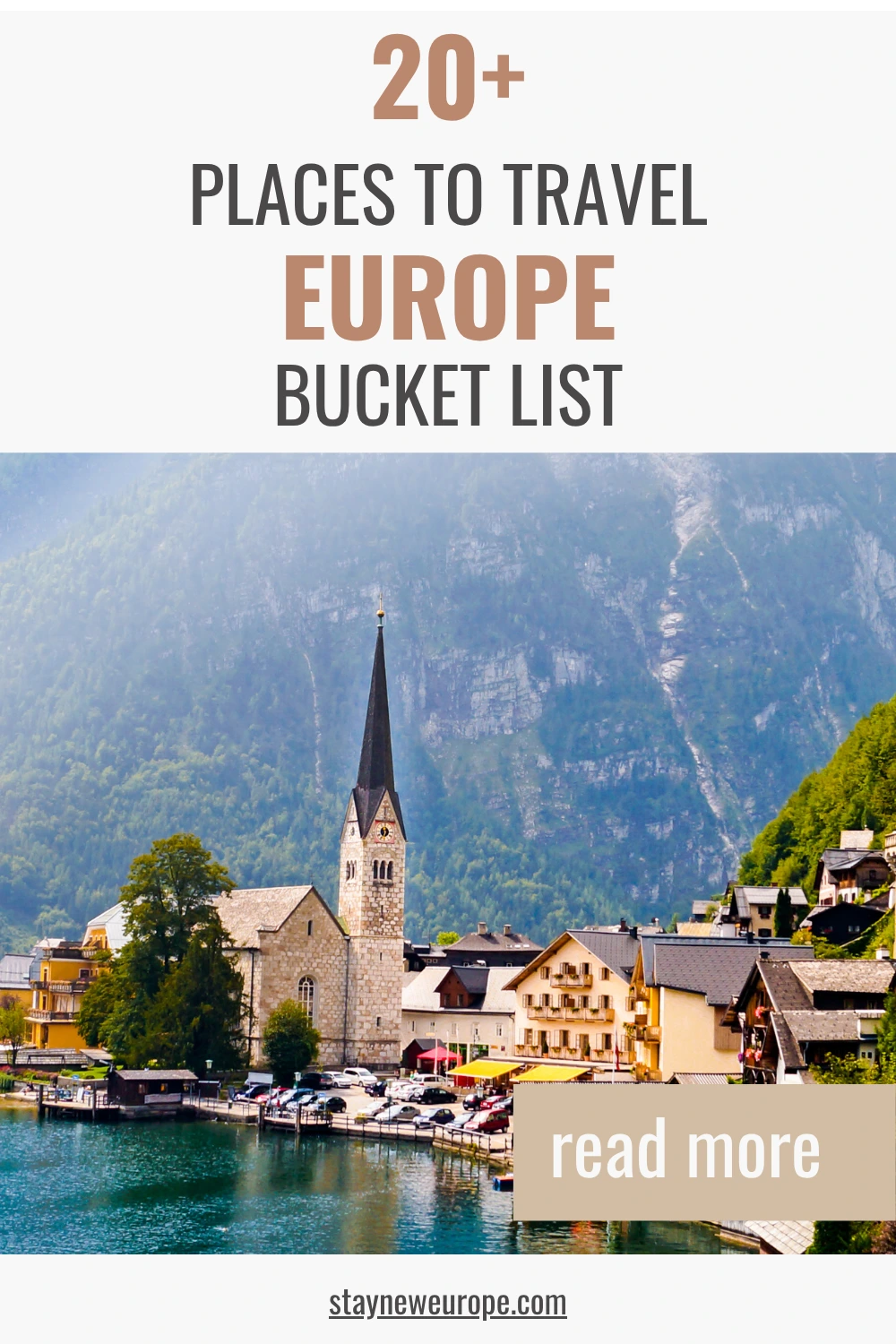
There’s a reason this tiny Austrian village has been photographed millions of times. There’s a reason a full-scale replica of it exists in China. There is simply nothing quite like standing at the edge of the Hallstätter See (lake), looking across the water at those pastel-coloured houses rising steeply from the shoreline, with the Dachstein mountains filling the sky behind them. It looks genuinely unreal. Like someone painted a backdrop.
Hallstatt is one of those places where you genuinely have to just stop, put your phone down for a moment, and let it wash over you.
The challenge: Hallstatt is very small and extremely popular. During peak summer days, the tiny village can feel overwhelmed by day-trippers from Salzburg and Vienna. The solution is simple — stay overnight. When the last tour bus leaves in the evening, the village transforms. The narrow lanes empty out. The lake goes still. The lights start coming on in the houses. It becomes, genuinely, one of the most peaceful and beautiful places you’ve ever stood.
Local tip: The famous “Hallstatt postcard view” is taken from across the lake — you can see it from the ferry landing. But the best photographers’ shot is from slightly to the left, from the small wooden dock near the boat shed. Early morning, with mist on the lake and soft light on the painted facades, is when this village looks most extraordinary. Wake up at 6 AM, walk to the lake, and you’ll understand why people cross the world to be here.
3. The Amalfi Coast, Italy — Impossible Beauty
Stretching 50 kilometres along the southern edge of the Sorrento Peninsula, the Amalfi Coast is one of those places that has been making people’s jaws drop for centuries, and it shows absolutely no signs of stopping. Vertical cliffs dropping into cobalt blue water. Villages that seem to defy gravity, stacked up the steep hillsides in terracotta and lemon yellow. Lemon groves everywhere. The smell of the sea mixed with something floral and warm in the air.
Positano is the showstopper — perhaps the most photographed village in Italy, and entirely justified. Ravello up in the hills above the coast has extraordinary gardens with the kind of panoramic views that make you feel like you’re levitating. Praiano is quieter, more authentic, and sits on a small beach away from the main crowds.
Local tip: The coastal road (the SS163) is spectacular but absolutely brutal to drive — narrow, winding, clogged with tourist traffic in summer. Take the local ferry between villages instead. It’s cheaper than you’d think, incomparably more enjoyable, and gives you the only view that does the coastline full justice — from the water, looking back at the cliffs. Also: eat your big meal at lunch, not dinner. The same restaurants charge significantly less at lunch and the atmosphere is equally gorgeous. And always, always order the local pasta — scialatielli ai frutti di mare (homemade pasta with mixed seafood) is the dish of the coast.
4. Sintra, Portugal — A Fairytale You Can Actually Walk Into
About 40 minutes by train from Lisbon, Sintra feels like it was conjured by a fairy-tale author who couldn’t decide which style of castle they wanted and just built all of them. Up in the forested Sintra mountains sit an array of palaces in colours and styles so extravagant they seem almost surreal — the candy-coloured Pena Palace (Gothic, Renaissance, Moorish, and Manueline all at once, painted in hot yellow and burgundy), the ruined battlements of the Moorish Castle winding along the ridge, the mysterious Quinta da Regaleira with its secret initiatic well spiralling down into the earth.
This is one of the single greatest concentrations of Romantic-era architecture in the world, and it’s a UNESCO World Heritage Site for very good reason.
Local tip: Sintra gets extremely crowded from mid-morning in summer. Take the first or second train from Lisbon — arrive by 9 AM and you’ll have Pena Palace almost entirely to yourself. By 11 AM, the queues will be 45 minutes long. Also — don’t miss Quinta da Regaleira. Most tourists rush to Pena Palace and miss this incredible estate with its occult symbolism, secret tunnels, and underground initiation well (the Poço Iniciático). It is one of the most genuinely mysterious and beautiful places in Portugal. Buy a ticket in advance online, especially in summer.
5. Edinburgh, Scotland — Magic Built Into the Stone
Edinburgh is one of those cities that hits you the moment you arrive. The volcanic ridge of Castle Rock rising above the Old Town, the medieval tenements crowding up against each other, the narrow closes (alleyways) dropping between buildings into unexpected courtyards — it’s a city that feels like it was designed to be explored, full of layers and surprises and a particular quality of light that makes it look perpetually dramatic.
The castle is extraordinary. The Royal Mile below it is endlessly interesting. The Grassmarket square at the foot of the cliff has great pubs and a wonderful energy. And Arthur’s Seat — the ancient volcano in the middle of the city — offers one of the most remarkable urban hikes anywhere in Europe: 45 minutes of surprisingly wild walking to a summit with 360° views over the entire city and the Firth of Forth beyond.
Local tip: Victoria Street is the most beautiful street in Edinburgh — curved, cobbled, lined with colourful shop fronts — and it’s most magical in the early morning before the shops open. It’s widely rumoured to have been J.K. Rowling’s inspiration for Diagon Alley, and you can absolutely see why. Also: don’t leave Edinburgh without eating haggis, neeps, and tatties at least once. It sounds terrifying and it is, in fact, delicious. Order it at a traditional pub rather than a tourist restaurant and pair it with a dram of Scotch whisky. That’s the full Edinburgh experience.
6. Dubrovnik, Croatia — The Pearl of the Adriatic
Walk the city walls of Dubrovnik at 7 AM. That’s the instruction. Do it before the heat builds, before the cruise ship passengers arrive, before the narrow streets fill with tour groups and selfie sticks. In the soft morning light, with the red-tiled rooftops below you, the Adriatic glittering beyond, and barely another soul in sight — Dubrovnik is as breathtaking as anything in Europe.
The old town is extraordinary — a fully intact medieval walled city, UNESCO-listed, with marble-paved streets, centuries-old monasteries, baroque churches, and a seafront promenade (the Stradun) that forms the city’s social heart. It was Game of Thrones’ King’s Landing, and you’ll recognise corners of it immediately.
Local tip: June and September are the months to go. July and August in Dubrovnik are genuinely unpleasant — 40°C, thousands of cruise ship passengers, restaurant queues everywhere. The city is the same in June, just breathable. Also — take the cable car up Mount Srđ above the old town. The view looking down over the walled city from above, with the islands of the Elaphiti archipelago scattered across the sea behind it, is one of the great panoramas of Europe. Go at sunset if you can.
7. The Norwegian Fjords — Nature That Makes You Believe in Something
There are landscapes in the world that are simply too large and too beautiful for the brain to fully process while standing in them. The Norwegian fjords are one of those. Deep blue water between walls of rock rising thousands of metres. Waterfalls tumbling from heights so great you can’t hear them land. Villages perched impossibly on narrow ledges between cliff and water. The particular silence that exists only in very large natural spaces.
Geirangerfjord and Nærøyfjord are the most celebrated — both UNESCO World Heritage Sites, and both genuinely deserving of every superlative ever applied to them. The ferry journey through Nærøyfjord is one of the great slow-travel experiences in the world — two hours of gradually deepening scenery, walls of rock closing in, waterfalls appearing and disappearing, and the particular quality of fjord light that makes every photograph look like it’s been enhanced.
Local tip: For a truly spectacular experience, combine the Bergen Railway (one of the world’s great train journeys, crossing the high plateau of the Hardangervidda in summer wildflowers) with the Flåm Railway (winding down through waterfalls and mountain scenery) and then a fjord ferry. The Norway in a Nutshell route combines all three and is one of the best travel experiences in Europe — genuinely manageable as an independent trip, not just on a tour.
8. Budapest, Hungary — The Grand Dame of Central Europe
Budapest is one of those cities that rewards you in exact proportion to the time you give it. Arrive, do the obvious things (thermal baths, castle hill, ruin bars), and you’ll enjoy yourself. Stay longer and go deeper and you’ll fall completely in love.
The city is extraordinary to look at — grand 19th-century architecture, the parliament building lit up on the banks of the Danube, the Chain Bridge connecting Buda and Pest, the hilltop citadel looking down over everything. The thermal bath culture is unlike anything in Western Europe — spending an afternoon soaking in the gorgeous neo-baroque Széchenyi Baths, surrounded by locals playing chess in the outdoor pools, is a genuinely wonderful experience that costs very little.
And the food scene — largely overlooked by international food media — is genuinely excellent. The Great Market Hall is one of Europe’s great covered markets. The restaurant scene in the Jewish Quarter is creative, affordable, and delicious.
Local tip: The ruin bars (romkocsmák) of Budapest’s Jewish Quarter are one of the city’s great inventions — bars built into the courtyards and shells of derelict pre-war buildings, decorated in gloriously anarchic style. Szimpla Kert is the original and the most famous, and it’s worth visiting even if you’re not a nightlife person — the architecture and atmosphere are completely unlike anything else in Europe. Go on a Sunday when they host a morning farmers’ market, and it’s an entirely different, wonderful experience.
9. Plitvice Lakes, Croatia — The Most Beautiful Lakes on Earth
This is not hyperbole. Plitvice Lakes National Park in central Croatia contains what may genuinely be the most beautiful sequence of lakes and waterfalls in the world. Sixteen terraced lakes connected by cascading waterfalls, the water cycling through shades of turquoise, emerald, and deep blue depending on the light and season. Wooden boardwalks run through the water itself, allowing you to walk literally among the cascades. Dense forest surrounds everything.
It’s one of those places that looks almost computer-generated in photographs, and somehow manages to be even more extraordinary in person.
Local tip: Visit in April, May, or October if at all possible. The summer crowds (July and August) are intense — the wooden boardwalks become congested to the point that it slows to a shuffle in peak season. In spring, the waterfalls are at their most powerful from snowmelt. In October, the surrounding forest turns to flame-red and gold, and the contrast with the turquoise water is absolutely spectacular. If you must go in summer, arrive at opening time (7 AM) and head to the upper lakes first — most visitors start at the lower lakes, so the upper section is quieter in the morning.
10. Seville, Spain — The City That Gets Under Your Skin
Of all the cities in Europe, Seville might be the one that surprises people most. They come expecting a pleasant Spanish city and leave in love. Genuinely, head-over-heels, I-need-to-come-back-already in love.
The Real Alcázar — a working royal palace, UNESCO-listed, layered with centuries of Moorish and Renaissance architecture — is one of the most beautiful buildings in the world. The Cathedral of Seville (the largest Gothic cathedral on earth, housing Christopher Columbus’ tomb) is staggering. The Plaza de España in the Maria Luisa Park is so grand and so cinematic that your brain keeps telling you it can’t be real.
But the real magic of Seville is slower than the landmarks. It’s in the neighbourhood tapas bars, the evening paseo along the river, the flamenco drifting out of a doorway, the smell of orange blossom in spring, the particular golden light at dusk that makes the old city look like it’s glowing from within.
Important caveat: Seville in July and August can hit 45°C. It is brutally hot. Visit in April, May, October, or November for the ideal combination of warm weather and manageable temperatures. Spring (especially during Semana Santa and the Feria de Abril) is the most spectacular time to be in Seville — if you can get accommodation, which books out months in advance.
Local tip: Skip the tourist flamenco shows in the centre and instead look for a peña flamenca — a members’ club where local flamenco enthusiasts perform for each other. The atmosphere is completely different (more raw, more real, less staged) and some welcome visitors. Ask at a local bar or neighbourhood restaurant for recommendations. Also: a glass of fino sherry (cold, dry, and perfect) costs about €2 in a local bar and pairs magnificently with jamón and local olives. It’s one of the great inexpensive pleasures of Spain.
11. The Scottish Highlands — Wild, Ancient, Unforgettable
There are very few places in Europe where you can stand somewhere and feel genuinely small. The Scottish Highlands is one of them. Not just the scenery (though the scenery is extraordinary — purple heather moorland, dark lochs reflecting stormy skies, mountain ridges stretching to the horizon) but something in the air itself, something ancient and untamed, that is completely unlike anywhere else.
Glencoe is the showpiece: a dramatic U-shaped valley carved by glaciers, with Three Sisters ridges rising on both sides, its history dark and beautiful in equal measure. The Isle of Skye is the crown jewel — the Quiraing, the Old Man of Storr, the Fairy Pools, the Cuillin Ridge. It looks like a film set because it IS a film set — but it looks like that when the cameras aren’t rolling too. Loch Ness is touristy and worth doing anyway — the loch itself is enormous and genuinely atmospheric.
Local tip: Do the North Coast 500 — Scotland’s version of a coastal road trip, looping 500 miles around the northern Highlands through scenery that will stop you in your tracks repeatedly. It’s best done over 5–7 days, driving north from Inverness. The far northwest (Cape Wrath, Sandwood Bay, Durness) is the most remote and the most spectacular, and almost nobody goes there compared to Skye or Glencoe. Pack a waterproof. Always.
12. Prague, Czech Republic — The Fairy-Tale City
Prague might be the most immediately beautiful city in Europe. The moment you cross Charles Bridge in the early morning, with the Castle district rising on the far bank through river mist and the baroque spires of the Old Town behind you, it hits like a film you’ve seen a hundred times suddenly becoming real.
The old town is almost perfectly preserved — the medieval astronomical clock, the Jewish Quarter with its layered history, the narrow lanes of Malá Strana beneath the castle, and the castle complex itself (one of the largest in the world) with its cathedral, palaces, and extraordinary views. Prague is a city you can explore on foot for days and keep finding new corners.
Local tip: Cross Charles Bridge at 5 AM — or any time before 8 AM in summer. By mid-morning it’s shoulder-to-shoulder with tourists. In the early morning, the bridge is quiet, the light is beautiful, and you can actually stop and look at the 30 baroque statues lining both sides rather than just shuffling forward in a crowd. Also — the Czech Republic has magnificent beer culture. Pivovar U Fleků (a brewery operating since 1499 in the old town) serves their own dark lager in a wood-panelled hall that hasn’t changed much in centuries. It’s a proper local institution, not a tourist trap, and it costs almost nothing.
13. Lake Bled, Slovenia — The Most Romantic Lake in Europe
Ask travellers who’ve been to Slovenia what’s on the list of best decisions they ever made, and you’ll hear Lake Bled mentioned within the first three answers. This glacial Alpine lake — emerald green, ringed by mountains, with a tiny island in the middle bearing a white Baroque church and a hilltop castle clinging to a 130-metre cliff above the southern shore — is one of the most purely beautiful places in Europe. Full stop.
The island church (accessible only by traditional wooden rowboat called a pletna) is one of the most visited spots in Slovenia. The tradition is for grooms to carry their brides up the 99 steps to the church door for good luck. You can ring the church bell and make a wish. It’s deeply, cheerfully romantic.
Local tip: Walk the entire lake — it takes about 1.5 hours at a relaxed pace and the views change completely around every bend. The path on the north side, under the limestone cliffs, gives the most dramatic perspective. Don’t leave without eating a kremšnita — the local cream cake invented at the Parkhotel by the lake in the 1950s, a thick slab of custard cream between crisp pastry layers, dusted with icing sugar. It costs about €3 and it is extraordinary. The café by the lake sells them, and so does the castle restaurant above.
14. Mostar, Bosnia & Herzegovina — History You Can Feel
Mostar is one of those places that gets under your skin in a way that’s hard to explain. The old Ottoman bridge — Stari Most, rebuilt after its destruction during the 1990s war — arching over the emerald-green Neretva River is one of the most graceful and moving structures in Europe. The old bazaar around it is genuinely atmospheric, not a theme park recreation. The minarets, the mosques, the old stone houses, the sound of the call to prayer drifting over the river — Mostar is a place where you feel the weight and complexity of European history in a way nowhere else quite replicates.
And the local divers who jump from Stari Most’s 21-metre peak into the river below — doing so for centuries as a rite of passage and now as a tourist attraction — are magnificent.
Local tip: The Kriva Ćuprija (Crooked Bridge) is smaller and older than Stari Most, and mostly bypassed by tourists heading for the main bridge. It’s a few minutes’ walk away, beautiful, and quiet. Stand on it in the morning with the old town rising around you and you’ll feel like you’ve found something secret. Also — eat ćevapi (grilled minced meat rolls served in a soft flatbread) at one of the restaurants in the old bazaar. It’s the Bosnian comfort food and Mostar does it exceptionally well. A full portion with bread, onions, and kajmak (cream cheese) costs about €5.
15. The Dolomites, Italy — Mountains That Don’t Seem Real
The Dolomites are what happens when mountains decide to be art. These UNESCO World Heritage peaks in northeastern Italy — sharp-edged, vertical, sometimes turning pink and amber at sunrise and sunset in the phenomenon locals call Enrosadira — are unlike any other mountains in the world. They don’t look natural. They look sculpted.
In summer, the Dolomites offer some of the finest hiking in Europe, from gentle valley walks through flower meadows to technical via ferrata climbing routes along iron rungs and cables fixed to the rock face. Tre Cime di Lavaredo (the three iconic vertical peaks) is the bucket-list hike — a 10km loop with views that will genuinely make you stop and stand still. Seceda (reached by cable car above Ortisei) gives you the famous ridgeline panorama with the valley 1,500 metres below.
Local tip: The Dolomites straddle the border between Italian and Austrian culture, and the food reflects this wonderfully. Eat Kaiserschmarrn (fluffy shredded pancake with plum jam) at a mountain hut after a morning hike — it’s the best possible reward. Also: Cortina d’Ampezzo is the most famous base town but it’s expensive and can be crowded. The villages of the Alta Badia valley (La Villa, Corvara, San Cassiano) are equally beautiful, quieter, and in my opinion give you a more genuine experience of the region.
16. Lisbon, Portugal — Seven Hills, One Perfect City
Lisbon might be the most human-scale great city in Europe. It’s big enough to have everything — world-class museums, an extraordinary food and wine scene, incredible fado music drifting from open doorways at night — and small enough to feel navigable and personal. Built on seven hills above the Tagus estuary, it’s a city of miradouros (viewpoints), of rattling old trams, of crumbling tile-covered facades in a thousand shades of blue and white, of sudden views that open up unexpectedly at the end of a narrow street.
Alfama, the old Moorish quarter, is the heart of the city — a labyrinth of steep lanes winding up to the São Jorge Castle, with tasca restaurants, neighbourhood grocery shops, and old women watching the street from first-floor windows. Belém at the river’s edge has the magnificent Jerónimos Monastery (the greatest example of Manueline architecture in the world) and the iconic Tower of Belém, and is where Vasco da Gama set sail for India in 1497.
Local tip: Take Tram 28 through Alfama — not just because it’s charming, but because it will take you up hills so steep you’ll genuinely wonder how the tram manages it. Go early morning (before 9 AM) when it’s not packed with tourists. The tram still costs almost nothing. Also — the Mercado da Ribeira (Time Out Market) on the waterfront is good but very touristy and pricey. Instead, eat at the Mercado de Campo de Ourique in the Estrela neighbourhood — a covered market full of proper food stalls aimed at locals, with far better prices and a far more genuine atmosphere.
17. Iceland’s South Coast — Landscapes From Another Planet
Iceland belongs in this list because nowhere else in Europe — or arguably on earth — looks like this. The south coast between Reykjavík and Jökulsárlón glacier lagoon is a concentrated sequence of landscapes so extraordinary that they’ve been used as film locations for alien planets, post-apocalyptic worlds, and just about every environment Hollywood needs that doesn’t exist anywhere regular.
Black sand beaches at Reynisfjara (hexagonal basalt columns, massive waves, arch-shaped sea stacks — do NOT swim here, the waves are genuinely deadly). The waterfall Seljalandsfoss, which you can walk behind. Skógafoss, a 60-metre curtain of water you can stand close enough to to get thoroughly soaked. The glacier tongue of Sólheimajökull descending to a lagoon. And then Jökulsárlón itself — a vast glacial lagoon filled with floating icebergs, translucent blue and white, drifting silently towards the sea.
Local tip: Iceland is expensive. Mitigate this by cooking your own food (buy groceries at Bonus or Kronan supermarkets, the cheapest options), staying in guesthouses rather than hotels, and booking a car and doing the south coast independently rather than on a guided tour. The road is the Ring Road (Route 1) — it’s entirely straightforward to follow, very well maintained, and gives you the freedom to stop wherever the light is doing something extraordinary, which is constantly. Also — the Sky Lagoon is now generally considered better value than the famous Blue Lagoon, less crowded, similarly beautiful, and meaningfully cheaper.
18. Kotor, Montenegro — Medieval Drama by the Sea
If someone asked me to design a perfect medieval coastal town from scratch, I might accidentally design Kotor. Set at the innermost point of the Bay of Kotor — a fjord-like inlet that’s Europe’s southernmost fjord — the tiny walled city is backed by sheer limestone mountains rising almost vertically from the water’s edge, and ringed by walls that wind up those mountains in spectacular zigzag fashion.
The old town is remarkably preserved — Byzantine churches, Venetian palaces, narrow medieval streets, a great central square. The bay around it is dotted with other small towns (particularly Perast, one of the most beautiful small towns in the Balkans) and the mountain behind it contains a hike that rewards you with one of the most dramatic panoramas in all of the Adriatic.
Local tip: The City Walls hike (1,350 steps to the fortress at the top) is essential — do it in the early morning before it gets hot, and you’ll have it largely to yourself. The views down over the red-roofed old town and the bay are extraordinary. For accommodation, Dobrota — the village just north of Kotor’s old town along the bay — has lovely waterfront guesthouses at significantly lower prices than anywhere inside the walls. You’re 10 minutes’ walk from everything and you get the peaceful, local-feeling version of the bay rather than the tourist centre.
19. Ghent, Belgium — The City That Does Everything Right
Ghent is Belgium’s best-kept secret and I’ll fight anyone who disagrees. While Bruges gets all the tourism attention (and the tour groups, the queue for chips, the overpriced hotels), Ghent — 30 minutes away by train — has equally beautiful medieval canals and architecture, a world-class museum (the Ghent Altarpiece in St Bavo’s Cathedral is one of the most important paintings in Western art history and you can see it for the price of a museum ticket), a seriously excellent food and bar scene, and a population of 70,000 students who bring an energy and authenticity that makes this feel like a real, lived-in city rather than a theme park.
The medieval skyline — three towers rising above the city (St Bavo’s Cathedral, St Nicholas’ Church, and the Belfry) — is one of the most beautiful in Europe. The Graslei waterfront, especially at night when the stone guild houses are reflected in the canal, is romantic in the truest sense.
Local tip: The Saturday Ghent Market at the Vrijdagmarkt and surrounding streets is a genuinely wonderful experience — local produce, secondhand books, vintage items, and Ghent street food (waterzooi, a rich local chicken stew, is the thing to eat) with barely a tourist in sight. Also — Ghent chocolate is extraordinary. Chocolatier Van Hoorebeke near the Graslei is where locals buy chocolate, not the tourist shops in Bruges. The difference in quality and price is significant.
20. The Albanian Riviera — Europe’s Last Unspoiled Coast
This is the one I want to put on every bucket list before it’s too late. The Albanian Riviera — the stretch of coastline from Vlorë down to Sarandë — is what the Amalfi Coast and the Greek islands were 40 years ago. Mountains plunging directly into turquoise water. Small villages on clifftops with family-run restaurants serving the freshest seafood you’ll eat anywhere in Europe. A coastline that is, in places, genuinely wild and empty in the middle of summer.
Albania is changing rapidly. Tourism is growing fast, prices are rising (faster than most people expect, particularly in the most Instagram-famous spots), and the window for experiencing this coastline in its current state is genuinely closing. But right now? It remains one of the most remarkable places in Europe.
Dhërmit beach is one of the most beautiful bays on the entire Mediterranean. The town of Berat (an hour inland) is a UNESCO city of extraordinary Ottoman-era architecture. The Accursed Mountains in the north are one of Europe’s last genuinely wild hiking frontiers.
Local tip: Rent a car and drive the SH8 coastal road from Vlorë to Sarandë. It’s winding and occasionally thrilling, but the views — bay after bay, cliff after cliff — are absolutely extraordinary. Stop at Dhermi and Himara for beaches, and at the village of Gjiri i Gjipes (Porto Palermo area) for a hidden cove accessible only on foot or by boat that looks like somewhere the concept of tourists hasn’t arrived yet. Eat at family-run restaurants (bufe) rather than the tourist-facing spots that have appeared in the most popular areas — the food is better, the prices are lower, and you’ll be supporting local families directly.
How to Plan Your Europe Bucket List Trip
A few practical thoughts before you start booking everything at once.
Don’t try to do it all in one trip. The single greatest mistake in European travel is over-packing an itinerary. Seeing 8 countries in 2 weeks sounds adventurous and mostly just means you spend your whole holiday in transit. Pick a region, go deep, and come home with genuinely strong impressions rather than a blur of airports and hotel lobbies.
Book accommodation early. At popular destinations (Santorini, Hallstatt, Plitvice Lakes, Dubrovnik, Amalfi), accommodation books out months in advance in summer. This is not an exaggeration. Six months ahead is not too early for peak-season travel.
Use train travel wherever possible. Europe’s rail network is extraordinary, and the journeys are often experiences in themselves. The Bergen Railway in Norway. The Bernina Express through the Swiss Alps. The coastal train from Nice to Ventimiglia. The Flåm Railway through the Norwegian mountains. Book point-to-point tickets well in advance for the best prices.
The shoulder season is where the magic is. Every single destination on this list is better in June or September than in July or August. If you have any flexibility at all, use it to move your trip into the shoulder months. You’ll spend less money, see fewer crowds, and have more genuinely memorable experiences.
Leave room to not be a tourist. The best moments from any Europe trip are rarely the famous landmarks at peak time. They’re the unplanned afternoon in a neighbourhood café, the conversation with a local that leads you somewhere you never would have found on your own, the evening where you have nowhere to be and the city opens up around you. Build that kind of time into your trip deliberately.
Final Thoughts
Europe is, in the end, a place that rewards curiosity more than almost anywhere else. Every country has more layers than a two-week trip can reach. Every city has neighbourhoods that the travel guides don’t know about yet. Every coast has a cove at the end of a path that doesn’t appear on any map.
The bucket list is a starting point. But the real Europe — the one that gets under your skin and stays there — is found by going off the list entirely.
