
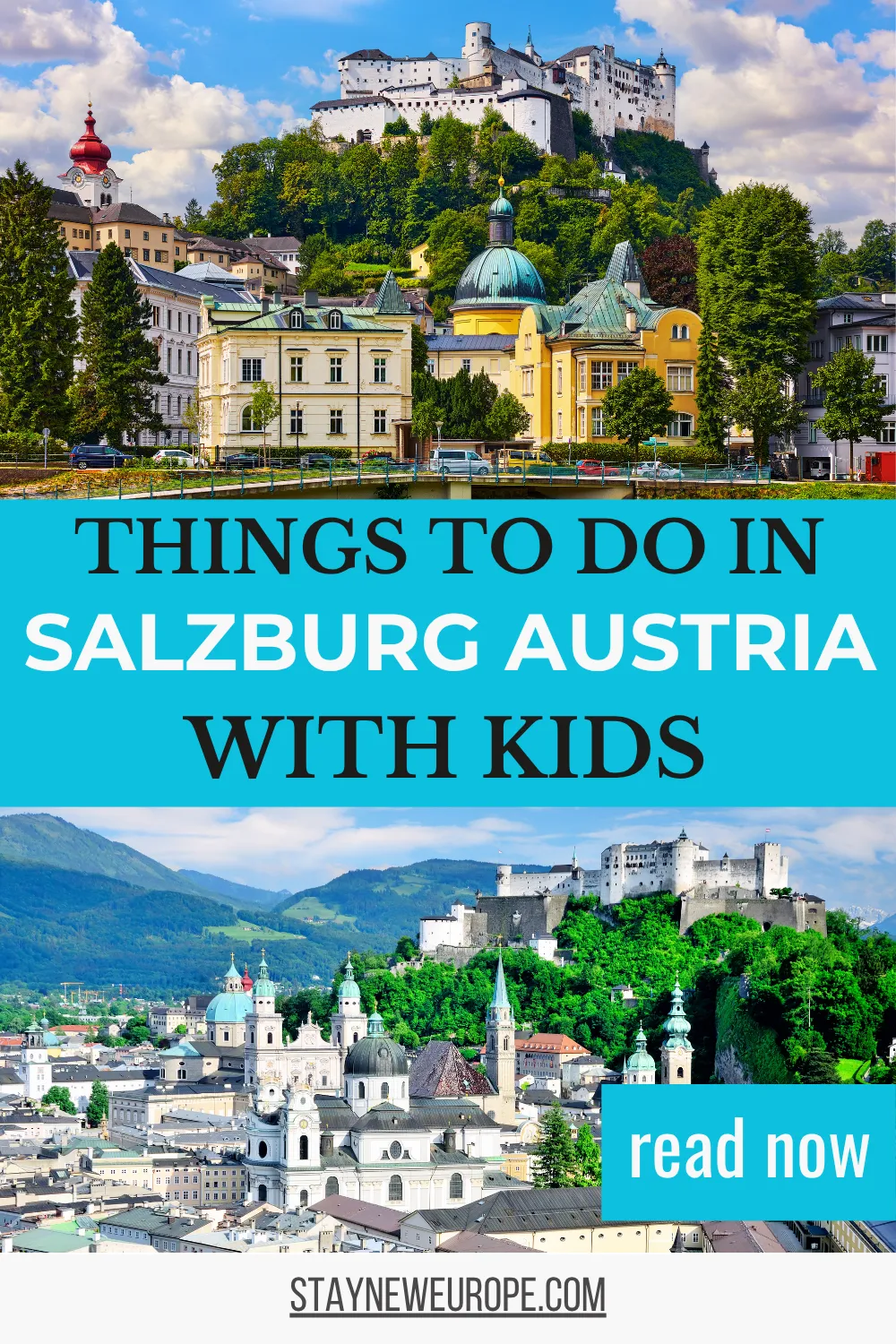
Salzburg surprised me. I’ll admit — before we arrived with our two kids in tow, my expectations were mostly built around Mozart, The Sound of Music, and a vague image of men in lederhosen playing accordion outside a café. What I didn’t expect was how genuinely, effortlessly family-friendly this city would be. Every cobblestone alley seemed designed for little legs to explore. Every castle had a story dramatic enough to hold the attention of a seven-year-old. And the food — oh, the food — even my pickiest eater cleaned her plate every single night.
We spent eight days here one September, and I’m going to be honest with you: it was one of the best family trips we’ve ever taken. Not because it was easy or perfectly orchestrated, but because Salzburg has this rare quality of being genuinely interesting for everyone at the table — kids included. The mountains are right there. The history is tangible. The rivers are real and rushing and blue-green in a way that makes no sense until you see it yourself.
So if you’re planning a family trip and wondering whether Salzburg is worth it with children, the short answer is yes. The long answer is everything you’re about to read.
Before You Go: A Few Things Worth Knowing
Salzburg sits in the northwest of Austria, right on the edge of the Bavarian Alps, with the Salzach River cutting through its heart. It’s compact — genuinely walkable in a way that cities claim to be but rarely are — and that’s a significant advantage when you’re travelling with kids who have short legs and shorter attention spans.
The city straddles the river, with the old town (Altstadt) on the left bank and the newer residential neighbourhoods on the right. Most of what families want to see is concentrated in or around the Altstadt, which is a UNESCO World Heritage Site — meaning yes, it really is as beautiful as the photos suggest, and no, it doesn’t feel like a theme park. It feels lived in. Locals still shop here, eat here, argue on street corners here. That authenticity matters, especially when you’re trying to show children what real European city life looks like.
The best time to visit with kids is late spring through early autumn — May, June, and September being the sweet spot when crowds are manageable and the weather plays along. If you’re willing to brave the cold, December’s Christmas markets are absolutely magical for little ones. Just pack layers and brace for mulled wine dependency.
Now — here’s what to actually do.
1. Hohensalzburg Fortress: The Castle on the Hill That Actually Delivers
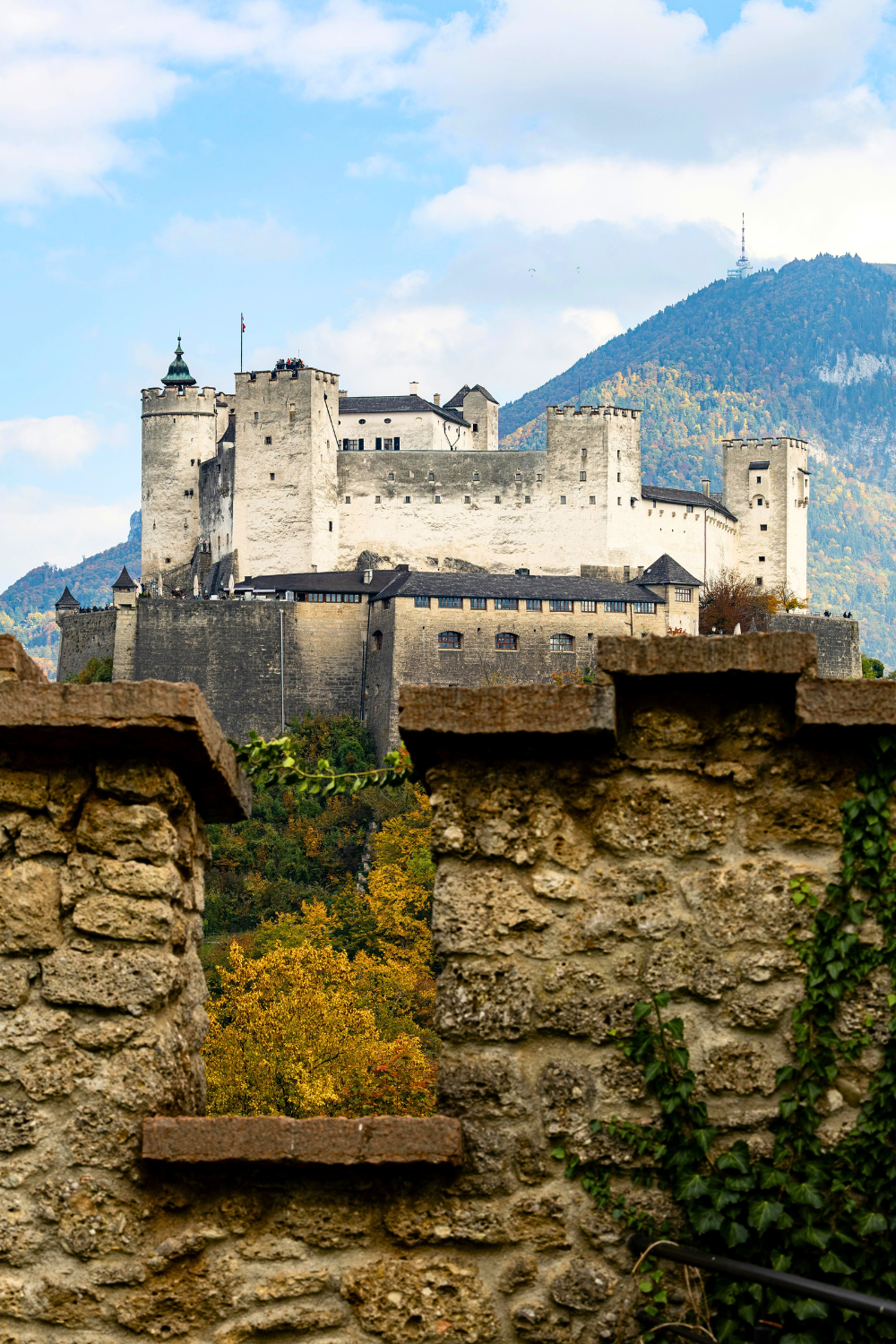
Every city claims to have a great castle. Salzburg’s actually earns it.
Hohensalzburg sits on the Festungsberg hill looming over the old town, and it’s been there — in some form or another — since 1077. That’s nearly a thousand years of walls, towers, battlements, and stories. When I told my son the fortress had withstood a siege that lasted months, his eyes went wide. Suddenly he was very, very interested in fortresses.
Getting up there is half the fun. You can take the Festungsbahn, a funicular railway that has been hauling people up the steep hill since 1892 (that fact alone impresses kids, I promise), or you can walk up through the winding paths if your legs are up for it. We took the funicular up, walked down — highly recommended. The views from the top are genuinely staggering. The city spreads below you, the Alps ring the horizon, and the Salzach shimmers silver-green in the valley. It’s one of those views that makes you stop talking.
Inside, the fortress is surprisingly interactive for children. There’s a marionette museum, a torture museum that older kids will find grimly fascinating, and the medieval state rooms with their gothic vaulted ceilings and original furnishings. The Rainer Museum within the fortress covers the military history of the region in enough vivid detail to keep curious minds occupied. Budget at least two to three hours — more if your kids are castle obsessives.
Local tip: Book the Salzburg Card before you arrive. The fortress entrance (including funicular) is included, along with most of the city’s major attractions and all public transport. For families, the savings are genuinely significant — and you’ll stop doing the mental arithmetic every time you walk into a museum, which is its own kind of holiday.
2. The Sound of Music Tour: Yes, You Should Do It (Even If You’re Embarrassed)
Let me be honest with you: I rolled my eyes at this one. Hard. And then I did it, and I ate every single eye-roll. It’s wonderful.
Whether or not your family has watched the film matters less than you’d think. The Salzburg landscapes that featured in The Sound of Music — the Mirabell Gardens, the Leopoldskron Palace reflecting in its lake, the green hills that Julie Andrews actually ran across — are spectacular regardless of the musical context. But if your kids do know the film? The excitement of recognition is something I wasn’t prepared for. My daughter genuinely screamed when she saw the gazebo.
There are several tour operators running Sound of Music tours, and the bus versions tend to work well for families with younger children because you cover a lot of ground without anyone having to walk too far. The Hellbrunn Palace gardens, the Nonnberg Abbey, the Mondsee Cathedral where the wedding scene was filmed — you cover all of it, usually in about four hours. The guides are, without exception, enthusiastic to the point of being slightly terrifying, which children absolutely love.
Local tip: If you want to skip the group tour atmosphere, rent bikes and do a self-guided version along the Salzach cycling paths. The tourist office produces a free Sound of Music cycling map that hits the key locations at your own pace. You’ll feel significantly more dignified, and the kids will actually prefer the freedom.
3. Mirabell Palace and Gardens: Where Kids Run Free
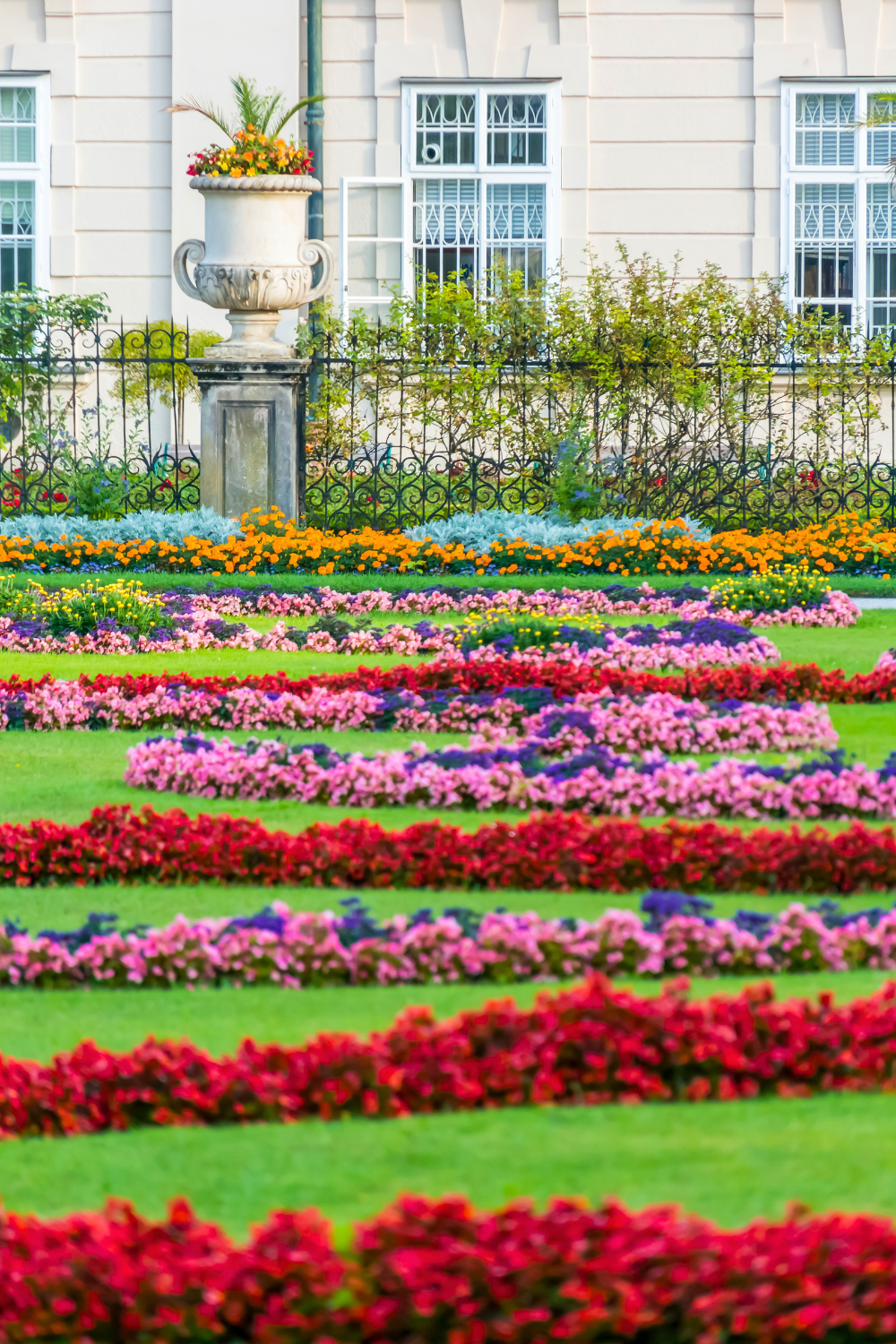
I wasn’t expecting Mirabell to be a highlight. It’s on every list, so I’d mentally filed it under “nice but touristy.” Then we actually spent a morning there and I revised my opinion completely.
The formal baroque gardens are extraordinary — geometrically precise, seasonally vibrant, and big enough that children can genuinely run without anyone worrying. The dwarf garden, a quirky collection of stone sculptures of court dwarfs commissioned in the early 18th century, is a particular favourite with younger visitors. They’re odd enough to spark real curiosity. Why dwarfs? (Because the Archbishop who commissioned them had a dark sense of humour, apparently.) What are they doing? (All sorts of things.) Can I climb on one? (No, but I appreciate the initiative.)
The palace itself houses the Marble Hall, one of the most beautiful baroque rooms in Austria and still used for weddings and concerts. If the timing aligns, the Salzburg Mozarteum Foundation runs chamber concerts here that are short, gorgeous, and genuinely accessible — even for children who claim to hate classical music.
Local tip: The gardens open early and are free to enter. If you arrive before 8am in summer, you’ll have the fountains and flower beds almost entirely to yourself — a genuinely rare experience in high season. There’s also a small playground tucked in the gardens that never appears on official maps but is reliably popular with children under eight.
4. Mozart’s Birthplace: History That Doesn’t Feel Like a School Trip
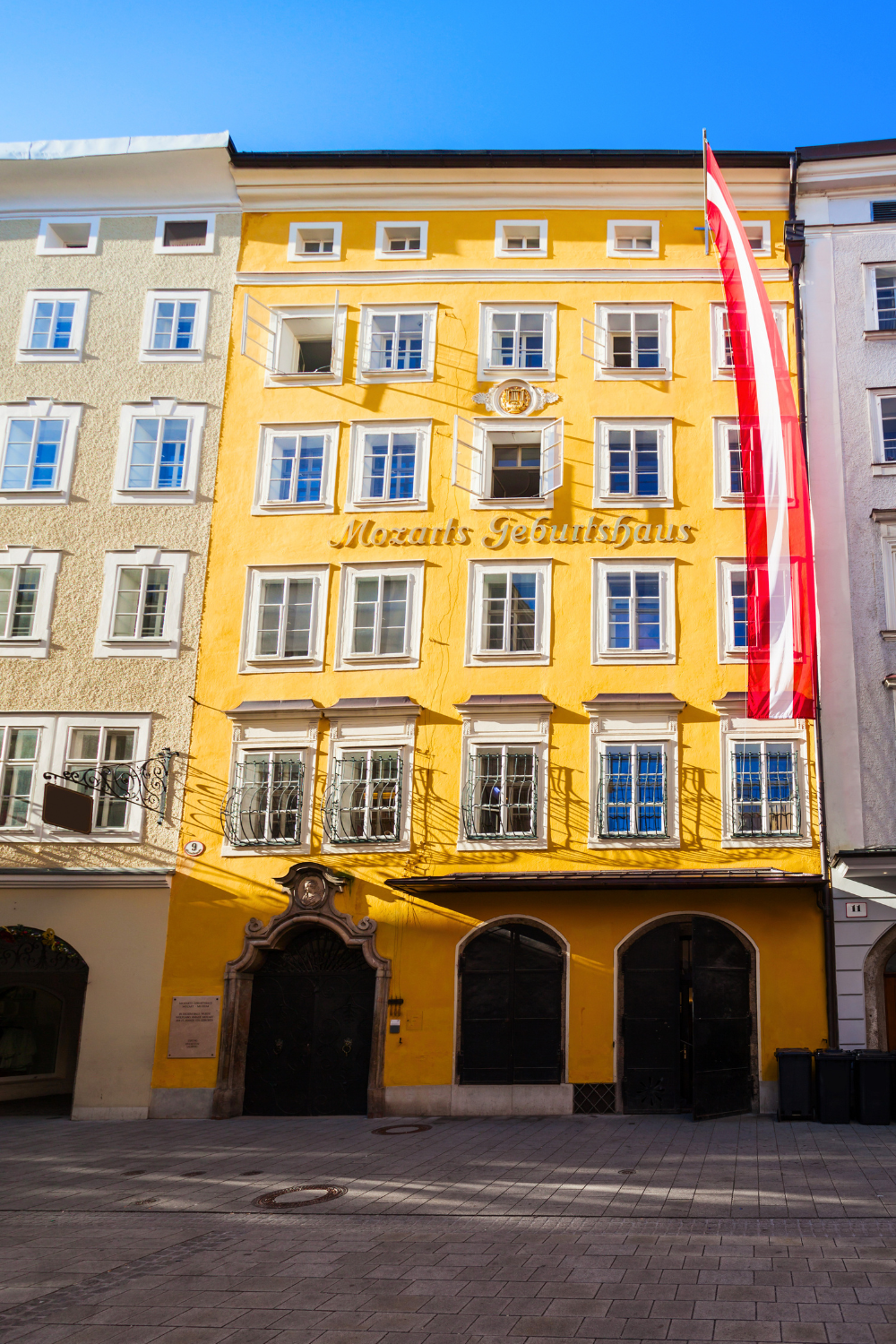
Mozart was born in Salzburg on January 27, 1756, in a house on Getreidegasse that now attracts roughly half a million visitors a year. The crowds can feel intimidating from the outside — the queue winds along one of the old town’s most famous shopping streets — but inside, it’s surprisingly compelling.
The museum does a genuinely good job of telling the story of Wolfgang Amadeus Mozart as a child prodigy rather than simply as the great composer-saint of legend. There are portraits of him as a small boy in elaborate court dress, instruments he played, letters he wrote, and family documents that ground the story in something real and specific. My daughter was particularly struck by how young he was when he started performing — six years old, already touring European courts. “That’s younger than me,” she said, with an expression I can only describe as mildly existential.
The violin and clavier that allegedly belonged to the young Mozart are on display, and the reconstructed rooms give you a reasonable sense of middle-class Salzburg life in the 18th century. It’s not the most interactive museum you’ll visit on this trip, but it’s worth an hour — and the Getreidegasse itself, with its elaborate wrought-iron guild signs hanging above every shopfront, is worth the visit alone.
Local tip: Mozart’s Residence (Mozarts Wohnhaus) on Makartplatz is larger, less crowded, and has an excellent audio guide that’s specifically designed for families with children. If you only have time for one Mozart museum, the Residence is actually the better choice.
5. Hellbrunn Palace and the Trick Fountains: The Kids Will Talk About This for Years
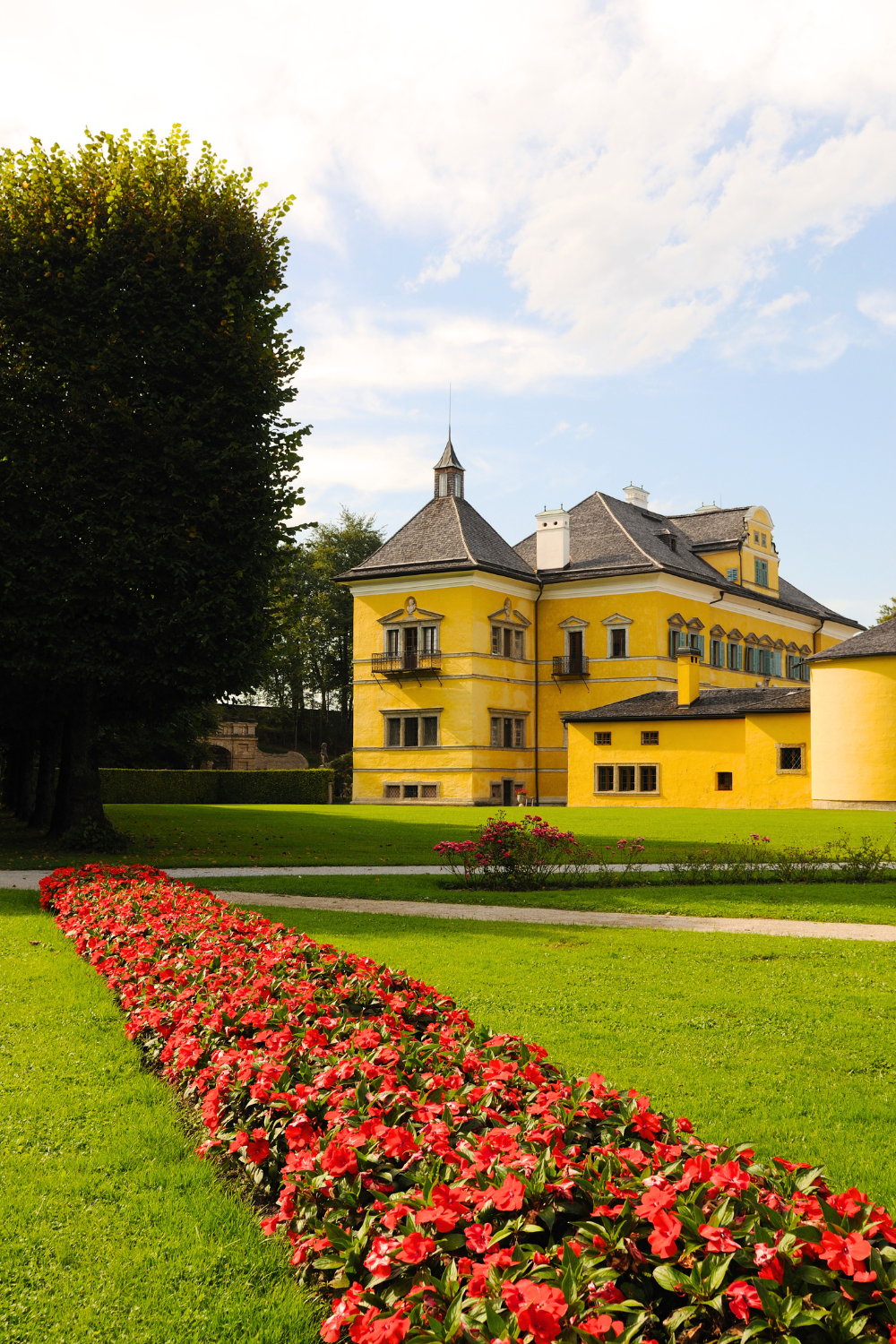
This one surprised me most of all, and it’s now my most enthusiastic recommendation for families with children.
Hellbrunn Palace, built in the early 17th century for the Prince-Archbishop Markus Sittikus, is pleasant enough as palaces go — but that’s not why you’re here. You’re here for the trick fountains, one of the most gloriously weird tourist attractions in all of Austria. Sittikus, who appears to have been a man of excellent bad taste, had the palace grounds fitted with an elaborate system of hidden jets and spouts designed to drench his unsuspecting dinner guests. Waterjets hidden in stone seats at the outdoor dining table. Fountains concealed in statues that spray at random intervals. A mechanical theatre driven by water pressure, populated with 141 moving figures, that has been running since 1750.
The guided tour of the trick fountains is mandatory — you can’t access them independently — and runs throughout the day. You will get wet. There is no avoiding this. Children do not mind. Children, in fact, consider this the best part. I watched my son shriek with laughter for approximately 45 consecutive minutes.
The palace grounds also include a sizeable wildlife park with deer, goats, and birds, plus excellent walking paths through the surrounding hills. The gazebo from The Sound of Music lives here too, giving you your double-dip of iconic Salzburg moments.
Local tip: Hellbrunn is about 4km south of the city centre. The bus (Line 25 from Hanuschplatz) runs regularly and takes about 20 minutes. Cycling along the Hellbrunner Allee — a tree-lined avenue that’s one of the most beautiful cycling routes in the region — is even better if you’ve rented bikes.
6. The Salzach Riverbanks: Where the City Breathes
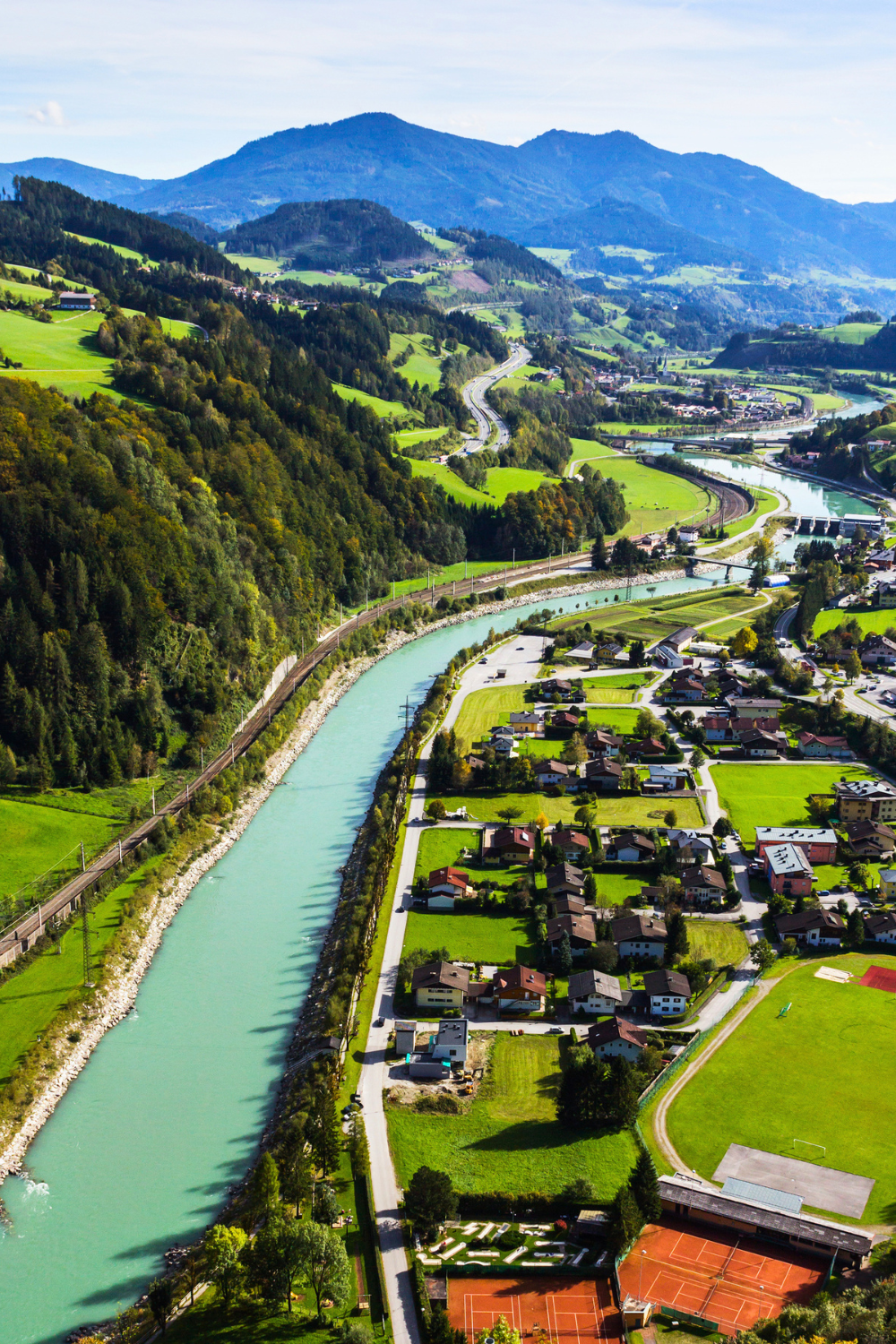
On our second day, we discovered what Salzburg locals actually do with their free time: they go to the river.
The Salzach runs wide and purposeful through the city, its water that distinctive glacier-fed blue-green that you only get this close to the Alps. The riverbanks on both sides are broad, well-maintained, and populated at almost every hour with joggers, cyclists, families with prams, and teenagers who have clearly been sent outside by their parents. There’s something deeply reassuring about a city that actually uses its river.
For families, the Salzach is ideal. The bike paths running along both banks are flat, smooth, and separated from traffic — making them genuinely safe for children on small bikes or in trailers. You can cycle south from the city centre all the way to Hellbrunn in about 20 minutes, passing the Leopoldskron Palace lake (the one reflected so dramatically in every Sound of Music photo), orchards, and the kind of quietly beautiful scenery that makes you understand why people choose to live here.
On hot days, brave locals and tourists alike swim in the Salzach. The current is fast and cold — this is alpine meltwater — so swimming is for the experienced and confident, but paddling at the edge is universally popular with small children.
Local tip: The Makartsteg pedestrian bridge and the area around it is where locals gather on summer evenings. There’s an excellent ice cream kiosk on the right bank near the bridge that operates until dark and serves homemade flavours that rotate by season.
7. The Untersberg Mountain: A Real Alpine Adventure Above the City
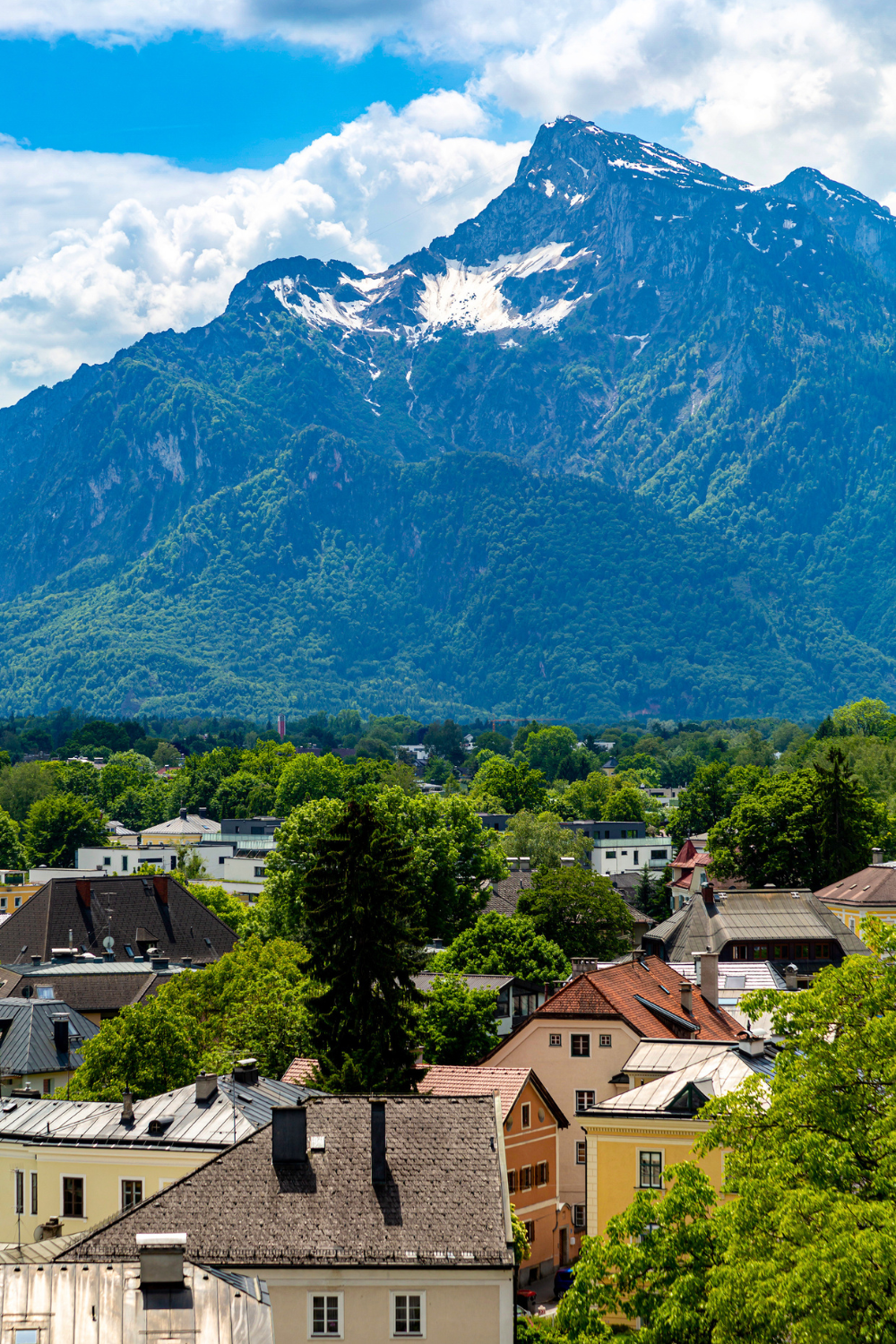
If your family has any appetite for the outdoors whatsoever, the Untersberg should be on your list.
The Untersberg is the dramatic mountain that looms on Salzburg’s southern horizon — you can see it from almost anywhere in the city, and it’s genuinely enormous, topping out at around 1,973 metres. There’s a cable car (the Untersbergbahn) that runs from the village of St. Leonhard, about 12km south of the city, up to the Geiereck summit at 1,776 metres. The ride takes about nine minutes and the views are, without any exaggeration, extraordinary. On a clear day you can see Salzburg spread below you, the Bavarian plain stretching north, and — in the other direction — an apparently endless sequence of alpine peaks.
At the top, there are walking trails suitable for families with children over about six or seven, a mountain restaurant with very good Käsespätzle (cheesy egg noodles, the alpine equivalent of mac and cheese, and a reliable way to make children happy), and the particular exhilaration of being genuinely above the clouds on a day when clouds are present.
The Untersberg also has significant local mythology — it’s said to be the mountain under which Charlemagne sleeps, waiting to rise and restore the Holy Roman Empire. I told my kids this. They found it considerably more interesting than the Holy Roman Empire itself.
Local tip: The cable car runs year-round but weather conditions can close it at short notice, especially in shoulder seasons. Check the Untersbergbahn website the morning of your visit. The mountain can be accessed independently without a Salzburg Card, but it’s worth budgeting for — the return trip for a family of four runs to around €60-70.
8. The Getreidegasse: Salzburg’s Most Famous Street, Earned
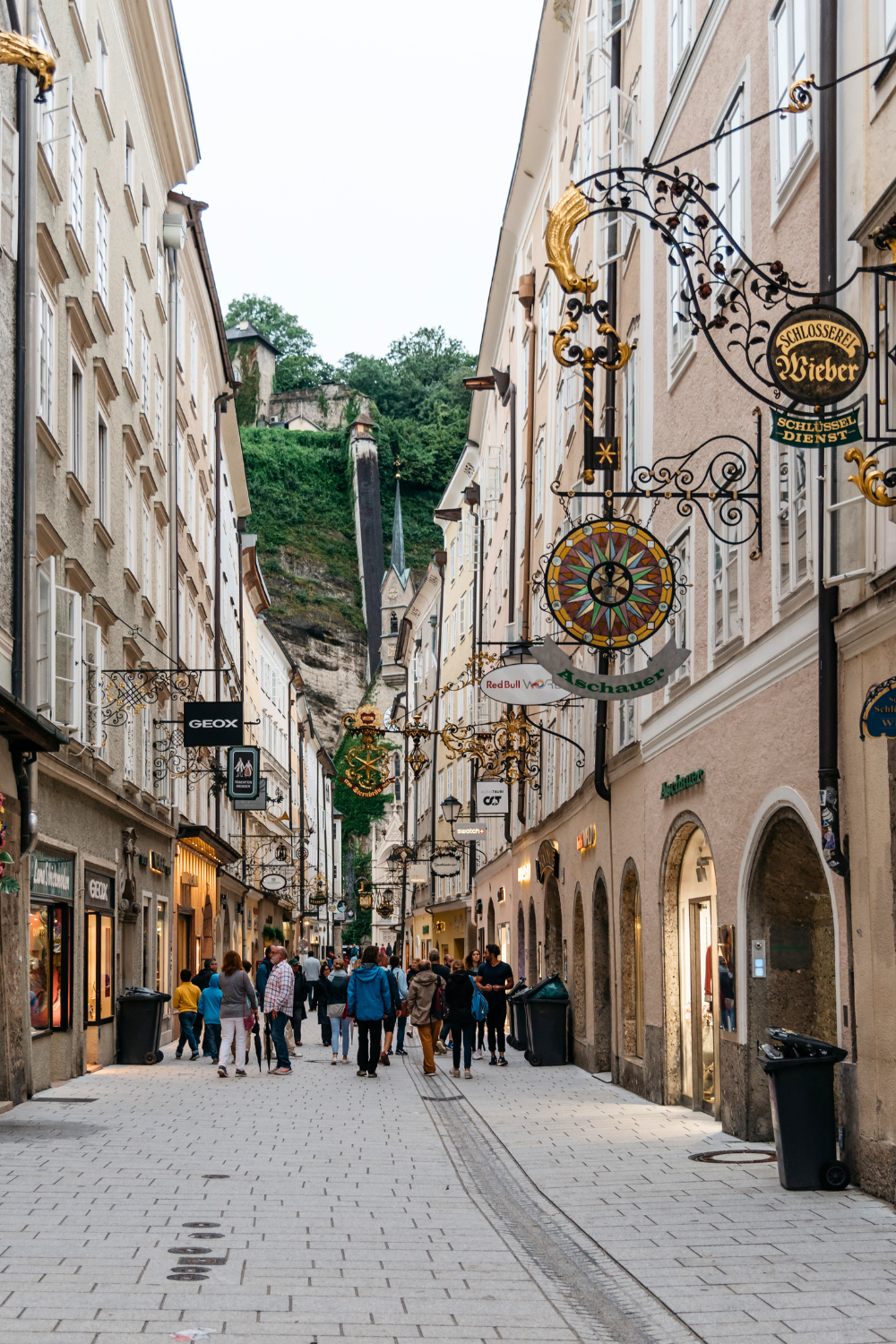
Every city has a “most famous street” that turns out to be disappointing. Getreidegasse is not that street.
It’s narrow enough that you can nearly touch the buildings on both sides simultaneously, which makes it feel like you’ve stepped into a stage set — except the buildings are genuinely centuries old, their facades painted in ochre and terracotta and pale yellow, their wrought-iron shop signs hanging overhead in baroque curlicues that have been here since the guilds needed people to identify their trades without being able to read. There’s a butcher’s sign and a baker’s sign and a pharmacist’s sign and — yes — a McDonald’s sign crafted in the same ornate wrought-iron style, which is either charming or horrifying depending on your perspective.
For children, the signs themselves are a game. Spot the pretzel. Find the boot. What does that one mean? It keeps little eyes occupied and little feet moving, which is the best thing a street can do. There are also some genuinely good shops here — confectioners selling Mozartkugeln (the pistachio and marzipan chocolates that are Salzburg’s most famous edible souvenir), toy shops, and bakeries producing the kind of pastries that make you briefly question every life choice that led you to a different city.
Local tip: The Getreidegasse gets genuinely very crowded between about 10am and 4pm in high season. Visit first thing in the morning — before 9am if you can manage it — and you’ll have the street almost to yourself. The light on the old facades in morning hours is also considerably better for photos.
9. The Salzburg Museum: The City’s Story, Told Well
Museum trips with children require a certain strategic optimism. You go in hoping for engagement, prepared for boredom, and grateful for anything in between. The Salzburg Museum, housed in the baroque New Residence building on Mozartplatz, managed to hold my children’s attention for nearly two hours, which I consider a significant institutional achievement.
The permanent collection traces the history of Salzburg from its prehistoric Celtic settlements through the Roman period, the medieval archbishopric, and into the modern era. The Roman section is particularly good — there’s a lot of original material, including mosaic floors and bronze artefacts, that makes the abstract idea of “the Romans were here” concrete and immediate. The medieval rooms covering the salt trade (Salzburg literally means “salt castle” — the city’s wealth was built on salt mining in the surrounding mountains) are fascinating and well-presented.
What the museum does especially well for families is the interactive elements scattered throughout. There are things to touch, things to build, things to weigh and measure. The staff are unfailingly patient. And the rooftop terrace offers panoramic views over the city rooftops that justify the visit on their own terms.
Local tip: The museum runs specific family workshop programmes on weekends throughout the year — costume making, printing, archaeological digging simulations. These are in German but visual enough that language isn’t a barrier for enthusiastic children. Check the website calendar before your visit.
10. Kapuzinerberg: The Hill Nobody Talks About Enough
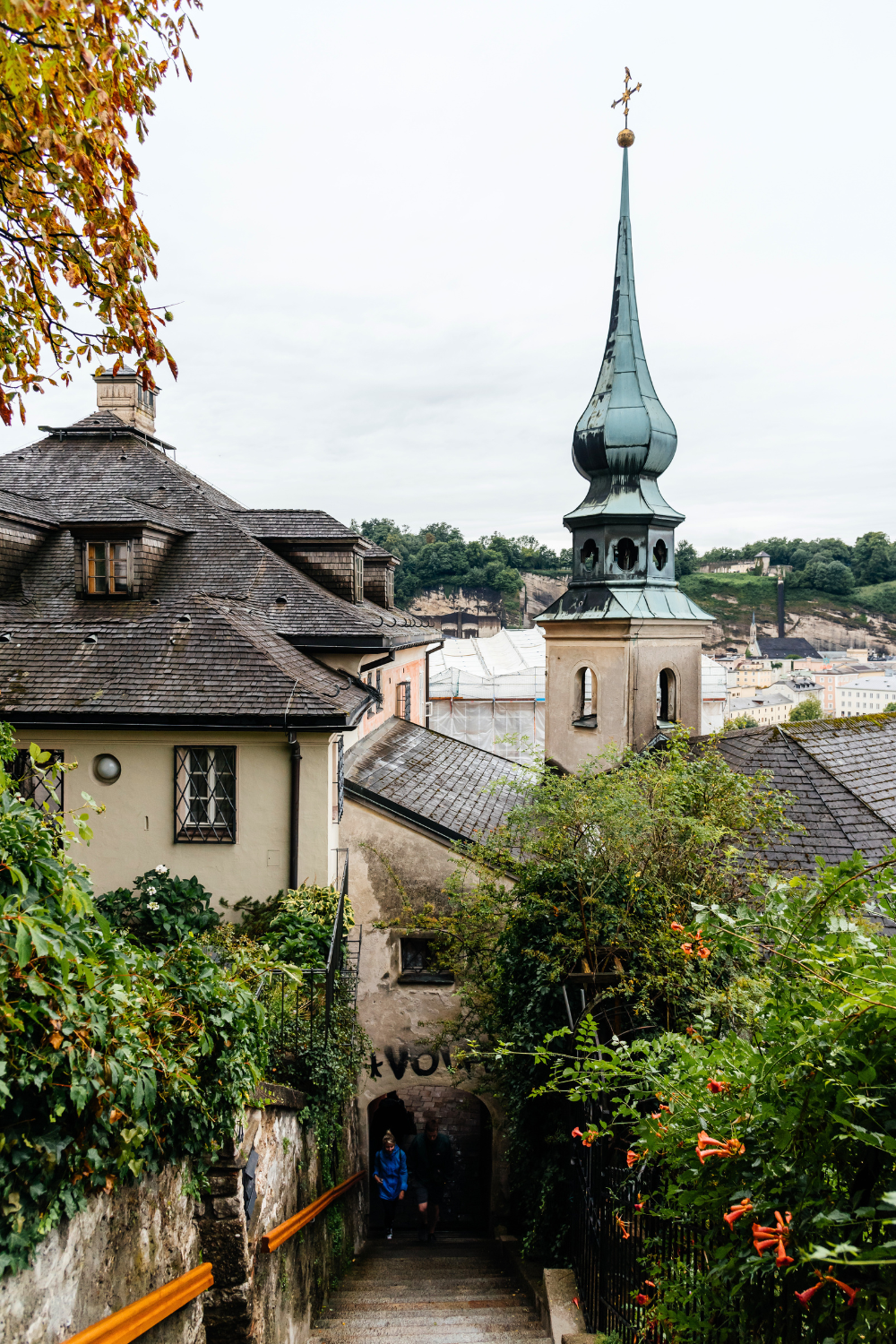
Every visitor goes to the Mönchsberg — the long hill on the western side of the old town with the Museum of Modern Art on top. Far fewer make it to the Kapuzinerberg, the slightly smaller hill on the eastern bank, and that’s a shame.
The Kapuzinerberg is wilder, greener, and considerably less crowded than its famous counterpart. A network of forested paths winds up from the Linzergasse neighbourhood to the Kapuziner monastery at the summit, passing fortification walls, stone steps worn smooth by centuries of feet, and spots of unexpected quiet just minutes from the city centre below. The summit views are arguably better than those from the Mönchsberg — you look directly across at the fortress and the old town, with nothing in the way.
For children, the Kapuzinerberg feels like a proper forest adventure rather than a tourist attraction. There are trees to climb (within reason), walls to peer over, and the mild exhilaration of having earned a view through actual walking. The monastery itself is a working Franciscan community and not open to visitors, but the exterior and the little chapel nearby can be seen freely.
Local tip: The entrance path off Linzergasse passes Stefan Zweig’s former house — the Austrian writer lived here until 1934. There’s a small plaque. Older children with an interest in literature might find the connection interesting; younger ones are usually more interested in the tree roots.
11. The Marionette Theatre: An Experience Unlike Any Other
The Salzburger Marionettentheater has been operating since 1913 and is, by any reasonable measure, one of the most extraordinary children’s entertainment experiences in Europe. I say this as someone who was profoundly sceptical going in.
The theatre stages full operatic and musical productions using marionettes — figures between 50 and 100cm tall, operated by a company of puppeteers from an overhead gantry. The craftsmanship is staggering: each figure is carved and costumed to a level of detail that makes you forget, repeatedly, that you’re watching puppets. The productions — which include The Magic Flute, The Sound of Music, and various ballets — use original recorded performances and feature lighting and staging that would be ambitious even for a conventional theatre.
Children who are old enough to follow a story (roughly five and up, in my experience) are captivated in a way that’s genuinely moving to watch. There’s no language barrier for the most part — the story is told visually, the music carries the emotion, and even children with zero exposure to opera respond to the drama. My son sat perfectly still for 80 minutes, which had never happened before and hasn’t happened since.
Local tip: Book tickets well in advance, particularly in summer. The theatre is not enormous and popular productions sell out weeks ahead. The box office is at Schwarzstraße 24, and booking online is straightforward. Programmes change seasonally, so check what’s running during your visit.
12. Natural History Museum Salzburg (Haus der Natur): A Hidden Gem for Curious Kids
If there is one museum in Salzburg that is more beloved by children than any other, it is the Haus der Natur — and it receives a fraction of the attention given to Mozart’s Birthplace or the fortress, which is entirely the city’s fault.
Spread across five floors of a former convent building, the Haus der Natur covers natural history with breadth and ambition that makes most natural history museums look timid. There are dinosaur skeletons. There’s an aquarium with exotic fish and reptiles. There’s a space hall with a genuine moon rock and a scale model of the solar system that makes the distances between planets viscerally, depressingly real. There are insect displays that delight entomologists and horrify everyone else. There’s a whole floor dedicated to Alpine wildlife that makes the mountains outside feel more immediate and alive.
The dinosaur section alone is worth the price of admission for children under twelve. My kids spent forty-five minutes there alone, returning twice to stand in front of the same tyrannosaur skeleton, apparently just to confirm it was still terrifying.
Local tip: The museum has an associated reptile zoo in the basement that requires a separate (small) admission. It houses crocodiles, pythons, and various lizards in conditions that look surprisingly good. It’s an easy yes if your children have any interest in reptiles.
13. The Salzburg Funicular and City Lifts: Engineering as Entertainment
Here’s something that visitors with children often overlook: Salzburg has a whole network of lifts and funicular railways built into its hills, and travelling on them is genuinely fun in a way that children respond to enthusiastically.
The Festungsbahn to the fortress we’ve already covered. But there’s also the Mönchsbergaufzug — a lift carved directly into the cliff face of the Mönchsberg, which takes you from a ground-level entrance on Gstättengasse up to the hilltop plateau in about 30 seconds. The experience of dropping into a rock face, rising in a glass cabin, and emerging onto a forested hilltop is exactly as good as it sounds. Kids want to go again immediately.
Once you’re on the Mönchsberg plateau, there are woodland walks, the excellent Museum of Modern Art, and — best of all — the views from the cliff edge over the old town that are among the very finest in the city. The Museum of Modern Art has a rooftop café that is significantly more relaxed than its cultural mission would suggest, and the terrace on a clear day is one of the best places in Salzburg to sit with a coffee while children run around without breaking anything.
Local tip: The Mönchsberg plateau is connected to the fortress hill by an underground passage through the rock — part of the old town’s fortification system. Walking this tunnel with children (it’s lit and perfectly safe) is eerie and exciting in equal measure, and it’s included in the Salzburg Card.
14. Lake Fuschl and the Salzkammergut: Half a Day Outside the City
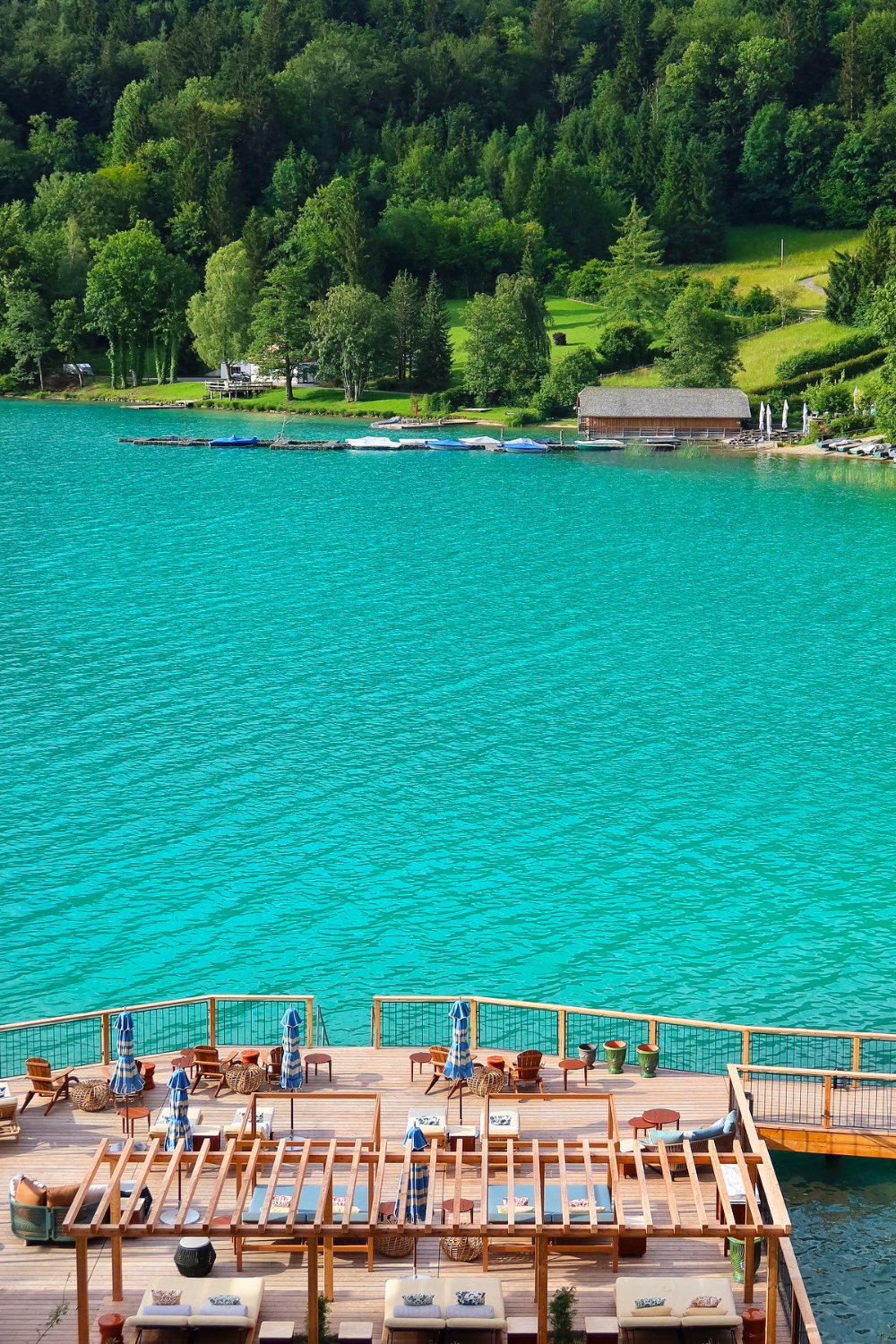
Salzburg is the ideal base for day trips into the Salzkammergut lake district, one of the most beautiful areas of Austria. You don’t need a full day — even a half-day excursion to Lake Fuschl, about 20 minutes east of the city by car, makes a significant impression.
Lake Fuschl is smaller and less famous than the Wolfgangsee or Hallstätter See to its east, but that’s precisely its advantage. The water is extraordinarily clear and cold — cold enough on even a warm day to make you gasp — and the surrounding forests come right down to the shore. There’s a small beach at the eastern end of the lake with a water park and rental facilities for pedal boats and kayaks that keeps children occupied for hours.
The Fuschlsee region is also where you’ll find some of the best walking trails in the greater Salzburg area that are genuinely suitable for families with children — not demanding alpine routes, but forest paths and lakeside circuits that reward younger walkers with constant variety. The 7km circuit of the lake itself takes about two hours at a relaxed pace and is widely regarded as one of the finest short walks in the region.
Local tip: The village of Fuschl am See has a good traditional restaurant called Gasthof Dorfwirt where the Wiener Schnitzel is properly enormous and the lake views from the terrace are free. No reservations needed for lunch in shoulder season, but arrive before noon in July and August.
15. St. Peter’s Cemetery: Beautiful, Quiet, and Surprisingly Child-Friendly
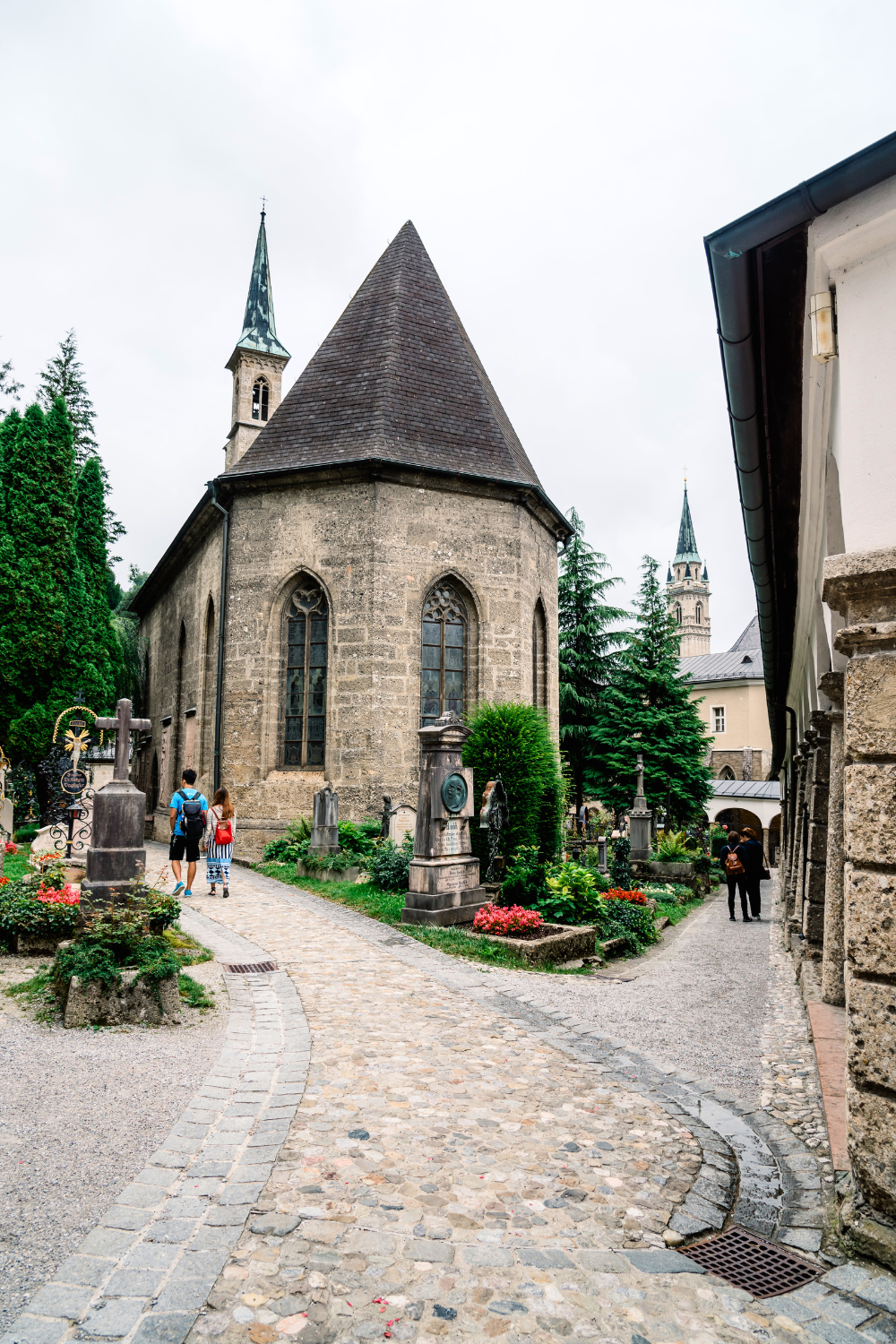
I know — a cemetery on a family activity list requires some explanation. But St. Peter’s Cemetery, tucked against the cliff face of the Mönchsberg directly behind the Peterskirche, is one of the most beautiful and peaceful spaces in Salzburg, and children respond to it quite differently than you might expect.
The cemetery has been in continuous use since the 7th century. The graves are tended with extraordinary care — each plot is a miniature garden of flowers and lanterns and personal mementos, tended by families who treat the space as a living part of their relationship with the dead. The catacombs carved into the cliff face above (accessible for a small fee) date to the early Christian period and are the oldest Christian monument in Austria. Walking through them with children provokes the kind of quietly reverent curiosity that’s quite different from the brash excitement of a fortress or a trick fountain — and that contrast is, I think, genuinely valuable.
The cemetery appears briefly in The Sound of Music — the Von Trapp family hides among the graves during their escape — which gives it an additional layer of interest for film fans.
Local tip: The Stiftskeller St. Peter restaurant, adjacent to the cemetery, is one of the oldest restaurants in Europe — there’s documentation of a restaurant here from 803 AD. It’s an atmospheric and reliably good place for lunch, with a children’s menu that doesn’t insult anyone’s intelligence.
16. The Residenzplatz Fountain and Horse Pond: The Art of Doing Nothing Well
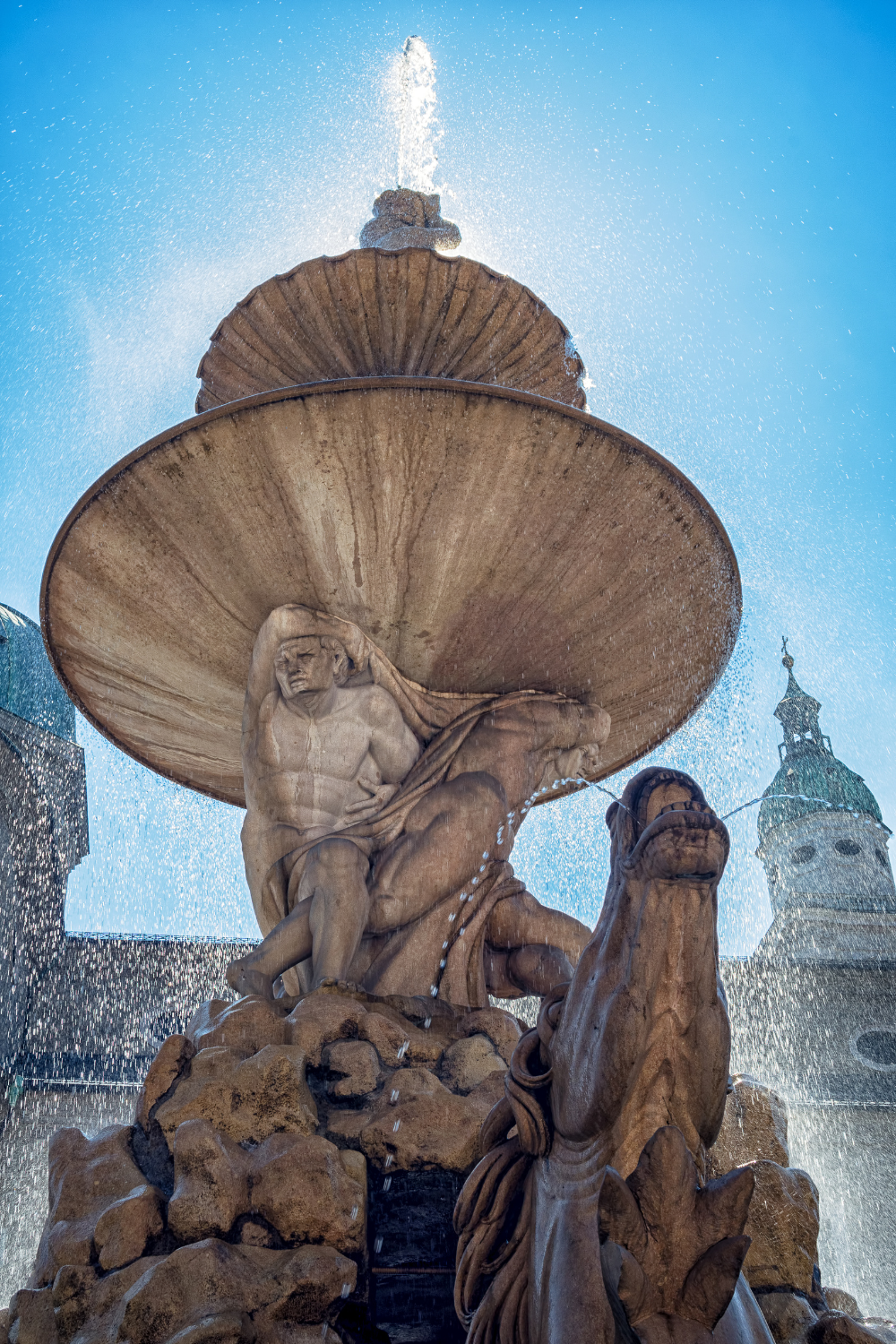
Not every moment of a family holiday needs to be programmed. Some of the best ones happen when you stop at a fountain and just… stay there.
The Residenzplatz is Salzburg’s grandest square — baroque buildings on all sides, the 1661 marble fountain in the centre, and usually a mix of tourists, pigeons, and local teenagers on skateboards who have very clearly been skating this square for years. The fountain itself is magnificent: four horses, tritons, and a great arc of water that on bright days catches the light in spectacular ways.
The Pferdeschwemme — the horse pond on Herbert-von-Karajan-Platz, just behind the cathedral — is even better for children. Built in 1695 to wash the Prince-Archbishop’s horses, it’s now a serene basin with beautiful painted panels depicting rearing horses all around its interior walls. Small children are entranced by it. It’s also a remarkably good photo opportunity that most visitors walk straight past.
Local tip: Residenzplatz in the evening, when the tour groups have thinned and the light is warm and golden on the old stone, is one of the finest free experiences in Salzburg. Buy gelato from the shop on the south side of the square and sit by the fountain until the light goes. This costs almost nothing and will be one of the moments your children remember.
17. Advent Markets and Winter Magic: A Note for December Visitors
If you’re reading this in autumn, considering a winter trip to Salzburg with children, let me tell you plainly: go. Just go.
Salzburg at Advent is one of the most genuinely magical experiences Central Europe offers for families, and unlike some cities where Christmas markets are predominantly for adults with mulled wine, Salzburg’s markets cater seriously to children. The Christkindlmarkt on Domplatz (Cathedral Square) has been running since 1491, making it one of the oldest Christmas markets in the world, and it shows — there’s a craft and quality to the produce here that sets it apart from the average mulled-wine-and-plastic-toys circuit.
There’s also the separate Advent Singing and Advent Concerts programme at various venues around the city, and the Mirabell Palace market, and the market at the Mirabellplatz that’s specifically oriented towards children with a nativity scene and various craft activities. The entire city smells of cinnamon, roasted almonds, and wood smoke. Snow on the fortress walls is everything the films promised.
Local tip: Accommodation prices spike dramatically in December, particularly in the week before Christmas. Book at least four to six months ahead for family rooms with any kind of reasonable rate. The city is busiest on weekends — if you can structure your visit to be in the city during the week and depart before the Saturday rush, you’ll have a significantly more peaceful experience.
Practical Planning: Everything You Actually Need to Know
Getting there: Salzburg has its own international airport (SZG), compact and manageable, with connections to major European hubs. It’s also just over two hours from Vienna by train, and the ÖBB trains are comfortable, punctual, and beloved by children who have never lost faith in the power of a dining car.
Getting around: The old town is entirely walkable for families with children over four or five. For wider explorations, the Salzburg Card (available in 24, 48, and 72-hour versions) covers all public transport, the funiculars, and most major attractions. For day trips to the lakes and mountains, renting a car is the most practical option — rates are reasonable and parking at most destinations is straightforward.
Where to stay: For families, the neighbourhoods on the right bank of the Salzach (the Linzergasse area, Schallmoos) tend to offer larger apartments at better rates than the old town itself, with easy walking or public transport access to everything. Apartments with kitchens are worth seeking out — having the option to feed children breakfast and lunch without restaurant prices makes a meaningful difference over a week-long stay.
Eating: Austrian food is reliably good for children: Schnitzel, Käsespätzle, Tafelspitz (boiled beef with horseradish, better than it sounds), and the magnificent apple strudel that appears on every dessert menu. The Augustinerbräu, Salzburg’s legendary monastery brewery, serves simple food at communal tables in a garden the size of a small park and is one of the great casual dining experiences in Austria — bring the kids, let them run, order a Masskrug, and settle in.
Budgeting: Salzburg is not cheap, but it’s cheaper than Vienna and considerably cheaper than Zurich or Munich. The Salzburg Card is your best tool for managing costs. Build in a contingency for cable cars and day trips — these add up quickly but are worth every cent.
Salzburg will do something to your family that’s hard to predict and harder to explain until it happens. Somewhere between the fortress and the fountain, between the Mozart museum and the mountain, something shifts — the children stop complaining about walking, the adults stop checking their phones, and everyone starts actually looking at things together. That’s the promise of a great travel destination: not just scenery and history, but the particular quality of attention it demands. Salzburg demands it beautifully. Go and see for yourself.

