
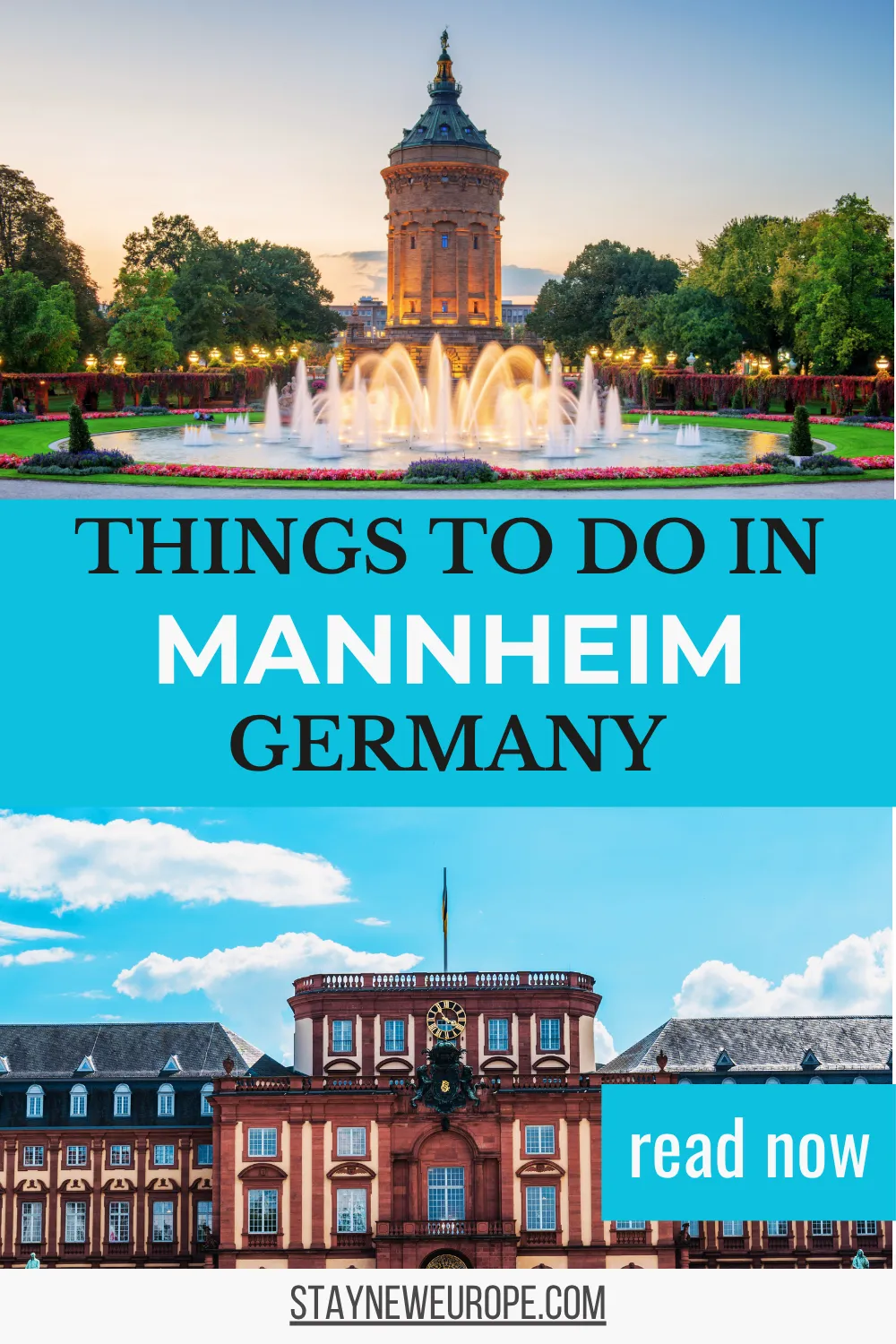
Mannheim doesn’t try to charm you. It doesn’t drape itself in fairy lights and shove a pretzel in your hand the moment you step off the train. It’s a grid city — literally, the streets are laid out in a numbered and lettered grid like a chessboard — and there’s something almost confrontational about that kind of confidence. “Figure me out,” it seems to say. And once you do, oh boy, you’ll be back.
I’ll be honest with you: I came to Mannheim half-expecting to kill a few hours between Heidelberg and Frankfurt. I left having eaten some of the best street food of my trip, discovered a contemporary art institution that genuinely floored me, and stumbled into a bar where a jazz trio was playing to a room of locals who clearly had no idea they were supposed to be somewhere more “touristy.” This city has a secret, and it’s kept it remarkably well.
So let me tell you exactly what to do with your time here. Whether you’ve got a single afternoon or a long weekend, Mannheim rewards the curious — and absolutely punishes anyone who just follows the signs.
Before We Dive In: Understanding the Grid
Mannheim is the only major German city planned on a strict grid system, and this quirk isn’t just a fun geography fact — it shapes the entire experience of being here. The city centre is divided into quadrants (Quadrate), each identified by a letter and number. So instead of “turn left on Hauptstraße,” locals say “meet me at K1” or “it’s between B6 and C5.” It sounds confusing, and for your first twenty minutes, it genuinely is. Then it clicks, and suddenly you feel like a local navigating by coordinates. Lean into it. It’s one of Mannheim’s most endearing personality traits.
The city sits at the confluence of the Rhine and Neckar rivers, making it a historic trading powerhouse, and its blue-collar, multicultural, no-nonsense identity has always had more in common with Hamburg or the Ruhr Valley than with the wine-soaked romanticism of nearby Heidelberg. That contrast is precisely what makes a visit so satisfying.
1. Kunsthalle Mannheim
There are art museums that show you art, and then there are art museums that make you reconsider what a building can do. The Kunsthalle Mannheim is firmly in that second category.
The old and new wings of the Kunsthalle are connected in a way that feels like architecture as conversation — the historic building from 1907 wrapped in dialogue with a stunning contemporary extension opened in 2018, all glass and cubes and unexpected light. Even before you look at a single painting, you’re thinking hard about form. And then you do look at the paintings, and the thinking only deepens.
The permanent collection is genuinely world-class, with an emphasis on German Expressionism and international contemporary work that puts many better-known institutions to shame. Manet, Monet, Beckmann, and an extraordinary collection of sculptures — the museum gives you all of it without the usual hustle and exhaustion of larger galleries. You can actually stand in front of a piece and breathe. This one surprised me more than almost anything else in the city.
Local tip: The museum café is excellent and far less crowded than anything around the central Wasserturm. Come for the collection on a Tuesday morning when tour groups haven’t yet descended and you’ll practically have the Expressionist galleries to yourself.
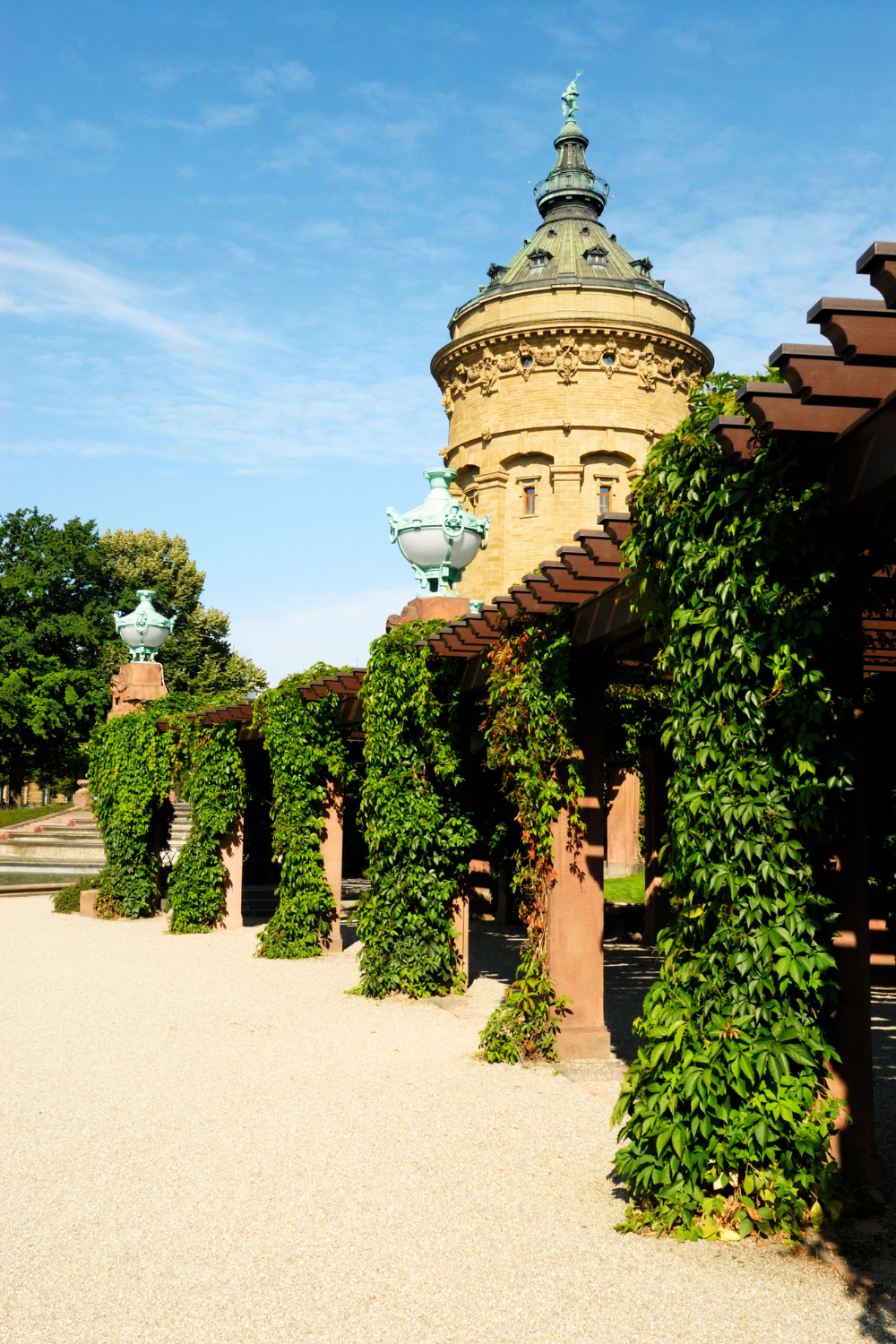
2. Wasserturm and Friedrichsplatz
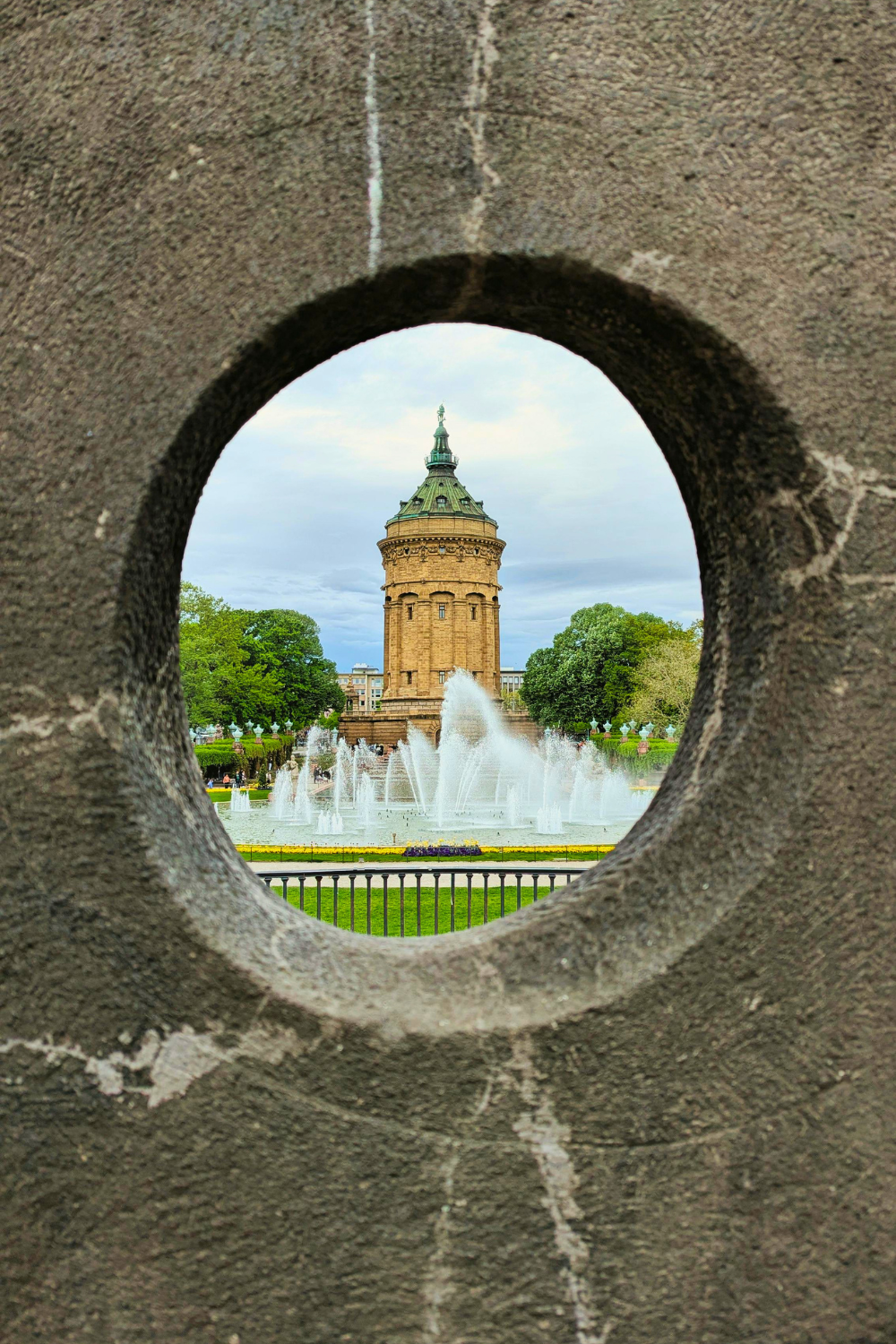
Every city in Germany has its postcard image. In Mannheim, it’s this: a towering neo-baroque water tower rising from a symmetrical garden ringed by grand Jugendstil buildings, fountains catching light, locals eating lunch on the grass. It is, without question, beautiful. And it’s also the kind of place where you have to do a little work to see past the Instagram version of itself.
The Wasserturm (Water Tower) was built in 1889 and is now the unofficial symbol of the city. At 60 metres, it dominates Friedrichsplatz, one of the most harmonious urban squares in Germany, and the surrounding buildings — all constructed in that rich, ornate turn-of-the-century style — create a frame that seems almost too perfect to be real. Spend five minutes here as a tourist; spend twenty as someone actually paying attention.
The gardens of Friedrichsplatz are genuinely lovely for a slow morning wander, and the square itself hosts a regular market that brings a welcome dose of everyday life to all that grandeur. In summer, people lie on the lawns, kids chase the fountain jets, and old men sit on benches watching it all with the serene detachment of people who’ve lived near something beautiful long enough to actually relax in front of it.
Local tip: At night, the tower is illuminated and the square takes on a different, more theatrical quality. The bars on Fressgasse, just a short walk away, are where people end up after the magic-hour photos are taken.
3. Reiss-Engelhorn-Museen (REM)
Four museums under one institutional umbrella, and not one of them is phoning it in. The Reiss-Engelhorn-Museen complex sits across multiple buildings near the city centre and covers everything from ancient Egyptian artefacts to 20th-century photography — and the common thread is that every exhibition is curated with genuine intelligence and ambition.
The Museum Weltkulturen (World Cultures Museum) is particularly impressive, with collections from Africa, Asia, and the Americas that are presented with real contextual care rather than the dusty colonial display style of older institutions. The photography museum (Zeughaus C5) stages temporary exhibitions that regularly draw visitors from across Germany. I wandered into one devoted to documentary photography from Cold War-era Eastern Europe and stood there for an hour.
What strikes you about the REM complex is how confidently it operates outside the typical tourist orbit. This is not a museum built to attract passing visitors — it’s built for people who actually want to know things. That self-assurance makes every room feel like it means something.
Local tip: A single combined ticket gets you into multiple venues. Buy it at the first museum you visit rather than paying individually — the savings are real, and the staff at the ticket desks are refreshingly helpful about telling you which current exhibitions are worth prioritising.
4. Mannheim Palace (Barockschloss Mannheim)
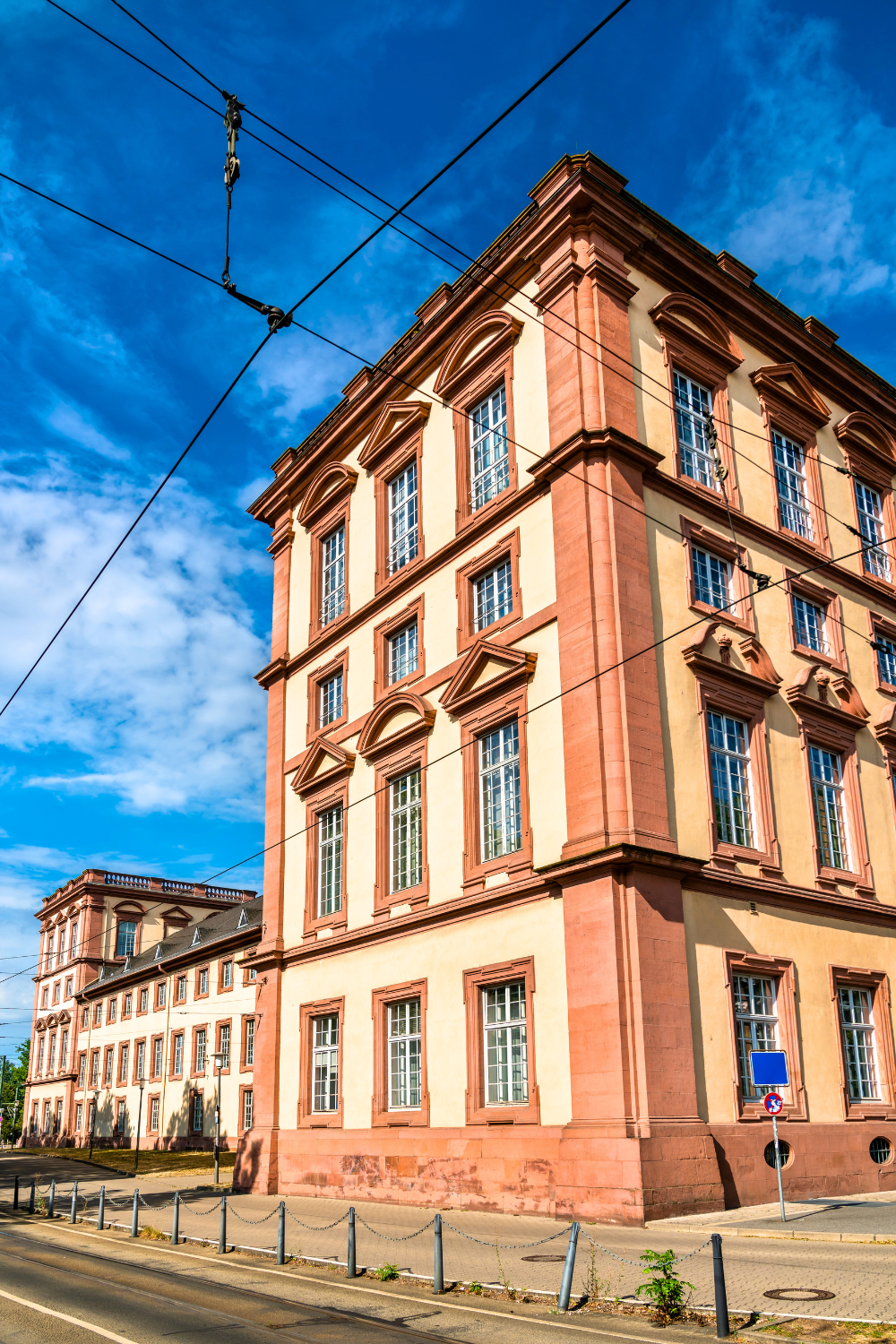
Here’s a piece of scale that Mannheim doesn’t shout about enough: the Mannheim Palace is one of the largest baroque palaces in Germany. Not one of the prettiest, not one of the most famous — one of the largest. The facade stretches for an almost absurd 450 metres. Walking its length before you go inside is an exercise in recalibrating your sense of space.
Built in the early 18th century as the residence of the Electors Palatine, the palace fell into severe disrepair after World War II bombing and has been gradually restored over decades. Today, the University of Mannheim occupies most of the building, which creates one of Germany’s more enjoyable aesthetic incongruities: students cycling past baroque fountains, reading on ornate staircases, eating sandwiches in courtyards that once hosted royal banquets.
The Knight’s Hall (Rittersaal) and the state rooms that have been restored and opened to visitors are genuinely magnificent — gilded and frescoed and everything you want from a German Schloss. But what makes this palace particularly interesting is its living, breathing, student-populated present. History here isn’t cordoned off behind velvet ropes; it’s being sat on.
Local tip: The palace courtyard is open to the public and makes an excellent shortcut between the Rhine waterfront and the city centre. Most visitors miss this entirely, but locals use it daily — and it’s one of the more quietly pleasurable walks in Mannheim.
5. Luisenpark
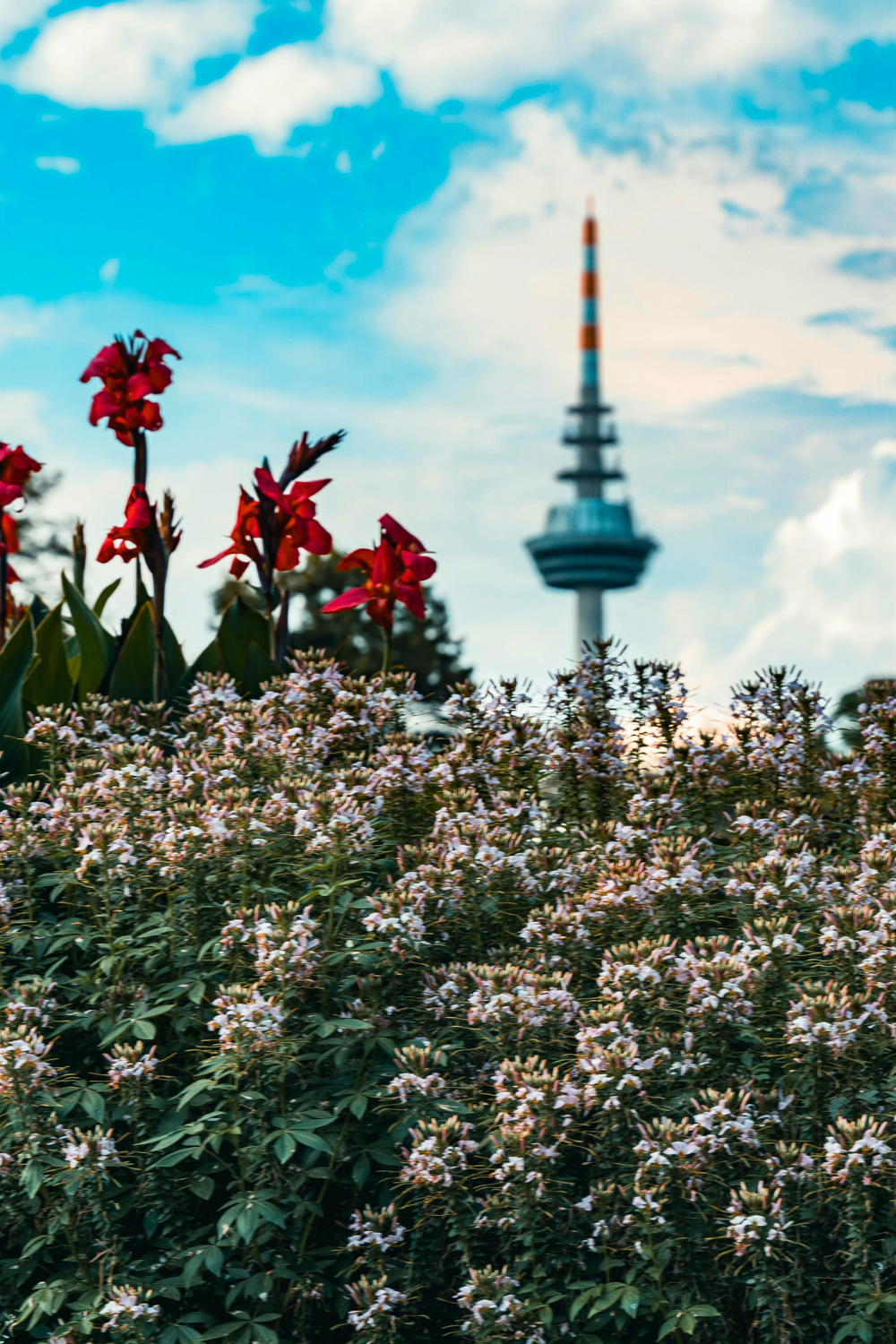
When Mannheim residents talk about Luisenpark, they talk about it the way people talk about a beloved neighbourhood bar. With ownership. With affection. With the slight suspicion that outsiders won’t quite understand why it matters.
It’s a large urban park on the bank of the Neckar — over 40 hectares of gardens, lakes, a Chinese tea house, a telecoms tower with a rotating restaurant, and enough green space to make a half-day wander feel completely natural. There are flamingos. There is a miniature train. There is a butterfly house that smells of warm tropical air and makes you briefly feel like you’ve teleported to somewhere near the equator. It is, in every sense, a park that takes its job seriously.
What elevates Luisenpark above mere green space is its evident commitment to actually being used. On a sunny weekend, you’ll find families, old couples, joggers, chess players, and teenagers lying in the grass with the unfocused contentment of people who have nowhere else to be. This is Mannheim at its most itself: unpretentious, plural, and quietly pleased with what it has.
Local tip: The entrance fee is modest and absolutely worth it. Avoid the kiosk near the main gate for food — walk further into the park to the lakeside café, where the coffee is better and the view is a substantial upgrade.
6. Neckarwiese
Let me tell you about the Neckarwiese, because it might be the most honest place in Mannheim. It’s a long stretch of lawn running along the bank of the Neckar river, and it is exactly what it is: grass, water, sky, and people.
No admission fee. No attraction. No historical significance beyond being exactly the kind of place that makes urban life bearable. On warm evenings, the Neckarwiese fills with picnickers, grilling families, students with guitars, kayakers putting in and taking out, and people who have simply decided that here — right here, on this particular strip of riverbank — is the best place in the world to be tonight.
I showed up on a Thursday evening in late spring and the scene was so effortlessly sociable, so free of performative tourism, that I sat down and opened a beer with the unearned confidence of someone who belongs. Nobody questioned it. That’s the thing about the Neckarwiese. It belongs to everyone who shows up.
Local tip: The small kiosks and snack stands near the Neckarwiese sell grilled corn, Döner, and cold drinks at prices that have nothing to do with tourist economics. Stock up before you find a spot on the grass.
7. Alte Feuerwache
Culture venues in converted buildings are common enough across Europe, but the Alte Feuerwache — the Old Fire Station — earns its reputation for reasons that have nothing to do with its charming industrial shell and everything to do with its extraordinary programming.
Built in 1930 and repurposed in the early 1990s as a cultural and events centre, the Alte Feuerwache has become one of Mannheim’s genuine creative heartbeats. Concert nights in the main hall, theatre in unexpected corners, art exhibitions in the courtyard, and a calendar that ranges from jazz evenings to electronic music nights to spoken word performances in three languages. It is not trying to be cool. It simply is.
The space itself rewards exploration. The arched vehicle bays where fire engines once waited now host everything from folk musicians to club nights, and the original signage and industrial fittings have been kept with obvious care. This is a building that knows exactly what it used to be and has decided to become something equally necessary.
Local tip: Check the programme online before your visit — the Alte Feuerwache’s events calendar is dense and eclectic, and landing on a concert night transforms your evening from pleasant to unforgettable. Tickets sell out for popular acts, so book ahead.
8. Collini-Center and the Curious Brutalism of Mannheim
This one is for the architecture obsessives, the people who photograph car parks and mean it. Mannheim has a remarkable collection of post-war Brutalist buildings, and none is more striking — or more controversial — than the Collini-Center, a massive mixed-use complex hovering above the Rhine on pilotis like a building that couldn’t decide whether to stay or leave.
Built in the 1970s, the Collini-Center is the kind of structure that polarises people on sight. Admirers see a bold urban experiment, a building that took modernism seriously and tried to create a vertical city within a city. Critics see a grey slab that cut the Rhine waterfront off from the city for decades. Both are right, and that tension makes it fascinating.
Walk underneath it. Stand where the pilots plunge into the ground and look up at the underside of all that concrete. Then walk out to the Rhine promenade it partially shades and consider the view. Mannheim’s Brutalist heritage is being quietly reassessed, and buildings like the Collini-Center are at the centre of that conversation.
Local tip: The Rhine promenade alongside the Collini-Center stretches south toward the palace and makes a wonderful riverside walk in either direction. Early morning — before the city fully wakes — is when this stretch feels most magical.
9. Marktplatz and the Old Town
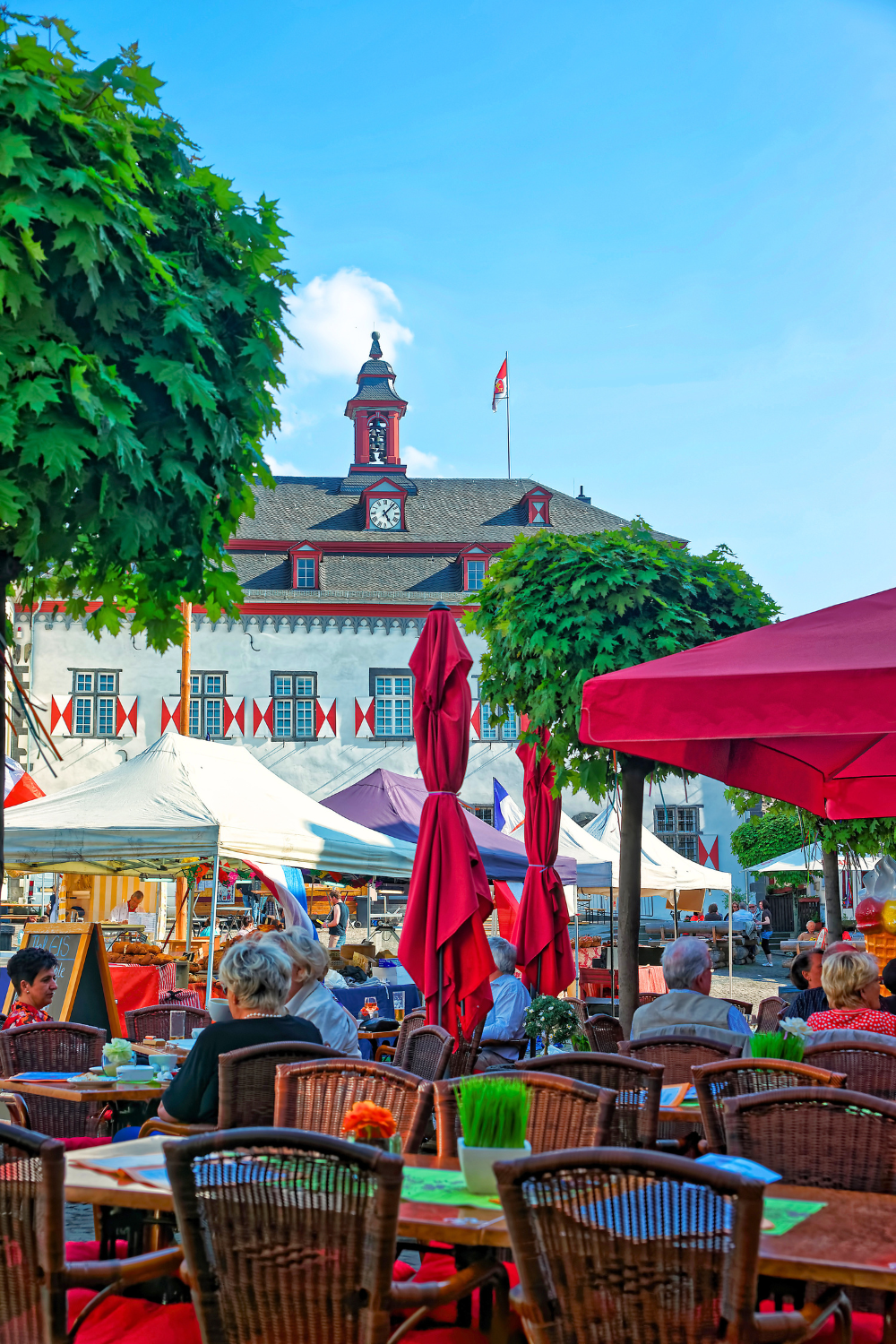
Mannheim’s Marktplatz sits at the heart of the quadrant grid, flanked by the town hall and the Jesuit church, and it has the satisfying proportions of a square that was designed to actually be used — not merely to impress. Which is somewhat ironic, because the Jesuit church absolutely impresses.
The Jesuitenkirche is one of the finest baroque churches in southwest Germany, its interior all warm light and gilded excess and theatrical piety. Even if you’re not remotely religious, it rewards twenty minutes of quiet attention. The ceiling frescoes are extraordinary.
The surrounding streets of the inner city, particularly around the Planken pedestrian zone, give you Mannheim in its commercial and social dimension. Yes, there are chain shops. There are always chain shops. But push one block off the Planken in any direction and you’re in a different rhythm: independent delis, specialist bookshops, small galleries, Vietnamese restaurants that have been here since the 1980s. This city has a genuine immigrant culture that shaped its food, its music, and its character in ways that the tourist brochures consistently underplay.
Local tip: The Marktplatz hosts a twice-weekly market (Tuesday and Saturday mornings) where local farmers and producers set up proper stalls. The cheese selection is legitimately extraordinary. Get there before ten and you’ll have first pick.
10. Hafengebiet (The Harbour Quarter)
Every German industrial city seems to have its harbour district transformation story, and Mannheim’s is still mid-chapter, which makes it more interesting than most. The old Rhine harbour area — once all freight and industrial activity — is becoming a patchwork of creative studios, converted warehouses, independent cafés, and the kind of scrappy street art that appears before gentrification fully arrives and disappears after it does.
The Rheinvorland area near the harbour is especially good for an aimless wander. The industrial architecture is largely intact — cranes, warehouses, loading docks — and the contrast between the remnants of working-port infrastructure and the new life growing up around it creates a visual texture that’s genuinely engaging. Mannheim feels here the way European cities tend to feel most honestly: in the process of becoming something.
Several excellent bars and restaurants have taken root in the harbour area, particularly along the waterfront, and on summer evenings the terraces fill with people who seem genuinely pleased to have found the place. It hasn’t been written up too much yet. Come now.
Local tip: The Freiraumgalerie in the harbour district regularly hosts outdoor street art projects, and the walls of several converted warehouses carry murals of remarkable quality. A slow circuit of the area is a free outdoor art tour that most visitors entirely miss.
11. National Theatre Mannheim (Nationaltheater)
Mannheim’s National Theatre is not a polite provincial stage. It is one of the oldest and most historically significant theatres in Germany — the building where Friedrich Schiller’s Die Räuber had its world premiere in 1782, a night that caused a sensation across German-speaking Europe and launched one of the great literary careers of the age. The theatre has been carrying that weight with considerable grace ever since.
The current building dates from 1957 (the original was bombed in the war) and strikes a confident mid-century note that sits well in Mannheim’s mixed architectural landscape. Inside, the programming covers everything from classic German drama to contemporary opera to dance — and the quality of performance is consistently high enough to attract attention from across the region.
Even if you can’t catch a performance, the theatre foyer is sometimes open for visits and the building itself is worth a look as part of a walk through the Quadrate. But if you can book a ticket, absolutely do.
Local tip: Standby tickets for same-day performances are available at a significant discount. If your travel timing is flexible, check the box office in the afternoon for that evening’s availability — it’s one of the most civilised ways to spend a Mannheim evening.
12. Schlossgarten and the Rhine Waterfront
The gardens stretching between the palace and the Rhine are probably Mannheim’s least complicated pleasure. There’s no admission fee, no particular highlight to locate, no Instagram moment to engineer. Just a long expanse of restored baroque parkland leading to the riverbank, with the palace on one end and the Rhine gleaming at the other.
The Schlossgarten has been restored to something approaching its 18th-century appearance — formal beds, clipped hedges, gravel paths with satisfying crunch — and walking through it in the early evening light has a particular quality of unhurried grace. It’s the kind of garden that makes you slow down not because anything demands your attention but because speed would feel wrong.
At the Rhine end, a small beach has formed in recent years, used in summer by swimmers brave enough for the current, and the promenade along the riverbank extends north and south with views of the opposite bank and, on clear days, the hazy blue outline of the Palatine hills.
Local tip: Bring a book, come in the late afternoon, and stay until the sun drops behind the palace. It costs nothing and it’s absolutely worth your time.
13. Stadtbibliothek Mannheim
This may sound like a strange recommendation — yes, I am telling you to visit the public library — but hear me out. The Stadtbibliothek Mannheim is a building of genuine architectural interest, and its interior speaks volumes (pun intended, sorry) about the city’s relationship with culture and public life.
The building, an imposing modernist structure near Dalbergstraße, holds the city’s central library across airy, generous floors filled with both the expected books and an impressive collection of reading rooms, digital archives, and cultural resources. What makes it worth visiting for the non-book-tourist is the design: open, light-filled, and unselfconsciously welcoming in the way that good public buildings should be.
Mannheim has always been a city that took its cultural infrastructure seriously — the Kunsthalle, the National Theatre, the REM museums — and the library fits squarely into that tradition. Drop in, use the wifi, sit somewhere quiet for half an hour. It’s a very Mannheim thing to do.
Local tip: The library hosts regular free events — readings, lectures, film screenings — that are listed on their website and almost entirely in German, which gives them a lovely unmediated quality if you can manage the language.
14. Seckenheim and the Outer Villages
Most visitors don’t stray beyond the Quadrate, which means most visitors miss the outer neighbourhoods and villages that Mannheim absorbed over the centuries and that retain distinct, unhurried personalities of their own. Seckenheim, in the south, is my favourite of these — a proper village high street within city limits, with a Gothic church, a weekly market, and a handful of family-run restaurants where the menu has not been updated since approximately 1994 and is entirely better for it.
Neckarau, Rheinau, and Feudenheim similarly reward a tram ride and a wander, each carrying its own industrial or agricultural history and its own version of Mannheim character — less cosmopolitan than the city centre, more rooted, occasionally more gruff, always more interesting once you’ve been in the same café long enough to be acknowledged.
These neighbourhoods are where Mannheim’s Turkish, Italian, and Greek communities established themselves decades ago, and where the best non-German food in the city tends to exist: family-run and unhurried and spectacularly good value.
Local tip: The tram network connects all these outer neighbourhoods efficiently. Buy a day ticket and simply ride to the end of a line, then walk back toward the centre stopping wherever looks interesting. It’s the best way to understand the full geography of a city.
15. SAP Arena and the Adler Mannheim
Sport is woven into this city’s identity in a way that doesn’t ask your opinion about it. The Adler Mannheim — the Eagles — are one of the most successful ice hockey clubs in German history, and a home game at the SAP Arena is an experience that has very little to do with ice hockey and everything to do with what it feels like to be part of 13,000 people who genuinely care about something.
The SAP Arena is a large, modern venue on the southern edge of the city, and on game nights it transforms into something feverish and communal that visitors rarely expect from German sporting culture. The chants are rhythmic and sustained. The scarves are red. The beer is cold and served efficiently. If you’re visiting during the Deutsche Eishockey Liga season (roughly October to April), getting a ticket to an Adler home game is, I promise you, a highlight.
Even outside hockey season, the arena hosts concerts and events — check the calendar before your visit.
Local tip: Buy tickets online in advance rather than at the door, especially for evening weekend games. Sit in the upper tiers for the best view of both the ice and the crowd — it’s the crowd, honestly, that you’re really there to watch.
16. Feudenheim’s Rhine Bank and the Sunrise Spot
This is a local secret that I’m going to blow slightly by writing it here, but some secrets deserve sharing. On the eastern bank of the Rhine, at Feudenheim, there’s a stretch of shoreline that locals use for quiet sunset walks, morning runs, and the kind of reflective river-staring that Germans have elevated to a minor art form.
It is not beautiful in any postcard sense. There’s no castle above it, no vineyard behind it, no famous bridge crossing it. What it has is the actual Rhine — wide and silvery and moving fast — and the kind of profound ordinariness that makes you realise you’re somewhere real. The opposite bank is industrial. Barges pass. Occasionally a heron stands in the shallows with the patience of a monk.
I came here at six in the morning before anyone else was awake and stood there watching the river go by and felt, briefly and cleanly, entirely satisfied with where I was. That seems like something worth recommending.
Local tip: A bakery on the main street in Feudenheim opens early and sells Brötchen that are unambiguously the best breakfast in a five-kilometre radius. Coffee from the paper cup, bread roll from the paper bag, river in front of you. Perfect morning, zero euros.
17. The Mannheim Music Scene
Mannheim has produced some extraordinary musicians across genres — the city gave us the Mannheim school of classical composition in the 18th century (genuinely revolutionary in its time) and has continued producing musicians with unusual consistency ever since. The contemporary music scene, across jazz, hip-hop, electronic music, and experimental forms, punches well above its weight.
The jazz scene in particular is something to seek out. Several small venues in the city centre host regular sessions — not the tourist-facing kind with an eye on the door, but actual working musicians playing to audiences who show up because they want to hear music. The Ella & Louis jazz bar, small clubs in the Quadrate, and the Alte Feuerwache (already mentioned, but worth returning to) form the spine of a live music culture that rewards exploration.
Mannheim also claims to be the birthplace of the bicycle and the automobile, which is neither here nor there when you’re looking for live music, but does suggest a city comfortable with the idea that important things can originate in unlikely places.
Local tip: Ask staff at your hotel or hostel where live music is happening that night — the informal knowledge network is more reliable than any app. Mannheim’s music scene lives in word of mouth.
18. Döner Culture and the Food Landscape
Right. Let’s talk food. Because Mannheim eats extremely well, and not in the ways that travel writers usually describe.
The city has one of the highest concentrations of people with Turkish heritage outside Turkey itself, and the Döner scene reflects this with a seriousness that demands respect. Not the fast-food Döner of motorway service stations — the real thing: hand-cut meat, fresh bread, yoghurt sauces made that morning, herbs that still smell like somewhere. Several spots in the Quadrate and around Neckarau have been operating for decades and have the loyal customer bases to show for it.
Beyond Döner, Mannheim’s food landscape is genuinely cosmopolitan: Vietnamese bánh mì shops that have been here since the Vietnamese community arrived in the 1980s, Greek family restaurants in the outer neighbourhoods, Italian delis that have been serving the same excellent pasta since the post-war labour migration brought Italian workers to the Rhine plants. And yes, there are excellent German restaurants too — Pfalz-style cuisine from the nearby Palatinate region, Flammkuchen crisp from the wood oven, Saumagen if you’re feeling adventurous (it’s better than it sounds, I promise).
Local tip: The Marktplatz area and the streets around Kurpfalzstraße have the highest concentration of good independent food spots. Avoid the immediate tourist orbit of the Wasserturm for eating — walk three blocks in any direction and the quality-to-price ratio improves dramatically.
19. Day Trip: Heidelberg (But Come Back to Mannheim)
I know, I know — you’re not supposed to put Heidelberg in a Mannheim travel guide. But I’m going to, because the twenty-minute train connection between the two cities is one of the most efficient and satisfying contrasts in German travel, and the comparison illuminates both.
Heidelberg is beautiful. The castle, the old town, the Neckar river loop, the Philosopher’s Walk above the city — all of it earns every superlative it gets. It is also absolutely packed with tourists in a way that Mannheim simply is not, and after an afternoon in Heidelberg’s gorgeously photogenic but relentlessly crowded streets, returning to Mannheim’s grid feels like coming home to a city that doesn’t need to perform for you.
Use Heidelberg as a counterpoint. Go for the castle and the old bridge and the views. Then come back to Mannheim, find a bar in the Quadrate, order something local, and appreciate what it means to be in a city that has nothing to prove.
Local tip: The regional S-Bahn runs frequently between Mannheim Hauptbahnhof and Heidelberg Hauptbahnhof — check the exact times rather than assuming they run on the quarter-hour, as schedules vary. A day return is very affordable.
20. Café Culture and Slow Mornings in the Quadrate
The final and possibly most important thing to do in Mannheim is nothing particularly specific. It’s to sit down somewhere, order a coffee, and let the city happen around you.
The Quadrate has an excellent café culture that gets less credit than it deserves: independent coffee shops with proper machines, breakfast menus that take themselves seriously, and the particular morning atmosphere of a city that is genuinely awake and going about its business. The Planken pedestrian zone has some tourist-facing options, but one or two blocks off the main drag you’ll find neighbourhood cafés where the regulars have their own cups and the newspaper is shared without asking.
Café Prag, various spots around Q6, and the cafés around the Universitätsbibliothek tend toward the independent and quality-conscious end of things. Pick somewhere that has a good view of foot traffic — Mannheim street life is varied and interesting enough to justify an hour with a second coffee.
Local tip: Germans take breakfast seriously, and the Frühstück menu at most good Mannheim cafés is a proper affair: cold cuts, cheese, boiled eggs, fresh bread, and something sweet. It’s not a quick coffee-and-go culture, and resisting the temptation to rush is one of the more useful things you can do with a free morning.
Practical Tips for Visiting Mannheim
Getting There: Mannheim Hauptbahnhof is a major ICE high-speed rail hub, placing the city within ninety minutes of Frankfurt, two hours of Munich, and an easy connection to Paris via the TGV. By car, the A5 and A6 motorways intersect nearby.
Getting Around: The tram and bus network (RNV) is excellent and covers the city and surrounding area comprehensively. Buy a day ticket (Tageskarte) from machines at stops — it covers unlimited travel and is far better value than single tickets. The city centre is thoroughly walkable; the grid makes navigation intuitive once you’ve adjusted.
When to Go: Late spring (May-June) and early autumn (September-October) are the best periods — warm enough for the Rhine bank and Luisenpark, not so hot that city walking becomes a punishment. The Christmas market period (late November-December) brings obvious charm, particularly around Wasserturm and Marktplatz.
Language: Mannheim is a perfectly functional English-speaking city for tourists, though a few words of German go a long way in neighbourhood restaurants and shops. The dialect (Kurpfälzisch) is its own experience — soft, slightly lilting, and occasionally baffling even for standard German speakers.
Staying: The area around the Quadrate and near the Hauptbahnhof has the most convenient hotels. For a local experience, look for accommodation in Lindenhof or Neckarau — short tram rides from the centre and significantly cheaper.
Budget: Mannheim is noticeably more affordable than Heidelberg or Frankfurt. Meals at good neighbourhood restaurants run €10-18 for a main course; a Döner from one of the serious spots will cost €5-7 and keep you going for hours.
One Last Thing Before You Go
Mannheim will not throw a parade for you. It won’t dress itself up in lederhosen or build a scenic viewpoint with a coin-operated telescope. It will, however, quietly reveal itself to anyone who shows up with genuine curiosity and the willingness to walk one block further than the map suggests.
I came here by accident and left converted. The grid, the art, the river, the music, the Döner at midnight near Q7, the morning at Feudenheim watching the Rhine move — it all adds up to something that feels, against all odds, like one of the most real cities in Germany. Not prettiest. Not most famous. Most real.
Go and find out what I mean.

