
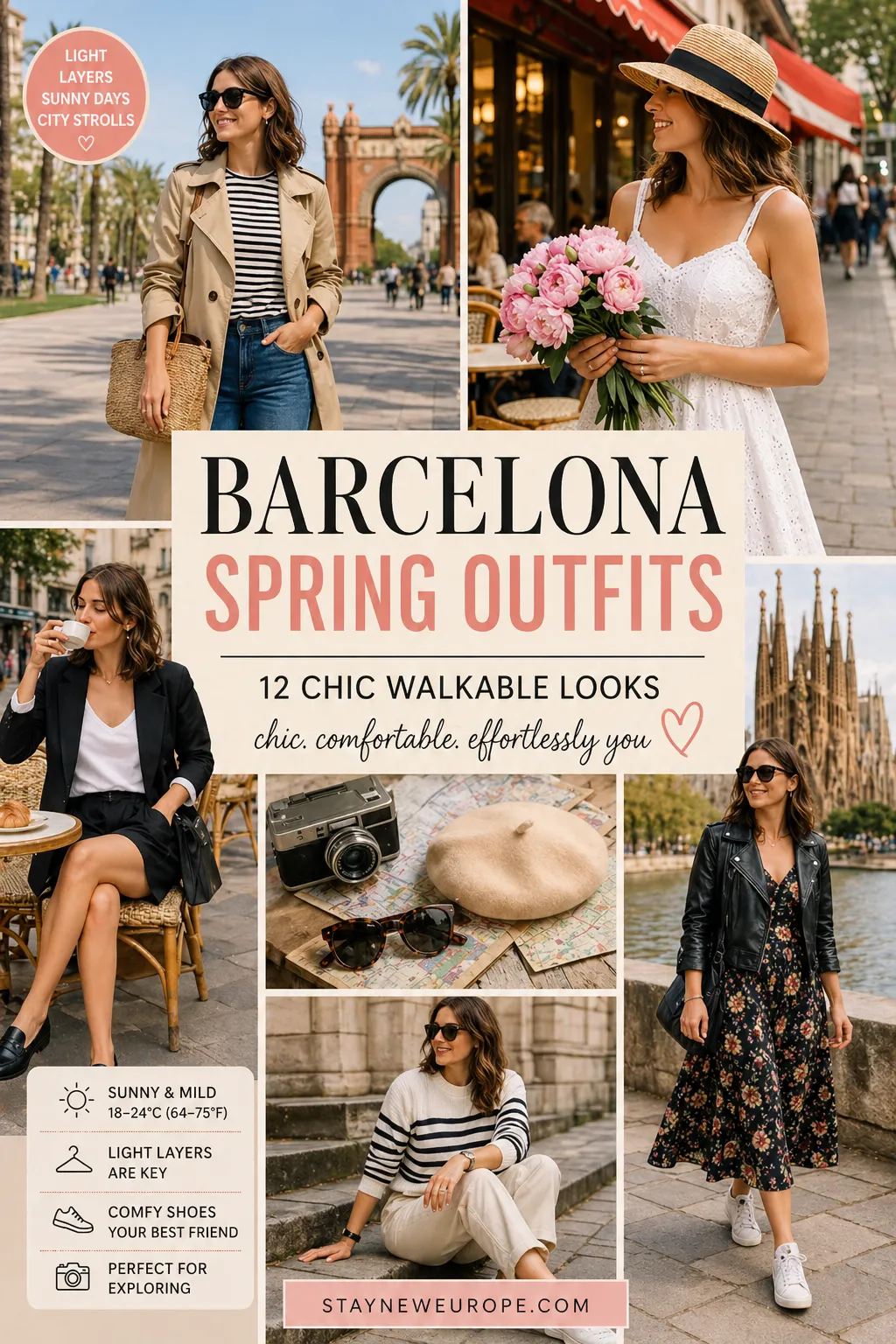
Barcelona in spring is the kind of trip that lives in your head long before you actually go. You picture yourself in something light and effortless, coffee on a sun-drenched terrace, wandering through the Gothic Quarter looking like you absolutely belong there. That image is achievable. I’m not going to tell you otherwise.
What I will tell you is that Barcelona’s spring weather has an agenda of its own. It doesn’t read your Pinterest board. It will be warm enough for a sundress at 2pm and genuinely cool enough for a jacket by 8pm, and on certain days it will rain sideways for twenty minutes just as you’re queuing for the Sagrada Família. Spring here means March through May, and across those months the city shifts — March still has a bite to it, April opens up into something really lovely, May starts feeling almost summery. One packing list does not cover all three.
The most common mistake I see — and honestly, the one I made myself — is packing for one version of Barcelona spring instead of all of them. Too summery and you’re shivering at outdoor bars. Too layered and you’re overheating on the metro and regretting every decision. This guide is about building outfits that actually work across the full range of what Barcelona spring throws at you, while still looking like you made an effort.
Before We Dive In: Barcelona in Spring, Honestly
Before we get into specific pieces, it helps to understand what you’re actually dressing for — because Barcelona’s spring is more varied than a lot of people expect.
Weather: March temperatures sit around 11–16°C (52–61°F), which is genuinely cool in the mornings and evenings. April warms up noticeably — expect 13–19°C (55–66°F) — and May can hit 18–24°C (64–75°F) on good days. Rain is a real presence in spring, particularly in March and April. Barcelona doesn’t do long grey drizzly days the way Northern Europe does — it tends toward sudden, intense showers that pass quickly and leave the city looking freshly washed and beautiful. But they happen, and they happen without much warning.
Walking: Barcelona rewards walkers, but it is not a flat city and its most characterful streets are not smooth. The Gothic Quarter’s stone streets are uneven and narrow. Park Güell involves real inclines. Even the supposedly straightforward walk along Las Ramblas is deceptively long when you’ve already done 18,000 steps. Your feet will tell you a lot about your shoe choices by day two — preferably before you’ve committed to a blister.
Style: Barcelonins have a particular kind of casual elegance that looks effortless and is almost certainly not. It’s not the high-fashion intensity of Milan or the studied nonchalance of Paris — it’s something warmer and more relaxed, but no less considered. You won’t feel underdressed in jeans and a nice top, but you will notice that people here generally look like they chose their outfit rather than just grabbed something. It rubs off on you, and that’s a good thing.
The Layer Principle: Why This Is the Only Rule That Matters
If there is one single thing I want you to take from this entire piece, it’s this: Barcelona spring is a layering game, and the person who layers well wins.
I learned this on my first full day in Barcelona in April. I left the hotel at 9am in a light top because it looked sunny. By 10am I was walking quickly through the Gothic Quarter just to generate body heat. By 2pm I was sitting outside with my jacket off, completely comfortable. By 8pm, eating dinner on a terrace near the waterfront, I was cold again. The same day, four wardrobe states. This is normal. This is Barcelona in spring.
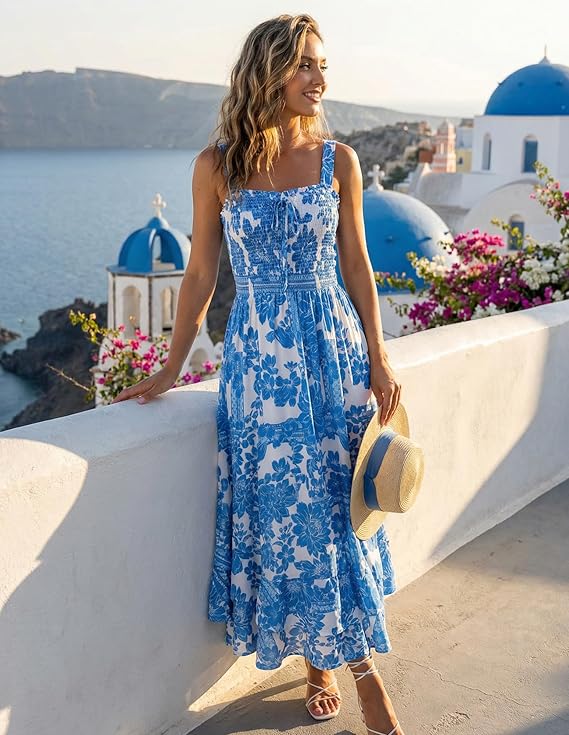
The mistake is packing for one temperature. The solution is building outfits that move with the day. A dress with a denim jacket and a scarf in the morning; lose the scarf after lunch; add the jacket back for evening. A linen shirt worn open over a tee; worn closed when it cools; tied at the waist in the afternoon heat. You’re not changing clothes — you’re just adjusting the configuration.

What this means practically: every outfit you pack should have a layering partner. Nothing stands completely alone. And every layer should be light enough to fold into your bag without becoming a burden.
Local tip: Barcelona locals carry their jacket over one arm or tied around their waist for a reason — the temperature shifts happen mid-outing, not between outings. Never leave your layer at the hotel “because it looks warm.” It will betray you.
Spring Dresses: The Right Ones Are Perfect, The Wrong Ones Are Miserable
Dresses are a natural instinct for Barcelona spring, and for good reason — they look beautiful against the city’s tiled façades and golden light, they’re easy to style, and in warmer spells they’re genuinely the most comfortable thing you can wear. But not every dress is a spring Barcelona dress, and getting this wrong will make you cold, uncomfortable, or turned away at church doors.
The dresses that work best are midi-length wrap dresses and shirt dresses in linen or lightweight cotton. They’re warm enough not to leave you shivering in morning shade, cool enough for afternoon sun, and they have enough coverage for church visits without needing much adjustment. A wrap dress in a terracotta, warm cream, or botanical print looks like it was made for this city.

Mini dresses can work in May, but know going in that you’ll need a layer for morning and evening and a cover for churches — more on that later. They’re less versatile than a midi for a spring trip where temperatures are unpredictable. Slip dresses are gorgeous but thin, so they work better as evening pieces over a turtleneck or long-sleeve in March and April.

The dresses I’d avoid entirely: anything made of synthetic fabric that doesn’t breathe, anything strapless as a standalone option (too dependent on warm weather that isn’t guaranteed), and anything so long and floaty that it drags on uneven stone streets.
Local tip: A wrap dress in a warm, earthy tone or a simple botanical print photographs extraordinarily well against Barcelona’s Modernista architecture. If you’re planning to take photos — and you are — this is the outfit to wear on your Sagrada Família or Park Güell day.
Jeans Done Right: Your Most Reliable Piece
Let me defend jeans for a moment, because sometimes travel content acts like they’re the enemy of a good trip wardrobe. They’re not. In Barcelona spring, a good pair of jeans is your most reliable piece — as long as you choose the right ones.
Straight-leg or wide-leg jeans in a light or mid wash are the move. They look polished, they’re comfortable over a long walking day, they work for everything from morning sightseeing to late-night dinner, and they’re the right weight for the variable temperatures of spring. Dark skinny jeans will feel heavy and hot in May, and tight anything becomes problematic when you’re walking serious distances.
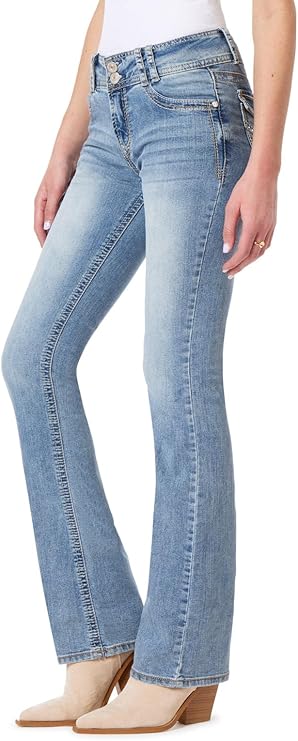
The outfit formula that basically never fails in Barcelona: light-wash straight jeans, a tucked-in linen or cotton top, loafers, and your jacket of choice. That’s it. You can wear that formula to the Picasso Museum, lunch in El Born, a cocktail bar in the Eixample, and a late dinner, and it will be appropriate and stylish at every stop.

I’d bring one pair of jeans to Barcelona, not two. They’re heavy in a suitcase and the city is warm enough for most of spring that trousers are more versatile. But that one pair earns its place.
Local tip: Roll or cuff your jeans one turn at the ankle — it’s a small detail that looks noticeably more deliberate, and it works with loafers, trainers, or ankle boots equally well.
Trousers: The Underrated Hero of the Barcelona Spring Wardrobe
Here is a thing I will say plainly: wide-leg linen or cotton trousers are better for Barcelona spring than jeans on most days, and not enough people pack them.
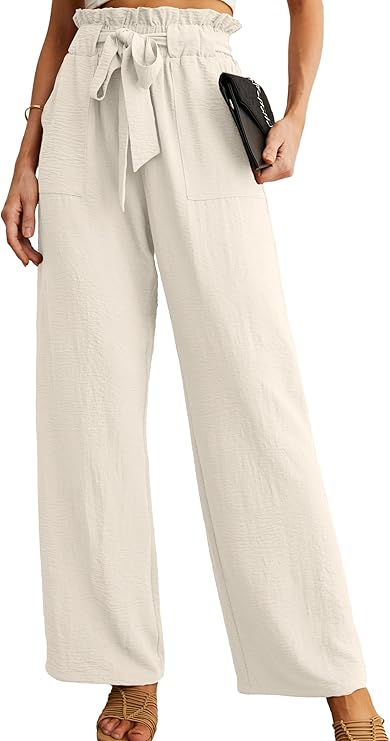
They’re cooler in warm afternoon sun, they look equally good dressed up or down, they don’t wrinkle badly, and they have a relaxed elegance that feels exactly right for this city. Cream, camel, sage green, warm terracotta — any of these in a wide-leg silhouette worn with a simple fitted top and loafers is a completely correct Barcelona outfit.

For cooler days in March or early April, tailored trousers in a slightly heavier cotton or a linen-blend with a long-sleeve top and blazer look sharp without being overdressed. This is the kind of outfit you’ll see on Barcelona women who are clearly on their lunch break looking effortlessly put together, and it’s easier to pull off than it looks.
What I’d avoid: palazzo trousers so wide and lightweight that they become a liability in wind near the waterfront (it happens), or anything with too much structure that feels stiff after a few hours of walking.
Local tip: The wide-leg trouser plus fitted scoop-neck tee plus block-heeled sandal is arguably the most-worn combination by Barcelona women in spring. It works because it’s simple, proportionally balanced, and comfortable. Steal it without hesitation.
The Shoe Conversation (Which Is Actually the Most Important Conversation)
I will be honest with you the way a good friend would be honest: if you make the wrong shoe choice for Barcelona, your trip is compromised. Not figuratively — actually, physically compromised. The Gothic Quarter’s cobblestones will destroy your feet in unsupportive shoes within two days. I have sat on a stone step in the middle of Barri Gòtic having a quiet word with myself about my footwear decisions. It’s a lesson you only need once.
The gold standard for Barcelona spring is a leather loafer, preferably with a slight platform or chunky sole. They look polished, they’re appropriate everywhere from museums to dinners, they handle cobblestones with some dignity, and they’re the shoe you’ll see Barcelona women in constantly in spring. Get a pair that fits you properly and walk around your house in them before the trip.

Second-best option: chunky-soled sneakers worn intentionally — think New Balance 574s, Adidas Sambas, or similar. These work beautifully with straight jeans, midi dresses, and wide-leg trousers, and they’re forgiving over long days. The key word is intentional: these are fashion sneakers, not running shoes. Running shoes with a city outfit look like you’re about to start a race.

For evenings: low block-heeled sandals or ankle boots give you a small lift without the cobblestone terror of a stiletto. Both work. I’ve seen stilettos in Barcelona and it’s not a disaster, but on uneven stone streets it requires concentration that would be better spent enjoying the city.
Local tip: Never, and I cannot stress this enough, wear brand-new shoes on your first full day in Barcelona. Break them in before you travel. New shoes + cobblestones + 20,000 steps = a situation.
What NOT to Wear: The Honest List
Every city has outfits that mark you immediately as someone who didn’t quite think it through, and Barcelona is no exception. I’m including this section not to judge but because these are genuinely practical mistakes.
Flip flops in the city. They offer zero arch support for uneven stone streets, and beyond the comfort issue they just look disconnected from the rest of Barcelona’s style. Keep them for the beach.
Full athleisure in non-athletic contexts. Matching tracksuit to a restaurant? You’ll feel it. Barcelona has a relaxed dress code but there’s a difference between relaxed and not trying.
Overpacked tourist sling bags and bum bags worn across the chest as your entire aesthetic. Functional? Sure. But a neat crossbody bag serves the same security purpose and looks significantly better.
Heavily branded fast-fashion that photographs poorly and wears out fast. Barcelona’s streets are visually beautiful and what you wear in them shows up in photos in ways you don’t anticipate. Simple pieces in quality fabrics look dramatically better in images than cheap prints.
Very short shorts in the city centre (fine at the beach, jarring in the Gothic Quarter). And socks with sandals in a way that’s clearly accidental rather than intentional — there’s a difference and the difference is in the confidence with which you commit.
Local tip: If you’re unsure whether something works, the question to ask is: “Would I wear this for a casual Saturday at home?” If yes, it’s almost certainly fine in Barcelona. If it’s purely functional outdoor gear, it’ll look like a costume.
Jackets: One Good One Beats Three Mediocre Ones
The jacket situation in Barcelona spring is where a lot of people go wrong — either they bring nothing and spend every evening cold, or they bring a heavy option that’s too much and sits in the suitcase for most of the trip.
The ideal Barcelona spring jacket is the lightweight trench. It works over everything — dresses, jeans, trousers, jumpsuits. It folds into a tote bag. It handles light rain with grace. It looks genuinely chic and has a timelessness that means it won’t date your outfit. If you can only bring one outer layer, make it a thin trench in a neutral tone.
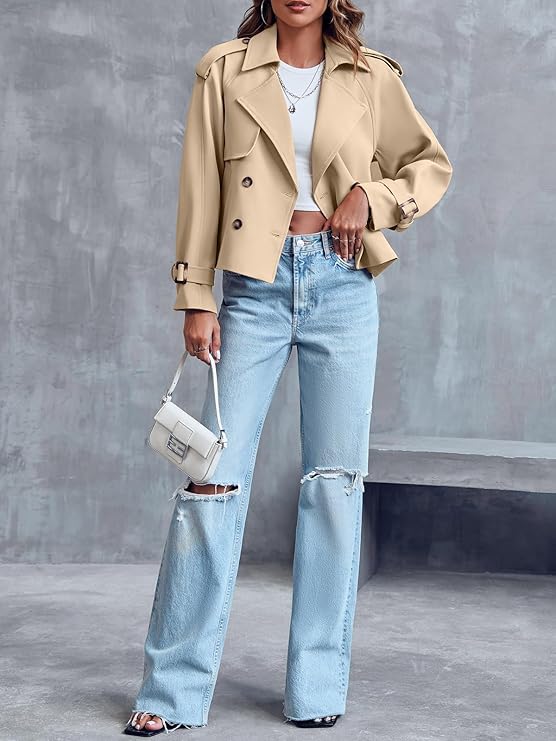
The denim jacket is the second-best option — more casual, works particularly well over dresses and with wide-leg trousers, and feels very much in line with Barcelona’s relaxed aesthetic. An unstructured linen or cotton blazer is excellent for April and May, especially for evenings — it’s light enough not to be too much but structured enough to elevate an outfit instantly.

What doesn’t work: heavy leather jackets (too hot by April), thick puffer coats (wrong season, wrong city), and the assumption that a single cardigan is sufficient outerwear for evenings near the sea. It isn’t.
Local tip: Leave your jacket at home on a warm May afternoon and you will want it by 9pm on the walk back from dinner. Always take it with you. Fold it small. Stop arguing with yourself about it.
Spring Jumpsuits: Underused, Highly Recommended
I’m going to make a case for the jumpsuit as one of the best things you can pack for Barcelona spring, and I’m slightly surprised more people don’t pack them.
A wide-leg linen jumpsuit is one outfit decision that covers your whole day. It looks intentional and put-together without requiring any work to coordinate. It’s cool enough for warm spring days and works beautifully with a jacket thrown over it for evenings. It packs flat. And in Barcelona’s warm-toned, sun-soaked streets, it looks genuinely brilliant.
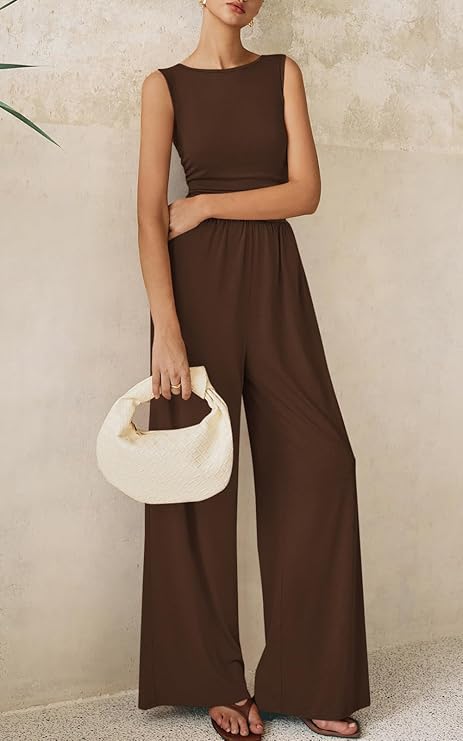
Go for neutral tones — cream, camel, olive, rust — or a simple stripe. Avoid very lightweight fabrics that cling or require constant adjusting, and make sure the fit across the shoulders and torso actually works for you before you travel. The wrong jumpsuit fit is uncomfortable for twelve hours in a way jeans never quite are.
The one practical note: public bathroom logistics. Worth mentioning. Worth being aware of.
Local tip: A simple cotton or linen jumpsuit in cream or camel worn with platform loafers and gold hoops is one of the easiest “I look like I know what I’m doing” outfits you can put together for a full day of sightseeing. It requires exactly zero styling decisions after you’ve put it on.
Evening Outfits: Because Barcelona After Dark Deserves Your Best
Barcelona doesn’t really wake up until 9pm and it doesn’t go to sleep until well after midnight. Dinners are long, unhurried, and often beautiful. Cocktail bars in the Eixample have a dress-up energy. The city shifts gear at sunset in a way that’s genuinely electric, and your outfits should shift with it.

You don’t need to be formal. Barcelona’s evening dress code is smart-casual at most restaurants — there’s no blazer requirement, no heel requirement, nothing that should stress you out. But there is an unspoken elevation that happens. People change, or at least they accessorise differently, or they swap the daytime trainers for something better. You’ll feel the difference.

The easiest evening formula: a midi skirt or well-fitting trousers, a simple top that’s a notch above daytime (silky, has texture, or is simply well-fitted), good shoes, and your gold jewellery actually on. That’s genuinely it. You can wear a wrap dress with heeled sandals and feel completely at home at any restaurant in the city. Men do very well in dark slim trousers, a tucked-in shirt, and clean leather shoes — it’s not complicated.
Local tip: The Eixample neighbourhood (Passeig de Gràcia area especially) has a slightly smarter evening energy than El Born or the Gothic Quarter, which are more relaxed. If you have a special dinner booked there, aim one level above your usual evening default.
Church Dress Code: Simpler Than You Think, More Important Than You Might Expect
Barcelona’s churches are among its most extraordinary spaces — the Sagrada Família alone is worth the whole trip — and they have dress codes. These are enforced. The requirements are: covered shoulders, covered knees. Both. Not one.
In practice, this means: if you’re wearing a sleeveless top or dress, bring a scarf or light cardigan to cover your shoulders. If you’re wearing shorts or a mini skirt, you need leg coverage — a sarong, a lightweight layer tied around the waist, or just planning your church days around outfits that already qualify.

The Sagrada Família is the most visited and generally has the most visible dress code enforcement at the entrance. Santa Maria del Mar, the Gothic Quarter’s cathedral — all of these will ask you to cover up. A lightweight scarf takes up almost no suitcase space and solves this entirely.

Honestly, dressing for churches in Barcelona is simpler than people make it. A midi dress or trousers and a covered top? You’re already done. A jumpsuit? Covered. The only situations that require thought are active summer-style outfits — which in spring you probably won’t be wearing anyway.
Local tip: Keep a large lightweight scarf in your day bag for exactly this purpose. Linen or cotton, not a heavy winter shawl. It weighs nothing, it covers shoulders and knees in two seconds flat, and it pulls double duty as an extra layer on the metro when the air conditioning is aggressive.
Bags: Practicality and Security in the Same Conversation
Barcelona has a well-known pickpocketing problem in certain areas — Las Ramblas, the metro, crowded tourist spots. This isn’t a reason to feel anxious about the city (it’s extraordinarily safe in most respects), but it is a reason to choose your bag thoughtfully.
A crossbody bag worn across the body — not off one shoulder — is the correct choice for daytime in Barcelona. It keeps your belongings close, leaves your hands free for cameras and coffee, and signals to the small number of opportunists around that you’re not an easy target. Leather or structured fabric looks significantly better than the obvious tourist options and is just as practical.

Avoid open-top tote bags in crowds. Avoid wearing a standard backpack on your back in tourist-heavy areas. Keep your phone in a zipped compartment rather than a back pocket. None of this needs to dominate your trip — just make it a habit.
For evenings, a small structured bag or a sleek mini crossbody works beautifully and completes an outfit. Phone, card, key, lip gloss — you don’t need more than that on a Barcelona evening.

Local tip: Many Barcelona women carry a canvas or linen tote for shopping and daytime errands, but they keep valuables in a smaller bag inside it or in a crossbody underneath. A bag-within-a-bag setup is common and sensible.
Accessories: Small Details, Big Difference
Accessories are the easiest way to make a simple, versatile capsule wardrobe look like more than it is, and Barcelona is a city where small details genuinely show.
Sunglasses are non-negotiable from April onwards — the spring light in Barcelona is sharp and beautiful and you’ll be outside most of the day. A good pair (or a pair that looks good, at least) also makes every outfit look more deliberate. Something about sunglasses on a Barcelona street just works.

Gold jewellery in simple forms — a pair of hoops, a thin chain necklace, a single bangle — adds warmth to any outfit and costs you nothing in packing weight. Barcelona’s aesthetic runs warm rather than cool, and gold jewellery fits into that naturally.
A straw or woven hat works brilliantly in April and May for both practical sun protection and visual effect. It’s very much in keeping with the warm-season Mediterranean style and photographs beautifully.

That large lightweight scarf I keep mentioning serves as an accessory too — worn loosely around the neck or tied on a bag handle, it adds colour and texture without weight.

Local tip: A simple silk or satin scarf tied loosely at the neck or in the hair is quietly very Barcelona-woman. It elevates even the most basic outfit and it takes up the space of a folded tissue in your bag.
Rain: Brief, Frequent, Worth Preparing For
Barcelona spring rain is not the soul-crushing grey all-day drizzle of Northern Europe. It’s usually a sudden, intense twenty-to-forty-minute shower that arrives, makes everything wet and dramatic, and disappears leaving the city looking washed and golden. I’ve been caught in one enough times to have developed a system.
The system is: a compact umbrella that folds to the size of a large pen and lives permanently in your bag. It weighs almost nothing, it fits in any bag, and when that shower appears while you’re mid-Gothic Quarter there are no decisions to make — you just open it and keep walking.

A trench coat with any water resistance handles the lighter showers beautifully on its own. You don’t need a waterproof hiking jacket — that’s overkill for a city trip — but a trench or a jacket with some substance protects you through the first few minutes while you find cover.
What I’d avoid on rainy-forecast days: suede shoes (they suffer), white linen (it becomes transparent), and any outfit where wet fabric will cling uncomfortably.
Local tip: Barcelona locals do not stand in rain. They move immediately to the nearest awning or café doorway and wait. This is the correct response and it usually leads to a spontaneous coffee stop that turns out to be excellent. Embrace the pause.
Fabrics: This Matters More Than You Think It Does
The fabric choices you make at home determine how comfortable you are for the entire trip. I used to think this was a small thing. It isn’t.
For Barcelona spring, your best friends are linen, cotton, and light jersey. Linen breathes beautifully, looks effortlessly chic (its slight wrinkle is part of the appeal, not a flaw), and comes in the warm, earthy tones that suit the city’s aesthetic. Cotton is reliable, comfortable, and washes easily — important if you’re checking into apartments and doing your own laundry. Light jersey is brilliant for dresses and tops that need to move without creasing.
What to avoid: polyester in any significant quantity. It doesn’t breathe and in warm afternoon sun you’ll feel it immediately. Heavy denim for all-day outfits in May. Thick wool beyond March. Anything synthetic that you know makes you overheat.
The bonus of natural fabrics beyond comfort: they look better. Linen and cotton have a quality that reads as considered, and they respond to Barcelona’s warm light in a way synthetic fabrics simply don’t.
Local tip: Pack fabrics that can handle a hand wash in a hotel sink if needed. Linen and cotton both do this easily. It means you can pack fewer pieces and rewear more without worry.
A Barcelona Spring Capsule Wardrobe
If I were packing a one-week Barcelona spring trip right now, this is exactly what I’d bring:
Tops: Two lightweight linen or cotton t-shirts in neutrals (white, cream, or a warm earth tone), one silky or texture-rich top for evenings, one oversized cotton or linen button-up shirt (your most versatile layering piece), one fitted long-sleeve base layer for cooler March or April mornings.
Bottoms: One pair of light-wash straight jeans, one pair of wide-leg linen or cotton trousers in a neutral, one midi wrap skirt if you prefer skirts to trousers.
Dresses/jumpsuits: One midi wrap dress in a warm print or earthy solid, one linen jumpsuit.
Outerwear: One lightweight trench coat (non-negotiable), one denim jacket or unstructured blazer.
Shoes: Leather platform loafers (daytime workhorse), one pair of clean fashion sneakers, one pair of block-heeled sandals or ankle boots for evenings.
Accessories: Sunglasses, one large lightweight scarf, simple gold jewellery (hoops, thin chain, one bangle), small crossbody for day, mini bag for evening, compact umbrella.
That covers morning exploring, afternoon heat, evening dinners, church visits, the occasional rainy day, and beach afternoons — without your suitcase being a structural problem.
Practical Packing: The Stuff That Actually Saves You
A week in Barcelona does not require a large checked suitcase. I know this feels impossible when you’re standing in front of your wardrobe three days before travel, but it’s true, and you will be grateful for it from the moment you arrive.
Outfits, not individual pieces: Aim for 10–12 pieces that combine into 5–6 distinct outfits rather than 5–6 standalone complete looks. Your wide-leg trousers work with three different tops. Your wrap dress works day and evening. Your denim jacket works over everything. Think in combinations.
The “just in case” audit: Before you close your suitcase, remove every “just in case” item. The blazer for a fancy dinner you haven’t booked. The extra dress. The fourth pair of shoes. Just in case items usually stay in the case the entire trip. They’re weight you’re carrying across every cobblestone in the Gothic Quarter.
Shoes first, everything else second: Shoes take the most space and are the most important decision. If a pair of shoes serves fewer than two situations on your actual itinerary, it doesn’t justify its place. Be strict about this.
Rewearing is fine: Nobody in Barcelona is tracking whether you wore the same linen trousers twice. Sustainable travel requires repeating clothes. Outfit repetition is not a failure. Pack accordingly and stop apologising to yourself for it.
Barcelona Will Look Good on You
I want to leave you with this: the version of yourself you picture walking through the Gothic Quarter, sitting with a coffee in El Born, watching the city light up from a rooftop — that person is not a fantasy. She (or he, or they) is just you, with a good pair of loafers and a linen layer you’re not overcomplicated about.
Barcelona has this effect on people. The city is so generous with its beauty — the architecture, the light, the pace of life — that you feel it rub off. You start walking slower. You start noticing things. You sit at tables for longer. And when you’re not stressing about your feet or hunting for your jacket or regretting the outfit that felt fine in a cold hotel room but is way too much in warm April sun — when you’ve packed well — you just get to be in it.
That’s worth a bit of suitcase thinking before you go.

