
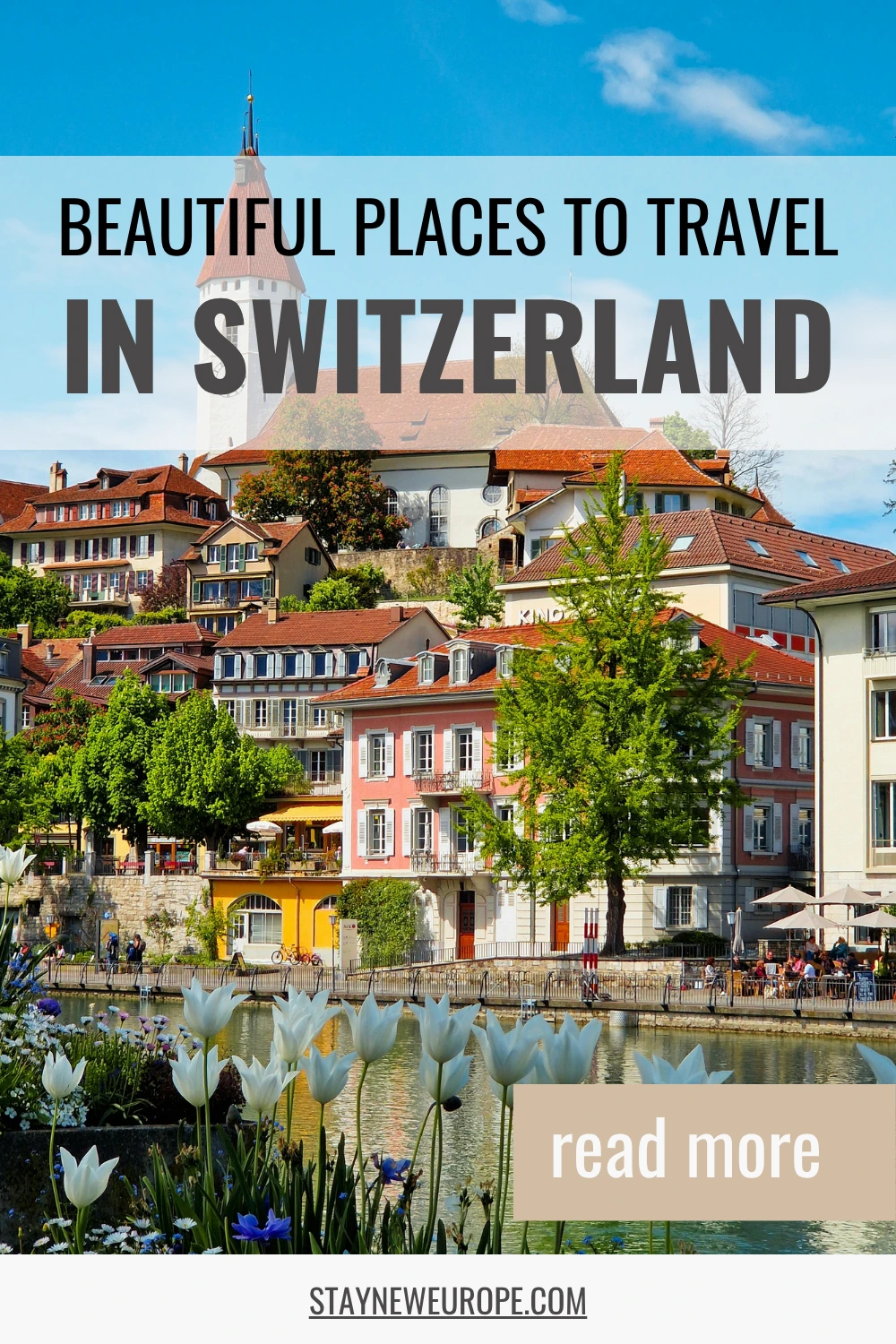
There’s a reason Switzerland keeps showing up on every “most beautiful countries in the world” list. It’s not hype. It’s not clever marketing from the Swiss tourism board. It’s just — genuinely, almost aggressively — gorgeous. I say “aggressively” because after a week here, you start to feel slightly cheated by the rest of the world. You come home, look out at an ordinary sky, and think: where are the Alps? Where is the lake? Why is everything so flat and beige?
I’ve been back three times now, and each trip I discover something new — a village I missed, a train route I hadn’t taken, a terrace with fondue and a view that made me completely forget what year it was. Switzerland has that effect on people.
So whether you’re planning your first visit or your fifth, this guide covers the most beautiful places to travel in Switzerland — from the iconic postcard cities to the quieter corners that most tourists breeze right past. Fair warning: your bucket list is about to get significantly longer.
Before We Start: A Few Things Worth Knowing
Switzerland is small. You can hold it in one hand on a map and still cross it by train in a few hours. What it lacks in size it more than makes up for in sheer variety — the German-speaking north, the French-speaking west (called Romandy), the Italian-influenced south around Lugano, and even a tiny Romansh-speaking pocket in the east. Four languages, four distinct cultural flavours, one tidy country. It shouldn’t work as well as it does, and yet here we are.
Getting around is absurdly easy thanks to one of the best rail networks on the planet. The Swiss Travel Pass is worth every franc if you’re planning to hop between cities — it covers trains, buses, boats, and even some cable cars. I wouldn’t visit without it.
And yes, Switzerland is expensive. Let me be honest with you: a coffee can cost five euros, a restaurant meal will make your eyes water, and a round of drinks in Zurich feels like a financial decision. But here’s the thing — the landscapes are free, the hiking trails are free, the views are free. Budget wisely, stay in smaller guesthouses or mountain huts when you can, and you’ll find it’s manageable.
Now, let’s get into it.
1. Zurich
People often dismiss Zurich as just a business city, a stopover, a place to change planes. Those people are wrong, and they’re missing out on one of the most liveable, walkable, and genuinely enjoyable cities in Europe.
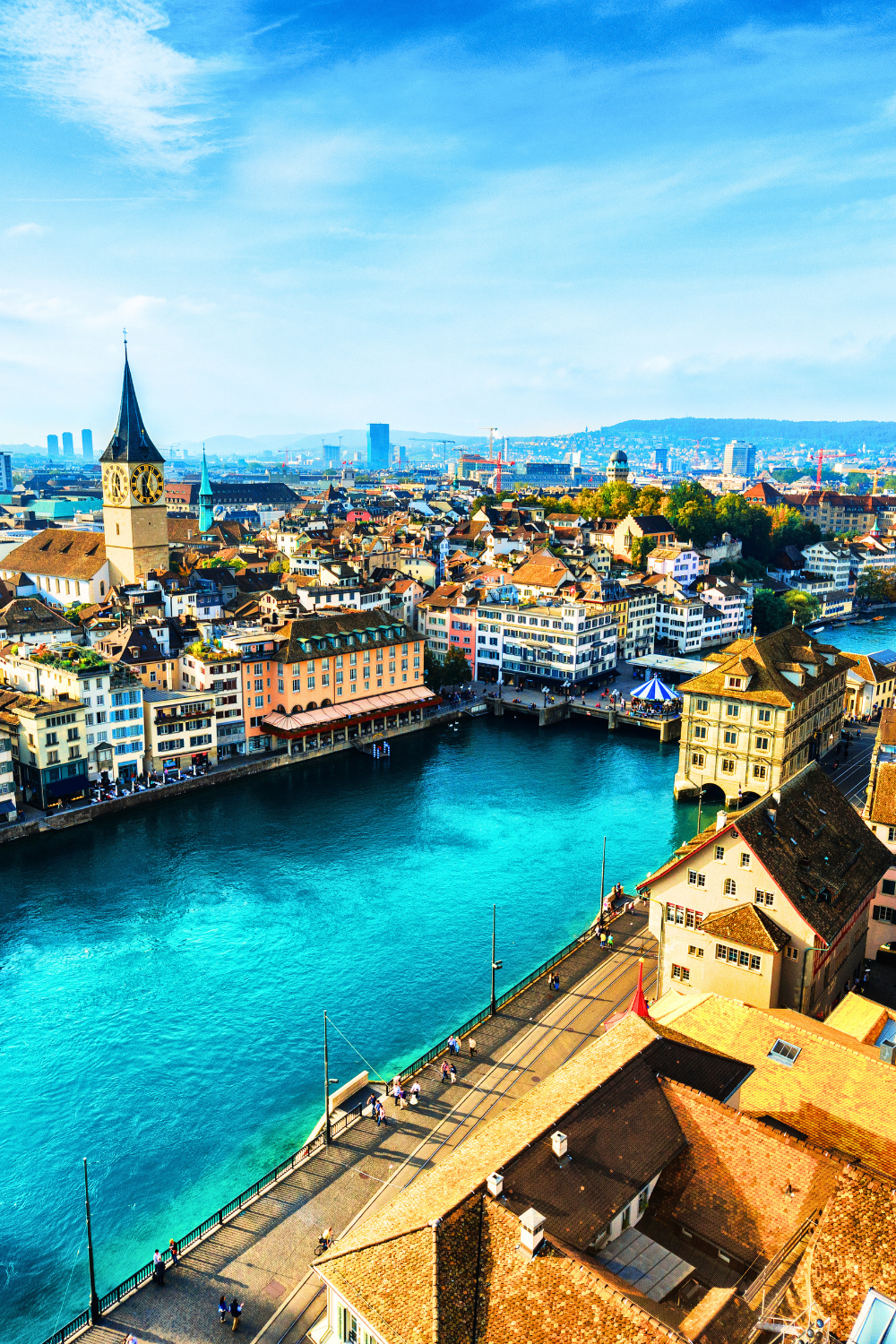
Zurich sits at the northern tip of Lake Zurich, with the Limmat River slicing right through the heart of the old town. The Altstadt — the historic centre — is full of medieval guild houses, cobblestone lanes, and church towers that have been standing since the 12th century. The Grossmünster is the obvious landmark, twin towers looming over the river, but don’t ignore the Fraumünster on the opposite bank, whose Marc Chagall stained-glass windows are genuinely breathtaking in a way I didn’t expect.
What I love about Zurich is how it holds its contradictions together. It’s the financial capital of Switzerland — Bahnhofstrasse, the main shopping boulevard, is reportedly one of the most expensive retail streets in the world — yet five minutes’ walk away you’re in Niederdorf, a tangle of alleyways with jazz bars and cheap falafel joints. The Zürich West neighbourhood, once an industrial district, has been transformed into one of the coolest creative quarters in Europe, all converted factories and rooftop terraces and bars that don’t open until midnight.
Climb Lindenhof Hill in the early evening. It’s a small park right in the old town, once the site of a Roman fort, and it gives you one of the best free views in the city — the river below, the old town spread out around you, the Alps catching the last of the light in the distance on clear days. Locals bring chess boards and wine. It’s very Zurich.
Local tip: Skip the tourist restaurants on the main squares and head instead to a Beiz — a traditional Swiss tavern. Order Zürcher Geschnetzeltes, the local veal dish in a creamy mushroom sauce served with Rösti. It’s the dish Zurich does better than anyone else, and it costs a fraction of what the lakeside restaurants charge.
2. Lucerne
If Zurich is Switzerland’s urban head, Lucerne is its romantic heart. This is the Switzerland of postcards and dreams — the flower-covered Chapel Bridge over the Reuss River, the medieval water tower, the snow-capped peaks of Mount Pilatus reflected in the lake. I’ve seen it in photos a hundred times, and standing there in person I still caught my breath.
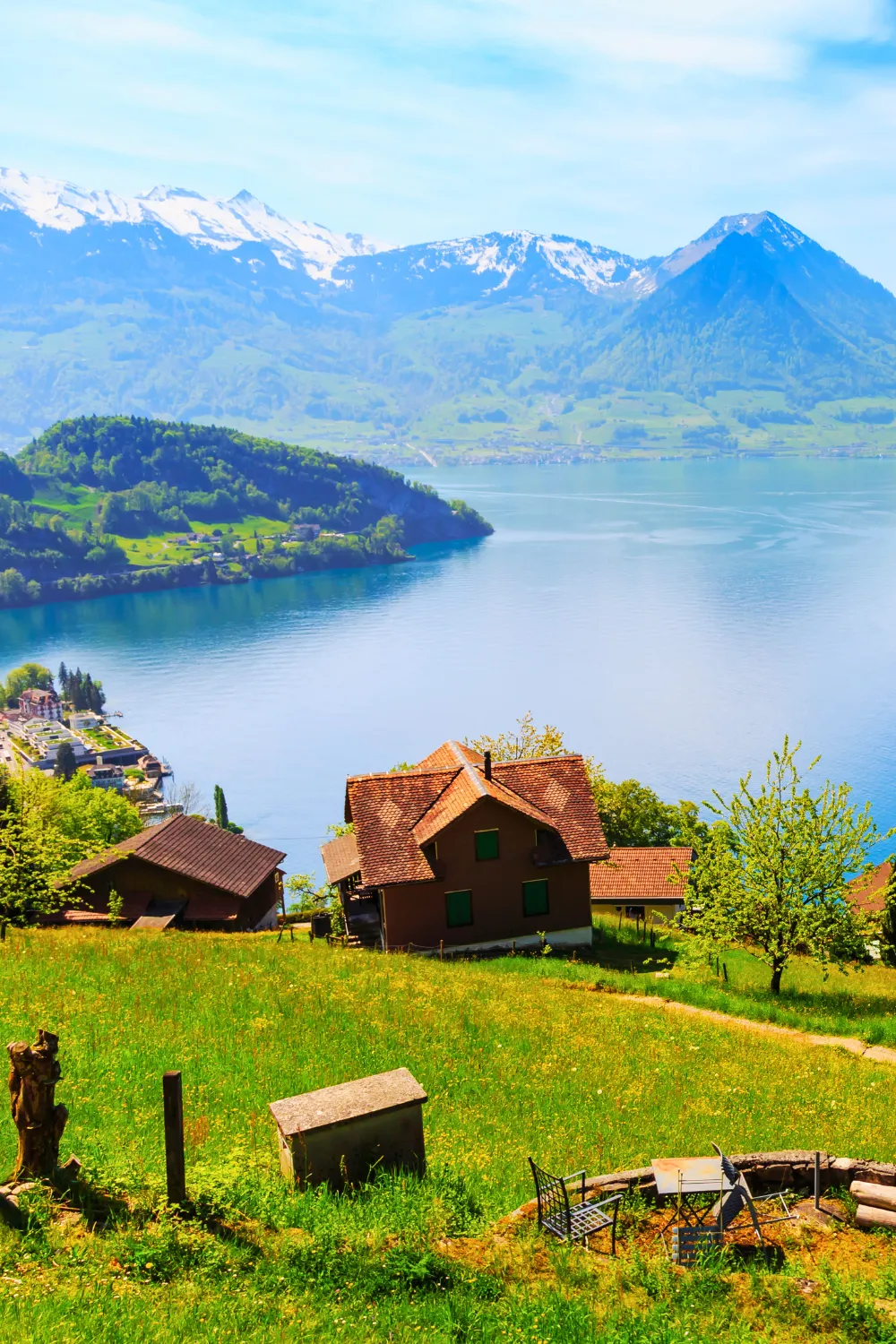
Lucerne is compact enough to explore thoroughly in a day or two, which makes it one of the most popular day-trip destinations from Zurich — but I’d urge you to stay longer, because the magic really reveals itself in the evenings when the tour groups have gone and the light turns golden over the lake. Walk the old city walls at dusk. Find a terrace overlooking the Vierwaldstättersee (Lake Lucerne). Order a local Bier and do absolutely nothing for an hour.
The covered wooden Chapel Bridge, the Kapellbrücke, dates back to 1333, making it one of the oldest wooden bridges in Europe. Inside, triangular paintings from the 17th century tell the history of the city and the Swiss Confederation. Most people walk across it quickly for a photo; take your time with it. The detail is extraordinary. Nearby, the Lion Monument — a dying lion carved into a rockface to commemorate the Swiss Guards massacred during the French Revolution — is one of the most quietly moving sculptures I’ve encountered anywhere.
From Lucerne, the mountains are right at your door. Mount Rigi, Mount Pilatus, and the Stanserhorn are all reachable in under an hour. On a clear day, standing on the summit of Pilatus with the Bernese Alps stretching in every direction, you’ll understand why people keep coming back to Switzerland.
Local tip: Book the boat-and-train round trip up Pilatus rather than just the cable car one way. You take an old paddle steamer across the lake, then the world’s steepest cogwheel railway up the mountain, and descend by cable car on the other side. It takes half a day and it is absolutely worth it.
3. Bern
Let me be upfront: Bern surprised me. I expected the capital city to be stiff and governmental, all embassies and ministry buildings. What I found instead was a city that felt almost medieval in the best possible way — a honey-coloured sandstone city on a peninsula formed by a dramatic bend in the Aare River, with six kilometres of covered arcades running through the old town that have been there since the 12th century.
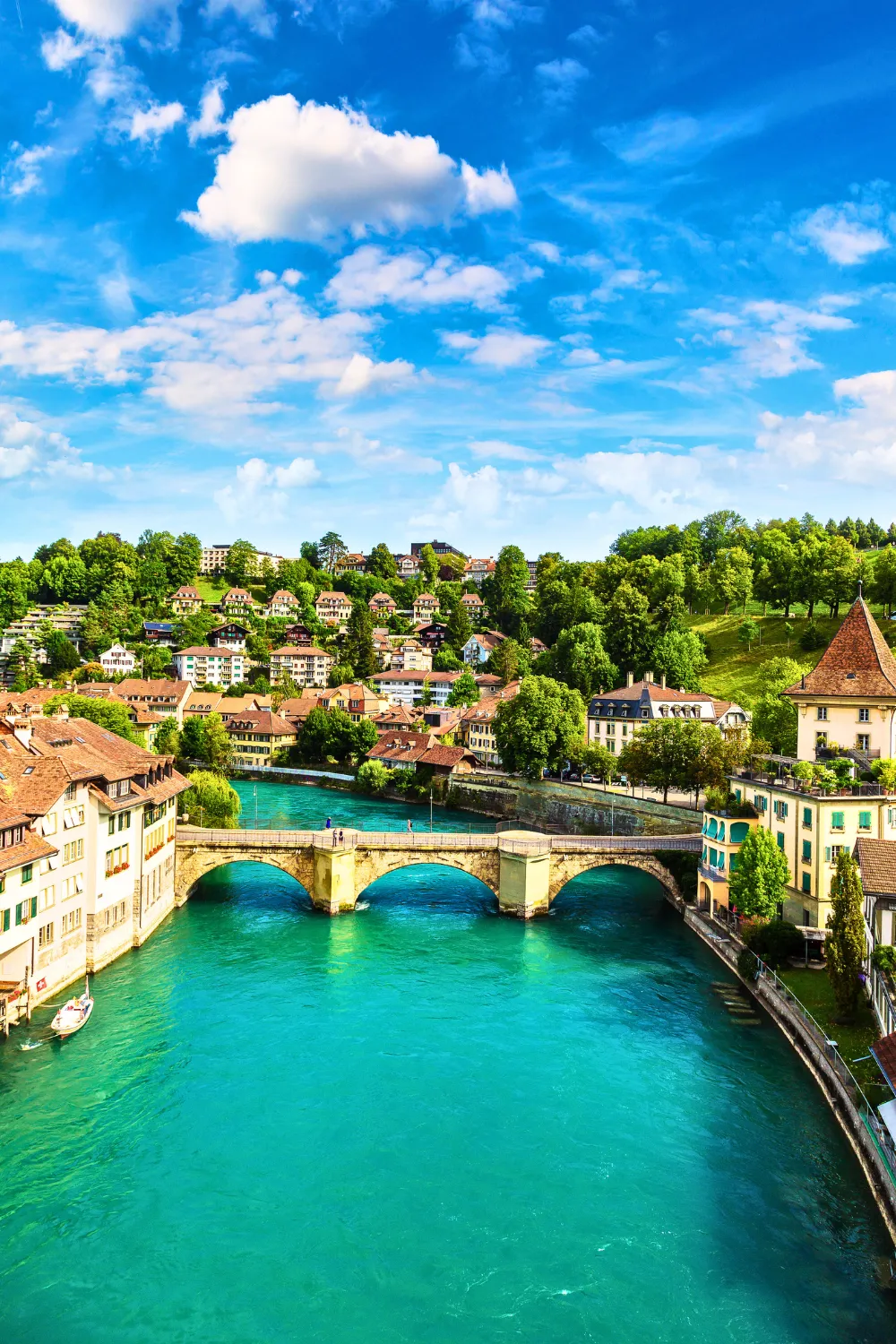
The Zytglogge, the astronomical clock tower at the heart of the old town, is magnificent — not just as a piece of architecture but as a piece of engineering ingenuity. Every hour, on the hour, a carousel of mechanical figures puts on a little show. It sounds gimmicky. It isn’t. Stand in the square at 11am on a Tuesday and watch a crowd of people all genuinely enchanted by a 15th-century clockwork bear.
Bern’s old town is a UNESCO World Heritage Site, and it deserves it. The arcades — the Lauben — mean you can walk through the entire city centre in the rain without getting wet, which in Switzerland is a practical feature as much as an architectural one. Below the street level, many of these arcades have cellars that have been converted into boutiques, wine bars, and antique shops that most visitors never find.
The view from the Rose Garden above the city is one I keep coming back to in my memory: the rust-red rooftops of the old town curving around the bend of the Aare, the distant Alps blue and white on the horizon, the city laid out below you like a map of itself. Come for sunset. Bring a camera, but also just stand there for a while without it.
Local tip: Bern is a city of bears — it’s even named for them (Bären in German). The Bern Bear Park on the banks of the Aare is free to visit and genuinely charming, not a zoo exactly but a habitat where a small family of brown bears live alongside the river. Kids love it. Adults who claim not to care about bears will also secretly love it.
4. Interlaken
Interlaken sits between two impossibly blue lakes — the Brienzersee and the Thunersee — with the Bernese Oberland Alps rising straight up around it like walls in a cathedral. The setting alone would be enough to make it one of the most beautiful places to travel in Switzerland. But Interlaken has something else: it’s the adventure capital of the country, and the energy here is completely different from anywhere else.
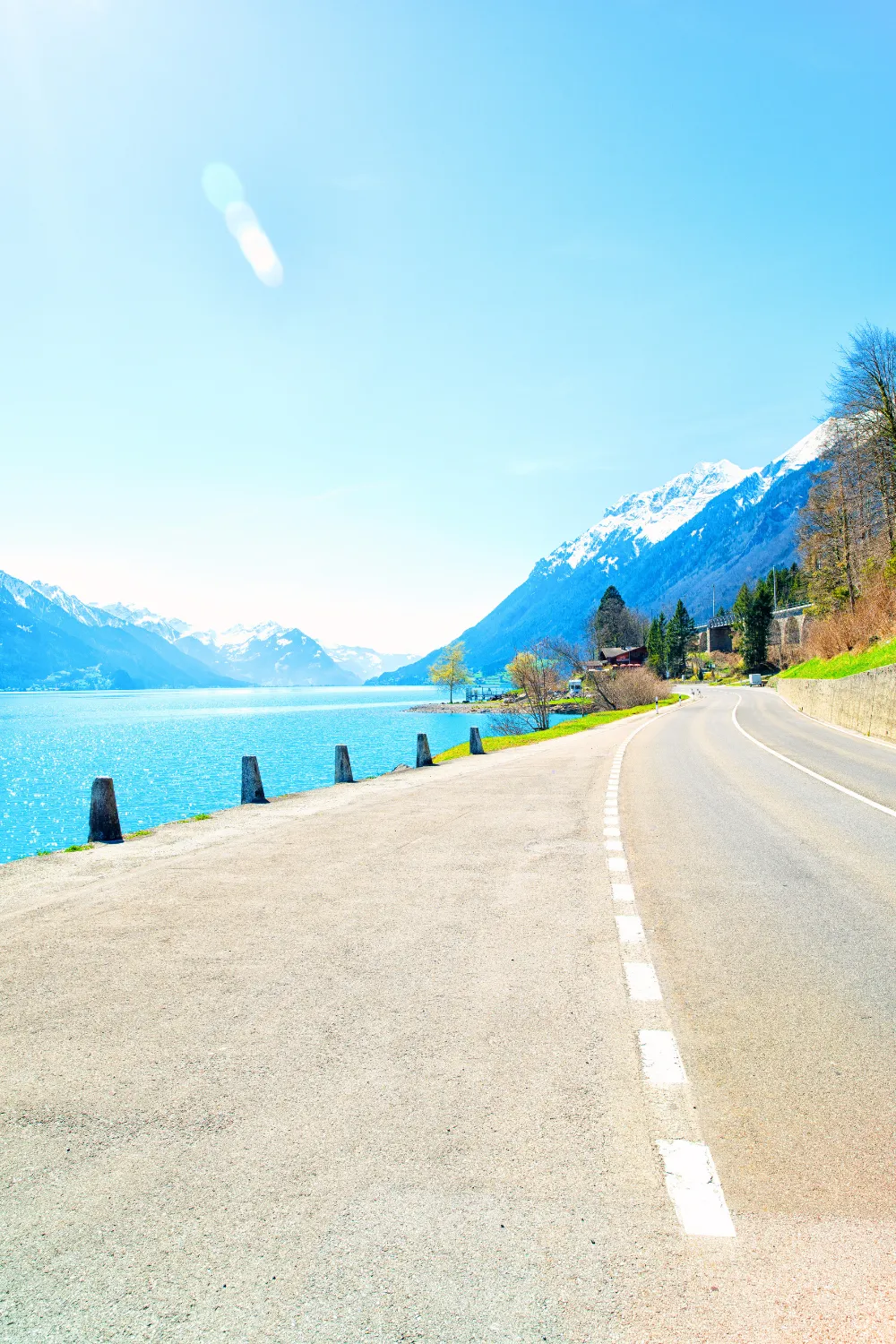
Every extreme sport you can think of — paragliding, skydiving, bungee jumping, whitewater rafting, canyon jumping — is offered here, and the combination of adrenaline junkies and retired couples taking gentle paddle boats is somehow harmonious. The main street, Höheweg, runs between the two lakes with a direct line of sight to the Jungfrau massif at the end of it. Walk down it slowly. That view, of the three great peaks — Eiger, Mönch, and Jungfrau — framed by trees, is one of the iconic Swiss vistas.
The Jungfraujoch — the “Top of Europe” at 3,454 metres — is accessible by train from Interlaken and it is, yes, touristy, yes crowded, and yes, absolutely worth doing at least once. Nothing prepares you for stepping out onto the plateau of the Aletsch Glacier, the longest glacier in the Alps. Even hardened travellers go quiet up there.
For something gentler, hire a boat on Lake Brienz and row out to the middle. The water is that particular Alpine turquoise that you start to think only exists in Instagram filters until you’re floating in it.
Local tip: Stay one night in the village of Grindelwald rather than in Interlaken itself. It sits right at the foot of the Eiger, at 1,000 metres, and you wake up with the north face of that famous mountain literally filling your window. The hiking directly from the village is world-class, and it’s considerably quieter than Interlaken in peak season.
5. Zermatt
Some places have a single image that defines them, and for Zermatt it’s the Matterhorn — that perfect, asymmetric pyramid of rock rising 4,478 metres above the village below. I’ve seen photos of it my entire life. I thought I was prepared. I was not prepared.
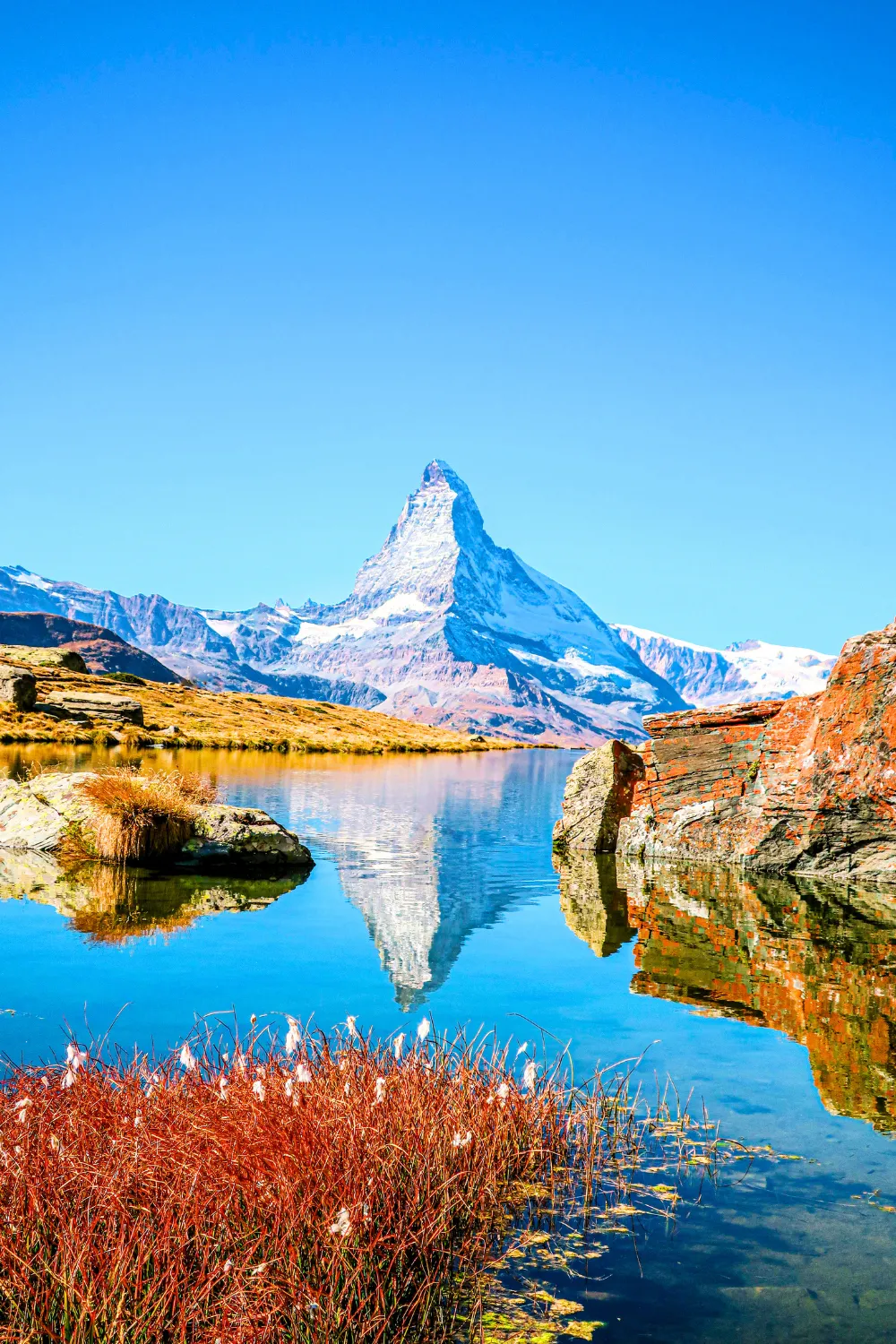
Zermatt is car-free, which immediately makes it different from almost everywhere else. You arrive by train through a narrow valley, stepping out into a village where the only vehicles are electric taxis and horse-drawn carriages. The air is clean in a way that feels almost physical. The streets are cobbled. The chalets are old wood and flower boxes. And then you look up, and there it is, the Matterhorn, dominating the sky with a force that is almost supernatural.
The mountain is moody, let me tell you. It hides in cloud for days at a time. Sunrise is when you have the best chance of seeing it sharp and clear — set your alarm for 6am, step outside, and if you’re lucky you’ll catch it glowing pink in the alpenglow while the village is still asleep. I stood in the street in my socks for ten minutes doing exactly this and I have absolutely no regrets.
Beyond the Matterhorn, the skiing here is some of the finest in Europe, with access to year-round snow on the Klein Matterhorn glacier. In summer, the hiking is extraordinary — take the Gornergrat railway up to 3,089 metres for a panorama of 29 four-thousand-metre peaks, including Mont Rosa, the second-highest mountain in the Alps.
Local tip: The Matterhorn Museum Zermatlantis, below the village square, is genuinely fascinating and often overlooked. It covers the history of mountaineering in the region, including the tragic first ascent of the Matterhorn in 1865, and puts the mountain in a human context that makes standing at the foot of it even more powerful.
6. Graubünden and the Engadine Valley
This one surprised me more than almost anywhere else in Switzerland. The Engadine Valley — the high Alpine valley in the canton of Graubünden in eastern Switzerland — feels like a place that the rest of Europe has somehow forgotten to fully discover. And I say this as someone who found it packed with visitors in July. Even packed, it feels remote.
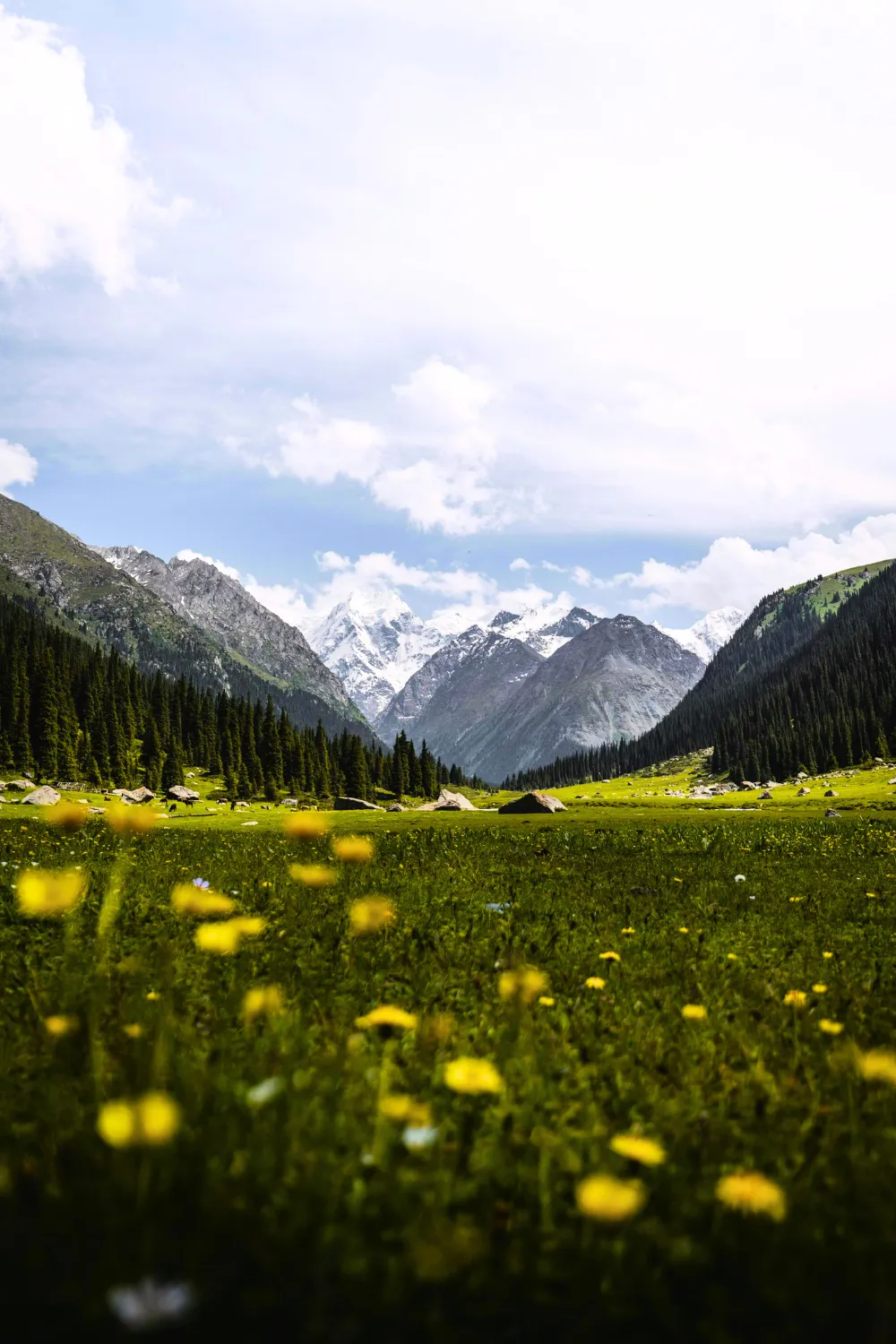
St. Moritz is the famous name here, and yes, it’s glamorous in a slightly absurd way — private jets, fur coats, sports cars. But the landscape around it is purely, devastatingly beautiful. The Engadine lakes, especially Lake Silvaplana and Lake Sils, are that impossible turquoise again, ringed by high peaks that hold snow year-round. On a calm morning, the reflections are perfect. It looks like a painting of itself.
The Lower Engadine, further east, is even more beautiful in a quieter way. The villages here — Guarda, Ardez, Sent — are full of Engadine houses, a distinctive local architectural style with thick walls, small windows, and intricate painted facades called sgraffito. Guarda especially looks exactly as you’d imagine a medieval Alpine village to look, so well-preserved it feels slightly unreal. The Swiss National Park, the only national park in Switzerland, begins nearby.
Don’t miss the Bernina Express if you’re passing through — the train journey from Chur to Tirano in Italy crosses the Bernina Pass at over 2,000 metres on a UNESCO World Heritage railway line, and it’s one of the most beautiful train journeys I’ve ever taken anywhere in the world.
Local tip: In the Lower Engadine, stay in Scuol and take the thermal baths at the Bogn Engiadina spa. You swim in mineral-rich water from springs that have been used since Roman times, in an outdoor pool with mountain views. It costs about 28 francs and feels like the most sensible thing you’ve ever done.
7. Lugano
Cross into the canton of Ticino in southern Switzerland and something shifts. The architecture becomes Italian, the menus switch to Italian, the coffee improves dramatically, and the mountains soften into something more Mediterranean. Lugano, the largest city in Ticino, sits on a deep lake surrounded by green hills and feels less like Switzerland and more like Como’s quieter, more charming neighbour.
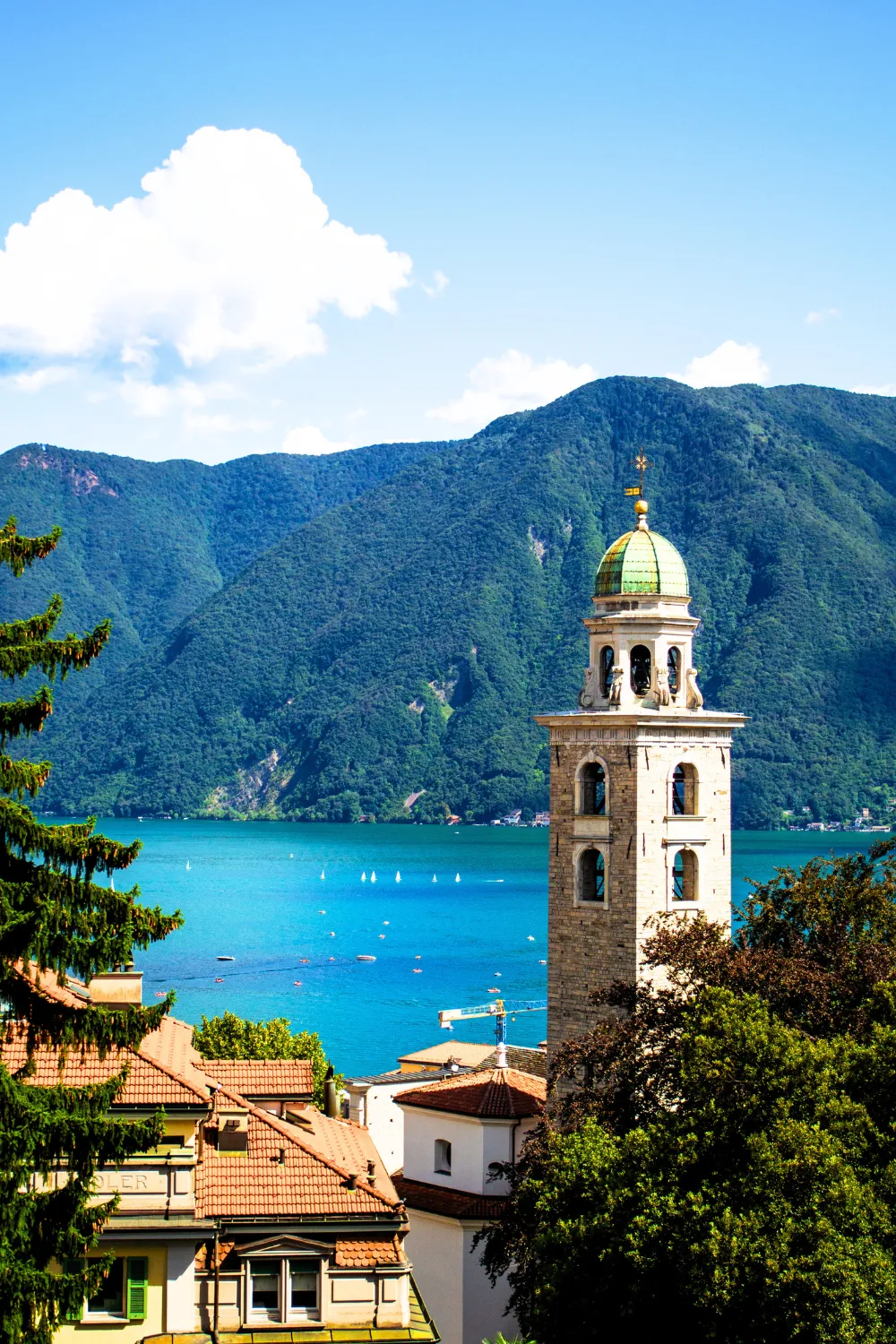
Lake Lugano — partly in Switzerland, partly in Italy — is spectacular, a Y-shaped body of water that catches the light differently at every hour. The lakeside promenade, lined with palm trees and magnolias, is one of the most pleasant places to walk in the whole country, especially in spring when everything is in flower. Hire a paddle boat and spend an afternoon on the water. Eat a gelato. Feel the tension leave your shoulders.
The old town above the lake is worth exploring slowly — the Cathedral of San Lorenzo has a magnificent Renaissance facade, and the Art Deco Villa Malpensata houses the cantonal art museum. But honestly, the greatest art in Lugano is the landscape itself, and the best thing you can do is simply take the funicular up Monte San Salvatore for a view that stretches to the Alps on one side and down to the Italian lakes on the other.
Day trips from Lugano go deep into Italian Switzerland — the valley villages of the Verzasca and Maggia are beautiful, green gorges with clear river water, Roman stone bridges, and old terraced vineyards. The Verzasca Dam, where James Bond bungee-jumped in GoldenEye, is there if you need a cultural reference point.
Local tip: Don’t leave Lugano without eating a risotto. This is Italian Switzerland — the risotto here, particularly risotto al Merlot made with local red wine, is extraordinary and costs far less than similar quality would in Zurich or Geneva.
8. Geneva
Geneva gets a bad reputation from travellers who call it sterile, expensive, and soulless. I have argued with those people many times. Geneva is none of those things — it’s just wearing its sophistication quietly.
The city sits at the point where Lake Geneva meets the Rhône, with the French Alps visible on clear days across the water. The Jet d’Eau — the massive fountain shooting water 140 metres into the air in the lake — is one of the most recognisable sights in Switzerland. It’s best seen in the early morning light, when the spray catches the sun and creates a permanent rainbow over the harbour.
The Old Town, up on its hill above the lake, is worth half a day. The Cathedral of Saint Pierre is where John Calvin preached during the Reformation and you can still climb the north tower for one of the best views in the city. The Place du Bourg-de-Four, the oldest square in Geneva, is lined with terraced cafés and feels properly Genevan — international but unhurried.
What Geneva does better than almost any other Swiss city is food. The combination of French culinary tradition and Swiss quality produce means the restaurants here punch well above their weight. Look for perch filets (filets de perche) from Lake Geneva, served simply with butter and lemon in the lakeside restaurants of Carouge, the bohemian neighbourhood south of the centre that feels like a little piece of Piedmont transplanted to Switzerland.
Local tip: The Carouge neighbourhood on a Saturday morning is one of the great Geneva experiences. There’s a food market, independent boutiques, and coffee shops that are genuinely cool in a way that doesn’t try too hard. It’s where the Genevois actually spend their weekends, rather than the tourist-facing centre.
9. Basel
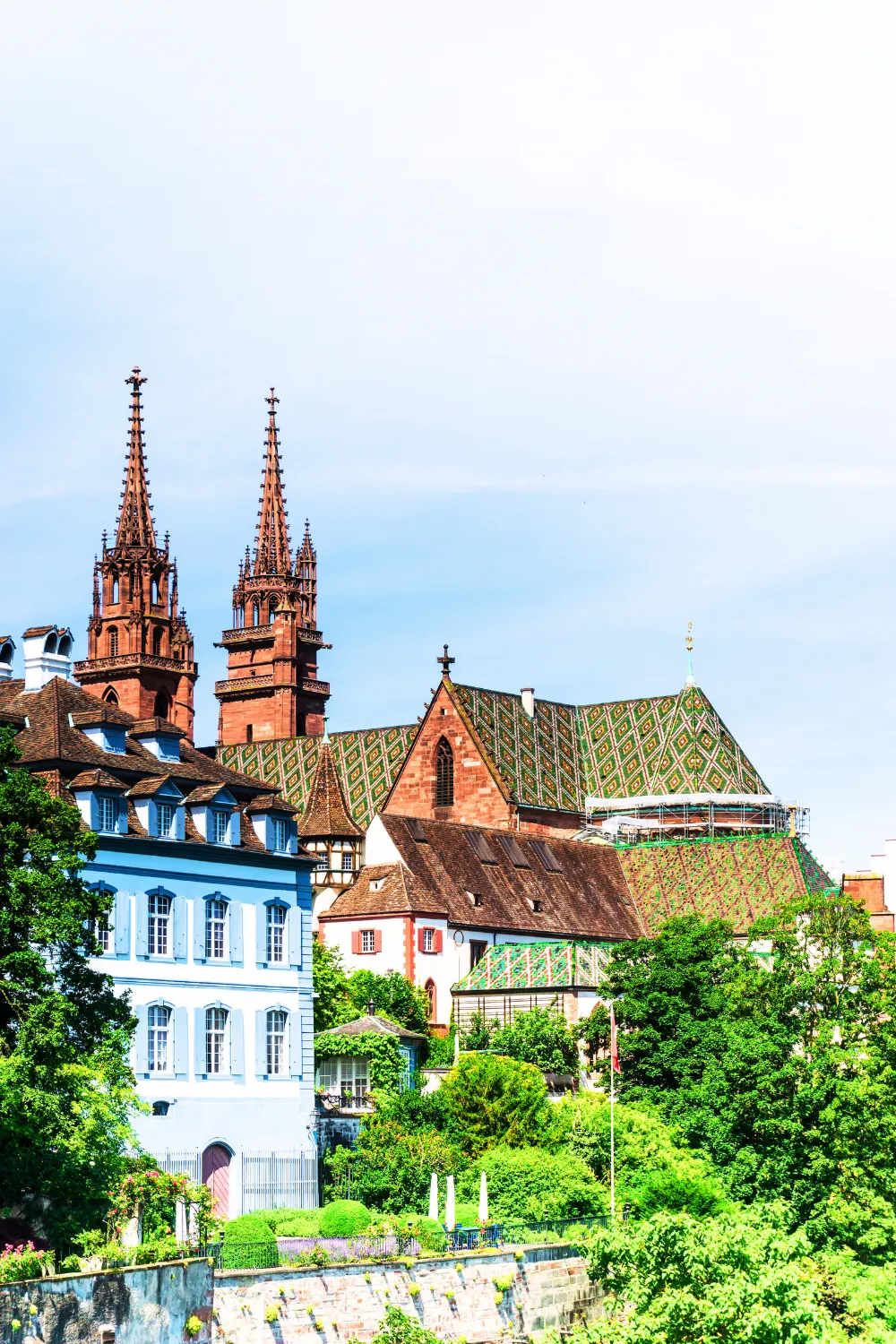
Basel sits at the exact point where Switzerland, Germany, and France meet — and it wears all three influences visibly and with considerable pride. It’s also, quietly, one of the great art cities of Europe, which most people walk straight past on their way to Zurich or Lucerne.
The Rhine is the heart of Basel. In summer, locals float downstream from one side of the city to the other, carrying their belongings in waterproof bags called Wickelfisch. It’s a genuine local institution — hundreds of people in the river on a hot afternoon, drifting along in the current, stopping at waterfront bars and restaurants. It’s the most joyful thing I witnessed in Switzerland and I deeply wanted to join in.
The Kunstmuseum Basel is one of the finest art museums in the world, full stop. The permanent collection spans medieval altarpieces to Picasso to contemporary Swiss art, and the new annex building is itself a work of architecture. During Art Basel in June, the city transforms into the global capital of contemporary art, with galleries and installations spilling out of every available space. It’s worth timing a visit around it if you can.
The old town Münsterplatz is beautiful — the red sandstone Münster cathedral dominates the square, and the terrace beside it (the Pfalz) drops dramatically down to the Rhine, offering a view across the river to the German Black Forest on the opposite bank. I sat there for an hour eating a pretzel and watching the barges on the river below.
Local tip: Cross the Rhine on one of Basel’s four historic ferryboats — the Fähri — which run entirely on river current, no engine, no oars. They’re a living piece of Basel tradition and cost about 2 francs. It’s the most charming way to cross a river in Europe and almost nobody outside of Basel knows about it.
10. Lausanne
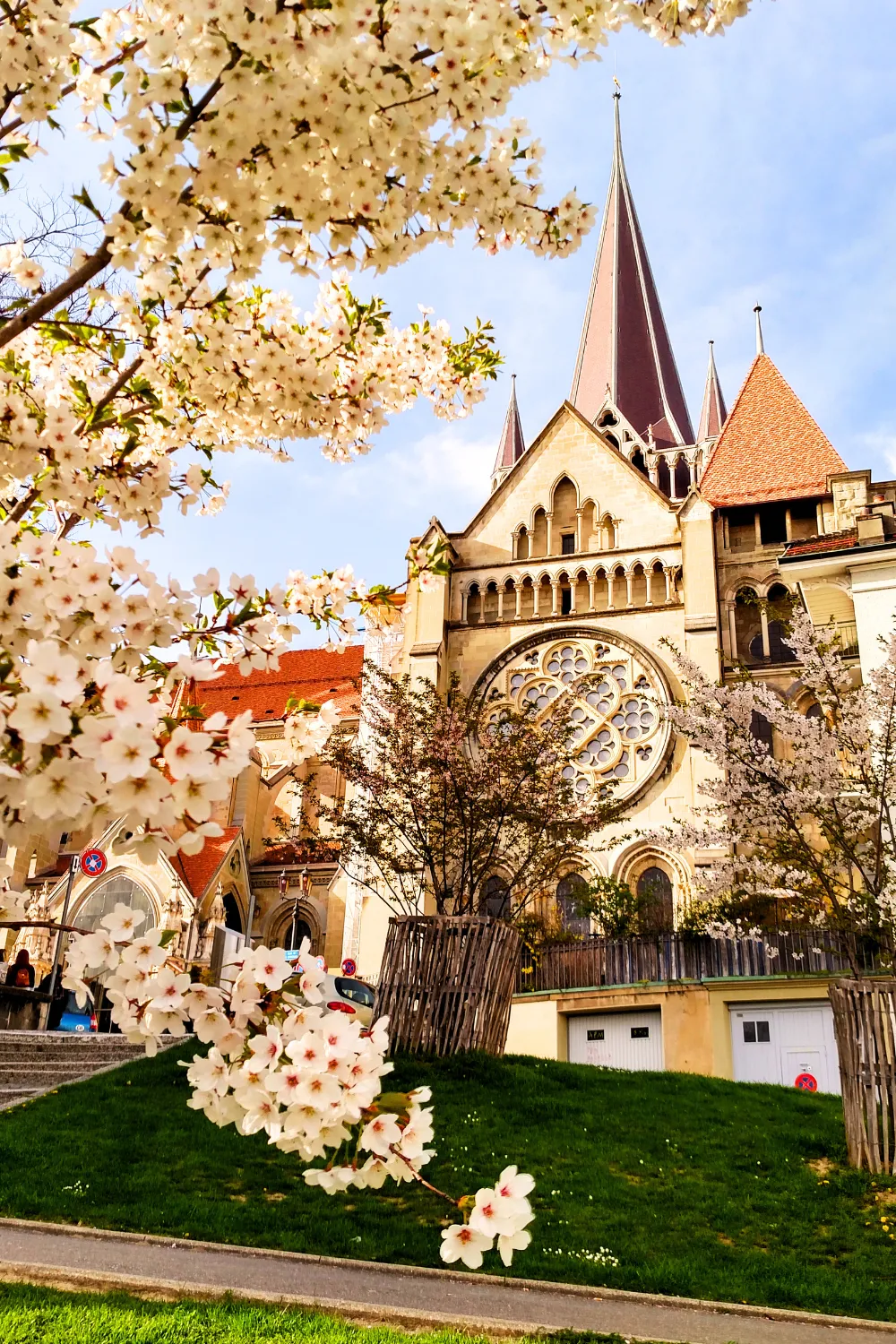
I’ll confess something: Lausanne was not on my original itinerary for my first Switzerland trip. I added it as an afterthought, arriving on an off-peak train from Geneva with half a day to kill. Four hours later I was desperately rearranging my schedule to stay longer. This place gets under your skin.
Lausanne is built on steep hills above Lake Geneva, and navigating it involves a lot of stairs and sudden views. The medieval old town clusters around the cathedral at the top, with the market square below and the modern lakeside district of Ouchy at the bottom, connected by a funicular called the M2. The juxtaposition of all three levels — old, commercial, lakeside — in one compact city is unique and endlessly interesting.
The Cathedral of Lausanne is, for my money, one of the finest Gothic cathedrals in Switzerland. The interior, with its rose window and the painted stone of the porch (one of the only remaining examples of painted medieval stonework in Europe), is extraordinary. Lausanne is also the seat of the International Olympic Committee, and the Olympic Museum on the lakeside is genuinely engaging — not just for sports fans but for anyone interested in modern history.
Ouchy, the waterfront district, has lovely terraces, a castle-turned-hotel right on the water, and boat trips across the lake to Evian and the French shore. On a clear summer evening, with the Savoy Alps reflected in the water and a glass of Chasselas (the local white wine) in your hand, Lausanne reveals itself as one of the most beautiful places in Switzerland.
Local tip: If you’re in Lausanne on any night except Monday and Tuesday, visit the Musée Cantonal des Beaux-Arts in the new Plateforme 10 arts district — they stay open until 8pm and the combination of the art, the building, and the early evening light makes for a genuinely special couple of hours.
11. Montreux
Montreux is the city that gave the world the Montreux Jazz Festival, Queen’s legendary recording sessions at Mountain Studios, and Freddie Mercury’s statue on the promenade — and those alone would make it worth visiting. But the setting here is something else: the lake curves below, the Alps stack up behind, and the old town climbs steeply above vineyards that have been cultivated on these terraces since Roman times.
The lakeside promenade is one of the great walks in Switzerland. It stretches from Montreux through Clarens and Vevey, lined with palm trees and flowers (Montreux is sheltered enough by the mountains to have a surprisingly mild microclimate). In spring, when the magnolias are in bloom along the lakefront, it’s almost absurdly beautiful. Find Freddie Mercury’s statue, have your obligatory photo, then keep walking.
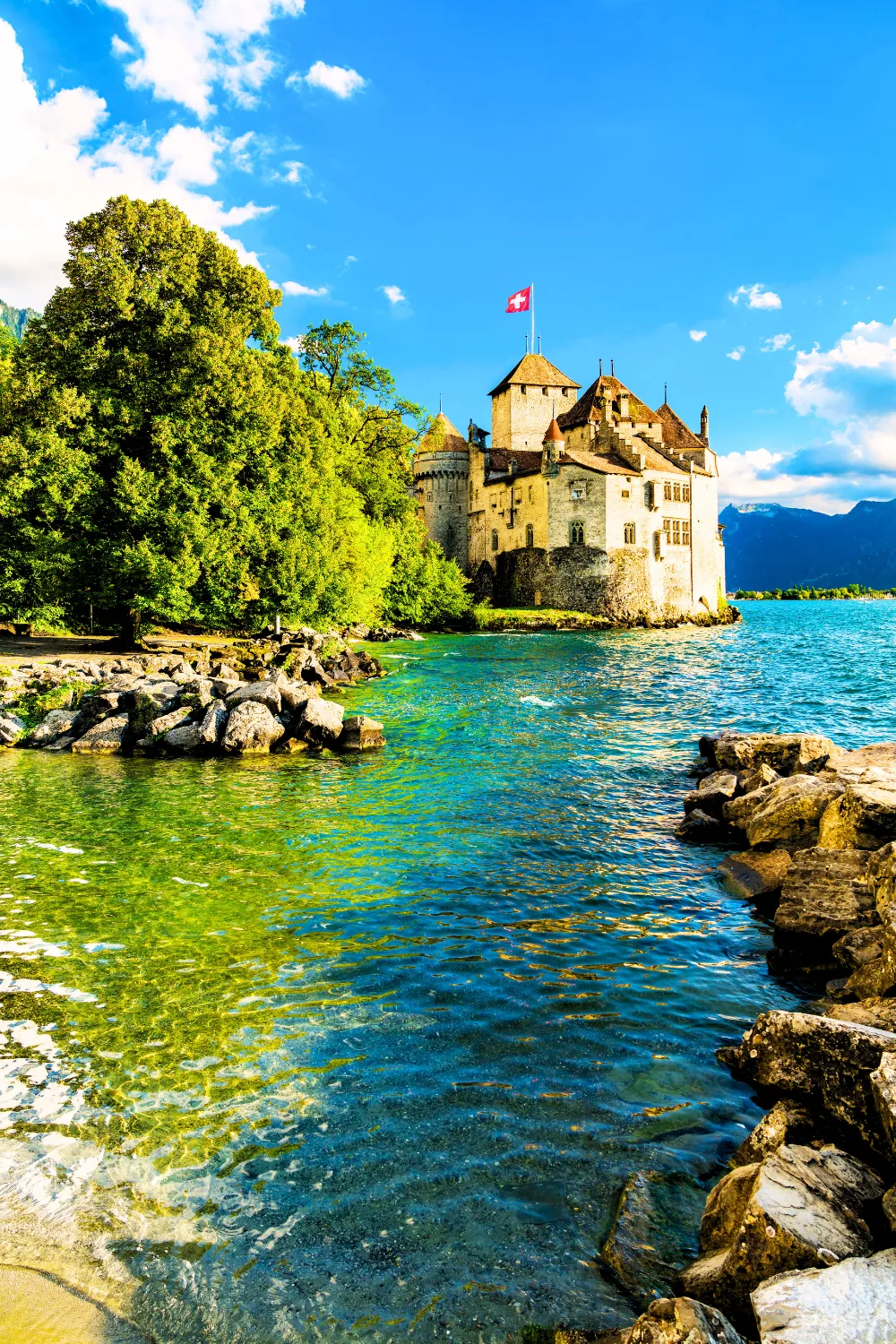
Château de Chillon, a few kilometres south of Montreux, is one of the most visited castles in Switzerland and one of the best-preserved medieval castles in Europe. It sits on a small rocky island in the lake, connected to the shore by a bridge, and the interior — dungeons, great halls, frescoed rooms — is atmospheric and rich with history. Lord Byron carved his name into a pillar in the dungeon in 1816 and it’s still there.
The Lavaux Vineyard Terraces above Montreux and Lausanne are a UNESCO World Heritage Site — 800 years of winemaking terraced into the hillside above the lake, producing crisp Chasselas and Pinot Noir. Walk the wine trail in September during harvest and you can taste directly from the growers.
Local tip: Book a seat on the GoldenPass Belle Époque panoramic train from Montreux over the Bernese Oberland to Interlaken or Zweisimmen. It runs in vintage Belle Époque carriages from the early 20th century, and the journey over the pass, with lake and mountain views, is one of the great Swiss train experiences.
12. Neuchâtel
Mention Neuchâtel to most travellers and you’ll get a blank look. This, I think, is one of Switzerland’s best-kept secrets. Neuchâtel sits on its own lake — Lac de Neuchâtel, the largest entirely Swiss lake — in the French-speaking part of the country, surrounded by vineyards and backed by the wooded Jura hills. It is deeply, quietly lovely in a way that feels unperformed.
The old town is built in golden yellow limestone quarried locally, which gives it a warm, honeyed quality quite unlike the grey stone of German-speaking Switzerland. The medieval castle and collegiate church at the top of the hill are beautifully preserved, and the castle is still in use as a government building. Climb the church tower for views across the lake and, on clear days, as far as the Alps.
The city has a strong tradition in watchmaking — the entire region is part of the Swiss Watch Valley, and Neuchâtel’s museum of art and history has one of the most extraordinary objects I’ve encountered in any museum: the three Jaquet-Droz automata, 18th-century mechanical dolls that write, draw, and play music. Built between 1768 and 1774, they are considered the world’s first programmable computers. The Draughtsman draws four different images and blows the graphite dust from his pen before each stroke. Watching them operate is uncanny and wonderful.
Neuchâtel also has some of the best wine in Switzerland — particularly the Pinot Noir and Chasselas from the lake-facing slopes. The autumn harvest festival is one of the most colourful local celebrations in the country.
Local tip: Take a day trip east along the lake to Murten (Morat) — a tiny perfectly-preserved medieval walled town with a covered walkway along the top of its walls and a beautiful small harbour. It’s thirty minutes from Neuchâtel and one of the most charming small towns in Switzerland.
13. Sion
Sion is the capital of the Valais canton, tucked into the Rhône Valley surrounded by some of the most dramatic mountain scenery in Switzerland, and it is almost criminally underrated. Two castle-topped rocky outcrops rise directly out of the valley floor above the city — Tourbillon and Valère — with medieval fortifications on top of each. It looks like something from a fantasy novel.
Valère is the more impressive of the two: a fortified basilica church from the 12th century perched on its rock, containing what is believed to be the world’s oldest playable organ (built around 1390). They still play it. The hike up from the old town takes about twenty minutes and the view from the top — the Valais valley spreading both east and west, vineyards coating every south-facing slope, the Alps on every horizon — is one of the finest in the whole country.
The Valais is wine country, and Sion sits at its heart. The indigenous grape varieties here — Petite Arvine, Cornalin, Heida, Humagne Rouge — are found almost nowhere else on earth. The dry, sunny climate of the sheltered valley produces wines of genuine distinction, particularly the whites. Visit a Caves (wine cellar) in the old town and ask to try the local Fendant and a Pinot Noir. You won’t be disappointed.
The old town itself has some beautifully painted medieval buildings, Roman ruins, and a Gallo-Roman museum with finds going back 5,000 years. Sion is one of the oldest continuously inhabited cities in Switzerland.
Local tip: The Valais is also the home of raclette — the real thing, not the restaurant version. Find a mountain hut or a village restaurant outside of Sion and order raclette the traditional way: half a wheel of cheese melted in front of an open fire, scraped directly onto your plate with boiled potatoes, cornichons, and pickled onions. Do this once and you will never view plastic raclette machines with the same respect.
14. Appenzell
Appenzell is the sort of place that makes you genuinely wonder why everyone isn’t talking about it constantly. It’s a tiny town — one of the smallest cantonal capitals in Switzerland — nestled in the rolling green hills of eastern Switzerland, surrounded by pre-Alps so green they look artificially coloured. The main square, the Landsgemeindeplatz, is ringed with painted facades in every colour, flower boxes on every window, cows with enormous bells grazing in the meadows above the town.
The Appenzell region is culturally distinct in Switzerland — it held on to direct democracy longer than almost anywhere else, with citizens gathering annually in the square to vote by raised hand. It has its own strong folk traditions, its own cheese (Appenzeller, one of the oldest and most distinctive in Switzerland), and its own schnapps (Alpenbitter, a herbal digestif that tastes like the Alps themselves distilled into a bottle).
Hiking here is superb, particularly around the Alpstein massif and the Säntis peak. The trail to Seealpsee, a small Alpine lake tucked below the peaks, is one of my favourite half-day walks in Switzerland — through dairy farms, past grazing Appenzell cattle, up to a perfect mountain lake with a traditional restaurant on its shore.
The Appenzell Museum in the main square tells the story of the region’s folk art, embroidery, and traditions with a warmth and pride that reflects the local character. This is a community that is genuinely proud of who it is.
Local tip: Buy a piece of real Appenzeller cheese directly from one of the small dairy farms on the outskirts of town. It bears almost no resemblance to the imported version you’ll find in supermarkets at home — it’s stronger, more complex, and aged on spruce boards washed with a secret herbal brine that no one outside the region knows the ingredients of. Take as much as your bag will hold.
15. Thun and the Thunersee
Thun doesn’t get enough credit. It sits at the western end of the Thunersee (Lake Thun), between Interlaken and Bern, with an absolutely magnificent castle on a hill above the old town and a flower-framed river running through its centre. It’s the gateway to the Bernese Oberland, and most people pass straight through it. Most people are making a mistake.
The old town has an unusual quirk: the main shopping street has covered walkways, but they’re elevated, running along the first floor of the buildings with the shops on the upper level and the pavement on a lower level below. It’s completely unique to Thun and makes walking through the town centre feel slightly dreamlike. The castle above contains one of the better regional museums in Switzerland, with weapons, armour, and a rooftop platform that looks directly down on the lake.
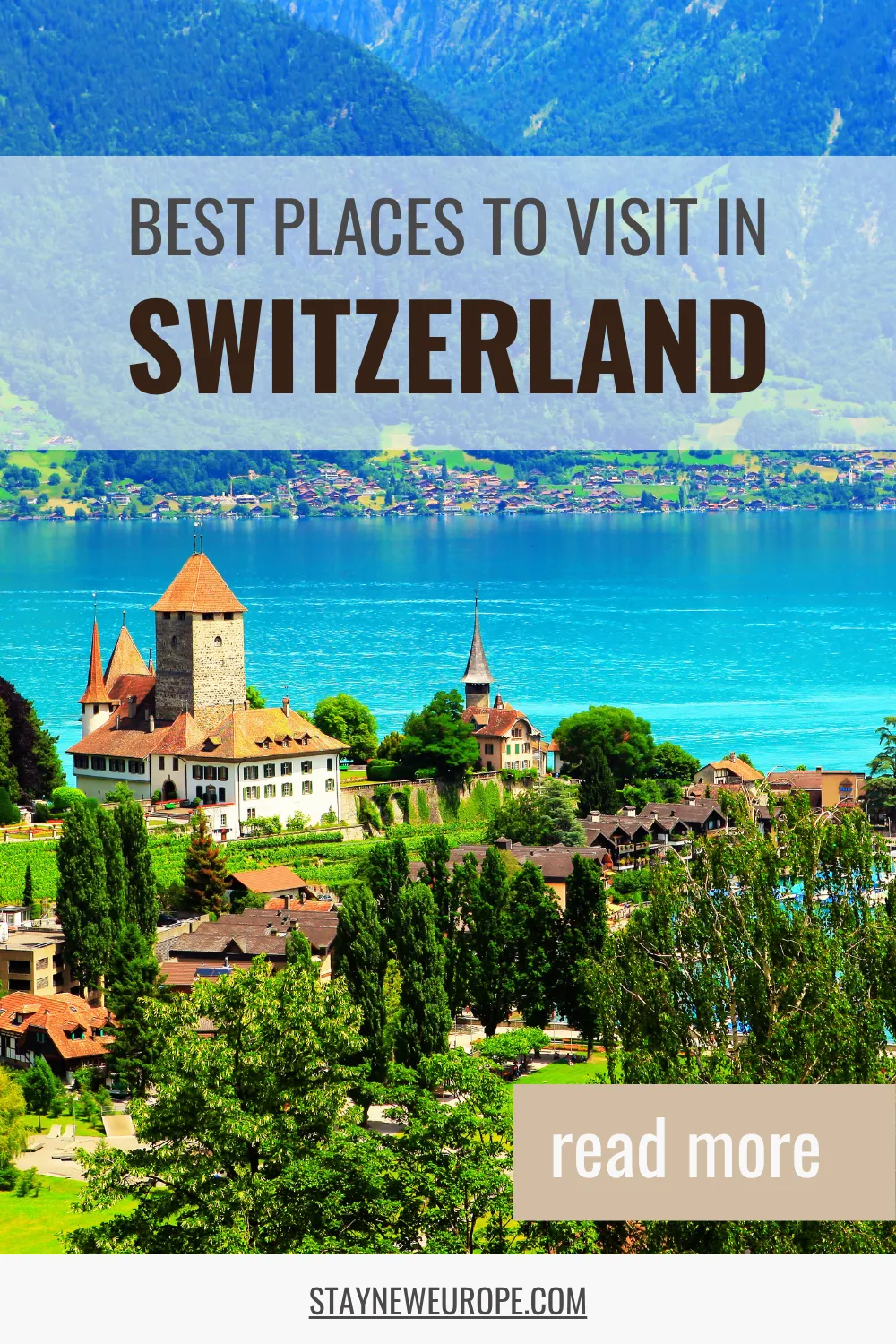
The Thunersee itself is one of the prettiest lakes in a country full of beautiful lakes — turquoise, deep, framed by the Bernese Alps. The village of Spiez on the lake’s southern shore, with its own vineyard-covered promontory and castle-hotel reflected in the water, is one of those views that you see on a postcard and assume is slightly exaggerated. It isn’t.
From Thun, the Bernese Oberland opens up in every direction — Kandersteg, the Niesen, the Stockhorn — all reachable for day hikes of varying difficulty. The area around the lake is also one of the best cycling regions in Switzerland, with flat, well-marked routes running along both shores.
Local tip: Take the postal boat (they’re run by Swiss Post, which has its own fleet of lake steamers) from Thun around the lake to Interlaken rather than the train. It takes longer — about two hours — but the approach to Interlaken by water, with the Jungfrau massif growing steadily larger as you glide up the lake, is one of the most beautiful journeys in Switzerland.
16. Stein am Rhein
Small, yes. Tourist-heavy in summer, yes. Still absolutely worth it. Stein am Rhein is a medieval town on the Rhine that has been so immaculately preserved it looks, at first glance, like a film set. The painted half-timbered houses around the Rathausplatz are covered in murals and frescoes depicting biblical scenes, heraldic emblems, and local legends — the tradition dates back to the 15th century and the level of artistry is remarkable.
It’s about 20 kilometres downstream from the Rhine Falls (another essential Swiss sight — the largest waterfall by volume in Europe, and utterly spectacular), and combining both in a day trip from Zurich or Schaffhausen makes for a perfect itinerary. The monastery of St. Georgen in Stein am Rhein, founded in the 10th century, has a beautiful cloistered courtyard open to visitors.
Local tip: Visit on a weekday in spring or autumn rather than a summer weekend, when the narrow old town fills beyond comfortable capacity. Early morning, the light on those painted facades is extraordinary, and you’ll often have the main square almost entirely to yourself.
17. Saas-Fee
Zermatt has the fame, but Saas-Fee is the valley right next door that many seasoned Alpine travellers quietly prefer. Another car-free village — you park below the valley and take an electric bus in — Saas-Fee sits at 1,800 metres in a glacial bowl, completely encircled by thirteen four-thousand-metre peaks including the Dom, the highest peak entirely on Swiss territory.
The glaciers here feel closer than almost anywhere else in Switzerland. You can walk on the Feegletscher right above the village — or take the underground Metro Alpin up to 3,500 metres for year-round skiing. The ice pavilion at the top, carved entirely inside the glacier, is surreal and slightly eerie and not to be missed.
In summer, the hiking is exceptional and less crowded than Zermatt. The Gletscherweg Saas-Fee, a 3-hour circular trail through the moraines and glacier viewpoints above the village, is one of the finest walks I’ve done in the Alps.
Local tip: The Gletscherstube restaurant at the Allalin cable car station (3,500m) serves food at the highest restaurant in the world with a rotating floor. The food is perfectly decent, the altitude makes you slightly dizzy, and the 360-degree view of the summit world is something you’ll be thinking about months later.
18. Schaffhausen
Most visitors to Switzerland never make it to Schaffhausen, the northernmost city in the country sitting right on the German border above the Rhine. This is a shame, because it is genuinely beautiful — a compact old town of oriel windows and painted facades that rivals Stein am Rhein for medieval atmosphere — and it has something quite extraordinary right on its doorstep: the Rhine Falls.
The Rheinfall is the largest waterfall by volume in Europe. That fact doesn’t fully prepare you for standing at the viewing platform in the middle of the river, with 600 cubic metres of water per second thundering past you. In summer, you can take a boat right into the mist at the base of the falls. You will get wet. Wear something you don’t mind soaking.
The city of Schaffhausen itself has one of the best-preserved old towns in German-speaking Switzerland, with a fortress, the Munot, perched above the city on a hill and open to the public free of charge. Walk up in the evening for the bell-ringing ceremony — it happens at 9pm as it has every night since the 17th century.
Local tip: The Munot bell-ringer actually lives in the Munot with their family — it’s one of the last hereditary civic positions of its kind in Europe. Ask the tourist office about visiting during bell-ringing time and you might get a brief introduction to the tradition.
Practical Tips for Travelling Switzerland
When to go: Switzerland is genuinely four-season beautiful. Summer (June–August) is peak season — warm, everything is open, the hiking is at its best. Autumn (September–October) brings harvest festivals, wine tastings, and golden light without the summer crowds. Winter (December–March) is for skiing and Christmas markets. Spring (April–May) is my personal favourite — flowers everywhere, waterfalls at full force from snowmelt, and dramatically lower prices.
Getting around: The Swiss Travel Pass is essential for multi-city trips. Book it before you go. Trains are punctual to a legendary degree — I once missed a connection because a Swiss train left two minutes early (this was, apparently, extremely unusual). Book mountain railway tickets in advance in summer.
Where to stay: Larger cities like Zurich and Geneva have mid-range hotel options, but consider staying in smaller towns — Thun instead of Interlaken, Grindelwald instead of Lauterbrunnen. You’ll save money and gain atmosphere. Mountain huts (SAC huts) are available for hikers and offer unforgettable experiences at altitude for moderate cost.
Money: Switzerland uses Swiss Francs (CHF), not the Euro, though many places accept Euros. Budget roughly CHF 150–200 per person per day for accommodation, food, and local transport on a mid-range budget. A Swiss Travel Pass, a packed lunch, and judicious restaurant choices go a long way.
Language: Don’t be intimidated by the four-language thing. English is widely spoken throughout Switzerland, and people are used to navigating linguistic difference. A greeting in the local language — Grüezi in German Switzerland, Bonjour in French Switzerland, Buongiorno in Ticino — is always warmly received.
One Last Thing
Switzerland is the kind of place that recalibrates your expectations. You arrive thinking you know what mountains look like, what lakes look like, what well-run cities look like. Then Switzerland quietly shows you that you had no idea. It raises the bar, and it raises it without making a fuss about it.
Whether you spend a week or a month, whether you ski or hike or simply sit beside a lake eating Gruyère and watching the world pass — you’ll leave with a list of things you want to go back for. That list is the best souvenir Switzerland gives you, and it doesn’t fit in your luggage.
Go. See it for yourself. No photograph, including the ones in this guide, quite tells the truth about how beautiful it actually is.

