
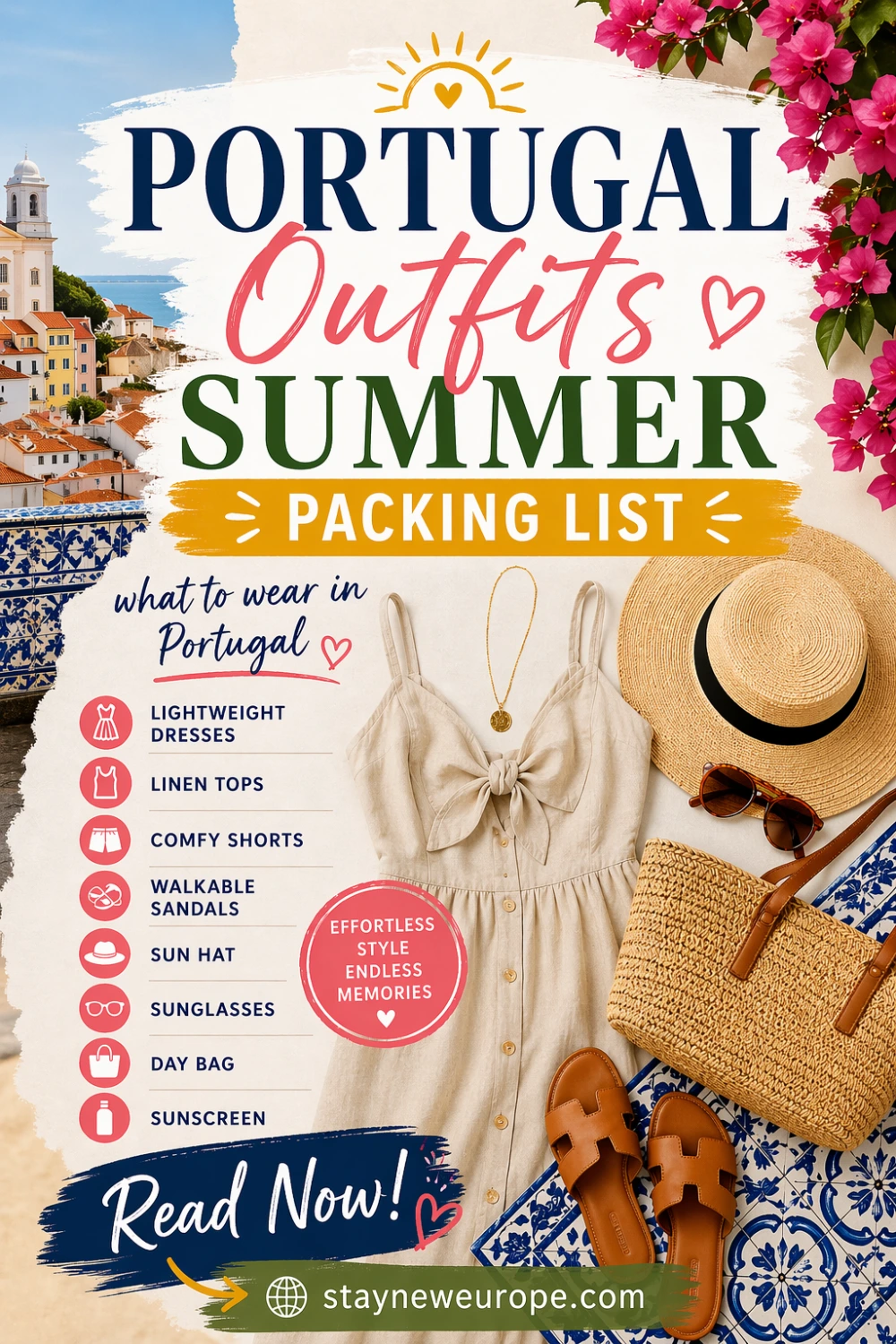
There’s a moment — usually somewhere around day two in Lisbon, standing on a cobbled hill with the light hitting the azulejos tiles just so, a pastéis de nata in one hand and a slight sunburn forming on your shoulders — when you realise Portugal has completely won you over. The problem? You’re already sweating through your only linen shirt and your sandals are rubbing a blister the size of a grape. Nobody warned you about the hills. Nobody told you it’d be this hot in June. And nobody mentioned that the evenings in the Douro Valley can actually get a little chilly.
This guide is that warning. I’ve packed badly for Portugal before — over-packed, under-packed, brought the wrong shoes entirely — and this packing list is the result of hard-won, blister-forming, slightly sun-addled experience. Whether you’re spending two weeks island-hopping in the Algarve, sipping wine in the Alentejo, or doing the classic Lisbon-Porto road trip, what you wear genuinely matters more than you think.
Let me take you through every piece worth packing, and a few you should absolutely leave at home.
Before We Start: Understanding Portugal’s Summer Climate
Portugal in summer is not one single thing. That’s the detail most generic packing lists get wrong. The Algarve in July is genuinely blistering — we’re talking 35°C on the beach, dry heat, relentless sunshine that will absolutely flatten you if you’re not dressed right. Lisbon runs hot and hilly, which means you’ll be sweating on the ascent to the Alfama regardless of what you’re wearing. But inland regions like the Alentejo can tip over 40°C in peak summer, while the Douro Valley evenings have a surprising coolness that catches people off guard. Then there’s the north — Porto is noticeably cooler and breezier, especially in June, and the Atlantic coast up around Nazaré or Óbidos can be downright windy even in August.
What this means in practice is that your Portugal summer wardrobe needs to do two things at once: keep you cool during the day and give you at least one layer for evenings or coastal breezes. The good news is that this doesn’t mean packing half your wardrobe. It means packing smart, versatile pieces that work hard across different settings. Portugal is also a fairly stylish country — Lisbon especially — so while there’s no need to dress up, you’ll feel more at home if your eveningwear is a small step up from the beach outfit you wore all day.
One more thing before we get into it: the shoes. I cannot overstate this. The cobblestones in Lisbon and Porto are beautiful, ancient, and absolutely merciless on unsupported footwear. More on this shortly.
1. Linen Shirts: Your Single Most Important Item
I’m putting this first because if you take nothing else from this guide, take this: pack linen, not cotton. Portugal’s summer heat is the kind that makes synthetic fabrics feel like punishment, and even cotton can become heavy and uncomfortable within an hour of walking. Linen breathes in a way that nothing else quite matches — it’s what the locals wear, it’s what the fishermen in the Algarve wear at their outdoor tables, and it’s what you should be wearing too.
A good linen shirt does triple duty in Portugal. It works as a beach cover-up over swimwear when you’re wandering from the sand into a café. It works as a daytime sightseeing layer in Lisbon or Évora. And styled with dark chinos or a skirt in the evening, it looks completely put-together for dinner. The best ones wrinkle elegantly rather than looking slept-in, which is a important distinction when you’re living out of a suitcase.
Bring at least two — one in a neutral (white, cream, sand) and one in a colour or subtle print that makes you happy. Pack a short-sleeved and a longer-sleeved version if you’re venturing into the Douro or northern Portugal, where evenings warrant a bit more coverage.
Our pick: Amazon Essentials Men’s Slim-Fit Short-Sleeve Linen Shirt — affordable, breathable, and available in exactly the kind of washed-out coastal colours that feel right in Portugal. For women, the Daily Ritual Women’s Linen Shirt is similarly brilliant — loose, airy, and long enough to work over swimwear or tucked into shorts. Both pack down small and dry quickly if you need to rinse them out midway through the trip.

Local tip: Portuguese men often wear their linen shirts untucked with the top two buttons undone — it’s not sloppy, it’s simply the done thing in the heat. Don’t fight it.
2. Lightweight Linen or Cotton Trousers
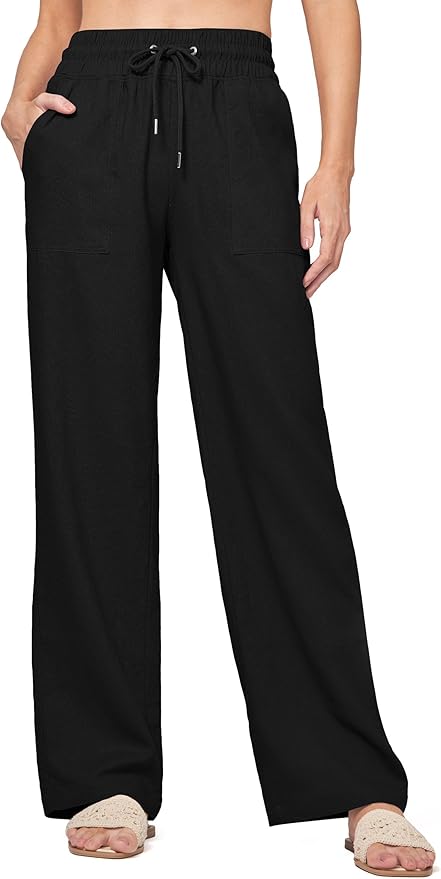
Shorts are fine for beach days, but Portugal rewards the traveller who brings at least one pair of lightweight long trousers. The practical reasons are multiple: sun protection on your legs during long days of walking, a smart upgrade for evening meals at slightly nicer restaurants, and genuine comfort in air-conditioned spaces (and Portuguese supermarkets can be aggressively air-conditioned). Beyond practicality, a pair of loose linen trousers simply looks better when you’re exploring a medieval town like Silves or strolling the Praça do Comércio at golden hour.
Go for a straight or relaxed cut rather than anything tapered — tight trousers in serious heat are a miserable experience. Neutral colours are the sensible choice here: beige, stone, off-white, and sage green all look at home in Portugal’s particular quality of light. If you’re worried about fabric, go for a linen-cotton blend, which tends to hold its shape slightly better than pure linen while still breathing beautifully.
Our pick: Amazon Essentials Men’s Lightweight Stretch Linen Trousers — these have a slight stretch that makes them far more comfortable for long days of walking, and they don’t crease into oblivion after an hour. For women, the Floerns Women’s Wide Leg Linen Pants are genuinely excellent — they look elegant enough for evening while feeling practically like pyjamas in the heat, which is exactly what you want after a long day.
Local tip: In the Alentejo, where the heat is at its most intense, you’ll notice locals pairing light trousers with a simple tucked-in vest and a hat. It’s not a fashion statement — it’s centuries of figuring out how to dress for serious sunshine.
3. Breathable Shorts (But Choose Wisely)
Yes, bring shorts — but not just any shorts. The cut and fabric matter more than you’d think. Long board shorts dry quickly but look awkward the moment you step off the beach; tiny athletic shorts feel out of place in a cathedral. The sweet spot for Portugal is a mid-length (hitting just above the knee) tailored short in linen, cotton, or a quick-dry technical fabric. These work on the beach, in town, and at casual lunches without you having to change between activities.
Bring two or three pairs depending on your trip length, and at least one pair should be in a neutral colour that pairs easily with multiple tops. If you’re planning serious beach time in the Algarve — and you should be, those sea stacks and hidden grottos are genuinely extraordinary — one pair of proper swim shorts that doubles as regular shorts is a space-saving win.
Our pick: Bohn Men’s Linen Casual Shorts — these hit the perfect length, come in earthy colours, and have actual pockets. For women, Amazon Essentials Women’s Linen Short is reliable, well-cut, and comes in enough colours that you can pick whatever works with your other pieces without having to think too hard.

Local tip: At beach restaurants (marisqueiras) along the Algarve or the Setúbal Peninsula, shorts are perfectly acceptable for lunch — but in Lisbon’s more traditional tascas or anywhere with a set lunch menu for locals, you’ll feel more comfortable in trousers.
4. Sundresses and Maxi Dresses
For women packing for a Portugal summer, a couple of dresses are genuinely non-negotiable. Not because you need to dress up — but because a single dress is cooler than any shorts-and-top combination, takes up half the space in your bag, and somehow always looks intentional even when you’ve been walking for six hours.
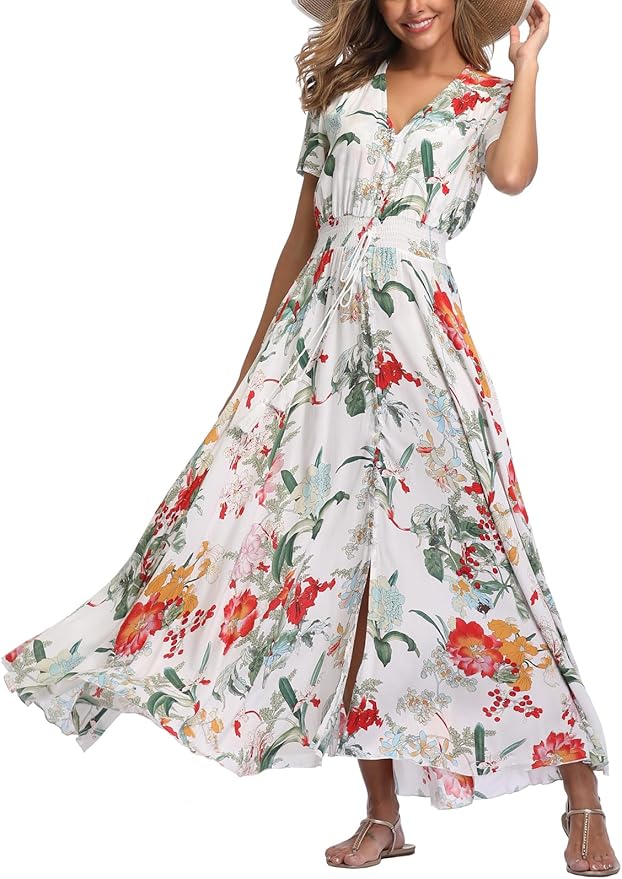
The ideal Portugal dress is cotton or linen, loose enough to breathe, long enough to feel appropriate in churches and markets, and versatile enough to go from day to evening with different accessories. Maxi dresses are particularly brilliant because they cover your legs from sun exposure while still feeling effortless, and they pack down to almost nothing. A shorter sundress works perfectly well too, but bring a sarong or light wrap for visiting religious sites.
Our pick: ANRABESS Women’s Smocked Waist Tiered Maxi Dress — this one hits every note: cotton, floaty, smocked waist so it flatters without being fitted, and available in about fifteen colours. For something slightly more structured for evenings, the Milumia Women’s Boho Button Up Split Flowy Party Maxi Dress is effortlessly chic — it works in a beach town and looks completely at home in a Lisbon wine bar.
Local tip: Lisbon women tend to lean towards simple, well-cut pieces rather than anything overly boho or beachy — Portuguese style is understated and quality-focused. If you want to blend in rather than look obviously tourist, think clean lines and muted colours over loud prints.
5. A Light Layer for Evenings (The One Most People Forget)
This is the item that surprises the most first-time Portugal visitors. You’ve been roasting all day in the Algarve and you absolutely cannot imagine needing anything other than a beach towel and SPF, and then the sun drops and a breeze comes in off the Atlantic and suddenly you’re cold. This happens. It happens a lot, actually — Portugal’s coastline is exposed to Atlantic winds that cool things down dramatically after sunset, even in July.
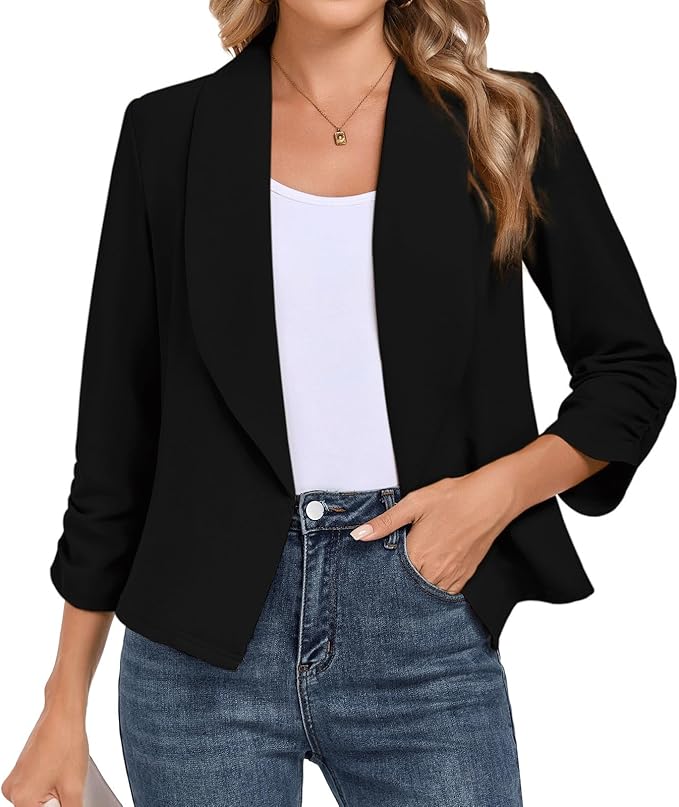
The layer doesn’t need to be heavy. What you’re looking for is something that packs to almost nothing, takes the edge off without overheating you, and is versatile enough to layer over both casual daywear and a smarter evening outfit. A linen blazer is the aristocrat of this category — it looks great, breathes well, and transforms any outfit instantly. A lightweight knit or cotton cardigan does the job too, and for the beach-heavy travellers, a hooded cotton sweatshirt is a reliable friend.
Our pick: Amazon Essentials Women’s Lightweight Long-Sleeve Full-Zip Sweater Fleece Jacket is an underrated pick — it packs tiny, weighs almost nothing, and is genuinely warm enough for a breezy Lisbon night. For a slightly smarter option, the Milumia Women’s Open Front Blazer is perfect — it elevates any dress or trousers combination without looking overdressed, and the linen fabric means it doesn’t suffer in the heat.
Local tip: The Douro Valley evenings can drop to 18°C or lower even in August after a scorching afternoon. If you’re doing a wine tour or river cruise, definitely have this layer accessible in your day bag.
6. Swimwear (And More Than You Think You Need)
Let me be honest with you: you will spend more time in the water than you think you will. Portugal’s beaches are extraordinary — from the dramatic sea-carved grottos of Lagos to the long Atlantic rollers at Nazaré to the impossibly turquoise water at Praia da Marinha — and the sea is genuinely swimmable in summer in a way that delights northern Europeans and puzzles nobody else. Bring two swimsuits minimum, ideally three. Wet swimwear has a way of still being damp the next morning when you want it, and nothing is more annoying than having to choose between being uncomfortable and missing a swim.
For women, a supportive one-piece is worth considering alongside a bikini if you’re planning any active water sports, cliff jumping (yes, this is a thing in the Algarve), or longer swims. For men, a quality pair of swim shorts that don’t look ridiculous outside the water saves an entire outfit change.
Our pick: Cupshe Women’s One Piece Swimsuit — flattering, durable, and dries relatively quickly. For men, the Kanu Surf Men’s Barracuda Swim Trunk is a classic for a reason — solid construction, appropriate length, good colours, and they double perfectly as casual shorts for beach-side lunches.
Local tip: Topless sunbathing is accepted on most Portuguese beaches but not universal — read the room at quieter, more family-oriented beaches, especially in the Alentejo coast.
7. The Footwear Question (Walk This Way)
Shoes make or break a Portugal trip. I genuinely cannot stress this enough. The calcada portuguesa — those small, hand-laid limestone cobblestones — look absolutely beautiful and are genuinely one of Lisbon’s great aesthetic pleasures. They are also the enemy of flat soles, high heels, sandals with no support, and basically anything from a fast fashion chain. People roll ankles on these cobblestones. I have nearly rolled an ankle on these cobblestones. Your footwear choice is not a minor packing consideration here — it is a survival decision.
What you need: a pair of comfortable walking shoes with actual arch support and grip. This is non-negotiable for Lisbon and Porto. Beyond that, a pair of sandals for beach days and casual evenings, and if you’re anything like me, flip-flops strictly for the beach and poolside. That’s your three-shoe strategy and it covers everything.
Our pick: Birkenstock Arizona Sandals are the absolute gold standard here — the contoured footbed means they’re genuinely supportive enough for moderate walking days, they look good with everything, and they’re robust enough to last the whole trip. For walking shoes, the Skechers Women’s Go Walk 5 Slip-On or Skechers Men’s Relaxed Fit Sneaker both give you the support you need without looking like you’re training for a 10K, which is the balance you want.

Local tip: The calcada cobbles are genuinely slippery when wet — and Lisbon mornings can be damp even in summer. Wear your grip shoes on mornings that look uncertain.
8. A Sun Hat You’ll Actually Wear
The Portuguese sun between 11am and 3pm is serious. Not “a bit warm” serious — I mean the kind of direct overhead UV that will give a fair-skinned person a genuinely concerning burn through a full-coverage SPF in under two hours. A hat is not optional for comfortable sightseeing. The problem most people run into is that they bring a hat they don’t like wearing, so it stays in the bag. Solution: bring a hat you actually want to wear.
For travelling, a packable wide-brim hat is ideal — it squashes into a suitcase without losing its shape, provides proper face and neck coverage, and looks completely appropriate everywhere in Portugal from the beach to the Sintra palace gardens. Baseball caps are fine for the beach but offer almost no neck protection, which is where most people burn.
Our pick: Lack of Color Women’s The Boater Hat is a gorgeous wide-brim option that packs flat and photographs beautifully against every white-walled Portuguese building you’ll encounter. For a more practical and truly packable option, the Wallaroo Hat Company Packable Sun Hat is brilliant — UPF 50+, extremely lightweight, and it literally rolls into your bag without any damage whatsoever.
Local tip: In Évora and the Alentejo plain, where shade is sparse and the heat is intense, a hat isn’t just nice — it’s genuinely necessary for comfortable afternoon sightseeing.
9. Sunglasses With Real UV Protection
This one surprises people as a packing list item because surely everyone brings sunglasses? But there’s a difference between the kind of sunglasses you grab at a pharmacy and ones that actually protect your eyes. Portugal’s summer light is intense and highly reflective — off white walls, off water, off those gorgeous pale cobblestones — and your eyes take more strain than you realise over a two-week trip. UV400 protection is the standard to look for; anything below that is essentially just tinting the world darker without blocking the UV rays that cause long-term damage.
Beyond protection, good sunglasses are one of those accessories that genuinely elevate a simple linen-and-shorts outfit into something that looks intentional. Portugal is a country of beautiful light and beautiful people, and good sunglasses feel at home there in a way that cheap ones simply don’t.
Our pick: Maui Jim Men’s Peahi Polarised Sunglasses are an investment but genuinely extraordinary — the polarisation is especially useful on the water or at the beach. For a more affordable option with proper UV400 protection, the SOJOS Classic Round Polarised Sunglasses look fantastic, cost a fraction of the price, and cover all the bases.

Local tip: Polarised lenses are particularly worth it if you’re doing any boat trips along the Algarve grottos — the reflected light off the turquoise water is breathtaking but genuinely harsh.
10. A Lightweight Crossbody or Day Bag
Your bag matters more than you’d think in Portugal, for a specific and slightly annoying reason: pickpocketing exists in Lisbon’s tourist areas. Not at alarming levels, but in the crowded tram 28, around Alfama, and at the Flea Market (Feira da Ladra), it’s worth being sensible. A crossbody bag that sits in front of your body is the standard smart-traveller’s choice — more secure than a backpack or tote, and hands-free for navigating those cobbled hills.
The best day bag for Portugal is relatively small (you don’t need to carry much), made from a slightly structured material so it doesn’t flop on your body, and has at least one zippered compartment for your phone and passport card. Bonus points if it looks good enough to take from daytime sightseeing to an evening meal without feeling out of place.
Our pick: S-ZONE Women’s Genuine Leather Mini Backpack Purse — this is genuinely versatile, tough, and looks polished enough for evenings. For a more classic crossbody, the Travelon Anti-Theft Classic Crossbody Bag is the travel security classic — slash-proof strap, locking compartments, and a design understated enough to not scream “I am a tourist with valuables.”
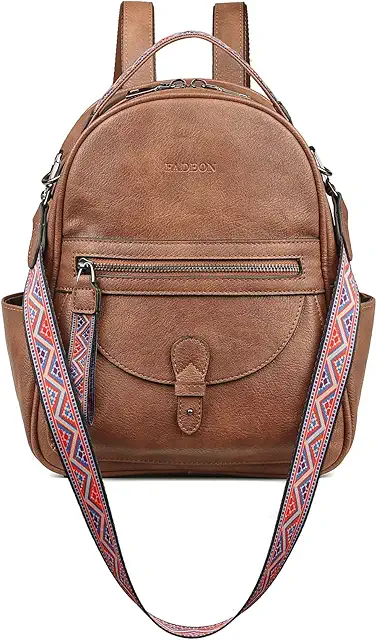
Local tip: In Lisbon, keep your crossbody fully zipped and in front of you on the 28 tram. Not paranoid advice — just local knowledge.
11. SPF and Skincare (Yes, Pack Your Own)
Portugal is not a great country to be hunting for your specific SPF. Portuguese pharmacies are well-stocked with sunscreen, but the selection of high-SPF options is smaller and more expensive than in the UK, Germany, or the US. If you have sensitive skin, use a specific brand, or rely on a particular formula, bring enough to cover your whole trip rather than assuming you’ll find it. The rule of thumb most travellers use: bring more than you think you need, especially for the first week.
For daily wear in summer Portugal, SPF 50+ on your face, neck, and chest is genuinely sensible rather than overcautious. The UV index in the Algarve in July regularly hits 9 or 10 — that’s the same level as sub-Saharan Africa. A tinted moisturiser with SPF built in for lighter days, plus a dedicated sunscreen for beach and outdoor days, is a solid two-product approach.
Our pick: EltaMD UV Clear Tinted Facial Sunscreen SPF 46 is the gold standard for daily face SPF — dermatologist-recommended, non-greasy, and works beautifully under makeup or alone. For body sunscreen on beach days, Banana Boat Ultra Sport Clear Sunscreen Spray SPF 100 offers serious protection, goes on easily, and is one of the most cost-effective ways to keep yourself burn-free across a long beach holiday.

Local tip: Apply sunscreen before you leave your accommodation each morning — by the time you’re walking to your first coffee, the UV is already building. Don’t rely on applying it when you reach the beach.
12. A Good Quality Waterproof Beach Bag or Tote
The Algarve specifically demands this. You’ll be carrying towels, water, snacks, sunscreen, and all manner of sandy things down to the beach and back, and a proper beach tote makes this dramatically more pleasant than stuffing everything into a backpack. A waterproof or water-resistant tote is the smart choice — sandy wet towels do not belong inside your quality luggage.
A mesh tote is ideal for pure beach use because the sand falls straight through it. A waterproof canvas tote is more versatile because it works as a farmers’ market bag, a grocery bag for the market at Lagos or Faro, and a carry-all for day trips to places where you don’t want to bring your good crossbody. This is the kind of bag you can use every single day in Portugal and feel no guilt about throwing in the boot of a hire car still slightly damp.
Our pick: BAGGU Large Canvas Tote Bag — deceptively large, extremely robust, and actually good-looking enough that you’d use it at home too. For a purpose-built beach option, the ECOHUB Mesh Beach Bag has the advantage of a sand-draining mesh base, multiple pockets including a waterproof inner section, and a design that fits an improbable amount inside it.

Local tip: Many of the more beautiful Algarve beaches are down steep cliff paths with no facilities at the bottom. Lighter is better — leave the elaborate beach setup for the longer beach days at the bigger stretches like Meia Praia near Lagos.
13. A Compact Packable Rain Jacket
Controversial inclusion, I know — but hear me out. Portugal in summer has a specific weather pattern that catches people off guard: sudden, sharp Atlantic squalls that arrive from nowhere, last twenty minutes, and then disappear into blue skies like they never happened. These are most common in the north (Porto gets noticeably more of them) and on the Atlantic-facing western coast. They’re also cold enough to be unpleasant if you’re standing in one without anything waterproof.
The key word here is packable. You are not bringing a walking jacket — you’re bringing something that compresses into its own pocket to roughly the size of a paperback and lives in your day bag just in case. Most of the time it stays in the bag. But on the days it rains, you will be extraordinarily grateful for it.
Our pick: Columbia Women’s Switchback III Packable Rain Jacket is genuinely excellent — it compresses to almost nothing, is properly waterproof rather than just water-resistant, and comes in enough colours to feel like a genuine wardrobe piece rather than an emergency measure. For men, the Amazon Essentials Men’s Packable Rain Jacket covers all the bases at a price point that doesn’t hurt.

Local tip: Porto in June is noticeably rainier than anywhere else in Portugal — if your itinerary starts in the north, bump the rain jacket to the top of your accessible packing rather than burying it at the bottom of your case.
14. Versatile Evening Wear (One or Two Smart Pieces)
Portugal’s restaurant culture is one of the genuine pleasures of visiting — not just the food itself (the seafood alone is worth the flight), but the ritual of a long dinner that starts late and lingers well past midnight. Lisbon especially has a dining scene that rewards a slight evening upgrade in your outfit: nothing formal, nothing uncomfortable, but a step above the shorts you’ve been wearing all day.
For women, one or two dresses that function as both casual daywear and elevated evening wear do the job perfectly — especially if you can accessorise with a simple piece of jewellery or a different bag. For men, a clean pair of chinos and a decent shirt covers any restaurant in Portugal short of a Michelin-starred tasting menu. The principle is the same: bring two or three pieces that are slightly smarter than your beach kit, and let them work across multiple evenings.
Our pick: For women, the Merokeety Women’s Sleeveless Wrap Dress transitions from afternoon exploring to evening dining without any fuss — it’s elegant without being overdressed and comes in several colours that work beautifully in candlelit Portuguese restaurants. For men, Amazon Essentials Men’s Slim-Fit Stretch Chino Trousers are the essential building block — put them with a clean linen shirt and you’re dressed for anywhere.

Local tip: Portuguese dinners start late — rarely before 8pm, often closer to 9 or 10pm in Lisbon’s hipper neighbourhoods. Don’t show up at a restaurant at 6:30pm expecting it to be open. It won’t be.
15. A Reusable Water Bottle That Actually Works
This is the most underrated item on any Portugal summer packing list. Hydration is serious business in 35°C heat, and buying plastic water bottles every day is both expensive and environmentally bleak when you’re somewhere as beautiful as Portugal. Tap water in Portugal is perfectly safe to drink in most cities and towns, and many public fountains — including some beautiful tiled ones in Lisbon — run with fresh drinking water.
An insulated water bottle that keeps water cold for hours is genuinely transformative for long sightseeing days. The difference between a lukewarm 500ml and a still-cold 750ml at 2pm in Évora is not a small thing — it’s the difference between a functional afternoon and a miserable one. Bring something with a litre or more capacity, properly insulated, with a lid that doesn’t leak when thrown in a bag.
Our pick: Hydro Flask Standard Mouth Water Bottle, 24 oz — this is the gold standard for a reason. Keeps water cold for 24 hours, the lid is genuinely leak-proof, and it’s robust enough to survive in a bag rattling around cobbled streets all day. The Nalgene Tritan Wide Mouth BPA-Free Water Bottle is a more affordable alternative that’s not insulated but extremely durable and light — a good option if weight is your priority.
Local tip: Ginjinha — the famous cherry liqueur sold in tiny cups outside certain Lisbon bars — is absolutely not hydration. It counts as the opposite of hydration. Drink water alongside it.
16. Lightweight Scarf or Sarong
One item, approximately one thousand uses. A lightweight cotton or linen scarf-sarong hybrid is the Swiss Army knife of the Portugal summer wardrobe: beach towel in a pinch, shoulder cover for visiting churches (required in many Portuguese religious sites, even in summer), makeshift picnic blanket at Sintra or the Douro Valley viewpoints, layer against air conditioning in museums, and an actual stylish accessory when worn as a wrap or tied as a head covering.
The ideal weight is light enough to dry quickly if it gets wet but substantial enough to feel like a real cover-up rather than a translucent afterthought. Turkish cotton is excellent for this — it’s absorbent, quick-drying, and has that slightly textured feel that looks good draped over a shoulder.
Our pick: Fishers Finery 100% Pure Cashmere Lightweight Scarf is a step up in quality that genuinely pays off — it feels luxurious against sun-heated skin and works equally well as an evening layer on cool nights. For a more beach-practical option, the SOJOS Oversized Beach Blanket Towel Sarong is brilliantly versatile — it’s large enough to be a real beach towel, light enough to be a carry-around scarf, and dries remarkably fast.
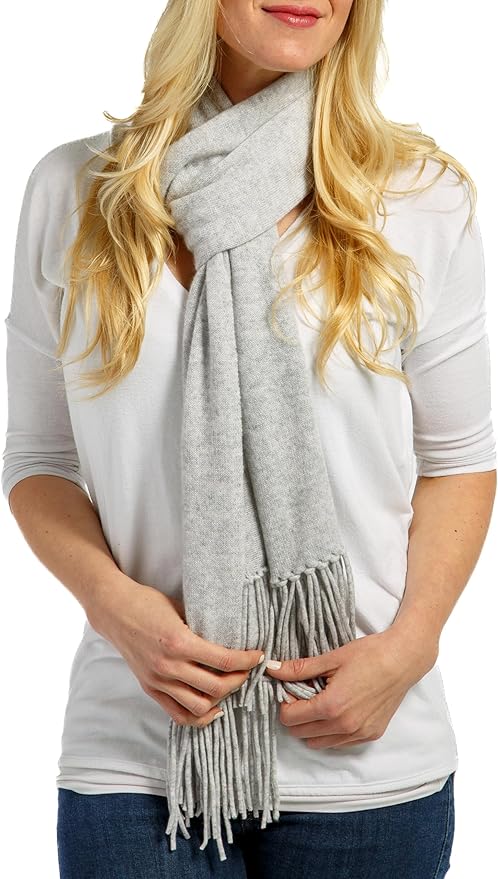
Local tip: Many smaller chapels and churches in rural Portugal have a strict shoulders-covered rule enforced by elderly volunteers who are extremely polite about asking you to leave if you’re not. Your scarf solves this instantly.
Practical Packing Tips for Portugal
Carry-on only is entirely achievable for a one to two-week Portugal trip if you’re disciplined about it, and I’d strongly recommend it — Portugal’s cheap internal flights between Lisbon, Porto, and Faro are much more pleasant when you’re not checking bags, and the cobblestoned streets make dragging large suitcases a daily frustration. A medium-sized carry-on or a 40-litre backpack works beautifully.
A few final logistics worth knowing: Portuguese pharmacy queues are part of life, so if you run out of anything, factor in time; your accommodation will likely be smaller than at home (this is especially true in central Lisbon), so overpacking creates genuine inconvenience; and hotel/Airbnb laundry facilities are widely available and cheap enough that packing for fourteen days’ worth of outfits is never necessary — plan to re-wear and do a half-wash halfway through.
On currency and security: keep your passport and backup card in different locations. A flat money belt worn under clothing is worth its minimal weight for peace of mind, especially in Lisbon’s busier tourist zones. And finally, don’t bring anything you’d be devastated to lose to the sea, a cobblestone tumble, or a pickpocket. Portugal rewards relaxed, present-moment travel — and it’s hard to be fully present if you’re constantly worried about your belongings.
One Last Thing Before You Go
Here’s what nobody tells you before your first Portugal trip: the country has a way of making everything feel gently, deeply right. The light is extraordinary — photographers talk about it in almost mystical terms, and they’re not wrong. The food is better than you expect even when you expect it to be excellent. The people are courteous and quietly welcoming. The pace is unhurried without being slow. And the landscape, from the wild Atlantic coast to the baked terracotta plains of the Alentejo to the vine-striped hillsides of the Douro, is the kind that makes you put your phone down.
Pack well, pack light, and leave room in your suitcase for the things you’ll buy — the ceramics, the wine, the small tins of canned fish that are inexplicably one of Portugal’s finest food souvenirs. You won’t regret any of it. Now go book the flights.

