
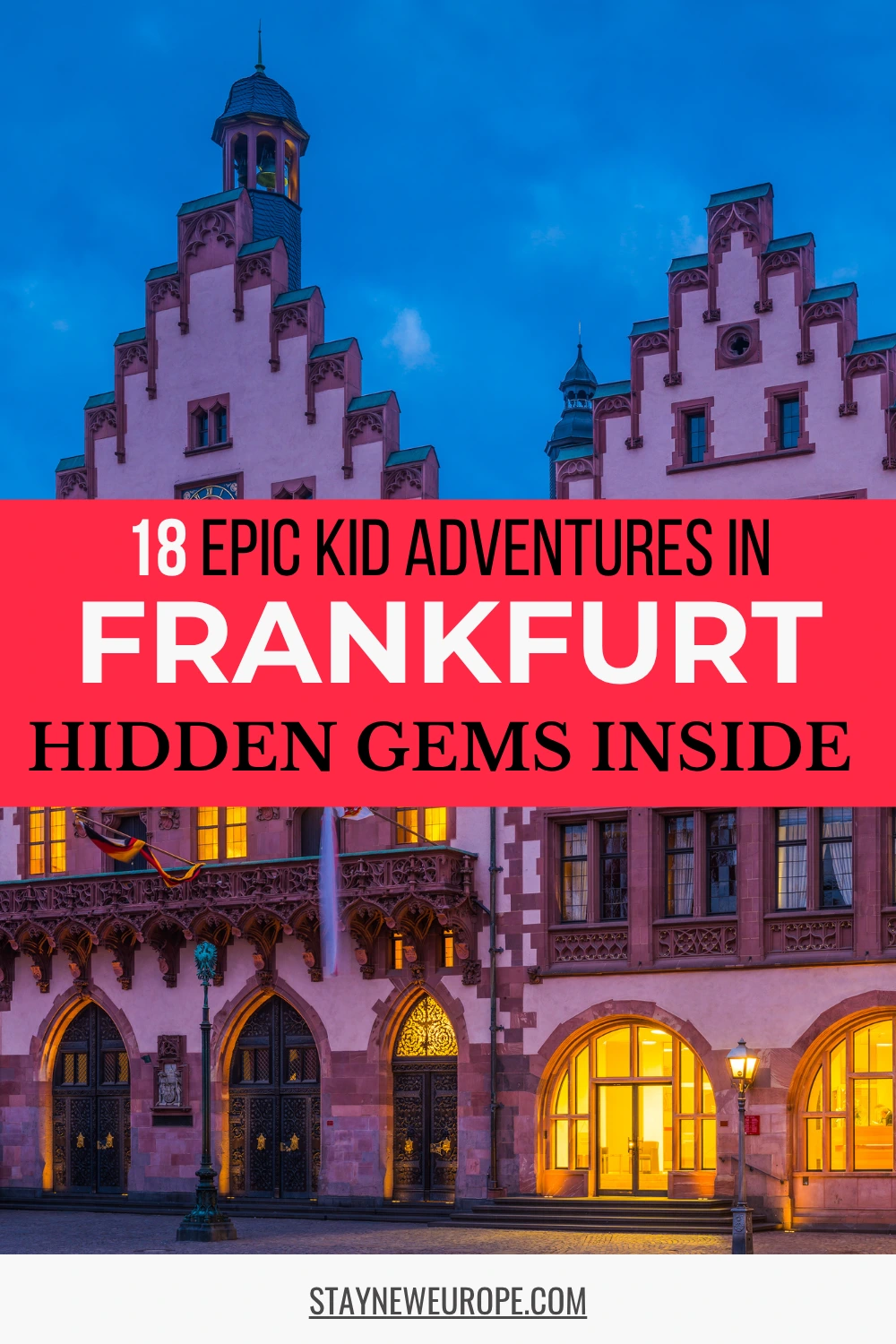
Let me be upfront with you: Frankfurt was never really on my family travel radar. It’s not the city that pops up on those dreamy “Top 10 European Breaks” lists. Paris gets the romance, Munich gets the beer gardens, Berlin gets the cool factor. Frankfurt? Frankfurt gets the airport. And for most families flying through, that’s exactly all it gets — a transit lounge and a connection to somewhere else.
That’s a shame. Because once I actually stopped passing through and started paying attention, I found a city that punches well above its weight when it comes to keeping kids happy. There are world-class museums, riverbank adventures, chocolate, dinosaurs, apple wine trams, and a medieval old town that looks like it was designed specifically to make children gasp. I’ve since taken my family back twice. I’d go again tomorrow.
This is the guide I wish someone had handed me at that departure gate.
Before You Go: A Quick Word on Frankfurt as a Family Destination
Frankfurt has a bit of an image problem. From the outside, it looks like a city of bankers and briefcases — the gleaming skyscrapers of the Bankenviertel dominate the skyline and give the impression that this is strictly a business destination. Don’t let that fool you.
Dig past the financial district and you’ll find a city of extraordinary contrasts: ancient cobblestone squares tucked right next to glass towers, one of Germany’s most important museum districts stretched along the River Main, and a park culture that Germans take extremely seriously (weekend parks here aren’t an afterthought — they’re a full-day family commitment). Frankfurt is also compact, well-connected by public transport, and incredibly easy to navigate with children in tow. There’s very little of the logistical stress that bigger cities throw at you.
The Frankfurt Card is worth picking up if you’re staying two or more days — it covers unlimited public transport and gives you discounts at most of the museums and attractions listed here. Kids under 6 travel free on all Frankfurt public transport, which is a small but genuinely lovely thing.
One more thing: Frankfurt is a gateway city, which means flights are plentiful, often cheap, and the airport has a direct rail link to the city centre that takes about 15 minutes. There’s really no excuse not to stop.
1. The Senckenberg Natural History Museum
If you only take your kids to one place in Frankfurt, make it this one. I genuinely mean that.
The Senckenberg Natural History Museum is one of the largest natural history museums in Europe, and it earns that title. The moment you walk through the doors, you’re confronted with dinosaur skeletons that dwarf everything around them — full-size, beautifully mounted, and posed with just enough aggression to make a seven-year-old instinctively step backwards. My daughter tried to walk around behind a T-Rex to check whether it was real. Reader, she half-believed it was.
But this isn’t just a dinosaur warehouse. The museum spans geology, botany, oceanography, mammals, birds, insects, and evolutionary history across multiple floors. There are fossils of extraordinary detail, a replica of a giant squid that children find simultaneously disgusting and irresistible, and a section on human evolution that prompted the best questions my kids have ever asked me (and some I absolutely wasn’t ready for). The exhibits are dense but well-presented, and the labelling throughout is genuinely informative without being patronising to younger visitors.
Plan for at least two to three hours here, and honestly, budget for longer. My kids didn’t want to leave. The museum is located close to the Palmengarten and the Bockenheim neighbourhood, so you can pair it with lunch in one of the many cafés along Leipziger Strasse before heading back in for the afternoon.
Local tip: Arrive right when the doors open at 9am on a weekday if you can. The dinosaur hall is gloriously empty in that first hour and the experience of having those enormous skeletons almost to yourself is genuinely something special.
2. The Römerberg and Old Town (Altstadt)
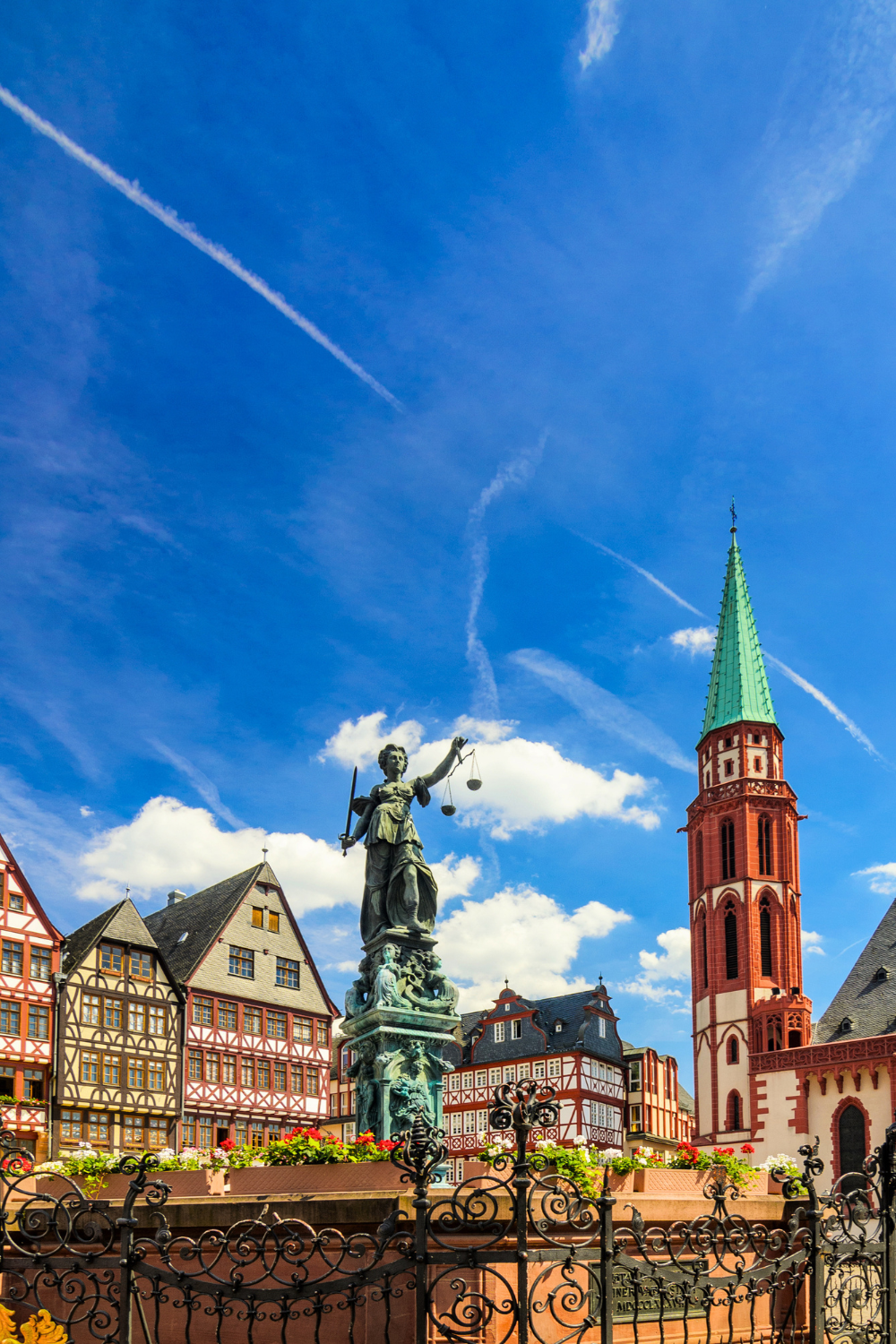
This one surprised me, and I say that as someone who has dragged their family through a lot of European old towns.
The Römerberg is Frankfurt’s medieval heart — a cobbled square flanked by beautifully reconstructed half-timbered buildings painted in ochre, red, and green, with the old town hall (the Römer) anchoring one end. It looks, in the best possible way, like someone took a fairy tale illustration and built it at full scale. Children absolutely eat this up, and I don’t think that reaction ever quite goes away — I’ve watched adults stop mid-stride and just stare.
Here’s the important historical context: most of what you see is a reconstruction. The original Römerberg was heavily bombed in 1944 and only the Römer itself survived largely intact. The surrounding medieval houses were painstakingly rebuilt in the 1980s based on historical records. There’s something quietly moving about that — a city that chose to rebuild its past rather than replace it with something modern. It’s worth sharing that story with older kids.
The adjacent Neue Altstadt, which opened in 2018, extends this reconstruction effort with a full block of rebuilt medieval architecture that connects the Römerberg to the Cathedral (Dom). Explore the winding lanes here — there are boutique shops, small cafés with outdoor seating, and a wonderful sense of discovery around each corner. The Dom itself is worth stepping inside for the soaring Gothic interior and the bird’s-eye views from the tower if your legs are up for it.
Local tip: The fountain at the centre of the Römerberg — the Gerechtigkeitsbrunnen, or Fountain of Justice — has a replica of the original Lady Justice statue on top. Look closely: she’s not blindfolded. Frankfurt’s version of justice, apparently, keeps her eyes open. Tell that to the kids and watch them work through the implications.
3. Frankfurt Zoo (Zoo Frankfurt)
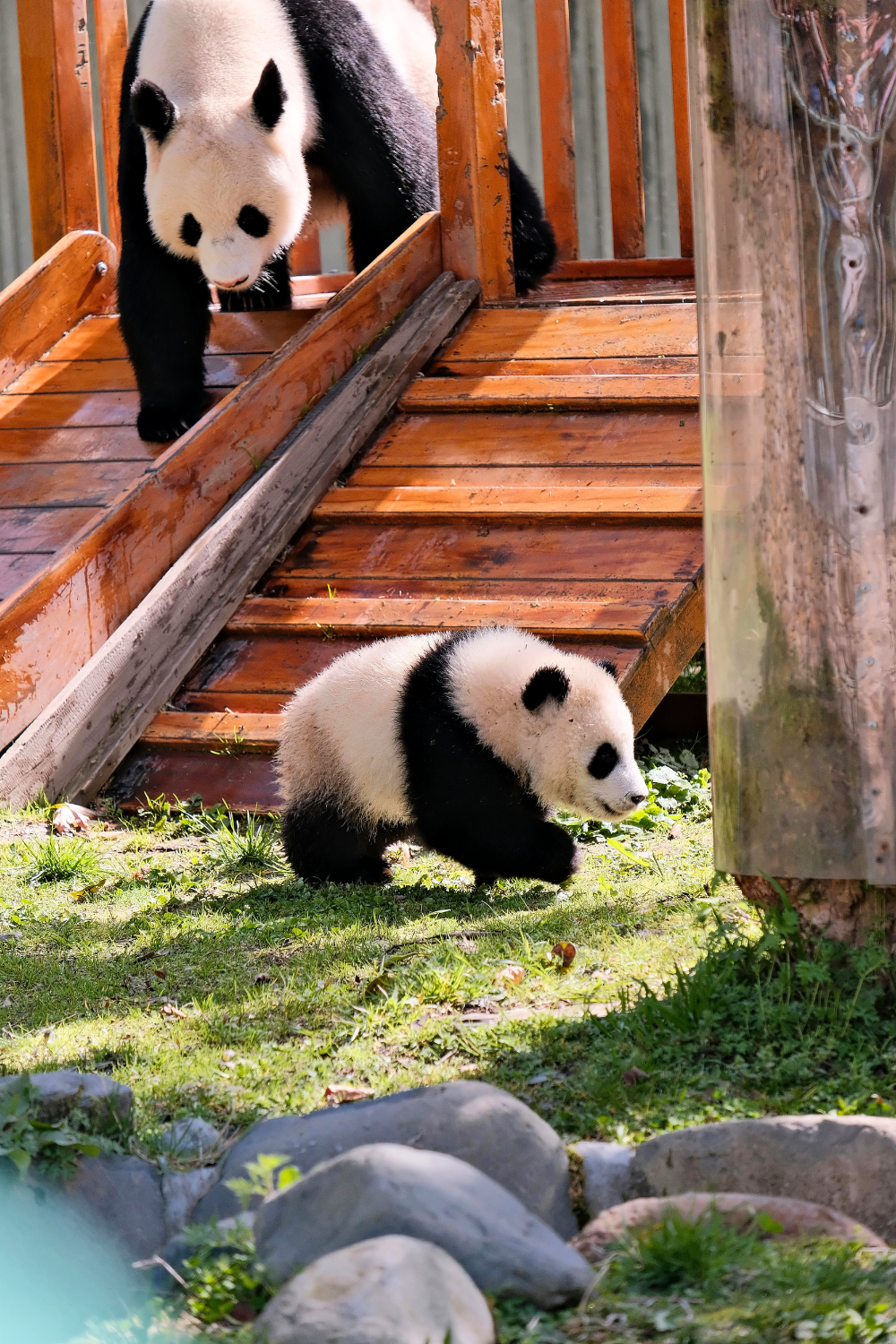
Let me be honest with you: Frankfurt Zoo is not the biggest zoo in Germany, and it won’t compete with the sheer scale of something like Berlin’s Tierpark. But what it lacks in acreage it more than compensates for in quality, thoughtfulness, and genuine affection for the animals in its care.
Founded in 1858, it’s one of Germany’s oldest zoos and has evolved from a Victorian curiosity cabinet into a respected conservation institution. The enclosures are well-designed with natural habitats in mind, and the layout of the zoo is pleasantly compact — you won’t spend half the day just walking between exhibits. Highlights for children include the Exotarium (a combined building housing reptiles, fish, amphibians, and invertebrates), the gorilla house, and the outdoor elephant area where, if timing is on your side, you might catch a feeding or enrichment session.
What I like most about Frankfurt Zoo is that it feels genuinely educational without being preachy about it. There’s signage throughout about conservation efforts, breeding programmes, and what’s threatening each species in the wild. My son was nine when we visited and came out genuinely fired up about orangutan habitat loss in a way that no wildlife documentary had quite managed. That’s a good zoo.
There’s a decent playground within the grounds and a café with outdoor seating, so you can make a full half-day of it. The zoo is also centrally located — a short U-Bahn ride from the city centre — making it easy to slot into a broader itinerary.
Local tip: The nocturnal house is a particular highlight that many visitors rush past. Your eyes take a few minutes to adjust, but what you find inside — owls, bats, bush babies, and slow lorises moving through dimly lit naturalistic settings — is genuinely atmospheric. Give it time.
4. The Palmengarten
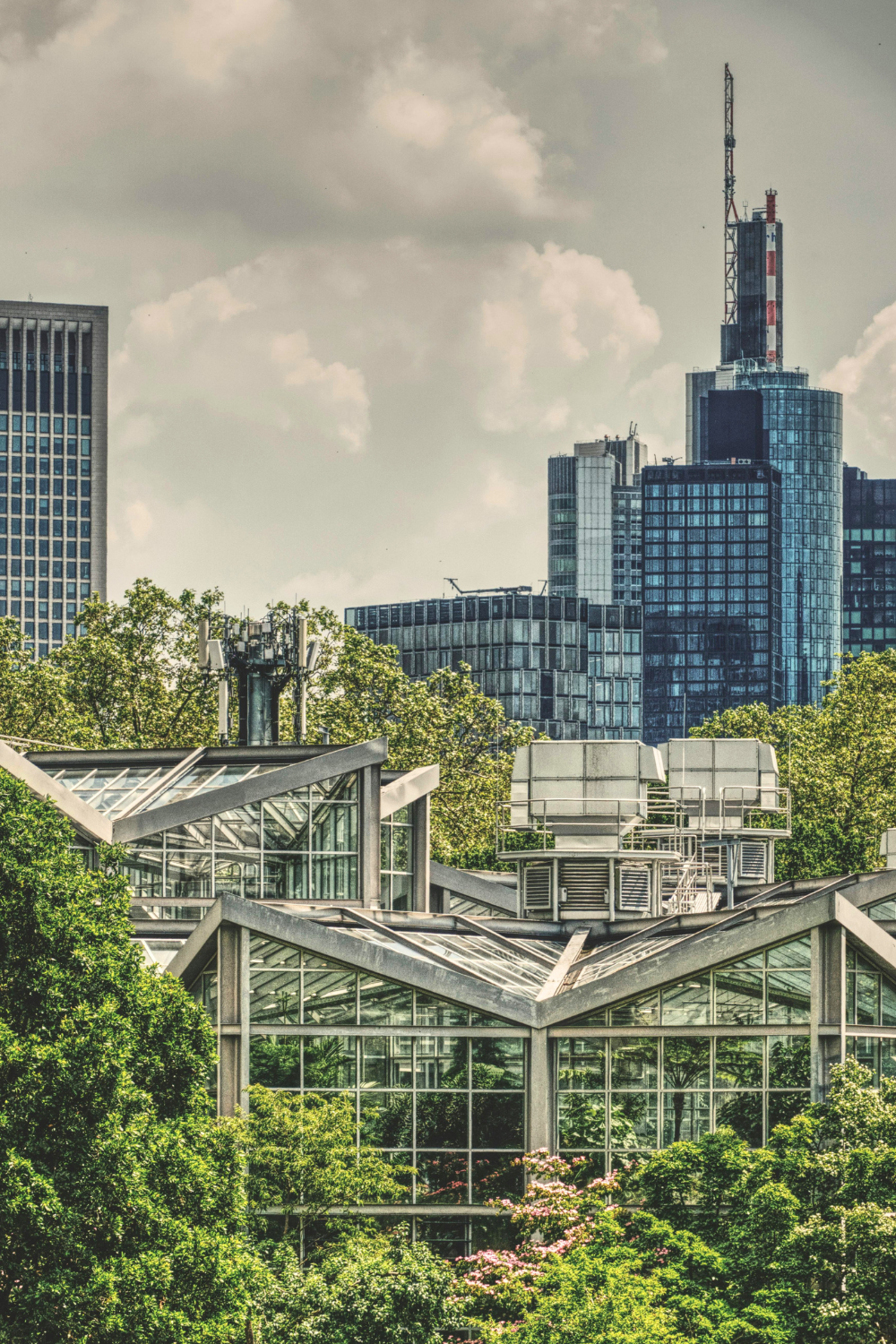
Every city should have a Palmengarten. Frankfurt’s version — a 22-hectare botanical garden in the leafy Westend district — is one of the finest in Germany and one of those places that feels like a secret even though it’s right there on the map.
The gardens encompass a huge variety of habitats and climatic zones, from tropical glasshouses full of orchids and palms to formal rose gardens, rock gardens, an English landscape section, and open meadows where families spread out picnic blankets with impressive commitment. The centrepiece is the large Tropicarium — a series of linked glasshouses that replicate everything from equatorial rainforest to subtropical desert — which is particularly magical to walk through on a cold Frankfurt day. Steam mist, towering palms, the smell of damp earth in January: it’s like a working weather machine.
For children specifically, the adventure playground within the gardens is excellent — properly robust, with rope bridges, climbing frames, and sandpits big enough to lose a small child in. There’s also a small lake where you can hire rowing boats in the warmer months, which is exactly as idyllic as it sounds. In summer, the gardens host outdoor concerts, children’s events, and food festivals that make an already lovely place feel genuinely festive.
Local tip: The gardens are busiest on Sunday afternoons when what feels like the entire population of Frankfurt’s Westend descends. Go on a Saturday morning instead for the best combination of good light, manageable crowds, and the pleasure of the weekly flower market outside the main entrance.
5. The Ebbelwei Express
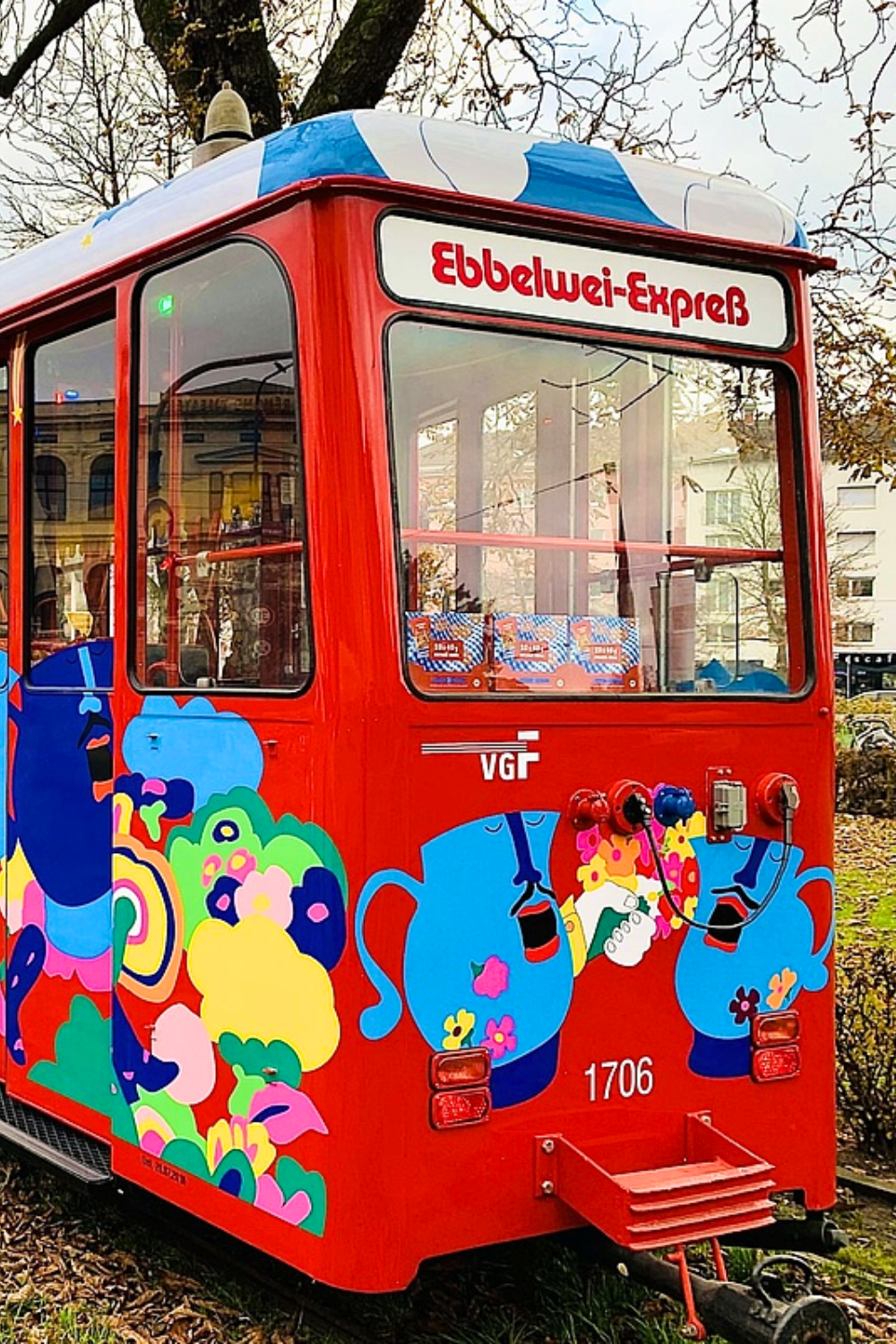
This one takes a little explaining, but trust me, it’s worth it.
The Ebbelwei Express is a decorated heritage tram that runs a circular route through Frankfurt’s prettiest neighbourhoods, including the Sachsenhausen apple wine quarter, the riverbank, the zoo, and the old town. It runs on weekends and public holidays throughout the year. The name comes from Ebbelwei — Frankfurt’s beloved dialect word for Apfelwein (apple wine), the city’s signature drink — and adults on board are offered a complementary glass of the stuff. Children get apple juice instead, which they generally consider a significantly worse deal.
Here’s why this works brilliantly for families: it’s a self-guided tour of the city’s highlights without anyone having to navigate, consult a map, or make a single decision. The tram runs for about 35 minutes per full circuit, and you can hop on and off at any stop. Children find heritage trams inexplicably exciting — something about the clanking, the open-air sections, and the sense of motion through the city hits different to a regular bus. My son rode it three times in a row on our first visit. I finished two glasses of apple wine. Nobody complained.
The tram runs from the Zoo stop on Saturday and Sunday afternoons. Tickets are cheap — a fraction of what you’d pay for an equivalent boat tour — and include the drink. It’s a perfect low-effort afternoon activity when everyone’s legs are giving out around day two.
Local tip: Sit on the right-hand side of the tram heading away from the Zoo if you want the best views of the river and the old town skyline. The afternoon light on the Römerberg from the tram window is genuinely beautiful.
6. The Museumsufer (Museum Embankment)
The Museumsufer is one of Frankfurt’s great civic achievements and a genuine gift to visiting families — a stretch of the southern bank of the River Main that is home to no fewer than eleven museums within easy walking distance of each other. The city has turned its riverbank into one of the densest concentrations of cultural institutions in Germany.
What’s particularly useful for families is the variety. Within this stretch you’ll find the Städel Art Museum (one of Germany’s most important art collections), the German Film Museum, the German Architecture Museum, the Museum of Applied Arts, the Ethnological Museum, and the Jewish Museum at Untermainkai, among others. Whatever your children’s interests, there’s something here that will catch them. The German Film Museum has interactive exhibits about the history of cinema that children from about eight upwards find genuinely absorbing — it’s much more hands-on than it sounds.
Don’t try to do everything in a day. That’s the trap. Pick two, maximum three, and give each one proper time. The riverbank itself is lovely to walk along between museums — there are benches, food stalls in summer, and an almost operatic view of the Frankfurt skyline reflecting in the water. Every August the whole embankment transforms into the Museumsuferfest, one of Germany’s largest open-air festivals, with food, music, and fireworks. If your trip coincides with it, clear your schedule.
Local tip: The Städel museum has a surprisingly wonderful children’s programme that includes dedicated family tours and activity workshops on weekends. Book ahead on their website — it fills up quickly and transforms what could feel like an obligation into a highlight.
7. Main Tower Observation Deck
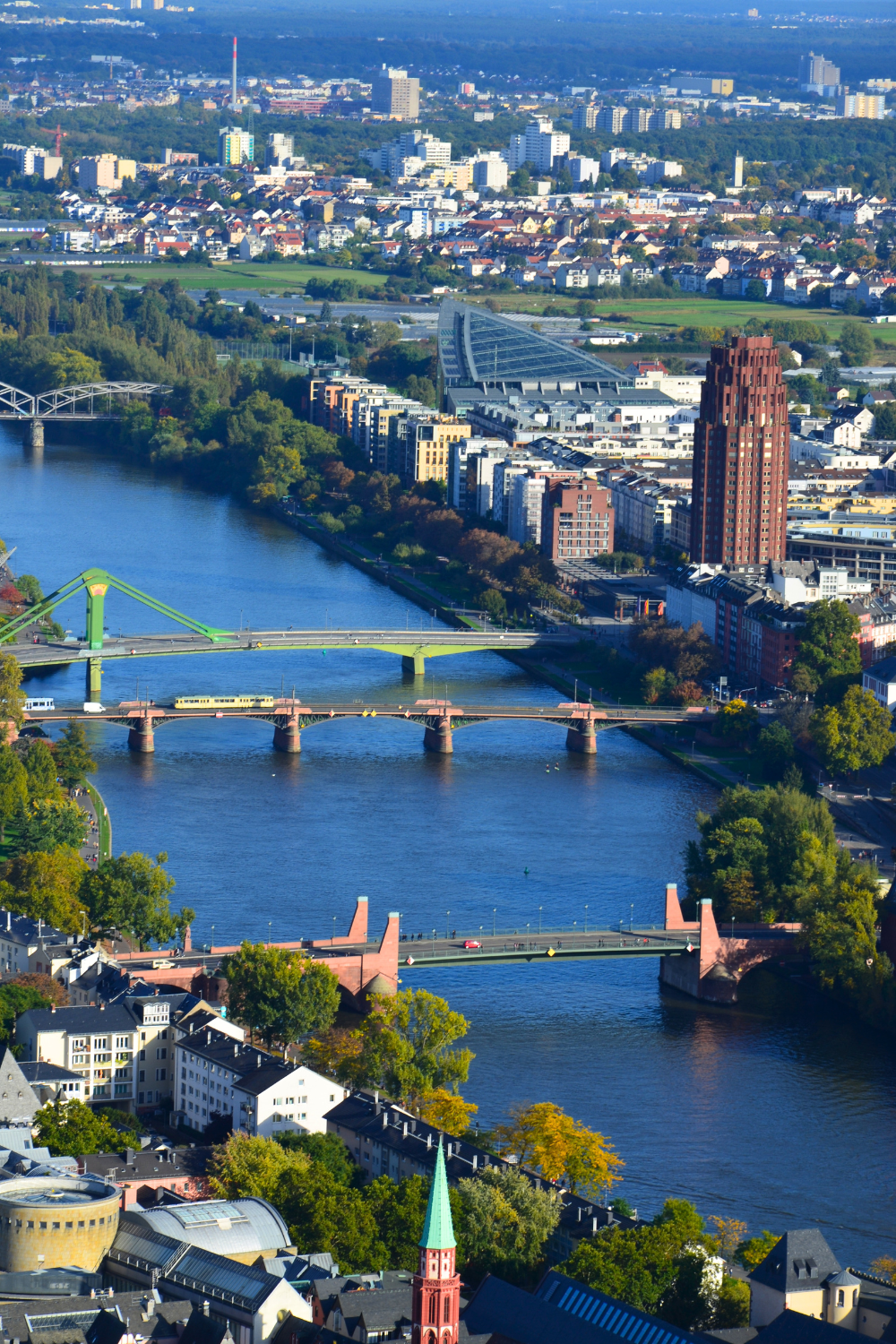
Frankfurt is the only city in Germany with a genuine skyline — that cluster of financial towers that rise from the Bankenviertel in a way you don’t expect from a German city. They look borrowed from Chicago or Singapore, and from street level they’re a bit imposing. From the top of one of them, they’re extraordinary.
The MainTower is the only Frankfurt skyscraper with a public observation deck, sitting at 200 metres with panoramic views across the city, the Taunus hills, and on clear days right out to the Odenwald forest. There’s an open-air platform where you can lean into the wind and look down at everything you’ve been exploring — the thin line of the River Main, the red rooftops of the old town, the miniaturised Palmengarten. It’s one of those perspectives that genuinely reorders your sense of a city.
Children tend to experience one of two reactions: either they press their faces against the railing in pure delight, or they back away from the edge immediately and refuse to look. Both are completely valid. The enclosed viewing gallery just below the open deck is a good compromise for the cautious ones.
The tower is smack in the heart of the banking district on Neue Mainzer Strasse, making it very easy to combine with a walk through the Zeil shopping street or a lunch break nearby.
Local tip: Sunset visits are popular for obvious reasons, but the queues can be long. If you’re visiting with young children who have limited patience for queuing, aim for late morning on a weekday when it’s significantly quieter and the light is still good.
8. The Children’s Museum (Kindermuseum Frankfurt)
Let me be honest about this one too: the Kindermuseum in Frankfurt doesn’t have the international profile of, say, the Exploratorium in San Francisco or the Natural History Museum in London. It’s smaller, quieter, and you won’t find it on every tourist list. But what it does, it does extremely well.
Located within the Historical Museum complex on the riverfront, the Kindermuseum is designed specifically for children aged four to twelve and takes a genuinely child-led approach to learning. The exhibits change regularly, but they’re always built around hands-on participation — children build, experiment, role-play, and create rather than read labels and look at things behind glass. It’s the kind of museum where you arrive for an hour and suddenly it’s been three.
The Historical Museum itself is worth a visit in its own right for older children who have any interest in Frankfurt’s past. There’s an impressive scale model of Frankfurt in the basement that shows the medieval city in meticulous detail — a brilliant way to contextualise everything you’ve been seeing in the old town — and the exhibits on the city’s destruction in 1944 and subsequent reconstruction are handled with real thoughtfulness.
Local tip: The Kindermuseum occasionally runs special holiday workshops and themed activity days during German school holidays (Schulferien). Check their website before you visit — if one coincides with your trip, booking your children into a workshop session while you have a quiet coffee in the museum café is one of Frankfurt’s great parenting experiences.
9. Sachsenhausen Apple Wine Quarter
Every great city has a neighbourhood that locals love and tourists tend to miss. In Frankfurt, that neighbourhood is Sachsenhausen, the traditional apple wine quarter on the south bank of the Main, and I want to make sure you don’t miss it.
Sachsenhausen is Frankfurt’s oldest working-class district — a maze of cobblestone streets, low-slung buildings, and the kind of taverns (called Apfelweinwirtschaften) that have been serving the same cider-like drink since the 17th century. The area has a completely different feel from the rest of the city: slower, warmer, more neighbourly. People sit outside with their jugs of Ebbelwei for hours. There’s no hurry here.
For families, Sachsenhausen is a brilliant place to eat and wander. The traditional taverns are welcoming to children — Germans don’t segregate family dining in the way some cultures do — and the food is hearty and affordable. Order the Grüne Soße (green sauce), Frankfurt’s most famous dish: a cold herb sauce made with seven specific herbs, typically served with hard-boiled eggs and boiled potatoes. It’s one of those dishes that sounds uninspiring and turns out to be unexpectedly delicious. My kids were sceptical. They ate everything.
The streets of Sachsenhausen are also lined with independent shops, galleries, and street art that make aimless wandering genuinely rewarding. The neighbourhood is best explored in the late afternoon, when the light turns golden and the taverns begin to fill.
Local tip: Look for taverns with a pine branch (called a Besen or Strauß) hanging above the door — it’s a traditional sign indicating that the establishment produces its own apple wine. These are the most authentic experiences in the quarter.
10. A Boat Trip on the River Main
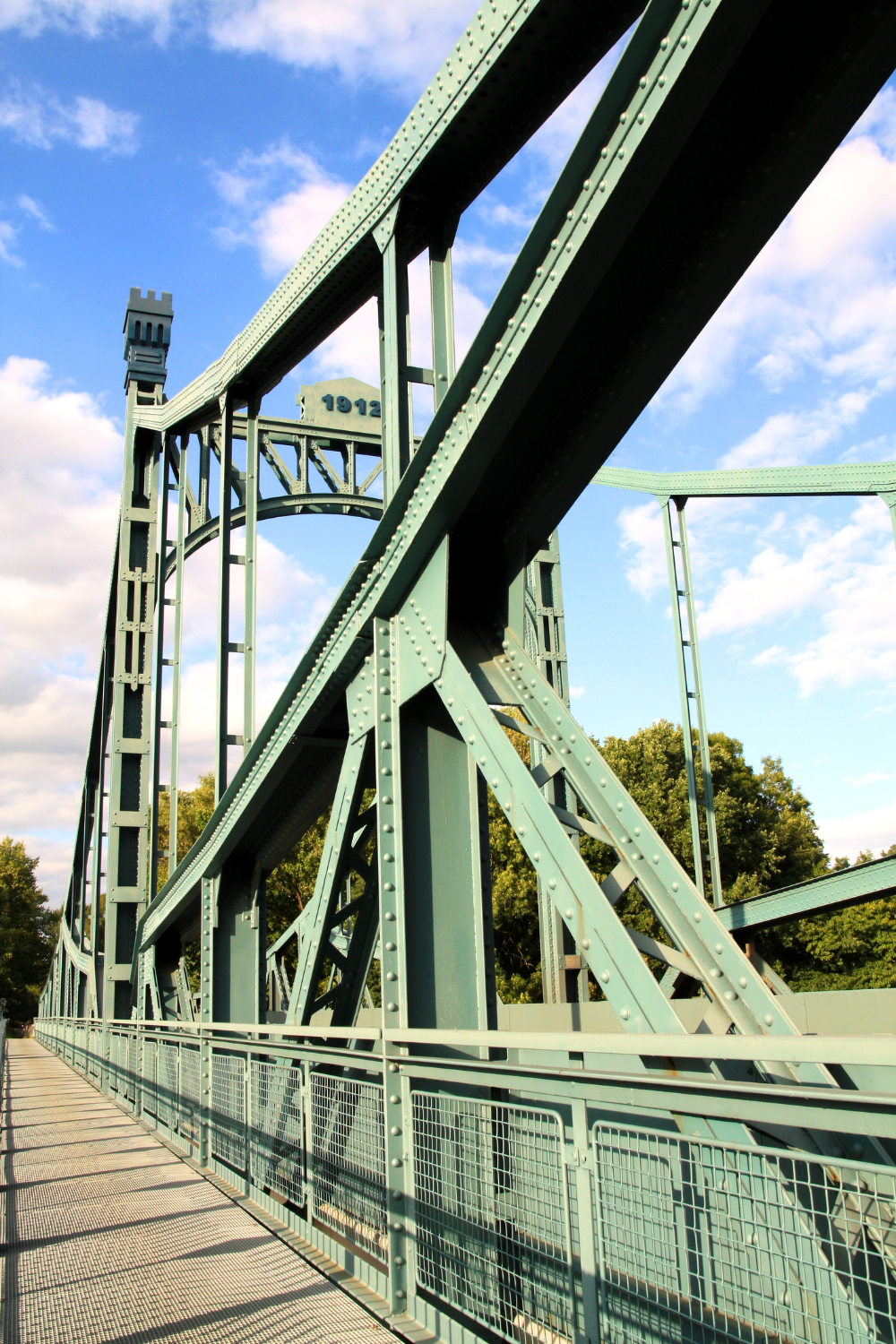
The River Main is the soul of Frankfurt in a way that’s easy to underestimate until you’re actually on the water looking back at it.
Several operators run boat trips along the Main throughout spring, summer, and autumn, ranging from one-hour sightseeing cruises to longer trips out to the nearby towns of Höchst and Hanau. For families with young children, the shorter city cruises are ideal — 75 minutes to two hours on the water, passing under Frankfurt’s famous bridges, gliding past the museum embankment, and looking up at the skyline from the perspective that architects intended. The pace is relaxed, the decks are spacious, and children find boats inherently entertaining in a way that no museum has quite managed to replicate.
The most atmospheric time to go is late afternoon in the golden hour, when the light on the half-timbered buildings of the old town is genuinely beautiful. You can also time a cruise to coincide with sunset and the moment the city lights begin to come on — a magical thing to experience from the water, even if you have a seven-year-old repeatedly asking when the boat is going to go faster.
The main departure point for most cruise operators is the Eiserner Steg (Iron Bridge), one of Frankfurt’s most recognisable iron footbridges, which is itself worth a visit — the railings are encrusted with thousands of love locks and the views from the middle of the bridge are among the best in the city.
Local tip: Primus-Linie runs the most comprehensive schedule of river cruises and their boats have decent onboard catering. Book ahead in summer; the popular evening cruises sell out days in advance.
11. The Zeil and Goethe Street: Shopping and Wandering
I know, I know — shopping with children. But hear me out on this one.
The Zeil is Frankfurt’s main pedestrian shopping boulevard, consistently ranked among the most visited shopping streets in Germany, and it’s genuinely spectacular in a way that goes beyond retail. The street is wide, beautifully maintained, and home to the extraordinary MyZeil shopping centre — a curved glass structure designed by the Italian architect Massimiliano Fuksas that looks like a wave frozen mid-curl. The interior atrium has a spiralling glass tube that runs down from the roof like a giant slide, and children (and adults) cannot walk past it without stopping to stare upwards.
A few streets over, the Goethestrasse is Frankfurt’s luxury shopping mile — the German equivalent of Milan’s Via Montenapoleone, all Rolex boutiques and couture houses — which is interesting more as an aesthetic exercise than a shopping destination for most visitors. But the streets connecting the Zeil and the Goethestrasse contain some genuinely lovely independent shops, bookshops, and specialty food stores worth exploring.
The best time to be on the Zeil with children is a weekday morning before the lunch crowds arrive, or on a Sunday evening in December when the Christmas market transforms the street into one of the most atmospheric experiences in Germany.
Local tip: Kleinmarkthalle, Frankfurt’s beloved indoor market hall, is two minutes from the Zeil and deserves at least 30 minutes of your time. It’s a beautiful Victorian-era building with stalls selling cheese, charcuterie, baked goods, fresh pasta, and Frankfurt specialities. This is where locals do their food shopping and where you’ll eat some of the best things of your trip standing up.
12. Goethe House (Goethe-Haus)
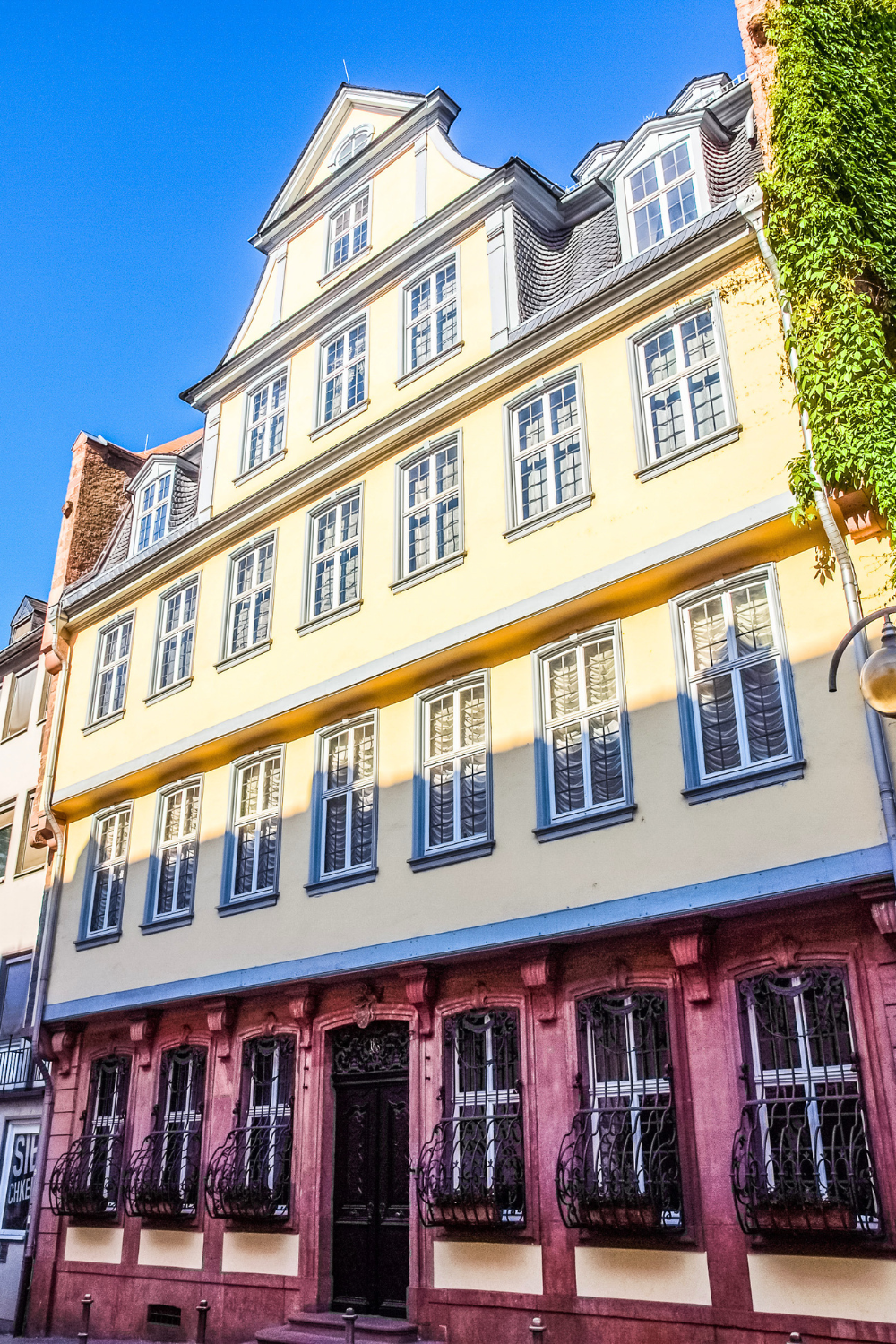
Here’s one that works brilliantly for certain ages and falls completely flat for others, so let me give you the honest assessment.
Johann Wolfgang von Goethe — one of the towering figures of European literature and one of history’s great polymaths — was born in Frankfurt in 1749, and his childhood home has been preserved (and reconstructed after wartime damage) as a museum. The house is furnished as it would have been in the mid-18th century, and walking through it gives you a remarkable sense of patrician Frankfurt life in the Baroque period.
For children who are old enough to have some context — say, ten and above, or younger children who have encountered Goethe through school — this is genuinely fascinating. The library is extraordinary: floor-to-ceiling shelves of leather-bound volumes and the atmosphere of a household where serious intellectual life was conducted. For younger children with no frame of reference, it’s more challenging. They will, however, reliably enjoy the painting by young Goethe himself, which is prominently displayed and which gives you a striking sense of him as an actual person rather than a school curriculum.
The adjacent Goethe Museum contains a superb collection of artworks related to his life and era. Combined, the visit takes about 90 minutes and sits in the heart of the beautiful Innenstadt neighbourhood — perfect for a morning cultural excursion before lunch.
Local tip: The courtyard café attached to the museum is one of Frankfurt’s nicest quiet spots for a coffee and cake. It’s tucked away enough that tour groups miss it, which makes it a genuine respite on busy days.
13. The Playground Culture: Günthersburgpark and Beyond
German cities take their parks and playgrounds very seriously, and Frankfurt is no exception. This isn’t an attraction in the conventional sense, but if you’re travelling with younger children — toddlers, preschoolers, children who don’t yet have the stamina for museum marathons — Frankfurt’s park culture will become the foundation of your entire trip.
Günthersburgpark in the Bornheim district is the gold standard: a large, beautifully maintained park with excellent children’s play areas, wide lawns for running, and the general atmosphere of a place that is actively loved by the community that uses it. The climbing structures are ambitious by British playground standards, which is partly because German health and safety culture takes a more forgiving view of children falling off things. My children found this invigorating. I found it mildly terrifying. We met somewhere in the middle.
The Grüneburgpark in the Westend is another excellent option, particularly beautiful in spring when the cherry blossoms around the Korean Garden come out. And the riverbank itself — the long promenade on both sides of the Main — functions as an informal park for the whole city, with cycling lanes, benches, and families picnicking from one end to the other on warm evenings.
Local tip: Bornheim’s play areas also make an excellent excuse to explore one of Frankfurt’s most charming residential neighbourhoods — the streets around Günthersburgpark are full of independent bakeries, coffee shops, and the kind of quiet residential life that gives you a real sense of how Frankfurters actually live.
14. The Frankfurt Christmas Market

Alright, this one has a seasonal caveat: it only runs from late November to Christmas Eve. But if your trip falls anywhere near that window, rearrange your plans around it if you possibly can. Frankfurt’s Christmas market is one of the oldest and most beautiful in Europe, and I say that as someone who has now visited seven different German Christmas markets with children in tow.
The Weihnachtsmarkt spreads across the Römerberg and the surrounding old town streets, with over 200 wooden market stalls selling traditional handcrafts, Christmas decorations, baked goods, and the usual glorious array of German winter foods. The setting of the half-timbered buildings lit against dark December skies is one of those images that burns itself into memory. Children are absolutely beside themselves with the entire experience — the smells, the lights, the novelty of eating Lebkuchen (gingerbread) and watching their parents drink Glühwein from ceramic mugs at nine in the morning.
There’s also a spectacular illuminated Christmas pyramid (Weihnachtspyramide) that stands over twelve metres tall in the centre of the market — one of the largest in Europe — and a children’s market specifically designed for younger visitors near the Cathedral. The whole thing is simultaneously commercial and genuinely magical in a way that only the best German markets manage.
Local tip: Visit on a weekday evening rather than a weekend afternoon. Weekend afternoons at the Frankfurt Christmas market are extremely busy and can feel more stressful than festive, especially with young children. A Tuesday or Wednesday evening is busy enough to feel atmospheric but still manageable with a buggy.
15. The Taunus: Day Trips to the Hills
Frankfurt sits at the edge of the Taunus, a range of forested hills that begin almost immediately northwest of the city and constitute one of the great underappreciated natural playgrounds in Germany. If you have a car — or are willing to navigate Frankfurt’s excellent regional rail network — a day trip into the Taunus transforms your city break into something considerably more adventurous.
The most dramatic highlight is the Saalburg Roman Fort, a fully reconstructed Roman castellum from the 2nd century AD located in the hills above Bad Homburg. It’s extraordinary — not a ruin but an actual rebuilt fort, complete with barracks, granaries, a bathhouse, and a museum of Roman artefacts excavated on the site. Children who have covered Romans in school will lose their minds here. There are re-enactment events throughout the year, costumed guides, and the opportunity to handle replica weapons and armour that makes the whole visit deeply tactile. This is, without question, one of the best Roman history experiences in Germany.
The Taunus itself offers excellent hiking on well-marked trails, the highest point being the Großer Feldberg at 879 metres — a manageable walk for children from about six upwards with a proper summit to aim for, a weather station at the top, and on clear days, views that supposedly extend to Frankfurt’s towers 30km away.
Local tip: The Römerpark at Saalburg has excellent facilities for families including a dedicated children’s area with Roman-themed play equipment. The museum shop is also exceptional — proper archaeology-themed gifts rather than generic tourist tat, and children come out genuinely inspired to learn more.
16. The German Film Museum (Deutsches Filmmuseum)
This one is hiding in plain sight on the museum embankment, and it deserves its own section rather than getting lumped in with the other Museumsufer attractions, because it’s genuinely brilliant for families with children over eight.
The German Film Museum walks visitors through the complete history of cinema from its earliest optical inventions — camera obscura, magic lanterns, the zoetrope and praxinoscope — through the silent era, golden age Hollywood, German Expressionism, New German Cinema, and contemporary filmmaking. What makes it special is the combination of genuine historical artefacts (actual early film cameras, projectors, costumes, props) with interactive exhibits that let you experience the techniques firsthand.
Children can step in front of a green screen and be composited into film footage. They can operate actual vintage cameras. They can watch short clips from early cinema on the original-style projection equipment, which is a genuinely different experience from watching on a modern screen. The whole museum has the atmosphere of enthusiastic expertise — you feel the curators actually love film, which comes through in every exhibit.
There’s also a cinema in the basement that shows classic films, international art house releases, and themed retrospectives. Check the programme before your visit — a classic children’s film shown in the original museum cinema would be a memorable end to a Frankfurt day.
Local tip: The museum’s collection of movie posters on the upper floors is one of the largest in Europe and is displayed in a way that makes it feel like a gallery exhibition. Film poster nerds of all ages will happily spend an extra hour here that they didn’t plan for.
17. Cycling Along the River Main
Frankfurt has invested heavily in cycling infrastructure over the past decade, and the result — particularly along the riverbank — is one of the most pleasant urban cycling experiences in Germany.
The path that runs along both sides of the Main is wide, smooth, and almost entirely separated from motor traffic. On a sunny day it’s populated by an excellent cross-section of Frankfurt life: commuters, joggers, families with children in cargo bikes, elderly couples on electric bikes, rollerbladers of improbable elegance. The whole thing has a wonderfully egalitarian energy.
For families, the most enjoyable ride is the stretch from the Eiserner Steg west through Sachsenhausen and continuing to the Griesheim or Nied riverside parks — about 8km of completely flat, car-free cycling with excellent views throughout. Bike rental is available from multiple points along the riverbank; the NextBike city scheme allows you to pick up and drop off bikes at any station, which is flexible for families who want to cycle one way and take the tram back.
Children on balance bikes and smaller riders do well on this route given the total absence of hills and the generous width of the cycling path. It’s one of those activities that sounds mundane and turns out to be a family highlight — the combination of fresh air, movement, river views, and occasional ice cream stops (there are several good spots along the route) is hard to beat.
Local tip: The route passes the Flößerbrücke, a quieter bridge than the famous Eiserner Steg that gives a brilliant view down the Main towards the city skyline. Stop here for the best unobstructed photograph of Frankfurt from the water level.
18. The Kleinmarkthalle: Frankfurt’s Best Indoor Food Experience
I mentioned this briefly in the Zeil section, but the Kleinmarkthalle deserves its own full mention because it’s one of my genuinely favourite places in Frankfurt and one of those under-the-radar experiences that separates good family travel from great family travel.
The Kleinmarkthalle is Frankfurt’s beloved indoor market, a covered hall a short walk from the Römerberg that has been trading since 1954 in its current form (though a covered market has existed on this site since the Middle Ages). Inside, about 150 stalls sell fresh produce, meats, fish, cheese, bread, flowers, and prepared foods from across Germany and around the world. It’s a working market — this is genuinely where Frankfurt’s residents come to shop — and has none of the self-conscious artisanal quality that makes so many “food markets” feel performative.
For children, the experience of a working European food market is inherently fascinating — the smells, the colours, the sounds, the samples that stallholders press into small hands with cheerful insistence. There’s a wine bar on the upper level that opens mid-morning for adults who want a glass while the children continue their fruit-sample circuit below. There are fantastic Grüne Soße products, Frankfurt sausages, extraordinary bread, Turkish mezze, Italian charcuterie, and fresh pasta. We’ve made lunch of a market visit more than once.
Local tip: The Kleinmarkthalle closes on Sundays, which catches a lot of visitors out. Thursday and Friday mornings, when the stalls are fully stocked and the energy is highest, are the best time to visit. Get there before noon.
Practical Tips for Visiting Frankfurt with Kids
Getting Around: Frankfurt’s public transport system (U-Bahn, S-Bahn, tram, and bus) is excellent and very child-friendly. Children under 6 travel free; children 6–14 travel at a reduced fare. The Frankfurt Card covers unlimited transport plus museum discounts — buy it at the airport, at tourist information offices, or online before you travel.
Best Time to Visit: Frankfurt is a year-round destination. Spring (April–May) brings lovely weather and the Museumsufer parks at their most beautiful. Summer is warm and lively with open-air events along the riverbank. December is magical for the Christmas market. Winter (January–March) is cold but quiet, with short queues at museums and excellent value on hotels.
Getting There: Frankfurt Airport is Germany’s largest and one of Europe’s busiest, with direct flights from virtually everywhere. The S-Bahn S8 and S9 lines connect the airport to the city centre in about 15 minutes. The airport itself has good family facilities including nursing rooms, play areas in the terminals, and excellent food options in the international departures hall.
Where to Stay: The Westend and Sachsenhausen districts are both excellent bases for families — quieter than the city centre but well-connected by public transport, with good restaurants and parks nearby. The Marriott Frankfurt and the Westin Grand are both reliably family-friendly options at the mid-to-upper range. For longer stays, serviced apartments in Bornheim or Nordend give you more space and the experience of living in a real Frankfurt neighbourhood.
Eating with Kids: Frankfurt is an excellent city for family dining. German restaurant culture is generally very welcoming to children, and even traditional Sachsenhausen taverns will bring out a children’s menu without being asked. Beyond the Grüne Soße (do try it — you’ll be converted), don’t miss Handkäse mit Musik (a pungent cured cheese in vinegar dressing — the name, which translates as “hand cheese with music”, should tell you everything you need to know), Rippchen mit Kraut (smoked pork ribs with sauerkraut), and the city’s celebrated Frankfurter Würstchen, which taste entirely different from their supermarket counterparts elsewhere.
One Last Thing
Frankfurt doesn’t announce itself. It doesn’t have a single monument that everyone recognises from a thousand postcards, or a reputation built on centuries of being the city people dream about. What it has instead is something more quietly valuable: a city that has thought carefully about how to make itself liveable, that has rebuilt its history with care, that has placed its cultural institutions along a riverbank and dared anyone not to spend days exploring them.
Bring your kids here and let them get lost in the Römerberg at dusk, or watch their faces in the dinosaur hall at the Senckenberg, or ride that apple wine tram around the city while the afternoon light turns amber on the bridges. Frankfurt won’t dazzle you from a distance. It gets you slowly, from the inside. That’s exactly the kind of travel that stays with children — and with their parents — long after the flight home.

