

Portugal in May is one of those rare travel sweet spots — warm enough to feel like summer, cool enough that you won’t dissolve into the pavement. The jacaranda trees are blooming purple across Lisbon, the Algarve beaches are uncrowded but genuinely swimmable, and the light has that golden, almost-Mediterranean quality that makes everything look cinematic. It’s arguably the best month to visit.
But here’s what I’ve noticed over multiple trips: people consistently get the packing wrong. They either show up in full summer mode — flip-flops, linen sundresses, the works — and then freeze on a breezy Lisbon evening when the Atlantic wind kicks in at 7pm. Or they over-pack for every possible scenario and end up lugging a suitcase up the kind of steep, cobbled hills that will absolutely humble you.
Let me save you from both fates. This is what actually works.
Before We Dive In: What May in Portugal Actually Feels Like
May in Portugal sits in that pleasant in-between zone. Daytime temperatures across Lisbon and Porto hover around 20–24°C (68–75°F), occasionally nudging higher. The Algarve in the south runs warmer — you’re looking at 24–27°C most days, and yes, the sea is genuinely swimmable by mid-May, around 19°C. Nights cool down noticeably, especially in Lisbon and Porto where Atlantic breezes make 15–17°C evenings feel properly fresh.
Rain is still on the table, particularly in Porto, which earns its moody reputation even in spring. Lisbon gets occasional showers, usually short and sharp rather than all-day grey. The Algarve by May is mostly dry and glorious.
And then there’s the terrain. Lisbon’s hills are no joke — Alfama and Mouraria are steep, the streets are narrow, and the traditional calçada portuguesa (those beautiful mosaic cobblestones) are genuinely slippery when wet and oddly ankle-unfriendly in the wrong shoes. Porto isn’t much gentler. You will walk more than you think. I once clocked over 20,000 steps in a Lisbon afternoon and wasn’t even trying.
One more thing worth mentioning: Portuguese people dress well. Not in an intimidating, fashion-week way — more in a quietly put-together, effortless way. They notice what tourists are wearing. This doesn’t mean you need to perform style, but it does mean that the “I’ve given up” tourist look stands out more than it might elsewhere.
Lightweight Layers: The Single Most Important Concept
I’d rather give you one truly useful piece of advice than twelve mediocre ones, and this is it: pack layers, not heavy pieces.
The temperature swing in Portugal in May is real. I’ve had days in Lisbon that started at 14°C and climbed to 25°C by 2pm before dropping back to 16°C by 9pm. If you’re wearing a chunky knit or a padded jacket, you’ll be roasting by noon and peeling off layers with nowhere to put them. If you’re in a sundress with nothing else, you’ll be quietly miserable over dinner.
What works brilliantly is the “three zone” approach: a base layer you’re comfortable in, a mid-layer you can throw on and off (a lightweight long-sleeve shirt, a thin cardigan, an unstructured blazer), and a proper outer layer for evenings and rain. This keeps your luggage lean and your comfort level high across wildly different parts of the day.

The specific pieces matter less than the principle. A silk or cotton cami under a linen shirt — unbutton it when it’s warm, add a denim jacket in the evening — covers you from morning market to evening wine bar without any drama.

Local tip: Don’t underestimate how cold Lisbon evenings can feel. The city sits right on the Atlantic, and even in May, that breeze coming off the Tagus estuary has a sharp edge to it after sunset. Always have something with sleeves within reach.
Shoes: This Will Make or Break Your Trip
Let me be direct about this: the wrong shoes in Lisbon will ruin your trip. Not inconvenience it — ruin it. The cobblestones are beautiful and absolutely merciless.
You need shoes with a thick, grippy sole and proper ankle support — or at least a low, wide heel. Ballet flats look elegant but offer zero grip on wet cobbles. Thin-soled sneakers feel fine for the first hour and then your feet quietly protest for the rest of the day. And sandals — even nice ones — leave you vulnerable on uneven surfaces in a way that you don’t appreciate until you’re limping back to the hotel.

What actually works: a well-cushioned white sneaker (classic, goes with everything, won’t look out of place), ankle boots with a low block heel, or leather loafers with a proper sole. In the Algarve, you have more flexibility — flatter terrain, more relaxed vibe — but Lisbon and Porto genuinely require something sturdy.

I travelled Portugal in a pair of chunky leather trainers and navy suede loafers and could not have been happier. One for walking days, one for evenings when I wanted to feel slightly more pulled together.
Local tip: Bring no more than two pairs of shoes. Seriously. The temptation to pack three or four is real, but you’ll wear two and carry the others for 10 days. Make sure both are comfortable from the first wear — this is not the trip to break in new shoes.
Dresses in Portugal: Yes, With Conditions
Dresses are genuinely great for Portugal in May — but the ones that work might not be what you’re picturing.
A very short, floaty sundress with no layers and sandals is a morning/beach outfit that will leave you cold by 4pm and totally impractical on Lisbon’s hills (wind + steep streets = a thing to consider). But a midi dress in a breathable fabric — linen, cotton, or a viscose blend — with a denim jacket and your sturdy sneakers? That’s a great Lisbon outfit that takes you from a morning pastelaria to an evening fado show.

The key adjustments for dress success in Portugal: go for a length that hits at or below the knee for practicality and for navigating churches (more on that shortly), choose fabrics that don’t wrinkle catastrophically, and always pack something to throw over it. A structured blazer over a simple linen dress elevates the whole look and solves the evening chill problem simultaneously.
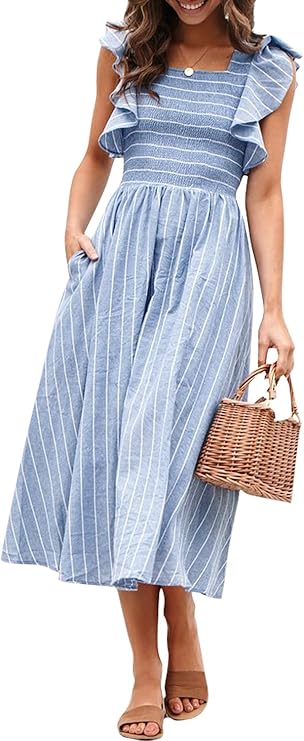
In the Algarve, shorter dresses work fine — the vibe is more coastal and casual, and you’re less likely to be doing serious hill-climbing.
Local tip: One versatile midi dress that works with both sneakers and sandals is one of the most efficient packing decisions you can make. Wear it three ways, take up minimal space, done.
Jeans: Practical but Choose Wisely
I always bring one pair of jeans to Portugal and I always wear them more than I expect to.
Jeans are great for Portugal because they’re smart enough for a good restaurant, practical on cobblestones, and warm enough for cooler days. The risk is weight and bulk — a thick pair of denim takes up real suitcase space. The solution is to go for a mid-weight or lightweight denim in a slim or straight cut, which packs flatter and looks more considered than baggy denim.
Dark wash jeans in particular are your friend — dress them up with a nice top and loafers, or dress them down with a striped tee and sneakers. They also hide the inevitable splashes from Lisbon’s puddles and the dust from those beautiful cobblestones.

What to avoid: overly distressed jeans (they can look scruffy rather than cool in an urban European context), white jeans (the cobblestones will not forgive you), and anything too stiff or structured that won’t keep up with a day of serious walking.
Local tip: One pair of jeans, max. You won’t need two. Use the weight allowance on something more useful.
What NOT to Wear: A Gentle Intervention
Portugal is laid-back and welcoming, but there’s a particular tourist aesthetic that will clock you immediately as someone who put zero thought into dressing for this trip. I’m not saying this to be harsh — I say it because fitting in a little makes the whole experience better, and locals warm to you faster.
Please leave at home: the matching athleisure set (Lisbon is not a gym), anything with loud logos or slogans, cargo shorts with a million pockets, extremely baggy travel trousers in a technical fabric, and yes, the bum bag worn on the front of the chest like a breastplate (I know, I know, it’s practical — but a crossbody bag does the job more elegantly).
Flip-flops are appropriate at the beach and essentially nowhere else — not at restaurants, not in cities, not on cobblestones where they will genuinely injure you. Crocs remain a personal choice but I’ll simply say they are a very visible statement.
Local tip: Neutral, simple pieces in quality fabrics always read better than novelty or trend-chasing. A plain white linen shirt, good jeans, clean sneakers — you’ll look effortless and appropriate anywhere in Portugal.
The Perfect Jacket Situation
Portugal in May needs a jacket strategy, not just a jacket.
Here’s the hierarchy: a lightweight denim jacket or an unstructured blazer handles the majority of your evenings and cooler days and does double duty over both casual and smart outfits. A packable waterproof layer (not a full rain Mac, something thin and compressible) handles the Porto-and-Lisbon shower situation without taking up space. These two pieces, combined with your layering base, cover nearly every scenario.
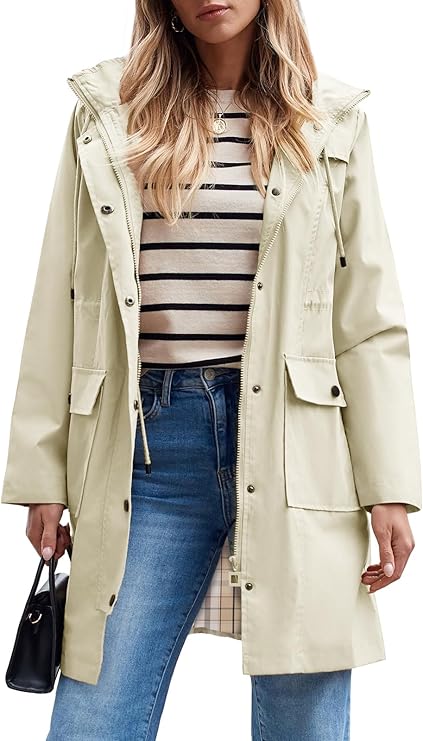
What you probably don’t need: a heavy wool coat (it’ll be too warm during the day and you’ll be carrying it everywhere), a puffer jacket (May is not cold enough), or a full technical hiking jacket (unless you’re actually hiking, in which case it earns its keep).

The denim jacket specifically is a Portugal MVP. It’s casual enough for sightseeing, smart enough for dinner with a nice top, machine-washable, and durable. I’ve worn the same one on four trips to Iberia.
Local tip: In the Algarve, you can get away with just a linen shirt over everything. It’s warmer and less windy in the south. Save your heavier layer for Lisbon or Porto.
Evening Outfits: You’ll Want to Make an Effort
Portuguese evenings are genuinely lovely — long, warm-ish, sociable — and there’s something about sitting outside a tasca with local wine and grilled fish that makes you want to look slightly more than basic.
The good news is that the bar isn’t high and you don’t need to pack a separate “going out” wardrobe. A clean, simple blouse or shirt over tailored trousers or your midi dress, add your blazer, swap sneakers for loafers or low-heeled sandals, and you’re completely appropriate for anywhere you’d actually want to eat. Lisbon’s food scene is outstanding and informal — only the very top-end restaurants require anything approaching formal dress.

For Porto, which has a slightly more alternative, creative energy, you can lean into interesting pieces — a structured shirt in an unexpected colour, wide-leg trousers, chunky earrings. Lisbon’s Bairro Alto and Príncipe Real have a stylish crowd. The Algarve is almost entirely casual after dark; a nice sundress and sandals is all you need.

Local tip: Statement earrings or a good scarf are transformative for evening looks and weigh nothing. They can make a simple outfit feel intentional and polished without any extra bulk.
Dressing for Churches and Religious Sites
This one catches people out more than anything else.
Portugal has some of the most extraordinary churches and monasteries in Europe — the Jerónimos Monastery in Lisbon, the Sé Cathedral in Porto, the Alcobaça Monastery — and most of them have a dress code. Covered shoulders and knees are required. Staff at the entrance will turn you away or hand you an unflattering paper cover-up, which is a miserable way to start a cultural experience.

The practical solution is simple: always carry a light scarf or a linen shirt tied around your waist when you’re in short sleeves or dresses. A scarf draped over bare shoulders takes three seconds to arrange and means you walk straight in without incident. Wearing trousers or a midi dress also sidesteps the knee issue completely.

This isn’t really about being conservative in your personal style — it’s about having the right pieces on hand to respect the dress code without having to rethink your entire outfit.
Local tip: A large, lightweight linen or cotton scarf is one of the most useful things in your Portugal packing list. It works as a church cover-up, a beach wrap, an extra layer on chilly evenings, and a buffer against overly cold air conditioning. Pack one.
Bags: The Crossbody vs Everything Else Debate
I’ll keep this short because the answer is clear: a crossbody bag is the correct choice for Portugal.

Lisbon and Porto have pickpocketing issues, particularly in touristy areas like Alfama, around the trams, and at busy viewpoints. A bag that hangs behind you (backpack) or can be easily opened (shoulder bag) is a risk. A small-to-medium crossbody bag worn across the front of your body keeps your belongings secure and your hands free for coffee, camera, and navigating the hills.

It also looks considerably more put-together than a hiking daypack worn with a restaurant outfit, which I’ve seen and which is a clash that not even great shoes can rescue.
For day trips or hikes in Sintra or the Algarve coast, a small structured backpack is absolutely fine. But for urban days, the crossbody wins every time.
Local tip: Leave the giant tote at home. You don’t need it, and lugging something large on your shoulder through Lisbon’s steep streets is an exhausting choice. Smaller bag, lighter load, better day.
Fabrics to Pack (and What to Leave Behind)
May in Portugal is humid enough that synthetic fabrics become unpleasant quickly. Anything that doesn’t breathe will feel stuffy and look creased within hours.
The fabrics that work brilliantly: linen (the Portugal fabric, honest), cotton (all weights), viscose and Tencel blends (floaty and cool), and silk (if you’re careful with it). These breathe, pack reasonably well, and look appropriate across the day.
The fabrics to avoid: polyester in any warm colour (gets warm and sweaty fast), thick nylon (the same), heavily structured fabrics that can’t take a hill walk, and anything that absolutely must be ironed. Hotel ironing boards are not always convenient and dry cleaners are not always nearby.
Merino wool is the great exception to the “avoid synthetics” rule — it’s breathable, temperature-regulating, and ideal for cooler evenings or Porto where the weather is more unpredictable. A lightweight merino top works across a wider temperature range than almost anything else.
Local tip: Linen wrinkles. This is its nature. Either embrace the casual-chic wrinkle (which works fine in Portugal’s relaxed culture), or pack wrinkle-resistant linen blends that hold their shape better. Just don’t waste energy trying to keep pure linen crisp.
Rain Prep: The Porto Reality Check
If you’re visiting Porto, take this seriously. Even in May, Porto averages 7–9 rainy days in the month. They’re often short and sharp rather than all-day miserable, but “short and sharp” when you’re on a hillside without a jacket is still very wet.
The solution is a packable waterproof jacket, not a full rain coat. Something that folds into its own pocket or compresses to the size of a fist, that you can stuff into your crossbody bag on sunny days and pull out when the sky changes. These have improved enormously in recent years — you can get something genuinely lightweight and waterproof for under €50 that doesn’t look like you’re preparing for a flood.

A small travel umbrella is also worth it for Lisbon and Porto. Not the giant golf umbrella — a compact folding one that fits in your bag.

The Algarve is much less of a concern, but it’s still May, and one unexpected shower on a coastal walk is enough to wish you’d brought something.
Local tip: Check the weather for Porto specifically a day before you visit, not three days out — it changes fast. Even a quick check at breakfast can save you from a soggy afternoon.
Accessories That Actually Earn Their Luggage Space
I’m ruthless about accessories when packing, because they can either be transformative or completely useless weight. For Portugal in May, the ones that earn their place are these.
Sunglasses — non-negotiable. The light in Portugal is genuinely bright and you’ll be squinting all day without them. Good ones, not cheap ones that fog up. A hat — specifically a packable wide-brim hat or a good linen cap — is useful for the Algarve or any outdoor time in peak sun. A linen or cotton scarf, as discussed. A simple watch if you wear one. And good earrings or a necklace or two that work across multiple outfits — these take no space and entirely change the feel of a simple linen outfit.
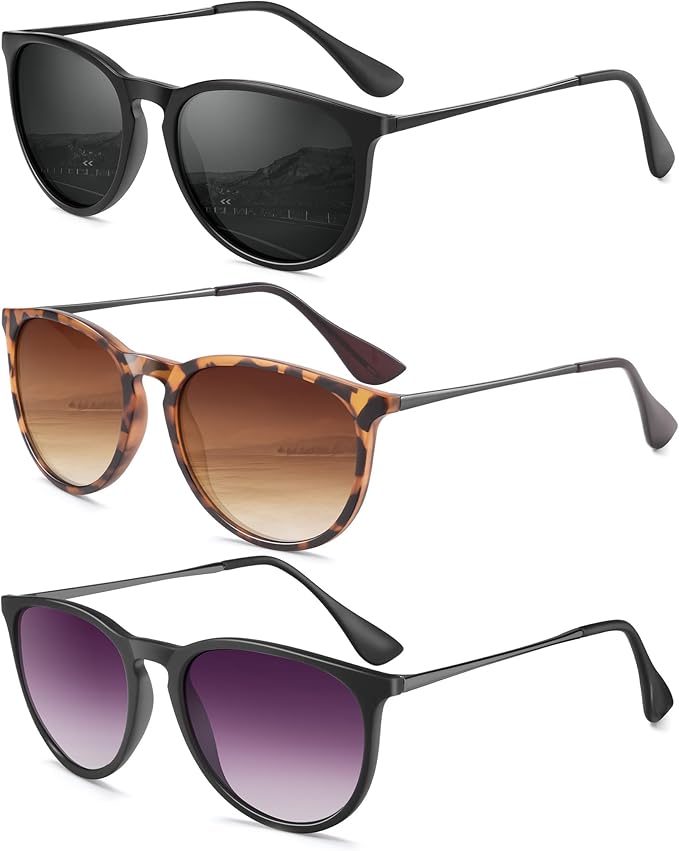
What doesn’t earn its space: multiple belts, more than two or three pieces of jewellery, heavy bracelets that jangle irritatingly on cobblestones, anything you’d genuinely be upset to lose to a pickpocket.

Local tip: Leave your expensive or sentimental jewellery at home. Wear beautiful pieces, but not irreplaceable ones. And keep your accessories to things that genuinely work across multiple outfits — not one-occasion pieces.
A Capsule Wardrobe for Portugal in May
If I were packing for 7–10 days in Portugal in May — split across Lisbon, Porto, and maybe a day or two in the Algarve — this is exactly what I’d bring.
Tops: Two linen or cotton shirts (one white, one in a soft colour or stripe), two lightweight tees or camis, one silky or elevated blouse for evenings.
Bottoms: One pair of slim-cut jeans, one pair of lightweight tailored trousers, one skirt or shorts depending on your preference and where you’re going.
Dresses: One midi dress that works with both sneakers and sandals.
Layers: One denim jacket or unstructured blazer, one packable waterproof layer, one lightweight merino or cotton cardigan for evenings.
Shoes: One good walking sneaker, one loafer or low sandal for evenings.
Accessories: One large linen scarf, sunglasses, hat, two or three jewellery pieces, one compact umbrella, one crossbody bag.
That’s it. That covers nearly every situation Portugal in May throws at you without exceeding a carry-on.
Local tip: Lay everything out before you pack and ask honestly: does this work with at least three other things in this pile? If not, leave it. The most useful items are the ones that mix and match freely.
Practical Packing Notes
A few things I’ve learned the slightly hard way.
Seven to ten days in Portugal does not require seven to ten outfits. With a few versatile pieces that mix well, five or six combinations are genuinely enough — especially if you’re willing to do a quick sink wash of lighter items mid-trip, which is completely normal and very easy with linen and cotton.
Roll, don’t fold. Rolled clothes take less space and wrinkle less than folded ones, particularly for cotton and linen. Packing cubes help a lot with organisation but aren’t strictly necessary.
The single biggest mistake people make is packing for every possible weather scenario simultaneously — the result is a suitcase full of heavy “just in case” items that never get worn. Pack for the likely conditions, bring one light waterproof layer, and trust that if the weather is truly exceptional, you can buy a cheap cardigan in a Zara in Lisbon for fifteen euros.
Portugal has excellent shopping, especially in Lisbon’s Príncipe Real and Porto’s Rua de Santa Catarina. If you forget something or want something new, you can find it. This is a far better strategy than over-packing defensively.
One Last Thing Before You Go
There’s a moment that happens to almost everyone in Lisbon — usually around the second or third evening, sitting somewhere with a view, a glass of vinho verde in hand, watching the light go gold over the rooftops. You feel completely right. Comfortable, present, at ease.
That feeling is partly the city doing its thing. But it’s also helped along by wearing something that actually works for where you are — not fighting with uncomfortable shoes, not cold, not overdressed, not hauling too much. The logistics of comfort are underrated.
Pack well, travel light, and leave some room for whatever you find in those Príncipe Real boutiques. Portugal in May will do the rest.

