
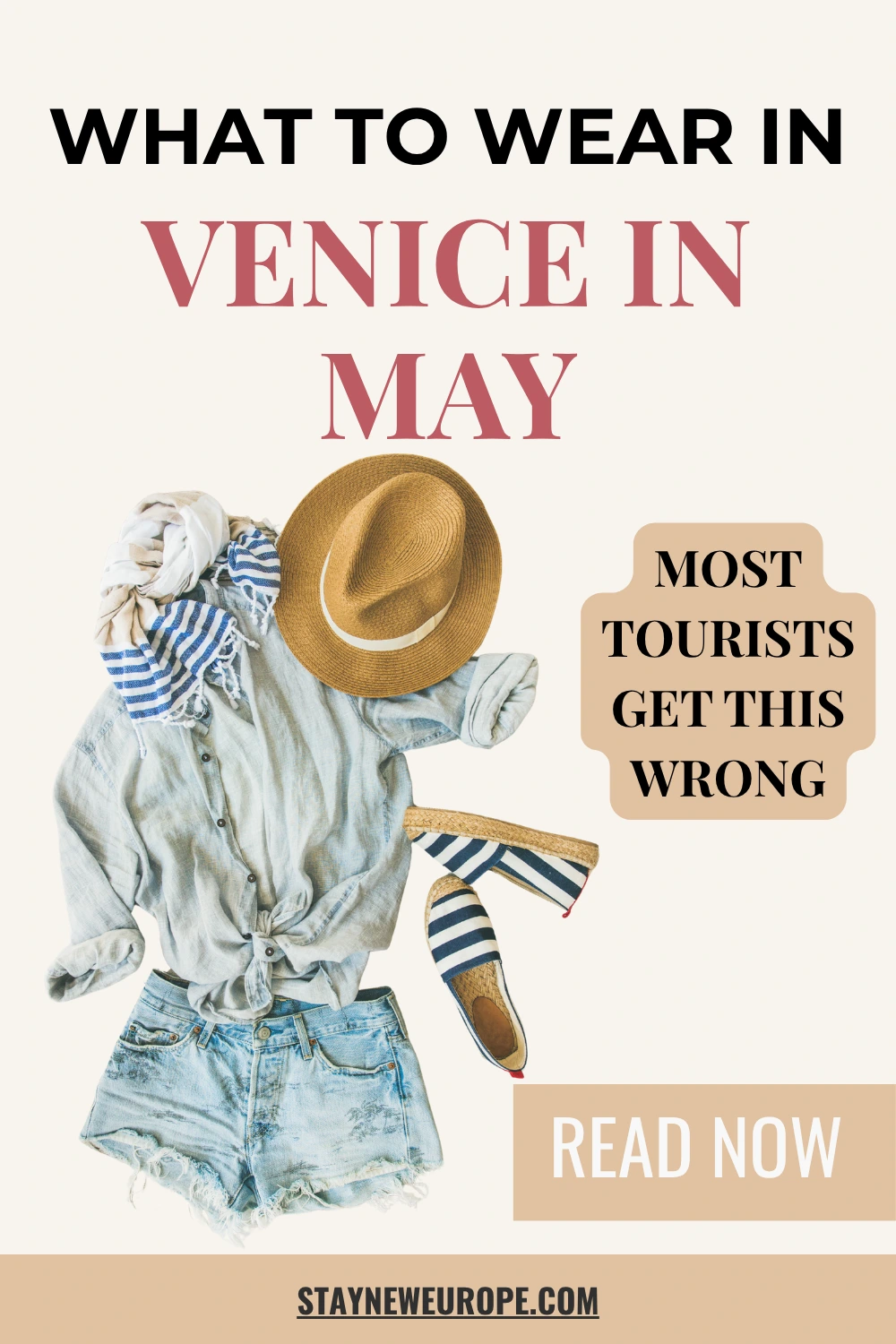
Venice in May is one of those travel experiences that catches you off guard — in the best possible way. The light is golden and soft. The crowds haven’t yet reached their summer fever pitch. The canals smell… well, like canals, but even that feels charming when the temperature is hovering around 20°C and someone is playing an accordion on a nearby bridge.
What nobody warns you about is how much you’ll walk. Or how many bridges you’ll climb. Or how, at 11am, you’ll be sweating in your jacket, and by 3pm you’ll be wishing you hadn’t left it at the hotel. Venice in May is full of delightful contradictions, and your wardrobe needs to be ready for all of them.
I’ve seen tourists arrive in flip-flops and full-length puffer coats in the same week. I’ve watched people limp over cobblestones in unsuitable shoes with that specific look of quiet regret. Don’t be them. Let’s talk about what actually works.
Before We Dive In: What Venice in May Is Really Like
The Weather
May is genuinely one of the nicest months to visit Venice — but “nice” doesn’t mean predictable. Average daytime temperatures sit between 17°C and 23°C (low 60s to mid-70s Fahrenheit), with evenings dropping to around 12–14°C. Mornings can feel cool and slightly misty, afternoons get genuinely warm, and the odd afternoon shower will roll in off the Adriatic with very little warning.
Humidity is already creeping up in May. Venice is built on water, after all, and that affects how the air feels on your skin. Fabrics that trap heat will feel suffocating by midday. This is important — and something I’ll keep coming back to.
The Walking Conditions
People always underestimate how physical Venice is. There are no cars, no trams, no shortcuts. You walk everywhere — over arched stone bridges, across uneven flagstones, down narrow calli that seem to dead-end into canals. On a full day of exploring, it’s easy to rack up 15,000 to 20,000 steps without even trying.
Your feet will make or break your trip. I can’t stress this enough.
The Style Culture
Italians dress well. Not necessarily expensively, but thoughtfully. In Venice specifically — a city that attracts serious art lovers, honeymooners, and cultural tourists — there’s a gentle baseline of style that you’ll notice the moment you step off the vaporetto. Nobody will say anything if you wander around in leggings and a logo hoodie, but you’ll feel it. Venice rewards effort. Even small effort.
Lightweight Layers: Your Most Important Packing Strategy
Here’s the thing nobody puts in packing guides: Venice in May doesn’t need a full wardrobe — it needs a layering system. The temperature swings between morning and afternoon can be dramatic, and if you’ve packed only for warm weather or only for cool weather, you’ll spend half the trip either overheating or shivering.
The ideal approach is to build every outfit around a base layer you can comfortably wear on its own (a linen shirt, a soft cotton tee, a fitted knit), add a mid-layer for mornings and evenings (a lightweight cardigan, an unstructured blazer, a shirt jacket), and have a weather layer standing by (more on that later). This sounds overly strategic, but once you’ve stripped off your cardigan by the Rialto at noon and felt the relief, you’ll understand.
Thin layers also pack better than bulky ones, which matters if you’re doing carry-on only.
Local tip: The Venetians are masters of the effortless layer. Watch how local women wear a linen blazer thrown loosely over a simple dress — not structured or stiff, just draped. That’s the vibe to chase.
Dresses and Skirts vs. Jeans: What Actually Works
Let me be honest: I arrived in Venice convinced I’d live in jeans, and I barely wore them.
May in Venice is warm enough that a good midi dress or a flowy skirt becomes your best friend. They’re cooler than trousers, they look elegant without any effort, and they work for everything — morning wandering, lunch at a bacaro, afternoon church visits (with a scarf), and dinner. If you wear dresses and skirts, pack two or three that can carry you across all those situations.

That said, jeans aren’t useless. A well-fitted pair of straight-leg or slightly tapered jeans in a lighter wash is perfectly comfortable for cooler days and evening wear. What I’d avoid: thick, dark denim in warm temperatures (you’ll feel trapped by midday) and anything with a stiff, uncomfortable waistband (you’ll be sitting, standing, climbing, and walking for hours).
Linen trousers are honestly the underrated hero of Venice in May. They look polished, breathe beautifully, and they’re forgiving enough to stuff into a bag when you’re not wearing them.

Local tip: Venetian women tend to wear dresses and skirts with a confidence that feels almost architectural. Choose shapes that move well — floaty, not fussy. Leave the bodycon at home.
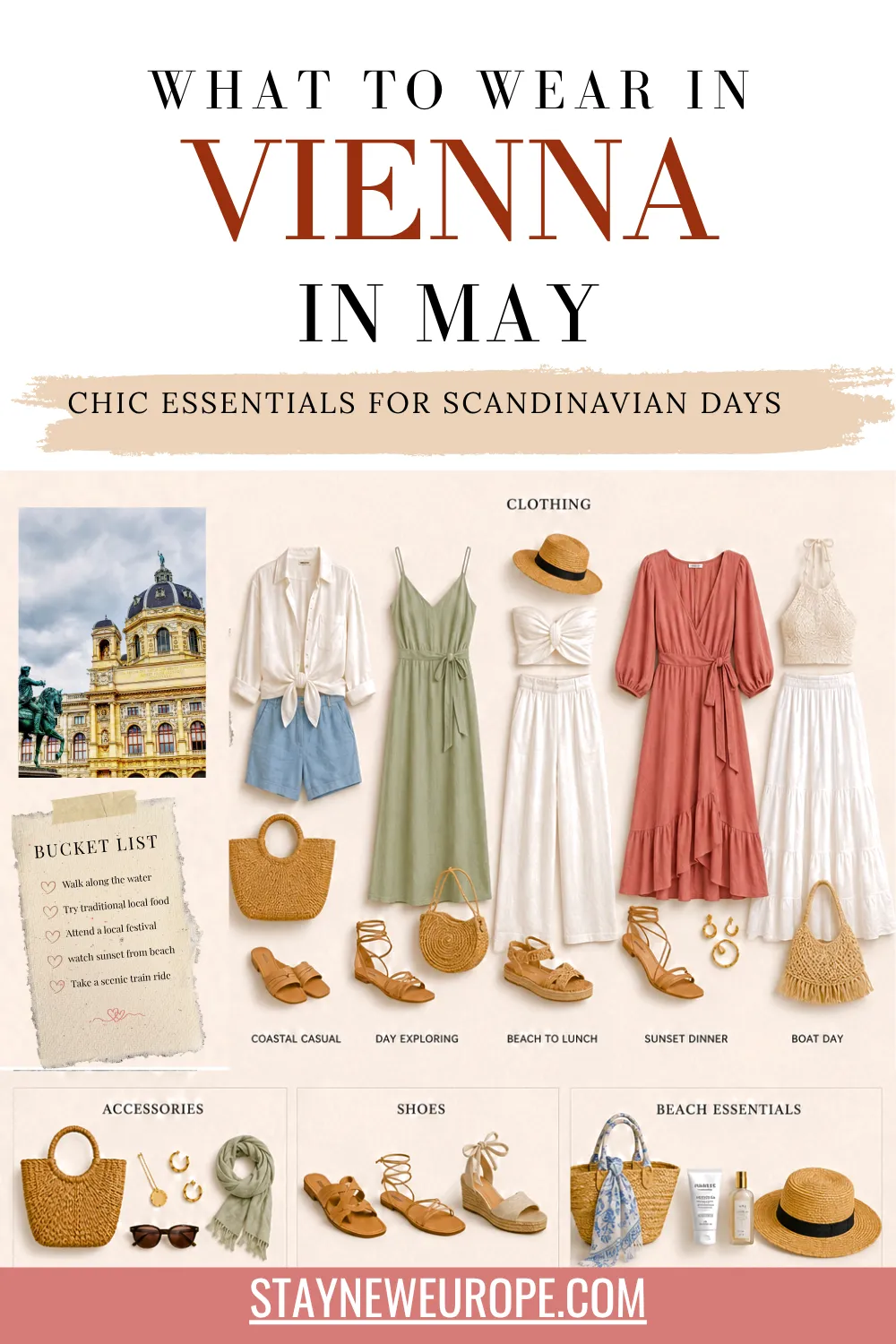
Comfortable But Stylish Walking Shoes: This Is Non-Negotiable
I learned this the hard way on my first trip to Venice. I wore a pair of leather sandals that looked great but had zero cushioning, and by day two I was walking like someone twice my age. The cobblestones in Venice are relentless — not just uneven, but often slightly damp or slippery near the canals.
You need shoes that are genuinely comfortable, have real grip on smooth stone surfaces, and look like you made a choice rather than just grabbed whatever was near the door. The good news: there are excellent options.

White leather trainers are a perennial solution and work surprisingly well with almost every Venice outfit — they look clean, they’re comfortable, and they read as intentional rather than practical. Leather loafers with a low block heel or flat sole are another strong choice, especially for slightly dressier evenings. Suede or leather Mary Janes with a cushioned sole thread the needle beautifully between comfort and style.

What to avoid: flip-flops (dangerous on wet bridges, and locals genuinely wince), completely flat ballet pumps with no insole support (your arches will revolt by day three), and anything with a heel above 3cm unless you have extraordinary balance and zero plans to cross wet marble.
Local tip: If you’re shopping while you’re there, Venice has excellent small leather goods shops with locally made sandals and loafers. A pair bought on day one can be your salvation for the rest of the trip.
What NOT to Wear: The Tourist Giveaways
Alright, I’ll be direct — and slightly judgmental, because this is the kind of advice a stylish friend gives you.
The full puffer jacket. I know it takes up half your suitcase and feels like armour, but a puffy down coat in Venice in May looks like you’ve arrived from a ski resort. It’s too much. A lighter jacket (see the next section) handles the actual temperatures perfectly well.
Athletic gear as a default outfit. Leggings, sports bras, and full athletic sets are workout clothes. Venice is a city of extraordinary art, history, and beauty. It deserves slightly more. Keep one set for the hotel gym if you must.
Flip-flops. I mentioned this above but it bears repeating. The bridges are slippery. The calli are uneven. You will regret this.
Matching suitcase-to-outfit tourist sets. You know the ones — matching pastel tracksuits, matching couple outfits, that kind of thing. Venice has enough charm without adding theme park energy to it.
Backpacks as daywear. This one’s more nuanced — see the bags section — but a massive hiking backpack screams “I am carrying everything I own and I don’t know where I’m going.” It also makes you a pickpocketing target in crowded spots.
Local tip: If you’re unsure whether an outfit works, ask yourself: would I wear this to wander a beautiful European city? If the answer is “sort of”, pack something else.
The Right Jacket for Unpredictable May Weather
A good jacket is the single most useful item in your Venice May packing list. Not because it’s cold — it isn’t, most of the time — but because mornings, evenings, and sudden rainy spells all demand one, and it needs to be versatile enough to work across different situations.
My personal favourite for Venice in May is an unstructured linen or cotton blazer. It looks polished over a simple tee and jeans for daytime, it layers easily over a dress for cooler evenings, and it folds into a bag without looking destroyed. Alternatively, a lightweight trench coat is endlessly elegant and genuinely useful in light rain.

A thin zip-up or cotton bomber works well for a more casual trip where you’re prioritising comfort over polish. If you run cold, a fine-knit cardigan that you can tie around your shoulders counts too — functional and stylish.

What doesn’t work well: heavy wool coats (too warm by midday), leather jackets (can be fine on cool days but trap heat fast), and anything too structured to pack or fold easily.
Local tip: Venetians layer with enviable looseness. A blazer doesn’t need to be buttoned — just draped over the shoulders when it gets warm. That slightly undone look is more elegant here than buttoned-up formality.
Evening Outfits: Venice After Dark Is Its Own Thing
Venice in the evening is genuinely magical, and it calls for a slight upgrade from daytime wear. The light turns golden, the crowds thin out slightly, the restaurants glow, and suddenly you want to look like you belong in this improbably beautiful city. The good news: this doesn’t require a formal wardrobe.
A midi dress in a solid colour or simple print is perfect for dinner — elegant without effort. Pair it with a small leather bag and a light jacket for the walk home. For those who prefer separates, linen trousers with a tucked-in blouse or a silk-effect camisole look genuinely wonderful against the backdrop of candlelit osterie.
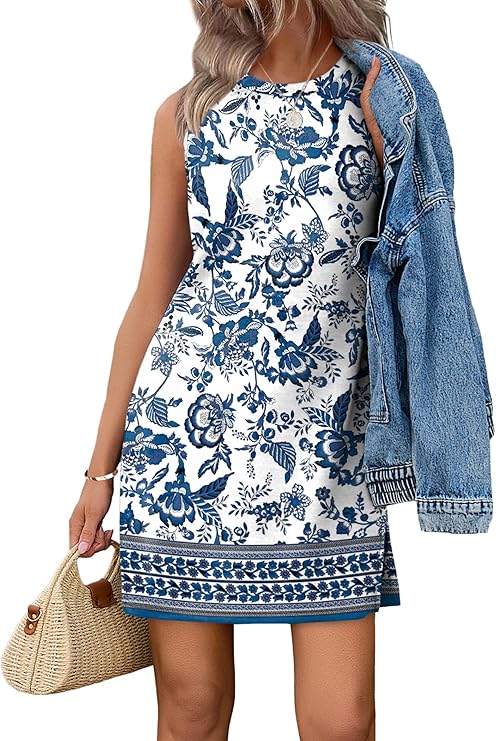
Venice evenings in May sit around 13–16°C, so you’ll want that jacket. But avoid heavy coats — they kill the mood and the look.
Local tip: Venetians dress up slightly for dinner, even at casual restaurants. You don’t need heels (see: the cobblestones conversation above), but a small upgrade from your daywear goes a long way.
What to Wear for Churches: The Dress Code Reality
This catches people out more than almost anything else. Venice has some of the most extraordinary churches in the world — the Basilica di San Marco, the Frari, the Gesuati — and most of them have a dress code. Shoulders must be covered. Knees must be covered. No exceptions, no matter how warm it is.
If you arrive in a sleeveless dress and shorts, you’ll be turned away. Some churches sell paper coverings, but that’s a miserable solution that costs money and feels embarrassing.
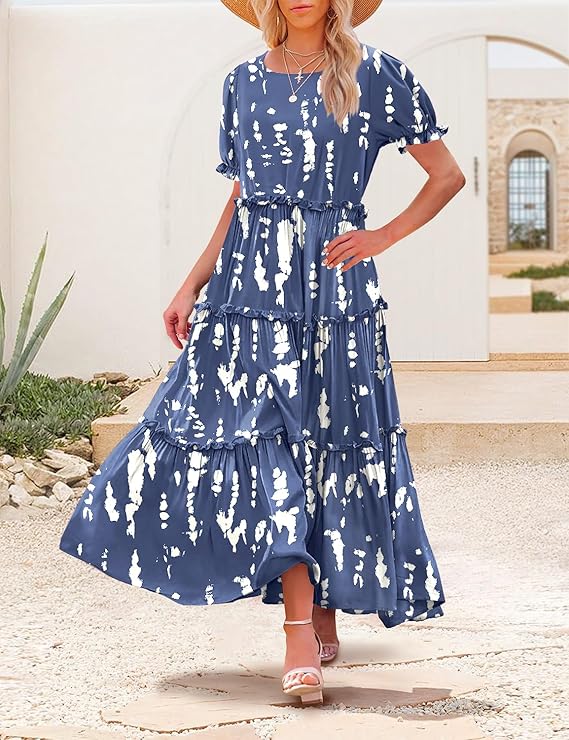
The practical fix: always pack a lightweight scarf or pashmina in your bag. In about thirty seconds it can cover bare shoulders or wrap around your waist as a skirt. A light cardigan serves the same purpose for shoulders. If you’re wearing a midi dress, you’re already mostly fine — just add a sleeve layer.

Specific outfit combinations that work:
- Linen trousers + short-sleeved top + cardigan in your bag
- Midi dress + blazer (easy to put on at the door)
- Shorts + flowy shirt over the top + scarf to wrap as needed
Local tip: Keep your scarf accessible — in a crossbody bag, not buried in a backpack. You’ll be reaching for it several times a day.
Bags: Crossbody vs. Backpack
Let’s settle this one properly.
For Venice, a crossbody bag wins. Every time. Here’s why: Venice is crowded in places, especially near San Marco and the Rialto, and pickpocketing does happen. A crossbody bag sits in front of you, stays close to your body, and is genuinely harder to access without your knowledge. A backpack sits behind you — you can’t see it.

Beyond security, a crossbody is also just more comfortable for a day of walking and ducking into churches, restaurants, and shops. You don’t need to take it off every time you sit down. It doesn’t bump into people in narrow calli. It looks more intentional.
Size-wise, go for something that fits your phone, a small wallet, a lip balm, your scarf, and a water bottle if possible. A leather or faux leather crossbody looks polished; a canvas or nylon one looks more casual but still perfectly fine.

If you need more space (camera, guide book, etc.), a small structured tote that you can carry in the crook of your arm works well as a daybag alongside a smaller crossbody for valuables.
Local tip: Leave the massive tote at the hotel on days you’re just wandering. You don’t need it, it’ll tire your shoulder, and the smaller you travel, the freer you feel.
Accessories That Do a Lot of Work
Here’s a truth about packing light: the right accessories can make the same base outfit feel like three different looks. In Venice, where you’ll likely be repeating outfits across the trip, this matters.
A silk or satin scarf is genuinely one of the most versatile things you can pack. It functions as a church covering, a hair accessory, a neck wrap for cooler evenings, and a pop of colour on a simple outfit. Italian women use them magnificently and so can you.

Sunglasses — a good pair, not sunglasses you grabbed at the airport. Venice in May is bright, especially near the water where light bounces off the canals and lagoon. A classic silhouette (oval, cat-eye, rectangular) keeps your look polished.

A hat — specifically a packable wide-brim straw hat or a soft felt beret depending on your style. Straw hats are practical for sunny afternoon walks; berets lean more stylish than practical but look wonderfully cinematic in Venice.

Simple jewellery that you can wear every day without thinking: small gold hoops, a delicate necklace, a single ring. Not a statement — just a finish.
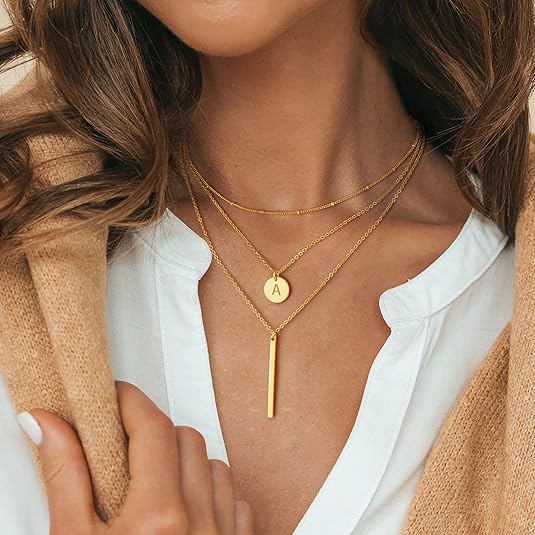
Local tip: You’ll see small Murano glass jewellery everywhere in Venice. A pair of earrings bought there is a genuinely beautiful souvenir that you’ll actually wear.
Rain Preparation: Don’t Skip This
I almost didn’t pack a rain layer on my last May trip to Venice. The forecast looked good. It was not good.
Venice in May has an average of seven to nine rainy days. It doesn’t always rain for long, but when it rains, it commits. The tricky thing is that sheltering options are more limited than in most cities — narrow streets, few overhangs, and you can’t duck into a supermarket every five minutes.
A compact, packable rain jacket or a small travel umbrella is non-negotiable. Not optional. Not “I’ll buy one if I need it.” Pack it from the start.
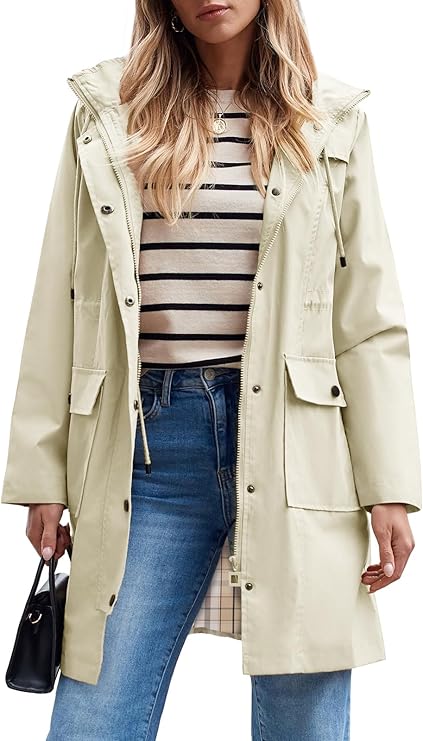
Waterproof options worth considering: a lightweight rain jacket that folds into a pouch (Uniqlo, Arc’teryx, Rains — whatever your budget allows), or a compact travel umbrella small enough to live in your crossbody bag. I prefer the jacket because your hands stay free.
There’s also the acqua alta consideration — Venice’s famous high water events. In May these are rare but not impossible, especially early in the month. If they occur, you’ll see raised walkways (passerelle) appear throughout the city. Knee-high rubber boots are the local solution. Most tourists manage with waterproof trainers and rolled-up trousers.
Local tip: Venetian pharmacies and small shops sell cheap compact umbrellas everywhere. But you’ll pay tourist prices, and you’ll be buying it in the rain, which is less fun than it sounds.
Fabrics to Choose (and What to Leave at Home)
The right fabric makes Venice comfortable. The wrong one makes it miserable. This is especially true in May when the humidity starts climbing and you’re walking more than you expect.
Choose: Linen (cool, breathable, gets better as the day goes on), cotton (especially lightweight cotton or cotton-modal blends), viscose or rayon (floaty and breathable, though it wrinkles), light merino wool (surprisingly breathable and excellent for layering), and silk or silk-effect fabrics for evenings.
Avoid: Polyester in warm tones (it traps heat and smell — practical for some activewear, not for a day of walking in May), thick denim (heavy and uncomfortable in warmth), synthetic fabrics that don’t breathe, and anything that wrinkles catastrophically because you will be stuffing things into bags and sitting on vaporetti.
There’s a wrinkle-versus-breathability trade-off in linen that trips people up — yes, it wrinkles, but Venetians wear rumpled linen with total confidence. Owned, intentional creasing is different from “this has been in a ball for two hours.” A good shake and a few minutes hanging usually does the trick.
Local tip: If you’re buying clothes while you’re there (Italian shopping is a wonderful rabbit hole), feel the fabric before you buy. The good stuff is immediately obvious.
The Venice Capsule Wardrobe for May
If I were packing for a five to seven day trip to Venice in May, here’s exactly what I’d bring:
Tops: Two linen shirts (one white, one a colour), two quality cotton or cotton-blend tees, one silky or slightly dressier blouse for evenings.
Bottoms: One pair of well-fitted straight-leg jeans or slim trousers, one pair of linen trousers, one pair of comfortable shorts or a skirt for warmer days.
Dresses: Two midi dresses — one casual (can be worn to churches with a layer), one slightly dressier for evenings.
Layers: One lightweight linen or cotton blazer, one thin cardigan, one compact rain jacket.
Shoes: One pair of supportive leather trainers or loafers for all-day walking, one pair of slightly dressier flats or low-heeled sandals for evenings.
Accessories: One large scarf/pashmina, sunglasses, a small crossbody bag, a packable hat.
That’s twelve to fourteen items of clothing plus shoes and accessories. Everything pairs with at least two other things. Nothing is wasted.
Practical Packing Decisions: What I Wish Someone Had Told Me
How many outfits to actually bring: For a five-to-seven day trip, six to eight outfit combinations is plenty. When you build a capsule around neutral basics with one or two statement pieces, everything works together, and you won’t feel like you’re repeating yourself even when you technically are.
Packing light is a Venice superpower. Most Venice accommodation involves stairs — sometimes lots of them, sometimes spiral, sometimes both. Cobblestones are unkind to wheeled suitcases. There are no porters and rarely any lifts. A carry-on only trip is not just possible but genuinely better in Venice.
Roll, don’t fold. Rolling clothes prevents creasing better than folding and takes up less space. Use packing cubes if you love organisation. Stuff shoes with socks. Pack the heaviest items closest to the back of your bag.
The mistake most people make: Packing for every theoretical situation instead of their actual plans. Be honest about what you’ll do. If you’re not going to a black-tie dinner, don’t pack for one. If you know you’ll wear jeans three days in a row, pack one excellent pair and stop agonising.
What to buy there instead of packing: A scarf (dozens of beautiful options in Venice), a leather bag or small accessory, and any forgotten basics you can pick up cheaply at pharmacies or small shops near the train station.
A Few Final Thoughts Before You Go
There’s something about Venice in May that makes you want to rise to the occasion — to dress like you’re in a Merchant Ivory film, to stroll with intention past ancient bridges, to look exactly right when the light falls across the Grand Canal at six in the evening.
You don’t need a lot of clothes to achieve that feeling. You need the right ones: comfortable enough to keep up with the city, breathable enough to survive the humidity, interesting enough to feel like yourself rather than just a tourist passing through.
Venice has been holding its own against impossible odds — floods, tourist hordes, the relentless weight of history — for centuries. It deserves visitors who show up ready to meet it, however briefly, on its own terms.
Pack well. Walk slow. Wear linen. And for the love of all that is beautiful, sort out your shoes before you go.


One Response