
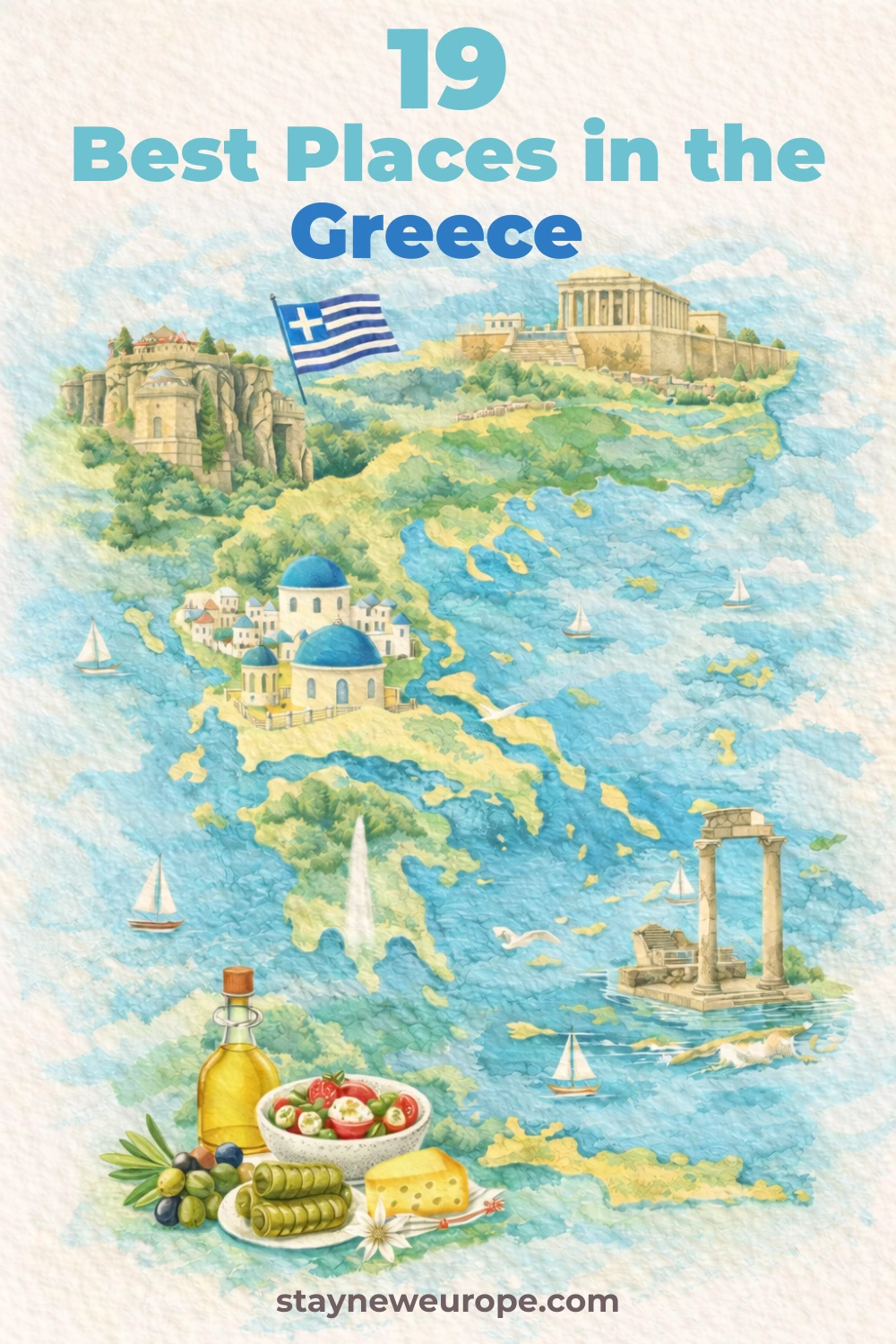
Greece is one of those countries that gets under your skin in a way that very few places do, and once it does, you spend the rest of your life finding reasons to go back. The food, the light, the history, the warmth of the people, the color of the sea — it all combines into something that feels genuinely unlike anywhere else in the world.
Most people think of Greece and immediately picture the islands, which is completely fair because the Greek islands are extraordinary and deserve every bit of their reputation. But Greece is so much bigger and more varied than just its coastline. The mainland is full of ancient ruins, dramatic mountain landscapes, Byzantine monasteries, and cities that have been continuously inhabited for thousands of years. There is a version of Greece for every kind of traveler, and the best trips tend to mix a bit of everything.
I’ve been coming back to Greece for years, and it still surprises me. New islands, new villages, places I’d never heard of that turned out to be brilliant. With hundreds of islands and a mainland packed with incredible history, you genuinely cannot do it all in one trip, so I’ve pulled together the 19 best places in Greece that I think should be on every serious Greece bucket list. Some are famous for good reason. A few are the ones that most people never quite get around to and really should.
1. Meteora
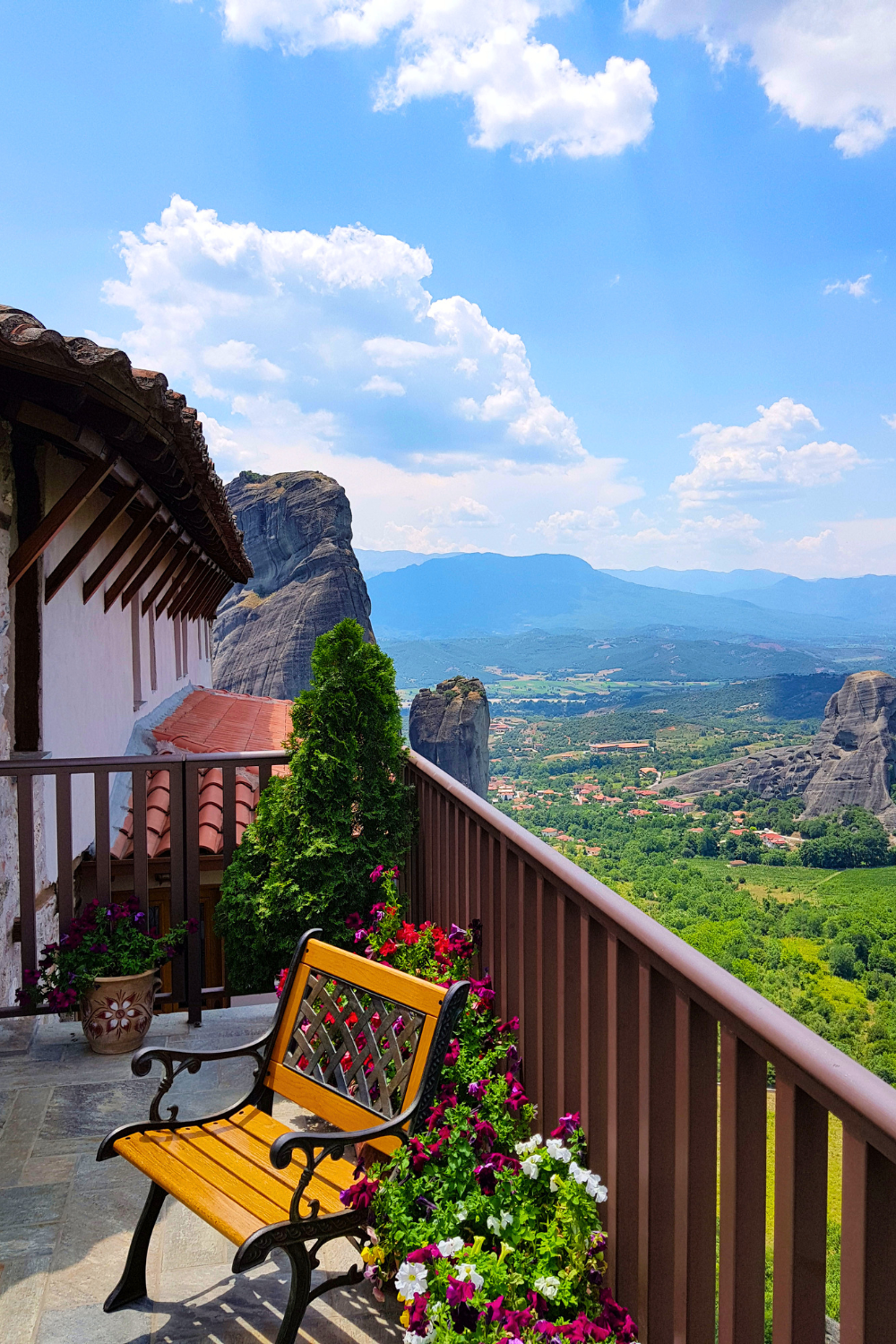
Meteora is one of those places where the photographs look like they’ve been digitally altered, and then you arrive and realise reality is actually more impressive than the photos. It is genuinely one of the most extraordinary sights in all of Europe and should be near the top of any Greece itinerary.
The monasteries of Meteora sit on top of enormous natural rock pillars rising hundreds of metres from the plain of Thessaly in central Greece. There are six monasteries still active today, perched on summits that seem physically impossible to build on, and the whole complex has UNESCO World Heritage status both for its natural landscape and for the cultural and religious significance of the buildings. The story of how they came to be built is extraordinary in itself. During the Ottoman expansion in the 15th century, monks seeking refuge from persecution made their way to these remote rock formations and began building communities that could only be reached by rope ladders or nets hauled up by hand. The sheer determination involved in building on that terrain, under those circumstances, is humbling to think about.
Today you reach the monasteries via steps carved into the rock and a bridge connecting to a nearby plateau, which is considerably less dramatic but much more practical. The Great Meteora monastery is the largest and most impressive, and you genuinely should not leave without seeing the views from the top. Go early in the morning before the tour buses arrive and you’ll have sections almost to yourself. The nearest town is Kalambaka, which has good accommodation and makes a perfect base, and it’s reachable directly by train from Athens.
2. Kefalonia
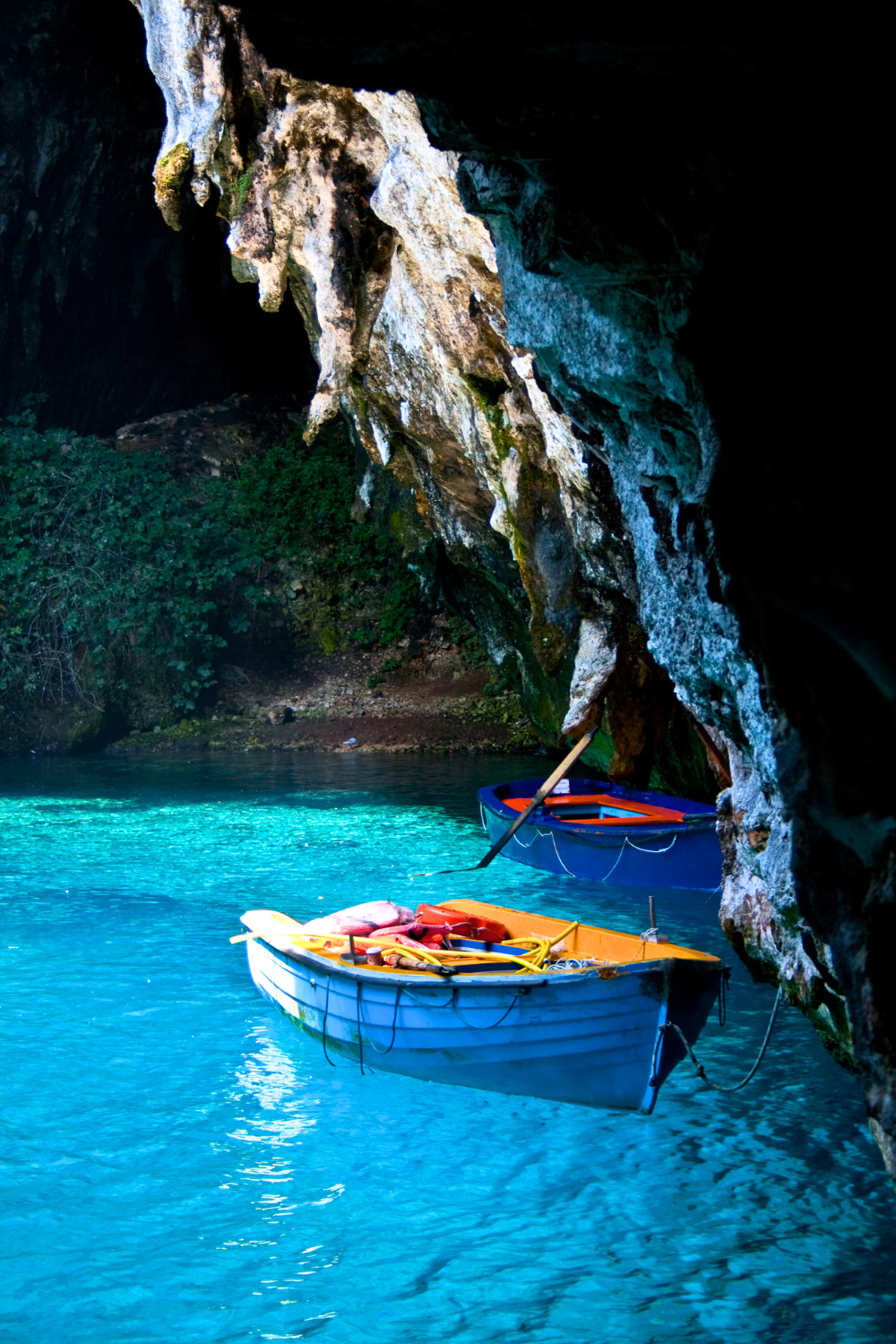
Kefalonia is one of the most beautiful islands in Greece and it has two natural wonders that alone make it worth the trip. The Drogarati Cave and Melissani Lake are both close to each other near the town of Sami, and both are the kind of places that stop you in your tracks the moment you walk in.
Melissani Lake is an underground lake inside a cave where part of the roof collapsed thousands of years ago, leaving a circular opening to the sky above. When the sun is directly overhead in the middle of the day, the light pours through the opening and turns the water an impossible shade of turquoise blue. You take a rowing boat through the cave and the effect is genuinely magical. Excavations in the mid-20th century found Minoan artefacts here suggesting the cave was used as a place of worship for centuries, which adds a whole other layer to an already remarkable experience. The Drogarati Cave nearby is a different kind of spectacle — a vast underground chamber with extraordinary stalactite formations that has such good acoustics that concerts are occasionally held inside it.
Beyond the caves, Kefalonia has some of the finest beaches in Greece. Petani Beach on the west coast is one of those stretches of white pebbles and turquoise water that makes you want to lie down and not move for the rest of the day. Fteri Beach is even more secluded and one of the most beautiful in the Ionian Islands. Myrtos Beach — the iconic one you’ve probably seen photographed — lives up to every version of it you’ve seen. Rent a car on Kefalonia, because the island reveals itself best at your own pace.
3. Delphi
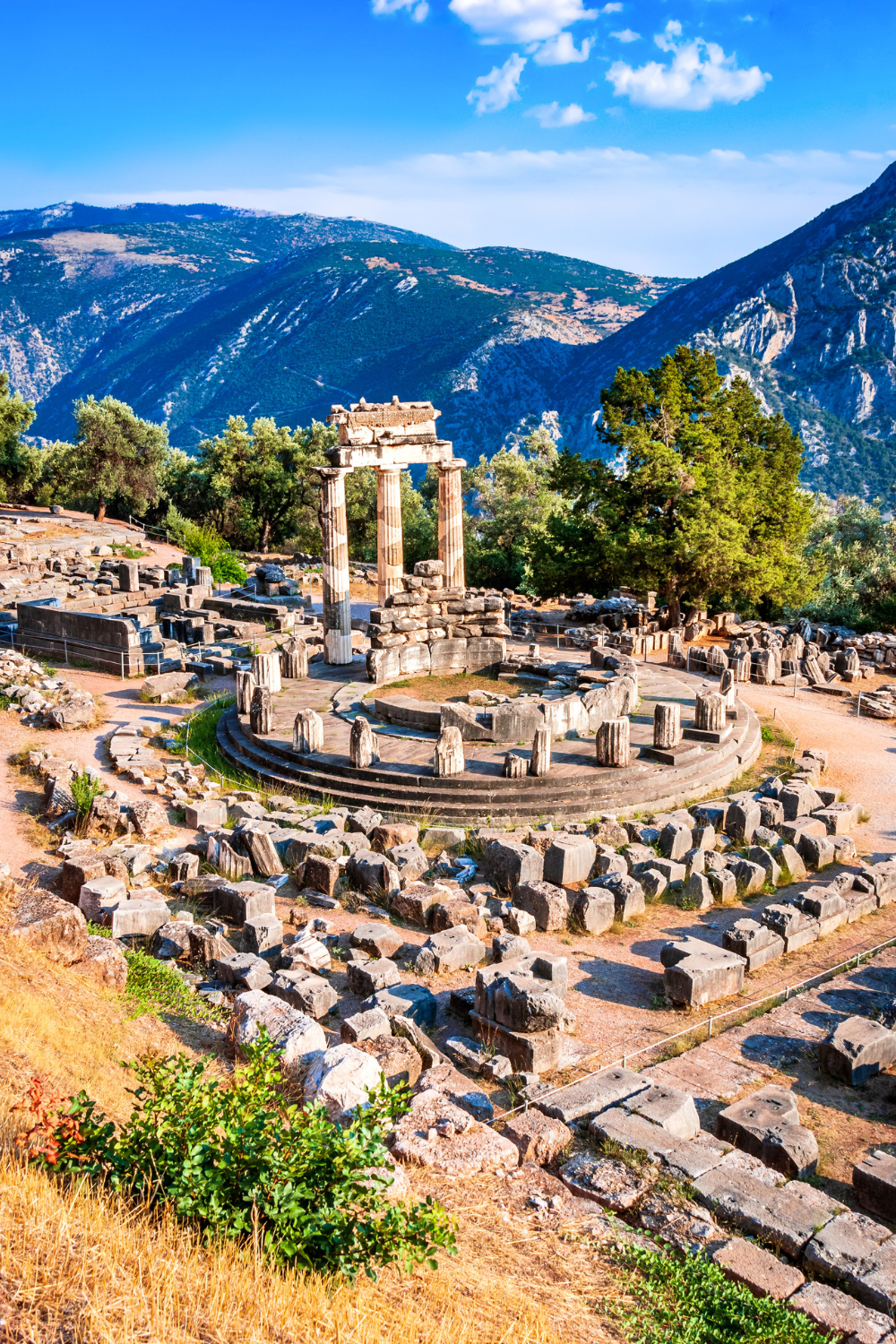
For the ancient Greeks, Delphi was the centre of the world. Not metaphorically, not as a figure of speech — they genuinely believed this was the navel of the earth, the place where the axis of the world was anchored. The Oracle of Delphi, who sat in the Temple of Apollo and delivered prophecies that shaped wars, political decisions and the fates of kings, was consulted by leaders from across the ancient Mediterranean world for centuries. Coming here and standing on the hillside of Mount Parnassus where all of that happened is a genuinely profound experience.
The archaeological site is beautifully preserved and the setting is dramatic — the sanctuary sits on a steep hillside with the valley of Phocis dropping away below and the Gulf of Corinth visible in the distance on a clear day. The Temple of Apollo, where the Oracle delivered her pronouncements, is the centrepiece of the site. The Treasury of the Athenians nearby was built to hold the offerings brought by Athens after their victory at Marathon. The ancient stadium at the top of the site, where the Pythian Games were held every four years, is one of the best-preserved ancient stadiums in Greece. The museum at the entrance to the site is excellent and should not be skipped. Delphi is about a two-and-a-half-hour drive from Athens and makes for one of the finest day trips from the capital.
4. Zakynthos
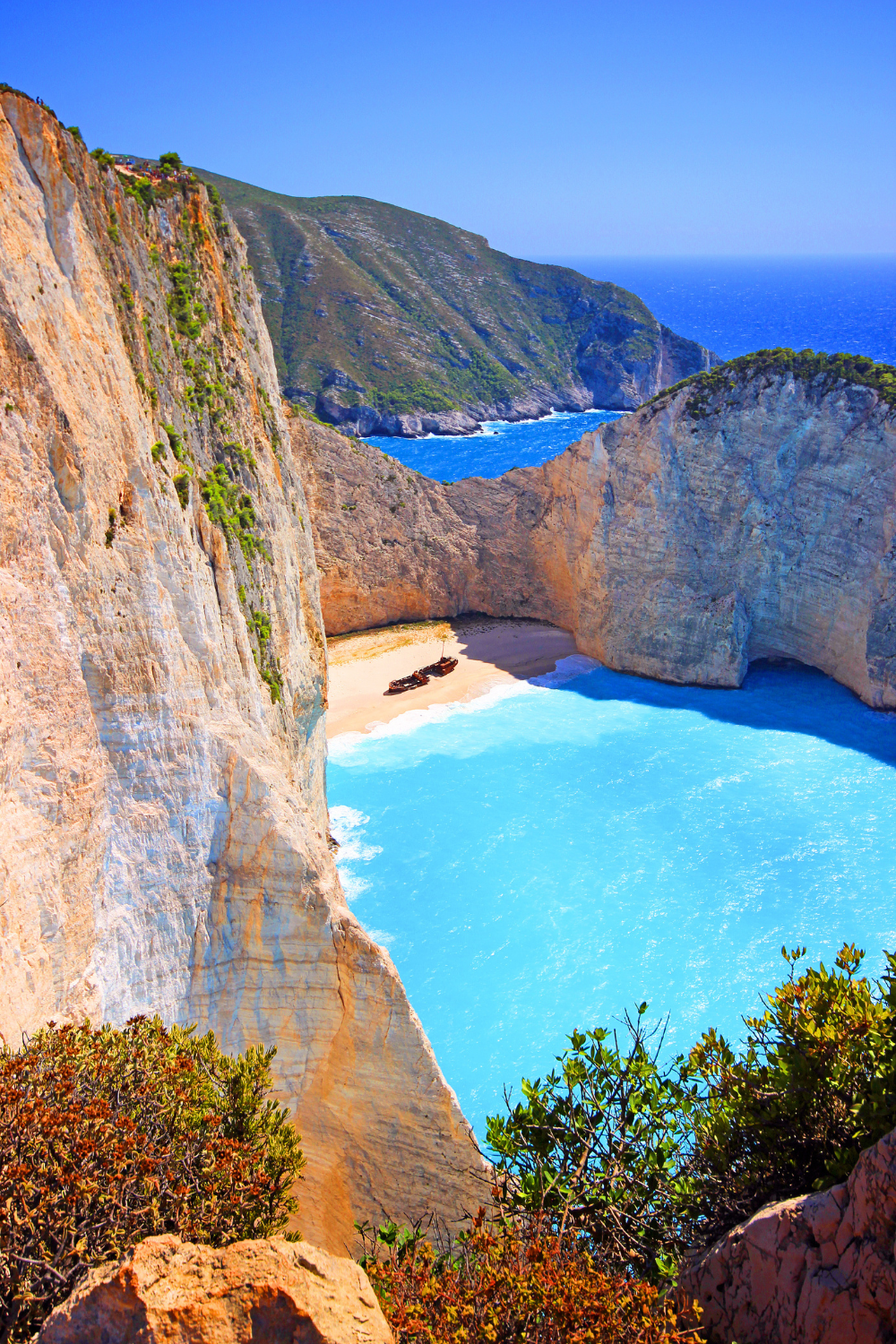
Zakynthos has one of the most photographed beaches in the world and it fully earns the attention. Navagio Beach, also called Shipwreck Beach, is a cove of brilliant white pebbles enclosed by sheer limestone cliffs several hundred metres tall, with the rusting wreck of a smuggler’s ship lying at the water’s edge. The colour of the water here is a shade of blue-green that genuinely doesn’t look real when you first see it.
The only way to reach the beach is by boat, since the cliffs make it completely inaccessible from land. Boat trips run from several ports around the island and getting out there on a clear morning, rounding the headland and seeing the cove open up in front of you, is one of those travel moments that you store away and return to in your memory. There is a viewpoint at the top of the cliffs that you can reach by road, and the view from up there is equally spectacular in a completely different way — you’re looking straight down at the beach and the water from above, and the scale of the cliffs really hits you.
Beyond Navagio, Zakynthos has more to offer than most people explore. The Keri Caves on the southern tip of the island are beautiful sea caves best visited by boat trip. The Agios Dionisios Church in Zakynthos Town is the most important religious site on the island. For dinner, the Greek Traditional Cafe Ouzeri in Zakynthos Town makes the kind of moussaka that ruins all other moussaka for you going forward, and that is meant as the highest possible compliment.
5. Athens
Athens is one of the oldest continuously inhabited cities in the world and the amount of history concentrated within it is almost overwhelming when you think about it properly. This is the city where democracy was invented, where Western philosophy was born, where the buildings that became the template for European civic architecture were first built. Walking around Athens is genuinely walking through the foundations of Western civilisation, and that never quite loses its impact no matter how many times you visit.
The Acropolis is non-negotiable. Yes, it is busy. Yes, you will share it with a lot of other people. It doesn’t matter. Climbing up to the Parthenon and standing in front of a building that has been there for 2,500 years, looking out over the sprawl of the modern city below, is an experience that justifies every queue and every other tourist. Book tickets in advance and go first thing in the morning when the light is beautiful and the crowds are thinner.
The National Archaeological Museum is one of the greatest museums in the world and is consistently underrated in travel writing. The Antikythera Mechanism alone — a 2,000-year-old bronze astronomical calculator recovered from a shipwreck, considered the world’s first analogue computer — is one of the most astonishing objects in any museum on earth. The rest of the collection, which spans from Neolithic Greece through the Classical and Hellenistic periods, is equally extraordinary.
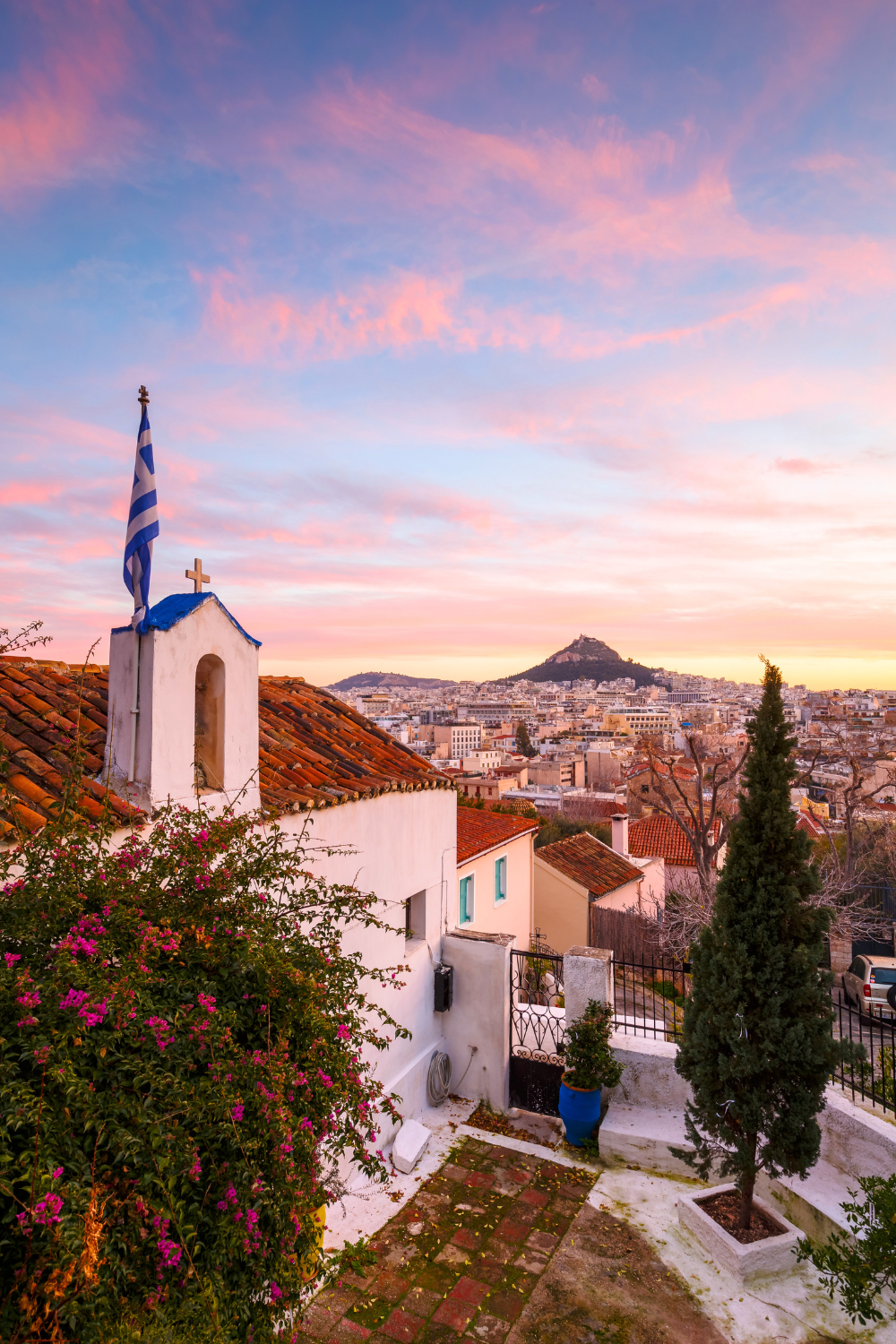
The Plaka neighbourhood below the Acropolis is a lovely area to wander in the evening, with its narrow streets, neoclassical buildings and tavernas spilling onto every pavement. The Anafiotika quarter, a tiny neighbourhood of whitewashed houses built into the hillside of the Acropolis by workers from the Cyclades, feels so much like a Greek island that it takes you a moment to remember you’re in the middle of a capital city. The Temple of Olympian Zeus and the ancient Panathenaic Stadium are both worth going out of your way for on a longer visit.
6. Santorini
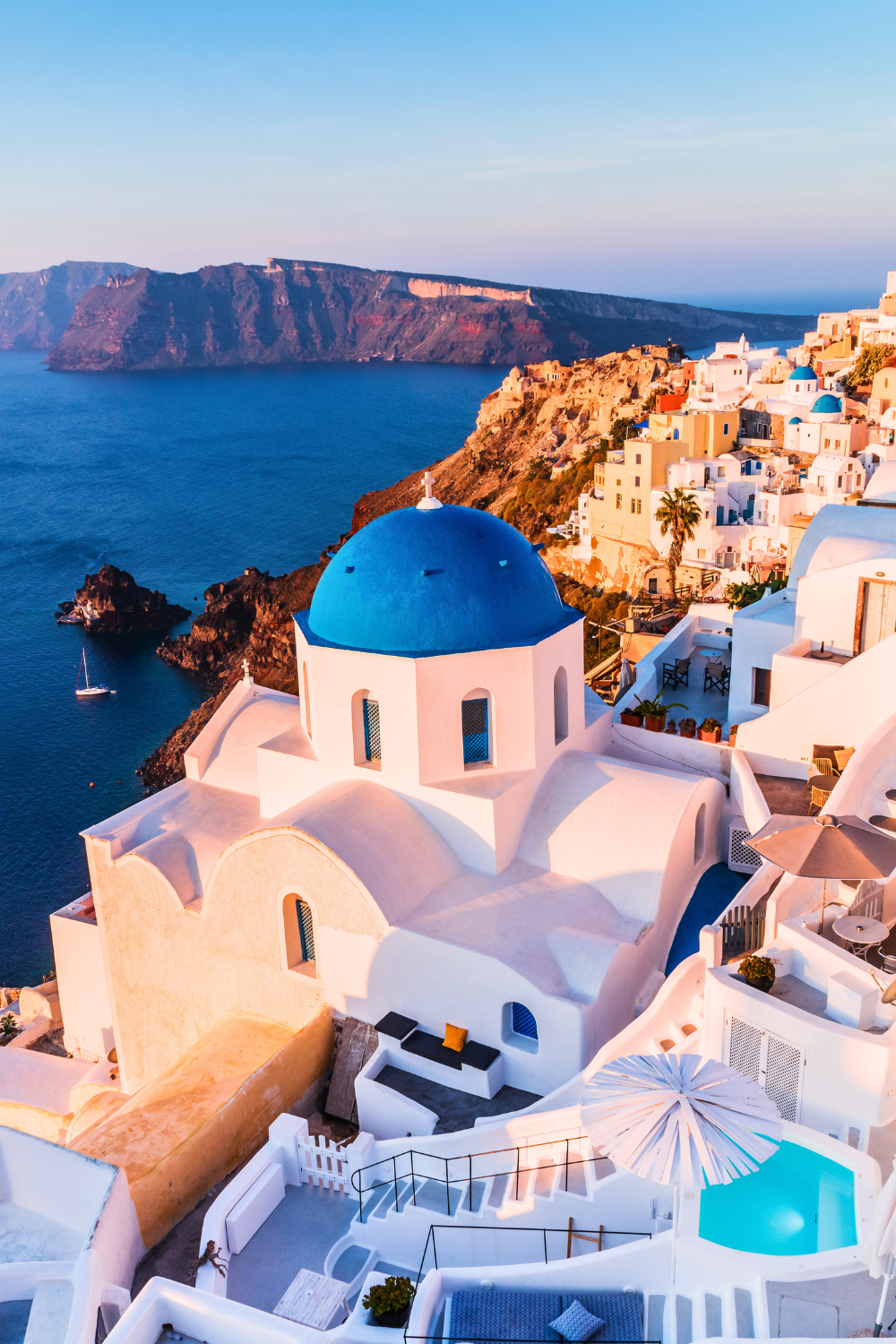
Santorini is the most famous Greek island in the world and it is famous for very good reason. The caldera view from Oia, with the white-washed buildings cascading down the cliff face to the brilliant blue domes of the churches and the deep volcanic caldera beyond — it is one of the great travel views anywhere on earth, and the photographs you’ve seen of it do not fully prepare you for the reality of it.
The island was formed by one of the largest volcanic eruptions in human history, around 3,600 years ago, which collapsed the centre of a much larger island into the sea and created the dramatic caldera that defines the landscape today. The cliffs on the western edge of the island rise almost 300 metres straight out of the water, and the views from the clifftop towns of Fira and Oia across the caldera to the volcanic islands in the middle are extraordinary at any time of day and completely otherworldly at sunset.
Oia is the place to be for that sunset. Yes, it gets incredibly crowded in summer and yes, you will be sharing the experience with what feels like the entire population of Europe. But finding yourself a spot on the castle walls or the terrace of a good bar and watching the sun drop into the Aegean while the caldera goes gold and then orange and then deep purple is one of those travel experiences that genuinely justifies the crowds. The Katikies Hotel on the cliff edge in Oia is one of the most spectacular places to stay in Greece if budget allows. Santo’s Winery above Pyrgos does excellent local wine with views that make the tasting room feel almost unfair on everywhere else.
7. Crete
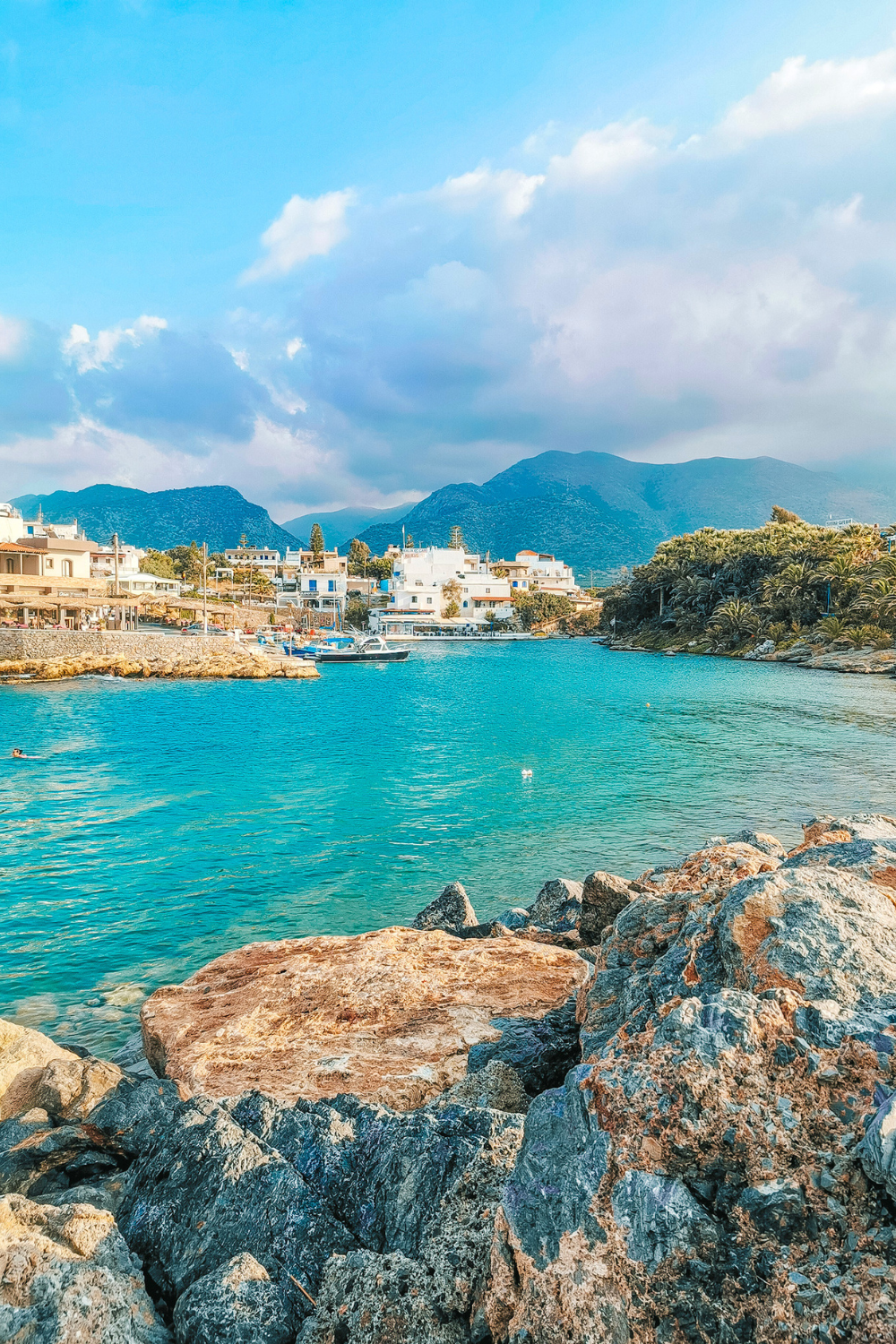
Crete is Greece’s largest island and big enough to be a country in its own right, with its own distinct history, dialect, food culture and personality that sets it apart from anywhere else in Greece. You can spend two weeks on Crete and still feel like you’ve barely started.
The ruins of Knossos near Heraklion are the site of the most important Bronze Age civilisation in Europe — the Minoans, whose culture was already sophisticated and complex 4,000 years ago. The partially reconstructed palace complex gives you a vivid sense of how advanced this civilisation was, with its multi-storey buildings, sophisticated drainage systems, frescoed walls and administrative organisation. The sheer antiquity of it takes your breath away.
Spinalonga Island in the northeast is one of the most poignant and fascinating historical sites in Greece — a former Venetian fortress and later a leper colony that was only closed in 1957 and is now visited by boat from Elounda. The old town of Chania in the west is one of the most beautiful harbour towns in all of Greece, with its Venetian lighthouse, its covered market and its maze of back streets full of excellent restaurants and cafés. Seitan Limania Beach near Chania is one of those places that stops conversation — a narrow turquoise inlet between red-brown cliffs that looks like it was designed to make people feel emotions. Getting there requires a short but steep walk but it is absolutely worth every step.
8. Corfu
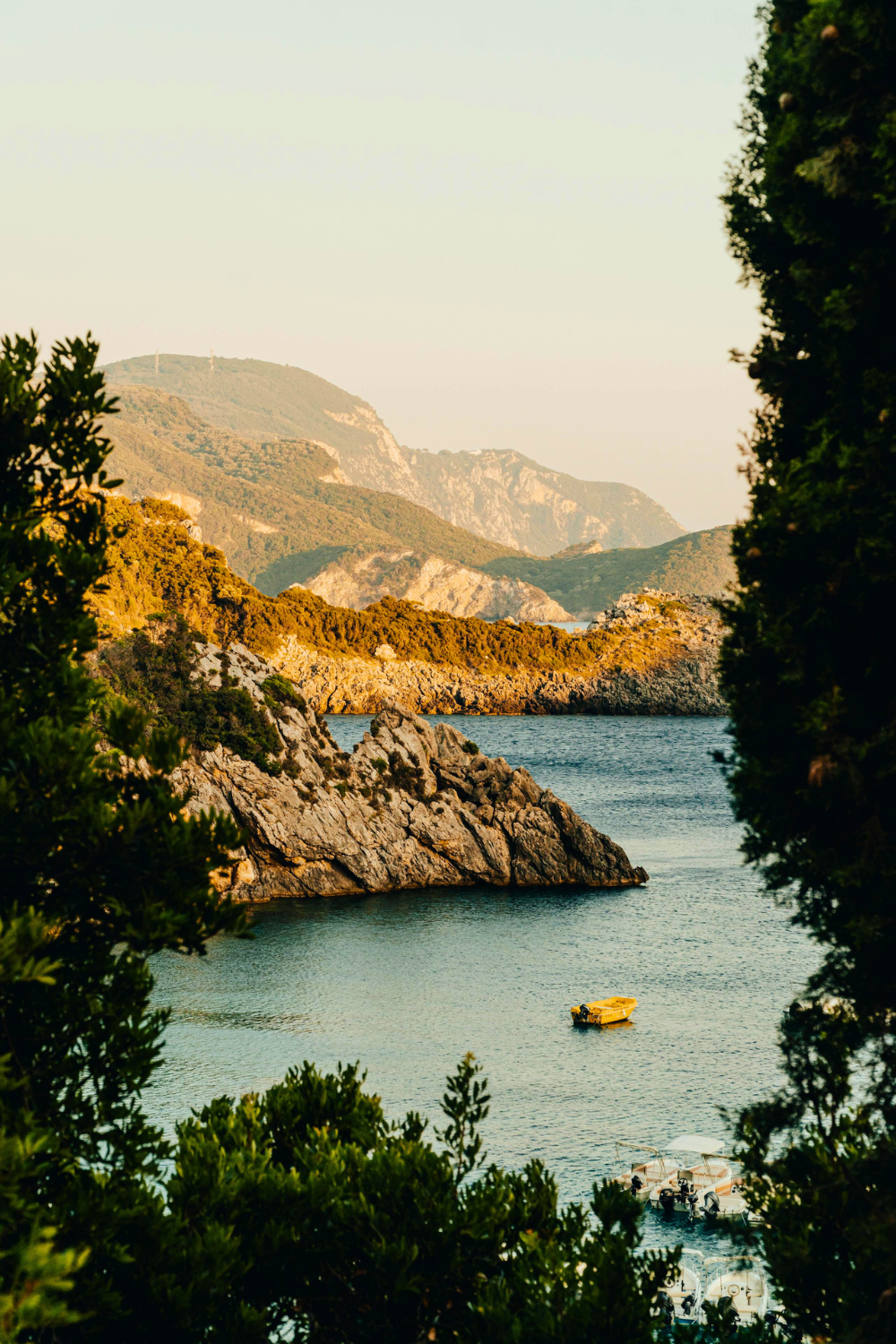
Corfu gets a slightly unfair reputation as a party island, which misrepresents what it actually is. Yes, parts of Corfu are lively and young and loud, particularly in the northeast. But the vast majority of the island is strikingly beautiful, historically layered and full of the kind of quiet, authentic Greek character that people come to Greece looking for.
The Old Town of Corfu, called Kerkyra, is a UNESCO World Heritage Site and one of the finest examples of a Venetian-influenced Mediterranean town anywhere in the world. The narrow lanes, the tall shuttered houses, the elegant arcaded street of the Liston that was built in imitation of the Rue de Rivoli in Paris, the two imposing Byzantine and Venetian fortresses on either side of the old town — it’s a genuinely beautiful urban environment and it deserves far more attention than it gets.
Cape Drastis in the northwest of the island is one of the most dramatic coastal landscapes in Greece, with white rock formations, sea arches and turquoise water that look completely unlike anything else on the island. The Vlacherna Monastery, sitting on a tiny islet connected to the mainland by a narrow causeway south of Corfu Town, is one of the most photographed and most peaceful spots on the island. For beaches, Paleokastritsa on the west coast offers a series of small, sheltered coves with some of the clearest water in the Ionian Sea.
9. Rhodes
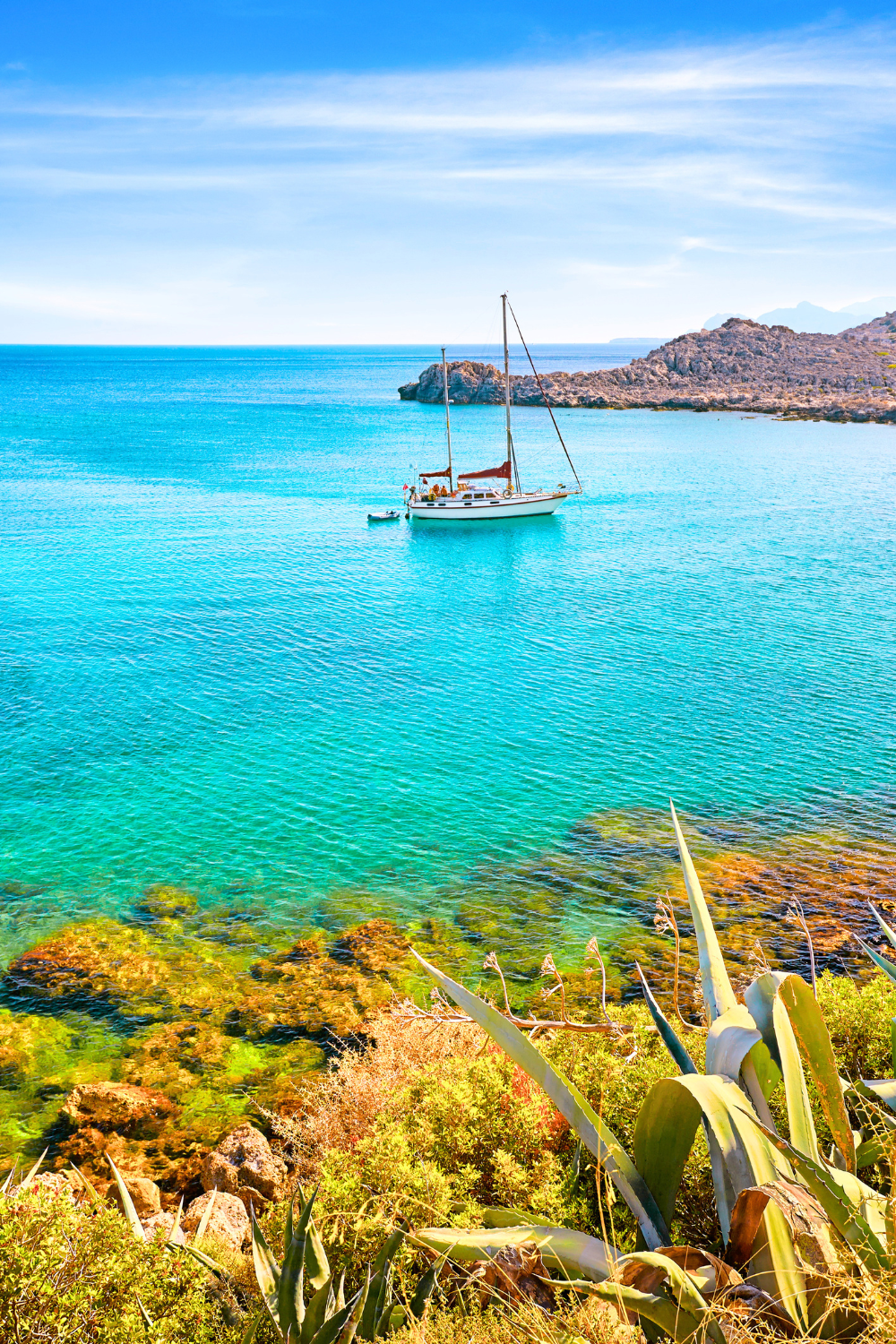
Rhodes has everything. Medieval history, ancient ruins, beautiful beaches, excellent food, charming fishing villages and enough to keep you busy for a fortnight without repeating yourself. It is, by a considerable margin, one of the most complete Greek island experiences available.
The Medieval Town of Rhodes is a UNESCO World Heritage Site and one of the finest surviving examples of a medieval fortified city in the world. The Knights of St. John built and controlled it from the 14th century and the walls, towers, cobbled streets and imposing Palace of the Grand Master are remarkably intact. Walking the walls at dusk when the day-trippers have gone is one of the great pleasures of any Rhodes visit.
Outside the town, the rest of the island rewards exploration by car. The Acropolis of Lindos is dramatically situated on a clifftop above the whitewashed village of Lindos and the view from the top across the bay is one of the finest in the Aegean. Saint Paul’s Bay below the acropolis, where Paul the Apostle is said to have landed on his way to found the Christian community in Rhodes, is a beautiful sheltered cove ideal for swimming. For food, Taverna Tsambikos in the village of Kolimbia does proper, unfussy Greek cooking that reminds you why Greek food is so good when it’s done with simple fresh ingredients and real care.
10. Mykonos
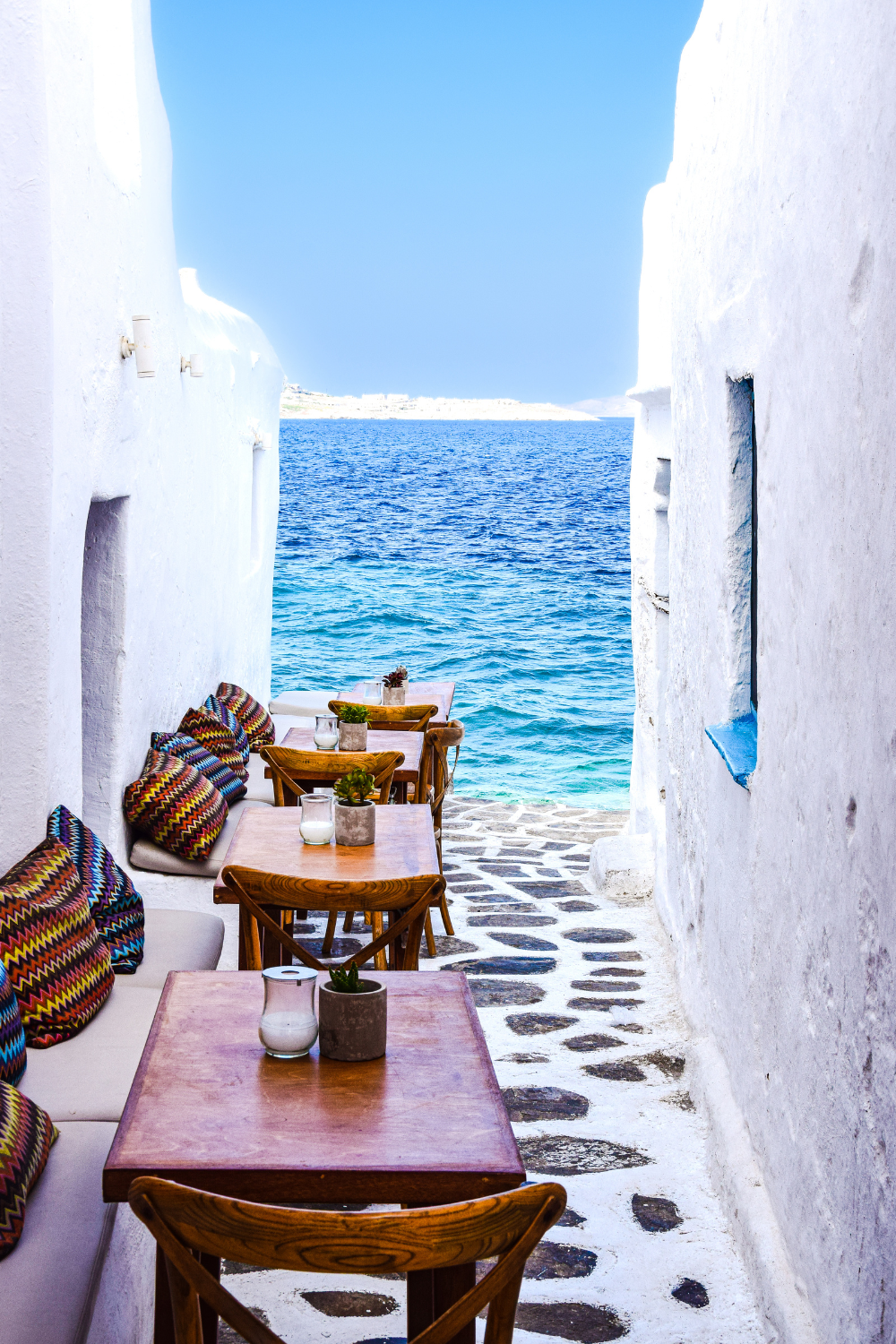
Mykonos is one of those islands that manages to be several different things at once and does all of them reasonably well. It has a reputation as a glamorous party destination, which is accurate, but it is also genuinely beautiful, historically interesting and full of the Cycladic charm that makes this group of islands so visually distinctive.
The main town, Chora, is a maze of brilliant white alleys, blue-domed churches, bougainvillea-draped walls and little squares that appear without warning around corners. The famous windmills on the hill above Little Venice are one of the iconic images of the Cyclades. Little Venice itself, a row of houses with balconies built directly over the sea, is at its best in the late afternoon when the light goes golden and the whole waterfront seems to glow.
For food, M-eating in Chora is consistently excellent and well worth booking ahead. The day trip to Delos island is unmissable if ancient history interests you at all. Delos was one of the most sacred sites in the ancient Greek world, considered the birthplace of Apollo and Artemis, and the archaeological site there is one of the most significant and remarkably preserved in the entire Mediterranean. The ferry takes about 30 minutes from Mykonos harbour and the scale of what you find on what looks like a tiny, barren island is genuinely astonishing.
11. Thessaloniki
Thessaloniki is Greece’s second city and it is genuinely underrated in international travel conversations. Most visitors to Greece focus entirely on Athens and the islands, which means Thessaloniki remains wonderfully undiscovered by the crowds that descend on the more famous destinations, and the city is quietly brilliant for it.
It has a food culture that many Greeks argue is the best in the country, a claim that Athenians dispute loudly but that has considerable merit. The city’s Ottoman, Byzantine and Jewish heritage gives it a cultural layering that is fascinating to explore, and the combination of a beautiful waterfront, a lively university atmosphere and an extraordinary concentration of Byzantine churches makes for a very enjoyable few days.
The Church of Agios Dimitrios is the most important early Christian basilica in Greece, built on the site where the patron saint of the city was martyred in the 4th century and containing remarkable early Christian mosaics. The White Tower on the seafront is the symbol of Thessaloniki and the view from the top over the Thermaic Gulf is excellent. The Ladadika neighbourhood near the old port is full of good tavernas and bars with a relaxed, local energy that is very easy to spend an evening in. For food, Charoupi near the waterfront does some of the finest contemporary Greek cooking in the city.
12. Andros
Andros is a Cycladic island that tends to get overshadowed by its more famous neighbours Santorini and Mykonos, and that relative obscurity makes it a genuinely excellent choice for anyone wanting a more authentic and less crowded Greek island experience.
The island has a wonderfully varied landscape for somewhere its size, with green valleys, spring water running down through villages, dramatic sea cliffs and excellent beaches. The Venetian-influenced architecture of the old capital Chora, sitting on a narrow peninsula with sea on both sides, is beautiful. The Monastery of Panachrantos in the mountains inland is one of the finest Byzantine monasteries in the Cyclades and the walk up to it through the hills is rewarding in its own right.
Vitali Beach on the east coast is gorgeous and tends to be quieter than equivalent beaches on the better-known islands. The Foros Cave near the north of the island is a sea cave accessible by small boat on calm days. For food, Endochora in Andros Town does excellent fresh seafood in a setting that makes the most of the island’s unhurried character.
13. Lemnos
Lemnos is an island in the northern Aegean that very few international tourists ever visit, and that obscurity is entirely its appeal. It is genuinely off the beaten track in a way that most Greek islands can no longer honestly claim.
According to mythology, this is where Hephaestus landed when Zeus threw him from Mount Olympus, and the volcanic rock formations around the island’s coast, sculpted by ancient lava flows into extraordinary shapes, give the whole place a slightly otherworldly quality that makes the myth feel plausible. The main town of Myrina is beautiful, with a Byzantine and Ottoman castle on the headland above it and a long sandy beach running along the bay below.
The real reason to go to Lemnos, beyond the peace and the excellent local food and wine, is Poliochni on the east coast of the island. It is the oldest known Neolithic city in Europe, predating the Bronze Age civilisations of mainland Greece by thousands of years, and the excavated remains are extraordinary. Standing in the ruins of streets and buildings that were already ancient when the Trojan War supposedly happened is one of those perspective-shifting experiences that travel occasionally delivers.
14. Epidavros
The ancient theatre of Epidavros is the finest ancient theatre in Greece and arguably the most perfect surviving example of ancient Greek theatre architecture in the world. Built in the 3rd century BC on the slopes of a wooded hillside in the Peloponnese, it seated over 13,000 people and was famous throughout the ancient world for its extraordinary acoustics. Those acoustics are still there. Standing on the stage at Epidavros and speaking at a normal conversational volume while someone in the very back row of the upper tier hears every word clearly is a demonstration of Greek engineering that genuinely leaves people speechless.
The theatre is still in use today during the Athens and Epidaurus Festival in summer, when performances of ancient drama take place in the original space under the stars. If your timing lines up with the festival, seeing a performance at Epidavros is one of the great cultural experiences available in Greece. The sanctuary of Asklepius that surrounds the theatre was the most important healing sanctuary in the ancient world, and the wider archaeological site has a museum with excellent artefacts and several other monuments worth exploring beyond the theatre itself.
15. Argolis
The Argolis region of the northeastern Peloponnese contains some of the most important ancient sites in Greece and makes a brilliant base for exploring the Bronze Age history that is so central to Greek culture and mythology.
Mycenae, near the modern village of Mykines, was one of the dominant powers in the Bronze Age Mediterranean world. Four thousand years ago this was a heavily fortified city of considerable sophistication, the centre of a civilisation that traded across the entire Aegean and left behind shaft graves filled with golden treasure. The Lion Gate, the monumental entrance to the ancient city with its carved limestone lintel, is one of the most recognisable images in all of classical archaeology. The Treasury of Atreus, also called the Tomb of Agamemnon, is a beehive tomb of breathtaking engineering, its corbelled stone dome standing for 3,500 years without mortar. The whole site carries the atmosphere of genuine antiquity in a way that is hard to articulate but impossible to miss.
Combine Mycenae with the theatre at Epidavros on a longer day in the Peloponnese and you have one of the finest history days available anywhere in Greece.
16. Penteli
Penteli is a small town about ten kilometres north of central Athens that most visitors to the city never bother to visit, and it makes an easy and very rewarding half-day trip from the capital for those who want to get off the standard tourist trail.
The marble quarried from the hills of Mount Pentelicus above the town is famous because it was the material used to build the Parthenon, the other buildings of the Acropolis, and many of the other great monuments of ancient Athens. The same quarries are still visible on the hillside and the trails through them are beautiful. The monastery of Penteli in the hills is a lovely Byzantine foundation with a peaceful atmosphere, and the Rododafni Castle nearby, built for the Duchess of Plaisance in the 19th century in a curious Gothic Revival style, took over a hundred years to complete and is one of the more eccentric and charming buildings in the Athens region.
If you enjoy walking, the trails on the slopes of Pentelicus are excellent and the views back toward Athens from the higher paths are wonderful on clear days.
17. Samos
Samos was a complete surprise when I first visited and it has stayed one of my favourite Greek islands ever since. It has a reputation mainly as a family beach destination, which undersells it considerably.
The island is lush and green in a way that the more volcanic Cycladic islands are not, with forested hills rolling down to the coast and a landscape that feels much more like the eastern Aegean than the white rock and blue domes of the south. Pythagoras was born here, which the island celebrates with statues and a certain mathematical pride, and the Heraion, the ancient sanctuary of Hera near the southern coast, is one of the most important ancient sites in the eastern Aegean.
For beaches, Samos has a collection of beautiful small coves on the southern coast that are excellent for swimming and snorkelling. Renting a car and driving up into the mountains in the interior is one of those experiences you either love or find mildly terrifying, because the roads wind along cliff edges with spectacular views over the sea at heights that take some getting used to. The local sweet Muscat wine is exceptional and produced here since antiquity. A glass of it at a harbour taverna in the evening with fresh grilled fish is one of the simplest and most satisfying Greece experiences you can have.
18. Costa Navarino
Costa Navarino on the western coast of the Messenia region in the Peloponnese is one of the most beautiful stretches of coastline in all of Greece and one that most visitors never find because it requires a commitment to getting off the island ferry route.
The beaches here are extraordinary, long stretches of fine sand backed by dunes and pine forests with warm, shallow water that seems to get bluer the further south you go. The coastline is punctuated by headlands with ancient ruins on them, small fishing villages serving fresh catch straight off the boats, and views that on clear days extend to the distant mountains of the Mani peninsula. The pace of life is slow in the best possible way.
The wider Messenia region around Costa Navarino is worth exploring beyond the beach. The castle at Methoni is one of the finest Venetian fortresses in Greece, jutting into the sea on a peninsula and surrounded on three sides by water. Pylos, a short drive up the coast, has one of the most beautiful natural bays in the Mediterranean and a Venetian castle of its own. The whole region has been shaped by successive waves of Greek, Byzantine, Venetian and Ottoman influence, and that layered history makes even a gentle drive through the countryside into something interesting.
19. Kos
Kos is the kind of Greek island that gets overlooked in favour of its flashier neighbours but consistently delivers for the people who actually go there. It sits close to the Turkish coast in the Dodecanese, and that geographical position gives it a slightly different character from the Cycladic or Ionian islands, with a more distinctly eastern Mediterranean atmosphere.
The old town of Kos has remarkable ancient ruins almost literally in the streets, including the ancient Agora and the Plane Tree of Hippocrates, a massive old tree under which the father of modern medicine is said to have taught his students. The island’s big historical site is the Asklepieion, an ancient healing centre on a hillside a few kilometres from the main town, where patients came for treatment from across the ancient world and where Hippocrates himself practised. The terraced ruins, with columns still standing and the view down to the sea below, are beautiful.
For beaches, Agios Stefanos on the west coast is one of the most scenic in the Dodecanese, with the ruins of an early Christian basilica right on the beach and the tiny island of Kastri just offshore, topped by a little whitewashed chapel that you can reach by swimming across on a calm day. The combination of ancient ruins, sea swimming and the gorgeous light of the Dodecanese in the afternoon makes Kos one of those places you arrive at thinking you’ll stay a few days and end up extending your trip for.
Greece is the kind of country where every trip leaves you with a longer list than when you started. The more you see, the more you realise how much is waiting. Whatever brings you here, whether it is the history or the islands or the food or just the colour of the light on an Aegean afternoon, you will leave wanting more. That, honestly, is the best thing that can be said about any destination.

