
Würzburg is one of those German cities that takes people completely by surprise. Most visitors arrive expecting a pleasant enough stopover on the way to somewhere else — maybe a quick look at the palace before driving south toward Munich — and end up staying twice as long as planned, quietly charmed by a place that turned out to be far richer and more beautiful than they had any reason to expect.
That’s the Würzburg effect, and it’s very real.
This is a city that has been continuously shaped by history, catastrophe, resilience and extraordinary wealth over more than a thousand years. It was the seat of some of the most powerful prince-bishops in the Holy Roman Empire, which meant that the money, the ambition and the artistic talent of an entire era poured into its buildings, its palaces and its churches. Then, in March 1945, a twenty-minute Allied bombing raid destroyed around ninety percent of the city in one of the war’s most devastating attacks on a civilian centre. What you see today is what was rebuilt from the rubble — painstakingly, lovingly, sometimes over the course of decades — and the city that emerged is one of the most beautiful in all of Germany.
Würzburg also sits at a geographical crossroads that makes it extraordinary for travellers. It is the official starting point of the Romantic Road, the famous scenic route that winds south through Bavaria past medieval towns, hilltop castles and Alpine meadows all the way to Neuschwanstein. It is the capital of the Franconian wine region, producing some of the finest white wines in Germany from vineyards that have been cultivated for over a thousand years. And it is a vibrant university city of about 130,000 people, with an energy and a food and drink scene that punches well above its size.
Here are the ten best things to do in Würzburg, written for people who want to get the most out of this genuinely remarkable city.
1. The Würzburg Residence — One of the Great Baroque Palaces in Europe
The Würzburg Residence is the undisputed centrepiece of the city and one of the most extraordinary buildings in Germany. The short version is that it is a UNESCO World Heritage Site and is regularly spoken of in the same breath as Versailles and Schönbrunn as one of the finest Baroque palaces in the world. The longer version is considerably more interesting.
The Residence was commissioned in the early 18th century by Prince-Bishop Johann Philipp Franz von Schönborn, who decided that his existing accommodation was not sufficiently grand for a man of his considerable power and self-regard. He hired the great German Baroque architect Balthasar Neumann, who proceeded to build something so extraordinary that it became the defining statement of an entire architectural era. The construction took from 1720 to 1744 and involved some of the greatest artists and craftsmen in Europe.
Walking into the building, the first thing that hits you is the Grand Staircase — a single vaulted hall of vertiginous scale leading up to the first floor, its ceiling covered by the largest fresco in the world. The fresco was painted by the Venetian master Giovanni Battista Tiepolo between 1750 and 1753, covering 677 square metres with an allegorical representation of the four known continents, with the Prince-Bishop himself (naturally) included among the celestial figures. It is one of the great single works of art in Europe and seeing it in situ, in the room it was painted for, is an experience that stills conversation.
The Imperial Hall beyond the staircase is equally jaw-dropping — richly frescoed walls and ceiling depicting the history of the Würzburg bishopric, all in the exuberant, confident style of high Baroque at its absolute peak. The State Apartments run through a series of rooms of escalating magnificence, each decorated with extraordinary plasterwork, painting and furniture.
After the bombing in 1945, the Residence was a burned-out shell. The walls and the Tiepolo fresco survived, miraculously, but the interiors were destroyed. The restoration has been one of the great conservation achievements of post-war Germany, and many rooms have been returned to something close to their original splendour. Book tickets in advance, particularly in summer, and allow at least two hours to do the building justice.
2. The Hofgarten — The Residence Gardens at Their Most Beautiful
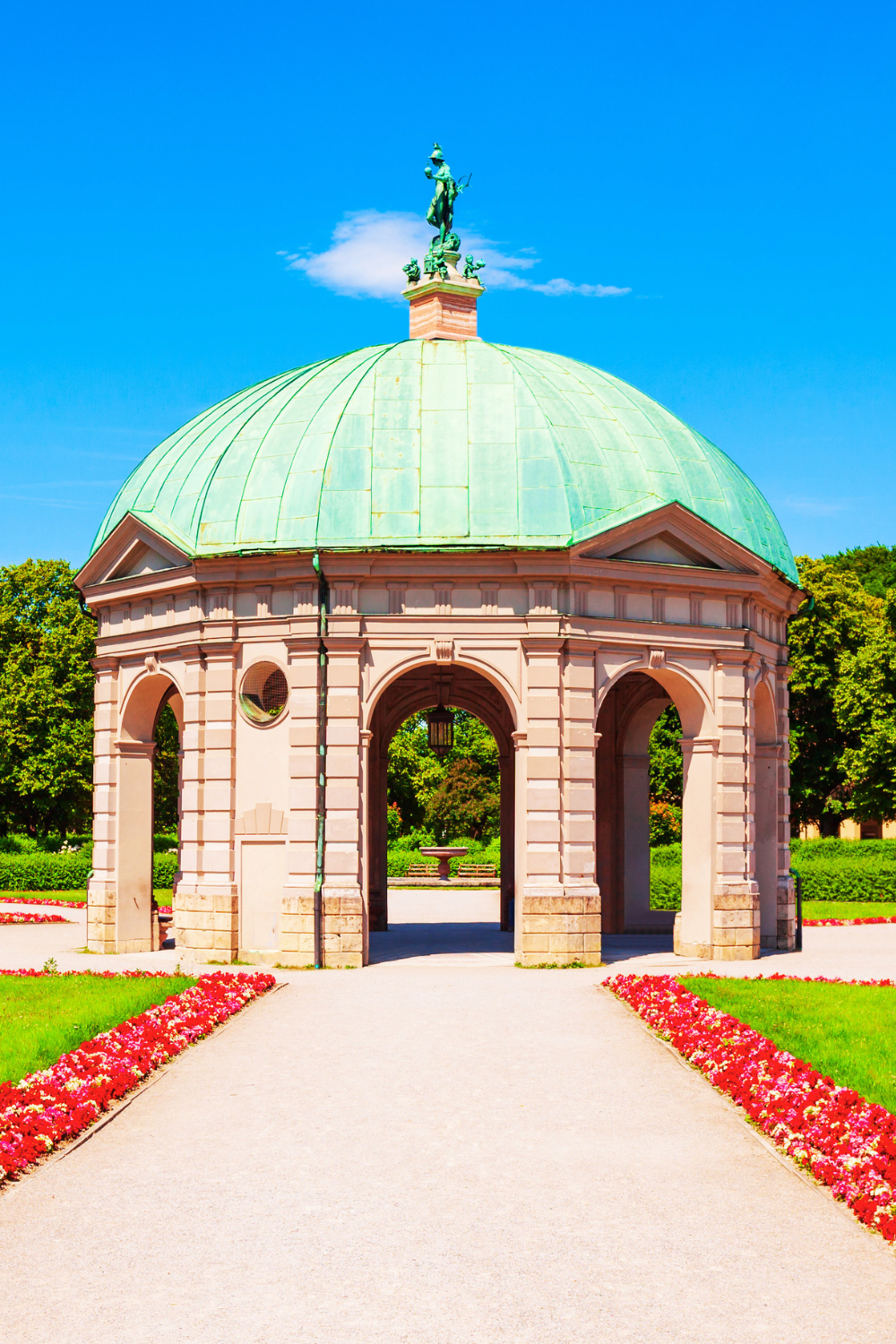
Directly behind the Residence, the Hofgarten (Court Garden) extends across a broad area of formally arranged terraces, fountains, pergolas and immaculate flowerbeds that together constitute one of the finest Baroque gardens in Germany.
The garden is structured in the French formal style, with symmetrical planting beds, clipped hedges and gravel paths radiating from central fountains and statues. The wrought-iron gates at the garden’s edges are extraordinary pieces of decorative craftsmanship, opening views through to the surrounding vineyards and the fortress on the hill. The Orangerie running along one side of the garden is beautiful in itself and hosts concerts and cultural events during the summer months.
Entry to the Hofgarten is free, which makes it one of the most rewarding no-cost experiences in the city. In the late afternoon when the light falls across the garden at a low angle and the Residence glows golden behind it, it is genuinely one of the most beautiful sights in Bavaria. Pack a picnic, find a bench near the fountain, and stay longer than you planned.
3. Fortress Marienberg — History, Views and Franconian Wine in a Medieval Hilltop Castle
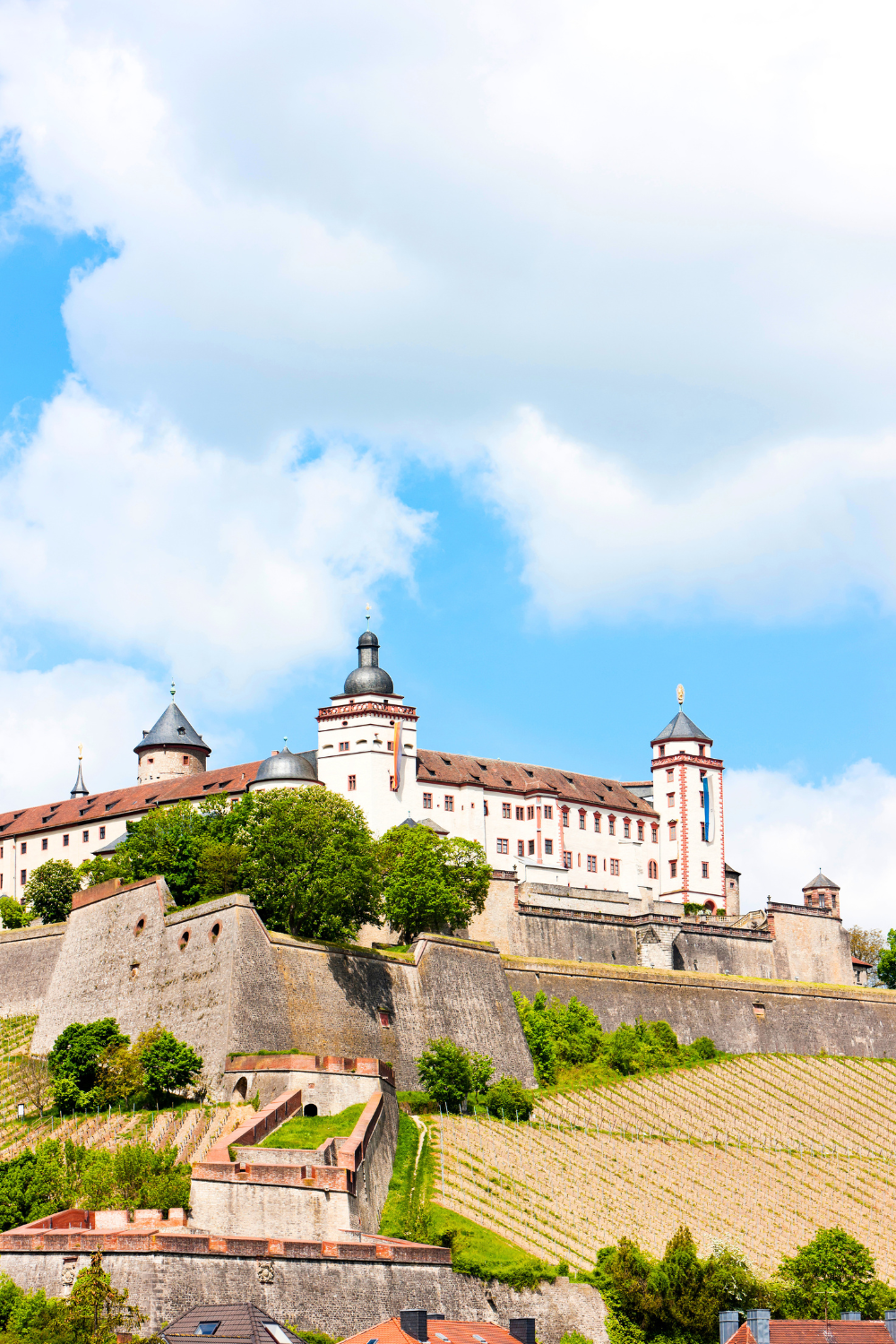
The Marienberg Fortress has watched over Würzburg from its hilltop above the Main River for the better part of three thousand years. The site was originally a Celtic fortification, then a Roman and then a Frankish-Thuringian stronghold before the medieval fortress was established in the 13th century. The prince-bishops used it as their primary residence until the completion of the Residence in 1744, and it served as a military stronghold right through into the modern era.
Getting up to the fortress is part of the experience. The walk from the Alte Mainbrücke takes about twenty minutes through increasingly steep paths lined with vineyards, and the views that open up behind you as you climb are spectacular — the whole of Würzburg spreading across the Main valley below, the river winding through it and the Residence visible on the far side of the old town. There is also a road if the walk feels ambitious.
The fortress complex contains the Museum für Franken, an excellent regional art and history museum with a collection covering Würzburg and Franconia from the earliest times through to the 20th century. The highlights include a series of sculptures by Tilman Riemenschneider, the great late-Gothic sculptor who worked in Würzburg and whose work is among the finest medieval sculpture anywhere in Germany.
The views from the fortress ramparts are the finest in the city, looking out over the Main valley and the surrounding vine-covered hills in every direction. There is a wine tavern within the fortress walls where you can sit with a glass of local Franconian wine and look out over everything the prince-bishops once surveyed with equally proprietorial satisfaction.
4. The Alte Mainbrücke — The Heart and Soul of the City
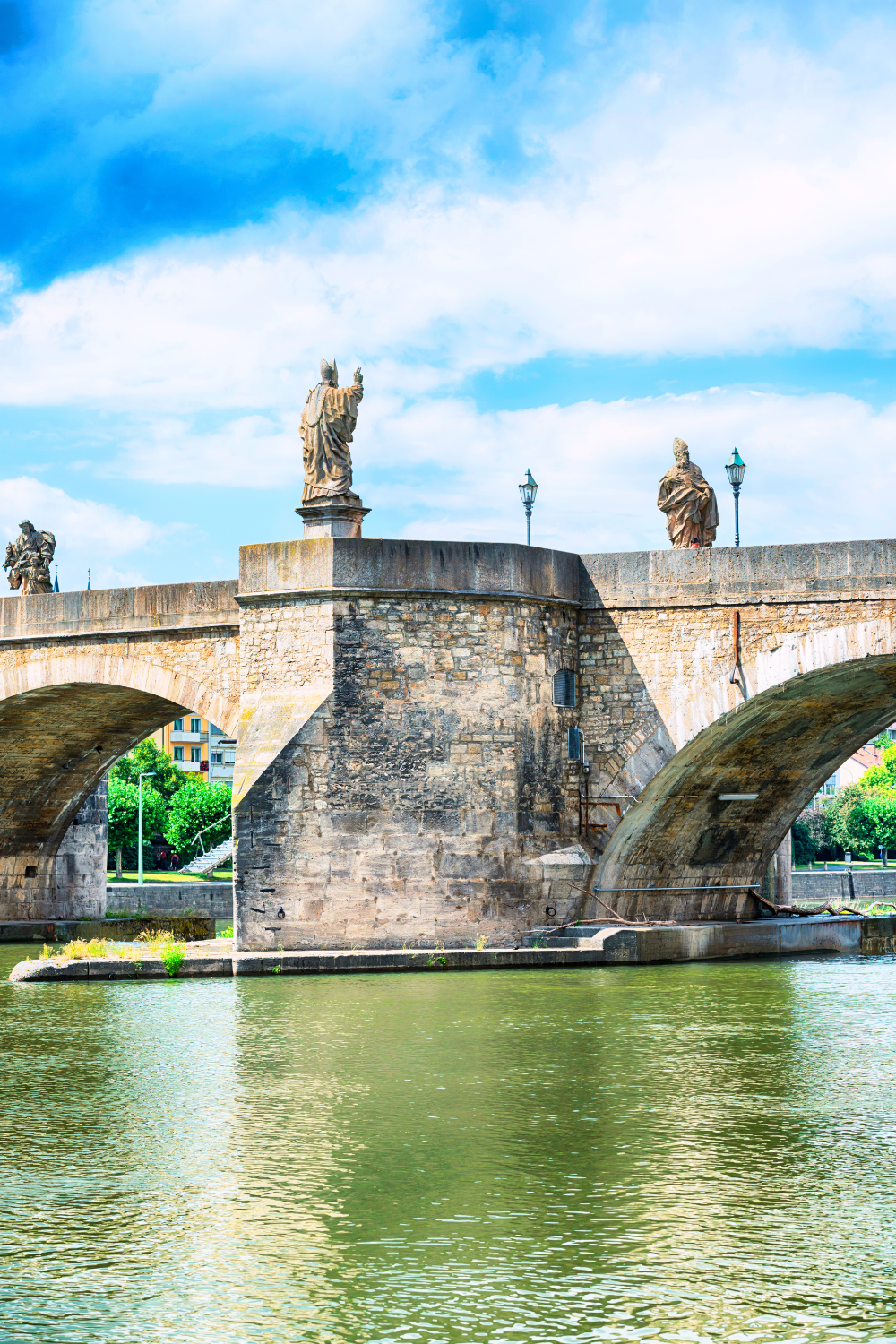
If you visit Würzburg and fail to spend meaningful time on the Alte Mainbrücke, you haven’t really been to Würzburg. This is the statement I am prepared to stand by entirely.
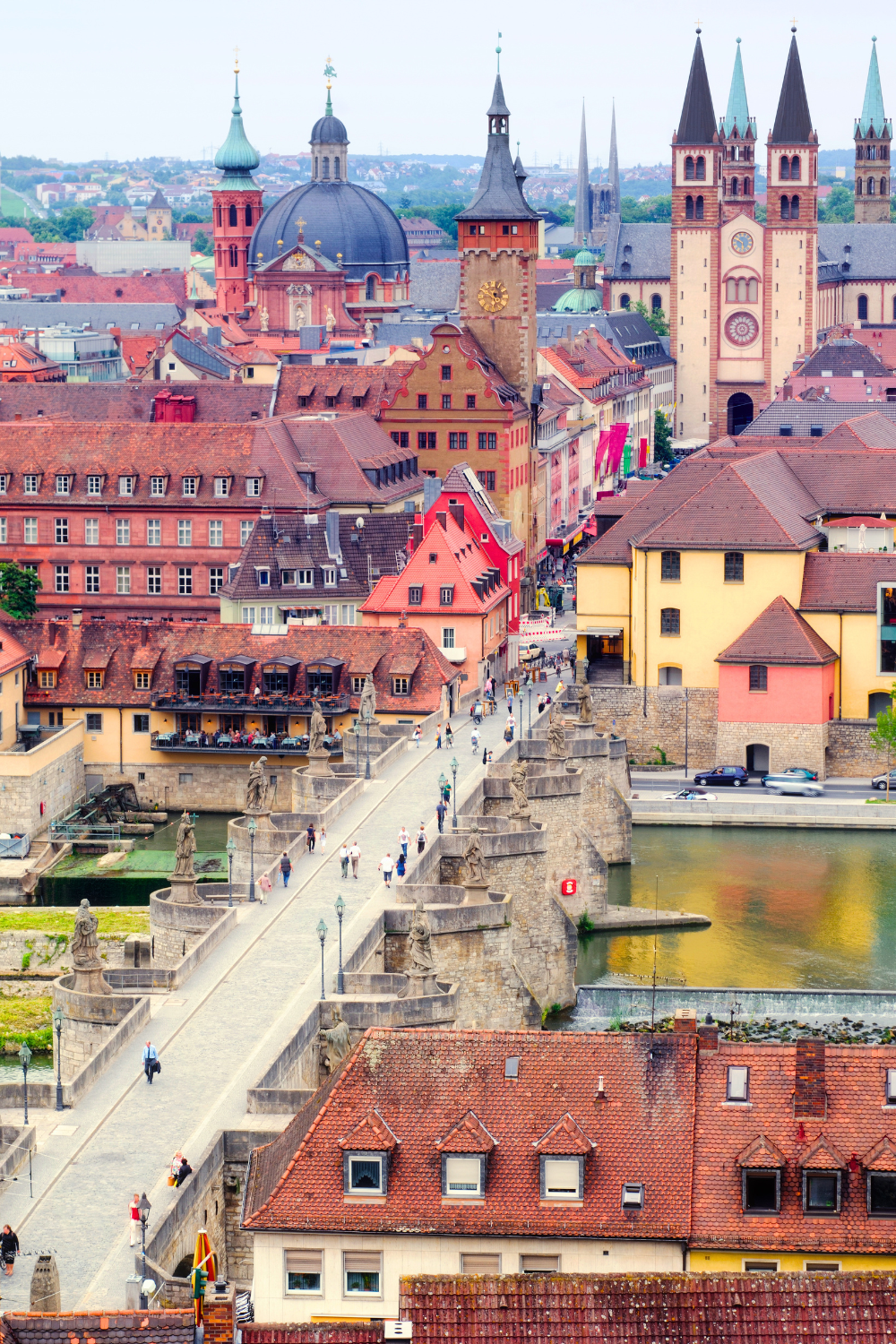
The Old Main Bridge, built in its current form in the 15th century, is the oldest stone bridge in Bavaria and one of the finest medieval bridges in Germany. It stretches 180 metres across the Main River and is lined on both sides by twelve life-sized sandstone statues of saints and significant historical figures, installed between 1730 and 1745 as part of the same period of extraordinary artistic productivity that produced the Residence. The statues have an immediate, slightly theatrical quality — they gesture, they declaim, they point at things — and the whole ensemble, reflected in the river below, is strikingly beautiful.
But the Alte Mainbrücke is much more than a historical monument. It is the social centre of Würzburg, the place where the city comes to gather, particularly on warm evenings when the whole population seems to converge on the bridge for outdoor drinking and conversation. Small wine kiosks on the bridge sell glasses of local Franconian wine, people stand at the parapet watching the river go by and the whole scene has an ease and a pleasure about it that is very specifically Würzburg.
From the bridge, you get the best views of both the fortress above on one side and the Alte Mainmühle restaurant on the other, with the old town rising behind it. The light at sunset from this bridge is genuinely extraordinary — the sandstone statues turn gold, the river catches the colours and the fortress above completes the picture. This is the view that defines Würzburg.
5. Würzburg Cathedral and the Neumünster — Two Extraordinary Churches in the Old Town
Würzburg has an embarrassment of ecclesiastical riches but the two churches that really deserve your time are right next to each other in the heart of the old town and together constitute a genuinely remarkable concentration of religious architecture.
The Cathedral of St Kilian — Würzburg Dom — is the fourth largest Romanesque church in Germany, a massive, four-towered structure that has dominated the city skyline since the 11th century. The exterior is severe and imposing in the way that Romanesque architecture is meant to be. The interior is considerably more complex, having accumulated additions, alterations and embellishments across nine centuries — a result that should feel incoherent but instead creates a genuinely fascinating layered reading of architectural history. The cathedral contains several important sculptures by Tilman Riemenschneider, including tomb monuments of particular quality.
The Neumünster directly next to the cathedral is an entirely different experience. This is a Baroque collegiate church built in the early 18th century with a richly decorated red and white Baroque facade and an interior of considerable warmth and elaboration. Behind the church, hidden from the main street through an archway, is the Lusamgärtlein — a small, intimate Romanesque cloister garden that is one of the most peaceful spots in the city. In this garden stands the tomb of Walther von der Vogelweide, the greatest medieval German lyric poet, who died around 1230. Finding it feels like a genuine discovery even when you know it’s there.
6. The Marktplatz and the Falkenhaus — The Beautiful Heart of the Old Town
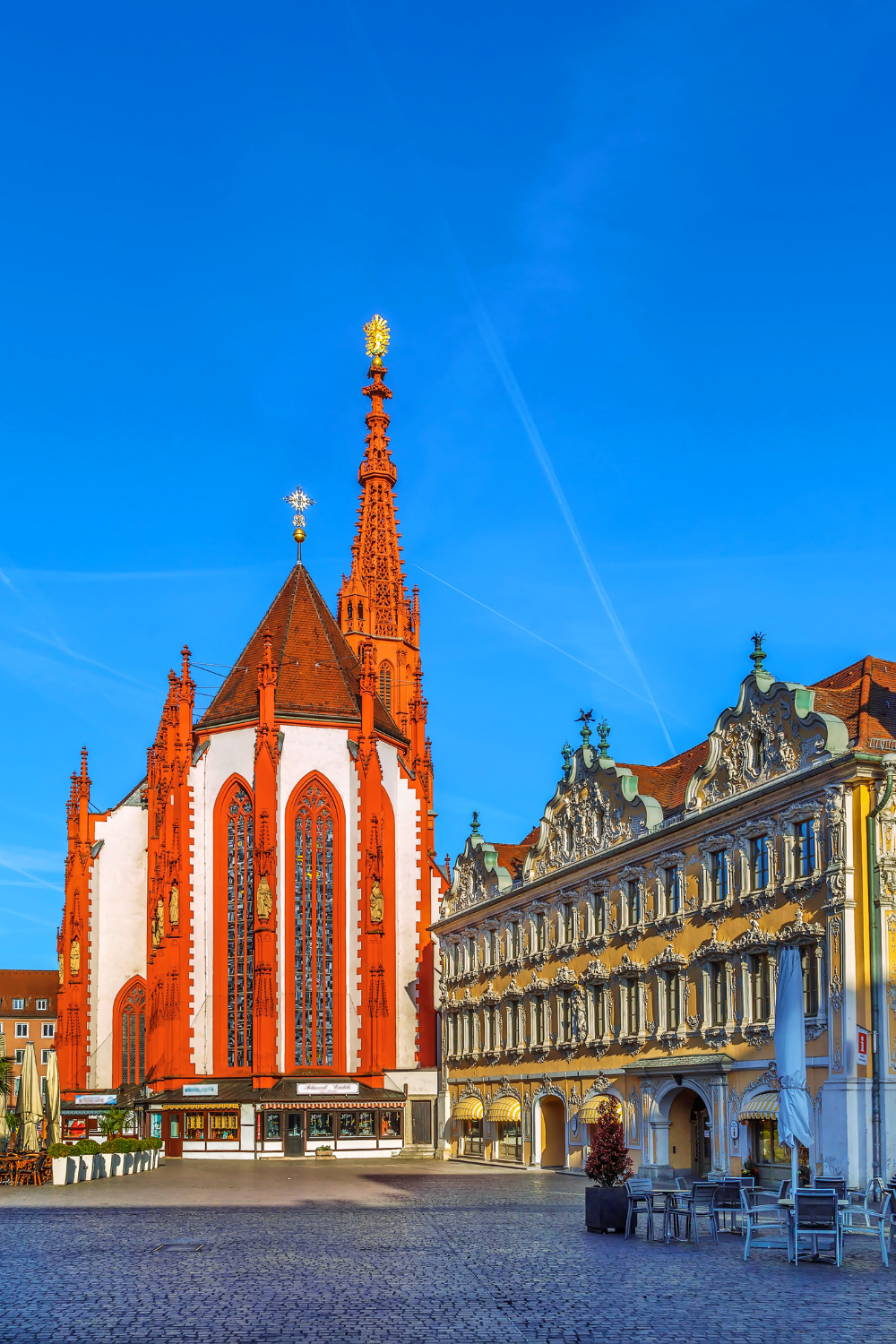
The Marktplatz (Market Square) is one of the most handsome town squares in Germany and the natural hub around which the everyday life of Würzburg organises itself. The square hosts a daily fresh produce market that has been running on this site for centuries, and the combination of the market activity, the surrounding buildings and the views up to the cathedral towers makes it one of those squares that you keep finding yourself walking back through.
The building that stops everyone in their tracks is the Falkenhaus (House of the Falcon) on the north side of the square — an 18th-century building with a facade of extraordinary Rococo stucco decoration, all swirling organic forms and elaborate ornamentation in white and ochre. It is genuinely one of the finest Rococo facades in Bavaria and the fact that it sits on an ordinary town square rather than in a palace complex makes it all the more startling to encounter. The building now houses the city’s tourist information office, which is both practical and somewhat anticlimactic given the magnificence of its exterior.
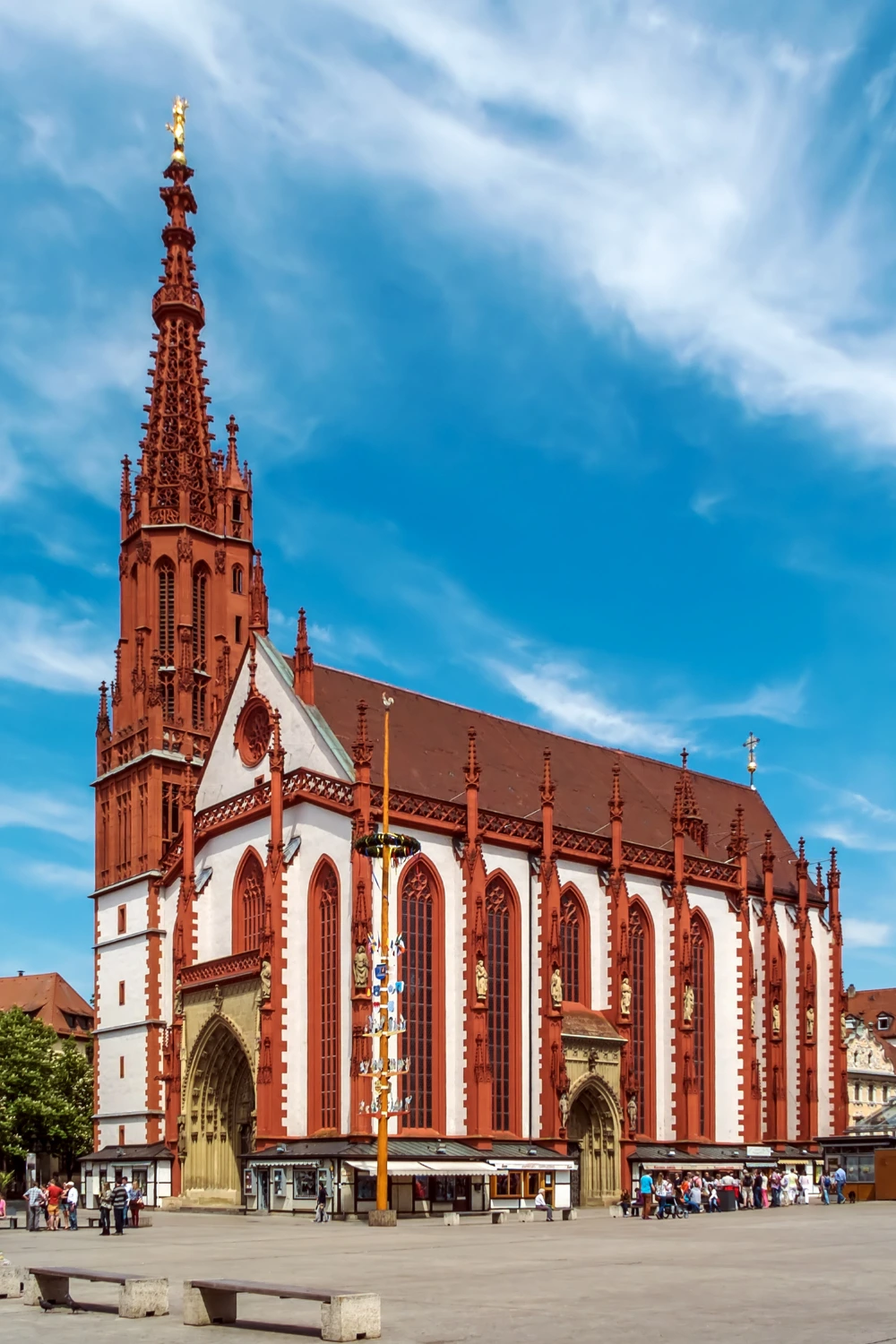
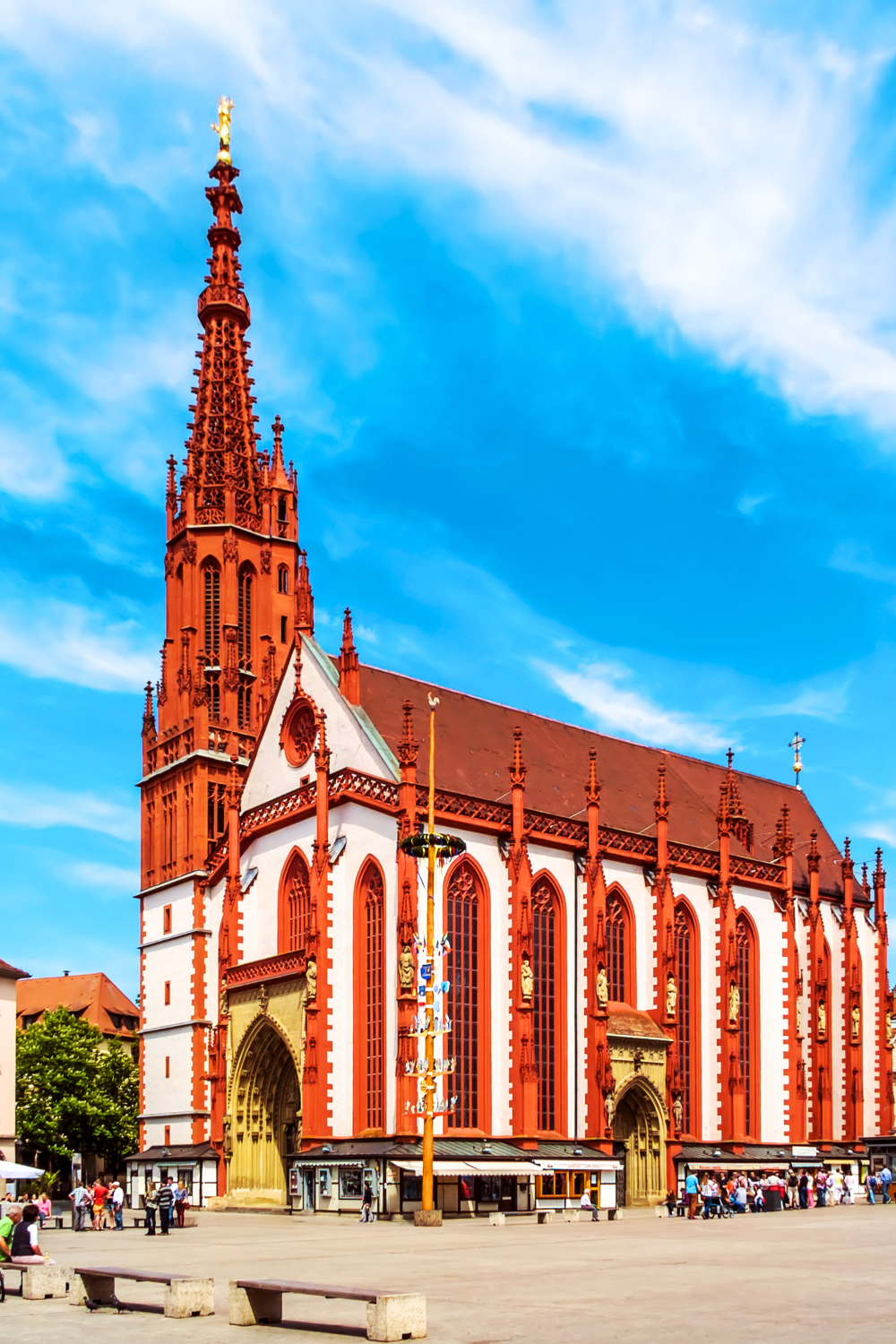
The Church of Our Lady (Marienkapelle) on the square is a beautiful late-Gothic church with an elegant exterior decorated with numerous sandstone figures, several of them original works by Tilman Riemenschneider. The church’s position on the busy market square, surrounded by café tables and market stalls, gives it an unexpectedly cheerful character.
7. Franconian Wine Tasting — Drinking the Best Thing Würzburg Makes
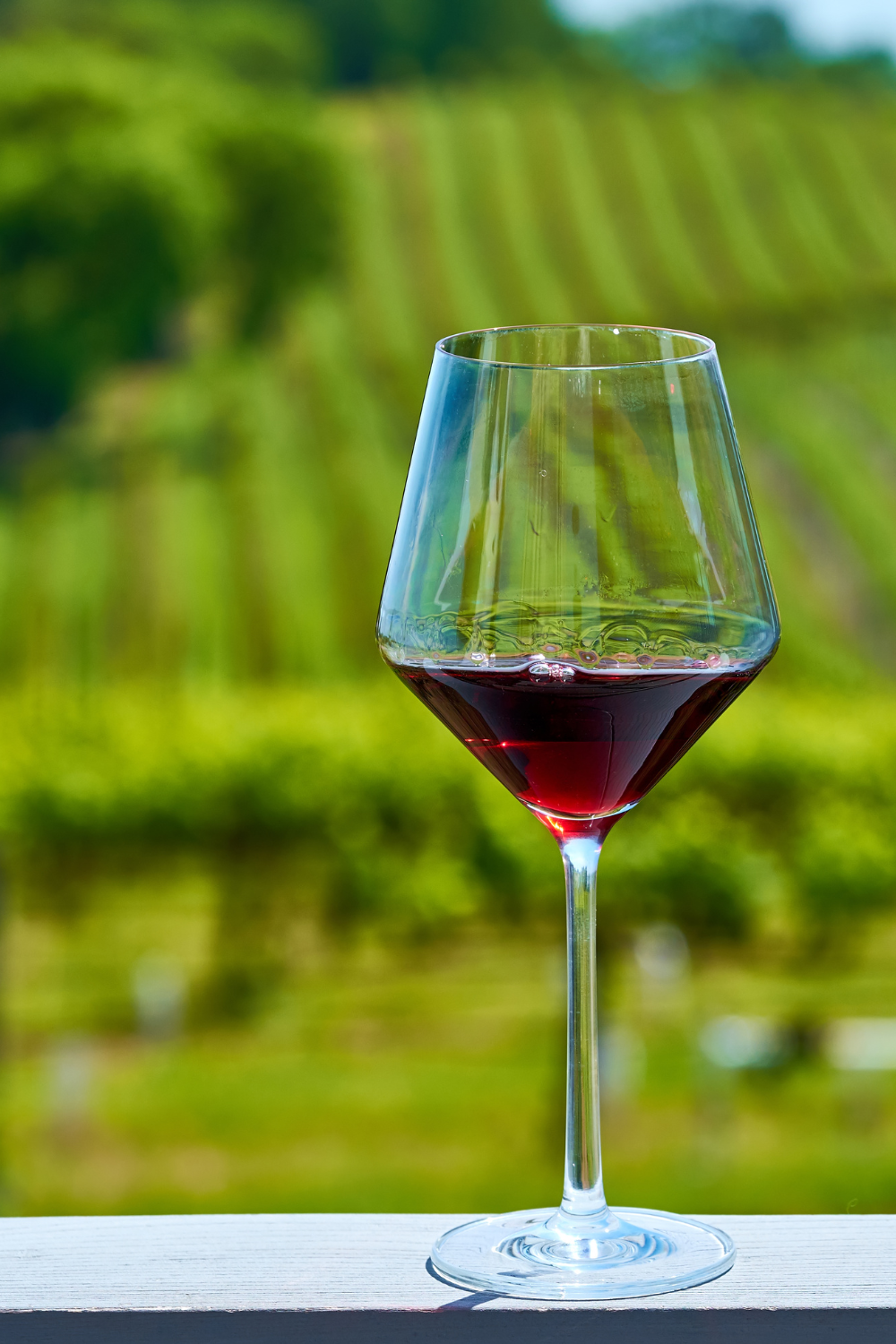
Würzburg is the wine capital of Franconia, and Franconia is one of the most distinctive and least internationally famous wine regions in Germany. The wines produced here — predominantly dry whites from the Silvaner, Müller-Thurgau and Bacchus grapes — are fuller-bodied and drier than the wines most people associate with Germany, with a distinctive mineral character that comes from the limestone and sandstone soils of the Main valley. They are served, most distinctively, in the squat, round-bellied Bocksbeutel bottle that is unique to this region and is one of those very specific objects that says where you are with absolute clarity.
The three great historic wine estates in Würzburg are the Juliusspital, the Bürgerspital and the Staatlicher Hofkeller, each with centuries of history behind them and each offering wine tastings and cellar tours. The Bürgerspital in particular is worth seeking out — it was founded in 1319 as a hospital endowment, and to this day its profits help fund healthcare and social services in Würzburg, which gives the wine you buy there a pleasingly purposeful quality. The cellar beneath the Bürgerspital is extraordinary, running for several hundred metres under the old town and containing barrels that have been in continuous use for generations.
The most pleasurable way to drink local wine in Würzburg, however, is simply to buy a glass from one of the wine kiosks on the Alte Mainbrücke and stand at the parapet in the evening sun. This is what the city does, this is what it has done for centuries, and it is one of those travel moments that requires no planning, no booking and no particular effort — just the right glass of wine and the right bridge at the right time of day.
8. The Käppele — The Pilgrimage Church with the Best Views in the City
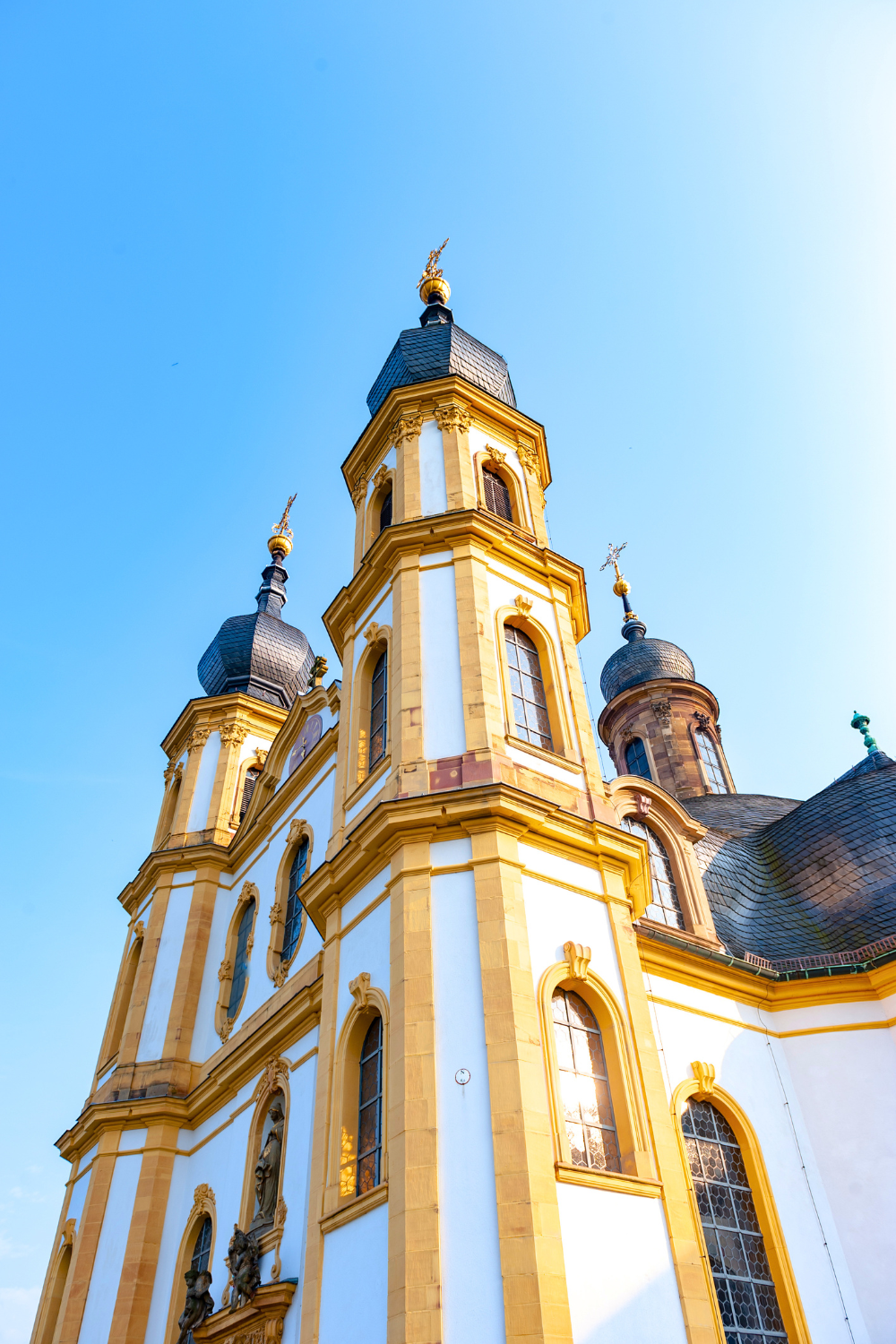
The Käppele is one of those places that people who know Würzburg insist on and first-time visitors frequently miss because it’s on the hillside above the city rather than in the compact old town where most of the main sights are concentrated. This is a mistake worth correcting.
The Käppele is a pilgrimage church built by Balthasar Neumann in the 18th century, sitting on a steep hillside opposite Fortress Marienberg with a broad flight of covered steps climbing up to it through chapels containing life-size sculpted figures depicting the Stations of the Cross. The church itself is a beautifully proportioned Rococo building with an interior of considerable charm, but the real reason to make the climb is the view from the terrace outside.
From the Käppele you look out over the entire Main valley with the old town below you, the river winding through the vineyards, the fortress on the opposite hill, the cathedral towers rising above the rooflines and the Residence visible in the distance. It is the comprehensive view of Würzburg, the one that puts everything you’ve been visiting into its proper landscape context, and it is significantly better than anything you get from the fortress because the angle is different. Come in the late afternoon for the best light, and allow time to sit on the steps and take it in properly.
9. A River Cruise on the Main — The City from the Water
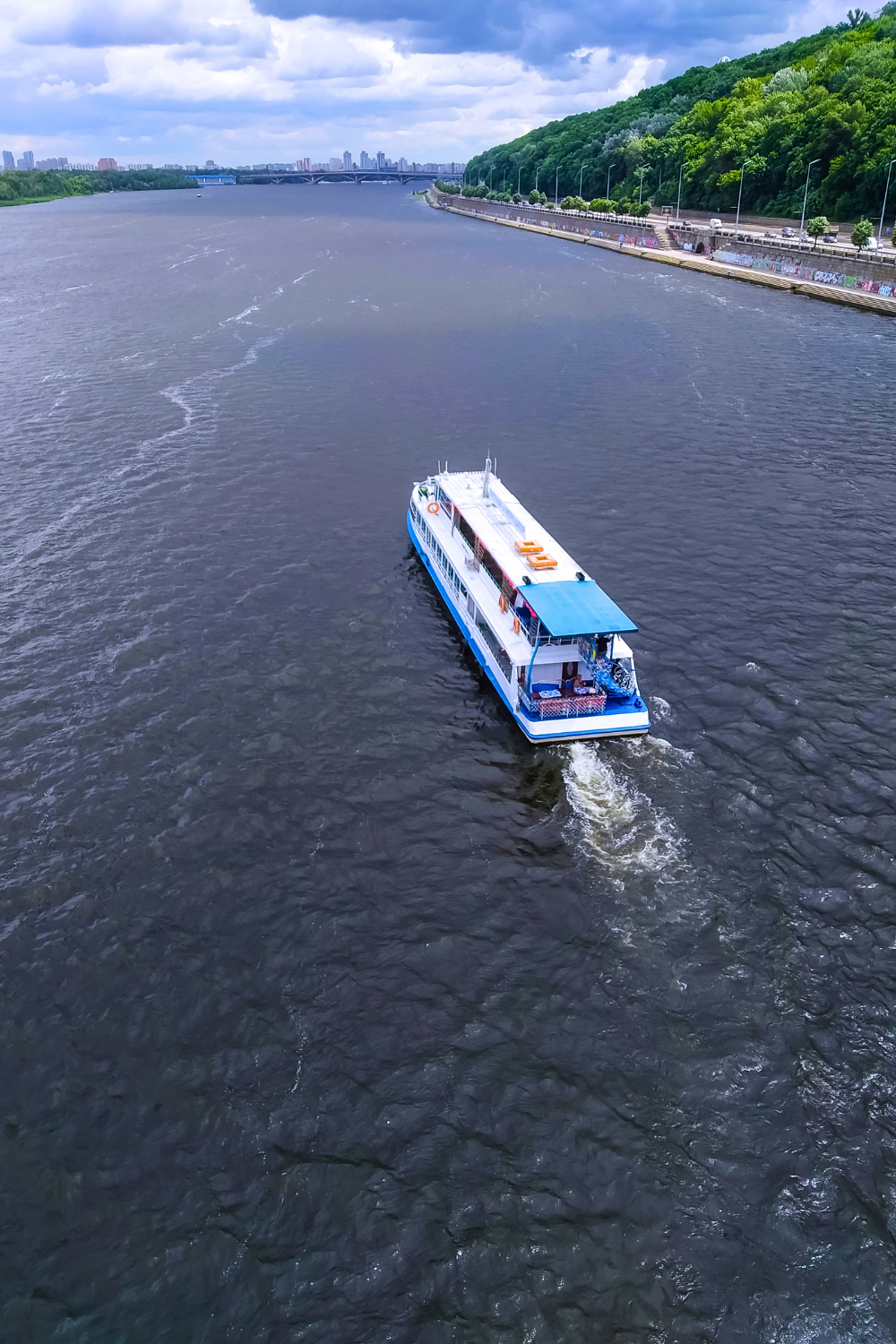
One of the most enjoyable and most underused ways to see Würzburg is from the Main River, and the boat trips that run from the Alter Kranen dock on the city waterfront do exactly that in a thoroughly pleasant fashion.
The standard river cruise runs downstream from Würzburg through vineyards and alongside the Oberzell Monastery to the small town of Veitshöchheim, where you can disembark and visit the extraordinary Rococo gardens of the summer palace of the Würzburg prince-bishops. The Veitshöchheim Palace gardens are one of the best-preserved and most elaborate Rococo garden ensembles in Germany, a slightly surreal world of fountains, sculptures, grottos and clipped hedges that feels entirely different from the formal French-influenced Hofgarten at the Residence.
The boat trip itself is lovely — moving through the vine-covered landscape at river level, with the fortress visible above and the vineyards stretching up the hillsides on both sides, is one of those unhurried pleasures that puts a trip to Würzburg in its proper setting. The wines you drink at the riverside afterwards seem to taste better for having seen where they come from.
10. The Romantic Road — Würzburg as a Gateway to Germany’s Most Famous Drive
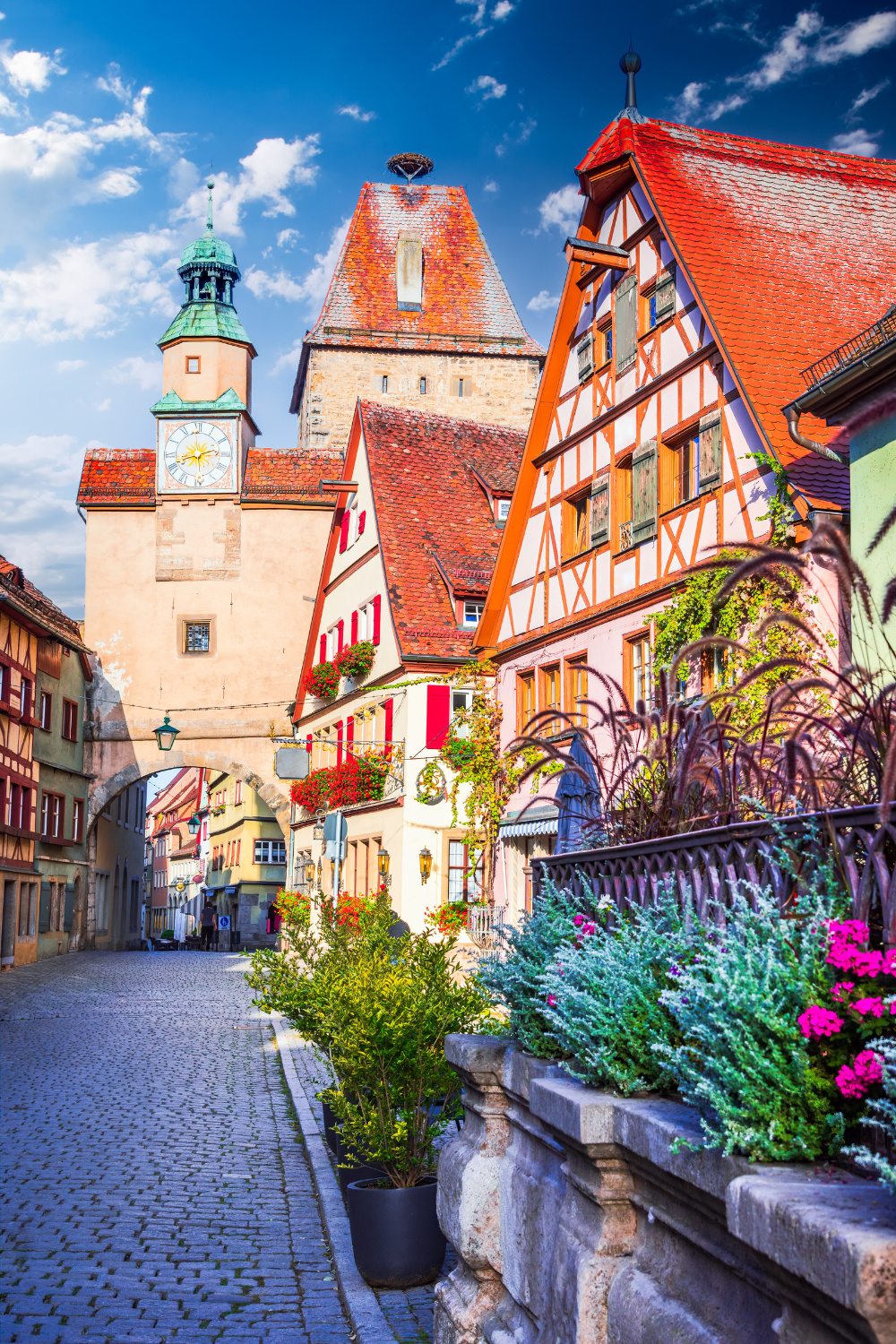
Würzburg is the official northern starting point of the Romantische Straße, the Romantic Road that winds southward for 460 kilometres through some of the most beautiful landscapes and best-preserved medieval towns in Germany, ending at Füssen near the Austrian border and Neuschwanstein Castle.
The towns on the Romantic Road south of Würzburg include some of the finest in Germany. Rothenburg ob der Tauber, about 45 minutes south, is the most perfectly preserved medieval walled town in Germany — a slightly implausible collection of half-timbered houses, fortified towers and cobbled squares that has survived essentially intact since the 15th century and rewards an overnight stay enormously once the day-trip coaches have left. Dinkelsbühl is less visited and equally beautiful. Nördlingen is a medieval town built inside a meteorite crater, surrounded by perfectly preserved city walls that you can walk the entire circuit of. Further south, the Bavarian Alps come into view and the landscape becomes increasingly dramatic before the road ends at Neuschwanstein.
If you have a car, the Romantic Road is one of those drives that genuinely justifies the route. The landscape is varied, beautiful and full of things to stop for, the towns are remarkable and the southern end delivers Alpine views and fairy-tale castles that are worth everything it takes to get there. Würzburg, with its Residence and its wine and its beautiful old town, is the perfect place to begin.
Practical Tips for Visiting Würzburg
Würzburg is easily reached by train from Frankfurt in about an hour and from Munich in around two hours, making it an excellent day trip from either city while genuinely deserving more than a day. The old town is compact and very walkable — most of the main sights are within fifteen minutes of each other on foot, though you will need to cross the river or climb the hill for the fortress and the Käppele.
The best time to visit is from April through October, when the outdoor wine drinking on the Alte Mainbrücke is in full swing, the Hofgarten is at its most beautiful and the river cruises are running. Würzburg also has an excellent Christmas market in December, centred on the Marktplatz with the cathedral as its backdrop, which is one of the finer German Christmas markets.
The Würzburg Card gives you entry to multiple museums and discounts on various attractions and is worth considering if you’re staying for two or more days. Book the Residence in advance for peak summer months and arrive early to avoid the largest tour groups.
Whatever brings you to Würzburg — the Baroque architecture, the wine, the start of the Romantic Road or simply a gap in your German itinerary — the city will give you considerably more than you came for. That’s the thing about genuinely good travel destinations: they always do.


One Response