
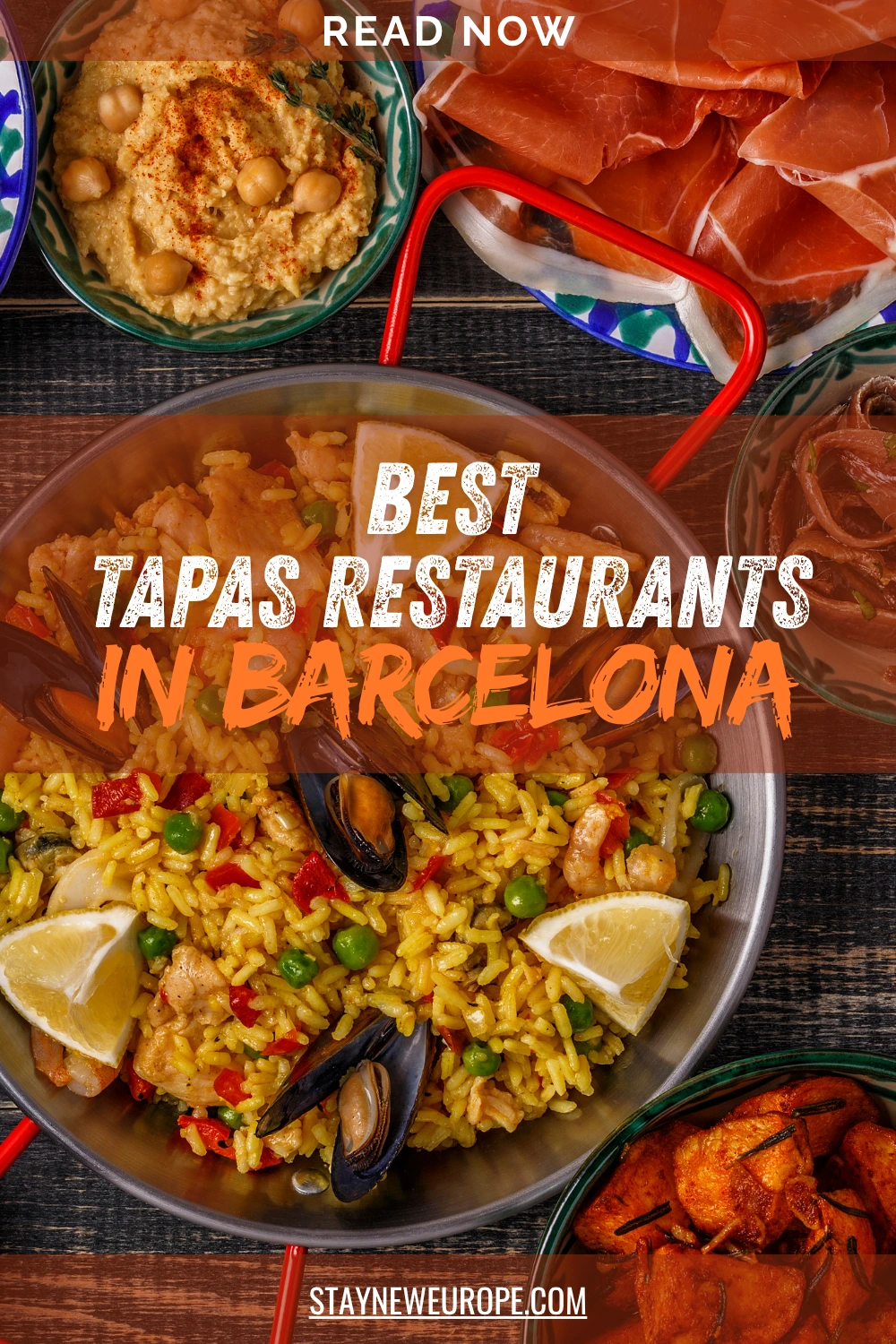
Barcelona has a way of making you forget that eating is supposed to be a practical activity. You arrive with a sensible plan — see Gaudí, walk Las Ramblas, visit the beach — and somewhere around day two you realise you’ve spent more time eating than doing anything else, and you have absolutely no regrets about it.
The city’s tapas culture runs deep. This isn’t the watered-down, tourist-trap version you find in the airport bars. I mean the real thing: small plates with enormous flavour, shared across marble countertops and sticky wooden tables, washed down with cold cañas and local vermut, in places where the owner’s grandmother’s photo is still on the wall. Once you find your way into that Barcelona, you don’t really want to leave.
I’ve eaten my way through more tapas bars in this city than I can sensibly count, and I’ve compiled the best of them here — from legendary neighbourhood institutions that haven’t changed in fifty years, to the newer places that are quietly rewriting what Catalan tapas can be. Whether you’ve got one night or two weeks, this guide will make sure you eat very, very well.
Before We Start: A Word About Eating in Barcelona
Tapas culture in Barcelona is slightly different from the rest of Spain, and it’s worth knowing this before you go. In Seville or Granada, many bars still give you a free tapa with every drink — in Barcelona, that tradition mostly doesn’t apply. Here, you order and you pay, but what you get in return is a city that has taken the small-plate concept and elevated it to something genuinely world-class.
Barcelona also eats late. Lunch is the main meal of the day and runs from 2pm to 4pm. Dinner rarely starts before 9pm — turn up at a restaurant at 7:30pm and you’ll be eating alone among the staff. The sweet spot for bar tapas is the pre-dinner vermouth hour, roughly 6pm to 8pm, when the city spills out onto the streets and the bars fill with locals doing what locals do: eating jamón, drinking cold wine, and talking very loudly about everything.
A note on neighbourhoods: El Born and the Gothic Quarter are the most obvious tapas territories, but some of the best places are in Barceloneta (the old fishing quarter), Poble Sec, Gràcia, and the Eixample. Don’t limit yourself to the tourist centre — the further you walk, the better it often gets.
One more thing: reservations. Some of these places don’t take them. Some open at strange hours. I’ve noted the key details for each, but always double-check before you go — Barcelona restaurants can be inconsistent, and the good ones are always busy.
1. Bar del Pla
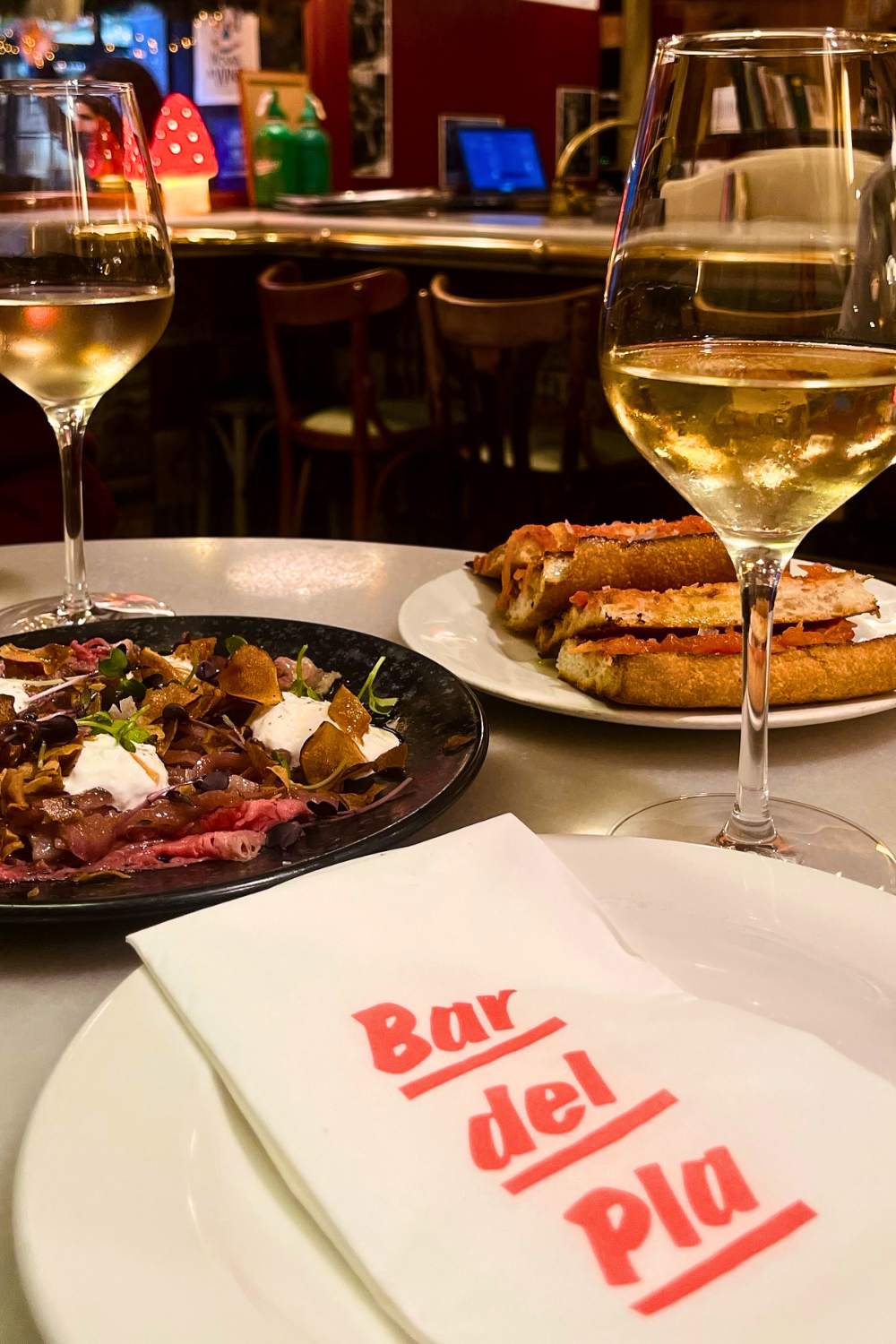
If you ask a Barcelona local — not a Barcelona expat, not a Barcelona-based food blogger, but someone who was actually born here — where they’d go for tapas tonight, Bar del Pla is probably in the first three answers. That consistency, sustained over years, tells you everything.
📍 Carrer de Montcada, 2, El Born | 💰 €€
Tucked just off the Carrer de Montcada in El Born — one of the most beautiful medieval streets in the city — Bar del Pla manages to be both relaxed and exceptional at the same time. The room is warm and buzzy, the staff are genuinely friendly rather than performatively so, and the wine list is carefully chosen without being intimidating. It’s the kind of place where you sit down for one tapa and end up staying three hours.
The menu changes with the seasons, which is always a good sign. The squid-ink croquettes are consistently magnificent — the béchamel inside is silky and deeply savoury, the coating perfectly crisp. The mushroom carpaccio with wasabi vinaigrette sounds like a fusion experiment but tastes like a revelation. And the Secreto Ibérico, the lesser-known but supremely tender “secret” cut from the shoulder of the Iberian pig, is one of the best pieces of pork I’ve had anywhere in Spain. Order it medium-rare and don’t apologise.
What lifts Bar del Pla above the crowd is the balance it strikes: the food is sophisticated enough to feel special, but the atmosphere is relaxed enough that you’re not performing enjoyment, you’re just having it. The wine pours are generous. The tables outside on the square are perfect in warm weather.
Local tip: The lunchtime menu del día is exceptional value and completely overlooked by tourists. Three courses with wine for around €15, using the same kitchen that runs the evening à la carte. Come between 1pm and 3pm on a weekday and you’ll eat like a local at a fraction of the evening price.
2. El Xampanyet
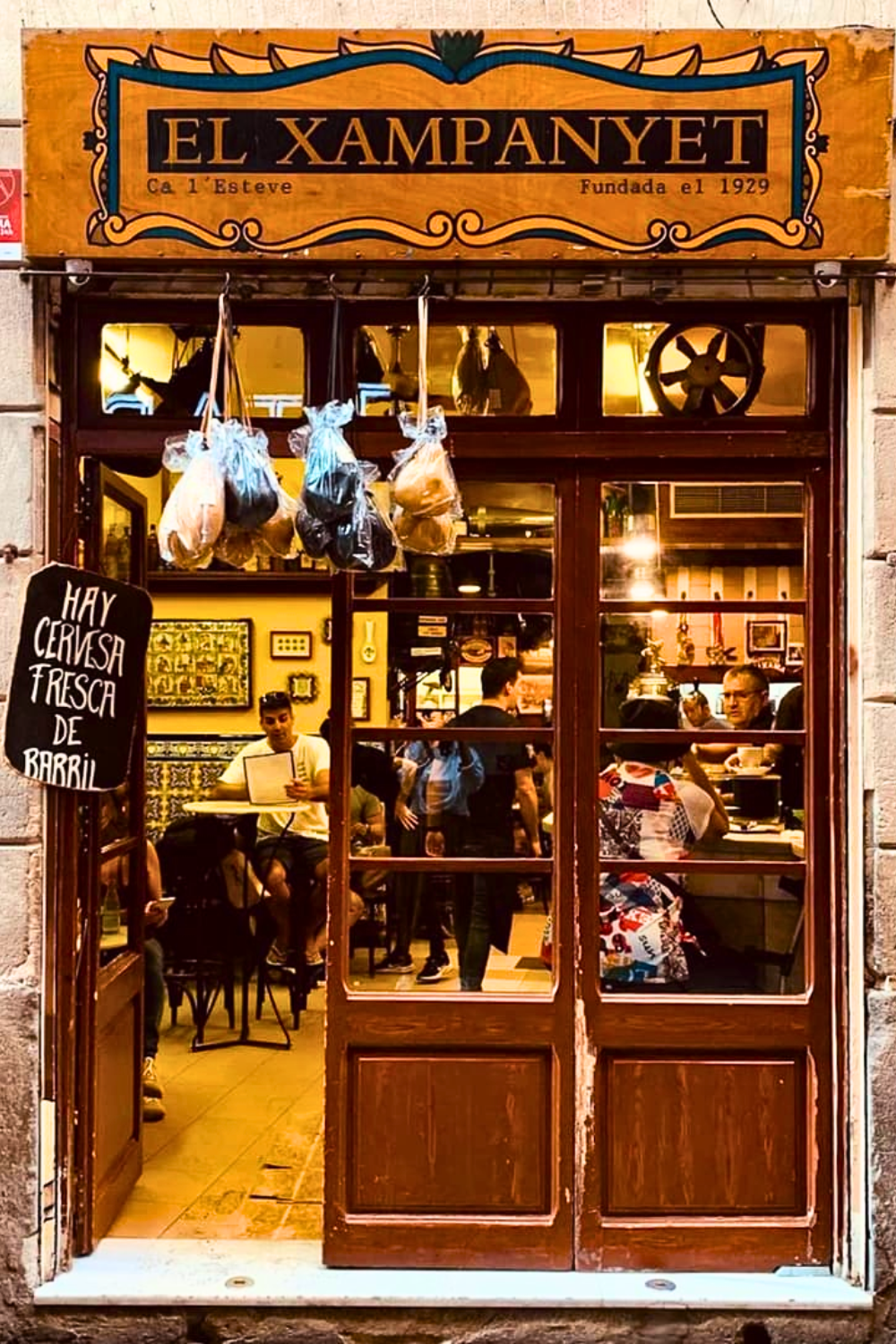
There are bars in Barcelona that feel like they’ve been there since before Barcelona was Barcelona. El Xampanyet, tucked down a side street in El Born, is one of them — and spending an evening there feels less like visiting a restaurant and more like stepping into a piece of the city’s living history.
📍 Carrer de la Montcada, 22, El Born | 💰 €
The room is tiled floor to ceiling in blue and white, the kind of tilework that takes decades to accumulate the right patina. Barrels line the walls. The house cava — the xampanyet that gives the bar its name, a slightly sweet Catalan sparkling wine — comes in small, slightly battered glasses and costs almost nothing. The anchovies, served simply on bread with a drizzle of oil, are among the finest I’ve eaten in Spain. Everything here has the quality of something that doesn’t need to try.
El Xampanyet is old school in the best possible sense. The family that runs it has barely changed the formula since the 1930s. You’ll find academics and artists and tourists and workers all crammed in together, talking over each other in four languages, because the kind of place this is transcends demographics. Arrive early — it fills fast and there’s no booking.
The classic order here is simple and perfect: a plate of the house anchovies, some sliced Manchego with quince paste, a couple of rounds of pan amb tomàquet (bread rubbed with fresh tomato and olive oil, the Catalan staple you’ll eat a thousand times during your trip), and several glasses of cold xampanyet. You don’t need to think harder than this.
Local tip: El Xampanyet is closed on Mondays and doesn’t open for lunch on Sundays. It’s the kind of information that ruins people’s plans. Check before you go, and if you’re planning a Barcelona visit specifically around eating here — which is entirely reasonable — plan your weekend around it.
3. Bar La Plata
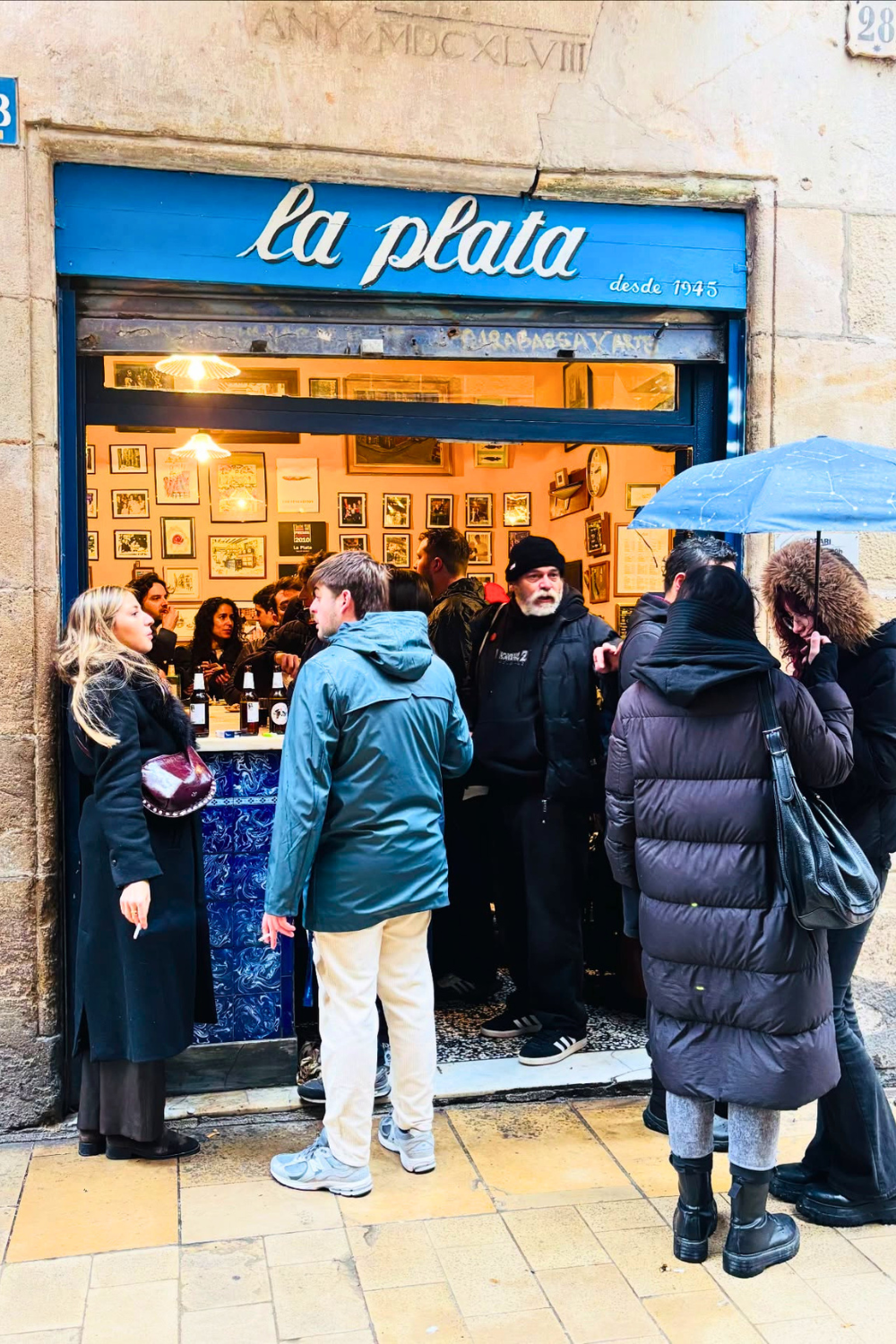
Bar La Plata has been standing at the same address in the Gothic Quarter since 1945, serving essentially the same four tapas it has always served, to an unchanging crowd of locals and an ever-rotating cast of visitors who find it and feel immediately that they’ve stumbled onto something real. Because they have.
📍 Carrer de la Mercè, 28, Gothic Quarter | 💰 €
The bar is tiny, the marble counter faces the street, and the four things on the menu are anchovies, sausage, tomato salad, and fried fish. That’s it. In a city full of elaborate tasting menus and fusion small plates, Bar La Plata’s stubborn simplicity is practically a manifesto. And the anchovies — boquerones fritos, fresh and lightly battered — are among the most purely delicious things in Barcelona. The wine comes from barrels behind the bar and costs almost nothing.
Let me be honest with you: the first time I walked past, I thought it looked too simple, too bare, almost aggressively unpretentious. I was completely wrong. Places that survive eighty years without changing the menu do so because they got it right the first time. The standing-at-the-bar experience, elbow to elbow with strangers, shouting your order over the noise of the street, is exactly what tapas culture is supposed to feel like.
Weekends get genuinely packed, and there’s no such thing as a table reservation. This is a stand-up, drink-your-wine, eat-your-fish, move-on kind of place. Embrace it.
Local tip: The house wine poured from the barrel is the correct choice here. Don’t overthink it. It’s cheap, it’s cold, it’s perfectly good, and ordering it is the natural thing to do. Asking for anything fancy in Bar La Plata would be like bringing your own bread to a bakery.
4. Quimet y Quimet
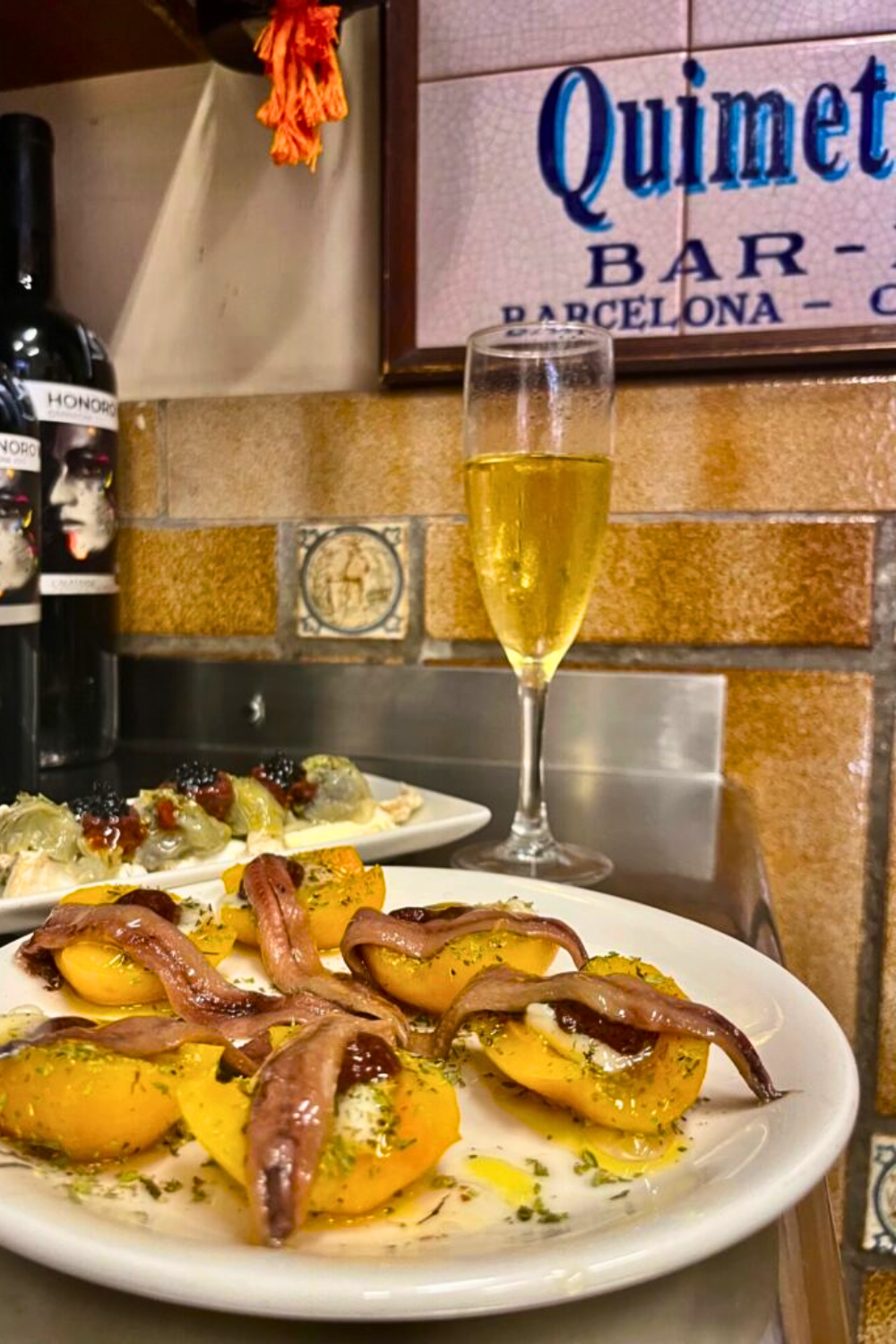
Quimet y Quimet is the kind of place that food writers get evangelical about, and I completely understand why, because the first time I went I walked out ten minutes later having eaten four things I’d never tasted before and immediately needed to tell someone about it.
📍 Carrer del Poeta Cabanyes, 25, Poble Sec | 💰 €€
The room is standing-room only, floor-to-ceiling shelves of tinned fish and conservas covering every wall, the bar barely wide enough for two people to pass each other. The owners — four generations of Quimets — specialize in montaditos, small open-faced bites built on slices of bread and piled with extraordinary combinations of ingredients from those shelves. The salmon with cream cheese, honey, and truffle. The sardine with sundried tomato and green olive. The tuna with caviar and pickled something-or-other. Each one is a small, precise, genuinely original flavour.
This is not traditional tapas. It’s something more inventive — a sort of artisanal conservas bar that has been running since 1914 and still makes everything to order in front of you while you watch and try not to point at things too obviously. The canned fish quality here is extraordinary: the anchovies, the mussels in escabeche, the cockles in brine. Spain takes its tinned fish seriously in a way that the rest of Europe still hasn’t quite caught up with, and Quimet y Quimet is the pinnacle of it.
Important practical note: it’s only open lunchtimes (approximately noon to 4pm) and closes entirely for summer (July and August). Check the current hours before planning your visit around it.
Local tip: Poble Sec is a fantastic neighbourhood to eat in generally, and Quimet y Quimet makes a natural starting point for a longer afternoon. Walk up Carrer de Blai afterwards — Barcelona’s most famous “pintxos street,” a strip of inexpensive bars doing Basque-style bar snacks — for round two.
5. Cal Pep
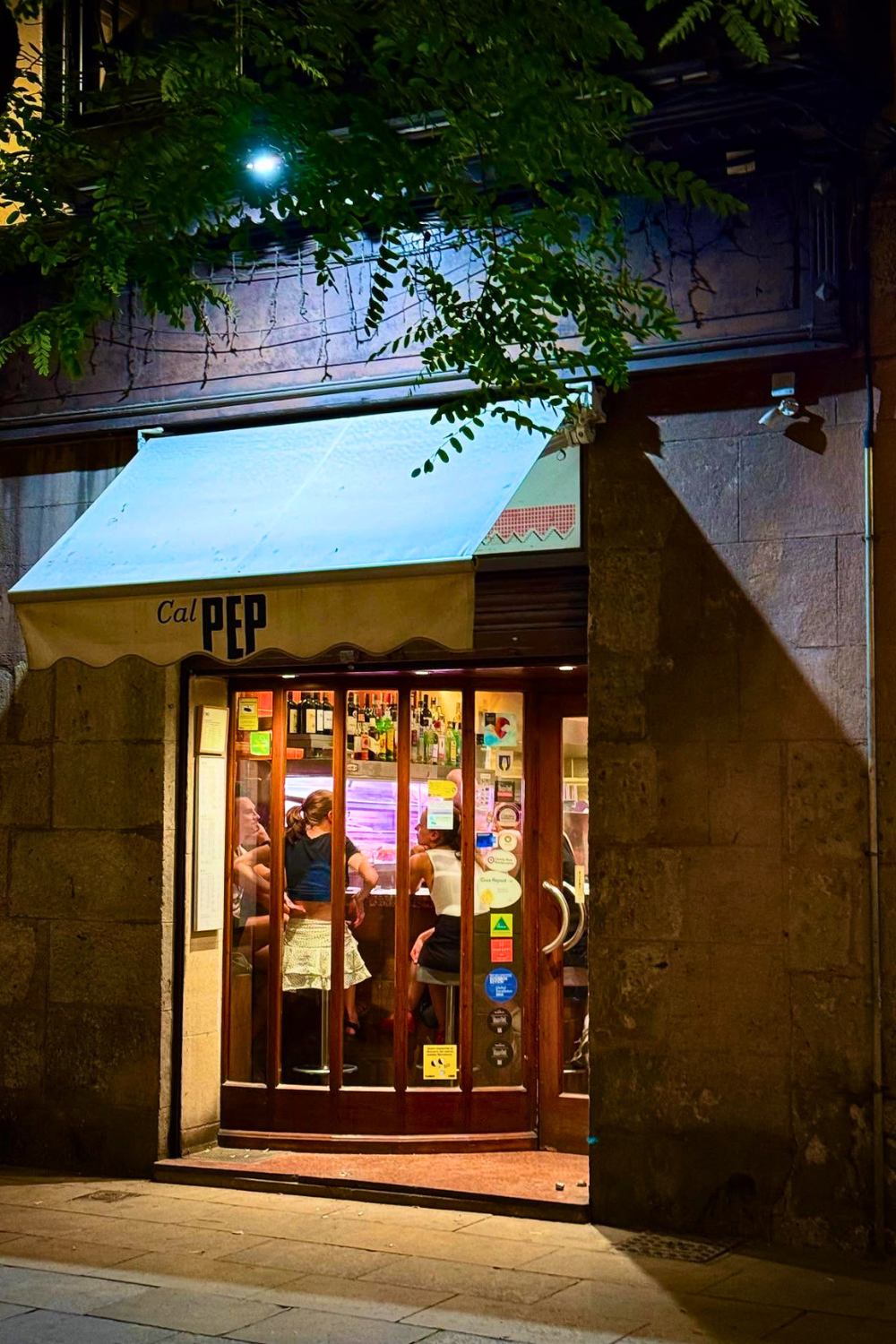
Cal Pep is an institution in the truest sense of the word — a packed, loud, marble-countered bar near the waterfront that has been serving what many people consider the finest seafood tapas in Barcelona for over forty years. The queue outside most evenings is, honestly, part of the experience.
📍 Plaça de les Olles, 8, El Born | 💰 €€€
The drill at Cal Pep is this: you queue, you get a stool at the counter (this is the correct place to sit — the tables at the back are fine, but the counter, where you can see everything being cooked and interact with the kitchen, is where the magic is), and then you eat whatever Pep or his team tells you to eat that day. Well, there’s technically a menu, but the right move is to ask what’s best and surrender to the expertise of the place.
The seafood here is impeccably fresh, cooked simply and correctly — flash-fried, on the plancha, with olive oil and garlic and nothing else superfluous. The sautéed clams are one of the great tapas dishes in the city. The crispy fried artichokes are a revelation. The small fried fish — whatever the fishmonger brought that morning — are perfect. Cal Pep understands that great ingredients cooked simply at the right temperature are more impressive than complexity.
The noise level is considerable and the pace is rapid. This is not a lingering dinner kind of place. It’s a come-hungry, eat-fast, drink-cold-white-wine, leave-happy kind of place, and there’s a particular joy in that.
Local tip: Cal Pep opens at 7:30pm for dinner and the queue forms before 8pm. Arrive at 7:25pm and you’ll often walk straight in. Arrive at 8:15pm and you’re looking at a forty-minute wait. Those forty minutes are the difference.
6. La Cova Fumada
Brace yourself for the origin story of one of the most famous tapas dishes in the world: La Cova Fumada, a thoroughly unglamorous bar in the fishing quarter of Barceloneta, is where the patatas bravas as we know them were invented — and also, most food historians agree, where the bombas was created. The bomba is the potato croquette stuffed with meat that is now found all over Barceloneta. It started here.
📍 Carrer del Baluard, 56, Barceloneta | 💰 €
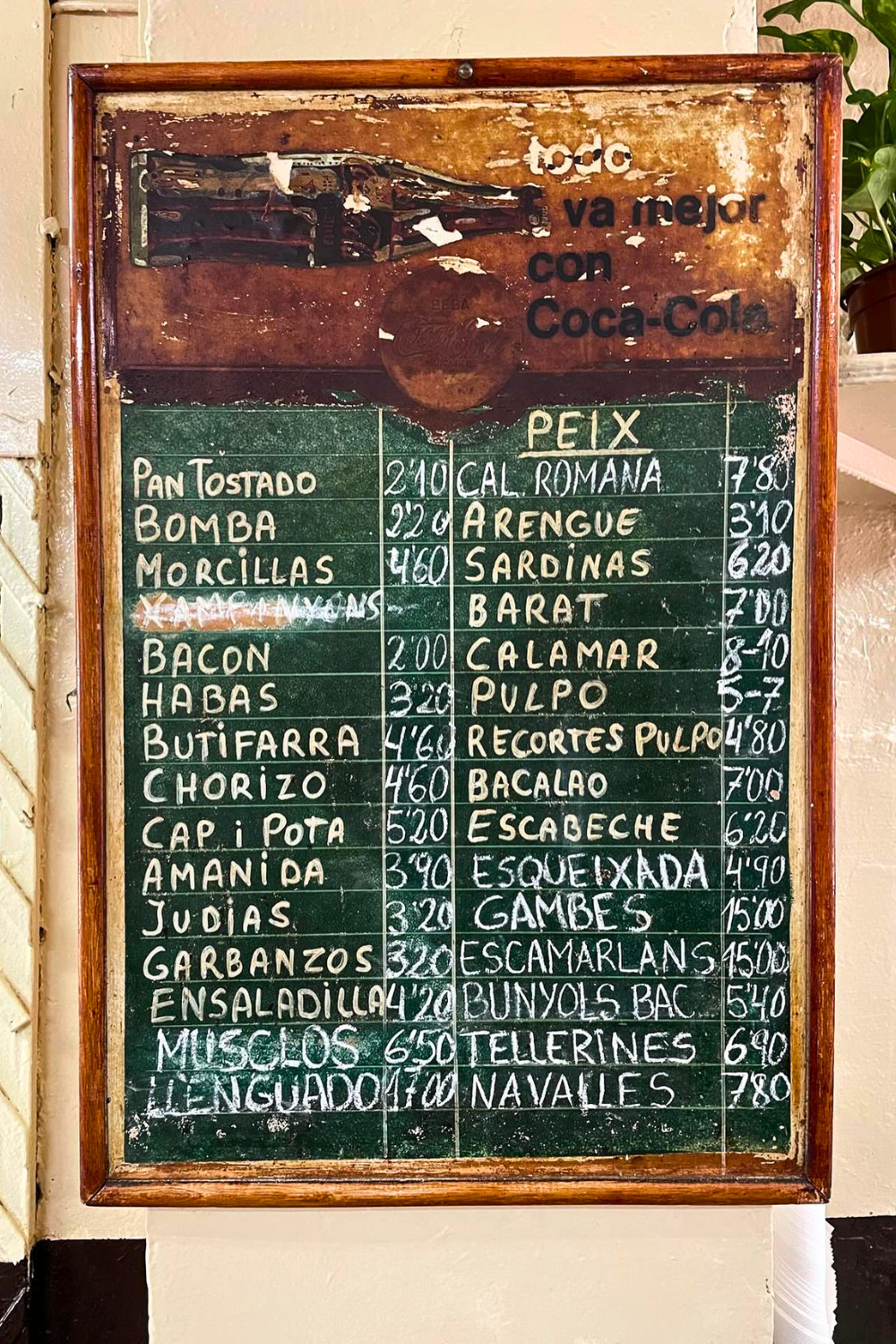
The bar is cash-only, opens only for lunch (and on its own terms — check current hours before going), takes no reservations, and looks exactly like the kind of place you walk past twice before realising it’s the place. The interior is simple to the point of spartan. The tables are basic. The menu is handwritten on a board and changes daily based on what came in from the sea. None of this matters, because the food is extraordinary.
Order the bombas. Order the tortilla if it’s available. Order the chipirones (small squid) and the fresh grilled fish. Drink the house wine without complaint. If La Cova Fumada has made something with bacallà (salt cod) today, order that too. The cooking here is the kind of honest, unfussy, product-driven work that takes decades to perfect and can’t be replicated by effort alone.
This is a genuinely local place, full of Barceloneta families who’ve been eating here their whole lives. Tourists find their way here eventually — it’s in enough guidebooks now — but it still feels, more than almost anywhere else on this list, like a place that exists primarily for the neighbourhood rather than for visitors.
Local tip: La Cova Fumada closes when the food runs out, which can be before 3pm on busy days. Go early — by noon if you can. And bring cash. They really do mean it about the cash-only policy.
7. Bar Pinotxo
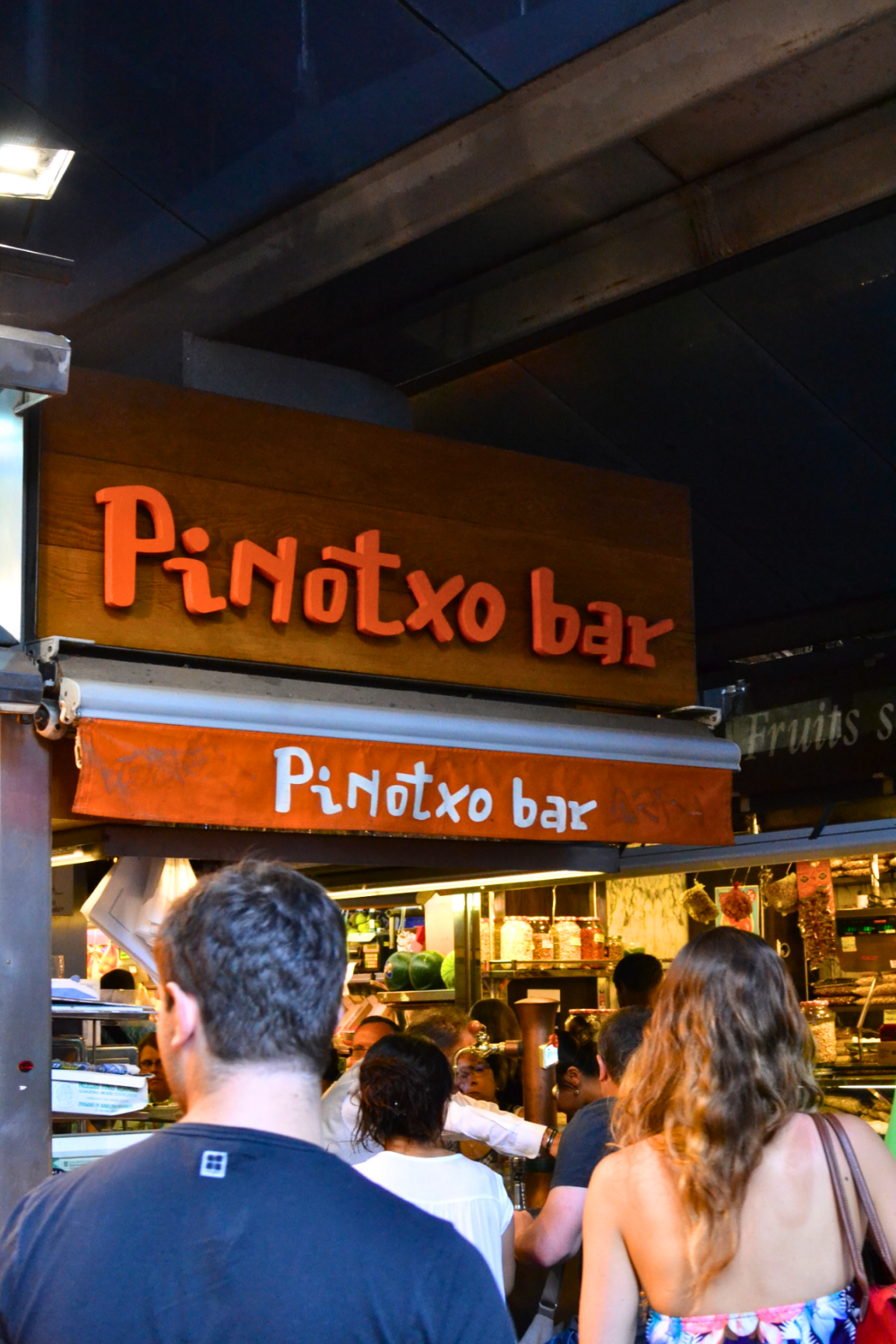
Of all the stalls and bars inside the Mercat de la Boqueria, Bar Pinotxo is the one with the queue at 8am and the owner — Juanito Bayen, the man with the bow tie and the encyclopaedic memory — who has become a minor celebrity in his own right. He’s been running this bar since the 1950s. The food remains genuinely exceptional.
📍 La Boqueria Market, La Rambla, 91, Gothic Quarter | 💰 €€
Sitting at Bar Pinotxo’s counter while the market thunders to life around you — stalls piling up with fruit and fish and whole jamón legs, locals buying the morning’s groceries, chefs sourcing restaurant supplies — is one of the great Barcelona experiences. The chaos is organised, the energy is electric, and Juanito moves through it all with the calm of someone who has been doing this since before you were born.
The chickpeas with blood sausage (botifarra) are the legendary dish, and the legend is deserved: rich, savoury, deeply comforting, inexplicably good for 9am. The salt cod with raisins and pine nuts is another classic — it sounds medieval, because it is, and it works beautifully. The fresh seafood tapas change daily based on what the market has. Everything is cooked simply, with real skill, using the produce that’s literally being sold twenty metres away.
The Boqueria is overrun with tourists these days, and many of the market stalls have quietly become tourist-facing rather than market-facing. Bar Pinotxo is one of the places that has remained real throughout all of it, and that matters.
Local tip: Go for breakfast or early lunch — between 8am and 12pm. The bar gets very crowded from midday onward, and the early morning, when the market is most alive and the counter seats are easiest to get, is the best time to be there. Order a glass of cava with your chickpeas. It’s the Pinotxo way.
8. Bodega Sepúlveda
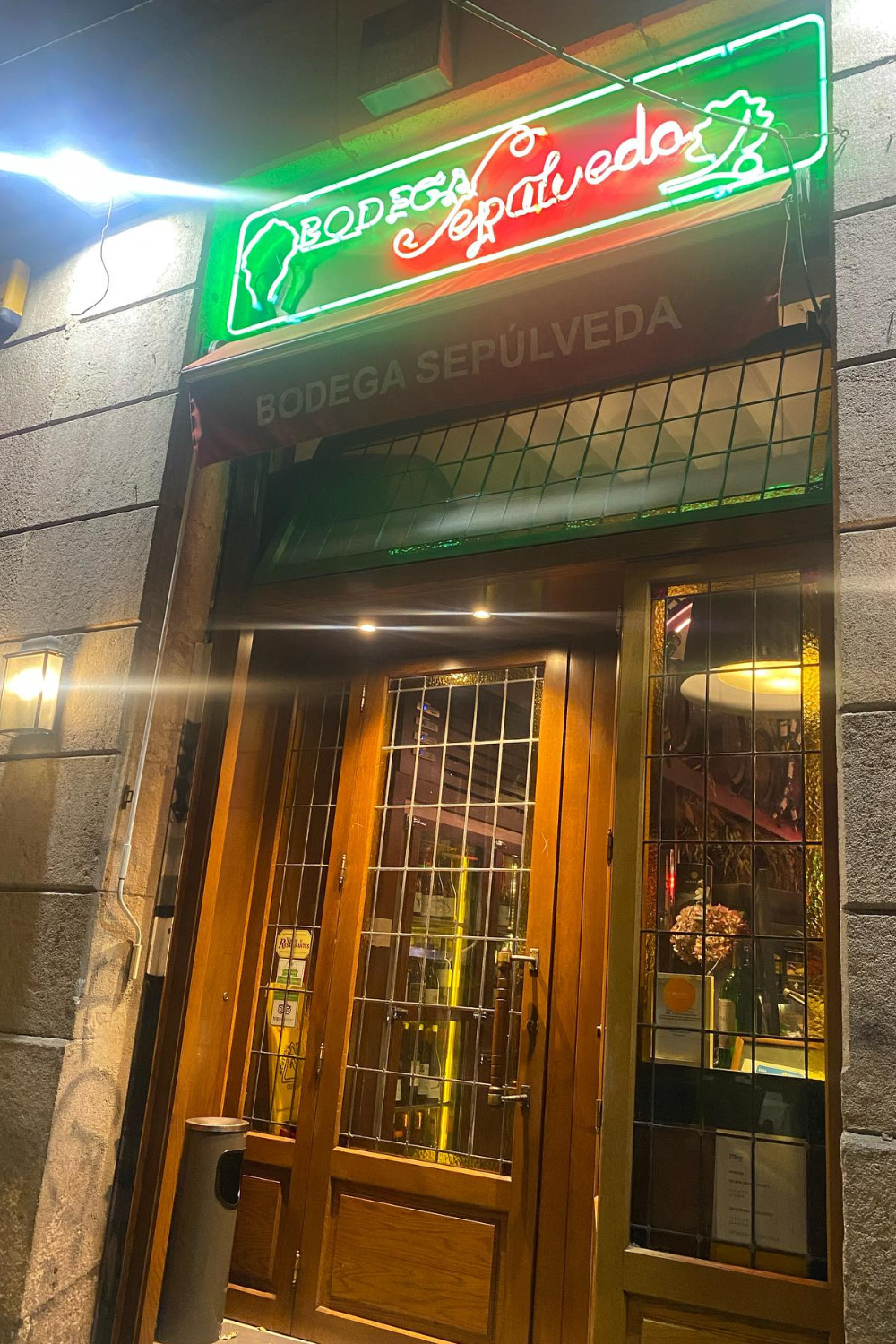
This one doesn’t show up on the obvious tourist lists, and that is precisely why I’m putting it here. Bodega Sepúlveda is a traditional Catalan bodega — wine shop and bar combined — in the Eixample, the city’s grid-plan neighbourhood, that does tapas with the ease and quality of somewhere that’s been doing it right for a very long time.
📍 Carrer de Sepúlveda, 173, Eixample | 💰 €
The bodegas of Barcelona are a fading institution: half wine shop, half bar, places where you’ve been able to buy wine by the glass or by the bottle since the early 20th century. Many have closed or converted to something trendier. Bodega Sepúlveda is the exception — still tiled, still barrel-fronted, still pouring from the barrel into small glasses, still serving the kind of simple tapas that make you wonder why anyone needs anything more elaborate.
The pan amb tomàquet here is one of the best in the city — the tomatoes are properly ripe, the bread is properly toasted, the olive oil is the right kind. Paired with a plate of jamón ibérico de bellota or a few slices of local sausage, it is one of the simplest and most satisfying things you can eat in Barcelona. The wine from the barrel is honest and cheap and cold.
The Eixample is a great neighbourhood to explore on foot — the Modernista architecture of Domènech i Montaner and Puig i Cadafalch fills the streets alongside Gaudí’s work — and finding a bodega like this for a late afternoon glass is one of the neighbourhood’s quiet pleasures.
Local tip: Ask what’s in the barrel that day — bodegas often have different regional wines available, and the staff will know exactly what they’re pouring. This is how you end up discovering a Priorat you’ve never heard of for three euros a glass.
9. Cervecería Catalana
This is the place I recommend to every single person who asks me where to eat tapas in Barcelona and is staying in or near the Eixample. It’s reliable, it’s excellent, it’s open all day, and the variety of dishes is genuinely impressive without being overwhelming.
📍 Carrer de Mallorca, 236, Eixample | 💰 €€
Cervecería Catalana combines Catalan tapas with Basque-style pintxos — small bites on bread, displayed along the counter — and does both well. The room is airy and comfortable, the service is efficient, and the selection covers all the classics alongside some more creative options. It’s the kind of place where a mixed table of people with different tastes all find something they love, which is harder to achieve than it sounds.
The patatas bravas here are among the city’s better versions — properly crispy outside, fluffy inside, with a sauce that has actual heat in it (a rarer achievement in Barcelona than you’d expect). The prawn tempura is consistently excellent. The jamón croquetas are the gold standard — I have compared croquetas across much of Spain and these are always in the conversation for best in class: a thin, shatteringly crisp shell and a béchamel interior that is perfectly seasoned and almost liquid.
The bar is open from morning until late, which makes it useful for various stages of the day. The queue at dinner can be long but moves relatively quickly, and having a drink at the counter while you wait is part of the experience.
Local tip: The upstairs section gets less attention than the ground floor bar. If you’re happy to sit at a proper table rather than the counter, ask about upstairs — you’ll often get seated faster, the service is the same, and you can spread your dishes out properly and make a proper meal of it.
10. El Quim de la Boqueria
There are several bars inside La Boqueria market, and there are two that genuinely warrant the queue: Bar Pinotxo and El Quim. They are very different places with different strengths, and if you can, you should do both.
📍 Mercat de la Boqueria, La Rambla, 91, Gothic Quarter | 💰 €€
El Quim is the livelier, louder one — a counter surrounded by stools with a kitchen that operates at full tilt from the moment it opens. Quim himself, when he’s behind the pass, is a showman as much as a cook, and the energy of the place is infectious. The house special — fried eggs with baby squid, the eggs just set, the squid lightly charred, the whole thing sitting in olive oil spiked with garlic — is the dish that made the bar’s reputation and it genuinely deserves it. Order it and don’t share.
The bar has expanded since its 3-metre-counter origins in 1987 but hasn’t lost the market-stall energy that defines it. Everything is cooked to order, everything is based on what came in fresh that morning, and everything is priced fairly given the quality and the location. The menu covers more ground than Pinotxo — there are more elaborate market-driven dishes alongside the classics — which means there’s something here even for people who don’t eat seafood.
El Quim attracts a celebrity clientele on occasion, and professional chefs make pilgrimages here. But on a Tuesday lunchtime it’s just you and a counter stool and some of the best market cooking in the city.
Local tip: If you’re torn between El Quim and Bar Pinotxo and only have time for one — go to Pinotxo early for breakfast tapas (8am–11am), then return to El Quim for a proper lunch later. Problem solved.
11. Bar Cañete
Bar Cañete occupies a particular position in the Barcelona tapas landscape: it’s the place you take someone when you want to genuinely impress them without resorting to a full tasting-menu restaurant. It’s elevated, it’s beautiful, and the food is exceptional — but it still feels like a tapas bar rather than a fine dining experience.
📍 Carrer de la Unió, 17, El Raval | 💰 €€€
The room is long and dramatic, all dark wood and marble and warm lighting, with a counter running the length of the kitchen where you can watch the brigade working. It opened in 2010 and won over the city almost immediately, earning a reputation for doing Catalan and Spanish classics with real precision and excellent sourcing. The croquetas de jamón here are definitively excellent. The escalivada (roasted aubergine and red pepper with anchovies) is the best version of this dish I’ve found in Barcelona.
The weekend degustación menu — a succession of small plates decided by the kitchen — is one of the best ways to eat here, surrendering control to people who know exactly what they’re doing. But ordering à la carte is equally good if you know what you want. The wine list leans heavily into Spanish and Catalan producers and the sommelier advice is worth taking.
What makes Cañete special is that it takes the tapas format seriously as a form of cuisine in its own right, rather than treating it as an excuse for small portions. These are fully realised dishes, just served in the format of a bar rather than a restaurant.
Local tip: The counter seats are the best seats in the house — you’re watching the kitchen, the chefs acknowledge you, and the pacing of the meal feels natural. If you book (and you should book for dinner), specifically request counter seats rather than the back tables.
12. Can Culleretes
This is the oldest restaurant in Barcelona, founded in 1786, and it is still serving Catalan home cooking to a packed room of locals every day except Monday. The menu hasn’t changed much in living memory, and that, genuinely, is the highest possible compliment I can give it.
📍 Carrer dels Quintana, 5, Gothic Quarter | 💰 €€
Can Culleretes doesn’t do trendy. It doesn’t do fusion. It does escudella i carn d’olla (the great Catalan stew of chickpeas, vegetables, and meat), it does fricandó (a Catalan veal stew with mushrooms), it does samfaina (the Catalan ratatouille), and it does all of these things with a conviction that comes from two centuries of practice. The walls are covered in photographs and bullfighting posters and menus from decades past. Eating here is a history lesson in Catalan food culture.
This isn’t a tapas bar in the conventional sense — it’s a full restaurant with a menu del día that is one of the best-value lunches in the Gothic Quarter. But the traditional Catalan dishes served here are the originals from which Barcelona’s modern tapas culture grew, and any serious food visitor to the city owes it a visit. The jamón croquetes are on the menu as a starter, and they are very good.
The service has the slightly brusque efficiency of a place that has been serving the same dishes to the same customers since forever. Nobody is rude, but nobody is performing warmth either. Order, eat, pay, leave. It’s refreshing.
Local tip: Can Culleretes is genuinely packed at peak lunch hours (2pm–3:30pm) on weekdays, and even more so at weekends. Walk in at 1pm when it opens and you’ll be seated without a wait. Turn up at 2:30pm and you might not get a table.
13. Bormuth
Bormuth is the place that opened about fifteen years ago, immediately became a local favourite in El Born, and has somehow maintained that status ever since without tipping into the tourist-trap territory that claims many of its neighbours. It’s the right balance of cool and comfortable, and the vermut — the house specialty — is outstanding.
📍 Carrer del Rec, 31, El Born | 💰 €€
The name tells you what’s central here: vermut, the herby, slightly bitter, gloriously appetising Spanish vermouth served over ice with a slice of orange and an olive, is the drink of choice at Bormuth, and they take it seriously. The house vermut is excellent. The selection of other vermuts from Spanish producers is extensive and genuinely interesting if you want to explore. This is a bar that believes in the ritual of the pre-meal drink.
The food matches the drink: honest, well-sourced, classically Catalan. The pan amb tomàquet is textbook. The anchovies from L’Escala — the finest anchovies produced in Catalonia, from a small town on the Costa Brava where they’ve been salt-curing them since the 17th century — are exceptional. The boquerones en vinagre (fresh anchovies marinated in vinegar) are clean and bright and perfect with a cold glass of vermut. The cured meats are high quality and generously served.
The vibe is relaxed and neighbourhood-feeling even when it’s busy, which is most of the time. Outdoor tables on the Carrer del Rec are excellent in warm weather.
Local tip: Come at 6pm on a weekday — the vermut hour, when locals stop in before heading home or before dinner. This is when Bormuth is at its most authentically Barcelona and least tourist-heavy. A glass of house vermut and a plate of anchovies at an outdoor table in El Born at early evening is one of the city’s great simple pleasures.
14. La Esquinica
There’s a particular kind of Barcelona tapas bar that exists in the corners and corridors of the Barceloneta neighbourhood — rough-edged, not particularly interested in attracting tourists, serving insanely good seafood tapas at prices that feel like they’re from another decade. La Esquinica is one of them, and it is absolutely worth tracking down.
📍 Carrer del Baluard, 41, Barceloneta | 💰 €
Barceloneta is the old fishing quarter that stretches between the beach and the port, and it still has a raw energy that the more gentrified parts of the old city have lost. La Esquinica is a corner bar — the name means “the corner” — with a handful of tables and a simple menu focused entirely on the sea. The gambas a la plancha (grilled prawns) are the headliner, and they are the real thing: fat, fresh, charred at the edges, requiring nothing but salt and lemon and your full attention. The navallas (razor clams) on the plancha are equally excellent. The calamar a la romana (fried squid rings) are light and clean.
This is cooking that respects the ingredient above all else. No complicated sauces, no garnishes, no presentation anxiety. The fish and shellfish are fresh, the technique is correct, and the setting — a slightly scruffy corner in a neighbourhood that still works for a living — is honest.
Local tip: Barceloneta has a lot of tourist-facing seafood restaurants with pretty terraces and mediocre food. The test of a good seafood bar in this neighbourhood is whether it’s full of people who live there. La Esquinica passes this test. Walk past the places with laminated photo menus and find the ones with handwritten boards — the same principle applies here as everywhere in Barcelona.
15. Bodega Pasaje 1986
Bodega Pasaje 1986 arrived relatively recently on the Barcelona tapas scene and made an immediate impression on people who eat carefully in this city. It’s a modern bodega — the concept is updated but the soul is traditional — and it does several things exceptionally well.
📍 Passatge de la Concepció, 7, Eixample | 💰 €€
The space is beautiful in a discreet, thoughtful way: exposed brick, wine shelving floor to ceiling, warm lighting, the kind of interior that took some care to create but doesn’t call attention to itself. The wine list focuses on natural and minimal-intervention Spanish and Catalan wines, which puts it at the more contemporary end of the bodega tradition but in a way that feels principled rather than fashionable.
The tapas menu is short and seasonal and everything on it is worth ordering. The croquetas are among the finest in the city — the jamón version is textbook, but the seasonal specials (wild mushroom, or salt cod, depending on the time of year) are often even better. The burrata with quality olive oil and whatever the kitchen has decided goes with it that week is consistently excellent. The charcuterie selection draws on small Catalan and Spanish producers rather than the standard jamón houses, and the quality is noticeably higher.
This is a place for people who eat with real interest and attention, and the staff match that energy without being precious about it.
Local tip: The natural wine selection here is worth exploring if you’re curious about it. The staff are knowledgeable and enthusiastic without being evangelical, and they’ll point you toward something unexpected for your budget. Ask what they’re excited about right now.
16. Bar Ramón
Bar Ramón doesn’t have a website. It doesn’t have an Instagram. It has barely any presence online at all, which in 2024 is practically a philosophical stance. What it has is a loyal neighbourhood following, fifty years of history, and some of the best simple tapas in the Sant Antoni neighbourhood.
📍 Carrer del Comte Borrell, 81, Sant Antoni | 💰 €
Sant Antoni has gone through a remarkable transformation in the last decade, becoming one of the city’s most vibrant neighbourhoods thanks to the revamp of the Mercat de Sant Antoni and the wave of good restaurants and bars that followed. But Bar Ramón predates all of that — it was here before Sant Antoni was fashionable, and it will likely be here long after the trend has moved on.
The menu is short and seasonal and written in chalk. The tortilla de patatas is outstanding — properly set at the edges, creamy and almost liquid at the centre, made with good eggs and potatoes cooked slowly in olive oil. The pimientos de padrón (the small green peppers, most of them mild, occasionally one that will set your mouth on fire with no warning — this is part of the arrangement) are blistered perfectly. The jamón quality is high for the price. The wine from the barrel is exactly what it should be.
The room feels like a bar that has absorbed fifty years of conversations and meals and hasn’t tried to renovate them away. There is something irreplaceable about that.
Local tip: The Mercat de Sant Antoni, a five-minute walk away, is an excellent alternative to La Boqueria for provisions and market shopping — less crowded, more local, with a fantastic Sunday book and vintage market around its perimeter. Combine a market visit with a stop at Bar Ramón for a morning vermouth and you’ll feel considerably more Barcelonian than you arrived.
17. Dos Pebrots
This one is for the curious eater, the person who wants more than a reliable classic and is ready to be surprised. Dos Pebrots, in the Gothic Quarter, is run by the team behind the legendary (and eye-wateringly expensive) restaurant Tickets, and it applies the same spirit of culinary research to a more accessible tapas format. The concept is “gastronomic archaeology” — dishes inspired by Mediterranean food history going back centuries, with Catalan, Arabic, Greek, and Roman influences all showing up on the same menu.
📍 Carrer del Doctor Dou, 19, El Raval | 💰 €€€
What that means in practice is a tapas menu unlike anything else in the city. There are dishes inspired by 15th-century Catalan cookbooks. There are preparations using techniques from Al-Andalus — Moorish Spain. There are fermented and pickled and cured things that arrive with a small card explaining their historical context. It sounds academic. It tastes extraordinary.
The squid with its own ink, the roasted lamb with ancient spice combinations, the salt cod presented in a way that references how it would have been preserved and eaten 500 years ago — all of these dishes are built on genuine research and executed with precision. The wine list leans into indigenous and ancient grape varieties, because of course it does.
This isn’t an everyday tapas bar — it’s an experience you have once and talk about for a long time afterward.
Local tip: Book well in advance for dinner. The lunch service is slightly easier to get into. And come hungry and without a fixed idea of what you want to eat — this is a menu to surrender to rather than fight.
18. Sensi Tapas
Sensi is the answer to the question: what does Barcelona tapas look like when it incorporates Japanese technique without losing its Catalan soul? The result, in this small and always-busy bar in Gràcia, is something genuinely original and genuinely delicious.
📍 Carrer de Verdi, 33, Gràcia | 💰 €€
The kitchen here uses Japanese precision — clean cuts, controlled temperatures, excellent seasoning — on Catalan and Spanish ingredients, and the combination works in ways that should be obvious but somehow still feel like revelations. The tuna tataki with romesco sauce (the Catalan pepper and nut condiment) is one of the best dishes I’ve eaten in Barcelona. The prawn gyoza with sofrito broth brings together two entirely different food cultures in a way that respects both.
Gràcia is one of my favourite Barcelona neighbourhoods to eat in — it’s a former independent village absorbed into the city, and it still has a distinct, slightly bohemian character. The streets around Carrer de Verdi and Plaça del Sol are full of good independent bars and restaurants. Sensi is the standout.
Local tip: The cocktail menu at Sensi is notably good, which is unusual for a tapas bar. If you’re looking for somewhere to start the evening in Gràcia before moving on, the cocktails here are worth having alongside your first round of tapas.
19. Betlem Miscel·lània Gastronòmica
Betlem is a recent arrival in the Eixample that has quickly established itself as one of the most interesting places to eat tapas in the neighbourhood — a wine bar and tapas counter run by people who are clearly obsessed with both in the best possible way.
📍 Carrer de Calàbria, 62, Eixample | 💰 €€
The wine list here is remarkable: a dense, carefully curated selection of Spanish and Catalan natural wines, small-producer bottles, and by-the-glass pours that change regularly. The staff know the list intimately and talk about it with the enthusiasm of people who have actually drunk everything on it, which they probably have. Pair that with a tapas menu that changes weekly based on season and whim, and Betlem becomes the kind of place you return to repeatedly because it’s always different.
The food is modern Catalan with the kind of restraint that lets ingredients speak. A plate of just-cooked legumes with good olive oil and a scattering of herbs. A piece of perfectly grilled fish with a romesco that has clearly been made that morning. A cheese from a small Catalan dairy that you’ve never heard of, served at the right temperature with honey and something pickled. These are simple combinations elevated by genuine quality.
Local tip: Betlem runs a weekly-changing natural wine tasting on the first Thursday of the month — a small guided tasting of four or five wines from a specific region or producer, paired with snacks. Check their social media for dates. It’s a brilliant way to learn about Spanish wine from people who care deeply about it.
20. La Mundana
La Mundana is the neighbourhood tapas bar that Sarrià-Sant Gervasi — the elegant, slightly quieter upper part of Barcelona above the Diagonal — has always deserved, and the one that finally arrived. It’s a short taxi or metro ride from the tourist centre, and the experience of eating here feels meaningfully different from the more visitor-facing bars of El Born or the Gothic Quarter.
📍 Carrer de Vallespir, 93, Sarrià-Sant Gervasi | 💰 €€
The clientele here is overwhelmingly local — families, couples, groups of neighbours — which tells you everything you need to know about the quality-to-price ratio. The menu is seasonal, market-driven, and genuinely creative without being showy. The kitchen clearly has real skill. The braised oxtail croqueta — an occasional special — is one of the more memorable individual tapas I’ve had in Barcelona. The roasted peppers stuffed with salt cod are a beautiful piece of classic Catalan cooking done with care.
The room is warm and unfussy. The wine list focuses on small Spanish producers with honest prices. The service is the kind that makes you feel like a regular, even on a first visit.
Local tip: La Mundana is an excellent choice if you’re visiting the nearby CosmoCaixa science museum (one of the best in Europe, and dramatically undervisited by most Barcelona tourists) or heading up to the Tibidabo amusement park and viewpoint. Make a full afternoon of the upper city and end it here.
Practical Tips for Eating Tapas in Barcelona
Timing: Lunch is the main meal of the day in Barcelona, served roughly 2pm–4pm. Evening tapas bars come alive around 7pm–8pm for pre-dinner drinks, and actual dinner rarely happens before 9pm. Restaurants that open at 7pm are generally catering to tourists — the city’s internal clock runs later than northern Europe is used to.
Reservations: For the more popular and well-reviewed places on this list — Cal Pep, Bar Cañete, Dos Pebrots, Betlem — book ahead, especially for Friday and Saturday evenings. For the classic old-school bars (El Xampanyet, Bar La Plata, Quimet y Quimet), it’s first come first served. Arriving early is the strategy.
What to order: Pan amb tomàquet — bread with fresh tomato and olive oil — arrives on most tables automatically, sometimes charged, sometimes not. Always eat it. Croquetas are the benchmark dish for judging a Barcelona kitchen: if the croquetas are excellent (thin crust, properly liquid interior), the rest of the menu will be too. Order patatas bravas somewhere along the way. The bravas sauce (not just aioli) matters.
Drinking: Caña (a small draught beer), vermut, and the house wine are the natural accompaniments to tapas in Barcelona. Don’t overthink the drinks. In the better tapas bars, the house wine is usually well-chosen.
Budget: A full tapas meal — enough to be properly satisfied — typically costs €20–€35 per person including drinks at a mid-range bar. The older, more basic places (Bar La Plata, La Cova Fumada) are considerably cheaper. The more elevated spots (Bar Cañete, Dos Pebrots) will be at the top of that range or slightly above.
Language: Spanish and Catalan. Catalan is the first language of the city and locals genuinely appreciate a greeting in it — “Bon dia” (good morning), “Gràcies” (thank you). English is widely understood everywhere tourists go, but the effort is always noticed.
A Final Word
The best tapas meals I’ve had in Barcelona haven’t happened in any particular restaurant. They’ve happened in the accumulation of them: a glass of vermut standing at one counter, a plate of anchovies at the next, croquetas somewhere in the middle, finishing with a cold beer in a square. The city is designed for this kind of unhurried, progressive eating — a bar here, a stool there, the evening stretching in ways you didn’t plan for.
Go with a rough idea of where you want to eat. Go with your appetite. And leave space in the itinerary for the bar you walk past and think looks right, because half the best meals in Barcelona are exactly those unplanned ones. This city will feed you extraordinarily well, if you let it.

