
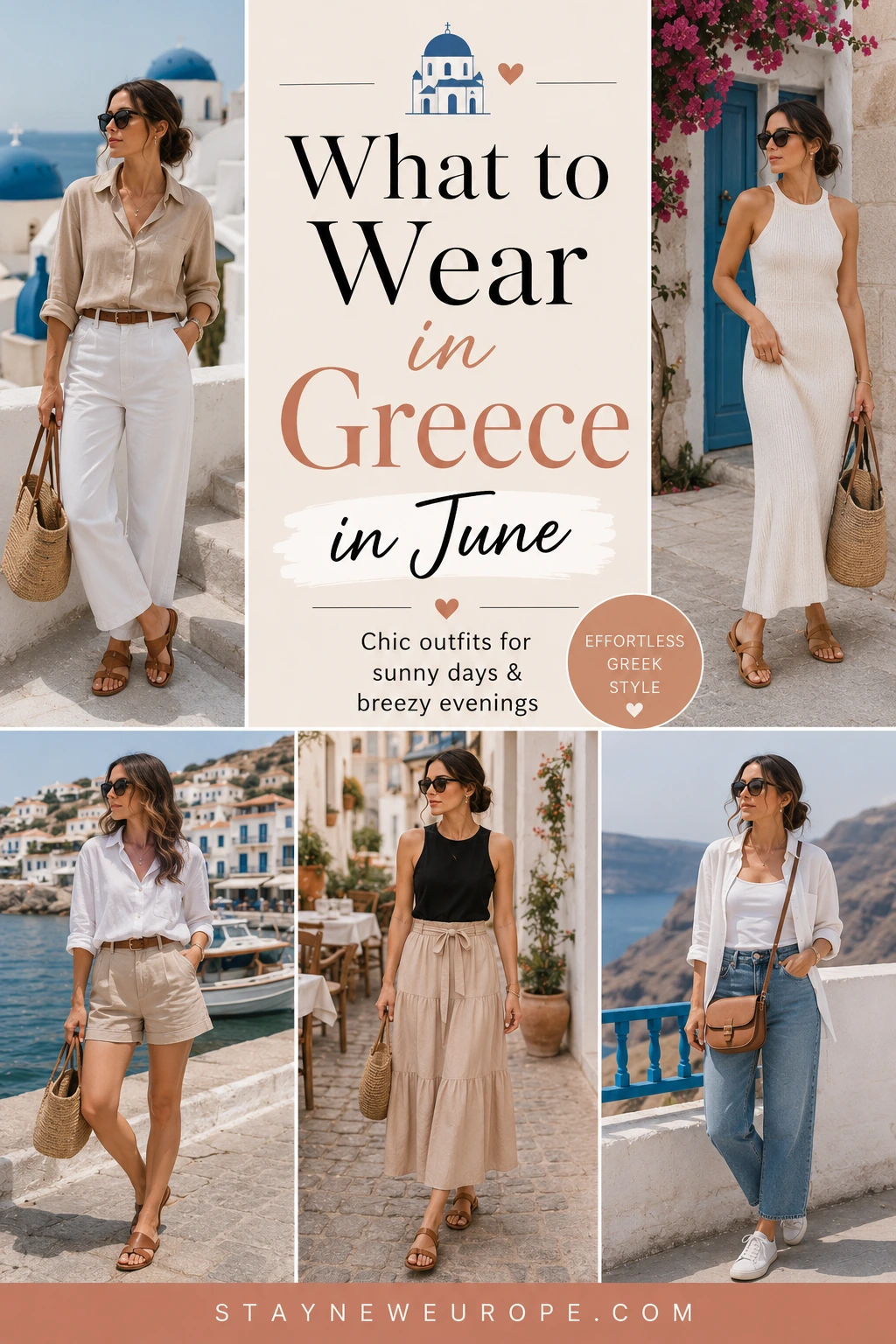
June in Greece is the kind of month that makes you understand why people become obsessed with this country. The light is extraordinary — that warm, honeyed afternoon glow you’ve seen in a hundred Instagram photos — and it’s finally warm enough to swim, but not yet the punishing 40°C heat of August that turns every cobblestone street into a frying pan.
But here’s the thing nobody tells you before you pack: Greece in June requires a very specific kind of wardrobe. Not the “I’ll just throw in some sundresses” kind. Not the “I’ll be smart and pack jeans for evenings” kind either. There’s a real art to dressing for Greece this time of year — one that balances breathability, modesty for churches, style for those inevitable sunset dinner photos, and practicality for terrain that ranges from silky white sand to rough volcanic rock paths.
I’ve made the packing mistakes so you don’t have to. I’ve sweated through the wrong fabrics, blistered my feet on the wrong shoes, and stood at a monastery entrance in a sleeveless top being handed a paper skirt by a mildly exasperated monk. Let me save you from all of that.
Before We Dive In: What June in Greece Actually Feels Like
The Weather
June sits in that lovely sweet spot before the full Greek summer hits its stride. Temperatures across the mainland and islands typically hover between 24–32°C (75–90°F) during the day, occasionally nudging higher in spots like Crete or Rhodes. Mornings can be surprisingly cool — I’ve needed a light layer as early as 8am in the Cyclades — and evenings drop back down to something genuinely pleasant.
Rain is unlikely but not impossible, especially in the first two weeks of June in northern Greece and the mainland. By late June, you’re looking at almost guaranteed sunshine. Humidity varies dramatically: Athens is drier, while coastal areas and Corfu in the Ionian can feel noticeably more muggy.
The wind is the wildcard. Santorini’s meltemi — that strong northern Aegean wind — can catch you completely off guard on a clifftop in Oia. A loose linen skirt that looks dreamy in photos becomes a full wardrobe malfunction waiting to happen.
The Terrain
Greece is not a flat country, and if your entire mental image of it involves sitting at a terrace overlooking the sea, you’re in for a surprise. Santorini involves volcanic paths with uneven steps. Athens means the Acropolis hill — smooth marble that is genuinely slippery — and miles of city pavement. Mykonos has charming but ankle-twisting cobblestones. Crete has gorge hikes. Even ferry ports have significant walks with luggage.
Your footwear needs to work hard here. That’s not a casual suggestion.
Heading to other Mediterranean destinations on the same trip? Our packing list for Italy in spring covers very similar climate and church dress rules.
The Culture
Greeks dress well. Not in an intimidating, haute-couture way, but in a “I’ve made a small effort and it shows” way. Casual is absolutely fine — this isn’t Milan. But sloppy or overly revealing in non-beach contexts will make you feel out of place in a way that’s hard to describe until you experience it. There’s a quiet Greek elegance, especially in the evenings, and matching it even loosely makes the whole experience feel better.
Lightweight Layers Are Not Optional — They’re Your Best Friend
I used to think “layers” was advice for cold-weather destinations. Greece in June corrected that assumption firmly.
The temperature swing between a breezy 9am ferry crossing and a 2pm walk through the Acropolis can be 10–12 degrees. Shade versus direct sun feels like a completely different climate. Add the fact that Greek churches and archaeological site museums are often aggressively air-conditioned (they’re protecting artefacts, not you), and you’ve got a situation where a layer is something you’ll reach for multiple times per day.
The key is choosing layers that are thin enough to stuff into a small bag without adding bulk. A linen shirt worn open over a dress, a lightweight cotton jersey wrap, a breathable long-sleeved top tied around your waist — these are the kinds of things that solve three problems at once: sun protection, temperature changes, and church modesty (more on that below).
I lived in a thin, oversized linen button-down on my last trip. It went over swimwear on the beach, over a slip dress for monastery visits, and stayed on through breezy evening meals. I wore it almost every single day and never regretted packing it.
Local tip: Greek women often carry a lightweight scarf or pashmina that doubles as a wrap, beach cover-up, and shoulder cover for churches. Pack one. You’ll use it constantly.
Dresses: Yes, Absolutely, But Choose Wisely
If there is one item that belongs in every single Greece-in-June suitcase, it is a good linen or cotton midi dress. Not a bodycon. Not a heavy jersey. A loose, breathable midi or maxi that moves with you and covers the essentials without making you feel like you’re wearing a tent.

Here’s why the length matters: it gives you full coverage for churches without needing to carry a separate cover-up, it protects the backs of your thighs from hot surfaces (trust me on this one — sitting on a sun-baked marble wall in a mini dress is not the vibe), and it photographs beautifully against the white walls and blue domes.
For beach towns: a simple slip dress doubles perfectly as a cover-up.
For dinner: In Chania or a stroll through Nafplio, a relaxed linen dress in a neutral or earthy tone — terracotta, sage, dusty blue, white — looks intentional and chic without any extra effort.
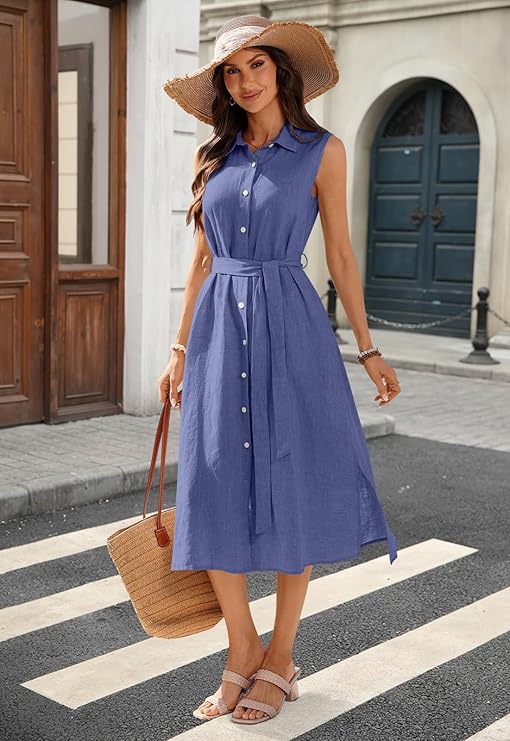
What doesn’t work: overly structured wrap dresses that come undone in the wind, maxi dresses with long trains that drag on cobblestones, or anything in a fabric that wrinkles the instant you look at it (looking at you, rayon).
Local tip: White looks incredible against Greek backdrops and Greeks wear it all summer. But white goes see-through in bright sun and shows every drop of that olive oil the food is drowned in. Go for off-white, cream, or ivory if you want the same effect with slightly more forgiveness.
What About Jeans? (A Complicated Relationship)
Let me be honest: I’ve brought jeans to Greece in June twice, and I’ve barely worn them either time.
On paper, jeans seem sensible — they work for evenings, they’re versatile, they cover you for churches. In practice, denim in 30°C heat with high humidity while walking uphill is genuinely uncomfortable. Your thighs chafe, your waistband cuts in after a big Greek lunch, and you spend the day thinking about the linen trousers you left at home.
That said, a single pair of jeans is worth packing if you’re spending significant time in Athens or Thessaloniki, where evening culture skews slightly more urban and a café or bar setting calls for something with more structure. Dark straight-leg jeans look put-together and pair well with everything.

The smarter swap: lightweight linen or cotton trousers. They give you the coverage and versatility of jeans without the sweat. Wide-leg linen trousers in sand, white, or olive are exactly what you’ll see on every stylish Greek woman in June. They work for daytime exploring, boat trips where you don’t want bare legs in the wind, and evening dinners with a silk top.

Local tip: Avoid light-coloured trousers if you’re taking boat trips — spray and dock grime are inevitable, and white linen does not forgive either.
The Shoe Situation (This Is Where Most People Go Wrong)
Here is the one place in this entire article where I will get slightly preachy, because I care about your feet.
Do not bring flip-flops as your primary walking shoe in Greece. Just don’t. I watched a woman hobble back from the Acropolis in tears on my last trip because her flip-flops had destroyed her heels on the marble slopes. The terrain is genuinely demanding, and your footwear needs to support your foot — not just exist on it.
What works:
Leather sandals with a supportive footbed. Not cheap flat sandals. Sandals with an actual arch support — Birkenstock, Naot, or a Greek-made leather sandal (Greece produces beautiful sandals; Melissinos Art in Athens is legendary) will carry you through a full day of walking without complaint. They look great, they breathe, they dry fast.

White leather or canvas sneakers. A clean pair of leather sneakers does everything in Greece in June. They handle cobblestones, look good with dresses and trousers, and transition easily from daytime to a casual dinner. Keep them clean and they photograph beautifully.

Flat mules or slides. Fine for easy days, markets, or ferry terminals where you’re not walking far. Not fine for anything that involves hills, uneven surfaces, or distances over 2km.
Local tip: Break in any new sandals at least two weeks before your trip. Greek cobblestones will find every weakness in a shoe you haven’t worn before.
What NOT to Wear in Greece in June (Tourist Tells)
Every destination has them — the clothing choices that mark you immediately as someone who didn’t do their research. Greece is no different.
Sports clothing everywhere. Athletic leggings and technical hiking gear are fine for actual hikes. Wearing full athleisure to walk around Santorini or sit in a taverna feels jarring against the local aesthetic. Greeks have a casual elegance; they don’t really do the “dressed like I might jog at any moment” look in tourist-facing areas.
Very short shorts in town. On the beach: absolutely. Walking through a village, eating at a restaurant, or visiting any site with cultural or religious significance: uncomfortable for you and mildly disrespectful in some contexts. A lightweight midi skirt or linen trousers are genuinely just as cool and far more versatile.
Heavy backpacks in restaurants. This isn’t clothing exactly, but it’s related to how you carry yourself. A bulky daypack at a dinner table or through a narrow taverna marks you as someone just passing through. A crossbody bag, belt bag, or small tote reads as intentional.
Sequins and heavy evening wear. I’ve seen people rock up to a Mykonos sunset bar in full going-out attire — bodycon dress, heels, the lot. Greece’s evening aesthetic, even in glamorous spots, is more “elevated casual” than “cocktail party.” Light silks, linen sets, strappy sandals. You’ll look far more like you belong.
Local tip: Greeks often eat dinner late — 9pm or 10pm is common. Evening outfits should be comfortable enough to sit in for a long, leisurely meal. Prioritise that over any outfit that requires constant adjustment.
Swimwear: More Than You Think You Need
You’re going to swim every single day. I say this with complete certainty.
Pack at least two swimsuits, ideally three if you have space. In a hot climate, a wet swimsuit takes much longer to dry fully than you’d expect, especially if you’re moving between locations and living out of a suitcase. Rotating between two or three means you always have a dry one ready.
For the beach, anything goes — Greece is genuinely relaxed about swimwear style. But if you’re swimming at more accessible beaches near towns, or doing a boat trip where you might pop into a waterfront café in your swimwear, a one-piece or well-structured bikini paired with a linen cover-up gives you the flexibility to do both without changing.

High-waisted bikini bottoms are having their moment, and for good reason — they’re comfortable, they work with a wider range of bodies, and they stay put when you’re scrambling over rocks to reach a sea cave.

Local tip: Some of Greece’s most beautiful beaches are rocky. Pack water shoes or reef-safe rubber sandals for these — entering the water without them on a pebbly beach is genuinely painful.
Church and Site Dress Codes (Do Not Get Caught Out)
This one is non-negotiable and I will not let you skip past it.
Greece has a vast number of active monasteries, churches, and religious sites that are genuinely worth visiting — and many of them have strict dress codes. Shoulders must be covered. Knees must be covered. Sometimes heads must be covered for women. Some sites turn people away entirely.
The good news: you don’t need to carry a separate outfit. The solution is layers.
A loose linen shirt or lightweight scarf tied as a wrap skirt solves essentially all church dress code problems in about thirty seconds. If you’ve planned your outfits around the layering principle already, you’re sorted.
What you need to be covered for churches and monasteries:
- Shoulders (no sleeveless tops without a layer)
- Knees (shorts and mini skirts need a wrap or scarf)
- Some sites require women to wear skirts specifically (they often provide paper ones at the entrance, which is a slightly undignified experience worth avoiding)
Visiting the Meteora monasteries? The Daphni Monastery near Athens? Any of Crete’s interior villages? Add your layers before you arrive. It’s easier and more respectful.

Local tip: A thin pashmina or large square scarf weighs almost nothing and solves the shoulder, knee, and head-covering requirements in one item. It’s the single most useful thing in your bag.
Evening Outfits: Getting the Tone Right
Greek evenings deserve good outfits. Not formal, not overdone — but considered.
The transition from beach day to dinner happens quickly, and having one or two outfits specifically planned for evenings means you’re not scrambling in a tiny hotel room at 8:30pm wondering if your sandy linen dress is going to cut it at the restaurant you’ve booked.
What works beautifully for Greek summer evenings:
A silk or satin slip dress. Simple, elegant, instantly elevated with a pair of leather sandals and minimal jewellery. Wraps into almost nothing in a suitcase.
A linen co-ord set. Wide-leg trousers and a matching top in a coordinating colour. This is genuinely the Greek summer uniform and it looks effortless.

A lightweight stylish top with wide-leg trousers. Slightly more structured, good for cooler evenings in late June or spots with stronger breezes.

A breezy midi dress in a print. Greek tablecloths and textiles are full of blues, whites, and terracottas — a printed dress in these tones photographs like it was made for this place.
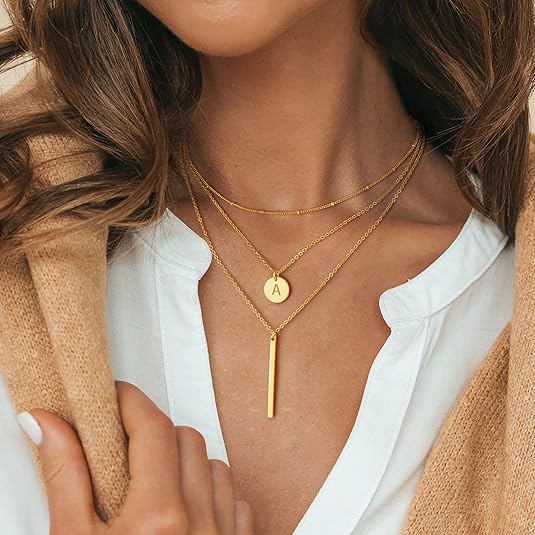
Jewellery matters more here than in some destinations. Greeks love gold — delicate gold chains, gold earrings, a simple gold bracelet. Even inexpensive gold-tone pieces elevate a simple outfit significantly against a Mediterranean backdrop.
Local tip: Leave the stilettos home. Cobblestones will end them and you before the entrées arrive. Block-heeled sandals or strappy flat sandals are the Greek evening shoe.
Bags: What to Carry and How to Carry It
Your bag choice in Greece is partly practical (security, capacity) and partly aesthetic (you’re going to be in photos constantly).
Crossbody bags are the gold standard for Greek travel. They keep your hands free on the Acropolis, they’re harder to pickpocket in crowded ferry terminals and markets, and they look intentional rather than tourist-y. A tan or cream leather crossbody is the Platonic ideal.

Belt bags / bum bags have fully rehabilitated their image and are extremely popular among Greek travellers and locals alike. Worn across the chest rather than the waist, they look current and solve every hands-free problem.
Tote bags work beautifully for beach days — carrying sunscreen, a wrap, a book, snacks for the ferry. They’re less ideal for city exploring.
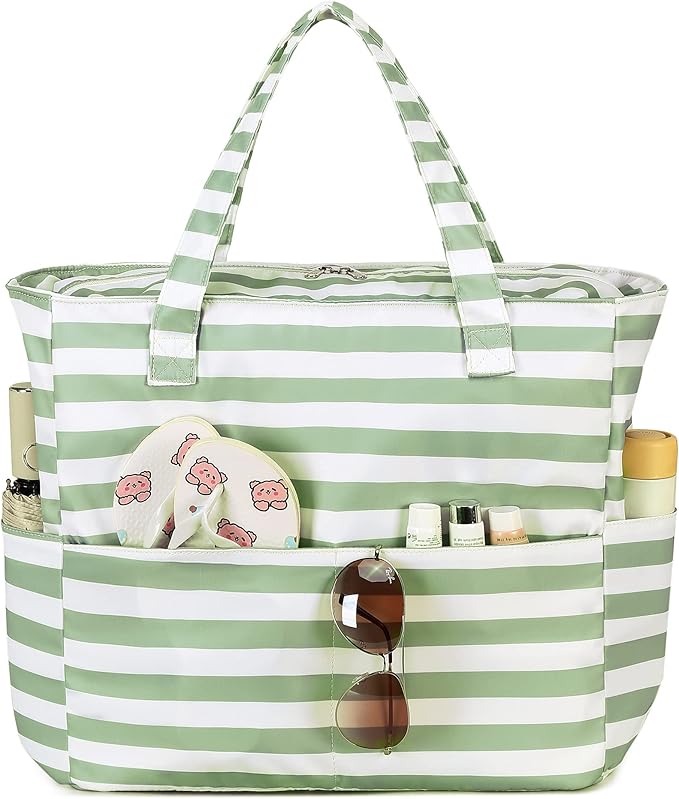
Large backpacks are fine for actual hiking or multi-day ferry trips with luggage. As a daily bag for tourism? They’re unwieldy in narrow alleyways and make you look like you’re on your way to a gap year hostel, which may or may not be the look you’re going for.
Local tip: Separate your beach bag from your exploring bag. Your beach bag will get sandy, wet, and suncreamed. Your leather crossbody will not thank you for doubling up.
Fabrics to Choose (and Fabrics to Leave at Home)
This section could save you from one truly miserable afternoon, so pay attention.
Wear:
Linen — The undisputed champion of Greek summer dressing. It breathes, it looks intentional even when slightly crumpled, and it dries quickly if you get caught in a splash or an unexpected shower. The creasing is part of the charm.
Cotton — Reliable, breathable, easy to wash and dry overnight if needed. Light cotton jersey is particularly versatile for layering.
Silk and satin — For evenings only. Beautiful in the heat, dries quickly, wrinkles easily but recovers with a steam. Worth packing one piece.
Chambray — A lighter alternative to denim that breathes far better. A chambray shirt or lightweight dress is a practical and stylish choice.
Avoid:
Polyester — It traps heat and holds sweat in a way that will make you miserable by midday. Fashion polyester especially (the kind that mimics silk) feels suffocating in 30°C heat.
Heavy cotton denim — Already discussed. Save it for Europe in autumn.
Nylon activewear — Fine for hiking, but the compression fabrics trap heat and look out of place in a restaurant or village setting.
Rayon/viscose — It wrinkles catastrophically and takes ages to dry if it gets wet. Looks lovely on the hanger, genuinely annoying in practice.
Local tip: Merino wool sounds counterintuitive for summer, but ultra-lightweight merino tops are extraordinary for travel — they’re temperature-regulating, they don’t smell after multiple wears, and they pack to almost nothing. Worth considering for layering pieces.
Rain and Unexpected Weather: A Brief But Important Note
Early June on the mainland and northern islands can still deliver a surprise shower. I was caught in a proper downpour in Athens in the first week of June once — not a tropical storm, but enough to drench me in about four minutes.

A packable rain jacket weighs almost nothing and takes up barely any space. I use a lightweight one that compresses to the size of a large apple. Umbrella or rain jacket — your preference, but have one available, especially in the first half of June.

More importantly: think about what your outfits do when wet. Linen dries fast and still looks fine damp. White cotton goes see-through. Suede shoes are ruined. A little forward planning here means a passing shower stays a minor inconvenience rather than a wardrobe emergency.
Local tip: Check the specific weather patterns for your specific islands or destinations. Crete’s south coast barely sees rain in June. Corfu’s first week of June can still be unpredictable. They’re the same country but genuinely different climates.
Accessories That Make the Difference
Greece is the kind of place where accessories carry the whole outfit. Here’s what’s worth packing:
Sunglasses — Non-negotiable. The Greek light is extraordinary and also absolutely blinding. A pair you love and won’t mind wearing in every single photo, because you will be wearing them in every single photo.

Simple gold jewellery — As mentioned above. A few delicate pieces go a long way. Leave the statement jewellery at home unless you’re specifically planning glam evenings.
A silk or linen scarf — Multi-purpose utility item that doubles as church cover-up, beach wrap, and accessory.
A wide-brimmed hat — Both sun protection (crucial) and genuinely one of the most photogenic accessories available. Packable straw hats do the job perfectly and stuff into a tote.

Reef-safe sunscreen — Not an accessory per se, but worth mentioning here: many Greek marine parks and some beaches have restrictions or strong recommendations against chemical sunscreens to protect the sea life. Pack mineral-based sunscreen.
Local tip: You can buy beautiful handmade jewellery and accessories in Greece — many islands have excellent local designers. Leave a little space in your suitcase and budget for this. It’s one of the best shopping experiences the country offers.
Your Greece in June Capsule Wardrobe
If you want a concrete starting point, here’s what I’d pack for ten days in Greece in June:
Tops: 3 lightweight cotton or linen tops (mix of sleeveless and short-sleeved for layering options), 1 long-sleeved thin cotton or chambray shirt, 1 light silk or satin top for evenings
Bottoms: 1 pair of wide-leg linen trousers, 1 pair of lightweight shorts (for beach days/casual exploration), 1 denim or chambray skirt if you prefer skirts to trousers
Dresses: 2 midi/maxi dresses (one casual, one slightly elevated for evenings), 1 slip dress that doubles as beach cover-up
Layers: 1 linen overshirt or kimono-style layer, 1 packable light rain jacket
Swimwear: 2–3 swimsuits
Shoes: 1 pair of supportive leather sandals, 1 pair of clean white sneakers, 1 pair of flat evening sandals
Bags: 1 crossbody or belt bag for daily use, 1 tote for beach
Accessories: Sunglasses, wide-brimmed hat, a large scarf/wrap, minimal gold jewellery
This is ten days of outfits that don’t repeat in any obvious way, all in a suitcase that doesn’t make you dread ferry transfers.
Local tip: Pack everything in a carry-on if you possibly can. Checked luggage on Greek island hop flights is an expensive, anxiety-producing experience. The capsule wardrobe above fits in a 40L carry-on bag.
Packing Light vs Overpacking (And Why Greece Punishes the Second Option)
I overpacked for Greece my first time. Dramatically. I had an enormous suitcase with “options” and “just in case” outfits and shoes for every conceivable scenario. I wore about 60% of what I packed. I also dragged that suitcase up a donkey path in Santorini, over ferry gangplanks, and across Athenian cobblestones, and I can confirm it was a miserable experience.
Greece’s island-hopping culture means you are moving. Frequently. Often with minimal warning about the exact nature of your accommodation or how far it is from the port. The lighter you travel, the more freely you move — and freedom of movement is genuinely one of the great pleasures of Greek island travel.
A few packing principles that have served me well:
Plan your outfits in advance rather than “winging it.” Seven days means roughly seven outfits, not twenty-three separate pieces.
Choose a colour palette and stick to it. Neutrals with one accent colour mean everything mixes and matches. White, beige, olive, and terracotta are the Greek summer palette and they all work together effortlessly.
Pack pieces that work in at least two to three different outfit combinations. A linen shirt that goes over a dress, under a jumpsuit, or on its own is worth three single-use pieces.
Leave things out and see if you miss them in the mirror. If you’re uncertain whether to pack something, leave it. Greece has shops. You can buy things you genuinely need.
A Final Word Before You Go
Pack for the trip you’re actually going on, not the Instagram version of it. Greece in June is warm, beautiful, sometimes windy, occasionally dusty, and full of terrain that will test your shoes. It is also the kind of place where you will feel the sun on your shoulders at 7pm and understand why people return every year for the rest of their lives.
The best outfit you can wear in Greece is one that makes you feel comfortable enough to wander for six hours, cool enough to not be thinking about heat, and pulled-together enough to sit down at a sunset dinner and feel like you belong there. With a little planning, that outfit can be almost anything.
Now go pack your linen, find your leather sandals, and let Greece do the rest.
For hotter, drier packing, our guide on what to wear in Spain in June is the closest companion read.

