

June in Portugal hits differently. The light is golden and relentless, the tiles shimmer in Lisbon’s steep streets, and the Atlantic breeze off the Algarve coast makes you feel like you’ve finally figured out summer. But here’s the thing — most travellers show up with the wrong clothes and spend the first two days either roasting in jeans or digging through an overstuffed suitcase for the one linen top they packed “just in case.”
I’ve done both. I’ve also watched tourists march up Alfama’s cobblestones in heeled sandals that had no business being within 500 kilometres of a Portuguese hill, and I’ve seen people shivering on a Lisbon rooftop bar at 10pm in shorts because they forgot that evenings by the Atlantic aren’t always warm. Portugal in June is glorious — but it rewards the prepared traveller.
This is the packing guide I wish someone had handed me before my first trip. No fluff, no filler. Just what actually works.
Before We Dive In: What June in Portugal Actually Feels Like
June is arguably Portugal’s sweet spot. You’re past the mild uncertainty of spring, but the brutal heat of July and August hasn’t quite arrived yet — depending on where you’re going. Lisbon and Porto hover around 22–28°C (72–82°F) during the day, though Lisbon can tip into the low 30s on warm weeks. The Algarve pushes hotter, often reaching 28–33°C, with full sun and low humidity. The Douro Valley can surprise you — inland regions get scorching midday heat but cooler nights.
Rain in June is rare but not impossible, especially in Porto, which holds onto its northern dampness longer than the rest of the country. Don’t pack an entire rain kit, but one thin layer of protection is sensible. Humidity is generally low, which makes the heat far more bearable than you’d expect — it’s a dry, bright warmth, not the sticky oppressive kind.
Walking is non-negotiable in Portugal. Lisbon alone will have you climbing hills, crossing mosaic-tiled squares, descending through narrow alleyways, and hopping on and off trams. Porto is similarly hilly. The Algarve is flatter, but beach days bring their own footwear demands. You need clothes that move well, breathe, and don’t look like you’ve just run a 5K by lunchtime.
And one more thing worth saying: Portuguese people dress with quiet elegance. Nothing flashy, but always considered. The “sloppy tourist” look stands out in a way it doesn’t in some other destinations. You don’t need to be chic — but looking intentional matters here.
Lightweight Linen: Your Best Friend in Portugal
Let me be honest — before I started travelling to southern Europe in summer, I thought linen was something you found on dining tables and in home décor magazines. I was wrong, and I’ve been making up for lost time ever since.
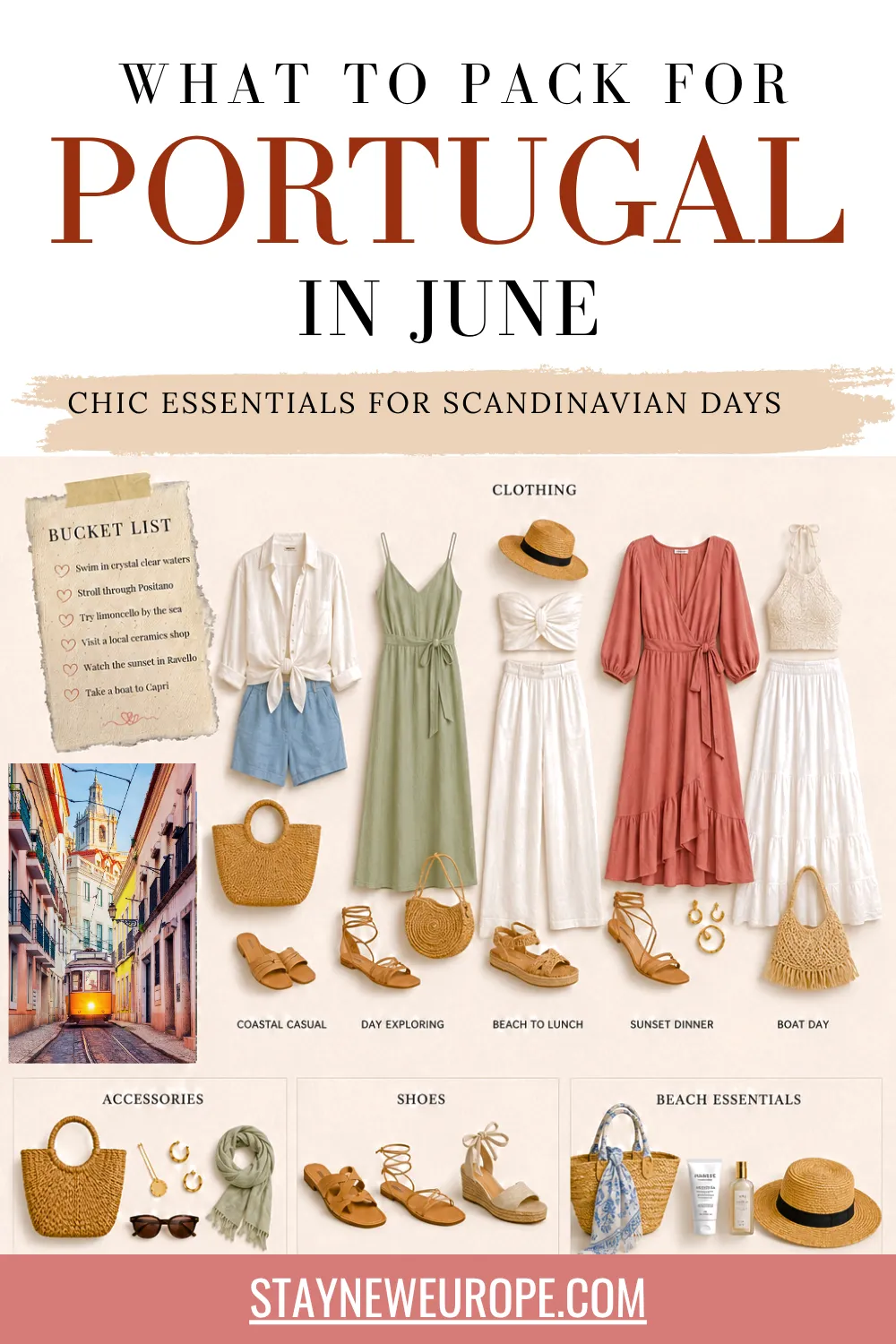
Linen is the definitive fabric for Portugal in June. It breathes better than cotton, dries faster than almost anything, and manages to look more polished the more relaxed your outfit is. A linen shirt worn open over a simple tee? That’s a Lisbon afternoon sorted. A linen midi dress? Perfect for a seafood lunch that turns into a long afternoon of exploring.
The key is to lean into linen’s natural texture rather than fight it. It wrinkles — that’s just what it does. But in Portugal, that slight rumple reads as effortless rather than careless. Pack two or three linen pieces as your foundation: a loose shirt, a pair of linen trousers, and either a linen dress or shorts depending on your style. These will rotate through your whole trip without missing a beat.
Local tip: Portuguese linen brands are genuinely beautiful and often more affordable than what you’d find at home. If you’re in Lisbon, keep an eye out for local textile shops around Príncipe Real — you might find yourself adding to your wardrobe rather than just working through what you packed.
Comfortable Walking Shoes That Don’t Look Like Orthopaedic Equipment
This is where so many trips go sideways, and I say this with full compassion because I have made every shoe mistake Portugal has to offer.
Here’s the truth: Lisbon’s streets are paved with calçada portuguesa — those beautiful, irregular black-and-white cobblestones that look stunning in every photo and are genuinely treacherous underfoot. They’re uneven, slippery when wet or polished, and completely unforgiving on anything with a heel or a thin sole. Porto is the same. Even the Algarve, for all its beach-town ease, has its moments.

What you need is a shoe with grip, cushioning, and a sole that can take a beating — but one that doesn’t look like you’re preparing for a corporate team-building hike. The sweet spot is a quality leather or suede sneaker, a supportive sandal with a contoured footbed, or a low canvas shoe with decent sole thickness. Brands like Birkenstock, New Balance 574, Veja, or Camper hit that balance between function and form brilliantly.
If you’re packing sandals, make sure they have adjustable straps and ankle support. Flat slides are fine for the beach; they will betray you on a Lisbon hill. One pair of versatile sandals plus one solid walking shoe gives you coverage for almost every situation June throws at you.

Local tip: Break your shoes in before you leave. New shoes + Portuguese cobblestones = blisters that will ruin your second day. Non-negotiable.
The Lightweight Layer You’ll Be Glad You Packed
I know, I know — it’s June, it’s Portugal, you’re going somewhere warm. Why would you pack layers? Because evenings in Lisbon and Porto have a particular habit of catching people out.
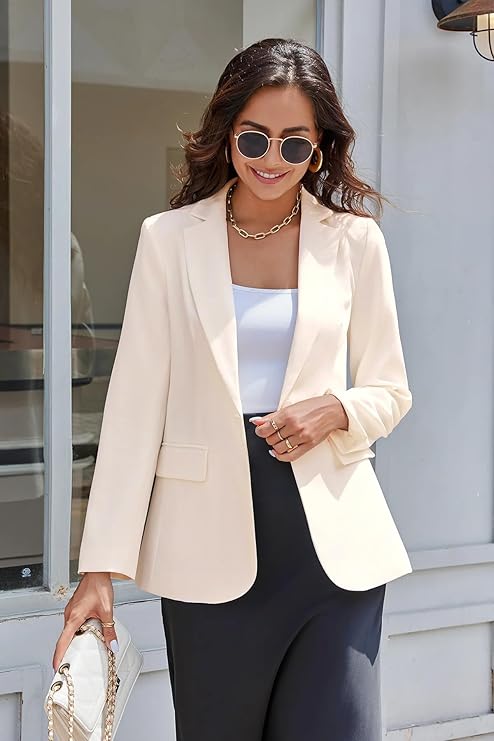
Once the sun dips behind the hilltops or out over the Atlantic, the temperature drops faster than you’d expect. Rooftop bars, outdoor dinners, long evenings wandering through Bairro Alto — all of these are significantly more enjoyable when you’re not doing the “crossed arms, pretending not to shiver” dance. A light cardigan, a thin linen blazer, or a breathable cotton overshirt weighs almost nothing in your bag and pulls an entire evening outfit together.
This is especially true in Porto, which runs cooler than Lisbon, and in coastal areas where the Atlantic breeze kicks in after sundown. In the Algarve, evenings are warmer, but even there you’ll want something for air-conditioned restaurants, which Portugal runs at a temperature somewhere between “brisk walk” and “meat locker.”
My personal go-to is a linen blazer in a neutral — it works over a sundress, over a tee-and-trousers combo, and over practically anything. It looks intentional, it packs flat, and it has never failed me on a Portuguese evening.
Local tip: Skip the hoodie. It works fine in comfort terms, but if you’re planning any kind of nice dinner, a thin blazer or a cotton wrap reads so much better and works just as hard thermally.
Dresses: The Effortless Portugal Uniform
If you wear dresses, Portugal in June is your moment. A good midi or maxi dress does everything: it keeps you cool in the heat, it moves easily through the walking-heavy days, and it transitions from a morning at a tiled café to an evening glass of wine on a miradouro without requiring you to change or even think very hard.
The best styles for Portugal are those with some structure — wrap dresses, button-front styles, or smock cuts. Pure floaty fabric with no shape can feel very “beach resort” rather than “Lisbon streets,” which is a vibe choice, but worth considering if you want to blend into the local aesthetic even slightly. Florals, earth tones, and terracotta shades all feel absolutely at home here.

One important note if you’re planning to visit any churches — and in Portugal, you should, they’re extraordinary — make sure your dress covers your shoulders and knees. Many churches will turn you away at the door otherwise. A small scarf or a thin wrap kept in your bag solves this instantly.

Local tip: Pockets. I cannot stress this enough. A dress with pockets means you don’t need to carry a bag on lower-key days. Look for this when you’re choosing.
What NOT to Wear: Honest Tourist Mistakes
Okay, let me be direct here, because I think this section is more useful than most packing guides give it credit for.
Heavy jeans are the number one mistake. A pair of jeans feels like a sensible safe choice, and in the mornings or evenings they’re fine. But by 2pm in Lisbon in June, dark denim feels like a thermal punishment. If you love jeans, pack one lightweight pair — the kind that’s thin enough to see light through — and treat it as an evening option, not a walking-all-day option.
White linen looks magical in the imagination and disastrous in practice. Cobblestones are dusty. Café chairs can be grubby. You’ll sit on a wall somewhere in the Algarve and stand up to find the evidence. Wear white if you love it, but manage your expectations. Off-white, cream, and light beige are more forgiving.
Flip-flops as your primary shoe is a choice that will hurt you — literally. Save them for beach days only. The cobblestones will send them sideways in a way that’s both dangerous and slightly undignified.
Brand-new, aggressively “outdoor” gear — technical trekking trousers, performance hiking shirts — looks out of place in urban Portugal. Unless you’re genuinely heading into Gerês National Park or doing serious hiking, leave the ultra-technical stuff at home.
Local tip: If you packed something and on the first day it doesn’t feel right, trust that instinct. Portugal has good shopping. Zara and Mango are both Portuguese brands, and the Lisbon and Porto branches are excellent.
Tops That Work in the Heat Without Looking Sloppy
The humble top is where most packing decisions quietly succeed or fail. In June in Portugal, you want tops that breathe, don’t show sweat, and work across the different contexts your day will throw at you.
Loose cotton tees in neutral tones are your baseline. Not fitted gym-style shirts — the kind with a bit of drape and room to breathe. These pair with linen trousers, with shorts, with a light skirt, with basically everything. Having three or four of these in rotation means you’re covered without over-packing.

Sleeveless tops and tanks work well for daytime heat but remember the church rule — shoulders need to be covered, so always carry something to layer over. A short-sleeved linen shirt worn open over a tank effectively gives you one outfit with two modes: uncovered for the heat of the afternoon, buttoned up for stepping inside a cathedral.

Avoid synthetic fabrics in this heat. Polyester and nylon don’t breathe, and you’ll feel it. The one exception is a technical moisture-wicking base layer if you’re planning any serious activity — but for everyday sightseeing, natural fibres are unambiguously better.
Local tip: Portuguese people tend to dress in simple, quality basics rather than loud patterns. You’ll blend in better and feel more comfortable with a considered, understated palette than with busy prints — though there are no rules, and if bold prints make you happy, wear them.
Shorts: Which Ones Work and Which Ones Don’t
Here’s an honest take on shorts in Portugal: they’re great for beach towns, the Algarve, and casual afternoon wandering — but they’re less versatile than you might hope for a ten-day trip if you’re doing cities and restaurants too.
The best shorts for this trip are linen or cotton shorts in a mid-length — hitting around mid-thigh or just above the knee. These read as intentional rather than accidental, and they work in most settings short of a formal dinner. Tailored shorts in a neutral linen tone can even work for a smart-casual evening if paired with a good top.

Board shorts and athletic shorts are beach-only items. They read as beachwear because they are beachwear, and wearing them in a Lisbon restaurant will feel slightly off in a way that’s hard to pinpoint but very easy to sense.
Pack one or two pairs of shorts maximum unless you’re spending most of your trip in the Algarve. In the cities, you’ll reach for lighter trousers or dresses more often than you expect.
Local tip: Linen shorts that wrinkle are fine. Linen shorts that are dirty are not. Dark linen or olive linen forgives more than white or cream for an active day.
A Swimsuit (and What to Wear Over It)
If you’re visiting Portugal in June and you don’t end up at a beach, a riverside park, or at minimum a rooftop pool, you are doing June wrong. Pack at least one swimsuit — possibly two if you’re spending significant time in the Algarve.
More importantly, think about what you’re wearing to the beach and from the beach. A thin cover-up, a cotton maxi skirt, or a simple pair of shorts over your swimsuit makes the transition from beach to beachside café seamless. Portugal’s beach towns are casual, but “swimsuit and nothing else walking into a restaurant” lands differently depending on how far from the water you’ve wandered.

A light kaftan or cotton shirt dress also works beautifully as a beach-to-lunch cover, especially in the Algarve where that’s practically a uniform.
Local tip: Portuguese beaches often have pebbles or rough sand — water shoes or the kind of sandal you can actually walk in comfortably are worth having if you’re sensitive to this.
Evening Outfits: Dressing for Dinner in Portugal
Portuguese evening culture is something to look forward to. Dinners start late — rarely before 8pm, often closer to 9pm — and they’re unhurried, generous events. If you’re eating in Lisbon or Porto, the setting might be a candlelit tiled restaurant or a rooftop with views over terracotta rooftops. It deserves a degree of effort.

The good news is that “Portuguese smart casual” isn’t demanding. For women, a nice dress you’ve already packed, a linen blouse with tailored trousers, or even a well-chosen sundress elevated with good sandals and a linen blazer is completely appropriate.
For men, clean trousers or chinos with a linen or cotton shirt — that’s it, that’s the outfit.

The key is to leave the activewear, the shorts, and anything with a sports logo for the daytime only. Nobody’s going to turn you away at the door, but you’ll feel the difference yourself, and the Portuguese do notice.
Local tip: Fado restaurants in Lisbon operate as proper dining experiences — you’re there for the evening, the food is multi-course, and dressing with some care shows respect for both the music and the venue.
Bags: What to Carry and What to Leave at Home
Your bag situation in Portugal deserves more thought than it usually gets, because theft is a real consideration in Lisbon and Porto particularly. Pickpocketing happens, especially on Tram 28 and in crowded tourist areas like Praça do Comércio.
A crossbody bag with a zip closure is the practical choice and also the stylish one. It keeps your hands free for those precarious cobblestone moments, keeps your belongings secure, and a leather or structured fabric crossbody looks intentional rather than purely functional. Pack it close to your body with the clasp facing inward when in crowds.

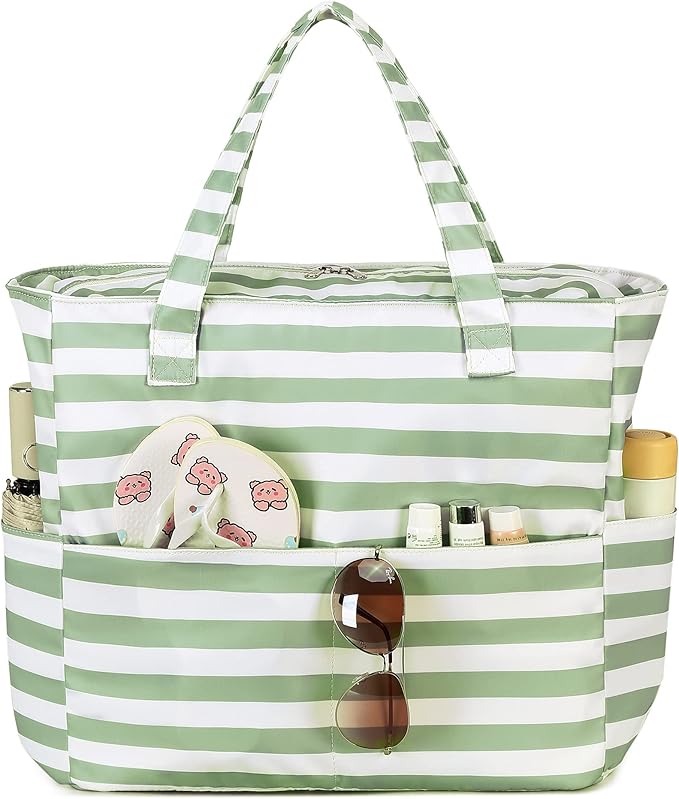
Large tote bags are fine for beach days when you need to carry towels, sun cream, and snacks — but for city days, they’re awkward on narrow streets, difficult on trams, and easier to dip into unnoticed.
Backpacks are practical but make you look more like a backpacker than a traveller, which is neither right nor wrong — it’s just a vibe choice. If you use one, wear it in front of you in crowded spaces.
Local tip: A small zip pouch inside your crossbody for your phone, cards, and cash means you never have to dig around in an open bag in a busy square. Sounds obvious. Most people don’t do it.
Sun Protection That Isn’t Just SPF
The June sun in Portugal is intense. This isn’t a gentle northern European summer — UV levels are high, and you’ll burn faster than you expect, especially near the coast where there’s reflective light off the water. SPF is obvious and I hope you already know to pack it. But there are a few other pieces that function as sun protection and style simultaneously.
A wide-brimmed hat is one of the most effective things you can pack for Portugal in June. It protects your face and shoulders, it looks good in every photo you take, and it signals that you’re someone who has their travel life together. Straw hats in particular are light, pack reasonably flat, and feel completely at home in a Portuguese coastal town.

Sunglasses are non-negotiable. Good ones that actually block UV, not fashion ones with dark lenses and no real protection. You’ll be wearing these constantly from May through September.

A light cotton scarf or wrap serves triple duty: sun protection for your shoulders in the middle of the day, a layer for cool evenings, and a cover for church visits. One piece, three jobs. That’s the kind of efficient packing that changes a trip.
Local tip: Pharmacies in Portugal are excellent and carry good sun cream brands, often at more reasonable prices than airports or tourist shops. If you’re short on space, pick up SPF when you land.
Fabrics to Choose (and the Ones to Quietly Leave at Home)
Let’s be direct about this, because fabric choice is the difference between feeling great on day seven and feeling like you’ve been gently slow-cooked.
Pack: Linen, breathable cotton, chambray, light jersey, rayon blends that drape well, viscose. These breathe, they move, they look good after a hot day.
Avoid: Polyester, nylon, acrylic, heavy denim, anything marketed as “wrinkle-free” that achieves this through synthetic fibre density. These trap heat, hold sweat, and will make you uncomfortable in ways that no beautiful Portuguese view can fully compensate for.
Merino wool is the one exception to the “no synthetics” rule — its natural temperature-regulating properties mean it can work beautifully in the evening hours, and it dries overnight if you wash it.
Local tip: When shopping in Portugal (which you will inevitably do), check fabric labels. The local brands often use genuinely better natural fibres than fast fashion alternatives, and the quality is worth the slight price difference.
The Capsule Wardrobe for Portugal in June
Here’s what I’d actually pack for a ten-day trip to Portugal in June. Not aspirationally, not theoretically — actually.
Tops: 3–4 loose cotton or linen tees in neutrals, 1–2 linen shirts that work open or closed, 1 nicer blouse or fitted top for evenings.
Bottoms: 1 pair lightweight linen or cotton trousers, 1 pair tailored shorts, 1 light midi skirt (doubles as a beach cover and an evening piece).
Dresses: 2 dresses — one casual daytime, one that works for a nice evening.
Layers: 1 linen blazer or thin cotton cardigan, 1 light denim jacket if you run cool.
Shoes: 1 pair quality walking trainers or leather sneakers, 1 pair comfortable sandals with support, 1 pair smarter flat shoes or dressier sandals for evenings.
Accessories: Wide-brimmed hat, sunglasses, 1 crossbody bag, 1 small evening bag if needed, light scarf.
Swimwear: 1–2 swimsuits, 1 cover-up.
That’s it. That is genuinely enough. Everything mixes, nothing is redundant, and you’ll have space in your bag for the ceramics you’re definitely going to buy.
How Many Outfits to Bring (And Why Less Is More)
I learned this the hard way on my third trip, when I packed for twelve days like I was moving temporarily to Lisbon and ended up wearing about sixty percent of what I’d brought. The rest just migrated around the suitcase uselessly.
For a seven to ten day trip, aim for six to eight outfits maximum, built around pieces that cross over with each other. If every top works with every bottom, you haven’t packed six outfits — you’ve packed significantly more. That’s the goal.
Also worth knowing: Portugal has excellent laundry facilities, and most accommodation options either have in-room washing machines (very common in Portuguese apartments and guesthouses) or laundry nearby. Packing for re-wearing is not hardship — it’s just practical. Three linen shirts that rotate through a ten-day trip are smarter than six that don’t.
The packing mistake most people make isn’t forgetting things — it’s duplicating things out of anxiety. You don’t need four pairs of sandals “just in case.” You don’t need seven evening outfits for a week-long trip. Trust your capsule.
Local tip: Leave room in your bag deliberately. Portuguese ceramics, wine, tinned fish, custard tart recipes you’ve written on a napkin — these things accumulate. An overstuffed bag going in is a problem going out.
Mistakes to Avoid When Packing for Portugal
A few final ones worth flagging before you zip the suitcase:
Packing too many “just in case” items that never get used. The formal outfit you’ll probably never need. The third pair of trainers. The full-size rain jacket for a destination with low June rainfall. These eat space and add weight for nothing.
Over-packing shoes specifically. Shoes are heavy, they take up enormous space, and most trips to Portugal need three pairs at the very most. Be ruthless here.
Ignoring the church rule. Multiple people in every travel group discover this the hard way when they get turned away at the door of a cathedral they’d been looking forward to visiting. Shoulders and knees covered. Always carry a scarf.
Packing your best white linen on day one. Start your trip in the darker, more forgiving pieces and save the whites for when you’ve gotten a feel for how dusty and active your days are going to be.
A Final Word
Portugal in June doesn’t ask much of you. The country is generous with its beauty, its food, its light, its long golden evenings. All you need to do is show up somewhat prepared, wear things that let you move freely, and leave enough room in your bag — and your schedule — for the unexpected.
You’ll find a pastel de nata bakery you’ll visit three times. You’ll end up at a miradouro at sunset you didn’t plan for. You’ll sit at a fado restaurant longer than you meant to and not regret a moment of it. Wear something you feel good in for all of it, and leave the rest to Portugal.
It’ll do its part. It always does.

