
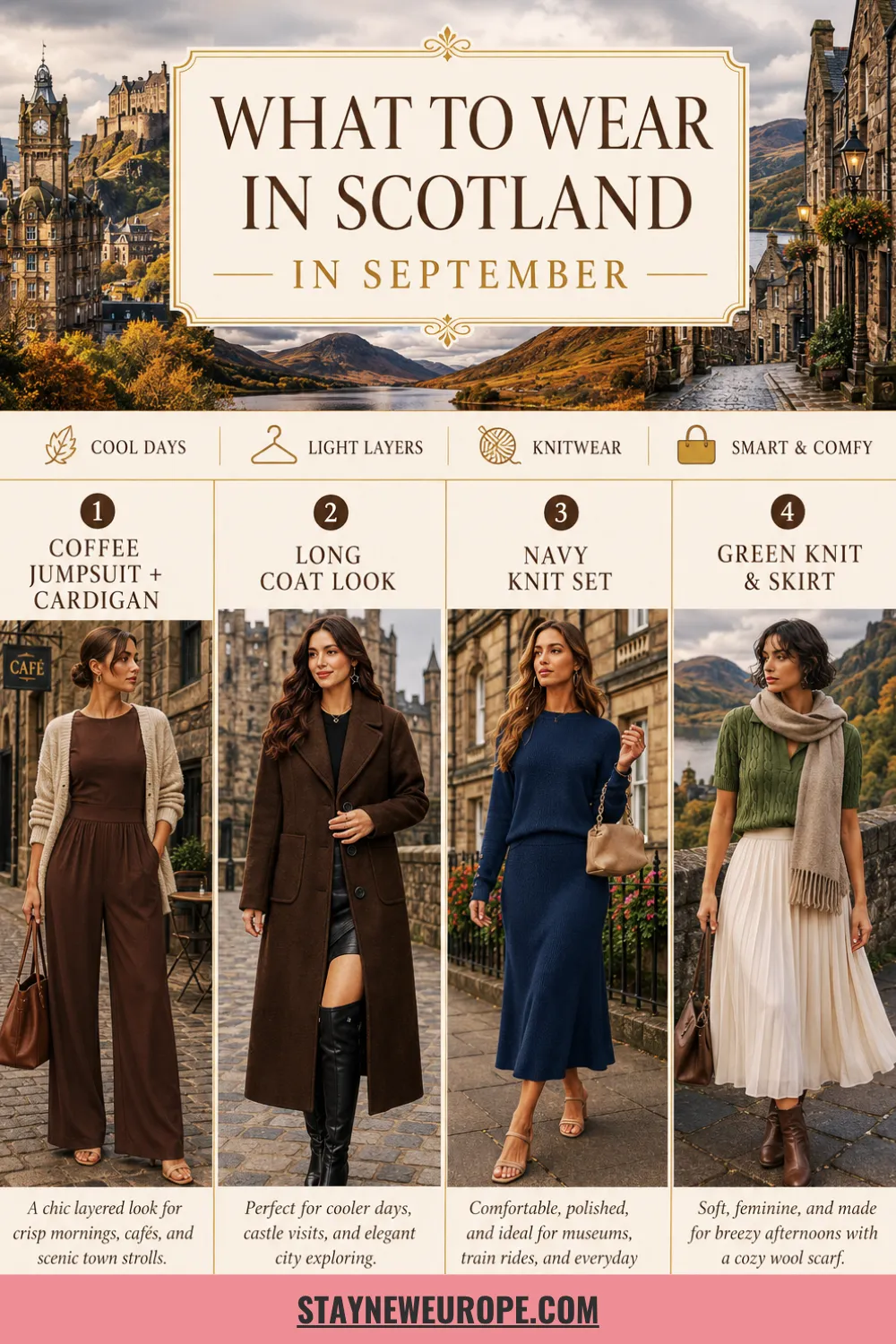
Let me be honest with you: my first trip to Scotland in September, I packed like I was going to Paris. Cute little jacket, ballet flats, one flimsy umbrella that turned inside out somewhere near Edinburgh Castle and never recovered. I learned fast that Scotland doesn’t care how good your outfit looks in the airport mirror.
September here is genuinely one of the best months to visit — the summer crowds have thinned out, the light goes gold and low in that way that makes even a car park look cinematic, and the Highlands start turning amber at the edges. But the weather has a mind of its own, and it will change it four times before lunch.
The tourists you’ll spot a mile off are the ones in head-to-toe waterproof gear that looks like it was bought specifically for a mountain rescue, or the ones shivering in a cotton hoodie because they assumed “not winter yet” meant “basically mild.” Neither of those is the move. This is the wardrobe that actually works.
Before We Dive In
Weather: September in Scotland sits right in that in-between zone — not quite summer, not quite the deep chill of a Highland winter. Daytime temperatures generally hover between 12–16°C (54–61°F), with mornings and evenings dipping cooler, especially once you’re north of Glasgow. Rain is not a maybe, it’s a when — but it’s rarely the relentless, all-day downpour people imagine. It’s more often short, sideways bursts that show up uninvited and vanish twenty minutes later, which is exactly why layers matter more than any single “big” item you pack.
Walking conditions— matter too. Edinburgh’s Old Town is cobblestones and steep closes, Glasgow has long flat stretches that are deceptively far, and anywhere near a loch or glen means uneven, often damp ground. Whatever’s on your feet needs to actually work, not just photograph well.
Fashion style: And on style — Scots dress well, but not in a flashy way. It’s understated: good coats, well-fitting knitwear, boots that have clearly seen some weather and don’t seem to mind. Nobody’s in head-to-toe technical gear in the city, and nobody’s underdressed either. That’s the tone to aim for.
The Waterproof Jacket You Actually Need
This surprised me the first time: it’s not about how waterproof the jacket is on paper, it’s about whether you’ll actually keep it on.
A heavy, stiff rain shell might block every drop, but if it’s too hot to wear indoors and too bulky to carry, it ends up stuffed in your bag exactly when you need it.
What works in Scotland is— a lightweight, packable waterproof jacket with a hood — something that breathes, layers over a jumper without looking like a marshmallow, and folds down small enough to live in your day bag at all times, not just when the forecast says rain.

A few practical combos: over a knit for a castle walk in the morning, tied around your waist by afternoon when the sun breaks through, back on within the hour because this is Scotland and the sun breaking through is never a guarantee of anything.
Local tip: skip the poncho. It looks fine in photos and does nothing in actual Scottish wind, which tends to come sideways.
Lightweight Layers (Why They Do More Work Than Any One Coat)
Here’s the thing nobody tells you before you go: it’s not really about staying warm, it’s about being able to adjust constantly without stopping to dig through your bag.

A good September Scotland outfit is built like this —
- a breathable base (a fine-knit long-sleeve top or a light merino tee),
- a mid-layer you can add or shed (a cardigan, a lightweight jumper),
- and the waterproof shell on top when needed.
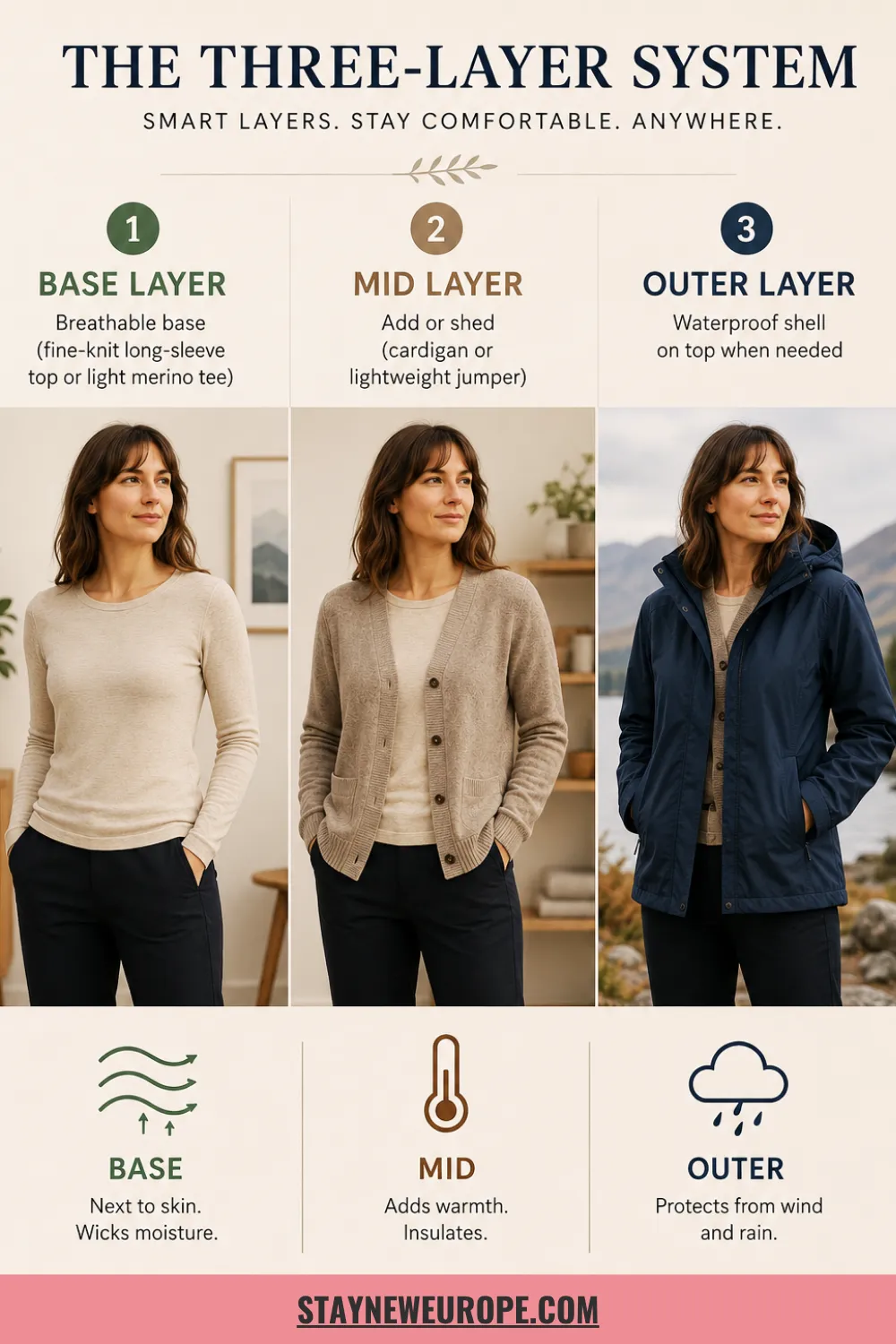
This lets you go from a brisk 9am walk to a warm midday café stop to a chilly evening pub crawl without ever feeling either overdressed or underdressed. I’ve stood at the same viewpoint in Glencoe in a t-shirt at noon and a full jumper by 4pm — same day, same trip.

Local tip: merino wool is worth the investment here. It regulates temperature far better than cotton and doesn’t hold onto damp the way a cotton hoodie does after one unexpected shower.
Jeans, Trousers, or Leggings (What Actually Holds Up)
Shorts are the one item I’d genuinely leave home unless you’re visiting in a rare heatwave — even then, pack one pair, not three.
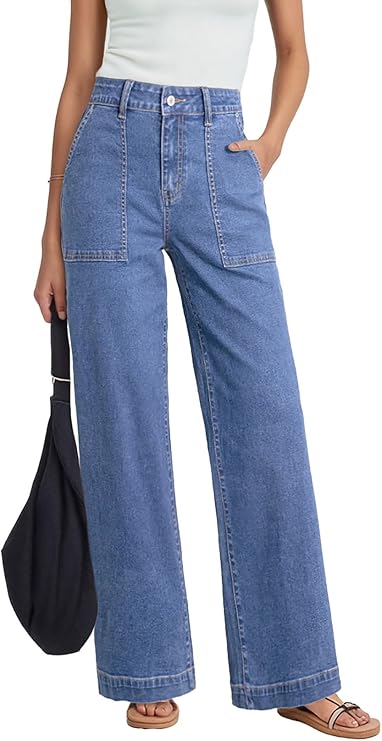
Jeans are the reliable default here: they dress up easily for dinner, dress down for a hike around a loch, and dry reasonably fast if you get caught in a shower.

Fleece-lined leggings are a quieter secret weapon, especially for city days with a lot of walking — they layer under a skirt or dress for warmth without bulk, and they work just as well solo under a long coat. Corduroy or wool-blend trousers are a nice upgrade for dinner nights, giving you a bit more polish than denim without sacrificing warmth.

Local tip: avoid anything 100% cotton for bottoms if you’re heading into the Highlands — once cotton gets wet, it stays wet, and that’s a miserable way to finish a hike.
Comfortable Shoes That Can Actually Handle Scotland
Footwear genuinely makes or breaks a Scotland trip, more than any other single item on this list.
For city days in Edinburgh or Glasgow, you want a weather-resistant leather sneaker or ankle boot with real tread — the cobblestones are gorgeous and also merciless on flimsy soles.

If you’re heading into the Highlands, Isle of Skye, or anywhere with proper trails,

waterproof hiking boots aren’t optional; a light hike can turn into an ankle-deep bog crossing without much warning.

I made the mistake of wearing canvas trainers on a “gentle walk” near Glen Coe once and finished the day with socks I had to wring out.
Local tip: break in any new boots before you land. Scotland is not the place to discover a blister two miles from the nearest café.
What NOT to Wear (Tourist Giveaways)
A few things mark you as visiting for the first time, and most of them are avoidable.
Skip open-toed sandals — even on a warm afternoon, the ground and the evenings will punish you for it.
Leave the giant, stiff rain poncho at home; it traps heat, flaps in wind, and does a worse job than a proper packable jacket.
And unless you have an actual wedding or formal event on the itinerary, there’s no need to pack a kilt, a blazer, or anything resembling black-tie — Scottish daily style is comfortable and considered, not dressed-up.
Local tip: an enormous, rigid suitcase-style backpack also reads “tourist” instantly in cobblestone cities — a smaller, packable daypack blends in far better and is easier on stairs.
Jackets for Weather That Won’t Make Up Its Mind
Beyond the waterproof shell, a second jacket option earns its space in your suitcase.
A structured wool coat or a quilted, packable puffer is ideal for cooler evenings, especially once you’re out past Edinburgh where temperatures drop faster after sunset.

The trick is picking one that layers cleanly over a jumper without looking bulky — a longline puffer does double duty here, working for both a countryside morning and a dressier evening out.

Local tip: a jacket with a hood saves you from needing to juggle an umbrella in Scotland’s frequent wind gusts, which tend to turn umbrellas inside out within minutes.
Evening Outfits That Fit the Vibe
Dinner in Edinburgh or a night out in Glasgow doesn’t call for anything dramatic — think polished-casual, not formal.
A knit dress with tights and boots works beautifully for a cosy restaurant evening, especially layered under your coat for the walk there.

For a more relaxed pub night, dark jeans with a nice top and a wool cardigan hits exactly the right note. Add a scarf and you’ve elevated the whole look without adding a single extra bag.
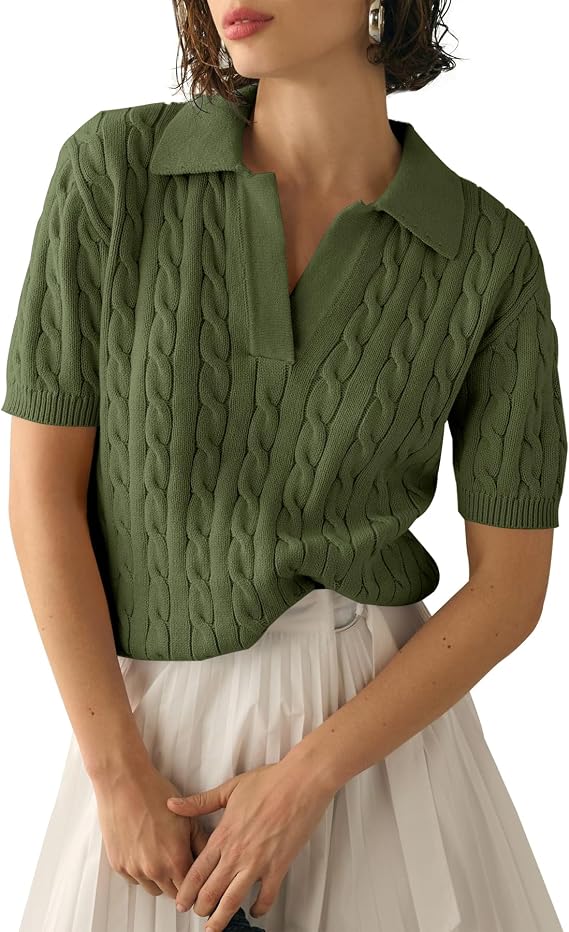
Local tip: most restaurants, even nicer ones, are genuinely casual — you won’t be underdressed in smart-casual daywear that’s simply been freshened up a bit for the evening.
Church and Castle Dress Considerations
Scotland’s cathedrals, abbeys, and historic sites don’t typically enforce strict dress codes the way some churches in southern Europe do, but a little consideration goes a long way.
Covered shoulders and knee-length or longer bottoms are a respectful default for places like St Giles’ Cathedral in Edinburgh, and it’s worth having one slightly more modest layer on hand — a cardigan or light scarf you can add without needing to change your whole outfit.
Local tip: many historic sites are cold inside even when it’s mild outside — stone holds the chill, so that extra layer isn’t just about respect, it’s about comfort too.
Bags: Crossbody vs. Backpack
For a day of walking, exploring, and the occasional unexpected downpour, what you carry matters as much as what you wear.
A crossbody bag is ideal for city days — hands-free, secure, and easy to tuck under your jacket when the rain starts.

For Highland day trips or anything involving more walking, a small water-resistant backpack gives you room for an extra layer, snacks, and your camera without weighing down one shoulder all day.

Local tip: whichever you choose, make sure it can fully close — Scotland’s wind has a way of finding any bag that’s just slightly open.
Accessories That Do More Than Decorate
A scarf and a beanie aren’t just styling extras here — they’re doing real work.
Scotland’s wind can be sharp even when the temperature reading looks mild, and a scarf around your neck makes a noticeable difference.

A simple wool or cashmere-blend scarf also instantly elevates a plain jumper-and-jeans combo into something that looks intentional rather than thrown together.
Sunglasses are worth packing too, if only for the surprisingly bright, low-angled September sun on clear days.

Local tip: tartan is genuinely everywhere in Scottish shops for a reason — a tartan scarf picked up locally makes a lovely, wearable souvenir rather than a costume piece.
Rain Preparation (The Part People Underestimate)
I mentioned my umbrella disaster earlier, and it taught me something: a normal umbrella just isn’t built for Scottish wind.
If you do want one, get a proper windproof, vented travel umbrella — the kind built not to invert. But honestly,

your waterproof jacket and hood will get you through most showers without needing to stop and fumble with an umbrella at all, which is far more practical when you’re navigating stairs, cobblestones, or a queue outside a castle.

Local tip: waterproof spray on your shoes before the trip adds a surprising amount of protection, especially for suede or leather boots that aren’t naturally weatherproof.
Fabrics to Choose (and Avoid)
Fabric choice quietly makes or breaks how comfortable your whole trip feels.
Wool, merino, and fleece are your friends — they insulate even when slightly damp and don’t hold onto cold the way synthetics can. Cotton is the one to be cautious with, especially for anything close to your skin on a day with rain in the forecast, since it soaks up moisture and stays wet for hours. A cotton-linen blend is fine for a warm, dry afternoon, but it’s not your base-layer material here.
Local tip: if you only upgrade one item to merino, make it your base layer top — it’s the piece doing the most work against unpredictable temperature swings.
Building a Simple Capsule Wardrobe for September in Scotland
You genuinely don’t need a huge suitcase for this trip — a tight, considered capsule works better than variety for variety’s sake.
- Think two pairs of bottoms (jeans plus one dressier trouser or skirt),
- three or four tops that layer easily,
- one cardigan or jumper,
- your waterproof jacket,
- a second warmer coat for evenings,
- and one pair of city-ready shoes plus one pair of proper waterproof boots if you’re heading into the countryside.
Everything should be able to mix with everything else — that’s the real test of whether a capsule wardrobe is working, not how many outfits you technically packed. If you’re building this out for a longer multi-country trip, our Spain packing list covers the same mix-and-match logic for a completely different climate, which is a useful contrast if you’re island-hopping between the two.
Practical Packing: How Much Is Actually Enough
For a week in Scotland, aim to repeat outfits rather than pack a new one for every day — nobody you meet on this trip is tracking your wardrobe, and a smaller case is a much easier one to haul up a close in Edinburgh’s Old Town.
A solid rule: pack for three to four days and plan to rewear, mixing tops, jumpers, and the odd accessory to keep things feeling fresh. Overpacking here usually means bringing too many “just in case” heavy items — extra coats, a second pair of boots you never touch — rather than too few outfits.
The biggest mistake I see (and made myself) is packing for the Scotland you’re imagining rather than the Scotland that’s actually forecast; check the week before you go and adjust the balance of light layers versus warm ones accordingly.
Scotland in September has a way of rewarding people who came prepared without overthinking it — you’ll get golden afternoon light on a loch, a warm pub with a fire going by 6pm, and probably one dramatic gust of wind that makes for a great photo. Pack the layers, break in the boots, bring the scarf you’ll actually want to wear, and let the weather do what it’s going to do. You’ll be too busy having a good time to mind.

