
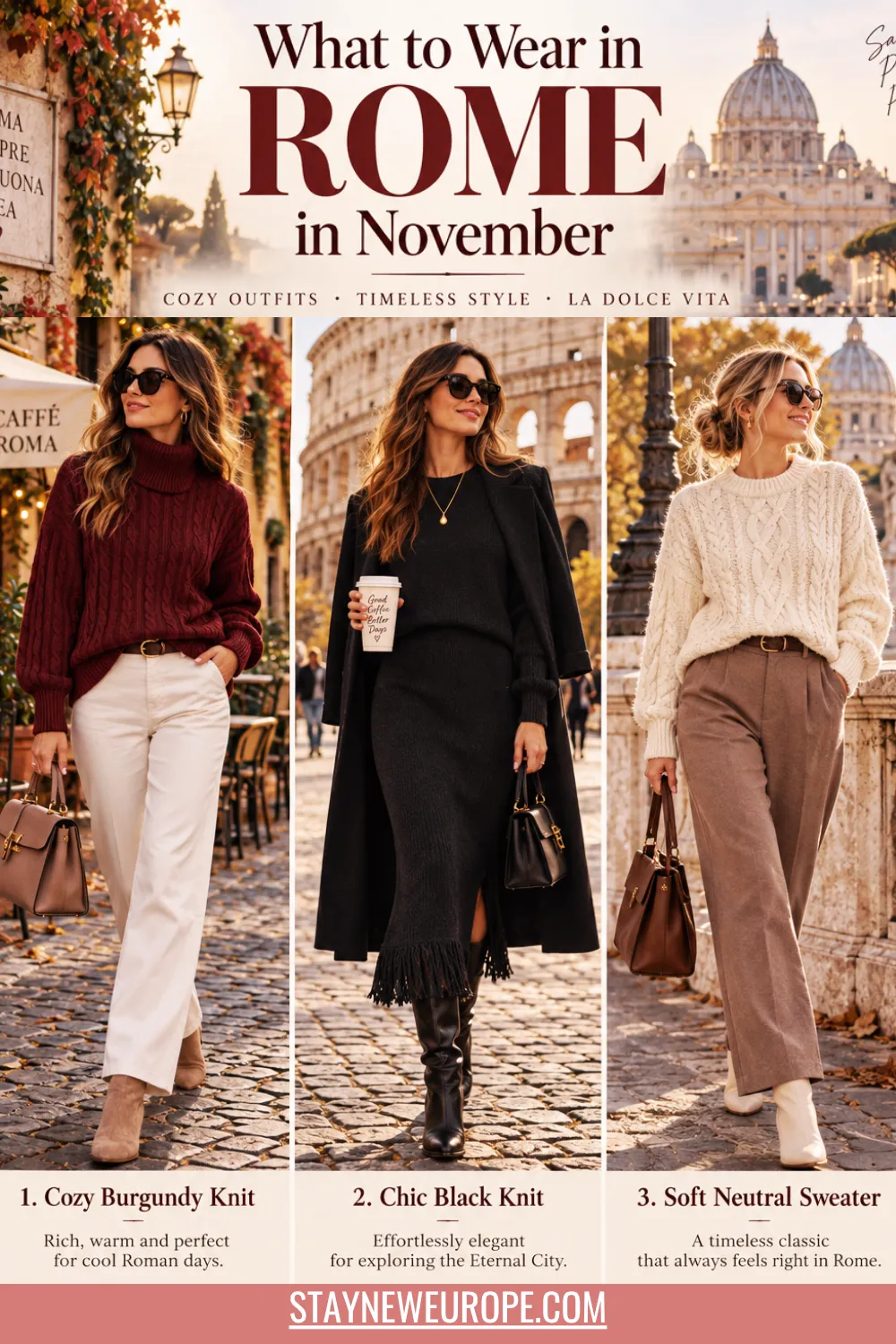
Rome in November is not the Rome of your Instagram feed, and that surprised me the first time I went — I’d built up this golden-hour, gelato-in-hand picture in my head, and instead I stepped off the train into a grey drizzle with the wind doing something genuinely unkind to my hair.
Let me be honest: I packed completely wrong that first trip. I brought summer dresses “just in case,” one thin cardigan I optimistically called a jacket, and shoes that turned the Spanish Steps into a personal hazard course. I learned this the hard way, layer by soggy layer.
The good news is November Rome has its own kind of magic — thinner crowds at the Colosseum, café tables you can actually sit at, and a softness to the light that summer never gives you. You just have to dress for the city that’s actually in front of you, not the one in your head.
Before We Dive In
Weather: Expect daytime highs around 16–17°C (61–63°F) and evenings that drop to 8–9°C (46–48°F). Rain shows up often — not the dramatic thunderstorm kind, more the “did it just start or has it been doing this for an hour” kind. Humidity sits somewhere between damp and undeniable.
Walking conditions: Rome’s cobblestones (sampietrini, if you want to sound like you know things) are uneven on a good day. Add November rain and they turn genuinely slippery. You will walk more than you think, and you will do it on stone that has personally defeated better shoes than yours.
Style culture: Italians dress well, and this matters more in November than in July, when everyone gets a heat-based pass. A well-cut coat and proper boots read as put-together; a puffy waterproof anorak reads as “just landed.” You don’t need designer anything — you need intention.
The Right Carry-On for a Roman November
Here’s a hook: the wrong suitcase will ruin your outfit planning before you’ve even left the airport.
November packing for Rome means more volume than summer — coats, boots, knitwear all take up real space — so a hard-shell carry-on with genuine structure earns its keep here. It protects a wool coat from getting crushed into a wrinkled heap, and it keeps boots from squashing your one good sweater flat.

I travel with a mid-size hardshell and a packable tote that folds down to nothing for museum days when I don’t want to carry my whole bag. If you’re combining Rome with other Italian stops this trip, our Italy in August packing guide covers the crossbody-bag logic in more detail, and most of it carries over regardless of season.
Local tip: Pack your coat as your “personal item” on the plane, worn or folded over your arm, and you instantly free up a shocking amount of suitcase space.
Lightweight Layers (Why They Matter More Than You Think)
This surprised me the most: November Rome isn’t cold in the way northern Europe is cold. It’s changeable, which is a different problem entirely.
You’ll leave your Airbnb at 9am in what feels like proper autumn chill, and by 1pm, standing in full sun on a piazza with zero wind, you’ll be sweating through your coat. This is why one heavy layer is the wrong move — you want two or three thinner ones you can shed and re-add without thinking twice.
A thin merino base layer, a cotton or flannel shirt, and a knit vest or light jacket over the top gets you through almost any hour of a Roman November day. It’s the same layering logic that works for Paris in September — smart pieces, not bulky ones.

Local tip: Merino wool is your secret weapon. It regulates temperature far better than cotton and doesn’t hold onto odor after a long day of walking, which matters when you’re re-wearing pieces to pack light.
The Coat That Actually Earns Its Suitcase Space
A hook worth sitting with: you will wear one coat every single day, so it had better be right.
A mid-weight wool or wool-blend coat, ideally something that hits mid-thigh to knee-length, is the single most important thing you’ll pack for November Rome. It needs to handle a light drizzle without soaking through immediately, look intentional over both jeans and a dress, and have pockets deep enough for your phone and gloves.

I made the mistake once of bringing a cropped denim jacket because it “went with everything.” It went with nothing once the wind picked up near the Tiber. A proper coat is not the exciting purchase, but it is the one that changes every outfit photo for the better.
Trench coats work if you line them or layer a sweater underneath — Rome’s November rain is rarely torrential, so a trench with a removable liner is genuinely versatile.

Local tip: Camel, charcoal, or deep green coats photograph beautifully against Rome’s terracotta buildings, far more than black does — black tends to disappear into shadow in photos taken under the city’s overcast November skies.
Jeans, Trousers, and What Actually Works
Here’s something nobody tells you: your usual summer trousers will feel thin and slightly sad against a Roman November wind.
Dark, mid-weight denim is the workhorse here — it handles rain splashes better than light wash, hides the inevitable grime of a day on cobblestones, and dresses up easily for dinner with the right shoes. Straight or slightly tapered legs work better than skinny styles, which can feel restrictive once you’ve layered thermal tights underneath on the colder days.

Wool or wool-blend trousers are worth packing too, especially for evenings. They read as more put-together than jeans and are noticeably warmer, which matters once the temperature drops after sunset (and sunset comes early — often before 5pm).

Corduroy has quietly become one of my favorite November Rome fabrics. It has texture, it’s warm without being bulky, and it suits the season’s whole mood.
Local tip: Skip shorts entirely, even on a surprisingly mild afternoon. Italians simply don’t wear them past September in the city, and you’ll stand out in a way that has nothing to do with style.
Dresses That Still Work in November
A hook, because this one surprises people: yes, you can still wear dresses in November Rome — you just have to dress them properly.
A midi dress in a heavier knit, corduroy, or a wool-blend works beautifully layered over tights and under a coat. It gives you the ease of a one-piece outfit — no matching required — while still handling the temperature. I wore a chocolate-brown ribbed knit dress on repeat one November trip, changing only the shoes and accessories, and nobody noticed I was repeating an outfit because it looked different every time.

Shirt dresses in a thicker cotton or flannel also earn their place, especially belted with tights and boots underneath. They walk the line between casual daytime wandering and a slightly dressier dinner without a full outfit change.

Save the lightweight summer dresses for another trip — even layered with tights, they tend to look and feel out of season here, the way sandals look out of place at a bonfire.
Local tip: A dress with sleeves saves you an entire layer underneath, which matters when you’re trying to keep your suitcase manageable.
Sweaters and Knitwear
Here’s the thing about knitwear in Rome: it’s doing double duty as both your warmth layer and your entire outfit’s personality.
A chunky knit sweater over trousers, worn with the sleeves slightly pushed up, reads effortlessly Italian in a way that a puffer jacket simply doesn’t. Turtlenecks are particularly good here — they add warmth around your neck without the bulk of a scarf, which is useful on days you’re moving in and out of warm cafés and cool piazzas.

I’d pack two or three sweaters in different weights: one thin enough to layer under a coat, one substantial enough to wear alone on a milder afternoon. Neutral tones — cream, camel, forest green, burgundy — mix and match more easily than anything bold, and they suit the season’s muted light.

Local tip: A fine-gauge merino sweater under your coat, rather than a bulky one, keeps your silhouette from looking shapeless in photos — save the chunky knits for days you’re not wearing outerwear over them.
Comfortable but Stylish Walking Shoes (Or, Your Feet’s Survival Kit)
I’ll be blunt: your feet are going to do more work in Rome than in almost any other city, and November’s slick cobblestones do not forgive bad footwear choices.
Leather ankle boots with a low, sturdy heel or flat sole are the single best investment for this trip. They handle wet stone far better than sneakers, they look appropriate in a nice restaurant, and they keep your ankles warm without you needing to think about socks matching an outfit. Break them in before you land — Rome is not the place to discover a blister on day one.

If boots aren’t your thing, a pair of leather or suede sneakers in a neutral color works, provided the sole has actual grip. Save the brand-new white trainers for a different trip; they’ll be grey by lunchtime and slick as ice on wet stone.

Local tip: Rub a little beeswax or leather protectant onto boots and shoes before you leave home — Rome’s November drizzle is more persistent than dramatic, and it will find its way into anything untreated.
What NOT to Wear (The Mistakes I See Constantly)
Let’s talk about the outfit choices that instantly flag someone as a first-time visitor, because a few of these I’ve been guilty of myself.
Athleisure head-to-toe — leggings, a hoodie, running shoes — is the fastest way to look like you wandered off a flight and never changed.
It’s not that Italians never wear sportswear; it’s that they don’t wear it as a full outfit to walk through the historic center.
Similarly, a see-through plastic rain poncho, while practical, photographs terribly and reads as pure tourist panic rather than preparedness.
Sandals or open shoes of any kind are a mistake in November, cold-toe weather aside from the slippery-stone problem.
And oversized branded logo wear — think giant sports-team hoodies — tends to draw the kind of attention (and occasionally pickpocket interest) you don’t want in crowded tourist areas.
Local tip: If you wouldn’t wear it to run errands in a nice neighborhood at home, it probably won’t feel right wandering past the Pantheon either.
Evening Outfits in Rome
Here’s a hook worth remembering: Roman evenings dress up more than you’d expect, even in November.
Dinner in Rome, even a casual trattoria, tends to feel a notch more polished than the equivalent meal back home. This doesn’t mean formal — it means intentional.

Swap your daytime boots for a slightly dressier pair, add a silk scarf or statement earrings, and you’ve transformed a daytime outfit into an evening one without repacking.\

For men, a knit sweater under a blazer with dark trousers covers almost every dinner scenario.
For women, a wool dress or trousers with a silk blouse, finished with a proper coat (not the puffer, save that for museum days), reads as effortlessly appropriate for anywhere from a neighborhood osteria to a nicer restaurant near Trastevere.

Local tip: Bring one slightly elevated piece — a good blazer, a silk top, a nice pair of loafers — that you can slot into three or four different outfits across the trip for instant evening polish.
Church Dress Codes (Non-Negotiable, Not a Suggestion)
This one gets people every single time, so let me be direct: shoulders and knees covered, full stop, and this applies to the Vatican Museums as much as any small parish church.

Rome has more churches per square foot than almost anywhere on earth, and you will want to duck into several — the Pantheon, Santa Maria Maggiore, St. Peter’s Basilica — often spontaneously. Bare shoulders, shorts, or short skirts will get you turned away at the door, and staff at major sites enforce this strictly, especially at the Vatican.

The easy fix: wear layers you can adjust on the spot. A midi dress or trousers you’re already wearing handles the length requirement, and a lightweight scarf thrown over bare shoulders solves the rest in about four seconds.
Local tip: Keep a large scarf in your bag at all times in Rome, not just for churches — it doubles as an extra layer if the wind picks up, and as a quick cover-up if you duck somewhere unplanned.
Bags: Crossbody vs. Backpack
A quick reality check: the wrong bag will undo a good outfit and make you an easier pickpocket target in the same afternoon.
A crossbody bag worn across the front of your body is the standout choice for Rome, November included. It keeps your hands free for holding a coffee or an umbrella, and it’s genuinely harder for anyone to access without you noticing.
A structured leather crossbody in tan, black, or cognac also looks polished with almost every outfit in this guide.

Backpacks are fine for full-day sightseeing but read more tourist than local, and they’re more vulnerable to someone reaching in behind you in crowded spots like the metro or near major attractions. If you want one, choose a smaller, structured leather style rather than a hiking-style pack.

Local tip: Whatever bag you choose, make sure it has a way to close securely — a zip, not just a magnetic snap — before you’re standing in a packed bus near the Colosseum.
Accessories That Elevate Simple Outfits
Here’s the part that takes an outfit from “fine” to “actually put together”: the small stuff.
A good scarf is doing the most work of anything on this list — warmth, church-cover, and instant polish, all in one piece of fabric.

Gloves matter more than people expect once the evening chill sets in, and a pair in soft leather looks considerably better in photos than the bulky knit kind.

A structured tote or crossbody, a pair of statement earrings, a decent watch — none of these need to be expensive, but they all read as intentional in a way that a bare, accessory-free outfit doesn’t.

Local tip: One good scarf in a rich, solid color (burgundy, mustard, forest green) will outperform three “fun” printed ones — it works with literally everything you packed.
Rain Preparation (The Unglamorous Essential)
Nobody wants to think about this while packing, but Rome in November means rain is a when, not an if.
A proper compact umbrella — the kind that fits in a bag, not the giant golf-style one — is worth its weight. Water-resistant (not just water-repellent) shoes make a genuine difference across a multi-day trip; your regular leather boots will survive a light shower but not a full afternoon of it.
A packable, non-plastic rain jacket in a neutral color is the compromise between “prepared” and “photographed poorly.”
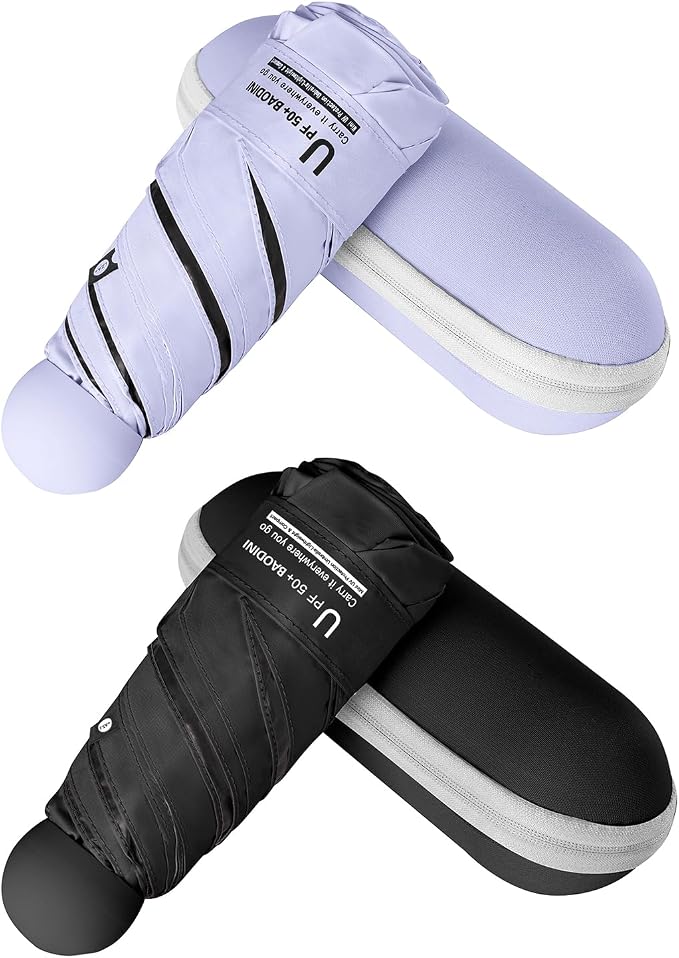
I learned this one the hard way on a trip where I refused to pack an umbrella out of pure stubbornness and spent an entire afternoon in the Vatican Museums squelching in soaked boots.
Local tip: Buy a cheap umbrella from a street vendor the moment it starts raining if you forgot yours — they appear out of nowhere across Rome the second the first drop falls, almost suspiciously fast.
Fabrics to Choose (and Avoid)
A quick but important note: fabric choice matters more in November than in any other season, because it determines whether you’re actually warm or just look like you are.
Wool, wool-blends, corduroy, and heavier cottons are your friends — they hold warmth, resist wrinkling in a suitcase, and drape well for photos. Merino wool specifically is worth the investment for base layers; it’s thin enough not to bulk up an outfit but does real work keeping you warm.
Avoid pure cotton as an outer layer (it soaks through in rain and stays wet for hours) and avoid anything too lightweight or synthetic that won’t actually insulate — that thin polyester jacket that looked warm enough in the store will not survive an evening walk along the river.
Local tip: If a fabric feels thin enough to see light through when you hold it up, it belongs in a July suitcase, not a November one.
A Capsule Wardrobe for Rome in November
Here’s the promise of a capsule approach: fewer pieces, more outfits, less stress standing in front of an open suitcase each morning.
For a five- to seven-day trip, aim for one coat, two pairs of trousers or jeans, one skirt or dress, three sweaters or knit tops, two button-up shirts, one dressier top for evenings, and a pair of boots plus a backup pair of shoes. Stick to a tight color palette — camel, charcoal, cream, burgundy, forest green — and almost everything mixes with everything else.
This is the same logic behind our France in September guide — fewer, better pieces beat a suitcase stuffed with options you’ll never actually wear.
Local tip: Lay every piece out on the bed before you pack and count the outfit combinations out loud. If a piece doesn’t create at least two new outfits, leave it home.
Practical Packing: How Much Is Actually Enough
For a week in Rome, five or six tops, two pairs of trousers or jeans, one dress, three sweaters, and two jackets (one coat, one lighter layer) will carry you through nearly every situation, mixed and matched into far more outfits than the piece count suggests.
Overpacking is the classic November mistake — people bring both a puffer and a wool coat “just in case,” when one good coat plus smart layering underneath solves the same problem with half the suitcase space. Plan outfits by day loosely before you pack, accounting for one or two dressier evenings, and resist the urge to bring a backup for your backup.
The biggest mistake I still see (and occasionally still make) is packing for the Rome of the brochure rather than the Rome of the actual forecast. Check the specific week before you go and adjust — a genuinely mild November is a very different packing list from a wet, blustery one.
Rome in November rewards the traveler who dresses like they mean it — layered, a little textured, unbothered by a passing shower. You’ll walk past the same ruins everyone photographs in July, except with fewer crowds, softer light, and a coat that actually makes you look like you belong there. Pack a little smarter than I did that first time, and let the city do the rest.

