
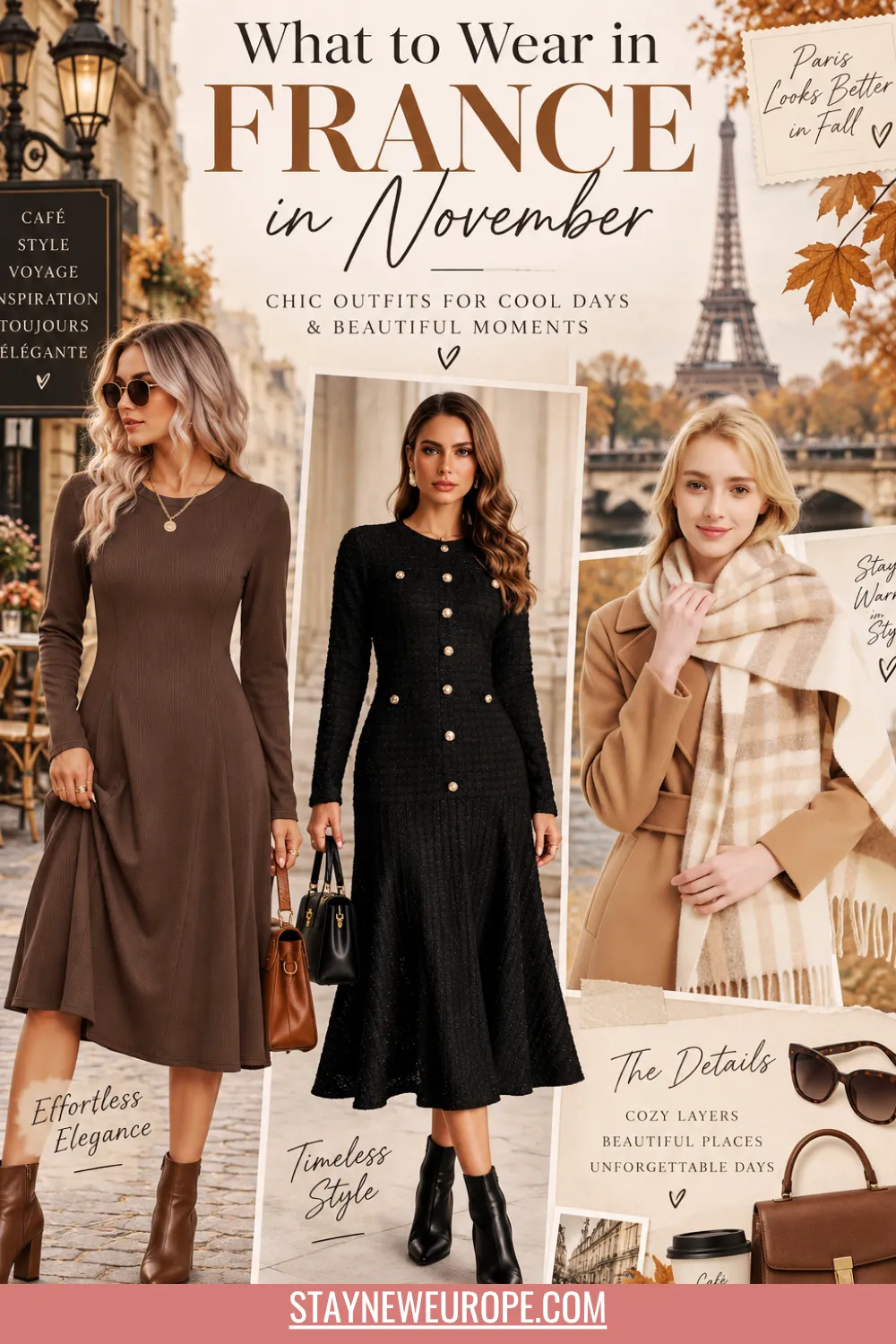
France in November is not the France of postcards, and honestly, that’s part of what I love about it now. The crowds have thinned out, the light goes gold and low by four in the afternoon, and every café smells like someone just lit a fire somewhere nearby.
But let me be honest — the first time I did a November trip through France, I packed like it was a slightly chilly September, and I paid for it. Rain that shows up sideways. Wind off the Seine that finds every gap in your jacket. A “mild” 11°C that feels a lot colder once you’ve been standing outside a boulangerie for twenty minutes deciding between two croissants.
This is the packing guide I actually needed back then — built from a handful of Novembers spent getting it wrong, then slowly getting it right.
Before We Dive In
Weather: November in France sits somewhere between “bring a coat” and “bring a real coat.” Paris and the north typically hover between 5–11°C (41–52°F), with the south — Nice, Aix, Provence — running a few degrees warmer but nowhere near shorts territory. Rain shows up often, sometimes as a light drizzle that lasts all day, sometimes as a proper downpour that clears in twenty minutes. Days are short. By 5pm you’re basically in evening mode, whether you planned for it or not.
Walking conditions: French cities reward walking and punish bad shoe choices in equal measure. Cobblestones in the Marais, uneven pavement around Lyon’s Vieux Lyon, wet stone steps near Sacré-Cœur — none of it is dramatic, but all of it is slippery once November rain gets involved.
Style culture: the French dress with restraint, not effort. You won’t see head-to-toe logos or anything trying too hard — you’ll see one good coat, well-fitting trousers, and shoes that have clearly been worn before. This matters more in November than in summer, because a bad puffer jacket or a see-through rain poncho reads as tourist from fifty metres away, and you’ll notice the difference in how you’re treated in shops and restaurants.
The Bag You Actually Need
November France is a layering trip, which means you’re packing more bulk than a summer trip, even if you’re not packing more items. A soft-sided duffle tends to squish under the weight of a wool coat and boots in a way that leaves everything creased by day two.
I’d go with a structured carry-on or a mid-size hardshell suitcase instead. It holds its shape, protects anything delicate you bring home (Provence markets are dangerous for a reason), and keeps your knitwear from turning into a compressed ball at the bottom of a duffle. If you’re doing more than one region — Paris, then a train south — a suitcase with decent wheels will save your arms on cobblestone train station approaches, which are more common than you’d think.

Local tip: pack your heaviest item — usually the coat — as the thing you wear on travel days, not the thing you fold into the case. It saves an enormous amount of suitcase space and you’ll want it the second you step off the plane anyway.
Lightweight Layers (Why They Matter More Than the Coat)
Here’s what surprised me most: the coat gets all the attention, but it’s the layers underneath doing the real work. French interiors — cafés, trains, shops — run warm, sometimes aggressively so, which means you’re constantly moving between a cold, damp street and an overheated indoor space. One heavy sweater leaves you sweating indoors and shivering the second you step out.
What actually works is two or three thin layers instead: a fine merino base layer, a light long-sleeve top, a cardigan or thin knit sweater on top of that, then your coat over everything. You can peel off a layer in a warm restaurant without looking like you’re stripping down, and you can add it back the second the wind picks up near the river.

I now travel with three merino long-sleeves in neutral colours and rotate them under everything — dresses, jackets, blazers. It sounds like a small detail. It’s the single most-used category in my whole suitcase by day three.

Local tip: merino wool doesn’t hold odour the way cotton does, so you can genuinely wear the same top three days running without anyone but you knowing.
Dresses That Actually Work in November France
A breezy sundress makes zero sense here, but a dress absolutely still has a place — you just need to think of it as a layering piece, not a standalone summer outfit.
A midi dress in a heavier knit, corduroy, or a wool-blend does the job beautifully. Worn alone it’s a bit thin for November, but paired with opaque tights, ankle boots, and a coat, it becomes one of the easiest outfits you own — no separates to coordinate, no guessing whether the top matches the bottom. For an afternoon wandering a market or an evening dinner in Lyon, a dark green or burgundy knit dress with tights and boots looks intentional without any real effort.

If you’re the type — like me — who resists packing “just a dress” because it feels impractical for a cold-weather trip, this is the counterargument: one dress, styled three ways with different tights, jackets, and accessories, quietly does the work of three separate outfits.

Local tip: a slip dress layered under a chunky knit sweater is a trick I picked up from a friend in Paris — it adds warmth without bulk and gives you a slightly dressier hem peeking out for evening.
Jeans, Trousers, and What Actually Handles the Weather
Jeans are fine for November France, but not every jean. Thin, worn-out denim does nothing against wind, and if it rains, wet denim is genuinely miserable for the rest of the day. A slightly heavier denim, or better, a wool-blend trouser, handles the cold far better while still looking put-together for dinner.

Corduroy trousers deserve more credit than they get. They’re warm, they photograph beautifully against French stone architecture, and they read as intentional rather than “I forgot it would be cold.” I’ve worn the same pair of rust-coloured corduroys across three different cities on one trip and never once felt like I was repeating an outfit, because I changed the top and shoes each time.

Leave the shorts at home entirely, even if you’re heading south to Nice or Aix. November there is milder, not warm — you’re looking at light trousers and long sleeves, not summer wear.
Local tip: if you’re combining France with a warmer neighbouring country this trip, the layering logic shifts significantly — the guide on what to wear in Italy in August is a useful contrast for how differently you’d pack for a summer leg versus this one.
Comfortable but Stylish Walking Shoes
This is the category where I’ve seen the most damage done — literally, to people’s feet, by day two of a France trip. Cobblestones, wet pavement, and long walking days do not forgive cute-but-flimsy shoes.
Leather ankle boots are the answer for most of the trip. They handle rain far better than canvas or suede, they look appropriate for both daytime sightseeing and a casual dinner, and a low block heel or flat sole gives you the grip you need on wet stone. Break them in before you go — new leather boots on a ten-kilometre sightseeing day is a mistake I’ve made exactly once and never repeated.

For rainy days specifically, a treated or water-resistant leather boot outperforms almost anything else you could pack. Suede looks lovely and ruins fast — I learned this specific lesson on a rainy afternoon near Notre-Dame and it wasn’t a cheap one.

Local tip: carry a small pack of shoe-safe waterproofing spray if you’re bringing boots you love — one treatment before the trip adds real protection against the kind of unpredictable November rain that shows up with no warning.
What NOT to Wear (The Tourist Giveaways)
A few things mark you as a tourist in France faster than anything else, and most of them are avoidable with a small adjustment.
Bright white sneakers straight out of the box are one — worn-in, slightly scuffed trainers blend in far better than pristine ones. Head-to-toe athleisure, especially leggings worn as pants outside of active travel days, is another; French cities are casual, but not gym-casual. And the big one: a flimsy plastic rain poncho. It works, technically, but nothing signals “unprepared tourist” faster. A proper compact umbrella or a real rain jacket does the same job without the crinkling plastic aesthetic.
Novelty scarves, oversized event-branded jackets, and anything overtly logo-heavy also stand out here in a way they might not at home. The French aesthetic leans quiet — good pieces, worn well, nothing shouting for attention.
Jackets for Genuinely Unpredictable Weather
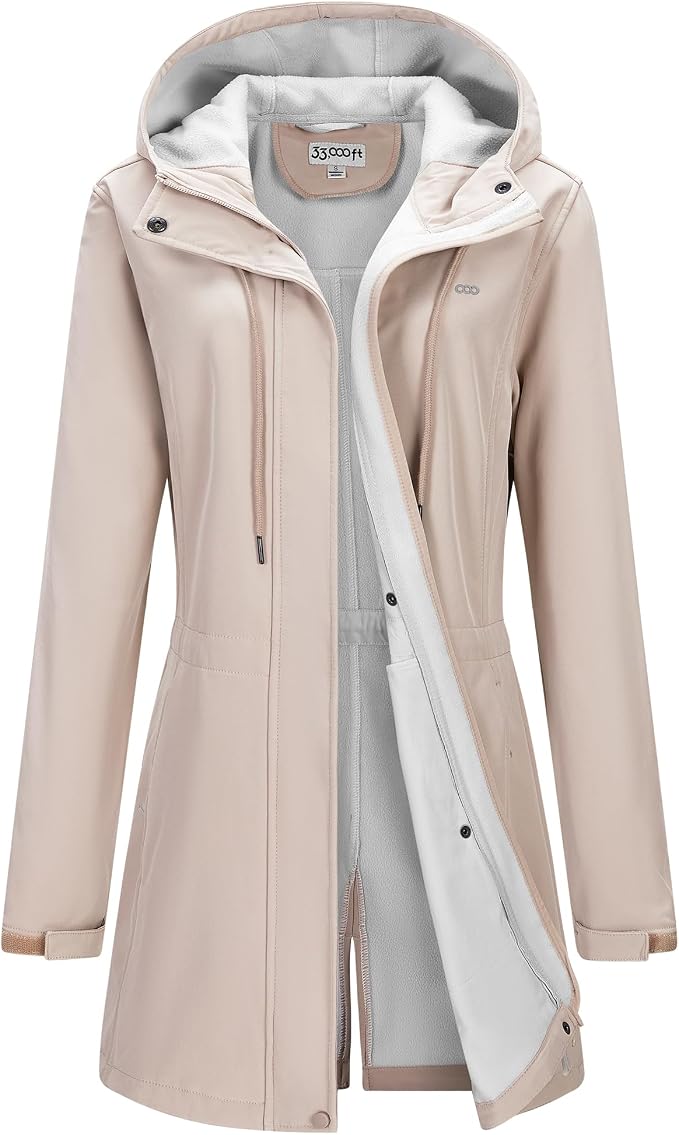
You need two, not one: a warm coat for cold mornings and evenings, and something waterproof for the rain that will, at some point, catch you off guard.
A wool or wool-blend coat in a classic cut — camel, navy, charcoal — works across nearly every scenario, from museum mornings to dinner reservations, and layers well over everything else you’ve packed. For the waterproof piece, skip anything bulky; a packable rain jacket that folds into your bag is far more realistic than remembering to check the forecast every single morning. I keep mine at the top of my day bag the entire trip and have never regretted the extra space it takes up.

If your itinerary includes the south of France, you can go slightly lighter — a mid-weight jacket over a full wool coat — but don’t assume “south” means “warm.” Aix in November is genuinely cooler than most people expect.
Evening Outfits in France
French dinners run later and a little more dressed-up than a lot of visitors expect, even in November, even on a casual trip. You don’t need cocktail wear, but “the same jeans from the day, just a fresh top” reads as underdressed in a nicer bistro.
A knit dress with boots and a statement earring is close to unbeatable for a dinner out. For a more relaxed evening, dark trousers, a silky blouse, and a blazer over the top elevates things instantly without requiring a separate evening wardrobe. Men can lean on a good sweater, dark trousers, and leather shoes — simple, but noticeably more put-together than daytime sightseeing wear.

Local tip: if you’re spending time in Paris specifically, what to wear in Paris in September has more on the evening dress code nuances that carry through most of the year, cold months included.
What to Wear for Churches (Dress Codes That Actually Get Enforced)
France has an enormous number of churches worth visiting, and unlike some countries, enforcement on dress codes can be inconsistent — but you don’t want to be the exception that gets turned away at Notre-Dame or a smaller countryside chapel with a strict volunteer at the door.
Shoulders and knees covered is the safe baseline. In November, this is genuinely easy — you’re already in trousers and long sleeves most days, so there’s little extra thought required. If you’re wearing a dress with a shorter hem, tights solve the leg-coverage issue instantly, and a light scarf draped over the shoulders handles the rest.

Local tip: keep a lightweight scarf in your day bag specifically for this. It weighs nothing, and it means you’re never standing outside a beautiful church deciding whether to skip it because of what you’re wearing.
Bags: Crossbody vs Backpack
For daily sightseeing, a crossbody bag wins. It sits close to your body, which matters in crowded metro stations and busy markets, and it keeps your hands free for holding an umbrella, a coffee, or a map you’re pretending you don’t need. Go for one with a zip closure and a strap that sits across your body rather than on one shoulder — pickpocketing in tourist-heavy areas is opportunistic, and a secure bag removes the easy opportunity.

A backpack has its place too, particularly on travel days between cities or if you’re carrying a camera and extra layers. Just be mindful in crowded spaces — a backpack worn on your back is an easy target in a packed metro carriage, so swing it to the front in tight spaces.

Accessories That Elevate a Simple Outfit
November gives you a genuine excuse to lean into accessories that double as function: a wool scarf that’s doing real warmth work, leather gloves that keep your hands from going numb on an outdoor market morning, a beret if you’re feeling bold (yes, it’s a cliché, and yes, it still looks good).

A good crossbody bag in leather or a structured fabric adds polish to even the simplest jeans-and-sweater combination. Gold or silver hoop earrings, a single statement ring, or a patterned scarf tied at the neck — small additions like this are exactly the kind of “effort without trying” the French do so well.

Rain Preparation (The Thing People Consistently Underpack For)
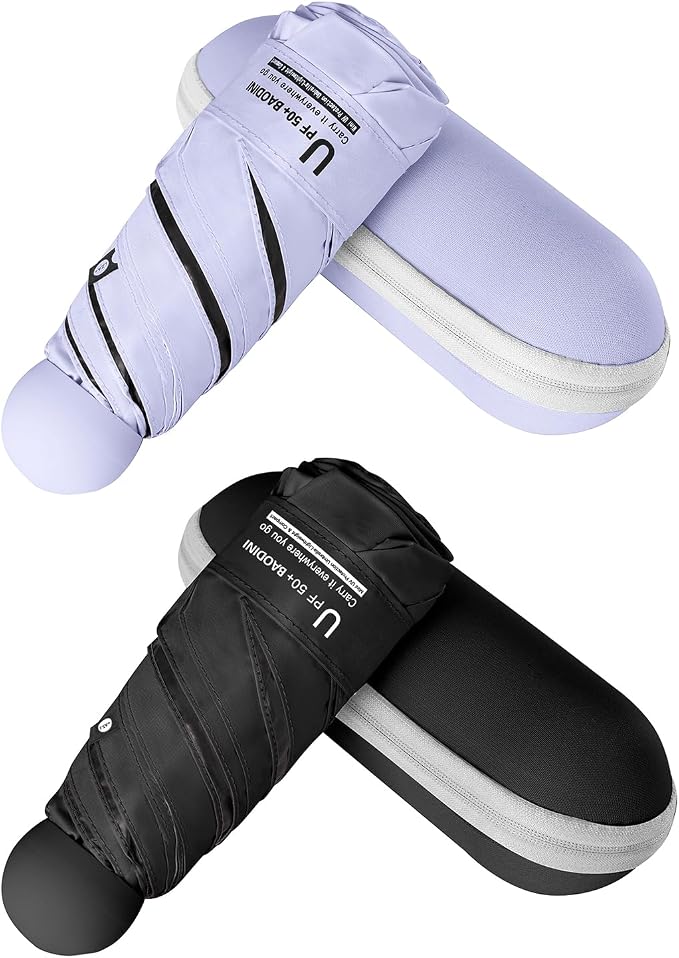
France in November means rain, somewhere on your trip, more likely than not. A compact umbrella that fits in your day bag is non-negotiable — not the golf-sized one, the small folding kind that survives a gust of wind without turning inside out.
Beyond the umbrella, think about your feet and your bag. Waterproof or water-resistant boots matter more than a waterproof coat, in my experience, because wet feet ruin a day far faster than a slightly damp shoulder. And a bag with a zip closure, rather than an open tote, keeps your phone and passport dry if you get caught in a sudden downpour without shelter nearby.
Fabrics to Choose (and Avoid)
Wool, merino, corduroy, and heavier cotton blends are your friends this time of year — warm without being bulky, and they handle the damp better than most synthetics. Leather, treated properly, is excellent for both shoes and jackets.
Avoid anything overly synthetic that traps moisture rather than breathing, and steer clear of suede unless the forecast is genuinely dry — one unexpected shower and it’s ruined for the rest of the trip. Pure cotton without any wool blend also struggles in real cold; it looks fine but doesn’t insulate the way you’d hope once the temperature actually drops.
A Simple Capsule Wardrobe for France in November
For a week-long trip, this is roughly what I’d build a suitcase around: one wool coat, one packable rain jacket, two pairs of trousers (one denim, one corduroy or wool-blend), one knit midi dress, three merino long-sleeve tops, two sweaters, one blazer for evenings, tights, one pair of leather ankle boots, one pair of clean sneakers for lighter days, a crossbody bag, a scarf, and gloves.
Everything mixes with everything else, which is really the entire point of a capsule approach — fewer pieces, more combinations, less decision fatigue every morning when it’s cold and you’d rather just get to the coffee.
The Practical Packing Bit
For a week to ten days, you genuinely don’t need more than four to five daytime outfit combinations and two or three evening options — the capsule above covers that with room to spare. Overpacking for a November trip is a specific kind of regret, because you’ll be dragging a heavier case (wool and boots weigh more than summer clothes) over the same cobblestones that make wheeled luggage a liability in the first place.
Plan a loose outfit order before you go — even a rough “day one: the corduroys and the green sweater” mental list saves real decision-making energy once you’re tired and it’s getting dark at five. The most common mistake I see: packing separates that don’t actually go together, which means you arrive with twelve items and only six real outfits. Check that everything works with at least two other pieces before it goes in the case.
There’s a particular kind of good feeling that comes from walking through a French city in November, properly dressed for it — warm, dry, not thinking about your feet or the wind, just noticing the chestnut sellers and the light hitting wet cobblestones. That’s the trip worth packing for. Get the layers right, get the shoes right, and the rest of it — the markets, the long dinners, the golden late-afternoon light — takes care of itself.

