
Let me be honest — I almost skipped Sardinia in November. Everything I’d read about the island was beach-chairs-and-turquoise-water content, and none of it prepared me for showing up to a nearly empty Alghero with a suitcase full of linen dresses and zero sweaters.
November Sardinia is a completely different island. The tourist crowds are gone, the light goes gold and low by 4pm, and the wind off the water has an edge to it that summer visitors never see. It’s genuinely one of my favourite times to visit — quieter towns, cheaper agriturismos, locals who actually have time to chat — but you have to dress for a Mediterranean island that has, for a few months, forgotten it’s Mediterranean.
The biggest mistake I see (and made myself, on trip one) is packing like it’s a delayed summer holiday. It isn’t. It’s a proper autumn destination that happens to have palm trees. Here’s what actually works.
Before We Dive In
Weather: November in Sardinia sits somewhere between “still nice” and “bring a coat.” Expect daytime highs around 15–18°C and nights that drop closer to 9–10°C, especially inland or in the hills around Barbagia. Coastal towns like Cagliari and Alghero run a touch warmer than the mountainous centre. Rain shows up more than people expect — it’s actually the wettest month on the island — but it tends to come in short, sharp bursts rather than settling in for days.
Walking conditions: Sardinia’s old towns are built on stone, and a lot of it is uneven, sloped, or slick when wet. Alghero’s bastioni, Cagliari’s Castello district, and Bosa’s hillside lanes all involve real inclines and cobbles, not flat boulevard walking. Rubber soles are non-negotiable.
Style culture: Italians dress with intention even on a small island, and Sardinians are no exception — this isn’t a flip-flops-and-cargo-shorts kind of place, even off-season. You’ll see a lot of well-cut knitwear, good boots, and tailored coats in the towns. Blending in isn’t about designer labels; it’s about looking put-together rather than like you just got off a beach holiday that ended three months ago.
Lightweight Layers (Why They Matter More Than November Sun Suggests)
The sun tricks you here. It’ll be bright and almost warm at noon, then genuinely cold the second a cloud rolls in or the wind picks up off the sea. This is why I stopped packing “warm outfits” and started packing layering systems instead — a thin base layer, a mid layer, and something to throw over both.
A fine merino long-sleeve under a cotton shirt under a cardigan sounds fussy, but it means you can strip down to one layer at lunch on a sunny terrace and rebuild the whole thing an hour later when the wind turns. Sardinia in November can genuinely shift ten degrees between 11am and 4pm.

The trick is choosing pieces that layer without bulk. A silk or fine-knit cami under a chunky sweater works better than two thick layers stacked on top of each other, and it packs down to nothing in a carry-on.

Local tip: Pack for the coldest hour of your day (usually early morning or after sunset), not the warmest — you can always take a layer off, but you can’t add one you didn’t bring.
A Proper Sweater (Your Most-Worn Item, Guaranteed)
I didn’t bring a single real sweater on my first Sardinia trip. Rookie mistake.
A medium-weight knit — wool, cotton-wool blend, or a good cashmere-mix if you’re treating yourself — becomes the piece you reach for every single day.

Over trousers for daytime exploring, tucked into a skirt for dinner, layered under a coat for the ferry crossing if you’re arriving from the mainland. One good neutral sweater will outperform three “cute” going-out tops you packed with more hope than sense.
Go for a crewneck or a relaxed turtleneck in a colour that works with everything else you’ve packed — camel, cream, forest green, or navy are all safe bets that photograph well against Sardinia’s stone and sea backdrops.
Local tip: A turtleneck does double duty as sun protection for your neck on the still-bright November afternoons, and as warmth once the wind comes in off the Golfo di Orosei.
Trousers and Jeans (What Actually Earns Its Spot)
Shorts are, realistically, off the table unless you get an unusually warm afternoon — and even then, the wind makes bare legs miserable faster than you’d expect.
Straight-leg or wide-leg trousers in a mid-weight fabric are the workhorse here. They handle cobblestone walking, layer under a coat without bunching, and look intentional rather than “I gave up.” Dark denim is the other reliable option — Sardinians wear a lot of it, and it hides the inevitable dust from unpaved paths around nuraghi sites and countryside towns.

I’d avoid anything too fitted; you want room to move on uneven ground and room to layer thermal leggings underneath on the colder days.
If you’re heading inland to somewhere like the Gennargentu mountains, pack one pair of trousers that can handle actual cold — the temperature swing between coast and interior is bigger than people plan for.
Local tip: Bring one pair of dark, slightly heavier trousers specifically for evenings — they read as “dinner out” without needing anything else to dress them up.
One Transitional Dress (Yes, Really)
A dress in November sounds counterintuitive, and I get the skepticism — I had it too.
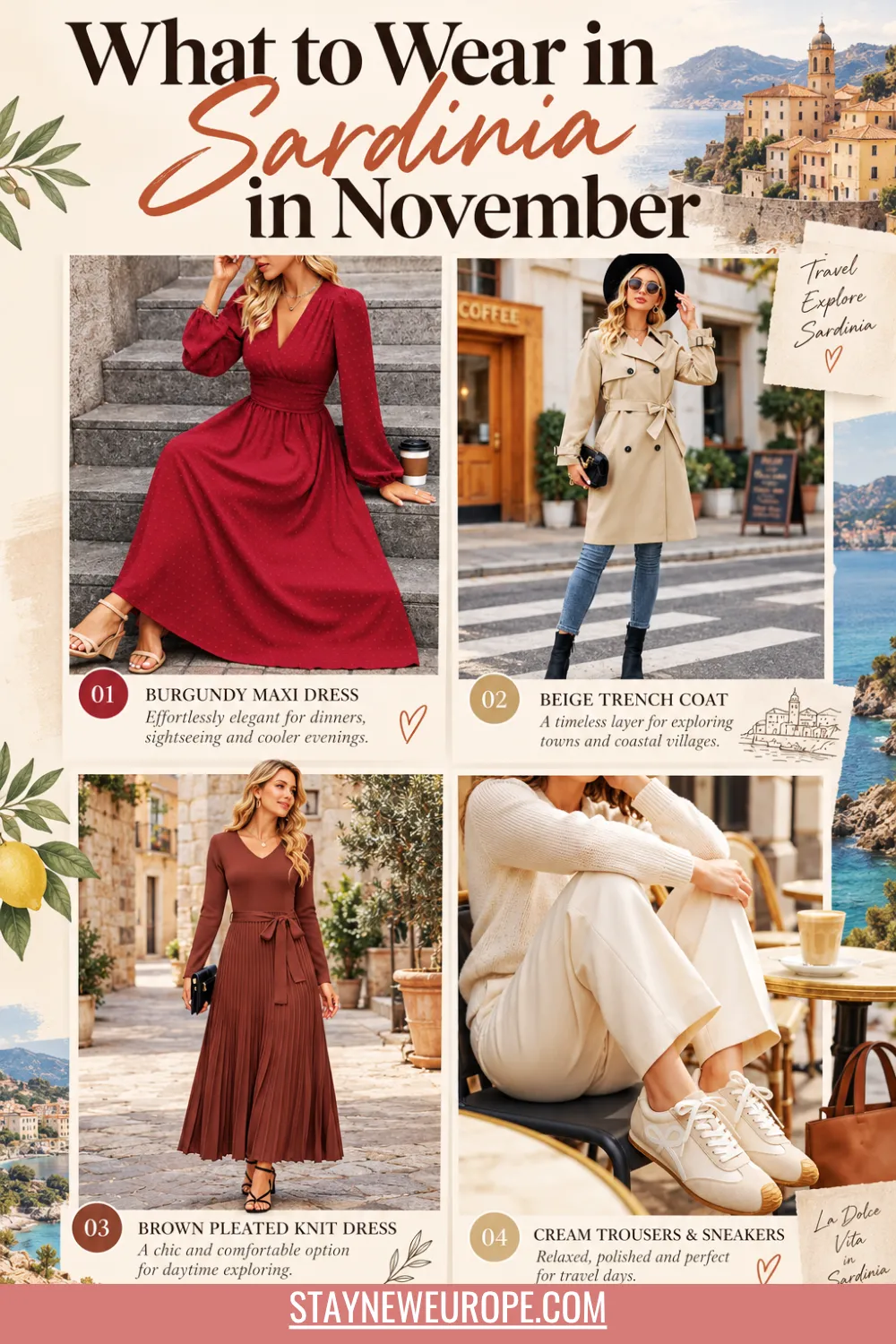
The move is a midi dress in a heavier fabric (knit, wool-blend, or a structured cotton) worn with tights and boots underneath. This gives you an evening-out option that doesn’t take up much suitcase space and photographs beautifully against Sardinia’s pastel-coloured old towns.

A wrap dress in particular handles the day-to-evening thing well, since you can wear it over a long-sleeve top during the day and strip that layer off for dinner.
Skip anything strappy or in a lightweight summer fabric — you’ll wear it once, feel cold the entire time, and regret the suitcase space.

Local tip: Opaque black or navy tights are doing more work than any other single item if you’re bringing a dress — they turn a summer piece into an autumn one instantly.
Walking Shoes That Can Handle Cobblestones (and Rain)
This is the section I feel most strongly about, because bad shoe choices ruin more Sardinia trips than bad weather does.
You need a shoe with real grip and a bit of ankle support, because you’ll be walking on wet stone, sandy paths near cliffs, and steep medieval streets — sometimes all in the same afternoon.
Leather sneakers are a comfortable everyday choice that still looks polished enough for city outfits and casual dinners.

A low ankle boot adds a little more warmth and structure, making it especially useful for cooler or wetter days.
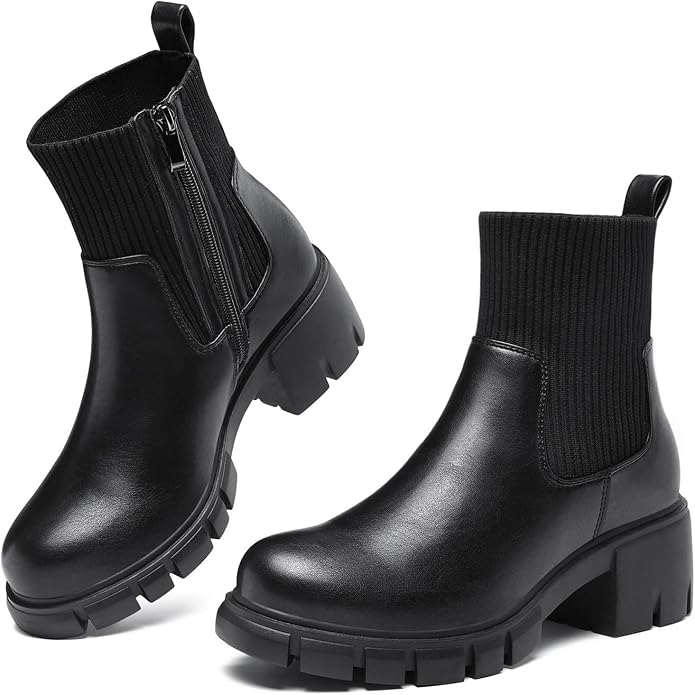
A sturdy loafer with a rubber sole is a great option when you want something smarter without sacrificing grip or comfort.
What doesn’t work: anything with a smooth leather sole, anything backless (they slide right off going uphill), or brand-new shoes you haven’t broken in.
I wear one pair of weatherproofed leather boots for almost the entire trip and bring a lighter sneaker as backup for beach-adjacent walks on the rare sunny day.
Local tip: Waterproof or water-resistant is worth prioritising over “cute” — November’s short, sudden downpours will catch you outside more often than you’d think.
A Jacket That Can Handle Sardinia’s Mood Swings
Sardinia in November doesn’t commit to one kind of weather, so your jacket shouldn’t commit to one job either.
A mid-weight trench coat is ideal for everyday sightseeing, especially when the weather is cool but not freezing. It layers easily over sweaters and gives casual outfits a more polished finish.

A wool coat is a warmer option for colder days and evenings. Choose a comfortable mid-weight style that works with jeans, trousers, dresses, and boots.

If you’re spending time in Cagliari’s harbour area or anywhere exposed to sea wind, a windproof layer matters more than a warm one — you feel the wind before you feel the cold. A compact rain shell is worth keeping in your bag for sudden rain.

Avoid anything too precious. Salt air and unexpected rain are hard on delicate fabrics, and you want a coat you’re not babying every time the sky changes its mind.
Local tip: A packable rain shell that folds into its own pocket is the single most-used item in my Sardinia bag — it lives in my daybag every single day, rain or shine.
Evening Outfits (Dinner Deserves a Little Effort)
Sardinian evenings out — especially in Alghero, Cagliari, or Oristano — have a nice, understated elegance to them, and it’s worth matching that energy.
I keep it simple: the transitional dress and boots, or trousers with a nicer top and a statement earring or two. The point isn’t to overdress; it’s to look like you tried, because that’s the local norm even at fairly casual restaurants.

A silk or satin top over trousers works especially well since it feels dressier without needing a full outfit change from your daytime layering pieces.

One thing I’ve learned: bring a slightly warmer wrap or shawl for outdoor aperitivo hours, since November evenings cool down fast once the sun’s gone and a lot of restaurants still have outdoor seating people use well into autumn.
Local tip: A structured tote or small crossbody in a metallic or interesting texture instantly elevates a daytime outfit into an evening one — no outfit change required.
What to Wear for Churches and Cultural Sites
Sardinia’s churches — from Cagliari’s Cattedrale di Santa Maria to smaller village chapels — take modest dress seriously, and this isn’t the season to test that.
Shoulders covered, and generally knees covered too, is the safe rule. In November this is genuinely easy, since you’re already in trousers and long sleeves most of the day anyway — this is one area where cold weather actually makes packing simpler, not harder. If you’re wearing the transitional dress, just make sure it hits at or below the knee, or bring tights.

Keep a lightweight scarf in your daybag even if you don’t think you’ll need it. It covers shoulders in a pinch and, bonus, works as an extra layer if the wind picks up while you’re outside.
Local tip: Some smaller village churches aren’t set up for tourists the way cathedral cities are — dressing modestly by default avoids any awkward moment at the door.
Bags: Crossbody vs Backpack
For a destination this walkable, your bag choice matters more than people expect.
A crossbody bag is my go-to for day trips into old towns — it keeps your hands free for the inevitable uneven stairs and doesn’t shift around while you’re navigating narrow lanes.

For longer excursions (hiking near Cala Goloritzé, or day trips out to the nuraghi sites), a small daypack makes more sense, since you’ll want room for a water bottle, the rain shell mentioned earlier, and a scarf or extra layer.

I generally travel with both and switch depending on the day — crossbody for town wandering and dinner, backpack for anything more active.

Local tip: A crossbody with a slightly longer strap sits better over a bulky sweater or coat than a short one that digs in when you’re layered up.
Accessories That Do More Than Decorate
November accessories in Sardinia earn their keep by being useful, not just pretty.
A good scarf is one of the most useful accessories to pack. It adds warmth, can cover your shoulders when visiting churches, and instantly makes a simple sweater or coat look more polished.
A pair of statement earrings takes up almost no space but can completely change an outfit. They are especially useful for dinners or evenings when you want a basic look to feel a little more finished.

A simple leather belt is another versatile piece. You can use it with trousers, a dress, or even to cinch a coat at the waist and give your outfit more shape.

Sunglasses are still worth bringing in November. The coastal light can be surprisingly bright, especially near the water, so they are useful as well as an easy finishing touch.

Skip anything too delicate or fussy; between wind, salt air, and cobblestone walking, accessories need to survive actual movement, not just sit still for photos.
Local tip: A wool beanie or soft cap is more useful than people expect on windier coastal days, particularly around Capo Testa or the northern coast.
Rain Prep (The Thing Everyone Forgets)
I cannot stress this enough: November is Sardinia’s wettest month, and most visitors pack like it’s a dry-season trip.
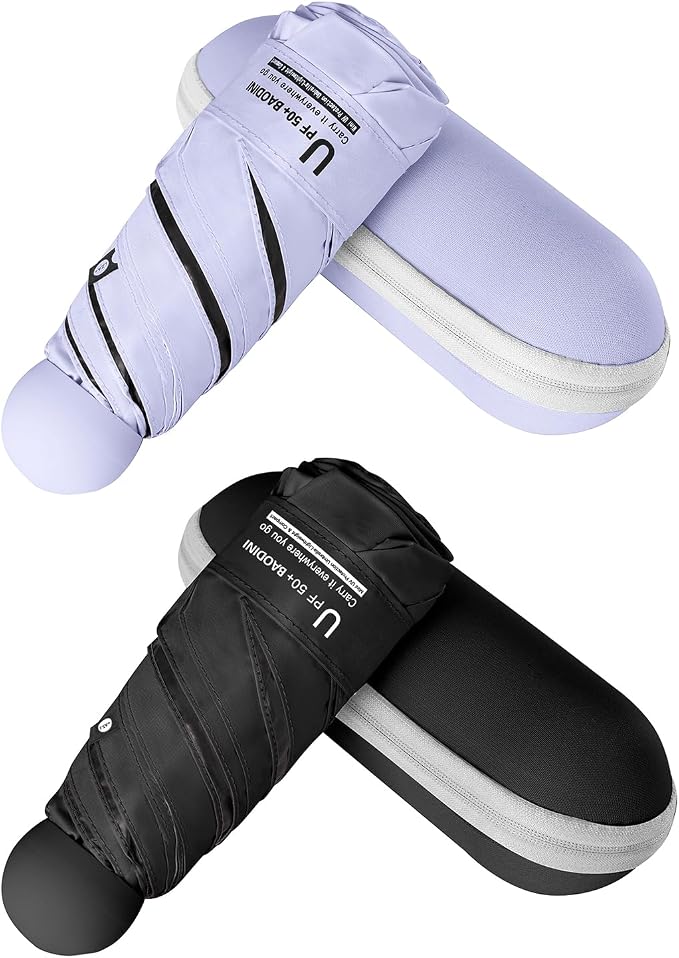
Beyond the packable rain shell already mentioned, a small travel umbrella earns its space — the compact kind that fits in a daybag, not a golf umbrella you’ll abandon in a café.
Waterproofed or treated boots matter here too, since wet stone streets are unforgiving on shoes that aren’t built for it. I also pack one quick-dry outfit specifically in case everything else gets soaked on a rainy day, which has saved more than one trip.
The good news: Sardinian rain tends to move through fast rather than settle in for a grey, all-day soak, so it’s manageable if you’re prepared rather than surprised.
Local tip: Check the forecast the night before, not the morning of — Sardinian weather apps update with more accuracy closer to the day, and it changes how I pack my daybag each morning.
Fabrics to Pack (and the Ones to Leave Home)
Fabric choice matters more in shoulder-season travel than most packing guides admit.
Wool, cotton-wool blends, corduroy, and heavier cotton all perform well — they hold warmth, handle a bit of rain without falling apart, and don’t wrinkle into oblivion in a packed suitcase. Merino wool base layers are quietly the MVP of this whole trip; thin enough to layer, warm enough to matter.
What I leave at home: pure linen (gorgeous in July, cold and creased in November), anything sheer, and delicate silks that can’t handle sea air or the odd rain shower.
If in doubt, touch-test it: if a fabric feels thin enough to see through or flimsy enough to blow around easily, it’s a summer fabric, not a November one.
Local tip: A cotton-wool blend sweater dries faster than pure wool if it does get caught in rain — worth knowing if you’re travelling with a small suitcase and limited outfit rotation.
What Not to Wear (Tourist Mistakes I’ve Watched People Make)
The biggest giveaway of an underprepared visitor in Sardinia in November is bare legs paired with a puffy coat — it tells you someone packed for two different seasons and split the difference badly.
Skip flip-flops entirely; they’re both cold and genuinely dangerous on wet stone.
Skip anything strictly summer — thin sundresses, linen shorts, backless sandals — they simply won’t get worn and take up valuable suitcase space.
And skip head-to-toe activewear for sightseeing days; it’s fine for an actual hike, but Sardinian towns lean toward smart-casual even at 9am, and leggings-as-pants reads as underdressed in restaurants and churches alike.
The fix for almost all of this is the same: dress for a mild, occasionally rainy autumn day, not a beach day that got cold.
Local tip: If you’re debating whether an item is “too warm” for Sardinia in November, pack it anyway — nights and hilltop towns run colder than the coastal daytime forecast suggests.
The Right Bag for the Trip Itself
Before you even get to outfits, the suitcase or bag you’re travelling with shapes how easy this whole trip feels.
If you’re island-hopping or combining Sardinia with a longer Italy itinerary — our Italy in November packing guide covers a lot of the same layering logic — a structured carry-on with good wheels handles cobblestone streets far better than a duffle you have to haul. For anyone doing a more adventurous, multi-town route with hiking days built in, a soft-sided weekender or duffle with a crossbody strap gives you more flexibility for uneven terrain and bus transfers between towns.

I personally travel Sardinia with a hard-shell carry-on for the main trip and a foldable tote inside it for day-trip overflow — olive oil, local textiles, and the inevitable extra sweater you buy once you feel the wind.
Local tip: Pack the carry-on so your rain shell and one full outfit sit in the top layer — useful if a flight gets delayed or a ferry crossing runs long.
Building a Capsule Wardrobe for Sardinia in November
None of this works as separate impulse buys — it works as a small, deliberate system.
My actual capsule for a five-day trip: two sweaters, one button-down, one long-sleeve base layer, two pairs of trousers, one pair of dark jeans, the transitional dress, one coat, one packable rain shell, boots, and a lighter pair of shoes. Everything is built around two or three neutral colours so pieces mix freely — I don’t bring a single item that only works with one other thing.
This is roughly the same logic behind a general European capsule wardrobe, just shifted a few degrees colder and built around Sardinia’s specific mix of coastal wind and stone-town walking.
Local tip: Lay the whole capsule out on the bed before packing and count outfit combinations out loud — if you can’t hit at least ten, something in the pile isn’t earning its space.
How Much to Actually Pack
For a week in Sardinia, I bring roughly five to six tops, two to three bottoms, one dress, one coat, and one pair of each shoe type — repeating pieces is completely normal and, honestly, nobody notices or cares.
The mistake I made early on was overpacking “just in case” outfits that never left the suitcase. The fix was simple: pack for the weather you’ve researched, not the weather you’re hoping for, and lean on layering to create variety rather than bringing a different full outfit for every single day. Laying outfits out the night before — rather than deciding each morning — also saves a surprising amount of decision fatigue on a trip where the weather can shift your plan by 10am.
Sardinia in November rewards the traveller who dresses for it properly — cosy sweaters against stone walls, boots on wet cobbles, a coat whipping slightly in the coastal wind. It’s a quieter, moodier version of the island most people only see in summer, and honestly, once you’ve packed for it right, it might just become your favourite way to visit.

