
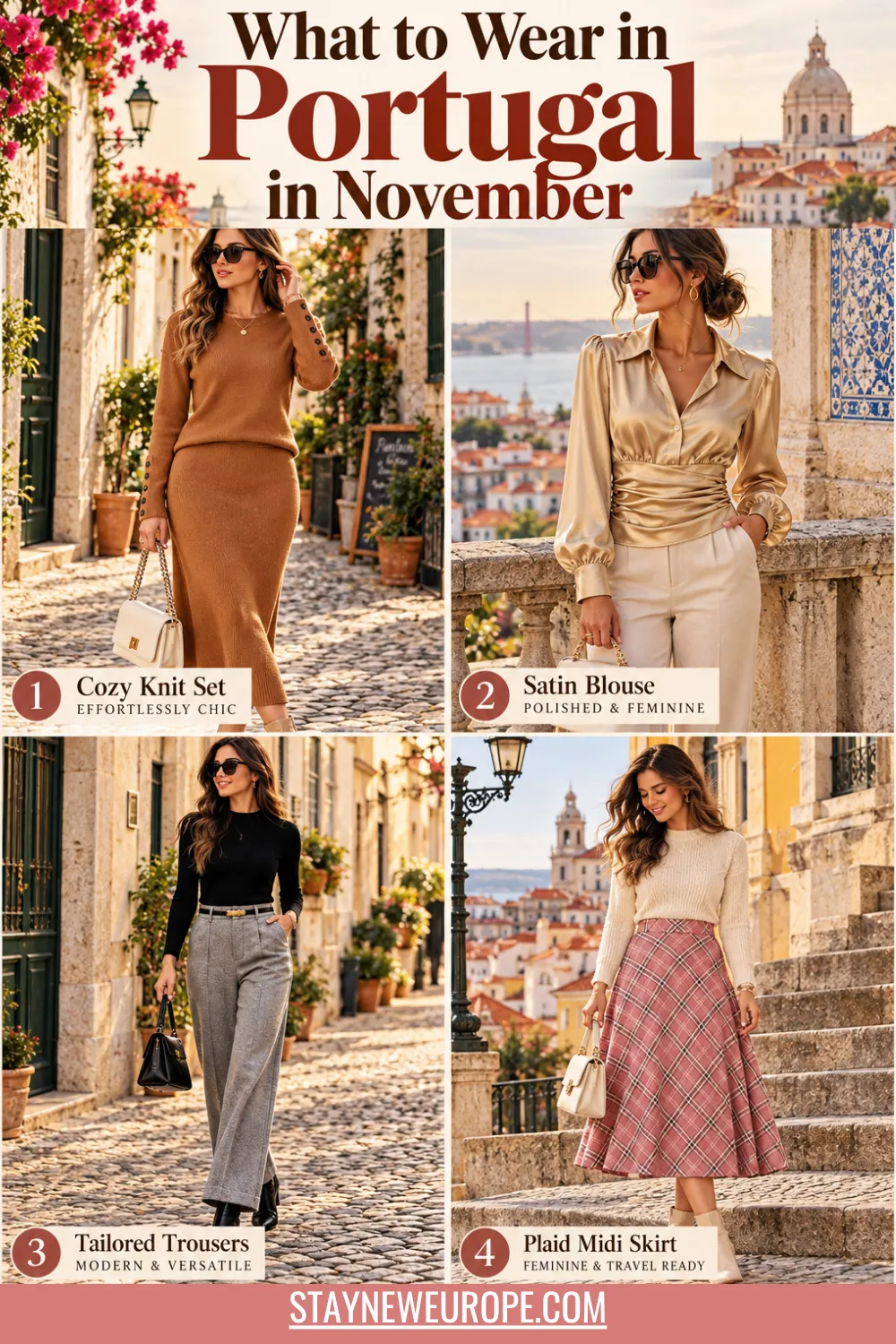
Let me be honest — I packed for my first November trip to Portugal like it was still September. One sad packable raincoat, zero real knitwear, and a pair of sandals I wore exactly once, standing under an awning in Porto watching the sky do something biblical.
Portugal in November is not the sun-soaked postcard everyone posts in July. It’s moodier, greyer at the edges, and honestly — I think it’s better. The Tagus looks steel-grey and dramatic, the Port wine cellars smell like woodsmoke, and there’s a stillness in Lisbon’s Alfama that summer crowds completely drown out. But the weather flips on you fast, and it flips differently depending on where you are.
This surprised me the most: Porto and Lisbon are basically two different climates in November. What works for one will leave you cold, damp, and cranky in the other. So here’s everything I learned — some of it the hard way, standing in a puddle — about dressing for Portugal this time of year.
Before We Dive In
Weather: think mild-but-moody, not cold. Lisbon sits around 18°C (64°F) by day and drops to about 11°C (52°F) at night. Porto runs a few degrees cooler, closer to 15-17°C (59-62°F) by day, dipping into single digits Celsius after dark. The Algarve is the gentlest of the three, holding onto 18-19°C (66°F) most of the month. None of this is “pack a puffer coat” weather — it’s “pack smart layers” weather.
Rain: this is the real story of Portugal in November. Porto and the north get hit hardest — this is genuinely the wettest month of the year up there, with rain that can arrive as a full Atlantic system rather than a passing shower. Lisbon gets off lighter with occasional showers rather than daylong downpours, and the Algarve is drier still. Translation: your rain strategy needs to be built for the city you’re actually in, not a generic “maybe bring an umbrella” afterthought.
Walking conditions: Portuguese cities were not built with wet-weather footwear in mind. Lisbon’s calçada portuguesa — those beautiful black-and-white mosaic pavements — turn genuinely slippery when damp, and Alfama’s hills and stairs don’t forgive bad shoe choices. Porto’s Ribeira district is all cobblestones and steep inclines down to the river. Grip matters more than style here, though you can absolutely have both.
Style culture: the Portuguese dress with quiet, put-together confidence — think good coats, neutral palettes, well-fitting trousers, nothing flashy. You won’t stand out for dressing simply here, but you will stand out (in the wrong way) in head-to-toe activewear or anything too resort-casual. This is a “smart layers” country, not a “vacation clothes” country, and November makes that even more true.
The Bag You Actually Need for This Trip
Start here, because it changes everything else you pack. A soft-structured weekender or a carry-on duffle with a rain-resistant shell beats a hard-shell suitcase for Portugal in November — you’re going to be lifting it over cobblestones, up narrow stairs in Alfama guesthouses, and possibly into a tram that was not designed with luggage in mind.
A water-resistant canvas duffle with backpack straps is one of the most practical luggage options for Lisbon. It handles uneven streets better than a rigid suitcase, protects your belongings from light rain, and can quickly be carried on your back when rolling it becomes difficult.

Hard-shell suitcases with small wheels can struggle badly on calçada portuguesa, especially around hilly neighborhoods like Chiado. If you prefer wheeled luggage, look for something with larger, sturdier wheels rather than a delicate cabin case designed mainly for smooth airport floors.

Local tip: if you’re doing Lisbon and Porto in one trip (most people do), pack slightly lighter than you think you need to. The intercity trains have decent but not generous luggage space, and you’ll thank yourself on the platform.
Lightweight Layers (Why They Matter More Than You Think)
Here’s the thing nobody tells you: Portugal in November isn’t cold enough for heavy knits all day, but it’s absolutely cold enough that you’ll want more than a t-shirt by 4pm. The temperature swing between a sunny midday and a damp evening can be ten degrees, easily.
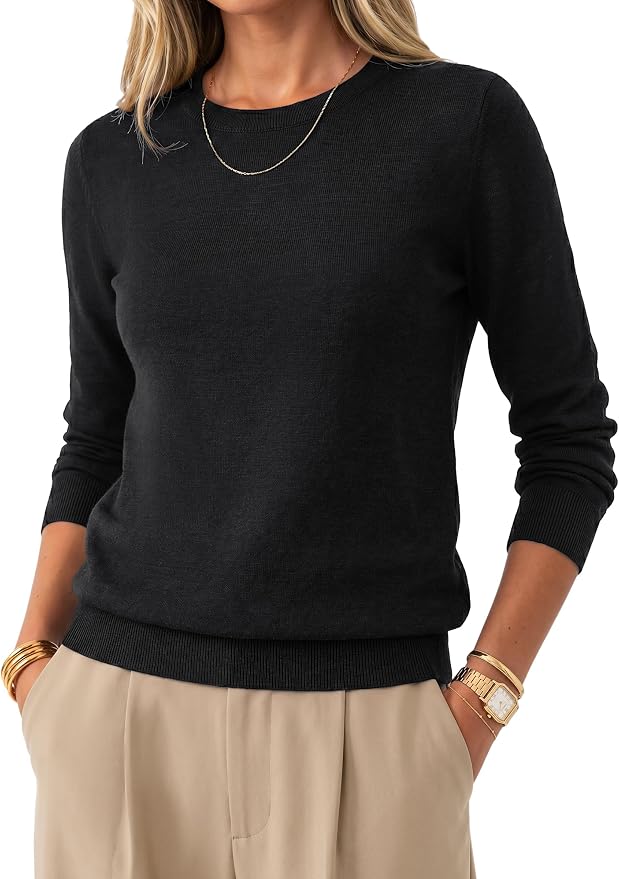
The fix is thin layers, not fewer clothes. A merino or cotton long-sleeve base layer, a mid-weight jumper, and a coat on top gives you way more flexibility than one thick sweater that you’re either too hot or too cold in for most of the day. I live in a fine-knit merino crewneck on these trips — it doesn’t bulk up my bag, it doesn’t smell after two wears, and it works equally well under a coat or on its own on a mild afternoon.
Think of your outfit in Portugal as something you’ll be adjusting constantly — jacket on for the walk to breakfast, jacket off by the time you’re inside a warm pastelaria, jacket back on the second the sun dips behind a building. Layers that are easy to add and remove win every time over anything you have to commit to for the whole day.
Local tip: Lisbon’s steep streets will have you sweating even in November — you’re constantly climbing. Dress slightly cooler than you think, because the walking will warm you up fast.
Dresses That Actually Work for a Portuguese November
A breezy sundress is not your friend this month, but a dress absolutely can still work — you just need to think about it as a layering piece rather than a standalone outfit.
A midi dress in a heavier jersey or a wool-blend, worn over tights or thick socks and under a coat, reads effortless and still keeps you warm enough for a day of wandering. I wore a rust-colored knit midi dress with opaque tights and ankle boots through three days in Porto and it became my most-repeated outfit of the trip — smart enough for a nice dinner, warm enough for the walk there.

Where this goes wrong is when people pack their summer dresses “just in case the sun comes out” and end up either freezing or never wearing them. Skip the cotton sundresses entirely. If you want a dress in your suitcase, make it one built for cooler weather from the start.

Local tip: a slip dress layered over a fine-knit turtleneck is a genuinely great look for Lisbon evenings and photographs beautifully against the tiled buildings.
Jeans, Trousers, or Shorts — What Actually Earns Its Spot
Shorts, to answer the question directly: leave them home. Even on a mild Algarve afternoon, November evenings drop enough that you’ll wish you hadn’t bothered, and they read out of step with how locals dress this time of year anyway.
Jeans are the easy answer and they work fine, but they’re genuinely miserable once wet — denim holds water and takes forever to dry, which is a real risk given how much rain Porto sees. I’ve swapped most of my jean days for a good pair of wool-blend trousers instead. They handle a light drizzle far better, they look sharper for dinner without changing, and they layer well over tights on colder days.

If jeans are non-negotiable for you (I get it, some days you just want jeans), pack them alongside a pair of trousers rather than instead of them, so you’ve got a dry-weather backup that isn’t going to leave you in damp denim for the rest of the day.

Local tip: a straight-leg trouser in a dark neutral works for museum mornings, market wandering, and dinner reservations — one pair, zero outfit changes needed.
Comfortable Shoes That Don’t Look Like Hiking Boots
This is the section I get the most messages about, and fairly — Portugal’s pavements are genuinely no joke. Cobblestones, wet mosaic tiles, steep inclines. Your shoes need actual tread, not just a cute sole.

A leather or suede ankle boot with a proper grip sole is the workhorse of this trip. I look for a slightly chunky sole rather than anything flat and smooth — flat leather soles turn into ice skates on wet tile, which I learned on a particularly undignified afternoon in Alfama.

Waterproof or water-resistant is worth prioritizing over “breathable” this month; you’ll be grateful the first time you step in a puddle disguised as a shallow one.
Bring a backup pair too. Wet shoes that don’t fully dry overnight are miserable to put back on, and having a second pair means you’re never stuck wearing damp boots on day three.
Local tip: avoid brand-new shoes for this trip specifically — broken-in soles grip better on slick cobblestones than stiff new ones do.
What NOT to Wear (The Mistakes I See Constantly)
Flip-flops or open sandals, for one — I still don’t understand why people pack these for November anywhere in Europe, but Portugal sees its fair share. White sneakers are another one; they’ll be grey by lunchtime and soaked through by dinner if it rains.
Anything strictly summer-weight — thin cotton sundresses, linen shorts, tank tops as a standalone top — will leave you cold and probably a little annoyed at yourself. And skip full athleisure sets; leggings-as-pants and branded activewear read as very obviously tourist here, in a city where even grocery-shopping outfits tend to be put together.
The other mistake, less about the item and more about the mindset: overpacking for “just in case it’s warm.” It won’t be warm enough to need summer clothes, and every unused item is just extra weight up those Alfama stairs.
Local tip: if in doubt, dress one notch smarter than you think the activity calls for — Portuguese cities reward it, and you’ll never feel underdressed at a nice lunch.
Jackets for Genuinely Unpredictable Weather
Your jacket is doing more work on this trip than any other single item, so don’t cheap out on it. You want something that handles wind, handles a real rain shower (not just drizzle), and still looks like an outfit rather than pure function.
A wool-blend coat is beautiful but useless the second it actually rains — wool holds water and takes days to dry properly.

My solution has become a water-resistant trench or a technical coat with a wool-like finish, which gives me the polished look without the soggy-coat problem. For Porto specifically, where the rain can be relentless, I’d go further and pack an actual waterproof shell as backup, even if it’s not the most photogenic piece in the suitcase.

A packable rain jacket earns its space too, even if you’re mostly wearing your nicer coat. When a Porto storm rolls in properly, you’ll want something you can throw on over everything without worrying about ruining it.

Local tip: a rich color — burgundy, forest green, camel — photographs beautifully against Lisbon’s tiled facades and Porto’s grey river light, way more than basic black does this time of year.
Evening Outfits That Fit the Mood
Portuguese cities have a genuinely lovely dinner culture, and November evenings — cooler, a little moody — actually suit dressing up more than a hot summer night does. Think tights, boots, a good coat you can wear right up to the restaurant door.

A wool midi skirt with a fine-knit top and ankle boots is my go-to for a fado night in Alfama or a nice dinner in Porto’s Ribeira. It’s warm enough to wear the ten-minute walk there, and it doesn’t need a coat swap once you’re seated.

For something more casual, dark jeans, a silk cami layered under a blazer, and boots gets you into most places without overdressing.

Don’t pack anything that needs bare legs and no coat — you’ll be cold before you even reach the restaurant, and cold-and-uncomfortable ruins a good dinner faster than anything else.
Local tip: many fado houses in Alfama are genuinely lovely but not fancy — smart-casual is the right pitch, not full “going out” dressing.
Dressing for Churches and Monasteries
Portugal has an extraordinary number of churches and monasteries worth visiting — Jerónimos Monastery, Porto Cathedral, the Almas Chapel — and most expect covered shoulders and knees, sometimes explicitly enforced at the door.
November actually makes this easy, since you’re already layered up against the cold. A midi dress or trousers with a jumper covers you without any extra thought, unlike summer when you’re often caught in a strappy top with nothing to throw over it. I keep a light scarf in my bag on sightseeing days specifically for this — it works as a shoulder cover, a neck warmer against the wind, and an outfit-elevator all in one.

Skip anything sleeveless or above-the-knee if a church visit is on the day’s plan, and just build the rest of your outfit around it rather than trying to remember a cover-up separately.
Local tip: the Jerónimos Monastery cloister gets a cold draft even on mild days — worth having that scarf on hand even indoors.
Bags: Crossbody vs. Backpack
For a city where you’re constantly on cobblestones, going up stairs, and dodging light rain, a crossbody bag in a water-resistant material is the most practical choice — hands-free, secure, and quick to grab in and out of.

I switched from a tote to a small structured crossbody a few Europe trips ago and never looked back, especially somewhere like Lisbon where pickpocketing does happen in tourist-heavy spots like Alfama and the trams. A backpack works well too if you’re doing a lot of walking between neighborhoods and want your hands fully free, but make sure it’s one you can wear on your front in crowded trams — a habit locals themselves use.
Either way, prioritize something that closes securely and isn’t precious about getting a little rained on.
Local tip: Tram 28 in Lisbon is a known pickpocket spot precisely because tourists are distracted by the views — keep your bag zipped and in front of you there specifically.
Accessories That Actually Earn Their Space
A scarf is doing triple duty on this trip — warmth, church cover-up, and the easiest way to make three outfits look like six. I’d pack at least two: one lightweight for layering, one thicker knit for the colder Porto evenings.

Beyond that, keep it simple. A structured hat handles both sun glare on the clear days and rain on the wet ones,

gloves are genuinely useful once the evening chill sets in (especially in Porto), and one statement piece of jewelry can make a repeated outfit feel new for a dinner out.

I don’t bring more than this — accessories are the easiest thing to overpack and the least likely to get worn.
Local tip: a crossbody bag strap in a contrasting color is a small styling trick that makes even your most basic travel outfit look intentional.
Rain Preparation (More Important Than It Sounds)
I used to treat rain gear as an afterthought and Portugal in November corrected that fast. This isn’t optional packing — it’s foundational, especially if Porto is anywhere on your itinerary.
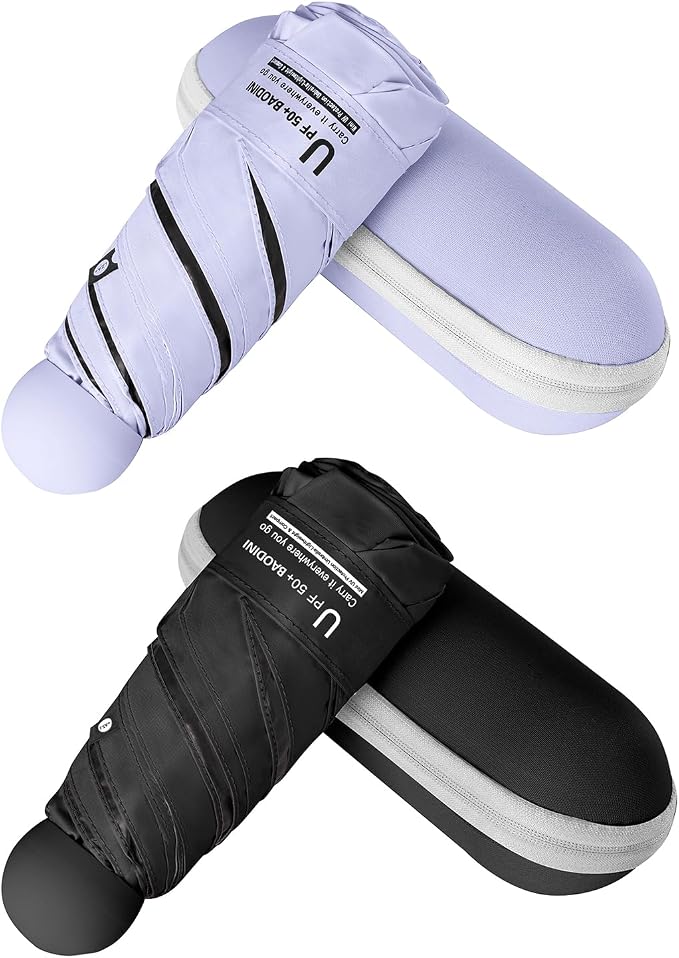
Beyond the jacket already mentioned, a compact umbrella that actually holds up to wind is worth the extra bag space — the flimsy ones flip inside out the second real Atlantic wind hits, which happens more than you’d think along the river in both Lisbon and Porto. Water-resistant shoes matter more here than almost anywhere else I’ve traveled, and a small dry bag or ziplock for your phone isn’t overkill when a shower can start with almost no warning.
The upside: rain in Portugal tends to pass through in bursts rather than settling in for the whole day, especially in Lisbon. Pack for it properly and it stops being a big deal — it becomes just another part of the day, often followed by genuinely gorgeous golden light.
Local tip: check the forecast the night before specifically for Porto if you’re heading there — the rain systems there can be far more intense than what Lisbon sees the same day.
Fabrics to Choose (and Which Ones to Avoid)
Wool, wool-blends, and merino are your best friends this month — warm without being bulky, and merino specifically resists holding onto odor, which matters when you’re re-wearing pieces across a longer trip. Corduroy and heavier cotton twill work well for trousers and jackets too, holding their shape and handling a light drizzle without instantly looking ruined.
What to leave home: linen, which wrinkles and offers zero warmth, and anything in a delicate silk you’re not prepared to babysit around rain. Cotton is fine for base layers but genuinely miserable once wet, so it shouldn’t be your outer layer if there’s any chance of rain — which, in Porto, there basically always is.
I made the linen mistake once, packing a beautiful linen blazer for a “smart” evening option, and it sat in my suitcase the entire trip because it was simply the wrong weight for the weather. Learn from that one.
Local tip: a wool-blend beret or cap resists rain far better than most fabric hats and adds a nice, easy Lisbon-appropriate style note.
A Simple Capsule Wardrobe for Portugal in November
For a five-to-seven day trip, I build around: two pairs of trousers (one dark wool-blend, one jeans as backup), one wool-blend midi dress, three tops that mix and match with everything, one chunky knit jumper, a water-resistant coat, a packable rain jacket, one pair of ankle boots plus one backup pair of shoes, and two scarves.
That’s roughly ten core pieces that mix into well over a dozen different outfits, which is really the whole trick — everything needs to talk to everything else. I plan outfits by pairing pieces before I even pack them, laying it all out and making sure each top has at least two bottoms it works with and vice versa.
Local tip: neutral tones — camel, black, navy, burgundy — mix far more easily than bright colors when you’re building a small capsule, and they also happen to match the Portuguese aesthetic almost perfectly.
The Practical Bit: How Much to Actually Pack
For most trips, five to seven days needs roughly four to five tops, two to three bottoms, one dress, one main coat plus a packable rain layer, and two pairs of shoes — one for walking, one as backup or evening option. Anything more than that and you’re carrying weight up hills for no real reason.

The biggest mistake I see (and used to make myself) is overpacking for “options” rather than planning outfits ahead of time. If every piece pairs with at least two others, you genuinely don’t need as much as you think — a ten-piece capsule easily gives you two weeks of different-looking outfits. Laying everything out on the bed before you pack, and actually building the combinations, saves you from the classic mistake of three coats and one pair of shoes that can handle rain.
Roll rather than fold where you can — it saves real space and cuts down on wrinkles, especially for knitwear and trousers — and keep one outfit slightly separate and easy to grab for travel days, since you’ll want something comfortable but presentable for trains or flights between Lisbon and Porto.
Portugal in November rewards the traveller who packs with a little intention — not more clothes, just the right ones. You’ll get quieter streets, softer light, warm little tascas to duck into when the rain comes, and honestly, some of the best photos you’ll ever take against all that grey-gold Atlantic light. Layer smart, keep your feet dry, bring the good coat, and go enjoy a version of Portugal most summer visitors never get to see.

