
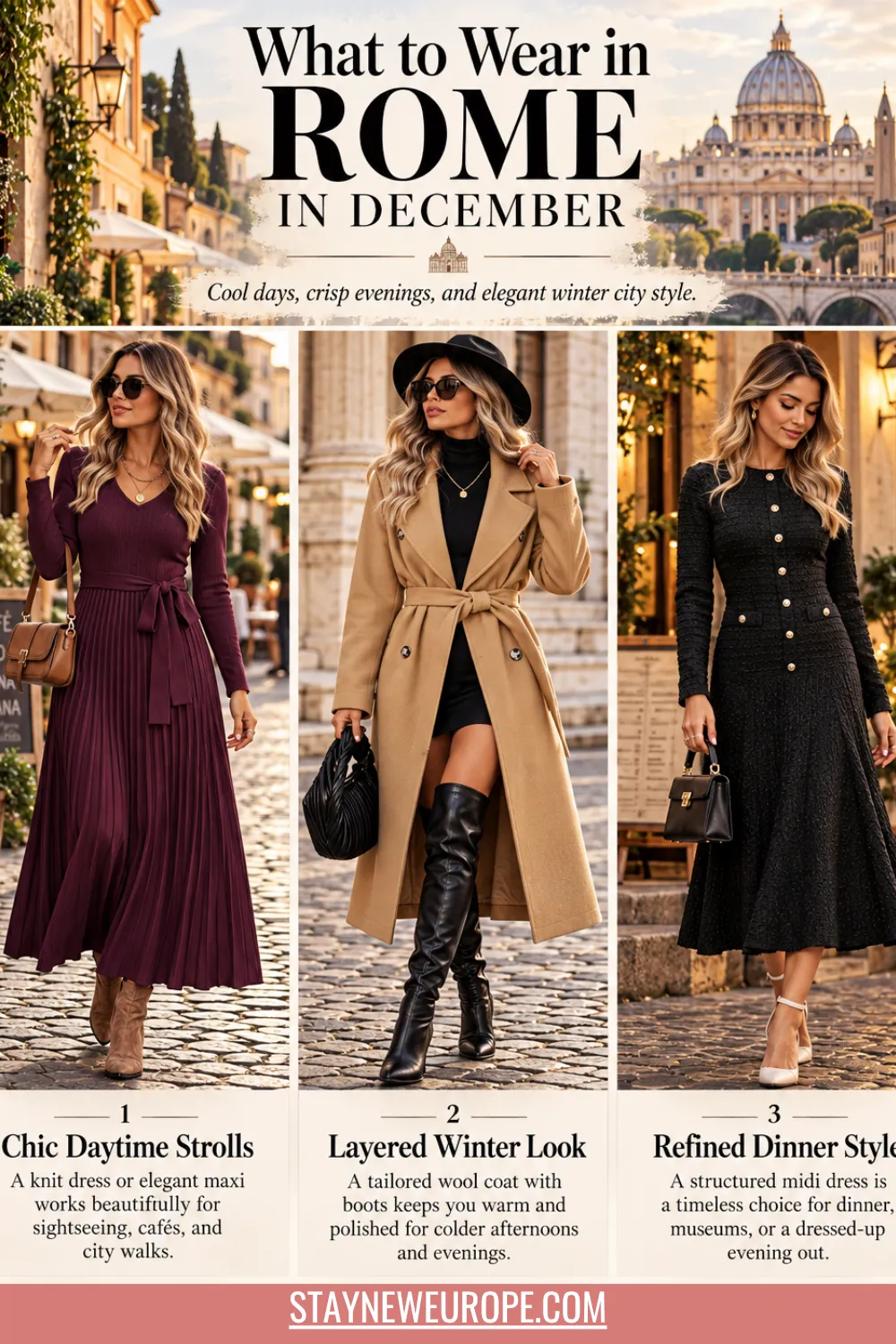
Rome in December is not the Rome of your Instagram feed. The light goes gold and low by 4:30pm, the piazzas empty out just enough that you can actually see the cobblestones, and there’s a good chance you’ll need a coat, an umbrella, and sunglasses in the same six-hour stretch. It’s one of my favourite times to be in the city — fewer tour groups, cheaper hotels, actual elbow room at the Trevi Fountain — but it is not a place where you can wing it with a puffer jacket and trainers and call it a day.
Let me be honest: the first time I went in December, I packed like I was headed to a ski chalet. Big coat, thick scarf, sneakers I thought were “fine.” Three days in, my feet were destroyed by the cobblestones, I was sweating on crowded buses in a coat built for actual snow, and every Italian nonna in a wool blazer was quietly judging me outside a café. This surprised me, because I’d assumed December in Italy meant bundling up like it’s Scandinavia. It doesn’t. It means layering smart, choosing the right fabrics, and accepting that Romans will absolutely notice what you’re wearing, even if they’re too polite to say anything.
This guide isn’t a “top 10 things to pack” list. It’s what actually works — outfit by outfit, mistake by mistake — for walking, eating, praying, and aperitivo-ing your way through Rome in December.
Before We Dive In
Weather: Rome in December sits somewhere between “crisp coat weather” and “why is it suddenly raining sideways.” Daytime temps usually land between 8–14°C (46–57°F), dropping closer to 3–5°C (37–41°F) at night. Rain shows up more often than people expect — not constant, but enough that you’ll want to be prepared for at least one grey, drizzly afternoon.
Walking conditions: Rome is a cobblestone city, full stop. Sampietrini — those little dark cobblestones — cover most of the historic centre, and they get slick and uneven fast, especially near the Pantheon, Trastevere, and around the Spanish Steps. You will be walking a lot, and you will be walking on stone that does not forgive bad shoe choices.
Style culture: Italians dress well, and Rome is no exception. This isn’t about designer labels — it’s about fit and intention. A well-cut coat, clean shoes, and a scarf that actually matches will get you treated differently than head-to-toe activewear. Nobody’s going to stop you at the door of a trattoria for wearing leggings, but you’ll feel the difference, and honestly, so will your photos.
The One Coat That Does All the Work
Here’s the thing nobody tells you: you don’t need five jackets for a Rome December trip. You need one exceptional coat.
A wool or wool-blend coat — knee-length or just above — is the single most useful item you’ll pack. It handles the cold mornings, layers over a sweater for evening dinners, and looks intentional in every photo, whether you’re at the Colosseum or a wine bar in Monti. I went years wearing a puffer that was technically “warm enough” and never once felt like I fit into the city. The first December I wore a camel wool coat instead, I understood immediately why Italians take outerwear so seriously — it’s not vanity, it’s function and form at the same time.

Go for a coat in a neutral tone — camel, charcoal, black, deep green — so it works with everything else you pack. A belted style adds shape and lets you dress it up for dinner without needing a second “nice” jacket.

Local tip: If you’re planning to sit outside for an aperitivo (very common even in December, thanks to outdoor heaters), a coat that’s roomy enough to layer a scarf and sweater underneath will save you from freezing mid-spritz.
If you need something to carry it all in — flying with a proper carry-on rather than a bulky duffel makes layering easier, since you can fold a wool coat flat instead of stuffing it into a bag shaped for summer clothes.
Lightweight Layers (Why They Matter More Than You Think)
December in Rome swings harder than you’d expect within a single day — a bright, almost mild 13°C at noon can drop into a bone-chilly 5°C the second the sun dips behind a palazzo.
That’s why layering wins over one giant heavy piece every time. A thin merino or cotton long-sleeve under a sweater, under a coat, gives you three ways to adjust as the day moves — and lets you actually take something off when you’re crammed into a packed 64 bus or a warm little restaurant. Bulky sweaters alone trap heat with nowhere to go; thin, breathable layers let you regulate without carrying a suitcase-sized jacket on your arm all day.

Think turtlenecks, lightweight knits, and long-sleeve tees as your base. None of it needs to be thick — it needs to be stackable.

Local tip: Pack at least one thermal or merino base layer even if it feels unnecessary at home — you’ll wear it on your first cold morning at the Vatican and thank yourself.
Sweaters That Actually Earn Their Suitcase Space
A great sweater is doing double duty in December Rome — it’s your warmth and your outfit, since you’ll often have it visible under an open coat.
Chunky knits look cosy but take up enormous packing space and dry slowly if they get caught in rain. I now stick to two or three fine-gauge sweaters — wool or a wool blend — in versatile colours like cream, rust, or navy. They layer flat under a coat, look put-together with jeans or a skirt, and don’t turn into a soggy mess if you get caught in a December drizzle walking back from the Trastevere markets.
A turtleneck in particular is doing quiet, heavy lifting here — it works under a blazer for a smart dinner, under a coat for sightseeing, and on its own if you duck into somewhere unexpectedly warm.

Local tip: Merino wool sweaters resist odour far better than cotton ones, which matters when you’re re-wearing pieces across a five- or six-day trip.
Jeans, Trousers, or Skirts — What Actually Works for the Weather
Shorts are, unsurprisingly, off the table. But the jeans-vs-trousers debate is worth settling before you pack.
Dark, well-fitted jeans are the easiest option — they layer with tights underneath on colder days, pair with boots, and don’t show the inevitable grime of a day spent walking cobblestone streets. Tailored wool trousers are the elevated alternative, especially for dinner or museum days, and they photograph beautifully against Rome’s stone backdrops.

I usually bring two pairs of dark jeans and one pair of trousers, which covers both casual sightseeing and a nicer evening out without overpacking.

Skirts are absolutely wearable in December Rome, but midi-length with opaque tights is the move — a short skirt with bare legs in 8°C wind is a mistake you’ll only make once.

Local tip: Avoid light-wash or white denim entirely — Rome’s streets, buses, and outdoor café chairs are not kind to pale fabric.
Comfortable, Stylish Walking Shoes (This Is Non-Negotiable)
This is the section I wish someone had actually sat me down and explained before my first trip.
Sampietrini cobblestones are uneven, sometimes slick with December rain, and completely unforgiving to bad shoes. Thin-soled ballet flats, new stiff boots, or anything without real tread will leave you limping by day two. What works is a low block-heel or flat leather boot with a proper sole — ankle boots in particular strike the right balance between “walks 20,000 steps” and “looks intentional at dinner.”

I made the mistake of breaking in brand-new boots during a Rome trip once — huge error. Whatever shoes you bring, wear them at home first. Blisters plus cobblestones plus December drizzle is a genuinely miserable combination.

Local tip: Leather or suede boots with a slightly rugged sole handle both dry cobblestone and unexpected puddles far better than sleek fashion boots with smooth leather soles.
What NOT to Wear (The Mistakes I See Constantly)
A few tourist habits stand out immediately in Rome in December, and not in a good way.
- Bright white sneakers
- Head-to-toe activewear
- Giant expedition-grade puffer coats
- Leggings worn as actual trousers, rather than under a skirt or dress
The other classic mistake: not bringing a proper rain layer and improvising with a giant tourist poncho bought off a street cart. It happens to everyone once. It doesn’t have to happen to you.

Local tip: If you want one “does everything” shoe, skip the trainers entirely and bring a clean, minimal leather sneaker instead — it reads far more Roman than a chunky running shoe.
Jackets for Unpredictable Weather
Beyond your main wool coat, a packable layer is worth the suitcase space.
A lightweight water-resistant jacket — the kind that folds into its own pocket — is genuinely useful for the afternoons when rain rolls in without warning. It’s not your main coat; it’s insurance. I keep mine folded in my day bag every single December trip, and it’s saved more than one outfit from a sudden downpour near the Trevi Fountain, where there’s approximately zero shelter.

A denim or leather jacket also earns its spot for milder days (December in Rome isn’t always freezing — some afternoons hit a genuinely pleasant 14–15°C), giving you a lighter option than the full wool coat when the sun’s out.

Local tip: Check the week’s forecast two days before you fly, not two weeks before — Roman December weather shifts fast, and packing based on a forecast from ten days out is basically guessing.
Evening Outfits in Rome
Dinner in Rome is an event, even on a Tuesday, and December evenings lean colder and more formal in feel than the daytime.
For women, a midi dress or skirt with tights, paired with your wool coat and boots, hits the right note — polished without being overdressed. For men, dark trousers, a button-down or fine knit, and a blazer or structured jacket work in almost any restaurant, from a neighbourhood trattoria to something fancier near Piazza Navona.

Romans don’t do “athleisure at dinner,” and while nobody will refuse you service for it, you’ll feel more at ease blending in than standing out.

A scarf and a pair of statement earrings or a good watch can upgrade a daytime outfit into an evening one without needing to pack a second wardrobe.
Local tip: Many restaurants in the centro storico are genuinely tiny and can run warm once full — bring a layer you can remove at the table rather than committing to your heaviest sweater for dinner.
What to Wear for Churches (Dress Codes Are Real Here)
Rome has more churches per square kilometre than almost anywhere on earth, and several — St. Peter’s Basilica chief among them — enforce dress codes strictly. Shoulders and knees need to be covered, for everyone, regardless of gender or weather.
December actually makes this easier than a summer trip — you’re already in sweaters, coats, and long trousers or skirts, so you’re rarely caught out. The one thing to watch is deep necklines or sleeveless tops worn without a cardigan or scarf underneath a coat; if you take the coat off inside, you want to still be dress-code compliant.

I always keep a lightweight scarf in my bag specifically for this — it doubles as a shoulder cover if I’ve worn something slightly low-cut under my coat.

Local tip: St. Peter’s Basilica security will turn you away at the door for exposed shoulders or knees, no exceptions, so don’t assume a coat over a tank top will pass — they check regardless.
Bags: Crossbody vs. Backpack
Rome’s centro storico is crowded, tight, and — like most major tourist cities — has pickpocketing risks worth taking seriously, especially around the metro and major sights.
A crossbody bag worn in front of your body, not swinging at your hip, is the safest and most practical option for day-to-day sightseeing. It keeps your hands free for cobblestones and stairs, and it’s harder for anyone to open without you noticing.

Backpacks are fine for day trips outside the centre, but in packed areas like the Pantheon or Spanish Steps, I always switch to my crossbody — it’s just easier to keep an eye on.

Leather crossbody bags in particular blend in better than obviously “touristy” nylon travel bags, which can (unfairly, but realistically) mark you as an easier target.
Local tip: Zip closures over magnetic snaps or open totes — it sounds paranoid until you’re in a packed vaporetto-style bus and genuinely can’t see your own bag.
Accessories That Elevate Simple Outfits
December Rome is the perfect excuse for accessories that are both functional and photogenic.
A wool or cashmere scarf is doing the most work here — it adds warmth, colour, and texture to an otherwise simple coat-and-jeans combination, and it can be re-styled a different way each day without adding suitcase weight.

Leather gloves are genuinely useful once the evening chill sets in, and a structured hat (not a beanie, necessarily — a wool fedora or beret reads more “Roman café” than “ski trip”) adds polish without much effort.

A structured leather belt can make a simple sweater-and-trouser outfit feel much more intentional. It also works well over a dress or light coat when you want a little more shape.

I never used to bother with accessories on trips, assuming they were just extra weight. Then I wore the same navy coat for four days straight with a different scarf each time and realised nobody could tell I was repeating an outfit. That alone changed how I pack.
Local tip: A patterned silk or wool scarf can be your one “fun” item in an otherwise neutral capsule wardrobe — it adds personality without committing suitcase space to a whole statement outfit.
Rain Preparation (Unexpected but Important)
December sits in Rome’s wetter season, and while it’s rarely a full day of rain, a sudden afternoon downpour is common enough to plan for.
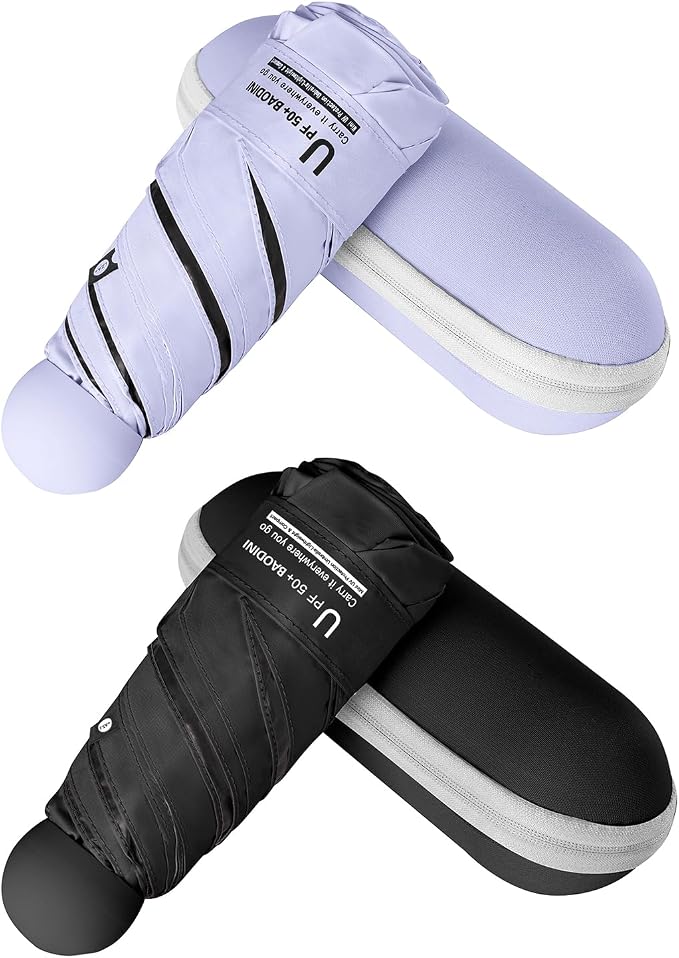
A compact umbrella — genuinely compact, not the golf-sized kind — fits in almost any bag and is worth carrying daily regardless of the forecast.
Water-resistant boots matter more than a waterproof coat, honestly, because puddles pooling on uneven cobblestones are the real enemy, not overhead rain. I learned this after a “waterproof” jacket did nothing to stop my canvas sneakers from soaking through within twenty minutes near the Pantheon.
Local tip: Street vendors around major sights sell cheap umbrellas the moment it starts raining — handy in a pinch, but don’t rely on it; they tend to vanish the second the sky clears, and prices spike accordingly.
Fabrics to Choose (and Avoid)
Fabric choice matters more in December than any other season, because you’re relying on layering rather than one heavy piece to regulate temperature.
Wool, cashmere, and wool blends are the backbone of a good Rome December wardrobe — warm without bulk, and they hold up to repeated wear across a multi-day trip. Merino wool base layers are worth the investment if you don’t already own any; they’re thin, warm, and machine-washable in most cases. What to avoid: heavy cotton (it takes forever to dry if it gets rained on), and purely synthetic activewear fabrics, which tend to read as gym clothes rather than travel outfits and don’t insulate as well as wool in damp cold.
Leather, for boots, bags, and jackets, is genuinely functional here too — it handles light rain far better than canvas or suede.
Local tip: If you’re choosing between one heavy cotton sweater and one lighter wool sweater for your suitcase, always take the wool — it packs smaller and performs better in Rome’s damp cold.
The Capsule Wardrobe for Rome in December
Here’s roughly what I actually pack now, after several Decembers of trial and error:
One wool coat, three sweaters (two fine-gauge, one slightly heavier for cold mornings), two pairs of dark jeans, one pair of tailored trousers or a midi skirt, one dress for evenings out, four to five base layers or long-sleeve tees, one packable rain jacket, one pair of ankle boots, one pair of clean leather sneakers, a wool scarf, and a crossbody bag.
That’s roughly six days of outfits built from about twelve pieces, all of which layer with each other in different combinations. It sounds restrictive on paper, but in practice it means you’re never standing in front of a suitcase wondering what goes together — everything already does.
For anyone still narrowing down what else to bring for a longer Italy trip, [it’s worth checking a broader seasonal European packing guide] — {internal link placeholder: insert your relevant internal URL here, since I wasn’t able to reach the site’s sitemap to pull a live one}.
The Practical Packing Section
How many outfits to bring: For a five- to seven-day Rome trip in December, six to eight outfit combinations built from a shared capsule wardrobe is plenty — you’re mixing and rewearing pieces, not packing a fresh head-to-toe look daily.
Packing light vs. overpacking: The biggest overpacking trap in December is bringing multiple heavy coats “just in case.” One excellent wool coat plus one packable rain layer covers 95% of scenarios. If you’re unsure, pack fewer heavy items and more thin layers — they take up less space and give you more flexibility.
Outfit planning tips: Lay everything out before you pack and count how many different outfits each piece can create. If a sweater only works with one pair of trousers, it’s not earning its suitcase space. Neutral base pieces with one or two “fun” accessories (a scarf, a bold pair of earrings) go further than a suitcase full of statement items that don’t mix.
Mistakes to avoid: Don’t break in new shoes on the trip itself. Don’t assume December in Rome means “pack for snow” — it rarely snows, and overdressing for cold leaves you sweating on crowded buses and in warm restaurants. And don’t skip the rain layer just because the forecast looks clear two weeks out — Roman weather shifts fast.
Rome in December has this particular quiet magic — golden low light, steam rising off espresso cups held by people in beautiful wool coats, church bells echoing down mostly-empty side streets. Pack for that version of the city, not the version you’d dress for at home in winter, and you’ll spend a lot less time thinking about your feet or the weather and a lot more time actually looking up.
You’ll get it right. And even if you don’t — even if, like me, your first trip involves one very bad shoe decision — you’ll have a good story and an excuse to come back and do it properly next December.

