
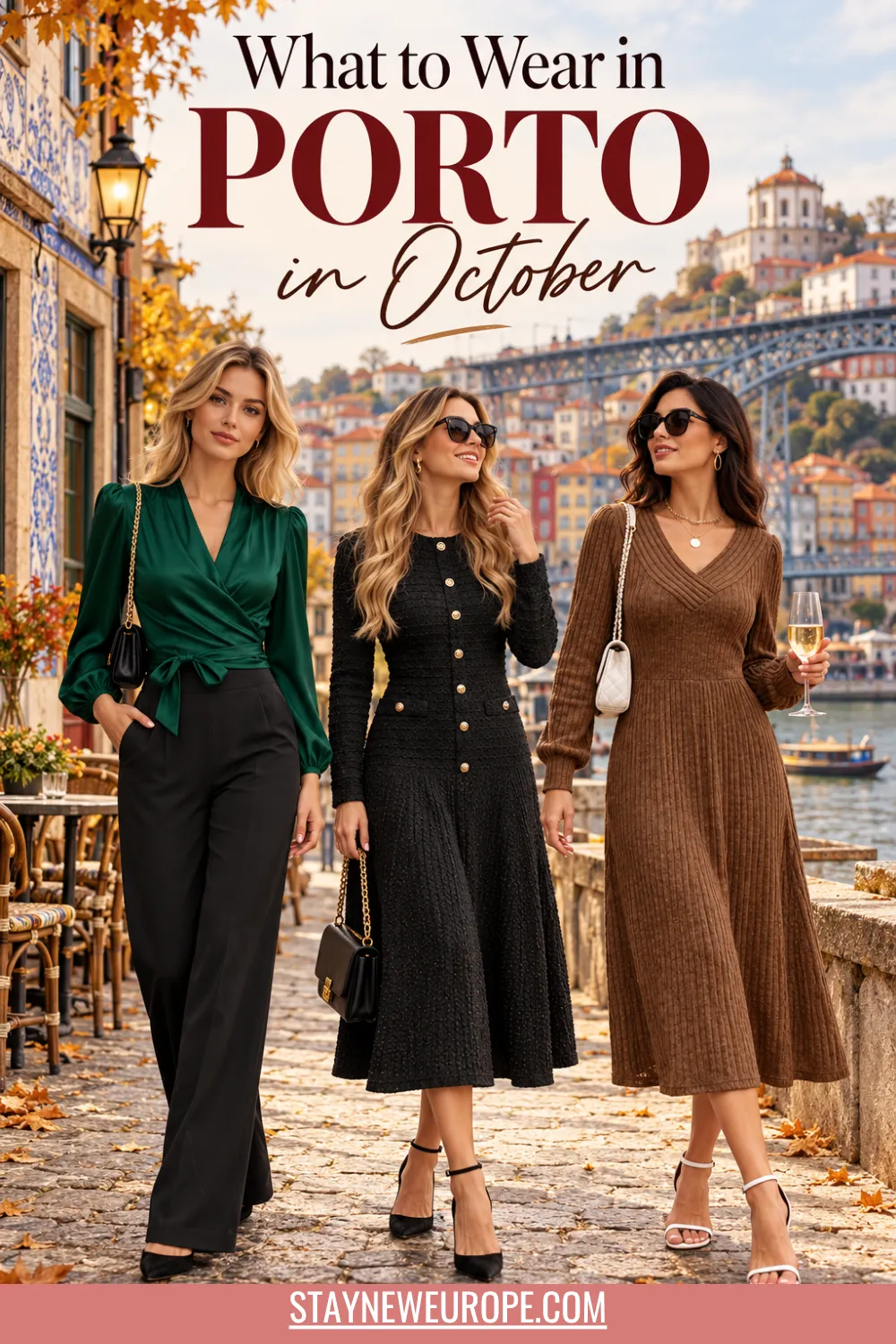
October in Porto is golden light one hour and sideways Atlantic drizzle the next. I’ve stood on the Dom Luís I bridge in a sundress, watched a rain cloud roll up the Douro like it had a reservation, and thought: well, that was optimistic.
The city is all steep hills, wet granite cobbles, riverside wind and tiled churches that make you want to wander for hours. It’s gorgeous. It’s also unforgiving to the wrong shoes, the wrong fabrics and the wrong “just in case” packing list.
Most people pack for a sunny Portugal beach holiday, or they overcorrect and bring a full winter coat. Both are wrong. Here’s what I’d actually put in the bag, and what I’d leave on the bed.
Before We Dive In
A quick reality check, so the rest of this makes sense.
Weather: Daytime highs sit around 18–21°C (mid-60s to low 70s°F), dropping to roughly 12–14°C at night. October is when Porto’s rainy season properly kicks in, so expect a fair few wet days, usually in bursts rather than all-day downpours. It’s humid, and the wind off the Atlantic makes the riverfront feel cooler than the forecast says.
Walking conditions: Porto is vertical. You’ll climb from the Ribeira to the Sé, cross the double-decker bridge, and descend more staircases than you planned. Pavements are often calçada (small polished stones) or smooth granite, and both turn slippery when wet. Count on 15,000+ steps a day.
Style culture: Portuguese locals dress neat, understated and a bit dark. Think navy, olive, camel, black, good denim, clean shoes. You’ll see very few gym leggings or beachwear in the city centre. Nobody will say anything, but you’ll feel the difference.
If you’re still deciding when to go, our guide to visiting Porto covers the bigger picture. This piece is only about what’s on your body.
Start With the Right Bag
Your bag decision matters more than your outfit decision. Hauling the wrong luggage up Porto’s stairs is a special kind of misery.
I’d bring a soft-sided carry-on or a 35–40L duffel with a shoulder strap. Hard-shell spinners and cobblestones are enemies, and many Porto apartments and guesthouses sit up flights of steps with no lift. A bag you can lift with one hand is a gift to your future self.

For daily exploring, pack a small crossbody (details further down). One bag in, one bag out, and you’re done.
Local tip: Check whether your accommodation has a lift before you pack. If it doesn’t, you’ll be very glad you chose the duffel.
Lightweight Layers Do All the Heavy Lifting
If I could give only one piece of advice, it’d be this: stop dressing for a temperature, and start dressing for a day.
A typical October morning starts cool, turns almost warm by lunch, gets breezy by the river and chilly again by dinner. I learned this the hard way when I left the apartment in a single thin shirt at 9 a.m. and spent my afternoon shivering over a bifana. Layers let you adapt without going back to the hotel.

My formula is simple: a breathable base (tee or fine knit), a mid-layer (cardigan, light sweater or overshirt) and an outer layer (covered below). Everything should be easy to tie around the waist or stuff in a bag.
Local tip: Cafés and restaurants here can run warm inside, then you step out into wind. Layers you can peel off in seconds are worth more than any single “perfect” piece.
The Light Sweater or Cardigan You’ll Wear Daily
This is your most-worn item, so choose well.
A fine merino or cotton-blend knit in a neutral colour (cream, navy, oatmeal, forest green) works with everything and looks polished in photos. It’s warm enough for the evening and thin enough to fold into your bag by noon. Skip anything chunky; it takes up half your luggage and you’ll sweat on the uphill climbs.

I wore a navy crewneck sweater with jeans for coffee at Majestic, then swapped nothing but my shoes for dinner. That’s the kind of outfit efficiency Porto rewards.
Local tip: Merino resists odours, so you can wear it two or three days running without anyone knowing. Pack one, maybe two.
Jeans and Trousers: Go Dark, Go Comfortable
Shorts are a no for me in October. Not because it’s freezing, but because it’s damp and you’ll feel it on every windy bridge.
Dark jeans in a straight or relaxed cut are my default. They look right in a fancy restaurant and a casual tasca, and they hide splashes from puddles.

I’d also bring one pair of lightweight trousers (linen blends can feel clammy in the humidity, so choose cotton twill or a drapey viscose-blend instead). Avoid super-skinny jeans: climbing 200 steps in a restrictive waistband is not a vibe.

A word on wet hems: Porto’s puddles are unavoidable. Slightly cropped trousers or jeans you can cuff will save you from walking around with soggy ankles.
Local tip: Bring two pairs of bottoms for a long weekend, three for a week. Denim dries slowly in humid weather, so rotate.
Dresses and Skirts That Actually Work
Yes, you can wear a dress in Porto in October. You just have to style it for the climate.
Midi length is the sweet spot. A long-sleeved or three-quarter-sleeve midi in a floral, tile-inspired print or a solid earthy shade looks effortlessly local. Pair it with tights or thin socks and ankle boots on cooler days, or with white trainers when the sun’s out. I wore a rust-coloured midi with a denim jacket on a clear afternoon at the Jardins do Palácio de Cristal, and I felt very pulled together for approximately ninety minutes before it rained.

Skip short flowy summer dresses, because the wind off the river has opinions about them. Choose fabrics with a bit of weight so they don’t cling or fly up.

Local tip: Bring biker shorts or a slip to wear underneath. Between stairs and breezy bridges, you’ll be glad you did.
Comfortable Shoes That Don’t Look Like Hospital Shoes
Let me be blunt: your shoes will make or break this trip.
Porto’s cobbles are beautiful and brutal. Smooth-soled leather shoes become ice rinks in the rain, and thin canvas soaks through in about four minutes. You want something with real grip, some cushioning and a water-resistant upper. A sleek leather or suede-look sneaker with a rubber sole is perfect, as are low ankle boots with a chunky tread. They work with jeans, dresses and trousers.

I tried to be stylish in ballet flats on day one. By day two, I was buying blister plasters. Don’t be me.
If you only bring one pair, make it a waterproof or water-repellent sneaker in white, grey or tan. If you bring two, add a pair of ankle boots for evenings.

Local tip: Break your shoes in before you fly. Porto is not the place to meet your new boots for the first time.
A Jacket for Unpredictable Skies
Here’s where most visitors guess wrong: they bring a heavy coat or no coat at all.
You want a lightweight, water-resistant jacket that you can wear on its own or over a sweater. A trench, a light waxed jacket or a technical shell in a muted colour (navy, olive, black, stone) all work. Denim jackets are cute but useless in a downpour, so treat them as a layer, not your main defence.
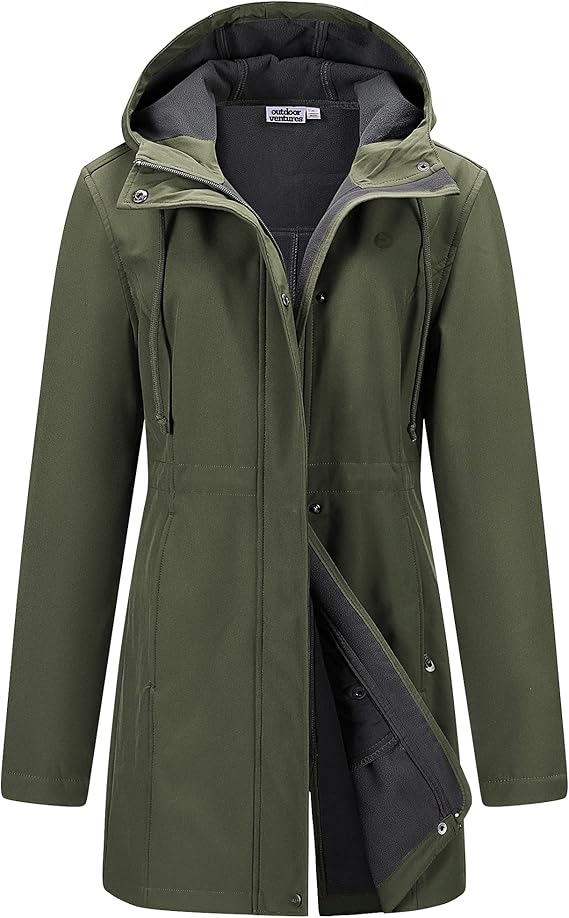
My go-to is a packable rain jacket with a hood in a neutral tone. It weighs nothing, shrugs off drizzle and looks decent over a dress. Skip anything puffy unless you run cold; you’ll be carrying it more than wearing it.

Local tip: Hoods beat umbrellas on windy hilltop streets. Your umbrella will flip inside out near the Sé. Ask me how I know.
Rain Prep: The Unglamorous Hero
Rain in Porto isn’t a maybe. It’s a “when.”
A compact travel umbrella is useful for dinner walks and city strolls, but it’s the secondary tool. Your real rain strategy is a hooded jacket, water-resistant shoes and quick-drying fabrics. I’d also pack a small dry bag or zip pouch for your phone and passport, because bag-soaking surprise showers are common in autumn.

When it does pour, duck into a café or one of the covered spots like Mercado do Bolhão and wait it out. October rain usually passes in under an hour, and the post-rain light on the river is worth every second.
Local tip: Pack a spare pair of socks in your daypack. Nothing resets a soggy afternoon like dry feet.
What to Wear for Churches and Tile-Covered Landmarks
Porto’s churches are the main reason people come for the architecture, and they do have a dress code.
Cover your shoulders and knees when you visit places like Igreja de São Francisco, the Sé or Igreja do Carmo. That doesn’t mean you need a special outfit. A cardigan over a tank top, or a light scarf draped around your shoulders, does the job. Wear trousers or a midi skirt, and you’re automatically fine.

I keep a large, soft scarf in my daypack all trip long. It’s my church cover-up, my windbreaker for the riverfront and my picnic blanket. Very good value for its weight.

Local tip: Some sites are stricter than others. When in doubt, cover up before you reach the door rather than getting turned back at the ticket desk.
Evening Outfits: Porto Dresses Up Quietly
Dinner in Porto isn’t black-tie, but it isn’t beachwear either.
Think dark jeans with a silk-feel blouse and ankle boots, or a midi dress with tights and a blazer. For men, chinos or dark denim with a fine knit or a crisp shirt and clean leather sneakers always lands right. Darker colours and a bit of texture (suede, wool, satin) make a simple outfit look intentional.

On my first night at a Ribeira restaurant, I was wearing my day clothes and a rain-crumpled jacket. Everyone around me looked quietly sharp. Lesson learned: one polished piece goes a long way.

Local tip: Temperatures drop fast after sunset, especially by the river in Vila Nova de Gaia. Carry your light jacket even if it’s warm at 6 p.m.
Bags: Crossbody Beats Backpack
Porto is safe, but busy places like the Ribeira and trams attract pickpockets like anywhere.
A zip-closure crossbody keeps your valuables in front of you and gives you free hands for photos and railings. Leather or water-resistant fabric works best, since a soaked canvas tote is a sad thing. I’d skip big backpacks in crowded areas; you’ll be bumping into people on narrow staircases and tram platforms.

If you need more space for layers and a water bottle, a small anti-theft backpack worn on your front in busy areas is a decent compromise.

Local tip: Tuck your phone in an inner pocket on trams and in crowded viewpoints. Savvy locals do the same.
Accessories That Make Simple Outfits Look Expensive
Accessories are how you get a lot of looks from a small suitcase.
A big scarf (wool-blend or soft cotton) adds warmth and colour.

A wide-brimmed hat or beanie works depending on how you feel about wind.

Sunglasses, yes, because when the sun does appear, it’s bright.

I’d add a simple pair of earrings or a watch and a leather belt, and call it done.
Sunglasses and a scarf took me from “tourist” to “stylish tourist” more times than I can count.
Local tip: Stick to a two- or three-colour palette (say navy, camel and cream). Everything mixes, so you pack less and look better.
Fabrics to Choose (and Avoid)
Porto’s weather is humid and changeable, so your fabric choices matter more than the brand on the label.
Go for merino wool, cotton blends, tencel, light denim and quick-drying synthetics for your rain layer. These breathe, resist odours and handle damp air. Avoid heavy linen, which wrinkles and stays clammy, and pure cotton tees that go heavy in the rain. Skip thick fleece and anything that takes days to dry.
I’m firm about this: if it takes more than a night to dry on a hostel radiator, it doesn’t belong in my bag.
Local tip: Hand-washing a top in the sink and hanging it by an open window usually works fine in October. Pack a small travel detergent sachet.
What Not to Wear (Tourist Mistakes I’ve Seen)
Let me save you a few blisters and a few awkward glances.
Flip-flops and beachwear are out in the city. White canvas shoes won’t survive a wet cobbled day. High heels are brave and not recommended, as every stone is a potential ankle-twister. Stiff new shoes, giant logos, full athletic wear for dinner and only-summer clothes are the other mistakes I see constantly. And a heavy winter parka? You’ll roast on the uphill walk.
You don’t need to dress fancy. You need to dress weather-aware and a little neat.
Local tip: When in doubt, ask yourself: “Could I climb the stairs to the Clérigos Tower in this?” If not, rethink it.
How Much to Pack: The Capsule Wardrobe
Here’s the practical bit, for a 4–7 day trip.
Outfit count: Bring five to seven tops, two to three bottoms, one dress or skirt, two layers (a light sweater and a cardigan) and one jacket. That’s it. Mix and match within one colour family and you’ll get 10+ outfits from a bag you can carry up stairs.
Pack light vs. overpack: Light wins in Porto. Laundry is easy to find, and you’ll want space for tiles, tinned fish and a bottle of port. If you need more ideas for a short stay, check out our weekend city-break packing tips.
Planning tip: Lay out your outfits at home. If a piece only works with one other item, it stays behind.
Mistakes to avoid: Overpacking shoes (two pairs max), forgetting rain gear, bringing only summer clothes and packing “nice just in case” items you’ll never wear.
And a final practical one: for longer stays across Portugal, our Portugal travel resources can help you plan the rest of your route.
Go Get a Little Rained On
The best Porto days I’ve had involved a sudden shower, a steaming espresso under an awning and a stranger smiling at my soggy hair. The weather isn’t a flaw here. It’s part of the charm, and the light that follows it is unreal.
Pack your layers, pick your grippy shoes, tuck a scarf in your bag and let the city surprise you. You’ll climb a few too many stairs and take far too many photos of tiles. You’ll look great doing it.
See you on the bridge.

