
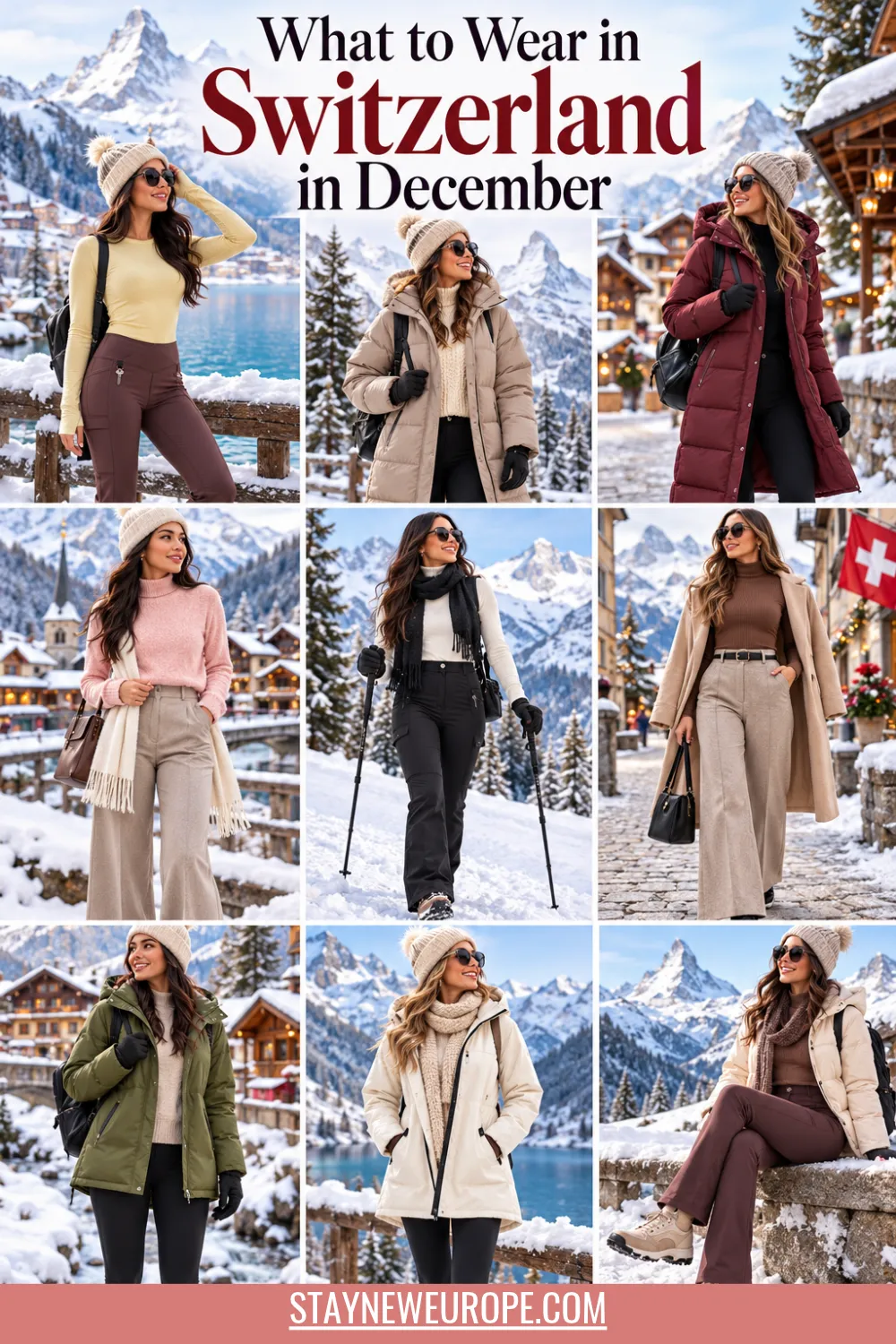
Picture this: you step off a perfectly punctual train in Lucerne, the air smells like roasted chestnuts and woodsmoke, and the old town glows like someone dipped it in fairy lights. Gorgeous. Also, your toes are slowly turning into ice cubes.
December in Switzerland is a mood. One hour you’re sipping hot chocolate in a sunny square, the next you’re skating across a frozen cobblestone like a newborn giraffe. The cold is crisp, the trains are heated to tropical levels, and the locals look effortlessly put-together while you sweat in a puffer the size of a duvet.
Most tourists make the same two mistakes: they pack one giant coat instead of layers, and they bring shoes that look cute right up until the first patch of black ice. Let me save you from both.
Before We Dive In
Quick reality check on what you’re dressing for:
Weather: In the cities (Zurich, Lucerne, Bern, Geneva, Basel), expect roughly -2°C to 5°C, with grey, damp days and the occasional dusting of snow. Up in the Alps (Zermatt, Grindelwald, St. Moritz), it’s properly cold, often well below freezing, especially in the mornings and after sunset. Sunny days are common up high and they feel glorious, right until the sun drops behind a mountain and the temperature falls off a cliff.
Walking conditions: Old towns mean cobblestones, hills and a lot of icy patches. Trains and trams are easy, but you’ll still walk a lot, often on slippery ground.
Style culture: The Swiss dress practical, quiet and well. Think dark neutrals, good wool, clean boots. Nobody is in head-to-toe neon unless they’re actually on a mountain. Dressing a notch smarter than you’d expect goes a long way, especially in restaurants.
Heading to other places in Europe? Check out our other monthly guides: [INTERNAL LINK: add 2–3 relevant monthly packing guides from your sitemap here]
1. Start With the Right Bag
Nothing ruins a train platform dash like a suitcase wheel stuck in snow slush. I learned this the hard way in Bern.
For city-hopping, I’d go with a soft-sided carry-on duffel or a compact 40L travel backpack. Swiss trains have generous luggage racks, but they’re not built for hard-shell monsters, and you’ll be hauling your bag up stairs more often than you think.

Pair it with a small crossbody or a zip-top day bag for your daily essentials: phone, gloves, lip balm, train tickets. Zips matter because you’ll be taking things in and out with cold fingers.

Local tip: Swiss trains are famously on time, so you won’t have long to wrestle your luggage. Pack so you can grab and go with one hand.
2. Layers, Layers, Layers
Here’s the secret: one thick coat is a gamble. Three thin layers is a system.
You’ll step from freezing platforms into toasty trains, then into steamy fondue restaurants, then back outside into the cold. A layering setup lets you peel off or pile on within seconds. My go-to formula is a thin base layer, a mid-layer like a sweater or fleece, and a proper outer coat on top.
On a morning exploring Lucerne’s Chapel Bridge, I wore all three. By lunchtime, in a sunny café, I was down to the base and mid-layer, and perfectly comfortable. That flexibility is everything.
Local tip: If you’re too hot on the train, you’ll be freezing the second you step out. Keep your coat on your lap, not in the overhead rack.
3. Thermal Base Layers (The Unsung Heroes)
Nobody talks about them on Instagram, and everyone who’s ever been properly cold in Switzerland swears by them.
A merino wool or good synthetic thermal top and leggings sit under your regular clothes and add serious warmth without bulk. Merino is the winner for multi-day trips because it stays fresh even after a few wears, so you can pack less.

If you want a budget pick, Uniqlo’s Heattech range does a decent job in the city. For mountain days, merino from brands like Icebreaker or Smartwool is worth the extra money.
Local tip: Wear thermals on the cold days only. On mild days in Zurich or Basel, they’re overkill and you’ll melt.
4. The Coat: Your Most Important Decision
Skip the fashion coat that “looks warm”. Pick one that actually is.
For city days, a knee-length insulated coat or a down parka in black, navy, camel or olive blends right in. A hood is genuinely useful when snow or sleet turns up. For mountain trips, add something with a proper windproof and water-resistant shell.

I’m a fan of a long, down-filled coat that covers your thighs. It keeps the cold off the part of you that tends to freeze first, and it looks sleek over jeans and boots.

Local tip: Check the coat’s temperature rating. Anything comfortable down to around -10°C will cover you from Geneva to Grindelwald.
5. Knitwear That Does Double Duty
A chunky sweater is the best thing you can pack, as long as it earns its space.
Go for wool or wool-blend knits in neutrals like cream, grey, navy, forest green or burgundy. They look right at a Christmas market, a mountain café and a nice dinner. A turtleneck or high-neck sweater also keeps wind off your neck, which is a bigger deal than you’d think.

Avoid cheap acrylic. It traps sweat, doesn’t breathe and smells within a day.
Local tip: One thick sweater plus one thinner knit gives you more outfit options than three identical mid-weight ones.
6. Trousers, Jeans and Leggings
Jeans are fine for city days, but they’re not the hero here.
Denim stays damp and cold when wet, so if you’re out in snow, thermal-lined trousers, fleece-lined leggings or wool-blend pants are far better. Pair them with thermals underneath and you’ll be cosy on even the coldest evenings.
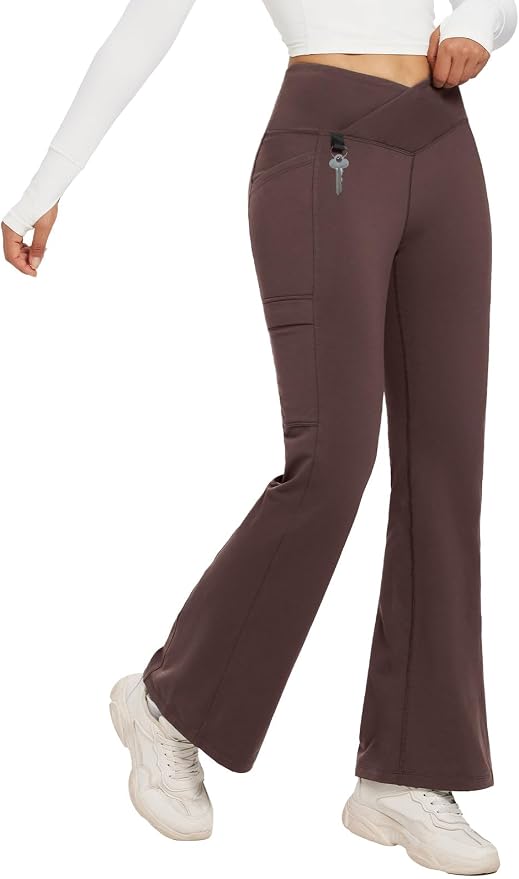
For skiing or snowshoeing, bring proper waterproof snow pants. Regular trousers will soak through within an hour, and nobody wants to be wet in minus temperatures.

Local tip: Dark, straight-leg trousers or jeans look polished and hide slush splashes. Light-coloured jeans don’t survive December.
7. Boots: Where Your Trip Is Won or Lost
If you take only one piece of advice from this article, let it be this: your shoes matter more than your coat.
Look for waterproof boots with deep, grippy soles and a bit of insulation. Cobblestones plus ice plus wet leaves is a recipe for a spectacular tumble. Brands like Blundstone (lined versions), Sorel, Merrell and Timberland all make solid options that look good enough for dinner.

Break your boots in before you go. Blisters on day one of a Swiss trip are a special kind of misery.
Local tip: Slip-on ice grips (like Yaktrax or similar) cost very little, weigh almost nothing and are brilliant on icy hill streets and mountain walks.
8. Socks: Boring, Essential, Life-Changing
I’m not exaggerating. Good socks are a travel miracle.
Pack merino wool hiking socks, ideally three or four pairs. They keep your feet warm even when damp and don’t get stinky after a long day. Cotton socks are the enemy: they hold moisture and make your feet colder.

For especially frosty days, a thin liner sock under a thicker one adds another layer of protection.
Local tip: Cold feet make you miserable faster than anything else, so spend a little on socks and you’ll thank yourself by lunchtime.
9. Hat, Gloves and Scarf: The Holy Trinity
Heat escapes from your head, hands and neck first, so cover them.
A wool or fleece-lined beanie, insulated gloves and a big scarf will make a bigger difference than another sweater ever could. Touchscreen-friendly gloves are worth it, because you’ll constantly be pulling your phone out for train timetables and photos.

I swear by a snug neck gaiter on windy mountain days. It stays put, it’s light, and it doubles as a scarf in the city.

Local tip: Mittens are warmer than gloves. If you’re heading somewhere properly cold, like Zermatt or St. Moritz, bring both.
10. What NOT to Wear (Tourist Mistakes)
Let me be honest, I’ve seen all of these in the wild.
Skip the thin fashion sneakers, ripped jeans, cotton hoodies as your only warm layer, high heels on cobblestones and anything that needs dry-cleaning after one wear. Also, don’t wear your full ski kit in the city. It’s a quick way to stand out, and not in a stylish way.
The other classic error is one big coat and nothing underneath. You’ll bake on trains, freeze outside and have zero options in between.
Local tip: If you wouldn’t want to walk across wet ice in it, leave it at home.
11. Dinner Outfits: Fondue-Ready and Not Screaming “Tourist”
Swiss dinners are cosy rather than glamorous, but they’re not pyjamas-friendly either.
A fine-knit sweater, dark trousers or a wool skirt with thick tights, and your nicest boots will do the job. Add a scarf and some simple jewellery and you’re set. Dark colours are your friend, because melted cheese is cheerfully unforgiving.

A heads up: fondue restaurants are warm, crowded and smell strongly of cheese and woodsmoke. Your clothes will carry that smell home with you, so avoid dry-clean-only items.
Local tip: Book dinner in advance in December, especially for Zermatt, Lucerne and Zurich. Restaurants fill up fast with Christmas market crowds.
12. What to Wear for Churches
Good news: Swiss churches are relaxed compared with places like Italy.
Still, show a little respect. Covered shoulders and knees are polite, especially in historic cathedrals like the Grossmünster in Zurich or Bern Minster. In December you’ll be wearing layers anyway, so this is rarely a problem.
Local tip: Take off your hat when you step inside. It’s a small gesture that locals notice.
13. Sun, Snow and Sparkle: The Non-Clothing Packing List
This is the stuff people forget, and then regret.
Sunglasses are a must. Snow glare at altitude is intense, and the sun is stronger than you expect. Pack SPF lip balm and sunscreen too. Yes, in December. Also bring a good moisturiser, because dry mountain air plus indoor heating will turn your skin into parchment.
Other handy extras: a refillable water bottle (Swiss tap water is excellent and free), a Type J plug adapter (Switzerland uses its own plug type), a small power bank because cold drains batteries fast, and hand warmers for long days at outdoor markets.
Local tip: Keep your phone in an inner pocket. Cold kills batteries in minutes.
14. Rain and Snow Pre
December isn’t always postcard-perfect. Sometimes it’s grey sleet and drizzle.
A waterproof outer layer with a hood beats an umbrella, because wind in alpine valleys will flip an umbrella inside out in seconds. If your coat isn’t waterproof, a lightweight packable rain shell over it saves the day.

Also bring a small dry bag or a plastic bag for wet gloves and hats. It keeps the rest of your bag from getting soggy.
Local tip: Waterproof boot spray before you go gives your boots a big extra boost against slush.
15. Fabrics to Choose (and Avoid)
Quick and easy rule: wool good, cotton bad.
Choose merino, wool blends, fleece, down and technical waterproof fabrics. They insulate, wick moisture and handle cold well. Avoid cotton jeans as a base in snow, thin cotton hoodies and anything that gets damp and stays that way.
Cashmere and wool blends are lovely for evenings, but save them for indoor activities. Snow and sticky fingers are not their friends.
Local tip: If a label says “100% cotton” and you’re heading to the mountains, think twice.
16. The Capsule Wardrobe: What to Pack
A week in Switzerland in December comes down to a handful of pieces that all play nicely together.
Pack two or three thermal base layers, two sweaters, one fleece or light down mid-layer, one warm winter coat, two pairs of trousers or jeans, one pair of thermal-lined leggings, a dress or skirt with thick tights for dinners, four pairs of merino socks, one pair of sturdy waterproof boots, and your hat, gloves and scarf.

Stick to a tight colour palette of black, navy, grey, cream and one accent shade like burgundy or forest green. Everything matches, everything layers, and you’ll look far more stylish than you feel.
Local tip: Roll your clothes rather than folding them. It saves space and cuts down on creases in your duffel.
Practical Packing: How Much Is Enough?
How many outfits: Aim for 5–6 mix-and-match outfits for a week, not 7. You’ll be wearing the same coat, boots and scarf anyway, so nobody is tracking your daily looks.
Packing light vs overpacking: Winter clothes are bulky, so every item counts. Wear your heaviest items (boots, coat, thickest sweater) on the plane to save bag space. Laundry is easy to find, and merino stays fresh longer than you’d expect.
Outfit planning tips: Lay out your outfits before you pack. If a piece only works with one other item, it stays home.
Mistakes to avoid: Overpacking “just in case” dresses and heels, leaving gloves and a hat at home, relying on fashion sneakers, and forgetting the plug adapter.
FAQs About Packing for Switzerland in December
Is it very cold in Switzerland in December? In the cities it’s cold but manageable, usually around freezing. In the mountains it can drop far below, so pack for the coldest place on your route.
Do I need a ski jacket for Switzerland in December? Only if you’re skiing or spending long days outside in the Alps. For city trips, a good insulated coat is plenty.
Can I wear jeans in Switzerland in December? Yes, in the cities with thermals underneath. In snow, choose thermal-lined or waterproof trousers instead.
What shoes should I bring? Waterproof, insulated boots with grippy soles. Skip anything with smooth soles or thin fabric.
Do the Swiss dress up for dinner? Smart-casual is the norm. Dark knitwear, trousers and clean boots will fit in everywhere.
Do I need a power adapter? Yes. Switzerland uses Type J sockets, which differ from standard EU plugs.
Go and Get Cold in the Best Possible Way
Here’s what I wish someone had told me before my first Swiss winter: the cold isn’t the enemy. Being unprepared is.
Get the layers right, find boots you trust, and tuck a scarf around your neck. Then step outside into that sharp mountain air, with snow on the rooftops and Christmas lights flickering across a frozen lake. Grab a hot chocolate. Take the slow train through the Alps. Let yourself be a little bit cold and a lot delighted.
You’ll look good, feel warm and spend your trip noticing the view rather than your toes. Now go pack that bag.

