
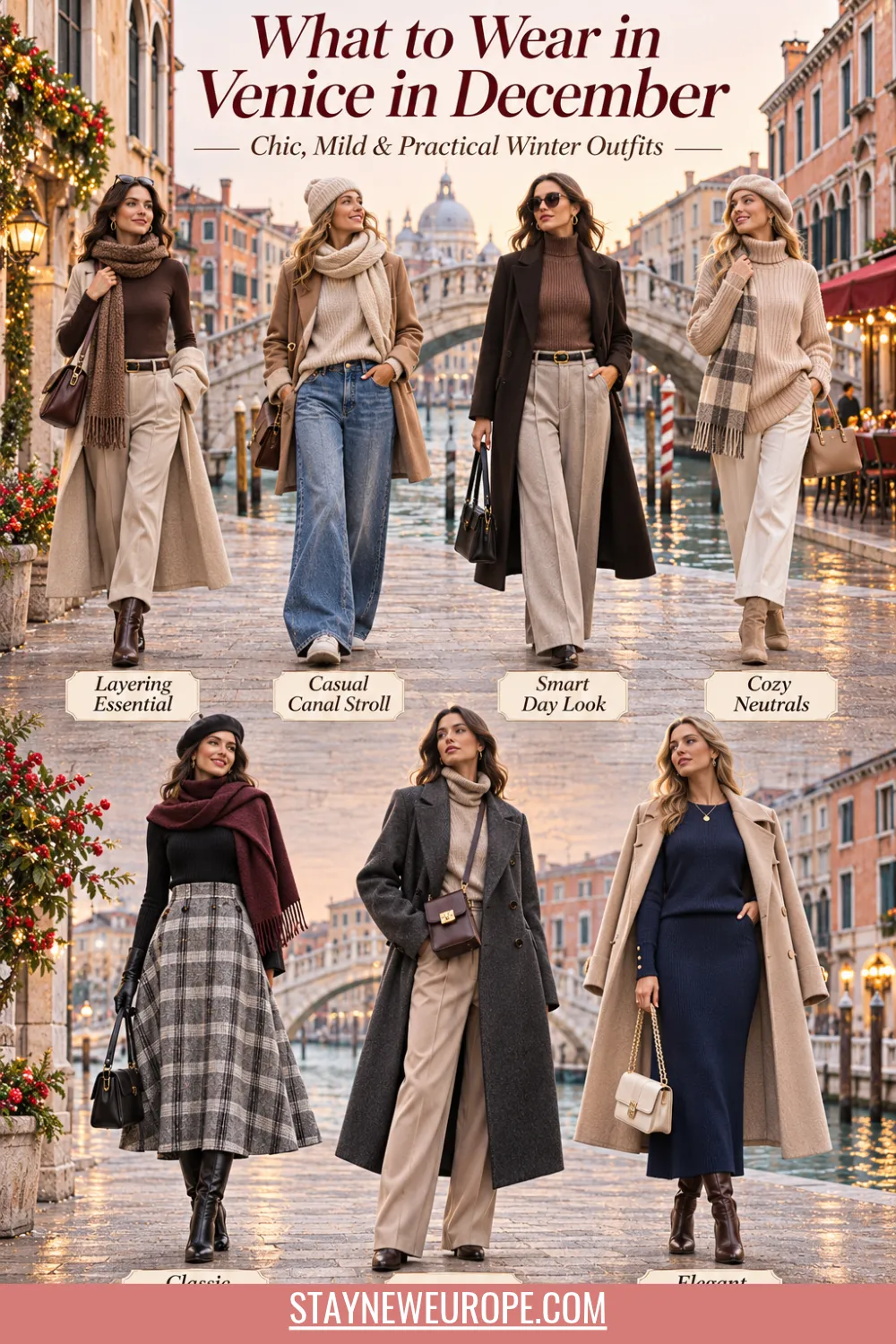
Venice in December is moody, misty and ridiculously beautiful. The tourist crowds thin out, the fog turns every canal into a film set, and the whole city smells faintly of wet stone, woodsmoke and fried pastry from the Christmas stalls.
It is also cold, damp, and occasionally underwater. The chill here is a different animal from dry cold: it creeps up through your soles and settles into your bones while you stand on a bridge pretending you’re fine.
Most people pack for “Italy in winter” and end up with suede boots in a flooded square, a puffer that makes them look like a sleeping bag, and a very expensive hat they never wear. Let me save you from that.
Before We Dive In
Here’s the quick reality check so you can pack with your eyes open.
Weather: Expect roughly 2–8°C (36–46°F) through the day, colder after dark and when the wind comes off the lagoon. Fog is common, rain is likely on at least a few days, and humidity makes it feel colder than the thermometer says. Snow is rare but not impossible.
Walking conditions: You’ll be on your feet for hours, over cobblestones, uneven paving and endless little stepped bridges. Wet stone is slippery. Dragging a suitcase over a bridge is an experience I do not recommend.
Style culture: Italians dress well, and Venetians in winter are no exception. Think dark coats, good scarves, polished boots and very little neon. You don’t need to look expensive, just put-together.
Also worth knowing: December is the start of acqua alta season, when high tides can flood the lowest parts of the city for a few hours. It’s not a disaster, but it should shape your footwear.
Heading to other parts of Italy? Check out our other monthly guides: [INSERT SITEMAP LINK: Italy monthly packing guide] · [INSERT SITEMAP LINK: Rome outfit guide] · [INSERT SITEMAP LINK: Florence outfit guide]
A Soft-Sided Carry-On Beats a Hard Suitcase
Let me be honest: your luggage is part of your outfit in Venice, because you will be carrying it.
Venice has no cars and hundreds of bridges, most with steps. A hard-shell spinner with tiny wheels sounds terrifying on cobblestones, and it is. I watched a woman carry hers up the Rialto steps like a sleeping toddler. A soft-sided carry-on with sturdy wheels and top and side handles is the sweet spot.

Look for a bag of around 35–40 litres. Winter clothes are bulky, and that size forces you to edit, which is the whole point. If you prefer to travel light, a good duffle with a shoulder strap and backpack straps is brilliant here, because you can just sling it on and go.

Local tip: Book accommodation close to the train station or Piazzale Roma if you’re arriving with luggage. Every extra bridge between you and your front door is a small regret. For more on where to base yourself, see [INSERT SITEMAP LINK: where to stay in Venice].
Layers Matter More Than One Big Coat
The secret to Venice in December is not one heavy item. It’s several light ones you can add and remove.
Inside, the heating can be fierce: trattorias, museums and vaporetto cabins get toasty. Outside, you’ll be hit by damp wind the second you step off the boat. If you wear one giant parka, you’ll roast in the restaurant. If you layer, you adjust.
My formula: a thin base layer (merino or a fine cotton-blend long-sleeve), a mid-layer (a wool sweater or a fine-knit cardigan), then your coat. On a cold morning exploring, I’d wear all three. At lunch, I’d drop the coat and enjoy my pasta without sweating.

Local tip: A thermal base layer sold as “heat-tech” or merino is thin enough to wear under a nice dress or blouse. Nobody knows, and you’ll be warm during a gondola ride, when you’re sitting still on cold water.
What NOT to Wear (The Tourist Giveaways)
You’ll never be mistaken for a local, and that’s fine. But a few choices make life harder and photos worse.
Skip white trainers that you want to stay white (they won’t), bright technical rain ponchos from the street vendors, and anything that screams “I’m hiking” unless you actually are. Heavy logos, sports jerseys and visible gym-wear stand out in a city where people dress up to get bread.
The two mistakes I see most: suede shoes (water ruins them in minutes) and heeled boots (cobblestones and heels are enemies). I learned the first one the hard way, with a pair of gorgeous tan ankle boots that never recovered.
Local tip: If it’s a choice between “stylish but impractical” and “practical but plain,” go practical and dress it up with a good scarf. Italians do this constantly.
Jeans, Trousers and Why You Should Forget Shorts
Shorts are a no-go in December. Not that I need to tell you that, but I’ve seen it.
Dark, mid-weight jeans are great for daytime. Pick a straight or slightly tapered cut that you can tuck into boots, and avoid very wide hems, which soak up puddle water and stay damp for hours. Wool-blend trousers or tailored pants work beautifully for evening and look sharper than jeans without feeling formal.

Another winner is lined trousers or fleece-lined leggings under a skirt. I know that sounds odd, but for someone who gets cold feet from late-afternoon fog, it’s a small miracle.

Local tip: Dark colours (navy, charcoal, black, deep olive) hide splashes and look chic on gloomy days. Light trousers will be grey by the afternoon.
Walking Shoes: Waterproof, Grippy and Not Ugly
If you take one piece of advice from this article, let it be this one: buy waterproof boots with real grip.
Venice’s paving stones are polished by centuries of feet, and wet they turn to glass. You want rubber soles with proper tread. Waterproof leather ankle boots (flat or with a low block heel) are ideal, and sleek hiking-style boots in black or brown work well too, especially if you’re doing big walking days. Break them in before you go. Blisters on day one of a three-day trip are tragic.

Pack a second pair of comfortable shoes for the hotel and for dinner if your boots are damp. Leather sneakers with a decent sole are fine on dry days. Bring thick wool socks (two or three pairs) and one pair of liner socks, because cold, wet feet will wreck your mood faster than anything.
Local tip: Spray new boots with a waterproofing treatment a day or two before travelling, and let them dry fully. It’s a five-minute job that saves your trip.
Acqua Alta: The Waterproof Plan
Here’s the thing nobody tells you: you might wake up and the square is under water. Venetians shrug. You should too, if you’re ready.
When high water is forecast, the city sounds a siren and shows tide levels on the city’s official alerts (worth checking the night before). In the lowest areas, including parts of Piazza San Marco, you’ll see raised walkways go up. Shops and street sellers pop up selling disposable overshoes and tall rubber boots, usually for a modest price, so you can buy them on the spot.
My recommendation: bring a pair of lightweight, packable waterproof overshoes in your bag. They weigh next to nothing and turn a ruined day into a funny story. Tall rubber wellies are overkill unless you’re staying a while, but if the forecast is dire, they’re a lifesaver.

Local tip: Pack a plastic bag or two. Wet socks, wet gloves and damp scarves need somewhere to go. Also, if you want to read more about timing your trip, see [INSERT SITEMAP LINK: Venice in winter / best time to visit].
What to Wear in Venice in December for Women: Tops, Skirts and Tights
This is where you can have fun, because December is knitwear season and Venice makes everyone look cinematic.
For tops, fine-knit sweaters, turtlenecks and silk-blend blouses all work. A fitted turtleneck under a blazer is my favourite combination: warm, polished, and looks like you tried but not too hard. Add a long-sleeve shirt for layering if the temperature swings.

Skirts and dresses absolutely work if you commit to the right tights. Choose opaque or fleece-lined tights, and pair a midi skirt with ankle boots and a long coat. Knee-high boots under a midi dress are a classic Italian winter look.

Outfit combos I’d actually wear: morning exploring: dark jeans, turtleneck, wool sweater, waterproof boots, scarf. Lunch and museums: wool trousers, silk-blend blouse, blazer. Gondola ride: your warmest layers plus a blanket-sized scarf, because you’re sitting still for 30 minutes.
Local tip: Skip bare legs, even for dinner. It’s too cold, and the wind off the water will find you.
The Coat: Your Main Character
You’ll wear your coat in nearly every photo, so make it count.
A knee-length wool or wool-blend coat in black, camel, navy or grey is the Venetian uniform. If you’re prone to feeling cold, choose a longer cut. A down jacket with a hood is a perfectly sensible alternative, particularly in wet weather, and a slim, dark puffer looks much more stylish than a bright one. Just make sure it’s water-resistant, because wool soaks up drizzle.

If you’re only bringing one coat, make it water-repellent and add an umbrella. If you’re bringing two, take a smart wool one for evenings and a hooded rain jacket for sightseeing.
Local tip: Check that your coat has deep, zippable pockets. You’ll be taking photos with cold hands, and you’ll want somewhere to stash gloves and your phone.
Evening Outfits That Don’t Scream “Tourist”
Dinner in Venice is an occasion, even at a small bacaro. Locals dress a notch up from what you’d wear in the day.
The easy formula is dark, simple and textured. For women: a knit dress or a silky blouse with tailored trousers, plus boots and one good piece of jewellery. For men: dark trousers or chinos, a fine-knit sweater or a shirt, and a decent jacket. Clean boots or leather shoes, not trainers.

I once showed up to a candlelit dinner in the same damp jeans I’d worn all day. Nobody said anything, but I felt it. Now I always bring one “dinner outfit” that I keep dry and wrinkle-free, usually rolled tightly inside the bag.
Local tip: Reserve ahead in December. Popular spots fill up, and Venetians often dine early to mid-evening. For ideas on where to eat, see [INSERT SITEMAP LINK: Venice food guide].
Dressing for Churches (It Really Is a Rule)
Venice’s churches and basilicas are the main attractions, and most enforce a dress code.
The rule is simple: cover your shoulders and knees. Sleeveless tops and short skirts won’t get you in, and St Mark’s Basilica is particularly strict. In December, this is rarely a problem because you’re already bundled up, but keep it in mind if you’re wearing a dress under your coat.
A large scarf is the best solution: it works as a shawl over bare shoulders, keeps you warm outside, and looks stylish. Also, remove your hat when you enter.

Local tip: Churches can be freezing inside, even colder than outdoors. Keep your layers on and bring thin gloves you can slip off.
The Day Bag: Crossbody Wins
You need a bag that’s secure, hands-free and small enough not to hit people on a crowded vaporetto.
A crossbody bag with a zip is my pick. Wear it in front of you in crowds (pickpockets are a real thing near the busiest tourist areas), and choose a leather or sturdy fabric one that tolerates drizzle. Backpacks are fine for hikers, but they’re awkward on packed boats and bump into everyone in narrow streets.

If rain is forecast, a water-resistant tote or a small bag with a waterproof lining will save your phone, passport copy and chocolate bar. A packable day bag also helps if you plan on buying souvenirs.

Local tip: Keep a small zip pouch inside for tissues, lip balm and a portable charger. Cold drains phone batteries quickly.
Accessories That Make Simple Outfits Look Expensive
This is where you elevate a plain outfit with almost no luggage space.
A big wool or cashmere-blend scarf is the single best accessory in Venice. It adds warmth, it dresses up a jacket, and it handles church dress codes. Add a beanie or a wool beret, leather or lined gloves (touchscreen-friendly if you can find them), and a simple pair of sunglasses, because December sun on water is surprisingly bright when the fog lifts.

Jewellery should be understated. Small hoops, a delicate necklace, or a classic watch is plenty. And a compact umbrella, the sturdy kind that won’t flip inside out when the wind gets up.
Local tip: Buy a quality scarf in Venice itself. There are beautiful wool and silk ones in small shops, and it doubles as a souvenir you’ll actually use.
Fabrics to Choose (and the Ones to Avoid)
The fabric matters more than the item in damp weather.
Choose: merino wool, cashmere blends, thick cotton, fleece-lined items, leather and water-resistant outer layers. These stay warm even when slightly damp and dry out relatively quickly.
Avoid: thin cotton tops as outer layers, denim that’s too thin, suede, and anything that takes forever to dry. Also skip stiff, scratchy wool next to your skin; you’ll regret it by lunchtime. And watch out for cheap synthetics that make you sweat inside and freeze outside.
Local tip: If you can only invest in one thing, make it a merino base layer. It stays odour-free after multiple wears, which is great for packing light.
How to Pack: Outfits, Capsule Wardrobe and Mistakes to Avoid
You do not need a suitcase full of options. A capsule wardrobe in neutral colours (black, navy, grey, camel, cream) makes everything match with everything.
How many outfits: For a 3–4 day trip, bring about five tops, two pairs of trousers or jeans, one skirt or dress (optional), one dinner outfit, one coat, one rain layer, two pairs of shoes, and enough socks and underwear for the trip. You can re-wear everything, and nobody’s counting.
Packing light vs overpacking: Remember that you’re carrying it all over bridges. Roll items, use packing cubes, and wear your heaviest items (boots, coat) on the plane. I’ve overpacked once for Venice and I still think about the steps.

Non-clothing essentials: a power bank, a universal adapter (Italy uses Type C and F plugs), a compact umbrella, hand cream and lip balm, a few plastic bags for wet items, blister plasters, and a reusable water bottle. Medication and a small first-aid kit are worth keeping on hand too.
Mistakes to avoid: packing unbroken-in shoes, bringing too many “just in case” items, forgetting waterproofing, and leaving no room in the bag for souvenirs. And please don’t pack white trousers. Trust me.
Local tip: Lay out your outfits a few days before you leave and photograph them. It helps you edit down and avoid duplicates. Then check out our other seasonal guides at [INSERT SITEMAP LINK: Venice in other months] if you’re planning more trips.
FAQs About Packing for Venice in December
Is Venice very cold in December? Cold and damp, rather than freezing. Expect around 2–8°C, with fog and humidity that makes it feel colder. Layers make all the difference.
Do I need a heavy winter coat? A warm, knee-length coat with layers underneath is usually enough. Only pack a huge parka if you feel the cold easily.
Should I bring rain boots for acqua alta? Waterproof ankle boots are fine for most days. For flood days, pack packable overshoes or buy them locally.
Can I wear jeans to dinner? Yes, if they’re dark, clean and paired with a smart top and boots. Trousers look a bit more polished.
What should I wear on a gondola ride? Your warmest layers, a scarf, gloves and a hat. You’ll be sitting still on the water, so dress warmer than you think.
Is it okay to wear trainers? Dark leather sneakers with good grip are fine for dry days. For wet weather, choose waterproof boots instead.
Go and Get Lost in the Mist
Picture it: you’re crossing a quiet bridge at dusk, the lamps are just coming on, your scarf is pulled up to your nose, and your boots are perfectly dry. Somewhere nearby, a bacaro door swings open and the smell of warm cicchetti drifts out.
That’s Venice in December. It’s quieter, moodier and more romantic than in high season, and with the right outfit, you’ll feel every bit of it instead of just shivering through it. Pack your layers, trust your boots, and let the city surprise you.
Buon viaggio. I’ll see you on the bridges.

