
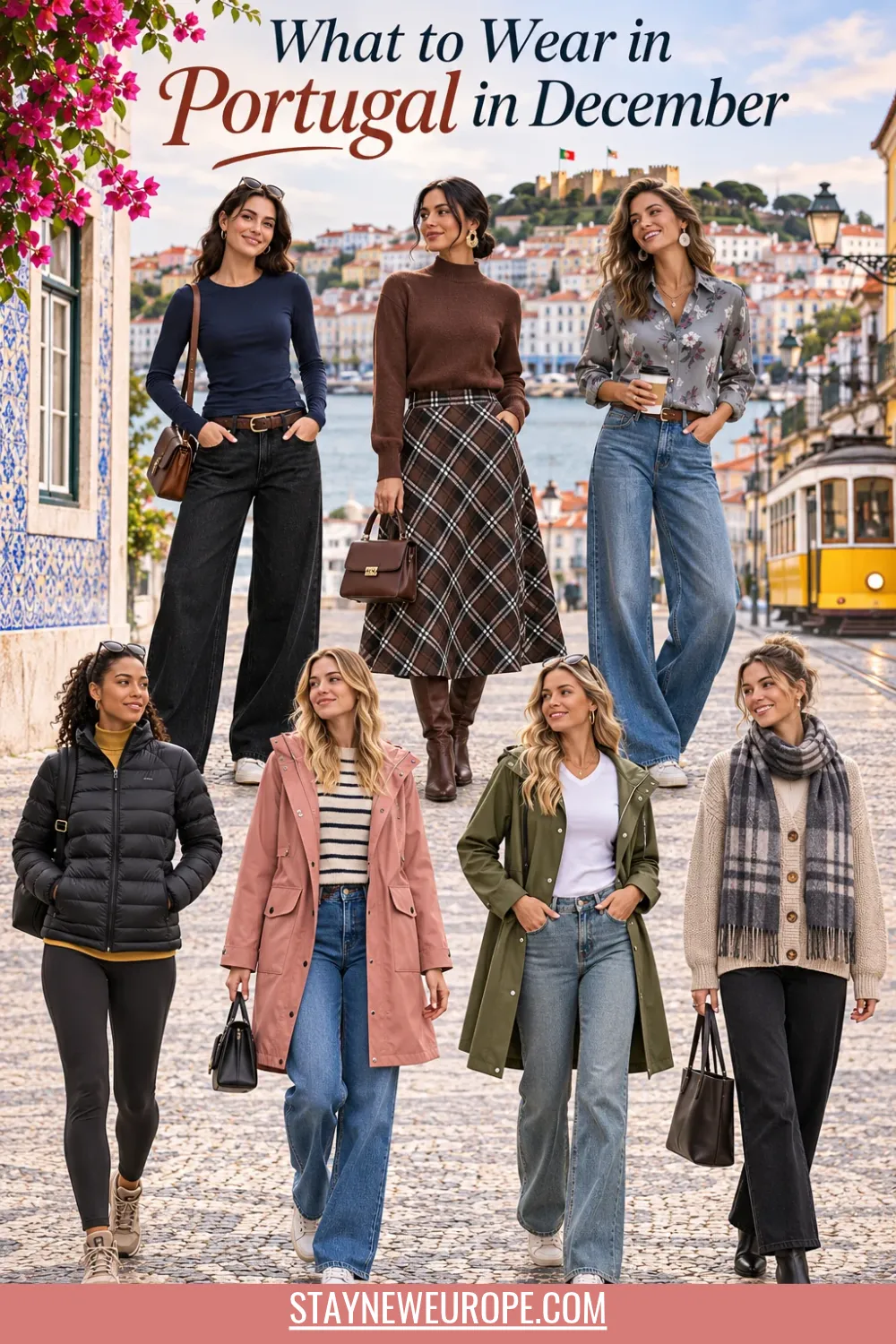
Picture it: you’re standing on a Lisbon hill at 4pm, the sun is doing that golden Atlantic thing, and you’re wearing a coat you thought was far too warm. Twenty minutes later a cloud rolls in, the wind finds your neck, and the cobblestones turn into a skating rink. Welcome to Portugal in December.
It isn’t the sun-drenched Portugal of the postcards, but I’d argue it’s the better one. The Christmas lights are up, the crowds have thinned, the pastéis de nata come out warm, and nobody queues for an hour at the viewpoints. The weather just needs a little respect.
Most people pack for “Southern Europe” and arrive with sandals and one flimsy jacket. Or they overcorrect, bring a ski parka, and sweat through the tram ride. Let me save you from both.
Before We Dive In
Here’s the quick lay of the land, so you can plan outfits with real numbers instead of vibes.
Weather: Lisbon sits around 9–15°C (48–59°F) in December, Porto is a couple of degrees cooler at roughly 7–14°C, and the Algarve is the mildest mainland pick at about 8–16°C with far more sun. December is also the rainy season, so expect a mix of bright, crisp days and properly wet ones, sometimes both before lunch. Inland spots like the Douro Valley and Alentejo get properly cold at night, and Madeira stays noticeably warmer.
Walking conditions: Lisbon and Porto are hilly, and the pavements are often calçada portuguesa, those pretty little limestone cobbles that turn glassy when wet. You’ll walk a lot, uphill, on slippery surfaces. Shoes are the whole game.
Style culture: Portuguese locals dress neatly and a bit darker in winter: wool coats, scarves wrapped with intent, leather boots, tidy dark denim. Nobody is in athleisure at dinner. You don’t need to dress up, but looking put-together makes everything feel smoother, from restaurants to church doors.
Where inside matters: Many Portuguese homes, rentals and even some restaurants are barely heated. Yes, even in winter. Pack for being cold indoors, which surprised me more than any outdoor weather.
Heading elsewhere in Europe? Check our other seasonal packing guides for more destinations: [ADD LINK: related packing guide from stayneweurope.com sitemap] and [ADD LINK: second related guide].
1. Start With the Right Bag
Hook: Portugal’s cobbles hate wheeled suitcases. Your wrists will file a complaint.
I learned this the hard way dragging a hard-shell spinner up an Alfama alley, listening to every wheel rattle like a tiny drum solo. For a December trip, a soft carry-on duffle or a 40L backpack-style carry-on is far kinder on the hills, and it forces you to pack lighter, which you’ll thank yourself for.
If you want something specific, look for a carry-on duffle with a padded shoulder strap and a water-resistant outer. It will cope with rain on the way from taxi to hotel, and it squashes into those tiny train luggage racks. Anything under roughly 40 litres usually clears budget airline cabin limits too.

Local tip: Lisbon’s metro is great, but several stations have stairs and no step-free route. A bag you can carry beats one you have to drag.
2. Lightweight Layers (They Matter More Than You Think)
Hook: Portugal in December is three seasons in one day.
Mornings start cool, midday can feel almost spring-like in the sun, and evenings drop fast, especially near the river or ocean. Layers let you adjust without a full outfit change. The magic formula is a thin base layer, a mid-layer for warmth, then an outer shell or coat.
For the base, a lightweight merino long-sleeve tee is worth every cent, because it stays warm, doesn’t smell after two wears, and dries quickly. On top of that, add a fine-knit jumper or thin fleece you can tie around your waist or stuff in your day bag. I wore the same merino top for four days in a row in Porto and nobody, including me, noticed.

Local tip: Layer so you can strip down indoors. Cafés and trams can be steamy while the street is freezing.
3. What Actually Works Style-Wise
Hook: You don’t have to dress like a Lisbon fashion editor, but you shouldn’t look like you’re about to hike Everest either.
The look that blends in is simple: neutral colours (navy, black, camel, olive, grey), good fabrics, and one or two interesting pieces like a scarf or a leather belt. Portuguese style is understated. Think plain knit, dark jeans, boots, a good coat.
An outfit I wore on repeat: slim dark jeans, a cream roll-neck, a wool-blend coat, and leather ankle boots. It worked for sightseeing, lunch, and a last-minute fado dinner without changing a thing.
Local tip: Swap sneakers for sleek leather ones or minimal trainers and you’ll instantly look less “tourist off the cruise ship.”
4. What NOT to Wear (Tourist Mistakes)
Hook: I can spot a rookie packing job from across Praça do Comércio.
The usual offenders: flip-flops (it’s December!), thin-soled ballet flats that offer zero grip, heavy ski jackets that turn you into a sauna, and brand-new shoes you haven’t broken in. Also avoid anything that needs ironing or delicate care, because you won’t have time and you’ll hate it by day three.
Another sneaky mistake is bringing only white or pale trousers. Wet cobbles splash, and Lisbon’s puddles have a sense of humour.
Local tip: If a shoe has a smooth plastic or leather sole, leave it at home. Rubber grip is non-negotiable here.
5. Jeans, Trousers or Shorts?
Hook: Shorts are out. Jeans are in. But not all jeans are equal.
Dark, mid-weight denim is the Portugal workhorse. It handles drizzle better than light colours and goes from a day of walking to dinner without fuss. If you’d rather skip denim, wool-blend or thick cotton trousers in navy or charcoal look sharp and keep you warmer.

Avoid super-skinny stretch jeans that cling when wet and take forever to dry. A straight or slightly relaxed cut is more comfortable for those uphill stretches.

Local tip: Bring two pairs maximum. One will inevitably dry on a radiator overnight, and you only need one spare.
6. Comfortable but Stylish Walking Shoes
Hook: This is the section to read twice.
Lisbon and Porto will punish bad footwear. My top pick is a waterproof or water-resistant leather ankle boot with a rubber lug sole, something like a Chelsea boot, which looks smart and handles wet cobbles like a champ. Make sure they’re already broken in before you fly.

As a back-up, a pair of leather or suede-look sneakers with decent tread gives you a drier, lighter option for dry days. Pair them with merino socks so your feet stay warm even when the tiles are wet.

Local tip: Thin insoles with arch support are a cheap upgrade. I clocked about 20,000 steps a day in Lisbon and I felt every one of them.
7. What to Wear in Portugal in December for Women
Hook: The easiest outfit formula in Europe: knit + bottom + coat + boots.
Start with a fine knit or roll-neck, or a long-sleeve blouse under a cardigan. For bottoms, dark jeans, straight trousers, or a midi skirt with opaque tights or thermal leggings underneath. Boots finish it, and a scarf does the rest.

Skirts work beautifully if they’re midi or longer, paired with fleece-lined tights, since the wind off the Tagus is sneaky. A silky blouse under a knit gives you a dinner-ready look and an extra thermal layer.

Local tip: Dark tights, black boots, and a patterned scarf make you look like you live there. Add a good coat and you’re done.
8. Jackets for Unpredictable Weather
Hook: One coat will not do everything, but two can.
My winning combo: a packable lightweight down jacket for cold mornings and evenings, plus a waterproof shell or trench with a hood for rainy days. You can layer them together if it’s truly freezing (hello, Douro Valley at night).

A packable down jacket compresses into its own pocket, so it takes almost no luggage space and gives you serious warmth. The shell should be genuinely waterproof, not just “water resistant,” because Portuguese December rain is real. A longer cut that covers your hips is much more useful than a cropped one.

Local tip: Hoods matter more than umbrellas on windy hills. Choose a jacket with an adjustable hood.
9. Rain Preparation (Unexpected but Important)
Hook: December is Portugal’s wettest stretch, so plan like you mean it.
You don’t need to pack your whole wardrobe in plastic, but a few smart choices keep you dry and cheerful. Water-resistant shoes, a hooded jacket, and a small but sturdy compact umbrella cover 90% of days.

A compact windproof umbrella is worth having for those sudden downpours, though on very blustery days you’ll rely on the hood. I’d also toss a small dry bag or even a zip-lock into your day bag for your phone and passport. Soggy documents are a trip-killer.

Local tip: Rainy days are perfect for museums, tile workshops, cafés and long lunches. Don’t fight the weather, schedule around it.
10. Evening Outfits (Like a Local, Not a Tourist)
Hook: Dinner in Portugal starts late and looks effortless.
You don’t need a suit or a cocktail dress, just a step up from daytime. Swap trainers for boots, add a nicer knit or blouse, and layer a good coat. Men can pair dark trousers with a fine-knit jumper and a blazer or overshirt; women can go with a midi skirt or dark jeans and a silky top.

I wore the same black ankle boots and a wool-blend coat for fado in Lisbon, a seafood spot in Cascais, and a wine bar in Porto. Every time I felt appropriately dressed without feeling fussy.
Local tip: Big restaurants are easy. For tiny fado houses, tables are close together and warm, so wear layers you can peel off.
11. What to Wear for Churches
Hook: Portugal’s churches are stunning, and many have modest expectations.
Big sights like Lisbon’s Sé, Jerónimos Monastery and Porto’s São Francisco Church generally welcome visitors in normal clothing, but it’s respectful to cover bare shoulders and avoid very short shorts or skirts. In December you’ll be covered up anyway, which makes this easy.
Carrying a light scarf means you can always cover up if you’re wearing something sleeveless underneath. Quick tip: remove hats inside and keep voices low, especially during services.
Local tip: Some churches are very cold inside. Keep your coat on.
12. Day Bags: Crossbody vs Backpack
Hook: Pickpockets exist, but so do uphill climbs.
For crowded places like Tram 28, Rossio and Ribeira, a zip-closed crossbody bag worn in front is the safest bet. It’s also better looking at dinner than a big backpack. Look for one with a secure zip and ideally a slim, anti-theft design.

If you’re doing a long walking day or heading to the Douro Valley, a small, lightweight backpack gives you room for your layers and umbrella. Just wear it on your front in busy areas. I switched between the two, depending on whether I was dining or hiking.

Local tip: Keep your phone in an inside pocket on trams. Portugal is generally very safe, but the 28 is a known hotspot for opportunists.
13. Accessories That Elevate Simple Outfits
Hook: The cheapest way to look Portuguese is a scarf.
A large wool or cashmere-blend scarf is the best thing you can pack. It warms your neck, jazzes up a plain outfit, and doubles as a church cover-up. Add a beanie or a stylish hat, thin gloves, and a leather belt, and your simple outfits suddenly look considered.

Merino socks deserve a mention too. They keep your feet dry and warm, and they handle multiple wears. A pair of sunglasses is surprisingly useful as well, because December sun in Portugal can be dazzling, especially on a hilltop viewpoint.
Local tip: Neutral scarves in grey, camel or navy go with everything. Save the bold prints for a single statement piece.
14. Fabrics to Choose (and Avoid)
Hook: What your clothes are made of matters more than how they look.
Wool, merino and wool blends are your friends, as they insulate even when damp. Cotton is fine for everyday knits but dries slowly, so don’t make it your only warm layer. Technical fabrics like water-resistant nylon work well for outer layers.
Avoid thin polyester that traps sweat and cheap acrylic that pills and offers little warmth. Also steer away from heavy linen: it looks cold, feels cold and wrinkles in a damp bag.
Local tip: Check the label before you buy for your trip. Anything wool-blend, quick-dry or water-repellent earns its suitcase space.
15. What to Pack for Portugal in December (Non-Clothing)
Hook: Clothes aren’t the only thing that keeps you comfortable.
A Type F power adapter is essential if you’re coming from the UK or US, because Portugal uses the standard European two-round-pin plug. A portable power bank will save you when your phone drains faster in the cold. A small reusable water bottle and a compact travel umbrella complete the essentials.
I’d also bring lip balm and hand cream, since the Atlantic wind dries skin fast, plus a few blister plasters for those cobbled hills. A lightweight travel pillowcase or tiny blanket isn’t daft either if you’re staying somewhere with weak heating.
Local tip: Pack a small foldable tote for market finds, tinned fish, and pastries. You’ll thank me later.
16. A December Capsule Wardrobe for Portugal
Hook: The less you pack, the more you can actually wear.
Here’s what I’d put in a carry-on for a week: two pairs of trousers (one dark denim, one wool-blend), three tops (a merino long-sleeve, a knit jumper and a blouse or fine shirt), one dress or midi skirt with thick tights, a packable down jacket, a waterproof shell, a scarf, and a pair of ankle boots plus one backup shoe.
Choose a palette of two or three colours so everything mixes. For example: navy, cream and camel. Add a single accent colour through your scarf. Suddenly you have a dozen outfits from a handful of pieces.
Local tip: Hotel and Airbnb laundry is easy in most cities. Wash once mid-trip and you can pack even lighter.
Practical Packing: The Quick Reality Check
How many outfits? Aim for 5–6 outfits for a week, built around layers you can mix and match. Wear your heaviest items (coat, boots) on the plane to save bag space.
Packing light vs overpacking: Packing light wins in Portugal. Cobbles, stairs, trams and trains all punish big bags. If you’re tempted to add “just in case” items, ask yourself whether you’ll wear it twice. If not, leave it.
Outfit planning tips: Lay everything on your bed before you pack. Anything that doesn’t work with at least three other items goes back in the wardrobe. Roll knits, fold coats, and keep a small pouch for accessories.
Mistakes to avoid: New shoes, no rain gear, too many “nice” outfits, and not planning for chilly indoors. The classic trap is bringing only fashionable-but-thin pieces. In December, warmth is the style.
FAQs About Packing for Portugal in December
Is it cold in Portugal in December? It’s cool rather than freezing. Expect roughly 7–16°C depending on the region, with Porto and inland areas colder, and the Algarve and Madeira warmer.
Do I need a heavy winter coat? Usually not. A packable down jacket plus a waterproof shell is more flexible. Pack a heavier coat only if you’re heading to the Douro Valley, Serra da Estrela or are very sensitive to cold.
Will it rain? Quite possibly. December is one of the wetter months, especially in Porto and the north, so waterproof layers and shoes with good grip are worth it.
Can I wear sneakers? Yes, if they have solid grip and you accept that they may get wet. Leather boots are generally the more comfortable and more stylish choice.
What should I wear on New Year’s Eve? Warm layers with a festive twist: dark outfit, nice knit or sparkly top, good coat and scarf. Big outdoor celebrations (like Lisbon’s riverfront) are chilly and crowded.
Do I need to dress up for dinner? Not formally. A tidy, put-together smart-casual look is plenty almost everywhere.
One Last Thing Before You Zip That Bag
Portugal in December is cosy, moody and a little bit magical. You’ll sip a galão in a steamy café while rain taps the window, wander through Christmas lights in a city that feels like it’s all yours, and then watch the sun burst out over the river as if nothing happened.
Pack your layers, break in those boots, and tuck a scarf in your pocket. You don’t need a perfect wardrobe, just a smart one. Then go get gloriously, happily lost on those hills. The pastéis are waiting, and they’re even better when you’ve earned them.

