
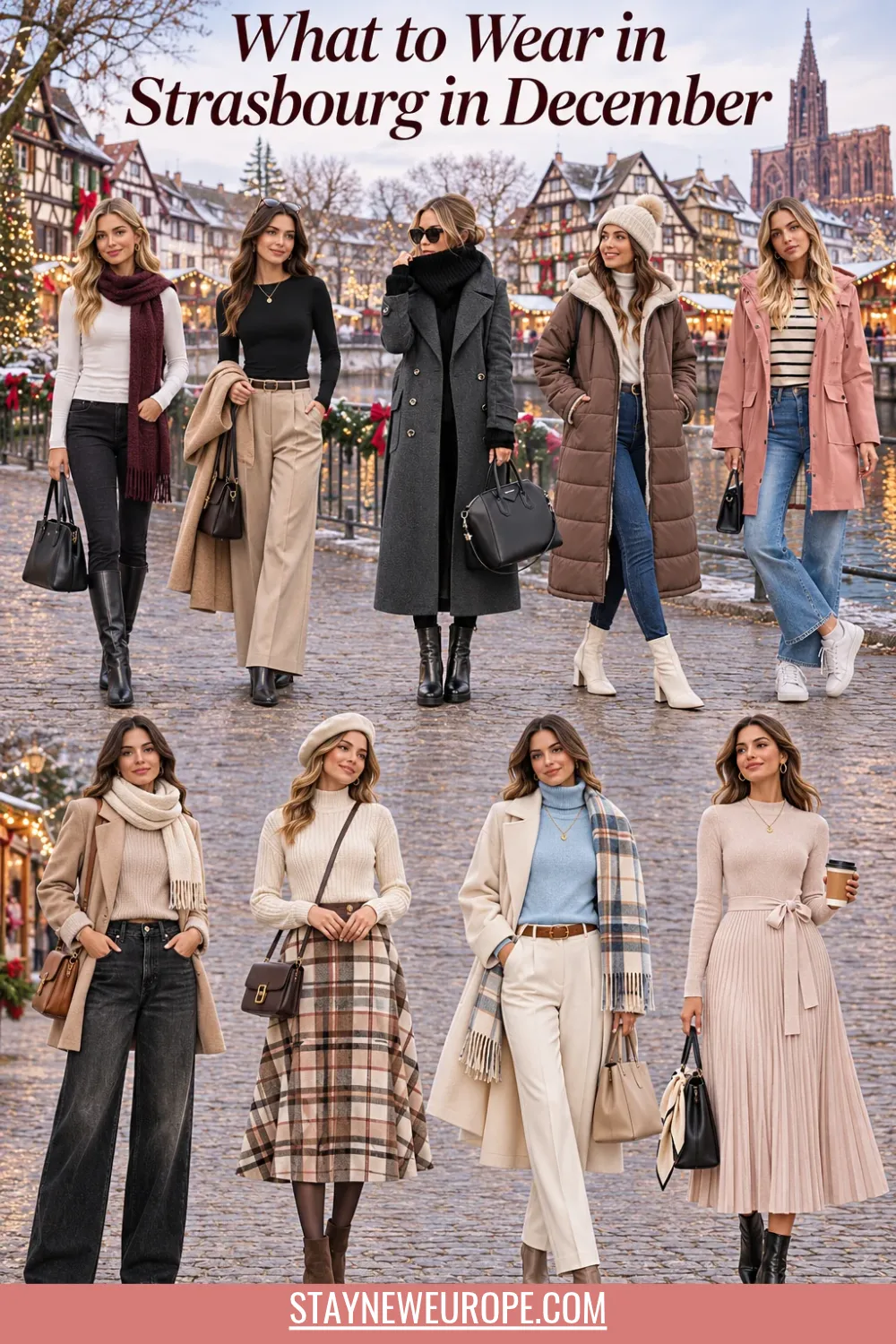
Picture this: it’s four in the afternoon, the sky has already gone the colour of pewter, and the half-timbered houses along Petite France are glowing like someone left the fairy lights on. Your fingers smell of cinnamon and mulled wine. Your toes, however, have gone numb.
That was me on my first December evening in Strasbourg. The Christmas markets were glorious, the cobblestones were damp, and I was wearing trainers with the insulating power of a paper bag. Lesson learned, painfully.
Strasbourg in December is cold, foggy, often drizzly, and completely magical. Most visitors pack for “Christmas card snow” and forget that they will mostly be standing still outside, in the damp, eating a tarte flambée. Let me save you from the usual mistakes.
Before We Dive In
A quick reality check, because dressing well starts with knowing what you’re up against.
Weather: Expect roughly 1°C to 7°C for most of the month, and it feels colder at night when the damp creeps in. Rain shows up on around 11 days, and fog is a regular guest. Snow is possible but never guaranteed, so don’t build your whole wardrobe around it.
Walking conditions: The old town is cobbled, uneven and often wet. You’ll walk a lot, then stand a lot at market stalls. Warmth from below matters more than you think.
Style culture: The French dress with quiet polish, and Alsace adds a practical, cosy streak. Think dark coats, good scarves, neat boots. Nobody expects glamour, but a puffy neon ski suit will make you stand out for the wrong reasons.
Timing: The Christmas market runs from 26 November to 24 December 2026, so crowds, queues and long outdoor evenings are part of the deal.
Heading elsewhere in Europe this winter? Check out our other monthly guides, like ANCHOR TEXT, to pack right for your next stop.
Start With the Right Bag
Let me be honest: a giant suitcase on Strasbourg’s cobbles is a special kind of misery.
If you can, bring a soft cabin-size duffel or a small wheeled carry-on with big wheels. The trams are easy, but the pavements near the cathedral are bumpy and wet. I swapped my hard-shell case for a weekender and felt like a new woman.

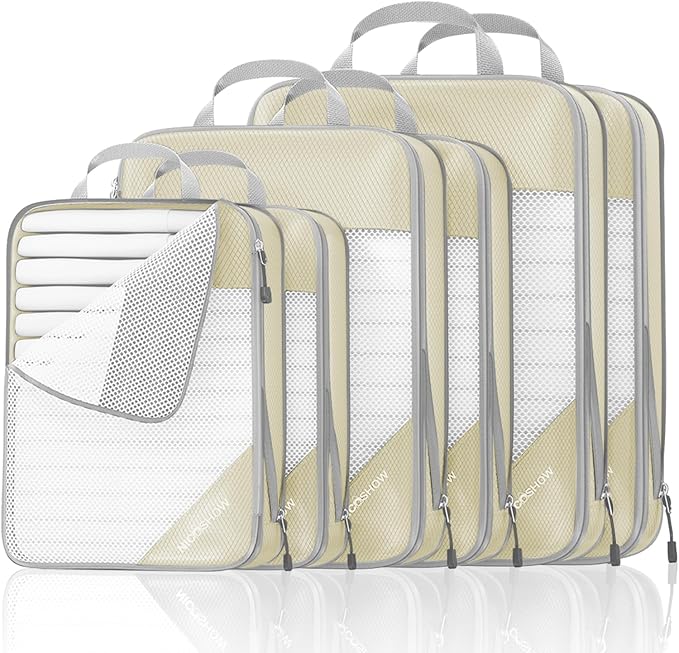
A lightweight packing cube set is worth its own paragraph. Cold-weather clothes are bulky, and cubes let you compress knitwear without turning it into a crumpled brick.
Local tip: Hotels in the centre often have steep stairs and no lift. Pack something you can carry up two flights without crying.
Layers Matter More Than You Think
Strasbourg is not “wear one enormous coat” cold. It’s “freezing outside, boiling in the tram” cold.
I live by a three-layer system: a thin base, a warm middle, and a proper coat on top. The base is a fitted long-sleeve top. The middle is a knit or fleece. The coat does the heavy lifting. When you step into a winstub, a restaurant, or a heated tent, you can peel off one layer and survive.

A merino or thermal base layer is the single best thing I packed. It’s thin enough to wear under a sweater without looking bulky, and it keeps you warm when the damp sets in around dusk.

Local tip: Dress for standing still. Markets are not a brisk walk, so go one layer warmer than you think.
The Winter Coat: Your Real Outfit
Your coat is the outfit. Everyone sees it in every photo, so choose carefully.
A knee-length wool coat in black, camel, navy or grey blends in beautifully. A longer length keeps your thighs warm, which is the part of the body that cold air loves to attack on a market night.

If you’d rather go practical, a longline down or quilted coat with a hood is a smart choice. I’d pick one with a water-resistant outer, because the drizzle is real. Skip the ultra-short puffer unless you plan to wear thermals underneath.

Local tip: Check for inside pockets and a zip or button closure that actually shuts. Wind off the Ill river is cheeky.
Rain Preparation (Yes, Really)
Everyone packs for snow. Nobody packs for drizzle, and drizzle is far more likely.
A compact umbrella is a classic, but crowded markets are not umbrella-friendly. I got jabbed in the eye twice before giving up. A hooded coat or a lightweight packable rain shell over your knitwear is a smarter choice.

Waterproof boots deserve a mention here too, because soggy socks will ruin a whole evening faster than anything else.

Local tip: Keep a tiny microfibre cloth in your bag for wiping the camera lens and the foggy glasses that come with hot drinks.
Jeans, Trousers and Skirts (What Actually Works)
Skip the thin leggings as your only layer. They are not warm enough, and they look sad against a gorgeous wool coat.
Dark straight-leg or relaxed jeans are the easy answer, and they handle a rainy day without looking scruffy. Lined trousers or wool-blend trousers feel dressier for dinner. Fleece-lined leggings work under a long skirt or a knit dress.

If you prefer skirts, go midi or longer with thick tights underneath. I tested a skirt with sheer tights once. Once.

Local tip: Avoid very light colours near the ground. Market slush and wet cobbles splash everywhere.
Sweaters and Tops
Textures are your friend in Strasbourg. Chunky knits look right at home among the garlands and gingerbread.
A cable-knit or merino sweater in a rich colour like burgundy, forest green or cream looks lovely in photos and wards off the cold. A turtleneck is the stylish way to keep your neck warm, and it layers perfectly under a coat.
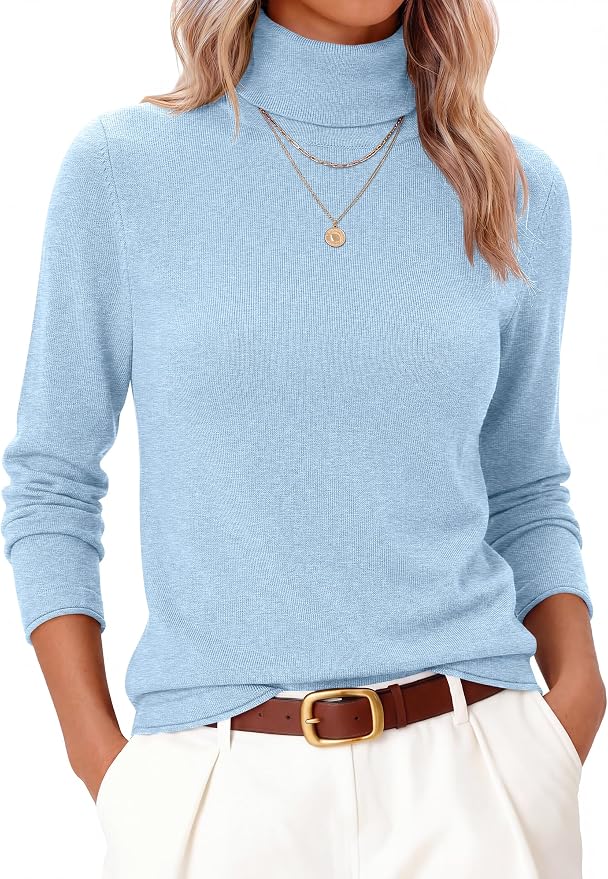
I’d bring three tops that mix and match with two bottoms. You’ll look put-together without carrying half your wardrobe. Wool and cashmere blends are beautiful, though pure wool is better value when you’re standing in a market for hours.
Local tip: Bring one slightly dressier top for a winstub dinner. Alsace takes its food seriously.
Shoes: Comfortable, Warm and Not Embarrassing
Let me say this clearly: your shoes decide whether you enjoy Strasbourg.
Waterproof ankle boots with a grippy sole are the winner. Chelsea boots or leather lace-ups with a rubber sole look smart and cope with wet stone. Avoid smooth soles, since cobbles after rain are slippery in a way that surprised me.

Thick socks make a real difference. Wool or wool-blend socks keep your toes toasty, and a second pair in your bag is a small luxury. I also tuck a pair of insulated insoles into my boots if I know I’ll be out for hours.

Local tip: Break in your boots before the trip. Blisters on day one make for a very long weekend.
Accessories That Do the Heavy Lifting
You can wear the same coat and jeans all week if the accessories change.
A big wool scarf is non-negotiable, and a hat that covers your ears is even better. I’m fond of a simple beanie in a neutral shade that goes with everything. Gloves matter, especially touchscreen-friendly ones so you can take photos without exposing your fingers to the cold.

A soft blanket scarf doubles as extra warmth for evenings out, and a slim pair of earmuffs works when hats and hair don’t mix. Keep the colour palette simple and let one accessory be the star.
Local tip: Pockets for hand warmers are a quiet luxury. Disposable ones weigh almost nothing.
What to Wear for Evenings and Dinners
Evenings in Strasbourg are cosy rather than formal. A winstub is a traditional Alsatian tavern, and the dress code is “warm and nice.”
For women, a knit dress with warm tights and boots, or tailored trousers with a silky blouse and a sweater over the top, does the job. For men, dark jeans, a good sweater and a collared shirt underneath look sharp. A tailored wool coat finishes everything off.

Fancier restaurants appreciate a little extra effort, such as a blazer or a dressier boot. You will still be fine in smart-casual, as long as you look tidy.
Local tip: Restaurants fill up fast during market season. Book ahead, and wear something you’re happy to sit in for two hours.
What to Wear in Churches (Including the Cathedral)
Strasbourg Cathedral is stunning, and you’ll want to go in. It is a working church, so dress with a bit of respect.
You don’t need to cover up dramatically, especially in winter, when you’ll already be wearing layers. Just avoid anything revealing, and take hats off inside. Your big scarf can double as a shoulder cover if you need it.
I found it handy to wear a sweater and trousers that I could stay comfortable in while wandering inside, since cathedrals can feel cooler than the outdoors.
Local tip: Visit earlier in the day when the light pours through the windows, and the crowds are thinner.
Bags: Crossbody Beats Backpack
Market crowds are tight, and a bulky backpack gets bumped constantly.
A crossbody bag sits at the front, stays safe, and leaves your hands free for a hot chocolate. Pick one with a zip. Pickpockets do work crowded markets across Europe, so basic care is wise.

If you prefer a backpack for daytime wandering, choose a small one and wear it on your front in the thick of the crowds.
Local tip: Choose a bag big enough for gloves, hat, phone and a small bottle of water, but not so big that you’ll fill it with things you don’t need.
Fabrics to Choose (and Avoid)
Fabric matters more than fashion in damp cold.
Choose wool, merino, cashmere blends, fleece and down. Wool stays warm even when it’s slightly damp, which cotton absolutely does not. Cotton jeans are fine for a day, but cotton sweatshirts and thin cotton tees soak up moisture and make you colder.
Avoid thin polyester fashion knits that look cosy but have no insulation. Also steer clear of suede boots unless they are treated, since slush will destroy them.
Local tip: If in doubt, read the label. If a sweater is mostly acrylic, expect it to be less warm than it looks.
What NOT to Wear
Let me list the repeat offenders I see every December.
Thin trainers with no grip are number one. Short skirts with no tights are number two. Heavy jewellery that gets tangled in scarves is a small but irritating mistake. And wearing a single enormous coat with nothing warm underneath just leaves you cold the moment you take it off indoors.
Leave the novelty Christmas jumper at home unless you want to stand out. It is fun, but Strasbourg’s own style tends to be quieter.
Local tip: If you wouldn’t want to sit in it for two hours at a market bench, don’t pack it.
Non-Clothing Packing Essentials
Some small things make a surprisingly big difference.
A reusable water bottle, a portable phone charger, and lip balm top the list. Cold air and mulled wine are a dehydrating combo. A small pack of hand warmers, tissues and a compact day bag will save you more than once.
Also bring a travel adapter for French sockets, and a small first-aid kit with blister plasters. Your feet will thank you.
Local tip: Many market mugs have a deposit. Keep a few coins handy, and bring a small bag for your souvenir mug.
A Capsule Wardrobe for Strasbourg
Here’s the simple formula I follow now: one warm coat, two pairs of bottoms, three or four tops, a couple of sweaters, and one dressy option.
Stick to a palette of black, navy, grey, camel and one accent colour like burgundy or green. Everything matches, so you can mix and match without thinking. I add a patterned scarf for personality.
Wear your heaviest items on the plane to save suitcase space, and you can still bring the extras.
Local tip: Laundry is easy to find, but don’t plan around it. Pack so you can repeat outfits without anyone noticing.
How Much to Pack: The Practical Bit
For a long weekend, bring three to four outfits. For a week, five to six is plenty, since you can recycle tops and layer differently.
Pack light, but not too light. I’d rather carry one extra sweater than freeze. Roll your knitwear, put socks inside your boots, and keep a spare pair of socks in your daypack.
Plan your outfits in advance by writing a loose list: daytime, evening, rainy day. A trial run at home takes ten minutes and saves hours of panic.
Mistakes to avoid: overpacking shoes, forgetting gloves, and bringing only one warm layer. I did all three in the same trip. Don’t be me.
FAQs About Packing for Strasbourg in December
Will it snow in Strasbourg in December? Maybe. Snow is possible but not guaranteed, so pack for cold and damp first, and treat snow as a bonus.
Do I need a heavy winter coat? Yes, for evenings especially. A warm wool or insulated coat, plus layers underneath, is the sweet spot.
What shoes are best for the Christmas markets? Waterproof boots with grippy soles and warm socks. Cobbles and slush are unforgiving.
Can I wear jeans to dinner? Absolutely, as long as they are dark and neat. Add a nice sweater or blouse.
Should I bring an umbrella? A compact one is useful, but a hooded coat works better in crowded markets.
Go and Enjoy It
Here’s what I know now that I didn’t on that first freezing evening: Strasbourg rewards the prepared. Once your feet are warm and your coat is doing its job, the whole city opens up. You stop thinking about the cold and start noticing the details, like the smell of roasting chestnuts, the glow on the cathedral spire, and the clink of mugs.
So pack the good boots, wrap yourself in a big scarf, and walk out into those lights. Order the mulled wine. Take the slow route across the bridge. And let yourself be a little bit delighted. You’re going to look great, feel cosy, and have a wonderful time.

