
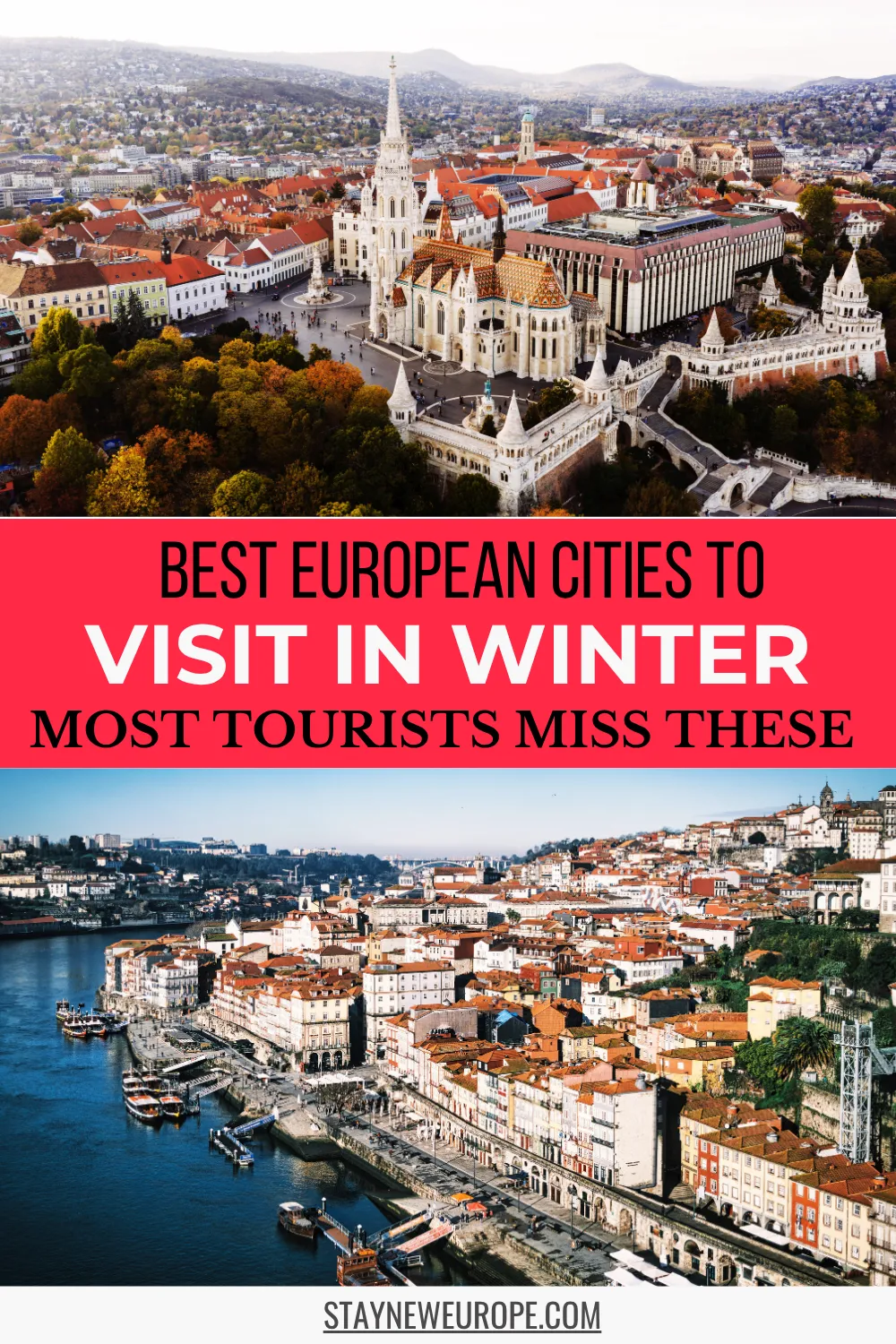
There’s a version of Europe that most people never see — the one that exists after the last summer ferry has docked, when the Christmas lights go up over cobblestone streets and the fog sits low over the canals and the restaurants fill with locals who finally have their tables back. Winter Europe has a texture to it that summer simply can’t touch. It’s closer, somehow. More itself.
I’ll admit I used to be a summer-only traveller. Then I spent a November weekend in Vienna, standing in the Naschmarkt in the cold with a cup of Glühwein, and something shifted. The city felt lived-in in a way it probably doesn’t in August when it’s competing for your attention with a thousand other places. In winter, it leans in. It wants you to stay.
This guide covers November through March — five months that contain Christmas markets and New Year fireworks and Carnival and the first cautious hints of spring, spread across some of the finest cities on the continent. Some you’ll know. Some will be new. All of them are worth the coat.
Before You Start Packing
Winter in Europe is not one single experience, and the months matter more than people realise. November is atmospheric and quiet — the tail end of autumn in northern cities, already feeling Mediterranean-mild in the south. December is Christmas market season, which transforms a specific set of cities into something out of a fairy tale and others into genuinely overpriced versions of themselves. January and February are the deep winter months: lower prices, thinner crowds, and a particular intimacy that cities develop when they stop performing for tourists. March is the turning point — the first café terraces appear, the museums empty slightly, and you can often get the best of winter prices with the first hints of spring light.
The cities below are organised by the month where they genuinely shine — not just the months they’re open, but the months they’re at their most themselves. A word on packing: dress in layers, bring waterproof shoes (actual waterproof, not aspirationally waterproof), and accept that the best version of a winter city is usually experienced with a hot drink in hand and no particular agenda.
If you’re planning a trip to Berlin specifically, we have a full guide to things to do in Berlin in winter.
Best European Cities to Visit in November
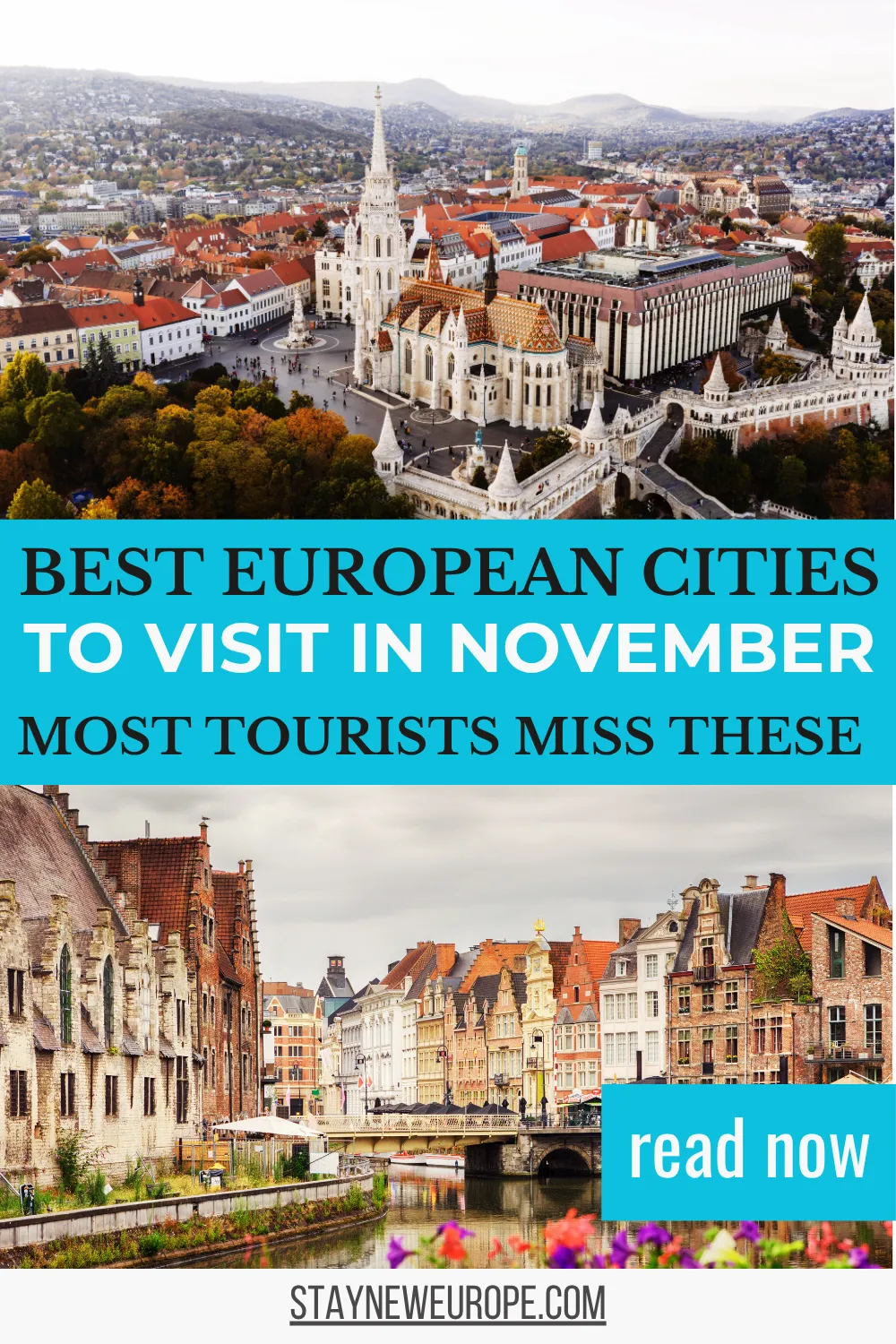
1. Budapest, Hungary
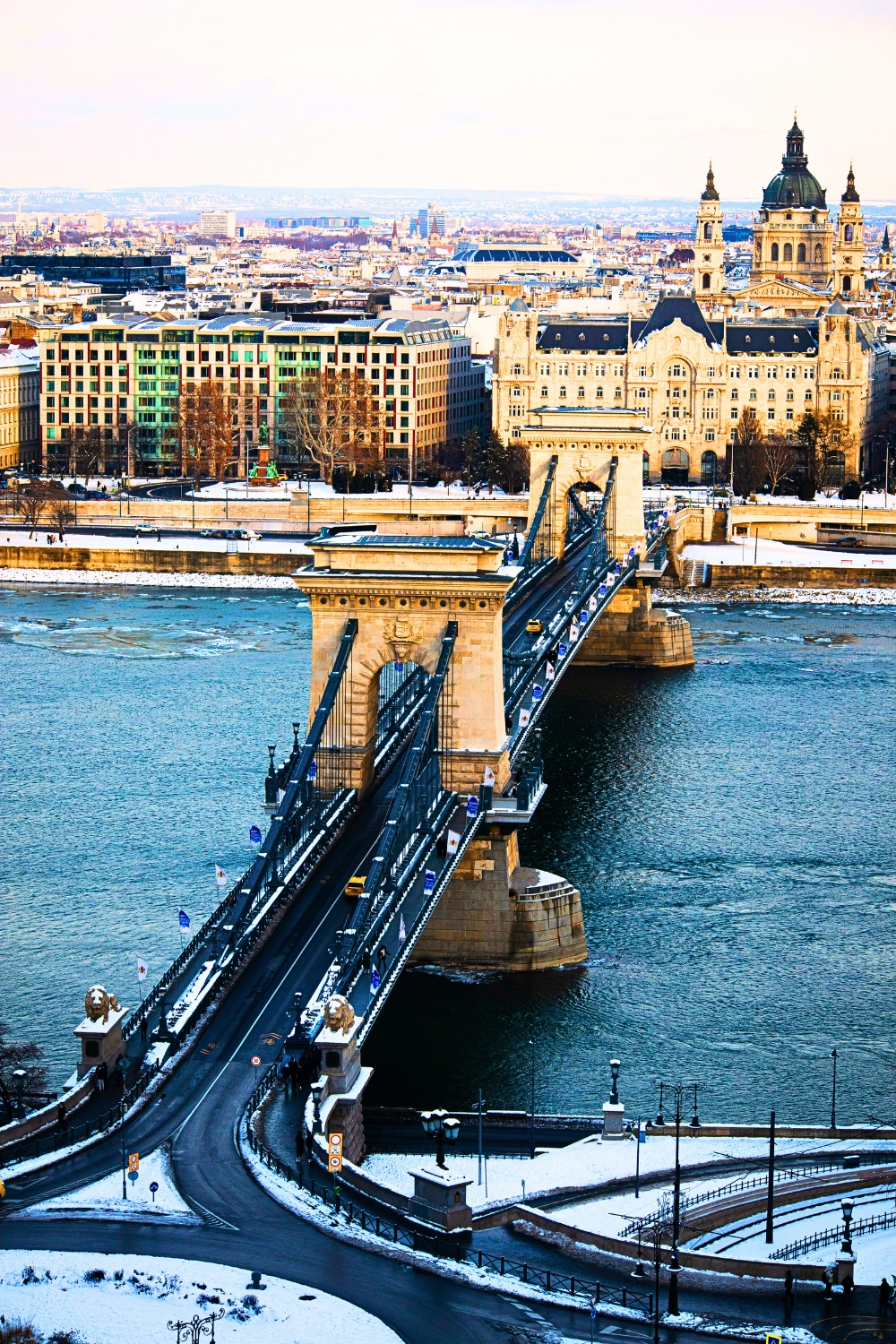
Budapest in November has a cinematic quality that I’m not sure I can fully explain — something about the way the thermal steam rises off the outdoor pools at Széchenyi while the plane trees drop their last leaves into the park, the way the Chain Bridge looks at dusk when the city lights hit the Danube from both the Buda and Pest sides simultaneously.
This is a city built for grandeur and it doesn’t apologise for it. The Parliament building on the Pest embankment is one of the largest in the world and most impressive when viewed from across the river at night. The ruin bars — Szimpla Kert being the original and most famous, a crumbling former factory filled with mismatched furniture, bicycle wheels, and extremely cheap beer — are atmospheric year-round but acquire an extra layer of warmth in November when they function as literal refuges from the cold. The Great Market Hall on Vásárcsarnok is a cast-iron covered market the size of a cathedral, selling everything from paprika ropes to goose liver, and is significantly less touristy in November than at any other time of year.
The thermal bath culture is the essential Budapest experience and November is the peak season for it — there is nothing quite like soaking in a 38°C outdoor pool surrounded by Baroque stonework while snow falls lightly around you. Széchenyi is the most famous; Gellért has the most beautiful interior; Lukács is the most local. All three are worth your time, and the combined ticket for all Budapest baths costs less than a single museum entry fee in many Western European cities.
Local tip: Take the number 2 tram along the Pest embankment at dusk for what is quietly one of Europe’s great urban views — the Buda Castle hill, the Matthias Church, the Fisherman’s Bastion, all lit up across the water. It costs €0.50 and runs every few minutes. Every tourist pays €30 for a boat cruise to see a slightly worse version of the same thing.
2. Ghent, Belgium
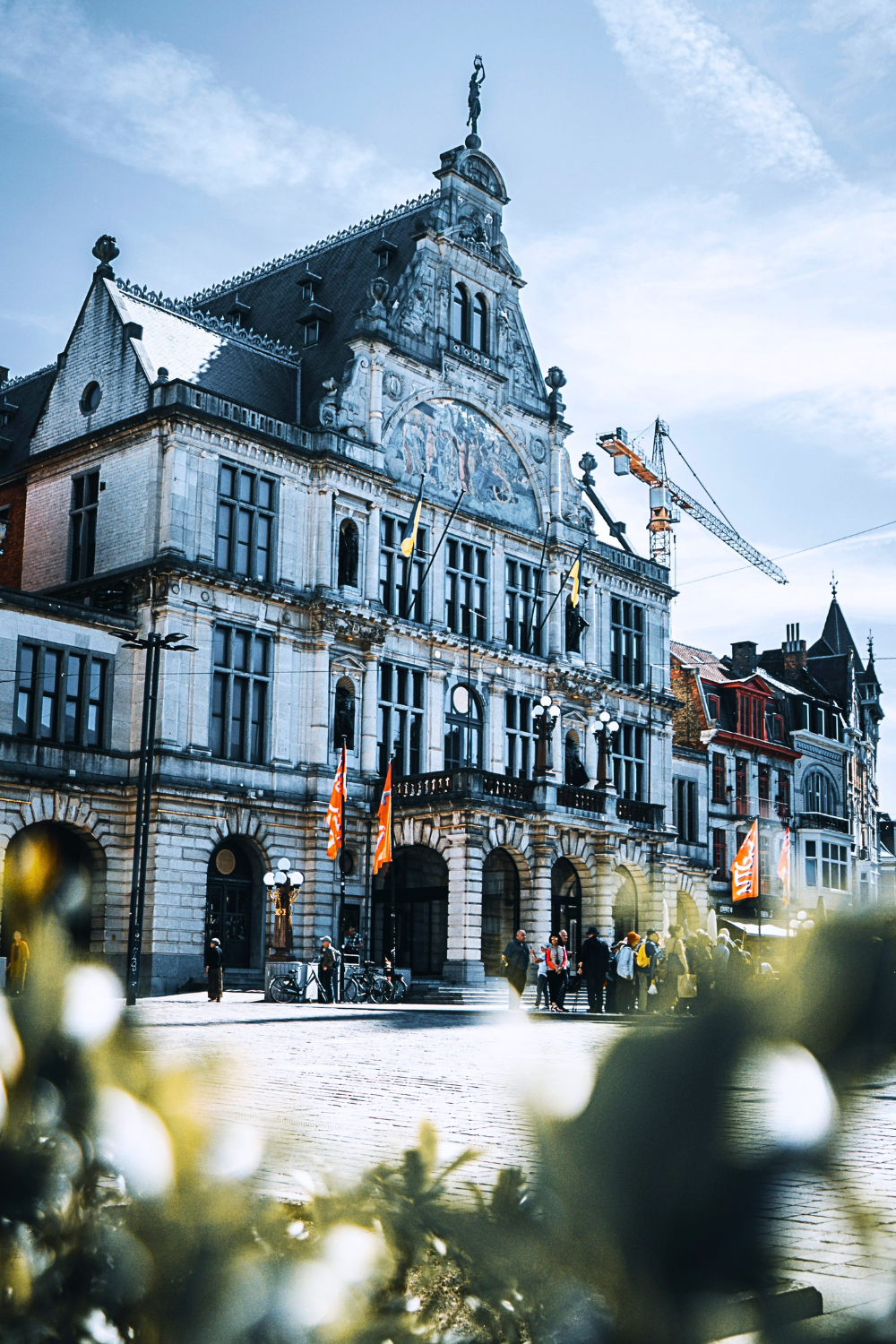
Bruges gets the famous medieval waterfront and all the tourists. Ghent, forty minutes away, gets the better food, the better nightlife, the better local character, and — in November, before the Christmas tourists arrive — an almost entirely tourist-free version of itself.
This is not a knock on Bruges. But Ghent is a university city with 70,000 students in a population of 260,000, and that ratio changes everything about how a place feels. The Graslei and Korenlei canal quays at the heart of the old city are as beautiful as anything in Belgium — possibly more so, because they’re surrounded by actual working cafes and restaurants rather than souvenir shops. The castle of Gravensteen (a perfectly preserved 12th-century fortress, right in the middle of the city, surrounded by terraced houses) seems slightly impossible, and the audioguide is one of the wittiest pieces of heritage interpretation I’ve encountered anywhere in Europe.
Ghent also has a claim to being the best food city in Belgium, which is not a low bar. The city declared itself officially vegetarian-friendly on Thursdays back in 2009, well before it was fashionable, and the restaurant scene reflects a genuine culinary ambition. The Vrijdagmarkt square has several old-school Belgian brasseries serving waterzooi (the local chicken or fish stew), and the Friday market that gives the square its name is worth timing your trip around.
Local tip: The Design Museum Ghent, recently relocated and expanded, is one of the best applied arts museums in Europe and is almost entirely absent from international tourist itineraries. The collection runs from Rococo furniture to contemporary Belgian design and has a particular strength in Art Nouveau. On a grey November afternoon it’s close to perfect.
3. Porto, Portugal
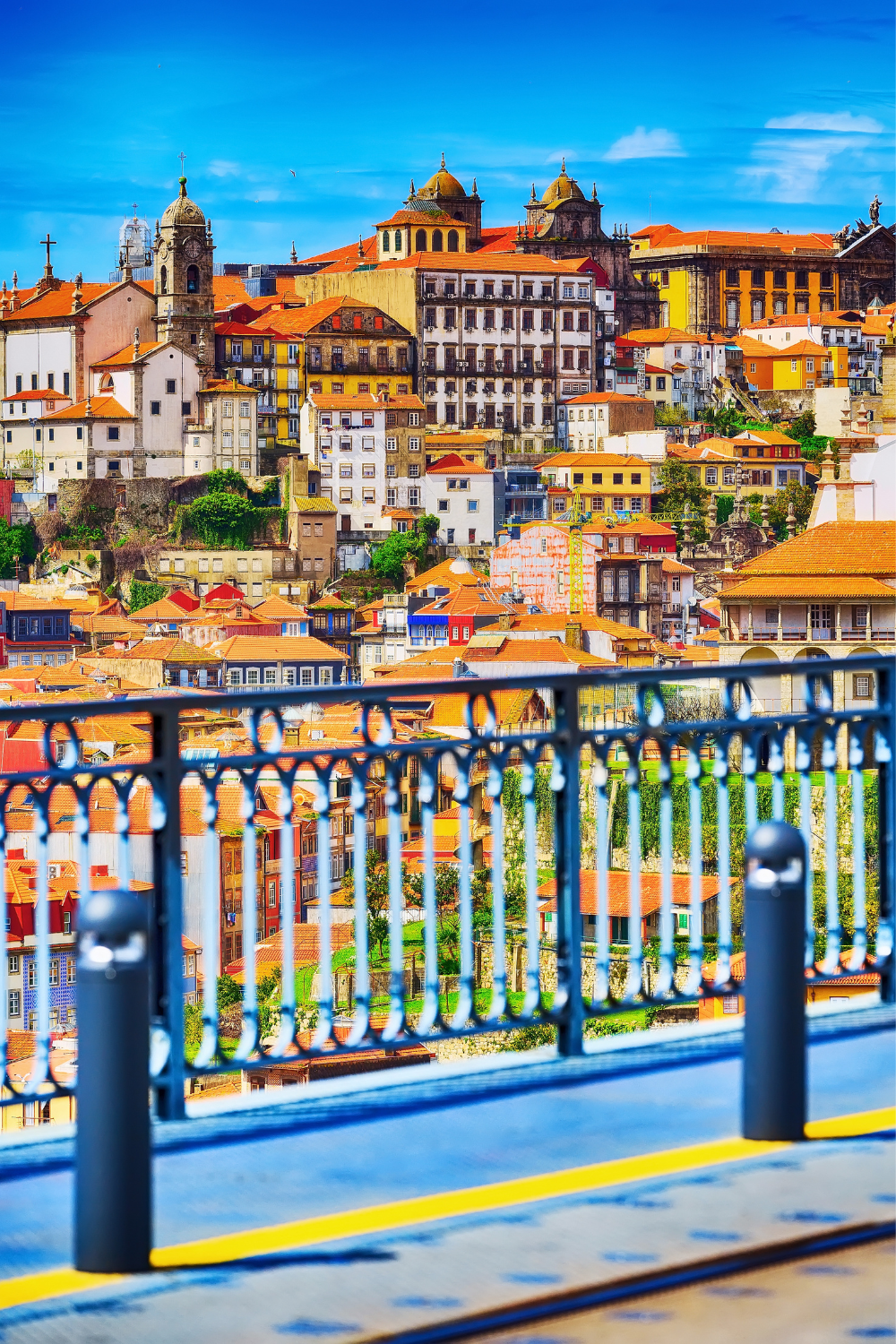
Porto’s weather in November is honest: it will likely rain, the Atlantic will make its presence felt, and you will need that good waterproof coat. What you get in return is a city that has reverted entirely to its own rhythms — the tourist summer is firmly over, the tascas (traditional restaurants) are full of locals at lunch, and the port wine lodges across the river in Vila Nova de Gaia are, if anything, more welcoming when they’re not managing summer queues.
November is also mushroom season in northern Portugal, which matters more than it sounds: the markets fill with wild varieties and the restaurant menus follow accordingly. The Mercado do Bolhão, Porto’s iron-and-glass covered market, recently restored after years of renovation, is where the city’s food culture makes the most sense — stalls selling presunto, bacalhau (salt cod in its many dried forms), and local cheese alongside flower sellers who’ve been working the same pitch for decades. The Livraria Lello bookshop — yes, the famous one — is genuinely worth visiting in November when the queues are short enough to actually stand inside and look at the Art Nouveau staircase without someone’s selfie stick in your peripheral vision.
Planning to linger over mornings there? Here’s our guide to the best brunch spots in Porto.
The port wine lodges are the centrepiece experience. Taylor’s has the best view over the city from its terrace. Graham’s has the most beautiful historic cellars. Ramos Pinto has an art nouveau mansion attached and a collection of Belle Époque advertising posters. None of them are expensive, all of them warm you up considerably, and the tasting note tradition of calling a wine “plummy with hints of dried fruit” will make more sense after your third pour than it ever has in print.
Local tip: The Foz do Douro neighbourhood, where the river meets the Atlantic at Porto’s western edge, is where the city’s well-off families live and walk their dogs. The seafront promenade, the Avenida do Brasil, runs past rock pools and crashing Atlantic surf to a lighthouse, and the seafood restaurants along it serve caldeirada (fish stew) and grilled sea bass at prices that haven’t caught up with the city centre’s tourist economy. Catch tram 1 from the Ribeira to get there.
4. Krakow, Poland
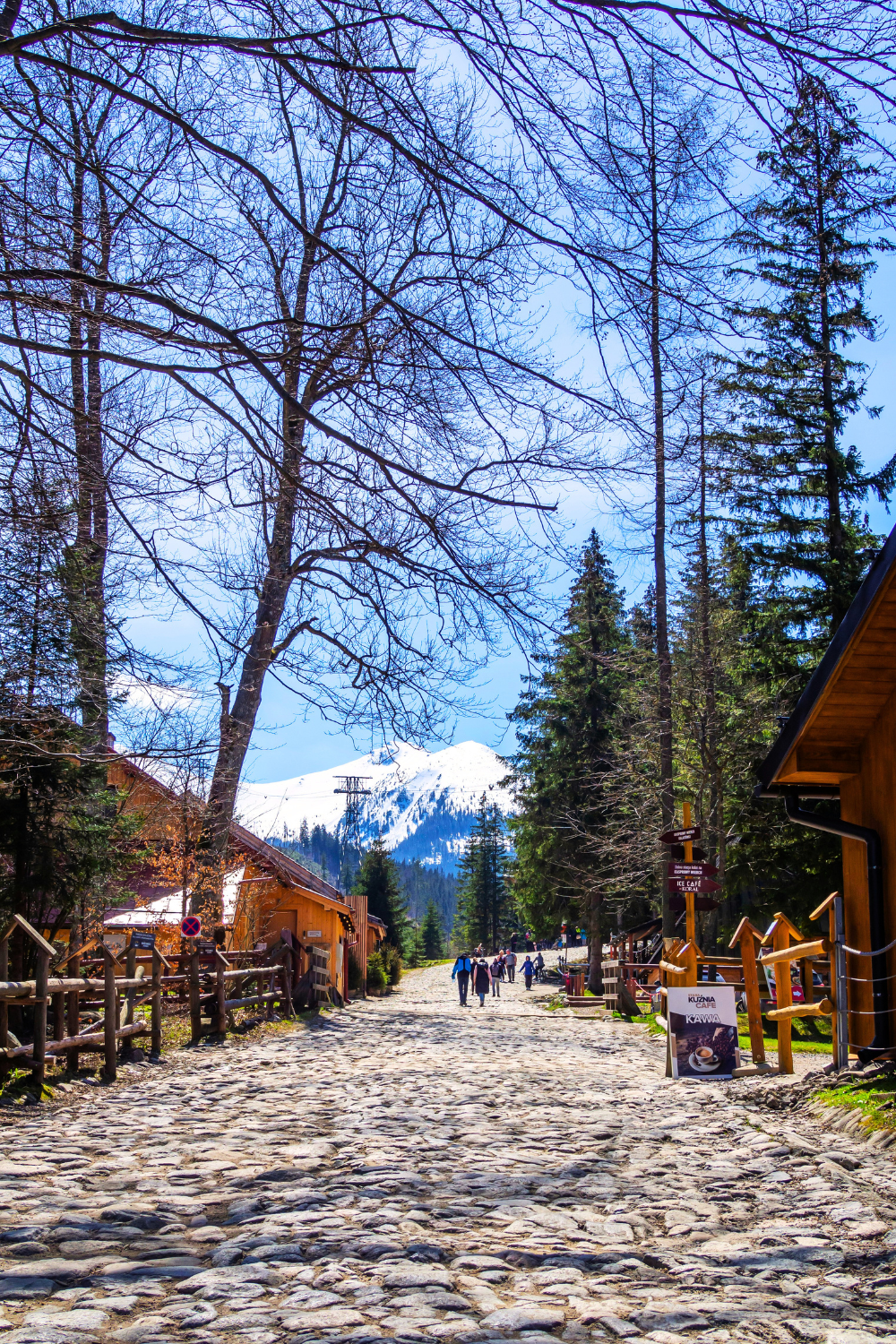
There is a weight to Krakow that you feel before you fully understand it — a sense that this city has been present at the centre of things for a very long time, and that its beauty and its history are not separate from each other but completely entwined. November is when you feel this most clearly, when the Cloth Hall market empties of summer stalls and the Rynek Główny — the great central square, one of the largest medieval squares in Europe — is given back to the city.
Wawel Castle on its limestone hill above the Vistula is extraordinary in any season, but in grey November light with few other visitors on the battlements, it achieves a particular gravity. The Royal Cathedral inside the castle walls contains the tombs of Polish kings and queens and is a place of genuine national pilgrimage. The Jewish quarter of Kazimierz, where Schindler’s List was filmed and which has since transformed into the city’s most creative neighbourhood, is a walk of fifteen minutes from the centre and has the best bars, the best galleries, and some of the most interesting restaurants in the city — including several serving traditional Ashkenazi food that tells you something important about who lived here before the war.
Polish food is the great underrated cuisine of central Europe and Krakow is a fine place to make the argument. Bigos (hunter’s stew of meat and sauerkraut), żurek (sour rye soup with hard-boiled egg), pierogi (dumplings of every filling persuasion), and a vodka culture that is treated with the same seriousness that France treats wine — all of this, in restaurants that charge a fraction of what comparable meals cost in Western Europe.
Local tip: Auschwitz-Birkenau is a ninety-minute drive or bus ride from Krakow, and visiting is a profound and necessary experience that will stay with you permanently. Book a guided tour in advance (mandatory for group entry to Auschwitz I); walk Birkenau independently. Allow a full day and be prepared to need quiet time afterwards.
Best European Cities to Visit in December
5. Vienna, Austria
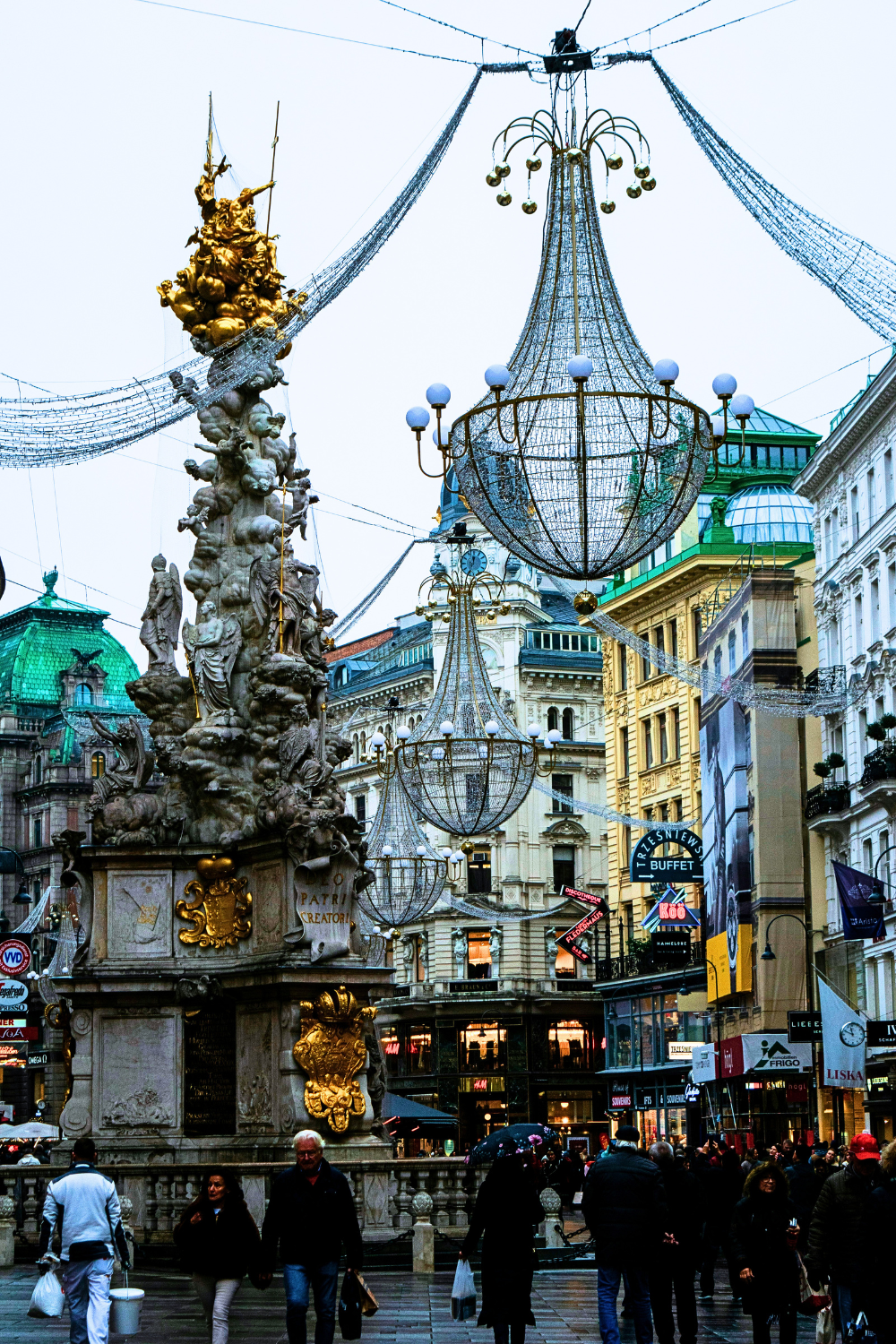
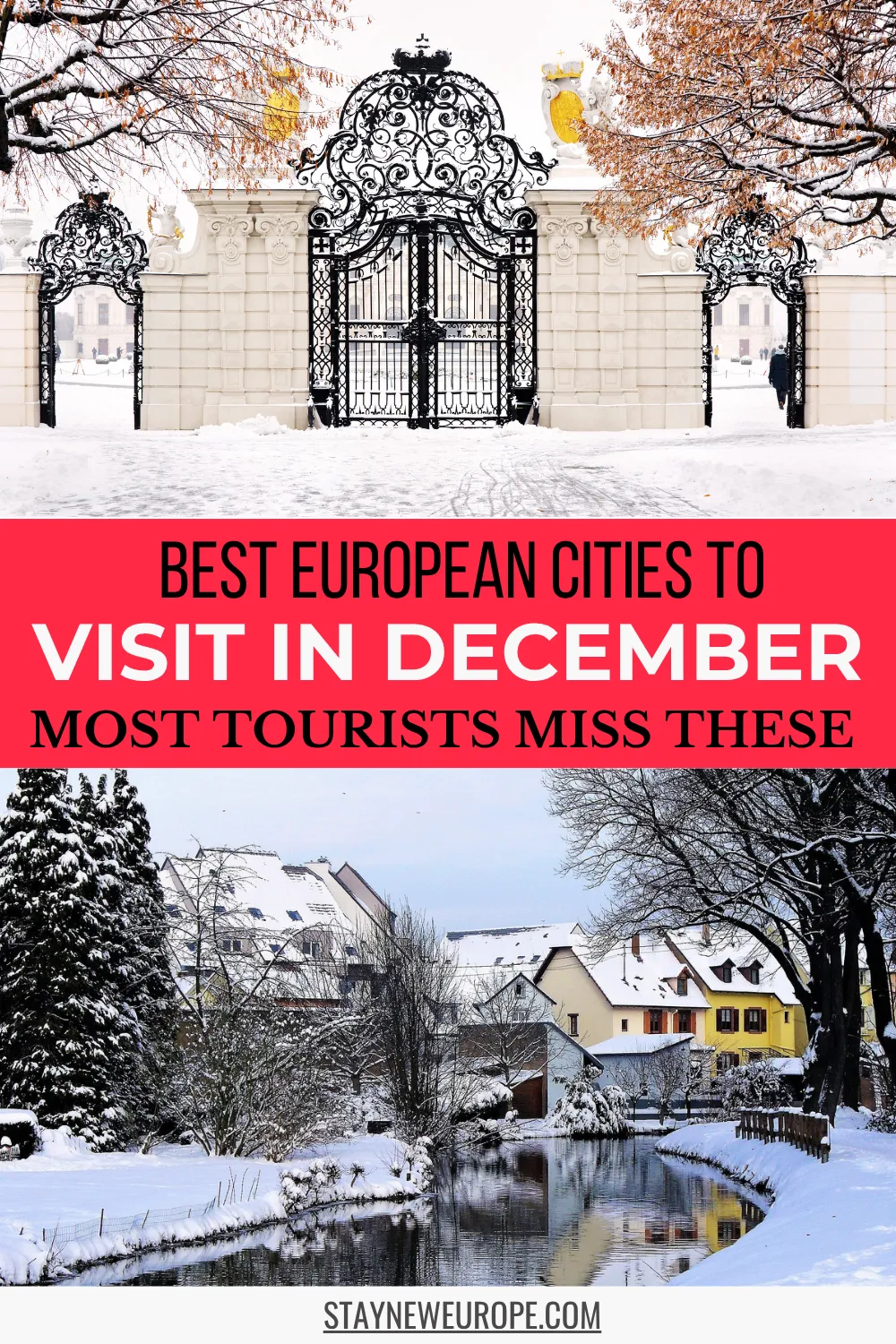
If you make one winter trip to Europe in your life, there is a reasonable argument that Vienna in December should be it — not because it’s the most dramatic or the most surprising destination on this list, but because it is the most completely itself in this season, a city that was essentially designed for cold months and candlelight and the kind of music that requires you to sit still.
The Christmas markets here are the best in Europe, and I say that having stood in the competing markets of Strasbourg, Prague, and Nuremberg with a cup of Glühwein in each. The market in front of the Rathaus is the largest and most theatrical; the one at Schönbrunn Palace is the most elegant; the Spittelberg market in the 7th district is the most local, occupying a neighbourhood of Biedermeier townhouses with a crafts focus rather than mass-produced decorations. Vienna’s café culture, year-round a municipal obsession, reaches its natural peak in winter: the Viennese coffee house is a heated, marble-floored institution where you order a Melange (half coffee, half steamed milk), receive a glass of water alongside it, and are expected to stay as long as you like. Café Central, Café Hawelka, Café Landtmann — all are the real thing.
The museums are the reason to stay longer than the market circuit suggests. The Kunsthistorisches Museum is one of the great art collections anywhere — Vermeer, Bruegel, Velázquez, Caravaggio, all in a building so ornate the architecture competes with the paintings. The Albertina holds the world’s largest graphic arts collection. The Belvedere has Klimt’s Kiss in person, which is one of those artworks that makes you understand why people cry in front of paintings.
Local tip: The Vienna State Opera does standing room tickets (Stehplatz) for just €4–7, released ninety minutes before performances. You stand, yes, but the acoustic and visual quality is the same as the €200 seats, and the experience of watching a world-class opera in that building at that price is one of Europe’s great open secrets. Arrive at least an hour before tickets go on sale.
6. Strasbourg, France
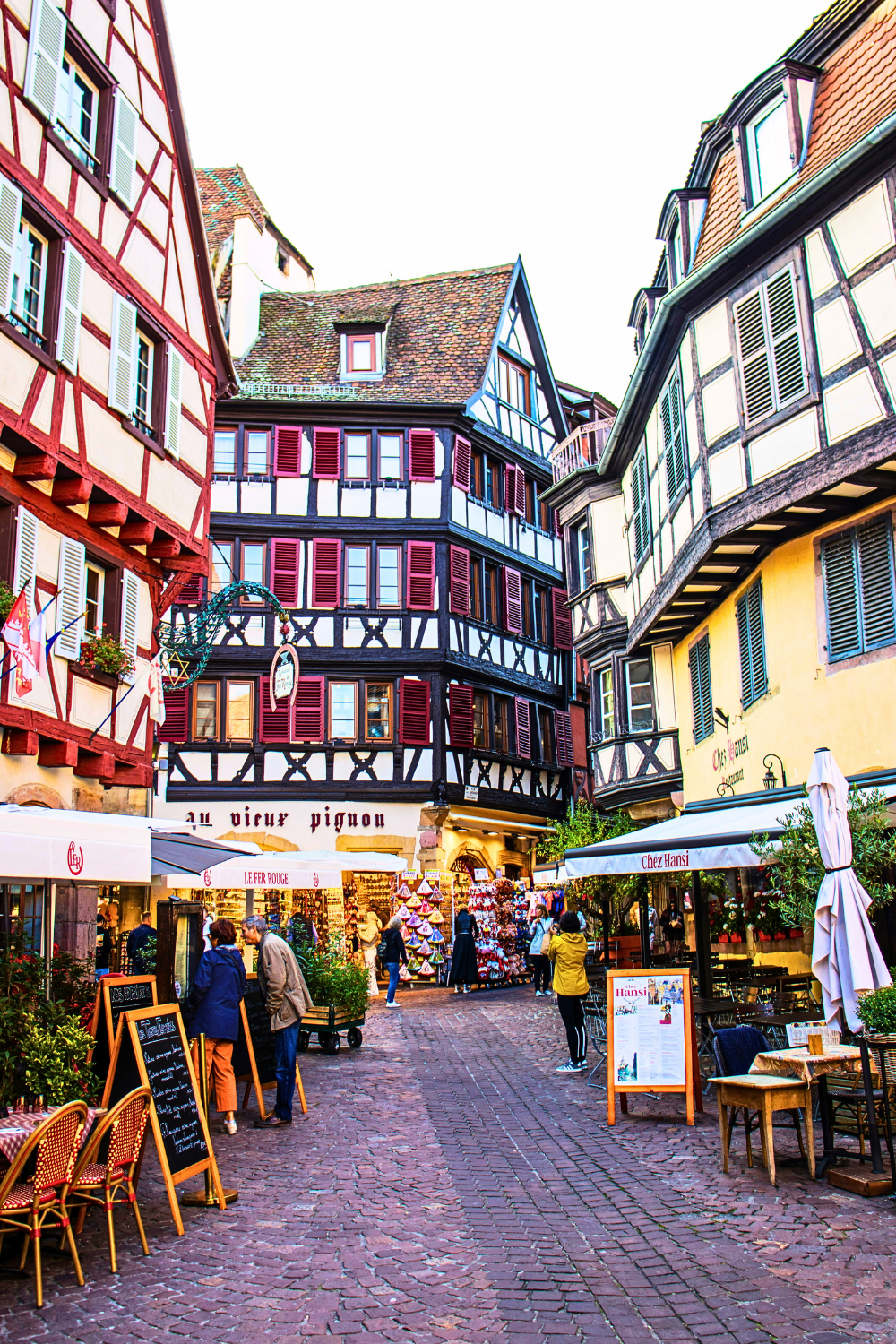
Strasbourg invented the modern Christmas market — or at least holds the oldest continuous one in Europe, dating to 1570 — and in December it leans into this heritage with a thoroughness that is either excessive or exactly right, depending on how you feel about fairy lights strung over half-timbered medieval buildings above a canal.
For me, it is exactly right. The Grande Île, Strasbourg’s island historic centre (a UNESCO World Heritage Site), is the setting: narrow medieval lanes, the extraordinary Gothic Cathedral of Notre-Dame with its single finished spire, and the Petite France quarter where the city’s former tanners and millers built houses so photogenic that calling them that feels inadequate. The Christmas market spreads across twelve different squares and sites, each with a slightly different character — the one in the Cathedral square for the theatrical backdrop, the one on Place Broglie for the mulled wine.
Strasbourg sits on the German border and its food reflects it: choucroute garnie (sauerkraut piled with various pork products, a dish that should be ordered once and eaten with complete commitment), tarte flambée (Alsatian flatbread with crème fraîche, onion, and lardons, the original wood-fired pizza), and Alsatian wines — Riesling and Gewurztraminer — that are among the most food-friendly whites produced anywhere. The Covered Market (Marché Couvert) is where to buy quality local products and eat lunch.
Local tip: The Alsatian village of Kaysersberg, an hour south by train and bus, is where Albert Schweitzer was born and where the Christmas market goes almost entirely unvisited by non-French tourists. It is genuinely beautiful and genuinely local. Spend a morning there before returning to Strasbourg in the evening.
7. Prague, Czech Republic
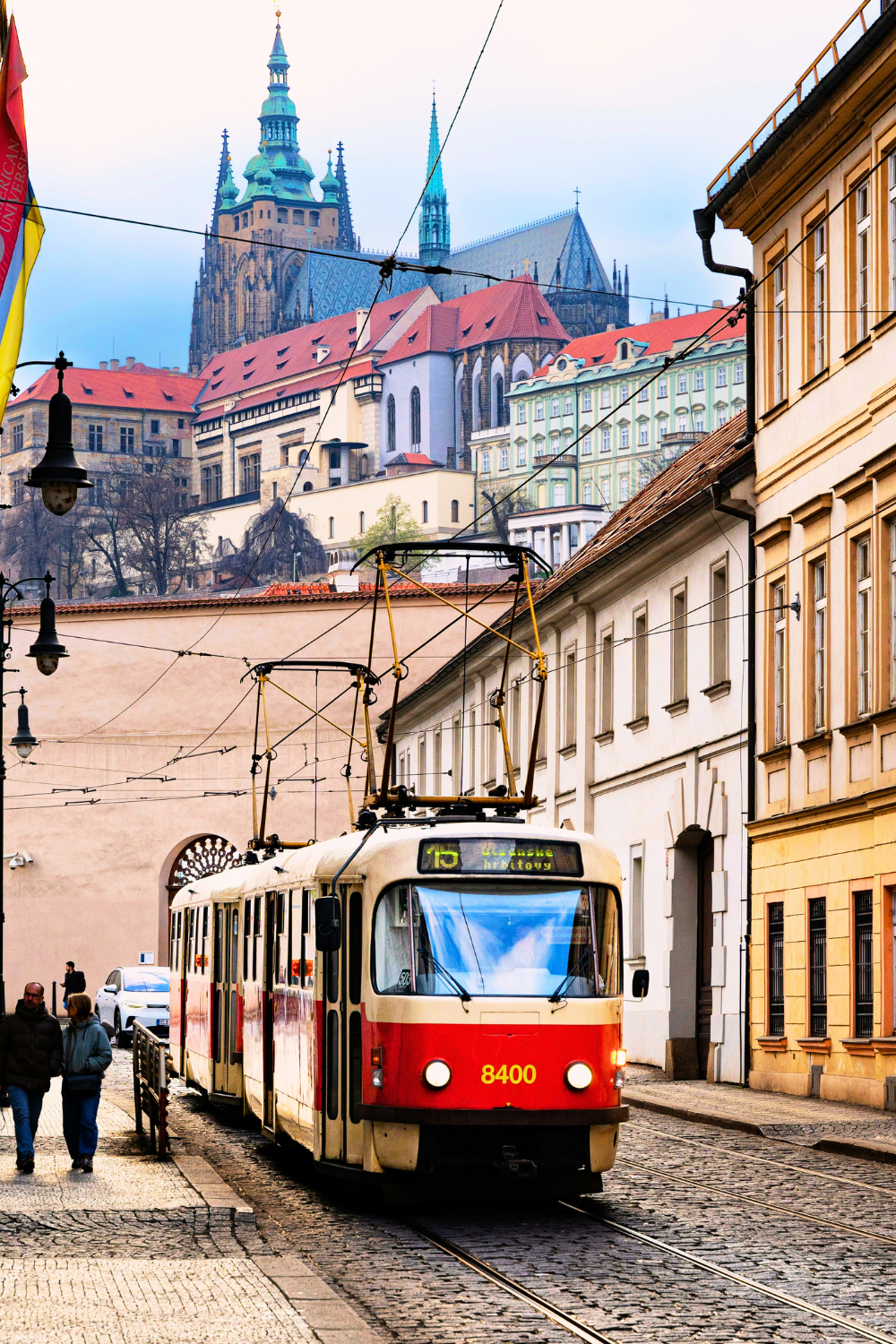
Prague’s Christmas markets are the most photographed in central Europe after Vienna’s, and they earn it — Old Town Square with its baroque churches, the astronomical clock, and the decorated tree at the centre is exactly as magical as it looks in every photograph, and unlike some destinations that trade on their photogenic reputation, the experience holds up in person.
The December crowds on the Charles Bridge and in the Old Town are real, but Prague is a city large enough to absorb them if you know where to go. The Vinohrady and Žižkov districts — fifteen minutes’ walk from the tourist centre — have the best neighbourhood restaurants, the most interesting bars, and a local residential character that December doesn’t dent. The National Theatre is a neo-Renaissance masterpiece doing excellent opera and ballet at prices that seem to belong to a different economic era. The Mucha Museum, dedicated to the Art Nouveau poster artist Alfons Mucha who is arguably the most beautiful decorator who ever lived, is small but warm and rarely crowded.
Czech Christmas food is its own institution: kapr (carp), traditionally purchased live from a barrel in the street market and either released into the nearest waterway or taken home for Christmas Eve dinner; bramborový salát (potato salad with pickles and mayonnaise that sounds simple and is inexplicably delicious); and svíčková, the braised beef sirloin with cream sauce and bread dumplings that is the national dish and is best experienced at the restaurant Lokál, which also serves the best unpasteurised lager in the city.
Local tip: The Christmas market at Náměstí Míru square in Vinohrady is where Prague locals actually go for their mulled wine and market food. It’s smaller, cheaper, less crowded, and surrounded by a residential neighbourhood rather than baroque tourist architecture. It’s also more relaxed, which turns out to be what you want.
8. Tallinn, Estonia
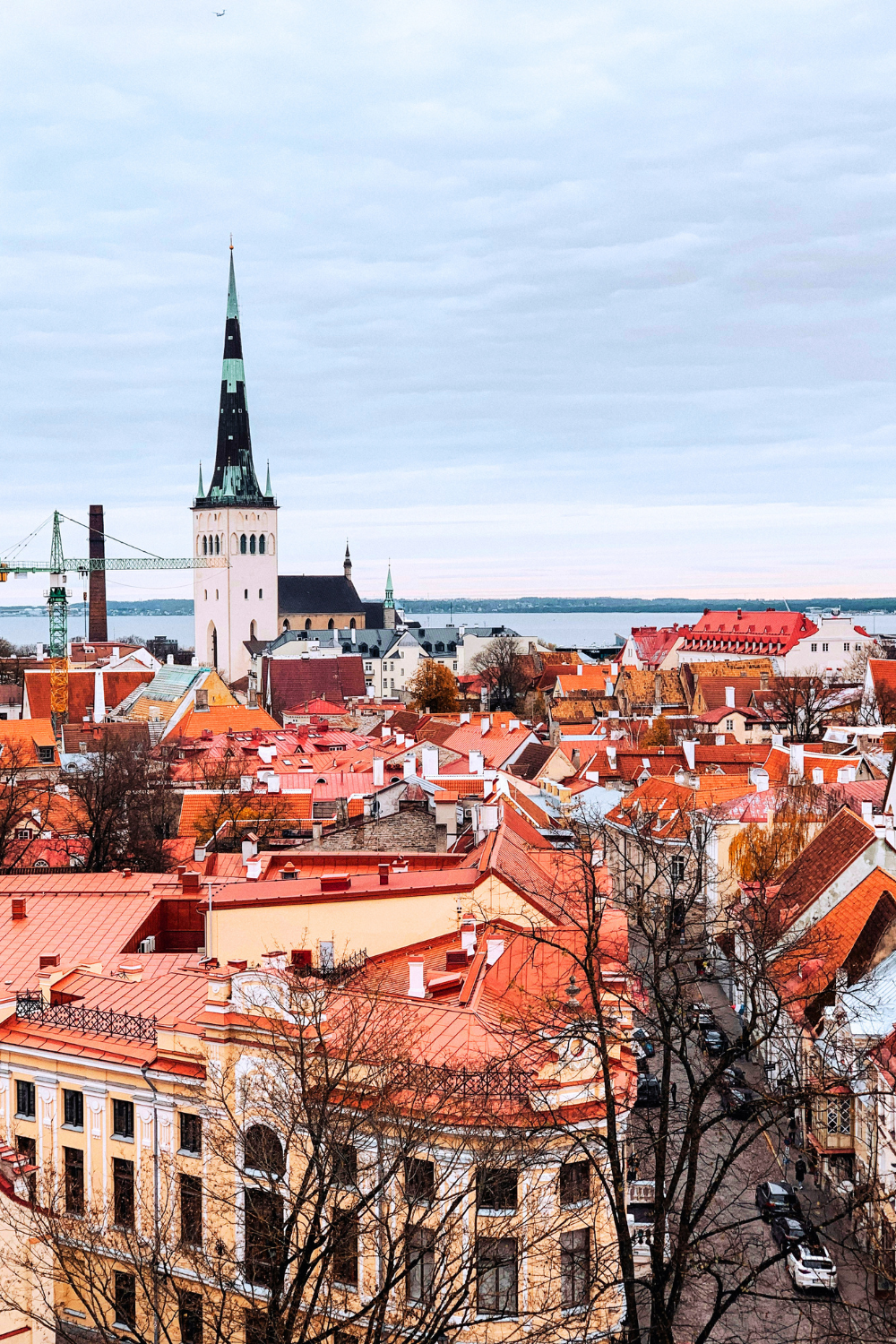
Tallinn in December is the destination for people who want to feel like they’ve stepped inside a Grimm fairy tale without actually paying fairy-tale prices. The medieval walled Old Town — so well-preserved that the fortified towers, guild houses, and cobbled lanes look virtually unchanged since the 15th century — becomes, in December, a snow-dusted film set of extraordinary quality.
Let me be clear about the cold: Tallinn in December will be cold. Genuinely, properly cold — temperatures between -5°C and +2°C, with a wind that comes off the Baltic and means business. This is not a deterrent if you dress correctly; it is, in fact, part of what makes the whole thing work, because the cold drives you into the oldest Christmas market in the Baltics (running on Town Hall Square since 1441, allegedly), into the medieval alehouse Olde Hansa, where everything is prepared from pre-17th-century recipes and the mead is served in ceramic cups, and into the kind of close, warm Estonian hospitality that doesn’t exist in summer in the same way.
The city beyond the walls is interesting too — the Kalamaja neighbourhood, a former working-class area of wooden houses near the port, has the best cafés and some of the best restaurants in the city, including Fotografiska (yes, the photography museum runs a genuinely excellent restaurant). The Kumu Art Museum, the largest in the Baltic states, has strong collections of both Estonian national romanticism and Soviet-era art, and the building itself — a limestone and glass construction set into a wooded hillside — is remarkable.
Local tip: The Kohvik on Rüütli — a tiny, unpretentious café on one of the Old Town’s quieter streets — serves the best black bread in Estonia, made in-house and served with local butter and strong coffee. It is not on any major travel list. It is the kind of place you find by walking slowly and looking at what the locals are carrying when they come out of doors.
Best European Cities to Visit in January

9. Seville, Spain
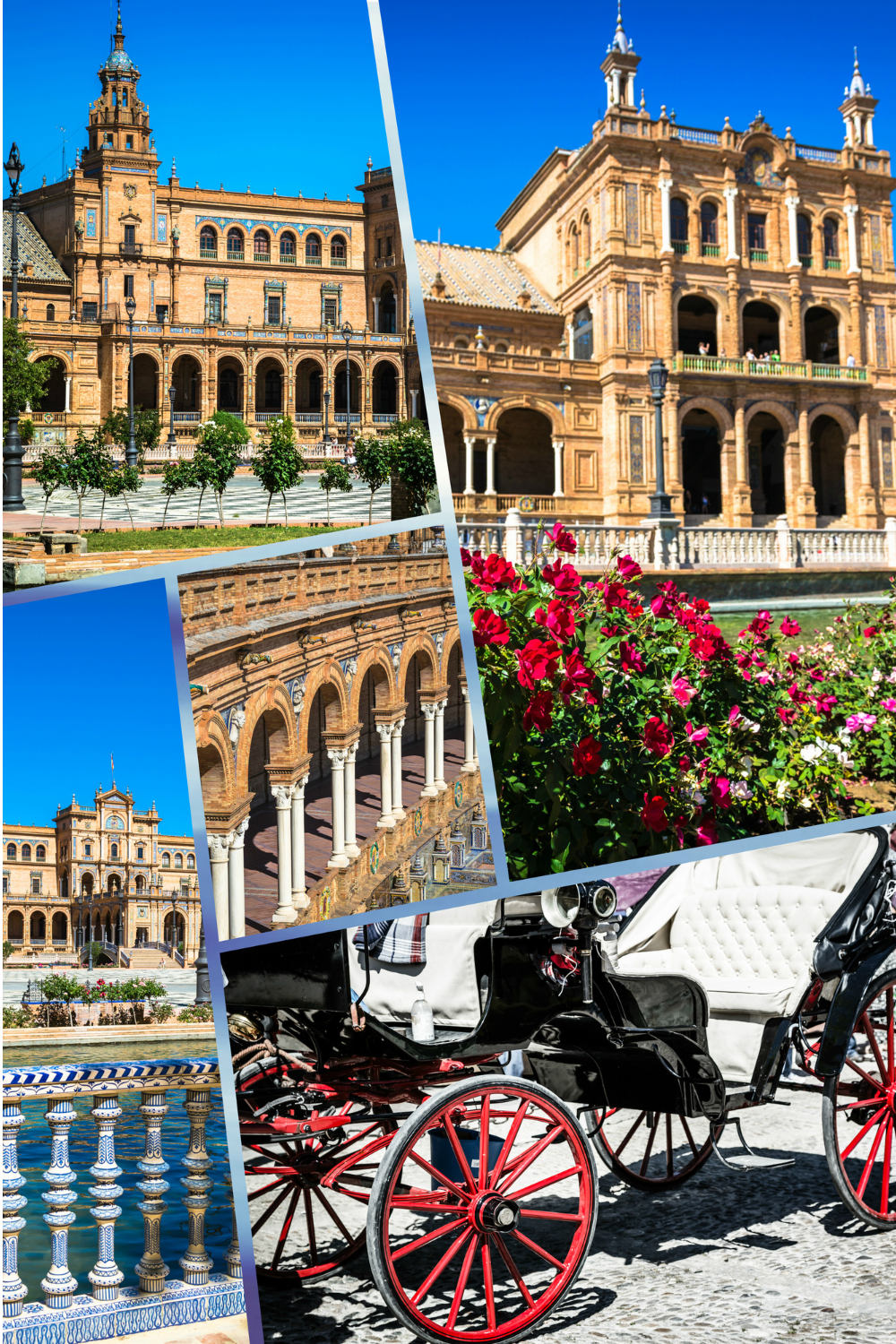
Seville in January is one of Europe’s most undervalued travel experiences and I’m slightly reluctant to say so loudly, because the secret is genuinely worth keeping. Average temperatures of 15–17°C, almost no tourists, tapas bars running at full local capacity, and the Alcázar — one of the most beautiful buildings ever constructed — with queues that last fifteen minutes rather than two hours.
The city’s character in winter is its most authentic self. The outdoor culture that defines Seville doesn’t disappear in January; it migrates to the sunniest side of every street and the most sheltered corners of the barrios. People still sit outside at lunchtime. The Alameda de Hércules, the city’s oldest public promenade, fills with families and dogs in the weekend afternoon sun. The Mercado de Triana across the Guadalquivir river has better produce in winter — citrus from the local orchards, wild mushrooms, fresh seafood from the Huelva coast — than at any other time of year.
The tapas scene, which is the finest in Spain by my entirely committed opinion, operates at full tilt. The routine is: stand at the bar, order a fino sherry and a tapa (free or cheap depending on the bar), finish, move to the next one. Repeat this across the Macarena, Santa Cruz, and Triana neighbourhoods and you have the best possible way to spend an evening in the entire country. Bodega Santa Cruz is an institution. Casa Morales is even older and even better.
Local tip: The Alcázar’s interior gardens — some of the most beautiful in Europe, and older than the Alhambra — are best experienced in January when the orange and lemon trees are in full fruit, the air smells of citrus blossom, and you will have entire garden rooms to yourself. The combination of Moorish fountain, Renaissance pavilion, and overgrown winter garden is quietly one of the most remarkable things you can stand in front of in Spain.
10. Valletta, Malta
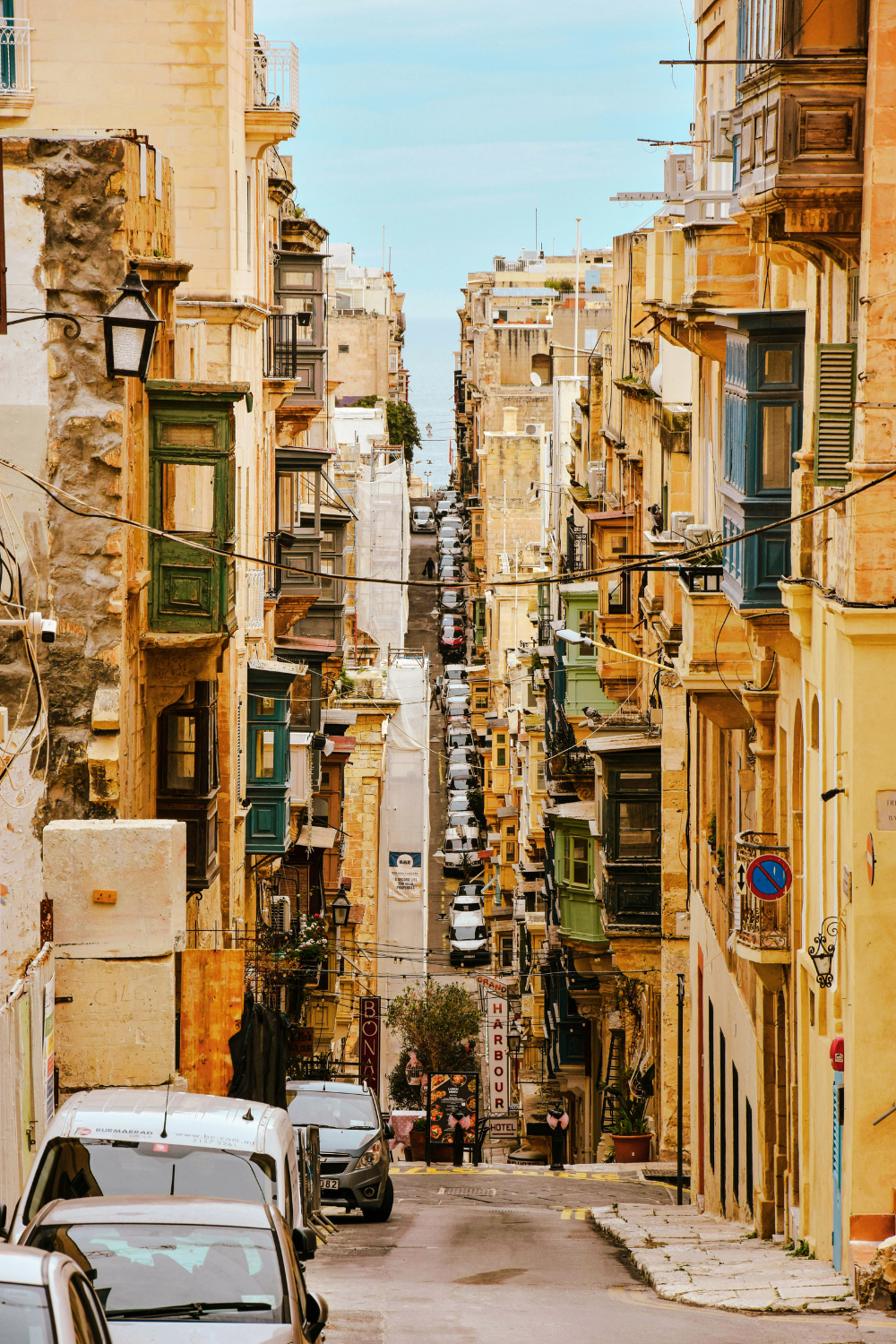
January in Malta is mild by northern European standards — typically 14–17°C, with sea breezes and enough sunshine to sit outside for coffee on most days — and Valletta in this month is about as crowd-free as Europe’s cities get while still feeling fully alive.
Malta’s capital is tiny (it holds about 7,000 residents) and has been the most densely populated city on the continent at various points in its history. Walking it end to end takes forty minutes if you don’t stop, which you will, because the views from the bastions over the Grand Harbour keep interrupting. The Co-Cathedral of St John — Baroque interior so densely decorated it takes time for the eye to settle — holds Caravaggio’s The Beheading of Saint John the Baptist, the only work he ever signed, in a side oratory. It is larger and more violent than you expect. It is one of the most powerful paintings in Europe.
Valletta’s food scene has improved dramatically in recent years and January is when the restaurants are serving their most honest menus: rabbit braised in wine (fenek, the national dish), horse meat (more common than anywhere else I can think of in the EU), fresh fish from the Mediterranean just beyond the harbour walls. The Sunday morning market around Valletta’s lower streets is worth an early alarm for its mix of produce, antiques, and what can only be described as other people’s possessions.
Local tip: The Three Cities across the Grand Harbour — Vittoriosa, Senglea, Cospicua — predate Valletta and are visited by almost no tourists. The water taxi (dgħajsa) from the Valletta waterfront takes five minutes and costs next to nothing. Walk Vittoriosa’s fortified streets in January and you will have them largely to yourself: a medieval city in total peace.
11. Lisbon, Portugal
January is not Lisbon’s most glamorous month, and that is precisely why I think you should go. The city sheds its tourist layer completely — the famous 28 tram runs without the summer scrum, the miradouros are occupied by locals walking dogs rather than photographers jostling for position, and the restaurants in Alfama and Mouraria are serving the food they actually want to cook rather than the food they’ve decided foreigners will order.
Lisbon’s winter light is something painters understand better than photographers. It’s lower, softer, and turns the city’s famous white and blue tile facades into something altogether more contemplative than the summer brightness allows. The Museu Nacional do Azulejo — dedicated entirely to the history and artistry of Portuguese tile-making, located in a former convent on the river’s edge — is never as rewarding as in January when you can take your time with the 27-metre blue-and-white panoramic panel of pre-earthquake 18th-century Lisbon.
The food culture runs deep in winter. Caldo verde (kale and potato soup with a coin of chouriço, genuinely the best soup in Europe as far as I’m concerned) appears on every restaurant menu. Bacalhau à brás — salt cod shredded with eggs and potato sticks — is the thing to order in old-school tascas. The Cervejaria Ramiro, the great Lisbon seafood restaurant in Intendente, is no longer a secret but is still magnificent: order the amêijoas (clams) and the perceves (barnacles) and a cold Sagres and you have the ideal Lisbon meal.
Local tip: The LX Factory market runs every Sunday regardless of season, but in January it’s populated almost entirely by Lisboetas rather than tourists. The Ler Devagar bookshop inside — a three-floor independent bookshop in a former print factory with a bicycle hanging from the ceiling — is one of the best bookshops in Europe. Go on Sunday morning and spend the afternoon eating at the market’s food stalls.
Best European Cities to Visit in February
12. Venice, Italy
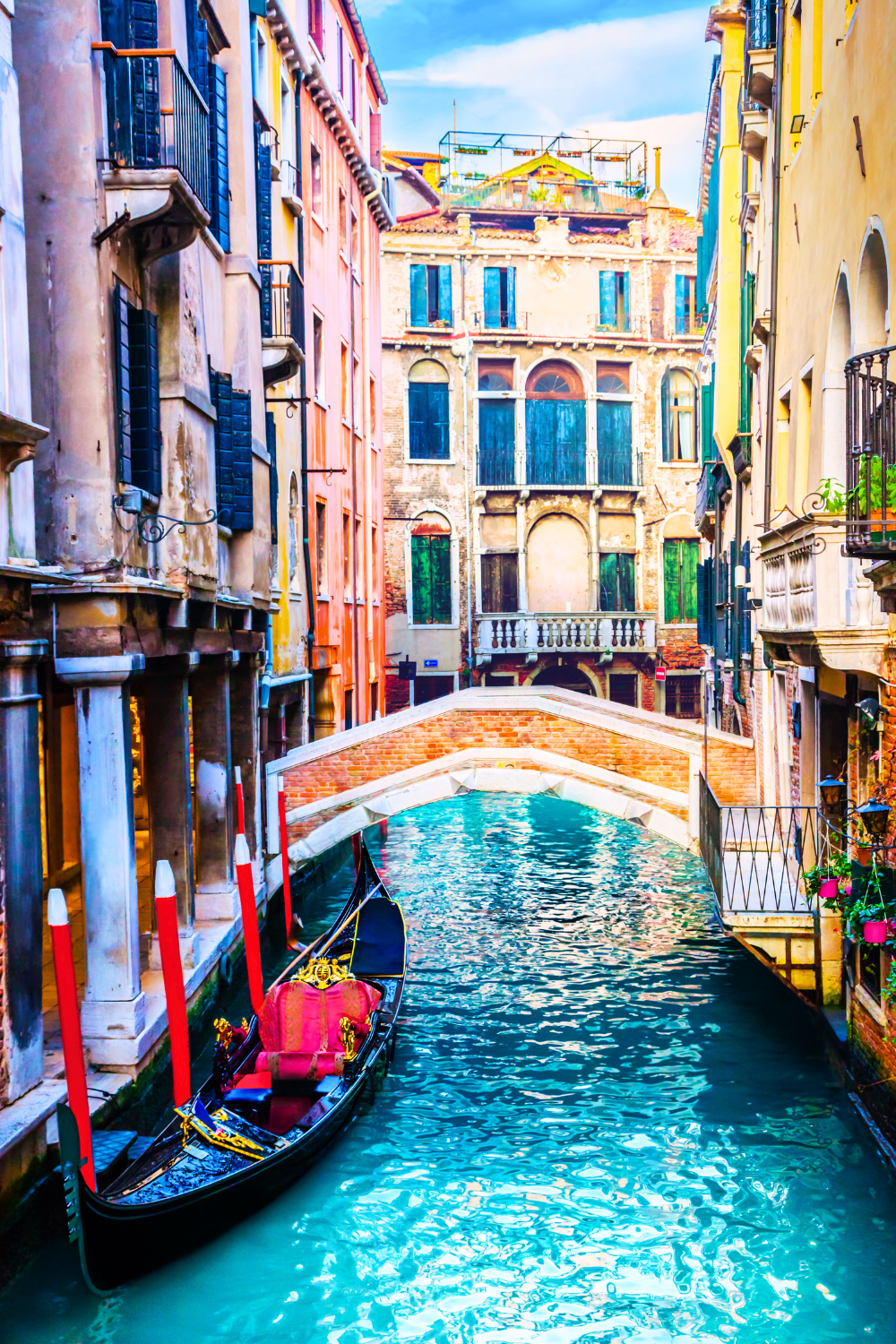
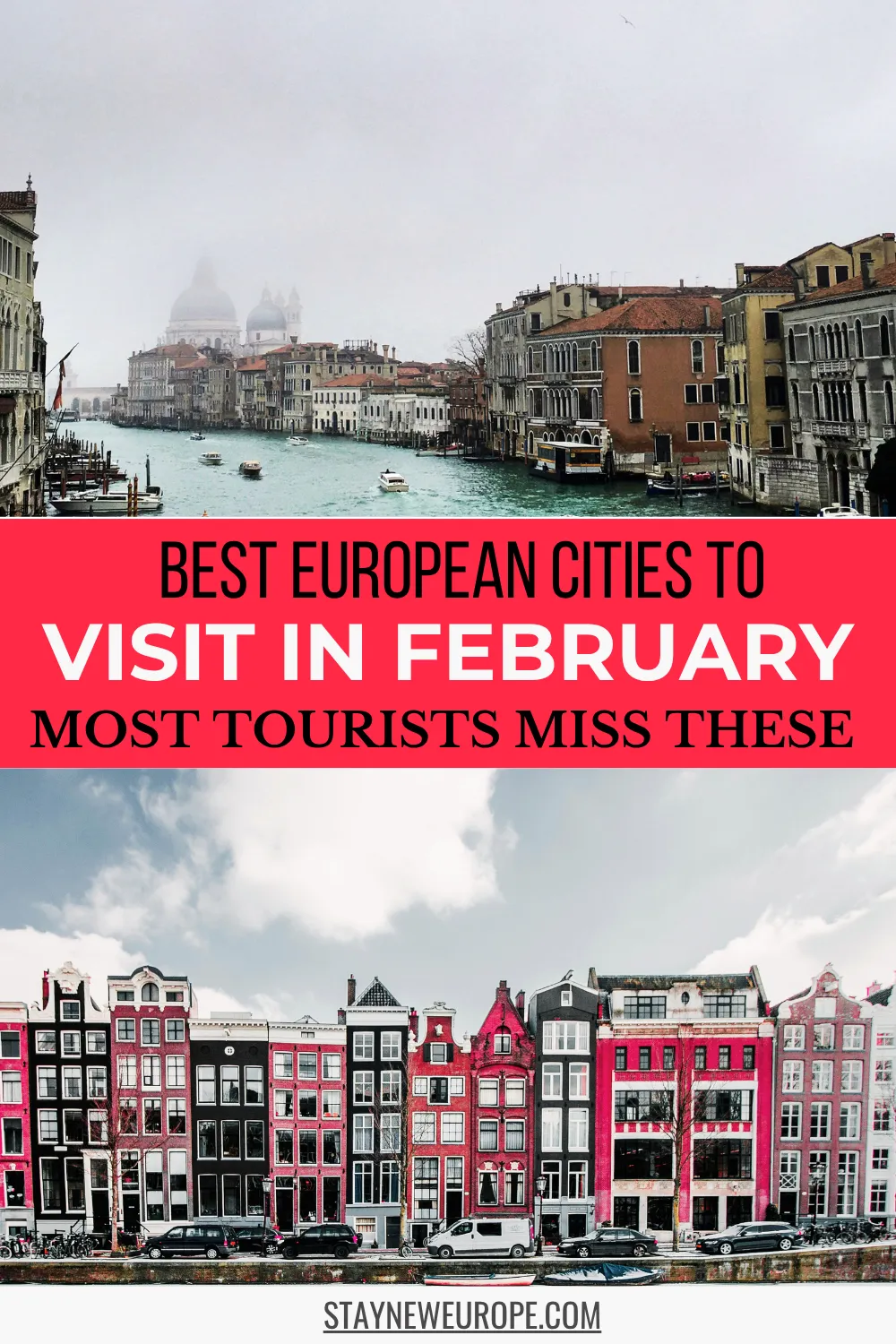
Venice in February is either the most atmospheric place on the continent or the strangest — sometimes both, sometimes simultaneously. The acqua alta (high water flooding) fills the low-lying campi and requires the elevated walkway boards (passerelle) in certain areas; the fog sits so thick over the canals in early morning that the city disappears from itself; and then, in mid-February, Carnevale begins.
The Carnevale di Venezia is either the thing that makes you book immediately or the thing that puts you off entirely, depending on your relationship with elaborate costume and public theatre. Let me put the case for it: this is not a manufactured tourist event but a tradition with a thousand-year history (paused by Napoleon, resumed in 1979), and the sight of the Piazza San Marco filled with people in 18th-century masquerade costume, feathered masks and brocade cloaks, is so surreal and so extravagant that it earns its place as one of Europe’s great spectacles. If you go, book accommodation months in advance; prices spike during the festival’s final two weeks.
Outside Carnevale, February Venice is a different proposition: a city of 50,000 residents, largely left to themselves, moving through the sestieri by boat and by foot in the way they have for centuries. The Accademia galleries, the Peggy Guggenheim Collection, the churches of San Zaccaria and Santa Maria dei Miracoli — all are uncrowded and unhurried. The bacari (Venetian wine bars) serve cicchetti (small plates of seafood, marinated vegetables, cured meats) with a glass of local Veneto wine for €1–2 each, and this is the best possible way to eat in Venice.
Local tip: Get lost. Not as a metaphor — as a literal instruction. Put your phone away, walk away from San Marco, cross a bridge that goes somewhere you haven’t been, and keep walking. Venice’s residential neighbourhoods — Cannaregio, Castello, the parts of Dorsoduro away from the Zattere — are where the city actually lives. You’ll find laundry drying over canals and cats asleep on mooring posts and not a single souvenir shop.
13. Nice & The French Riviera, France
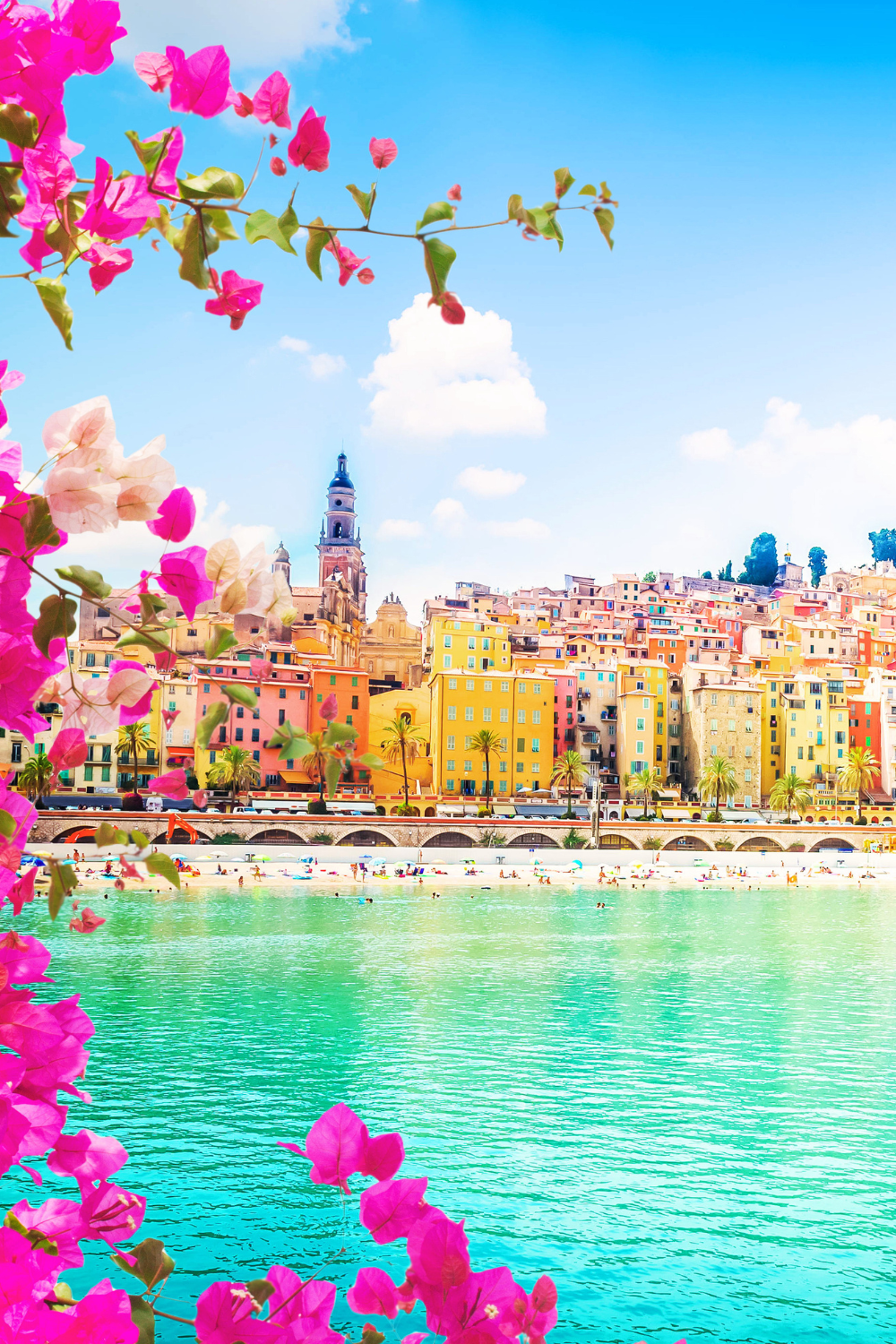
The French Riviera in winter is the most consistently underrated European travel experience, and I’m confident enough in this claim to make it without qualification. Nice in February sees temperatures of 12–15°C on good days, blue-sky afternoons that make outdoor café sitting not just possible but actively pleasant, and a tourist presence reduced to somewhere between twenty and forty percent of its summer volume.
Nice is a genuinely beautiful city — not “beautiful for a big resort” but beautiful in an architectural sense, with its Italianate old town (the Vieux-Nice) of pink and ochre baroque buildings, its 7km Promenade des Anglais curving along the sea, and its collection of world-class museums that summer visitors rush past on their way to the beach. The Musée Matisse and the Musée Marc Chagall are both outstanding, small enough to see properly in a morning, and located in residential Nice neighbourhoods that reward a walk before or after. The Tuesday and Saturday morning flower market on Cours Saleya in the old town is one of the best in France.
Beyond Nice: Monaco is twenty minutes by train and is, in February, almost surreal in its emptiness — the casino, the Palace square, the Oceanographic Museum, and the sense that a city whose primary industry is being watched has temporarily lost its audience. Menton, further east on the coast and actually touching the Italian border, holds its famous Lemon Festival in February and is in any case the most Italian-feeling of the Riviera towns, with a spectacular hillside old town and the best markets.
Local tip: The old Nice fish market on Place Saint-François, running Tuesday through Sunday, is where the city’s restaurants actually buy their fish. Go at 8am and watch the auction, then have a socca (the local chickpea flatbread, cooked on enormous round pans over a wood fire) from one of the stands at Cours Saleya for breakfast. It costs under €4 and is the most local thing you can eat on the Riviera.
14. Amsterdam, Netherlands
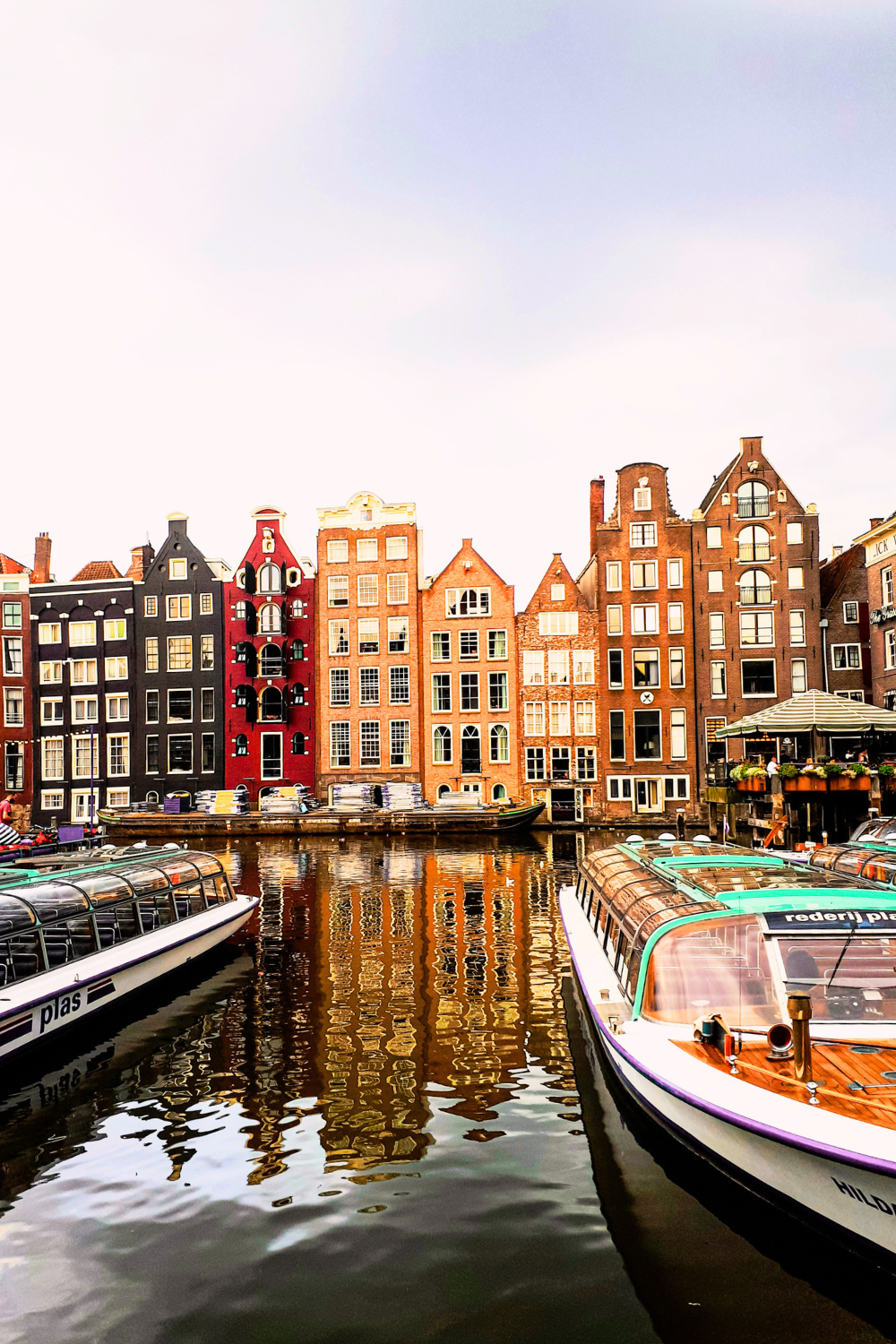
January and February Amsterdam is a different city from its summer incarnation, and I mean this in entirely the positive sense. The canals freeze in genuinely cold winters (less often than they used to, climate being climate, but it still happens), the museums open their most interesting temporary exhibitions, and the Rijksmuseum — one of the finest collections of Dutch Golden Age painting anywhere — is navigable in under three hours rather than six.
Heading there in summer instead? Read our guide on what to wear in Amsterdam in June.
The light in February Amsterdam is horizontal and silvery and extraordinary, filtering through canal reflections onto gabled facades in a way that explains exactly why Rembrandt and Vermeer lived and worked here. The city feels appropriately intimate in winter — the canal ring is not a large area — and the brown cafés (bruine kroegen) operate as the social infrastructure they were designed to be: warm, dark-panelled, serving beer and jenever (Dutch gin) and treating you as a resident rather than a visitor.
The Anne Frank House is, if anything, more resonant in the grey winter months — there’s something about the cold light and the quiet that makes the space feel more real, less mediated. Book online and arrive precisely at your entry time; crowds are lower than summer but there are always crowds. The EYE Film Museum across the IJ river (free ferry, two minutes) has the best winter programming of any cinematheque I’ve visited, with a retrospective culture that takes old cinema seriously.
Local tip: The Foodhallen in Oud-West is a covered food market in a former tram depot that functions as Amsterdam’s best rainy-day indoor food experience — Indonesian snacks, Dutch bitterballen, ramen, craft beer, all under one very warm roof. On a February evening when the rain is doing its worst, it is exactly where you want to be.
Best European Cities to Visit in March

15. Seville, Spain (Again — and Worth It)
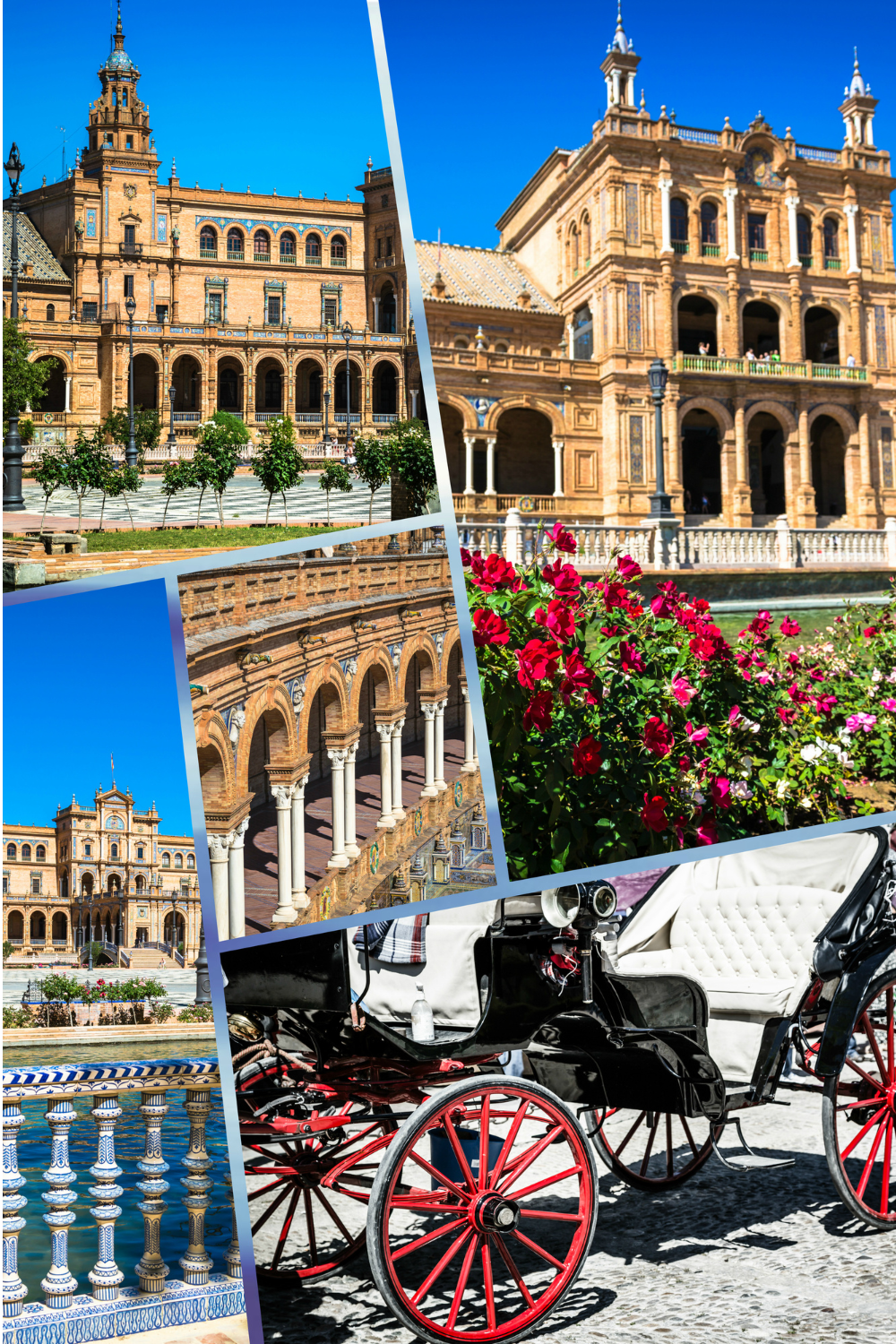
March in Seville earns a second mention because the city’s transformation between January and March is significant enough to justify it. By mid-March the orange blossom is beginning and the almond trees in the Alcázar gardens have finished flowering and the temperature has risen to 18–20°C and the terrace culture shifts from possibility to inevitability. Seville in March is one of Europe’s most joyful travel experiences.
If your March visit coincides with Holy Week (Semana Santa), you are in the presence of one of Europe’s oldest and most extraordinary religious festivals — sixty brotherhoods carrying elaborate floats (pasos) through the city’s streets day and night for a week, accompanied by penitents and brass bands playing saetas (devotional songs improvised at the key moments). It is not a performance for tourists. It is a living tradition observed by a city that has done this for five hundred years. Stand on the street and watch the float carrying the Virgin pass at midnight and understand why people cry.
The food in March reflects the new season: young broad beans (habas) with jamón, fresh prawns from the Gulf of Cádiz, and the local manzanilla fino sherry that pairs with all of it in a way that makes you evangelical about Spanish wine. The Feria de Abril falls in April (or late March in some years) and the planning for it is already visible in the city’s energy.
Local tip: The Macarena neighbourhood, north of the centre, has the best neighbourhood tapas scene in a city full of excellent tapas scenes. The bar El Rinconcillo is the oldest in Seville (opened 1670) and serves excellent food at entirely reasonable prices. The barrio itself — built around the Basilica de la Macarena — is genuinely residential and genuinely beautiful.
16. Edinburgh, Scotland
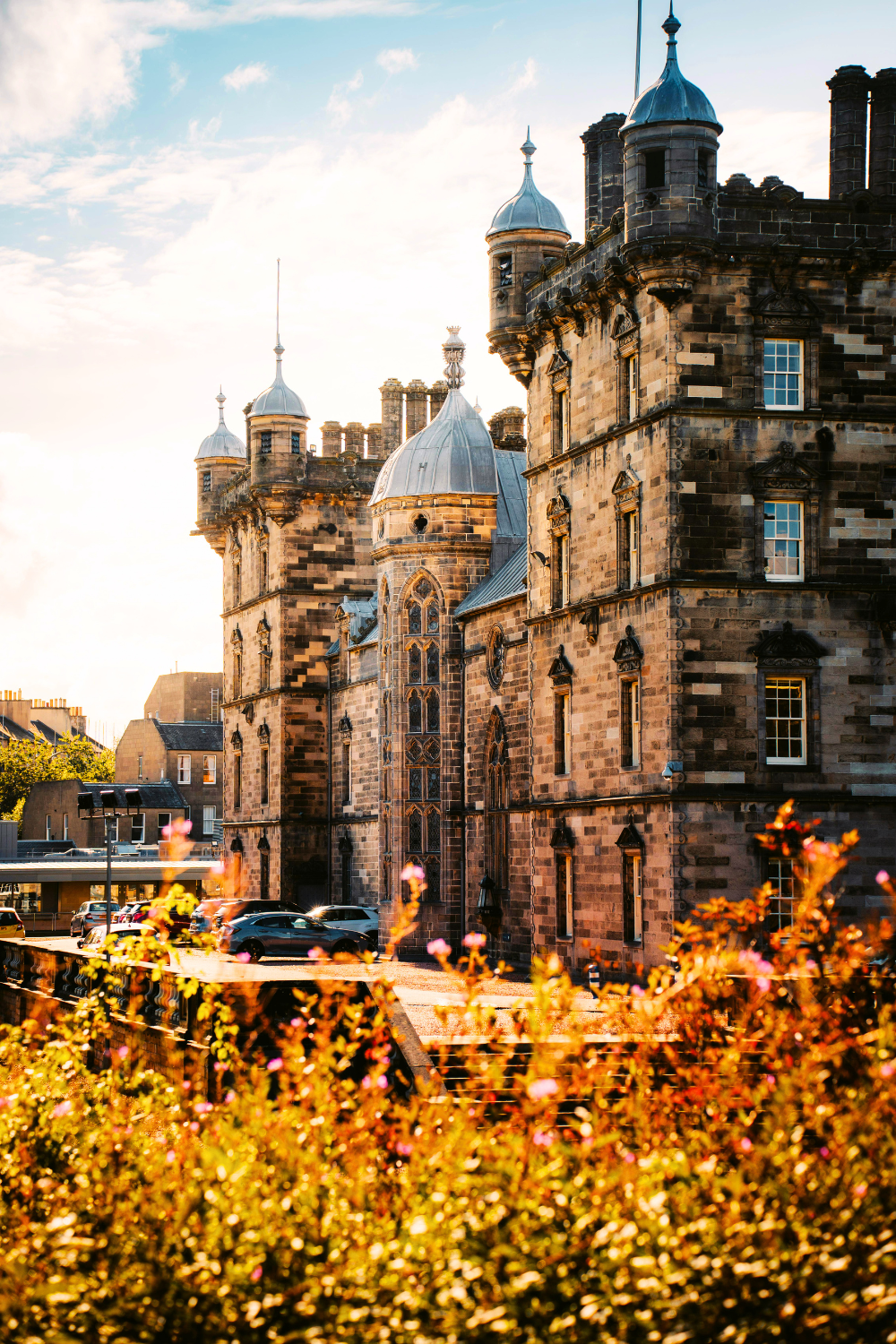
March in Edinburgh is early spring by calendar and occasionally deep winter by reality — you may get sunshine and 12°C, you may get horizontal sleet and 3°C, and the city will tell you to manage your expectations. What March does offer, consistently, is Edinburgh returned to its inhabitants: the summer festival infrastructure is months away, the school holidays haven’t yet begun, and the city has the particular energy of a place that has been waiting to exhale.
Edinburgh’s architecture is the most dramatic of any British city — the Old Town stacked on its volcanic ridge, the Castle at the top, the tenements descending on both sides like geological formations, the Georgian New Town spreading out below. The National Museum of Scotland on Chambers Street is free, genuinely excellent, and on a cold March day the most inviting building in the city. The Scottish National Gallery on the Mound has smaller but outstanding collections of Old Masters and Scottish painting. The Portrait Gallery in the New Town — recently expanded, consistently overlooked — is one of Scotland’s best and most distinctively personal museums.
The food and drink scene has arrived properly in Edinburgh over the past decade. The Scotch whisky experience is best accessed not through a tourist distillery tour but through a good independent whisky bar — try the Scotch Malt Whisky Society or the Hanging Bat — where someone can explain why the difference between a Speyside and an Islay malt is not just a marketing distinction. The food at The Gardener’s Cottage and Timberyard is Scottish in a way that’s thoughtful rather than performative.
Local tip: Arthur’s Seat — the 251-metre extinct volcano at the edge of Holyrood Park, within walking distance of the city centre — is best climbed on a clear March morning before 9am when you will likely have the summit to yourself. The 360-degree view of Edinburgh and the Firth of Forth is the finest urban panorama in Britain. Wear actual walking shoes; the path is slippery when wet, which is frequently.
17. Dubrovnik, Croatia
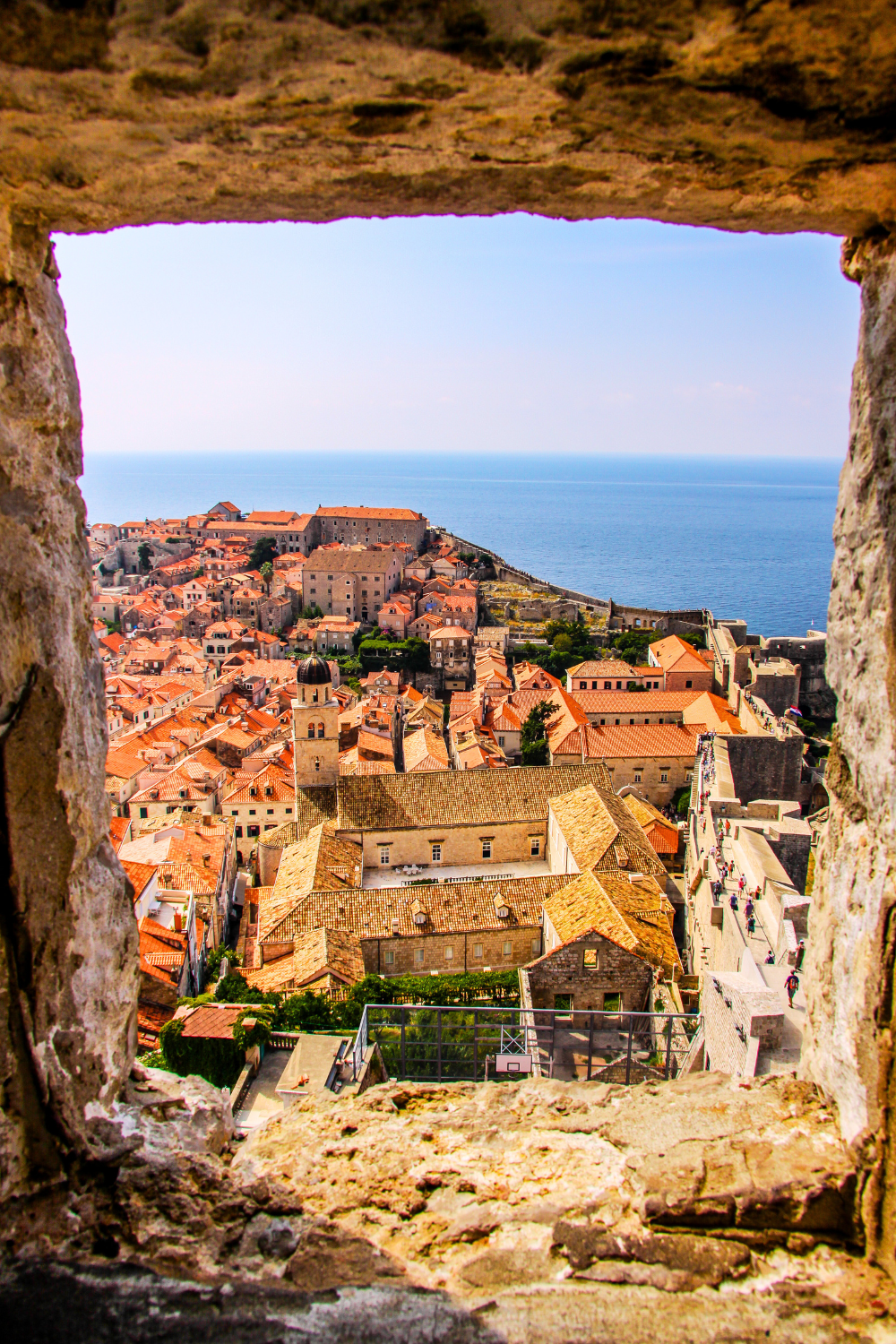
Dubrovnik in March is the city that summer tourists didn’t know they were missing. No cruise ships. No queues for the Old Town walls. Restaurants that are actually trying to feed the locals who live there rather than processing ten thousand visitors a day. And the Adriatic light in March — clean and bright and not yet turned harsh by summer heat — makes the limestone city walls glow.
The Old Town feels human-scaled in March, which is not a word you’d use for it in July when the narrow lanes back up with tour groups following flag-carrying guides at arm’s length. You can actually walk the walls — the 2km circuit above the sea, with the terracotta rooftops on one side and the deep blue water on the other — without stopping to let people through, and you can walk it twice if you want to, which you will. The Cathedral is extraordinary in its detail. The Rector’s Palace has better exhibitions in this season when it’s not competing with sun and sea for your attention.
March temperatures are typically 12–15°C, which is light-jacket weather. The sea is too cold to swim (although the locals will tell you otherwise and they’re lying, or they’re just much hardier than the rest of us). The seafood — black risotto with cuttlefish ink, grilled brancin (sea bass), oysters from Mali Ston an hour up the coast — is if anything better in off-season restaurants that have the time to do it properly.
Local tip: The village of Cavtat, thirty minutes south by bus or boat, has the same Dalmatian stone character and Adriatic setting as Dubrovnik at about a third of the price and a tenth of the tourists. The cemetery above the town has a Meštrović family mausoleum that is one of the sculptor’s finest works. Have lunch at a konoba on the harbour and take the boat back.
18. Seville to Granada Loop, Spain
This one requires treating two cities as a single March itinerary, because the two-hour train between Seville and Granada makes the combination almost mandatory, and what you get at the end of it — the Alhambra in March light with the Sierra Nevada snow-capped behind — is, without overstating it, one of the greatest travel experiences in Europe.
The Alhambra needs to be booked. I cannot stress this enough. The daily visitor cap means tickets often sell out weeks in advance even in low season. Book before your travel dates are even confirmed, then build the trip around your Alhambra slot. What you’ll find when you get there is a Nasrid palace complex of Islamic architecture so refined and detailed — the muqarnas stalactite ceilings, the carved stucco, the water channels running through the Moorish gardens at precisely the right gradient to produce a sound rather than a splash — that it resets what you think architecture is capable of achieving. The Generalife gardens are best in March when the roses are just starting.
Granada itself, in the city below, is a university town with 60,000 students and a food culture built on one of Spain’s great traditions: the free tapa with every drink. Order a beer or a glass of wine in Granada and you receive food alongside it, automatically, without asking. In March, with the students returned from Christmas break and the tourists not yet arrived, the neighbourhood bars around the cathedral and in the Albaicín — the old Moorish quarter on the hill facing the Alhambra — are as good as any tapas culture I’ve found.
Local tip: The Albaicín neighbourhood is best experienced on foot, uphill, in the early morning before the day-trippers come from the coast. The viewpoint of San Nicolás — facing the Alhambra directly across the gorge — is photographed ten thousand times a day in summer. In March at 8am it is you, the coffee from the café at the viewpoint, and one of the great views of the world.
Practical Planning: Making Winter Work
Layer properly, not bulkily. A merino wool base layer, a mid-layer, and a good windproof outer takes you through almost any European winter city without looking like you’ve come to summit a mountain. Waterproof shoes are non-negotiable in Amsterdam, Porto, and Tallinn in particular.
Book Christmas market accommodation in September at the latest. Vienna, Prague, Strasbourg, and Tallinn for December fill up with genuine speed. January and February are entirely different — you can often book a week ahead.
Flight prices follow the crowd. November, January, and February flights to southern European destinations are often a fraction of the summer price. December flights to Christmas market destinations spike sharply. March is good value almost everywhere.
Museum memberships pay off in winter. If you’re spending more than three or four days in a single city, the combined museum card (available in Vienna, Amsterdam, Prague, and others) covers entry to multiple attractions and is almost always economically sensible in winter when you’ll spend more time indoors.
Daylight hours matter more than people admit. In December, Edinburgh and Tallinn have fewer than seven hours of daylight. Plan major outdoor activities and sightseeing for the central hours (10am–3pm) and lean into the indoor culture — the restaurants, the cafés, the museums — in the bookend hours.
Restaurants in off-season are doing their best work. This is not sentiment — it’s practical. The best chefs stay through winter, the tourist-season pressure is off, and restaurants that are good in summer are often considerably better in January. Go for the tasting menu you wouldn’t otherwise try.
If you’re planning for warmer months too, see our best European cities to visit in summer.
Winter travel requires a small act of faith — you’re choosing cold and short days and the occasional closed attraction over the guaranteed sun and openness of summer. What you get in return is harder to photograph and easier to feel: a city that trusts you enough to show you its actual self, a museum you walked through slowly instead of racing, a restaurant that treated you like a local because there were no tourists ahead of you in the queue. Some of the best travel memories I have are winter ones. The Glühwein in Vienna, the thermal pool in Budapest, the fog over the Venice canals. Pack the good coat. Go.

