
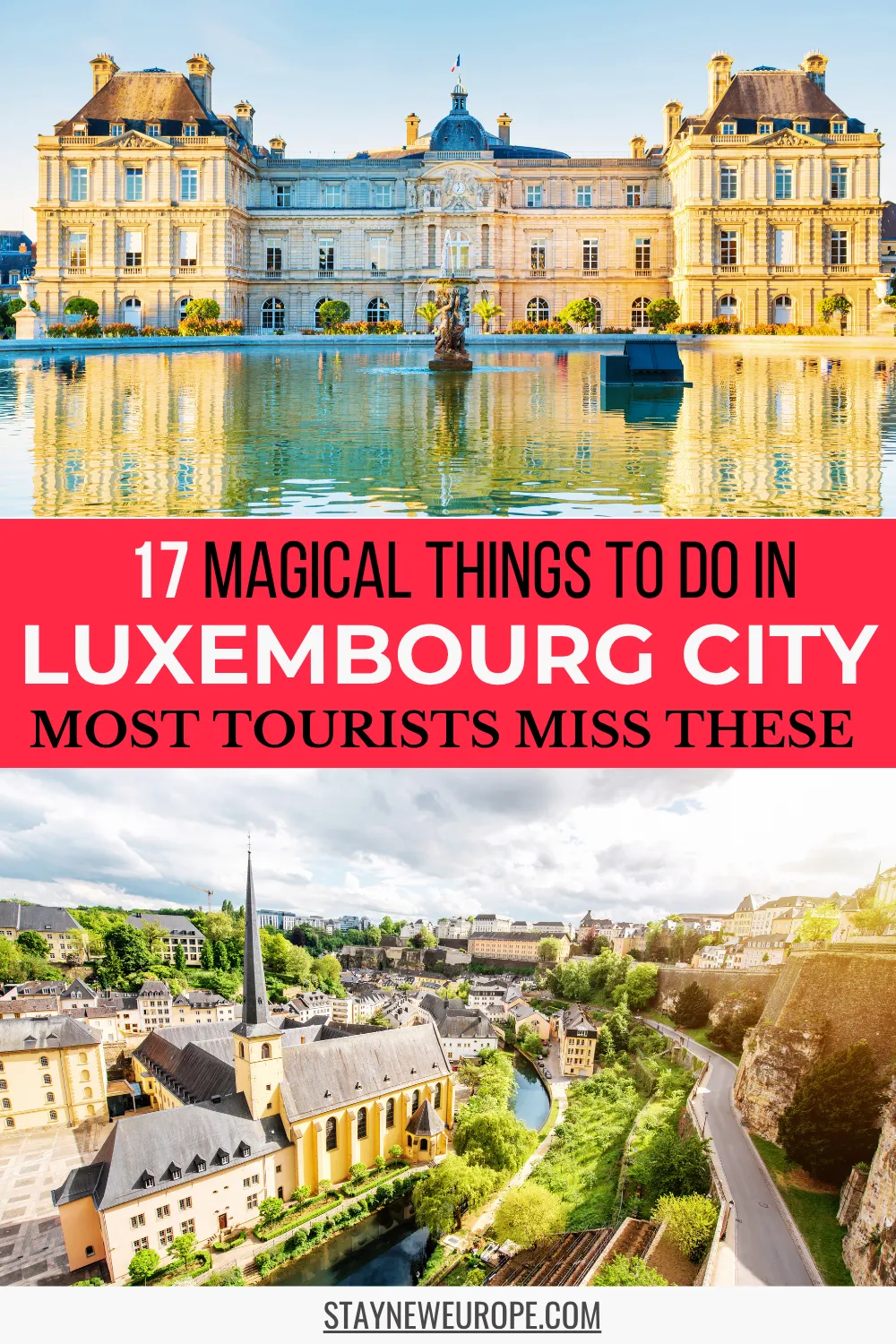
There’s a particular type of travel smugness that comes with telling people you’ve been to Luxembourg City. Not because it’s difficult to get to — it isn’t — but because most people you meet haven’t been, and the ones who have tend to look at you with that knowing smile. “You went?” they say. “Good, wasn’t it.” And that’s it. That’s the whole endorsement. Because Luxembourg City doesn’t need a sales pitch. It just needs to be experienced.
I’ll admit something: I almost skipped it. I had a free weekend wedged between Brussels and Strasbourg, and Luxembourg City sat on the map looking a little like a consolation prize. A capital city of barely 130,000 people, sandwiched between larger, louder neighbours. I went anyway — out of a mixture of curiosity and stubbornness — and I came back feeling quietly, deeply embarrassed that I’d ever hesitated. This city has one of the most dramatic natural settings in all of Europe, a genuinely excellent food scene, and a way of making you feel like a clever traveller just for showing up.
What follows is everything I’d tell a good friend planning a visit. Not a sanitised list of attractions, but the real stuff — the places worth the walk, the meals worth the splurge, the views that will make you stop mid-sentence. Luxembourg City deserves your full attention. Here’s where to direct it.
Before You Go: Understanding What Luxembourg City Actually Is
People often arrive in Luxembourg City expecting something either tiny and forgettable or implausibly grand — the richest country in the EU per capita, after all. The reality is neither. It’s a city of extraordinary geographical drama, built across a series of rocky promontories and deep river gorges, where medieval fortifications tumble down cliffsides and modern tram lines glide past Romanesque towers without anyone finding this strange.
The city sits where the Alzette and Pétrusse rivers have spent millennia carving out deep valleys, which means that wandering from the Upper Town to the Lower Town involves staircases, lifts built into cliffsides, and paths that feel like they belong in a fairytale. The Old Town is a UNESCO World Heritage Site. The financial district is a forest of glass and steel. Both exist within a ten-minute walk of each other, and the collision of old and new is one of the things that makes Luxembourg City so endlessly interesting to explore.
You could do a whistle-stop version in a day. But if you have two or three days, you’ll use every hour.
1. The Bock Casemates
If you only do one thing in Luxembourg City — and I’d argue strongly against that, but hypothetically — make it the Bock Casemates. This is where the city’s extraordinary past becomes viscerally, physically real.
The Bock is the rocky promontory where Siegfried, Count of the Ardennes, built a fortress in 963 AD — the founding moment of the nation of Luxembourg. What you see today is a labyrinth of underground tunnels and galleries carved into the sandstone rock face, stretching for nearly 23 kilometres in their heyday and capable of sheltering an army of 35,000 soldiers along with their horses and artillery. You only get to walk through a fraction of that network, but the fraction is enough. You’re threading through cool, dimly lit passages that feel carved by hand (because they were), emerging onto open-air terraces above the Alzette valley with a view that makes your knees slightly loose.
What I love most about the Bock isn’t any single gallery or viewpoint — it’s the accumulative strangeness of standing somewhere that has been a fortress, a city, a site of constant European warfare, and is now a place where schoolchildren on field trips brush past tourists from Singapore and retired Belgians all marvelling at the same thing. The history here is genuinely dense.
Local tip: Come first thing in the morning when the site opens. The terraces facing the Alzette valley and the Grund below face east, which means morning light falls directly on the old Lower Town and the tower of Saint John’s Church. It’s one of the genuinely great views in central Europe, and you’ll have it to yourself if you arrive early.
2. The Grund
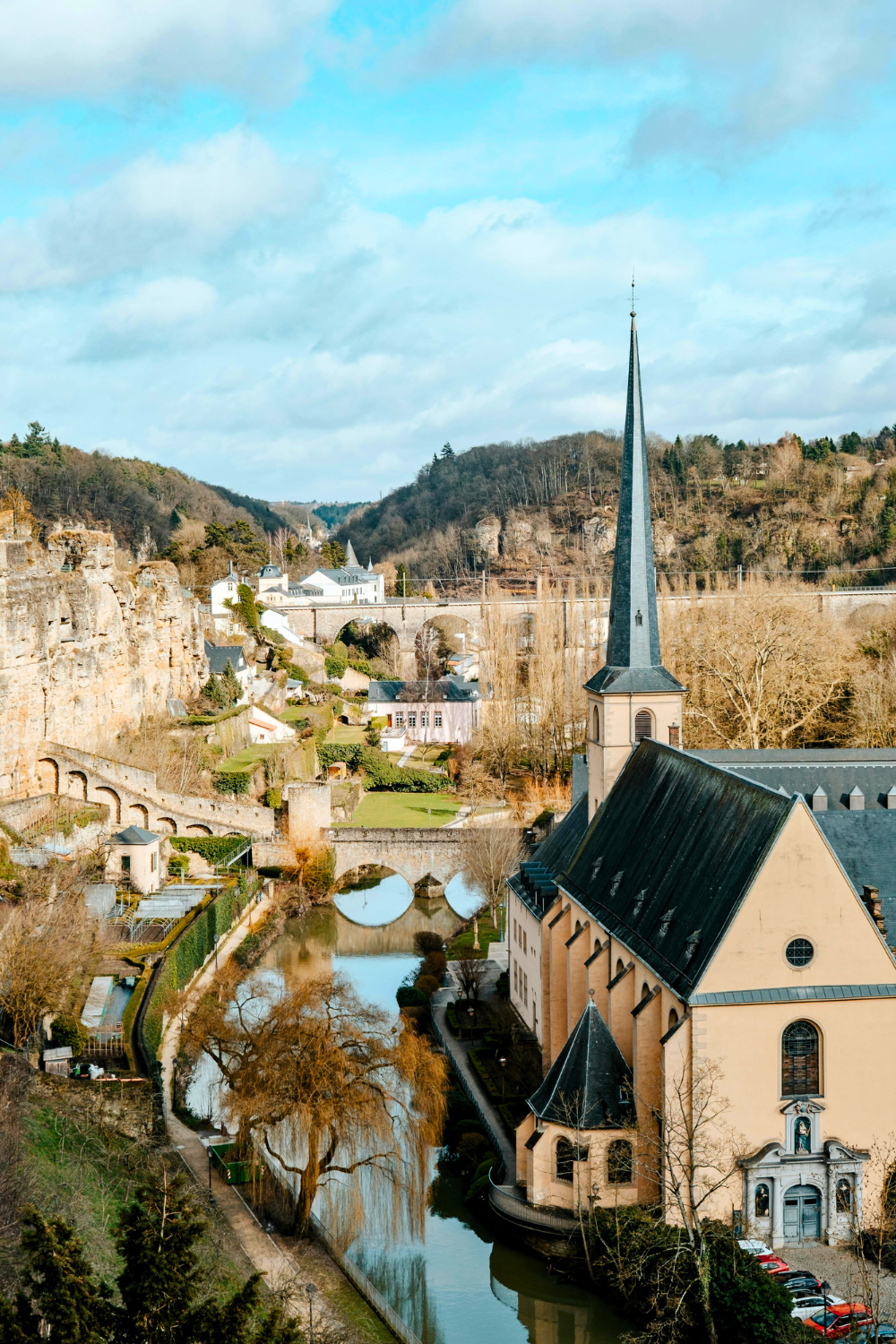
The Grund is the oldest part of Luxembourg City, sitting at the bottom of the Alzette valley and reached from the Upper Town either by a long series of steps or by the Pfaffenthal Lift — a free, glass-enclosed elevator built into the cliffside in 2017. Take the lift down, but walk back up. You’ll understand why in a moment.
Down in the valley, the Grund feels like a different city entirely. The streets are narrow and cobbled. Old mills line the riverbank. The Abbey of Neumünster, a seventeenth-century monastery that now serves as a cultural centre, anchors the main square with its pale baroque facade. Cafés spill out onto terraces along the water. It’s quiet in the mornings and buzzy in the evenings, with a cluster of good bars and restaurants that fill up with a pleasingly local crowd rather than purely tourist overflow.
What makes the Grund unmissable isn’t any one building or restaurant — it’s the experience of being at the bottom of a gorge inside a capital city, looking up at a skyline of fortified walls and historic towers far above you. It’s legitimately vertiginous if you look up at the right angle. Walking back up to the old town via the Wenzel Walk trail, you’ll pass through ancient gateways and along the top of original medieval walls with that view below you all the way.
Local tip: The Café des Artistes on Rue Wiltheim is a proper neighbourhood bar that’s been running for decades. It doesn’t look like much — a bit dark, a bit worn — but it’s full of regulars, the beers are cold, and nobody is going to try to sell you a Luxembourg City fridge magnet.
3. Place Guillaume II
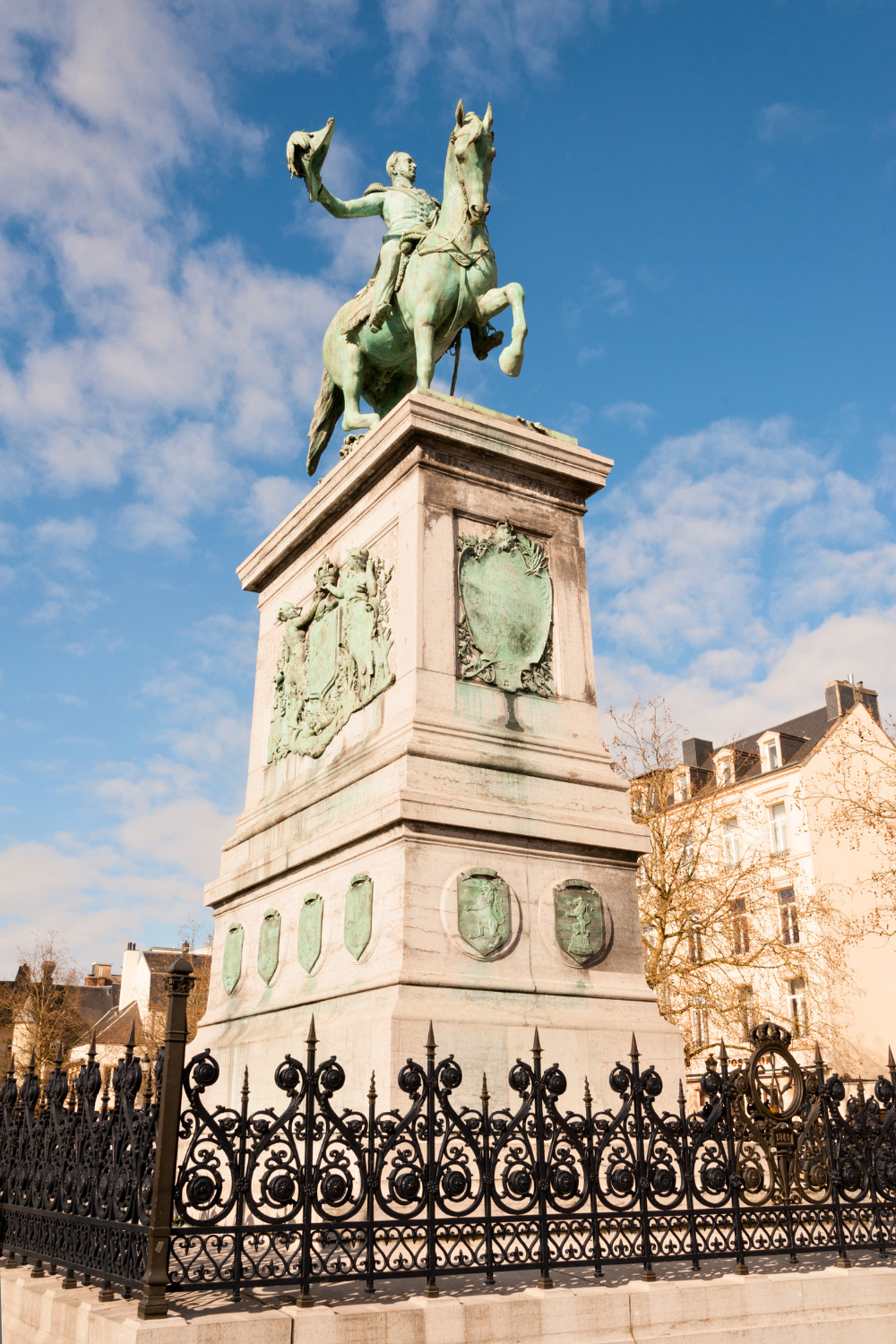
This is the beating heart of the Upper Town, and to be honest with you, it’s one of those squares that looks almost too perfect. Flanked by the Hôtel de Ville on one side and a series of handsome nineteenth-century buildings on the others, with a bronze equestrian statue of William II in the middle, it could be a stage set for a pleasant European drama.
The weekly market here on Wednesday and Saturday mornings is genuinely excellent. Local farmers sell seasonal vegetables, artisan cheeses, smoked meats, and fresh bread from stalls that cluster around the statue and spread into the surrounding streets. Luxembourg’s food culture is heavily influenced by its French and German neighbors, which means the charcuterie is superb, the bread is serious, and the seasonal fruit from the Moselle region is some of the best you’ll eat anywhere.
The square also serves as the starting point for exploring the pedestrianized shopping streets of the old town — Rue Philippe II and Rue de la Poste, where you’ll find everything from international fashion chains to good independent bookshops and bakeries worth stopping at.
Local tip: On the first Sunday of each month, a flea market replaces part of the regular market. Locals bring out furniture, old books, vinyl records, and genuine antiques. Arrive by 9am if you want first pick. I once found a complete set of art deco Luxembourg postcards from the 1930s for four euros. I treasure them unreasonably.
4. The Chemin de la Corniche
Known rather grandly as “Europe’s most beautiful balcony,” the Corniche is a promenade that runs along the top of the old city fortifications, looking out over the Grund, the Alzette valley, and the towers of the Bock far below. It’s a genuinely bold claim, and this is one of the rare instances where the marketing copy is essentially right.
The Corniche runs for roughly a kilometre along the southern edge of the Old Town, shaded in parts by old chestnut trees, with benches positioned at the most strategic viewpoints. It connects the Cathedral of Notre-Dame to the Bock promontory, passing the Palais de Justice and several of the old city’s best-preserved medieval towers along the way. The walk takes about 20 minutes at a leisurely pace, though I’ve never managed to do it in less than 40 because I keep stopping.
What strikes you on the Corniche is the layering of time in a single view. Below you, the red-roofed houses of the Grund belong to a world of mills and artisans. Behind them, the valley walls are honeycombed with the dark mouths of old casemate tunnels. Above and behind you, glass office buildings glint in the sunlight. Everything visible from this path was built in a different century, and somehow it all holds together.
Local tip: The best light on the Corniche comes in the late afternoon, when the sun is low and the sandstone of the valley walls glows amber. Walk it westward toward Notre-Dame at this time and you’ll understand why people keep posting photos of it.
5. The Cathedral of Notre-Dame
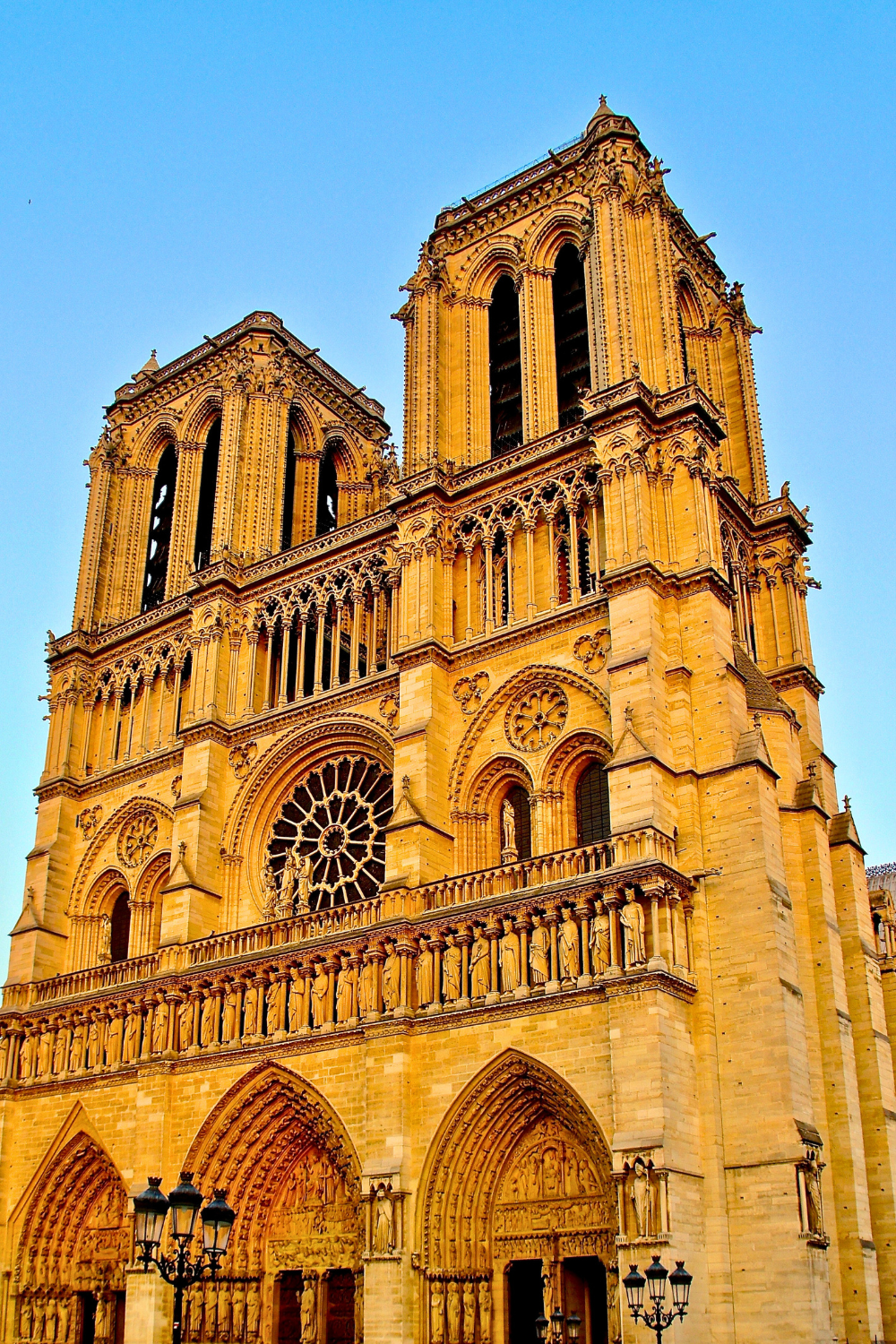
Most visitors walk past the Cathedral of Notre-Dame on their way to something else, which is a genuine shame. It’s not the biggest or most famous cathedral you’ll ever see — its neo-Gothic spires are a nineteenth-century addition to an originally Jesuit church begun in 1613 — but the interior is one of the most beautiful in northern Europe, and it’s almost always peacefully quiet.
The nave is long and very high, with stone columns leading the eye toward the altar and a series of side chapels that range from austerely medieval to lavishly baroque. The stained glass windows are magnificent without being showy. There’s a famous statue of the Virgin Mary — Our Lady of Luxembourg, the patroness of the country — in a chapel to the left of the main altar, and pilgrims come from across the country to pray here on Octave week in May.
In the crypt, you’ll find the tombs of the royal House of Luxembourg and a small treasury. It’s worth a look if you have any interest in dynastic history, but the main church is the real draw.
Local tip: Attend evening Vespers if you’re in the city on a weekday. The choir sings at around 5:30pm on most days, and the acoustics turn the nave into a proper concert hall. It costs nothing and creates the sort of atmosphere that you can’t manufacture.
6. The Pétrusse Valley Walk
This one surprised me, and I want to make sure you don’t miss it. The Pétrusse is the smaller of Luxembourg City’s two rivers, and its valley cuts through the southern edge of the old city before joining the Alzette near the Grund. The valley itself is a park — lush, green, threaded with paths and bridges, and remarkably peaceful given that you’re five minutes from the city center.
The walk from the Place de la Constitution down into the valley and along the river path to the Viaduct on the other side takes about an hour if you’re not rushing, and you shouldn’t rush. There are wildflower meadows, old fortification walls emerging from the hillside above you, small weirs that create the constant background sound of moving water, and a series of atmospheric tunnels and galleries that you can duck into along the way.
The Viaduct — properly called the Passerelle — is a nineteenth-century railway bridge repurposed for pedestrians and now serving as the entrance to the city for travellers arriving from the Gare de Luxembourg. Standing beneath its arches looking up, the engineering is breathtaking; standing on top of it, the views down into the Pétrusse Valley feel genuinely vertiginous.
Local tip: The lower path along the Pétrusse near the Neumünster Abbey connects to the Grund via a footbridge that most visitors completely miss. It takes you past the old city mills and through a small nature reserve that feels absolutely nothing like a capital city. Worth it.
7. The MUDAM — Musée d’Art Moderne Grand-Duc Jean
Here’s where I tell you that Luxembourg City has one of the best contemporary art museums in Europe and watch you express polite disbelief. The MUDAM, designed by I.M. Pei and opened in 2006, sits on the Kirchberg plateau in a building that manages to be simultaneously monumental and elegant — a glass and stone structure that incorporates the ruins of Fort Thüngen into its foundations.
The permanent collection is genuinely excellent, with a particular strength in design, installation, and multimedia work. But the real reason to come is the building itself, and the way natural light fills the main atrium throughout the day. The central nave of MUDAM changes character entirely depending on the weather and time of day, from a bright, almost clinical white space on sunny summer mornings to something altogether more dramatic on overcast winter afternoons.
The museum restaurant, Café MUDAM, is one of the best lunch spots in the city — good salads, excellent soups, a wine list that reflects Luxembourg’s underrated wine culture, and terrace seating in summer with views toward the old city.
Local tip: The first Sunday of every month is free for all visitors. The museum is busier on these days, but if you’re budget-conscious, it’s hard to argue with free. The permanent collection takes about two hours to do properly.
8. The Kirchberg Plateau
Most tourists never make it to Kirchberg, which is exactly why you should go. This is Luxembourg City’s modern district — home to the European Court of Justice, the European Parliament’s Luxembourg seat, the Philharmonie, and MUDAM — and it offers a fascinating contrast to the medieval drama of the old city.
The Philharmonie Luxembourg, designed by Christian de Portzamparc and opened in 2005, is one of the finest concert halls in Europe and hosts an extraordinary programme of classical and contemporary music. The building itself — a white colonnaded ellipse — is worth seeing even if you don’t attend a concert, and if you can get tickets for something during your visit, the acoustics will ruin lesser concert halls for you permanently.
The Kirchberg is also where you’ll find the largest concentration of serious contemporary architecture in the country. The European institutions have attracted some of the continent’s best architects over the past thirty years, and the district is essentially a living textbook of late-twentieth and early-twenty-first-century institutional design. Contentious, fascinating, and very much worth a wander.
Local tip: The MUDAM park between the museum and the Philharmonie has a series of large-scale outdoor sculptures including pieces by Jeff Koons and Louise Bourgeois. In summer, it’s a wonderful place to sit with a coffee and pretend you always planned to come to Kirchberg.
9. The Moselle Wine Region — A Half-Day from the City
I’ll be honest with you: leaving Luxembourg City for even half a day feels slightly criminal given how much there is to do. But the Moselle wine valley, about thirty minutes east of the city by train or car, is one of Europe’s most unjustly overlooked wine regions and deserves at minimum a half-day detour.
The Luxembourg Moselle runs for about 42 kilometres along the German border, with steep slate-and-limestone slopes planted with Riesling, Pinot Gris, Pinot Blanc, and the local speciality Rivaner. The wines are crisp, mineral, and lower in alcohol than many of their German counterparts — genuinely excellent summer drinking that you will almost certainly never find at home.
The villages along the river — Remich, Grevenmacher, Wormeldange — are unhurried and pretty, with cellar doors that welcome visitors and restaurants serving very good local food. Domaine Mathis Bastian and Caves Bernard-Massard are both reliable for tastings, and the cooperative winery at Remerschen produces some surprisingly good natural wines that reflect a newer generation of Luxembourgish winemakers.
Local tip: The Moselle cycle path runs the full length of the valley and rents bikes in Remich and Grevenmacher. A half-day cycling between vineyards with stops for tastings is one of the genuinely great low-key travel experiences in this part of Europe. Book a return train for early evening and you’ll arrive back in the city feeling extremely virtuous and slightly pink.
10. The National Museum of History and Art
The MNHA sits in a converted baroque palace in the heart of the old city, and it’s the kind of museum that rewards slower visitors — the ones who actually read the captions and double back to look at something again. The collection spans Roman antiquities found on Luxembourgish soil, medieval sacred art, sixteenth to twentieth-century painting, and a small but excellent archaeology section that tells the deep story of human settlement in this part of Europe.
The Roman section is genuinely impressive. Luxembourg sits in an area of dense Roman settlement along the Via Agrippa, and the mosaic floors, sculptural fragments, and everyday objects recovered from excavations across the country suggest a thriving provincial culture that doesn’t get enough attention in the standard narratives of Roman Europe.
Upstairs, the fine art collection includes some unexpected Flemish and Dutch masters alongside the expected Luxembourg and Belgian artists, and a gallery of nineteenth-century Luxembourg landscape painting that is far more compelling than it has any right to be.
Local tip: The museum café in the courtyard is one of the best-kept secrets for a quiet coffee in the old city. It’s tucked away enough that it doesn’t fill up with passing tourists, and the courtyard itself — enclosed and stone-paved — is lovely on a warm afternoon.
11. Vianden Castle
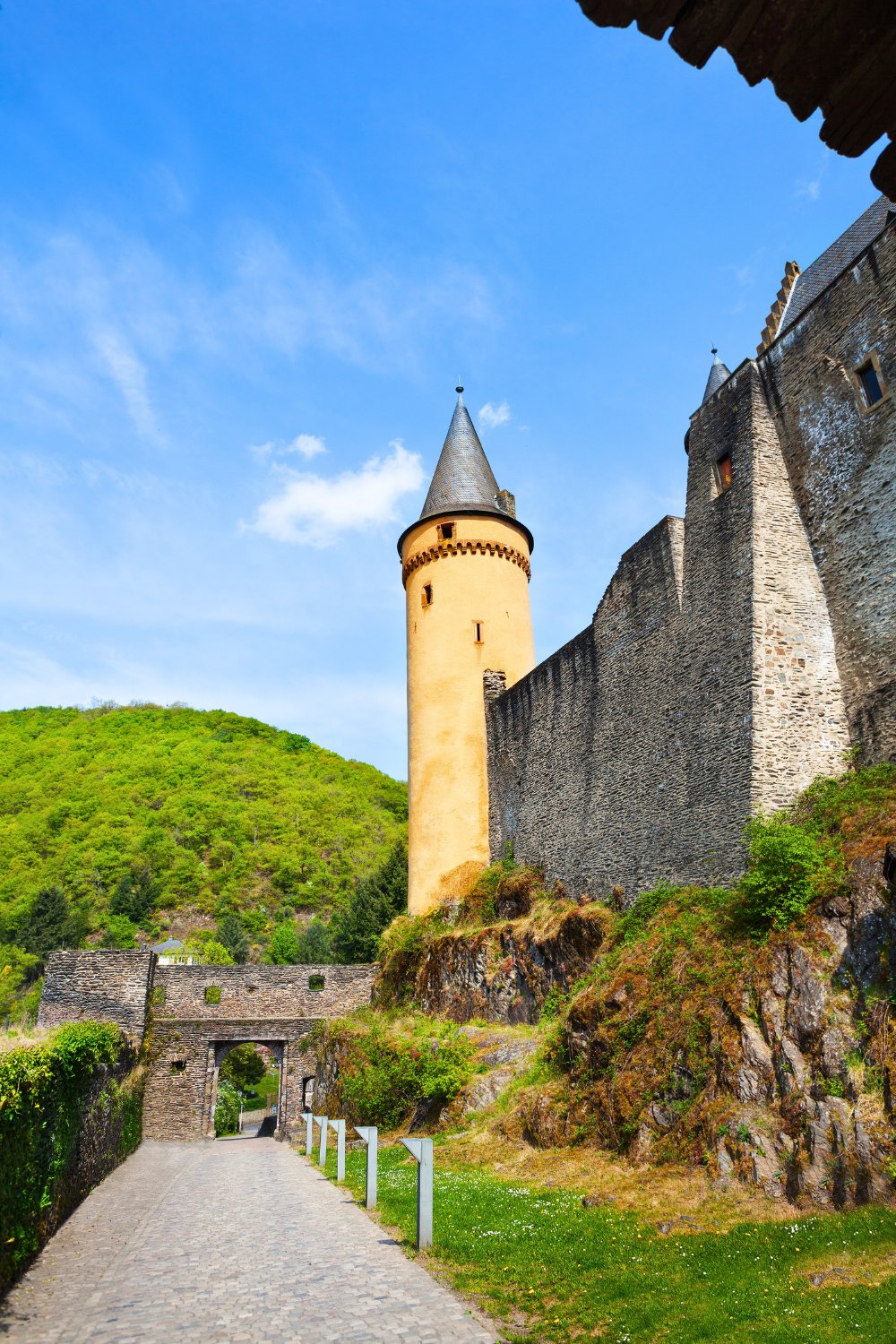
About an hour north of Luxembourg City by car or bus, Vianden is the one day trip from the capital that borders on obligatory. The castle there — one of the largest fortified medieval complexes west of the Rhine — sits on a hilltop above a town that looks as though it was built specifically to be photographed from the top of the castle wall.
The restoration of Vianden Castle is a remarkable achievement. Neglected for centuries and essentially in ruins by the mid-twentieth century, it has been painstakingly reconstructed over the past fifty years using historical records and surviving fragments. The result isn’t a sanitised theme park but a genuinely imposing medieval fortress with chapel, great hall, kitchen, and chambers that give you a real sense of scale.
The town of Vianden below is worth an hour of its own. Our Lady of the Immaculate Conception is an atmospheric Gothic church with some fine medieval stone carving. The Victor Hugo House — where the French writer lived in exile during the 1870s — is a small and charming museum that Hugo fans will enjoy and non-fans will find surprisingly engaging.
Local tip: Take the Our-Sûre chairlift from the edge of town up to the ridge above the castle for an aerial view of the whole ensemble — the castle, the town, the river, and the forests beyond. It runs from April to October and costs a few euros. Genuinely worth it.
12. The Old Jewish Quarter and the Clausen District
The neighbourhood of Clausen sits at the bottom of the Alzette valley, just east of the Grund, and it’s one of those places that feels like it’s being discovered in real time. Ten years ago, Clausen was home to the Mousel brewery (now closed) and not much else. Today, the old brewery building has been converted into a hub of restaurants, creative businesses, and event spaces called the Clausen Beer Garden, and the surrounding streets are filling up with good coffee shops and independent restaurants.
The walk from the old city down to Clausen passes through some genuinely atmospheric old streets and archways that most visitors miss entirely in their rush to get from the Bock to the Grund. Take the Rham plateau route, which cuts around the eastern side of the Bock promontory above the old Jewish quarter, and you’ll pass the ruins of the old Saint-Esprit plateau fortifications and a series of small gardens with views that reward the longer walk.
Clausen in the evenings has a pleasantly local energy — people who live here rather than people who are visiting, which in a tourist-dense old city is both rare and refreshing.
Local tip: The Brasserie Urban in the old Mousel brewery building serves excellent local craft beers alongside food that’s a significant step above most brewery-bar menus. The terrace, when the weather cooperates, is one of the better places to spend a warm Luxembourg evening.
13. The Adolphe Bridge
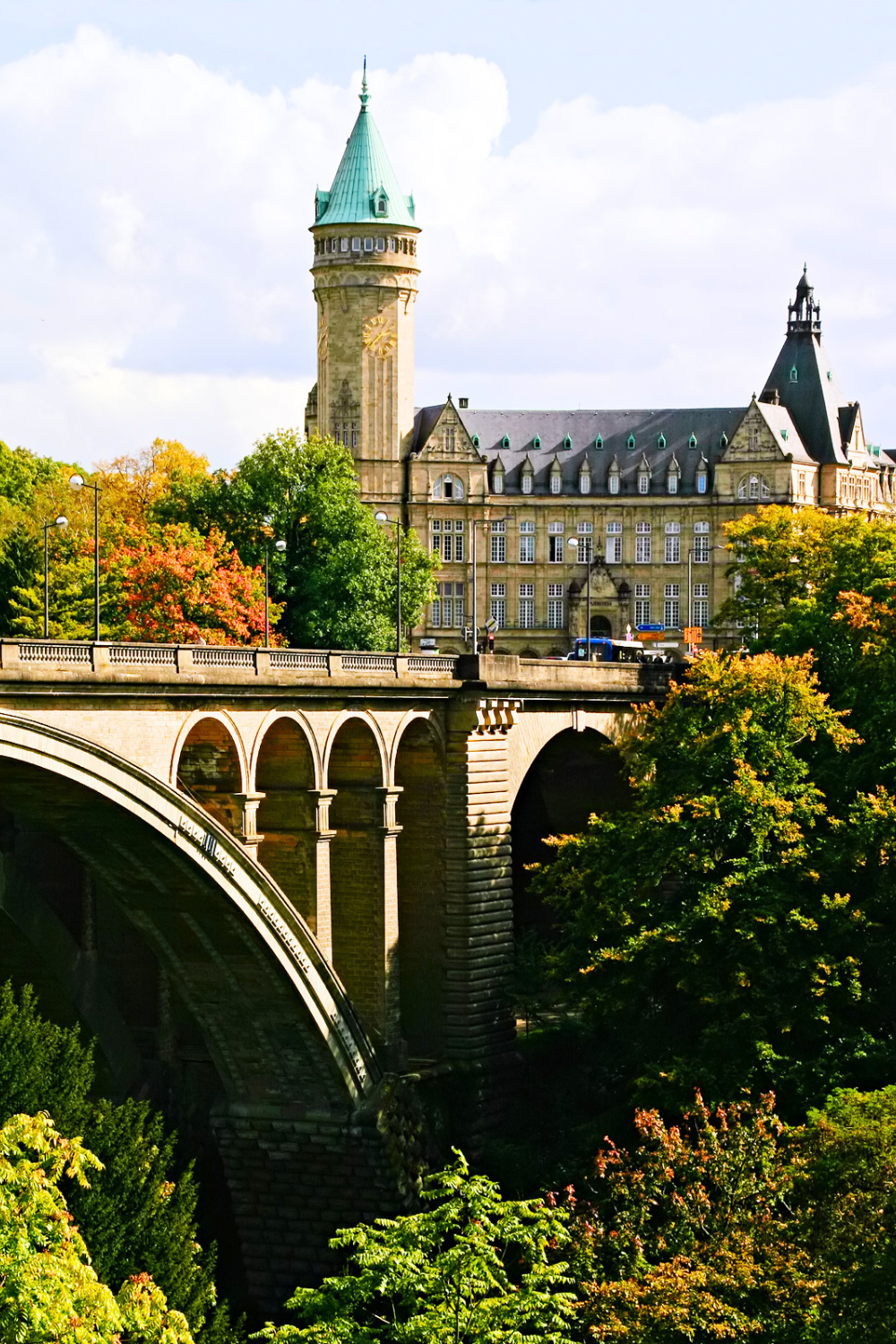
This one doesn’t need much selling because it’s immediately, visibly spectacular. Built between 1900 and 1903, the Adolphe Bridge spans the Pétrusse valley with a single massive stone arch — 84 metres wide, 42 metres above the valley floor — and it defines the silhouette of Luxembourg City from almost every approach.
You can walk across it, obviously, which takes about three minutes if you don’t stop, and much longer if you do. Standing at the mid-point, looking east up the Pétrusse valley toward the city centre with the old fortifications above you, is one of those moments where you suddenly understand why people fall in love with this place. Looking the other way, you see the Place de la Constitution and the Gëlle Fra — the Golden Lady memorial — and beyond that the spires of Notre-Dame.
The bridge is even better viewed from below, from the valley path. Find the path down from the Place de la Constitution and walk along the river until you can look back and see the full arch above you. It’s a different, more intimate perspective that the bridge-top view doesn’t prepare you for.
Local tip: The Gëlle Fra — the gilded female figure on top of the war memorial at Place de la Constitution — is one of the symbols of Luxembourg. She survived both World Wars, was removed by the Nazis during occupation, and was returned after liberation. Her story, if you spend five minutes with it, is deeply moving.
14. The Bonnevoie and Hollerich Neighbourhood
Luxembourg City has a growing neighborhood food scene outside the old city walls, and the most interesting of the newer areas is the combination of Bonnevoie and Hollerich, south of the train station. This is where younger Luxembourgers and the city’s large immigrant community — Portuguese, Cape Verdean, and Italian in particular — have created a genuinely multicultural dining scene that feels nothing like the more polished old-city restaurants.
Rue de Bonnevoie and the streets around it are worth an evening wander. There are excellent Portuguese bakeries selling pastel de nata and bifanas, Cape Verdean restaurants serving cachupa stew that you’ll be thinking about for weeks, good Vietnamese and Chinese restaurants that have served the local population for decades rather than being opened for tourists, and a slow-growing wave of interesting natural wine bars and small-plates restaurants that reflect a newer generation of local hospitality.
This is honest eating at honest prices — not the most glamorous part of a Luxembourg City visit, but possibly the most delicious.
Local tip: Restaurante Pastelaria Lusitana on Rue du Fort Neipperg is a Portuguese community institution that’s been feeding Luxembourgers of Portuguese descent for decades. The caldo verde is good enough to justify the walk alone, and the pastéis de nata come out of the oven around 10am.
15. The Three Acorns Viewpoint (Trois Glands)
The Trois Glands — Three Acorns — is a set of stone towers on the Kirchberg plateau that offers what might be the single best panoramic view of Luxembourg City’s old town and its extraordinary geography. Most visitors don’t make it here, which is purely a function of location rather than quality. It requires a fifteen-minute walk from MUDAM, but the view repays every step.
From the Trois Glands, you’re looking at the old city from the northeast, which means you can see the full sweep of the Upper Town fortifications, the Alzette valley below, the spires of Notre-Dame, the Bock promontory, and the Corniche all at once. It’s the view that explains the UNESCO World Heritage designation more clearly than any guidebook description.
The towers themselves are nineteenth-century additions to the old fortification system — built by the Austrian Netherlands administration and named for the three-acorn heraldic motif of the city. They’re atmospheric without being particularly interesting architecturally, but the viewpoint below them is one of the genuine secrets of Luxembourg City.
Local tip: The path from MUDAM to Trois Glands passes through a section of old fortification walls that are completely unvisited and slightly eerie in the best way. There are intact galleries, ruined gun emplacements, and stretches of original seventeenth-century masonry that see almost no visitors. Bring a torch if you want to explore.
16. Mullerthal — Luxembourg’s Little Switzerland
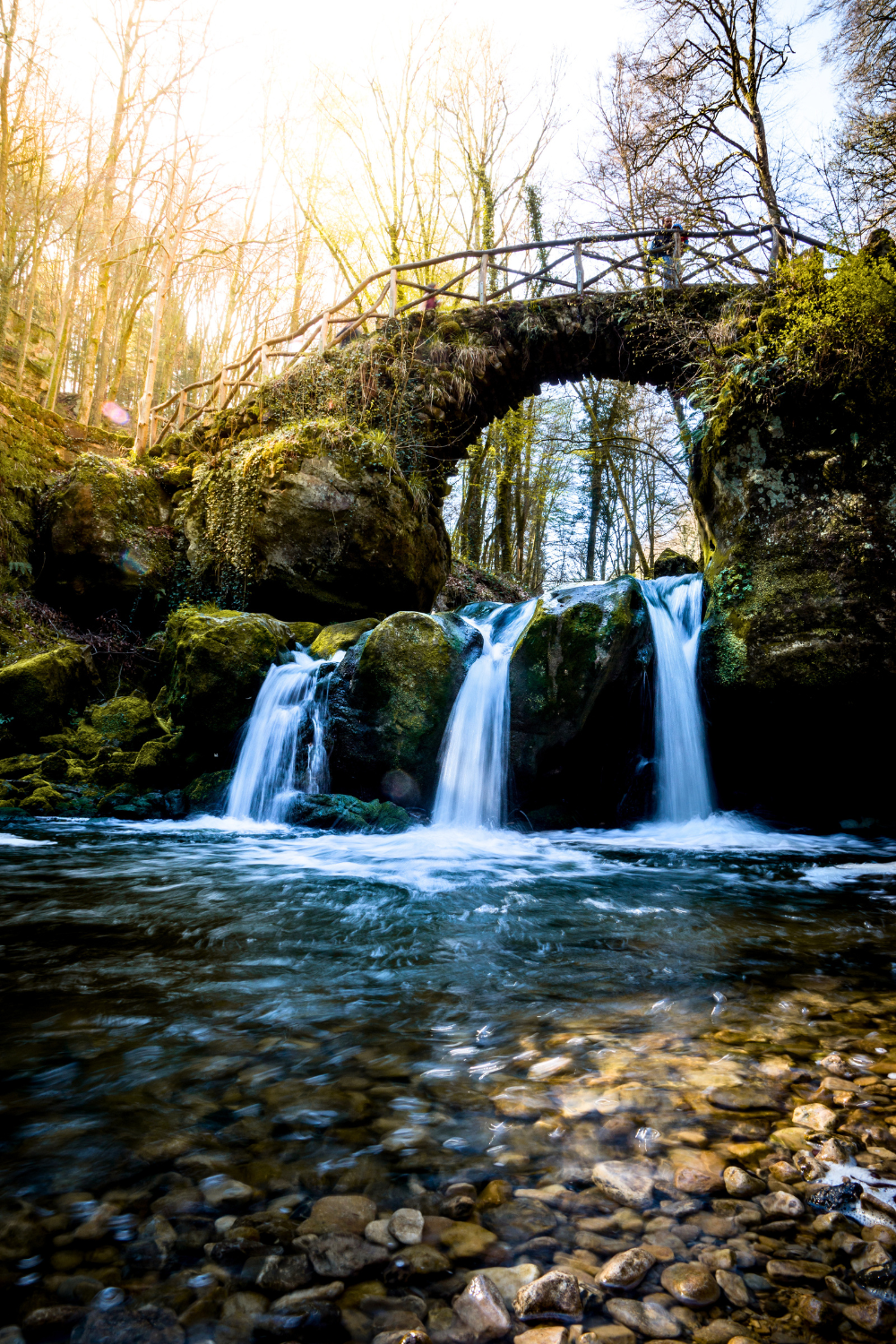
The Mullerthal region, about 30 kilometres northeast of the capital, is marketed as Luxembourg’s Little Switzerland, which slightly undersells it. The sandstone rock formations, forested gorges, and clear streams of the Mullerthal trail are not Alpine, but they’re extraordinary in their own quietly dramatic way — and they’re almost completely unknown outside the Benelux countries.
The Mullerthal trail is a 112-kilometre network of hiking paths that covers the whole region, but you don’t need to tackle the full route to get a sense of what it offers. The loop around the village of Berdorf, which takes about three hours at a comfortable pace, passes through some of the most impressive rock formations — towering sandstone pillars, narrow slot canyons, caves formed by massive geological faulting — in northern Europe.
The village of Echternach, at the western edge of the Mullerthal region, is worth the additional twenty minutes. It’s the oldest town in Luxembourg, with a Benedictine abbey founded by the English missionary Willibrord in 698 AD and a beautiful central square that somehow manages to be both grand and intimate.
Local tip: The Bëllegen Akt rock formation near Berdorf is the Mullerthal at its most theatrical — a narrow passage between two sandstone faces that narrows to just a body-width at one point and emerges onto a promontory above the tree canopy. It’s mildly claustrophobic and absolutely worth it.
17. Luxembourg’s Restaurant Scene: Where to Actually Eat
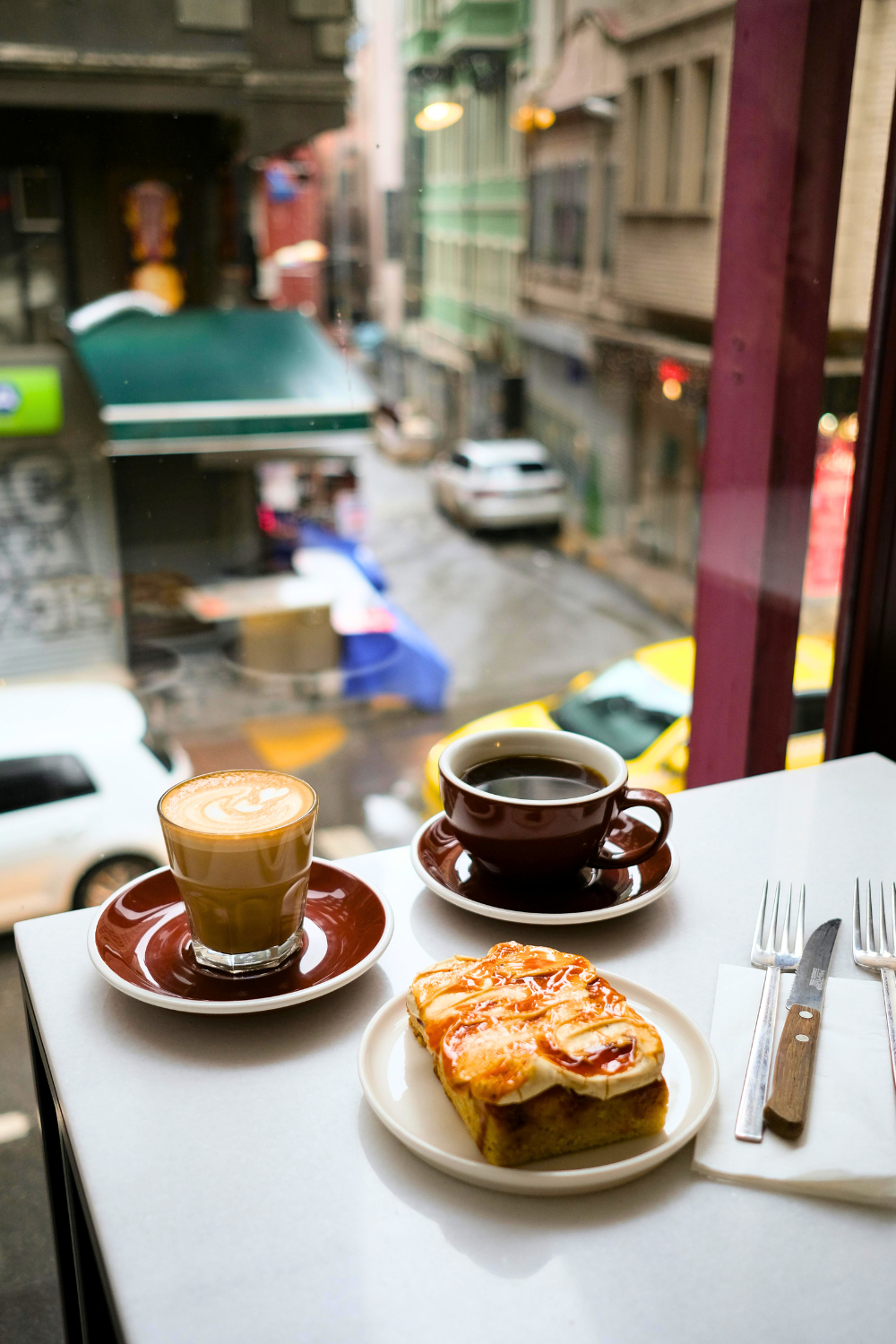
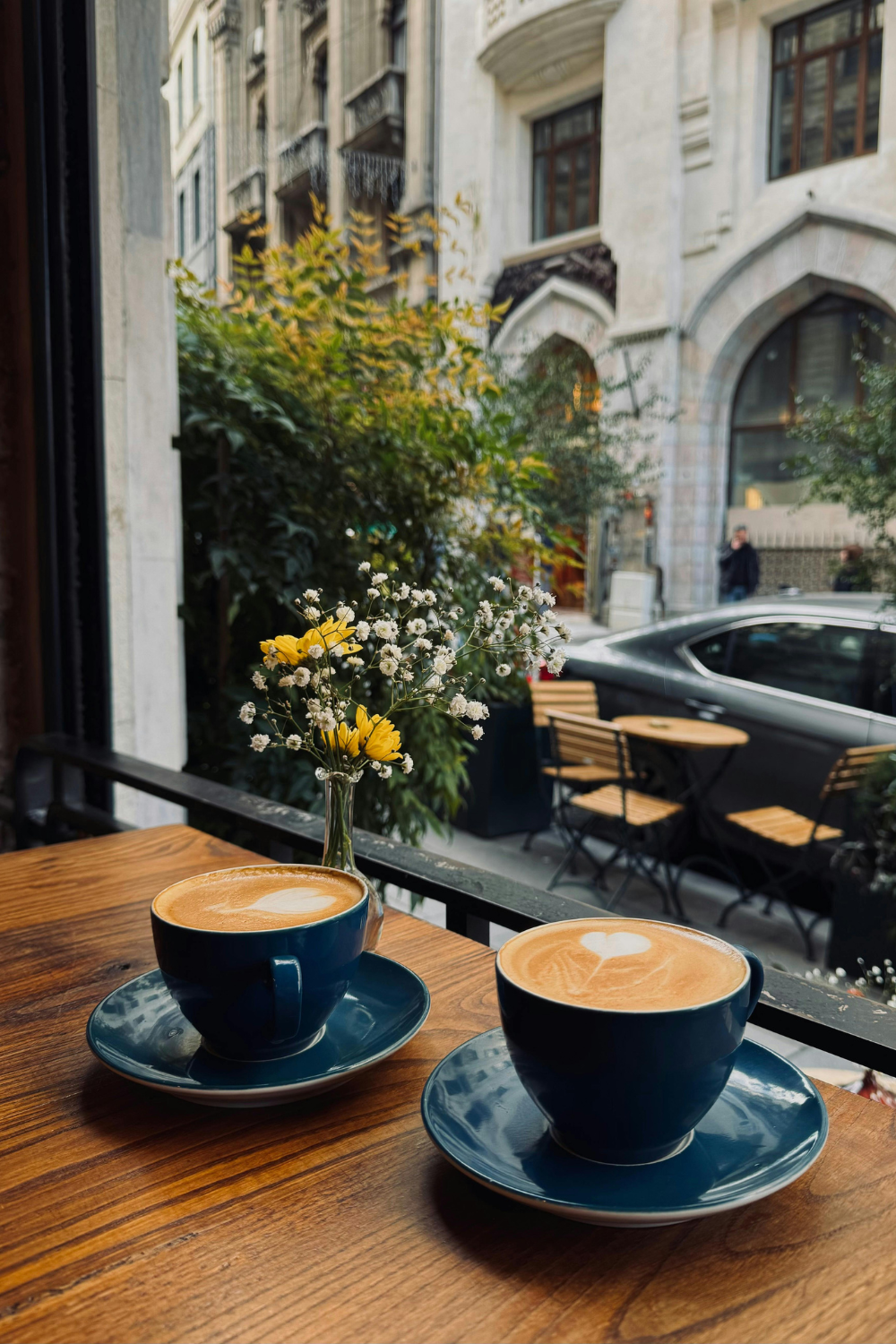
Let me be direct: eating well in Luxembourg City is easy, and eating exceptionally well is not as expensive as the country’s reputation might suggest. The restaurant scene reflects its geography — French technique with German heartiness, Belgian influence in the brasserie culture, and a genuine local cuisine based on pork, game, freshwater fish, and seasonal vegetables from the Moselle and Ardennes regions.
For a properly Luxembourgish experience, look for Judd mat Gaardebounen — a national dish of smoked collar of pork with broad beans in a cream sauce that is the opposite of refined and every bit as comforting as it sounds. Bouneschlupp, a green bean soup with smoked bacon and potatoes, is the classic starter. Gromperekichelcher — potato fritters sold from street stalls at the Christmas market and the Schueberfouer fair — are the kind of thing you eat standing up on a cold evening and immediately want to eat again.
For a special dinner, Mosconi on the Bisserwee in the Grund is one of Luxembourg’s finest Italian restaurants and genuinely world-class — the kind of place where the pasta is made that morning and the wine list makes you take a long quiet breath. For something more casual but equally good, La Lorraine on Place d’Armes has been serving seafood platters and moules-frites to Luxembourgers for over a hundred years, and the kitchen quality has kept pace with the city around it.
Local tip: The covered market, the Hamilius, near Place Hamilton, has a food hall on the ground floor with excellent prepared foods, a good wine shop, and a Luxembourgish cheese counter stocked with harder-to-find local farmhouse production. It’s also the best place to put together a picnic for the Pétrusse valley.
Practical Tips for Visiting Luxembourg City
Getting there is straightforward. Luxembourg City has direct train connections to Brussels (two hours), Paris (two hours twenty minutes), and Frankfurt (three hours), and the national airline Luxair operates regional flights. The city also benefits from one of Europe’s most generous public transport policies — all public transport in Luxembourg is completely free, including trains to Vianden, Echternach, and the Moselle valley.
Getting around within the city is almost entirely walkable in the old town, though the free city buses are useful for reaching Kirchberg and the outer neighbourhoods. The Pfaffenthal Lift and the Rham Lift, both free, connect the upper and lower parts of the city without requiring the full stair climbs.
The best time to visit is April through October, with May and June being particularly lovely — the Corniche chestnut trees in bloom, the Moselle valley at its most photogenic, and long evenings that stretch past nine pm. July and August bring the most visitors, but Luxembourg City is small enough that it never feels overwhelmed. Winter has its own appeal, particularly around the Christmas market season from late November through December, when the city centre fills with stalls and the cathedral square is lit beautifully.
Luxembourg City uses the euro and is, factually, not cheap. Hotels in the old city are priced at Western European capital levels, and a good dinner for two will cost what it would in Paris. Budget travellers can manage with self-catering for some meals, but this is not a city that rewards penny-pinching — the food and wine are too good, and the experiences worth paying for are genuinely worth paying for.
One weekend is enough for the highlights. Two days lets you breathe. Three days lets you start discovering the city rather than just visiting it. If you have more than three days, add either the Mullerthal or the Moselle as a day trip and consider yourself among the most fortunate travellers in Europe.
Go. Seriously, Just Go.
I started this piece by admitting I almost skipped Luxembourg City. I want to finish it by assuring you that there is no version of “almost skipping Luxembourg City” that I look back on without a mild sense of retrospective horror.
This is a place that rewards curiosity in a way that few cities its size manage — where every valley path reveals something you didn’t expect, every meal overdelivers, and every view from the Corniche or the Trois Glands reminds you that geography is destiny and that Luxembourg’s particular geography is extraordinary. It doesn’t try to be Paris or Amsterdam. It doesn’t need to. It’s entirely itself: dramatic, walkable, excellent at lunch, and genuinely delighted to have you.
Book the train. Walk the Corniche at golden hour. Eat the Judd mat Gaardebounen. Go down to the Grund and look up at the walls above you and try not to feel slightly awed. You’ll come home with that knowing smile. You’ll know why.

