
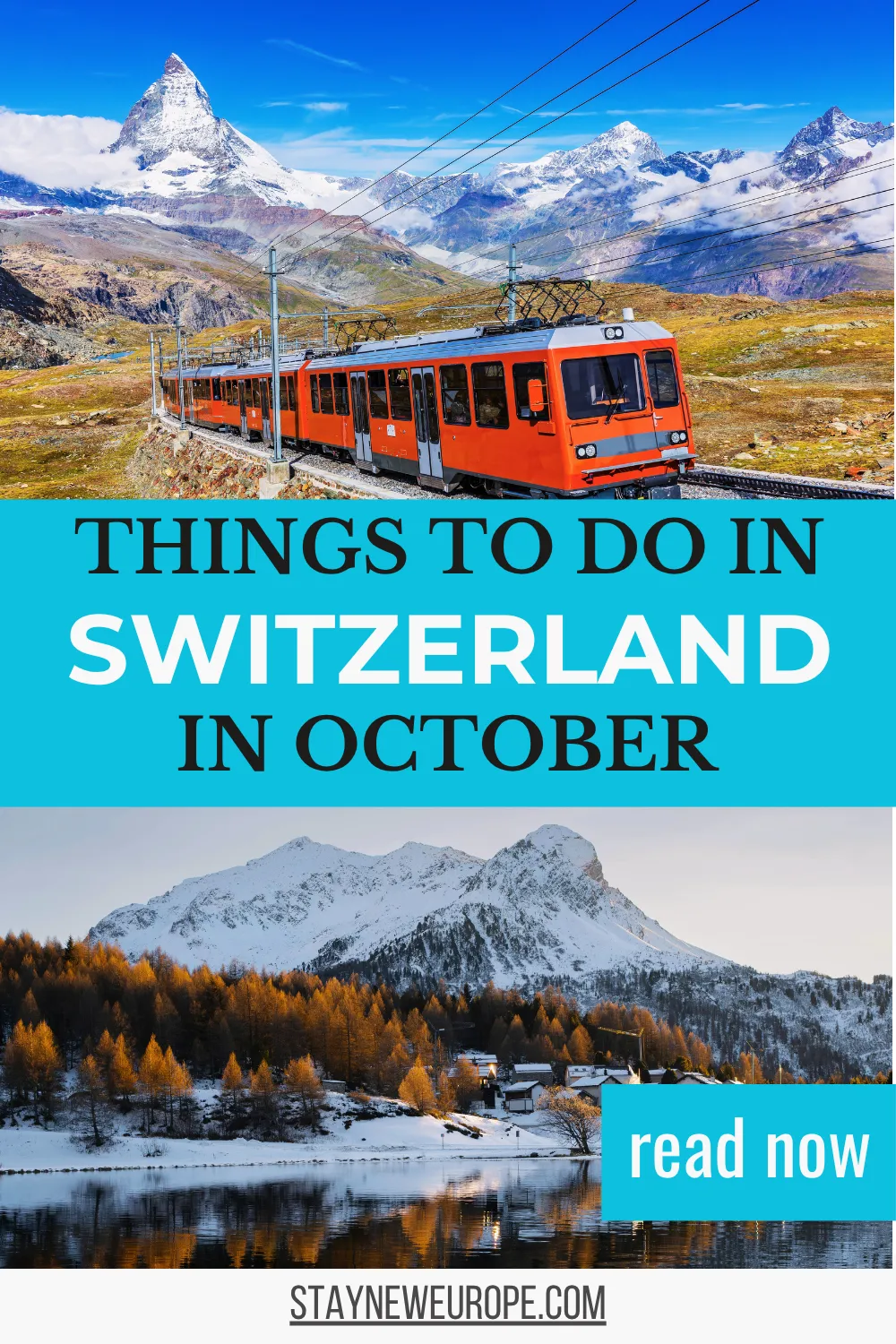
There’s a version of Switzerland that the summer crowds never see. The one where the cable cars thin out, the air turns sharp and sweet, and the mountains reveal themselves in colours you genuinely didn’t think existed outside of a painting. October is that version. I’d visited Switzerland twice in peak season before someone finally told me to go in autumn — and honestly, I’m still a little annoyed it took me so long to figure it out.
October in Switzerland sits in this glorious in-between: the ski season hasn’t started yet, so you won’t be tripping over neon-clad snowboarders, but the weather gods haven’t fully closed up shop either. You get blue-sky days that crack your heart open, dramatic fog rolling through valleys like something from a myth, and a warmth in the low-altitude towns that feels earned somehow. The cheese is better, the wine is being harvested right in front of you, and the crowds? Largely gone.
Whether you’re planning a city break, a long hike before the snow comes, or simply want to eat your way through fondue season with a view, this guide has you covered. These are the places I’d go back to in a heartbeat — and a few I’m still dreaming about going for the first time.
Before You Pack Your Bags
October sits in what the Swiss tourism world calls “shoulder season,” which is just a fancy way of saying you get most of the magic at a fraction of the hassle. Temperatures in the valleys and cities typically range from around 5°C at night to 15°C during the day, while higher altitudes can drop below zero, especially from mid-October onwards. Layering is your religion here — mornings can be moody and mist-laden, and by afternoon you’ll be sitting outside a café in sunglasses wondering why you ever doubted yourself.
The autumn colours typically peak in Switzerland between early and mid-October, particularly at mid-altitudes between roughly 800 and 1,500 metres. If you’re chasing the full blaze of red, gold and amber, that sweet spot is usually the second week of October. By the end of the month, the higher passes start closing and some mountain restaurants shutter for the season — but the trade-off is even fewer people and a real feeling of wildness.
Fondue season, unofficially, starts in October too. Swiss restaurants dust off their caquelon pots and the whole country seems to collectively agree that it is now acceptable to eat melted cheese for every meal. I am fully in support of this.
1. Zurich: The City That Works Harder Than You Think
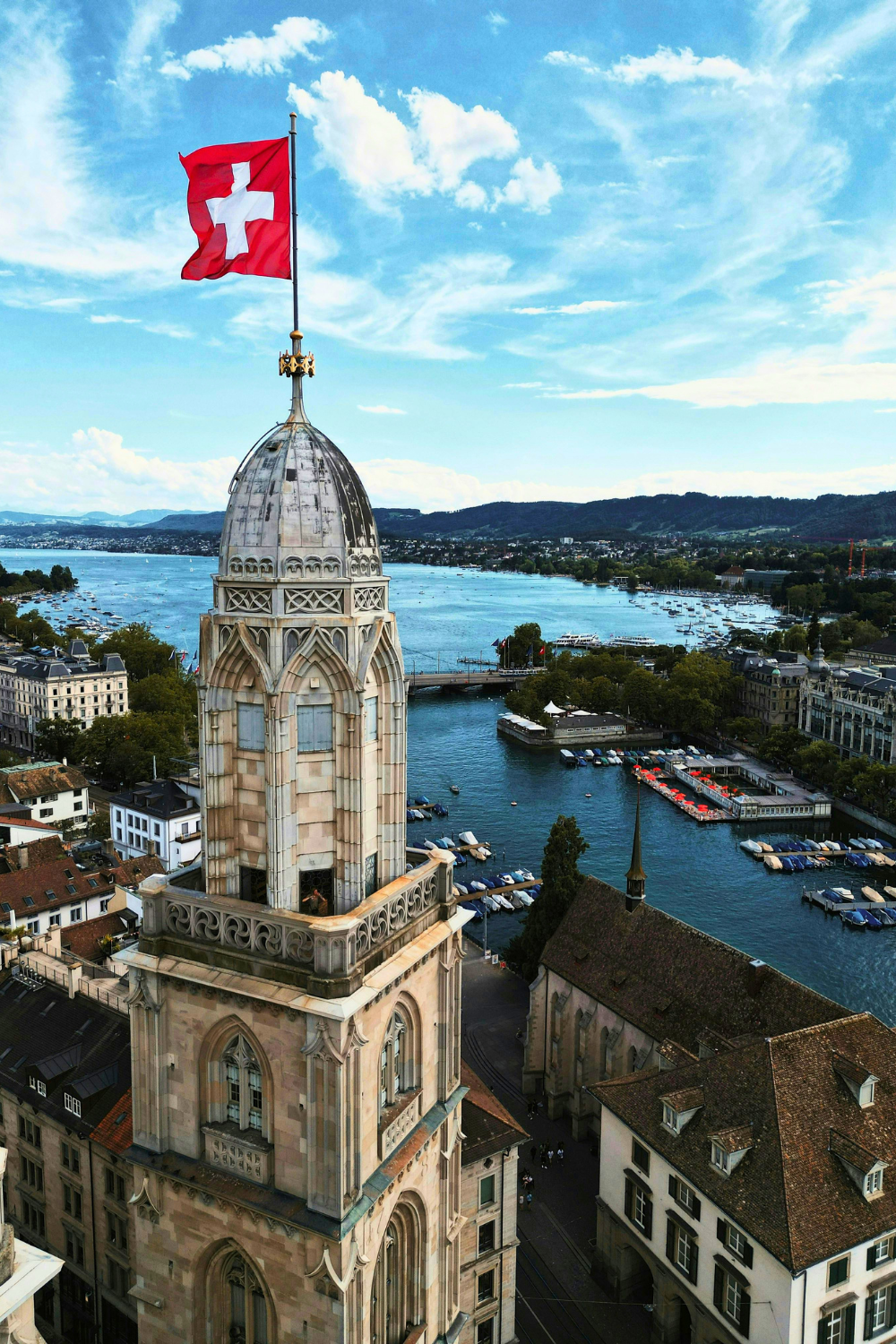
Most people treat Zurich as a transit hub — a place to pick up the train to somewhere more picturesque — and I understand why. It’s wealthy, it’s efficient, it’s clean in that slightly unsettling Swiss way. But let me be honest with you: I’ve always liked Zurich more than I expected to, and in October, it genuinely surprised me.
The lake, the Zürichsee, turns a deep, theatrical grey-blue in autumn that makes the swans look almost theatrical by comparison. The Lindenhügel (Linden Hill) and the old town’s Niederdorf neighbourhood glow with the last warmth of the year, and the city’s exceptional museums — the Kunsthaus, recently expanded into one of the largest art museums in the German-speaking world, and the extraordinary Museum Rietberg for non-European art — are best appreciated without summer queues at the door.
October also brings the Zürich Film Festival, which runs into the first week of October and gives the city an energy that feels genuinely alive. The screenings, panels and red carpet events draw an international crowd without overwhelming the place. On the food side, the Hiltl — the world’s oldest vegetarian restaurant — is a perennial favourite, but don’t skip the street-level Markthalle Im Viadukt, a covered market inside restored railway arches where you can graze on everything from artisan bread to seasonal pumpkin soups.
Local tip: Take the number 7 tram out to the Zürichhorn promenade on a clear October morning, before the city wakes up properly. The light on the lake at 8am, with the Alps faintly visible across the water, is the kind of scene that makes you feel undeservedly lucky to be alive.
2. Interlaken and the Bernese Oberland: Autumn Theatre at 4,000 Meters
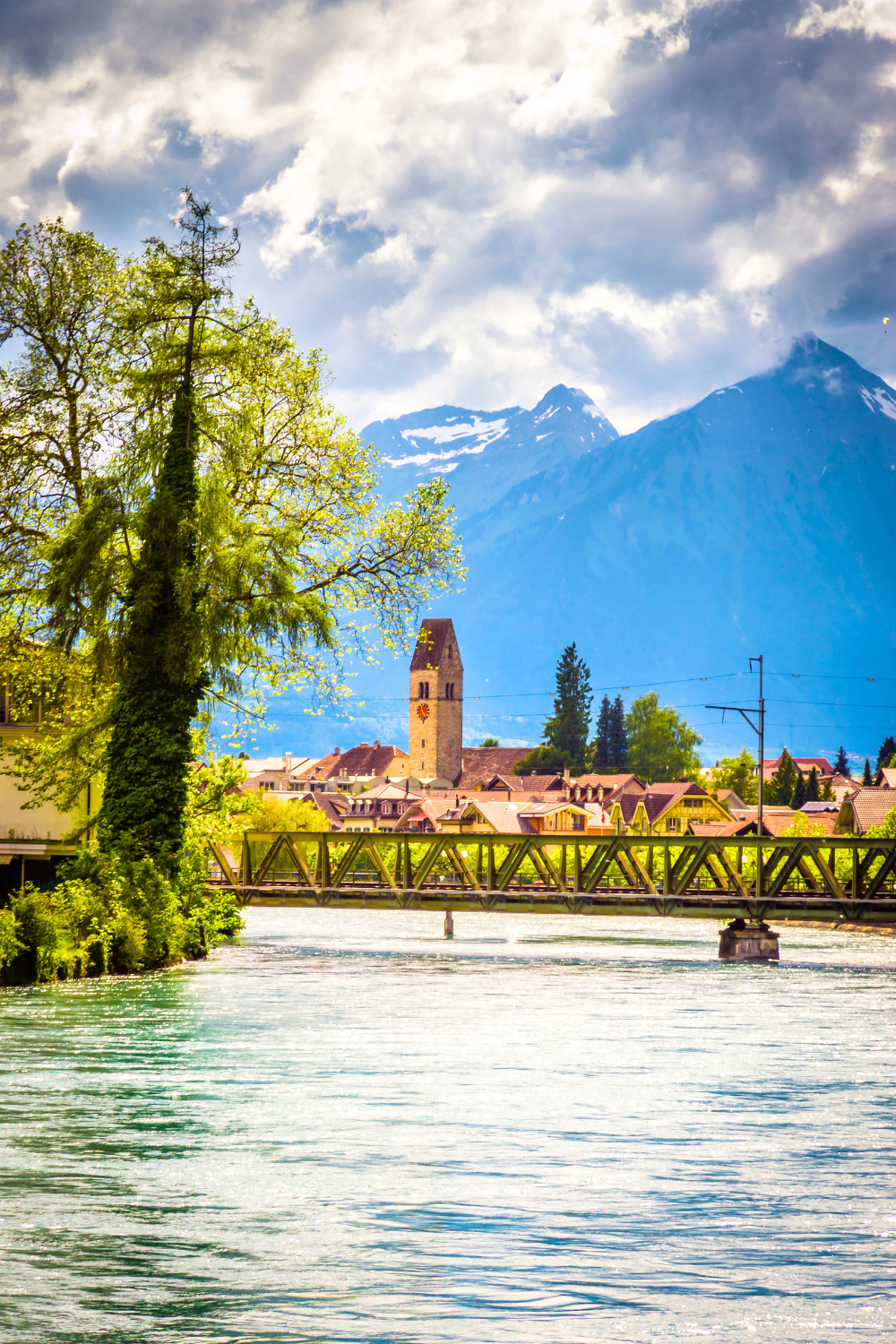
Interlaken has a slightly unfair reputation as a tourist trap — too many souvenir shops, too many paragliding operators with neon logos, the whole package. And sure, the main drag isn’t winning any awards. But the moment you look up, all is forgiven, because the Eiger, Mönch and Jungfrau are just sitting there, completely indifferent to your opinion of the town below, wearing their first October snow like an afterthought.
October is when the Bernese Oberland really pays off. The valley floor around Interlaken blazes yellow and orange, Lake Thun and Lake Brienz shift through shades of turquoise and pewter depending on the light, and the crowds are genuinely manageable. The Jungfraujoch — the “Top of Europe” railway that climbs to 3,454 metres — is still running in October, and the experience of emerging into blinding white snow after riding through the heart of a mountain never gets old, even if the gift shop at the top does.
Below the snow line, the Lauterbrunnen Valley is arguably the best single valley in Switzerland, and in October it earns that title without breaking a sweat. Seventy-two waterfalls pour down vertical cliffs of 300 metres or more, and the mist that accumulates in the valley floor in early mornings creates a genuinely otherworldly atmosphere — the kind that made Tolkien describe this place as an inspiration for Rivendell.
Local tip: Skip the bottleneck of Grindelwald and instead take the train to Wengen or Mürren — car-free villages perched above the valley floor. In October you can rent a room, eat Rösti for breakfast, and spend the day walking in absolute silence with the Alps to yourself. Mürren in particular feels like a secret the rest of the world hasn’t quite caught onto yet.
3. Lucerne: The Postcard That Actually Delivers
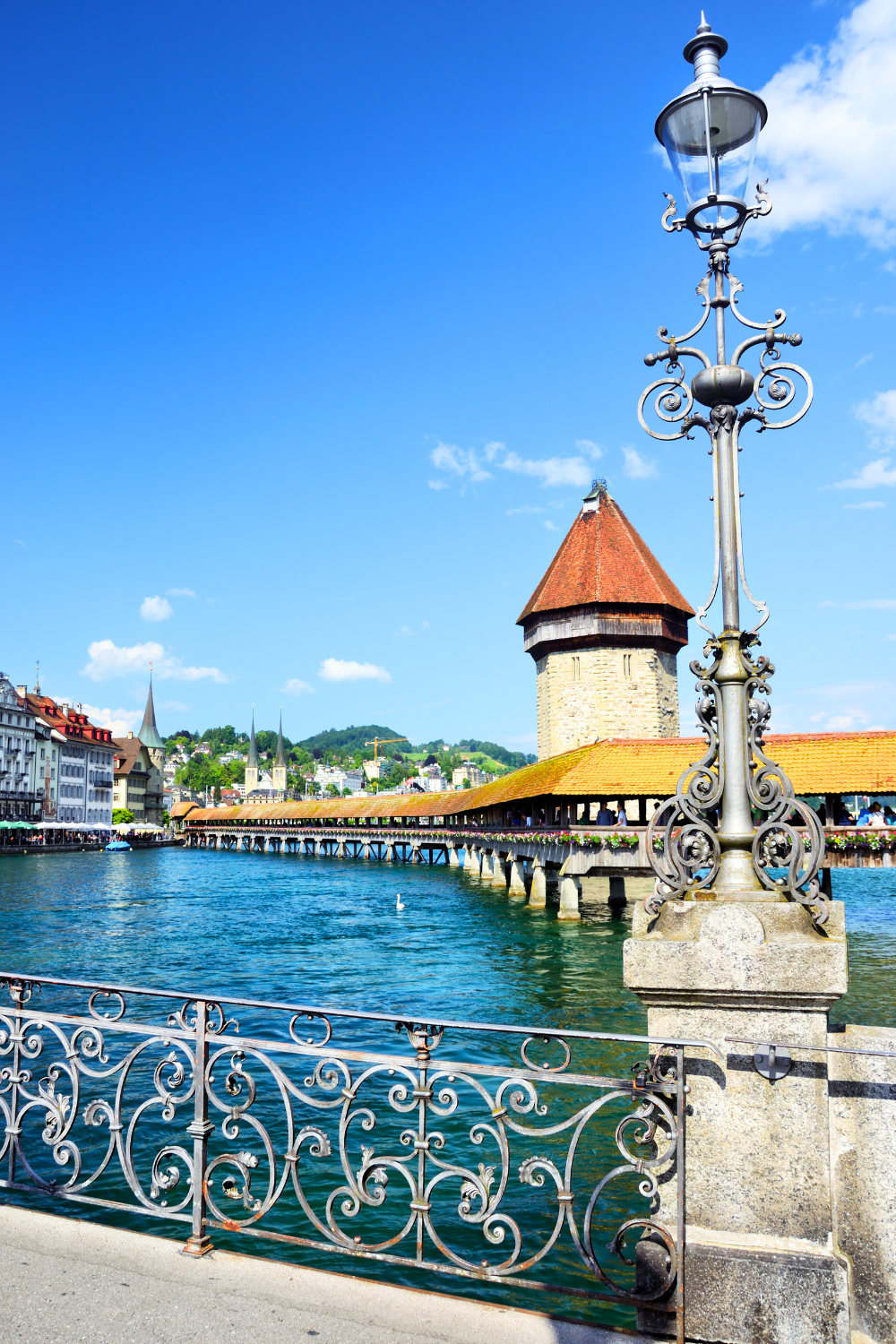
I know, I know. Lucerne is the most photographed city in Switzerland, and every travel blog in existence has a photo of the Kapellbrücke bridge. Let me be the one to tell you that the reason it’s photographed this much is simply that it’s genuinely, stubbornly, unreasonably beautiful — and in October, the autumn foliage reflected in the Reuss River elevates the whole scene into something you’d feel embarrassed describing to people back home.
The covered wooden bridge dates to the 14th century, and the triangular paintings inside its trusses — depicting scenes from Swiss history — are the kind of detail you don’t notice until your second or third crossing. The adjacent Wasserturm (Water Tower), octagonal and medieval, turns a particularly gorgeous shade of warm stone in October afternoon light. Walk it early, before 9am, before the tour groups arrive, and you’ll understand why people keep taking that photograph.
Beyond the obvious, Lucerne rewards the curious. The Lion Monument — a dying lion carved into a cliff face, commemorating Swiss Guards killed in the French Revolution — is one of the most quietly devastating pieces of public art I’ve ever stood in front of. Mark Twain called it the saddest and most moving piece of stone in the world. I’d argue he wasn’t wrong. The Old Town’s Weinmarkt (Wine Market) square is ringed with frescoed buildings that look painted directly from a fairy tale, and in October the outdoor restaurant tables are still out, just with heat lamps and heavier blankets.
Local tip: Take the boat across Lake Lucerne to Vitznau and then the rack railway up to Mount Rigi. At 1,797 metres, Rigi sits above the fog line that often settles over the lake in October — so while the valley below is grey and atmospheric, you emerge into extraordinary sunshine, looking down on a sea of cloud with the Alps rising above it. It’s called the “Queen of Mountains” for reasons that become immediately obvious.
4. The Swiss Wine Route, Lake Geneva: Harvest Season in the Vines
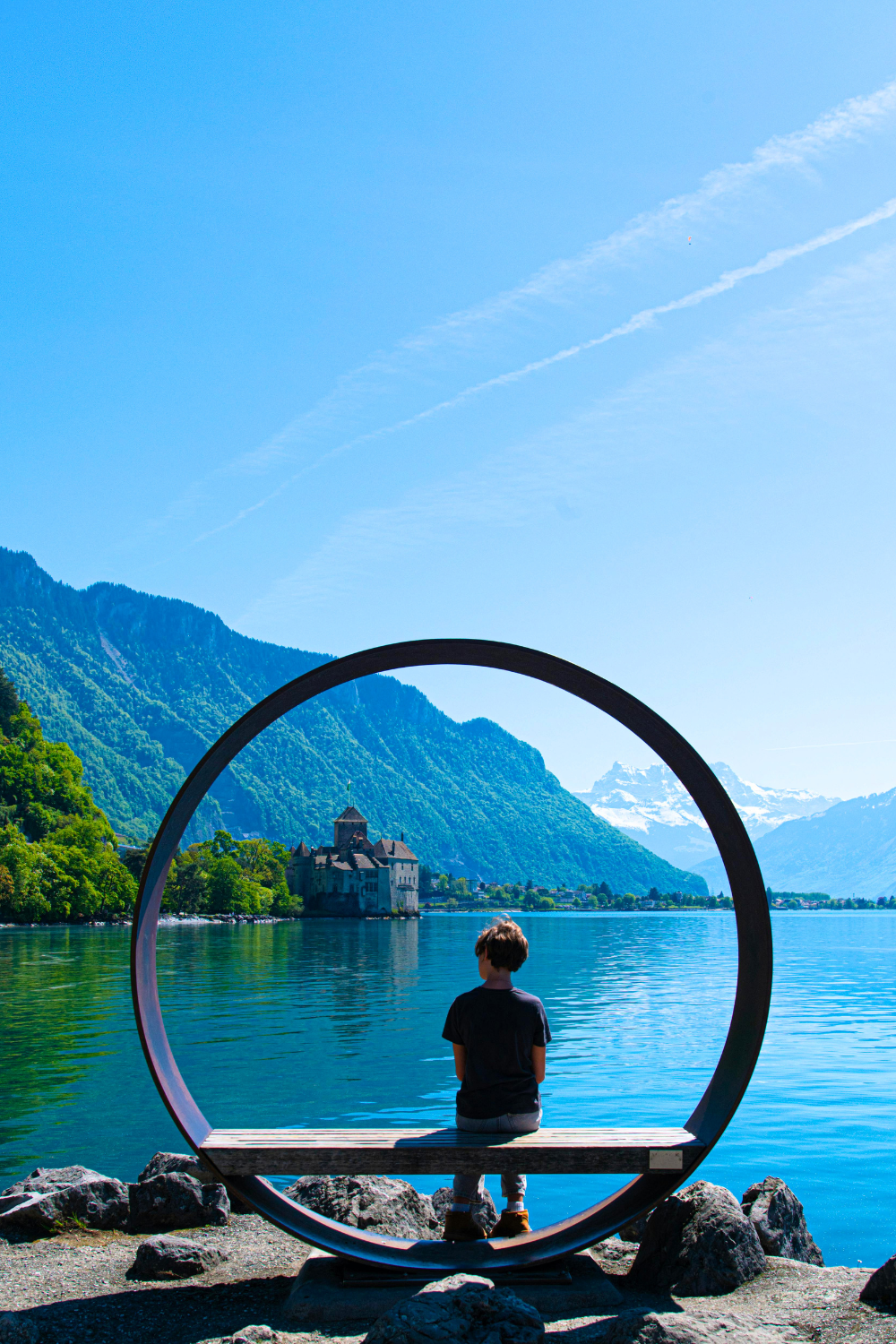
Here is something most people heading to Switzerland in October don’t realise: this country produces wine. Serious, excellent wine — particularly around Lake Geneva, where the UNESCO-listed Lavaux vineyard terraces rise in dramatic steps from the northern shore. The Chasselas grape is the star here, producing a dry, mineral white that’s almost entirely consumed within Switzerland’s borders and therefore almost entirely unknown to the outside world.
October is harvest season, and if you time your visit right — usually the first two weeks of the month — you’ll find the villages of Chexbres, Épesses and Saint-Saphorin buzzing with activity. Vendange (harvest) weekends see locals and visitors alike joining in to pick grapes, followed by communal meals of saucisson, raclette and new wine that go on longer than they should. The terraces themselves, built and tended since the 12th century, turn gold and russet in autumn, with the lake shimmering far below and the Savoy Alps of France rising on the far shore.
The nearby town of Vevey — home to Nestlé’s global headquarters, somewhat improbably — has a beautifully restored market square, and the Alimentarium food museum there is far more interesting than it sounds. Montreux, just a short train ride along the shore, is where the famous Jazz Festival happens in summer, but in October it’s calm, slightly melancholy, and absolutely lovely — the lakefront promenade lined with rose bushes and bronze Freddie Mercury presiding over the water from his famous statue.
Local tip: If you can visit on the first Sunday of October, the Fête des Vignerons in the Lavaux villages sometimes coincides with local wine open days where cellars that are otherwise closed welcome visitors. Ask at the Vevey tourist office about which domaines are participating — a morning tasting at a cave (wine cellar) tucked into the terraces, with the lake spread out below, is one of Switzerland’s most underrated experiences.
5. Zermatt and the Matterhorn: The Most Famous View in the World, in Peace
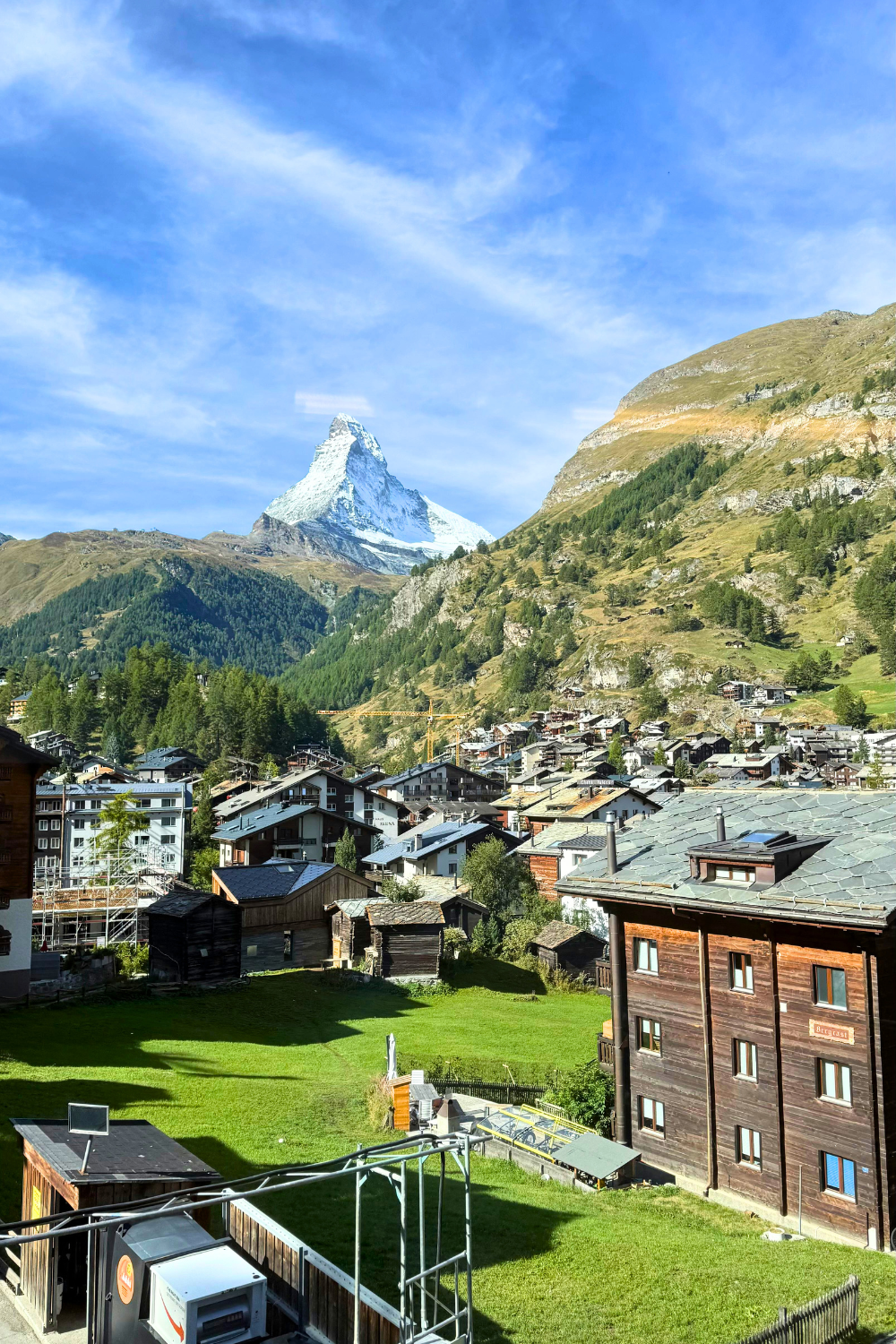
I’ll be direct with you: seeing the Matterhorn for the first time is a moment that physically stops you in your tracks. It doesn’t matter how many times you’ve seen it on chocolate boxes and watched advertisements — the real thing, the actual 4,478-meter pyramid of rock and ice rearing up at the end of a valley, is different. It has a presence. It feels alive.
And October might be the ideal month to experience it. The summer hikers are gone, the ski season hasn’t quite kicked off, and the car-free village of Zermatt — reached by a single train that climbs from Täsch — feels like its authentic self. The mountains are dusted with early snow above 3,000 metres, which makes the Matterhorn look even more dramatic against an October sky than it does in summer. The famous Gornergrat Railway, which climbs to 3,089 metres, is still running and offers views across 29 peaks above 4,000 metres, with the Monte Rosa massif spreading across the horizon like something from the opening of a Bond film.
In the village itself, the main street (Bahnhofstrasse) is lined with excellent restaurants — try the Chez Vrony in Findeln, reached by a short walk or ski lift, for their excellent Alpine cuisine and a terrace looking directly at the Matterhorn. The local Walliser wine — a Pinot Noir or Gamay from the nearby Valais valley — is the perfect companion to a plate of air-dried beef (Viande séchée du Valais) and mountain cheese.
Local tip: Stay at least two nights to account for October’s variable weather. The Matterhorn is famously shy — cloud and mist can obscure it for an entire day. The classic view is from the free Matterhorn Glacier Paradise overlook, but honestly, the view from the doorstep of your hotel in the village, with a glass of wine, at golden hour on a clear evening, is the one you’ll carry home.
6. Appenzell: The Switzerland That Time Forgot
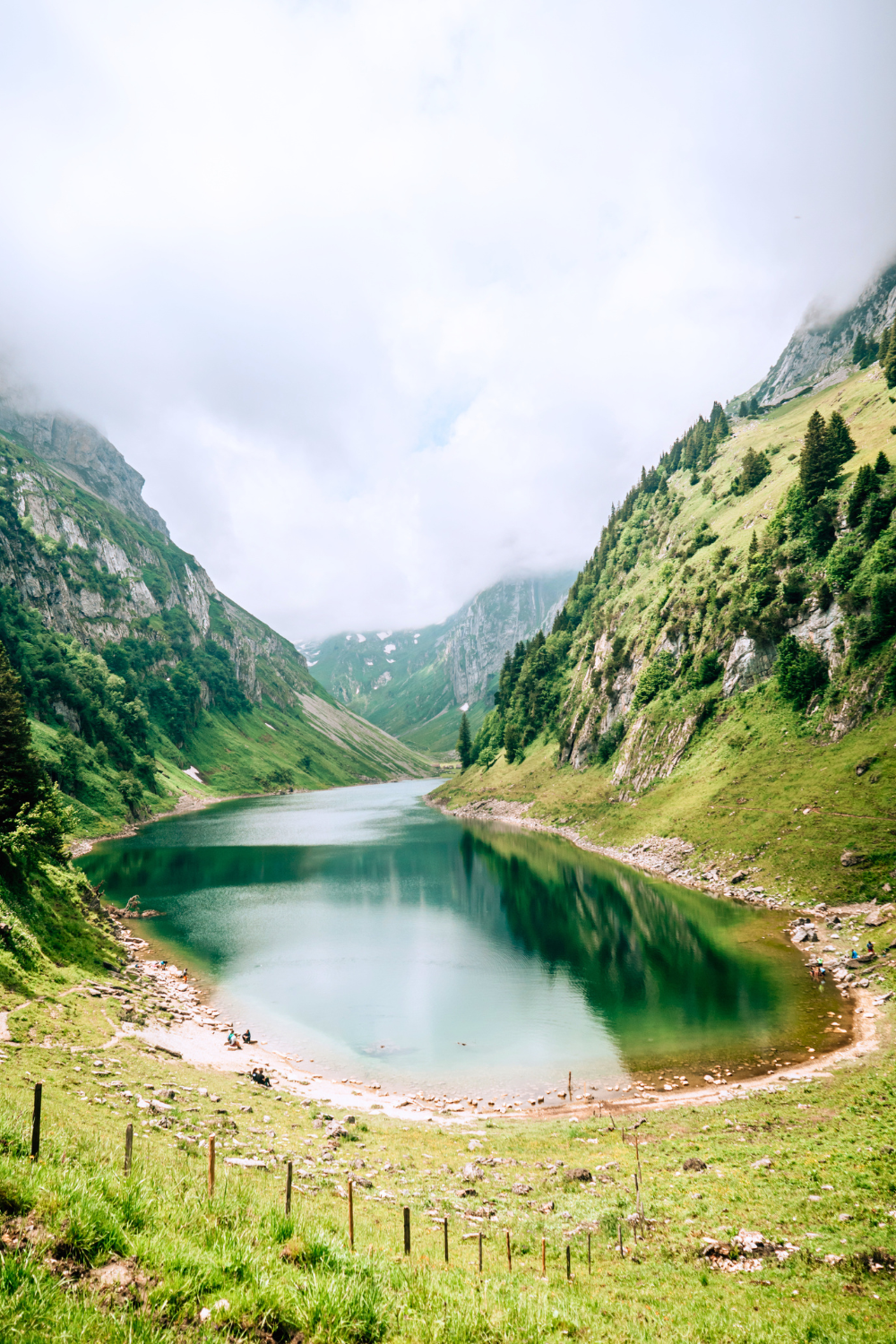
If you want the most concentrated dose of traditional Swiss culture in the smallest geographic footprint, you need to go to Appenzell. This tiny village in the northeastern canton of Appenzell Innerrhoden held its last open-air democratic vote (Landsgemeinde) in 1997 — the year the Swiss finally admitted women had the right to vote there (yes, 1997) — and while that particular tradition has ended, the general sense that the place is operating on its own timeline absolutely has not.
The village is absurdly pretty. The main square, the Landsgemeindeplatz, is lined with painted and frescoed buildings in ochre, rose and cream, their facades covered in intricate folk-art decoration. The town hall, the church, the old inns — all of it looks like it was designed specifically to make you put your camera away and just look. October gives the whole scene a mellow, golden light that heightens the effect considerably.
But the real draw of Appenzell in October is the food. Appenzeller cheese — the one with the secret herbal brine that no one outside a small group of master cheesemakers actually knows the recipe to — is at its absolute best in autumn, when the cows have returned from their high-altitude summer grazing, and the winter milk is richer. The local Mostbröckli (air-cured beef) and Siedwurst sausages, paired with a glass of local apple juice (the region is serious about its orchards), are the kind of meal that requires no ambiance beyond existing.
Local tip: Walk the Appenzeller Panoramaweg trail that loops through the surrounding Alpstein hills. In October the path passes through meadows where the last wildflowers are hanging on, with views across to the Säntis peak (2,502m) and down to the Bodensee (Lake Constance) on clear days. The trail is well-marked and manageable without specialist equipment right through to late October.
7. Ticino: Italian Switzerland in Autumn Colors
Most Swiss people will tell you their favorite weekend escape is Ticino, and most of them will tell you this in a slightly guilty way, as if they’re admitting to cheating on the rest of Switzerland with its sunnier, more relaxed Italian cousin. And that’s fair, because Ticino really is a different country in all but the political sense.
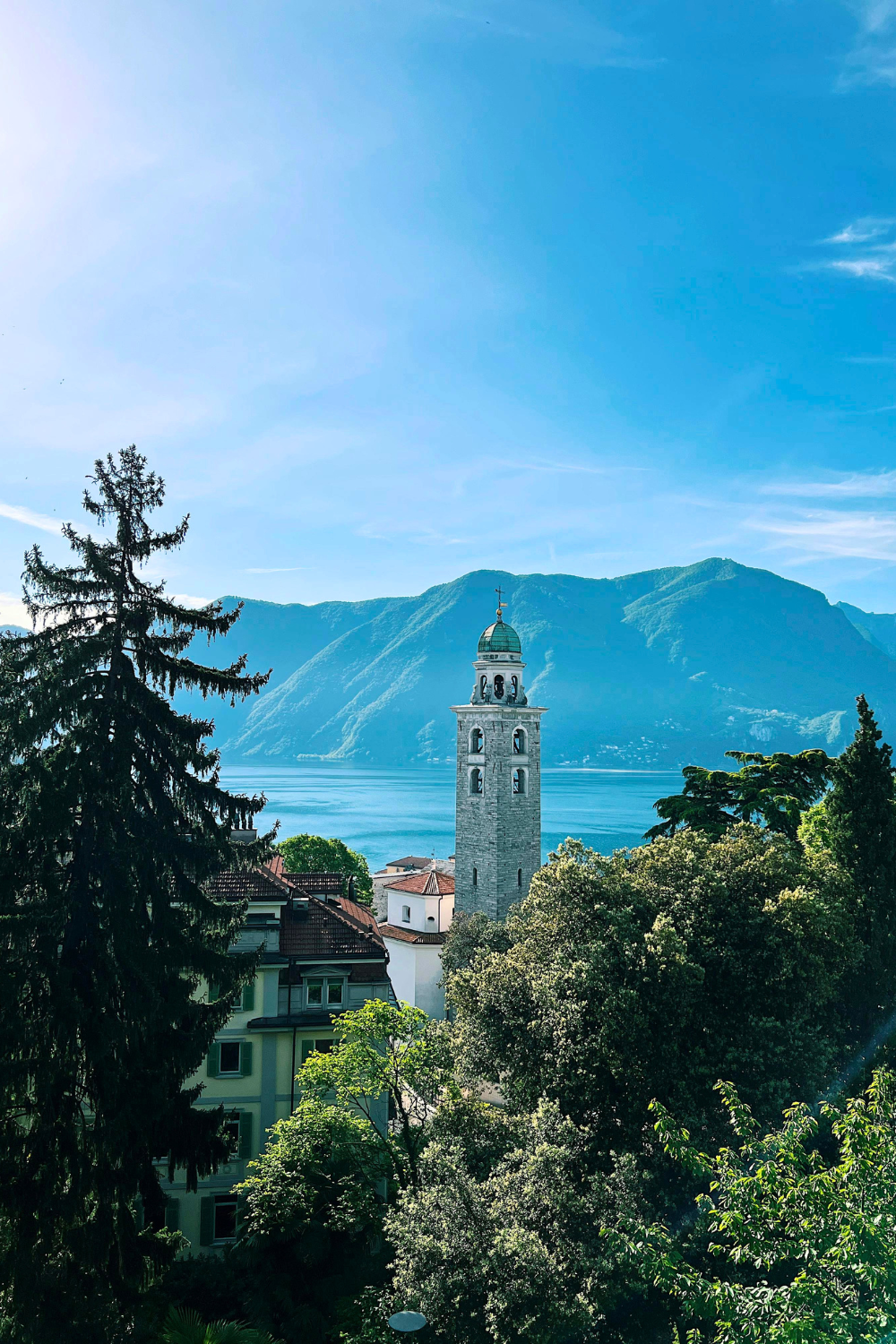
The canton of Ticino sits south of the Alps, and the difference in atmosphere as your train emerges from the Gotthard Tunnel is immediate and startling. The architecture is terracotta and shuttered windows, the language is Italian, the food is polenta and risotto and ossobuco, and the light has that warm, golden Mediterranean quality that the rest of Switzerland simply doesn’t get. In October, as the chestnut forests covering the hills above Lugano and Locarno turn every possible shade of amber and gold, the whole region looks like a Renaissance painting has been made three-dimensional.
Lugano’s lake — Lago di Lugano — is ringed by mountains that glow in October afternoon light, and the town itself has an excellent old centre with arcaded streets, designer shops and excellent gelato that has no right to be this good this far from Italy. Locarno, where the famous film festival happens in August, is calmer in October and centred on the beautiful Piazza Grande — one of Switzerland’s finest public spaces. From Locarno, the Valle Maggia winds north into stunning mountain valleys that feel genuinely remote and barely touched.
Local tip: Hire a car for at least one day and drive through the chestnut forests above Lugano — particularly the roads around Carona and Morcote, a tiny lakeside village with a spectacular church perched above the water. Morcote has been voted one of the most beautiful villages in Switzerland, and in October, with the horse chestnuts falling and the lake below shimmering, the claim feels entirely reasonable.
8. Graubünden: The Quiet Giant
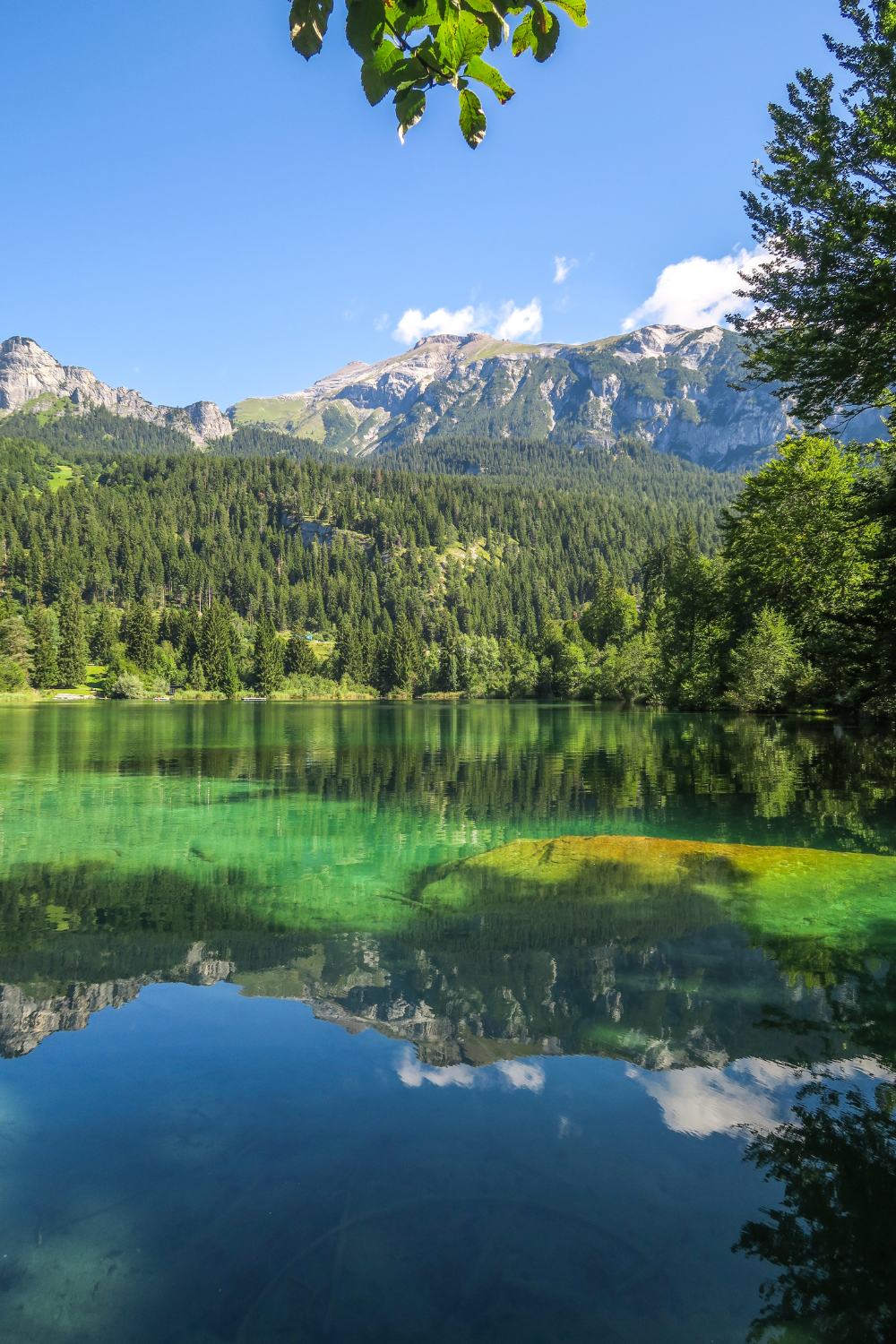
Graubünden (or Grisons, if you prefer the French name) is Switzerland’s largest canton and, I’d argue, its most underappreciated. It covers a third of the country’s total area, encompasses over 150 valleys, and contains three official languages — German, Romansh and Italian — all spoken within the same administrative borders. This is a place with genuine wildness to it, and in October, before the skiing crowds descend on St. Moritz, you can walk through that wildness almost entirely alone.
The Engadin valley is the jewel: a high-altitude corridor at around 1,800 metres, with a string of shimmering lakes and the villages of Pontresina, Sils Maria and Maloja arranged along it like a necklace. The light in Engadin is famous — it’s something to do with the altitude and the clarity of the air, and it attracted Nietzsche, Segantini and countless other artists who found they could think more clearly up here. In October, with the larch forests on the valley sides turning from green to burning gold, the light reaches genuinely hallucinatory levels of beauty.
St. Moritz, the well-known luxury resort village, is in full pre-season mode in October — quiet, clean and surprisingly accessible, with a fraction of January’s prices for accommodation. The Engadin Museum in St. Moritz has excellent exhibits on Romansh culture and the region’s history, and the surrounding hiking trails — particularly the walk from Pontresina through the Roseg valley to the Roseg Glacier — are among the finest autumn walks in Europe.
Local tip: The hamlet of Soglio, reached by a narrow mountain road from Maloja, is one of those places that doesn’t quite feel real. Perched on a ledge above the Bregaglia valley, with a view across to the Sciora massif of granite towers, it has a historic palazzo (now a hotel) and virtually no tourists in October. The chestnut trees that cover the slopes below are ancient, enormous, and in full golden spectacle in early October.
9. Bern: The Capital That Plays It Cool
Bern is Switzerland’s federal capital, which it seems slightly embarrassed about. It’s modest in the best possible way — no grand boulevards or imperial swagger here, just 6km of covered medieval arcades (the Lauben), a bear park by the river, a clock tower that’s been keeping time since the Middle Ages, and an extraordinary concentration of good bakeries. I’m extremely fond of it.
The old city of Bern is a UNESCO World Heritage Site, and in October, when the tourist numbers drop and the locals reclaim the streets, it’s genuinely one of the most atmospheric historic cities in Europe. The Zytglogge clock tower, whose mechanical figures perform at the top of every hour, is the centrepiece, but the whole old town — all sandstone arcades and wrought-iron guild signs — rewards aimless wandering. The Rosengarten (Rose Garden) above the city offers one of the better panoramic views of the Aare River gorge and the Alps beyond, and in October the park’s trees turn spectacular colours above the roses.
The Paul Klee Centre, designed by Renzo Piano and dedicated to the Swiss-German artist, is among the best single-artist museums in Europe — absorbing for a full morning regardless of how much you think you know (or don’t know) about Klee. The Kunstmuseum Bern, which holds works from the 14th century to the present day and controversially took possession of the Gurlitt art collection in 2014, is equally worth serious time.
Local tip: On Saturday mornings, the Bundesplatz market in front of the Federal Parliament building is one of the best produce markets in Switzerland. In October you’ll find pumpkins, wild mushrooms, new wine (Federweisser), and fresh walnuts that are so good you’ll want to fill your luggage with them. Go early, eat a Weggli bread roll with coffee from a market stall, and watch the city wake up around you.
10. The Bernese Wine Route (Bielerseeland): Switzerland’s Best-Kept Secret
I’ll be honest — I didn’t know this existed until a local in Biel told me about it, slightly incredulously, as if surprised I needed to be told. The region around Lake Biel (Bielersee) in the canton of Bern produces some of Switzerland’s finest wines, almost none of which leave the country, and October is when the harvest transforms this quiet corner of Switzerland into something genuinely enchanting.
The villages of Twann, Ligerz and La Neuveville sit on steep south-facing slopes above the lake, their vineyards running down to the water’s edge. Pinot Noir and Chasselas are the main varieties, and the wine is excellent — clean, fresh and mineral, best drunk in the tiny cave-restaurants that dot the hillside. The Bielerseeberg hiking trail runs through the vineyards and connects the villages, with views across the lake to the Jura mountains, and in October the vines are blazing red and orange while boats still cross the calm lake below.
La Neuveville itself is a tiny fortified town with medieval towers and a Friday market that draws people from across the canton. Eat at one of the simple restaurants on the main street, order the local trout from the lake, and drink a glass of Ligerz Chasselas while the October light fades. It costs almost nothing. It is completely perfect.
Local tip: The Twann Kellergasse (Cellar Alley) is a narrow lane running behind the main street of Twann, lined with ancient wine cellars built into the hillside. Many offer informal tastings in October, particularly on weekends. Knock on doors — Swiss hospitality in wine country is genuinely warm, and you’re unlikely to leave empty-handed or sober.
11. Saas-Fee: The Glacier Town That Gets Overlooked
While Zermatt gets all the glory, its neighbour Saas-Fee is sitting 12 kilometres up its own valley, equally car-free, equally surrounded by 4,000-metre peaks, and significantly less crowded. It’s sometimes called the “Pearl of the Alps,” which is the kind of nickname that usually means a place has been over-marketed, but here it genuinely fits — the village is surrounded on three sides by a sweeping horseshoe of glaciers in a way that makes you feel enclosed in something magnificent.
In October, Saas-Fee’s ice climbing and ski touring crowds haven’t arrived yet, and the last of the summer hikers are dwindling. What you get instead is the village at its most honest — the old wooden chalets that predate the tourism boom, the baroque church at the heart of the village, and the extraordinary walking trails that require nothing more than a decent pair of boots. The Saas-Fee Glacier Walk, which traverses the terminal moraine of the Feegletscher, is doable right into October and gives you close access to glacial ice that most people only see from a distance.
The Hannig gondola, which runs to 2,336 metres, gives access to gentle high-altitude plateau walks with views across to the Dom (4,545m), the highest mountain entirely within Switzerland, and the cluster of peaks known as the Mischabel. On a clear October day, this is one of the finest panoramas in the Alps.
Local tip: Stay at least one night, and ask your hotel about the local star-gazing conditions. Saas-Fee has very little light pollution and the International Dark Sky Park designation for the wider Valais region means that on clear October nights the Milky Way is visible with the naked eye above the glacier. There are few better arguments for lingering one more day.
12. Basel: Art, Architecture, and Autumn in the Rhine City
Basel is at its most interesting in October, outside of Art Basel season (that’s June), when the galleries and museums — and there are more museums per capita here than almost anywhere in the world — settle into their normal rhythm and the city feels genuinely lived-in. The Rhine curves through the city in a broad, confident sweep, and in autumn the trees lining its banks put on a proper show.
The Kunstmuseum Basel is the oldest and one of the finest public art collections in the world — it was established in 1661 and has never really stopped improving. The collection spans Holbein the Younger (who lived and worked in Basel) to contemporary art across several buildings, and a serious half-day there is one of the more rewarding museum experiences in Europe. The architecture gallery Museum für Architektur, the Fondation Beyeler (a little outside the city in Riehen, worth the tram ride) and the many commercial galleries that line Spalenvorstadt give Basel a cultural density that punches well above its city-size weight.
The old town — the Grossbasel — is separated from the smaller Kleinbasel across the river by several bridges, and the walk from the cathedral (Münster) along the Rhine promenade at sunset, with the autumn light catching the river and the old guild houses glowing above the bank, is one of those urban experiences that makes you deeply happy to be a person who travels. The Markthalle food hall near the train station is excellent for lunch, and the local Läckerli biscuits — a spiced honey and almond confection unique to Basel — make for the kind of food souvenir that actually gets eaten on the train home.
Local tip: The Basel ferry boats — little wooden cable ferries powered entirely by the Rhine current, not engines — still operate in October and cost almost nothing to cross. They’re among the most charming pieces of transport infrastructure in Europe, and crossing the Rhine in one, watching the old town above the riverbank, is the kind of simple pleasure that reminds you why you bother travelling at all.
13. Aletsch Glacier Region: The Largest Ice River in the Alps
The Aletsch Glacier is 23 kilometres long, 900 metres deep in places, and contains enough ice to cover the entire surface of Switzerland to a depth of 14 metres. Standing at the edge of it — as you can, via the Jungfraujoch or the Bettmerhorn — is one of those experiences that recalibrates your sense of scale in a way that nothing smaller quite manages.
In October, the region around the glacier — the UNESCO-listed Jungfrau-Aletsch area — takes on a particular beauty. The hillsides above Brig and Fiesch are covered in forests that turn amber and gold, and the contrast with the blue-white of the glacier visible above them is extraordinary. The village of Bettmeralp, reached by cable car and car-free, is the main gateway to views of the glacier, and from the summit of Bettmerhorn (2,872m) — accessible by a further cable car — the panorama takes in the full sweep of the Aletsch and approximately every significant alpine peak in sight.
The glacier is retreating visibly year by year — the comparison photographs mounted along the viewing paths are sobering documents of climate change in real time — which gives the experience an urgency that you don’t quite feel with most natural spectacles. Going now, in October, before the winter conditions make access harder, feels like the right time.
Local tip: The Aletsch Forest (Aletschwald) — a primeval arolla pine forest growing directly on the terminal moraine of the glacier — is accessible on foot from Bettmeralp and is extraordinary in October. The ancient, twisted pines are some of the oldest living trees in the Alps, and walking through them on a misty morning, with the glacier visible through gaps in the canopy, is genuinely eerie and wonderful in equal measure.
14. Schaffhausen and the Rhine Falls: Water, Mist and Medieval Streets
The Rhine Falls at Schaffhausen is the largest waterfall in Europe by volume of water — 600 cubic metres per second pour over a 150-metre-wide lip of rock, producing a roar you can hear from several hundred metres away and a permanent mist that hangs over the gorge like weather of its own. In October, with the water level higher from autumn rains and the leaf colour burning on the surrounding banks, the falls are arguably at their most dramatic.
The town of Schaffhausen itself is one of Germany’s — I mean Switzerland’s — most underrated medieval towns. The German comparison is not accidental: Schaffhausen sits right on the German border, looks and feels architecturally Central European rather than Alpine Swiss, and has a magnificently preserved old town centred on the Fronwagturm tower and a main street of oriel-windowed houses that belongs in a Grimm illustration. The Munot — a circular Renaissance fortress sitting on a hill above the town — is accessible for free and gives extraordinary views across the Rhine and into Germany.
October brings the Schaffhauser Münsterkäse harvest festival and various local autumn events, and the region’s wine — particularly the Hallau area, which grows Blauburgunder (Pinot Noir) in some of the most northerly vineyards in Switzerland — is at peak quality and readily available in the town’s wine bars and restaurants.
Local tip: Take the boat from Schaffhausen down the Rhine to Stein am Rhein — a journey of about an hour with gorgeous riverside scenery — and you’ll arrive at what many Swiss consider the most perfectly preserved medieval town in the country. Stein am Rhein’s painted houses, their facades covered with murals depicting historical and mythological scenes, are jaw-dropping up close. In October, the tourist numbers are low enough that you can photograph the main street, the Rathausplatz, without a single other human in frame.
15. The Simmental Valley: Slow Travel and Real Alps
If you’re tired of views from a train window or a cable-car gondola, the Simmental valley between Zweisimmen and Spiez is where you come to experience the Alps at walking pace. This is pastoral Switzerland — a broad, green valley lined with traditional farmhouses, cowbells still echoing on the hillsides in early October, and a gentle beauty that doesn’t ask anything of you except your attention.
The valley is famous for its Simmental cattle — the original brown-and-white breed, ancestors of dairy herds around the world — and in early October the annual Alp Auszug (cattle descent) brings the herds down from their summer mountain pastures. Farmers dress in traditional costume, the cattle wear flower garlands and decorative bells, and entire villages come out to watch and celebrate. It’s not a performance for tourists — it’s a genuine agricultural tradition — which makes it all the more moving to witness.
The villages of Lenk, at the valley head, and Zweisimmen are the main centres, with excellent hiking trails that are still perfectly walkable in October before the snow arrives. The Lenkersee reservoir, a high-altitude lake near Lenk accessible by trail, turns a dramatic copper colour in autumn light, and the surrounding larch forests are among the best in Switzerland for autumn colour.
Local tip: Book a night or two at a traditional Berggasthof (mountain guesthouse) in the valley rather than in a resort hotel. Places like the Gasthof Simmentaler Hof in Zweisimmen are the real deal — locally sourced food, genuine Bernese hospitality, and a warmth that has nothing to do with the radiators. Ask for the Berner Platte if it’s on the menu — a mixed plate of boiled meats and sausages that is the Swiss Alps equivalent of a Sunday roast.
16. Engadin St. Moritz Autumn Hiking: The Larch Forest Trail
I mentioned the Engadin valley briefly under Graubünden, but the larch forests deserve their own dedicated section, because they are among the most spectacular autumn phenomena in the entire Alpine world. Larch is the only deciduous conifer in Switzerland, and when it turns in October — usually starting around the 5th–10th of the month and lasting two to three weeks — the effect is transformative. Entire hillsides shift from green to gold overnight, and the contrast with the grey rock and white snow above creates a visual drama that I’ve struggled to articulate to anyone who hasn’t seen it.
The 5-Lakes Walk (Fünf-Seen-Wanderung) from Pontresina over the Muottas Muragl plateau and back down past five mountain lakes is widely considered the finest autumn day hike in Switzerland, and I’d agree. The route passes through larch forest at peak colour, with lakes reflecting the gold trees and white peaks, and the silence is the kind that feels actively restorative rather than simply absent of noise.
The village of Sils Maria, where Nietzsche spent seven summers in the 1880s writing some of his most important works, is worth a stop both for its extraordinary setting at the point where the Engadin lakes split the valley, and for the small Nietzsche-Haus museum occupying his actual rooms above a confectioner’s shop. Whether or not you share any interest in the philosopher’s ideas, standing in those spartan rooms and looking out his window at the autumn view, it’s not hard to understand why the altitude and light worked on the man’s brain.
Local tip: The Bernina Express train from Chur to Tirano in Italy passes through the heart of Engadin and over the Bernina Pass (2,253m) — one of the highest railway lines in the world. In October, running through the larch forests at their peak colour, with glaciers visible from the panoramic windows, it’s genuinely one of the great train journeys of the world. Book at least a week ahead for a window seat on the correct side (left going south).
17. Montreux to Château de Chillon: Byron Was Right
Lord Byron carved his name into a pillar of Château de Chillon in 1816, which isn’t a model of historic preservation but is a reasonable indicator of how much the place affected him. The medieval castle, which occupies a rocky island at the edge of Lake Geneva and has been occupied in some form since the Bronze Age, is possibly the most dramatically sited historic building in Switzerland, and in October, with the lake slate-grey and the Savoy mountains reflected in it, the whole scene looks exactly like a Romantic painting — because it inspired an enormous number of them.
The drive or train ride from Montreux along the lake shore in October — past the vine terraces of Lavaux, the Belle Époque hotels and the hydrangea gardens — is one of the most beautiful short journeys in Europe, and Chillon is its proper culmination. The castle interior is surprisingly complete: dungeons, courtyards, great halls and private chapels all intact, with views from the upper towers across the lake that have barely changed since Byron stood here.
Back in Montreux, the lakefront is quiet in October but not deserted — the trees around Freddie Mercury’s statue are spectacular in autumn, and the Montreux Jazz Café (open year-round) serves good food in memorabilia-lined surroundings that capture the town’s cultural history well.
Local tip: Take the Mountain Railway (CGN) up to Rochers-de-Naye (2,042m) above Montreux for a view back down the length of Lake Geneva that stretches, on clear days, from the Alps at one end to Geneva at the other. In October there’s sometimes fresh snow on the summit while the valley below is still warm — a combination of conditions that produces the most astonishing colour contrasts you’ll see in Switzerland.
18. Swiss National Park: The Wilderness Nobody Tells You About
Switzerland’s only national park, in the eastern Engadin, is a place most Swiss people know exists and a place most international visitors have never heard of. Established in 1914, it was the first national park in the Alps, and its defining characteristic is that absolutely nothing in it is managed, controlled, or interfered with by humans. Fallen trees are left to rot. Rivers change course. The wildlife — red deer, ibex, golden eagles, bearded vultures — does exactly as it pleases. This is, by Swiss standards, practically anarchic.
In October, the red deer rut is at its peak in the park. The stags’ bellowing calls echo through the valley of Il Fuorn at dawn and dusk, and with the larches turning gold around them, the scene has a primeval quality that catches you completely off guard. The ibex — the wild mountain goat that was hunted to near-extinction in Switzerland and reintroduced in the 20th century — are increasingly visible on the rocky slopes above the treeline as they descend slightly from their summer heights.
The park has no facilities within its core zone — no cafés, no shelters beyond the trail huts. You bring what you need and take everything back out. The trails are superb: the route through the Val Cluozza to the ranger’s hut and back via Margunet ridge is a full day’s walk through some of the most authentic mountain wilderness in Central Europe.
Local tip: Stay in the village of Zernez at the park entrance — the Park Centre there has excellent natural history exhibits and rangers who give evening talks in October on the wildlife you might encounter the next day. Book a room in the Parc Hotel (one of the very few places to stay in the area) at least a month ahead, as October weekends fill up with Swiss hikers who know the secret.
Practical Tips for Switzerland in October
Switzerland in October requires a bit more planning than a summer visit, but the logistics are genuinely manageable. The Swiss Travel Pass remains excellent value: it covers trains, buses, and most lake boats on a flat-rate unlimited basis and is by far the most efficient way to move around. Prices in October are typically 15–30% lower than peak summer at hotels and resorts — particularly at mountain destinations — which goes some way toward offsetting Switzerland’s famously expensive general cost of living.
Weather-wise, pack for three seasons simultaneously. A warm base layer, a mid-layer fleece, and a waterproof outer shell will cover you from sea-level warmth to summit cold. Good walking boots with grip are essential for trails where October frost or early snow can appear without much warning. At altitudes above 2,000 metres, always check the weather forecast the day before any significant walk — the MeteoSwiss app is the most accurate tool available.
Mountain transport (cable cars, cogwheel railways) typically runs through October but starts to reduce frequency and close for maintenance as the month progresses. Always check in advance at sbb.ch or on the specific cable car operator’s website whether the service you’re relying on is still running. A handful of mountain passes — the San Bernardino, the Furka, the Susten — close for the winter in late October; if you’re driving, check Pass Status Switzerland before setting off.
Food-wise: fondue season is in full swing (October to April, roughly). A proper cheese fondue in a mountain restaurant, eaten with bread and accompanied by Swiss white wine and small glasses of Kirsch, is one of the great cold-weather eating experiences anywhere. Raclette — cheese melted individually and scraped over boiled potatoes, gherkins and pickled onions — is the other great Swiss autumn comfort. Budget around CHF 25–35 for either in a mid-range restaurant.
A Final Thought
I’ve been to Switzerland across four different seasons now, and I’ll tell you honestly: October is when it makes the most sense to me. It’s a country that can feel almost aggressively perfect — the trains that run on time, the pristine streets, the mountains that look like someone designed them — and sometimes that perfection creates a kind of distance. But in October, with the light going golden and the cheese bubbling and the crowds gone and the first snow visible on the peaks, Switzerland feels like something earned rather than produced. Like a place that reveals itself slowly, to people willing to show up after the summer rush and before the winter one.
There are a thousand better-known destinations in Europe, and none of them look quite like this in October. Take the train from the airport, open the window when you get above a thousand metres, and breathe in the air that smells of pine and cold stone and coming winter. You’ll understand, very quickly, why people keep coming back.

