
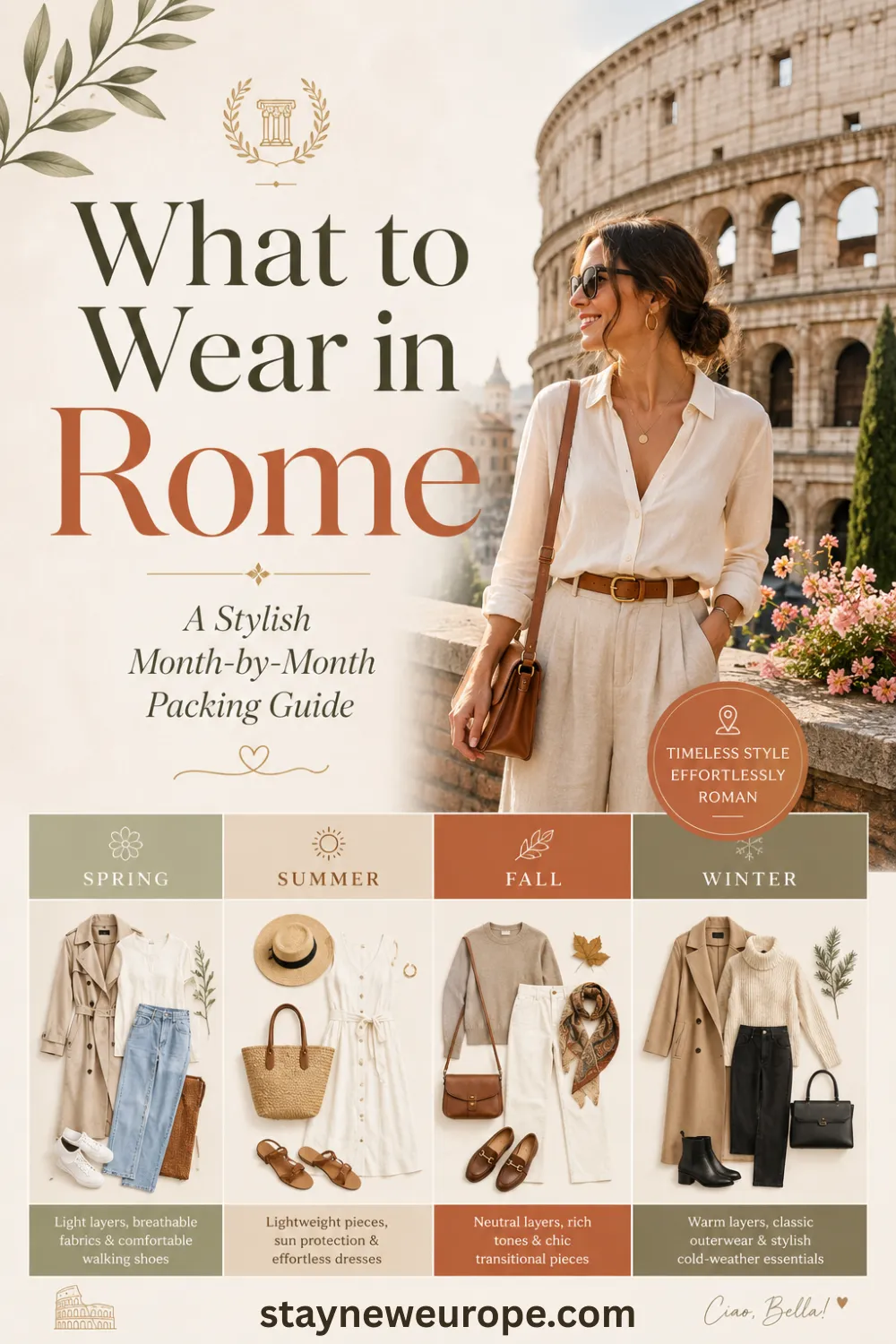
Rome will humble you. Not because the history is overwhelming (though it is), but because you will show up in your bright white sneakers and neon windbreaker while every Roman woman glides past you in a linen blazer and leather mules without breaking a sweat. I learned this the hard way on my first visit, standing at the Trevi Fountain in a gym-adjacent outfit wondering why I felt so wrong in one of the world’s most beautiful cities.
The thing about Rome is that it demands effort — not luxury, not fashion-week excess, just a certain considered quality. The cobblestones will destroy your heels. The summer heat will make you question every synthetic fibre you packed. And the churches will turn you away at the door if you haven’t thought ahead. But get it right, and you’ll fit into this city like you were born here.
This guide covers what to wear in Rome across every season, every month, and every situation you’re likely to find yourself in — from morning espresso at the bar to a late dinner in Trastevere. Pack smarter, walk better, and look like you actually belong.
Before We Dive In: What Dressing for Rome Is Really Like
Rome sits in central Italy with a Mediterranean climate, which sounds idyllic until July hits and you’re wandering around the Palatine Hill at noon in 38°C heat. Winters are mild by northern European standards but noticeably cold, grey, and damp — not the balmy escape some people imagine. Spring and autumn are genuinely glorious, with warm days and cool evenings. Summer is long, intense, and unforgiving.
The walking situation is serious. You will walk more than you think, on surfaces that are more uneven than you expect. Roman cobblestones (sampietrini) are small, irregular, and will send a stiletto heel straight into the gaps. Comfortable, supportive footwear is not optional. The Vatican, the Colosseum, Palatine Hill, Trastevere, the historic centre — none of these are gentle on your feet, and you’ll easily clock 15,000 to 20,000 steps on a typical sightseeing day.
Romans dress with a quiet elegance that is neither overdressed nor sloppy. They tend toward neutral colours, quality fabrics, and clean silhouettes. They rarely wear athletic clothes outside of actually exercising. They do not generally wear shorts beyond tourist areas. And they would never, ever wear flip-flops to dinner. The biggest packing mistake tourists make is either going too casual (thinking it’s a beach holiday) or too impractical (packing heels they cannot walk in). The sweet spot is smart-casual: put-together but mobile.
One more thing: if you plan to visit any churches — and in Rome that’s basically everywhere — you need covered shoulders and covered knees. This catches people off guard constantly. Plan for it from day one.
What to Wear in Rome by Season
Spring (March–May)
Spring in Rome is one of the best times to visit, and the dressing is genuinely enjoyable. Temperatures climb from around 13°C in March to a comfortable 22°C by May. Days can be warm and bright; evenings still have a chill. Layers are your friend.
The spring outfit formula is simple:
- a lightweight base layer (a silk blouse).
- a linen tee.
- a fine-knit top.
- a medium layer you can remove mid-morning (a denim jacket.a linen blazer, a trench).
- and comfortable walking shoes.
In April and May you can swap the coat for a lighter jacket in most situations. Midi dresses with a cardigan thrown over the top are ideal — they cover your knees for church visits and look effortlessly polished.
What to wear in Rome in spring: think soft palettes, natural fabrics, and shoes that won’t betray you on the Janiculum Hill.
Summer (June–August)
Let me be honest: dressing for Rome in summer is about survival as much as style. It is hot. Genuinely, heavily, stubbornly hot. August especially can feel relentless. You want natural fabrics only — linen, cotton, lightweight silk. Anything polyester will feel like wearing a plastic bag.
Summer outfits should be loose and breathable: Linen wide-leg trousers, linen shirts, cotton midi dresses, and floaty tops work beautifully. Shorts are fine for the streets and tourist sites, but not for churches or smarter restaurants. The mistake I see tourists make in summer is packing light dresses that look great but are so short or strapless that they’re turned away from every major basilica.
A light scarf or pashmina in your bag solves the church problem instantly. One piece of fabric = access to everywhere.
Autumn (September–November)
September still feels like summer for the first half, then things shift in October into something genuinely beautiful: warm afternoons, cooler evenings, and the city less crowded. November brings real autumn — grey skies, rain, and temperatures around 12°C.
Autumn is arguably the best season to visit Rome from a dressing perspective. Transitional pieces shine here:
- trench coats.
- ankle boots.
- light knits.
- and rich autumnal colours (terracotta, olive, rust, camel) that feel like they belong in this city more than anywhere else on earth.
What to wear in Rome in autumn: layers you actually want to wear, in colours that look incredible against ochre walls.
Winter (December–February)
Rome in winter is colder than most people expect — particularly at night and in early morning. Average temperatures hover around 6–10°C, with occasional frosts and fairly regular rainfall. It rarely snows, but it can feel damp and grey for stretches.
Winter dressing in Rome is about warmth without bulk. A quality wool coat, good ankle boots, and a few warm knit layers will see you through. You don’t need a heavy ski-jacket style parka — the cold doesn’t reach those extremes — but you’ll definitely regret leaving your coat at home. Romans dress elegantly in winter: dark colours, good coats, leather boots, scarves worn with intention.
What to Wear in Rome Month by Month
January
January is Rome’s coldest month. Temperatures average 4–12°C with frequent overcast skies and some rain. The city is quiet and genuinely charming — fewer tourists, Christmas decorations still hanging in early January, and an unhurried atmosphere.
Pack as you would for a mild European city winter. A wool or wool-blend coat is essential. Underneath:
- trench coats.
- ankle boots.
- light knits.
- and rich autumnal colours (terracotta, olive, rust, camel) that feel like they belong in this city more than anywhere else on earth.
Evenings are genuinely cold, so carry that coat everywhere.
Outfit idea: dark slim jeans, a cashmere or merino roll-neck, a tailored wool coat in camel or black, ankle boots with a block heel, a simple scarf.
Local tip: Romans keep their winter outfits very dark and polished in January — black, navy, camel, charcoal. Bright winter colours read very tourist.
February
Very similar to January but with slightly longer days and occasional bursts of surprisingly warm sunshine. Still cold, still potentially rainy. Valentine’s weekend brings couples flooding in, and Carnevale season means slightly more festive energy toward the end of the month.
The same winter wardrobe applies. If you’re visiting for a romantic dinner, Rome’s smarter restaurants have a quietly dressy vibe — a silk blouse under a blazer, or a simple knit dress with tights and ankle boots.
Outfit idea: knit dress in a warm tone (burgundy, camel), sheer tights, ankle boots, long wool coat.
Local tip: Check if rain is forecast. February can be Rome’s rainiest month. A compact umbrella is non-negotiable.
March
March is transitional and unpredictable. Early March still feels like winter; late March can genuinely surprise you with warm afternoons. Pack for both. Layering is the entire strategy here.
A medium-weight jacket or trench coat covers most situations. Bring at least one warm layer (a knit jumper or thick cardigan) that you can shed as the day warms up. What to wear in Rome in March: think versatile neutrals that work together regardless of what the weather decides.
Outfit idea: high-waist trousers in olive or camel, a fine-knit tucked-in blouse, a trench coat, white leather trainers or loafers.
Local tip: The Colosseum and Roman Forum are exposed and windswept in March. Bring a layer even if it looks warm outside.
April
One of the best months to visit. Temperatures reach around 17–19°C during the day, with pleasant sunny spells and cool evenings. The city is busy with Easter crowds but absolutely beautiful — spring flowers, golden light, terraces opening up.
Midi dresses with a denim or linen jacket are perfect. Light knits, blouses with wide-leg linen trousers, and comfortable loafers or trainers tick every box. What to wear in Rome in April: polished spring looks that handle both a warm afternoon and a cooler evening without requiring a full outfit change.
Outfit idea: white linen wide-leg trousers, a colourful short-sleeve blouse, a cream linen blazer, tan loafers.
Local tip: Easter weekend is extremely busy. If you’re visiting the Vatican, go early and dress for churches from the start.
May
May is gorgeous. Warm, increasingly sunny, around 20–23°C, and still manageable before the peak summer heat. Romans start wearing their lightest spring wardrobes: floaty dresses, linen sets, sandals are beginning to make an appearance.
What to wear in Rome in May: linen is your best friend. A linen midi dress does everything — sightseeing, lunch, church visit (add a scarf), dinner on a terrace. Add white leather trainers or block-heel sandals and you’re set.
Outfit idea: rust-coloured linen midi dress, white leather trainers, simple gold jewellery, small leather crossbody bag.
Local tip: Pack at least one slightly smarter outfit for dinner in May. Restaurant terraces are opening and Romans dress up for them.
June
Summer begins. Temperatures reach 27–29°C in June, and the evenings are long and warm. The city fills with tourists and the pace shifts. Romans who can afford it start leaving for the coast on weekends.
Linen and cotton only. Loose silhouettes. A light scarf or pashmina lives permanently in your bag for churches.
What to wear in Rome in June: your lightest, breathiest wardrobe — but keep it elegant. Shorts are fine for daytime sightseeing; for evenings, opt for linen trousers or a light dress.
Outfit idea: cotton or linen wide-leg trousers in white or pale blue, a simple sleeveless linen top, flat leather sandals, a linen tote bag.
Local tip: Wear sunscreen and carry water. The cobblestone streets radiate heat upward. You will sweat. Light fabrics save you.
July
July is hot. Very hot. 30–33°C regularly, sometimes higher, with intense midday sun and warm nights. This is peak tourist season and also when many Romans have left for their summer holidays. The city operates on a slightly slower tempo in August, but July is still full-on.
Dress as lightly as possible while remaining practical. Linen sets, cotton dresses, loose trousers. No synthetics. Comfortable flat sandals (leather, not foam flip-flops) that can handle cobblestones. What to wear in Rome in July: essentially your most breathable, least-effort put-together look.
Outfit idea: linen co-ord set (shorts and loose shirt) in a neutral, leather flat sandals, a crossbody bag, sunglasses.
Local tip: Visit the Vatican and major basilicas in the morning before the heat peaks. Dress for them from the start — it saves the whole “wrapping a scarf around yourself at the entrance” scramble.
August
August in Rome is a specific experience. Many locals leave. Temperatures hit 32–36°C or more. Some restaurants and shops close. But the city is hauntingly beautiful with fewer crowds, especially in early mornings.
This is the month where what to wear in Rome comes down to pure heat management. Natural fibres, loose cuts, flat shoes you trust. Avoid dark colours if you’ll be outdoors all day — they absorb the heat mercilessly.
Outfit idea: white or light-coloured cotton midi dress, woven leather flat sandals, a straw or woven bag, a thin linen scarf tucked in the bag.
Local tip: The Borghese Gallery is blissfully air-conditioned. So are the Vatican Museums. Plan your sightseeing around these spots during peak heat.
September
September is arguably Rome’s finest month. The summer heat starts to ease (though early September still feels like full summer), crowds thin out after the school holidays, and the light turns that incredible amber-gold of Italian autumn. Temperatures range from 24°C at the start down to 19°C by the end.
What to wear in Rome in September: summer pieces with a few autumn layering items beginning to creep in. Linen trousers, knit cardigans, light jackets. By late September you’ll want a light jacket for evenings.
Outfit idea: wide-leg linen trousers in terracotta, a fitted white tee, a light knit cardigan tied around the shoulders, leather loafers.
Local tip: Restaurant terrace weather is still wonderful in September. Dress up slightly more than you might in July — Rome’s dining scene gets its rhythm back after August.
October
October is wonderful. Mild days (17–21°C), cooler evenings, occasional rain, and the city settling into its Italian-autumn golden hour. The terracotta and ochre tones of Rome’s buildings look even more beautiful under October light.
Layering season is in full swing. Ankle boots return. Trench coats feel exactly right. Knits, warm-tone palettes, silk blouses. What to wear in Rome in October: elevated casual — you can genuinely look like you live here.
Outfit idea: dark straight-leg jeans, a warm-tone silk blouse tucked in, a camel trench coat, tan ankle boots, a simple leather crossbody.
Local tip: October is a great time to pack that one slightly dressier outfit for dinner. Rooftop bars are still open, the terraces are still running, but with a more local crowd.
November
November marks proper autumn. Temperatures drop to 8–15°C, rain increases, and the city has a quieter, more intimate quality that rewards slower-paced visitors. It’s not glam, but it’s real.
A proper coat is essential from November. Quality wool or a warm wool-blend coat, good ankle boots or leather walking boots, knits and layered tops. Bring an umbrella. What to wear in Rome in November: winter-leaning layers, practical footwear, and embrace the grey skies.
Outfit idea: dark skinny or straight jeans, a thick roll-neck jumper, a structured wool coat, leather ankle boots, scarf.
Local tip: November is excellent for museums (shorter queues) but you’ll want warm and waterproof footwear. The cobblestones get slippery when wet.
December
December brings the magic of Christmas to Rome — lights along Via Condotti, markets at Piazza Navona, and the Vatican looking properly magnificent in evening light. Temperatures hover between 5–12°C, with rain likely and evenings genuinely cold.
Winter dressing at its most intentional: warm coat, layers, boots. But December also brings occasion dressing — Christmas dinners, festive events, the midnight Mass crowd at St Peter’s. Pack one polished outfit if you’re visiting over Christmas.
Outfit idea: tailored dark trousers, a silk or satin blouse, a long structured wool coat, heeled ankle boots (for evening only — carry flats for the cobblestones).
Local tip: The Christmas Eve and Christmas Day crowds around the Vatican are extraordinary. Dress for the cold, plan ahead, and go with comfortable shoes — you may be standing for hours.
Best Shoes for Rome
Shoes are where the whole trip can go wrong, and I would absolutely prioritise your footwear choices above everything else in your suitcase.
The sampietrini — Rome’s iconic small black cobblestones — are beautiful and brutal. They are uneven, gaps between them are generous, and they will grab a thin heel and hold it hostage. Stilettos are a no. Kitten heels are extremely risky. Even some wedges can feel unstable. The Romans who manage to look elegant on these streets have either grown up doing it for decades, or they’re wearing lower heels than they appear at first glance.

What actually works: leather loafers (flat or with a modest 2cm block heel), leather trainers (white, minimal, not athletic-looking), block-heel ankle boots. The key word throughout is leather — it breathes, it moulds to your foot over time, and it reads far more polished than a foam-soled trainer.

What to avoid:
- heels above 5cm for any walking-heavy day.
- brand-new shoes you haven’t broken in.
- foam flip-flops (they’re slippery on wet cobblestones and look wrong away from the beach).
- and ultra-chunky platform trainers which have become practically a uniform for tourists and make you look exactly like a tourist.
For summer:

- flat leather sandals with a slightly sturdy sole are the best shoes for Rome.
- Birkenstock-style sandals work surprisingly well — they’re comfortable, the sole provides grip, and with the right outfit they look considered rather than orthopedic.

For autumn and winter:
- ankle boots with a low block heel are the gold standard.
- Comfortable enough to walk 15km, polished enough for dinner.

I would pack two pairs of shoes minimum, three if I had the suitcase space: a daily walking pair, a smarter pair for evenings, and sandals in summer.
Local tip: Break your shoes in before you come. Rome is not the place to discover that your new leather loafers give you blisters.
What Not to Wear in Rome
Let me be honest about this, because the internet is full of vague warnings but not enough specifics.
Athletic wear away from the gym. Leggings, sports bras, gym shorts, technical running gear — these are fine for your morning run along the Tiber, and genuinely not fine for wandering the historic centre, sitting in a café, or going to a restaurant. Romans exercise in athletic gear and live life in real clothes. The crossover is not the same here as it might be at home.
Brand-new shoes. I learned this the hard way — actually, I watched someone else learn it, hobbling away from the Colosseum with fresh blisters on day two. Never travel to Rome in shoes you’ve never worn before.
Strapless or very short dresses as your only outfit. They’re lovely, but they’ll be refused entry at every major church. You’ll spend your day either wrapping yourself in a scarf or missing out on some of Rome’s greatest interiors. A dress that covers your shoulders and falls below the knee handles everything.
Bright white trainers with everything. This has become so standard among tourists that Romans can spot you from 50 metres. It’s not a disaster, but if you want to blend in, opt for leather trainers in a slightly less blinding shade, or choose loafers.
A heavy winter parka in November or March. Rome’s “cold” rarely justifies the bulk of an extreme-weather coat. A good wool coat is more practical, packs better, and looks significantly more appropriate.
Too many statement pieces. Roman style is quietly polished, not loud. One interesting piece per outfit is plenty. Save the maximalist packing for somewhere else.
The overstuffed backpack. A large hiking backpack worn to every tourist site is genuinely impractical (you’ll have to remove it at most museums and leave it in lockers) and immediately flags you as someone who over-packed. A small crossbody or leather tote handles 90% of situations.
What to Wear for Dinner in Rome
Dinner is one of Rome’s great pleasures, and it’s worth dressing for it — not in a black-tie way, but in a “I made an effort” way that the Romans will silently appreciate.
For a casual trattoria in Trastevere or a local neighbourhood restaurant, smart-casual is plenty: clean jeans, a nice top, a blazer or lightweight jacket, clean leather shoes. This is not a trainers-and-hoodie situation, but it’s also not a cocktail dress situation.

For a nicer restaurant — one of the places around the historic centre with printed tablecloths and a wine list that takes itself seriously — step it up slightly.

Women: a silk or satin blouse with tailored trousers or a midi dress with a blazer. Men: a collared shirt, smart trousers, leather shoes. Romans don’t over-dress for dinner, but they do dress.

Rooftop bars and wine bars (enoteche) occupy a middle ground: polished but not formal. A great linen or silk dress, a cashmere knit over trousers, leather loafers. Avoid overly casual or athletic looks, and you’ll be fine.
One honest caveat on shoes: if dinner follows a full day of sightseeing, you absolutely do not need to wear heels. Polished flat shoes — leather loafers, ballet flats, clean leather sandals — are perfectly appropriate and will not raise a single Italian eyebrow. Leave the heels for a shorter-distance, lower-mileage evening.
Local tip: Romans eat late. Dinner before 8pm is tourist territory. If you’re aiming to dine when the locals do, plan an 8:30pm–9:30pm reservation — and dress accordingly.
What to Wear for Churches, Museums, and Cultural Sites
This section surprises more people than any other, even experienced travellers who forget how strict Rome’s major churches are.
The rule is simple and absolute: covered shoulders and covered knees are required to enter any Roman Catholic church. This includes St Peter’s Basilica, the Pantheon (which is still a functioning church), Santa Maria Maggiore, and essentially every other church in the city. It is enforced — guards will turn you away, and there’s no negotiation.

The easy fix: carry a thin linen or cotton scarf in your bag at all times during warmer months. In 30 seconds you can drape it over bare shoulders or wrap it as a skirt over shorts. This is what every seasoned Rome visitor does. Once you have your scarf system sorted, you never have to think about it again.

For women, the easiest church-friendly outfits are: a midi or maxi dress (sleeveless is fine if you carry the scarf), linen wide-leg trousers with any top (the scarf covers shoulders if needed), or a blouse and long skirt combination.

For men: long trousers (shorts will require a covering), and shoulders are less strictly policed but a shirt with sleeves is respectful.
Museums are less restrictive on dress code but often have temperature swings — air-conditioned galleries can feel cold even in July. A light layer in your bag is worth it. The Borghese Gallery, the Vatican Museums, and the Capitoline Museums are all large and involve a lot of walking, so comfortable shoes are essential.
Local tip: At St Peter’s, the dress code is checked at the security line before you even get to the entrance. Don’t arrive already at the front of a long queue only to be turned back.
What Bag to Carry in Rome
Bag choice matters more in Rome than in many other cities, for both practical and safety reasons. Pickpocketing is a real issue in tourist-dense areas — the Colosseum, the area around the Vatican, the Trevi Fountain, and the main metro stations.
A crossbody bag that closes with a zip (not a magnetic clasp) and sits against your body at the front is the most practical and secure option for daily sightseeing. Leather crossbodies look polished with everything from linen trousers to summer dresses and are widely available at very reasonable prices in Rome itself if you want to buy one there.

A structured leather tote works well for slower days — a museum afternoon, a neighbourhood wander, a shopping day — where you’re carrying less and feel more at ease. Avoid leaving it hanging open or putting your phone in an easily accessed outer pocket.

Anti-theft bags (with slash-proof straps, hidden zips, RFID protection) are genuinely useful if you’re worried. They’ve improved significantly in design in recent years and no longer look like you’re on a walking tour of your local business park.
I would skip: a large open tote as your only bag for busy sightseeing days, a small fashion bag that holds nothing useful, and a full hiking backpack which will be confiscated in most museums.
For evenings, a small clutch or a compact leather crossbody is ideal. Practicality over everything — Rome’s evenings involve walking through uneven streets, and something hands-free always wins.
Local tip: Buy a cheap, attractive leather-look bag from one of Rome’s street markets for daily use and keep your nice bag for evenings. The Campo de’ Fiori and Porta Portese markets have good options.
Rainy Day Outfits for Rome
Rome gets rain most reliably in November and February, but showers can show up in any season, particularly in autumn and spring. A rainy day is not a reason to abandon your outfit plans — it’s just a reason to have thought ahead.

The most important item for a rainy Rome day is waterproof or water-resistant footwear. Wet cobblestones are genuinely slippery, and leather shoes — while beautiful — can be ruined by a downpour. Ankle boots with a slightly rubberised sole, leather trainers with decent grip, or Chelsea boots in a wax-coated leather all work well.
A trench coat is the most elegant solution to Roman rain. It covers enough of your outfit to keep you dry in light to moderate rain, looks completely at home in this city’s aesthetic, and transitions perfectly from the street to an indoor restaurant. A light rain jacket works for function but reads more tourist — not a crime, but worth knowing.

What to avoid on rainy days:
- silk (it marks).
- white cotton that turns transparent.
- and suede shoes of any kind.
- Also skip the umbrella if it’s truly torrential and opt for a hood
— Roman streets can be narrow and fighting an umbrella in crowds is miserable.
Rainy days are genuinely perfect for museums, the Vatican Museums especially, and for sitting in a café reading for two hours while the sky does its thing. Dress comfortably, dress practically, and embrace it.
Local tip: The Pantheon is spectacular in rain — it’s been dealing with its open oculus for two thousand years and has a drain in the floor to prove it. It’s also covered, which makes it one of the best rainy-day destinations in the city.
Capsule Wardrobe for Rome
This is what I would actually pack — not a fantasy packing list, but a realistic wardrobe for a 7–10 day trip that handles everything from sightseeing to dinner without needing to repack halfway through.
Tops (5–6 pieces) Two or three simple tees or linen tops in neutral colours (white, cream, soft olive, terracotta). One silk or satin blouse for evenings. One fine-knit long-sleeve top that works in transitional weather. One fitted tank that layers under blazers and cardigans.
Bottoms (3–4 pieces) One pair of dark straight-leg or slim jeans that can go from sightseeing to dinner. One pair of linen wide-leg trousers (summer or shoulder season). One pair of smart tailored trousers or a midi skirt. Shorts are optional — useful in summer, less versatile overall.
Dresses (1–2 pieces) One linen or cotton midi dress that is both church-appropriate with a scarf and dinner-appropriate as-is. One optional slip dress or more occasion-oriented dress for evenings.
Shoes (2–3 pairs) One everyday walking shoe (leather trainers, loafers, flat sandals depending on season). One smarter flat or low-heel option (ankle boots in cooler months, leather sandals in summer). Optional: one very low block-heel shoe for evening only.
Outerwear One main jacket appropriate to the season — trench coat in spring/autumn, light linen blazer in summer, wool coat in winter. One optional lightweight layer (denim jacket, linen blazer) for layering.
Accessories Two or three versatile scarves (also serve as church covers). Simple gold or silver jewellery that mixes easily. One day bag and one evening bag (or one crossbody that handles both). Sunglasses. A compact umbrella in shoulder seasons and winter.
Local tip: Pack in neutrals with one or two colour pieces that work across multiple outfits. Rome itself provides all the colour you need.
How Many Outfits to Pack for Rome
This is where people consistently over-pack, and then drag a suitcase the size of a small wardrobe across cobblestones while deeply regretting their choices.
3 days: Two full daytime outfits (you can repeat one), one evening outfit, two shoe options. That’s genuinely it. Carry-on only if you’re disciplined.
5 days: Three to four outfits, with the understanding that tops can be swapped to create new combinations. Two shoe options minimum, three if there’s room. One proper evening option.
1 week (7 days): Five to six outfits with overlapping pieces. Mix and match is the strategy. The same linen trousers can go with three different tops and two different shoes and look like different outfits. Pack your capsule wardrobe above and you’re covered.
10 days: Six to seven outfit foundations, leaning on mix-and-match. Add a few extra tops — they take up almost no space and refresh the whole look. Plan one or two laundry opportunities (most Rome hotels and many Airbnbs have laundry access).
2 weeks: Build your capsule wardrobe and genuinely use the laundry. Two weeks of unique outfits is unnecessary and physically impossible to pack without checking in luggage you’ll hate dealing with. Seven to eight foundations, laundered once mid-trip, covers everything.
The key to repeating outfits without feeling like you’ve given up: change your shoes, change your bag, add or remove an outer layer, switch your accessories. Rome’s Romans wear the same coat for five days in a row without a second thought. It’s called having a good coat.
Rome Outfit Ideas for Specific Situations
Some situations call for specific thinking, and the generic packing advice doesn’t cover them.
Morning sightseeing (Colosseum, Roman Forum, Palatine Hill): These sites are open-air, exposed, and involve a lot of uneven walking. Comfort is non-negotiable. Trainers or loafers, linen or cotton layers, a hat in summer, sunscreen visible from space. A small crossbody with water and your essentials. In July and August, go as early as possible.
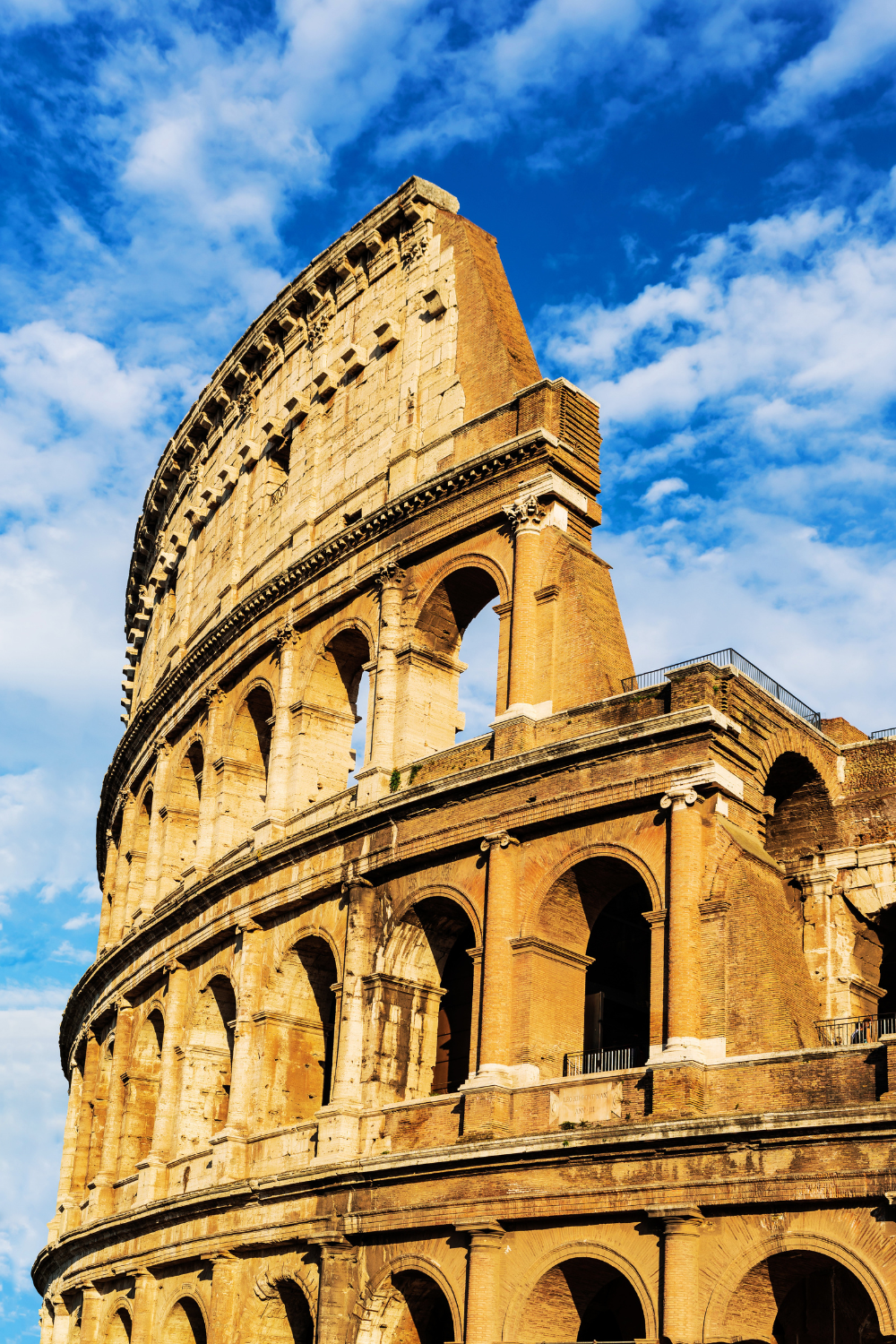
Vatican visit: Dress for the dress code from the door of your accommodation. Covered shoulders, covered knees. Comfortable shoes — you will walk several kilometres inside. Carry a scarf for any sudden church entrance. Go as early as you can get a timed entry.
Trastevere evening: This neighbourhood has a relaxed, bohemian quality. You can dress down a little more than at a formal restaurant, but it’s still Rome — not a beach bar. Nice jeans, a pretty top, leather flats or sandals, a casual jacket. You’ll look perfect.
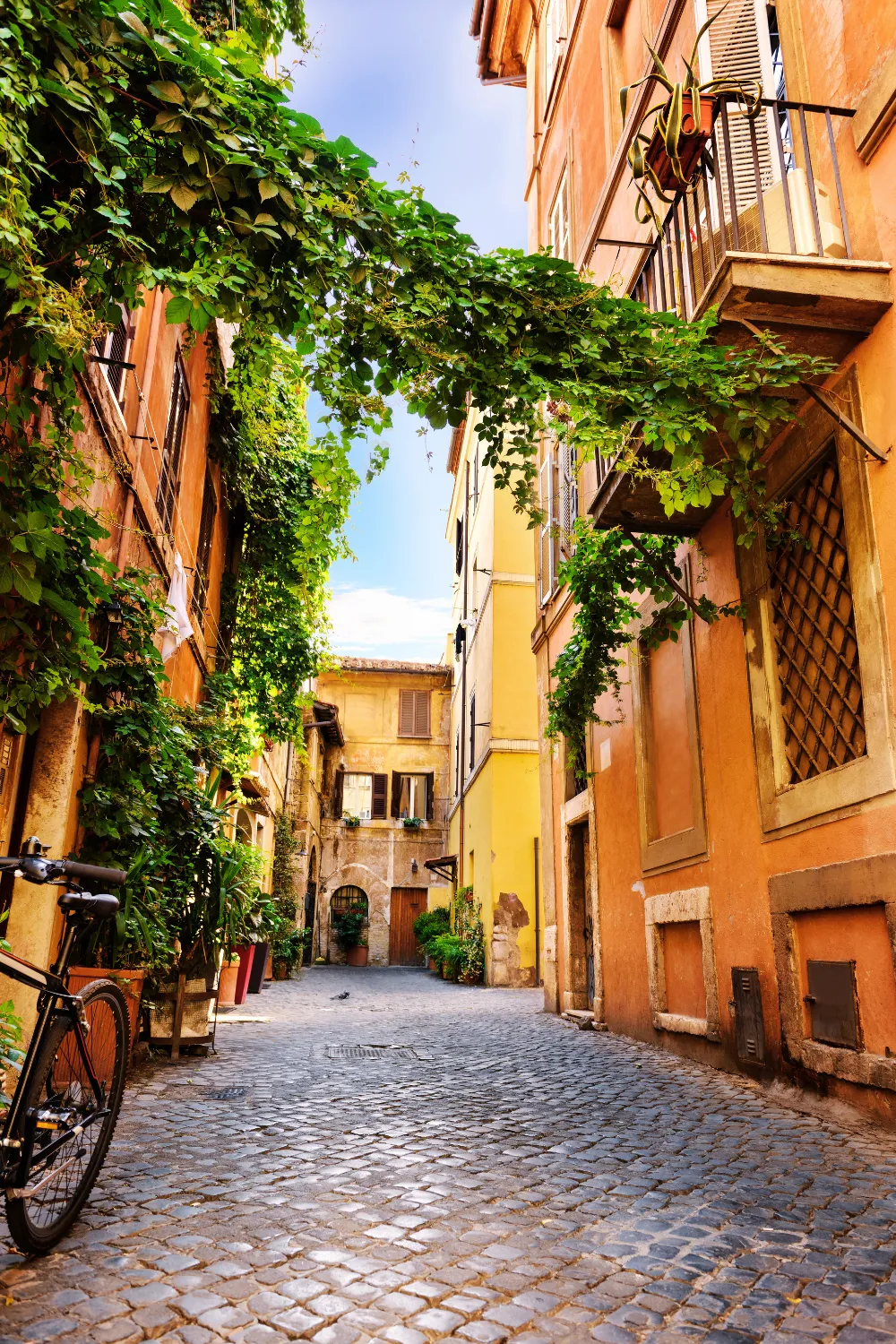
Day trip to the coast (Ostia Antica, or a beach day at Fregene):
If you’re going to the actual beach, a swimsuit under a linen cover-up or loose dress, flat sandals, a tote bag. Simple. Just don’t wear full beach attire through the city to get there.
A hot afternoon when you’ve lost the will to be stylish: Linen shorts, a lightweight linen shirt, flat sandals, a very cold gelato. This is always acceptable.
Packing Mistakes to Avoid
I’ve made most of these, or watched other people make them with expressions of increasing regret.
Packing only cute shoes. Rome will break your feet if you sacrifice comfort for aesthetics. The beautiful leather loafers that work for a dinner also need to work for the twelve kilometres you’ll walk beforehand.
Ignoring the season variance. Spring and autumn in Rome can mean anything from 10°C to 24°C within the same week. Pack for the range, not just the average.
Bringing too many statement pieces. That printed maxi skirt, those patterned wide-leg trousers, the bold-colour blazer — one statement piece is ideal. Three means you’ve packed a costume collection that doesn’t work together. Rome’s style is quietly confident, not loud.
Not checking church dress codes. You’ll regret it the moment you’re turned away from the Pantheon in shorts on a hot day. Carry the scarf. Always.
Overpacking heavy clothes. A heavy knitwear capsule for October might seem clever in theory. In practice, you’ll overheat on the walk between sites and want to leave everything in the hotel. Layer medium-weight pieces instead.
Forgetting layers for evening. Even in summer, the evenings can feel cooler than you expect, and air-conditioned restaurants are aggressively cold. A light linen jacket or cardigan in your bag handles both.
Bringing new shoes. Already said this. Worth saying again.
Local tip: The single best packing decision you can make for Rome is choosing one excellent, comfortable, polished-looking shoe and committing to it as your daily driver. Everything else in your bag becomes easier to plan around.
A Note on the Rome Packing List
If you want a quick reference, here is a realistic Rome packing list for a one-week visit in shoulder season (spring or autumn). Adjust for summer (remove the heavier layers, add more linen) and winter (remove sandals, add wool coat).
Tops: 3 linen or cotton tees, 1 silk blouse, 1 fine-knit long-sleeve. Bottoms: 1 dark jeans, 1 linen wide-leg trousers, 1 midi skirt or tailored trousers.
Dresses: 1 linen midi dress. Shoes: leather loafers, ankle boots.
Outerwear: trench coat, light blazer.
Accessories: 2 scarves, sunglasses, compact umbrella.
simple jewellery: golden or silver rings and necklace with small pandent.
Bags: small leather crossbody (day), small clutch (evening).
That’s it. Everything else is optional or excess.


One Response