
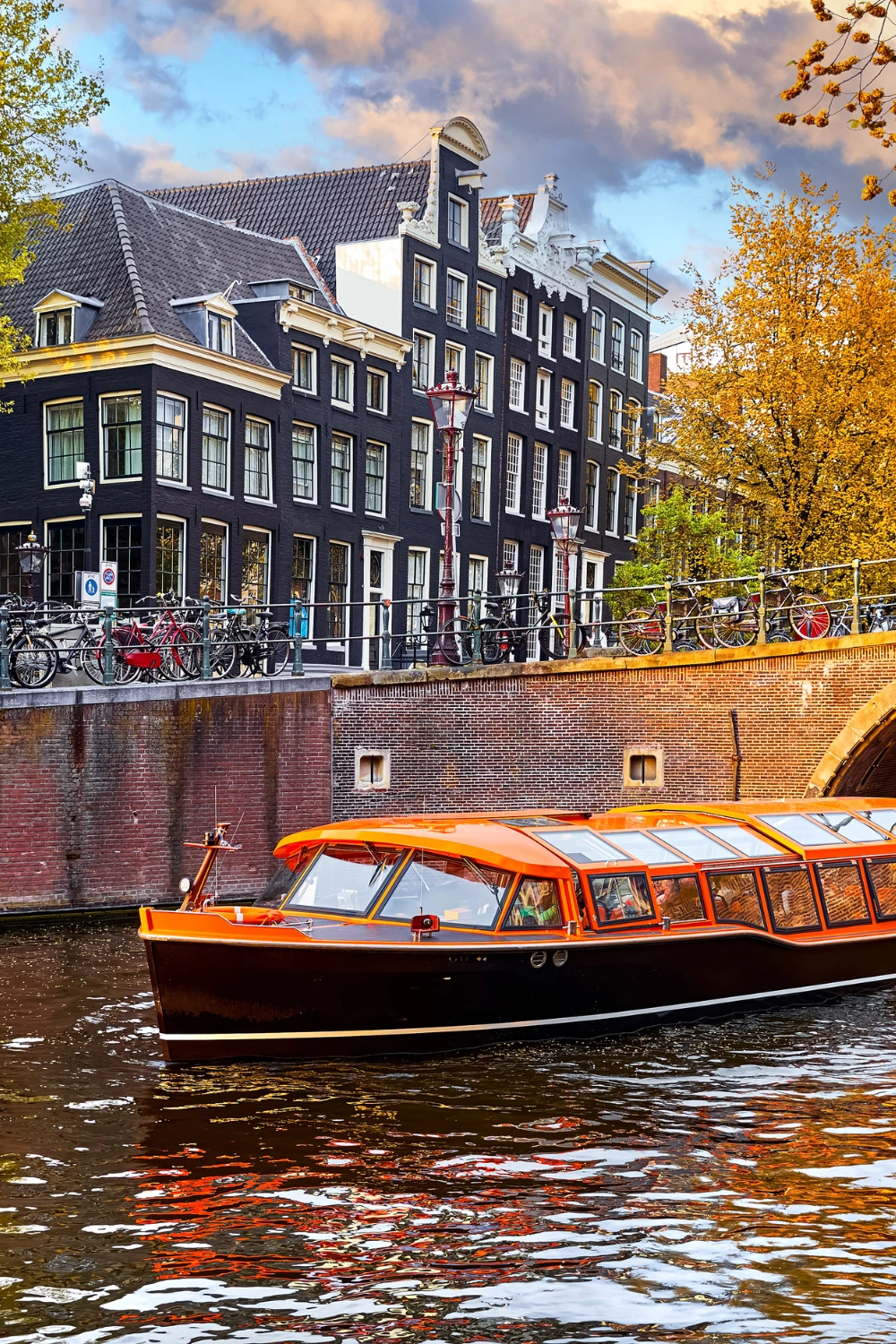
Amsterdam is one of those cities that gets you every single time. I know that sounds like a cliché but there really is something about arriving in Amsterdam that never gets old, regardless of how many times you’ve done it. The moment you step off the train at Centraal Station and the canal city opens up in front of you — the old gabled houses, the smell of stroopwafels, the bicycles everywhere — it just does something to you that very few cities can replicate.
We’ve been to Amsterdam more times than I can easily count at this point, and if I’m being honest, some of the best visits have been the ones where we stopped trying to do everything and just let the city be itself. No overpacked sightseeing schedule, no racing between museums, no treating a city break like an athletic event you need to win. Just Amsterdam, at a pace that actually lets you enjoy it.
This guide is built around exactly that idea. It’s not about squeezing forty things into forty-eight hours. It’s about doing Amsterdam properly, which means good food, canal time, cycling through neighbourhoods with no particular agenda, and genuinely relaxing in one of the most enjoyable cities in Europe. If this is your first time in Amsterdam, there are a few sights woven in here that you really should see. But if you’ve been before and you’ve done the big stuff, this is the guide that shows you the version of Amsterdam that keeps people coming back year after year.
Friday: Arriving and Actually Unwinding
The beauty of Amsterdam for most European visitors is that it’s genuinely close. From London it takes less time to fly to Schiphol than it takes to get a train to Edinburgh, and from most other major European cities the journey is similarly short. Which means there’s no particular reason to rush — arrive on Friday evening after work if that’s what works, and you’ll still have the whole weekend ahead of you.
Schiphol is one of the better airports in Europe to arrive into, and the train connection into Amsterdam Centraal takes about 15 minutes and drops you right in the heart of the city. Get yourself an unlimited public transport card before you go so you can jump on trams and trains without thinking about it. It makes the whole weekend significantly more relaxed and it covers the buses, trams and metro across the city.
Friday evening is for settling in, not for cramming in sights. Check into your hotel, take a shower, change and just walk. Amsterdam is one of the great cities for aimless evening walking — the canals are lit up, the restaurants are full, the bars are buzzing with a warmth that has a distinctly Dutch energy to it. Find somewhere to eat that looks genuinely good rather than just the nearest thing, order something you wouldn’t normally order, and let Friday be easy.
The Jordaan neighbourhood is the ideal area to be based for a weekend like this. It’s the most beautiful part of the old city, a network of narrow streets and quiet canals lined with independent restaurants, small galleries and the kind of brown cafes (bruine kroegen) that have been serving local beer and conversation in equal measure since the 17th century. The neighbourhood feels genuinely lived-in and slightly bohemian without being trendy in a self-conscious way. If you’re choosing where to stay, this is the area.
For accommodation, the Hoxton Amsterdam is one of the nicest hotels in the city — it occupies a row of beautifully restored canal houses on the Herengracht, the rooms are excellent and the bar and restaurant are the kind you’d actually want to go to even if you weren’t staying there. Equally, if you want something with more character, booking one of the canal house apartments through a rental platform gives you a genuinely different experience of the city, waking up in an actual Amsterdam home rather than a hotel.
Whatever you do with Friday evening, don’t peak too early. The weekend is long and Amsterdam rewards pacing yourself considerably more than it rewards ambition.
Saturday Morning: Coffee, Bikes and the City at Its Best
The right way to start a Saturday in Amsterdam is slowly. Have a proper hotel breakfast or walk to a neighbourhood café and get a coffee and something to eat before doing anything else. Amsterdam’s café culture is genuinely excellent and the morning light on the canals in spring and summer is the kind of thing that makes you want to stay in the city for considerably longer than planned.
Once you’re properly awake and fed, hire a bike. This is not optional. Amsterdam is a cycling city in the most fundamental sense — more than half the population cycles daily, the infrastructure is built entirely around it, and the experience of seeing the city from a bike is completely different from seeing it on foot. You move at exactly the right pace to notice things, you cover far more ground than walking allows, and you feel like you’re participating in the city rather than just observing it from a tourist distance.
The Jordaan is perfect for an unhurried morning cycle. Wind through the Nine Streets (De 9 Straatjes), a grid of narrow lanes between the main canals that is packed with independent shops, vintage boutiques, good coffee spots and the kind of browsable, unhurried atmosphere that Saturday mornings were made for. The canals here are genuinely beautiful and the architecture along the Herengracht, Keizersgracht and Prinsengracht canals — the three main 17th-century rings — is extraordinary, particularly the ornate gable rooflines that line both sides of the water.
Cycle up toward the Noordermarkt on a Saturday morning and you’ll find one of the best organic food markets in Amsterdam, selling local cheeses, fresh bread, flowers and produce in the square in front of the Noorderkerk church. It’s busy, it’s fragrant and it’s one of those places that makes you wish you lived in Amsterdam rather than just visiting it. Grab something to eat from one of the market stalls and eat it sitting on a canal bridge because that is exactly the right thing to do.
If this is your first time in Amsterdam and you haven’t been to Anne Frank’s House, it belongs somewhere in your Saturday morning. The preserved secret annex on the Prinsengracht where Anne Frank and her family hid for two years during the German occupation is one of the most moving and important historical sites in Europe, and visiting it is not an experience that requires art appreciation or museum enthusiasm — it simply requires being a person who is affected by history. Book tickets well in advance because they sell out completely and there is no walk-in option.
Saturday Afternoon: Canal Boats and the Best Apple Pie in Amsterdam
After the morning on bikes, the afternoon belongs on the water.
Amsterdam’s canals are a UNESCO World Heritage Site and they are genuinely best understood from a boat. The perspective of floating through the canal ring, looking up at the leaning facades of the 17th-century houses, ducking under the low bridges and passing the houseboats moored along the quieter stretches, gives you a completely different relationship with the city than you get from the street.
You have two good options here. A group canal cruise is affordable and easy to book, runs past all the major landmarks, and is genuinely enjoyable if you pick the right operator. Or you can hire your own small electric boat for a few hours with a group of friends, which is considerably more fun, gives you complete freedom over where you go and how long you spend there, and is the version that most Amsterdammers would actually recommend. Either way, get on the water — it’s one of the things Amsterdam does better than anywhere else in the world.
After the canal, find your way to Winkel 43 on the Noordermarkt square for the apple pie. This is not a casual suggestion. The appeltaart at Winkel 43 is genuinely the best apple pie I’ve had anywhere, a generous, warmly spiced, generously portioned thing served with cream, and it has been pulling people to this particular corner of the Jordaan for decades for very good reason. There is almost always a queue but it moves quickly and it is absolutely worth it.
Saturday afternoon is also a good time to wander through the Museum Quarter if you’re in the right mood for it. The Rijksmuseum is one of the great art museums in the world — Rembrandt’s The Night Watch alone justifies the entrance fee — and the Van Gogh Museum next door houses the largest collection of his work on earth and is consistently extraordinary even if you’ve been before. The Moco Museum on the Museumplein is the newer addition and houses a brilliant collection of Banksy, Basquiat, Warhol and immersive digital art that is excellent if contemporary art is more your thing. All three require booked tickets in advance, particularly in peak season.
Saturday Evening: The City After Dark
Amsterdam does evenings very well and it does them in a way that suits several different approaches depending on what kind of evening you want.
If you want to eat well, the city has a dining scene that has genuinely levelled up over the past decade. The Pijp neighbourhood in the south of the city has the best concentration of good independent restaurants and is worth the tram ride from the city centre. Guts and Glory, which changes its entire menu around a single theme or ingredient every six weeks, is the kind of restaurant that makes you wish you were coming back to Amsterdam in six weeks time to see what’s next. The food is exceptional and the experience of having no choice — the kitchen decides what you eat based on that theme and you simply enjoy whatever comes out — is a genuinely lovely way to hand over control for an evening.
After dinner, Amsterdam’s nightlife does what Amsterdam’s nightlife does. If you want something low-key and genuinely Dutch, a brown cafe is the answer — warm, candlelit, full of locals drinking Heineken or jenever gin at wooden tables that look like they haven’t moved in centuries. If you want to go out properly, Amsterdam has one of the best electronic music scenes in Europe, centred around clubs in the repurposed industrial spaces of the North and East of the city. Shelter, Shelter Noord, Garage Noord and the iconic Melkweg and Paradiso venues are all genuinely excellent depending on what’s on that weekend.
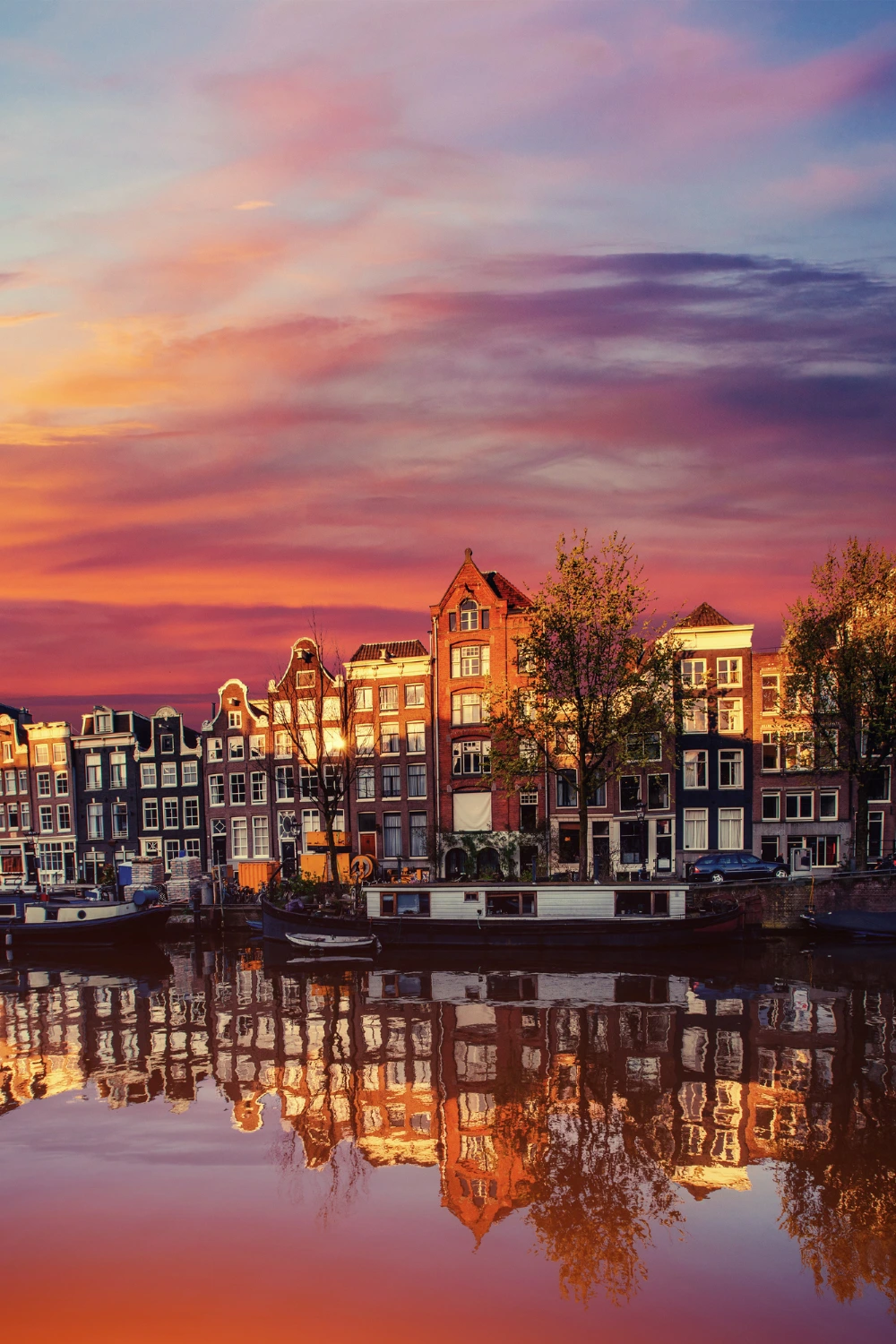
If the evening ends with a walk back along the canals to your hotel with the bridges lit up and the city reflected in the dark water, you’ve done Saturday correctly.
Sunday: Slow Morning, Markets and Finding Your Version of Amsterdam
Sunday mornings in Amsterdam are for brunch, full stop. The city has an excellent brunch culture and the cafés and restaurants that do it well are worth finding. Buffet van Odette on the Prinsengracht does excellent Dutch-influenced brunch. Pllek in the NDSM Wharf across the IJ in the North is a warehouse-turned-beach-bar-restaurant with one of the most unexpectedly lovely settings in the city for a Sunday morning — you take the free ferry from behind Centraal Station, which takes five minutes and is in itself a lovely way to see the harbour, and then sit on the waterfront with a coffee or a Bloody Mary and the whole morning stretches out in front of you.
If there’s one experience in Amsterdam that captures something genuinely authentic about the city, it’s a Sunday morning at the Waterlooplein flea market. It’s one of the oldest and most chaotic markets in the Netherlands — clothes, vinyl records, vintage cameras, second-hand books, bicycle parts and everything else imaginable spread across a square beside the Amstel. You won’t need most of what’s there but you’ll spend longer than you planned and probably leave with something you didn’t expect.
The Westergasfabriek market is the more curated Sunday option — a former gas works complex in the west of the city that hosts various Sunday markets depending on the time of year, usually combining food stalls, vintage goods and crafts in a genuinely atmospheric setting. It’s the kind of place you go “just for a look” and end up spending a very happy few hours.
If you’ve been to Amsterdam before and have covered the big museums, Sunday afternoon is perfect for the smaller, less-visited ones that give you a different angle on the city. The Foam Photography Museum on the Keizersgracht is excellent — a thoughtfully curated photography gallery in a beautiful canal house that changes exhibitions regularly and is consistently one of the best photography institutions in Europe. The Amsterdam Museum tells the story of the city’s 750 years of history in an accessible and beautifully designed way. And the Stedelijk Museum of modern and contemporary art is exceptional if you didn’t make it on Saturday.
Vondelpark in the afternoon, if the weather is decent, is how Amsterdam spends its Sunday. The city’s most beloved park — 120 acres of paths, ponds, rose gardens and open grass — fills up with locals cycling, picnicking, playing with children, listening to the open-air theatre performances in summer and generally doing what Amsterdam does on a slow Sunday. Get an ice cream from one of the vendors, find a spot on the grass and do absolutely nothing for an hour. It is the correct use of a Sunday afternoon in one of Europe’s most enjoyable cities.
The journey home, whenever it comes, is always the wrong time. Amsterdam has a habit of making you feel like you’ve barely started, which is both the best and the most inconvenient quality it has. The solution, obviously, is to book the next trip before you’ve finished the current one.

