
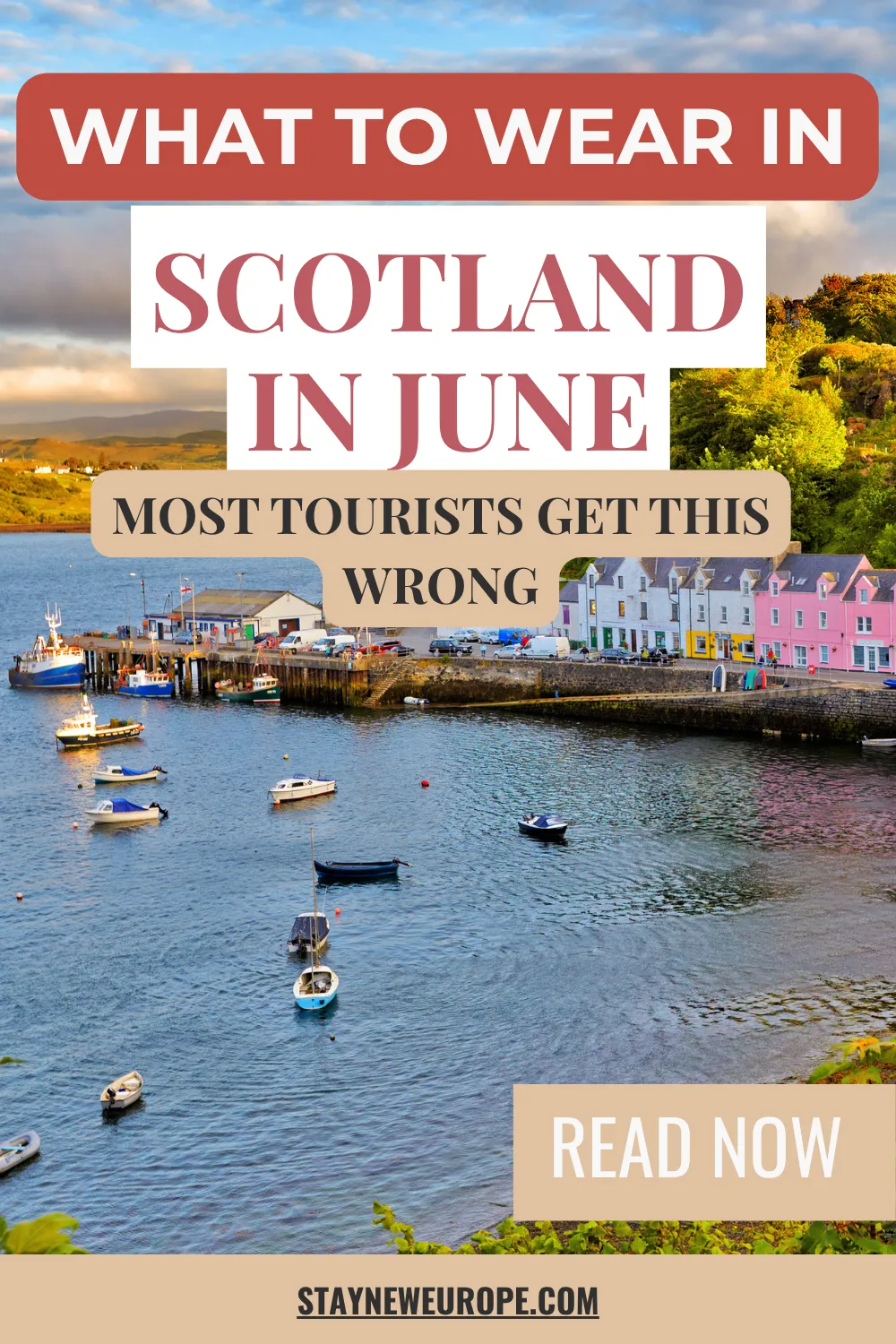
Let me save you from the mistake I made on my first trip to Scotland in June: I packed for summer. Actual summer. Sundresses, sandals, a single thin cardigan “just in case.” I stood on the Isle of Skye in a soaking wet linen dress, shivering in 12°C wind, wondering why nobody had warned me.
Scotland in June is spectacular — long golden evenings, dramatic landscapes, surprisingly lively cities. But it is not the Mediterranean. It is not even a reliable version of summer. It is its own brilliant, moody, beautiful thing, and if you dress for it properly, you will have one of the best trips of your life.
Here’s everything I wish someone had told me before I packed.
Before We Dive In: What June in Scotland Actually Feels Like
Let’s set some expectations, because “summer in Scotland” is a phrase that needs unpacking.
Temperatures in June hover between 11°C and 18°C (roughly 52–65°F), depending on where you are. Edinburgh tends to be milder and slightly drier. The Highlands and islands — think Skye, the Outer Hebrides, Glencoe — are cooler, windier, and wetter. The west coast catches Atlantic weather systems that can roll in fast and change everything in the space of twenty minutes.
You will also encounter something magical: the long Scottish days. June is close to the summer solstice, so you’re looking at 17 to 18 hours of daylight in some parts. The sun doesn’t set until nearly 10pm in Edinburgh. This means long evenings out, later dinners, and a genuine sense of endless possibility — but it also means you need layers that work from breezy morning hikes to cool loch-side evenings.
Rain is part of the deal. Scotland averages around 8–12 rainy days in June, but “rainy days” is a generous term. Often it’s more like unpredictable bursts — a shower here, a mist there, an unexpected downpour while you’re halfway up a hill. Humidity is moderate, but the wind chill is real, especially on the coasts. If London or Amsterdam are also on your itinerary, check what to wear in London in June and what to wear in Amsterdam in June — they share the same rainy-summer logic.
One more thing: there are no cobblestones à la Italy, but Scotland has its own walking challenges. Castle ruins, coastal paths, peat-boggy Highland trails, uneven old town streets in Edinburgh. Your footwear choices matter enormously.
Lightweight Layers: The Single Most Important Concept for Scotland in June
Forget everything you know about packing for summer. In Scotland, layering isn’t optional — it’s the entire strategy.
The weather in June can genuinely give you all four seasons in a single day. I’ve had a morning where I was warm enough in just a t-shirt walking through Edinburgh’s Grassmarket at 9am, got caught in a cold drizzle by noon, saw bright sunshine by 2pm, and was back in my fleece by 6pm on a breezy walk along the Water of Leith. That’s just Scotland doing its thing.
The layering system that works best: a moisture-wicking base layer, a mid-layer that provides warmth (a merino wool jumper or a light fleece), and a waterproof outer shell. Three pieces, infinite combinations. The beauty is that each layer is relatively lightweight and packable, so you’re not lugging around a heavy coat — you’re just adding and subtracting as the day demands.
Don’t skip the mid-layer thinking you’ll be fine with just a t-shirt and rain jacket. That gap between base and shell is where people get cold and miserable.
Local tip: Merino wool is beloved in Scotland for good reason — it regulates temperature, resists odour, and dries quickly. A good merino jumper will be your most-worn item by far.
The Waterproof Jacket: Non-Negotiable, No Excuses
I cannot stress this enough: bring a proper waterproof jacket. Not a water-resistant one. Not a “shower-proof” one. A genuinely waterproof, ideally breathable, jacket with a hood.
This is the single item that will determine whether you enjoy Scotland or merely endure it. A good waterproof jacket means you can stand on a windswept cliff top watching the sea, walk through misty glens, and wander around open-air markets without a second thought. A bad one — or none at all — means constant anxiety every time a cloud rolls in.

I travel with a packable waterproof from a brand like Patagonia, Arc’teryx, or the more budget-friendly Columbia. It folds into its own pocket, takes up almost no space in my bag, and has saved me countless times. Look for taped seams, a proper hood that actually stays on in wind, and pit zips if you run warm while hiking.
For city days in Edinburgh or Glasgow, you can get away with something slightly more stylish — a belted trench in a technical fabric, for instance, looks great and handles light rain well. But if you’re heading into the Highlands or to any of the islands, upgrade to something properly waterproof.
Local tip: Scots don’t tend to panic about rain. You’ll notice locals carrying on with their day in a light drizzle without much fuss. Once you have the right jacket, you’ll understand why — it just stops being a problem.
Jumpers and Knitwear: Embrace the Stereotype, It’s There for a Reason
Yes, Scotland is famous for its knitwear, and yes, you should absolutely lean into that. But this isn’t just about aesthetics — it’s genuinely practical advice.
A chunky knit or a fine merino jumper is your best friend in Scotland in June. Evenings cool down quickly, and if you’re out for dinner, walking along the Royal Mile after dark, or sitting by a loch watching the sun set at 9:30pm, you will want that extra warmth. A thin cardigan won’t cut it on the west coast. Something with real substance — a cable knit, a ribbed merino, a lambswool crew neck — will actually keep you comfortable.

I tend to pack two jumpers: one lighter, more fitted merino for layering under my waterproof, and one slightly chunkier knit for evenings and cosy pub visits. Both earn their place in my bag every time.
Fair Isle knitwear, if you happen to pick some up while you’re there (the shops in Edinburgh’s Old Town and along the Royal Mile are excellent), is both a beautiful souvenir and an incredibly practical piece. Wool sourced and knitted in Scotland just has a quality to it that you notice immediately.
Local tip: If you’re visiting Shetland or the Orkney Islands, you’ll find authentic local knitwear that’s genuinely exceptional. Buy something there rather than at a tourist shop — it’ll last you decades.
Jeans vs. Walking Trousers: The Great Scotland Debate
This one depends entirely on how you’re planning to spend your days, and I’ll be honest — most people get this wrong in one direction or the other.
Jeans are fine for city days. Edinburgh and Glasgow are stylish, cosmopolitan cities. People dress well. A good pair of dark slim jeans with a nice jumper and some smart ankle boots looks completely at home in either city, whether you’re wandering through the Merchant City in Glasgow, browsing the boutiques on Cockburn Street, or heading out for dinner on George Street.

But jeans are catastrophic for outdoor adventures, and this is where people come unstuck. Denim takes forever to dry, offers zero insulation when wet, and becomes genuinely heavy and uncomfortable in rain. If you’re planning any hiking — Glencoe, Ben Nevis, the Quiraing on Skye, the Cairngorms — leave the jeans at the hotel.
For outdoor days, quick-drying walking trousers or leggings are the move. Brands like Craghoppers and Rohan make trousers that look relatively decent but perform brilliantly in wet conditions. If you’re more of a leggings person, a good thermal or mid-weight pair under waterproof overtrousers works wonderfully.

My personal system: I pack two pairs of dark jeans for city days and evenings, and one pair of lightweight walking trousers for any outdoor excursions. Simple, versatile, no regrets.
Local tip: Don’t underestimate how quickly the weather can turn on a hike. What starts as a clear morning in Glencoe can become misty and cold within an hour. Wearing jeans when this happens is genuinely miserable.
Footwear: The Decision That Will Make or Break Your Trip
Let me be direct: the wrong shoes in Scotland will ruin your holiday. I’ve seen it happen to fellow travellers more times than I can count.
For city exploring — Edinburgh’s Old Town especially — you need something comfortable, supportive, and ideally waterproof or at least water-resistant. The streets are uneven, the cobblestones on the Royal Mile are genuinely slippery when wet, and you will walk a lot more than you expect. White trainers that are your pride and joy at home will be grey and soaked by day two.

My Edinburgh recommendation: a pair of leather or leather-look ankle boots with a low block heel or flat sole. They look smart enough for evening restaurants, handle the cobblestones reasonably well, and keep your feet dry in a shower. Alternatively, a quality waterproof trainer (Salomon, Merrell, or similar) that doesn’t scream “hiking boot” is a solid option.

For the Highlands or any proper walking: proper waterproof hiking boots are essential. Not trail runners, not fashion trainers, not wellies unless you’re at a festival. Ankle-supporting, Gore-Tex-lined hiking boots. If you don’t own a pair, borrow some, hire some, or buy some before you go — your knees and your dry socks will thank you.
Sandals or flip flops? Pack them if you want, but temper your expectations about when they’ll actually come out.
Local tip: Waterproof socks exist and are genuinely life-changing for wet conditions. Sealskinz is a well-known brand. They look ridiculous but perform amazingly.
T-Shirts and Base Layers: What Goes Underneath Everything
Base layers don’t get enough credit in travel packing conversations, and in Scotland, they’re actually doing a lot of work.
For June, you don’t need heavyweight thermal base layers — this isn’t January. What you want is a selection of lightweight to mid-weight tops that can either stand alone on a mild day or layer comfortably under a jumper and jacket. Moisture-wicking fabrics are ideal for hiking days. Merino wool t-shirts are pricey but genuinely worth it — they regulate temperature brilliantly, resist odour better than synthetics, and look smart enough to wear for casual dinners.

I pack about four or five tops per week: two or three merino or cotton t-shirts, one or two slightly smarter blouses or shirts for evenings, and a long-sleeved base layer for colder outdoor days. The long-sleeved layer is the secret weapon — worn under a jumper, it adds meaningful warmth without bulk.

Avoid anything that’s purely decorative without function. That silk camisole top might look beautiful in a suitcase, but if it can’t layer, it’s not earning its place.
Local tip: A classic striped Breton top is a surprisingly useful piece in Scotland — it layers well, looks put-together, and handles mild weather on its own beautifully.
Dresses in Scotland in June: Yes, With Conditions
I love a dress when I travel, and I refuse to leave them at home just because I’m going somewhere with unpredictable weather. But there’s a right way and a wrong way to wear dresses in Scotland.
The right way: a midi or maxi dress in a slightly heavier fabric — jersey, ponte, viscose — that drapes beautifully and keeps you reasonably warm. Pair it with thick tights or leggings underneath (yes, really — this is June in Scotland, not June in Barcelona), a chunky knit cardigan or jumper over the top, and your waterproof jacket. Add ankle boots. You will look fantastic, feel warm enough, and still feel like yourself rather than someone who has given up on aesthetics in the name of practicality.

The wrong way: a floaty linen sundress with bare legs and strappy sandals. You will be cold within twenty minutes of leaving your accommodation, even on the sunniest days, because there is almost always wind.
Shirt dresses in a heavier cotton or denim fabric are particularly great for Scotland — they look relaxed and cool, layer easily, and feel more substantial than a typical summer dress. I’ve also had excellent results with wrap dresses in jersey, which travel brilliantly and look smart enough for dinner.

Local tip: Thermal or opaque tights are your best friend with dresses in Scotland. Pack at least two pairs — they’re light, take up almost no space, and transform a summer dress into a genuinely wearable June outfit.
What NOT to Wear: Tourist Mistakes That Are Easy to Avoid
Let me just be honest about the things I see repeatedly that cause people grief.
Thin linen everything. Linen is gorgeous. Linen in Scotland in June is a recipe for discomfort. It’s cold, it’s see-through when wet, and it does nothing to protect you from wind. Save it for Portugal.
White trainers with no waterproofing. They’ll be grey, wet, and sad within 48 hours. Either waterproof them aggressively before you leave, or save them for a single sunny afternoon in the city.
Only bringing one jacket. If it gets soaked on a hiking day, you need a backup for the evening. Think about this.
Flip flops as your main footwear. I once watched someone attempt to walk down the steep, rain-slicked steps of Edinburgh Castle esplanade in flip flops. It did not go well.
Overpacking “just in case” summer clothes. The strappy tops, the shorts, the bikini (unless you’re genuinely planning a wild swim in a Highland loch, in which case, respect). These items will stay in your suitcase and make it heavier. Pack for the Scotland that actually exists.
Local tip: Whatever you wear, make sure it doesn’t restrict movement. Scotland rewards the curious — you’ll want to scramble up a hill, explore a ruined abbey, or wade across a shallow burn at some point, and stiff or delicate clothing will hold you back.
Evening Outfits: Scotland’s Surprisingly Good Restaurant and Bar Scene
Here’s something that surprised me the first time: Scotland has an excellent dining and nightlife scene, particularly in Edinburgh and Glasgow, and people actually dress up for it. Not in an intimidating way — it’s not Milan — but there’s a genuine culture of making an effort in the evenings.
In Edinburgh, the area around George Street, the New Town restaurants, and the cocktail bars around Victoria Street attract a well-dressed crowd. In Glasgow, the West End and Merchant City have some exceptional restaurants where turning up in hiking gear would feel slightly out of place.

For evenings: I build outfits around the pieces I’ve already packed rather than bringing dedicated evening wear. Dark jeans or tailored trousers + a silk or satin blouse + a smart blazer or structured cardigan + heeled ankle boots takes you from dinner to drinks without any issue. A midi dress with heeled boots and a nice knit over the top is another option that works beautifully and requires no extra packing.

The key is that classic Scottish pub culture — visiting a traditional pub for a whisky or a pint of local ale — is quite relaxed and informal. You can walk in wearing walking trousers and muddy boots after a day on the hills and nobody will blink. But the better restaurants appreciate a little effort, and you’ll feel more comfortable making it.
Local tip: Pack a small evening bag or clutch — even just a simple leather pouch. It elevates a casual outfit into something that feels intentional and put-together without adding any real weight to your luggage.
Visiting Castles, Cathedrals, and Historic Sites: Dress Codes and Practicalities
Scotland’s historic sites — Edinburgh Castle, Stirling Castle, Rosslyn Chapel, St Giles’ Cathedral, Skara Brae, Iona Abbey — each have their own atmosphere and occasionally their own considerations when it comes to dress.
The good news: Scotland is considerably more relaxed about church dress codes than Mediterranean countries. You won’t be turned away from Rosslyn Chapel for having bare shoulders the way you might at a church in Italy. However, it’s still respectful to dress thoughtfully when visiting working places of worship. A light scarf to throw over your shoulders costs nothing and shows consideration.

For castle visits, practical trumps pretty. Edinburgh Castle involves a lot of walking, climbing, wind exposure, and uneven surfaces. Glencoe’s Signal Rock and Urquhart Castle beside Loch Ness are similarly outdoorsy. Wear your layers, your waterproof, and your comfortable shoes — you’ll get more from the experience.
Outdoor archaeological sites like the standing stones at Callanish or the Ring of Brodgar are exposed to the elements in a way that can feel quite extreme, even in June. Wind on the Outer Hebrides is a different category of wind. Layer up accordingly.
Local tip: Many of Scotland’s best historic sites involve significant walking and uneven terrain that isn’t always well-signposted. Treat every castle or ruin visit as a mild outdoor adventure and dress accordingly.
Accessories That Actually Earn Their Place in Your Bag
Accessories in Scotland aren’t about decoration — or rather, they’re not only about decoration. The right ones genuinely serve a purpose.
A beanie or warm hat: Pack one. Even in June, a windy day on a Highland hillside or a ferry crossing to an island will make you grateful. A thin merino beanie takes up almost no space and can be the difference between an enjoyable experience and a miserable one.

A lightweight scarf: Multi-purpose genius. Warmth on a cool evening, a layer over your shoulders in a church, a makeshift windbreak, an impromptu picnic blanket. Mine is a large wool-mix square in a neutral colour that goes with everything.
Sunglasses: Yes, even in Scotland. June light, especially on lochs and around water, can be intense on sunny days, and Scotland does have sunny days. Polarised lenses are particularly good near water.

A crossbody bag: For city days, a crossbody keeps your hands free for cameras, coffee, and grabbing onto things when the wind picks up. Choose leather or a water-resistant fabric over canvas, which gets heavy and droopy in the rain.

Gloves: Optional, but if you’re heading to the Highlands or islands, a thin pair of liner gloves is worth considering. Your fingers will thank you on an exposed coastal walk.

Local tip: A quality waterproof daypack is one of the most useful things you can bring to Scotland — far more practical than a tote bag for outdoor days. Look for one with a rain cover or a waterproof lining.
Bags: What to Carry and Why It Matters
The bag question in Scotland is essentially: are you in the city or are you in the wild? Because the answer changes everything.
For city days — Edinburgh, Glasgow, Inverness — a stylish crossbody or a structured tote works well. You’re not doing anything particularly athletic. You want somewhere to carry your camera, your water bottle, your waterproof jacket when the sun unexpectedly comes out, and your purchases from the excellent Scottish delis and bookshops you’ll inevitably find yourself in.
For outdoor days — hiking, island hopping, visiting remote castles and beaches — you need a proper daypack. It should be waterproof or have a rain cover, comfortable to carry for several hours, and big enough for snacks, a layer or two, a first aid kit, and a water bottle. Don’t attempt the Quiraing or Glencoe with a crossbody bag. Just don’t.

One approach that works well: travel with a crossbody as your city bag and a packable daypack that folds flat into your main luggage for outdoor days. Between the two, you’re covered for everything.
Local tip: Avoid large open tote bags for city use — rain will soak everything inside before you notice. A bag with a zip or magnetic closure is far more practical.
Rain Preparation: Beyond Just Having a Jacket
We’ve talked about the waterproof jacket, and you know you need one. But rain preparation goes slightly further than that.
Your jeans will get wet from the bottom up — rain bouncing off pavements is a real and underrated problem. Waterproof trousers or gaiters solve this on hiking days. On city days, mid-length boots or waterproof ankle boots protect your feet without needing full waterproof trousers.
Your bag will get wet. Even if you have a rain jacket, your bag is often uncovered and takes the worst of it. A waterproof bag or a bag with a rain cover protects your camera, your phone, and any shopping from moisture.
Your hair will do whatever it wants. I say this not to be flippant but to genuinely set expectations: Scotland’s combination of rain, wind, and humidity will defeat most hairstyling efforts. Embrace this. A chic ponytail, a simple braid, or just letting it be what it wants to be is more enjoyable than fighting a losing battle.
Layering your socks matters too. Two thin pairs of moisture-wicking socks, or one substantial merino hiking sock, will keep your feet more comfortable than a single cotton pair in wet conditions.
Local tip: A compact, windproof umbrella is useful in cities but essentially useless in the Highlands — the wind will turn it inside out instantly. Don’t waste bag space on one if you’re spending most of your time outdoors.
Fabrics to Choose (and Definitely Avoid)
Fabric choice sounds like a minor detail until you’re standing in wet cotton for six hours and realise it isn’t.
Choose: Merino wool (temperature-regulating, odour-resistant, quick-drying), technical synthetics like polyester blends (quick-drying, lightweight, often moisture-wicking), denim for city use only, structured cotton for mild days, wool-blend knitwear.
Approach with caution: Linen (beautiful but cold and takes forever to dry), 100% cotton jersey (fine when dry, miserable when damp), silk (gorgeous for evenings but needs careful handling in variable weather).
Avoid for outdoor use: Heavy cotton, untreated suede, anything dry-clean only that you’ll be wearing near lochs and muddy paths.
The general principle: if it gets wet, how quickly does it dry and how comfortable is it when damp? Merino wool passes this test brilliantly. Cotton fails it spectacularly. Most technical synthetics land somewhere in the middle.
Local tip: Buying a merino base layer specifically for a Scotland trip might feel like an investment, but it’s one you’ll use for years across many different travel contexts. It genuinely performs.
A Capsule Wardrobe for One Week in Scotland in June
Here’s what I’d actually pack for a seven-day trip that combines city time in Edinburgh with a few days in the Highlands or on Skye.
Tops and layers: Two merino or cotton t-shirts, one long-sleeved base layer, two jumpers (one lighter, one chunkier), one smart blouse or shirt for evenings, one Breton-style striped top.
Bottoms: Two pairs of dark slim jeans, one pair of quick-drying walking trousers, one midi dress in jersey or ponte.
Outerwear: One proper waterproof jacket (non-negotiable), one smart blazer or structured cardigan for evenings.
Shoes: One pair of waterproof hiking boots, one pair of leather or smart ankle boots for cities and evenings.
Accessories: One beanie, one large wool scarf, sunglasses, crossbody bag, packable daypack, thermal tights (two pairs).
That’s it. It covers hiking, city exploring, castle visits, evening dinners, rainy days, and the occasional sunny afternoon. Everything layers. Nothing is wasted. You can do Scotland properly with this kit and still check your bag rather than wrestle with an overstuffed carry-on.
Practical Packing Tips Before You Go
A few final things I’ve learned from packing for Scotland multiple times.
Pack less than you think you need. Most Scottish cities have excellent shops. If you forget something, you can find it. And the washing machine in your Airbnb or the hotel laundry is your friend for a longer trip.
Plan outfits, not individual items. Before you pack, mentally dress yourself for each day of the trip. Hiking day: what top, what trousers, what layer, what shoes? City day: what jeans, what top, what jumper, what jacket? This prevents the “I’ll just bring this in case” creep that leads to overpacking.
Wear your heaviest items on travel days. Your hiking boots, your chunky knit, your waterproof jacket — these are the bulkiest items. Wear them on the plane or train rather than packing them.
A small dry bag is genuinely useful. Even a 2-litre dry bag that costs almost nothing can protect your phone, camera, and wallet on a wet outdoor day. Worth every penny.
Don’t pack white. This is more of a personal taste thing, but Scotland’s muddy paths and spray from waterfalls will test white clothing severely. Stick to darker or mid-toned colours that disguise the inevitable contact with Scotland’s beautiful, muddy, wet landscape.
You’re Going to Love It
Here’s the thing about Scotland in June: once you’ve got the clothing sorted, it becomes one of the most rewarding travel experiences you can have. The light is extraordinary — that long golden hour that seems to last for hours is genuinely unlike anywhere else in the world. The landscapes are dramatic and ancient and endlessly photogenic. The food and drink scene, especially around whisky and seafood, is exceptional. The people are warm, funny, and genuinely pleased to have you there.
Getting the packing right isn’t about being obsessive or overprepared. It’s about giving yourself the freedom to say yes to things — yes to the spontaneous hike, yes to the clifftop walk at 8pm when the light is doing something magical, yes to the impromptu detour to a ruined castle down a muddy track. The right kit means nothing can stop you from experiencing all of it.
Pack smart, embrace the weather, and trust that Scotland in June — in all its glorious, unpredictable, breathtakingly beautiful reality — is absolutely worth every layer.

