
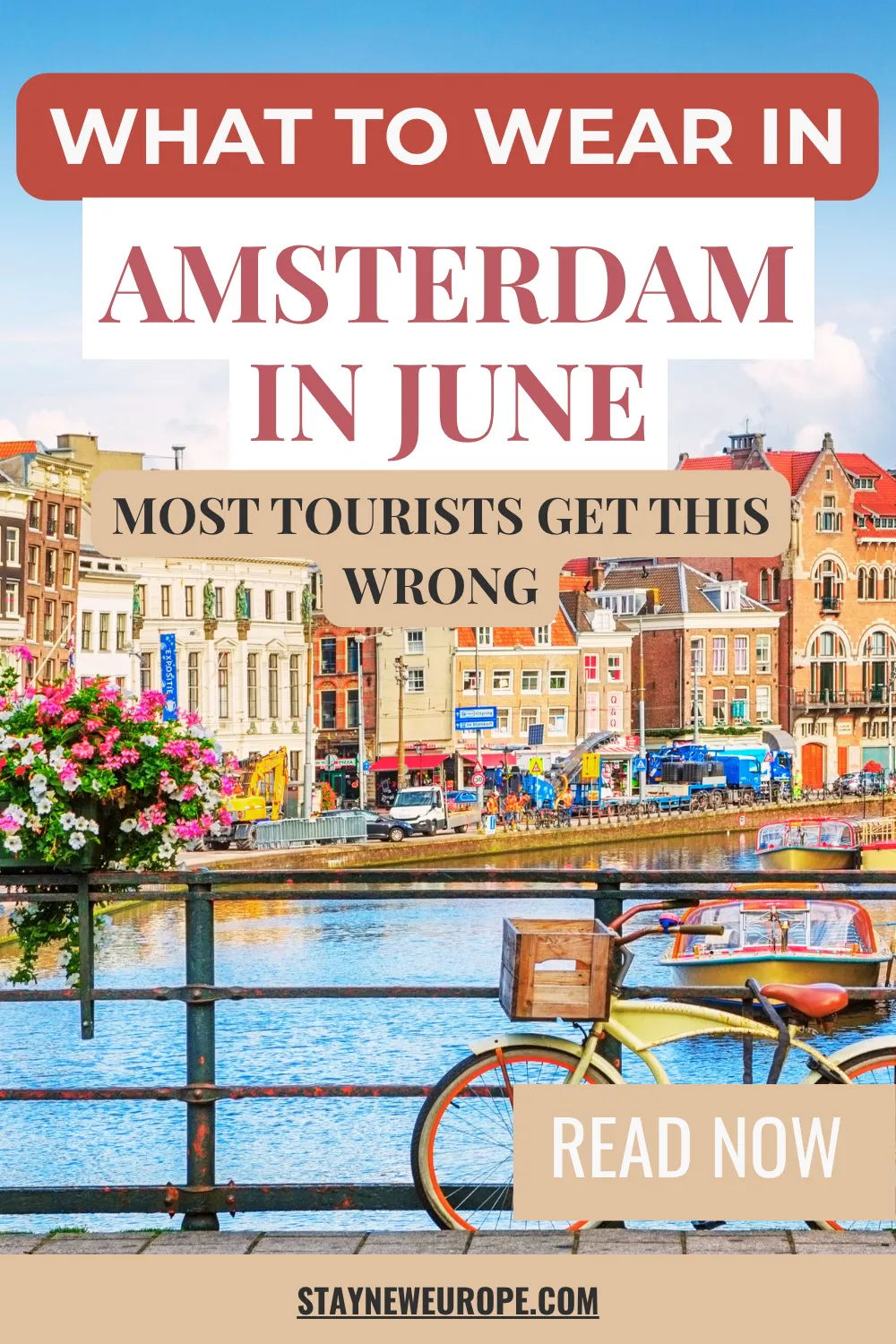
There’s a moment that happens to almost every first-time visitor to Amsterdam in June. You’re standing on a canal bridge somewhere near the Jordaan, the light is golden, the houseboats are draped in geraniums, and then — completely out of nowhere — the sky turns the colour of wet concrete and the rain starts. Not a polite drizzle. A proper sideways downpour. And there you are in your linen sundress and sandals, wondering why nobody warned you.
The truth is, June in Amsterdam is genuinely wonderful — warm evenings, long days, flowers still lingering from tulip season, and a city that feels alive in a way it simply doesn’t in January. But it has moods. It changes its mind without telling you. And dressing for it requires a specific kind of thinking that goes beyond just checking the average temperature.
I’ve been caught out more than once. I’ve also — eventually — figured out a system that works. This is that system.
Before We Dive In: What June in Amsterdam Is Actually Like
Let me be honest about the weather because the Instagram version of Amsterdam in June doesn’t tell the full story.
Temperatures sit somewhere between14°C and 22°C (57°F–72°F) most days. Mornings can feel genuinely cool, almost autumnal if you’re coming from somewhere like Morocco or Southeast Asia. By midday it’s usually pleasant, and on a good day it’s properly warm — warm enough for a terrace beer in a t-shirt. But evenings cool down fast, especially near the canals. If you’re doing a wider UK trip too, the same layering logic applies — see what to wear in London in June and what to wear in Scotland in June.
Rain is a real thing. June isn’t Amsterdam’s wettest month, but it’s not dry either. Expect around 12–14 rainy days across the month. They won’t ruin your trip, but they will ruin your day if you’re unprepared.
Wind is the thing people forget. Amsterdam is flat, built on water, and exposed. A 15°C day with wind coming off the canals can feel much colder than that number suggests. Layering isn’t just a packing trick here — it’s genuinely necessary.
Walking conditions are also worth noting. Amsterdam’s streets are charming but uneven — cobblestones, narrow pavements, unexpected kerbs, and a truly heroic number of bicycles that require constant vigilance. You’ll walk more than you think. Your feet will have opinions about your footwear choices by day two.
Style culture: The Dutch have a reputation for being direct, and their fashion sense reflects that. Amsterdam isn’t Milan — people aren’t going to silently judge your trainers at dinner — but there’s a quiet effortlessness to how locals dress that’s worth noting. Think practical but considered. Quality basics. Nothing try-hard. The city rewards people who look like they meant to dress the way they did.
Lightweight Layers Are Your Most Important Packing Decision
If there’s one thing I want you to take away from this entire article, it’s this: layer everything.
Not because Amsterdam is cold in June. It’s not. But because the temperature swings within a single day are legitimately wide. You might leave your hotel at 9am in a light chill, spend midday sweating at an outdoor market, and then find yourself genuinely shivering on a canal cruise at 8pm. The answer isn’t packing for all three scenarios separately — that way lies an overweight suitcase and a very stressful holiday.
The answer is layering. A lightweight knit over a t-shirt. A denim jacket you can knot around your waist. A longline cardigan that works over a dress in the evening. The goal is items that can be added and removed as the day shifts, without ruining your overall look.
What I’ve found works beautifully is building outfits in threes: a base layer (t-shirt, cami, light blouse), a mid layer (overshirt, knit, light jumper), and a weather layer (light jacket, trench, packable mac). Once you’ve got that framework, packing becomes much easier.
Local tip: Locals often carry a small tote or lightweight bag specifically so they have somewhere to put layers when they strip off. Don’t underestimate this — holding a jacket all day is exhausting.
The Footwear Question (And Why This Matters More Than Anything Else)
Let me tell you about the shoes I wore on my second trip to Amsterdam. Pretty suede loafers. Completely flat, very Italian-looking, extremely comfortable in my living room. By hour three of walking cobblestones, my feet were staging a quiet protest. By hour six, the protest had become a riot.
Amsterdam is a walking city in the most literal sense — most neighbourhoods are best explored on foot, the museum district requires a lot of pavement time, and the markets at Waterlooplein and Albert Cuyp Market involve standing on uneven ground for longer than you expect. Shoes are not a vanity decision here. They’re a survival decision.

That said — and I want to be clear about this — comfortable doesn’t have to mean ugly. The sweet spot in Amsterdam is a clean white leather sneaker (Nike Air Force 1s, Veja Altas, New Balance 574s), a chunky-soled loafer with good cushioning, or a leather trainer in a neutral tone. These look great with jeans, dresses, wide-leg trousers — basically everything — and they won’t destroy your feet.

If you’re dead set on something with a heel, save it for dinner only, when you’ll be taking taxis or trams and not walking long stretches. A block heel with a secure ankle strap is the safest option if the ground is slightly damp.
Local tip: Dutch women cycle everywhere, which means they’ve collectively perfected the art of shoes that are both practical and stylish. Follow their lead. If it works on a bike, it’ll work on cobblestones.
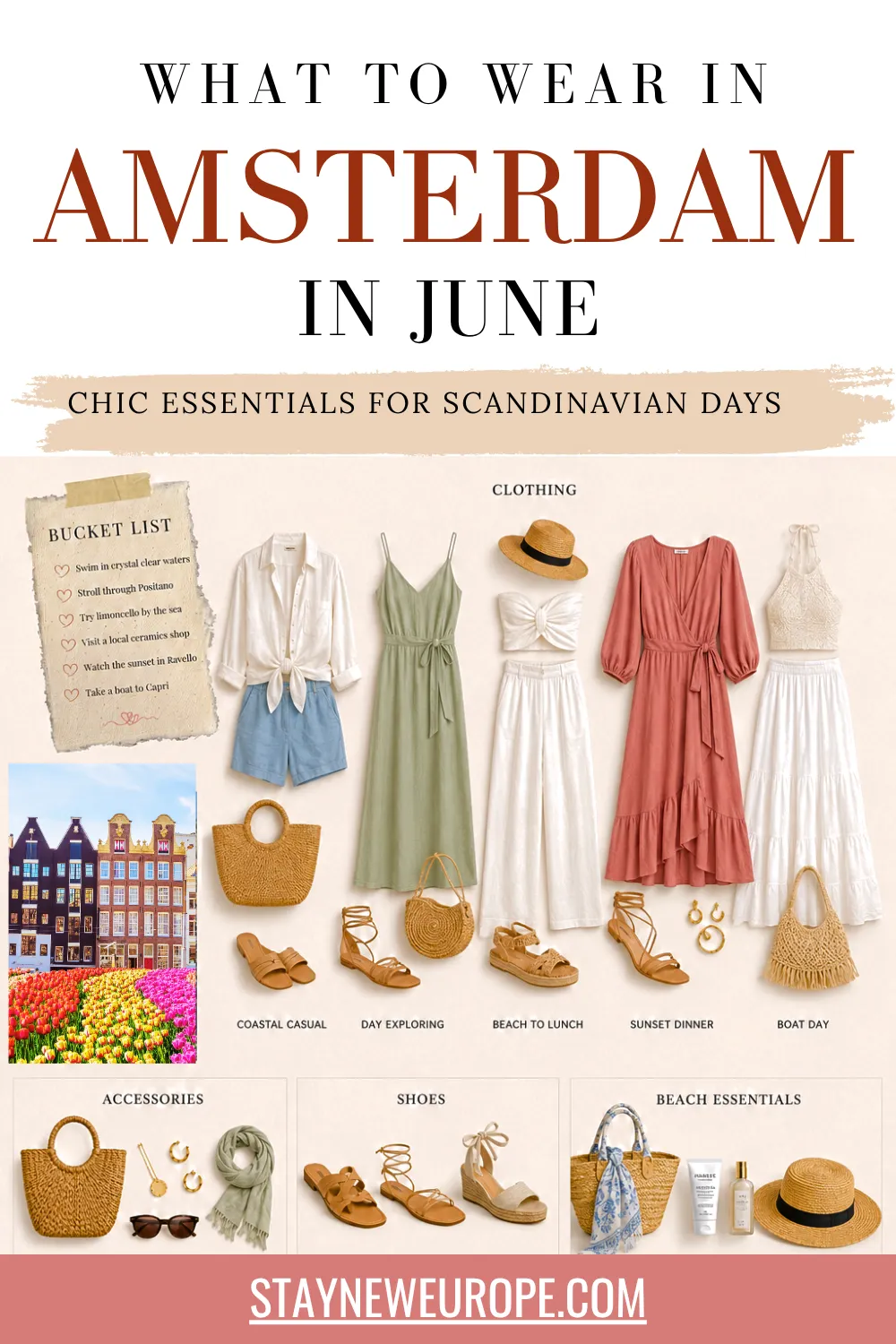
Jeans in June: More Useful Than You’d Expect
I know — everyone wants to pack floaty summer dresses when they’re going somewhere in June. And yes, there’s a time for dresses (we’ll get there). But jeans are genuinely underrated for Amsterdam specifically, and here’s why.
First, the wind and canal chill I mentioned. A summer dress in a canal-side breeze in the evening is not a romantic situation. It’s a cold, slightly miserable one. Second, Amsterdam involves a lot of sitting on the ground at parks (Vondelpark in particular), perching on canal edges, and cycling if you hire a bike — all of which a pair of well-fitting jeans handles beautifully.
The specific style of jean that works best is a straight or wide-leg cut in a mid to dark wash. These look intentional, translate from daytime sightseeing to evening dinner without issue, and pair with almost everything — a linen shirt, a striped top, a lightweight blazer. Avoid anything too tight or heavily distressed if you want to look like you belong rather than like you’ve just arrived from somewhere else.

One pair of great-fitting jeans, two or three tops, a good jacket: that’s essentially a solid base for the whole trip.
Local tip: If you’re planning to hire a bike (and you should — it’s the best way to see the city), jeans are genuinely the most practical option. Just watch the hems near the chain.
Dresses That Actually Work in Amsterdam in June
Here’s where I want to give you permission to pack that dress — but with conditions.
Midi dresses are the Amsterdam sweet spot. Long enough that a canal breeze doesn’t cause drama, short enough that you’re not tripping over hem on cobblestones. A floral midi with a denim jacket and white trainers is essentially the platonic ideal of a June Amsterdam outfit — it works for the Rijksmuseum, the Bloemenmarkt, lunch at a terrace café, and wandering the Jordaan without a single outfit change.

Fabric matters enormously here. Silk or thin satin sounds lovely but wrinkles instantly in a bag and becomes cold and slightly clammy in the wind. Cotton, linen blends, and heavier wovens hold their shape better and have enough substance to not feel miserable if the temperature drops.
Wrap dresses are another great option because they’re adjustable — you can loosen or tighten them as layers go on and off. Just make sure the wrap is secure; Amsterdam is windy, and a wrap dress with a loose tie is a liability.

Avoid: very short mini dresses without something substantial underneath or over the top, thin-strapped slip dresses worn without a layer, and anything white that you’re not prepared to sacrifice to an unexpected muddy Vondelpark situation.
Local tip: A lightweight scarf doubles as a layer over a dress when it gets chilly and as an accessory when it’s warm. One scarf, a hundred uses. Pack one.
What NOT to Wear (Honest Tourist Mistakes)
I’m going to be direct here because I see these mistakes constantly and they’re all avoidable.
Flip flops. No. Not for sightseeing. The cobblestones will destroy them (and your feet). Not waterproof when it rains. Not appropriate for restaurants. Leave them for the beach.
Massive backpacks worn on your front through narrow streets. This isn’t a style critique — it’s genuinely spatial. Amsterdam’s streets and museums are crowded in June. A large bag makes you twice as wide and twice as annoying to everyone around you.
Overly formal evening wear. Amsterdam is not a black-tie city. Rocking up to a canal-side restaurant in full evening dress will make you look like you’ve wandered off a cruise ship. Smart casual is the ceiling here — a nice blouse with trousers, a simple midi dress, a blazer over dark jeans.
All-white outfits. Ambition. June in Amsterdam involves parks, canal water splash, bike hire, and a city that’s genuinely lived in. White doesn’t last a day.
New shoes you haven’t broken in. This should not need saying but I am going to say it anyway. I have watched this decision ruin multiple friendships in real time. Do not do this.
Local tip: The one thing Dutch locals genuinely do not wear as tourists: the stereotypical wooden clogs. They exist — mostly in tourist shops. Nobody actually wears them to walk around the city.
Jackets: The Make-or-Break Layer
A jacket decision can genuinely make or break your June Amsterdam trip, and I don’t mean that dramatically.
The non-negotiable is a light waterproof layer — something packable that takes up almost no space in a bag but can be deployed the second the sky changes its mind. A lightweight mac, a packable rain jacket, even a good waterproof anorak if you’re styling it right. This doesn’t have to be ugly. Brands like Rains (ironically Dutch) make waterproof jackets that look excellent with basically anything.

Beyond the waterproof, a denim jacket is probably the most versatile piece you can bring. It layers over everything — dresses, shirts, knitwear — adds warmth without bulk, and looks good whether you’re at a museum or a biergarten.
A lightweight blazer is worth considering if you’re planning any nicer dinners or have work meetings built into the trip. A neutral or earthy tone works hardest.

What you don’t need: a heavy winter coat. A thick down puffer. Multiple bulky jackets. The temperature doesn’t warrant it, and you’ll spend the whole trip managing the bulk.
Local tip: If you get caught in the rain without waterproofs, there are brilliant independent boutiques all over the Jordaan and Nine Streets area where you can pick up something beautiful and practical without resorting to tourist tat.
Evening Outfits in Amsterdam
Evening Amsterdam has a specific energy. It’s relaxed but intentional. The canal-side restaurants have candles, the brown cafes (bruine kroegen) are warm and amber-lit, and there’s a general sense that people have made a small effort without overdoing it.
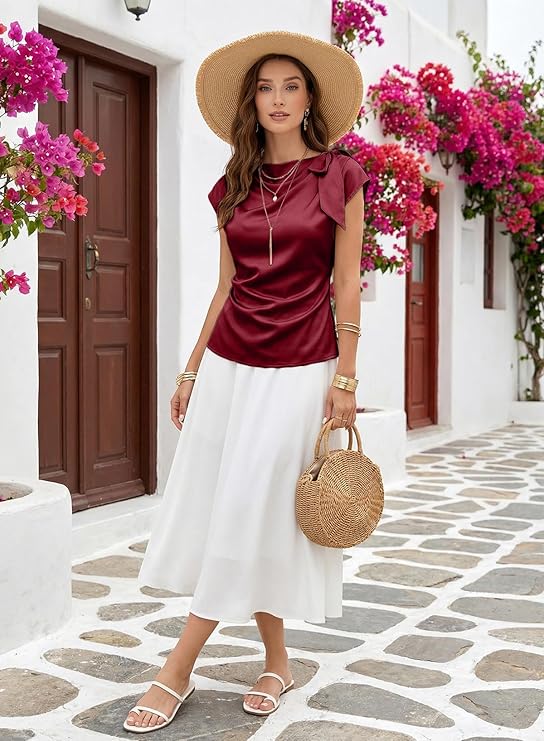
For women: a silk-look blouse with straight trousers and clean trainers or a block-heeled mule is perfect. A knit dress with a leather jacket and ankle boots. A midi skirt with a tucked-in top and a blazer. The formula is essentially: one elevated piece, keep everything else simple.
For men: dark jeans or chinos, a simple shirt or lightweight polo, clean trainers or loafers. A good watch does more for an evening look in Amsterdam than any complicated outfit construction.

The thing to remember about Amsterdam evenings is that you’re likely to be walking between venues along canals that are genuinely beautiful in the long June light. Your evening outfit needs to function for a 20-minute walk as much as for the restaurant table. Plan accordingly.
Local tip: Amsterdam restaurants often have a step up at the entrance (a Dutch architectural quirk related to historic water management). If you’re wearing high heels, note this — it’s a specific hazard that’s caught people out memorably.
Dressing for Churches and Museums
Amsterdam has some rules, and it’s useful to know them before you turn up.
The Rijksmuseum and most other major museums have no dress code, but they’re air-conditioned — often more aggressively than you’d expect. Having a layer in your bag is practical, not paranoid.
If you’re visiting churches — the Westerkerk (where Rembrandt is buried), the Oude Kerk in the Red Light District, the Nieuwe Kerk — the dress code is generally more relaxed than in southern Europe. Shoulders don’t need to be covered, knees don’t strictly need to be covered. That said, wildly revealing outfits are still in poor taste in a place of worship. General decency is the bar.

The Anne Frank House is worth a specific mention — the queue is long, often in the open, and the experience inside is moving and somewhat confined. Comfortable shoes, a layer for the wait, and sensible bag (small enough for the narrow staircase) are all worth thinking about.
Local tip: Museum gift shops in Amsterdam are genuinely excellent — the Rijksmuseum one in particular. If you’re light on layers, picking up a decent scarf or lightweight knit there is a nice solution that doubles as a souvenir.
Bags: The Crossbody vs. Backpack Debate
Short answer: crossbody wins in Amsterdam.
Here’s why. Pickpocketing is a real consideration in tourist areas (particularly around Centraal Station and the Red Light District). A crossbody bag worn in front of you is significantly harder to access without your knowledge than a backpack. It also keeps your hands free for maps, bikes, coffee, and canal photography.

The ideal Amsterdam bag is small enough to be manageable but large enough to carry: a packable rain layer, your water bottle, sunscreen, a camera if you use one, and any purchases from the market. A structured leather crossbody or a canvas tote worn across the body tends to hit that size sweet spot.

If you do want to bring a backpack — for a day trip to Haarlem or Zaanse Schans, for instance — choose a smaller daypack rather than anything gap-year-expedition-sized, and wear it on your front in busy areas.
Local tip: The Nine Streets (De Negen Straatjes) area has excellent independent leather goods shops if you’re looking for a bag that’s both functional and beautiful. Worth an afternoon’s exploration.
Accessories That Do the Heavy Lifting
The right accessories in Amsterdam transform a simple outfit into something that looks entirely put-together, and they take up almost no space in a suitcase.
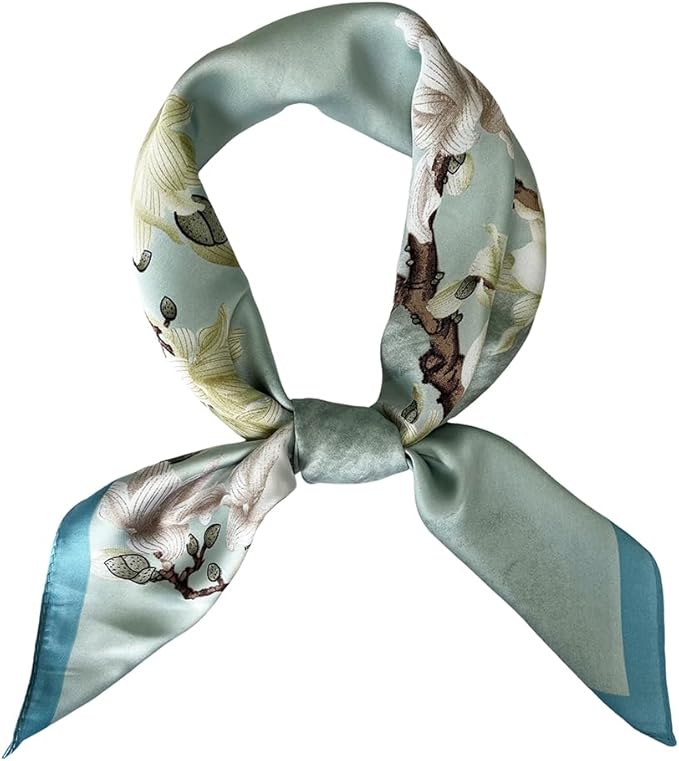
A lightweight scarf is the MVP accessory for June. Over a dress when it’s chilly. As a neck layer on a canal cruise. Tied to a bag as colour. Wrapped over your hair if it rains while you’re on a bike. One scarf, infinite applications.
Sunglasses are non-negotiable — not just for style, but because Amsterdam’s June light off the canals is genuinely bright. Good quality frames in a classic shape (tortoiseshell, black, or simple metalite) work with everything.

A lightweight hat — a bucket hat, a linen cap, a simple panama — does double duty for sun protection and canal-side photography. The Dutch wind may have opinions about wide brims, so think about a style that can be tucked into a bag when needed.

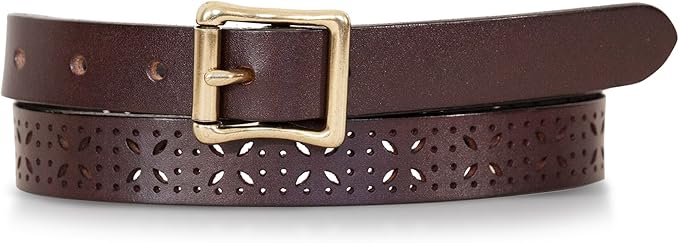
A simple leather belt is worth the negligible suitcase space. It sharpens up jeans-and-shirt combinations instantly.
Local tip: Amsterdam’s markets — especially Waterlooplein flea market and the IJ-hallen flea market if you’re there on the right weekend — have incredible vintage accessories at very reasonable prices. A scarf or a piece of jewellery bought at a Dutch market is a far better souvenir than anything in a tourist shop.
Fabrics to Choose (And the Ones to Leave at Home)
This is a decision that happens at the packing stage but pays dividends every single day of the trip.
Pack: Cotton (breathable, washable, works in both warmth and cool), cotton-linen blend (slightly more textured and interesting, still practical), light merino wool (remarkable temperature regulation — warm when cold, not too hot when warm, and doesn’t wrinkle or smell), ponte or travel jersey (holds its shape, looks polished, handles being stuffed in a bag with minimal complaint).
Leave behind: Silk (cold, wrinkle-prone, ruined by water — and it will get wet), heavy denim (fine for jeans, not for jackets or heavier pieces — too slow to dry), linen in very light weights (beautiful but wrinkles instantly and feels cold when damp), synthetic fabrics that don’t breathe (you’ll be doing enough walking that breathability actually matters).
The general principle is: choose fabrics that are comfortable across a temperature range, don’t crumple beyond recovery, and can handle a bit of Amsterdam weather without staging a dramatic scene.
Local tip: If you find yourself cold-shopping (buying something because you underestimated the temperature), Amsterdam has excellent sustainable and vintage fashion. Shops like BERING, The People of the Labyrinths, and countless vintage stores in the Jordaan are worth finding.
Rain Preparation: Don’t Underestimate This
I know rain gear isn’t the sexy part of a packing guide. But I’m including it prominently because the people who skip this section are the ones I see queueing for ponchos at tourist kiosks near the Rijksmuseum, looking thoroughly defeated.
The minimum requirement is a packable waterproof jacket — something that folds into its own pocket or a small pouch. It should be light enough that it doesn’t add meaningful weight to your daily bag, waterproof enough to handle proper rain (not just drizzle), and ideally something that doesn’t make you look like you’re about to summit a mountain.

A compact umbrella is worth including if you’re bag-comfortable — not a tiny ineffective one, but a proper mid-size that won’t flip inside out in the canal wind. The Senz umbrella is actually designed in the Netherlands specifically for wind resistance, which should tell you something about how seriously locals take this.

Waterproof-treated shoes or at least shoes with no fabric panels that will soak through are worth prioritising. White canvas trainers in the rain is a bad day. Leather or treated leather handles a wet cobblestone street much better.
Local tip: If it rains heavily, lean into it — hire bikes anyway (locals cycle in rain constantly and it’s genuinely fun), or use it as an excuse for an extended brown cafe visit with Dutch bitterballen and a beer. Rain in Amsterdam is best experienced, not escaped.
A Capsule Wardrobe for Amsterdam in June
Here’s a real working packing list — not aspirational, not maximalist, just functional and genuinely stylish.
Tops (5–6 pieces): Two or three lightweight t-shirts in neutral tones (white, cream, grey), one or two slightly nicer blouses or shirts for evenings, one thin knit or longline cardigan.
Bottoms (3–4 pieces): One excellent pair of jeans, one pair of wide-leg trousers or smart chinos, one midi skirt or dress that can dress up or down.
Dresses (1–2): One casual daytime dress (cotton or linen blend, midi length), optionally one slightly smarter option for evening.
Layers (2–3 pieces): One packable waterproof jacket, one denim jacket or lightweight blazer, one oversized overshirt or shirt-jacket that functions as both mid-layer and standalone.
Shoes (2–3 pairs): One primary walking shoe (clean trainer or cushioned loafer), one slightly more elevated option for evenings, optional sandal for warmer days (with a backup plan for rain).
Accessories: One lightweight scarf, sunglasses, a hat, a crossbody bag.
That’s it. Fits in a carry-on if you’re packing efficiently. Works for every situation June in Amsterdam will throw at you.
Local tip: Pack an extra tote bag — a lightweight canvas one takes up no space and becomes essential for market purchases, picnic supplies in Vondelpark, and the sheer volume of things you’ll end up carrying by day three.
Practical Packing Notes (The Stuff People Get Wrong)
How many outfits? For a week in Amsterdam, six or seven distinct outfits is plenty if you’re building with versatile pieces. More than that and you’re carrying weight for no return.
Packing light vs. overpacking: The carry-on constraint is your friend. For detailed carry-on packing strategies, check our guide on how to pack a carry-on for 10 days. Force yourself to make it fit in a carry-on (55x40x23cm is the standard European limit) and you’ll naturally edit down to what you actually need. Everything that doesn’t make the cut was probably never necessary.
The biggest mistake people make: Packing for the best-case scenario (all sunshine, warm evenings, everything perfectly planned) rather than the realistic scenario (mix of sun and rain, one chilly canal cruise, one unexpectedly formal dinner). Pack for reality. Reality is more fun anyway.
Outfit planning tip: Before you close your suitcase, lay everything out and check that every top works with at least two bottoms, and every bottom works with at least two tops. If anything only goes with one thing, it’s probably not earning its place.
What to buy there: Stroopwafels (obviously), but also: a small piece of Delft pottery, a Dutch cookbook, something from the vintage market, and possibly a Rains jacket if the weather has convinced you that you need one. Amsterdam is an excellent shopping city.
You’re Going to Love It
Here’s the thing about Amsterdam in June: even on the grey days — and there will be grey days — the city is beautiful. The canals have a silver quality in overcast light that’s almost more atmospheric than sunshine. The museums are quieter when it’s raining. The brown cafes feel cosier.
If you pack well, you won’t spend your trip managing your clothing or your temperature. You’ll spend it properly present — on a hired bike through the Jordaan, at a long lunch on a terrace, at the flower market buying tulip bulbs you’ll somehow get home, wandering into a vintage shop and finding something genuinely special.
The clothes are just the scaffolding. What you’re actually packing for is that moment on the canal bridge when the light turns gold and you remember, very clearly, that you are exactly where you should be.
Planning your Amsterdam itinerary? See our best European cities to visit in summer for context on where it fits.

