
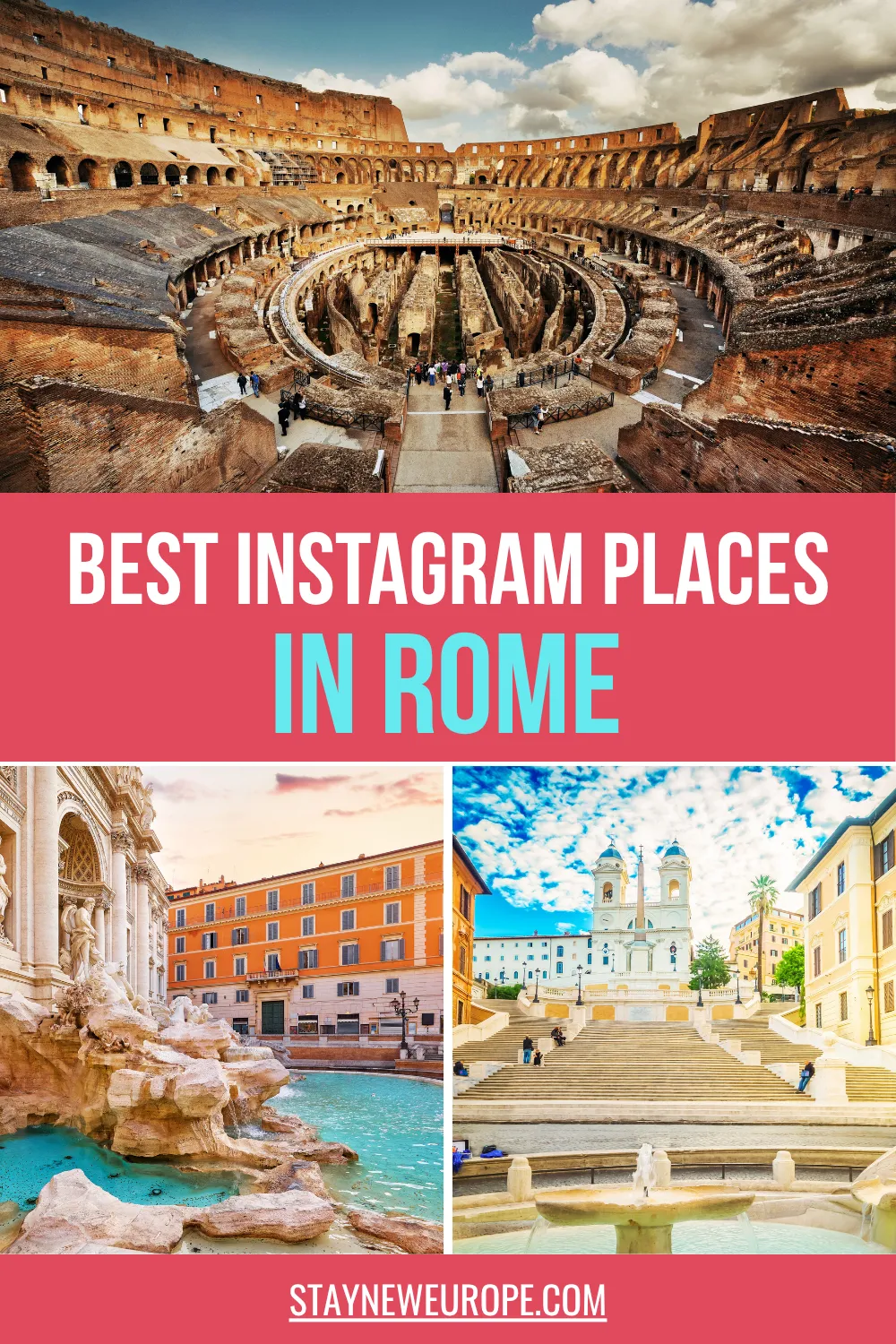
Let me be honest with you from the start: Rome will break your camera roll. I went for four days and came back with over 1,200 photos, a full memory card, and a genuine sense that I hadn’t scratched the surface. The Eternal City is one of those rare places where every second corner looks like a film set — crumbling ochre walls, cobblestones slick from a morning shower, a baroque fountain doing its thing in a square that hasn’t changed in three centuries. Point your camera in almost any direction and something extraordinary happens.
But there’s a difference between taking photos in Rome and taking good photos in Rome. The Trevi Fountain at 2pm on a Tuesday is a beautiful monument surrounded by 400 strangers. The Trevi Fountain at 5:45am, with soft pink light bouncing off the travertine and maybe three other people in the world, is something else entirely. Rome rewards the early risers, the ones willing to walk an extra ten minutes off the tourist trail, and the people who actually stop and look rather than just snapping and moving on.
This guide covers the best Instagram places in Rome — from the icons you absolutely cannot miss to the hidden squares that make locals do a double-take when you mention you’ve been there. I’ve arranged them roughly by area so you can plan efficiently, but honestly? Wander. Half the best photos I’ve ever taken in this city happened completely by accident.
Before You Grab Your Camera: What You Need to Know First
Rome operates on a different rhythm from most European cities, and understanding that rhythm will transform your photography. The golden hours here are genuinely golden — the combination of Mediterranean light and all that honey-coloured stone produces a warmth that no filter can replicate. Sunrise in Rome is typically between 5:30am and 6:30am depending on the season, and the hour that follows it is, without exaggeration, the best photography window the city offers. Most tourist sites are completely empty, the light is soft and directional, and the city has that rare quality of feeling like it belongs to you alone.
Practically speaking, a few rules have tightened up in recent years. You cannot sit on the Spanish Steps or eat and drink on them — fines run up to €400 and the police do enforce it. The same applies to sitting on the edge of the Trevi Fountain. These aren’t suggestions. The authorities have also increased enforcement around several monument areas, so be respectful, stay behind barriers where they exist, and read the signs.
The best times of year for photography in Rome are spring (March to May) and autumn (September to November). Summer brings intense midday light that flattens everything and crowds that make the sites feel like airport terminals. That said, summer sunrises are spectacular if you can haul yourself out of bed, and the long evenings give you beautiful golden-hour light well into the evening. Winter is genuinely underrated — the crowds are thin, the light is low and lovely all day, and the occasional misty morning over the Forum is the kind of thing that makes you stop breathing for a second.
1. The Trevi Fountain — Yes, You Still Need to Come Here
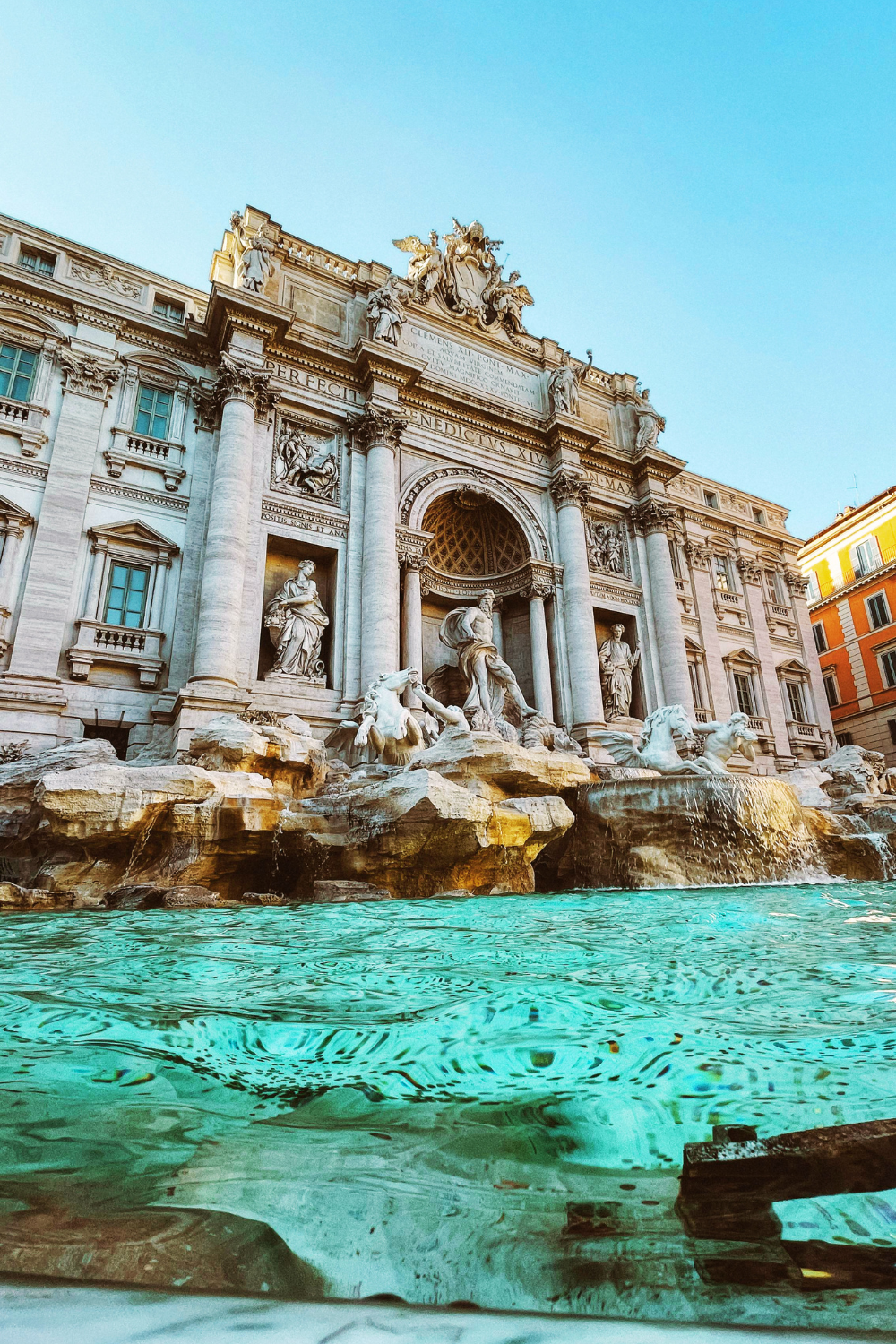
Every experienced travel photographer has a complicated relationship with the Trevi Fountain. It’s simultaneously one of the most beautiful baroque monuments in the world and one of the most aggressively crowded photo spots on earth. Both things are true. And it’s still worth it — you just need a plan.
The fountain was built between 1732 and 1762 and is staggering in scale: 26 metres high, 49 metres wide, carved from travertine and animated by Neptune commanding his sea horses from a triumphal arch. At any hour of the day it has a theatrical drama that photographs almost automatically. The challenge is the people. At peak time this square is shoulder-to-shoulder tourists, selfie sticks swinging, gelato dripping. It’s not the vibe.
Come before 6am. I cannot stress this enough. The square empties out completely in the early morning — you’ll share it with perhaps a handful of other photographers and some pigeons, and the soft pre-dawn light catches the water in a way that makes the whole thing shimmer. If you can’t make sunrise, early evening after 9pm in summer when the crowds thin is your next best option. The fountain is lit at night and the blue-hour shots are genuinely beautiful from the upper steps of the square.
The classic shot is from the centre of the piazza, but walk around the fountain’s edges for different angles. The side profile, with the full arch visible and the water cascading in the foreground, is less photographed and arguably more interesting. Remember: you cannot sit on the fountain’s edge or wade in — enforcement is real and consistent.
Local tip: There’s a narrow side street to the right of the fountain, Via della Stamperia, that gives you a partially framed elevated angle looking down toward the water. It’s not on any photography blog I’ve found, and it’s almost always empty. Try it at golden hour when the light comes from the west and rakes across the stone.
2. The Colosseum — Four Angles, One Legend
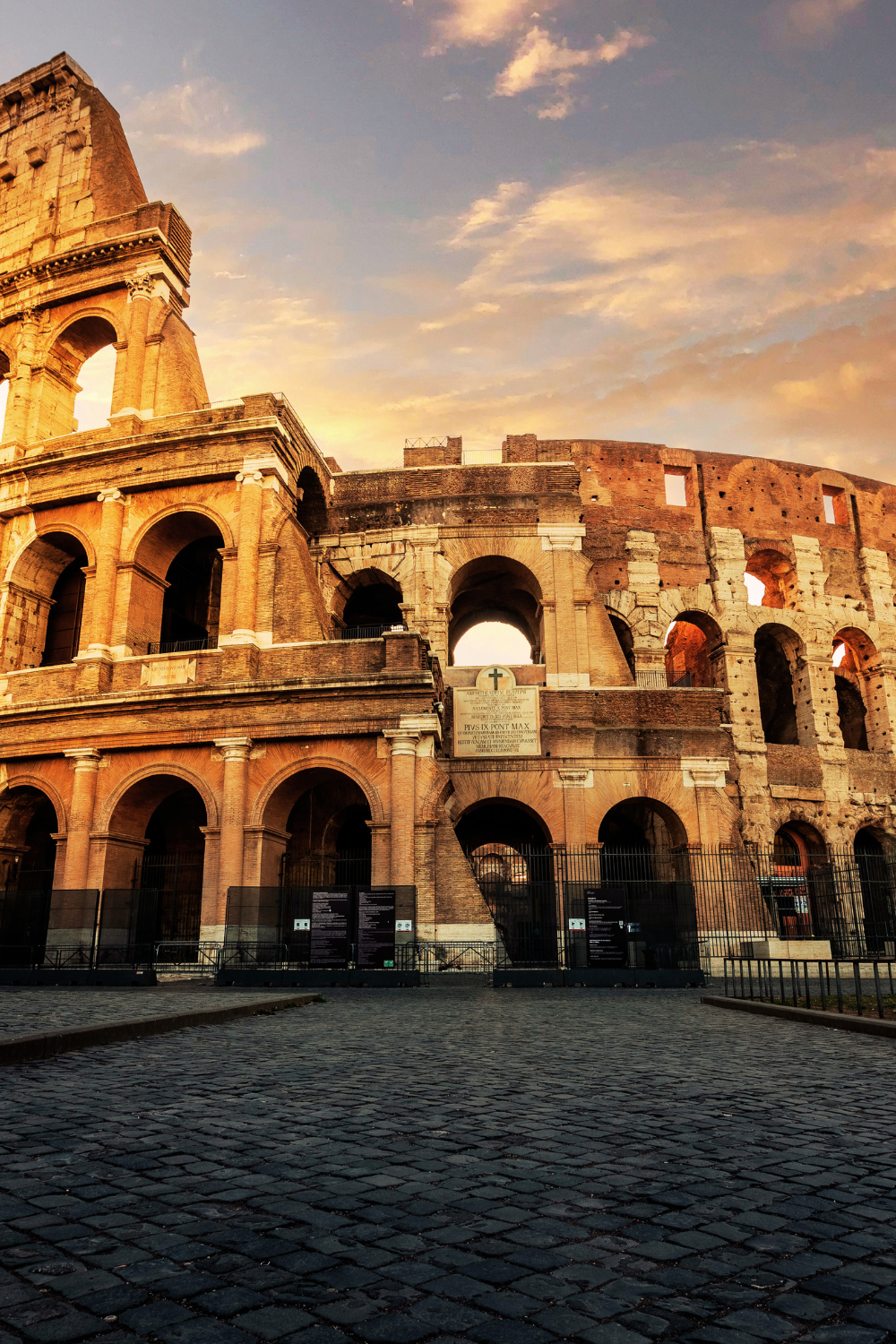
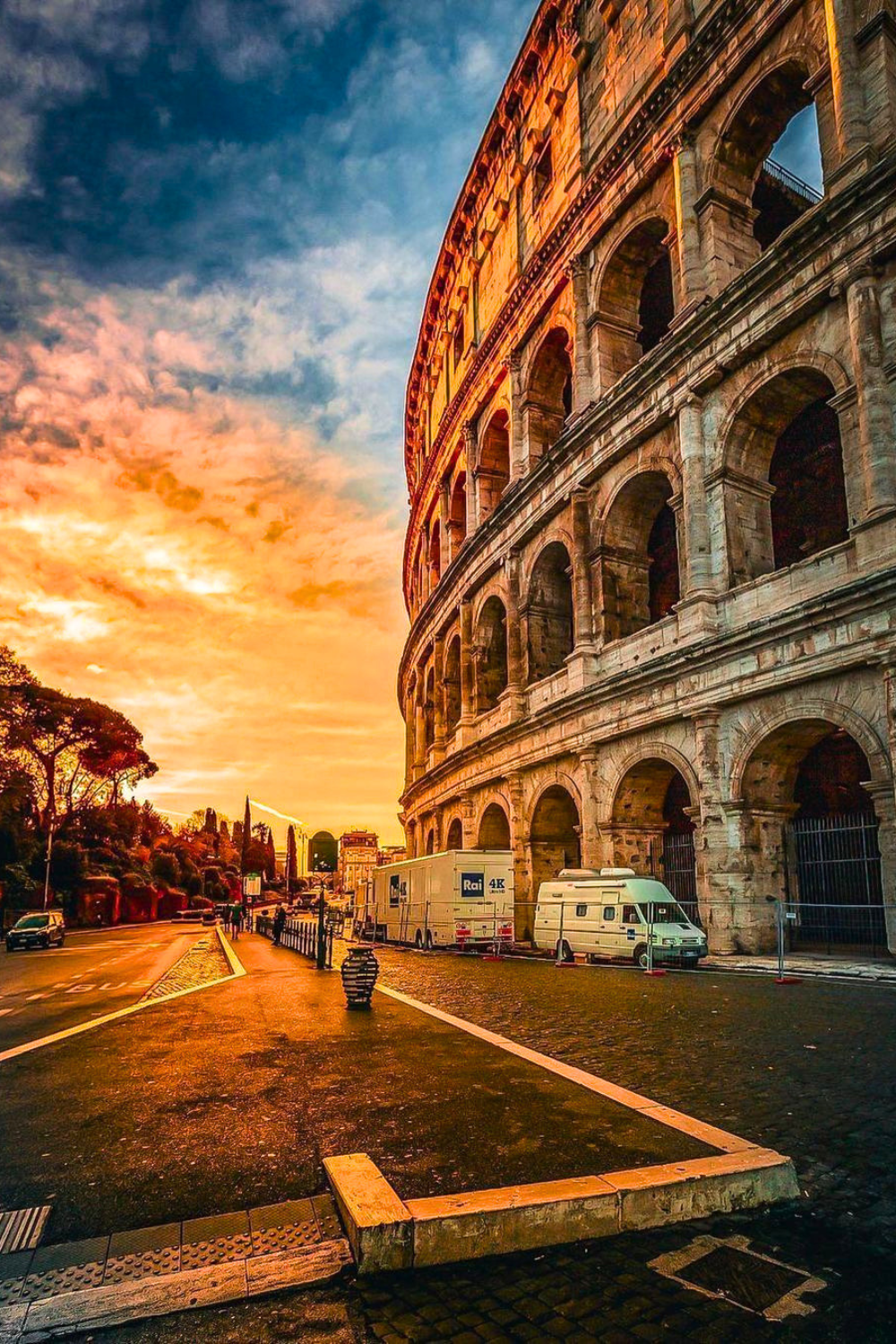
The Colosseum is one of those monuments that somehow exceeds every expectation even when you’ve seen ten thousand photos of it. Standing in front of it for the first time, I remember thinking: it’s even bigger than I thought. And older. And more improbable. An amphitheatre completed in AD 80 that seated 50,000 people, and it’s still standing. Still magnificent. Still the best Instagram place in Rome for a reason.
The challenge is finding a shot that doesn’t look like every other Colosseum photo ever taken. The answer is angles and timing. The standard frontal shot from Via Sacra is the classic, and there’s nothing wrong with it — but come at sunrise when the light hits the eastern face and the shadow plays across the arches, and it transforms into something genuinely special. The golden light in the first thirty minutes after sunrise on the Colosseum is one of Rome’s great photographic moments.
For something different, walk to Via Vittorino da Feltre — the street to the south that leads toward the long curved wall of the Caelian Hill. From here you can photograph the Colosseum framed between the wall and the road, with much less foot traffic and a more contemplative angle. The interior, visited on a ticketed tour, offers extraordinary shots of the hypogeum (the underground chambers) and the reconstructed arena floor. Book the underground access in advance — it sells out weeks ahead in high season.
Going inside is highly recommended not just for the history but for the photographs. The view from the upper levels, looking down into the arena with the Forum visible beyond, is breathtaking and unlike anything you can get from the street.
Local tip: The Arch of Constantine sits immediately adjacent to the Colosseum entrance and is almost always overlooked in favour of the amphitheatre itself. But the combination shot — Arch in the foreground, Colosseum behind, taken from slightly to the north — is one of the best compositions in all of Rome. The light is best here in the morning when it comes from the east.
3. The Pantheon and Piazza della Rotonda — The Building That Shouldn’t Exist
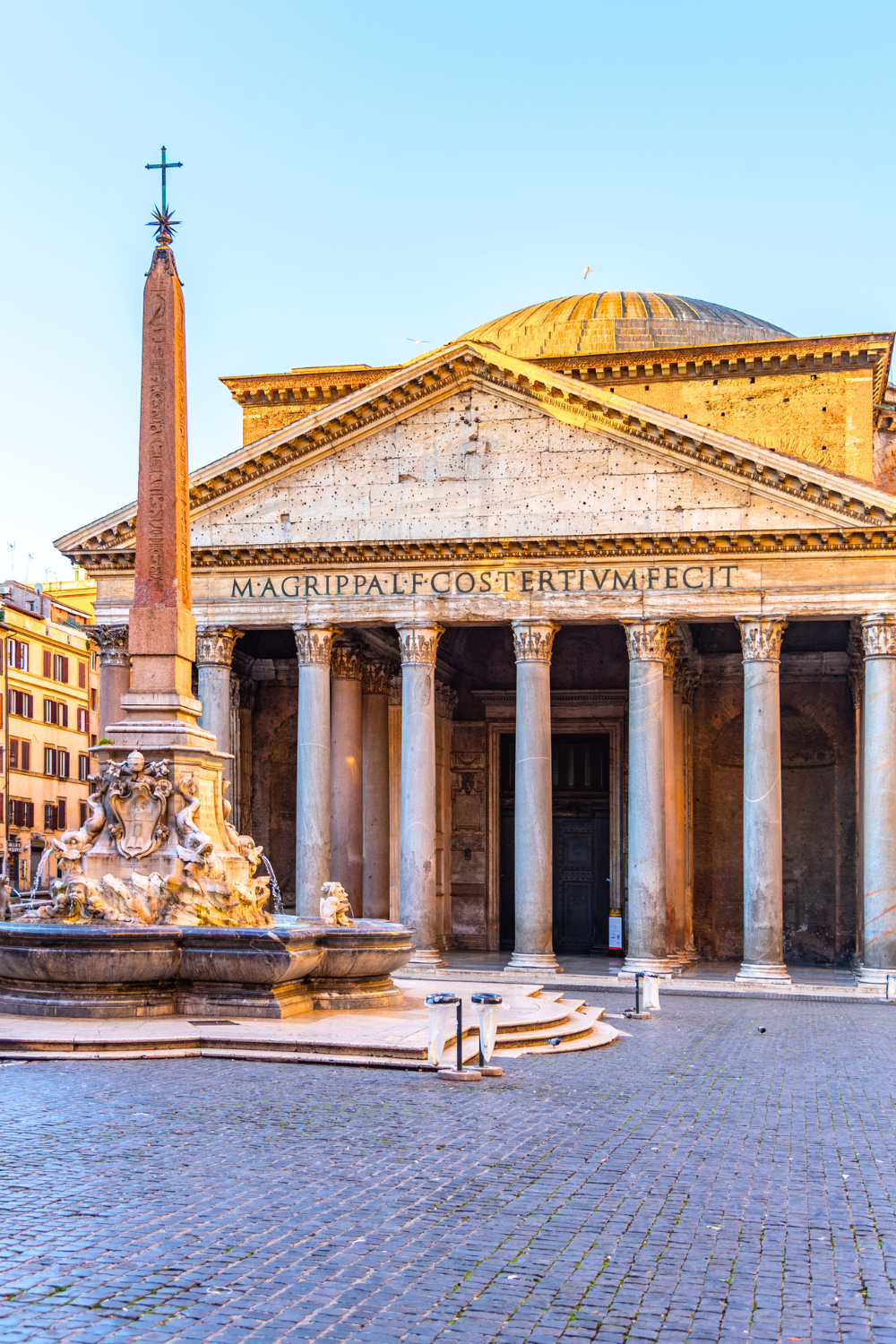
Here’s what gets me about the Pantheon: it was built in 126 AD, it has the largest unreinforced concrete dome ever constructed, and it is in better condition than most buildings put up in the 1970s. The Romans just built things to last, apparently. The Pantheon is now Rome’s most-visited monument, which means it has both spectacular photographic potential and serious crowd management challenges.
The building’s exterior — that enormous portico of granite Corinthian columns beneath a triangular pediment — photographs brilliantly from the piazza in front of it, Piazza della Rotonda. The fountain in the centre of the square, the Fontana del Pantheon with its Egyptian obelisk, adds foreground interest and the surrounding buildings give the whole scene a colour palette that belongs to nobody but Rome: warm ochre, faded terracotta, cream stone.
Inside, if you can position yourself beneath the oculus — the circular opening at the apex of the dome — and shoot upward, you get one of the great architectural photographs available to any visitor. The light that falls through the oculus moves throughout the day as the sun tracks across the sky, and in the morning it creates a dramatic shaft cutting through the interior darkness. Entry now requires a ticket; book in advance.
The piazza itself, with the restaurant Ristorante Rotonda opposite providing an elevated terrace view of the facade, is worth a longer sit. The colour of the buildings at golden hour is extraordinary.
Local tip: Walk two minutes northwest from the Pantheon to the tiny Piazza di Sant’Ignazio. It’s one of Rome’s secret treasures — a rococo square surrounded by curved baroque buildings designed to look like theatrical stage scenery. Almost nobody goes here and it’s genuinely one of the most photogenic corners in the city. The ochre and cream facades curve gently around a central space that looks, as someone once said, like a Disney set that was accidentally built in the 17th century.
4. The Spanish Steps and Piazza di Spagna — Rome’s Most Elegant Staircase
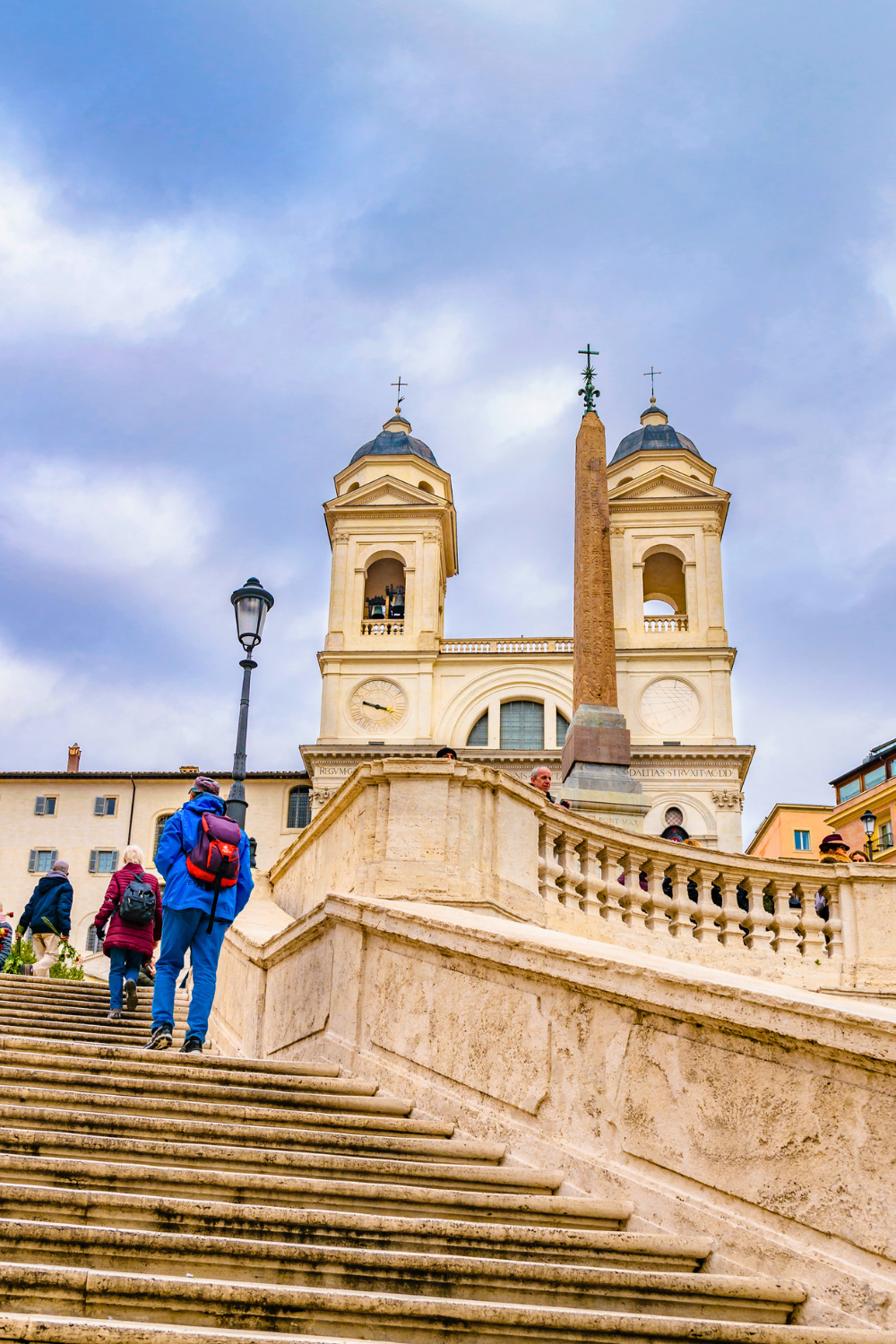
The Spanish Steps are one of those places that carries so much cultural weight — Audrey Hepburn, Roman Holiday, every aspirational travel magazine cover from the last sixty years — that arriving in person almost feels anticlimactic. And then you stand at the bottom, look up at those 135 steps rising to the Trinità dei Monti church framed against the Roman sky, and you completely understand.
The steps were built between 1723 and 1725 and remain one of the great pieces of urban design in Europe: wide enough to use as a gathering place, photogenic from both above and below, and framing that beautiful twin-towered church at the top with almost theatrical perfection. The Fontana della Barcaccia at the base — a low, sunken fountain in the shape of a boat, designed partly because the water pressure in this area wasn’t sufficient to power a conventional fountain — adds foreground interest and a sense of human scale.
Come before 8am to have the steps largely to yourself. The light in the morning comes from the east and illuminates the church facade beautifully. From the top, the view down the steps with the piazza and Via Condotti stretching beyond toward the distant city is one of Rome’s great photographs.
A word on rules: you cannot sit on the steps, eat or drink on them, or lounge on them. This has been enforced since 2019 and the fines are substantial. The steps are for walking and photographing, not picnicking. Respect it — the enforcement is consistent and the rule exists for good reasons.
Local tip: Walk up the steps and continue for two more minutes to the Pincian Hill viewpoint — the Terrazza del Pincio. From here you have one of the best panoramic views of Rome available without climbing a bell tower or paying an entrance fee. The view sweeps across the city’s rooftops toward St Peter’s dome, and at sunset the whole skyline goes amber. Almost nobody does this as an extension of the Spanish Steps visit, which is baffling.
5. The Aventine Keyhole — Rome’s Most Magical Two Seconds
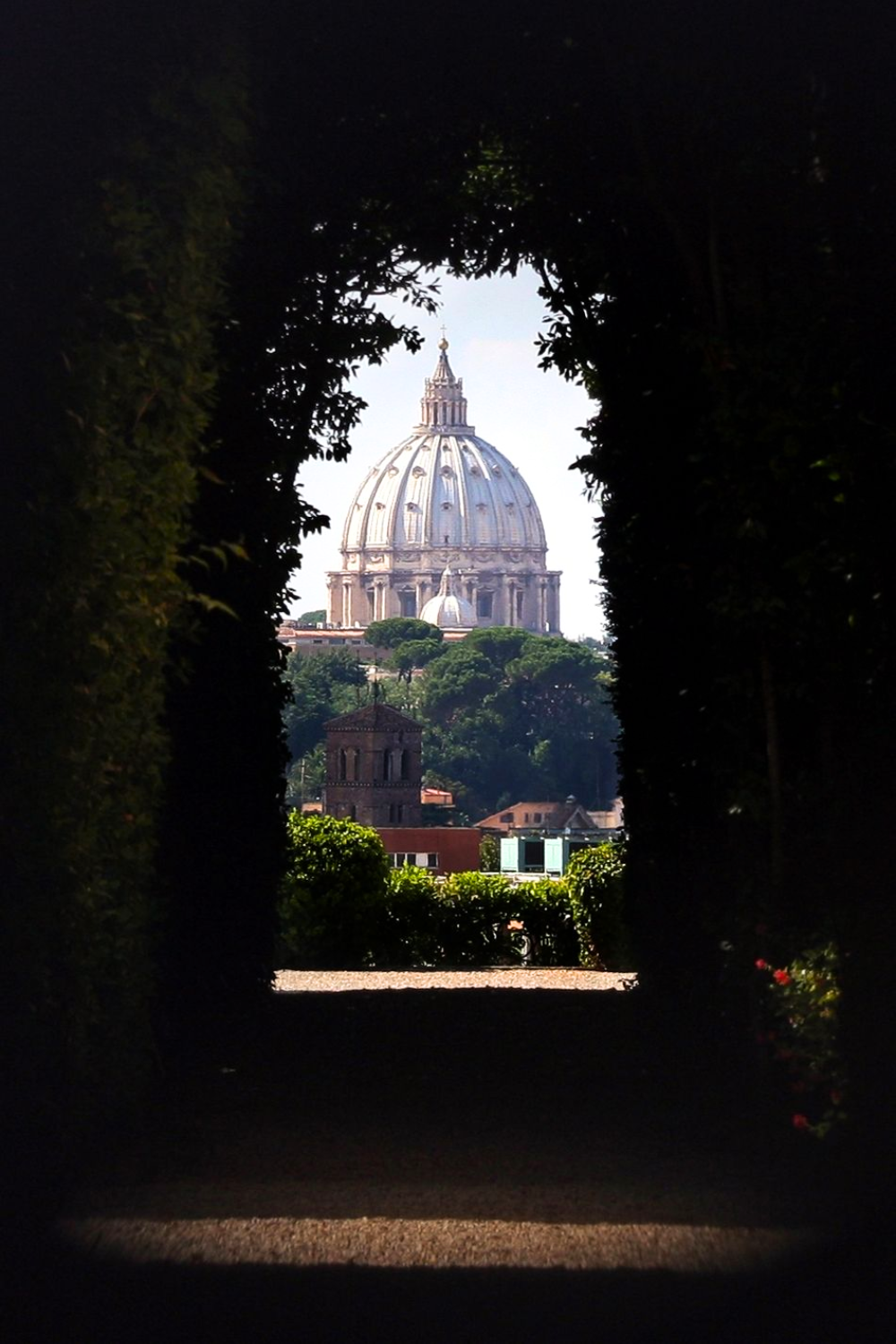
This is the spot I tell every single person visiting Rome about, and it’s the one that produces the most disbelief when they come back having tried it. On the Aventine Hill, there is an unremarkable green door set in an unremarkable wall. Through the keyhole of that door, thanks to a perfectly aligned avenue of hedges on the other side, you see the dome of St Peter’s Basilica in the Vatican perfectly framed and perfectly centred, floating in the distance like a mirage.
It is one of the most extraordinary accidental compositions in any city in the world, and it’s been there for centuries, maintained by the Knights of Malta whose priory lies behind the door. The queue to peer through the keyhole can stretch quite long in summer, but it moves quickly — each person gets their ten seconds or so, and then you’re done. Photographs through the keyhole are the obvious goal, but the Aventine Hill itself, with the Orange Garden next door, is worth the entire trip up here.
Local tip: Come early in the morning (before 9am), and the queue is negligible or nonexistent. The light through the keyhole is best in the morning when the sun is still low and illuminates the dome’s pale stone. Combine it with the Orange Garden next door — the Giardino degli Aranci — for a double reward.
6. Giardino degli Aranci — The Orange Garden View Nobody Talks About Enough
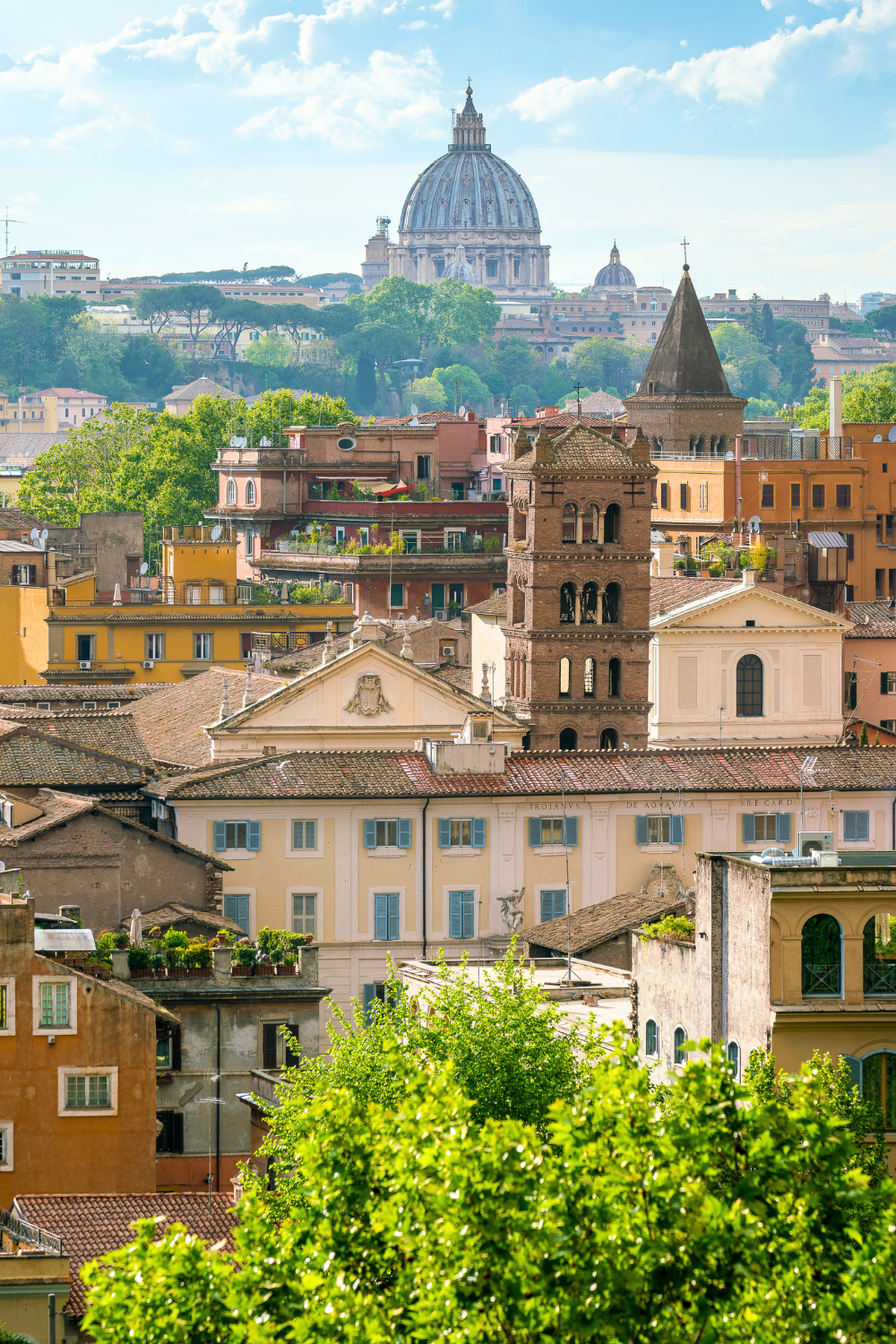
Standing in the Giardino degli Aranci on the Aventine Hill, looking out over the city’s rooftops with St Peter’s dome dominating the middle distance and the Janiculum Hill rising beyond, I genuinely had to stop and just look for a while before I even thought about taking a photo. It’s that kind of view.
The Orange Garden is a public park on the Aventine Hill, shaded by — as you’d expect — orange trees, and equipped with a viewing terrace at its western edge that offers what I think is the single best viewpoint in Rome that most tourists don’t know about. The standard viewpoints people mention are the Pincio, the Gianicolo, and the top of the Vittoriano. The Orange Garden beats them all for a combination of intimacy and grandeur.
The garden itself is beautiful at any time of year, with the orange trees providing dappled shade, benches for sitting and staring, and a general atmosphere of civilized calm quite at odds with the chaos of the streets below. In spring, the scent of orange blossoms is overwhelming in the best possible way.
Local tip: The best photography here is at golden hour, when the late afternoon light warms the city’s rooftops and St Peter’s dome catches the last sun. Combine the Orange Garden with the keyhole viewpoint next door — they’re a two-minute walk from each other — and the Aventine Hill becomes an easy hour of exceptional photography.
7. Trastevere — The Neighborhood That Looks Like a Film Set
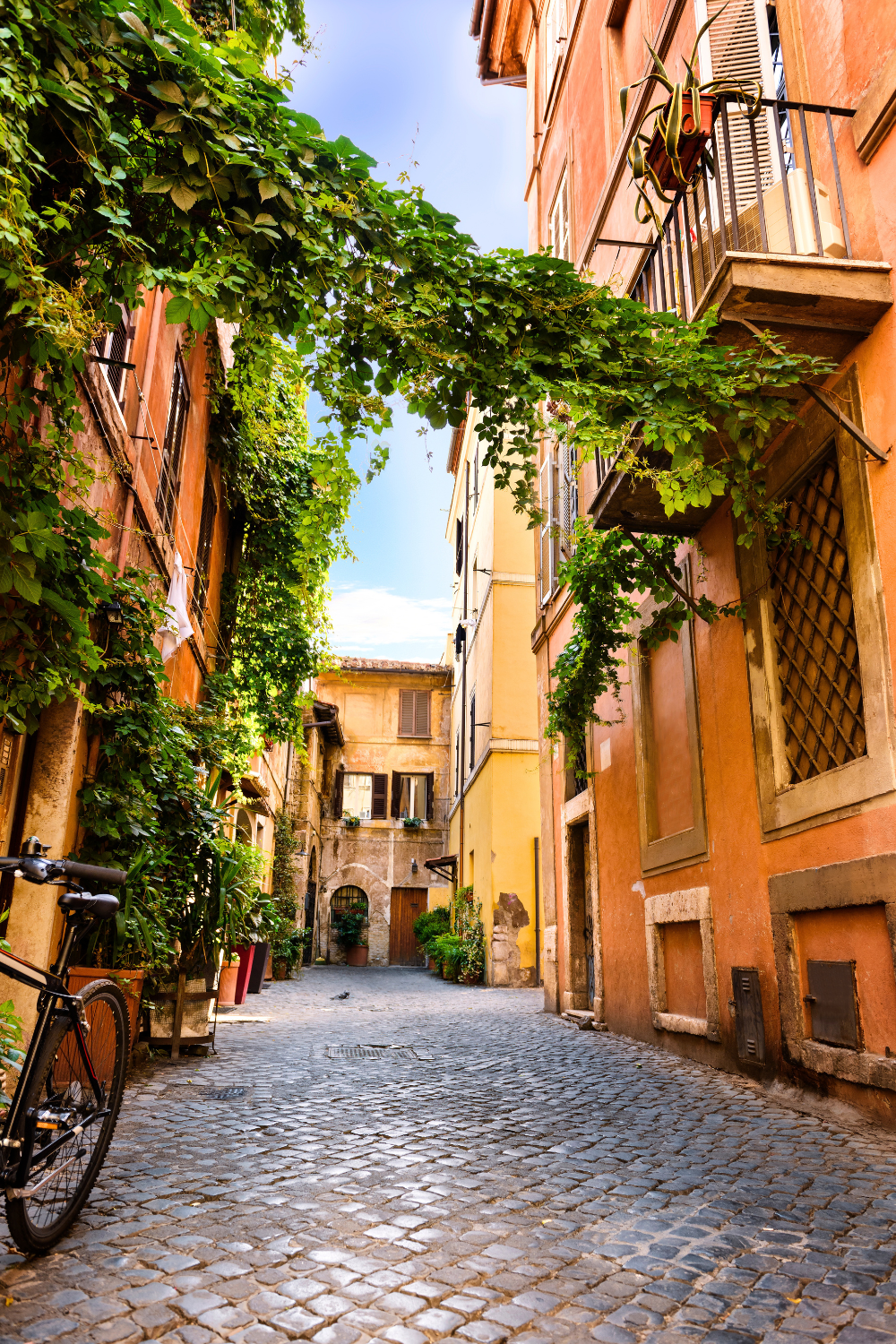
Trastevere is the answer to the question: What does Rome look like when it forgets tourists are watching? This ancient neighborhood on the west bank of the Tiber — the name literally means “across the Tiber” — is a dense tangle of cobblestone lanes, medieval buildings painted in terracotta, gold, and faded rose, ivy cascading over archways, and corner trattorias where the tables spill out into the alley.
It’s one of the best Instagram places in Rome precisely because it’s not a monument or a landmark but a living, breathing neighborhood that happens to look extraordinary in every direction. The streets around the Basilica di Santa Maria in Trastevere are the most photogenic — the piazza in front of the basilica, with its medieval mosaic facade catching the morning light, is a genuinely remarkable photograph at any hour. But the best shots come from simply getting lost. Every corner in Trastevere offers something: a trailing bougainvillea, a laundry line strung between medieval towers, a doorway half-open to reveal a courtyard.
Walk up the hill above the main neighbourhood toward the Gianicolo and you’ll find quieter, even more atmospheric streets that the evening crowds haven’t reached. The restaurant facades along Via della Lungaretta and Vicolo del Bologna are particularly photogenic.
Local tip: Come for a wander at around 7pm before dinner. The aperitivo hour fills the outdoor tables with locals, the light is golden and directional, and the neighbourhood has a warmth and energy that photographs beautifully. The colour of the buildings at this hour is genuinely special — that warm Roman ochre glows almost orange.
8. Castel Sant’Angelo and Ponte Sant’Angelo — The River Shot
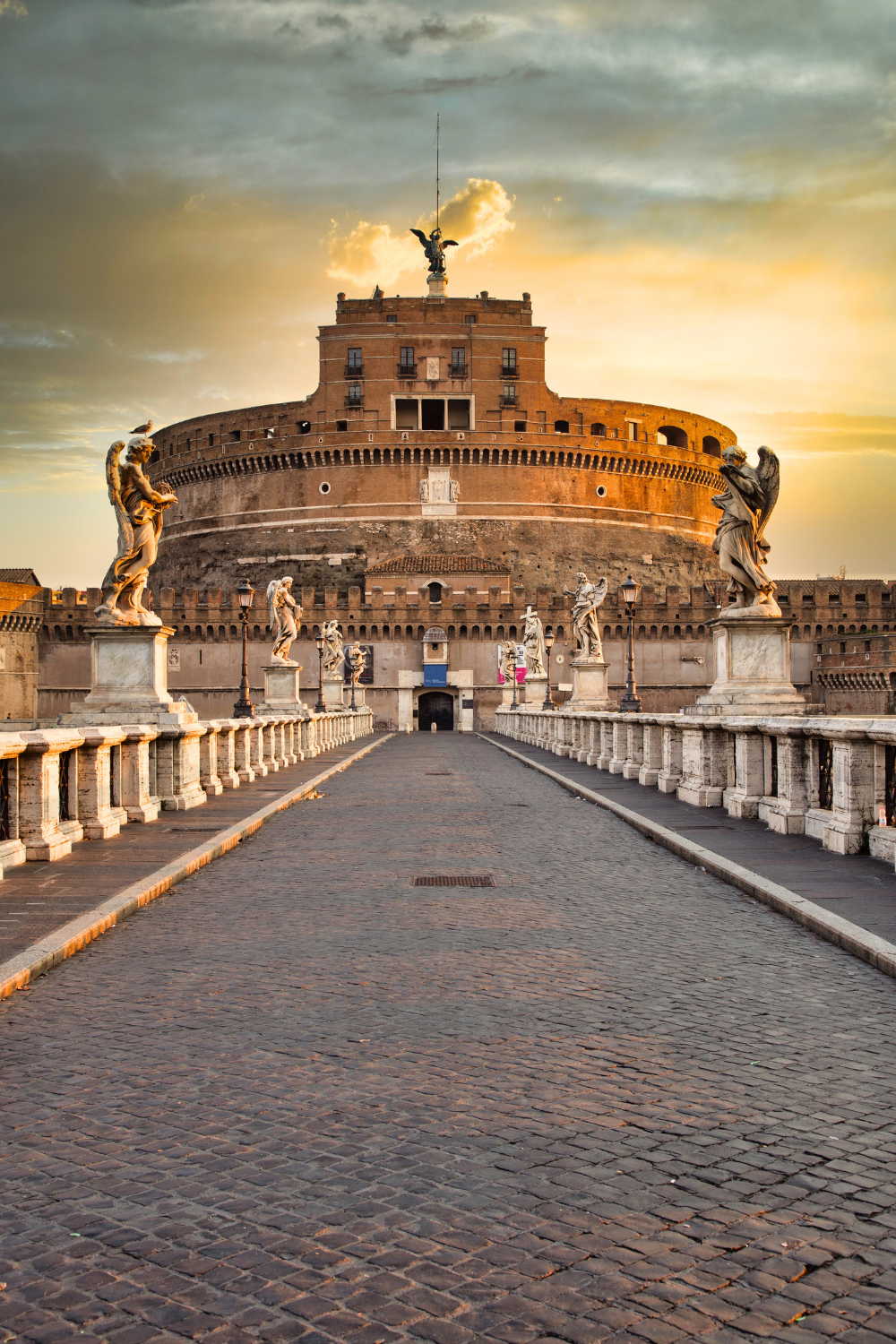
Castel Sant’Angelo has been many things in its long history: a mausoleum for the Emperor Hadrian (built AD 134–139), a medieval papal fortress, a Renaissance prison, and now a museum. It’s also one of the most photographed buildings in Rome, and for reasons that become obvious the moment you see it rising from the Tiber’s right bank — a great drum of ancient stone topped by a bronze angel, reflected in the river below.
The best photograph of Castel Sant’Angelo doesn’t involve the castle directly at all. Stand on Ponte Umberto I, a little upstream, and look along the river toward the castle with the Ponte Sant’Angelo — the bridge lined with Bernini’s angel sculptures — in the middle distance. At golden hour, with the river picking up the warm light and the castle glowing behind, this is one of Rome’s great views and one of its most photographed.
Ponte Sant’Angelo itself is always worth time. The ten angel statues lining the bridge were designed by Bernini and executed by his students in 1669, and they are magnificent — each carrying an instrument of Christ’s Passion, each with a different expression, each worth photographing individually against the Roman sky.
Local tip: For a classic Castel Sant’Angelo shot without the crowds in frame, go at sunrise. The bridge empties out entirely in the early morning and the soft light on the stone and the water is superb. The castle museum opens at 9am if you want to get inside.
9. Piazza Navona — The Oval That Bernini Built
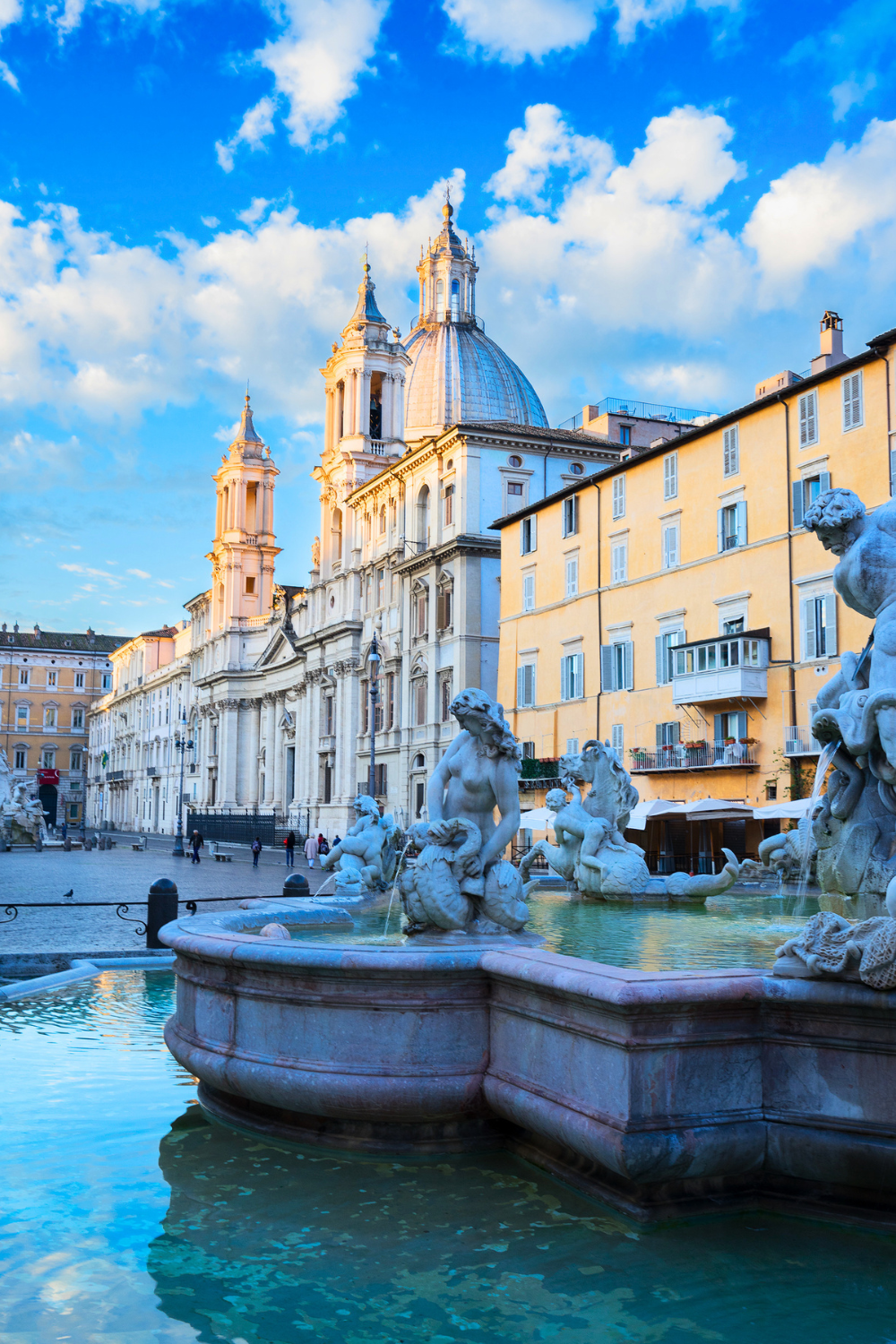
Piazza Navona is shaped like a running track because that’s exactly what it was — it was built on the site of the 1st century Stadium of Domitian, and the oval outline of the ancient athletics ground gave the piazza its distinctive shape. Today it’s lined with restaurants, street artists, and gelato vendors, and in its centre stands Bernini’s Fontana dei Quattro Fiumi — the Fountain of the Four Rivers — which is one of the finest pieces of public sculpture in the world.
The fountain alone is worth a long visit. Four enormous river gods — representing the Nile, Danube, Ganges, and Río de la Plata — recline around a central rock formation topped by an Egyptian obelisk. Each figure is extraordinary: muscular, expressive, almost theatrical in its dynamism. Photographs taken low, looking up at the figures against the sky, capture the drama better than any standard eye-level shot.
Unlike the Trevi Fountain or the Pantheon, Piazza Navona never gets truly unbearable — it’s large enough to absorb the crowds, and the best photographs are taken not of the whole square but of details within it: a single fountain figure, the pastel facades of the surrounding buildings, the long perspective of the oval from one end to the other.
Local tip: Walk to the southern end of the square and look back north. The perspective of the oval, with the fountain and obelisk in the middle distance and the church of Sant’Agnese in Agone rising behind it, is the best compositional shot the piazza offers. Early morning is quieter, but Piazza Navona at dusk — when the fountain is lit and the restaurant candles are coming on — has a warmth that deserves its own session.
10. The Roman Forum from Above — The Photograph Nobody Anticipates
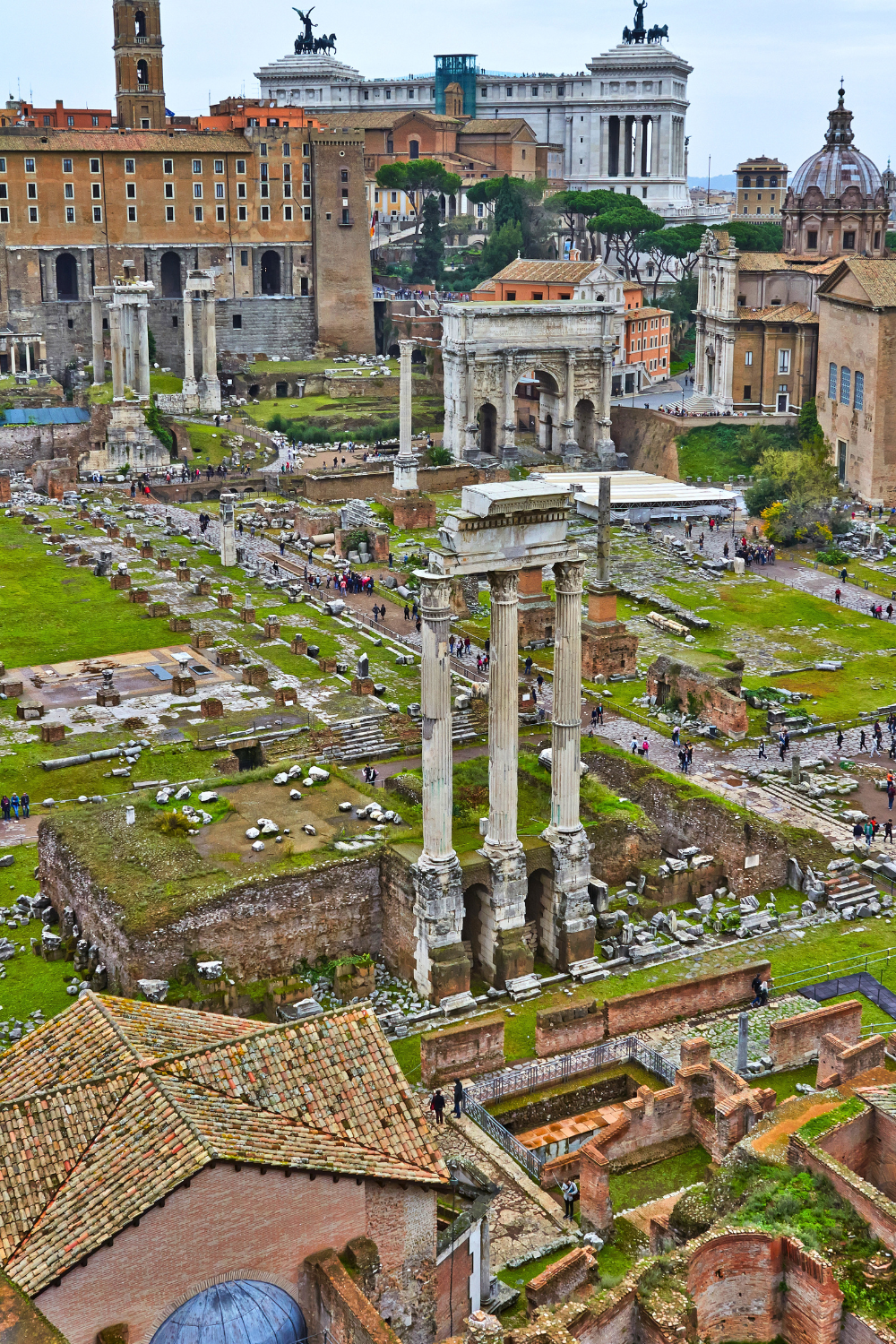
Everyone walks through the Roman Forum. Far fewer people find the viewpoints that let you photograph it properly from above, and that’s their loss, because the aerial view of the Forum is one of the most visually extraordinary things Rome has to offer.
The Forum Romanum was the centre of the ancient city for nearly a thousand years — the place where elections happened, trials were held, merchants traded, and gladiators occasionally died. Today it’s a magnificent ruin, a field of columns and arches and crumbling temple walls stretching between the Palatine and Capitoline Hills, and from above it tells a story that’s impossible to read from ground level.
Walk around to the Palazzo Senatorio (the Senatorial Palace on the Capitoline Hill) and you’ll find staircases on the right side and a viewing terrace on the left. Both offer elevated views across the Forum with the Temple of Saturn’s columns in the foreground and the whole sweep of the ancient city stretching toward the Colosseum. This is best at sunset, when the warm light rakes across the ruins and the shadows define every architectural fragment.
Local tip: Entry to the Roman Forum is included with a Colosseum ticket (the combined ticket also covers the Palatine Hill). The viewpoint from the Capitoline Hill side is free and accessible without a ticket — you don’t need to go inside to get the best photography.
11. Palatine Hill at Golden Hour — Rome’s Best Kept Secret Viewpoint
I almost skipped the Palatine Hill entirely on my first visit to Rome. It was included in my Colosseum ticket and I nearly decided it wasn’t worth the extra time. That would have been a mistake I would not have forgiven myself for, because the Palatine Hill at sunset is one of the most beautiful and least celebrated photography locations in the city.
The hill — one of the original seven hills of Rome, the one where legend says Romulus and Remus were found by the she-wolf, and where Rome’s wealthiest citizens built their palaces — rises above the Forum and offers sweeping views in multiple directions. To the north you see the Forum, the Capitoline Hill, and the Vittoriano monument. To the south you see the Circus Maximus stretching through the valley. The ruins on the hill itself — the massive walls of the imperial palaces, the gardens of the Farnese family — add extraordinary foreground interest to every shot.
Come in the late afternoon, after 4pm, and work your way up to the highest terraces as the sun drops. The warm light on the ancient brick and stone is exceptional, and as the shadows lengthen the whole site becomes quieter and more atmospheric.
Local tip: The Orti Farnesiani — the Farnese gardens on the northern part of the hill — are the best vantage point for Forum photographs. Find the terrace at the northwest corner and you’ll have the entire Forum spread below you in the last light of the day.
12. Quartiere Coppedè — The Neighborhood That Doesn’t Quite Belong in Rome
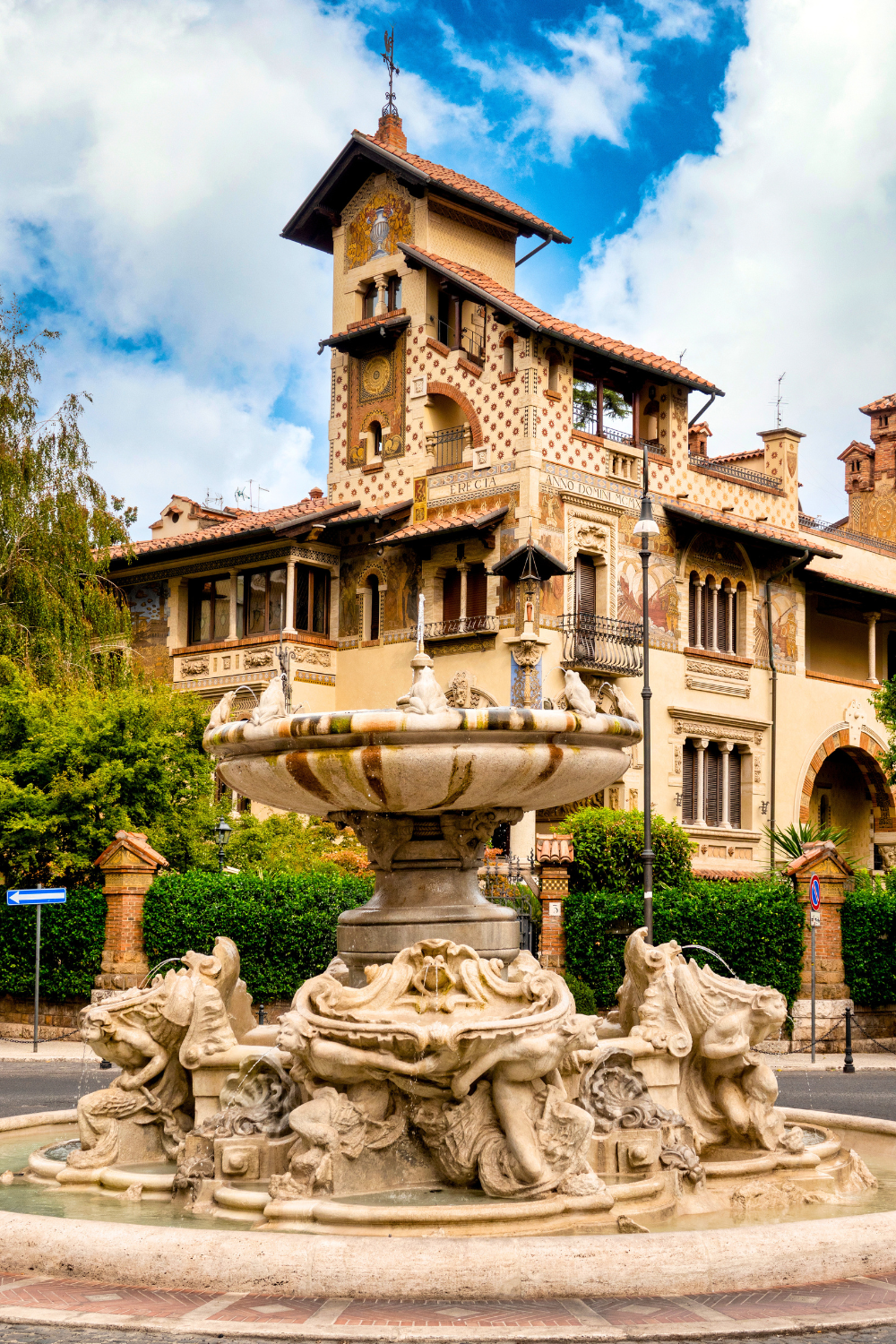
Here’s one that genuinely surprised me. About fifteen minutes on foot from the Spanish Steps, in the residential Trieste neighbourhood, there’s a small collection of streets — perhaps two city blocks in total — that look as though they were teleported from a Viennese fairy tale and deposited without explanation into the Roman street grid.
Quartiere Coppedè was designed by the architect Gino Coppedè between 1913 and 1927, and it is deeply, gloriously, wonderfully strange. The buildings are Art Nouveau and Liberty style, covered in elaborate carvings, frescoes, mythological figures, and architectural details that range from baroque to medieval to ancient Egyptian — all mixed together with a cheerful lack of concern for coherence. An enormous spider web hangs in the wrought-iron arch over the entrance to Via Dora. The buildings have towers, turrets, caryatids, and carved lions. The central Piazza Mincio has a frog fountain surrounded by buildings that look like illustrations from a Gothic novel.
It’s unlike anything else in Rome and it photographs magnificently. The narrow streets create dramatic shadows, the ornate facades reward close-up detail shots as much as wide establishing shots, and the complete absence of major tourist infrastructure means you’ll usually have it nearly to yourself.
Local tip: Come in the morning when the eastern light hits the facade details. The entrance arch on Via Dora, photographed looking through toward the fountain beyond, is the signature shot of the neighbourhood. Take time to walk all the streets — the facades change dramatically every twenty metres.
13. Piazza del Popolo — Twin Churches and an Egyptian Obelisk
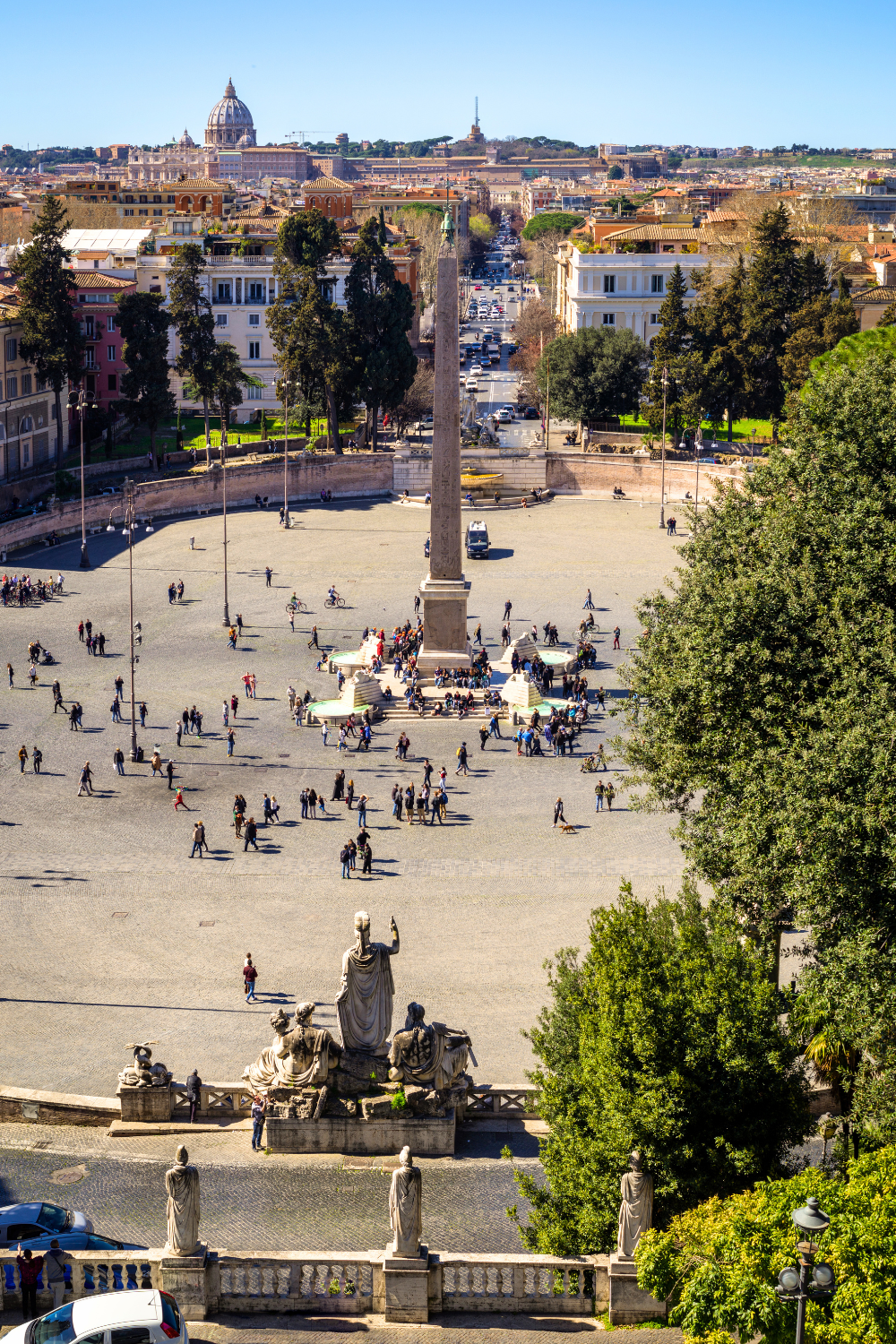
Piazza del Popolo is one of those squares that reveals its full brilliance from a specific angle, and that angle is from the top of the Pincian Hill looking south. From up there, the entire design of the piazza unfolds: the great oval space, the central obelisk (brought from Heliopolis in 10 BC, making it among the oldest objects in Rome), the twin baroque churches of Santa Maria dei Miracoli and Santa Maria in Montesanto flanking the entrance to the three roads that lead south into the city, and the whole thing framed by the surrounding hills.
The obelisk and twin churches photographed together from ground level — from the northern end of the square, looking south — give you one of Rome’s most satisfying symmetrical compositions. The buildings’ matching facades and the obelisk rising between them create a perspective that’s almost too good to be accidental, which it isn’t: the whole square was designed as a theatrical entrance to Rome for travellers arriving from the north.
The churches themselves are worth a look inside, and the surrounding buildings have lovely outdoor cafe seating for a morning coffee with a genuinely spectacular view.
Local tip: For the best elevated photograph of Piazza del Popolo, climb the Pincian Hill to the Terrazza del Pincio. This viewpoint, accessible for free, looks directly down on the piazza and is one of Rome’s great architectural photographs. Best at golden hour when the obelisk casts a long shadow across the stone.
14. The Vatican and Piazza San Pietro — Scale That Defies Description
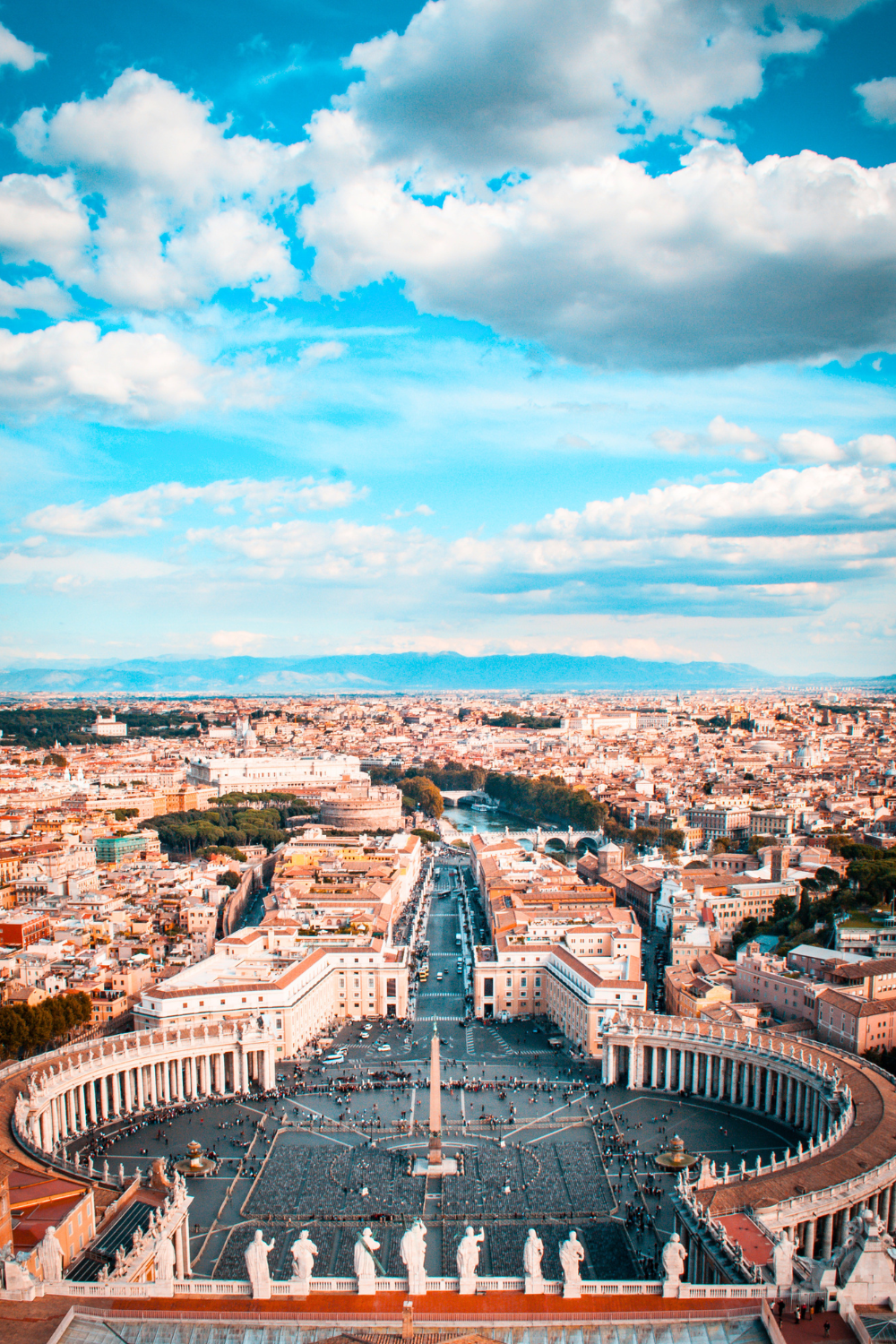
St Peter’s Basilica is the largest church in the world, and standing in Piazza San Pietro in front of it — encircled by Bernini’s great colonnade, with the dome rising 136 metres above the ground — is an experience of scale that photographs struggle to convey. This is partly the point: Bernini designed the colonnade specifically to guide, contain, and then suddenly release the visitor into the vast oval piazza, creating a controlled reveal that maximises the dramatic impact. Even knowing this, it works.
For photography, the standard frontal shot from the centre of the piazza captures the whole composition but doesn’t convey scale. Better shots often come from inside the colonnade itself — the perspective of the columns receding into the distance with glimpses of the piazza beyond is a shot many visitors miss. Climb to the dome (there’s a fee, and queues — book ahead) for extraordinary views over the piazza and across the city.
The approach along Via della Conciliazione is the classic tourist corridor, but the more interesting photography is found by approaching from the Castel Sant’Angelo side — crossing Ponte Sant’Angelo and walking through the medieval streets of the Borgo to arrive at the piazza somewhat sideways, which gives you an unguarded encounter with the colonnade that the straight-line approach doesn’t.
Local tip: The piazza is at its most beautiful very early in the morning, when the fountains (there are two, symmetrically placed) catch the low light and almost nobody else is there. Security opens the piazza early; check current times before you go, as they vary seasonally.
15. Gianicolo Hill — The Panorama That Wins Every Argument
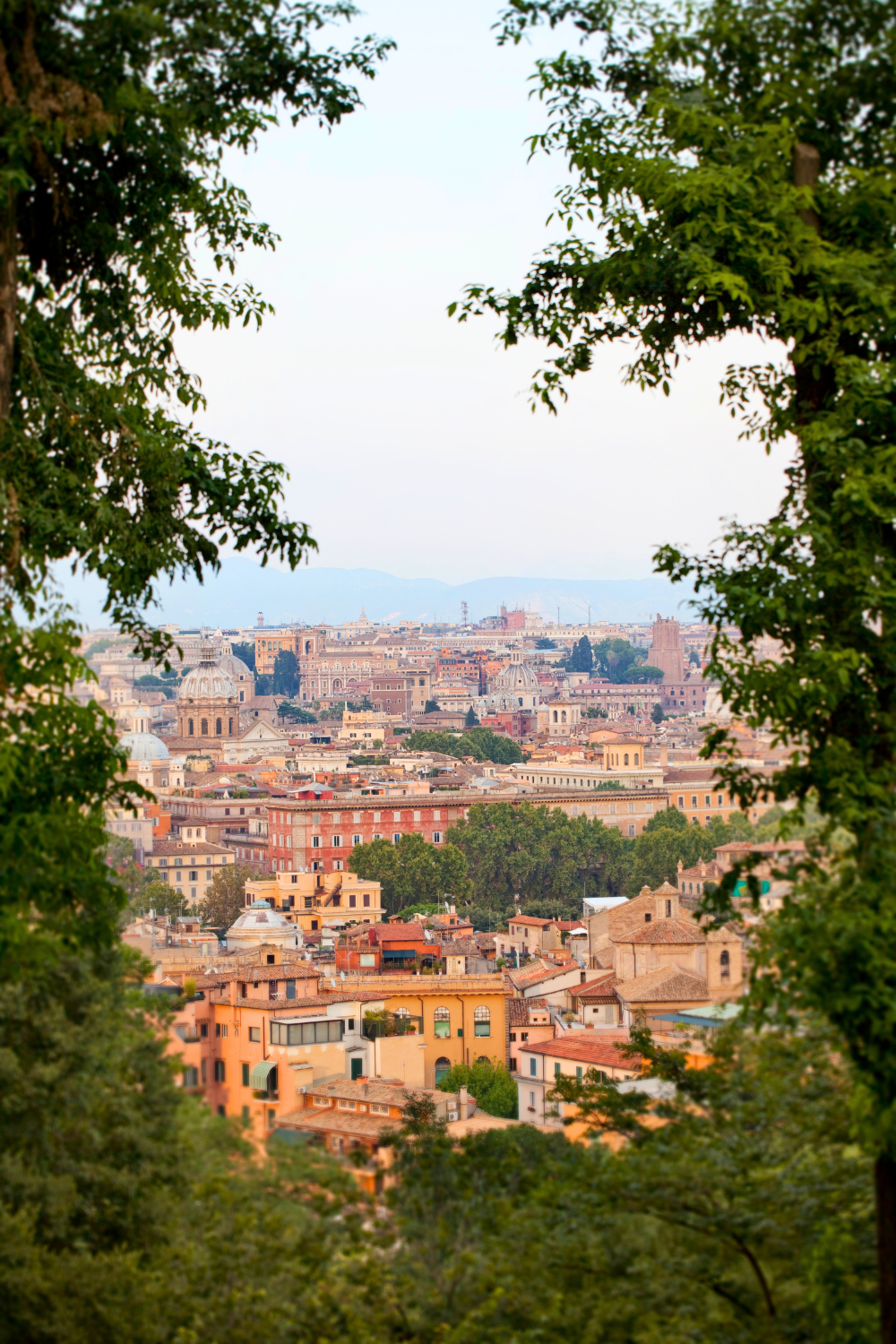
When Romans argue about the best view of the city, the Gianicolo hill usually wins. It’s not one of the traditional seven hills, but it rises west of Trastevere to a height that gives it a panoramic sweep of the city unlike anything else: from the Janiculum Terrace you can see the entire city spread below you, from the Aventine Hill and the Colosseum on the far left to the Vittoriano gleaming white in the centre distance, with St Peter’s dome rising behind and the Alban Hills fading to the horizon.
It’s a thirty-minute walk from Trastevere, mostly uphill, which keeps the crowds manageable. There’s a monument to Garibaldi on the summit, and at noon every day a cannon fires from the hill — a tradition dating from 1847, originally used to synchronise the city’s clocks. The walk up through the quiet residential streets, past the Fontana dell’Acqua Paola with its baroque facade, is half the pleasure.
The panorama photographs best at golden hour and at blue hour — either works beautifully. The blue hour shot, with the city’s lights coming on and the sky still holding a deep blue, is particularly good.
Local tip: The Fontana dell’Acqua Paola on the way up to the Gianicolo is magnificent and massively undervisited. The three great arches of the fountain and its basin are spectacular in the late afternoon light, and the viewing terrace in front of it looks back over Trastevere’s rooftops. Almost nobody combines the fountain and the Gianicolo viewpoint into a single walk, but they’re a natural pair.
16. Ponte Umberto I — Rome’s Best Sunset Bridge
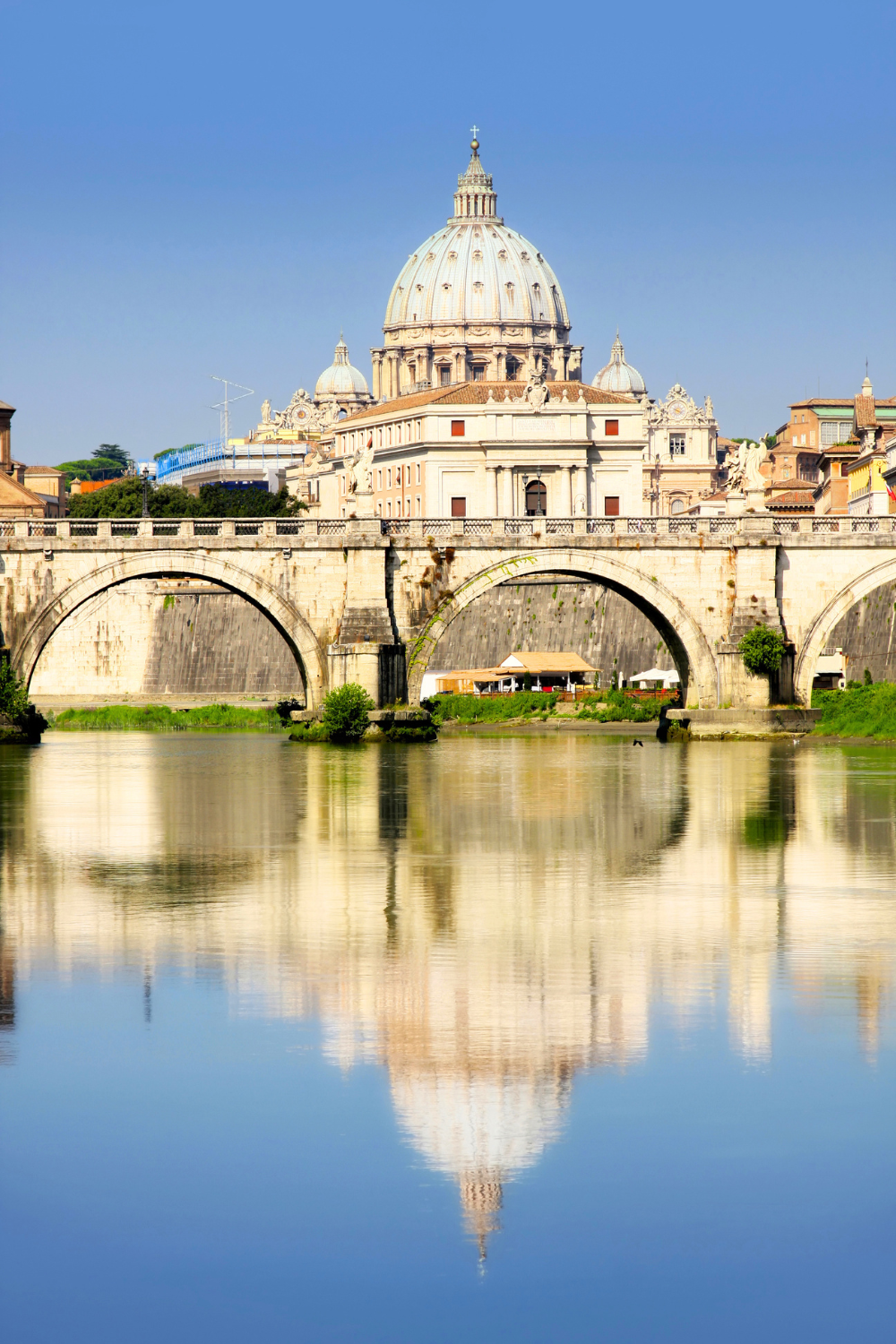
Rome has several bridges worth photographing, but Ponte Umberto I, built between 1885 and 1895, has a specific quality at sunset that puts it in a category of its own. The bridge connects the Lungotevere to the area around Piazza Navona, and its elevated position over the Tiber gives westward views across the river toward the Vatican, with Castel Sant’Angelo framed perfectly in the middle distance.
When the sun drops in the west, it sets behind the Vatican and the sky above the castle turns through shades of orange, pink, and eventually deep purple. Photographed from the centre of Ponte Umberto I, with the Tiber’s surface reflecting the colour and Castel Sant’Angelo silhouetted against the sky, this is one of the most beautiful sunset photographs available in Rome.
The bridge itself gets busy with photographers at golden hour in summer — deservedly so — but unlike some of Rome’s more crowded spots, the bridge is long enough and the view wide enough that everyone can find a position.
Local tip: Go down the steps from the bridge to the Lungotevere level and walk along the riverside path. The view of the bridge from below, looking up at its arch with the castle in the background, is a composition that bridge-level photography completely misses.
17. Altare della Patria (Vittoriano) — Rome’s Most Controversial Monument
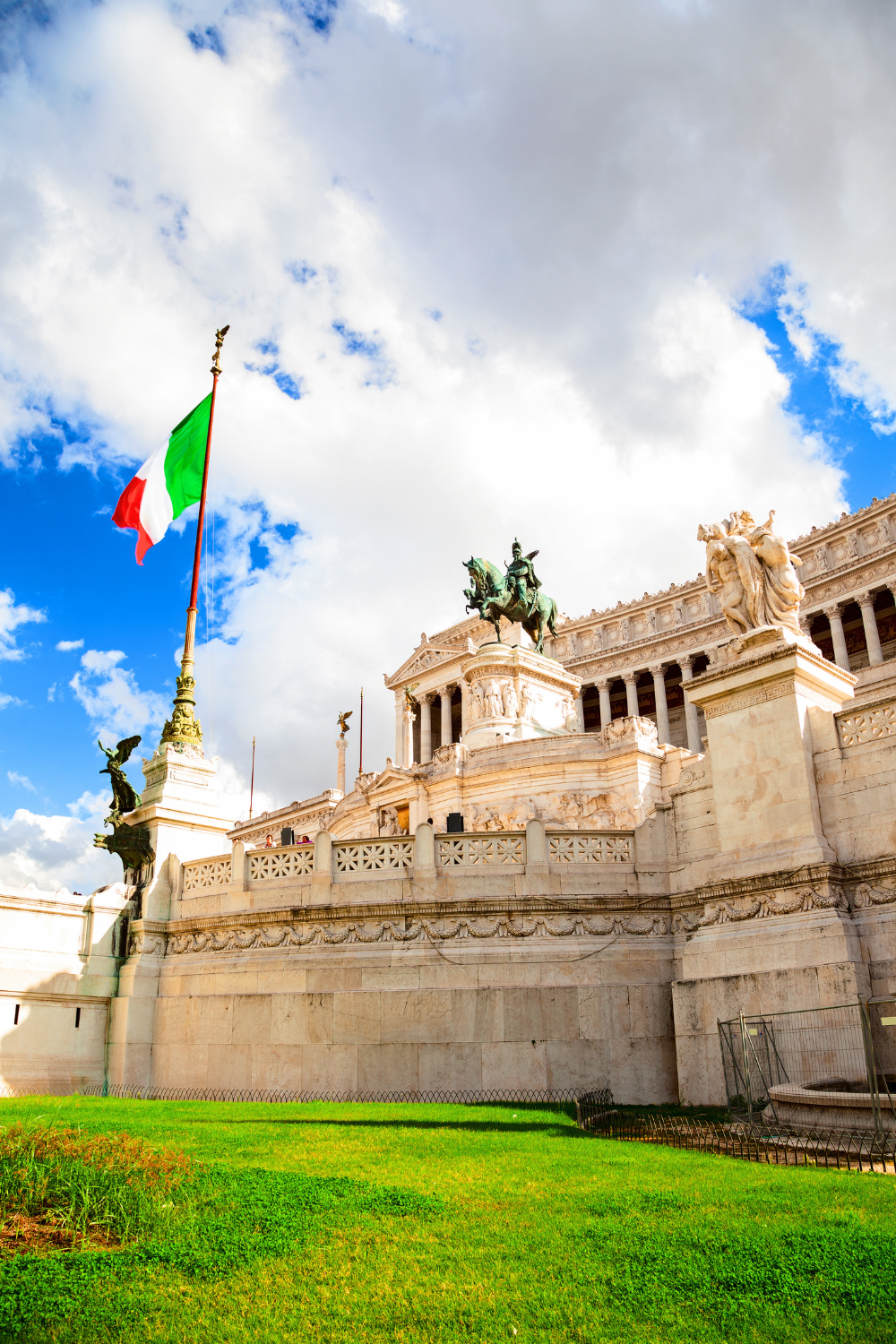
Romans have complicated feelings about the Vittoriano. Built between 1885 and 1935 to honour Victor Emmanuel II, the first king of unified Italy, it’s a gleaming white neoclassical monument of genuinely enormous proportions — 135 metres wide, 70 metres high, bristling with equestrian sculptures and Corinthian columns. Romans call it the typewriter, the wedding cake, the false teeth. They find it overwhelming and slightly vulgar. They’re not entirely wrong. It’s also one of the most dramatically photogenic buildings in Europe and you should absolutely go.
The view from the top — accessed via a lift from the rear of the building, with a fee — is one of Rome’s best panoramas. The view toward the Forum and the Colosseum from the Vittoriano’s summit is extraordinary, and the building itself, seen from ground level with the Forum stretching behind it, has a grandeur that’s impossible to ignore.
The rooftop bar, Ristorante Terrazza Caffarelli, offers a view of the Forum and the Capitoline Hill that is, frankly, outrageous. A cocktail at sunset from here is one of the great experiences Rome has to offer.
Local tip: The best external photography of the Vittoriano is from Piazza Venezia, slightly to the north and elevated on the far side of the traffic — you want height and distance to capture the full theatrical spread of the facade. The nearby Hotel NH Collection Roma Fori Imperiali has a rooftop bar (Oro Bistrot Roma) with a direct view across to the monument that’s worth every euro of a cocktail.
18. Via dei Condotti at Dawn — The Luxury Corridor Before the World Wakes Up
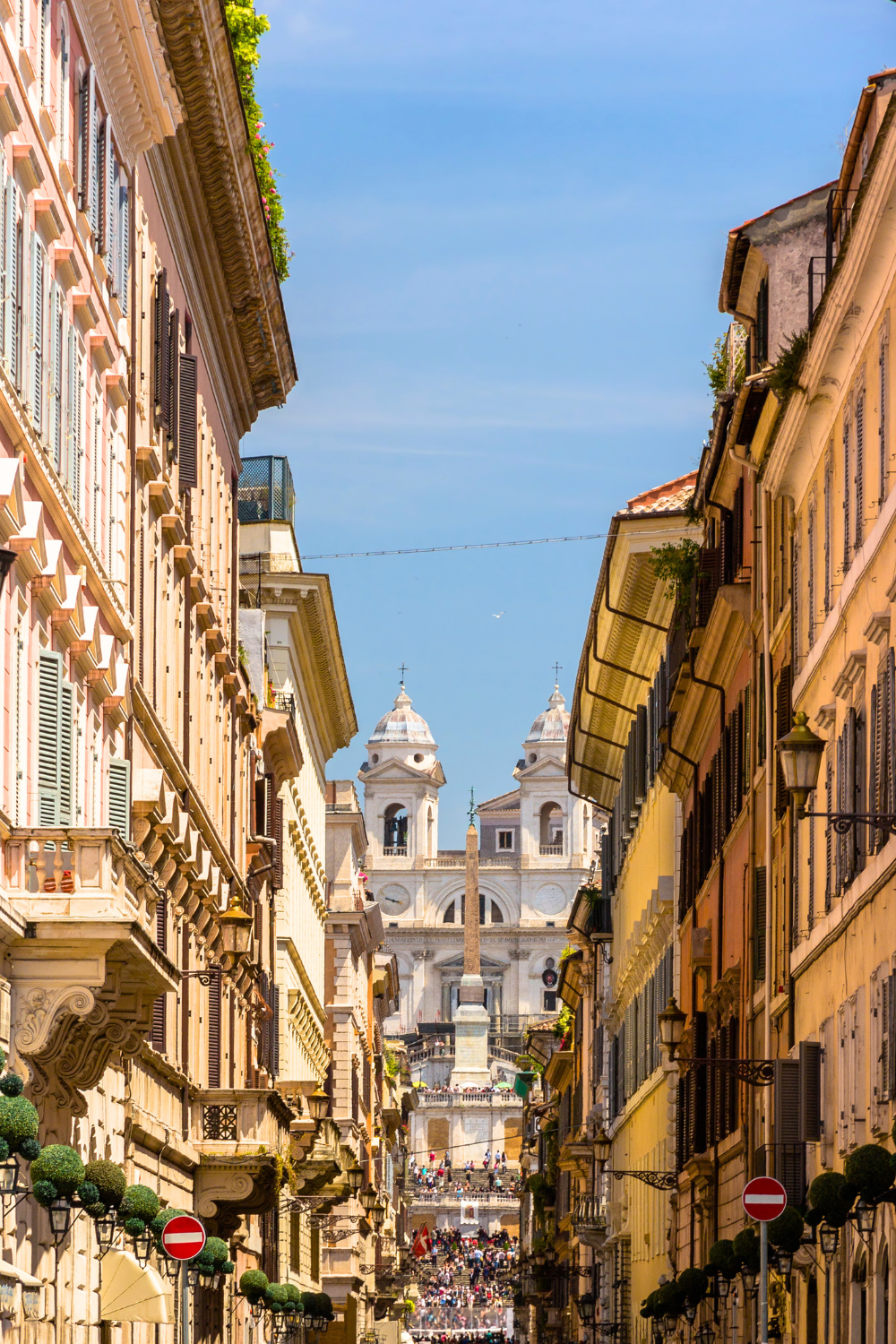
This one isn’t on most photography guides, but it should be. Via dei Condotti is Rome’s most prestigious shopping street — Gucci, Bulgari, Prada — stretching from Piazza di Spagna toward the Tiber, and at 6am on a quiet morning it’s one of the most beautiful streets in the city.
The combination of the perfectly maintained shop facades, the cobblestone surface, the perspective toward the Spanish Steps at the far end (look back toward the Steps from the Tiber end for this shot), and the complete absence of people and cars creates an almost unreal calm. The luxury retail signage adds a visual richness to the scene — the colours of the shopfronts, the window displays, the ornate ironwork — that makes for compositions that feel both very Roman and very contemporary.
By 9am it’s busy. By 10am it’s crowded. At 6am it belongs to you entirely.
Local tip: Walk the full length of Via Condotti and continue along Via della Croce, which becomes even quieter and has beautiful traditional buildings before opening into a series of lovely small piazzas. The photography in this zone is best treated as an early morning wander without a fixed destination.
19. Piazza Sant’Ignazio — The Baroque Stage Set
Two minutes from the Pantheon but existing in its own separate world, Piazza di Sant’Ignazio is the hidden gem that genuinely makes you stop and look twice. The square was designed in 1727 by Filippo Raguzzini and built around the Baroque church of Sant’Ignazio di Loyola, and its defining feature is the curved facades of the surrounding buildings, designed specifically to create a theatrical effect — as though the piazza is a stage and the buildings are the scenery.
The ochre and cream buildings curve gently inward, giving the small square an enclosed intimacy unusual for Rome. The proportions feel almost exactly right: intimate enough to feel personal, grand enough to feel significant. The church facade that anchors the north side is magnificent, and the frescoed ceiling inside — a trompe l’oeil dome that isn’t actually a dome, painted in the 18th century — is one of the great optical illusions in Italian art.
Photographs taken from the centre of the piazza, looking toward the church, capture the theatrical quality of the space. Photographs taken of the curved side buildings alone, with their warm stone and regular windows, have a quiet beauty that works in its own right.
Local tip: The piazza is rarely busy even during Rome’s peak tourist season, because it sits half a block off the main tourist corridor. Come at any hour and you’ll likely have it largely to yourself. The church interior is free to enter and the trompe l’oeil ceiling is absolutely worth five minutes.
Practical Tips for Photographing Rome
Getting to Rome is straightforward — Leonardo da Vinci Airport (Fiumicino) handles most international flights and connects to the city centre by the Leonardo Express train in 32 minutes. The Termini station is the main rail hub. Once in the city, the best photography destinations are spread across several neighbourhoods and walking is the ideal way to connect them: most of the centro storico can be covered on foot.
The best camera setup for Rome is honestly whatever you have. Smartphone photography works extraordinarily well here — the light is generally so good that the technical demands are lower than in murkier cities. If you’re shooting with a dedicated camera, a 24–70mm equivalent is the most versatile range, covering both architectural detail shots and wider environmental compositions. A tripod is worth bringing for dawn and dusk work, though note that some sites prohibit them during peak hours.
For timing: arrive in late September, October, or early November for the best combination of light, temperature, and manageable crowds. Spring (March to early May) is also excellent. Avoid the core summer months if crowds are a concern — Rome in August is beautiful in the early morning and overwhelming for the rest of the day.
Most major monuments now require advance ticket booking. The Colosseum (including the Roman Forum and Palatine Hill) sells out days in advance in high season. The Pantheon requires a timed-entry ticket. The Vatican Museums and Sistine Chapel should be booked weeks ahead. Don’t turn up on the day and hope.
Rome is a walking city and the distances between the best Instagram spots are deceptive — things look close on a map but the cobblestone streets add time and the hills add effort. Wear good shoes. Drink water. Stop for coffee at a proper standing espresso bar at least once per day. This is not optional.
One Last Thing Before You Go
Rome is the kind of city that makes you feel like you’ve failed to do it justice no matter how long you stay. Four days isn’t enough. Neither is a week. The city has been accumulating beauty and history for three thousand years and it would be extraordinary if you could absorb it in a long weekend. You can’t. What you can do is choose the early mornings, follow the light, walk one alley further than you intended, and trust that the city will reward you every single time.
Take the photos. But put the camera down occasionally and just look. The Trevi Fountain in the early morning quiet, the Forum ruins at golden hour, Trastevere at aperitivo time with the whole neighbourhood glowing — these are things that a camera captures partially at best. The full version is what you carry home in your actual memory, and that’s the reason people keep coming back to Rome for their entire lives.
Pack the extra memory card. Set the alarm for 5:30am. Go.
