
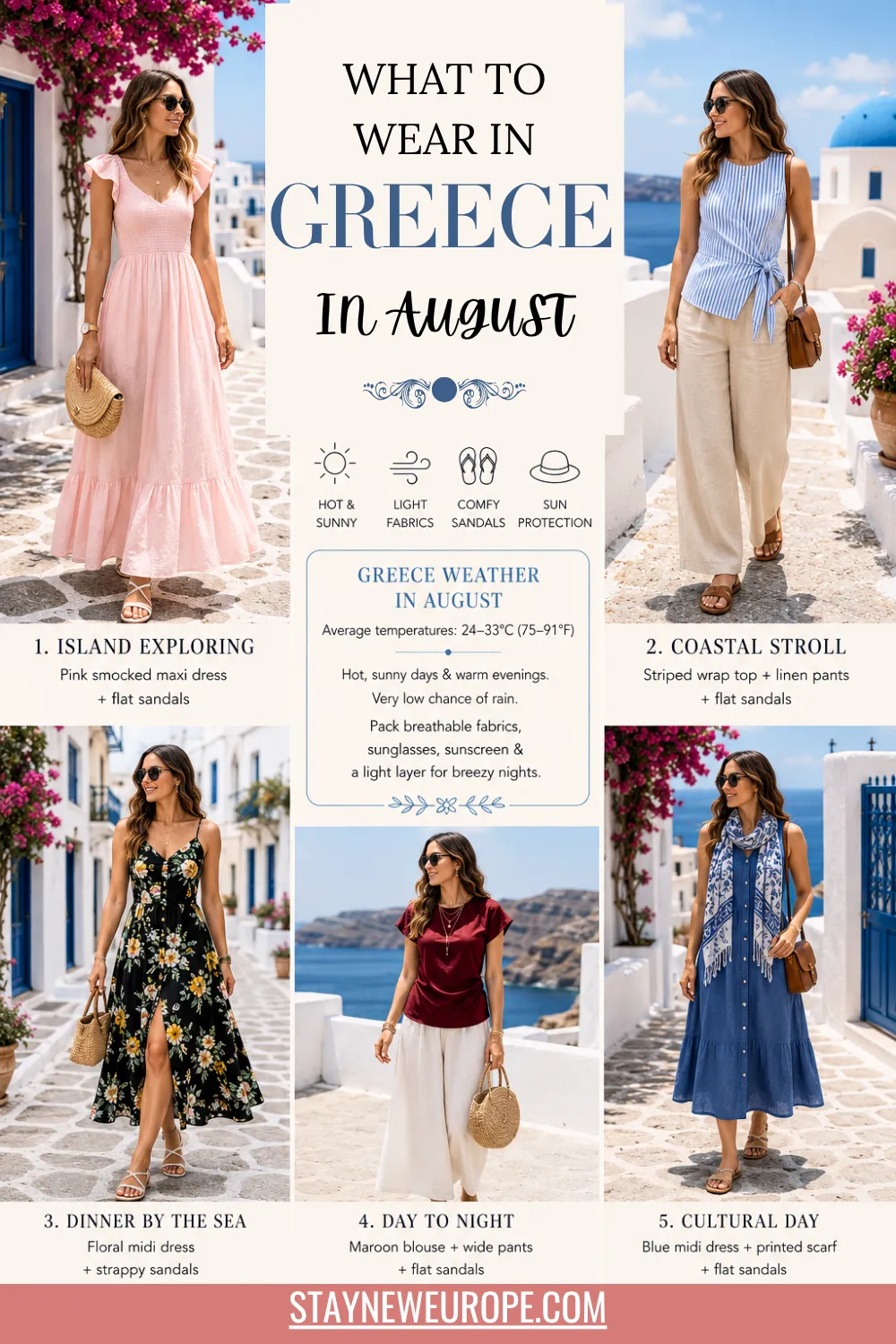
Let me paint you a picture. It’s 11am, you’re climbing the steps to the Acropolis, and the sun is already doing its absolute worst. The marble is blinding white, the air shimmers, and the person next to you — a fellow tourist — is wearing a synthetic blouse and jeans. I watched her fan herself with her passport for twenty minutes. Don’t be that person.
Greece in August is extraordinary. It’s also legitimately hot. We’re talking 35°C+ on the islands, relentless sun, and the kind of heat that makes you rethink every clothing decision you made at home. The good news? Packing for Greece in August is actually not complicated — but it does require you to be honest with yourself about what you’ll actually wear versus what looks aspirational in a flat lay.
This guide is everything I wish someone had told me before my first Greek August. No filler, no obvious tips, just real advice from someone who has sweated their way through Athens, Santorini, Crete, and Mykonos in peak summer.
Before We Dive In: What August in Greece Actually Feels Like
The weather: August is Greece’s hottest month, full stop. Athens regularly hits 36–38°C, and the islands aren’t much cooler — though the Aegean breeze on Santorini or Milos makes it feel more survivable than the city. Humidity is lower than you’d expect (this isn’t tropical), which means the heat feels dry and intense rather than sticky. That’s good news for how you dress.
Rain in August? Almost impossible. This is the driest month of the year across most of Greece, so you can confidently leave the rain jacket at home. What you do need to think about is sun protection — sun stroke is genuinely a risk, and strong wind on the islands (especially during Meltemi season in the Cyclades) catches you off guard.
The terrain: Walking conditions vary wildly. Athens has cobblestones and steep hills. Island villages have narrow stone paths, steps down to beaches, and uneven surfaces that look charming in photos and feel like an ankle injury waiting to happen after hour four. Your shoes matter enormously here.
The style culture: Greek culture is relaxed but not careless. You’ll see locals in linen trousers, simple dresses, and well-chosen sandals — they look effortlessly put-together in a way that has nothing to do with effort and everything to do with fabric and fit. You don’t need to dress up, but you’ll feel better — and fit in more naturally — if you lean into that quiet Mediterranean elegance rather than arriving in full resort-wear chaos.
The Bag: Choose Wisely Before You Even Think About Clothes
Here’s the packing decision that everything else depends on: how much space do you actually have?
For Greece in August, I’d argue strongly for a carry-on only approach — a 40L backpack or a small rolling cabin bag. Why? Because you’ll be moving a lot. Ferries, cobbled streets, airport transfers, small island hotels where the lift is theoretical. Dragging a checked bag across the port of Piraeus in 37°C heat is a genuinely miserable experience that I have had and would not recommend.
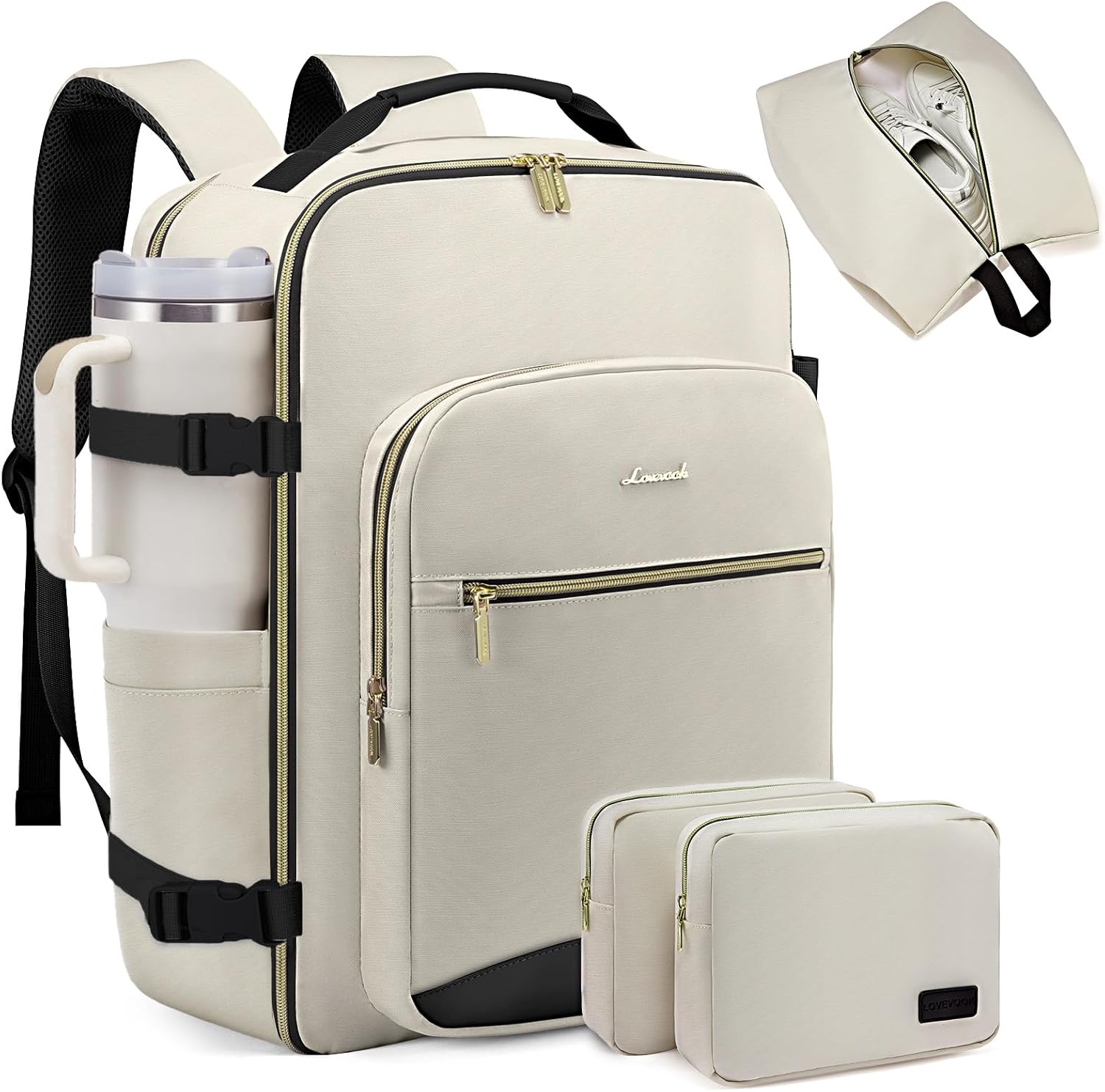
A good carry-on forces you to pack the right things. It means you’ll choose the linen dress that works for three occasions instead of the sequined top that works for one. It means you’ll edit ruthlessly and actually wear everything you bring.

Local tip: If you’re island-hopping, a soft duffel or backpack is infinitely easier than a rolling suitcase. Greek island streets were not designed with wheels in mind.
Linen Everything: The Non-Negotiable Fabric Rule
I cannot overstate this. If you pack Greece in August in the wrong fabrics, you will suffer. Polyester traps heat. Synthetic blends feel like wearing cling film in direct sun. “Travel fabric” that promises to stay wrinkle-free is often code for “stay hot.”
Linen is your best friend. Cotton is a close second. Lightweight cotton-linen blends are the dream. These fibres breathe, they dry quickly if you get sweaty, and they look increasingly better throughout the day in a way that feels intentional rather than dishevelled. A wrinkled linen dress on the streets of Nafplio is fashion. A wrinkled polyester blouse in the same location is just wrinkled.
Avoid: heavy denim, thick cotton, anything with a lot of structure or padding, synthetic travel fabrics, anything that requires ironing to look good.
Local tip: Greek women dress simply in summer — a good linen piece in a solid colour with simple sandals and gold jewellery. That formula works everywhere, from a beach bar to a rooftop restaurant.
Dresses: The One-Piece Strategy That Actually Works
A dress is a complete outfit. In August in Greece, that logic is almost mystical in its power.
One piece, instantly dressed. No matching required. Maximum airflow. Works for morning sightseeing, afternoon beach, and evening taverna without changing. This is not a coincidence — it’s physics.

For Greece specifically, the silhouettes
that work best are: midi linen dresses (loose, not fitted — fitted linen defeats the purpose), cotton sundresses with adjustable straps, and wrap dresses in lightweight fabric.

What doesn’t work as well: bodycon anything (you’ll be miserable by noon), heavy maxi dresses with lining, and anything that bunches around the waist when you sit.
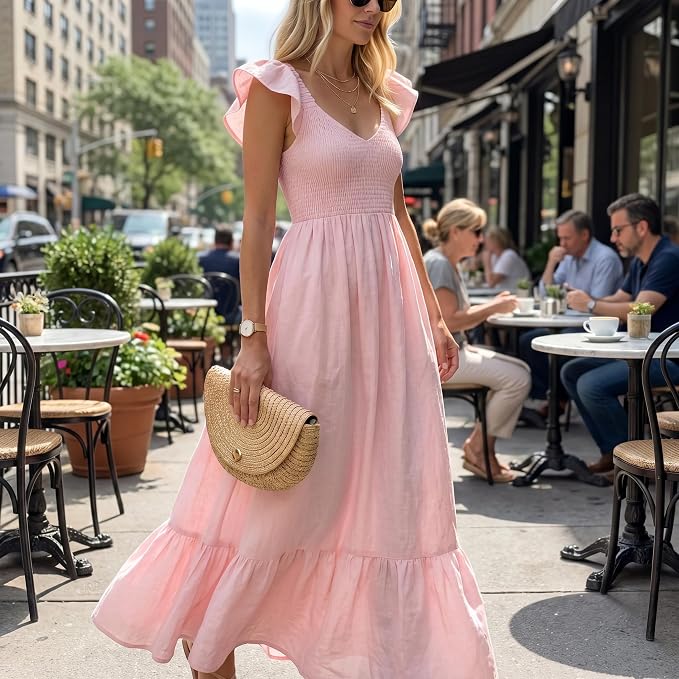
Outfit idea: a loose linen midi in cream or dusty blue + leather sandals + gold earrings + straw tote. That’s it. That’s the whole outfit. You don’t need more.
Pack three dresses and you have your daytime wardrobe mostly sorted. Wear each one twice with different accessories and no one will notice — or care.
Local tip: Greek women love a simple slip dress in white or terracotta for evenings. Add a light layer if you’re eating somewhere air-conditioned (and you will be, because the restaurants run their AC like they’re trying to refrigerate the building).
Tops and Bottoms: For When You Want Options
Not everyone wants to live in dresses, and that’s completely valid. Here’s what actually works for tops and bottoms in August:
Tops: Loose cotton or linen button-downs (worn open as layers, or tucked into trousers), simple cotton tanks in neutral colours, lightweight blouses.

Avoid crop tops for sightseeing — the combination of sun exposure and ancient site dress codes makes them impractical.

Bottoms: Wide-leg linen trousers are the elevated alternative to shorts and they handle the heat better than you’d expect. White or cream linen trousers + a simple tank + flat sandals is a genuinely effortless Greek island look.

Linen shorts work well too — aim for mid-thigh length if you’re planning any church or monastery visits.

Jeans: Honestly? I’d leave them at home unless you’re spending significant time in Athens evenings where you want that slightly more dressed-up feel. Denim in peak August heat is asking a lot of yourself. If you must bring one pair, opt for lightweight chambray or a thin cotton-denim blend.
Local tip: Greek men and women both wear white a lot in summer — white linen, white cotton, white everything. It reflects heat, looks clean against tanned skin, and photographs beautifully against blue domes and turquoise water. Pack at least one white piece.
Swimwear: Don’t Underestimate How Much You’ll Need
This is Greece in August. You will be swimming every single day. Pack accordingly.
Two to three swimsuits minimum — you need rotation time for drying, and wet swimwear stuffed in a bag in high heat is unpleasant. A one-piece and a bikini gives you the most flexibility: one-pieces are excellent for boat trips (more secure), bikinis work for beach lounging and infinity pools

Cover-ups are non-negotiable. You will walk from the beach through a village, into a shop, up to a restaurant terrace. A lightweight kaftan, a linen shirt worn as a dress, or a simple sarong are all correct. What you should not be wearing in Greek villages: just your swimsuit. The locals are extremely patient but it’s respectful to cover up when you leave the beach itself.

Local tip: Greek beach culture involves looking pulled-together even at the beach. A nice kaftan and a good pair of sandals at the beach bar is standard. Flip flops and a damp bikini in an actual restaurant is not.
Shoes: The Decision That Will Make or Break Your Trip
I learned this the hard way. Beautiful sandals that aren’t broken in will end your day by 2pm with blisters you’ll be thinking about for a week.
What to bring:
1. Proper walking sandals — leather or high-quality synthetic with a real footbed and ankle support. Birkenstock, Merrell, or any sandal with a contoured sole.
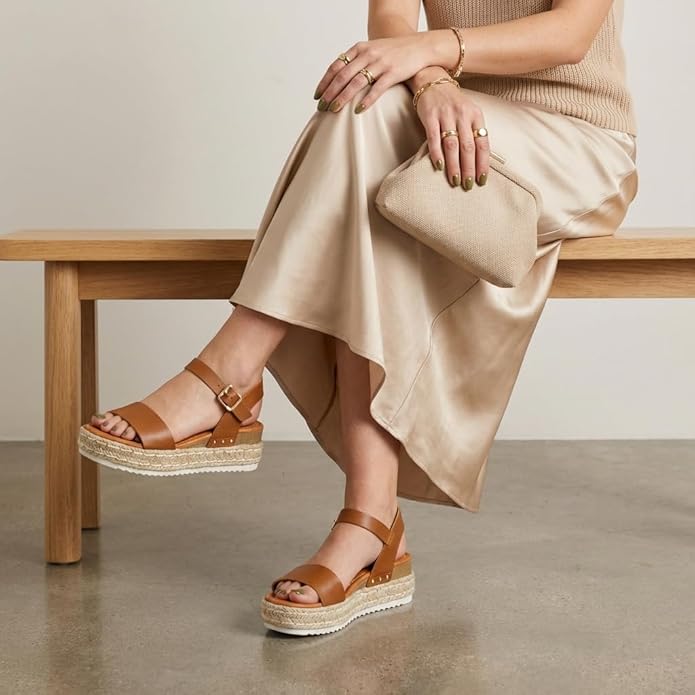
These are for Acropolis days, Athens exploring, and anywhere you’re walking more than two hours. They need to be broken in before you go.

2. Simple leather flat sandals — for evenings, casual beach towns, ferry walks. The classic Greek sandal (there are sandal-makers in Athens’s Monastiraki neighbourhood who have been making them for decades) is flat, simple, and looks right everywhere.

3. Water shoes — optional but quietly brilliant for rocky Greek beaches. Many of the most beautiful beaches have pebbles rather than sand, and approaching the water barefoot is genuinely painful. A pair of lightweight water shoes solves this entirely.
What not to bring: heels (cobblestones make heels not just uncomfortable but dangerous), brand new shoes of any kind, slides with no back strap (they flap off on steps and uneven paths).
Local tip: You’ll see Greek sandals everywhere in Athens’s old markets — buying a pair while you’re there is one of the best souvenirs and one of the best footwear decisions you can make.
What NOT to Wear: Tourist Mistakes Greeks Quietly Notice
Let me be honest about this section, because it’s more useful than another outfit idea.
Heavy backpacks as your main day bag — a large hiking backpack in the August heat, on the crowded streets of Athens or Santorini’s Oia village, is physically uncomfortable and aesthetically very tourist. A crossbody bag carries everything you need for the day and keeps your hands free.
Shorts to monasteries and churches — this isn’t optional. Most Greek Orthodox churches and ALL monasteries require covered knees and covered shoulders. Many will turn you away at the door or hand you a wrap. The solution is easy: pack one lightweight midi dress or linen trousers that double as your church outfit.
All-white trainers for city walking — they’ll be dusty and scuffed within an hour. Athens is a real, ancient, lived-in city. White trainers that need to stay white are the wrong choice for it.
Excessive jewellery in heat — it sticks to sweaty skin, it catches on things, and it makes you look like you’re trying too hard when Greek summer style is specifically about looking like you’re not trying at all.
Local tip: The dress code for Meteora monasteries (absolutely worth visiting if you’re in mainland Greece) is strict — women need skirts below the knee, men need long trousers. They lend wrap skirts at the entrance but they’re often shared and definitely not glamorous. Bring your own wrap.
The Evening Outfit Situation
Greece has a wonderful social culture around evenings — dinner happens late (9pm is early), and people make a small effort for it without being formal about it.
The gap between daytime and evening in Greece is smaller than in, say, Paris or Milan. A nice linen dress worn during the day can go directly to dinner with better sandals and a piece of gold jewellery. That’s not underdressing — that’s exactly right.
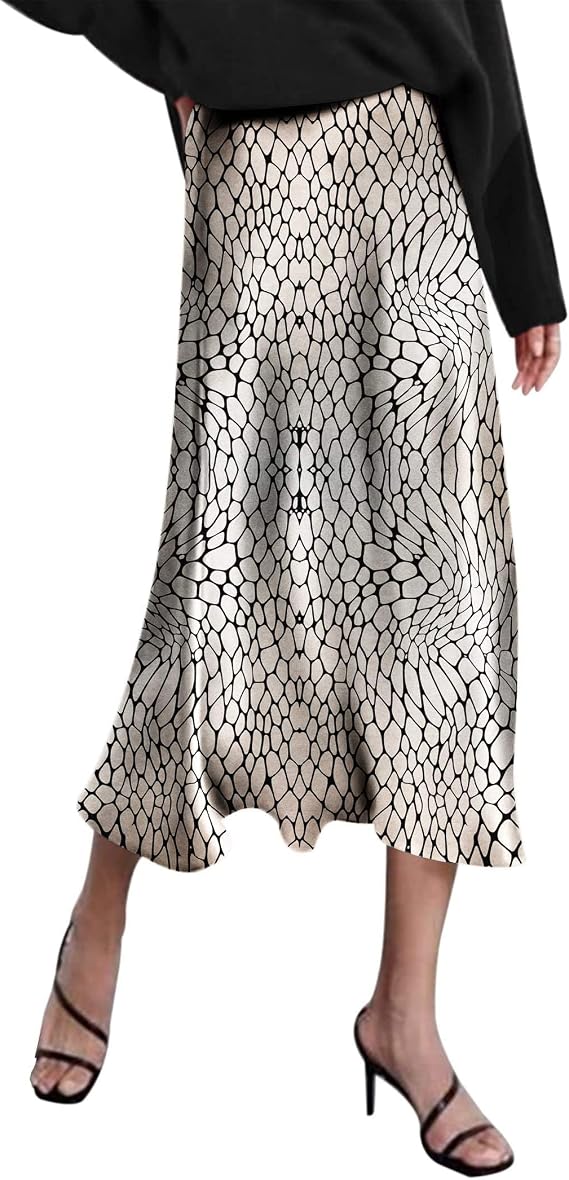
For those who want a distinct evening look: a silk or satin slip dress (even a very inexpensive one) in a solid colour reads as effortlessly elegant in a Greek island taverna setting. Add strappy flat sandals, hoop earrings, and a light layer for air conditioning and you’re perfectly dressed for anywhere that doesn’t have a black-tie requirement.
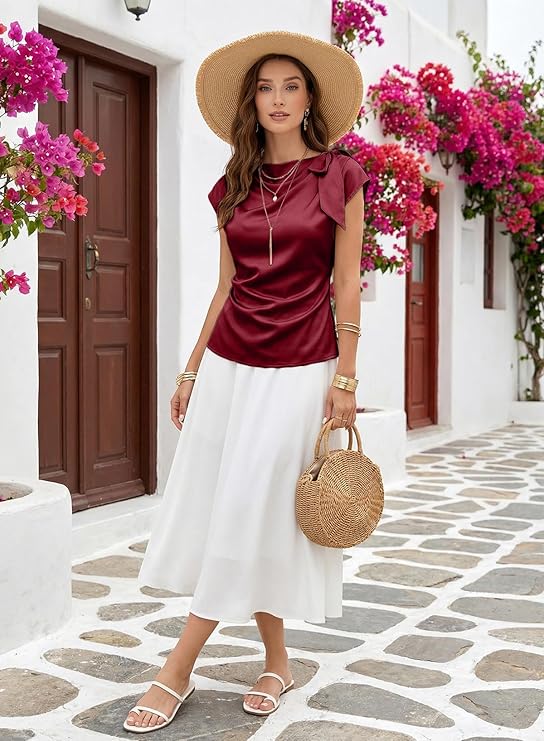
What you genuinely don’t need: heels, blazers (too hot), formal dresses with structure. Greece’s evening culture is warm, relaxed, and Mediterranean — dress for that, not for a London restaurant.
Local tip: Restaurant dress codes in Greece are almost universally relaxed. The exception is very high-end Mykonos venues, which get slightly more dressed-up. Everywhere else, a nice dress and good sandals is exactly right.
Bags: What to Actually Carry Day-to-Day
Your day bag in Greece does a lot of work: water bottle, sunscreen, passport or ID, phone, small camera, snacks, and whatever you buy at the market.
Crossbody bag — this is the correct choice. A leather or canvas crossbody in a neutral colour keeps everything accessible, leaves your hands free for climbing steps and holding railings, and fits into Greek summer style without looking touristy. Keep it small — if it’s too big, you’ll overfill it and it becomes heavy.

Tote bag — brilliant as a beach bag and for markets. A lightweight canvas or straw tote that folds flat takes almost no space in your suitcase.

What to avoid: large backpacks as day bags (see the tourist mistakes section above), anything with obvious logo branding (makes you a pickpocket target in busy tourist areas), anything that requires two hands to access.
Local tip: Pickpocketing in Athens is real, particularly around Monastiraki and the tourist areas. Use a bag with a zip, wear it across your body rather than on one shoulder, and keep valuables at the bottom.
Accessories That Earn Their Weight
In August Greece, accessories aren’t decoration — they’re utility.
Wide-brim hat — not optional. The sun at midday is genuinely dangerous and a hat is your first line of defence. A straw hat or a packable cotton hat both work. Make sure it fits securely — Santorini’s wind is not kind to loose-sitting hats.

Good sunglasses — you’ll be wearing them from 8am to sunset, so don’t pack the pair you half-heartedly bought at the airport. UV protection matters here.

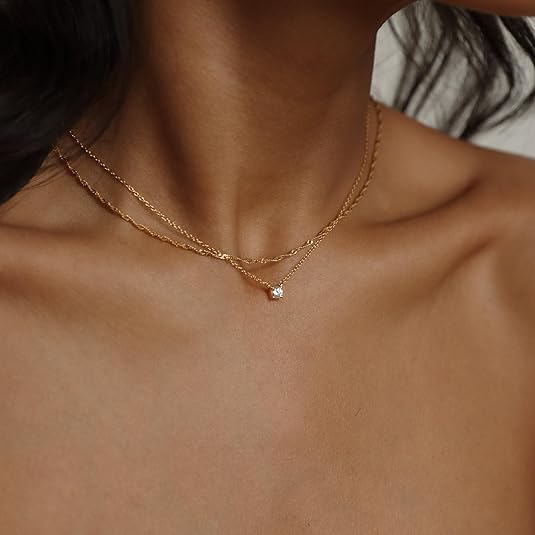
Gold jewellery — specifically gold rather than silver, which can look cold against sun-kissed skin. A few simple pieces (hoops, a chain, a ring or two) elevate any linen outfit without adding weight or bulk to your bag.
Light scarf — for churches, for cool evenings, for windy ferry crossings. A lightweight linen or cotton scarf in a neutral colour is one of the most versatile things in your bag.

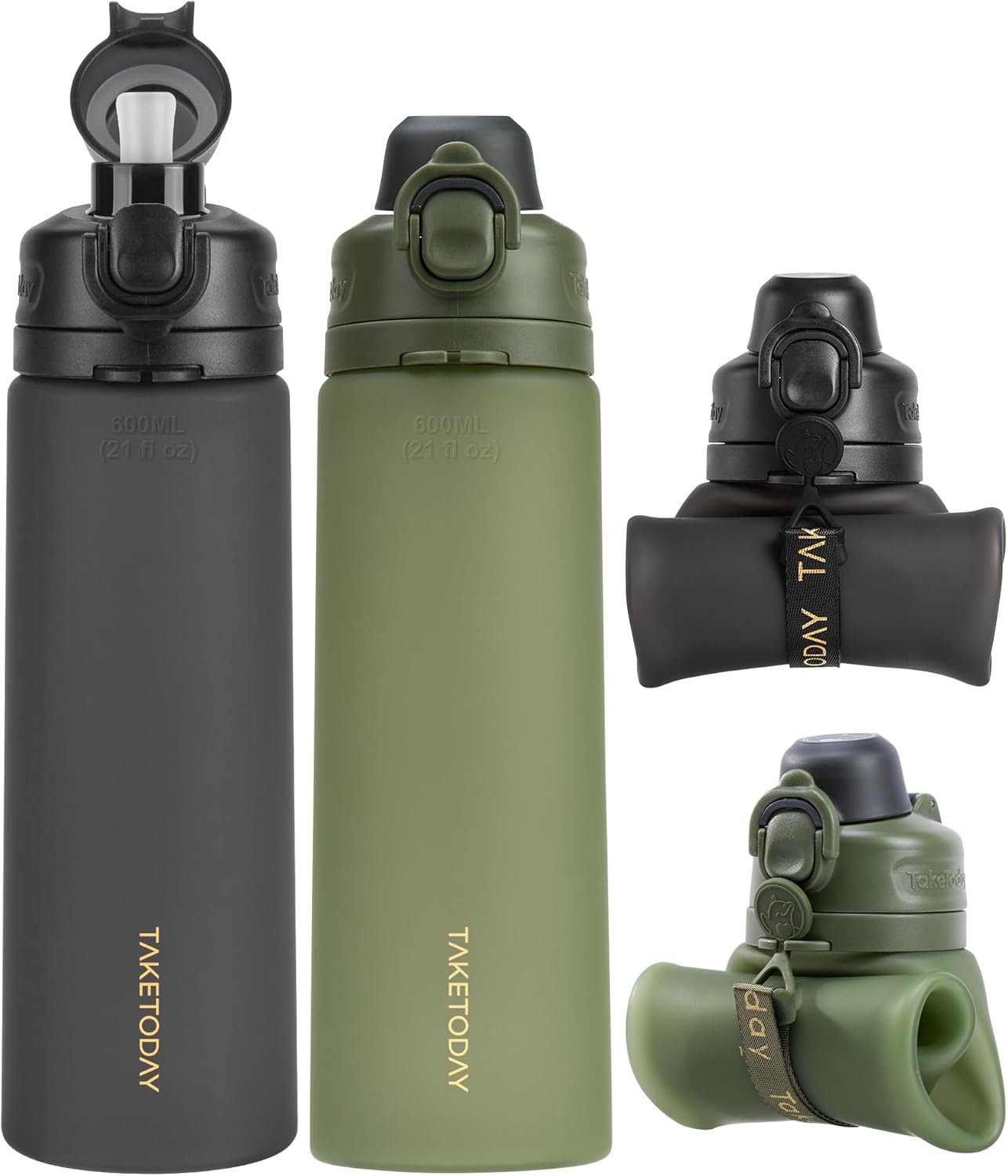
Reusable water bottle — Greece has excellent tap water in most places. A good insulated bottle keeps water cold even in direct sun, which matters when it’s 37°C.
Local tip: Greek jewellery — particularly gold and silver from Athens’s Monastiraki market or island craft shops — is beautiful, reasonably priced, and genuinely makes the best souvenir. Leave space in your bag to bring a piece home.
Sun and Skin Protection: This Is Actually a Packing Category
I’m serious about this. Sun protection in August Greece is not a nice-to-have.
Pack a high SPF sunscreen (SPF 50 as standard) and plan to apply it every two hours if you’re outdoors. Factor in that you’ll be on boats, at beaches, and climbing exposed ancient sites — all situations where you underestimate exposure. The sunburn that catches you on day two of an eight-day trip is the worst kind of holiday story.
A lightweight UPF sun shirt is worth considering if you’re spending a lot of time on the water. They look athletic rather than stylish, but on a boat day they make the difference between enjoying the Aegean and spending the evening slathered in aftersun.

Local tip: Pharmacies in Greece stock excellent European sunscreen brands at reasonable prices if you run out or forget to pack enough. You won’t be stuck.
Church and Monastery Dress Code: Plan This In Advance
Greece has extraordinary religious sites — the monasteries of Meteora, the churches of Santorini, the Byzantine churches of Thessaloniki, the cathedrals of Crete. Most of them have dress codes.
The standard rule: shoulders covered, knees covered. Some of the stricter monasteries (particularly Meteora) require women to wear skirts rather than trousers, and men to wear long trousers.
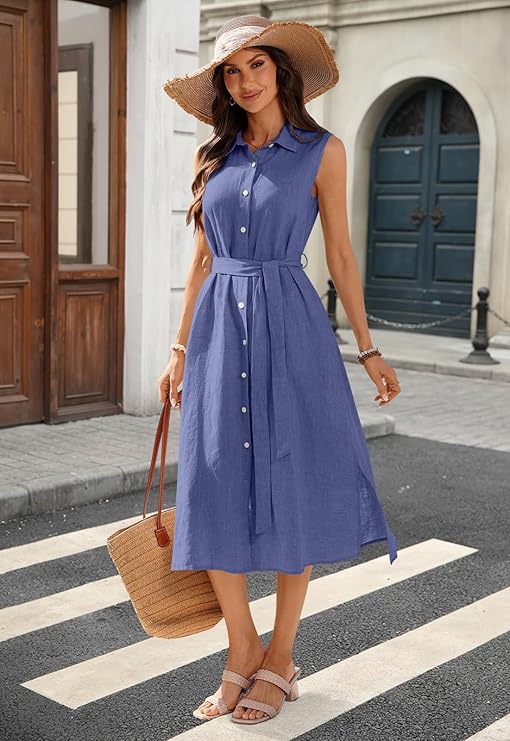
The easiest solution: build at least one “covered” outfit into your packing from the start rather than relying on a rescue wrap at the entrance. A linen midi dress works for both sightseeing and church visits without needing any adaptation. A loose linen shirt that can go over shorts or a dress handles shoulders.

If you’re planning to visit multiple religious sites — and you absolutely should, because they’re stunning — treat this as a real packing consideration rather than an afterthought. We covered the same logic for Spain’s churches in our guide to what to wear in Spain in June, and the principle is identical here.
Local tip: Wrap skirts are often available to borrow at monastery entrances. They’re shared with many visitors and often not cleaned between uses. Pack your own small sarong and skip the queue.
Practical Packing: How Many Outfits, How to Plan It
For a 7–10 day trip, here’s a tested packing list:
- 3 dresses (1 casual sundress, 1 linen midi that works for both day and evening, 1 slightly more elevated option for nicer dinners)
- 2 linen or cotton tops in neutral colours
- 1 pair wide-leg linen trousers
- 1 pair lightweight shorts (mid-thigh or longer for flexibility)
- 2–3 swimsuits
- 2 cover-ups (1 kaftan, 1 linen shirt)
- 1 thin cardigan or light layer for air conditioning
- 1 pair proper walking sandals
- 1 pair flat leather sandals for evenings
- 1 pair water shoes (optional but recommended)
- 1 crossbody bag + 1 canvas tote
- Wide-brim hat + sunglasses
- 4–5 days of underwear (you can hand-wash and dry overnight easily in August heat)
- Gold jewellery: 2–3 pieces, not more
- 1 lightweight scarf
What NOT to pack:
- Heels
- Heavy jeans
- A big hiking backpack as your day bag
- More than one “just in case” outfit (they always come home unworn)
- Anything that needs ironing
Outfit planning tip: The night before each day, look at your plan (beach day? city sightseeing? boat trip?) and lay out your outfit then. It sounds obvious but it prevents the morning-suitcase-explosion that wastes twenty minutes of your holiday.
If you’re looking for a similar packing framework for other Mediterranean destinations, our Sardinia summer style guide covers similar territory and works as a useful companion piece.
The Closing Bit (That Isn’t Really a Conclusion)
Greece in August is one of the most visually overwhelming travel experiences in Europe — the light is different there, genuinely different, and it makes everything look like a painting. The white buildings, the blue water, the ancient stone, the pink bougainvillea against a sunset. You will want to be in those moments, not distracted by uncomfortable shoes or sweating through the wrong fabric.
Pack light. Pack linen. Bring good sandals and at least one white outfit. Leave the heels at home and bring the wide-brim hat instead.
Greece doesn’t ask you to try hard — it asks you to show up. Do that in the right clothes, and everything else takes care of itself.

