
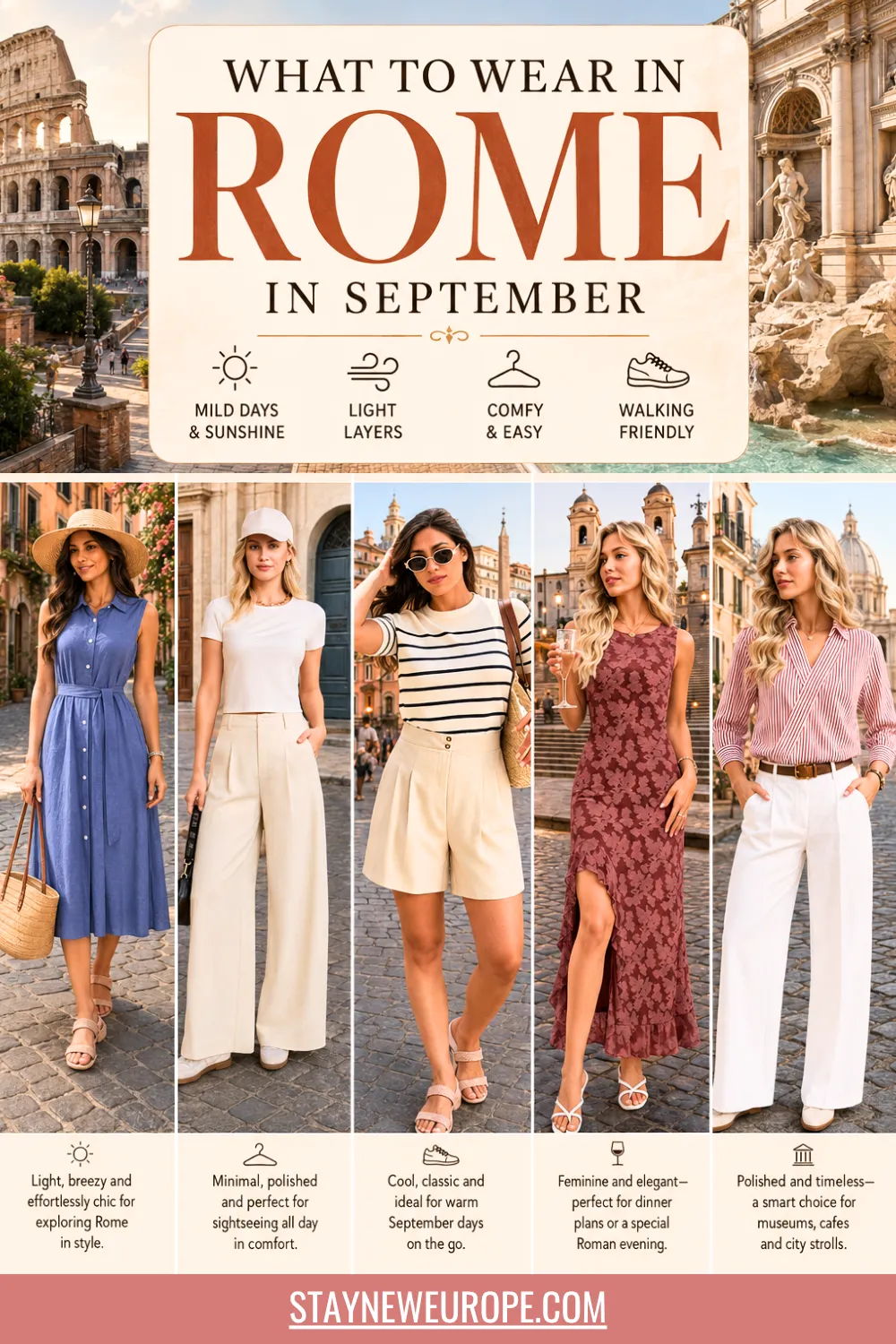
Rome in September is one of the great travel sweet spots — the tourists are thinning out, the heat has dropped from “genuinely alarming” to “warm and lovely,” and the city is settling back into its own rhythm after the chaos of August. The golden afternoon light hits the Forum in a way that makes you feel like you’ve accidentally wandered into a Renaissance painting. I’m not being dramatic. It’s that good.
But here’s what nobody warns you about: September in Rome is still warm — sometimes surprisingly so — and the combination of ancient cobblestones, marble church floors, steep hills, and crowded piazzas will expose every bad packing decision you made before you left. I’ve watched people sweat through the Colosseum in heavy denim, wince their way across the Piazza Navona in new sandals, and get turned away at St. Peter’s Basilica in sleeveless tops. None of this needs to happen to you.
This is everything I wish someone had told me — honestly, specifically, and without padding it out with things you already know.
Before We Dive In: Rome in September
weather: September in Rome usually runs between 20°C and 29°C (68–84°F), with the first half of the month often feeling quite similar to August. By the final week, there’s a noticeable shift — evenings become properly pleasant, and mornings have a cooler edge that feels almost autumnal. Rain picks up slightly compared to July and August, mostly in the form of short afternoon thunderstorms rather than all-day grey skies.
The walking conditions: in Rome deserve their own warning. This is not a flat city. You will walk up hills. You will navigate ancient cobblestones (the sampietrini — small rounded stones — that cover much of central Rome are technically beautiful and practically treacherous). You will cross marble church floors so polished they function as ice rinks. Rome rewards walkers but punishes unprepared ones.
On style: Romans dress well. Not flashily, but with an effortless put-togetherness that makes oversized printed t-shirts and cargo shorts stand out in the wrong way. The city has style standards that are real and visible, and September is when Romans come back from their August holidays and reclaim their streets. Dressing like you made a small amount of effort will make you feel better about yourself and fit in more naturally.
Your Travel Bag: Start Here
Before we talk clothes, let’s talk about what you’re carrying them in — because your bag choice shapes your whole trip.
For Rome specifically: a carry-on sized rolling suitcase or a medium-sized duffel does the job for most trips up to ten days. The city has plenty of luggage storage options near major train stations, which is useful if you’re arriving before check-in or leaving after checkout.

What I’d caution against: a massive hiking backpack as your daily carry. The streets are narrow, the piazzas are crowded, and a 65-litre pack changes how you move through the city in ways that aren’t great.
Local tip: Rome has pick-pocket hotspots — the Colosseum, the Trevi Fountain, the metro. A bag that closes properly (zip, not just a flap) and sits in front of your body is worth its weight in peace of mind.
Linen Everything: The Non-Negotiable Fabric
Let me just say it plainly: if you’ve never committed to a linen wardrobe before, Rome in September is the moment. Linen in the heat is transformative. It breathes in a way that cotton doesn’t quite manage and polyester absolutely cannot, and it looks deliberately chosen rather than accidentally comfortable.
The slight wrinkle factor that puts some people off linen is, in Rome, not a problem. A linen dress or linen shirt with a few creases looks like you’ve been exploring with purpose, not like you’ve been sleeping in it. Romans wear it this way. It’s fine. It’s actually the look.
The fabrics to avoid: are synthetic blends — polyester, nylon, anything described as “moisture-wicking athletic wear” — which trap heat and smell by 2pm in a way that will make you miserable. Also leave home the thick denim and anything with a lining, unless it’s for evening wear only.
Local tip: Italian-made linen tends to be softer and more structured than cheaper versions. If you don’t own good linen before you go, the markets around Campo de’ Fiori sell beautiful lightweight scarves and wraps that pull triple duty: stylish, church-cover, and sun protection.
Dresses That Actually Work in Rome
I’ve become evangelical about dresses for Italian cities in September and I’m not apologising for it. One piece. Instantly an outfit. No thinking required about whether the top matches the bottom.
A midi-length wrap dress or a flowing A-linen dress in a neutral or earthy tone is the single most versatile item you can pack for Rome. It handles morning exploring near the Vatican, afternoon gelato stops, Trastevere in the evening, and a nicer dinner without requiring a costume change. Wear it with flat sandals by day and low block heels or leather mules at night.
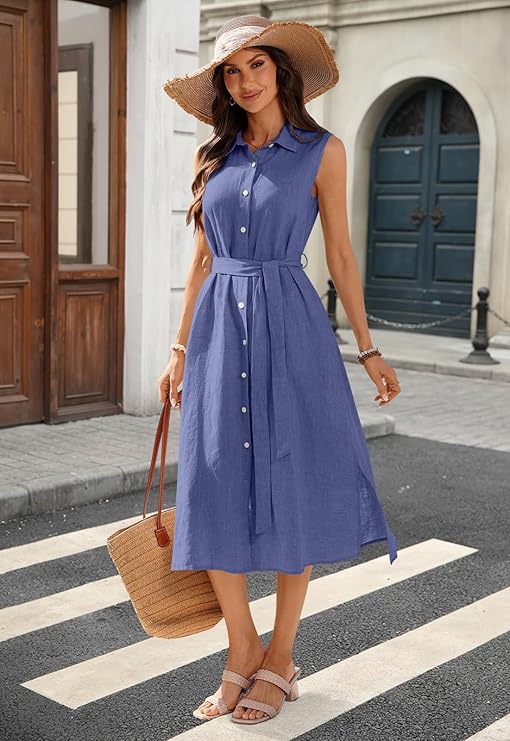
Maxi dresses work beautifully too — they’re appropriate for churches (knee-covering length), cool in the lingering September heat, and look intentional in the kind of environment where Romans are doing the passeggiata and actually looking at each other. Aim for simple cuts and solid colours or small prints rather than large tropical patterns, which feel beach-resort rather than city.

What doesn’t work: bodycon dresses, anything very short, anything requiring specific underwear that shifts around when you walk. Rome involves too much walking for comfort to be an afterthought.

Local tip: A dress with pockets is not a luxury in Rome — it’s a safety feature. Being able to keep a hand on your phone or wallet while navigating the Colosseum crowds matters more than you might think.
Trousers, Jeans, and Shorts: What Actually Makes Sense
I’ll be honest with you: jeans in early September in Rome are a commitment. If it’s 28°C and you’re walking from the Palatine Hill to Campo de’ Fiori, you’ll feel every degree of that temperature through your denim by noon. That said, if jeans are your comfort item, one pair of lightweight or slightly stretchy jeans is fine for cooler days or evenings.
What works better for the daytime heat: wide-leg linen trousers or lightweight chino-style pants in beige, cream, or olive.

These read as effortlessly stylish (you’ll see Romans wearing them constantly), they’re cool enough for afternoon heat, and they work with both a loose linen shirt and a simple fitted top. This is the combination I’ve worn in Rome and throughout the rest of Italy — and it’s equally solid advice in other southern European cities, as I’ve written about in the Spain packing list.

Shorts: yes, in September, with some thought. Tailored shorts in a neutral colour (not athletic or cargo) work fine in Rome for daytime exploring.

Linen or cotton, mid-thigh length or just above the knee.

What doesn’t work: very short or cutoff shorts, which read as underdressed for the city’s general standard and won’t get you into churches.
Local tip: Paperbag-waist linen trousers with an elasticated back are a brilliant Rome packing choice — they look structured from the front but are genuinely as comfortable as pyjamas, which matters when you’re doing 20,000 steps a day.
The Shoes Question (Read This Carefully)
This is where Roman holidays go wrong for so many people. New sandals. Pretty but untested heels. Flip flops on cobblestones. I’ve made most of these mistakes myself and I’m here to spare you the limping.
Rome’s sampietrini cobblestones are uneven, rounded, and relentless on anything with a thin sole or an unstable heel. Even streets that look flat photograph as more even than they actually are. You will clock 15–20km of walking on a good sightseeing day and every one of those kilometres will be felt in your feet by day two if your shoes are wrong.

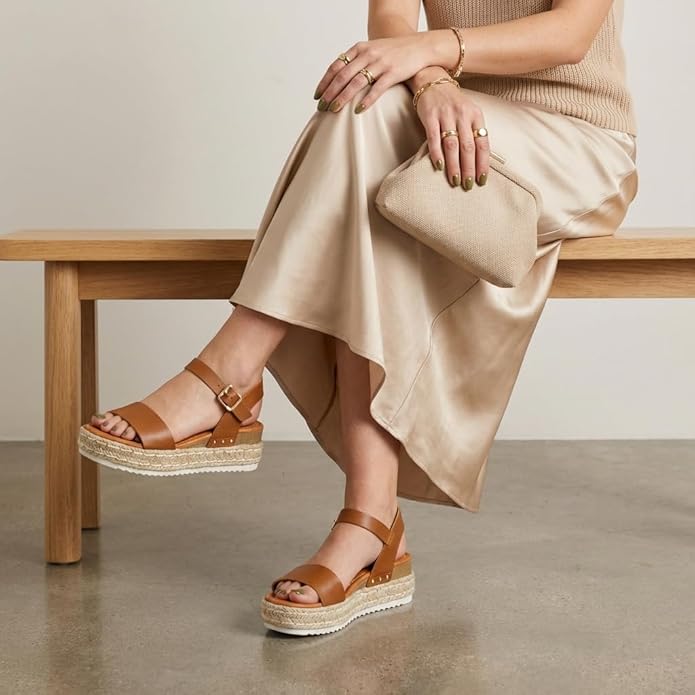
What works: leather sandals with a proper footbed and ankle strap — Birkenstock Arizonas or similar contoured sandals are honest choices that Romans actually wear.
White leather trainers with good cushioning are equally perfect and look brilliant with linen trousers and a simple dress.

For evenings, low block-heeled mules or leather loafers on slightly more level surfaces (restaurants and piazzas) are manageable, but I’d keep heels under 4cm and avoid stilettos entirely.

What doesn’t work: new shoes (break them in at home first, no exceptions), flip flops (zero ankle support on cobblestones, dangerous when wet), backless mules for long walking days, and anything described as “fashion sneakers” with flat, unpadded soles.
Local tip: If you develop blisters mid-trip, the pharmacies in Rome (look for the green cross) stock excellent blister plasters and insoles. It’s the Italian pharmacy system in action — they’re practical and helpful, and finding one is never more than a five-minute walk away.
Lightweight Layers: More Important Than You Think
Here’s the thing about September in Rome that catches people out: the temperature spread across a single day can be genuinely wide. 29°C at 2pm, 19°C at 9pm, and aggressively air-conditioned interiors (restaurants, the Vatican Museums, literally every shop) in between.
This is why packing only summer clothes — sundresses, shorts, nothing with sleeves — doesn’t quite work for September.
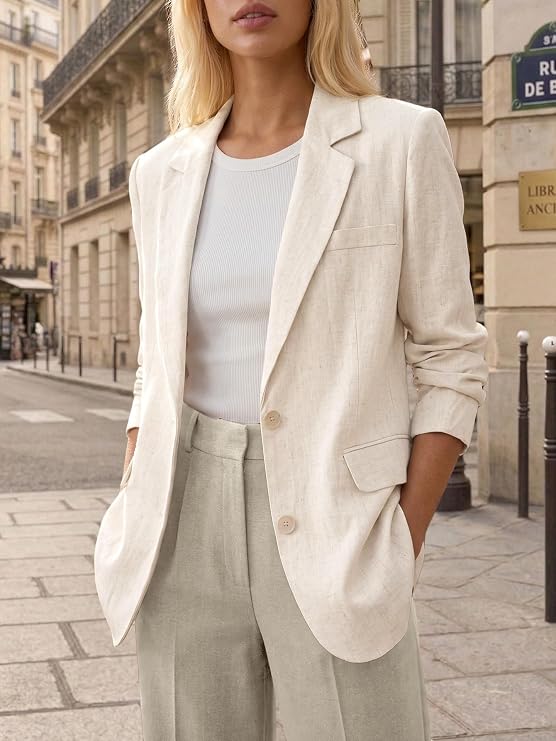
You need something to layer: a lightweight linen blazer, a drapey cardigan in cotton or cashmere, or a structured denim jacket for later in the month. The jacket or cardigan earns its packing weight multiple times a day.

A silk or cotton scarf is the other layer worth packing. It works as a cover-up for churches, a layer over your shoulders in an air-conditioned restaurant, and a head covering for afternoon sun. Lightweight, takes up no space, and elevates even the simplest outfit. It’s one of the best things you can pack for Italy generally — I’ve made the same point in the what to wear in Sardinia in summer guide, and it holds equally true here.

Local tip: A linen blazer is the single item that makes the biggest style upgrade in Rome for the least packing cost. Thrown over a simple dress or a linen shirt and trousers, it immediately looks intentional and handles the evening temperature drop without requiring a coat.
Evening Outfits in Rome
Rome at night is romantic in the specific way that makes you want to dress like you mean it. The trastevere restaurants with outdoor tables. The piazzas lit with warm light. The aperitivo bars where everyone looks like they’re starring in their own film. This is not the moment for your day-walking outfit without adjustment.

The good news is that the upgrade is minimal. Swap flat sandals for block-heeled leather mules or leather loafers. Add a linen blazer or silk scarf. Replace the simple t-shirt with a slightly silkier top.

For women: a midi dress or wide-leg trousers with a nice blouse covers every dinner scenario Rome will throw at you.

For men: tailored shorts or chinos with a linen shirt (tucked or half-tucked), leather loafers or leather trainers. Romans in September wear this and it looks effortless and right.

Avoid: overly casual athletic wear, sports trainers with formal trousers (the combination reads oddly), and very loud graphic tees for nicer restaurants.
Local tip: Rome doesn’t have a strict dress code at most restaurants — unlike Paris, which has its own rules — but Trastevere and the centro storico restaurants cater to a clientele that dresses with some intention, and you’ll enjoy the evening more when you do too.
What to Wear for Churches (Non-Negotiable)
This is not optional. Rome has more churches than almost anywhere on earth, and most of the major ones — St. Peter’s Basilica, the Pantheon, Santa Maria Maggiore — have dress codes that are actively enforced, not just suggested.
The rules: shoulders covered, knees covered.
For women: a dress or skirt below the knee or trousers work. A sleeveless dress needs a cardigan or scarf wrap over the shoulders.

For men: shorts above the knee are sometimes rejected at the Vatican specifically — longer shorts or trousers are safer.
The easiest solution, which I’ve used reliably: carry a lightweight scarf or sarong in your day bag. It takes up zero space, covers shoulders when needed, and wraps around the waist as a skirt if you’re in shorts. No special “church outfit” required — just a scarf you could be wearing anyway.
Local tip: The guards at St. Peter’s are not interested in exceptions. I’ve watched people get turned away in the blazing heat after queuing for 40 minutes because they forgot to cover their shoulders. Keep the scarf at the top of your bag, not buried at the bottom.
The Right Bag for Rome Days
Your day bag in Rome needs to be functional first and stylish second — but ideally both, because Rome is a city where people notice.
A small-to-medium leather or canvas crossbody bag is the move: it sits in front of your body, closes securely, holds your phone, wallet, sunglasses, and a folded scarf without bulging, and it reads as put-together in a way that a backpack doesn’t. The crossbody also frees your hands for gelato cones, camera shutter buttons, and holding a coffee cup while admiring a fountain.

Backpacks: fine for day trips out of the city (Ostia Antica, Tivoli, the Appian Way) where you need more capacity. For central Rome sightseeing, they slow you down in crowds and make you a more obvious target for opportunists around the Colosseum and Trevi Fountain.

Local tip: An Italian leather market bag — the kind you’ll find at the artisan stalls in the centro storico — is both a practical day bag and an excellent souvenir. Real leather, well-made, and something you’ll use long after you’re home.
Rain Preparation: Brief But Important
September brings occasional afternoon thunderstorms to Rome — short and dramatic, then clearing. They are not the grey all-day drizzle of northern Europe, but they’re intense enough to drench you very quickly if you’re unprepared.
A compact umbrella (the foldable kind that fits in a crossbody bag) is worth packing. Rome’s wide piazzas offer very little shelter when a storm hits suddenly. Alternatively, a packable rain jacket in a neutral colour pulls double duty as a light layer for cool mornings.

Plus compact travel umbrella also works.A small umbrella is much more practical and more Roman.

What I don’t recommend: ponchos, which look terrible and don’t actually keep you dry around the edges.
Local tip: If you get caught without one, the street vendors near the major monuments and piazzas have umbrellas the moment a cloud appears. They’re not cheap and they’re not great quality, but they’ll do. Better not to need them.
Accessories That Do Real Work
Sunglasses are non-negotiable in Rome in September — the sun is still strong, especially in the middle of the day, and you’ll be in it constantly. Get a pair you genuinely like wearing rather than a backup pair you grabbed at the airport.

A hat is less essential in September than in August (when it’s survival gear) but still useful for midday exploring. A structured straw hat or a canvas bucket hat both work — something with a brim that actually shades your face rather than just sitting decoratively on your head.

A crossbody phone holder or card wallet worn close to the body is worth considering if you’re travelling solo or in a busy group. The Colosseum crowds and the Trevi Fountain area specifically are known for distraction theft.
Local tip: One or two simple gold or silver pieces of jewellery elevate simple outfits into proper ones in Rome. Leave expensive jewellery or anything irreplaceable at home — the crowds make it impractical — but a simple chain necklace or stud earrings make the difference between “tourist in linen” and “person who lives in linen.”
What NOT to Wear in Rome
Let me save you some regret:
Flip flops as your main shoe. The cobblestones will punish you. They’ll also get wet during a thunderstorm and become genuinely dangerous. Save flip flops for the hotel room or the pool.
Shorts to the Vatican. I know you’ve heard this. People still do it and get turned away. Tailored shorts that cover the knee might be fine at the Colosseum; they will not get you into St. Peter’s.
All-black in early September. Practically speaking, black absorbs heat and in 28°C sun it becomes genuinely uncomfortable by early afternoon. Save the all-black for late September evenings or colder destinations. Check out the what to wear in Spain in June guide for more colour strategy in Mediterranean heat.
New shoes, any new shoes. I’ll say it one more time. Break shoes in before you arrive. Rome is not the place to discover that your gorgeous new sandals rub the inside of your ankle by hour three.
Athletic wear for sightseeing. Running shorts and compression tights are for running. Rome’s restaurants and churches will judge you silently and some of the churches will turn you away loudly.
Your Rome in September Capsule Wardrobe
Here’s what a well-packed 7–10 day Rome trip in September actually looks like:
Dresses/tops:
- 2 midi dresses (one simple for day, one slightly dressier for evenings)
- 2–3 linen or cotton tops (one with sleeves for morning layers)
- 1 lightweight blouse that works for dinners
Bottoms:
- 1 pair wide-leg linen trousers (the workhorse of the trip)
- 1 pair tailored shorts for warm days
- 1 pair jeans for cooler days or evenings (optional if you run warm)
Layers:
- 1 linen blazer or structured cardigan
- 1 lightweight scarf (the most useful item you’ll pack)
- 1 packable rain jacket
Shoes:
- 1 pair leather sandals with ankle strap or footbed support
- 1 pair white leather trainers
- 1 pair block-heeled mules or leather loafers for evenings
Accessories:
- Sunglasses
- Day bag (small crossbody)
- Compact umbrella
That’s it. Resist the urge to add more. Rome’s laundromats are excellent and the shopping is better than anything you brought from home.
Packing Tips (From Someone Who Has Overpacked for Rome Before)
Pack fewer shoes than you think you need. Three pairs is enough for any trip. Shoes are heavy and you’ll wear your comfortable pair 90% of the time anyway.
Lay out your outfits before packing and then remove one. Whatever you think you need, you need slightly less. You’ll buy something in Rome — a scarf, a bag, a linen shirt from a market — and you’ll need the space.
Outfit repeat without apology. Nobody in Rome knows what you wore yesterday. One good dress worn three times with different accessories is genuinely stylish. Ten mediocre outfits that barely fit in your suitcase is not.
Travel insurance for checked luggage: if your bag is delayed (as it occasionally is at Rome’s Fiumicino airport), having your essentials in carry-on means you can still start the trip. Pack one complete outfit in your hand luggage.
Go. You’re Ready.
Rome in September is one of those trips that tends to become a reference point — the holiday you describe when someone asks for a recommendation, the place you find yourself looking up flights to again six months later. The light, the food, the feeling of walking through layers of visible history like it’s completely normal. It is, and it isn’t, and that tension is exactly what makes it extraordinary.
Pack light, choose linen, wear shoes you trust, and carry a scarf. The rest sorts itself out remarkably quickly once you’re there, standing in front of the Pantheon with a cornetto in one hand and absolutely nowhere else to be.


One Response