
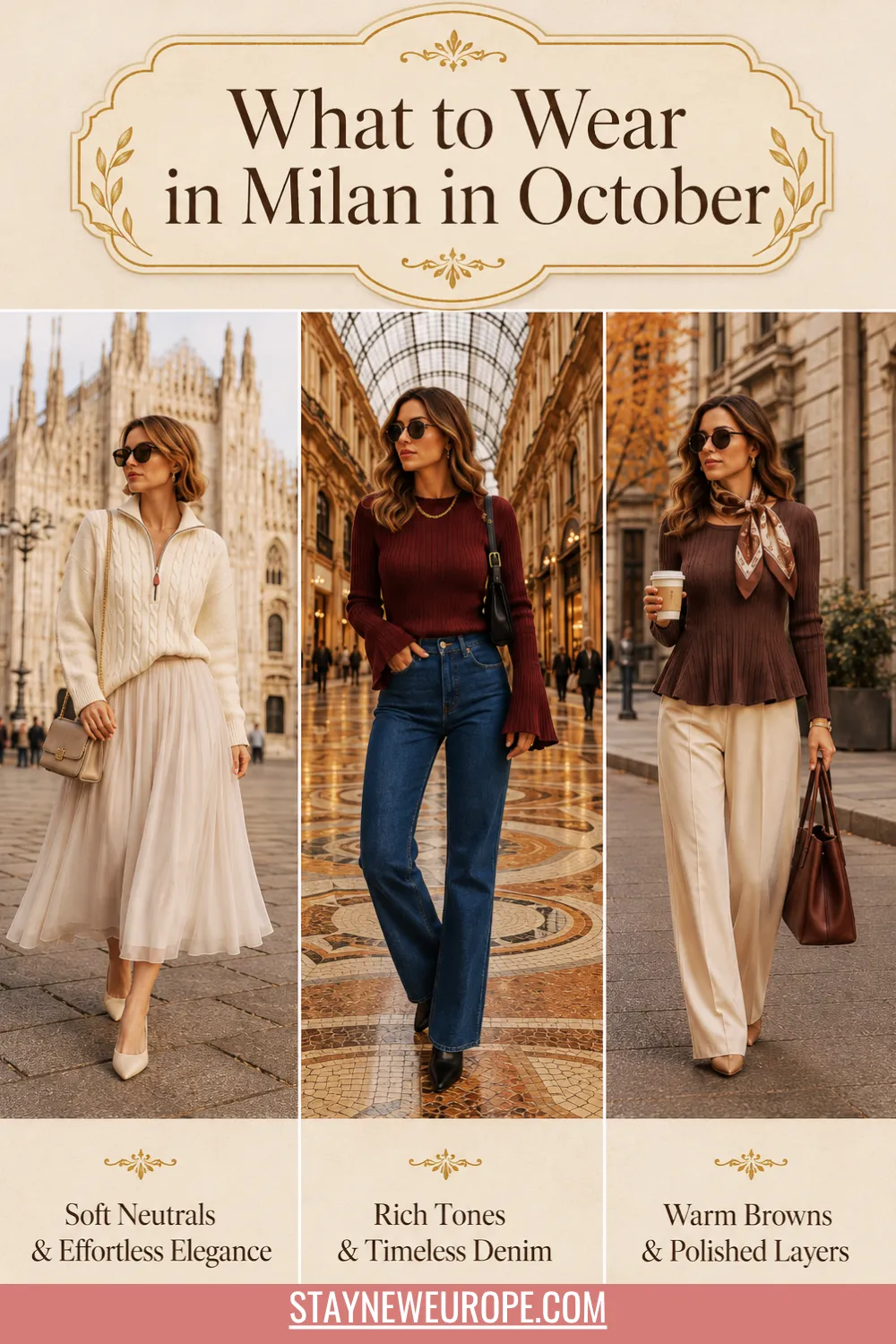
Let me be honest — Milan in October is not a “throw on a puffer and go” kind of trip. The sky does this thing where it’s silvery-grey all morning, then suddenly the sun cuts through around 2pm and everyone’s sitting outside with a coat over the back of their chair, not on. It’s a city that dresses in layers because the weather genuinely asks it to, not because it’s trying to be difficult.
I learned this the hard way on my first October trip — I packed one heavy coat, assumed I’d wear it the whole time, and ended up sweating through it on a sunny afternoon near the Duomo while everyone around me was in a light knit and a scarf. Meanwhile my sneakers, which felt like a safe choice at home, made me stick out on every cobblestone street from Brera to the Navigli.
This surprised me too: Milan doesn’t really do “tourist casual.” It’s a working fashion capital, not a postcard city, and locals dress like they mean it even on an ordinary Tuesday. That doesn’t mean you need to overhaul your wardrobe — it just means a few smart choices go a lot further here than they would almost anywhere else.
Before We Dive In
Weather: October in Milan sits somewhere between summer’s last breath and winter’s first warning. Expect daytime highs around 16–19°C (61–66°F) and mornings/evenings dropping to 8–11°C (46–52°F). Rain is genuinely common — Milan sits in the Po Valley, which traps humidity and fog, so don’t be shocked by a drizzly, grey week even if the forecast says “partly cloudy.”
Walking conditions: You’ll be on trams and the metro plenty, but Milan is still a walking city — cobblestones and smooth stone paving around the Duomo, Brera, and the Navigli canals, which get slick fast when wet. Add in a fair amount of standing around in galleries, churches, and museums, and shoe choice matters more than almost anything else you pack.
Style culture: Italians dress with intention here — bella figura isn’t a myth, it’s a daily habit. Milan specifically leans polished and neutral: tailored, quality-over-quantity, muted colors punctuated by one interesting piece. You won’t get side-eyed for looking like a tourist, but you will notice the difference between blending in and standing out.
The Bag That Actually Survives Milan
Before we even get to clothes — what you’re carrying matters just as much as what you’re wearing.
A structured tote or a mid-size duffle works better here than a rolling suitcase you’ll be dragging over tram tracks and cobblestones.

For day-to-day, skip the giant backpack; it reads as “just arrived” and it’s also the first thing pickpockets clock on crowded trams.
Think one carry-on-sized bag for travel, plus a smaller crossbody or structured tote for daily exploring — something that closes securely and doesn’t scream “everything I own is in here.”
Local tip: If you’re building this trip around a full Italy itinerary rather than just Milan, our Italy in August packing guide has more on choosing one bag that works across cities — the logic barely changes between seasons.
Lightweight Layers, Not One Big Coat
Here’s the thing nobody tells you: the biggest mistake in Milan in October isn’t wearing the wrong item, it’s relying on one item to do all the work.
The temperature swing between 9am and 2pm can be 8–10 degrees, and that’s before you factor in whether you’re in direct sun or standing in the shadow of a building on Via Montenapoleone.

A single heavy coat means you’re either sweating by lunch or freezing by dinner — there’s rarely a middle ground.

The fix is boring but it works: thin base layer, a knit mid-layer, a coat you can open or take off entirely. A cotton or silk long-sleeve top under a fine-knit sweater, topped with a coat you can carry over your arm — that’s basically the whole formula.
Local tip: Merino wool base layers are worth the splurge here. They regulate temperature far better than cotton and don’t wrinkle sitting at the bottom of a bag all week.
The One Coat That Actually Earns Its Suitcase Space
If you only bring one outerwear piece, make it a mid-weight trench or a wool-blend overcoat in a neutral tone — camel, black, charcoal, navy.
A trench coat is the more versatile choice for early-to-mid October, when rain is more likely than genuine cold.

It looks intentional over both jeans and a dress, and it packs down smaller than a wool coat. If you’re going later in the month, or you run cold, swap it for a lighter wool coat instead — something you can layer a scarf and sweater under without it looking bulky.

Skip the puffer jacket unless you’re chasing single-digit temperatures. It’s the single fastest way to read as “just got off a flight” in a city where even the grocery run outfit is considered.
Local tip: A coat with deep pockets does double duty as your bag when you’re just popping into a café — one less thing to carry.
Sweaters Worth Their Suitcase Space
A good sweater is doing three jobs in Milan: warmth, styling, and the thing you’ll actually be photographed in the most.

Fine-knit merino or cashmere-blend sweaters in neutral tones — cream, chocolate, olive, black — layer well under a coat and look put-together on their own with jeans or trousers. Skip the chunky, bulky knits; they take up half your suitcase and add bulk under a coat you’ll want on and off all day.

A turtleneck is a genuinely smart choice for October mornings — it means you can skip a scarf on cooler days and still look finished.
Local tip: One sweater in a slightly richer color — rust, burgundy, forest green — instantly elevates your whole capsule without adding a single extra outfit to plan.
Jeans or Trousers — What Actually Works
Dark, straight or slightly wide-leg jeans are the easiest thing to pack for Milan in October — they work day to night and hide a full day of walking better than lighter denim ever will.

Tailored trousers are worth one slot in your suitcase too, especially if you’re planning a nicer dinner or want an outfit that reads more “local” than “tourist.” Wool-blend trousers in a neutral tone pair effortlessly with a blazer or coat for evening.

Shorts really don’t belong in this month’s wardrobe — even on a warmer afternoon, they’ll leave you underdressed against everyone else in trousers and a coat.
Local tip: One pair of dark jeans, one pair of trousers. That’s genuinely enough — rotate the top layer instead of the bottom.
Dresses That Fit the Milan Mood
A dress in October means one thing: it’s coming with tights, boots, and probably a coat over the top — and honestly, that combination looks better than most summer dressing anyway.

A midi dress in wool-blend or a heavier jersey works for daytime sightseeing when paired with opaque tights and ankle boots, and dresses up easily for dinner with the addition of a blazer or a statement coat.

Avoid anything sleeveless or lightweight cotton unless you’re layering hard underneath — the fabric alone won’t hold up to a grey, breezy afternoon.
Local tip: A wrap dress is the most forgiving option for changeable weather — it adjusts to how many layers you’re wearing underneath without ever looking off.
Walking Shoes That Won’t Embarrass You
This is the section that matters most, so let’s be direct: sneakers that scream “athletic” are the fastest way to look like a tourist in Milan, and they’re also not your best friend on wet cobblestones anyway.
Leather sneakers in white or neutral tones are the local compromise — comfortable enough for a full day of walking, polished enough to pass for local style.

Ankle boots are the smarter choice once the weather turns properly damp; they handle puddles and slick stone far better and look intentional with both jeans and a dress.

Whatever you choose, break it in before you land. Nothing ruins a Milan trip faster than blisters on day two.

Local tip: Bring a small pack of blister plasters regardless — even broken-in shoes meet their match after eight hours on stone paving.
What Not to Wear
A few honest mistakes I see (and made myself, on the sneaker front) that are worth avoiding:
Leggings worn as trousers — fine for the gym, not for a city where a lot of daily dressing is genuinely considered.
Bright white running shoes with visible branding.
A backpack worn on both shoulders through crowded trams (loosen one strap, wear it in front in busy areas).
And the big one: showing up in shorts and a t-shirt because “it might warm up” — it might, for an hour, and you’ll be underdressed the other seven.
Local tip: If in doubt, dress one notch smarter than you think you need to. Milan rewards that instinct more than almost any other Italian city.
Evening Outfits for Aperitivo and Dinner
Evenings in Milan have their own dress code, even for something as casual as aperitivo.

A dark sweater or blouse with tailored trousers, finished with a blazer or your trench, covers most restaurant and bar situations without a full outfit change.

For a dressier dinner, swap trousers for a midi dress and add a statement accessory — a scarf, a bold earring, a good bag. Heels are optional here; a polished flat or a low ankle boot works just as well and saves your feet after a full day of walking.

Local tip: Aperitivo hour (roughly 6–8pm) is genuinely dressed-up in Milan, even for a casual spritz — it’s less “grabbing a drink” and more “seeing and being seen.”
Accessories That Elevate Simple Outfits
A scarf isn’t just decorative here — it’s doing real thermal work.
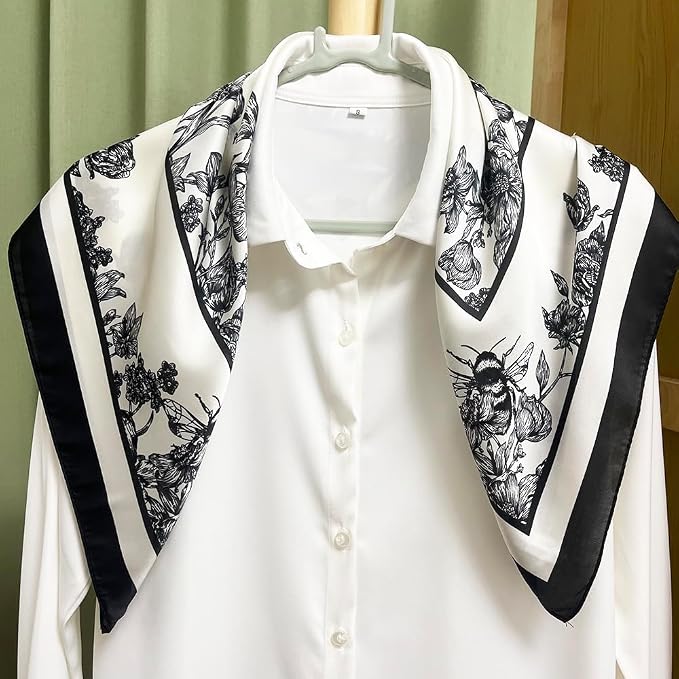
I’d rather pack three or four flexible accessories than a dozen outfit-specific ones.
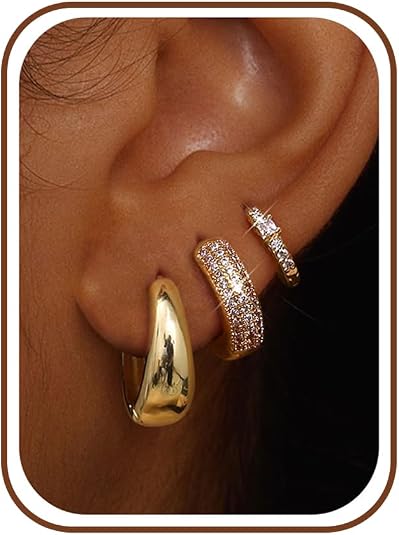
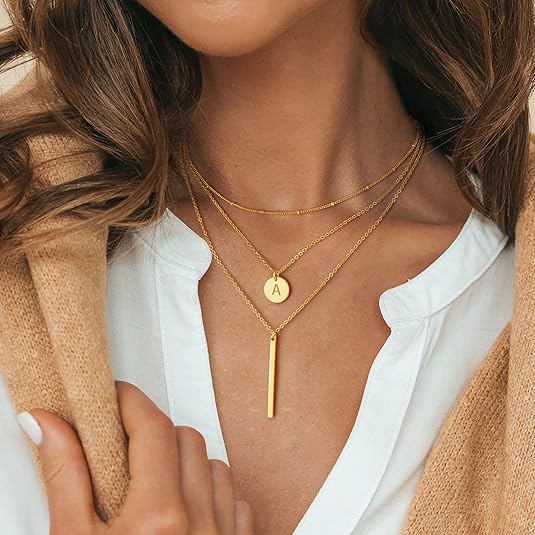
a simple gold or silver layered necklace, and one good pair of sunglasses cover almost every look you’ll build.
Belt are also very simple and convert a simple outfit into chic and elegant vibe.

Church Dress Code
The Duomo and Milan’s other churches enforce a real dress code — shoulders and knees covered, no exceptions, even on a warm afternoon.
This is where a scarf earns its keep twice over: as a warmth layer during the day and as instant shoulder coverage if you’re wearing something sleeveless underneath a coat. A midi-length dress or trousers avoids the issue entirely, which is one more reason they’re worth prioritizing this month.

Local tip: Keep a lightweight scarf in your day bag at all times in October — you’ll use it for warmth more than modesty, but it’s there for both.
Bags: Crossbody vs. Backpack
A structured crossbody bag is the better daily choice in Milan — secure, hands-free, and it doesn’t read as “tourist” the way an oversized backpack does.

If you need more capacity for a camera or a guidebook, a smaller, structured backpack in leather or a neutral fabric works fine — just avoid anything with mesh pockets or an overtly outdoorsy look. Worn on trams and in crowded areas like the Duomo or Galleria Vittorio Emanuele, keep it in front rather than on your back.

Local tip: Look for a bag with a zip closure over a magnetic snap or open top — it’s a small thing that matters a lot in crowded tourist spots.
Rain Preparation
Rain is genuinely likely at some point during an October trip, so this isn’t optional planning — it’s part of the packing list.

A compact umbrella that fits in your day bag is non-negotiable, and a packable rain shell folds down small enough to carry every day without you noticing the weight. Skip anything that isn’t at least somewhat water-resistant on the shoe front — suede boots and Milan rain do not get along.
Local tip: A lightweight, water-resistant trench does the job of both a rain layer and your main coat on milder days — one less thing to pack separately.
Fabrics to Pack (and Skip)
Wool, merino, and heavier cotton blends are your friends this month — they hold warmth, resist wrinkling in transit, and layer without adding bulk. A silk scarf or blouse adds polish without weight.
Skip pure linen (too light for October’s temperature swings) and anything overly synthetic — it doesn’t breathe well under layers and tends to look cheap next to Milan’s generally well-tailored crowd.
Capsule Wardrobe for Milan in October
If you’re packing for five to seven days, here’s roughly what covers it: two pairs of bottoms (jeans and tailored trousers), three to four sweaters or knit tops, one midi dress, one trench or wool coat, one blazer, a scarf, and two pairs of shoes — one leather sneaker, one ankle boot.
Mixed and layered, that’s easily ten-plus outfit combinations without a single item going unworn.
Local tip: If you’re combining Milan with other Italian stops, the layering logic barely changes — our Paris in September guide covers the same “temperature swings through the day” approach if your itinerary heads further afield too.
How Many Outfits to Actually Bring
The honest answer: fewer than you think. Five to seven tops, two to three bottoms, and one or two dresses will get you through most trips when everything is chosen to mix with everything else.
Plan outfits around your coat and shoes first, not last — those are the pieces you’ll be photographed in and walking in the most, so they deserve first pick. Overpacking in October usually means bringing too many “just in case” heavy items rather than too few light ones; layers solve more problems than volume ever will.
Milan in October rewards a little bit of planning, but it’s genuinely not complicated once you understand the rhythm — layer for the morning chill, dress for the afternoon light, and keep one coat you actually love within arm’s reach at all times. Pack light, pack in neutrals, and let the city’s own effortless confidence rub off on you a little. You’ll fit right in on the tram, in the gallery, and at the table by 8pm — and that’s really the whole point of getting dressed for a trip like this one.

