
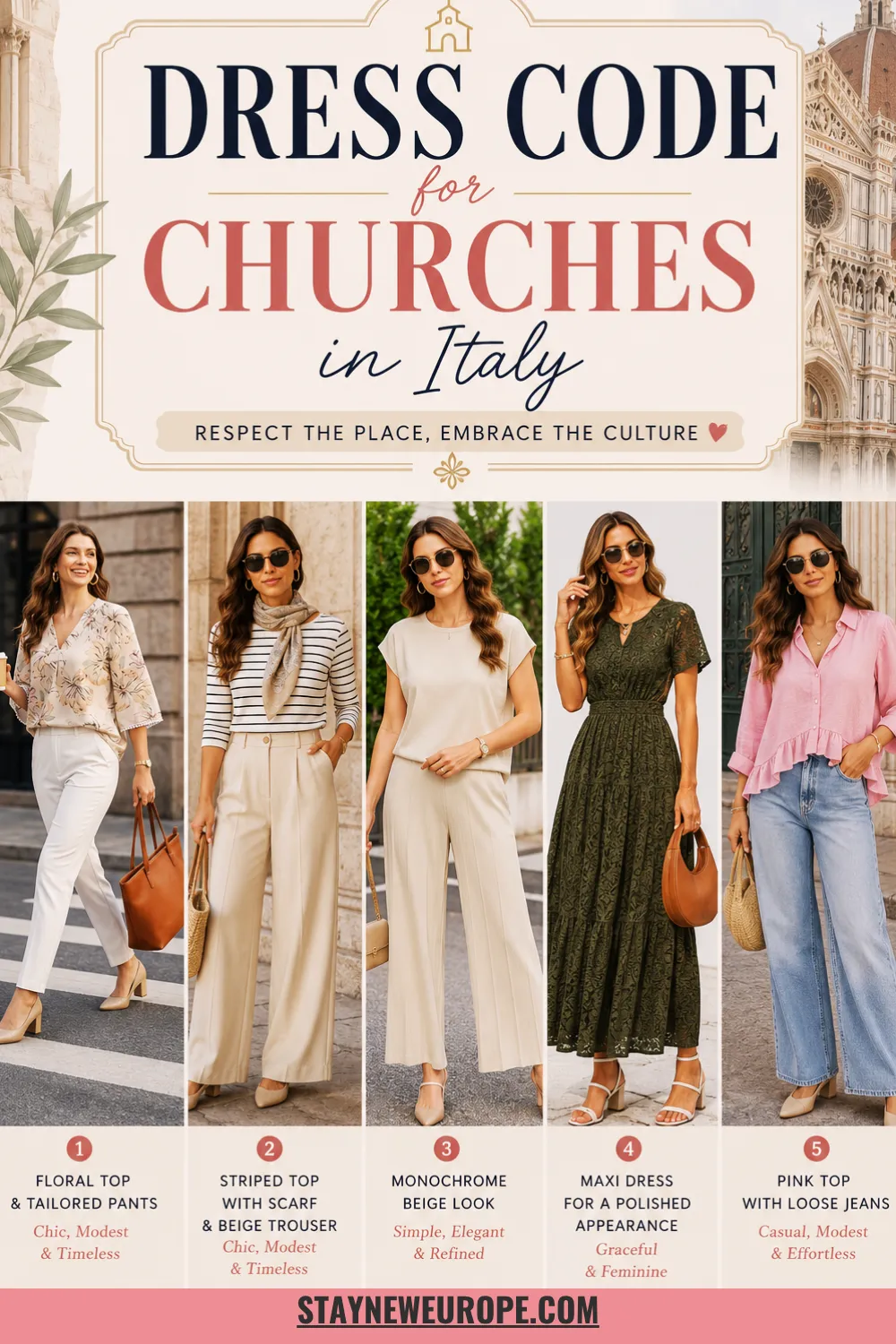
I’ve watched a woman in a beautiful silk sundress get stopped at the entrance of St. Mark’s Basilica and sent away to “cover up.” She’d flown across the world for that moment, and a guard with a laminated sign turned her right back around.
That’s the thing nobody tells you before an Italy trip — the churches aren’t just tourist attractions, they’re active places of worship, and they take the dress code seriously. Not “ask nicely” seriously. “You will be stopped at the door” seriously.
*I learned this the hard way on my first trip to Rome, standing outside the Vatican in shorts that hit just above the knee, genuinely confused about why I couldn’t go in. So let me save you that scene. Here’s exactly what to wear — and what to leave folded in your suitcase — so every church, chapel, and basilica on your list actually lets you through the door.
Before We Dive In
Every major church in Italy — from St. Peter’s Basilica to the smallest parish chapel in a hill town — enforces some version of the same rule: shoulders and knees covered, for everyone, regardless of gender. Some places are stricter than others (the Vatican and Venice’s St. Mark’s Basilica are famously strict), but I’d plan around the strictest version so you’re never caught off guard.
A few things worth knowing before you pack:
Italy’s churches are often unheated stone buildings, which means they stay cool even when it’s blazing outside — so what you wear needs to work both for the sun outside and the chill inside. And Italians themselves dress with a kind of effortless polish that makes cargo shorts and flip-flops stand out fast, so leaning slightly smarter than “vacation casual” will serve you well beyond just church visits.
The One Rule That Actually Matters: Shoulders and Knees
Here’s the rule that decides whether you get in or get turned away, full stop.
Covered shoulders and covered knees are non-negotiable at almost every major church in Italy. It doesn’t matter if it’s 95 degrees outside or if your dress is objectively gorgeous — if your shoulders are bare or your hemline sits above the knee, you risk being stopped at the entrance. I’ve seen it happen to people in everything from tank tops to strapless sundresses.
The good news is this is easy to plan around once you know it. A dress with sleeves (even short cap sleeves) and a hem that hits at or below the knee clears the bar everywhere. A sleeveless top works fine too, as long as you’ve got something to throw over your shoulders the moment you approach a church.
Local tip: Some churches measure “covered knees” more strictly than others — St. Mark’s in Venice and St. Peter’s in Rome are the two I’d never test with a mid-thigh hemline.
The Scarf Is the Single Best Thing You’ll Pack
This surprised me the first time, but it’s true: one lightweight scarf solves almost every church dress code problem you’ll run into.
A large scarf, pashmina, or sarong does triple duty — drape it over bare shoulders, tie it around your waist to lengthen a shorter skirt, or wrap it over a low neckline.

I keep one folded into a small pouch in my daily bag every single day in Italy, church visit planned or not, because you never know when you’ll wander past a beautiful chapel and want to duck in.

Go for something in a breathable fabric like cotton or linen-blend rather than a heavy wool wrap — you’ll be using it as sun protection just as often as a coverage solution, and a stiff heavy scarf gets sweaty and annoying by midday.

Local tip: Some souvenir stalls right outside major basilicas sell cheap scarves specifically for tourists who show up uncovered — but they’re marked up and the selection is limited, so bring your own.
What Actually Works on Your Bottom Half
This one trips people up because “knee-length” sounds simple until you’re standing in front of a dozen skirts trying to guess which one qualifies.


Midi skirts and dresses (hitting mid-calf or lower) are the safest bet and also happen to be the most flattering option for the Italian heat — they move with the breeze and don’t cling.
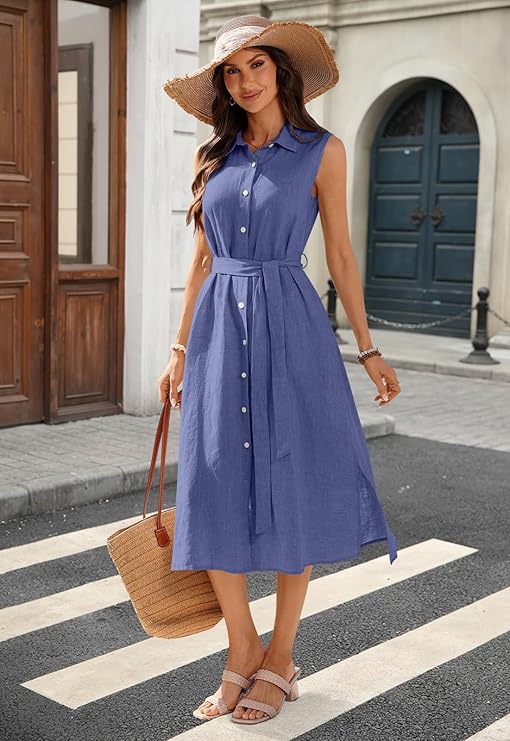
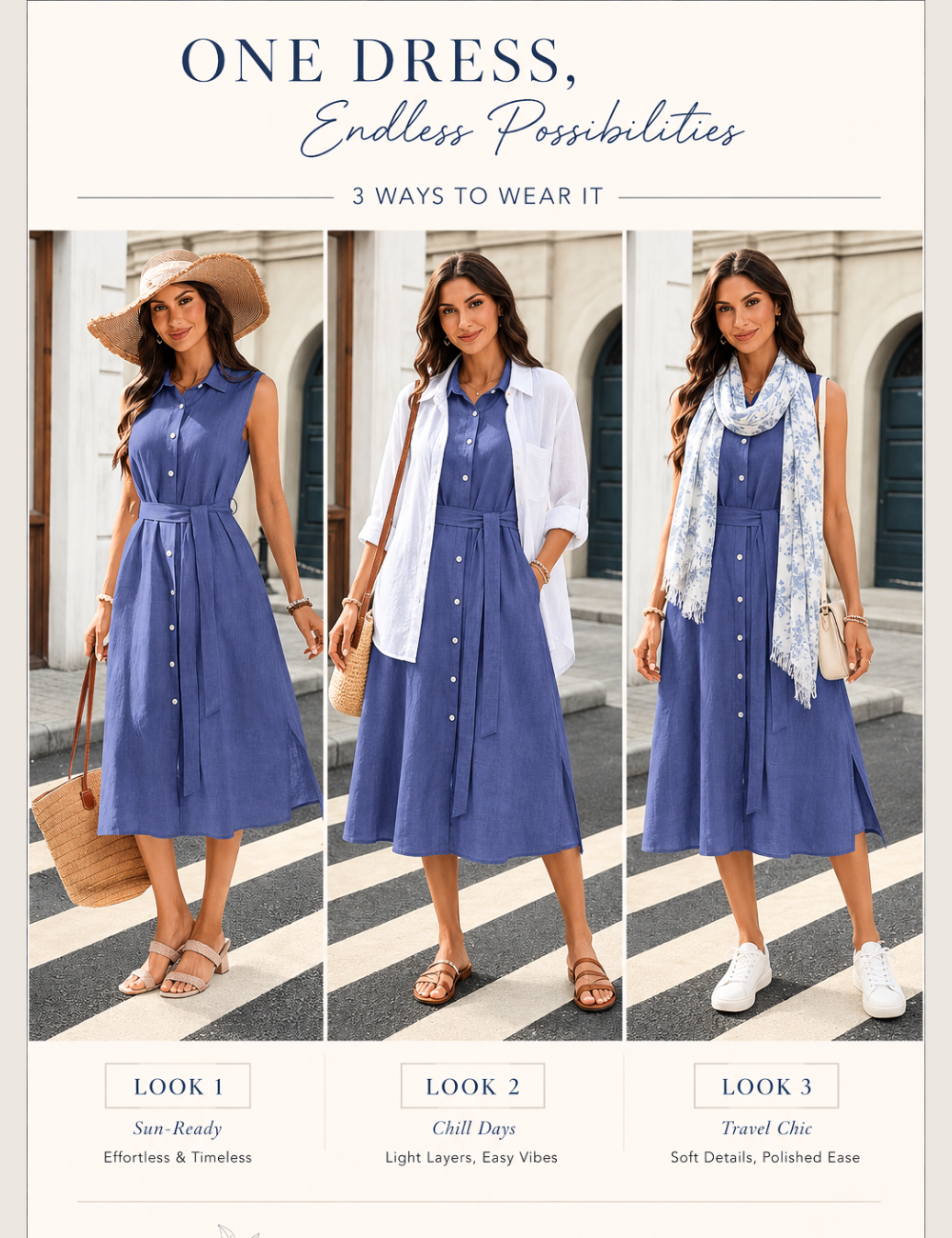
you can style it as you wish. linen baggy shirt or any soft and breathable scarf over your shoulder works well too.
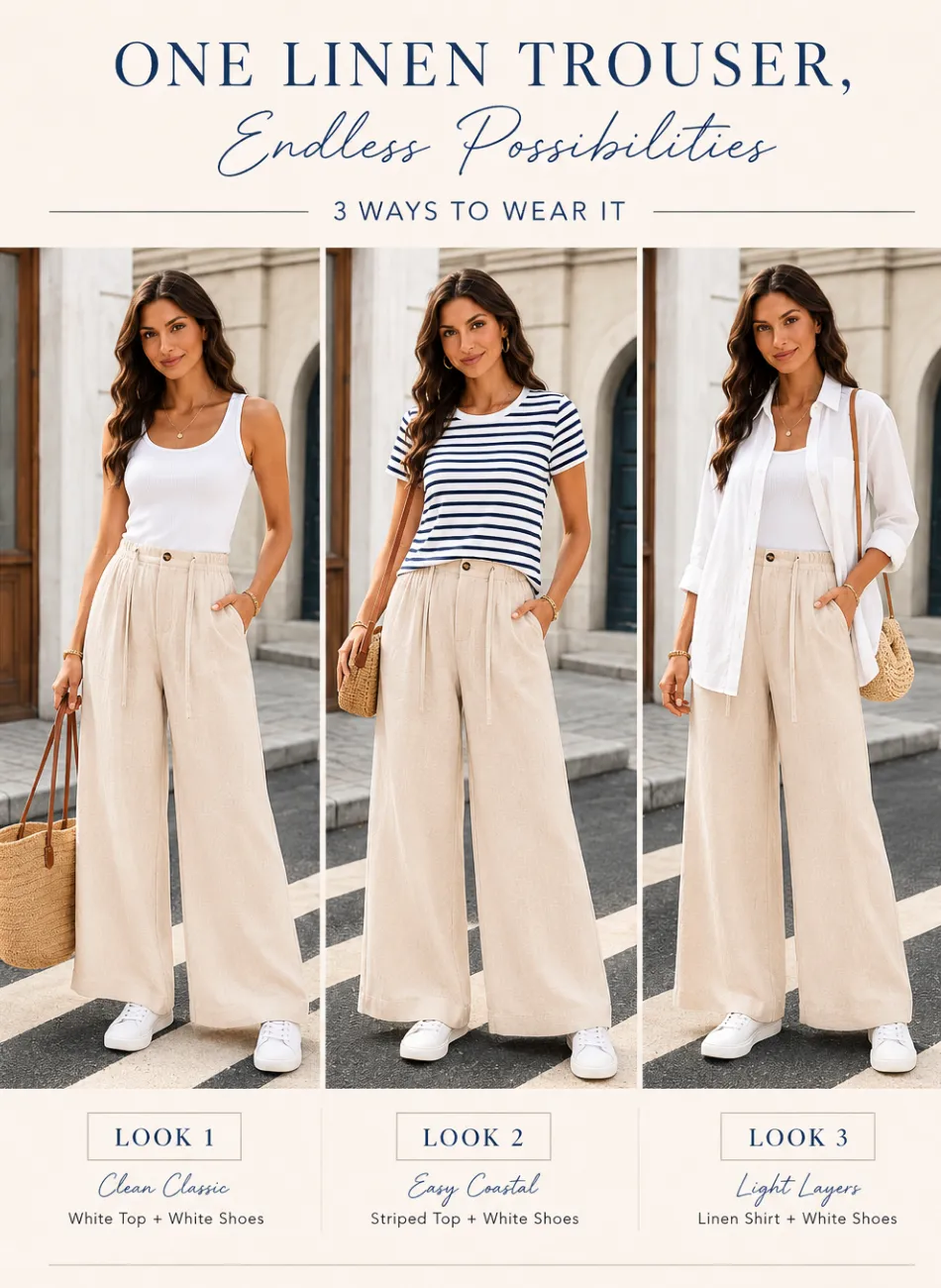
Wide-leg trousers or linen pants are your best friend on days you’re doing several churches back to back, since you never have to think about hemlines at all. Jeans work fine too, as long as they’re full-length rather than cropped above the ankle.

style it with any tops you want.
Shorts are the riskiest choice, and I’d only pack them if they hit at or past the knee — which, if we’re honest, most “cute vacation shorts” simply don’t.
Local tip: If you’re debating between two skirt lengths, take the longer one. I’ve never been stopped for a hemline being “too modest.”
Tops That Get You Through the Door
The top half causes more accidental rejections than anything else, mostly because people forget necklines count too.
Or linen or cotton blend co-ord set for women works nicely if do not wish to worry about matching you tops with bottoms.

A top with sleeves — even a light cap sleeve or a loose kimono-style sleeve — is the easiest way to avoid any issue.

If you love a sleeveless linen top (and in Italian summer heat, I get it), just plan to layer the scarf trick over it the second you’re near a church entrance.

Deep V-necks and very low-cut tops can also get flagged in the stricter basilicas, so I’d save those for dinner rather than daytime sightseeing.

Striped tops and shirts are enduring staples in Italy, functioning as versatile neutrals beloved across coastal and urban settings. They range from casual blue-and-white cotton poplin button-downs to iconic designer statements

Local tip: A lightweight button-down shirt worn open like a jacket over a tank top is one of the easiest “instant coverage” moves — you can leave it open all day and just button one or two buttons before walking in.
Shoes That Won’t Betray You on Marble Floors
Nobody checks your shoes at the door, but your feet will absolutely check you if you get this wrong.

Church floors are often worn marble or stone, polished smooth by centuries of foot traffic, and they get slippery fast — especially if it’s rained. Flat, closed or semi-closed shoes with real grip are what you want; the kind of thin flip-flop that’s fine on a beach becomes a genuine hazard here.
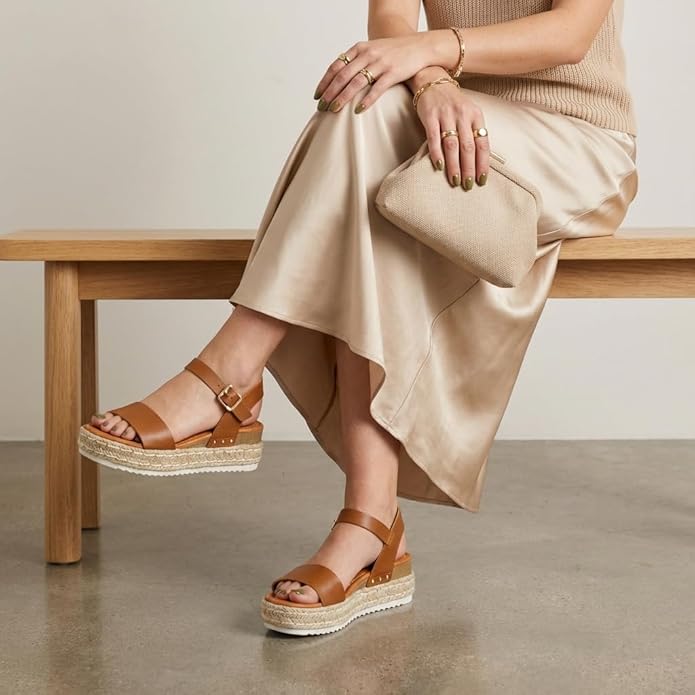
I made the mistake of touring Florence’s Duomo in brand-new leather sandals once and spent the whole visit sliding instead of looking up at the ceiling.

Local tip: Save your heels for dinner. Between the cobblestones outside and the marble inside, flat shoes will get you through an entire day of church-hopping without a single blister.
What NOT to Wear Into an Italian Church
This is the list I wish someone had handed me before my first trip, because a few of these genuinely surprised me.
Tank tops, strapless tops, and off-the-shoulder styles are an automatic no at the door.
So are shorts and skirts above the knee, no matter how modest they feel to you. Beachwear of any kind — cover-ups, swim cover-ups, anything that reads “resort” rather than “city” — gets stopped too, which matters if you’re combining a coastal trip with a city stop.
And ripped or overly distressed jeans can raise eyebrows at the stricter basilicas, even though they’re perfectly normal streetwear everywhere else in Italy.
Local tip: If you’re unsure whether an outfit will pass, picture yourself walking into a formal family dinner in it. If it works there, it’ll work at the church door.
St. Peter’s vs. the Village Chapel: Not All Churches Enforce the Same Way
Here’s something that genuinely surprised me — the dress code isn’t applied with the same intensity everywhere.
St. Peter’s Basilica in Vatican City and St. Mark’s Basilica in Venice are the two most consistently strict enforcers I’ve experienced, with staff actively stationed at the entrance checking hemlines and shoulders. Milan’s Duomo checks too, though I’ve found it slightly more forgiving on borderline cases. Smaller parish churches in villages or countryside towns are far more relaxed — often nobody’s checking at all — but I still wouldn’t push it, since it’s still a place of worship even without a guard at the door.
Local tip: If a church is on your must-see list and it’s famous enough to be in every guidebook, assume it enforces strictly and dress accordingly that day.
Layering for a Day of Church-Hopping
If your day involves more than one church — which, in cities like Rome and Florence, it usually does — layering saves you from re-planning your outfit every hour.

Start with a base outfit that already meets the dress code on its own (sleeves, knee-length or longer), then add or remove a light jacket or cardigan depending on whether you’re outside in the sun or inside a cool stone nave.

This way you’re never scrambling to cover up right as you reach the door, and you’re comfortable in both settings without carrying a full outfit change.

Local tip: A lightweight linen blazer works surprisingly well for this — smart enough for a nicer dinner later, functional enough to double as your “church coverage” layer during the day.
Accessories That Do Double Duty
A few small additions make the whole dress-code question easier without adding real weight to your bag.
A structured tote or crossbody bag is genuinely useful here, since bigger backpacks are sometimes restricted inside churches and museums anyway.

Sunglasses and a hat are fine to wear right up until you’re at the entrance — most churches ask you to remove hats before entering, so build in the two seconds to take yours off rather than getting stopped over something that small.
Local tip: Keep a small hair clip or hairband in your bag — I’ve used mine more than once to pin a scarf in place over my shoulders instead of holding it all day.
What Men Should Wear Too (This Isn’t Just a Women’s Rule)
It’s easy to assume the dress code is aimed at women, but I’ve seen just as many men stopped at church doors.
Tank tops and sleeveless shirts get flagged for men just as often
as for women, and shorts above the knee are the most common reason men get turned away. A t-shirt with sleeves and knee-length or full-length pants clears almost every church in the country without a second thought.
Local tip: If you’re travelling with a partner who packs light, one lightweight button-down for him solves both the “too casual for dinner” problem and the “too casual for church” problem in one item.
Seasonal Adjustments Worth Knowing
What works in July doesn’t always translate cleanly to April or October, so it’s worth thinking about the season you’re actually travelling in.
In peak summer heat, breathable natural fabrics like linen and cotton keep the dress code from feeling like a punishment — a lightweight midi dress with a scarf on hand covers you completely without overheating.
In shoulder season (spring and fall), the churches themselves feel even colder relative to the mild outdoor temperature, so a light jacket or cardigan you’d want anyway does the coverage job for you.
Local tip: Pack one long-sleeve top specifically for church visits if you’re travelling in summer — it becomes your one guaranteed “always works” piece on the days you don’t want to overthink it.
Packing a Simple “Church Kit” for Your Bag
Once you’ve got the basics, it’s worth keeping a small, dedicated set of items on you rather than re-deciding this every day.
I keep one scarf, one small compact tote, and a mental note of which outfit that day already meets the dress code, so I never have to problem-solve on the spot outside a basilica. It takes the decision-making out of it entirely, which matters on days when you’re also juggling train times and reservations.
Local tip: Fold the scarf into a small pouch or ziplock bag inside your daily tote — it takes up almost no space and means you genuinely never leave the hotel without it.
Common Mistakes Even Experienced Travellers Make
A few mistakes come up again and again, even among people who’ve done their research.
Packing only cropped pants or above-the-knee shorts because they’re “cooler” is the biggest one — you end up either missing the church entirely or sweating through a borrowed paper wrap at the entrance. Another is assuming a cardigan alone solves everything, when a hemline above the knee still gets flagged regardless of what’s covering your shoulders. And plenty of people simply forget hats need to come off before entering, which causes an unnecessary holdup at busy entrances like St. Peter’s.
How Many Outfits to Actually Pack for This
You don’t need a separate “church outfit” for every single day — you need two or three pieces that quietly work everywhere.
One midi dress with sleeves, one pair of wide-leg trousers or a longer skirt, and one lightweight scarf will realistically get you through any church in the country, repeated across multiple days without anyone noticing you’re re-wearing them. Add a cardigan or light jacket for the days you’re moving between sun and stone interiors, and you’ve covered both comfort and dress code without overpacking.
The biggest mistake I see is people packing an entirely separate “modest outfit” they never actually feel like themselves in. Build the dress code into outfits you’d wear anyway, and it stops feeling like a rule you’re following and starts just feeling like what you packed for Italy.
There’s something almost freeing about figuring this out before you land, rather than in a panic outside St. Peter’s Square with fifteen minutes before your entry slot. Pack the scarf, keep the hemlines honest, and you’ll walk into every church on your list — cool marble floors, quiet echo, centuries of history — without a guard ever stopping you at the door.


One Response