
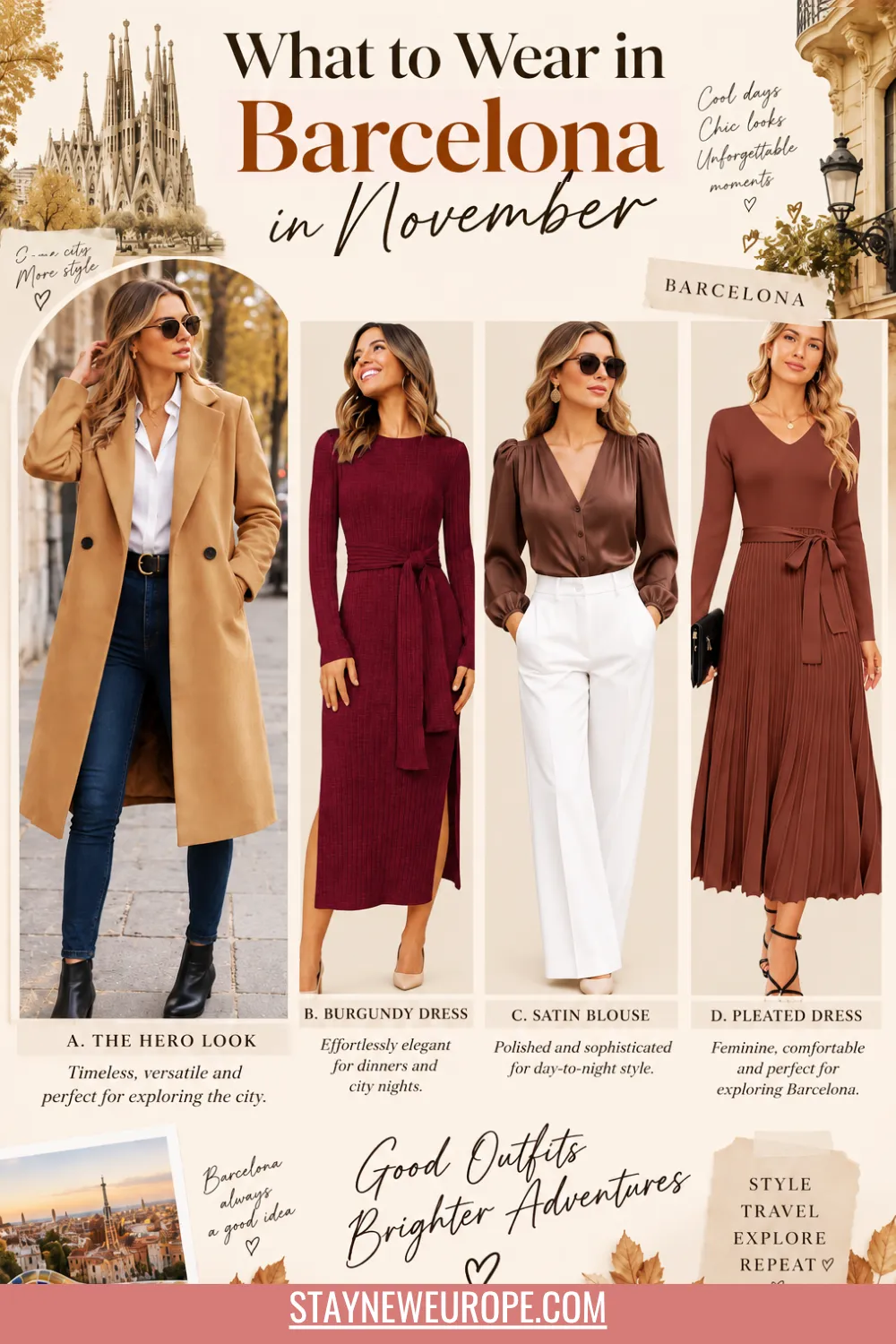
Let me be honest — I packed for Barcelona in November the way I pack for anywhere in Spain, which is to say: badly, and with way too much confidence. I threw in sandals, one thin cardigan, and zero real jacket, because in my head “Spain” automatically meant “warm.” It does not mean warm in November. It means moody skies, a wind that comes straight off the sea and finds every gap in your outfit, and locals in wool coats side-eyeing my bare ankles on Las Ramblas.
This is the month Barcelona quietly turns into a different city. The crowds thin out, the light goes soft and golden by 5pm, and there’s a kind of hush over the beach that you just don’t get in July. It’s genuinely one of my favourite times to be there — but only once I stopped dressing like it was still summer.
So here’s what I actually wish someone had told me before I zipped up my suitcase: pack for layers, not for a season, and leave the flip-flops at home.
Before We Dive In
Weather: Barcelona in November sits somewhere between “mild autumn” and “actually kind of cold when the sun goes down.” Daytime highs usually land around 15–18°C, mornings and evenings drop closer to 8–11°C, and you’ll get a genuine mix of crisp sunny days and grey, drizzly ones. It’s not the freezing cold of Northern Europe, but it’s colder than most people expect from a city that markets itself on beach photos.
Walking conditions: Barcelona is a walking city, full stop. Uneven pavement in the Gothic Quarter, long stretches on the seafront where the wind picks up fast, and metro stairs that will punish bad shoe choices. You’ll clock 15,000+ steps without trying.
Style culture: Catalans dress with quiet intention — think tailored coats, good boots, neutral tones, and almost nobody in head-to-toe activewear unless they’re actually exercising. Nobody’s flashy, but everybody looks put together. Tourists tend to stand out for being underdressed for the weather, not overdressed for the city — worth remembering.
The Right Carry-On or Weekender Bag
Before we even get to clothes — what you pack in matters, especially for a shoulder-season trip where you’re layering more than usual.
I’ve made the mistake of bringing a rigid carry-on for a Barcelona trip and regretting it the second I had to fit a puffer jacket and boots into it on the way home. A soft-structured duffle or a carry-on with some give in the fabric handles layers so much better than a hard-shell case — you can compress a jacket into it in a way you just can’t with a rigid frame.

If you’re doing Barcelona as part of a longer Spain loop, this matters even more, since your load only gets heavier as you go. It’s worth checking a carry-on packing guide before you leave if you’re trying to fit a whole autumn wardrobe into one bag.
Local tip: Leave real room in your bag for a jacket on the way home — November trips almost always end with you buying at least one extra layer once you feel the wind off the Mediterranean.
Lightweight Layers (Why They Matter More Than You Think)
Here’s the thing nobody tells you: Barcelona in November can swing 8–10 degrees between 8am and 2pm, and then swing right back down by dinner. One heavy jumper won’t flex with that. Three thin ones will.
I learned this the hard way standing outside Sagrada Família at 9am, sweating in a wool sweater that was perfect an hour earlier in the shade. Layering isn’t just a packing trick here — it’s basically a survival skill. A fine merino tee, a light knit, and a jacket you can tie around your waist will take you from a chilly morning to a warm early afternoon without a single wardrobe change.

Think: a breathable long-sleeve base layer, a mid-weight cardigan or knit, and a coat on top. You add and remove as the day moves, rather than committing to one temperature guess at 7am.
Local tip: Pack at least one lightweight turtleneck — it layers under everything and looks intentional rather than like you’re just cold.
The Coat That Actually Works Here
A coat is genuinely non-negotiable for November in Barcelona, but it doesn’t need to be your heaviest one.
A mid-weight wool or wool-blend coat in camel, black, or navy is the sweet spot — warm enough for evenings by the sea, structured enough to look right in the city, and not so heavy you’re sweating on the metro. I brought a full winter parka on my first November trip and ended up carrying it over my arm for most of the afternoons because it was simply too much for the actual temperature.

A trench with a removable liner is another smart option if you want one coat to cover a range of days, since some afternoons genuinely feel closer to 20°C in direct sun.

Local tip: Skip the puffer unless it’s a slim, city-appropriate one — the bulky ski-style ones read very obviously “tourist” against how locals dress here.
Jeans, Trousers, or a Midi Skirt — What Actually Works
Shorts are a hard no this month, and honestly even most locals would find them a little strange to see in November. What works is anything with a bit of structure that can handle both cool mornings and walking-heavy days.
Straight or slightly wide-leg jeans are one of the easiest options for Seattle. They work well with sweaters, jackets, and boots, and you can easily add tights underneath if the weather turns especially cold.

Tailored trousers are a great choice when you want something a little more polished. They work well for dinners or nicer evenings without making the outfit feel too formal or overdone.

I’ve also had great luck with a midi skirt over opaque tights and boots for an evening out — it photographs beautifully against the Gothic Quarter’s stone streets and keeps you warmer than bare legs ever will.

Local tip: Dark denim or trousers in neutral tones will match with almost everything you pack, which matters when you’re trying to keep the suitcase small.
Dresses That Actually Suit a Barcelona Autumn
A sundress feels wrong here in November, but a dress absolutely still has a place — it’s just about choosing the right fabric and building around it.
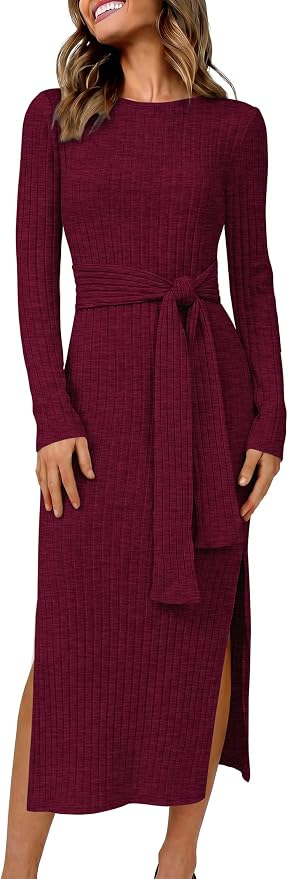
A knit dress or a longer-sleeved midi in a heavier fabric works beautifully for dinner, paired with tights, boots, and a coat over the top.

I wore a rust-coloured knit dress with tall boots to dinner near Passeig de Gràcia and it was genuinely one of my favourite outfits of the whole trip — warm, seasonal, and it photographed so well against the Modernist architecture.
Skip anything strappy or linen unless you’re layering it heavily underneath — the fabric alone won’t hold up once the sun drops.
Local tip: A dress with pockets is criminally underrated for a city where you’ll be walking constantly and want your hands free for coffee and camera.
Comfortable but Stylish Walking Shoes
Your shoes will make or break this trip faster than anything else you pack. Between cobblestones in the Gothic Quarter, hills near Park Güell, and long flat stretches by the beach, cute-but-impractical shoes just don’t survive the day.
Leather sneakers in white, tan, or black are an easy all-rounder. They are comfortable enough for long days of walking while still looking polished enough for dinner or evening plans.

Ankle boots are especially useful in November because they add extra warmth and work effortlessly with jeans, trousers, or a skirt. A simple leather or water-resistant pair will cover most outfits without feeling too heavy.

I made the mistake of bringing brand-new boots on a trip once, thinking I’d “break them in” while sightseeing. Do not do this. Wear any new shoes around your own neighbourhood for at least a week first.
Local tip: A low block heel ankle boot gives you the dressed-up look for dinner without sacrificing comfort during the day — you genuinely don’t need to pack separate day and night shoes.
What NOT to Wear (The Tourist Giveaways)
A few things scream “just landed” faster than anything else, and it’s worth avoiding them on purpose.
Flip-flops or sandals are the biggest one — they simply don’t suit the weather or the terrain this month.
Head-to-toe athleisure, unless you’re actually going for a run, tends to stand out against how put-together most locals dress day to day.
And a full rain poncho, while practical, photographs terribly and there are better options (more on that below).
Local tip: Swap the fanny-pack-and-sneakers combo for a crossbody bag and leather sneakers — same comfort level, completely different vibe.
Evening Outfits in Barcelona
Dinner in Barcelona doesn’t start until 9pm at the earliest, which means you’re often walking to and from restaurants in genuinely cool night air — plan your evening outfit around that reality, not around how warm it felt at 3pm.
A knit dress is an easy choice for a nice dinner because it looks polished while still keeping you warm. Pair it with ankle boots and a structured coat for an outfit that works just as well for the walk to the restaurant.

Tailored trousers are another versatile option, especially with a silk or satin top. The combination feels dressy without looking overly formal, while a warm coat keeps it practical for colder evenings.

Avoid anything too sheer or sleeveless unless you have enough warmth underneath your coat. In colder weather, a beautiful outfit is much easier to enjoy when you are not freezing on the way there.
Local tip: Bring one slightly dressier top that packs flat — it upgrades a daytime outfit into a dinner one without needing a whole extra outfit.
What to Wear for Churches and Sacred Sites
Sagrada Família and several of Barcelona’s older churches do enforce modest dress codes — shoulders and knees covered, nothing sheer or overly cropped.
A midi dress or trousers with a top that covers the shoulders will get you through any church visit without a last-minute scarf scramble at the entrance.

I always keep a lightweight cardigan in my bag specifically for this, since it doubles as sun protection and shoulder coverage depending on the moment.

Local tip: Don’t rely on renting a cover-up at the door — some sites have them, many don’t, and the line moves faster if you’re already dressed appropriately.
Bags: Crossbody vs. Backpack
Barcelona has a well-earned reputation for pickpocketing in tourist-heavy areas, and your bag choice genuinely matters here, not just aesthetically.

A crossbody bag worn in front of you, with a zip closure, is the safest and most practical choice for sightseeing days.

A structured tote works fine for dinner or a day with less walking.
I’d avoid an open-top backpack worn on your back through crowded areas like Las Ramblas — it’s an easy target and honestly just less comfortable when you’re layering a coat underneath the straps.
Local tip: A cross-body bag with a locking zipper feels like overkill until the one time it isn’t.
Accessories That Elevate a Simple Outfit
November is scarf season, and Barcelona gives you every reason to lean into it.
A wool or cashmere-blend scarf in a rich tone does double duty — warmth and instant polish on even the simplest jeans-and-sweater combo.

A pair of leather gloves and a structured hat are worth packing too, especially if you’re out early for sunrise photos by the beach or the Sagrada Família when it’s genuinely cold.

Gold or silver minimal jewellery finishes things off without competing with a coat and scarf already doing a lot of visual work.
Local tip: One statement scarf can restyle the same three outfits into something that looks completely different in every photo.
Rain Preparation (Don’t Skip This)
November is one of Barcelona’s wetter months, and a sudden downpour is genuinely common — I’ve been caught out twice, both times underprepared.
A packable rain jacket is worth its weight tenfold, since it folds down small enough to live in your day bag without you noticing it’s there.

A compact umbrella is a solid backup, though the wind off the sea can make it more hassle than it’s worth on the worst days.

Waterproof or water-resistant boots are the quiet hero here — nothing ruins a day faster than wet socks with hours of walking still ahead of you.

Local tip: Check the forecast the morning of, not the night before — Barcelona’s weather this time of year shifts fast.
Fabrics to Choose (and Avoid)
Fabric choice matters more in November than almost any other month, since you’re straddling two seasons at once.
Wool, cashmere blends, and heavier cotton knits are your best friends — warm without bulk, and they layer cleanly under a coat. Denim holds up well for days with more walking.
What to leave at home: linen, which simply doesn’t hold heat, and anything too sheer that needs full sun to look intentional rather than just cold.
Local tip: A merino base layer is worth the investment — it’s thin enough to disappear under other clothes but makes a genuine difference on the coldest mornings.
A Simple Capsule Wardrobe for Barcelona in November
If you want to actually stop overthinking this, here’s the shortcut: pack pieces that all talk to each other.
Two pairs of bottoms (jeans and tailored trousers), three tops in fabrics that layer (a merino tee, a knit, a silk blouse for dinner), one knit dress, one coat, one packable rain jacket, and two pairs of shoes (leather sneakers and ankle boots). Stick to a base of black, camel, navy, and rust or burgundy as an accent, and almost everything mixes and matches without you having to plan outfits the night before.
Local tip: Lay every piece out before you pack and count the outfit combinations on paper — if something doesn’t pair with at least two other items, it’s not earning its space in the suitcase.
Practical Packing: How Many Outfits, Really
For a five- to seven-day trip, five to six tops, two to three bottoms, one dress, and one coat is genuinely enough — you’re mixing and rewearing pieces, not bringing a new outfit for every single day.
Overpacking is the single biggest mistake I see (and used to make myself) — an extra coat “just in case” almost always stays folded in the suitcase the entire trip, while a versatile scarf or cardigan gets worn constantly. Plan two or three outfit combinations before you even start packing, rather than throwing in individual pieces and hoping they work together once you’re there.
The other mistake worth avoiding: packing for the Barcelona of your imagination (sunny, warm, beachy) rather than the Barcelona that’s actually happening in November. Trust the forecast over the postcards.
Final Thoughts
Barcelona in November has a kind of quiet, golden charm that the summer crowds never let you see properly — long shadows on Gaudí’s tilework, empty benches on the Barceloneta boardwalk, dinner reservations you can actually get same-day. Dress for the layers, bring one proper coat, and trust that a good pair of boots will carry you further than any outfit choice you agonise over now.
You’ll come back with better photos than you expected, sorer feet than you’d like, and a genuine soft spot for this version of the city — the one nobody posts about in July.

