
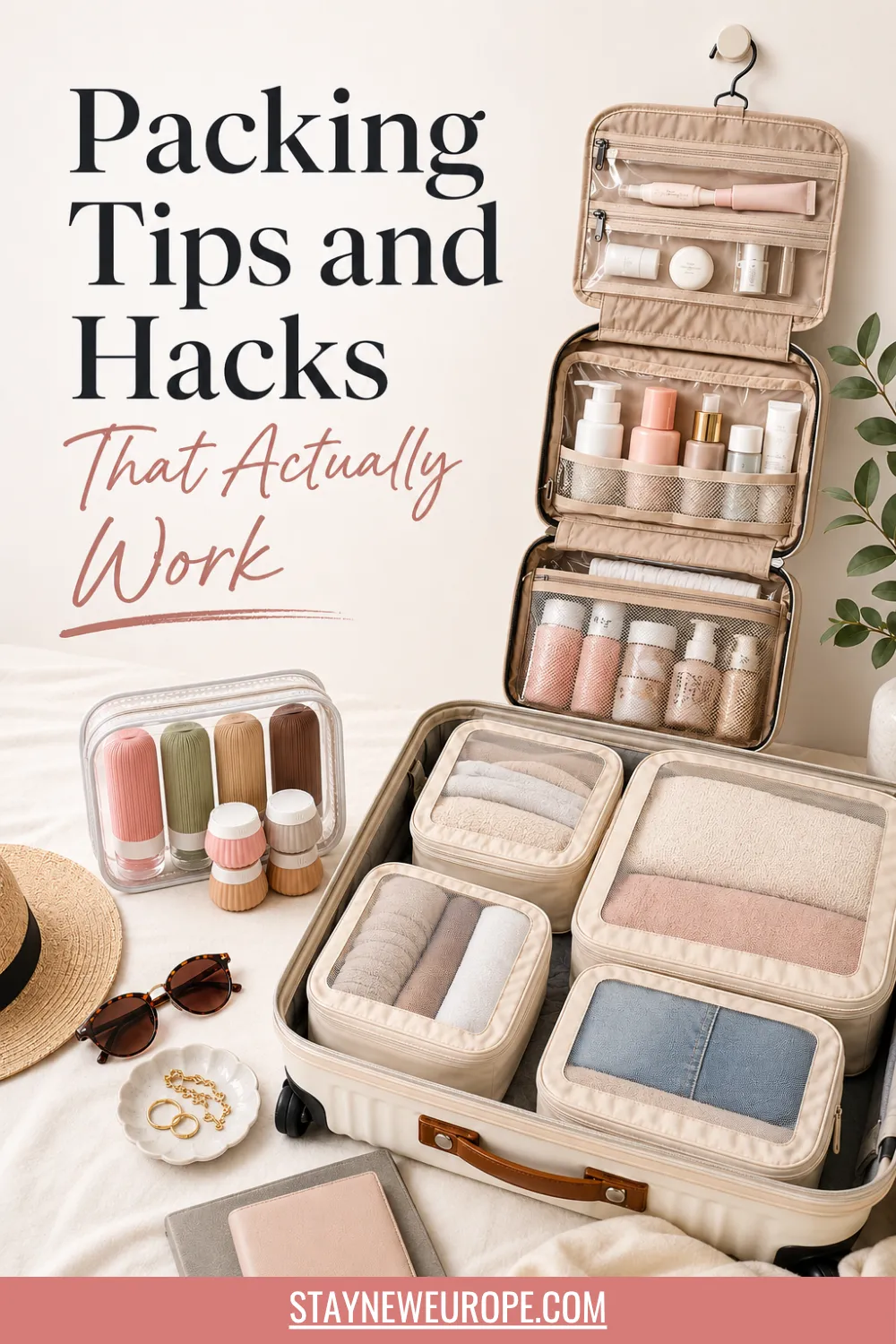
Let me be honest with you: I used to be a chaos packer. I’m talking three “just in case” jackets, shoes I never once wore, and a full-sized bottle of conditioner that exploded somewhere over the Alps. It took one very embarrassing moment at a budget airline check-in desk — and a €60 overweight baggage fee — for me to completely rethink how I pack.
The thing is, most packing advice out there is either blindingly obvious (“roll your clothes!”) or wildly unrealistic (“only bring five items for two weeks in Italy!”). This guide is neither. These are the actual packing tips and hacks I use now — the ones that changed the way I travel, particularly when hopping between European cities where cobblestones, climate swings, and spontaneous aperitivo nights are all part of the deal.
Start With the Right Bag (This Changes Everything)
Nobody talks enough about how the bag itself is half the battle. I spent years wrestling with a giant hard-shell suitcase through narrow Venetian alleys and up the stairs of Lisbon trams. Never again.
For most European city trips up to ten days, a soft-sided carry-on that fits overhead — something around 40–45 litres — is the sweet spot. It keeps you mobile, avoids checked baggage fees, and honestly forces you to pack smart. If you’re heading somewhere like the Amalfi Coast or rural Portugal where you’ll be moving between smaller villages, a backpack-style carry-on is even better because you’re not dragging wheels over uneven terrain.
For longer trips or destinations requiring more outfit variety (think a full two-week Europe itinerary with multiple countries), a 55-litre duffel with a luggage sleeve is my go-to. It’s flexible, compressible, and doesn’t scream “tourist” the way a bulging wheeled suitcase does.
Local tip: At most European budget airlines, your personal item goes under the seat. Choose a structured tote or small daypack that doubles as your day bag once you arrive — you’ve already paid for it with your ticket.
Start With Outfits, Not Random Clothes
This is the packing mistake I made for years: I packed items, not outfits.
A cute skirt. A nice top. Another top that might go with the skirt. Jeans. A dress. Three “maybe” pieces. Then I arrived and somehow had nothing to wear.
Now I pack complete outfits.
I literally think: airport outfit, walking day outfit, dinner outfit, travel-back-home outfit. It sounds obvious, but it saves so much space because every piece has a job.
My favourite hack is to lay everything on the bed and ask, “Where am I wearing this?” If the answer is vague, it probably does not deserve suitcase space.
Choose a Colour Palette Before You Touch the Suitcase
A colour palette sounds fancy, but it is really just damage control.
Pick three to five colours that work together. For example, black, white, beige, denim, and one accent colour. This means your tops match your bottoms, your shoes match everything, and your bag does not look like it was packed during an emotional crisis.
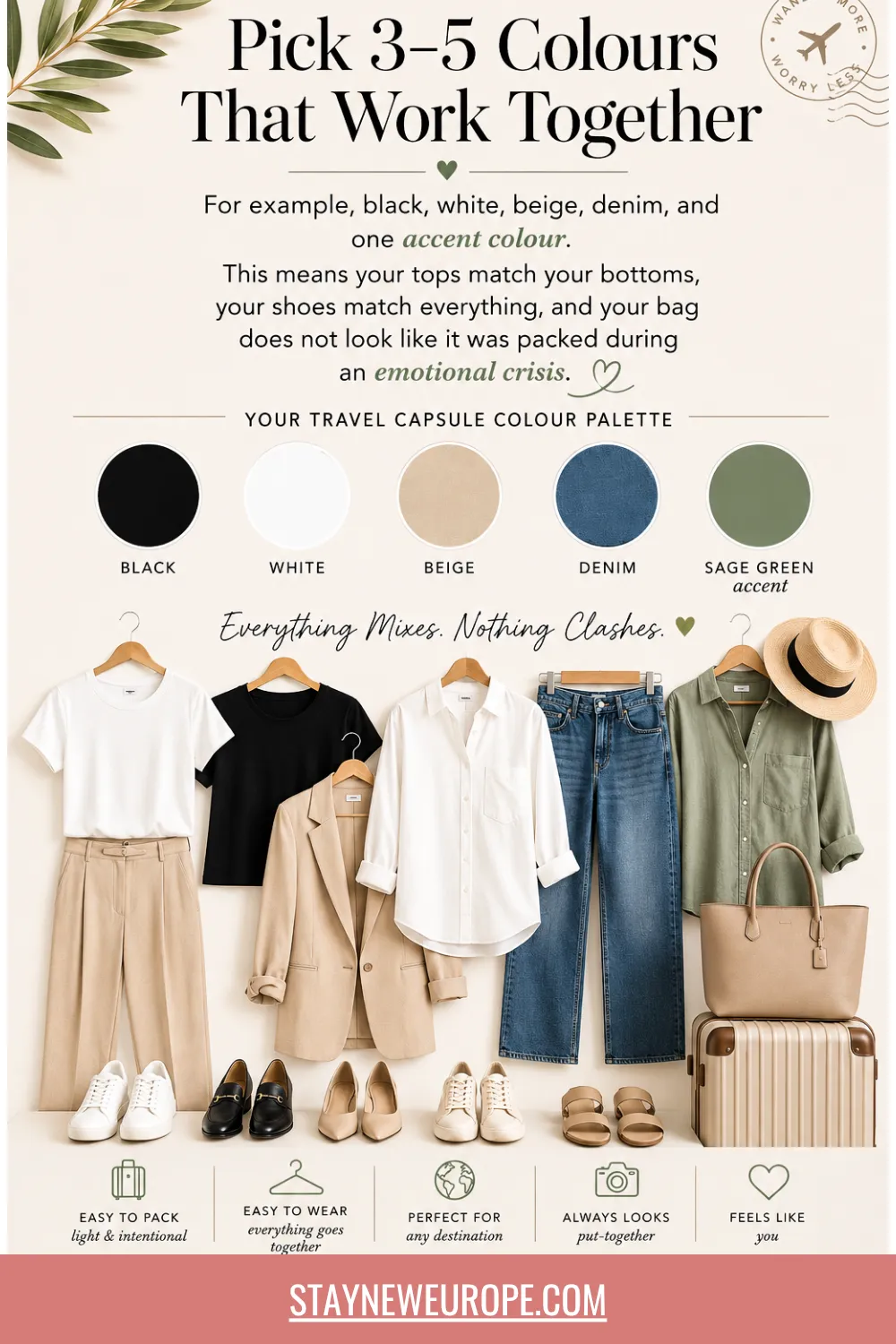
I learned this the hard way after bringing a bright green blouse, burgundy trousers, a yellow dress, and red sandals on one trip. Individually cute. Together? Chaos. Neutral basics with one or two statement pieces will always beat a suitcase full of “special” items that only match one thing.
This was the single biggest mindset shift for me. I used to pack outfit by outfit, which meant I had seventeen tops and somehow nothing to wear. Now I pick a three-colour palette — usually a neutral base (black, white, cream, navy), one mid-tone (olive, camel, burgundy), and one accent — and everything I pack works with everything else.
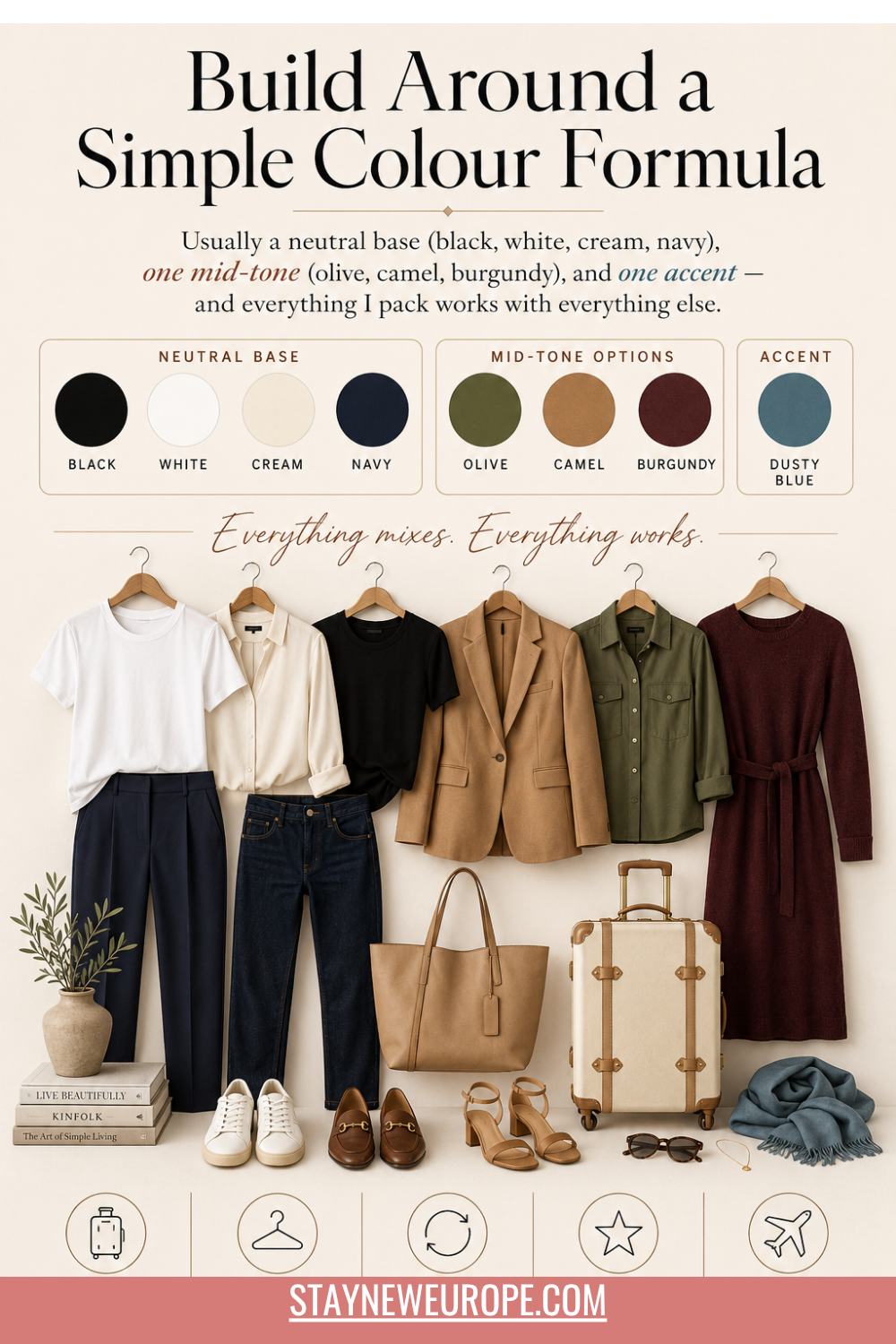
For a trip to Florence in May, my palette might be cream, rust, and cognac leather. For Amsterdam in summer, navy, white, and a pop of cobalt. Once you’re working within a palette, a single pair of trousers suddenly matches four tops instead of one. You’re not packing more — you’re packing smarter.
Write out your actual outfits before you start packing. Lay them on the bed, photograph them, and then put back anything that only works with one other piece. If it’s not pulling its weight, it doesn’t come.
Local tip: European cities tend to be more elegant than casual. A muted, cohesive colour palette will make you look more “effortlessly local” and less “tourist on a themed outfit schedule.”
The One-Pair-of-Shoes Trick (That Nobody Believes Until They Try It)
I know. Hear me out. You do not need four pairs of shoes. I’ve done solo weeks in Rome and Barcelona with two pairs, and I’ve never once wished I’d packed more.
Clothes are not the problem. Shoes are.

Shoes are bulky, heavy, and weirdly emotional. I always want to bring more than I need because shoes change the whole outfit. But honestly, most trips only need three pairs at most.
My usual formula is:
- One comfortable walking shoe
- One nicer sandal, flat, or loafer
- One travel shoe, usually the bulkiest pair worn on the plane
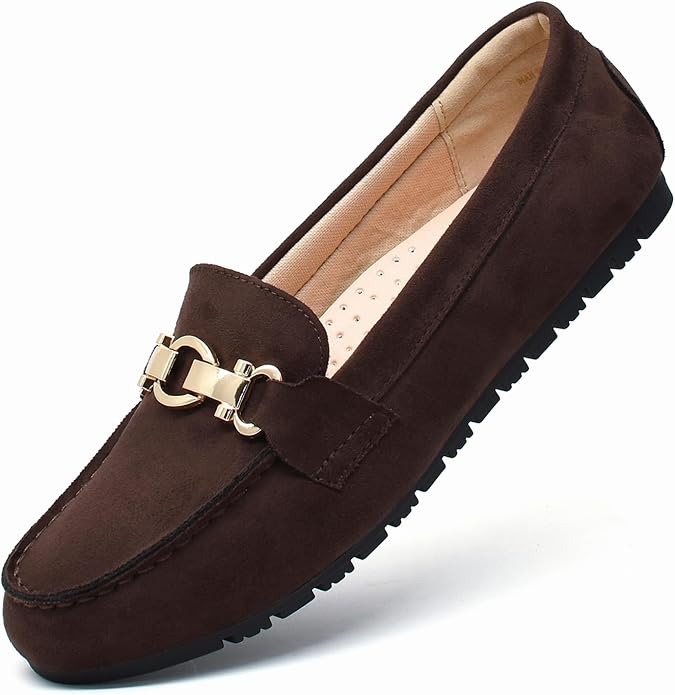
Never pack shoes you have not worn properly before. Vacation is not the time to “break them in.” That is how you end up limping around a beautiful city like a tragic side character.

Also, stuff socks, belts, or small items inside shoes. Empty shoe space is wasted suitcase space.
For tips on getting this right for specific destinations, check out the Spain packing list which breaks it down beautifully.
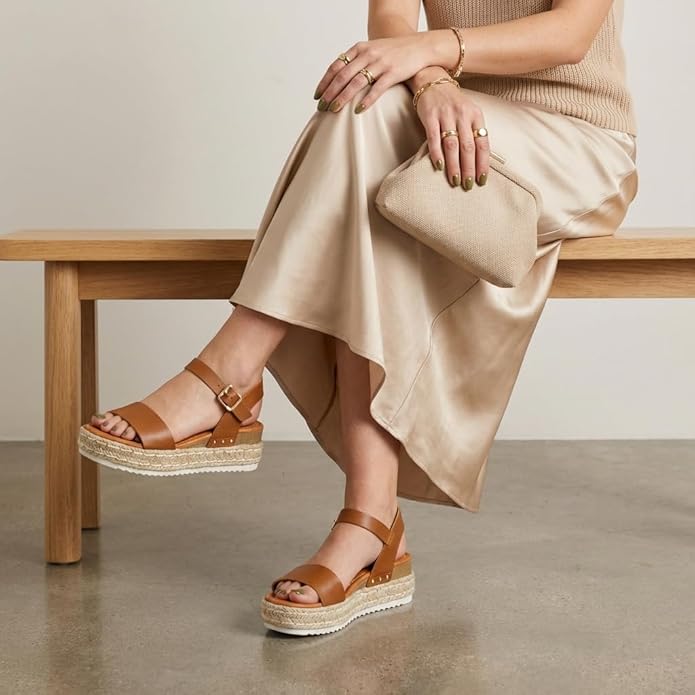
Local tip: Wear your bulkiest shoes on travel days. They don’t count against your luggage allowance if they’re on your feet.
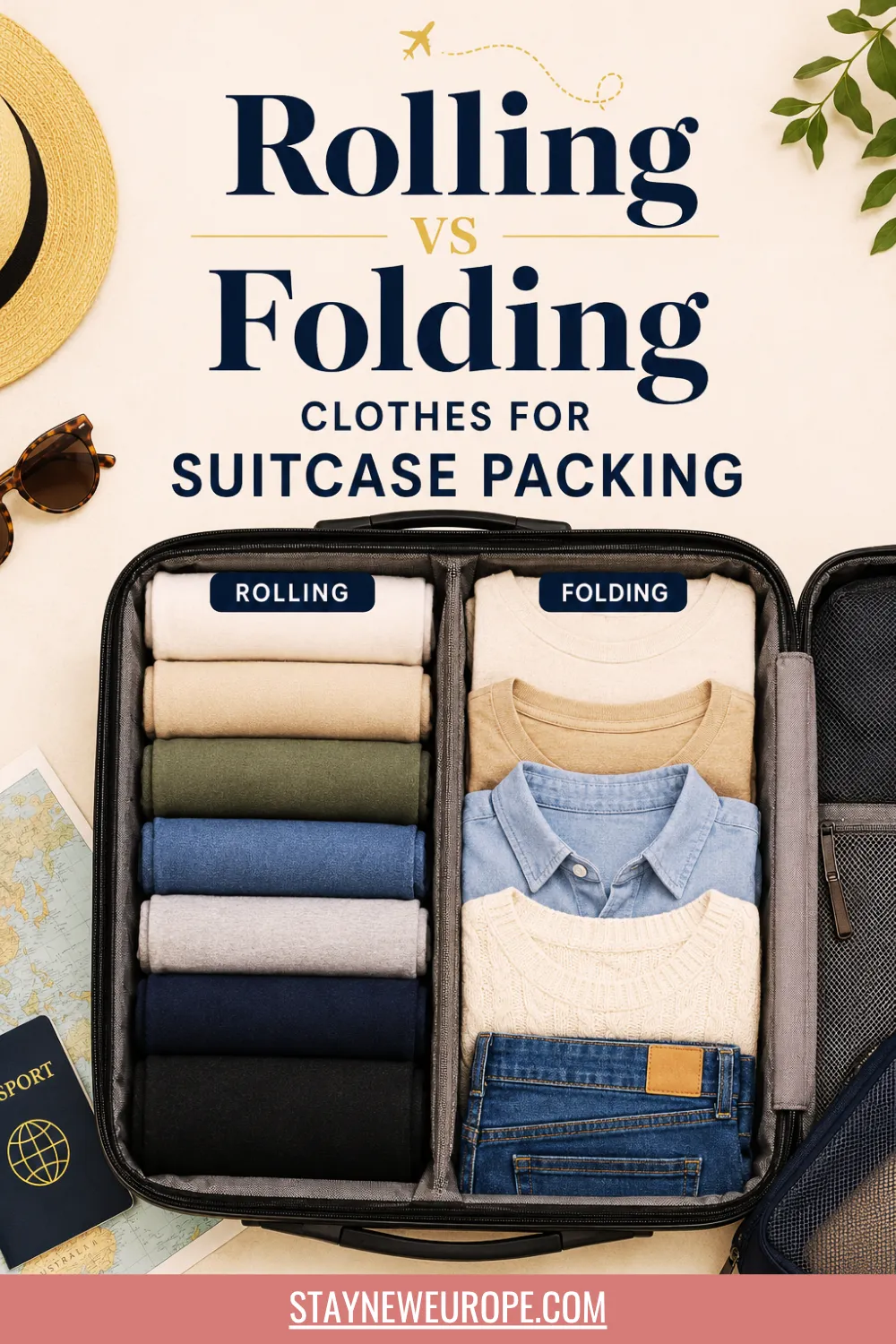
Rolling vs. Folding (And When Each Actually Works)
Yes, rolling saves space — but not for everything, and this is where most people go wrong. I learned this the hard way after arriving at a hotel in Paris with deeply wrinkled linen trousers that looked like I’d slept in them. On a park bench. In the rain.
The rule of thumb I now swear by: roll casual items like t-shirts, jeans, jersey dresses, and activewear. Fold structured pieces like blazers, linen shirts, and anything that creases — or better yet, use the ranger roll method for those, where you fold them flat first, then roll from the bottom up tight. For delicate fabrics like silk or anything with embellishment, lay flat and layer with tissue paper or a dry-cleaning bag.
If you want a deep-dive on this exact debate, we actually wrote a full guide on Rolling vs Folding Clothes for Suitcase Packing: Which One Is Actually Better? that covers all the edge cases.
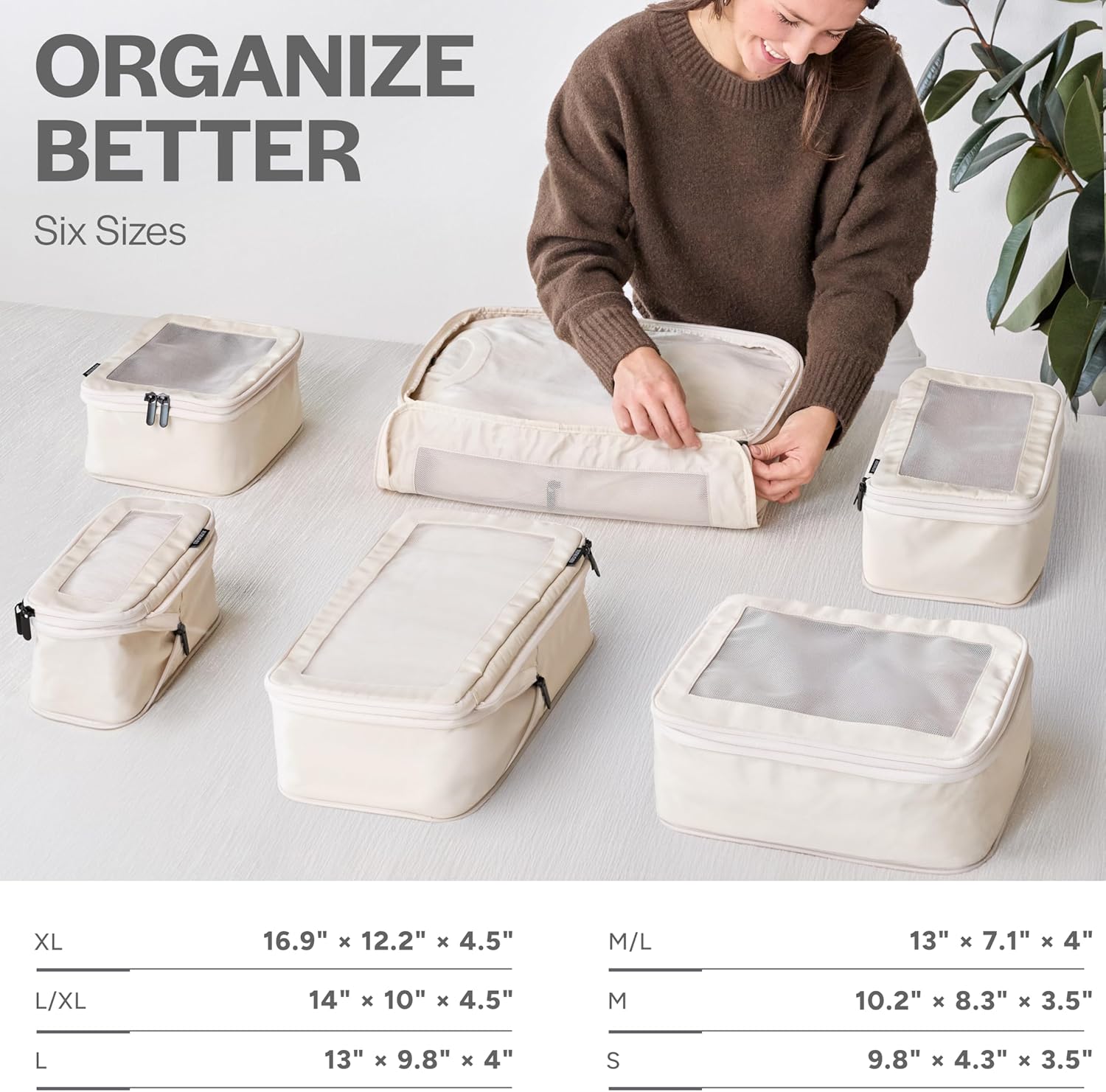
Packing cubes are genuinely not overhyped. I use one cube for tops, one for bottoms, and one small one for underwear and socks. It keeps everything findable without unpacking your entire bag at every hotel, and it compresses soft items significantly.
Local tip: Pack your shoes in shower caps (the hotel ones work perfectly) or reusable fabric bags. Shoe soles touching your clothes is not the vibe.
Bring Fewer Bottoms Than Tops
This surprised me when I first started packing smarter: you do not need many bottoms.
Trousers, jeans, skirts, and shorts take up more space than tops, and most people notice repeated tops more than repeated bottoms. A good pair of jeans or beige trousers can be worn multiple times without anyone caring.

For a one-week trip, I usually pack two or three bottoms and more tops. That gives enough outfit variety without turning the suitcase into a fabric brick.

A black skirt, denim, and one comfortable trouser can carry you through a surprising number of days.

Pack One “Emergency Nice Outfit”
I am not saying you need a ball gown. Please do not pack a ball gown unless your itinerary specifically includes a ball, in which case I respect you deeply.
But having one slightly nicer outfit is useful. Maybe a simple black dress, a satin skirt with a top, or tailored trousers with a pretty blouse.
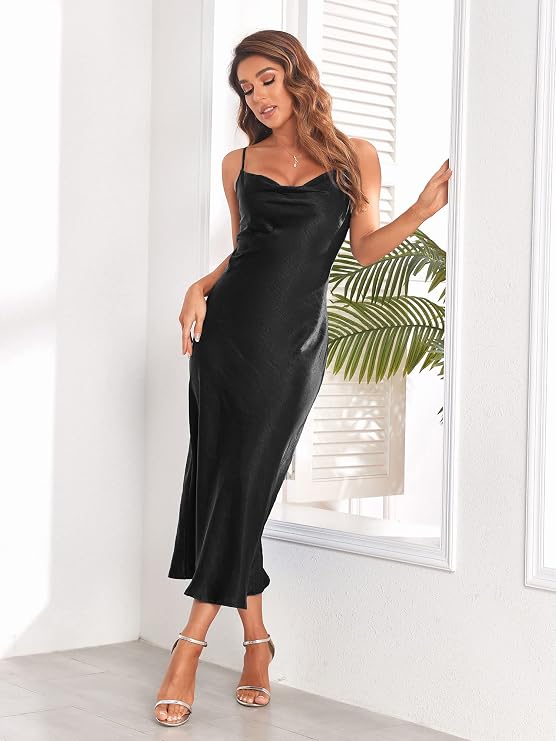
This saves you from panic-buying something overpriced when you suddenly decide to go somewhere nice for dinner.
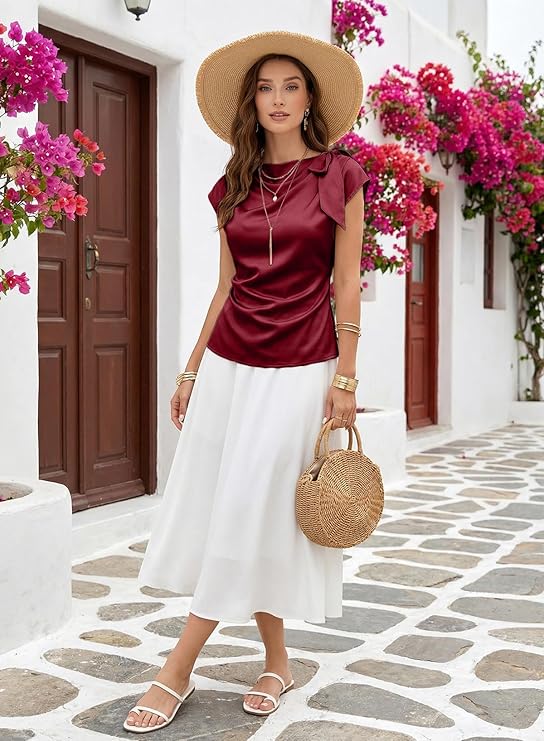
The key is to choose something that packs small, does not wrinkle aggressively, and works with the shoes you already brought.
Do Not Pack for a Fantasy Version of the Trip
This is one of my biggest packing tips and hacks because it attacks the root problem: delusion.
If your trip is mostly sightseeing, walking, train rides, casual cafés, and one nice dinner, pack for that. Do not pack five glamorous outfits because you saw someone on Instagram wearing heels in Paris.
Also, be honest about yourself. If you never wear bodycon dresses at home, you probably will not suddenly become a bodycon dress person in Rome. If you hate ironing, do not pack clothes that need ironing every morning.
Pack for the trip you are actually taking and the person you actually are.
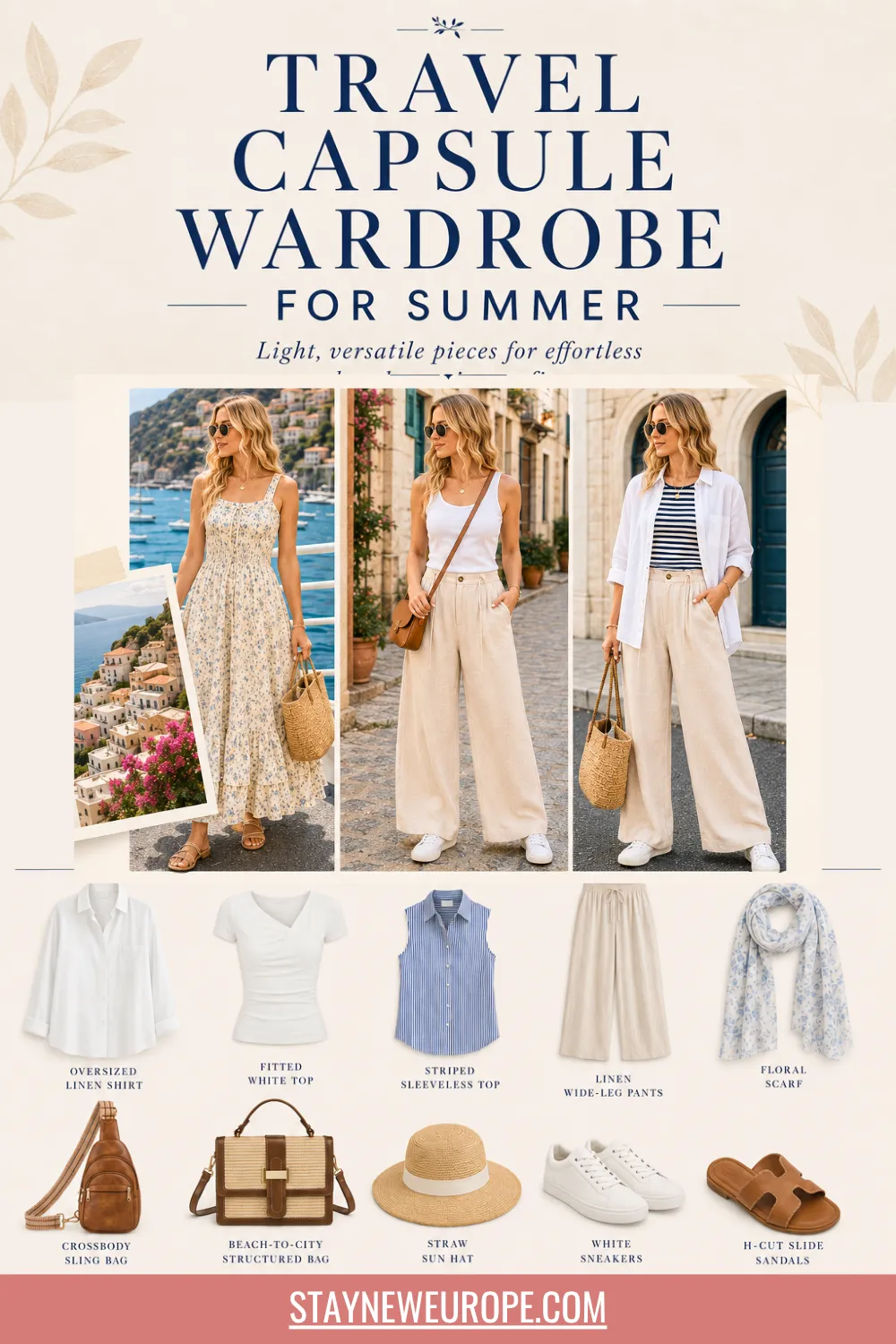
Travel Capsule Wardrobe for Summer:
you can also chck this one out to prevent from getting confused about what to bring for your summer vacation.
Choose Fabrics Wisely (Your Future Self Will Thank You)
The fabric you pack matters as much as the items themselves. Cotton sounds sensible but creases instantly and takes forever to dry if you hand-wash it. Denim is heavy, takes up too much space, and doesn’t breathe well in heat. Linen looks incredible but requires some commitment to the “artfully rumpled” aesthetic.
My go-to travel fabrics: merino wool (as mentioned), viscose or tencel (drapes beautifully, resists creasing, breathes), jersey knit for dresses and skirts, and a touch of elastane blended into any trouser or jeans you bring.
For warmer destinations like — Sardinia or Spain in May, linen is actually worth it — just embrace the wrinkles or hang things in the bathroom while you shower.
What to avoid: anything that needs dry cleaning, thick knits that eat your entire bag, structured blazers that won’t hold their shape once packed, and anything in pure white linen if you’re eating pasta with red sauce. Experience talking.
Local tip: Check the fabric content tag before you pack anything. Aim for blends that include at least 5% elastane in bottoms for comfort, and look for “easy care” labels — they genuinely exist for a reason.
Use the “One Week Rule” for Longer Trips
For longer travel, I still pack about one week of clothes. Not three weeks. Not a full seasonal wardrobe. One week.
After that, I plan to do laundry. Even if it is just washing underwear and tops in the sink, it is better than carrying a monster suitcase everywhere.
For trips longer than seven days, pack:
- Seven underwear
- Three to five tops
- Two to three bottoms
- One dress or nicer outfit
- Sleepwear
- Layers based on weather
You can repeat outfits. You are not a celebrity being photographed daily by airport paparazzi.
Keep Toiletries Small and Slightly Boring
Toiletries are where people lose control.
I used to bring full-size bottles because I convinced myself my hair would collapse emotionally without my exact shampoo. Then I realised most trips do not require a full bathroom cabinet.

Use travel-size bottles, solid toiletries, or buy basics after arrival if you are staying somewhere long enough. Decant skincare into smaller containers. And please, put anything liquid inside a sealed bag unless you enjoy discovering body wash has seasoned your clothing.

Another underrated hack: do not bring products you are “testing.” Travel is not the moment to find out your new moisturiser causes chaos.
Pack a Small Laundry Kit
This sounds boring, but it saves outfits.
A tiny laundry kit can include a few detergent sheets, a stain remover pen, and a small plastic bag for dirty clothes. That is it.

Detergent sheets are especially useful because they weigh almost nothing and do not leak. If you spill coffee on your favourite white top — and somehow coffee always finds the white top — you can deal with it quickly instead of letting the stain become a souvenir.
A simple laundry kit means you can pack fewer clothes and rewear more confidently.
Always Bring a Lightweight Layer
Even warm destinations can betray you.
Airports are cold. Trains are cold. Some restaurants are cold. Evenings can get breezy. And if you are travelling in Europe, the weather may choose drama with no warning.
A lightweight cardigan, linen shirt, thin sweater, or scarf can make a huge difference. I prefer something neutral that works with most outfits.
My favourite travel layer is an oversized button-down shirt because it works as a cover-up, jacket, outfit piece, or emergency “I need to look more put together” solution.
Keep Important Items in Your Personal Bag
Never put your essentials only in checked luggage. I know this. You know this. And yet, people still do it.
Keep your passport, wallet, phone charger, medication, travel documents, jewellery, one pair of underwear, and anything truly important in your personal bag.

If your luggage is delayed, you will still survive the first day without wanting to scream into a hotel pillow.
I also keep a small pouch with lip balm, tissues, painkillers, hand sanitiser, and a pen. Is it glamorous? No. Is it useful? Constantly.
Use the “Last-Minute Pouch” Trick
The last hour before leaving is always suspicious.
That is when you suddenly need your toothbrush, charger, perfume, hairbrush, documents, and the random thing you forgot was charging near the bed.
So I keep one small pouch open until the very end. Anything I use on the morning of travel goes into that pouch before I leave.

This prevents the classic disaster of arriving at your destination and realising your phone charger is still plugged into the wall at home, living its peaceful little life without you.
Plan for Rain Without Packing a Full Raincoat
I’ve been caught in a sudden downpour in Amsterdam without an umbrella, and I’ve also dragged a full ankle-length rain mac across southern Europe in 28°C heat. Both are miserable in different ways.

The solution I’ve landed on: a packable windproof jacket that has at least some water resistance — not a full Gore-Tex hiking situation, just something that handles a quick shower without leaving you drenched. Combined with a compact travel umbrella (the flat kind, not the bubble dome), you’re prepared for most European weather without sacrificing bag space.

For destinations that genuinely get wet — Lisbon, Scotland, the Netherlands — a proper waterproof layer is worth it. But pack it compressed at the bottom of your bag and hope you don’t need it. Optimistic packing is still packing.
Local tip: A silk scarf doubles as rain protection for your hair, a light layer on cold evenings, a church cover-up, and a bag accessory. It weighs almost nothing and earns its place on every single trip.
Leave Space for Shopping, Even If You “Will Not Shop”
I always say I will not shop. Then I find a cute market, a local boutique, a bookshop, a scarf, a ceramic dish I absolutely do not need, and suddenly my suitcase is fighting for its life.
Leave a little room. Even a small amount.
One of my favourite packing tips and hacks is to pack a foldable tote bag or thin duffel. It barely takes up space, but it saves you when your return luggage has somehow gained weight through “just one small thing” purchases.

And yes, souvenirs count. So do snacks. Especially snacks.
Do a Final Edit Before You Zip the Suitcase
Once everything is packed, remove three things.
I know. Painful.
But there are almost always three things in the suitcase that are not necessary. Usually it is an extra top, a second “nice” outfit, or shoes you packed out of fear rather than logic.
Ask yourself:
- Can I wear this with at least two outfits?
- Is it comfortable?
- Does it match the weather?
- Would I be annoyed carrying this around?
- Am I packing this because I need it or because I panicked?
That final edit is where good packing becomes smart packing.
My Personal Packing Rule Now
The best packing advice I can give is this: pack less, but pack better.
You do not need a huge suitcase full of options. You need clothes that work together, shoes that will not ruin your mood, toiletries that will not leak, and a few clever systems that make travel easier.
Packing well is not about being minimalist for the sake of it. It is about arriving somewhere and feeling calm, comfortable, and actually dressed for the trip you planned.
And honestly, the greatest packing hack of all is learning to ignore the little voice that says, “But what if I need this?”
Most of the time, you will not.
The Church Outfit Problem (And How to Solve It)
Every European city has beautiful churches. Every European church has a dress code. And every year, tourists get turned away at the door of the Vatican, Notre-Dame, or the Sagrada Família because they didn’t plan for it. I’ve seen it happen and I’ve been that person — once, in Florence, wearing a strappy sundress with zero solutions.
You need to be able to cover your shoulders and knees at a moment’s notice.
The easiest fix: pack one lightweight midi skirt or wide-leg trousers that can be pulled on over leggings or shorts. A large scarf or sarong works for shoulder coverage. Many churches have disposable covering available at the door, but they’re often flimsy, unflattering, and a bit sad. Better to have your own.
If you’re planning a whole Italy trip with multiple church visits, just make modesty a baseline for your outfits rather than an afterthought. You’ll be more comfortable and less stressed.
Local tip: Keep your scarf accessible — top of your daypack, not buried at the bottom. Churches have a habit of appearing unexpectedly when you round a corner.
Crossbody Bag vs. Backpack: The Real Answer
Backpacks are convenient. They’re also extremely convenient for pickpockets in crowded tourist areas, because you can’t see what’s happening behind you. I switched to a crossbody bag for day trips in Barcelona and Lisbon and immediately felt less anxious navigating busy markets and metro stations.

That said, a crossbody has limits — if you’re doing a hiking day or a long walking tour, a small anti-theft backpack with hidden zips makes more sense. The answer is usually: crossbody for city days, small backpack for active days. You don’t need to bring both — pick the one that suits your itinerary majority.

What your bag should have regardless of style: a zip closure (not a magnetic snap), an interior card slot for your metro card and ID, and enough room for a water bottle. Everything else is a bonus.
Local tip: Wear your crossbody across your body, not dangling from one shoulder. It sounds obvious but it’s the difference between snatch-proof and not.
Accessories That Do the Heavy Lifting
Accessories are the fastest way to make the same three outfits look completely different, and they barely weigh anything. I pack two necklaces (one delicate everyday, one slightly bolder for evenings), two pairs of earrings (small hoops and something with a little more personality), and one belt that makes any loose dress look intentional.
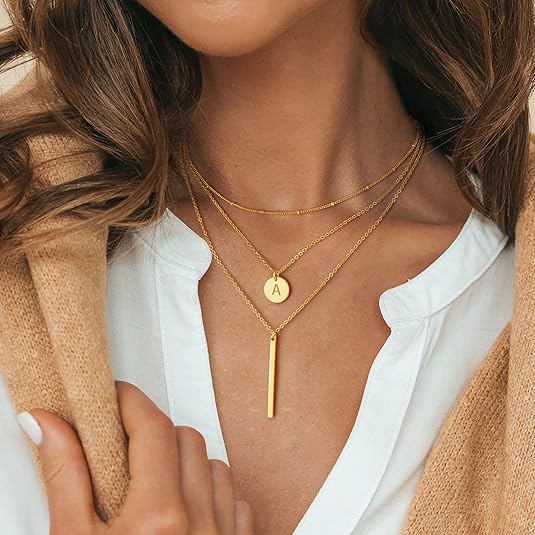
A belt is genuinely underrated as a packing hack. It turns a jersey midi dress into a polished dinner outfit, makes wide-leg trousers look structured, and adds shape to oversized shirts. One belt, multiple transformations.
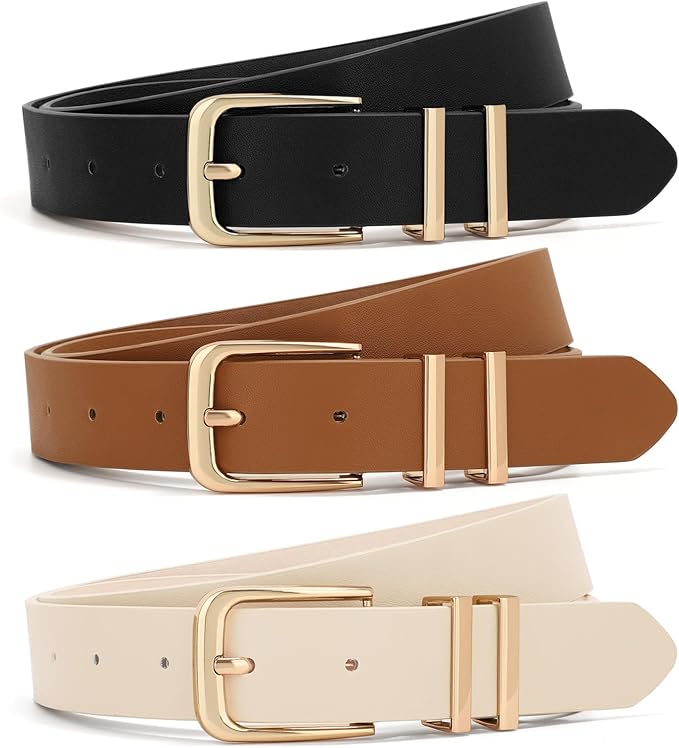
Sunglasses, a hat (foldable straw for warm destinations), and a couple of hair clips round it out.

These items pack flat or near-flat and add personality to simple outfits that would otherwise feel a bit beige.

Local tip: Leave your real jewellery at home. Good quality costume or sterling silver pieces look just as good in photos, and you won’t spend your holiday anxious about losing something irreplaceable.
The “What Not to Bring” List (Brutally Honest Edition)
Every packing list tells you what to bring. Nobody tells you firmly enough what to leave behind. So here we go.
Leave at home: the fourth pair of shoes, the “just in case” formal outfit (you will not attend a gala, I promise), the full-size toiletries when decant bottles exist, the hair straightener that weighs as much as a small animal, more than two pairs of jeans, anything dry-clean only, and “maybe” items. If you’re not sure about it at home, you won’t be sure about it in your hotel room either.
Be ruthless. If you’re going somewhere with easy shopping access — and most European cities definitely qualify — remember that buying a forgotten item is always an option. You are not packing for a remote expedition.
Local tip: Check the weather forecast before you finalise your bag, not two weeks out. Pack for the actual forecast, not your worst-case imagination.
How Many Outfits to Actually Bring
Here’s my formula, and I’ve tested it across trips from three days to three weeks: pack for half the number of days you’re travelling, then add two. So for a seven-day trip, that’s five or six outfits. For ten days, seven. This accounts for re-wearing items (which you will), unexpected changes of plan, and the fact that you’re going to buy something while you’re there.
The breakdown for most trips: three to four tops, two bottoms (one casual, one slightly dressier), one dress that can go day to night, one pair of leggings or joggers for travel days, one layer, one evening piece. That’s it. Everything works together.
If you’re doing a multi-city Europe trip and genuinely moving between climates — say, Iceland and Spain — layer strategically rather than packing separate wardrobes. Your Iceland layers are still usable in Spain evenings. Think in terms of systems, not outfits.
Local tip: Take a photo of your flat-lay outfit plan before you pack. When you’re staring blankly into your suitcase at 10pm trying to remember what works with what, that photo saves you.
Your Pre-Trip Packing Ritual (Do This the Night Before)
The night-before packing scramble is responsible for most overpacking disasters. Here’s what I do instead: I start three days out by pulling everything I’m considering and leaving it on a chair. I edit it down over the next two days, putting things back as I realise I’ve overcrowded the pile. By the time I actually pack, I’m working with exactly what I need.
Charge all devices, decant toiletries into TSA-approved bottles (and check your liquids bag actually zips shut — I once had to throw away a beautiful face oil at security because the bag wouldn’t close), and put anything you’ll need on the plane — book, headphones, lip balm, snacks — in your personal item, not your carry-on overhead.
Keep your Italy packing checklist or destination-specific guide open while you pack if you’re heading somewhere with specific considerations. It catches the things you’d otherwise forget.
Local tip: Leave a small amount of space in your bag. Not for overpacking — for the things you’ll inevitably pick up along the way. A little room for souvenirs, a market scarf, or that bottle of olive oil you couldn’t resist is part of the experience.
There’s something quietly satisfying about arriving somewhere new with a bag that has exactly what you need — no more, no less. It changes how you move through a place. You’re lighter, more spontaneous, less attached to your stuff and more present in wherever you actually are. Pack with intention, trust that you’ll figure out the rest, and enjoy every single kilometre of it.


8 Responses