
Budapest in November is moody in the best way. The Danube turns the colour of steel, the fog drifts around the Chain Bridge like it’s auditioning for a film, and by four o’clock the streetlamps are already glowing on the cobblestones.
It’s cold, it’s damp, and it’s wonderfully quiet. Which means you’ll be walking a lot, ducking into cafés a lot, and, if you’re sensible, sinking into a steaming thermal bath at least once. Your outfit has to survive all of it.
Here’s where most visitors go wrong: they pack for “Europe in autumn” and arrive in a damp chill that cuts straight through a trendy little jacket. I’ve been that person, shivering on Fisherman’s Bastion in canvas sneakers. Let me save you the lesson.
Before We Dive In
A few quick things worth knowing before you open your suitcase:
Weather: Expect roughly 2–9°C (36–48°F). It’s grey more often than not, with fog, drizzle, and the odd first-snow surprise late in the month. The damp makes it feel colder than the number suggests. Daylight fades around 4pm, so evenings start early.
Walking conditions: Cobblestones, tram tracks, and the steep climb up Castle Hill. Wet stone gets slippery fast. Your shoes matter more than anything else you pack.
Style culture: Budapest dresses with quiet confidence. Think dark colours, good coats, polished boots, very little neon. You don’t need to be fancy, but you’ll feel more at home if you look put-together rather than “I’m on a hiking trip.”
Heading elsewhere this month? Check out our other November guides: What to Wear in Vienna in November, What to Wear in Prague in November, and What to Wear in Germany in November.
1. Start With the Right Bag
Your bag choice shapes the whole trip, especially if you’re hopping between cities by train.
I’m a carry-on-only person, and Budapest is easy to pack light for. Winter layers are bulky, so a soft-sided carry-on or a roomy duffle squishes better than a rigid suitcase into overhead racks and tight Airbnb hallways. Cobblestones also murder small plastic wheels, so pick something you can lift or that has sturdy wheels.

For daily exploring, I’d go with a crossbody bag with a zip. Budapest is generally safe, but busy trams and market halls attract pickpockets, and a zipped bag worn in front gives you peace of mind. Pick one with a bit of structure so it holds your umbrella, phone, and a spare scarf without sagging.

Local tip: Skip the backpack on public transport at rush hour. It’s the quickest way to knock into someone and the easiest thing to unzip without you noticing.
2. Thermal Layers: Your Secret Weapon
Let me be honest: this is the item I’d fight for.
A thin merino or good synthetic base layer under your usual clothes is the difference between “I’m cold” and “I’m perfectly comfortable for six hours.” Cotton is the enemy here. Once it’s damp, it stays damp, and Budapest’s humidity makes sure of it.

Choose a long-sleeve base layer in black or grey so it disappears under sweaters. For women, a thin thermal vest works nicely under dresses and skirts. On a typical sightseeing day, I’d wear one under a knit top, then add a coat, and I never felt the cold.
Local tip: Packing two base layers is plenty. Merino barely smells, so you can wear it twice and rinse it out in the hotel sink if you need to.
3. Sweaters and Knits That Do the Heavy Lifting
Your mid-layer is the thing doing most of the warming, so make it count.
A chunky wool or wool-blend sweater in a neutral shade (cream, camel, charcoal, forest green) will carry you through nearly every outfit. A turtleneck or roll-neck is even better because it keeps the draught off your neck without needing a scarf.

I’d bring two knits: one thicker for outdoor days and one lighter for layering or evenings. Pair the heavier one with jeans and boots for market-hall wandering, and the lighter with a skirt and tights for dinner. Avoid anything scratchy; you’ll be wearing it all day.
Local tip: Indoor spaces like cafés, trams, and the Opera House are warmly heated. You’ll be peeling layers constantly, so make sure whatever’s under your sweater looks good on its own.
4. The Coat: Where Not to Skimp
This is where you spend your money, not on a fourth pair of earrings.

A properly warm, knee-length wool coat or a insulated parka is non-negotiable. Waist-length jackets leave your thighs exposed to wind coming off the river, and you’ll feel it on every bridge crossing. I learned this the hard way crossing the Elisabeth Bridge in a “stylish” cropped jacket. Never again.


Go for dark colours: black, navy, camel, olive. They look right in Budapest and hide the damp-street splashes. If rain is in the forecast (it often is), a coat with a water-resistant finish or hood saves you from carrying a separate raincoat.
Local tip: If you’re visiting in late November when snow is possible, a down coat with a hood is worth the extra bulk. Locals wear them everywhere, so you won’t look out of place.
5. Trousers, Jeans, and the Shorts Question
Spoiler: no shorts. Not even one pair. Not for fun.
Dark jeans are your best friend, but lined or thicker denim performs better than thin fashion jeans, which soak up drizzle and cling to your legs. Wool-blend trousers or thermal-lined leggings under a skirt are lovely alternatives, especially for dinners.

For daytime, I’d bring one pair of dark jeans and one pair of tailored trousers. They mix with every sweater you pack and make you look instantly more polished than hiking trousers would. Skip the white or very light colours: wet cobblestones will splash them within an hour.

Local tip: Tuck jeans into your boots or wear them over the top, but avoid anything with frayed hems. They drag in puddles and end up soaked.
6. Waterproof Boots You Can Actually Walk In
If you only get one thing right, make it your footwear.

Budapest’s streets are a mix of cobblestones, uneven pavements, and tram tracks that can catch a heel. Pick waterproof ankle boots with a grippy rubber sole. Leather or suede with a protective spray works, as do sleek waterproof sneakers if you’re not a boot person. White canvas sneakers are a gamble you’ll lose.

I walked around 15,000 steps a day, so I wore my boots in at home before the trip. Please do this. Blisters on day one are the worst way to start a city break. Add a pair of wool socks, because cold, damp feet will make you miserable faster than anything else.
Local tip: If you’re planning a bath day, wear slip-off boots or easy-to-remove shoes. You’ll be taking them on and off a lot.
7. Dresses, Skirts, and Tights for Women
Yes, you can wear dresses in Budapest in November. You just need to be smart about it.
A midi or knee-length dress in knit or wool-blend, paired with thick opaque tights and ankle boots, looks effortless and stays warm. Fleece-lined tights are surprisingly lovely and invisible under a dress. A long-sleeve knit dress under your coat is basically a wearable blanket.
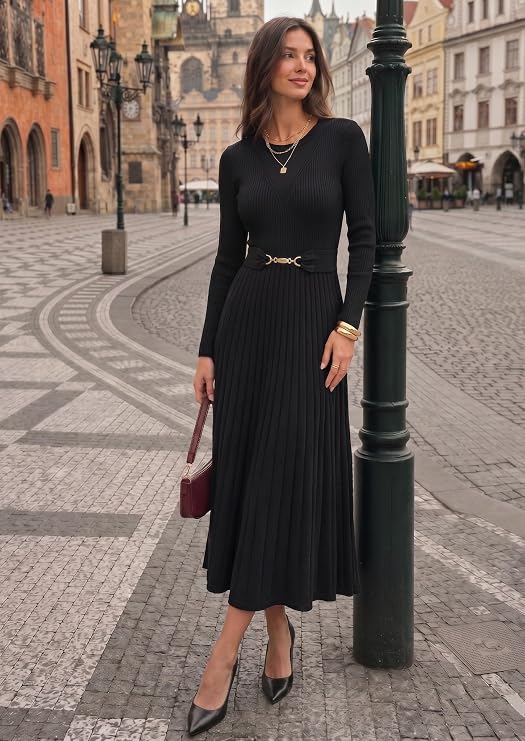
For tops, think fine-knit sweaters, silky blouses with a cardigan on top, or a fitted turtleneck. A pleated midi skirt with tights and a chunky knit turns into a stylish “I tried, but not too hard” look. Avoid very short hems; they’ll be uncomfortable in the wind.

Local tip: Bring a spare pair of tights. Cobblestones plus delicate nylon is a quick path to a ladder in the first hour.
8. Hats, Scarves, and Gloves That Earn Their Space
Accessories are the easiest way to look stylish and feel warm, and they barely take up room in your luggage.
A big wool scarf is your best accessory. Wrap it twice and it handles the windiest riverbank.

A beanie or a felt hat keeps your head warm and looks great in photos.

Gloves, ideally touchscreen-friendly, are a must, because your phone will want to come out every five minutes.

Choose neutral or muted colours that match the whole wardrobe, then add one statement piece, like a burgundy scarf or a patterned wrap, to lift the simplest outfits. Budapest’s palette is dark, so a pop of rust, green, or wine looks fantastic.
Local tip: Hungarians wear scarves indoors a lot too. Nobody will look twice if you keep yours on in a café.
9. What to Wear to the Thermal Baths
The baths are the best thing you’ll do in Budapest in November, and they come with their own wardrobe logic.
Pack a swimsuit (yes, in November), flip-flops or pool slides, and a quick-dry towel. Many baths rent towels, but they’re costly and thin. A lightweight microfibre one rolls up small. Most pools require swim caps only for lap lanes, but check the rules at the one you choose.

The real trick is the walk from the warm water to the outdoor pool and back to the changing room. Bring a thick robe or a big sweater to throw on straight after. I wore a long cardigan over my towel and felt like a very comfortable Victorian ghost. Wet hair in 3°C air is no joke, so pack a warm hat for the trip home.

Local tip: Go in the evening. The outdoor pools lit up against the dark sky with steam rising are the best “wow” moment of the trip.
10. Evening Outfits That Don’t Scream “Tourist”
Budapest evenings are for wine bars, ruin pubs, and long dinners, and you can look sharp without much effort.

For dinner, a dark knit dress with boots, or tailored trousers with a silk blouse and a blazer, hits the right note. Black, deep green, and burgundy work beautifully. A good coat and a neat bag complete the outfit. Think understated, not sparkly.

For ruin bars like Szimpla Kert, go casual: jeans, a nice sweater, and sturdy boots. The floors are sticky and the crowd is relaxed. If you’re heading to the Opera House for a performance, step up to smart dress and heels you can walk in, then pop into a cloakroom for your coat.
Local tip: Heated venues can feel almost tropical after the cold. Wear a top you’re happy to be seen in without your jumper.
11. What to Wear to Churches and Historic Sites
St. Stephen’s Basilica and Matthias Church are both stunning, and both expect a little modesty.
Cover your shoulders and knees. In November this is easy: a long-sleeve top and trousers or a midi skirt do the trick. If you’re wearing a sleeveless dress for dinner afterwards, keep a scarf or cardigan in your bag to throw over your shoulders.
You’ll also want warm layers inside, because old stone buildings can feel colder than outdoors. A hat is fine to wear outside but take it off when you step in, as a polite habit.
Local tip: Climb up to the Basilica’s dome terrace for the best city view. Wear gloves, because the wind up there is no joke.
12. Rain Prep (You’ll Need It)
November in Budapest is more drizzle than downpour, but it’s persistent.
A compact, sturdy umbrella is worth its weight in gold. Choose a windproof one, since cheap ones flip inside out the moment you hit a bridge. If you prefer hands-free, a waterproof coat with a hood is the better option, but I like having both.

A small waterproof pouch for your phone and passport is another unexpected lifesaver. And if your boots aren’t waterproof, give them a good spray before you fly. Wet feet are the quickest way to derail a day of sightseeing.

Local tip: Cafés will happily let you dry off with a coffee and a slice of Dobos torte. Consider that part of your rain strategy.
13. Fabrics to Choose (and Skip)
It’s easy to get this wrong, so here’s the short version.
Wool, merino, cashmere blends, thick cotton-blends, and fleece-lined layers are your friends. They insulate even when slightly damp. Synthetic thermals and a good waterproof shell work well too.
Skip thin cotton, loose linen, and fast-fashion fabrics that don’t breathe. Also skip anything with delicate beading that will snag on a scarf or bag strap. Budapest is for living in your clothes, not protecting them.
Local tip: Static can be a real nuisance in dry, heated rooms. A little hand cream and natural fibres help far more than any anti-static spray.
14. Your Budapest November Capsule Wardrobe
You can cover a week with this small list and mix endlessly:
Two sweaters, one turtleneck, two long-sleeve tops, one blouse, one knit dress or skirt, two pairs of trousers or jeans, a thermal base layer or two, fleece-lined tights, a warm coat, waterproof boots, a pair of sleek sneakers or flats for hotels, a scarf, hat, gloves, and a swimsuit. Stick to a palette of black, grey, cream, and one colour like burgundy or forest green.
Everything works with everything, and you’ll look like you planned it all weeks in advance. For more on this approach, see our travel capsule wardrobe guide.
Practical Packing: How Much Do You Actually Need?
How many outfits: For a 4–5 day trip, plan around five daytime outfits using repeated trousers and different tops, plus one smarter evening look. You’ll be in the same coat and boots every day anyway, so nobody will notice.
Packing light vs overpacking: Winter clothes take up space, so choose pieces that earn their place. If an item only works with one other thing you own, leave it behind. Wear your bulkiest layers and boots on the plane.
Outfit planning tips: Lay everything out on your bed before packing and photograph a few outfits. If you can’t make three looks from one piece, it stays home.
Mistakes to avoid: Packing only trendy jackets, forgetting thermal layers, wearing brand-new shoes, and leaving no room in your bag for souvenirs (paprika, anyone?).
Quick FAQs About Budapest in November
Is Budapest very cold in November? It’s chilly and damp, usually 2–9°C, with the occasional frosty morning. Layers solve it.
Do I need a heavy coat? Yes. A warm, knee-length coat makes a bigger difference than any other item.
Can I wear sneakers? Waterproof ones, yes. Canvas ones, no.
What should I wear to the thermal baths? A swimsuit, flip-flops, a quick-dry towel, and a robe or big cardigan for the cold walk back.
Will it snow? Possibly late in the month, but it’s not guaranteed. Pack a hat and gloves either way.
Go and Get Cosy
Budapest in November isn’t about perfect weather. It’s about steam rising off a thermal pool while the temperature drops, a hot chocolate in a grand old café, and a city that feels like it belongs to you for a few days.
Pack your warmest layers, a pair of boots you trust, and a scarf you love wrapping around yourself. Then go and let the fog, the lights, and the goulash do their thing. You’ll be warm, you’ll look great, and you’ll wonder why you ever visited in summer.

