
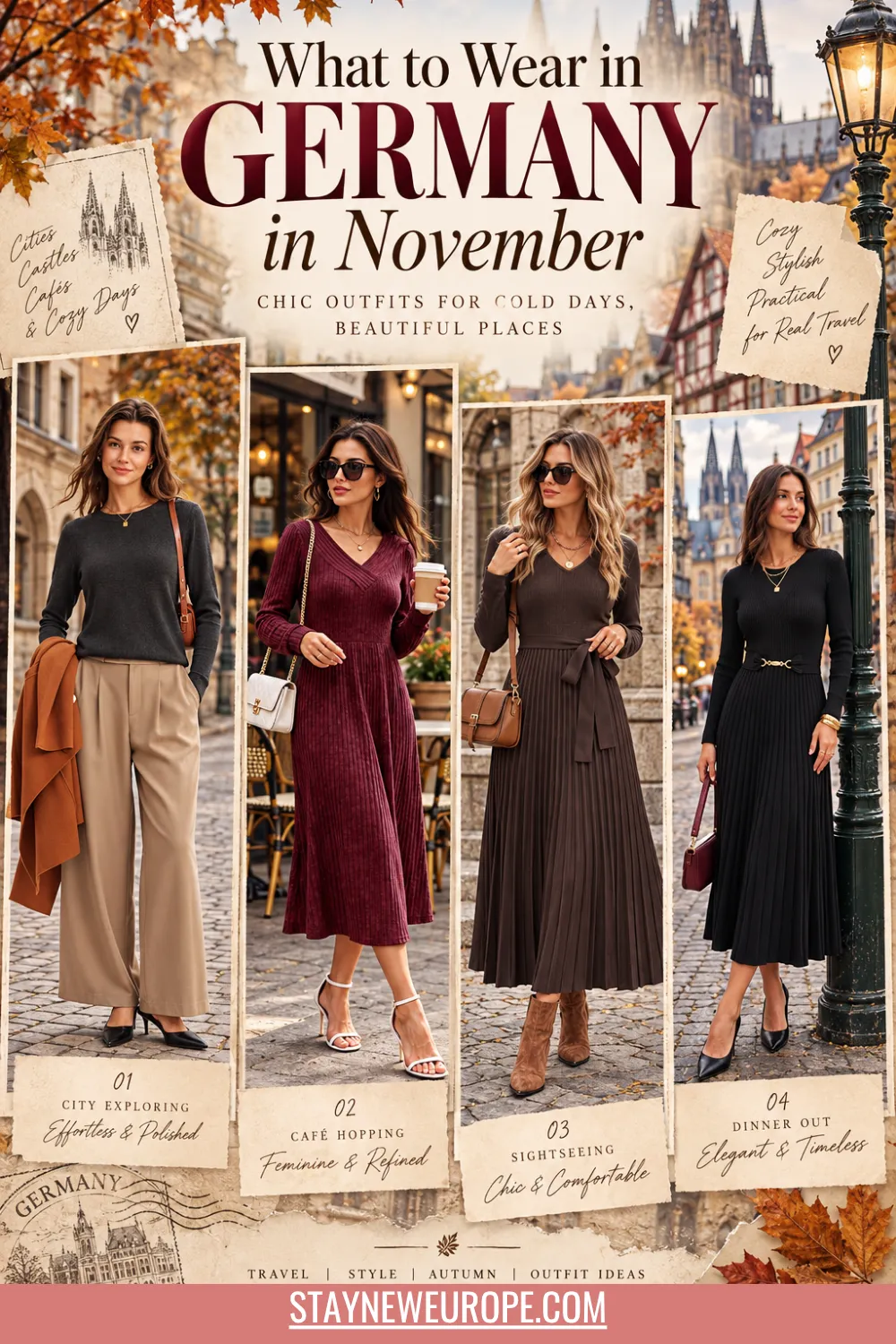
November in Germany is a mood. The sky turns the colour of wet concrete around 8 a.m., the Christmas market stalls start going up, and by 4:30 p.m. the whole country switches the lights on like it’s a competitive sport. It’s cold, it’s damp, and honestly? It’s gorgeous.
You’ll be walking a lot, on cobblestones that are slippery after rain, in and out of heated trams, cafés and museums that feel like saunas. Berlin, Munich, Hamburg, Cologne: they all share the same weather rule, which is that it will change on you without warning.
The most common packing mistakes I see are a fashion coat with no warmth, white sneakers that die on day one, and one giant chunky sweater instead of layers. Let’s fix that before you’ve even booked your flights.
Before We Dive In
Weather: Expect roughly 0–9°C (32–48°F) across most of the country. Munich and the south run colder, Cologne and the west a touch milder. Snow is possible in Bavaria and the mountains, more likely late in the month.
Rain and humidity: Drizzle, fog and grey skies are the default. It’s not dramatic rain, it’s the sneaky kind that soaks through everything by lunchtime. The damp cold feels colder than the number on your phone.
Walking conditions: Cobblestones everywhere, wet leaves, tram tracks, long station staircases. You’ll easily clock 15,000+ steps a day, so your shoes matter more than your outfit.
Style culture: Germans dress practical and understated. Think dark neutrals, good outerwear, clean boots, zero logo overload. Nobody is judging you, but you’ll blend in beautifully if you go for quality basics over loud statements.
Pick the Right Bag First (Seriously)
Your luggage decides how much you’ll overpack, so start here. For a week in Germany I’m a carry-on person: a 40L soft-sided duffle or a compact carry-on spinner. German trains and stations have stairs (and not always working escalators), so you’ll thank yourself for something you can actually lift.

A soft duffle with a shoulder strap squeezes into overhead bins and luggage racks far better than a hard shell. If you’re doing multiple cities by train, this is the one. If you’re staying in one city, a small hard-shell carry-on rolls fine on pavement, but cobblestones will rattle your teeth.
Local tip: Check the weight rules for budget airlines before you pack the third sweater. Bulky winter clothes add up fast. Wear your heaviest coat and boots on the plane. My carry-on guide has the full routine: carry-on packing guide.
Thermal Base Layers Are Your Secret Weapon
Let me be honest: I used to roll my eyes at thermals. Then I stood on a Berlin platform at 7 a.m. in a “stylish” coat and finally understood.
A thin merino or technical base layer, long-sleeve top and leggings, adds serious warmth without bulk. It disappears under jeans and sweaters, and it dries fast if you get caught in drizzle. I wear mine on long train days and outdoor market evenings.

Local tip: Skip cotton as a base layer. Once it’s damp, it stays cold. Merino or a good synthetic blend is worth the extra money.
The Sweater Strategy: Two or Three, Not Seven
Germany heats its indoor spaces very well. You’ll walk from freezing streets into a toasty café and start peeling immediately. That’s why one giant chunky knit is a mistake.
Bring a fine merino crewneck or turtleneck for everyday wear, and one heavier wool or cashmere-blend sweater for the coldest days. Layer a plain tee or thin long-sleeve underneath so you can strip down indoors without feeling underdressed.

An outfit that worked for me in Munich: cream turtleneck, charcoal wool trousers, long camel coat, scarf. Looks polished, feels cosy, no effort.
Local tip: Neutral colours (grey, navy, camel, black, forest green) mix and match endlessly and match the local palette.
The Coat: Where You Should Spend Your Money
If you only invest in one thing, make it this. A mid-thigh wool coat looks sharp and handles typical city days. An insulated or down-style coat with a hood is smarter if you’re heading south to Bavaria, or if you run cold.

My honest take: a stylish coat with no real warmth is the number one mistake. Look for something knee-length or just above, with a hood or a collar you can pop up. Wool-blend works for dry days; a water-resistant shell or lined parka is better if the forecast looks soggy.

You’ll see locals in all kinds of functional jackets, and nobody blinks. Function over fashion is a cultural position here.
Local tip: Buttons are great, but a zipper with a storm flap blocks the wind far better. Cold winds whip through German streets.
Waterproof Boots Are Non-Negotiable
Wet cobblestones plus smooth soles equals a very expensive lesson. I learned this the hard way in Cologne, and I still think about it.
Go for waterproof leather or leather-look ankle boots with a rubber lug sole. Chelsea boots with a chunky sole look great with everything, and a hiking-style boot is perfectly acceptable too, especially in Bavaria. Break them in before you leave home, because new boots and 15,000 steps are not friends.

Keep a pair of clean, low-profile leather sneakers if you want a second option for dry days or the train. Just make sure they’re not your only pair.
Local tip: Spray your boots with a waterproofing treatment the week before your trip. It takes five minutes and saves your feet.
Jeans and Trousers: Dark, Thick, Comfortable
Dark, mid-weight denim is the easiest answer. Straight or slim-straight cuts layer well over thermals and look right in a beer hall or a gallery. Avoid thin, stretchy jeggings, because they offer zero wind protection.

For nicer evenings or a smarter look, lined wool trousers or thick ponte pants are fantastic, and they feel much warmer than they look. A pair of black trousers will take you from museum to dinner without a change.

Local tip: Skip white or light-coloured jeans. Wet pavement splash plus November mud equals sad hems by day two.
Dresses and Skirts: Yes, You Can
If you want to wear a dress, do it with intention. A knit midi dress or a long-sleeve wrap dress works beautifully with opaque tights and tall boots. Add a long coat and you’re set.

My favourite combo for dinner in Hamburg: a dark knit dress, fleece-lined tights, knee-high boots, wool coat. Warm, elegant, and totally comfortable.

Skip anything sleeveless or thin-fabric unless it’s layered under a sweater or blazer. And leave the bare legs at home. That’s not bravery, it’s a mistake.
Local tip: Fleece-lined tights look like regular sheer tights and make a huge difference. Buy them once and never be cold again.
Scarf, Hat and Gloves: The Holy Trinity
These three weigh almost nothing in your bag and change everything outside.
A large wool or cashmere-blend scarf is perfect for colder days and can also double as a shawl on trains, flights, or chilly indoor spaces.

A neutral-coloured beanie is useful for windy riverside walks and works easily with most coats, jackets, and winter outfits.

Touchscreen-friendly gloves keep your hands warm while still letting you use your phone for maps, photos, and messages without taking them off.

I’ve watched people shiver through Christmas market evenings in pretty but useless fashion scarves. Go for warm and practical, then pick a colour that makes you happy.
Local tip: A scarf is also your emergency cover-up if a church asks you to cover your shoulders.
Socks: The Unsexy Hero
Pack more than you think. Wool or merino-blend socks keep your feet warm even when damp, and you’ll want a fresh pair if your boots get wet. Rotate them, because cold, wet feet make a miserable traveller.

Bring two or three pairs of thicker wool socks and a few thinner pairs for dressier shoes. It sounds boring, but this is one of the best-value things in your suitcase.
Local tip: Skip cotton socks completely. Same rule as base layers.
Rain Prep: Because It Will Drizzle
German rain in November is rarely a downpour. It’s a steady grey mist that creeps into everything.
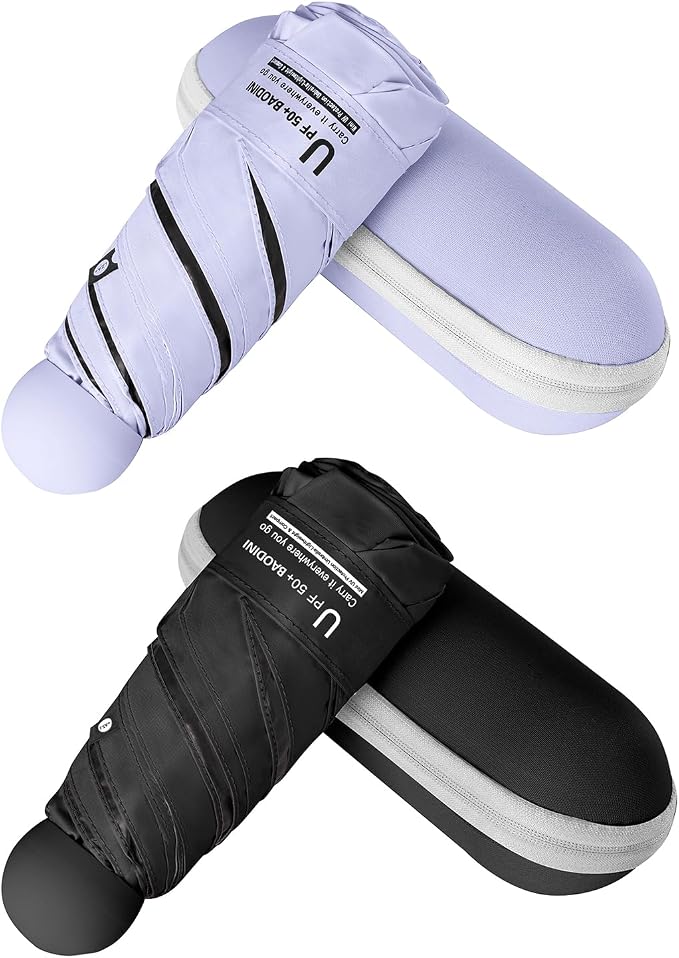
A compact travel umbrella is useful for light rain, but choose a sturdy one since strong wind can easily damage cheaper styles.
A hooded waterproof jacket is the more reliable option when the weather turns rough. It keeps both your upper body and head protected without needing to hold anything.

If your coat is wool and not water-resistant, pack a lightweight packable rain shell to throw over it. It adds warmth and covers you completely.
Local tip: Hotel and apartment radiators are excellent for drying gloves and socks overnight. Locals do it all the time.
What to Wear to a German Christmas Market
Many markets open in the last week or so of November, depending on the city, so check dates before you plan. Standing around outdoors for an hour with a mug of Glühwein is colder than you expect, because you’re not moving.
This is where your layers shine: thermal base, wool sweater, warm coat, hat, scarf, gloves, waterproof boots, thick socks. You’ll look like a cosy local, not a tourist on a winter-wonderland shoot. (Though you might still look like both. No judgement.)
Local tip: Wear boots with good grip. Market grounds get slushy and icy, and nobody wants to drop their Glühwein.
Evening Outfits: Smart but Warm
Germany is relaxed about dressing up. For dinner, a good sweater and dark trousers or a simple knit dress works almost everywhere. For the opera or a classical concert, step it up with a blazer, a nicer dress, or a crisp shirt, and still bring your warm coat.
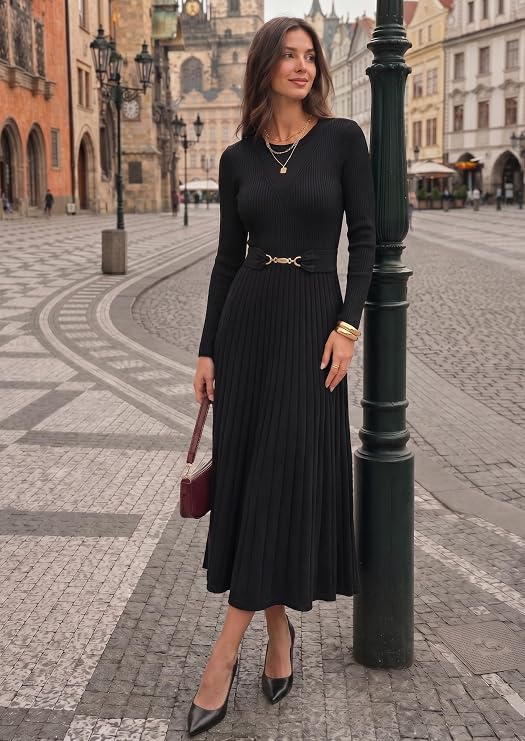
Berlin nightlife leans dark, minimal and comfortable. Black everything is basically the unofficial uniform. Hamburg and Munich sit slightly smarter for restaurants and bars.
Local tip: Cloakrooms are standard and often cost a euro or two, so don’t wear a bulky coat you can’t bear to part with for the evening.
Churches and Cathedrals: The Easy Dress Code
Most German churches are relaxed, but covering your shoulders and avoiding very short shorts or skirts is respectful, especially in active places of worship like Cologne Cathedral. In November you’ll probably be covered up anyway. Just don’t strip down to a tank top inside once the heating hits.
Local tip: Churches can be freezing inside, with stone floors and no heating. Keep your scarf and hat handy.
Bags: Crossbody Beats Backpack
A crossbody or zip-top shoulder bag keeps your hands free and your valuables secure in crowded stations and markets. Make sure it closes properly, because pickpockets love busy Christmas markets and train hubs.

A small daypack is handy for museum days or if you’re carrying layers, but wear it on your front in crowds. Whichever you choose, keep it lightweight so you’re not dragging weight on cobblestones all day.

Local tip: Many German museums and galleries ask you to leave large backpacks at the cloakroom. A smaller crossbody saves you the hassle.
What NOT to Wear (Tourist Mistakes)
Thin fashion coats with no insulation. Canvas sneakers and any shoe with smooth soles. Cotton everything as a base layer. Bare legs without lined tights. Brand-new, unbroken boots. Giant logos and loud tourist merch, if you want to blend in. And a single “statement” outfit packed over practical layers.
I’m not saying don’t be stylish. I’m saying build style on top of warmth, not instead of it.
Local tip: If you’re unsure about a piece, ask yourself: “Could I stand outside in this for an hour?” If not, it stays home.
Fabrics to Choose (and Avoid)
Wool, merino, cashmere blends, fleece lining, and quality synthetics keep you warm and dry. Leather or waterproof-treated boots handle wet streets. Denim is fine in a thick weight.
Avoid thin cotton, flimsy polyester, loose-knit fashion sweaters that let wind straight through, and anything that holds moisture. Damp and cold together are what ruin trips.
Local tip: If a sweater looks great but feels scratchy, wear a thin layer underneath. Comfort matters when you’re wearing it all day.
Practical Packing: How Much to Bring
For a week, I pack 3 bottoms, 4 tops, 2 sweaters, 1 dress (optional), 1 coat, 1 packable rain layer, 1 pair of boots, 1 pair of sneakers, and 5 pairs of socks. Underwear and thermals on top. That’s it.
Pick a colour palette (for example, black, grey, camel, and one accent colour) so everything mixes. Try wearing a different combo each day and re-wear sweaters, because nobody remembers your sweater from Tuesday. Rolling or packing cubes keep bulky knits compact: see our rolling vs. folding clothes guide and travel capsule wardrobe guide.
Mistakes to avoid: Packing for the weather you wish you’d get, bringing “just in case” outfits, forgetting that laundry exists, and skipping waterproof shoes. Also, leave space for souvenirs. You will buy gingerbread.
Heading to a specific city too? Check out my guides for Berlin, Munich, Prague in November and Vienna in November if you’re adding a neighbouring stop.
Go Pack Your Bag
Picture yourself on a dark cobbled street, boots dry, scarf pulled up, hands wrapped around a hot mug while the lights glow overhead. That’s the Germany November gives you, and you’ll feel warm, put-together and completely at home in it.
Pack smart, wear your layers with confidence, and let the weather be moody. You’ve got this. Now go find your best gingerbread.

