

Let me paint you a picture. It’s 11am in Santorini. The sun is already doing its absolute best, the whitewashed walls are practically glowing, and you’ve just climbed 300 steps from the old port in a pair of dark jeans you thought looked cool at the airport. You are sweating in places you didn’t know could sweat. Sound familiar?
July in Greece is breathtaking — the Aegean is impossibly blue, the evenings are warm and magical, the food is unreal. But it is also, without question, hot. Like, “is the pavement actually melting?” hot. Packing wrong for Greece in July is genuinely one of the most common travel mistakes I see, and it almost always comes down to the same thing: people pack for the Greece of their imagination rather than the Greece they’ll actually be living in.
So here’s what I wish someone had told me before my first July trip there — a real, honest, been-there packing guide with zero fluff and plenty of hard-won opinions.
Before We Dive In: What Greece in July Actually Feels Like
Greece in July is not “warm.” It’s hot. Athens regularly hits 35–38°C (95–100°F), and the islands aren’t much cooler. The saving grace is that most of Greece — especially the islands — gets a dry heat, and the Meltemi winds on the Aegean islands can make things feel surprisingly bearable by mid-afternoon.
That said, humidity varies by region. Corfu and parts of the Ionian coast are lusher and slightly more humid than the dry Cyclades. If you’re heading to Santorini or Mykonos, you’ll have drier heat. Athens is a concrete city in a heat sink — it’s brutal and beautiful in equal measure.
You’ll be walking — a lot. Cobbled paths, marble steps worn smooth by centuries of feet, steep village streets that aren’t on any map. Your footwear decisions will make or break your trip. And then there are the churches and monasteries, which require covered shoulders and knees regardless of how hot it is. Pack around these realities, not around your Pinterest mood board.
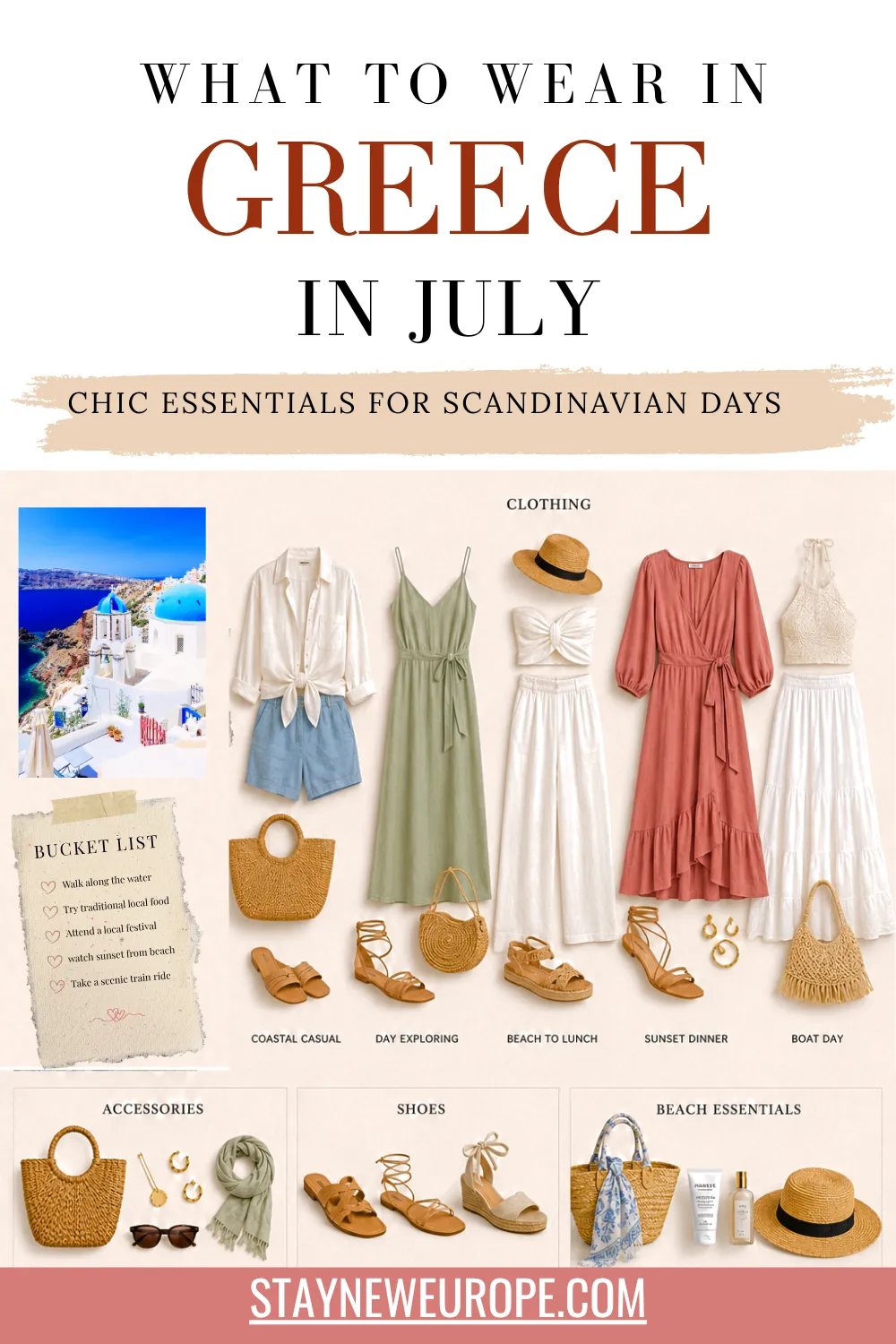
Lightweight, Breathable Fabrics: The Single Most Important Packing Decision You’ll Make
Here’s the honest truth: in July Greece, fabric choice matters more than outfit choice. I’ve seen people suffer in beautiful linen-look polyester that turns into a personal sauna by 9am, and I’ve seen people look effortlessly chic in simple cotton and real linen all day long.
Your July Greece wardrobe should be built almost entirely on natural fibres — linen, cotton, and rayon (viscose). These breathe. They absorb moisture. They don’t stick to you in that horrible way synthetic fabrics do when you’re walking uphill to an acropolis in the afternoon sun.
Linen is your best friend, full stop. Yes, it wrinkles — embrace it. In Greece, slightly rumpled linen looks intentional, like you’ve just stepped off a sailboat. Nobody is judging you. The Greeks themselves practically live in linen from June through September. Pack linen trousers, linen shirts, linen dresses. You will not regret it.
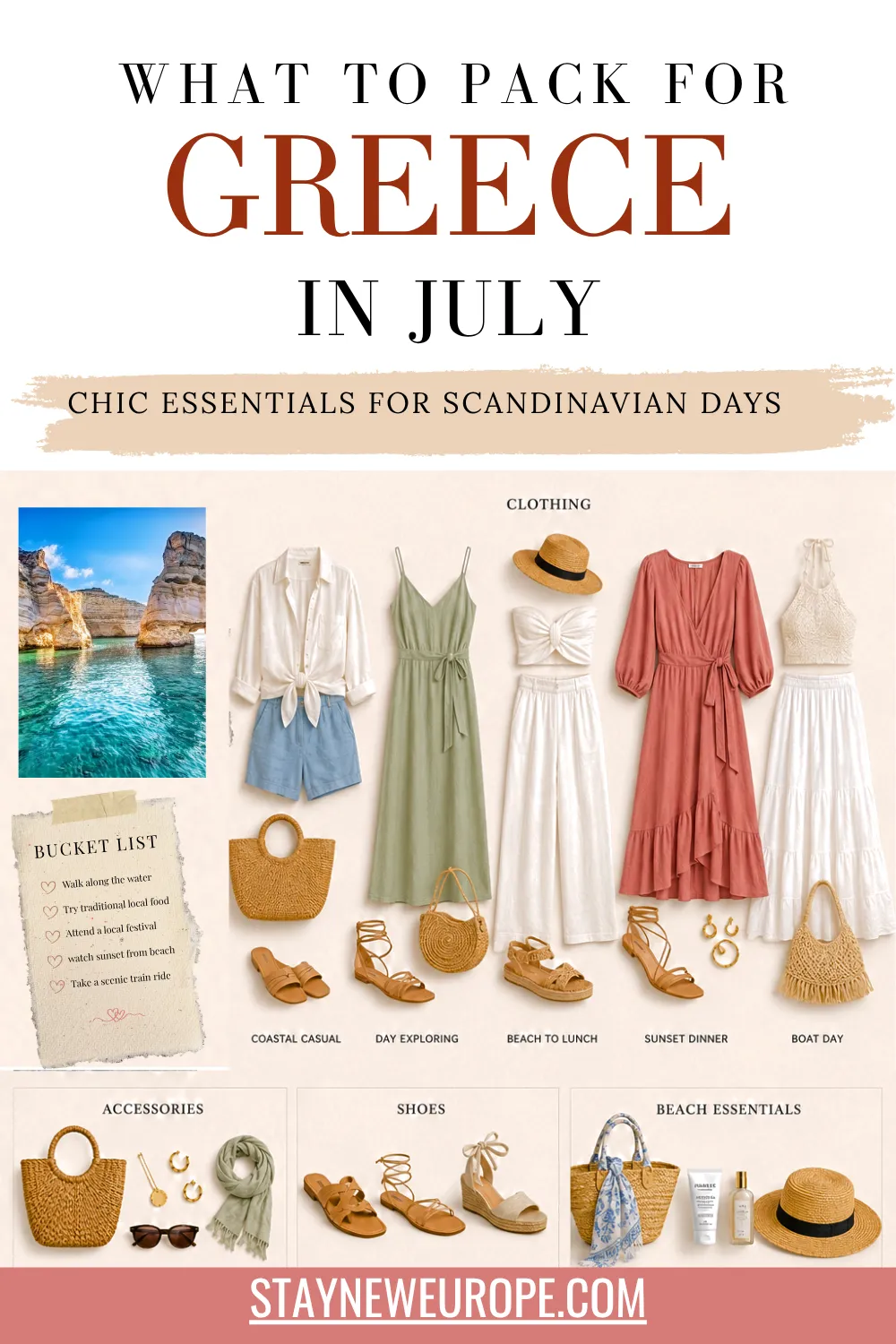
Avoid: polyester, nylon, tight spandex blends for daytime. Save those for the flight home or the air-conditioned museum hour.
Local tip: Darker colours absorb more heat — stick to whites, creams, soft terracottas, dusty blues, and sage greens. You’ll feel cooler and you’ll photograph beautifully against those blue domes.
Dresses and Sundresses: Pack More Than You Think You Need
I resisted packing dresses for years because I thought they weren’t “practical” for travel. Greece in July completely changed my mind. A loose, flowy sundress is quite possibly the most practical thing you can wear in extreme heat.
A good midi or maxi sundress in linen or cotton does everything: it keeps you cool, it looks polished enough for a nice dinner, it covers your knees for church visits if it’s long enough, and it packs down to almost nothing. I wore the same three sundresses in rotation for ten days on Crete and nobody — including me — got bored.

Look for dresses with adjustable straps or sleeves you can tie up, because versatility matters. A dress that can go from beach-town wandering to a clifftop restaurant with the addition of sandals and a linen jacket is worth its weight in gold. Or euros, I suppose.
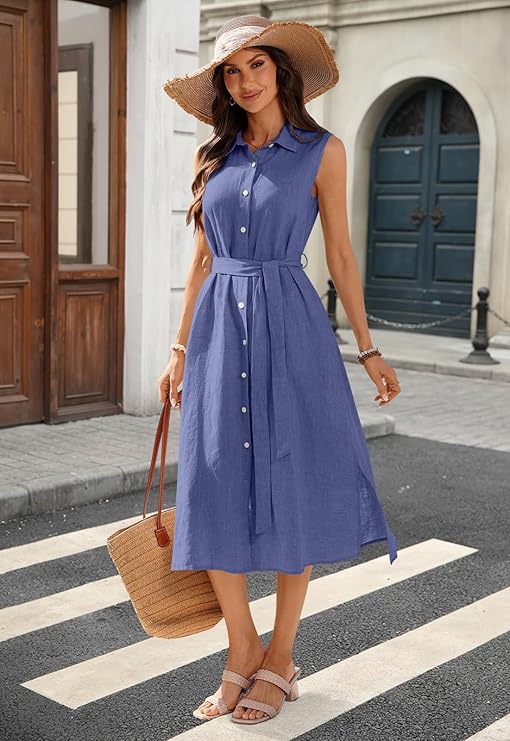
Local tip: Wrap dresses and shirt dresses in cotton are particularly versatile because you can belt them, loosen them, layer a light cardigan over them for church — one piece, three uses.
Linen Trousers: The Chic Alternative to Shorts
Shorts are fine for beach days. But if you’re exploring Athens, wandering through monastery villages, or doing any kind of cultural sightseeing, linen trousers are infinitely more practical — and they keep you cooler than you’d expect.
Wide-leg linen trousers in particular are a revelation in hot weather. Air circulates, your legs breathe, and you look put-together rather than like a tourist who packed in a hurry. Pair them with a simple white vest or a loose cotton button-down shirt and you’ve got an outfit that works from the Acropolis to a harbour-side taverna.

One pair of well-cut linen trousers in a neutral — cream, sand, slate blue — will carry you through multiple scenarios. I’d pack two pairs maximum and rotate them.

Local tip: Lightweight palazzo trousers also double as church-appropriate bottoms without the stuffiness of full-length trousers. A win in every direction.
Shorts: Yes, But Be Selective
Shorts absolutely have a place in your Greece in July packing list — but not every pair you own. I’d suggest two or three pairs of linen or cotton shorts in relaxed fits, kept for beach days, casual lunch spots, and morning market walks.
Leave the denim cutoffs at home. Denim in 38-degree heat is a personal vendetta against your own comfort. Same goes for cargo shorts with seventeen pockets — they’re heavy, hot, and they’ll make you look like you’re on an expedition rather than a holiday.

A good linen short or a cotton-blend chino short hits the sweet spot: lightweight, versatile, slightly smarter than beachwear. Pair with a linen shirt left open over a fitted tee and you’ll look appropriately relaxed.

Local tip: Greeks tend to dress up more than tourists expect, especially for evening. Keep shorts to daytime and switch to trousers or a dress for dinner out — you’ll feel less out of place and frankly more comfortable when the evening breeze picks up.
Comfortable Walking Shoes That Won’t Ruin Your Feet (or Your Photos)
This is where I’ll be very direct: Greece will destroy ill-chosen shoes. The paths in Santorini are steep and uneven. Athens’ Plaka district is beautiful cobbled chaos. Meteora involves rocky monastery approaches. Your feet are going to earn their keep.
What you need: comfortable, supportive sandals that can handle real walking. A leather or high-quality synthetic sandal with a proper footbed — think Birkenstock, Ecco, or similar — is far better than a cute flat sandal with zero support. I’ve done a full Athens day in Birkenstocks and never once felt like I was compromising on style.

Bring one pair of proper walking trainers or sneakers for longer hikes and rougher terrain — Naxos, Crete, or any island with serious coastal paths. Don’t skip these thinking your sandals will handle everything. They won’t, and your knees will know it by day three.

For evenings: a simple leather slide or a block-heel sandal looks effortless and works on most surfaces. Leave the stilettos in the hotel room — marble steps and heels are a disaster waiting to happen.

Local tip: Break in any new sandals before you travel. Nothing ruins day one like blisters from stiff leather.
What NOT to Wear in Greece in July (Tourist Tells That Are Very Real)
Let me be honest here, because this section might sting a little. There are some things that immediately mark you as someone who packed without thinking, and while that’s not the end of the world, you’ll feel more comfortable and confident if you avoid them.
Heavy backpacks everywhere: A giant hiking pack worn around Oia in Santorini is impractical, annoying in crowds, and unnecessary. Use a lightweight daypack or a crossbody bag for daily exploring.
All-white everything to the beach: White looks stunning in Greece. White linen trousers, white shirts — yes. A full white outfit to the beach where you’re going to sit on red volcanic sand or eat a dripping gyros? That’s a laundry situation nobody needs on holiday.
Flip flops for city walking: Flip flops belong at the beach or poolside. Wearing them to walk three hours around Athens is how you end up with blisters, sore arches, and a hobble by lunchtime.
Heavy jewellery and accessories: In that heat, less is more. A delicate gold necklace, simple earrings. Leave the statement pieces at home — they’ll feel oppressive by mid-morning.
Local tip: Skip the matching resort sets that are sold specifically as “Instagram Greece outfits.” They’re cute in photos but often made of synthetic fabrics that don’t breathe. Real style in Greece is more relaxed than that.
Swimwear: How Much Is Enough?
More than you think you need, but probably not as much as you’ve packed. Here’s my honest count: two or three swimsuits if you’re doing a beach-heavy trip, two if you’re splitting time between cities and islands.
The reason for multiple swimsuits isn’t vanity — it’s practicality. Swimwear doesn’t dry quickly in humidity, and putting on a damp costume is one of summer’s minor miseries. Two swimsuits means one dries while you wear the other.
For style: a classic one-piece or a bikini with good coverage are equally perfect for Greece. You don’t need to overthink this. Greeks are relaxed about beach style. If you feel comfortable, you’ll look confident, and that’s the whole game.
Also pack a decent swimsuit cover-up — a lightweight sarong, a linen beach shirt, or a simple cotton dress —

because walking through a village or stopping for lunch directly from the beach is completely normal, and you’ll want something to throw on.

Local tip: Some of the best beach cover-ups in the world are sold in Greek market stalls for a few euros. Don’t overpack swimwear cover-ups — you’ll want to buy them there anyway.
What to Wear for Churches and Monasteries
This catches people off guard every single trip. Greece’s churches and monasteries — from the monasteries of Meteora to the tiniest whitewashed chapel on a hillside — require covered shoulders and knees to enter. No exceptions, no negotiations.
The good news: this is easy to plan for. A lightweight cotton or linen scarf worn around your neck or shoulders doubles perfectly as a shoulder cover when you step inside. Many popular sites also have wraps available to borrow at the entrance, but they’re often scratchy, unflattering, and one-size-fits-nobody.

For women: a midi or maxi dress naturally handles the knee requirement. Throw a light linen shirt over bare shoulders and you’re sorted in seconds. For men: linen trousers cover knees; a short-sleeve button-down shirt for shoulders.

If you’re planning a day trip to Meteora (which is extraordinary, and you should — check out the best places in Greece to visit for more inspiration), pack specifically for this: comfortable trousers, supportive shoes, and a layer for the monasteries.
Local tip: Keep a lightweight scarf in your daypack at all times in July. It weighs nothing, takes up zero space, and saves you from standing sheepishly at a church entrance while a tour group glides past.
Evening Outfits: Greece After Dark Is a Different Vibe
Greek evenings are wonderful. The heat softens, the light turns golden, tables fill up at outdoor tavernas, and everyone seems to shift into a slower, more celebratory gear. Your evening outfit deserves a little more thought than “whatever I wore today.”
The good news is that Greece is not a stuffy destination. You don’t need cocktail attire or formal wear — but a slight elevation from your daytime beach look goes a long way.
A linen dress, a nice linen shirt with trousers, a maxi skirt with a simple fitted top. Something that feels like you made a small effort, because the Greeks around you generally will have.

For women: a wrap dress or a silky midi skirt with a fitted vest is perfect for most evenings. For men, linen trousers with a linen or lightweight cotton shirt — untucked is fine — is the universal answer.

Bring one slightly dressier option if you’re planning a nice dinner or a sunset cocktail somewhere special. Not a full formal look, just something a step above your walking sandals and sundress.

Local tip: Evenings on the islands can get breezy — genuinely breezy. Pack one lightweight layer, like a linen blazer or a cotton knit cardigan, specifically for the evening wind. You’ll be grateful for it on a rooftop terrace at midnight.
Bags: What to Carry and Why Your Choice Matters More Than You Think
Your bag situation in Greece in July needs to solve three problems: security in crowds (Athens pickpocketing is real), practicality for long days of walking, and not overheating your back with something strapped to it all day.
My recommendation: a good crossbody bag as your primary daily carry. It keeps your hands free, sits close to your body for security, and doesn’t create a sweaty back situation the way a backpack does. A zip-top crossbody in leather or canvas, medium-sized, handles a water bottle, sunscreen, your phone, wallet, and sunglasses.

Pack a lightweight packable tote or daypack for beach days or bigger excursions. Something that folds into nothing when not in use.

Leave the large suitcase-style handbags at the hotel. They’re impractical for cobbled streets, awkward in crowds, and genuinely annoying to carry in heat.
Local tip: Look for bags with RFID-blocking lining, or carry your cards in an RFID sleeve. Crowded tourist spots in Athens attract opportunistic pickpockets.
Sun Protection: The Items People Always Underpack
You will be in stronger sun than you’ve experienced in most other destinations. The Greek July sun is intense, the reflection off white buildings amplifies it, and the sea reflection on island days makes it even more brutal.
Pack a wide-brim hat that you’ll actually wear. Not a packable hat that crumples into a sorry shape in your bag — a proper sun hat that does its job. This is the one piece of your packing list where aesthetics and function truly align, because a good straw or cotton hat looks great and actually protects you.

Sunglasses: bring a pair you trust. Salt water, sand, and heat are hard on cheap frames. Polarised lenses are especially good for coastal days — they cut the glare off the water beautifully.

Bring more SPF than you think you need. Factor 50 for face and shoulders, minimum 30 for the rest. You will burn. Everyone burns in Greece in July, no matter how dark their natural skin tone, if they’re not careful.
Local tip: Buy a solid hat in Greece if you don’t own one — the markets sell beautiful straw hats at very reasonable prices. But don’t rely on finding a good one at your specific destination; some tourist-trap shops sell rubbish. If in doubt, pack your own.
Lightweight Layers: The Evening Saviours You Didn’t Know You Needed
I know — layers sounds insane when you’re packing for a destination that’s 35 degrees. But trust me on this one: you need one, maybe two, lightweight layers for Greece in July, and here’s why.
The Meltemi winds on the Aegean islands, particularly Santorini, Mykonos, and Paros, can be genuinely strong. Evening ferry journeys feel positively cold by the time you’re two hours out of Piraeus. Air-conditioned restaurants, museums, and airport lounges are often set to “arctic” by the staff, who are trying to compensate for the outdoor heat.
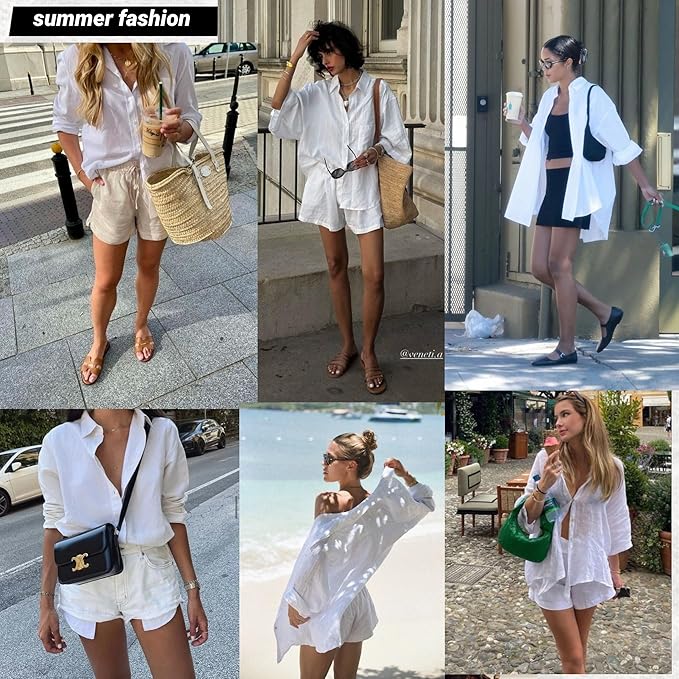
A thin cotton knit cardigan and/or a linen overshirt covers all of these scenarios without adding meaningful weight to your luggage. You’ll carry them in your bag all day and be very pleased you have them by 10pm.
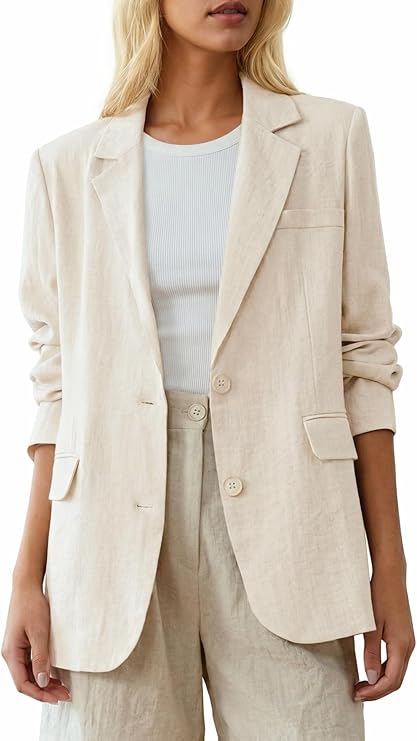
Don’t pack a thick hoodie or a denim jacket. A light layer is all you need — something that rolls up small and adds virtually no weight.
Local tip: A linen jacket in a neutral colour is the most versatile layer you can bring to Greece. It works for church visits, cool evenings, and elevates any casual outfit instantly.
Your Greece in July Capsule Wardrobe: The Master List
Here’s what I’d actually pack for a 7–10 day July trip to Greece, split between islands and a city:
Tops:
- 3 lightweight cotton or linen tops (mix of vest/tank styles and loose short-sleeve)
- 1 linen button-down shirt (works as a layer and a standalone)
- 1 fitted tee for travel days or casual mornings
Bottoms:
- 2 linen or cotton sundresses (midi or maxi length)
- 1 pair wide-leg linen trousers
- 2 pairs linen or cotton shorts
- 1 skirt (linen or cotton, optional but useful)
Swimwear:
- 2–3 swimsuits
- 1 beach cover-up
Shoes:
- 1 pair supportive walking sandals
- 1 pair casual trainers or walking shoes
- 1 pair evening sandals
Layers & Accessories:
- 1 linen jacket or light cardigan
- 2 lightweight scarves (church cover/beach cover/breeze layer — they do everything)
- 1 wide-brim hat
- Sunglasses
- 1 crossbody bag + 1 packable tote
That’s it. That is genuinely everything you need. If you’re tempted to add more “just in case” items, ask yourself: when, specifically, will I wear this? If the answer is vague, leave it home.
Practical Packing Tips: How to Fit It All Without Checking a Bag
Packing for Greece in July is actually one of the easier packing challenges of any European trip, because everything is lightweight. Linen, cotton, and thin fabrics compress well and don’t take up much room.
Roll, don’t fold. Linen wrinkles anyway, so rolling actually creates fewer deep creases than folding and takes up less space. Use packing cubes — one for tops, one for bottoms, one for swimwear and beach items. It sounds fussy but it genuinely saves time and stress every single morning.
Wear your heaviest shoes on travel days. Pack your lightest sandals and fold everything else around them.
Limit yourself to one checked bag or one carry-on plus personal item, depending on your trip length. For a week in Greece, you can absolutely do it as carry-on only if you stick to the capsule wardrobe above. Inter-island ferry trips are much easier without dragging a huge suitcase around.
The one mistake I see constantly: packing “nice” clothes that require hand-washing or delicate care. In July heat, everything will need washing regularly. Stick to easy-care fabrics that can go in a hotel sink or a quick machine wash.
Toiletries and Health Essentials Worth Mentioning
This is technically packing too, so let me hit the highlights quickly:
SPF 50 sunscreen — bring more than you think, because branded European sunscreens can be expensive in tourist areas. Aftersun or aloe gel for inevitable sun exposure. Insect repellent for evenings, particularly in greener or wetter areas. A small first aid kit with blister plasters (trust me). Electrolyte tablets or sachets for very hot days — dehydration sneaks up on you faster than you expect when you’re walking in 38-degree heat.
A good reusable water bottle is absolutely essential. Tap water is drinkable in most of mainland Greece; on islands it varies, but bottled water is cheap and widely available. Stay hydrated relentlessly.
A Final Word Before You Zip Up That Bag
Greece in July is one of the most spectacular travel experiences you can have — the light is extraordinary, the sea is perfect, the food will ruin all other food for you, and the ruins, the villages, the sunsets will genuinely stop you in your tracks. Don’t let a bad packing decision steal any of your enjoyment.
Pack light, pack in natural fabrics, bring real walking shoes and a good hat, and trust that you don’t need as much as you think. Some of the best moments in Greece happen spontaneously — a perfect beach you didn’t plan to stop at, an impromptu long lunch at a harbour taverna, a hike to a monastery that takes twice as long as the guidebook claimed. You want a bag that makes those moments easy, not one that weighs you down.
Go easy. Dress lightly. And let Greece do the rest.


2 Responses