
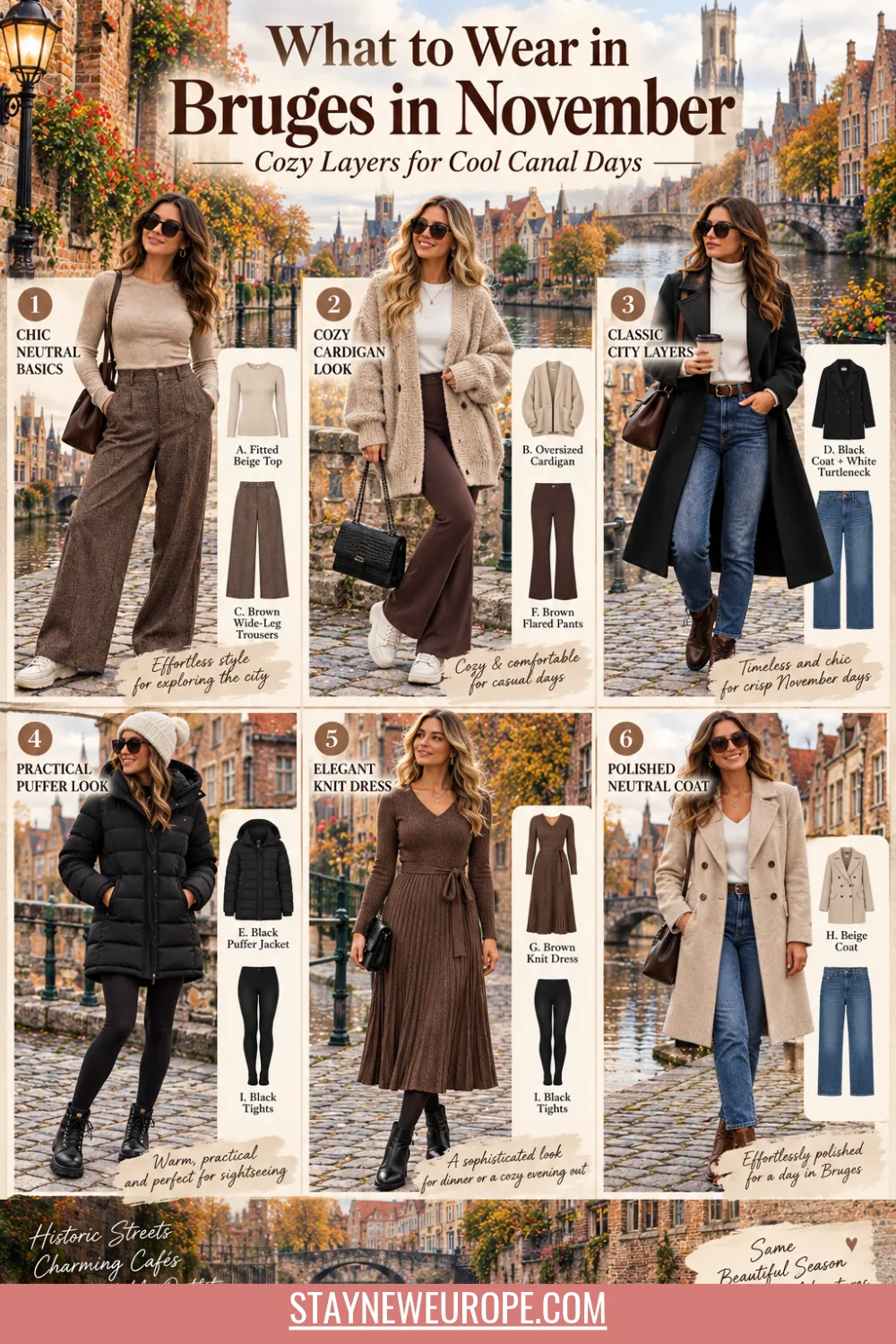
Bruges in November is moody in the best possible way. The canals turn pewter, the gabled houses look like they’ve been drawn in charcoal, and the whole town smells of waffles, wet stone and hot chocolate. Crowds thin out, church bells carry further, and by 4:30pm the lamps are glowing like someone planned it for your photos.
It is also cold, damp and breezy, with a wind that sneaks in from the North Sea and finds every gap in your outfit. The cobblestones are lumpy, the rain turns up with very little warning, and “just a quick wander” has a way of becoming four hours outside.
Most people arrive in either a stylish coat that isn’t warm enough or a technical hiking jacket that makes them look like they’re about to summit something. Let me help you land somewhere in between.
Before We Dive In
Weather: Expect highs of roughly 9–12°C and lows around 4–7°C. November is one of the wettest and cloudiest months here, so rain is more likely than not, along with a damp chill and a stiff breeze. Daylight is short, with dusk arriving around 4:45–5pm.
Walking conditions: The historic centre is made almost entirely of cobblestones, some tidy, some deeply uneven, and a few canal-side bridges have steps. Everything is walkable, and you will walk a lot.
Style culture: Belgians dress understated and practical: dark colours, good coats, decent boots, a scarf. Nobody’s in a neon rain poncho. The look is “effortlessly sorted,” and you can match it with very little effort.
Note: If you’re traveling to other cities and regions in Europe, check out our other monthly guides, like Amsterdam in November – INSERT LINK and Paris in November – INSERT LINK.
1. Lightweight Layers: Your Secret Weapon
The temperature on the label and the temperature on your skin are two different things in Bruges. Layers are how you bridge that gap.
I learned this the hard way on a canal boat. The skipper’s commentary was charming, and I didn’t hear a word because I was too busy losing feeling in my fingers. Now I start with a thermal or merino base layer, add a long-sleeve top, then a warm knit, and only then reach for the coat.

A good morning outfit: merino tee, flannel shirt, chunky cardigan, coat, scarf. Walk into a warm café and you peel off two layers without looking like you’re undressing.

Local tip: Indoor spaces like cafés, museums and chocolate shops are often properly heated. Dress so you can shed a layer fast.
2. Dress Code Matching: What Actually Works in Bruges
You can’t go wrong with dark, polished and practical.
Think navy, charcoal, camel, forest green, burgundy. Add a good coat and boots and you’ve basically cracked the code. It’s a town that rewards quiet style over trend-chasing, and it’s easy to look put together in one.
For daytime, jeans or wool trousers plus a knit are ideal. For dinner, the same base with a nicer top and a scarf you actually like.

Local tip: Belgians love a good coat. Spend your fashion budget there and keep everything else simple.
3. What NOT to Wear (The Tourist Mistakes)
Let me be honest: I’ve done almost all of these.
Avoid canvas sneakers, ballet flats and suede (all will be soaked in minutes), anything with a heel (the cobbles will win), and a single heavy outfit that you can’t adjust. Skip the umbrella that flips inside out at the first gust, and leave the white trainers at home unless you enjoy scrubbing.
Don’t underestimate the wind either. A cute, thin jacket looks lovely in the hotel mirror and then does absolutely nothing on the Markt.
Local tip: If you’re debating a pair of shoes, choose the ones you’d happily see splashed with a puddle.
4. The Coat: Warm, Wind-Proof and Water-Resistant
If you only spend money on one thing, make it this.
My top pick is a knee-length wool-blend coat or a water-resistant parka, in a dark neutral. It needs to block wind and shrug off drizzle. A hood is a bonus, because Belgian rain is often more persistent than dramatic.

Down jackets work too, especially a slim one that’s not overly puffy. For a stylish look, a wool coat over a knit, or a parka over a blazer, covers you from breakfast to dinner.

Local tip: Look for a coat with a decent collar or add a scarf. A wind-whipped neck is the fastest route to feeling miserable.
5. Jeans, Trousers or Shorts: Pick Your Fighter
Long and warm wins, no contest.
Dark, mid- to heavy-weight denim is fine, but if it rains, wet jeans cling and chill. Lined or wool-blend trousers, or jeans that dry quickly, are a smart upgrade. Thermal leggings under trousers are a lifesaver on a cold canal-side morning.
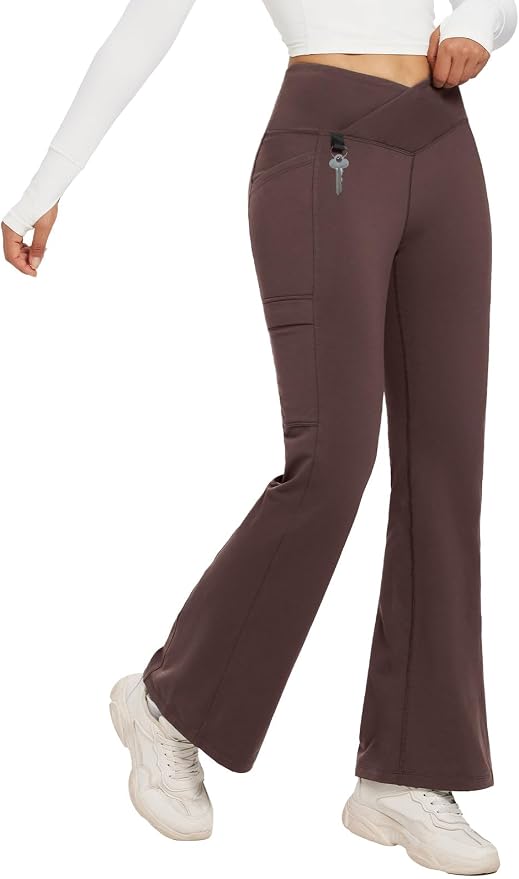
Shorts are a firm no. Skirts and dresses are possible, but only with thick tights and boots.

Local tip: Pack a pair of trousers that dry quickly. When you get caught in a downpour, you’ll be glad.
6. Comfortable but Stylish Walking Shoes
Bruges is a cobblestone city, and cobblestones punish bad footwear.
Waterproof ankle boots with a rubber sole and a flat or block heel are my gold standard. Leather boots with a good tread, or waterproof leather sneakers if you prefer a casual style, work well, too. Make sure they have enough room for thick socks.

I once wore trendy slip-on shoes here and spent the afternoon with soggy toes and a fresh respect for Belgian sensibility. Never again.
Local tip: Break your boots in before you travel, and treat them with waterproofing spray. It makes a huge difference.
7. What to Wear in Bruges in November for Women
Texture and warmth are your best friends.
Build around a few good tops: a fitted merino sweater, a cosy turtleneck, a crisp blouse for evenings. Pair them with wool trousers or dark jeans, and bring one midi skirt or knit dress that works over thermal tights and with boots. A long knit dress, tights, boots and a wool coat is a lovely, easy look.

Layers over the top are non-negotiable: a cardigan, a long scarf, and a warm hat that doesn’t flatten your hair into oblivion.

Local tip: Pick opaque tights over sheer ones. Sheer tights look great in photos and feel pointless in the wind.
8. Evening Outfits That Don’t Scream “Tourist”
Bruges dinners are cosy, candlelit affairs, and a slightly dressier outfit goes a long way.
Think dark jeans or tailored trousers, a nice knit or silk-feel top, and boots you’ve cleaned up. Throw a blazer or a statement scarf over the top and you’re set. For men, chinos, a fine knit or crisp shirt, and a good jacket work perfectly.

The restaurants are warm inside, but walking there is cold and sometimes wet. Keep your coat on until you’re seated, then enjoy the stew and the Belgian beer.
Local tip: Bring a small, stylish umbrella or a hooded coat for the walk to dinner. Nothing ruins an evening outfit like soggy hair.
9. What to Wear for Churches
Bruges has some stunning churches, including the Basilica of the Holy Blood and the Church of Our Lady, and they expect respectful dress.
Cover your shoulders and avoid very short shorts or skirts. In November, that’s rarely an issue because you’ll already be bundled up, but it’s worth being aware of if you’re wearing a sleeveless layer under your jumper.
Take off your hat inside, and keep your voice low. These are working places of worship as well as sights.
Local tip: Churches can be properly chilly inside, so keep your scarf and coat on and wear thick socks.
10. Bags: Crossbody vs Backpack (and What to Pack Everything In)
For a short city break, I’m a carry-on convert. A 35–40 litre soft duffle or small cabin case with decent wheels handles Belgian cobbles well. Wheels on cobblestones are a nightmare, so a duffle with shoulder straps or a sturdy backpack-style carry-on is the smarter choice.

For daily exploring, a crossbody bag is great. It keeps your hands free for waffles, and sits close to your body in busy spots like the Markt. Choose leather or water-resistant fabric, and make sure it zips closed.

A small backpack works well if you’re carrying a spare layer, a camera or a water bottle, but in a crowded chocolate shop it can be a bit of a bull in a china shop.
Local tip: Line your daybag with a small dry bag or a zip-top bag for your phone and wallet. Rain finds everything.
11. Accessories That Elevate Simple Outfits
Accessories are what make a cold-weather outfit look like a choice.
Start with a big wool scarf. It’s a coat’s best friend, and a bit of colour in a muted palette looks great. Add a beanie or a knit hat, thin leather gloves or touchscreen-friendly gloves, and warm socks.

A simple belt, a watch or a pair of small earrings will finish off your outfit. Bruges does not need a lot of bling.
Local tip: Gloves matter more than you’d think. Holding a cold camera or phone with bare hands by the canal gets old very quickly.
12. Rain Preparation (Unexpected but Important)
It might rain. It probably will. Be ready and you’ll barely notice.
A hooded waterproof jacket beats an umbrella in the wind, though a sturdy compact umbrella is useful too. Waterproof shoes, a bag that can handle a splash, and a spare pair of socks in your daybag are small things that save the day.

If it pours, duck into a café, order a hot chocolate and wait it out. Locals do it constantly, and it’s a perfectly good excuse for cake.
Local tip: Avoid flimsy cheap umbrellas. The wind will win. A hood plus a hat is often more reliable.
13. Fabrics to Choose (and Avoid)
The right fabric keeps you warm even when you’re damp.
Merino wool, wool blends, fleece lining, and quick-dry synthetics are your allies. Merino in particular insulates when wet and doesn’t smell, which is a bonus on a longer trip. A good cotton-wool blend jumper also works well on top.

Avoid pure cotton as a base layer (it holds moisture and stays cold), thin linen, and anything very delicate. Heavy jeans that take forever to dry are also a bit of a gamble.
Local tip: Check the label before you pack. If it says “100% cotton” and it’s your only warm layer, think again.
14. Capsule Wardrobe for Bruges in November
Here’s what I’d actually pack.
Two or three base layers, two knits, one overshirt or cardigan, two pairs of trousers or jeans, one skirt or dress with tights, a warm coat, waterproof boots, a second pair of comfortable shoes, a scarf, gloves and a hat. Stick to two or three neutral colours and one accent shade.
Mix and match, and you can get through a long weekend without repeating the same outfit twice.
Local tip: Choose pieces that look fine slightly damp. Wool and dark colours forgive a lot.
Packing Practicalities
How many outfits: For a long weekend, 3–4 tops, 2 bottoms and a spare knit are plenty. Wear the bulkiest items (boots, coat) on the plane to save room.
Packing light vs overpacking: Light wins on cobblestones. Dragging a huge suitcase over uneven stone is a special kind of misery. Pack one carry-on and enjoy the freedom.
Outfit planning tips: Plan around one coat, one pair of boots and one scarf. Everything else should work with those three.
Mistakes to avoid: Packing too many “just in case” items, forgetting waterproof shoes, relying on a single heavy layer, and underestimating the wind.
Non-clothing essentials: A portable phone charger (cold drains batteries), a universal adapter (Belgium uses the European two-pin plug), lip balm and hand cream, a reusable water bottle, a small tote for chocolate and shopping, and a compact umbrella.
FAQs About Packing for Bruges in November
Is Bruges very cold in November? It’s chilly rather than freezing, with highs around 9–12°C and a damp breeze that makes it feel colder.
Do I need waterproof shoes? Yes, if you can. Wet feet are the quickest way to ruin a day in Bruges.
Can I wear heels? I wouldn’t. Cobblestones and heels are not friends.
Should I bring an umbrella or a rain jacket? A hooded waterproof jacket is more reliable in the wind, but a compact umbrella is a handy backup.
What should I wear for a canal boat trip? Dress warmly, with a hat and gloves. Boats can be breezy even when they’re covered.
Go Get Wrapped Up, Then Go Get Lost
Here’s what I love about Bruges in November: it feels like the city is yours. You’ll duck into a candlelit pub, warm your hands around a hot chocolate, and walk back along a quiet canal as the lamps flicker on.
Pack good boots, a coat you love and a scarf that makes you smile, and then stop thinking about your suitcase. The rest is all cobblestones, canals and chocolate. Go on, book the Eurostar.

