
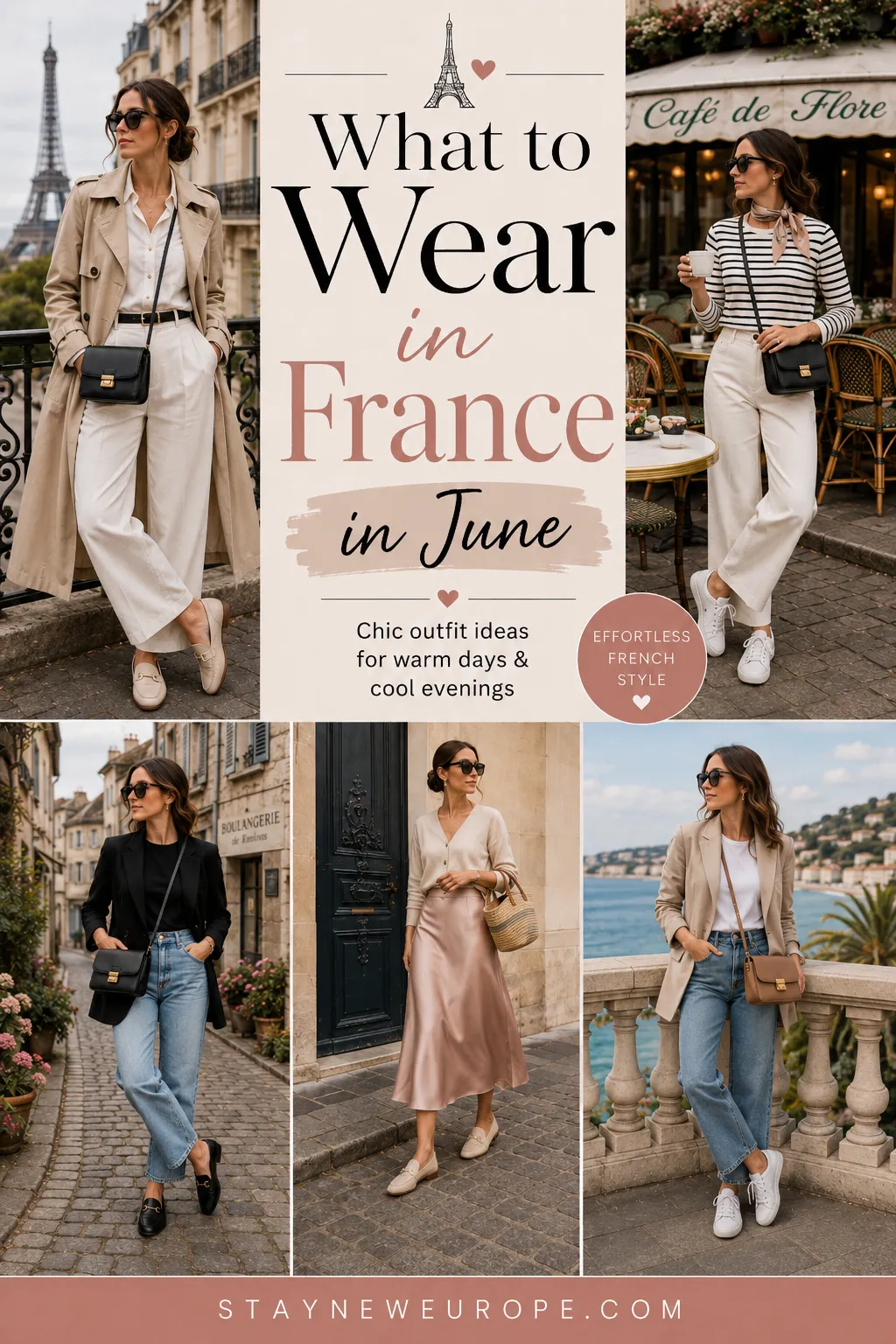
There’s a particular kind of dread that sets in when you’re standing in front of your suitcase the night before a trip to France. You want to look good — you really do — but you also don’t want to spend your entire Paris morning sweating through a blazer or shivering outside a Provence café because you underestimated how a French evening can turn on you. June seems so straightforward on paper: summer, sun, baguettes, rosé. And mostly, yes. But France in June has a personality of its own.
I’ve done this trip wrong before. I packed too heavily once, dragged a massive suitcase up the stairs of a Montmartre studio, and spent the whole week wearing the same three outfits because I was too exhausted to dig through the rest. Another time I went full “it’s summer!” and packed exclusively sundresses — and then spent two days in Lyon in a light rain, desperately buying a cardigan from a Uniqlo.
The truth is, France in June rewards thoughtful packers. Not minimalists who suffer for the aesthetic, not overpackers who can’t move freely through cobblestone streets — but people who actually thought about what they’d be doing, where they’d be going, and what the French actually wear. Let me save you the trial and error.
Before We Dive In: What June in France Is Actually Like
June in France sits in that sweet spot between spring unpredictability and full summer heat — which sounds ideal, and largely is, with a few caveats worth knowing before you start folding things.
Temperatures: In Paris, June daytime temperatures typically hover between 18°C and 25°C (64–77°F), though warmer days pushing 28–30°C aren’t unusual. Evenings cool down noticeably — sometimes to 14–16°C — which catches a lot of people off guard. In the south (Nice, Marseille, Avignon), you’re looking at warmer and drier conditions, often 25–30°C by day. Alsace and Normandy run cooler and wetter. Point being: France is not one single climate, even in June.
Rain: June is not a dry month, particularly in the north. Paris sees rain fairly regularly — not all-day downpours usually, but short afternoon showers that appear without much warning. Provence is drier. Brittany is wetter. Pack accordingly.
Walking conditions: This one matters more than people expect. French cities — especially Paris, Lyon, Bordeaux, and any medieval town in the south — are walking cities. You will clock 15,000 to 20,000 steps some days. Cobblestones in the Marais, uneven surfaces in old town Nice, steep streets in Montmartre. Your feet will have opinions.
Style culture: And here’s the thing that really matters — France takes how you present yourself seriously. Not in a judgmental, snobbish way (mostly), but there’s an ambient standard. The French, broadly speaking, dress with intention. They’d rather wear one good outfit than five forgettable ones. Looking “put together” doesn’t mean overdressed — it means coordinated, deliberate, and not chaotic. Tourists in printed souvenir T-shirts stand out in a way that goes beyond just the print. Keep this in mind as you pack.
Lightweight Layers: The Thing Nobody Talks About Enough
Let me be honest with you: layers are the most unsexy packing advice in the world, and also the most important. I know. I’m sorry. But hear me out.
June in France operates on a rhythm. Mornings can be genuinely cool, especially if you’re in Paris or anywhere north. By noon, the sun is usually out and temperatures climb. Then — this is the part that gets people — you step into a church, a museum, or a cave-dwelling restaurant, and it’s suddenly cold again. Air conditioning in shops and cafés can be aggressive. Then you go back outside into the warmth. Then evening comes and the temperature drops 8 degrees while you’re halfway through your second glass of rosé at an outdoor terrace.
Layers are how you handle all of this without either roasting or freezing. The French are masters of this. You’ll see them in light linen shirts over thin T-shirts, a lightweight denim jacket knotted around their waist or draped over the shoulders of a summer dress. It looks effortless because they’ve been doing it their whole lives. It’s also just… practical.
For the trip, I’d strongly suggest building your outfits around a thin, packable base — a cotton or linen tee, a fitted tank, a light dress — and then having one or two layers you can add or remove throughout the day. A fine-knit cardigan, a thin cotton bomber, or a lightweight denim jacket all pack small and serve you endlessly.
Local tip: The French rarely carry a separate layer in their hands — it goes over the shoulder or tied at the waist. It looks intentional rather than like you forgot your plan. Do this.
Dresses and Skirts: Yes, Absolutely, With Caveats
If you’re someone who wears dresses, June in France is your moment. The weather supports it, the culture embraces it, and there are few more satisfying feelings than walking through a flower market in Aix-en-Provence in a midi dress with a fresh bunch of lavender in your bag.

That said — and I say this with love — not every dress survives France in June. Anything too flimsy, too short, or made of fabric that creases badly in a suitcase is going to make your life harder. Linen dresses are magnificent: breathable, textured, and they actually look better slightly wrinkled, which is a feature, not a flaw. Cotton midi dresses in solid tones or small prints are extremely French. Wrap dresses in silky fabric are lovely for evening, though they can be chilly once the sun goes down.
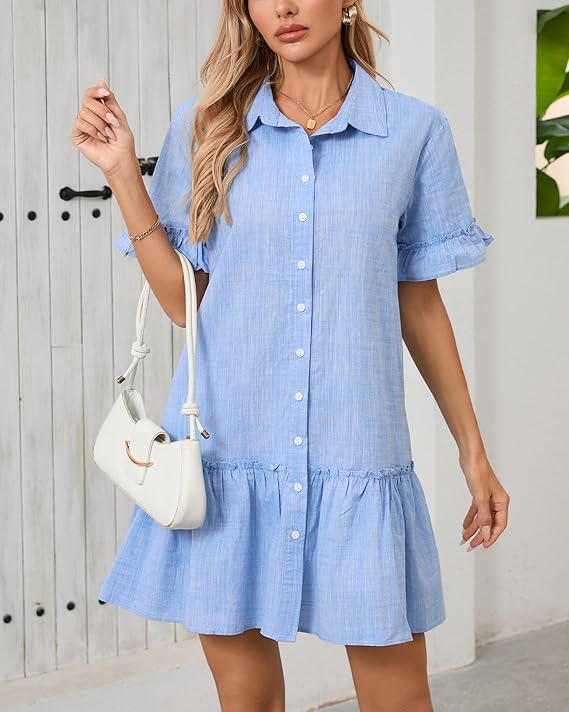
Be aware of church visits — more on this in a specific section — but generally, anything knee-length or longer with some shoulder coverage (or a scarf to throw on) keeps you flexible for any cathedral or basilica stop.
Skirts work beautifully too. A relaxed A-line linen skirt paired with a tucked-in striped Breton top is essentially the unofficial French summer uniform, and it will never look out of place anywhere from a Seine-side lunch to a gallery visit. Wide-leg trousers hit this same note if you run cool.

Local tip: French women often choose one dress in a neutral tone — cream, beige, terracotta, navy — and build accessories around it rather than wearing multiple statement pieces at once. Less is genuinely more.
Jeans in June: The Eternal Debate
I always bring one pair of jeans to France, and I always feel mildly conflicted about it — but I always wear them.
Here’s the thing about jeans in June: they’re too warm on hot days, which means you’ll skip them those days. But on cooler mornings, grey days, or evening plans that feel a little more dressed-up, a good pair of jeans is the most reliable item in your bag. They look put-together with a linen shirt and loafers. They survive museum visits. They work for a casual dinner that’s not quite smart-casual but also not beach-casual. They’re a workhorse.
The key is the cut. Skinny jeans look dated and feel uncomfortable in warm weather. Wide-leg jeans are fashionable but can read casual-sloppy if the rest of the outfit isn’t deliberate. Straight-leg or slim-straight is the sweet spot — they look clean and tailored, they pair with almost everything, and they’re what you’ll actually see on French people under 60. Go for a mid-rise, a darker wash if you want versatility, and make sure they’re a fabric with a little stretch if you’re planning serious walking days.
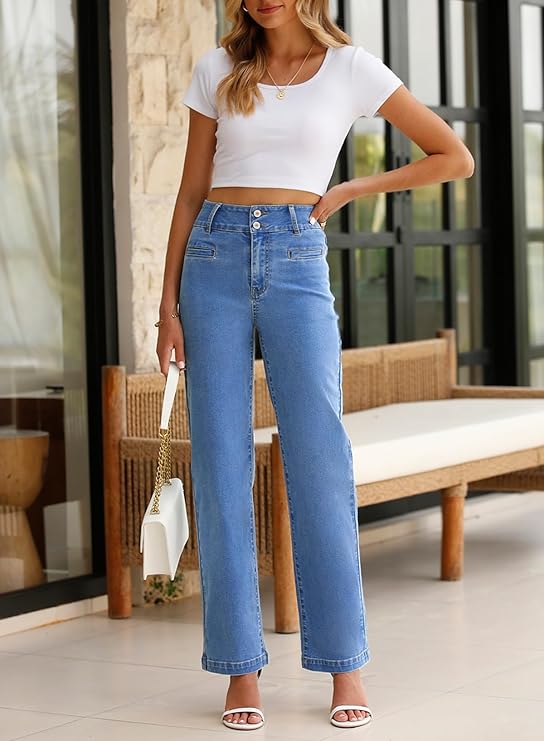
Light-coloured jeans — cream, off-white, light blue — also work brilliantly in France in June and look very “summery French” with a simple white shirt. They’re slightly more commitment because one wine splatter is all it takes, but if you’re careful, they elevate everything.
Local tip: Skip the embellished or distressed jeans. Clean, unfussy, and well-fitting reads far more French than anything with bling or designer logos.
Shoes: The Most Important Decision You Will Make
I will say this as plainly as I can: do not bring shoes that are not broken in. Do not bring shoes that are primarily beautiful. Do not bring heels if you have not walked 6 hours on cobblestones in them before. I’m not telling you what to do with your life — I’m just telling you this is how people end up with blisters in the Louvre.
France requires good shoes. Not hiking shoes, not trainers with socks pulled up to the knee, not those maximalist chunky things that make your whole foot look like a building — just actually comfortable, supportive, stylish shoes. They exist. There are many of them.
White leather sneakers are the most-used item in every successful France packing list. They look clean, they match everything, they’re appropriate for virtually every non-formal situation, and the French actually wear them constantly. New Balance 550s, Veja Esplar, Adidas Sambas, classic white leather Converse — any of these will serve you brilliantly.

If you want a dressier option, loafers are your best friend in France in June. Leather loafers, suede loafers, even a chunky-soled loafer — they’re comfortable enough for walking (within reason), they look chic with both dresses and trousers, and they feel intentional rather than touristy. Slip-on espadrilles are also very France-in-summer and work well on flatter ground, though they’re less kind on long days of uneven terrain.

Sandals with a strap or ankle support — think Birkenstock Bostons, leather strappy sandals, or simple slides with a footbed — are great for warmer days when you’re not going to be walking 20,000 steps. Save the flat flip-flops for the beach or your hotel room.

Local tip: Keep your shoes clean. Scuffed, dirty shoes are noticed in France more than you’d expect. A quick wipe-down of your white sneakers before heading out matters more than you think.
What NOT to Wear: The Honest List
Every travel article hedges on this section. I’m not going to.
Gym wear and athleisure: Leggings as daywear, sports bras as tops, branded athletic hoodies — these are culturally jarring in France outside of actually going to the gym. You’ll be comfortable and you will stand out in a way that reads “tourist” before you’ve even ordered your croissant.
Sports socks with sandals: I know it’s having a moment in some fashion circles. France is not having that moment.
Shorts: Here’s where I’ll be slightly controversial — shorts are worn in France in June, particularly in beach towns and on very hot days. But very short shorts or boardshort-style shorts read as underdressed in cities. If you’re in Paris, a tailored short (think Bermuda-length, linen or cotton, not athletic fabric) is the move. In Nice or Biarritz, more freedom.
Heavily logoed everything: France is not Switzerland. French style tends toward understated. A head-to-toe branded look feels aggressive rather than stylish.
Overly wrinkled clothes: This is not about being obsessively pressed — linen wrinkles, cotton wrinkles, this is life. But showing up in an outfit that looks like it’s been sat on for a week suggests a lack of care that doesn’t land well in a culture that values effort.
Local tip: When in doubt, go one notch more dressed-up than you think you need to. In France, you can almost never be overdressed for a café or restaurant, but you can absolutely be underdressed.
Jackets and Outerwear: Your Best Insurance Policy
The jacket situation in France in June is something I feel strongly about, because I’ve got it wrong in both directions.
You don’t need a heavy coat. Even Paris in June, even on its coolest days, rarely calls for anything thicker than a medium-weight jacket. What you do need is at least one jacket that’s a step above a thin cardigan — something that can handle a chilly evening terrace or a breezy Seine river cruise without leaving you miserable.
A classic trench coat is, obviously, deeply appropriate for France at any time of year. A lightweight one in beige or cream is particularly June-appropriate — it’s not too heavy, it handles light rain, it folds into a bag when you don’t need it, and it looks incredibly put-together over practically any outfit. If you own a good trench, bring it. Full stop.
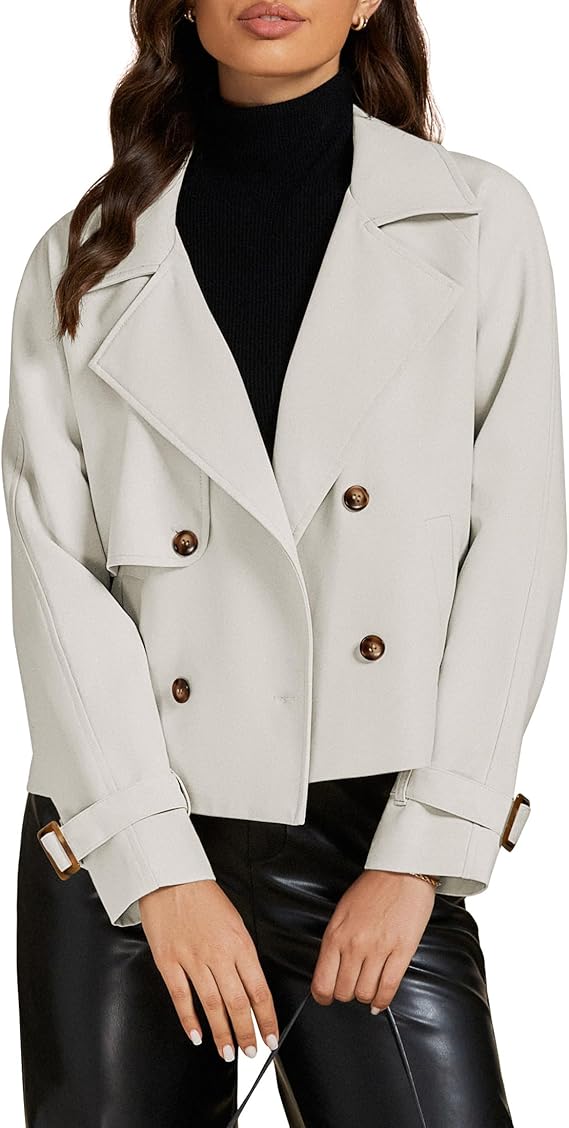
A linen blazer is another excellent option. Lighter than a regular blazer, more structured than a cardigan, it bridges the gap between dressed-up and casual perfectly. In navy, cream, or terracotta it looks genuinely French. Over a white tee and tailored trousers or a midi dress, it’s one of the most versatile things you can pack.
A lightweight denim jacket is the casual option and works brilliantly — very practical, extremely versatile, and not particularly heavy in a suitcase. It’s not the most elevated choice, but it’s hard to argue with how useful it is.

Local tip: Don’t bring a heavy puffer or padded jacket. You’ll regret the space it takes. If you somehow end up cold (very unlikely in June), layering two thin items works better.
What to Wear for Churches and Sacred Sites
This one tripped me up the first time I visited Notre-Dame (pre-fire reconstruction) and was stopped at the door of a Brittany chapel because I was wearing a sleeveless dress with no cover-up. Embarrassing, fixable, but worth knowing in advance.
France has a lot of churches. Beautiful, ancient, worth visiting, and frequently enforcing a dress code that requires covered shoulders and knees as a minimum. This doesn’t mean you need to overhaul your outfit — it means you need to think about access before you leave the hotel.
The easiest solution: a lightweight scarf. Carried in your bag, it can be draped over shoulders in seconds, and wrapped around your waist as a skirt if needed. A thin pashmina or large cotton scarf takes up almost no space and solves the church situation entirely.

Alternatively, travelling with a cardigan or light long-sleeved layer means you can simply put it on for the duration of the visit and take it off when you leave. Linen trousers or a midi dress with some sleeve coverage sidestep the problem entirely.
The rule of thumb: if you’re planning a morning or afternoon that involves a church visit, dress around it. If it’s spontaneous, keep that scarf in your bag.
Local tip: Even outside of formal dress codes, dressing modestly and quietly in religious spaces is a form of cultural respect that French people notice and appreciate.
Evening Outfits: Dinner, Wine Bars, and Beyond
France does evenings properly, and evenings deserve a little more thought than “whatever I wore today plus a jacket.”
Dinner in France — even at a mid-range restaurant, not just fine dining — tends to be an occasion. People arrive looking as though they’ve made some effort. Not necessarily formal effort, but considered effort. A change of clothes, or at least a change of top, between daytime exploring and evening dinner is very much the French way.
For women: this might mean a silk or satin slip dress, a wrap dress, or a linen shirt-dress belted at the waist. Tailored wide-leg trousers in a neutral tone with a slightly dressier top work beautifully and travel well. Add a delicate necklace, a small crossbody bag, and a pair of loafers or block-heeled sandals and you’re absolutely right for a bistro dinner in the Marais or a wine bar in Lyon’s Vieux Lyon quarter.

For men: evening in France still reads more relaxed than in, say, London — but a clean linen shirt (untucked is fine), chinos or dark trousers, and leather shoes or smart loafers hits the right note almost everywhere. Leave the shorts and trainers for daytime.

The evening drop in temperature is real in northern France. A light blazer or the trench coat over your evening outfit is always the right call.
Local tip: French restaurant dress is more relaxed than people fear, but trainers and athleisure do get noticed at dinner. One pair of shoes that bridges day and evening — a leather loafer or clean leather sneaker — can save you packing a third pair of shoes.
Bags: What to Actually Carry
The bag question in France is partly practical (security, carrying things) and partly aesthetic (what doesn’t look touristy). Let me address both.
Security: Paris in particular has a well-documented issue with pickpocketing in tourist areas — the Eiffel Tower, Sacré-Cœur, the Metro, busy shopping streets. A crossbody bag that you can keep in front of you, ideally with a zip, is significantly safer than a tote, a backpack, or a hand-carried clutch. This isn’t paranoia — it’s just how it is.
Aesthetics: A small leather crossbody is the most French option. It keeps your hands free, sits at the hip, holds your phone-wallet-lip balm-scarf, and looks intentional rather than touristy. Brands like A.P.C., Polène, or Carel make lovely ones, but any small structured leather crossbody does the job. A woven raffia bag in a similar silhouette works perfectly for more casual daytime use, especially in the south.

Backpacks do work in France — particularly for day trips or museum visits where you need more capacity — but a sleek, minimal one reads better than a large hiking pack or a heavily branded bag. Keep it small and simple.
Tote bags are lovely for markets, beach towns, and grocery runs, but they’re not the best security option for busy city streets.
Local tip: Leave the fanny pack at home unless you’re genuinely comfortable with the fashion statement it makes. In France, a small crossbody does everything a fanny pack does with considerably more elegance.
Accessories: Where Simple Outfits Get Interesting
The French art of accessorising is worth studying. They don’t pile everything on at once — they pick one or two things that are excellent and let those do the work. This is the opposite of how I used to pack, which was “bring everything and decide on the day,” resulting in chaotic combinations and a very heavy bag.
A good silk scarf — and I mean a genuinely good one, not a souvenir-shop polyester rectangle — is the single most French accessory you can carry. Tied around the neck, knotted to a bag handle, worn as a hair scarf or even around the waist, it does ten things and takes up no space. Hermès is the famous version, but there are wonderful options at every price point. Just aim for silk or linen over synthetic.

Sunglasses are both practical and aesthetic — France in June has real sun, and a good pair of sunglasses looks polished while protecting you from squinting through every outdoor terrace lunch. The French tend toward classic frames: tortoiseshell, oversized, clean lines.

Simple jewellery elevates enormously. Thin gold hoops or studs, a delicate chain necklace, a single ring — these take up no space and make even a simple linen outfit look considered. Don’t bring your statement chandelier earrings unless your packing list has room; the simple stuff goes further here.
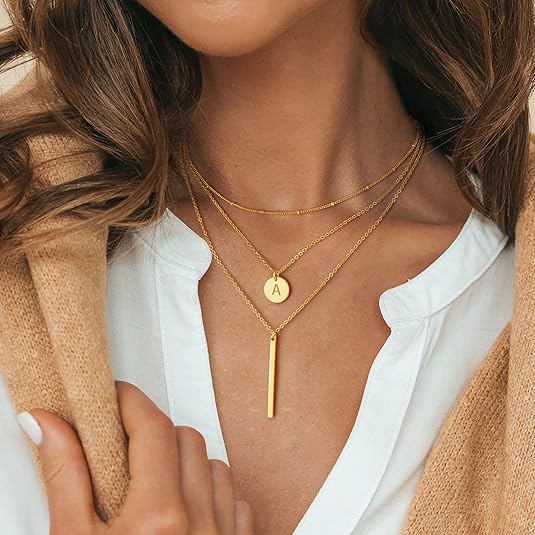
Local tip: French women often wear one “good” piece of jewellery rather than layering cheap pieces. If you have one quality necklace or pair of earrings, bring those rather than six mediocre ones.
Rain Preparation: Don’t Skip This Section
I know. You’re going to France in June, you’ve seen the Instagram pictures, it all looks golden and perfect. But June is not August. Rain happens in France in June, particularly in the north, and a bit of preparation means it doesn’t derail anything.
First: a packable rain jacket or compact umbrella. The French often carry a tiny fold-up umbrella in their bag — not as a full-time accessory but as a “just in case” that has paid off more times than they can count. A compact travel umbrella fits in almost any bag and takes the anxiety out of grey mornings.

Second: think about your shoe choices on rainy days. Your beautiful linen espadrilles are not waterproof and will be ruined. Your canvas sneakers will stay wet for hours. If you’re seeing clouds in the forecast, it’s a leather or rubber-soled day.
Third: fabrics. Linen handles a light rain surprisingly well — it dries fast and doesn’t cling unpleasantly. Cotton does fine too. The fabrics that struggle most are silk (stains immediately), suede (water marks), and anything structured that will lose its shape when wet.
A light trench coat in a water-resistant fabric is probably the single item that handles rain best while still looking completely appropriate for France.

Local tip: Paris rain often comes in short, sharp showers rather than all-day misery. If it’s raining when you leave, it may well stop within an hour. Don’t cancel your plans — just be prepared.
Fabrics to Seek Out (and One to Avoid)
In June heat, fabric matters more than almost anything else.
Linen is the winner, full stop. It breathes better than cotton, looks effortlessly European, and gets better-looking with wear. Linen trousers, dresses, shirts — all excellent. Yes, it wrinkles. No, this is not a problem in France; a slightly rumpled linen shirt reads as deliberately relaxed.
Cotton is reliable and comfortable — particularly lightweight cotton poplin or cotton voile for shirts and blouses. Avoid thick cotton jersey in warmer regions; it can get heavy in humidity.
Silk and silk-blend fabrics look extraordinary and are often lighter than you’d expect, but they’re temperamental — they stain easily, require careful washing, and show sweat. Worth bringing for one or two evening pieces if you’re prepared to be careful.
Chambray — a lighter version of denim fabric — is an underrated option. It looks like denim, behaves much better in heat, and is appropriate from morning to evening.
The one to avoid: Polyester and heavily synthetic blends. They don’t breathe, they trap heat, they create static, and they start smelling faster in warm weather. I know they’re often marketed as “travel-friendly” and “wrinkle-resistant,” and yes, they don’t wrinkle — but they’re uncomfortable in June heat and they don’t look good. Natural fibres serve you better here.
Local tip: Linen can be expensive at home but is often more affordable in French markets and small boutiques. If you fall in love with a linen shirt while you’re there, it’s a much better souvenir than a fridge magnet.
Building Your Capsule Wardrobe for France in June
Here’s how I’d actually pack for 7–10 days in France in June. This is not a rigid prescription — it’s a framework that’s worked for me and people I’ve travelled with.
Bottoms (3–4 pieces): One pair of straight-leg jeans, one pair of linen wide-leg trousers or tailored shorts, one linen or cotton skirt. If you wear dresses, one or two of these slots become dresses instead.
Tops (5–6 pieces): Two or three simple T-shirts in neutral tones (white, cream, navy, grey), one or two linen or cotton shirts (stripes welcome), one slightly dressier top or blouse for evenings.
Dresses (1–2): One casual day dress in linen or cotton, one slightly dressier option for evenings.
Layers (2): One thin cardigan or fine-knit jumper, one light jacket (trench, denim, or linen blazer).
Shoes (2–3 pairs): White leather or neutral sneakers for daily walking, loafers or strappy sandals for dressier moments, and optionally a pair of sandals for hot days or beach situations.
Accessories: One silk or cotton scarf, sunglasses, a small crossbody bag, simple jewellery, compact umbrella.
That’s it. That’s a complete, versatile, very France-appropriate wardrobe for 10 days that fits in a carry-on if you pack strategically.
Local tip: Mix and match is the point. Three tops and two bottoms that all work together give you nine outfit combinations. Plan around a core palette — neutrals plus one or two accent colours — rather than bringing disconnected pieces.
Practical Packing Notes: The Honest Logistics
A few final thoughts on the actual act of packing before I let you go.
On packing light: A carry-on is entirely achievable for 10 days in France if you stick to the capsule wardrobe above and use packing cubes to compress. The benefit is enormous — no checked bag fees, no waiting at carousels, no dragging a massive suitcase up the stairs of a 19th-century Parisian building (the lifts are either tiny or non-existent). I have been converting people to carry-on-only travel for years. It is the way.
On the “just in case” items: Every time I’ve packed something “just in case,” I haven’t used it. The formal blazer just in case of a fancy dinner — never worn. The extra pair of shoes just in case — unused. Be honest about your itinerary and pack for what you’ll actually do.
On doing laundry: Most apartments and many hotels have washing facilities, or there are laundromats (laveries automatiques) in every French town. Knowing you can do a wash midway through means you can pack fewer clothes with confidence. Linen and cotton dry quickly, often overnight.
Mistakes to avoid: Packing your “home wardrobe” rather than a trip wardrobe. Bringing 12 options when you’ll actually wear 6. Ignoring the evening temperature drop. Forgetting the scarf for churches. Packing shoes that haven’t been worn in recently.
One Last Thing Before You Go
France in June is genuinely one of the best travel experiences I know. The markets overflow with cherries and strawberries and early peaches. Lavender starts coming up in the south. Paris café terraces are in full swing. The light in the late evening — the golden hour stretches until nearly 10pm — is the kind of thing you’ll think about for years.
You don’t need to dress perfectly. You don’t need to stress about this. The point of thinking about what to wear is simply to make sure your clothes are working for you rather than against you — that you’re comfortable, you feel like yourself, and you’re not wasting precious hours being cold or blistered or weighed down by options you’re not using.
Pack thoughtfully, leave a little space for something you find in a market or a small boutique along the way, and then stop thinking about it. France is waiting, and it is very much worth it.

