
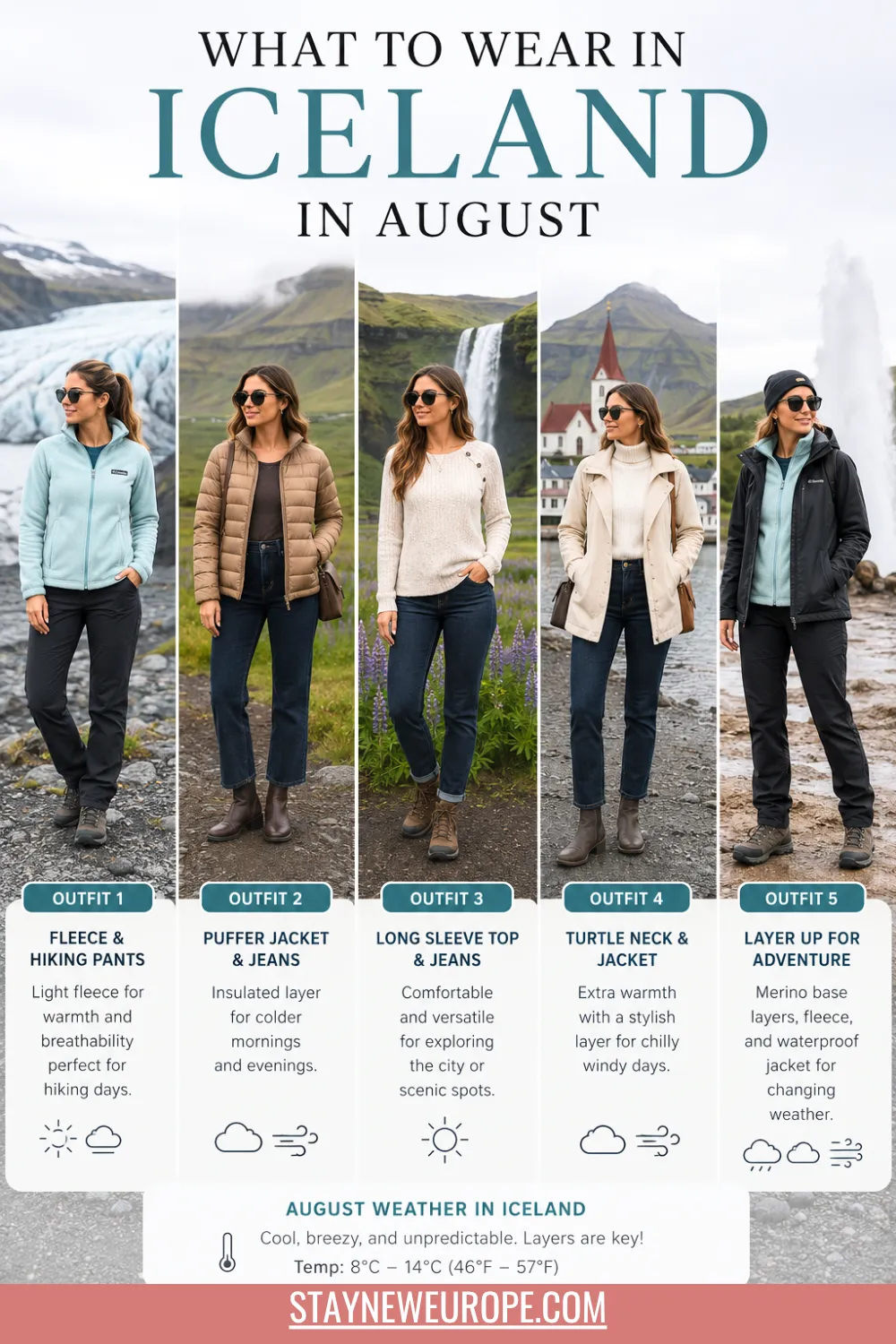
Let me be honest with you: I packed for Iceland in August thinking “it’s summer, how cold can it be?” I brought linen. I brought sandals. I brought exactly one jacket that was, technically, water-resistant in the way a damp paper bag is water-resistant. By day two, standing at the edge of a waterfall with horizontal rain hitting me in the face, I understood my mistake with perfect clarity. Iceland does not care about your summer wardrobe plans.
August is Iceland’s warmest month — emphasis on “warmest,” not “warm.” Temperatures hover around 8–14°C (46–57°F), the days are still long and golden, the F-roads are open, the puffins are there, and the landscapes are extraordinary. But the weather changes in minutes, the wind can make 13°C feel like 4°C, and it rains on roughly 23 out of 31 days in August. This is a place that rewards preparation and punishes optimism.
The good news? Dressing for Iceland is actually straightforward once you understand the logic. It’s not about fashion — it’s about layering systems, waterproofing, and choosing gear that keeps you comfortable so you can actually enjoy standing at Skógafoss or driving the Ring Road with the windows down. Here’s everything you need to know.
Hidden Places in Iceland That Most Tourists Never Find (But You Absolutely Should)
Before We Dive In: Iceland in August
The weather: Daytime temperatures typically range from 8–14°C (46–57°F), with wind chill pulling that down significantly on exposed days. Rain is common — not constant, but reliable enough that you should always be prepared for it. The sky can be brilliant and blue at 10am and pouring grey at noon. August is also when summer starts fading toward autumn, particularly in the second half of the month when evenings get noticeably cooler.
The terrain: Iceland is not a strolling destination. Even if your trip is primarily a road trip, you’ll be getting out of the car at waterfalls, black sand beaches, geothermal areas, and lava fields. Surfaces are uneven, often wet, and sometimes genuinely muddy. Your footwear choice matters more here than almost anywhere else in Europe.
The style culture: Icelanders are extremely casual, and nobody is going to judge you for wearing outdoor gear to dinner. Even in Reykjavik’s nicer restaurants, the vibe is relaxed and functional. This is freeing — it means you don’t need to pack a separate “going out” wardrobe. What you need to pack is gear that works.
The Waterproof Jacket: Non-Negotiable, Full Stop
If you take nothing else from this article, take this: you need a proper waterproof, windproof jacket with a hood, and it needs to actually be waterproof — not “water-resistant,” not “shower-proof,” waterproof. Iceland’s wind and rain arrive fast and they arrive sideways. A stylish trench coat is not going to cut it.

The layering space is critical — on colder days you’ll want a fleece or a puffer inside it, and a jacket that only fits a t-shirt underneath becomes useless by day three.
Go for a classic outdoor brand: The North Face, Helly Hansen, Patagonia, Marmot, Arc’teryx if you’re feeling flush. A hood that actually covers your head and adjusts properly is essential — a ball cap flies off in Icelandic wind immediately, as many visitors discover too late.
Outfit idea: Waterproof shell jacket (stuffed in your day bag) + merino base layer + fleece mid-layer. This three-piece system handles everything from a sunny Reykjavik morning to a waterfall hike in horizontal rain.
Local tip: Keep your jacket accessible, not packed at the bottom of your bag. The weather changes fast enough that you need to be able to pull it on in under thirty seconds. A small daypack where the jacket sits on top is the way to go.
The Layering System: Your Whole Strategy in One Section
Iceland dressing is really just one concept applied across every item: layers that you can add and remove quickly as conditions change. The classic three-layer system works brilliantly here and it’s worth building your whole packing list around it.
Base layer: This sits against your skin and its job is moisture management — wicking sweat away so you don’t get cold when you stop moving. Merino wool is the gold standard for Iceland. It regulates temperature in both directions (keeps you warm when it’s cold, doesn’t overheat when you’re active). Synthetics work too — they dry faster — but merino is more comfortable over a full day.

Mid layer: This is your insulation — the layer that traps warmth. A fleece jacket or a lightweight down/synthetic puffer jacket. Fleece is warmer when wet and dries faster; a packable puffer is more compressible and slightly warmer in dry cold. I’d take a fleece for Iceland because wet days are the norm, but either works. Some people bring both and use the puffer as an extra layer on the coldest days or evenings.
Outer layer: The waterproof shell described above. This blocks wind and rain while your other layers do the work of keeping you warm.
Local tip: The key to this system is being able to remove and add layers in two minutes. Don’t wear everything at once — carry the layers and dress for the conditions, not for what the weather was when you left the car.
Base Layers: Merino Is Worth the Price
I resisted merino wool for years on the grounds that it was expensive and I could just use a regular cotton long-sleeve instead. This was wrong. In Iceland, cotton is genuinely a bad choice for base layers — it absorbs moisture, holds it against your skin, and makes you cold when you stop moving. On a hike to a glacier or a boat trip to see puffins, this is not a theoretical problem.
Merino wool base layers — a fitted long-sleeve top and thermal leggings — should be the foundation of your Iceland packing.

Pack two sets so you can rotate them. The merino-specific advantage is that you can actually wear the same base layer for two or three days without it becoming unpleasant, which matters when you’re doing a Ring Road road trip and laundry isn’t a daily option.
Outfit idea: Merino long-sleeve + merino leggings under hiking pants + fleece + waterproof jacket. This is the Iceland uniform that actually works.
Local tip: If you run warm, a synthetic moisture-wicking base layer is a perfectly good alternative — it dries faster than merino after a wet day. The important thing is that it’s not cotton.
Fleece or Mid-Layer Puffer: The Warmth Layer
This is the layer most people underestimate. A mid-layer isn’t just for cold days — it’s the piece that makes the difference between comfortable and miserable when you’re standing at a black sand beach with a 30km/h wind.
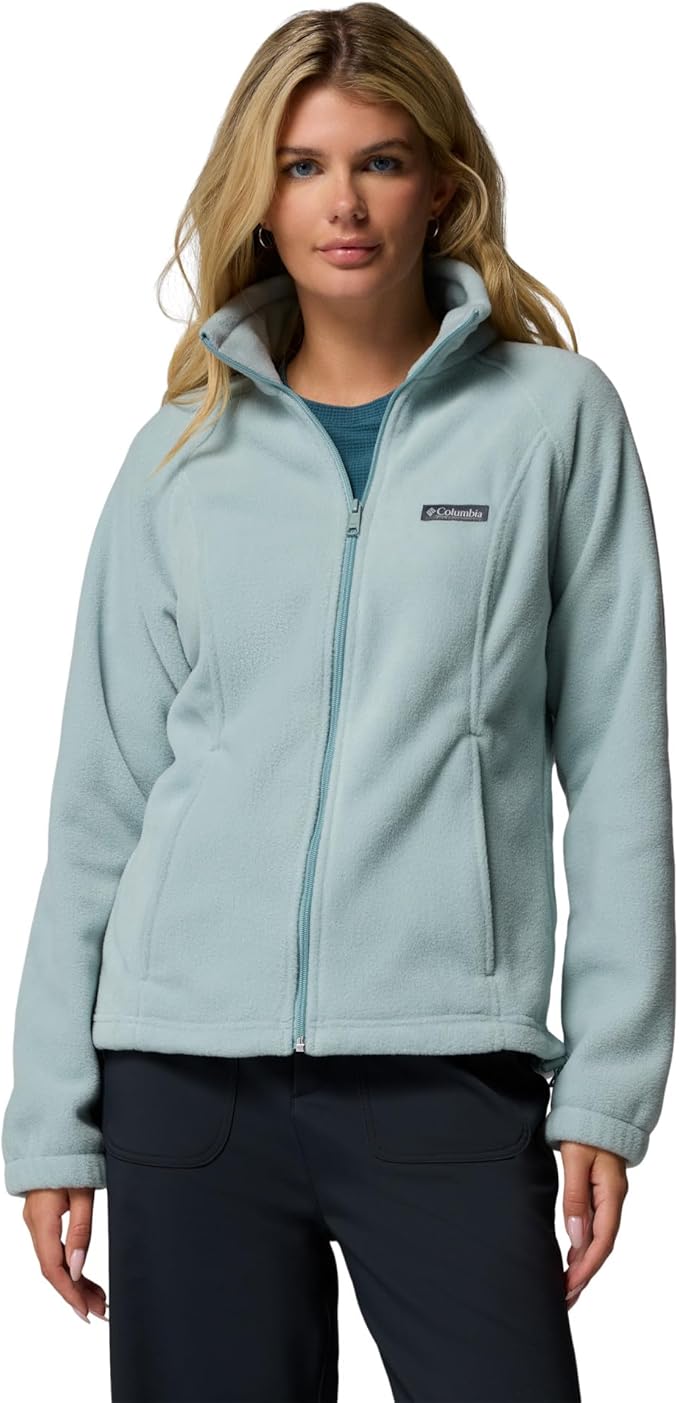
A good fleece jacket — think Patagonia Synchilla, The North Face 100 weight, or similar — is the ideal mid-layer for Iceland. It’s warm, it’s packable enough to fit in a day bag, and it remains insulating even when slightly damp, which matters here. Go for a zip-neck or full-zip style so you can adjust ventilation on the hike up.
A lightweight packable puffer (synthetic insulation, not down — down loses its insulation when wet) works brilliantly as an additional layer for evenings or the colder second half of August. It compresses small, fits in your jacket pocket, and adds meaningful warmth. If you’re visiting in late August specifically, pack both a fleece and a puffer.

Local tip: An insulated vest is a genuinely useful Iceland item — it keeps your core warm without restricting arm movement, which matters when you’re photographing landscapes or scrambling on lava fields.
Hiking Pants and Outdoor Trousers: Leave the Jeans at Home
This is the one most people get wrong, and I understand why — jeans feel like the default travel trouser and they work fine for most of Europe. In Iceland, they are a genuine mistake. When jeans get wet, they stay wet, they go cold, and they become genuinely uncomfortable to hike in. It will happen. The wind, the waterfalls, the rain — one of them will get your jeans wet, probably on day one.
What works: quick-dry hiking pants or softshell trousers. These are designed for exactly the conditions Iceland provides — they handle wind, shed light rain, dry fast when wet, and stretch with you on uneven terrain. They look fine in Reykjavik restaurants too. Brands like Columbia, Fjällräven, Salewa, and Decathlon all make good options at various price points.

Waterproof rain pants over the top of your hiking pants are worth packing if you’re planning serious hikes or any activity involving waterfalls (Skógafoss, Seljalandsfoss — you will get wet). They don’t need to be heavy — just a lightweight packable shell that zips on easily over your boots.

For Reykjavik city days: jeans are fine. But for any day that involves landscape stops — which is most days in Iceland — outdoor trousers are a much better choice.
Local tip: Buy rain pants one size larger than your hiking pants so they slip on and off easily over your boots. This is the tip that sounds trivial and saves enormous frustration on wet days.
Waterproof Hiking Boots: Your Most Important Purchase
Iceland’s terrain punishes inadequate footwear with real efficiency. Lava fields are sharp and uneven. Glacier approaches are wet and slippery. Black sand beaches are perpetually damp. Geothermal areas have muddy, warm-wet ground. Waterproof hiking boots with good ankle support and a grippy sole are not optional here — they are the single purchase that most affects how much you enjoy the trip.

Waterproof doesn’t mean “water-resistant trainers.” It means a proper Gore-Tex or similar membrane that keeps water out when you step in puddles, walk through wet grass, or get hit by waterfall spray. Ankle support matters on lava fields where your ankle rolls on uneven surfaces every few steps.

Brands worth looking at: Salomon, Merrell, Keen, Scarpa, La Sportiva, Lowa. You don’t need mountaineering boots — a light-to-mid hiking boot with waterproofing is perfect. Break them in before the trip. Do not arrive in Iceland with brand-new boots.

Pack a pair of clean trainers or casual shoes for Reykjavik evenings — your feet will thank you for the break from hiking boots after a full day outdoors.
Local tip: Wool hiking socks (Darn Tough, Smartwool, Icebreaker) inside your waterproof boots make an enormous difference on cold, wet days. Pack four or five pairs.

Warm Hat, Gloves, and Neck Gaiter: Yes, Even in August
I know. It’s August. It’s technically summer. But Iceland is Iceland, and you will absolutely need a warm hat and gloves on certain days — particularly near glaciers, on boat trips (whale watching, puffin tours), and during any hiking in the highlands or northern regions.
A merino wool or fleece beanie that covers your ears is essential. A ball cap is not a substitute — it doesn’t cover your ears and it flies off in wind immediately. Pack both if you want sun protection on the occasional bright day, but the warm hat is non-negotiable.

Lightweight gloves — thin merino or running-style gloves — are enough for August. You don’t need ski gloves, but bare hands at a windy lookout point get cold surprisingly fast.
A buff or neck gaiter is one of those small items that weighs almost nothing and does enormous work — pull it up as a face shield in wind, wear it as a hat in a pinch, or use it as a light scarf in the evenings. It’s the most efficient pack-weight item in your Iceland bag.
Local tip: If you forget your hat, Reykjavik’s outdoor shops stock excellent Icelandic wool beanies and you’ll want one as a souvenir anyway. But it’s worth having on arrival — you’ll likely need it immediately.
What to Wear in Reykjavik: The City Days
Reykjavik is a genuinely stylish small city with a creative, design-forward culture. Icelanders dress casually but with intention — you see a lot of good outdoor gear worn with considered basics, clean trainers, and simple jewellery. Nobody is dressed up in a formal sense, but nobody looks like they just rolled out of bed either.

For Reykjavik city days: jeans or dark chinos work perfectly (you won’t be doing serious hiking), a merino base layer or a simple fitted cotton tee, a fleece or a light puffer jacket, your waterproof shell over the top, and clean trainers or casual shoes rather than full hiking boots. This looks great in the context of Reykjavik’s coffee shops, galleries, and restaurants, and it keeps you comfortable in the unpredictable city weather.

If you’re hitting the Reykjavik nightlife or a nicer restaurant, the bar is genuinely low — smart casual is plenty. Dark jeans, a nicer top, and clean shoes will see you through anywhere. Leave the cocktail dresses at home; they’ll be cold and impractical.

Local tip: Icelanders take their coffee culture seriously. The cosiest way to spend a rainy Reykjavik morning is in a good café in your layers — no need to change outfits between a waterfall hike and a city afternoon.
Swimwear: You Need It More Than You Think
This surprises people: swimwear is genuinely essential for Iceland in August, not optional. The Blue Lagoon is the obvious one, but Iceland has dozens of geothermal pools, outdoor hot tubs at hotels and guesthouses, and municipal swimming pools (which Icelanders use as social spaces year-round) all across the country.
Pack a proper swimsuit — a one-piece or a secure bikini that won’t cause problems in waves or hot spring currents.

Bring a microfibre towel because not everywhere provides them. If you’re doing the Blue Lagoon premium experience you’ll get a bathrobe, but for the smaller pools and hotels, your own towel is necessary.

The counterintuitive magic of Iceland’s hot springs in August is sitting in water at 38°C with cold air on your face and mountains visible in every direction. It’s extraordinary. Don’t be the person who left their swimsuit at home.
Local tip: Many Icelandic swimming pools require you to shower thoroughly without a swimsuit before entering the pool — this is cultural practice, not optional. Don’t be embarrassed, just do it.
Sunglasses and Sun Protection: The Overlooked Essentials
The midnight sun is wonderful and magical and will keep you awake, and it will also absolutely destroy you if you’re not wearing sunglasses.
The transition of daylight hours throughout August in Reykjavík changes noticeably:
- Early August: Sunrise is around 5:00 AM, and sunset is close to 10:00 PM.
- Late August: Days shorten further, with sunrise around 6:00 AM and sunset around 8:50 PM. [1]
Good UV-blocking sunglasses are essential, especially if you’re near snow, ice, or glaciers (all of which reflect sunlight and intensify UV exposure). This isn’t vanity — it’s eye protection.

Sunscreen also matters more than people expect. The reflective landscape and extended sun hours mean you can burn even on what feels like a mild day. Apply it. Reapply it. Your future self will thank you.
Local tip: Polarised sunglasses are particularly good in Iceland — they reduce glare off water and ice, which makes the already stunning scenery even easier to appreciate.
The Bag: A Daypack Over Everything
Your main luggage is whatever works for your trip, but your daily carry in Iceland is a daypack, and it needs to be a good one. You’ll be using it every single day — it carries your outer layers when you’re warm, your snacks and water for hikes, your camera gear, and all the extra layers you need access to quickly.
A 20–25L daypack with a waterproof cover (or made from waterproof material) is ideal. Hip belt pockets are useful for phone and snacks when you’re hiking. A top-loading or roll-top closure keeps rain out better than a simple zip.

Avoid large rolling suitcases for active Iceland itineraries — even getting in and out of a rental car repeatedly is easier with a soft bag or rucksack. If you’re doing a Ring Road trip and living out of your car, a large duffel or a 40–50L hiking pack is far more practical than wheeled luggage.
If you’re interested in comparing European destinations with similar pack-light logic, the Spain packing list on Stay New Europe covers the practical thinking well — though the specific items you need are almost entirely different.
Local tip: A hip-belt daypack frees both your hands for scrambling on lava fields and gripping waterfalls. The difference between having your hands free and not having your hands free on uneven Icelandic terrain is not trivial.
What NOT to Wear in Iceland in August
Let me save you some luggage space and some regret.
Umbrellas — The wind makes them instantly useless and possibly dangerous. A waterproof hood is your umbrella in Iceland. Leave yours at home entirely.
Cotton base layers — Cotton holds moisture against your skin and gets cold when wet. Any base layer you pack should be merino wool or synthetic moisture-wicking fabric. A cotton long-sleeve under your layers is actively counterproductive.
Jeans for hiking days — Fine for Reykjavik. Not fine for waterfalls, lava fields, or any day involving weather. Wet denim is cold, heavy, and miserable.
Sandals or canvas shoes — Even on a warm day, sandals are useless on uneven terrain and will be wet within an hour. Leave them entirely if your trip is all landscape; pack simple trainers for city evenings at most.
Summer dresses and floaty blouses — These are not appropriate for Iceland in August in the way they’d be for Spain or Greece in the same month. If you love dresses, a heavier knit or jersey midi dress works for Reykjavik evenings, but lightweight summer fabrics will just make you cold.
A heavy winter coat — You don’t need this. A proper waterproof shell with good mid-layers underneath is warmer and more functional than a heavy wool coat, which won’t protect you from rain.
Local tip: Pack for what the weather will be, not what you’re hoping it will be. August can surprise you with a beautiful warm day — but building your whole packing list around that possibility will leave you cold and wet on the other twenty-two days.
Fabrics That Work (and the One to Completely Avoid)
This comes up throughout the article but it’s worth stating plainly in one place.
Merino wool: The gold standard for Iceland. Regulates temperature, resists odour, stays warm when damp. Expensive but worth it. Use for base layers, hats, and socks.
Synthetic moisture-wicking (polyester, nylon blends): Good for base layers and mid-layers. Dries faster than merino. Slightly less comfortable over multiple days without washing, but excellent for hiking.
Fleece: Perfect for mid-layers. Warm when damp, fast-drying, breathable. The Polartec fabric specifically is excellent.
Softshell: Good for hiking pants and active outer layers. Blocks wind and light rain. More breathable than waterproof shells.
Down insulation: Fine if it’s synthetic down (keeps warmth when wet). Natural down loses its insulating properties when wet — not ideal for Iceland. If you bring a down puffer, keep it inside your waterproof shell.
Cotton: Fine for Reykjavik city days in dry weather. Actively problematic as a base layer or hiking layer in wet, cold conditions. The moisture-trapping properties that make cotton comfortable in warmth make it cold and miserable in Iceland’s wet environment.
Local tip: The Icelandic wool sweater (lopapeysa) is genuinely useful and genuinely beautiful. Buying one there is both a practical decision and a good souvenir — they’re not cheap, but they’re real, warm, and made to handle the Icelandic climate.
Packing Smart: How to Plan Your Iceland August Wardrobe
How many outfits: Iceland is not a place where you need a different outfit every day. A functional rotation works beautifully: two or three merino base layer sets, two pairs of hiking pants, one pair of dark jeans, your fleece, your puffer (for late August), your waterproof shell, and a couple of casual tops for evenings. This covers ten days comfortably.
Capsule packing approach: Build outfits around a neutral colour palette — grey, black, navy, olive. Everything works together and nothing looks deliberately mismatched. Iceland’s landscapes are so visually dramatic that nobody is looking at your outfit anyway, but this approach means you’re not spending mental energy on outfit decisions.
What to leave behind: A full “going out” wardrobe, anything that wrinkles and needs pressing, heels, sandals, and anything made of cotton that you were planning to wear next to your skin.
Plan for laundry: If you’re doing more than a week in Iceland, plan for at least one laundry run. Hotels and some hostels offer washing facilities. This lets you pack lighter and still have clean base layers throughout.
Local tip: Pack your layers in the order you’ll need them — outer shell at the top of your pack, base layers at the bottom. In Iceland you’ll add and remove layers multiple times every day, and finding things quickly matters.
The Capsule Wardrobe for Iceland in August
Here’s what a well-packed Iceland August wardrobe actually looks like:
- 1 waterproof, windproof shell jacket with hood
- 1 fleece mid-layer jacket
- 1 lightweight packable puffer (especially for late August)
- 2–3 merino wool long-sleeve base layer tops
- 2 pairs of quick-dry hiking pants
- 1 pair of dark jeans (for Reykjavik/evenings)
- 2 sets of merino thermal leggings (base layer)
- 1 set of waterproof rain pants (packable)
- 1 swimsuit
- Waterproof hiking boots (broken in)
- 1 pair of casual trainers or shoes
- 4–5 pairs of merino or wool hiking socks
- Warm beanie/hat
- Lightweight gloves
- Buff/neck gaiter
- 20–25L daypack with waterproof cover
This fits in a carry-on or a medium-sized travel rucksack and covers every situation Iceland in August will throw at you.
Closing Thoughts
Iceland in August is one of those trips that changes something in you. The landscapes are genuinely unlike anything else in Europe — waterfalls you can walk behind, lava fields that look like another planet, the light at 11pm that turns everything gold. The midnight sun is fading by August but the evenings are still beautifully long and soft.
Getting cold and wet because you packed wrong would be a genuine shame. The good news is that getting it right isn’t complicated — it’s just a layering system, a proper waterproof jacket, and the merino wool that changes your opinion of base layers forever. Once you’re warm and dry, you’re free to just be in Iceland, which is exactly where you want to be.
If you’re planning other European destinations around your Iceland trip and wondering how differently you’ll need to pack, our guide on what to wear in Scotland in August covers similar cool-weather layering logic — though with notably more opportunities for the kind of casual-chic evening outfit that Iceland rarely demands.
Pack smart, layer up, and go.

