
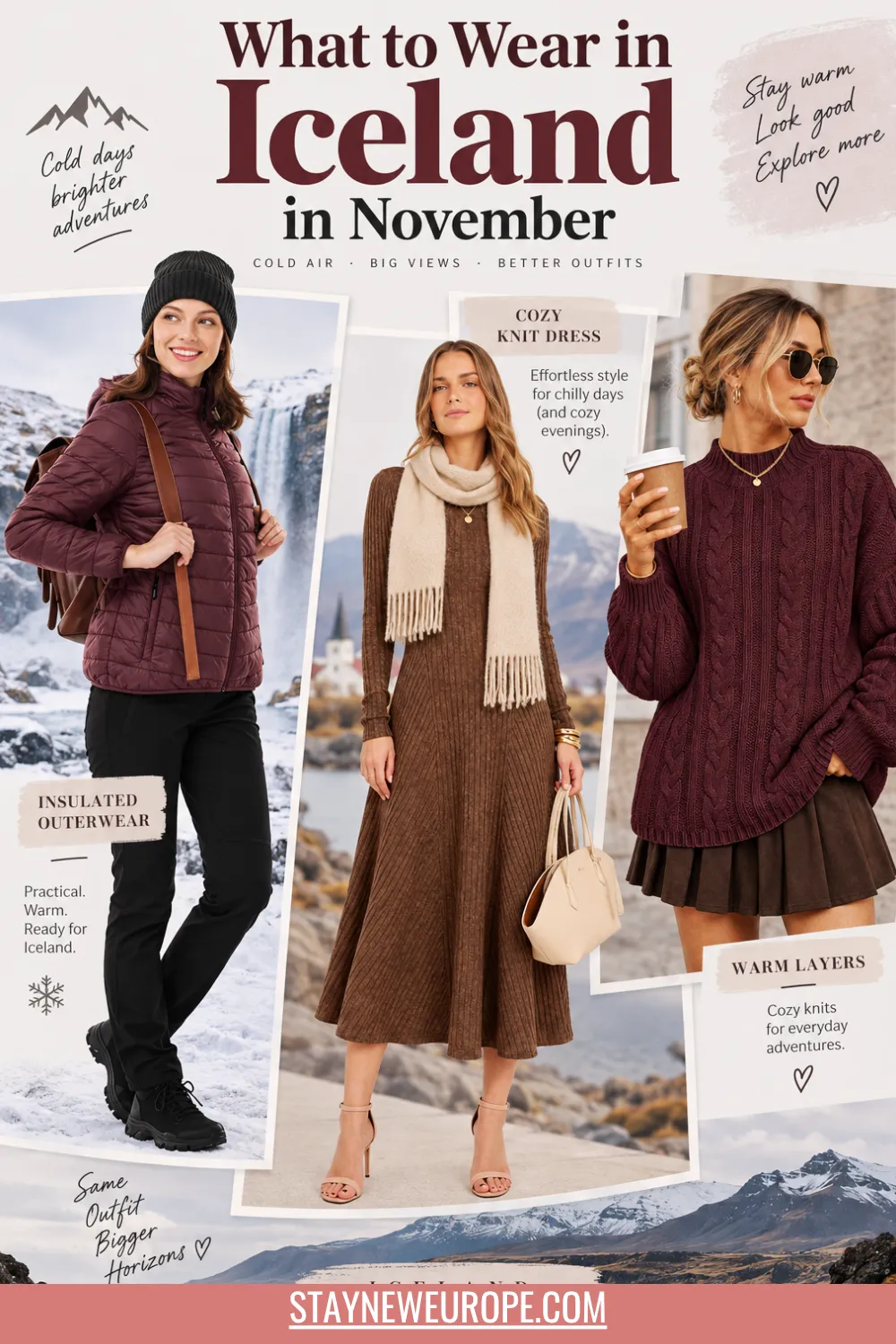
Let me be honest: the first time I did Iceland in November, I packed like I was going to Copenhagen. One puffer jacket, a pair of jeans, and a scarf I thought was “chunky enough.” I lasted about eleven minutes on the black sand at Reynisfjara before the wind found every gap in my outfit and made me regret every fashion decision I’d ever made.
November in Iceland isn’t dramatic in the way summer is — no midnight sun, no crowds swarming the Golden Circle. It’s quieter, darker, moodier, and honestly more beautiful for it. But it’s also the month where the weather stops being polite. You get maybe seven or eight hours of grey daylight, sideways sleet that shows up uninvited, and wind that doesn’t just blow, it shoves. This is not a “cute coat and boots” destination. This is a “dress like you mean it” destination.
And that’s exactly the mistake I see people make — they pack for how Iceland looks in photos (moody, stylish, editorial) instead of how it actually feels (wet, gusty, and cold in a way that gets into your bones if you’re not layered right). So let’s fix that before you go.
Before We Dive In
Weather: November in Iceland sits somewhere between “brisk” and “why is my face doing this.” Average highs hover around 3–5°C (37–41°F), with lows dropping close to freezing, but the real story is wind chill — a 5°C day with 40 km/h gusts off the North Atlantic can feel closer to -5°C. Rain, sleet, and the occasional early snow all show up, sometimes within the same afternoon. Daylight is short, roughly from 10am to 5pm, so you’ll be dressing for dusk-like light most of the day.
Walking conditions: Reykjavik’s streets are manageable, but the moment you head toward waterfalls, glacier lagoons, or lava fields, you’re on wet rock, packed gravel, and the occasional icy patch, especially later in the month. Pavements in town can also glaze over after a cold snap. This is a country that punishes cute-but-impractical footwear.
Style culture: Icelanders dress with a kind of understated, function-first confidence — lots of quality knitwear, technical outerwear, and neutral tones, but rarely anything that looks like it wouldn’t survive a walk to the bus stop in a storm. Nobody’s judging you for wearing a shell jacket to dinner. In fact, they’d judge you more for not having one.
The Bag You Bring Actually Matters Here
I didn’t think about this until my tote bag basically turned into a wet sponge outside Skógafoss.
What works in Iceland is a weatherproof duffle or a carry-on with some water resistance built in, paired with a compact daypack you can sling on and off easily for waterfall hikes and glacier walks.

Look for ripstop nylon or a coated fabric rather than canvas, which soaks through and stays damp for days. A daypack with a rain cover, or one made from a water-resistant material, earns its keep the second you’re standing under the spray of a 60-metre waterfall.

If you’re road-tripping the Ring Road, throw in a smaller packing cube system too — it makes unpacking in a different guesthouse every night far less chaotic, especially when everything you own is slightly damp.
Local tip: Leave the delicate leather bag at home. Between rain, mud, and volcanic dust, it will not thank you. If you’re building a broader travel capsule around durable, weatherproof pieces, our carry-on packing guide is a good place to start before you even open your suitcase.
Lightweight Layers, Not One Big Coat
Iceland’s weather changes so often in a single day that a proper layering system beats a single heavy jacket every time.
Start with a moisture-wicking base layer (merino wool is genuinely worth the splurge — it regulates temperature and doesn’t get gross when it’s damp), add a warm mid-layer like fleece or a lightweight down piece, and top it with a waterproof, windproof shell.

You can strip layers off in a warm café in Reykjavik and stack them back on the second you step outside toward a glacier.
The beauty of this system is flexibility. A single thick coat leaves you either sweating indoors or under-dressed the moment the wind picks up outside. Layers let you adjust in real time, which in Iceland, you will be doing constantly.

Local tip: Buy your base layer a size that fits close to the skin — a baggy thermal traps less warmth than one that actually hugs your body.
Thermal Leggings and Real Trousers (Say Goodbye to Jeans)
Jeans feel like a safe, stylish default for most of Europe. In Iceland in November, they’re basically a cold, wet liability.
Denim holds moisture and takes forever to dry, which is a real problem the moment you’re standing in spray near a waterfall or walking through slush in town.
What actually works are fleece-lined leggings, thermal-lined trousers, or proper hiking pants layered over thermal leggings underneath. They’re warmer, they dry faster, and most of them still look completely normal with boots and a coat — nobody’s checking the fabric composition of your pants while you’re both freezing at Gullfoss.

If you want to feel slightly more put-together for a Reykjavik dinner, a pair of wool-blend trousers over thermal leggings gives you the warmth without looking like you’re mid-hike at the table.

Local tip: Avoid anything cotton-heavy below the waist. If it gets wet, it stays wet, and a cold, damp trouser leg will ruin your whole afternoon.
Walking Shoes That Can Actually Handle Iceland
I learned this the hard way outside Vík: cute ankle boots and wet volcanic gravel do not get along.
You need waterproof hiking boots with real ankle support and solid tread — this isn’t optional here. Between icy pavements, wet rock near waterfalls, and uneven lava fields, a slip is genuinely easy, and sneakers or fashion boots offer close to zero grip once things get slick. Pair them with thick wool hiking socks, and consider a thinner liner sock underneath if your feet run cold, which honestly, in November, they will.

For town days when you’re not hiking, a lower waterproof boot with decent grip still works fine and looks more put-together for dinner, but keep the full hiking boots in your bag for anything involving waterfalls, glaciers, or the Reykjanes peninsula.

Local tip: Break your boots in before you land. New boots plus wet rock plus a full day of walking is a blister waiting to happen.
What NOT to Wear in Iceland in November
Let’s talk about the outfit choices that look great on Pinterest and fall apart the second you’re outside for longer than ten minutes.
- Skip anything cotton as your main layer — cotton absorbs moisture and holds onto cold, which is the exact opposite of what you want.
- Skip a single thin coat with no real insulation; it might look sleek, but it won’t survive the wind off the coast.
- Skip an umbrella entirely — the wind will invert it within minutes, I’ve watched it happen to at least four separate tourists in one afternoon at Þingvellir.
- And skip anything with a low, wide neckline; you’ll want a scarf or turtleneck sealing that gap, not exposing it.
The overall rule: if it wouldn’t survive a UK autumn hike, it’s not built for Iceland in November.
Local tip: Fashion sneakers are the number one tourist regret I hear about. Save them for the airport, not the Ring Road.
A Proper Windproof, Waterproof Shell Jacket
If you buy exactly one thing for this trip, make it this.
A quality outer shell — genuinely waterproof (not just water-resistant) and windproof, ideally with a hood that cinches tight — is the single most important item on your Iceland packing list. Down jackets alone are cozy but lose most of their insulating power once wet, and Iceland’s rain doesn’t ask permission before it starts.
A shell over an insulated mid-layer gives you warmth and weatherproofing without the bulk of one giant winter coat.

Look for sealed seams and a hood that actually stays on in wind, not one that flies off the second you turn a corner near the coast. This jacket will be doing more work than any other item in your suitcase, so it’s worth the investment even if everything else you bring is basic.
Local tip: A jacket with underarm zips is a small detail that makes a big difference — you can vent heat on a bus tour without stripping the whole layer off.
Dinner in Reykjavik: Smart, Not Suffering
Just because it’s freezing outside doesn’t mean your dinner outfit has to look like you’re about to summit something.
For evenings in Reykjavik’s restaurants and bars, think elevated-casual: a chunky knit sweater, wool trousers or a midi skirt with thick tights underneath, and ankle boots with actual tread.

Swap the technical shell for a wool coat if you’re only walking a short distance between the taxi and the restaurant door, but keep the shell in your bag if you’re walking more than a few blocks — the wind doesn’t clock out at 7pm.

A statement scarf or a good pair of leather (or faux-leather) gloves goes a long way toward making an otherwise practical outfit feel like you dressed for dinner, not survival.

Local tip: Layer a turtleneck under your dinner outfit instead of leaving your neck exposed — it reads as intentional, not just practical.
The Aurora-Hunting Outfit (This Is Its Own Category)
Nobody warns you that chasing the northern lights means standing completely still, outside, at night, for potentially an hour or more. This is a different kind of cold than walking around during the day.
Layer up more than you think you need to: thermal base layers, a heavy mid-layer, your full waterproof shell, insulated waterproof gloves (not just cute knit ones), a hat that covers your ears, and a neck gaiter or buff.

Hand warmers tucked into your gloves and boots are a genuinely underrated trick — I keep a stash in every jacket pocket from October through March.

Bring an extra pair of socks too, since standing on cold ground for that long chills your feet faster than walking does.

This is the one situation in Iceland where “overdressed” isn’t really a concept. You can always unzip; you can’t manufacture warmth once you’re already shivering an hour into an aurora wait.
Local tip: Dress for outside temperature minus five degrees when you’re aurora hunting — standing still always feels colder than moving.
Swimwear for the Blue Lagoon (Yes, Even in November)
This is the one packing category that feels completely backwards — you’re bringing a swimsuit to one of the coldest countries in Europe.
Iceland’s geothermal pools and lagoons are open and glorious year-round, and November is honestly one of the moodiest, most beautiful times to visit one, with steam rising off the water into cold air.
Bring a proper swimsuit, plus a lightweight cover-up or robe for the walk from the locker room to the water, since that stretch is genuinely the coldest part of the whole experience. Sandals or flip-flops make the wet changing-room floors far more bearable than bare feet.

If you’re combining a lagoon visit with a Ring Road day, pack the swimsuit somewhere accessible in your daypack rather than buried at the bottom of your suitcase — you don’t want to be unpacking your whole bag in a parking lot.
Local tip: Bring your own towel if your accommodation doesn’t include one at the lagoon — rentals add up fast and often sell out on busy days.
Rain Prep Beyond Just the Jacket
Most people remember a waterproof coat and completely forget that rain doesn’t stop at your shoulders.
Waterproof trousers or a waterproof over-layer for your legs make a genuine difference on wet hiking days, and a rain cover for your daypack keeps your camera and extra layers dry when you’re standing in waterfall spray.

Even your boots benefit from a waterproofing spray before you leave, since “water-resistant” out of the box often means “fine for twenty minutes, then damp for the rest of the day.”

If you’re prone to cold hands, waterproof gloves rather than knit ones save you from that miserable damp-glove feeling that never quite dries out between activities.
Local tip: A microfiber towel packed in your daypack is a small, unglamorous addition that saves you from sitting in a wet car seat after every waterfall stop.
Fabrics to Choose (and Which Ones to Avoid)
Not all “warm-looking” fabrics actually perform the way you’d expect once Icelandic weather gets involved.
Merino wool is the MVP here — it insulates even when slightly damp, resists odor on multi-day trips, and works as both a base layer and a sweater. Fleece is a solid, affordable mid-layer option, and technical synthetics (like those used in shell jackets and hiking pants) are built specifically for wind and water resistance.
Avoid cotton in almost every layer, avoid thin acrylic knits that look chunky but offer little real warmth, and be cautious with suede or leather footwear that isn’t treated for water.
If you’re building out or refreshing your travel wardrobe before this trip, it’s worth applying the same fabric logic to any capsule wardrobe you’re packing for colder European destinations — the fabric rules for Iceland aren’t wildly different from a rainy Highlands trip.
Local tip: Feel the inside of a “warm” sweater before buying it for this trip — if it feels thin or scratchy rather than dense, it won’t hold up outdoors.
A Capsule Wardrobe That Actually Works for Iceland
You genuinely don’t need a suitcase full of separate outfits here — you need a smaller set of pieces that layer well together.
A workable capsule looks something like:
- two or three merino base layers,
- one fleece or light down mid-layer,
- one waterproof shell,
- two pairs of thermal-lined trousers,
- one wool sweater for dinners,
- thermal leggings,
- wool socks,
- waterproof boots plus a lower boot for town,
- a hat, gloves, a buff, and your swimsuit.
Everything mixes and matches with everything else, which matters more here than in most destinations, since you’ll likely be re-wearing base layers under different outer combinations day to day anyway.
Building trips around a repeatable capsule is a habit worth carrying into other cold-weather destinations too — it’s the same approach we use in our broader autumn Europe packing guide.
Local tip: Pack one “just in case” extra base layer. If your gloves or boots get soaked on day two of a multi-day trip, you’ll be relieved to have a dry backup layer while everything else dries out overnight.
How Much to Actually Pack
For a five-to-seven day trip, you can realistically get away with three or four base layers, two mid-layers, one shell, two pairs of trousers, and one dinner-appropriate sweater, rotated and re-worn across the trip. Overpacking here usually means bringing five variations of the same puffer jacket instead of one great shell and better layering underneath.
Plan your outfits loosely by activity rather than by day — one “waterfall and hiking” combo, one “Reykjavik dinner” combo, one “aurora hunting” combo — and let base layers repeat quietly underneath. The biggest packing mistake I see is people bringing enough clothes for a week in Rome and being shocked when none of it works past day two in Iceland’s wind.
Iceland in November rewards the traveller who dresses for it properly — the black sand beaches feel more dramatic, the aurora feels more earned, and the geothermal pools feel like an actual reward rather than a scramble to get warm again. Get the layering right, bring boots that can handle a bit of chaos, and the rest of the trip takes care of itself. You’ll spend less time shivering in photos and more time actually looking up at the sky.

